
Influences on Prenatal Infant Motor Development
Introduction: It is very important to monitor children's physical, cognitive, social and emotional development in order to help them achieve healthy growth and development. The process and product of development and mastery of movements can be affected in very different and complex ways. Both the process and the product are affected by the person's heredity and past experiences. Methods: Factors affecting motor development can be considered in three ways: 1. Before birth, 2. During birth, 3. After birth. Factors Affecting Prenatal Motor Development can be affected by environmental and hereditary factors at every stage of life. The development process of the baby, who develops healthily before birth, may be impaired as a result of lack of oxygen during the birth or postnatal accidents and poisonings. Results: Factors affecting motor development before birth: Nutrition and chemicals, malnutrition before birth, drugs used by the mother, alcohol and smoking, heredity, chromosomal disorders, gene-related disorders, environment, radiation. chemical pollution Medical Problems, sexually transmitted diseases, maternal infection, hormonal and chemical imbalances, blood incompatibility, maternal emotional stress, early pregnancy, pregnancy toxemia. Nutrition and Chemicals Everything that enters the mother's stomach affects the fetus. The effects of harmful substances vary according to the conditions. Conclusion: The environment in which the fetus is located, the degree, amount or dose of nutritional or chemical damage, the stage of pregnancy of the mother significantly affects the unborn baby. Prenatal malnutrition, maternal medications, alcohol and smoking are the chemical and nutritional factors that affect motor development in the prenatal period.
Introduction
The word ‘engine’ literally means ‘motion’. Every individual born into the world begins to develop physically in the womb. When he is born, development continues at an accelerated pace. Some of these movements, which were previously reflexive, become reflexive. Some of them become motor skills with the conscious use of organs over time. These are reflexive movements that continue even when the person is not doing them involuntarily. However, jumping with one leg or cutting paper are actions that are performed with the conscious use of organs and are evaluated in “psychomotor development”. Psychomotor development, which controls the behaviours that emerge in the lifelong acquisition process of “motor” skills [1].
The behaviors in question; It occurs when sense organs, mind and muscles work together. In a sense, it is necessary to control these behaviors. The process that enables it refers to psychomotor development. Psychomotor development, physical growth and it is defined as the voluntary mobilization of the organism in parallel with the development of the central nervous system. Although motor development undergoes different changes, it is a process that continues throughout the life of the individual and follows a regular sequence. big muscle (gross) motor skills; crawling, standing, walking, running, swinging, turning, It is used to describe control over movements such as rolling, jumping, and balance. Small muscle (fine) motor development; with hand and foot skills object skills. Holding, grasping, writing, tearing, drawing, pasting, cutting skills such as A child’s ability to cut paper with scissors be able to string beads, eat olives with a fork, draw geometric shapes with a pencil It’s about fine motor skills. Indispensable for psychomotor “Development Models and Theories” will help you understand children better. Motor tests for cognitive, affective and physical development of children starting before and after birth. will support their healthy development by learning how important it is and be able to make training plans accordingly [1].
Teratogens
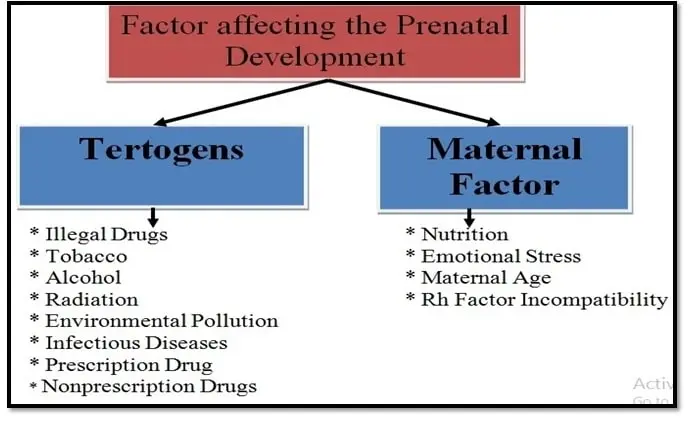
Teratogens are chemical, physical and environmental agents that cause damage during the prenatal period. Both teratogens and maternal factors play an important role in prenatal development. Teratogens are more harmful than maternal factors. Teratogen comes from the Greek word teras, which means malformation (monstrosity). There are many factors involved in teratogens. They are:
Drugs used by the Mother: It has been stated that drugs used outside the control and advice of the doctor can have adverse effects on the development of the foetus [2]. The effect of drugs on the child depends on the time of pregnancy, the dose, the duration of use, the genetic predisposition of the foetus and the interaction of these factors [3]. Some drugs may have very mild side effects or sedative effects in adults, but can have devastating effects on an embryo, such as irreversible upper limb malformations, kidney, eye and ear abnormalities, and even stillbirth. The effect of a drug on an embryo cannot be predicted from its effect on an adult. Narcotics such as heroin cause prenatal growth retardation and an increase in complications during childbirth [4]. If women using hormones stop taking the drug as soon as they realise they are pregnant, there are no adverse effects [5].
Alcohol and Smoking: Excessive alcohol consumption during pregnancy causes mental, physical and behavioural abnormalities in the baby. This is called fetal alcohol syndrome [5]. This syndrome is seen in the children of 30- 40% of alcoholic women. During the neonatal period (the first 15 days after birth), these children show a lack of response to stimuli, tremors and sucking difficulties. A safe limit for alcohol in pregnant women is not known. For this reason, most scientists believe that alcohol consumption during pregnancy should be completely prohibited [6]. Babies severely affected by alcohol consumption may have pre- and postnatal growth retardation, facial irregularities, small head, heart, joint, arm and leg defects, and mental retardation.
Alcohol rapidly crosses the placenta and remains in the foetus longer than in the mother, causing cardiovascular and central nervous system problems [5]. Maternal smoking has been found to affect the baby’s heartbeat and the chemical structure of the baby’s blood [3].
Genetic: Development is the product of the interaction between heredity and environment. The child’s development is largely determined by the first cell that gave birth to it. Taking into account the child’s inherited abilities and limitations, it is necessary to avoid expecting too much of the child. The interaction between heredity and environmental factors actually begins before birth. The concepts of genotype and phenotype are used to describe characteristics that are manifest and not expressed in the human construct. The concept of genotype encompasses all the elements that make up a person’s hereditary structure, i.e. all the genetic make-up. The phenotype, on the other hand, encompasses all the manifest qualities and characteristics of the person and indicates the extent to which and the manner in which the hereditary potential is realised. Heredity is of great importance for physical characteristics such as height, body structure and eye colour [2]. Chromosomal and genetic handicaps are hereditary factors that affect motor development in the prenatal period.
Chromosomal disorders: The presence of 47 chromosomes instead of the 46 chromosomes that should normally be found in a human cell, accompanied by distinctive physical features, is called Down syndrome [7]. The age of the mother or father is known to be the most important factor. Children with Down syndrome have a typical physical appearance, moderate physical handicap, and insensitivity to infections, heart-respiratory problems, otitis media and dental problems are among the health problems they frequently encounter, and leukaemia is one of the most common diseases [4]. In some cases, abnormalities related to sex chromosomes can be seen. Klinefelter’s syndrome (XXY) is a condition in which males have an extra X chromosome. Although they are often mentally retarded, there are some with normal intelligence. They usually have small testicles that do not produce sperm, large breasts and underdeveloped secondary sexual characteristics. Turner syndrome (X0) only occurs in females. There are 45 chromosomes in every cell. Distinctive physical features; wrinkled neck, short stature and underdeveloped sexual organs [8].
Genetic disorders: There are two types of disorders: metabolic and endocrine. Metabolic disorders cause major problems in children such as mental retardation, nerve and brain damage. In endocrine disorders, in addition to features such as short stature, coarse face, large tongue, flattened nose, deep voice, dry rough skin, significant mental retardation may occur if left untreated [4, 8].
Environment: Radiation and chemical pollution are environmental factors that affect motor development in the prenatal period Figure 1.
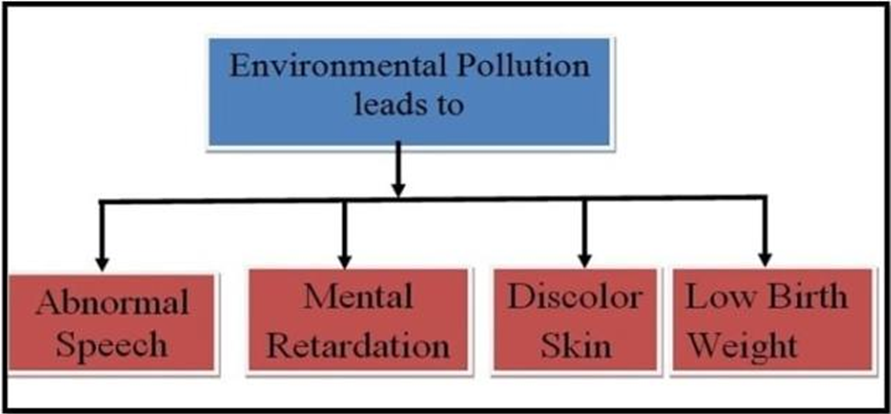
Radiation: It can cause severe malformations and death before birth. Even small doses of radiation in the first trimester of pregnancy cause serious damage to the embryo. Most Japanese women who became pregnant during the atomic bombings of Nagasaki and Hiroshima had miscarriages, most died in the first year, and many babies had mental retardation and organ abnormalities [5]. Exposure during prenatal development can cause fetal death, skeletal defects, growth retardation, anencephaly (absence of a brain) and microcephaly (small brain) [6]. It is also thought to increase the risk of cancer and cause genetic defects that can be passed on to future generations [5, 8].
Chemical pollution: It is very difficult to say that chemical pollution has a direct effect on pregnancy and growth after birth. In addition to chemical pollution, many factors can lead to births with disabilities. Studies show that lead and mercury contribute to birth defects, while PCBs and too much vitamin A have a negative effect on fetal development [3].
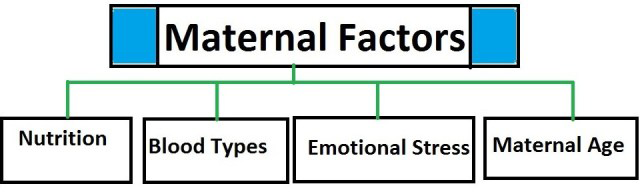
Maternal factors: The maternal factors also influence prenatal development. If women can regularly exercise (Morning walk, Evening walk) then increase their birth weight. Examples of maternal factors. They are nutrition, emotional stress, blood type, maternal age, and previous births (Figure 2).
Medical problems: Sexually transmitted diseases, maternal infections, hormonal and chemical imbalances, blood incompatibility, maternal emotional stress, early pregnancy and pregnancy toxaemia are factors associated with medical problems affecting motor development in the prenatal period.
Sexually transmitted diseases: Sexually transmitted diseases such as AIDS, chlamydia, genital herpes, gonorrhoea and syphilis, which are passed from mother to child, have serious effects on new born babies. The effects of AIDS in a newborn can include fever, weight loss, lethargy, diarrhoea, pneumonia and even death. Chlamydia can cause premature birth, stillbirth, pneumonia, eye infections or blindness. Genital herpes can cause brain damage or death in babies, and gonorrhoea can cause ectopic pregnancy and eye damage. Syphilis passed from mother to baby can cause severe illness, nervous system damage and even death [3].
The development of children born to mothers who are infected during pregnancy is affected. Many infectious diseases such as tuberculosis, malaria, typhoid and syphilis are transmitted from mother to child. The health of the mother is an important factor in whether the baby is born overweight or very weak [2]. Studies show that after a rubella epidemic, most babies are born deaf, blind, mentally retarded or with heart defects, while syphilis causes mental retardation, cataracts, heart defects, deafness, cleft palate, cleft lip, spina, bifida, hydrocephalus, and fetuses. shows that it causes death [3]. Hormonal and chemical imbalances Inadequate hormonal and chemical environment in thyroid patients, congenital hypothyroidism (inability of the thyroid gland to produce as much hormone as needed) and cretinism (lack of development and intelligence in the child) occur in the baby due to the absence of thyroxine hormone in the mother’s blood during the first few months of pregnancy. In mothers with diabetes, if the disease is not controlled, it can cause mental retardation, circulatory and respiratory problems in babies, and even death [5].
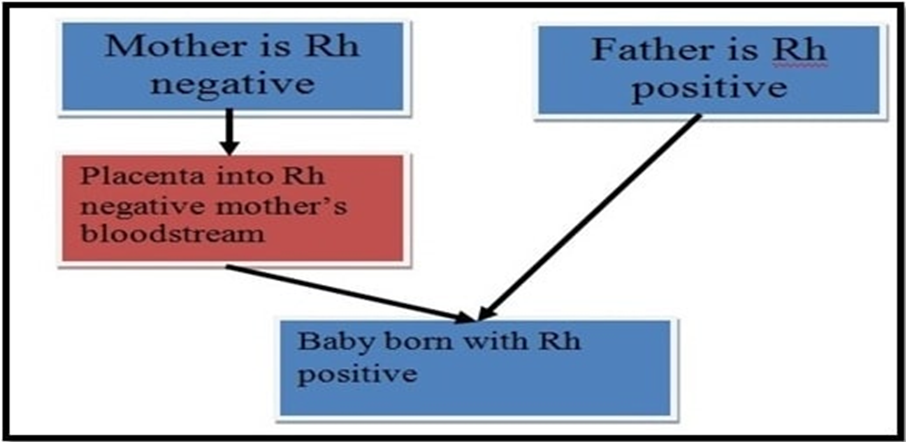
Blood Incompatibility: Blood incompatibility between the child to be born and the mother causes some damage to the cells of the foetus. This can result in miscarriage, premature birth, death of the child immediately after birth or permanent disability [2]. If the mother is Rh (-) and the father is Rh (+), the foetal blood may be Rh (+). Normally, maternal and fetal blood do not mix, but small tears in the capillaries can cause mixing. The mother’s blood recognises the Rh(+) factor as foreign and produces antibodies to destroy it, and when the antibodies cross the placenta they attack the red blood cells, which are very important in transporting blood to the foetus [5, 8].
Early pregnancy Maternal age: It affects fertilisation, embryo formation, foetal growth and development, timing of delivery and care of the child [6]. Women who become pregnant under the age of twenty and over the age of thirty-five suffer miscarriages, stillbirths, birth defects and problems during pregnancy and childbirth [6]. The risk is even greater if the first birth occurs after the age of forty. The elasticity of the pelvic structures is reduced. Both early age and advanced age adversely affect embryo formation and child development. The risk of birth defects and chromosomal abnormalities increases [6].
Diagnosis and Diagnosis in Pregnancy: Various methods are used to diagnose abnormalities that may occur during the development of the foetus. The most commonly used are amniocentesis, chorionic villus biopsy (CVB), ultrasound and fetoscopy. These techniques are very useful in determining the level of foetal development. By using these tests, it is possible to determine the development of the foetus, its size, sex, whether there is an abnormal condition or whether the baby is a child with Down’s syndrome, and necessary precautions can be taken in advance. Exercise during pregnancy. It is stated that exercise during pregnancy, by controlling the form, duration, frequency and intensity of exercise, has positive effects on both mother and baby. It is said to increase the mother’s cardiovascular endurance, reduce weight gain, help with labour, and have positive psychological and emotional effects. It is said to provide a low fat rate in the unborn baby, increase resistance to stress and, in the long term, provide a more even body composition in the early childhood years for the child. It is recommended that pregnant women continue to exercise under the supervision and recommendations of their doctors [3]. Birth factors; although the newborn is extremely resistant to birth trauma and has remarkable strength, a complication can cause damage. Lack of oxygen and unexpected pressure on the baby’s head are the two main complications of labour and delivery. Sudden pressure can damage the brain by causing intracranial haemorrhage. Preventing sudden pressure is the most important thing to consider during labour and delivery [4].
Materials and Methods
Research Model
In this study, a literature review has been conducted using scientific research methods related to the topic in Turkey and abroad. Realised studies Journal park Academic Databases of National Academic Network and Information Center (ULAKBİM) and EBSCOhost Research Databases (Ex: ERIC, Sportsdicuss etc.). The range of years for the studies was not selected and all studies related to the topic published in scientific journals were searched in detail. Different keywords were used to find these studies in the databases.
These were: preschool, preschool children, motor skill applications, motor skill programmes, basic motor skills and these combinations of keywords (e.g. preschool children and motor skill programmes).
Discussion and Conclusion
Oxygen deficiency causes cerebral palsy, epilepsy or mental retardation due to the destruction of brain cells. It has been suggested that oxygen deficiency at the time of birth can range from mild problems such as great absent- mindedness, latent learning difficulties, low threshold for frustration, poor coordination, to serious problems such as mental retardation, seizures, and cerebral palsy [5]. Postnatal Factors Factors affecting motor development after birth can be examined under three main headings: individual, environmental and physical factors. Factors Affecting Postnatal Motor Development; Individual Factors, direction of development, pace of development, differentiation and integration, readiness, critical and sensitive learning period, personal differences, phylogeny and ontogeny. Environmental Factors, attachment, stimulus richness and deprivation.
Physical Factors; premature birth, nutrition, eating disorder, illness and climate, fitness level, exercise and disability, biomenics. Individual Factors, Direction of development, speed of development, differentiation- integration, readiness, critical-sensitive learning period, personal differences and phylogeny-ontogeny can be listed as individual factors that affect motor development throughout life [3]. Direction of Development as a result of his observational studies, Gessell noted that as the nervous system develops, coordination and motor control also develop, and the predictable sequence in physical development is from head to toe (Cephalocaudal) and from the center to the outside of the body (Proximadistal). For example, in the fetal period, first the head, then the hands and then the feet are formed. Preschool children’s ability to use the lower limbs is at a lower level than the ability to use the upper limb. This is due to incomplete cephalocaudal (Head to toe) development. The second aspect of development, proximodistal (From the center out) development, refers to the control of the child’s muscles towards the farthest points from the center. For example, it is stated that the wrist gains control before the hand and fingers [3].
The Speed of Development The growth rate of individuals has a typical course that is universal for everyone and resistant to external factors. In case of growth arrest due to reasons such as disease, the growth rate ensures that the child reaches the level of his peers [3]. For example, although this flexibility in development may delay the child’s gaining height, weight and mobility in a severe illness, the child will be able to return to his own growth pattern after the illness. Differentiation and Integration When the motor development of the child is examined in terms of the neuromuscular system, it is seen that motor behaviors progress in a coordinated but complex manner and are related to maturation. The gradual progress of children and young people towards more functional and skilful movements from the movement patterns of infancy is called “differentiation”. For example, a small baby has very poor manipulative skills such as reaching, catching and releasing, and little movement control. But as the child develops, he distinguishes between various muscle groups and begins to gain control. Integration refers to the coordinated interaction of various muscle groups and sensory systems with each other [3, 4, 8].
When a baby tries to catch an object, it gradually progresses from unlimited catching movements to more mature reaching and catching movements with the contribution of vision. Differentiation of arm-hand and finger movements is very important to ensure hand-eye coordination. This differentiation occurs with the movement of the hands and the use of the eyes together [3, 4]. In short, due to maturation, the gradual progression of the child’s movement patterns from coarse to fine is expressed as differentiation, and the harmonious functioning of muscle groups and sensory systems is expressed as integration [3]. Readiness Readiness can be defined as the combination of task requirements, an individual’s biological makeup, and environmental conditions necessary to perform certain skills. Readiness emerges as a result of a combination of many factors. In other words, it is the readiness of all the necessary conditions for the individual to fulfill certain skills. Physical and mental maturation, interaction with motivation, necessary prerequisites for learning, and enriched environment are factors that affect readiness [3]. Critical and Sensitive Learning Period The concept of critical or sensitive learning period is of great importance in understanding how environmental factors hinder development. During the formation of the fetus, every organ develops at certain times, and if there is an external effect during this period, the development process may be disrupted and irreparable damages may be left in any period of life. For example, an external effect (radiation, alcohol, chemical substances) during the formation of the brain in the prenatal (prenatal) period is one of the causes of permanent damage [4]. The time of emergence of each ability is different in children, normal development may be hindered if appropriate environments and appropriate interactions are not present during this period. For example, malnutrition, pressure, unstable motherhood, deprivation of environment are factors that have negative effects on the development of the child (Especially at 0-6 years old). In other words, early ages are considered critical periods in terms of mental, social, emotional, physical and language development [3, 4, 9, 10, 11, 12, 13, 14, 15, 16].
Personal Differences, the developmental timeline, which is the result of the combination of heredity and the effects of the environment, is different for each individual. Each child progresses in their own developmental line, following a predetermined sequence. They state that behavioral differences that cannot be explained by age can be explained with concepts such as experience, education, and socialization [4]. In general, individual differences are seen in motor abilities that emerge from six months to one year, and these individual differences help explain why some children are not ready to learn new skills [3]. Phylogeny and Ontogeny Many primitive skills of infants and many basic movement abilities of young children are considered phylogenetic skills. Phylogenetic skills; arise automatically and can be observed in a predetermined sequence throughout the maturation process. Phylogenetic abilities show resistance to environmental factors. The acquisition of basic manual skills (Holding, releasing), large muscle control and basic locomotor skills (Walking, running, jumping, etc.) can be given as examples of phylogenetic skills. Ontogenetic skills are primarily dependent on learning and environmental opportunities. For example, skills such as swimming, cycling, ice skating, tennis are called ontogenetic skills because they do not arise spontaneously and require individual work. Many phylogenetic skills can also be affected by environmental factors. The level and quality of any movement ability (walking, running) is in a way based on ontogenetic or environmental factors. Factors such as practice, support, and encouragement significantly help motor skill development [3, 4, 8].
Acknowledgement
Special thanks to all the subjects who willingly who were took part in this study.
Conflict of Interest
The authors declare no conflict of interest.
Informed Consent Statement
All the subjects who were took part in the study provided informed consent.
References
-
Gümüsdag H, Yildirim M (2021) Motor development in children in sports science. 2nd (Edn.), Nobel Academic Publishing, Ankara.
-
Gökmen H, Karagül T, Aşçı FH (1995) General directorate of psychomotor development, Youth and Sports Publications, Gökçe Ofset, Ankara.
-
Gallahue DL, Ozmun JG (2006) Understanding motor development: ınfants, children, adolescents, adults. New York; 6th Ed. International Edition, Mcgraw-Hill Companies.
-
Özer D, Özer K (2002) Motor development in children. Nobel Yayın Evi, Ankara.
-
Gander JM, Gardiner WH (2001) Child and adolescent development. (Translation: B. Onur) 4th (Edn.), Imge Bookstore Publications, Ankara.
-
Neyzi O, Ertuğrul TY (2002) Pediatrics. Nobel Medical Bookstore, Ankara.
-
Baysal N (1983) Examination of language development of children with down’s syndrome. Master’s Thesis, Hacettepe University, Department of Child Health and Development, Ankara.
-
Gabbard CP (1996) Lifelong motor development. 2nd (Edn.), Usa; Brown and Benchmark Publishers
-
Yavuzer H (2000) Child Psychology, Altın Kitaplar, İstanbul.
-
Ersoy Ö, Avcı N (2000) Children with Special Needs and Education. Special Education. Istanbul: YA-PA Publications, pp: 158.
-
General Directorate of Sports Services (2018).
-
Yıldırım A, Şimşek H (2013) Qualitative Research Methods in Social Sciences, Seçkin Publishing, Ankara.
-
Ersöz, Esen (2023) An Overview of Paralympic Sport from a Historical and Psychosocial Perspective. Int J Disabil Sports Health Sci 6(1): 475-489.
-
Prerna O (2023) Current policies and gaps in programs for Persons with Disability in India: An Exploratory Study. Ann Physiother Occup Ther 6(2): 000250.
-
Savucu Y, Sirmen B, İnal S, Karahan M, Erdemir İ (2006) Determination of the Effects of Basketball Training on Physical Fitness in Mentally Disabled Individuals, Fırat University. Journal of Health Sciences 20(2): 105-110.
-
https://psychologyeducational.com/maternal-factors- in-prenatal-development/blogs/
- Electrolyte Considerations for Athletes
- Comprehensive Rehabilitation in Adults with Diabetic Peripheral Neuropathy: A Literature Review on Frequency, Intensity, and Duration Parameters
- Exercise Duration and Its Association with ADHD Symptom Severity in Children and Adolescents: A Parent-Reported Survey Study
- Adaptation of the Adult Neurophysiology of Pain Questionnaire for Use in Pediatrics
- A Non-Pharmacological Multidisciplinary Pain Program within a Hospital Wellness Program: A Mixed Methods Study
- The Effect of Frenkel's Exercise with PNF on Functional Reach in Stroke Survivors: A Randomized Control Trial