
Anti-Inflammation Effects of Rosmarinus Officinalis Extract against Covid19 Virus (In Silico Study)
The critical condition of acute respiratory covid19 syndrome appeared to be the current health concern worldwide. It appeared at the beginning in Wuhan, China by end of 2019, soon after it spread to almost most of the global countries because of its high contagious properties. Precautionary procedures were the only helpful method to control the transmissions of person to person until any proper method of treatment or vaccine is established. Rosmarinus officinalis (RM) has strong anti-inflammation, anticancer and antibacterial effect. It is one of the probable choices of study against the outbreak of covid19 disease. In present article, we study in silico (molecular docking) characteristics of active compounds available in RM that is usually consumed as food additives and compare its biological effect with remdesivir and favipiravir as positive compounds based on docking properties. The actual active compounds in RM were selected based on their major roles in RM with desirable pharmacologic effects. The obtained results showed that both selected compounds were much stronger in inhibition of the studied proteins compared with remdesivir and favipiravir. Based on the combined scores in binding affinity, the drug-likeness properties of the ligands, showed to be better possible covid19 inhibitor compared with selected positive controls. The analysis of active site also showed that RM active compounds probably have the therapeutic efficacy against covid19 virus.
Introduction
SARS-CoV-2 (Covid19) as the pandemic of 20th century is the reason of an unusual human health crisis in the world. Covid19 virus is considered to have more infectious characteristics in comparison with MERS-Co virus [1]. The spread rate of covid19 is very high worldwide. Over 100 million people in the world have been affected within one year [2]. World health organization (WHO) has advised remdesivir and favipiravir to use in emergency cases for life- threatening stages of the infection with covid19 virus [3]. The genome structure of covid19 virus has some similarities to SARS-Co virus [4]. Covid19 is a single stranded RNA which is basically in spherical form. They have been categorized to four individual groups: α, β, ɣ, and δ. Two types of gamma and delta are principally dependent on hosts, while α and β are human and other local pathogens dependent. They are likely to be transferred in cross-species [5]. SARS-Co and MERS-Co viruses are characterized in β genus of coronavirus and are associated with serious respiratory tract infection with mortality rate of 5% and 35%, respectively [6, 7]. Spike receptor of covid19 virus with identified PDB ID of 6M0J in protein data bank is one of the primary targets that scientists tried to discover small molecules in order to suppress it.
This is one of the target macromolecules that have attracted researchers in drug discovery against covid19 [8]. They aimed to develop novel small molecule that is able to inhibit the target protein. Moreover, due to high rate of mutation in covid19 virus, evaluation of such studies needs to be done using mutant version of spike protein with identified PDB ID of 7NX7 and its main peptidase with PDB ID of 2GTB. This peptidase is facilitating the entrance of the virus to the tract of airways [9].
Rosemary (Rosmarinus officinalis (RM) in the family of Lamiaceae is considered in food consumption. RM is bushy shrub which grows as evergreen plant the Mediterranean Sea, and also sub-Himalayan areas [10]. However, RM extract showed some bioactive compounds with antimicrobial and anticancer, anti-inflammation and anti-depressant effects [11]. Chemical evaluation of RM has shown the presence of rosmarinic acid (RA) and carnosic acid (CA) in high concentration which inhibited different types of cancer cells due to significant anti-inflammation effect [12]. The concentration of these compounds varies in different species due to plantation method and climate [13]. This study aimed to simulate the inhibitory effects of CA and RA against spike and mutant version of spike protein and SARS coronavirus main peptidase. It helps to predict possible biological and pharmacological advantages of RM main compounds in inhibition of the amino acids at the active pocket of targeted studied proteins in SARS-Covid-19 virus.
Materials and Methods
Protein Preparation
Software
Python language was downloaded from www.python. com, Molecular graphics laboratory (MGL) tools was also downloaded from http://mgltools.scripps.edu. Version 0.8 of PyRx was obtained from https://pyrx.sourceforge.io/. Discovery studio visualizer 2017 used in this study was downloaded from http://accelrys.com website.
Methods
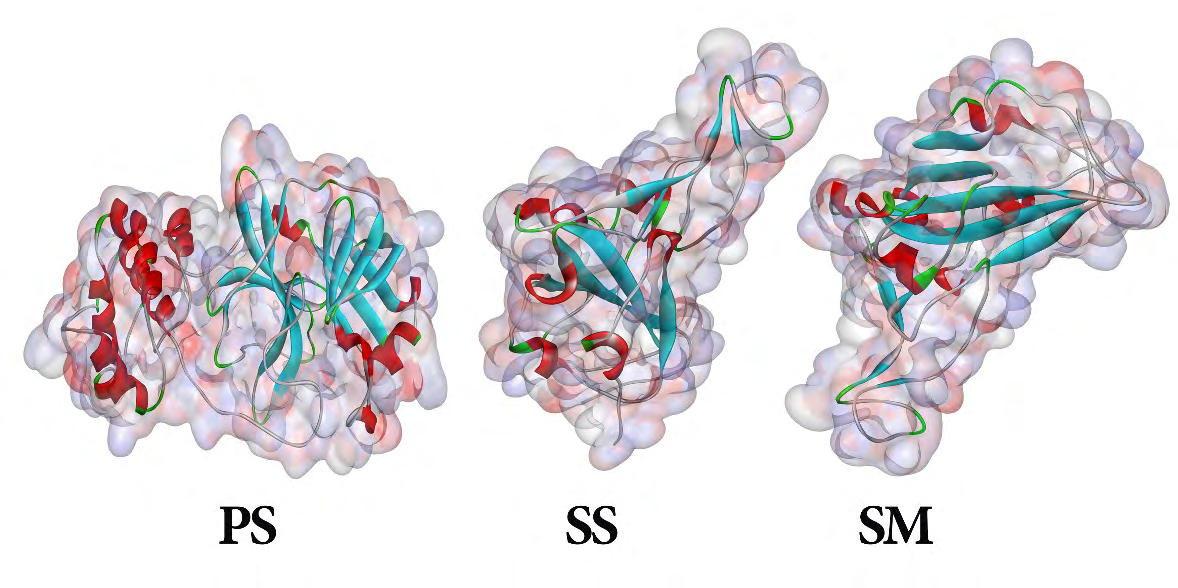
Three dimensional crystal structure of covid19 target Spike with PDB ID: 6M0J (SS), mutant version of target spike with PDB ID: 7NX7 (SM) and main peptidase of covid19 virus with PDB ID of 2GTB (PS) were selected and downloaded from Protein Data Bank (www.rvcsb.org/pdb) (Figure 1) [14]. All the complexes interacted with the receptor molecule, non-essential water molecules as well as heteroatoms were removed and then, hydrogen atoms were added to the target receptor molecules using Argus Lab.
Ligand Preparation
The identified structures of active compounds were downloaded from Pubchem website. Conversion of SDF format to PDB was done using Discovery studio visualizer and further used for docking studies.
The starting structures of the protein was prepared using AutoDock1.5.6 tools. All the water molecules were deleted, polar hydrogen and Kollman charges were then added to the protein starting structure. Grid box was set with the size of 126×126×126Å with the grid spacing of 0.375 Å at the binding site. The molecular structure for both ligands namely RA and CA were constructed using BioVia draw. Favipiravir (FVP) and remdesivir (RMV) were selected as positive controls. Their structures were obtained from Pubchem website. Gasteiger charges also were assigned to optimized ligands using Autodock1.5.6 Tools. 100 docking runs were conducted with mutation rate of 0.02. The crossover rate was 0.8. The population size was adjusted to use 250 randomly placed individual. Lamarckian Genetic algorithm was used as the searching algorithm with translational step of 0.2 Å, a quaternion step of 5 Å as well as torsion step of 5 Å. The most populated and lowest free binding energy will be selected as the final result.
Results and Discussion
The actual docked conformation of SS, SP and PS with active conformation of each ligand consists of RA, CA, FAV and REV clearly revealed that numerous potential interactions were present (Figures 2 & 3).
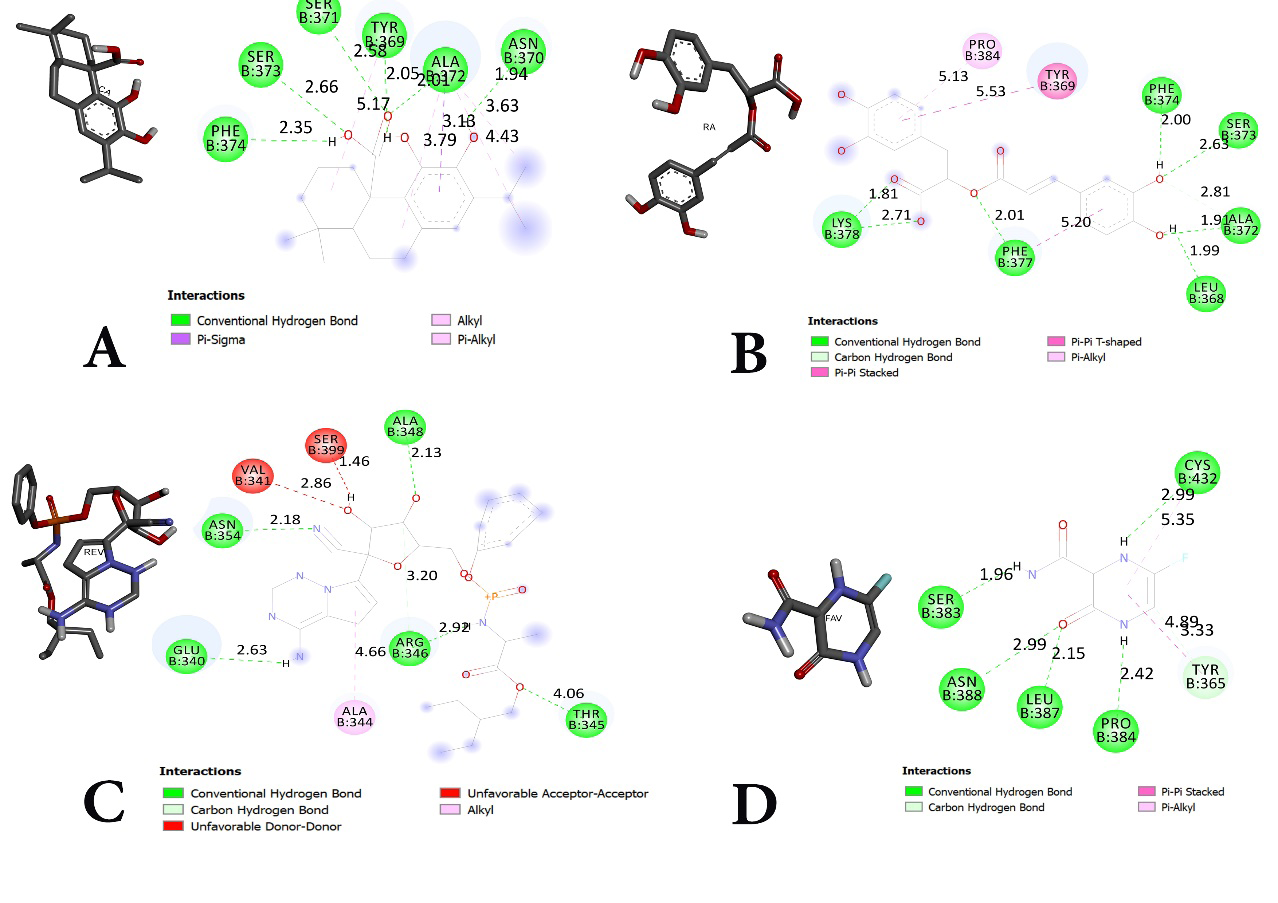
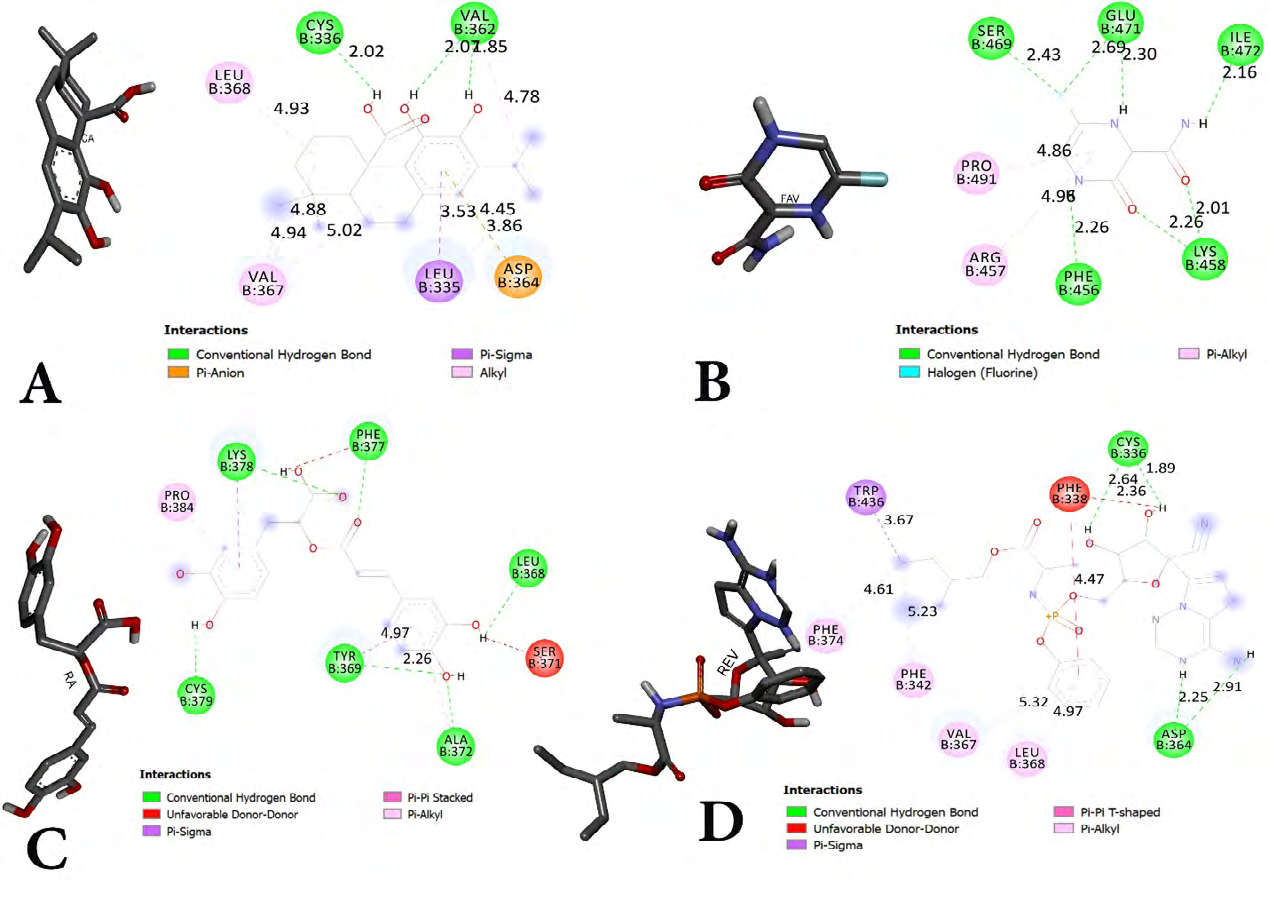
The molecular docking results after interaction between SS and RA (Figure 2) showed six hydrogen bonds with PHE374, SER373, ALA372, LEU368, PHE377 and LYS378 that except PHE374 and PHE377 all others were in interaction with hydroxyl group of RA which was linked to aromatic ring.
This increased the stability of the interaction between SS and RA with free binding energy of -8.07 Kcal/mol and Ki of 1.22 µM as the highest affinity towards SS among ligands and its three-dimensional interaction is shown in figure 5.
CA showed also six hydrogen bonds with SS in PHE374, SER373, SER371, TYR369, ALA372 and ASN370 with free binding energy of -6.36 Kcal/mol. FAV which was chosen as first positive control showed five hydrogen bonds with CYS432, SER383, ASN388, LEU387 and PRO384 after interaction with SS. It showed free binding energy of -5.11 Kcal/mol. REV as second positive control compound has shown five hydrogen bonds via ALA345, ASN354, GLU340, ARG346 and THR345 after interaction with SS. It showed alkyl bon with ALA344 with free binding energy of -5.27 Kcal/mol (Table 1).
| FBE(Kcal/mol) | SP | SM | SS |
|---|---|---|---|
| REV | -7.13 | -4.87 | -5.27 |
| FAV | -4.65 | -5.22 | -5.11 |
| RA | -7.57 | -7.59 | -8.07 |
| CA | -7.72 | -6.54 | -6.36 |
| Ki | SP | SM | SS |
| REV | 5.94 uM | 269.59 uM | 137.00 uM |
| FAV | 390.78 uM | 148.49 uM | 179.45 uM |
| RA | 2.81 uM | 2.72 uM | 1.22 uM |
| CA | 2.20 uM | 16.16 uM | 21.88 uM |
Table1: Free binding energy and Ki of ligands after interaction with SS, SM and PS proteins.
As it is shown in figure 3 after evaluation of docking results between SM and ligands demonstrated RA with highest affinity towards SM. RA demonstrated five hydrogen bonds with SM via PHE377 and LYS378 which was in interaction with oxygen of carboxylic group in RA structure with free binding energy of -7.59 Kcal/mol. CYS379, TYR369 and ALA372 in SM were in hydrogen bond interaction via hydroxyl group bound to aromatic ring in RA structure as well. This caused more stability of the interaction in active pocket compared with other ligands. CA showed two hydrogen bonds via 362 and CYS336 after interaction with SM. It showed pi sigma bond via LEU335 and alkyl bond via VAL367 and LEU368. FAV demonstrated five hydrogen bonds via SER469, GLU471, ILE472, PHE456 and LYS458 with free binding energy of -5.22 Kcal/mol. REV demonstrated two hydrogen bonds from CYS336 and ASP364. It showed alkyl bonds via four amino acid residues of PHE374, PHE342, VAL367 and LEU368 with free binding energy of -4.87 Kcal/ mol. Molecular docking results after PS exposure to ligands demonstrated in Figure 4.
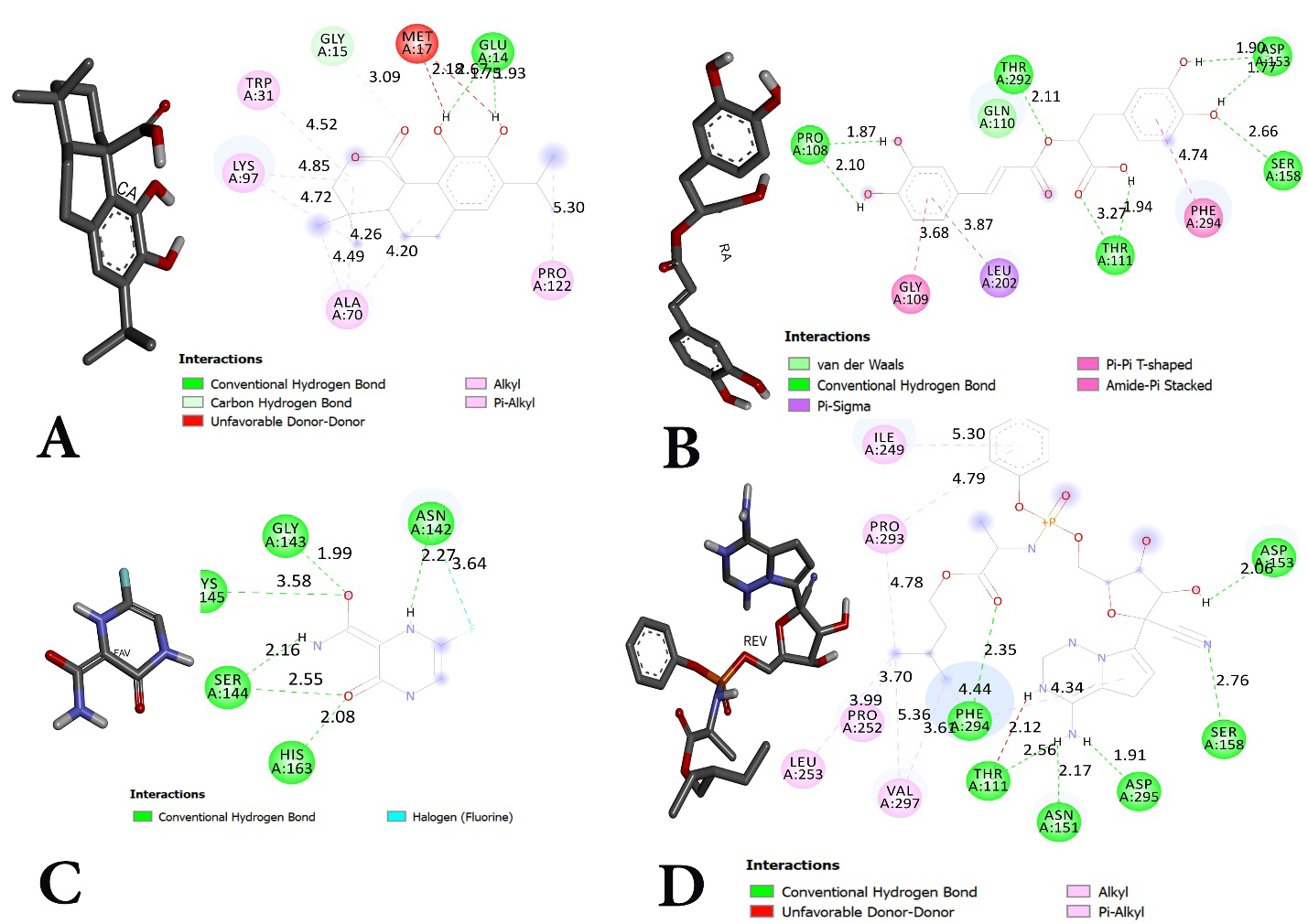
It showed RA to have five hydrogen bonds with PS via PRO108, THR292, ASP153, THR111 and SER158 that THR111 was in interaction with carboxylic group in RA structure with free binding energy of -7.57 Kcal/mol. CA showed hydrogen bond via GLU14 with hydroxyl group bound to aromatic ring in ligand structure. It demonstrated four alkyl bonds via TRP31, LYS97, ALA70 and PRO122 with free binding energy of -7.72 Kcal/mol showed the ligand with highest affinity towards PS. FAV showed five hydrogen bonds via ASN142, GLY143, CYS145, SER144 and HIS163. It showed halogen bond of ASN142 and fluorine atom in FAV with free binding energy of -4.65 Kcal/mol. REV showed six hydrogen bonds via ASP153, SER158, ASP295. It showed few alkyl bonds with ILE249, PRO249, PRO252, LEU253 and VAL297 with free binding energy of -7.13 Kcal/mol.
The selected ligands with highest affinity towards studied protein are shown in Figure 5.
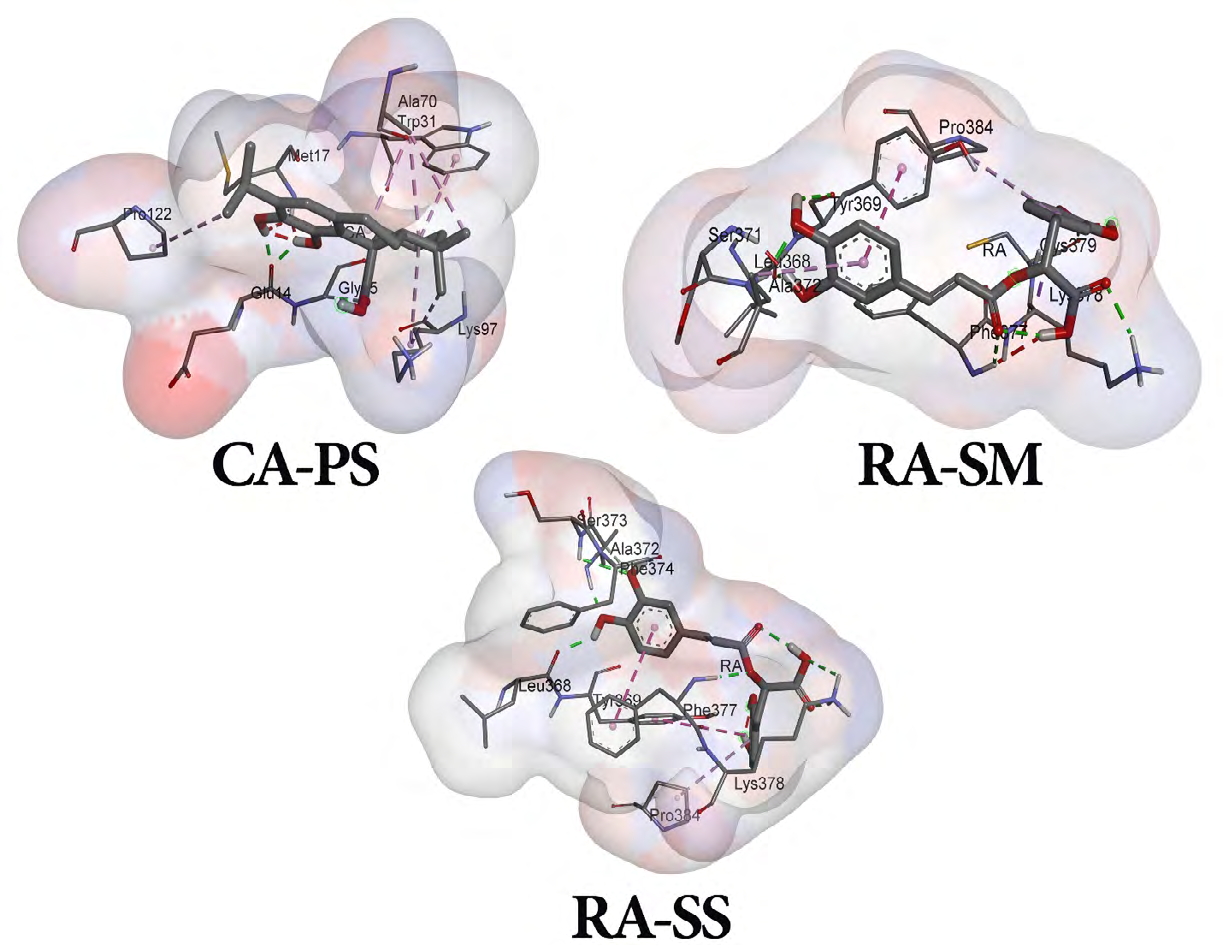
It showed RA as the more desirable ligand for the inhibition of SS and SM. Moreover, CA was selected as the best ligand for the inhibition of PS.
It suggests that RA and CA after interaction with studied proteins showed stronger affinity than selected positive drugs against covid19. Moreover, the availability of two studied active compounds in rosemary extract, there is possibility of having synergistic effect and causes much stronger affinity towards inhibition of studied proteins than FAV and also REV. However, this needs further study to be confirmed.
Conclusion
Molecular docking analysis of the main identified active compounds in Rosmarinus officinalis against COVID-19 spike, mutant form of spike and peptidase target proteins has been studied. Both analyzed ligands score binding affinity were better than the remdesivir and favipiravir. Moreover, since in rosemary extract naturally both studied selected compounds are present so their synergistic effect may have more potential in inhibition of the target proteins in covid19 virus and may have the potential for the treatment of the affected patients.
Conflict of Interest
The authors declare that there are no conflicts of interest.
References
-
Muneer MA, Munir K, Abbas G, Munir I, Khan MA, et al. (2021) Facts and Figures on Covid-19 Pandemic Outbreak. Pakistan Journal of Zoology 53(3): 1119-1129.
-
Stein RA (2020) The 2019 coronavirus: Learning curves, lessons, and the weakest link. International journal of clinical practice 74(4): e13488.
-
Costanzo M, De Giglio MA, Roviello GN (2020) SARS-CoV-2: recent reports on antiviral therapies based on lopinavir/ritonavir, darunavir/umifenovir, hydroxychloroquine, remdesivir, favipiravir and other drugs for the treatment of the new coronavirus. Current medicinal chemistry 27(27): 4536-4541.
-
Nguyen TT, Pathirana PN, Nguyen T, Nguyen QVH, Bhatti A, et al. (2021). Genomic mutations and changes in protein secondary structure and solvent accessibility of SARS-CoV-2 (COVID-19 virus). Scientific reports 11: 1-16.
-
Shang J, Han N, Chen Z, Peng Y, Li L, et al. (2020). Compositional diversity and evolutionary pattern of coronavirus accessory proteins. Briefings in bioinformatics 22(2): 1267-1278.
-
Chafekar A, Fielding BC (2018) MERS-CoV: understanding the latest human coronavirus threat. Viruses 10(2): 93.
-
Pascarella G, Strumia A, Piliego C, Bruno F, Del Buono R, et al. (2020) COVID‐19 diagnosis and management: a comprehensive review. Journal of internal medicine 288(2): 192-206.
-
Sachdeva C, Wadhwa A, Kumari A, Hussain F, Jha P, et al. (2020) _In silico_ potential of approved antimalarial drugs for repurposing against COVID-19. OMICS 24(10): 568- 580.
-
Solerte SB, Di Sabatino A, Galli M, Fiorina P (2020) Dipeptidyl peptidase-4 (DPP4) inhibition in COVID-19. Acta diabetologica 57(7): 779-783.
-
Rahbardar MG, Hosseinzadeh H (2020) Therapeutic effects of rosemary (Rosmarinus officinalis L.) and its active constituents on nervous system disorders. Iranian journal of basic medical sciences 23(9): 1100-1112.
-
Guo Y, Xie J, Li X, Yuan Y, Zhang L, et al. (2018) Antidepressant effects of rosemary extracts associate with anti-inflammatory effect and rebalance of gut microbiota. Frontiers in pharmacology 9: 1126.
-
Yesil-Celiktas O, Sevimli C, Bedir E, Vardar-Sukan F (2010). Inhibitory effects of rosemary extracts, carnosic acid and rosmarinic acid on the growth of various human cancer cell lines. Plant foods for human nutrition 65(2): 158-163.
-
Wellwood CR, Cole RA (2004) Relevance of carnosic acid concentrations to the selection of rosemary, Rosmarinus officinalis (L.), accessions for optimization of antioxidant yield. Journal of agricultural and food chemistry 52(20): 6101-6107.
-
Fang S, Li L, Cui B, Men S, Shen Y, et al. (2013). Structural insight into plant programmed cell death mediated by BAG proteins in Arabidopsis thaliana. Acta Crystallographica Section D: Biological Crystallography 69( Pt 6): 934-945.
- Effects of 5-HTP and Melatonin on the Sleep Cycle of Medical Students
- Adsorption of Bisphenol A on NH4OH- Modified Rice Husk and Sugar Cane Bagasse Biochar
- Comparative Assessment of the Reinforcement Efficiency of Palm Fruit Fibre and Coconut Fibre in High Density Polyethylene (HDPE) Matrix Composite
- Importance of Bio Compounds Naturally Present in Food with Functionality in Animal Metabolism
- Sub-Acute Study on the Cardiotoxic Effects of Monosodium Glutamate Ingestion in Albino Rat
- Weight Management and Its Natural Solutions: A Review