
A Typical Properties of Nanomaterials for Applications in Drug Delivery: A Review
Developing a new drug molecule is an interdisciplinary research. A new drug molecule takes 10-14 years to develop with a 0.01% success rate. The developed new drug is administered as conventional or sustained release dosage forms. Among the conventional and sustained release dosage forms, sustained release form has many advantages. In the 21st century, nanotechnology has become an innovative field and the nanomaterials/nanoparticles made by this technology had specific atypical properties. An extensive research interest among the researchers made a new revolution and its application almost in all the fields. This nanotechnology in medicinal profession especially in drug delivery has developed several products for the treatment and cure of many diseases. This article summarizes the different nanomaterials, its atypical properties and outlines the different methods of nanoparticle preparations for applications in drug delivery
Introduction
New drug discovery and development is a multi- disciplinary research process. For the few decades’ this new drug discovery and development for the treatment of different diseases has achieved new dynamic stage. Drug discovery and development are the two major steps involved in this new drug development process; this new drug development process comprises identification of disease target, synthesis of new drug molecule, screening for its physicochemical properties and biological activity. Both preclinical and clinical studies are performed for the new drugs to ensure its safety, efficacy and desired therapeutic effects. Around 10-14 years are needed to develop a new drug molecule with success rate of 0.01% [1, 2, 3]. Subsequently the developed new drug will be delivered either as conventional or sustained/controlled release dosage forms with a desired concentration to treat the disease. These conventional dosage forms have some limitations whereas sustained release dosage forms have some advantages.
In the 21st century, nanotechnology has become an innovative field and made a new revolution in science with its extraordinary applications [4]. It’s an interdisciplinary approach helps in developing new agents with a highly ordered particle in nanoscale dimension of both organic and inorganic oxide [5]. The word “nano” is derived from Greek word with the meaning of “swarf” (very small or miniature size) [6]. Nanoparticles are defined as structures with a size of 1 to 100 nm in at least one dimension, according to the National Nanotechnology Initiative (NNI). Nanotechnology
is the study of incredibly small structures that are created by manipulating materials on a near-atomic scale. These nanoscale dimension particles have peculiar properties like optical, electrical, mechanical, magnetic, etc. This peculiar properties of nanoparticles showed commercial application in all the fields such as agriculture, environmental science, engineering, electrical and electronics, medicine, pharmaceutical, cosmaceutical, consumer products, biomedical, biotechnology, food, nutrition etc [7, 8]. Still, more research is focused in altering at the molecular and atomic levels to improve its peculiar properties also to attain the desired effects [9].
Especially in the pharmaceutical sciences, considerable interest in developing products based on nanotechnology with suitable polymers has been utilized as promising drug delivery system. Development and flexibility of this nanotechnological product have made an approach to reach the target site with desired concentration at right time. In addition, due to its high surface area to volume ratio at very low concentration itself showed remarkable activity in treating various diseases which can improve the patient’s health [10]. Hence these nanoparticles become the gorgeous alternative and can overcome the present need especially in the medicinal profession [11]. Several public and corporate organizations are working in the medical research especially in the nanoparticles to improve and meet the health care demand. Currently many nanotechnology products are available in the market to treat the disease such as cancer, AIDS, cardiovascular and inflammatory diseases etc.
The significant advantages of Nanomaterial in drug delivery systems are
- An ability to target specific locations in the body.
- Reduced quantity of drug is needed to attain the target site.
- Reduction of the concentration of the drug at non-target sites and other organs which minimize severe side effects [12, 13].
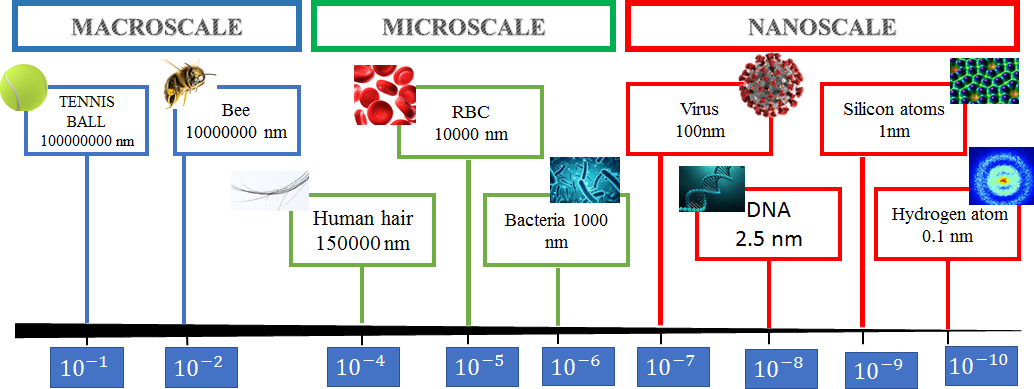
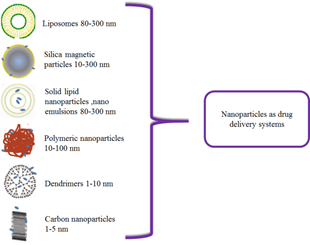
A comparison of scale units in a drug delivery system with various Nanomaterials [14] is shown in Figures 1 & 2.
Nanomaterials Classification and Properties
Nanomaterials have extremely small size which having at least one dimension 100 nm or less. They can exist in different forms such as single, fused, aggregated or agglomerated forms with spherical, tubular and irregular shapes. Nanotubes, dendrimers, quantum dots and fullerenes are common types of nanomaterials used in general [15, 16].
Nanomaterials are classed based on number of dimensions. They are classified as
- Zero dimensional
- One dimensional
- Two dimensional
- Three dimensional [17].
Zero Dimensional
In zero dimensional nanomaterial, the entire dimension can be measured within the nanoscale. Ex: Nanoparticle. Properties of zero dimensional nanomaterials are
- Amorphous or crystalline
- Single crystalline or polycrystalline
- Composed of single or multichemical elements
- Exhibit various shapes and forms
- Exist individual or incorporated in a matrix
- Metallic, ceramic, polymeric [17].
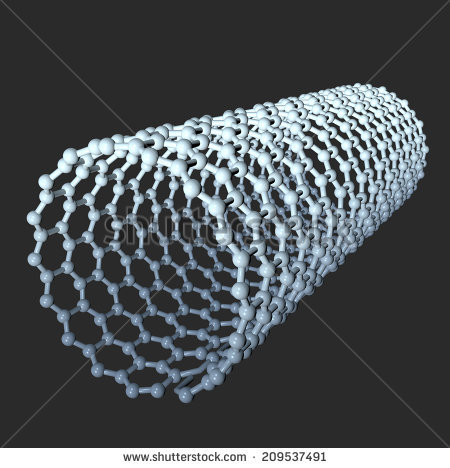
Schematic diagram for the zero dimensional nanomaterial-Nanoparticle [18] is shown in Figure 3.
One Dimensional
One dimensional nanomaterial, one dimension is outside the nanoscale. Ex: Nanotubes, nanorods and nanowires. Properties of one dimension nanomaterials are
- Amorphous or crystalline
- Single crystalline or polycrystalline
- Chemically pure or impure
4. Standalone materials or embedded in within another medium 5. Metallic, ceramic, polymeric [17].
Schematic diagram for the one dimensional nanomaterial –Nanotube [19] is shown in Figure 4.
Two Dimensional
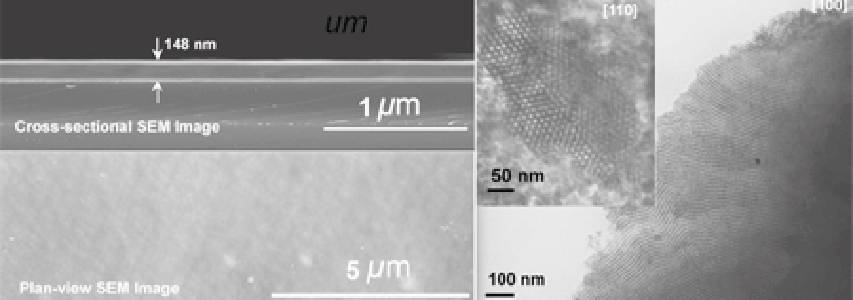
In two dimensional nanomaterials, two of the dimensions are not confined to the nanoscale, it exhibit plate like shape. Ex- Nanofilms, Nanolayers and Nanocoating.
Properties of two dimension nanomaterials are
- Amorphous or crystalline
- Made up of various chemical compositions
- Used as a single layer or as multilayer structure
- Deposited on a substrate
- Integrated in a surrounding matrix material
Three Dimensional
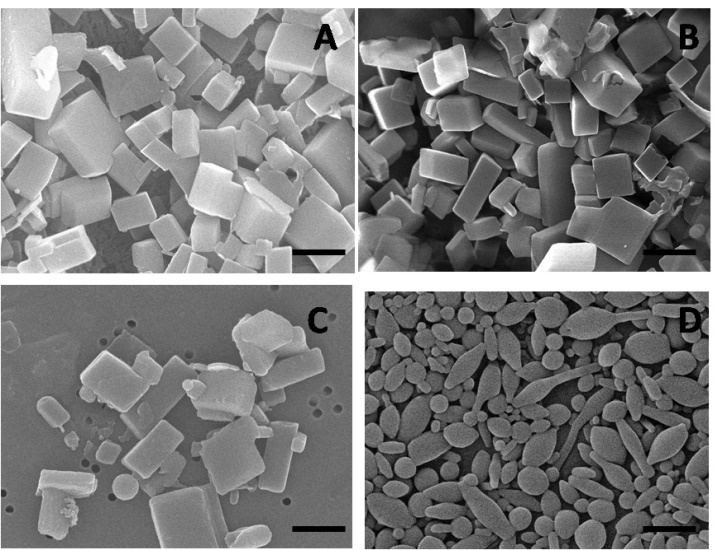
Bulk nanomaterials are known as three dimensional nanomaterials. These nanomaterials are not confined to the nanoscale in any dimension and having the dimension above 100 nm.
Properties of three dimension nanomaterials are
- Amorphous or crystalline
- Chemically pure or impure
- Composite materials
- Composed of multinanolayers
- Metallic, ceramic, polymeric [17].
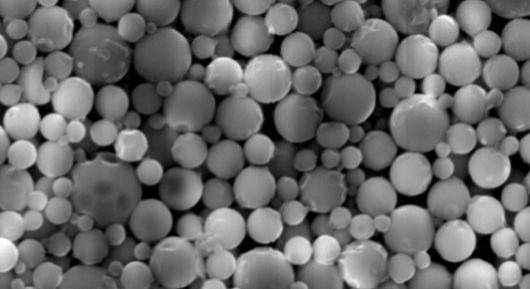
Schematic diagram for the three dimensional nanomaterial –Nanocrystals [21] are shown in Figure 6.
Peculiar Properties of Nanomaterials
Microstructure materials have similar properties to the corresponding bulk materials, whereas the nanoscale material have different ratio of surface area to volume which makes a large to be the surface or interfacial atoms, resulting in more “surface” dependent material properties. This ratio of surface area to volume has an important feature in nanoscience and nanotechnology. Different shape of the nanomaterials has different surface to volume ratios; which shows their diversity and different properties. Significant difference between the nanomaterials and its bulk materials are
- large fraction of surface atoms
- high surface energy
- spatial confinement
- reduced imperfections
Optical Properties
One of the attractive and most useful aspects of nanomaterials is its optical properties. Nanomaterials electronic configuration is significantly different from the bulk materials. Strong variations in the optical and electrical properties of the nanomaterials are based on its size which systematically changes the density of electronic energy level. Quantum confinement of electrical carriers within nanomaterials, charge transfer and efficiency energy are the key contributing factors for its optical property. Controlling the crystal dimensions, chemistry of its surfaces and fabrication technology are the other key factors for its optical property of the nanomaterials.
The optical properties of nanomaterials depends upon the parameters viz., feature size, shape, surface characteristics and other variables including doping and interaction with the surrounding environment or other nanostructures. Due to its optical properties the nanomaterial products are included in optical detector, laser, sensor, imaging, phosphor, display, solar cell, photocatalysis, photoelectrochemistry and biomedicine.
Electrical Properties
Electrical Properties of Nanoparticles is based on the electrical conductivity in nanotubes and nanorods, carbon nanotubes, photoconductivity of nanorods, electrical conductivity of nanocomposites.
Nanomaterials can hold more energy due to its large grain boundary area compare to its conventional one. Electrical conductivity of the nanomaterials is complex and has distinct mechanism based on its size. The electrical conductivity mechanism is classified into
- Surface scattering including grain boundary
- Quantized conduction including ballistic conduction
- Coulomb charging
- Tunneling Nanomaterials electrical conductivity is affected by reduced impurity, structural defects and dislocations, widening and discrete of band gap and changes in the microstructure.
In molecular electronics, single molecules can able to control the electron transport. This electron transport property plays an important role in the functions of electronic devices and in working circuits.
Mechanical Properties
Scale and properties: Materials has polycrystalline, nanocrystalline and amorphous structure, but most of the materials are polycrystalline (ordered crystals). Atomic dimension occur when the crystal size of the material shrinks from original crystal size.
Mechanical Properties of nanomaterials particles deals with bulk metallic and ceramic materials, influence of porosity, influence of grain size, superplasticity, filled polymer composites, particle-filled polymers and polymer- based nanocomposites filled with platelets, carbon nanotube- based composites.
Magnetic Properties
Saturation of magnetization and coercivity are the two units to measures the strength of magnet. Surface atoms of the nanomaterials are different from its bulk atoms. By interaction with the chemicals, the surface atoms can be modified. Capping with appropriate molecule the physical property of the nanoparticles can be modified. The magnetic property is increases with the decrease in grain size and increase in surface area. Due to its small particle size and high surface area, nanomaterials have good magnetic property. This magnetic property of the nanomaterials is utilized in ultra-sensitive analytical instruments and magnetic resonance imaging (MRI) in medical diagnostics.
Magnetism of the materials is categorized based on the quantum mechanical exchange interaction. Magnetism is categorized into three types. They are
Nanoparticles in Drug Delivery
In drug delivery system, delivering the drug at the desired target site has been considered as an ultimate task also it is a foremost problem. This endeavor opens up a large development field, prompting researchers to concentrate on the targeted drug delivery. Because of the advancement and adaptability of this nanotechnological product, a strategy to reaching the target site with the required concentration at the right time has emerged as a stunning alternative. Also the body’s defense mechanism is being evaded by nanoparticles which can improve the pharmacokinetic properties of the drugs. Diverse morphology of nanomaterials are utilized in drug delivery which includes drug conjugtes, nanoparticles, nanotubes, nanocapsules, micells, nanogels, dendrimers etc.
Nanomaterials size and shape play a vital role in delivering the drug at the target site. Cellular uptake, biocompatibility and retention of drug in organ and tissues can all be affected by the shape of the nanoparticle. By adopting the appropriate preparation procedure, suitable polymer as carrier, precise size and shape of nanoparticle can able to deliver the drug efficiently to the specified target site.
When compared to drug substances and polymers, hard materials such as silica, diamonds, and metal oxides can achieve particle sizes of less than 100 nm.
Generally, the hard materials have melting points above 1000°C, but the drug substances and polymer are soft in nature with the melting point below 300°C also to have stickiness. Therefore, preparation of nanoparticle from drug and polymer in the range of 1-100 nm has become a more challenging one. To prepare nanoparticle with the particle sizes ranging from 50 to 300 nm requires 104-108 molecules for drug delivery. This range of nanoparticles can be produced from either particle in millimeter size or in solution phase [33].
Nanoparticle –Drug Delivery preparation techniques Nanoparticle for the drug delivery can be prepared by the following methods [34, 35, 36, 37, 38]. They are
- Dispersion of preformed polymers • Solvent evaporation method • Solvent diffusion method • Nanoprecipitation method • Salting out method
- Polymerization of monomers
- Ionic gelation method for hydrophilic polymers.
Conclusion
Recently, nanotechnologies have gained much importance, and nanotechnology derived products produced from either organic or inorganic materials pose unique characteristic properties, which has been recognized and utilized effectively in all the fields.
The current research landscape is dominated by biosynthesis of metal nanoparticles viz. Au, Ag, Fe3O4, TiO2, CuO, and ZnO which has prospective applications in delivering the drug to the target. In spite of new breakthroughs techniques in synthesis of nanostructure material as well as its characterization, still the global community faces many barriers in formulating high efficient with non-toxic nanomaterials in the delivery systems.
Though nanotechnology in drug delivery system has made a remarkable recognition in the health profession, yet, these nanoparticles cause serious effects on health system.
Accordingly, the scientific paradigm for the possible effects of nanoparticles is lacking and hence a conceptual understanding of biological responses to nanomaterials is needed to develop and apply safe nanomaterials in drug delivery move this issue ahead.
References
-
Lakshmana Prabu S, Thirumurugan R, Suriyaprakash TNK, Ruckmani K (2014) The Role of the Drug Discovery, Clinical, and Regulatory Affairs Teams in Turning a Potent Agent into a Registered Product. In: Reedijk J (Ed.), Reference Module in Chemistry, Molecular Sciences and Chemical Engineering. Elsevier, Waltham, MA.
-
(2003) Pharmaceutical Research and Manufacturers of America (PhRMA), Pharma FAX of the Week, R&D Process: Long, Expensive, Risky Road.
-
Lakshmana Prabu S, Suriyaprakash TNK (2017) Basics of Biopharmaceutics: A Mini Review. Bioequiv & Bioavailab Int J 1(1): 000103.
-
Ibrahim HMM (2015) Green synthesis and characterization of silver nanoparticles using banana peel extract and their antimicrobial activity against representative microorganisms. J Rad Res Appl Sci 8(3): 265-275.
-
Gunalan S, Sivaraj R, Rajendran V (2012) Green synthesized ZnO nanoparticles against bacterial and fungal pathogens. Prog Nat Sci-Mater 22(6): 693-700.
-
Nikalje AP (2015) Nanotechnology and its Applications in Medicine. Med Chem 5(2): 81-89.
-
(2021) Approaches to safety nanotechnology.
-
Swain PS, Rao SBN, Rajendran D, Dominic G, Selvaraju S (2016) Nano zinc, an alternative to conventional zinc as animal feed supplement: A review. Anim Nutr 2(3): 134- 141.
-
Umamaheswari A, Lakshmana Prabu S, Puratchikody A (2018) Biosynthesis of zinc oxide nanoparticle: A review on greener approach. MOJ Bioequiv Availab 5(3): 151- 154.
-
Rai M, Yadav A, Gade A (2009) Silver nanoparticles as a new generation of antimicrobials. Biotechnol Adv 27(1): 76-83.
-
Pati R, Mehta RK, Mohanty S, Padhi A, Sengupta M, et al. (2014) Topical application of zinc oxide nanoparticles reduces bacterial skin infection in mice and exhibits antibacterial activity by inducing oxidative stress response and cell membrane disintegration in macrophages. Nanomedicine 10(6): 1195-1208.
-
Ritter JA, Ebner AD, Daniel KD, Steward KL (2004) Application of high gradient magnetic separation principles to magnetic drug targeting. J Magn Magn Mater 280(2-3): 184 -201.
-
Arruebo M, Pacheco RF, Ibarra MR, Santamaria J (2007) Magnetic nanoparticle for drug delivery. Nano Today 2(3): 22-32.
-
Wilczewska AZ, Niemirowicz K, Markiewicz KH, Car H (2012) Nanoparticles as drug delivery systems. Pharmacol Reports 64: 1020-1037.
-
Pal SL, Jana U, Manna PK, Mohanta GP, Manavalan R (2011) Nanoparticle: An overview of preparation and Characterization. J Appl Pharma Sci 1(6): 228-234.
-
(2021) Nanotechnology: small matter, many unknowns.
-
Ashbu MF, Ferreira PJ, Schodek DL (2009) Nanomaterials: Classes and fundamentals. In: Nanomaterials, nanotechnologies and design. Ashbu MF, Ferreira PJ, Schodek DL 1st (Edn.), Elsevier, UK, pp: 177-197.
-
King A (2014) Harvard-develops-new-nanoparticle-as- drug-delivery-device.
-
Kumar C (2015) Carbon nanotubes and energy.
-
Vieru T (2009) New Technique for Viewing Nanofilms Created.
-
Oliveira D, Baba K, Teizer W, Kasai H, Oikawa H, et al. (2011) Stopped-Flow Studies of the Formation of Organic Nanocrystals in the Reprecipitation Method. In: Nanocrystal. Masuda Y (Ed.), InTech, Croatia, pp: 165- 184.
-
Pokropivny V, Lohmus R, Hussainova I, Pokropivny A, Vlassov S (2007) Introduction in nanomaterials and nanotechnology. University of Tartu, Estonia, pp: 1-192.
-
Cao G, Wang Y (2011) Nanostructures & Nanomaterials. Synthesis, properties & applications, 2nd(Edn.), World Scientific Publications Co Pvt. Ltd, Singapore, pp: 596. **24.** MIYAZAKI K, ISLAM N (2007) NANOTECHNOLOGY SYSTEMS OF INNOVATION- AN ANALYSIS OF INDUSTRY AND ACADEMIA RESEARCH ACTIVITIES. TECHNOVATION 27(11): 661-675.
-
Li J, Zhang JZ (2009) Optical properties and applications of hybrid semiconductor nanomaterials. Coord Chem Rev 253(23-24): 3015-3041.
-
Kelly KL, Coronado E, Zhao LL, Chatz, GC (2003) The Optical Properties of Metal Nanoparticles: The Influence of Size, Shape, and Dielectric Environment. J Phys Chem 107 (3): 668-677.
-
Lue JT (2007) Physical Properties of Nanomaterials. In: Encyclopedia of Nanoscience and Nanotechnology. Nalwa HS X: 1-46.
-
Ramanujan RV (2003) Nanostructured electronic and magnetic materials. Sadhana 28(1-2): 81-96.
-
Yoshizawa Y (2001) Magnetic properties and applications of nanostructured soft magnetic materials. Scr Mater 44(8-9): 1321-1325.
-
Edelstein AS, Cammarata RC (1996) Nanomaterials: Synthesis, properties and applications, 2nd (Edn.), Taylor & Francis, NY, pp: 618.
-
Ghorai S (2013) Chemical, physical and mechanical properties of nanomaterials and its applications. Theses and Dissertations, University of Iowa, USA.
-
Roduner E (2006) Size matters: why nanomaterials are different. Chem Soc Rev 35: 583-592.
-
Gupta RB (2006) Fundamentals of Drug Nanoparticles. In: Gupta RB, Kompella UB (Eds.), Nanoparticle Technology for Drug Delivery. Taylor & Francis Group, LLC, NY, pp: 1-19.
-
Mahapatro A, Singh DK (2011) Biodegradable nanoparticles are excellent vehicle for site directed in- vivo delivery of drugs and vaccines. J Nanobiotech 9: 55.
-
Soppimath KS, Aminabhavi TM, Kulkarni AR, Rudzinski WE (2007) Biodegradable polymeric nanoparticles as drug delivery devices. J Control Release 70(1-2): 1-20.
-
Mohanraj VJ, Chen Y (2006) Nanoparticles - A review. Trop J Pharm Res 5(1): 561-573.
-
Pinto Reis C, Neufeld RJ, Ribeiro AJ, Veiga F (2006) Nanoencapsulation I. Methods for preparation of drug-loaded polymeric nanoparticles. Nanomedicine: Nanotech Bio Med 2(1): 8-21.
-
Garg A, Visht S, Sharma PK, Kumar N (2011) Formulation, Characterization and Application on Nanoparticle: A Review. Der Pharmacia Sinica 2(2): 17-26.
- Effects of 5-HTP and Melatonin on the Sleep Cycle of Medical Students
- Adsorption of Bisphenol A on NH4OH- Modified Rice Husk and Sugar Cane Bagasse Biochar
- Comparative Assessment of the Reinforcement Efficiency of Palm Fruit Fibre and Coconut Fibre in High Density Polyethylene (HDPE) Matrix Composite
- Importance of Bio Compounds Naturally Present in Food with Functionality in Animal Metabolism
- Sub-Acute Study on the Cardiotoxic Effects of Monosodium Glutamate Ingestion in Albino Rat
- Weight Management and Its Natural Solutions: A Review