
Exploring Efficacy of Bauhinia Variegata as Medicinal Herb in Combating Different Clinical Conditions: A Systematic Review
Nowadays, the use of herbal therapy has reached its maximum hike. Lesser adverse events make this approach more prominent among the population. Bauhinia variegata, which is one of the medicinal plants employed in various indications like antibacterial, and various cancers, is practiced in the Indian traditional health system of Ayurveda. This plant natively belongs to the tropical Indian subcontinent. The phytoconstituents like glucokinins, inorganic ions sulphur compounds, coumarins, phenolic compounds (polyphenols, flavonoids), steroids, amines, peptides, terpenes, glycopeptides, and polysaccharides are associated with hypoglycemic effects. Glucokinins possess functional similarity with insulin. Its literature showed its expected indications in wide range i.e. cancer, diabetes, oxidative stress, depression. Therapeutic activities of this plant are based on chemical constituents present in it. Despite using the raw plant, using the extract is more prominent and suitable for treatment. The method of extraction of chemical constituents is very important. The extraction should be done without altering the therapeutic constituents. This review gives a thorough insight into the plant's chemical constituents, extraction methodologies, and different clinical conditions in which different parts of this plant are used. As a conclusion, this plant has shown great potential due to its plethora of chemical constituents which could also be explored in other indications with same mechanism of action is required.
Introduction
Natural and herbal remedies are gaining huge attraction due to the presence of therapeutically active constituents. This traditional therapy has less toxic effects as compared to allopathy which endorses its use in various health ailments. Nowadays, the popularity of using herbal remedies in the treatment of diseases has been augmented severalfold. According to the recent report of the World Health Organization (WHO), 80% of the world population is shifting towards herbal approaches for treating diseases [1]. Phytoconstituents of the plants are responsible for all therapeutic activities. Due to India’s substantial biodiversity, it is one of the largest producers of herbs and their derived products. Bauhinia variegata is one such plant that finds therapeutic usefulness in the management of diabetes, leprosy, piles, asthma, skin disease, ulcers, wound healing, and obesity. The seeds of the plant contain proteins in the lectins and trypsin inhibitors [2, 3]. Polyphenols from the fruits of Bauhinia species represent a matchless class of antioxidants to counter reactive oxygen species (ROS) (Figure 1).
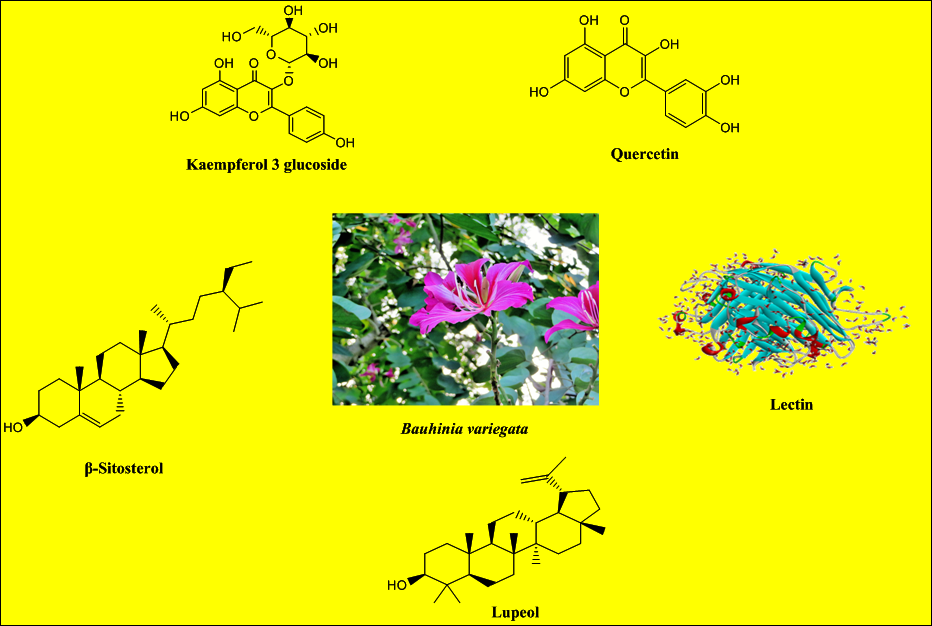
B. variegata (orchid) belonging to the family Caesalpiniaceae is a leguminous, medium-sized deciduous tree that extends all over India and is found at the altitude of 1800 m in the Great Himalayas [4, 5]. Kachnar (Hindi) and Mountain ebony (English) are its vernacular names. It is a hermaphrodite flower-bearing plant that generally blooms from November till the end of March. It is cultivated by seeds that get easily dispersed by air. It has connate leaves which are rounded at the apex with a length of 10-15 cm, white or pink coloured flowers, flat dehiscent fruits, and 10-15 seeds [4]. It is one of the traditional plants consisting of various phytochemicals like tannins, saponins, carbohydrates, alkaloids, resins, terpenoids, steroids, proteins, flavonoids, cardiac glycosides, etc. [6].
Phytochemical screening is generally employed to confirm the presence of therapeutically active constituents in the alcoholic extract of plant parts. Different parts of the plant such as bark, seeds, leaves, and the type of solvent/solvent mixture used for extraction determine the phytochemicals present in the extract. These phytochemicals are utilized as anti-helminthic [7], hepatoprotective [8], antioxidant [9], anti-microbial [6], anti-inflammatory, anti-diabetic [10, 11], anti-cancer [12], wound-healing [4] and ulcer-protective [13].
With the advancement of various separation and characterization techniques like FTIR, NMR, LC-MS, 2D- LC, gel electrophoresis, digestion techniques, column chromatography, etc, it has become relatively easier to fractionate and characterize the crude plant material extracts and isolate the phytoactive in the purest form.
Lectin present in the seed of B. variegata is is a non- immune protein or glycoprotein which has bio-adhesive properties towards the cell membrane. It is a proven potent antibacterial agent and is being used in a variety of formulations. The plant also possesses antioxidants like kaempferol-3 glucoside, lupeol, beta-sitosterol, and other flavones. The ID7 (column fraction from the bark) fraction isolated from B. variegata has been evaluated for anti-tumor activity [14]. 21,000 plants were listed as per the World Health Organization (WHO) which is being used for various medicinal purposes, out of which 2500 species were found in India and 800 herbs were linked with anti-diabetic activity [15].
Phytoconstituents like glucokinins, inorganic ions sulphur compounds, coumarins, phenolic compounds (polyphenols, flavonoids), steroids, amines, peptides, terpenes, glycopeptides, and polysaccharides are associated with hypoglycemic effects. Glucokinins possess functional similarity with insulin [16].
Chemical Constituents and their Extraction
Certain quantification tests have been suggested for the presence of phytoconstituents. The determination of these compounds helps in the selection of plants for in-depth future investigation. Table 1 represents the various constituents in the extract of B. variegata plant parts such as leaves, bark, and flowers [12].
Table 1 clearly indicates the abundance of tannins, flavonoids, and polyphenols in B. variegata. The stem bark and flowers also contain alkaloids and saponins while the leaves do not have these constituents. The presence of these constituents can also be correlated to their therapeutic activities; for example, high antimicrobial activity has been detected to a greater extent in the aqueous-alcoholic extract of bark and flowers than in leaves. Also, some unique aqueous/organic ratios have been suggested to impart reproducibility in the extract and isolation outcomes of the B. variegata bark [17].
| S.No. | Tests Name | Tests/reagents | BVL | BVB | BVF |
|---|---|---|---|---|---|
| 1 | Carbohydrates | Fehling test | + | + | + |
| Molisch test | + | − | − | ||
| 2 | Glycosides | Borntrager test | + | + | + |
| 3 | Alkaloids | Dragendorff test | − | + | + |
| Mayer’s test | − | − | + | ||
| 4 | Phytosterol | Chloroform | − | − | − |
| 5 | Steroidal compounds | Salkowski’s test | − | − | − |
| Lieberman’s test | − | − | − | ||
| 6 | Saponins | Froth test | − | + | + |
| 7 | Tannins | Ferric chloride test | + | + | + |
| Formaldehyde test | + | + | + | ||
| Test for phlobatannins | + | + | + | ||
| 8 | Fixed oils and fats | Spot test | + | − | + |
| 9 | Flavonoids | Test for free flavonoid | + | + | + |
| Lead acetate test | + | + | + | ||
| Sodium hydroxide test | + | + | + | ||
| 10 | Phenolic compound | Ferric chloride test | + | + | + |
| 11 | Protein and amino acid | Biuret test | + | + | + |
| Ninhydrin test | + | + | + |
Table 1: Various chemical constituents with their tests extracted from Bauhinia variegate.
Extraction Procedures
Take 20 gm of Methanol extract of bark (MEB) and subject it to silica gel (60-120 mesh) column chromatography, eluting with a gradient of Hexane: EtOAc (100:0 to 0:100).
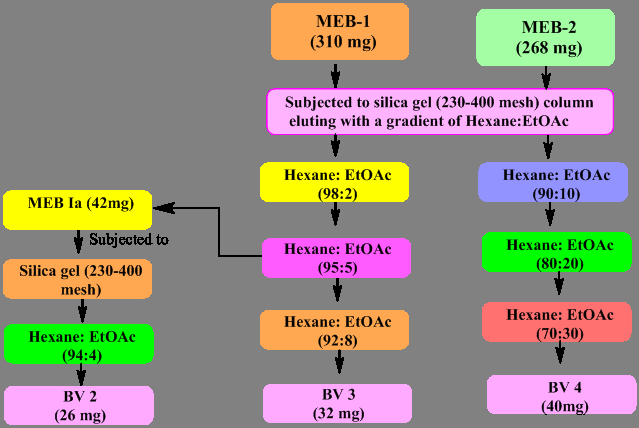
Figure 2: Extraction procedure of Bauhinia variegate. MEB-Methanol extract of bark, BV- Bauhinia variegata, EtOAc: Ethyl Acetate MEB, MEB-I, and MEB-II are obtained from column chromatography of methanol extract of bark (MEB) of B. variegata whereas BV1, BV2, and BV3 are the pure isolates obtained (Figure 2). The ethanolic bark extract of B. variegata was explored against Cisplatin and was found to play a prime role in treating triple negative breast cancer (TNBC).
In the case of cancer, the continuous metastasis of the cancer cells is the cause of the spread of cancer and related deaths. In the research, the anti-tumor activity of ID7 (column fraction from the bark) was evaluated by performing in-vitro and in-vivo assays. In-vitro methods include cell viability assays like murine cell line assay, propidium iodide/acridine orange dual staining, and human cell viability assay wherein the absorbance for formazan crystals can be determined spectroscopically, and cell migration assay [18].
Similarly, a distinctive purification has been adopted for lectin fractionation from the seeds of B. variegata. The slurry formed by seed homogenization was subjected to centrifugation twice and the supernatant was collected as crude seed extract. This seed extract was then charged onto the affinity y gel blue gel column (preconditioned by Tris HCl buffer) after adjusting the pH to 7.6 by 10 mM Tris buffer.
The unretained or early eluting fraction was collected and loaded to another column called Q- Sepharose which was subsequently eluted with Tris HCl buffer containing 1N NaCl to obtain the bound fraction. The eluent obtained was lyophilized. The lyophilized powder was resuspended into a 10mM Tris buffer and loaded on the Mono Q column. The bound components were eluted by NaCl gradient. The last peak in the absorbance spectra containing the highest lectin content was collected and lyophilized. The powder was redissolved and loaded to Superdex 75 HR 10/30 column and purified lectins were recovered.
An ointment is a topical preparation that is generally medicated i.e., a pharmaceutical preparation in which the drug or Active Pharmaceutical Ingredient (API) is diffused in the medium. Depending upon the type of base used for ointment preparation there are different types of ointment such as hydrophilic based or water-miscible ointment, oleaginous (greasy) based ointment, and water repellent- based ointment. In a recently published study by Rajput R and Kashmira G [4], the plant has been explored for its wound healing ability in rat models. The crude drug was collected and cleaned with water followed by drying in a hot air oven at 35 0C to protect the phytoconstituents present in the plant parts. An extract in water was prepared using the maceration technique in which 300g of the powdered drug was placed in water for 7 days at a temperature of 37 0C. After 7 days the extract was filtered and concentrated. Herbomineral ointment was prepared by emulsifying the oleaginous phase in the aqueous phase.
Nowadays an increasing number of infectious agents are becoming resistant to commercial antimicrobial compounds [19]. Also, synthetic drugs have many side effects and are an emerging class of environmental contaminants. Mankind is facing challenges of emerging resistance in virtually all pathogens. Phytochemicals from natural sources like plants have fewer side effects and hence present a safer option for formulating various antimicrobial/anticancer drugs. Previous work has reported the isolation of quercetin, rutin, apigenin, and 7-O-glucoside from B. variegate [20], but none of them categorized the extracted phytoconstituents to specific aqueous/ organic ratio to impart better reproducibility for obtaining pure fractions.
Moreover, there are numerous natural lectins present in the seeds of B. variegate. It is not easy to separate them using the conventional extraction protocols. Two major challenges commonly faced during the extraction of these lectins from the homogenized fraction of B. variegata seeds are the separation of the lectin fraction from the rest of the seed constituents i.e., other proteins, carbohydrates, etc, and purifying of the protein fraction into individual lectins.
B. variegata Lectin (BVL-1), a single chain lectin, obtained from the seeds, has been employed for its anti- bacterial activity. BVL-1 interacts strongly with metastatic tumor cells and inhibits cell adhesion and proliferation. Lectins additionally recover wounds and injuries by increasing epithelial reconstruction, keratin deposition, and stimulating the growth of fibroblastic cells [21]. Due to limited native lectins, recombinant lectin proteins (rBVL-lp) using Pichia pastoris, a methylotrophic yeast were produced as a large-scale production alternative. Recombinant lectin proteins were expressed in Escherichia coli. It is also suitably used for avoiding and treating dental caries at early stages by blocking microbial adhesions. The mechanism of oral bacteria inhibition prevention is still not clear but the secretion of many extracellular polysaccharides by the bacteria mediates the adhesion process.
Characterization
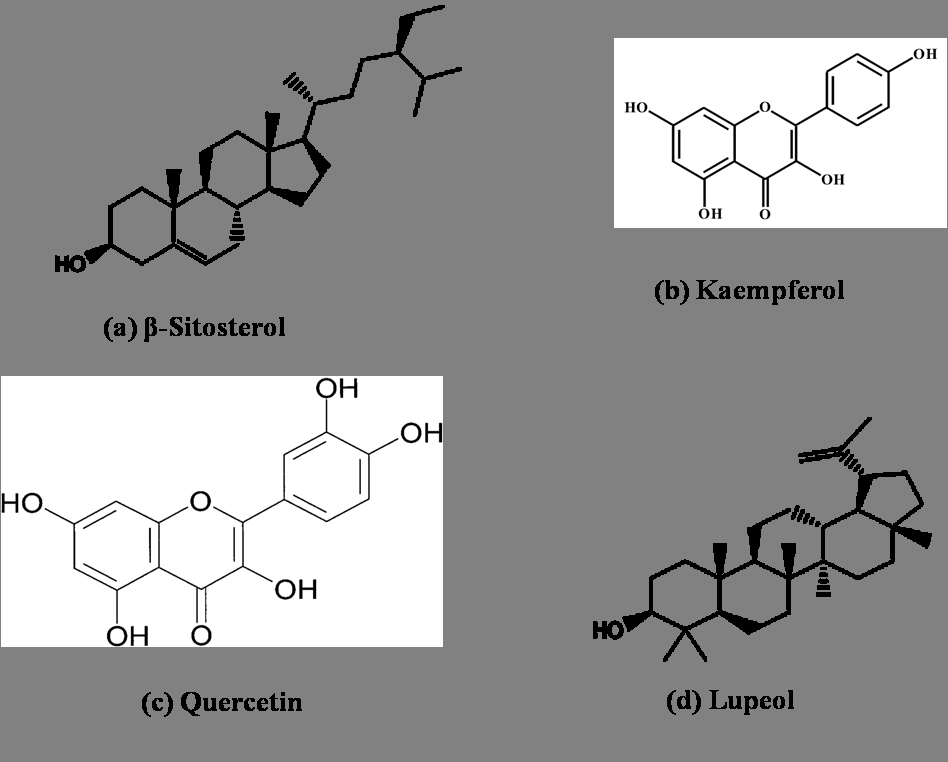
The stem bark of B. variegata consists of constituents presented in Figure 3. β-Sitosterol has a melting point of 136-139○C. It gives red colour in Salkowski’s test and green colour in Liebermann-Burchard’s test. Kaempferol has a melting point of 275-277○C, it responds at λmax265 and 267 nm; Quercetin is a yellow amorphous powder, has a melting point of 311-313○C and responds at 369nm. Lupeol is a white amorphous solid having a melting point of 211-213○C and gives a positive response to Liebermann-Burchard’s test for triterpenoids.
Applications of B. Variegata Extract in Various Clinical Conditions
Medicinal plants have been well reported for many indications, however, when a single plant consists of a mixture of active constituents in different parts, proper isolation of individual constituents is essential. Moreover, the isolated substance cannot be directly applied or ingested by an individual because of its physicochemical incompatibilities and palatability issues. The development of a formulation in view of its applicability and acceptability to the patient is the prime challenge for pharmaceutical formulation scientists.
The preformulation parameters such as physicochemical properties, stability parameters, and organoleptic behavior should also be considered before designing any formulation. These parameters decide the type of dosage form to be made for the drug or active constituents, whether they are derived synthetically or naturally. In the case of topical preparations, the parameters such as spread ability, wettability, angle of contact, and retaining ability are to be considered.
The stem bark of B. variegata has been reported for wound healing, fever-aid, astringent, goitre, dysmenorrhoea, menorrhagia, tumours, leukemia, etc. Leaf extract is also being used as an antioxidant and antidiabetic. B. variegata is being explored as an herbal alternative to synthetic or allopathic medications.
Anticancer Activity
Cancer is one of the life-threatening diseases prevailing around the globe. Smoking, increased alcohol consumption, increased exposure to radiations (UV, X-rays), exposure to cancer-causing chemicals, and certain viruses like human papillomavirus (HPV) play an important role in causing cancer. Cancer can affect the functioning of various vital organs and can cause lung cancer, liver cancer, brain tumor, mouth cancer, prostate cancer, cervical cancer, leukemias, lymphomas, and myelomas.
Breast cancer is the most common form of tumor occurring in women irrespective of their age. Triple Negative Breast Cancer (TNBC) is one such cancer wherein estrogen, and progesterone receptors are reduced or absent and human epidermal growth factor (EGF) proteins are either not synthesized or synthesized in very low quantities. TNBC is associated with a high recurrence rate and can reoccur within 3 years [22].
Biomarkers, proteins like Poly ADP-Ribose Polymerase (PARP), Caspase-7 and Caspase-8, Tumour Necrosis Factor Receptor-1 (TNF-R1), and Receptor Interacting Protein (RIP) responsible for cellular death were estimated by performing western blot assay. B. variegata lectin (BVL-1) interacts strongly with metastatic tumor cells and inhibits cell adhesion and proliferation [21].
In different studies the ethanolic extracts were tested in concentrations of 200mg/kg, 250mg/kg, 400mg/kg, 500mg/ kg and 1000mg/kg alongside the standard treatment. Acute (Single dose) oral toxicity studies for the extract were performed at a single dose administration in male rats at a dose of 5mg/kg, 50mg/kg and 300mg/kg, and 2000mg/kg to screen for the toxic effect. The animals were observed for the signs of toxicity, morbidity, and mortality for 14 days.
For the efficacy study, after inducing diabetes, hyperglycemia of 200 mg/dL was attained within 2 days and animals were found to be glycosuric. All the treatment groups (test and standard) received treatment after 2 days of induction followed by dose administration for 28 days. The body mass changes, blood glucose levels, triglyceride, and diglyceride levels, complete protein content, albumin, burn urea nitrogen (BUN), high-density lipoprotein (HDL), and plasma insulin levels were then evaluated. 2,2-diphenyl- 1-picrylhydrazyl (DPPH) and hydrogen peroxide scavenging assays were also performed to evaluate antioxidant effects to prevent worsening of diabetic complications.
For extract preparation, the plant leaves of B. variegata were collected, dried, and crushed into a fine powder. An ethanolic extract was prepared by double maceration extraction technique (it is the same as the single maceration except that menstruum is divided into two equal proportions and the liquid obtained from the two macerations is mixed and combined into a single portion) for 7 days to isolate the active phytoconstituents like flavones and poly-phenols. The active constituents from flowers were also extracted by using petroleum ether for flushing out the oily/greasy substances; the marc was subsequently separated by a hot percolation method employing 95% ethanol. The prepared extracts were concentrated under vacuum or heating in a water bath at 400C.
The percentage scavenging activity of hydrogen peroxide, reducing power assays, DPPH assays, and superoxide radical scavenging activity were the parameters performed by Kumar A, et al. [10] for antioxidant potentials against Butylated hydroxytoluene (BHT), Butylated hydroxy-anisole (BHA), ascorbic acid and gallic acid. The alcoholic stem extract of B. variegata was having comparable effects as that of synthetic antioxidants and was found not to be associated with hepatotoxicity.
The ethanolic extract was also found to be associated with decreasing cholesterol, triglycerides, and BUN in the animal model. The hepatoprotective and renoprotective effect of the extract was confirmed by measuring serum levels of liver enzymes, creatinine, and urea in diabetic rats. In- vitro assays of B. variegata extract with DPPH and hydrogen peroxide (H2O2) showed 86.60% and 68.47% scavenging activity respectively at 100µg/mL, while BHT showed 91% scavenging results for DPPH and 73.34% for H2O2 assay. This confirms the antioxidant potential of the plant. The plasma glucose levels were determined by collecting blood through the retro-orbital plexus; the relative levels of blood glucose in comparison with reference drug groups have confirmed the marked hypoglycemic effects of the plant.
Antidiabetic Activity
Diabetes is a common metabolic disorder associated with chronic pathology and is increasing at an alarming rate. It is a non-communicable disease (NCD) which is initially defined as an imbalance in blood glucose level and insulin secretion in a healthy individual. With time it can lead to insulin resistance and decreased bioavailability. It is classified into 2 different categories, Type-I and Type-II. Type-1 is insulin-independent diabetes mellitus whereas Type-2 diabetes is insulin-dependent diabetes mellitus. Type-1 diabetes is an auto-immune disorder in which the body’s immune cells destroy pancreatic beta cells which leads to the unavailability of insulin inside the body. Type- II diabetes is a state of hyperglycemia that is due to insulin insufficiency or its decreased activity.
Although various drug categories like sulfonylureas, biguanides, DPP-4 (di-peptidyl peptidase) inhibitors, meglitinides, α-glucosidase inhibitors, and thiazolidines are being used in maintaining normal blood glucose levels, they are associated with many side effects. To overcome this problem, enormous research has been carried out on herbs and related remedies. B. variegata leaves extract can be one of the answers to these issues.
In all four studies [23, 24, 25, 26], animals were grouped as normal control, diabetic control, standard control, and treated control (at different doses of B. variegata extract). Streptozotocin (STZ) and Alloxan were used to induce hyperglycemia in rat (wistar rats) models to evaluate the antidiabetic potential of the B.variegata extract against standard metformin, gliclazide, and glipizide drugs. Using in vitro techniques and free radical scavenging assays, the antioxidant activity of this herb was also evaluated against butylated hydroxytoluene (BHT) which was playing an essential role in preventing the damage caused by the reactive oxygen and nitrogen species (ROS and RNS) and oxidation stress. The lipid profile and histopathology of the liver, kidney, and pancreas were performed to establish the anti-hyperlipidemic effects of the prepared extracts. After inducing diabetes, the treatment was given for 28 days.
Insulin secreted by beta cells of Islets of Langerhans of the endocrine part of the pancreas is a peptide hormone containing 51 amino acids. This hormone is responsible for the metabolism and utilization of ingested glucose. International Diabetes Federation (IDF) data stated that 463 million adults were reported with diabetes in 2019, and 90% of all the diabetic cases were associated with Type-2 diabetes [27]. The total number of diabetic cases as per IDF was found to have increased by 38 million from 2017 to 2019 [28].
Antidepressant Activity
Depression is a mental disorder that is characterized by mood change, social withdrawal, loss of interest, loss of memory, loss of recognition, low energy, worthlessness, and feeling of guilt. It is a serious disorder that could even risk a person’s life. According to WHO, 264 million of the total world’s population is suffering from depression, out of which 80,000 cases are suicides. Changes in monoamine neurotransmitters like serotonin (5-HT), noradrenaline (NA), or adrenaline (Adr) are the key factors associated with depression.
Degradation of these neurotransmitters by the enzyme monoamine oxidase (MAO), leads to a decrease in the levels of 5HT, NA, and Adr. It is this pharmacological mechanism that plays a crucial role in a person causing depression. Therefore selective serotonin reuptake inhibitors (SSRIs), serotonin and norepinephrine reuptake inhibitors (SNRIs), Reversible MAO inhibitors, atypical antidepressants, and tricyclic antidepressants (TCA) are the choice of therapy for treating depression, as these therapies tend to increase the levels and concentration of 5HT, NA, and Adr.
Another problem that draws the concern is the generation of reactive oxidative species (ROS) which acts as a major pathway for inducing various other severe disorders like hypertension, vascular endothelial dysfunctioning, diabetes etc. Accumulation of ROS is responsible for creating an imbalance between free radicals and antioxidants which produces oxidative stress and leads to memory loss, skin concerns (wrinkles, ageing, blemishes), neuronal dys- function, diabetes, muscular algesia and increased bacterial susceptibility. To treat this, antioxidant therapy is employed to reduce the increased oxidative damage.
In a recent study by Khare P, et al. [29] the antidepressant activity of B. variegata was evaluated against standard drug imipramine by using a rat model of forced swim test. The methanolic extract of leaves of B. variegata was prepared and was found to produce anti- depressant activity. The mobility of rats was increased after receiving the methanolic extract of B. variegata when tail suspension test (TST) [30] and forced swim tests (FST) [31] were performed.
In forced swim test two major observations were made by the evaluation of the protective effect of extract in acute and chronic time period on depressing rats (100mg/kg and 200mg/kg) whereas in tail suspension test, the immobility of rat after hanging from tail at 75cm above the surface for 6 min were recorded.
Antioxidant Activity
The use of antioxidants therapy has immensely gained importance and is a leading approach to reduce and prevent oxidative damage. Oxidative stress leads to various skin, cardiovascular, neurological, and endocrinal disorders such as skin lesions, skin aging, wrinkling, atherosclerosis, vascular endothelial dysfunction, parkinson’s disease, alzheimer’s disease, diabetes mellitus [11]. The chemical antioxidants such as Butylated hydroxytoluene (BHT), butylated hydroxy anisole (BHA) and gallic acid employed for these conditions are further associated with different toxicities such as hepatotoxicity which may lead to life threatening conditions. Using in vitro techniques and free radical scavenging assays, the anti- oxidants activity of this herb B. variegata was also evaluated against butylated hydroxytoluene (BHT) which was playing an essential role in preventing the damage caused by the reactive oxygen and nitrogen species (ROS and RNS) and oxidation stress.
In the research performed by Kumar A, et al. [9], alcoholic stem extract of B. variegata was prepared to evaluate its antioxidant potential against synthetic antioxidants. DPPH (2,2-diphenyl-1-picrylhydrazyl) assays [32], superoxide radical scavenging activity, percentage scavenging activity of hydrogen peroxide and reducing power assays were the evaluating parameters for analyzing antioxidant potentials. In DPPH assay alcoholic stem bark extract was evaluated against standard antioxidant BHA and ascorbic acid spectroscopically, in which absorbance maxima was measured at a wavelength of 514 nm.
In superoxide radical scavenging assay absorbance maxima was measured at a wavelength of 560 nm using BHA and ascorbic acid as reference standards while in the case of hydrogen peroxide scavenging assay, absorbance of hydrogen peroxide in standard and test sample was measured at 230nm. In the case of reducing power assay standard and test sample absorbance was measured at 700 nm to prevent worsening of diabetic complications.
Leaf extract of plant B. variegata bears good antioxidant property as the strength was analyzed and confirmed with DPPH radical scavenging assay and found to be 86.46% which was compared with the strength of the positive control i.e., Ascorbic acid (93.62%). Antioxidant potential data of B. variegata ethanolic extract.
ID7 (the column fraction) is a constituent found in the bark extract of the herbal plant. The crude 70% v/v ethanolic extract was partitioned using solvents with increasing polarity strength. The partitioning was performed using the solvent order of hexane, chloroform, ethyl acetate followed by 70% ethanol. The resulting solution was stored after freeze drying and its column fractionation was done after reconstitution before use.
This column fraction has been denominated as ID7. This ID7 has been characterized using high resolution mass spectroscopy technique in negative ion mode with UPLC (Ultra high-performance liquid chromatography); the front end and was found to have oleic acid, myricetin, quercetin and kaempferol [33]
All therapeutic activities of the plant Bauhinia variegata have been listed in Table 2.
| Extract Type | Indication | Results | Reference | |
|---|---|---|---|---|
| Anticancer Activity | 70% ethanol stem extract | Human cervical adenocarcinoma (HeLa cell) | Reduction in cervical cancer cell viability and inhibits cell migration and invasion | [34] |
| 70% ethanol stem extract followed by lyophilization | 4T1 and MDA -MB-231 cell lines (in vitro and In vivo) | Decrease of 4T1 tumor growth, lung metastasis and inflammation in the livers of mice. | [18] | |
| Hydro-methanolic leaf, stem bark and flower extract | Melanoma tumor by B16F10 cell line in C57BL/6 mice | Dose dependent response was observed in tumour volume, inhibition rate, life span time and antioxidant parameter of extracts. | [12] | |
| Combination treatment of cyclophosphamide and B. variegata extracts showed more pronounced effect. | ||||
| Glucokinin isolated from leaf extract | HepG2, A549 and WRL normal cell lines | Proliferation inhibition against all the cancer cell lines | [35] | |
| Kaempferol, stigmasterol, protocatechuic acid- methyl ester (PCA-ME) and protocatechuic acid (PCA). 2,2-azinobis-3-ethyl- benzothiazoline-6-sulfonic acid (ABTS) isolated from Methanolic bark extract | C-6 glioma rat brain, MCF-7 breast cancer, and HCT-15 colon cancer cell lines | The compounds have significant cytotoxic potential | [17] | |
| Ethanolic bark extract of B. variegata was explored against cisplatin | Triple negative breast cancer | The continuous metastasis of cancerous cells is the cause of spread of the cancer and related deaths. | [18] | |
| Antidiabetic Activity | Ethanolic extract of B. variegata | T1DM is characterized by absolute insulin deficiency resulting from an autoimmune destruction of pancreatic β-cells whereas T2DM is characterized by chronic hyperglycemia due to defective insulin synthesis, secretion and/or action | Reduction in blood glucose level (90.00 mg/dL) at highest dose 400 mg/kg when compared with diabetic control rats (224.50 mg/dL) and normal control groups (74.00 mg/dL). | [25] |
| Ethanolic extract of B. variegata leaves | Type I and Type II diabetes. | Plasma glucose levels were found to decrease significantly in both types of diabetes after treatment with EE of B. variegata leaves for 28 days. | [26] | |
| Leaves extract of B. variegata | pancreatic ß-cells of the INS-1 | B. variegata exhibited significant antihyperglycemic effects which may be attributed to increased glucose metabolism [53]. | [20] | |
| Ethanolic a leaf extracts of B. variegate | Diabetes. | Significant decrease in fasting blood glucose level at two different doses (250 and 500 mg/ kg) in streptozotocin-induced diabetic rats’ model. Beneficiary effects of BVLE in the treatment of diabetes were found not to be limited to hypoglycemic effect but included preventing liver and kidney tissue damage that are associated with diabetes | [24] | |
| B. variegata crude ethanol extract | pancreatic β-cells | B. variegata nano-extract exhibited more antidiabetic effect through restoring the normal architecture of pancreatic β-cells in addition to the antioxidant and hypolipidemic effect than extract alone, which indicated that the efficacy of B. variegata extract was increased after the incorporation of Au-NP | [36] |
| Antidepressant Activity | Methanolic extract of stem bark B. variegata plant extract | Antidepressant activity | Results revealed that in BVMEL produced significant | [29] |
|---|---|---|---|---|
| antidepressant like effect at dose of 100 & 200 mg/kg administered for 7 & 14 consecutive days as indicated by | ||||
| reduction in immobility times of mice in TST & FST (P<0.05). The efficacy of BVMEL at 200mg/kg was found | ||||
| to be comparable to that of Imipramine at doses of 15mg/kg. | ||||
| Dried stem bark extract of B. variegata Linn. | Antioxidant | The maximum scavenging effect of B. variegata Linn. alcoholic stem bark extract on DPPH free radical, superoxide radical and hydrogen peroxide was 72.19 + 0.20, 81.60 + 0.22 and 76.06 + 0.16 respectively at a concentration of 2500 μg/mL. It was clearly indicated that the alcoholic extract of the stem bark has significant in vitro antioxidant activity. | [9] | |
| The antioxi-dant activity may be due to flavonoid and phenolic content present in the stem bark of this plant. | ||||
| Methanol extract of B. variegata bar | Antioxidant | significant antioxidant activity and potential to prevent H2O2-induced oxidative damage to pBR322 DNA. The potent anti oxidative activity and DNA protection ability of B. variegata bark extract/fractions may be attributed to their richness in Phenolic /flavonoid compounds. | [20] |
Table 3: Therapeutic activities of Bauhinia variegate.
Discussion
The leaf extract of plant Bauhinia variegata was found to possess excellent and comparable antioxidant property with respect to synthetic antioxidants. The designed W/O emulsion had shown good and promising physical characteristics when stored at different storage conditions. The emulsion formulation tested for stability evaluation involving organoleptic evaluation, centrifugation assay, microscopy and rheology was found to be meeting the industry standards. The different protein fractions obtained at different purification procedures were further separated on the basis of their molecular weight by running on SDS- PAGE [37]. The species differentiation has been done on the basis of proteome characterization. The lysate extract was subjected to in solution trypsin digestion and subsequent analysis by High Resolution Mass Spectrometry to characterize and differentiate the proteins present in various herbal medicines with the hypoglycemic agents claim.
In a recently published study by Gupta P, Singh S and Tripathi A in Dec 2019 Bauhinia variegata nanoemulsion has been prepared and explored for its prophylactic effect in diabetes induced peripheral neuropathic pain on experimental rat model [38]. The flower extract was prepared in petroleum ether to remove impurities and 90% ethanol was used to extract the phytoconstituents using hot percolation method or Soxhlet extraction. The extract was filtered and concentrated under vacuum. The prepared emulsions were characterized for particle size, particle morphology, zeta potential, in-vitro release, stability studies and biological evaluation on STZ (streptozotocin) induced diabetes in rat model [39, 40] for assessing protective effect on diabetic neuropathic pain [41]. Plantar and Vonfrey filament stimulation test was performed and the results were compared. In another recently published study [42] the physical interactions of the lectins of Bauhinia variegata (BVL) with the phosphatidylcholine (PC) liposomes have been examined [43].
Liposomes are another type of formulation being used extensively nowadays for targeted drug delivery. A liposome is a tiny bubble (vesicle), made out of the same material as a cell membrane. They act as carriers for administration of various drugs and herbal remedies etc.
The yield of the ethanolic extract (BVE) prepared from the leaves of B.variegata was found to be 20.8%. In an in-vitro release by Franz Diffusion test, it was observed that a maximum of 92.19 % release from nanoemulsion was achieved in 8 hours. Nanoemulsions prepared using the extract had passed the stability parameters and the biological activity of nanoemulsion was found to be better when compared with results of Bauhinia variegata extract alone treated animal group.
BVN (Bauhinia variegata nanoemulsion) treated animals had shown marked decrease in blood glucose level and prevention in progression of neuropathic pain [42]. Hence BVN can be concluded to be an efficient means for preventing the further progression of the diabetic neuropathy. However further studies are essential to understand the proper mechanism of the Bauhinia variegata nanoemulsion for various pharmacodynamic effects.
Bauhinia variegata lectin and phosphatidylcholine liposomes complex that promoted hardening up of the proteins was determined by circular dichroism spectroscopy and also demonstrated to be very efficient macromolecule- drug carrier for local and systemic administration [44], whereas evaluation of the photo-physics parameters stated that the B. variegata does not affects its ground state electronic parameters in the presence of Phosphatidylcholine liposomes [45].
There are various drugs available in the market that are used for treating various disorders, but these marketed and synthetic drugs are associated with a number of side effects. B. variegata is reported to have anti-depression, antitumor, antioxidant and antibacterial properties. In spite of the availability of various antibacterial drugs, in a recent research it was concluded that native BVL-1 lectins and recombinant BVL-1 lectins were decreasing the agglutination of red blood cells.
The minimal concentration to exert hemagglutination activity for B. variegata lectin was found to be 96ng/ml. It can be a promising natural herbal approach employed for having anti- bacterial activity. It can also be suitably used for avoiding and treating dental caries at early stages by blocking microbial adhesions.
In all the four studies used to compile this review, various parameters have been evaluated for anti- diabetic, antioxidant and anti- hyper lipidemics properties justifying the herbal approach of the plant. B. variegata showed promising results in lowering blood glucose levels against STZ or alloxan induced diabetes.
Ethanolic extract was also found to be associated with decreasing cholesterol, triglycerides and BUN in the animal model. Hepatoprotective and renoprotective effect of the extract was confirmed by measuring serum levels of liver enzymes, creatinine and urea in diabetic rats. In- vitro assays for B. variegata extract, DPPH and hydrogen peroxide showed 86.60% and 68.47% scavenging activity respectively at 100µg/mL while BHT showed 91% scavenging results for DPPH and 73.34% for H2O2 assay. This confirms the antioxidant potential of plants.
The body weights of B. variegata extract treated animals with dose of 250 mg/kg [26] were observed to be reduced as compared to the diabetic and reference control groups so at low dose the plant has also been reported to possess obesity treatment properties related to obesity in type-I diabetes. The plant possessing antioxidant constituents were decreasing the generation of ROS, RNS which was decreasing the stress on the cell therefore preventing neuropathy, nephropathy, and cardiac-myopathy. At a glance, B. variegata leaf and flower extract had shown impressive results for hyper- glycaemia and its associated risk factors [23, 24].
Another outcome of the Hernandez et al was that the glucokinin, expected earlier for the antidiabetic activity, was found to be concentrated only in the chloroplast and not in any other specific structure. Therefore, the properties of lowering of blood glucose level of this plant species must not be correlated with glucokinin and with the chlorogenic acid and isorientin metabolites [17].
Plant derived materials are a rich source of the upcoming therapeutics. The work by Sonam, et al. Have compared the antimicrobial properties of the hydroalcoholic extracts of the stem bark, flowers and leaves of B. variegata quantitatively in terms of presence of various phytoconstituents. The work done by Neha, et al. Isolates purified fractions from the bark of B. Variegata. After characterization, these compounds were found to be Kaempferol, stigmasterol, protocatechuic acid-methyl ester and protocatechuic acid. These compounds were found to possess antioxidant and cytotoxic activities against various cancer cell lines.
In the study done by Pedrete, et al. a total of 131 proteins were identified by in-solution trypsin digestion and subsequent analysis of the surrogate peptides have revealed structures of various proteins exhibiting hypoglycaemic properties. These identified proteins can be of great value in species characterization for such category of the plants [46].
The study by Chan, et al. has demonstrated the extraction of a 64 -KDa protein by extensive column chromatography and was checked to have in vitro-antiproliferative activity on nasopharyngeal carcinoma cells [47].
Conclusion
In conclusion many phytoconstituents have been extracted from the various plant parts of B. variegata exhibiting antitumor, antioxidant and antidiabetic activities. With the advancement in the extraction technologies and characterization techniques even more complex phytoconstituents have been isolated from this plant. These active constituents are not only having potential to aid in the treatment of various indications, but they are also finding their usefulness in the species characterization and environmental condition’s influence studies.
Scope of Future Work
Bauhinia variegata is a very useful plant finding application in various herbal medicines in the form of extracts. Due to the advancement of better extraction and characterization techniques, the time has come to isolate a pure drug-able compound from such plants finding utilization in so many indications. This will not only reduce the consumption bulkiness of the herbal extract for direct consumption but open more routes for their better and effective formulations. In most of the previous studies, leaves bark and flowers have been used to isolate the medicinal phytoconstituents but none of such extraction work has been reported using the stem exudate of the plant. There is a plenty of scope to isolate and characterize the phytoconstituents of the stem exudate of B. variegata.
References
-
Kataria S, Kaur D (2013) Ethnopharmacological approaches to inflammation-exploring medicinal plants.
-
de Souza AF, Torquato RJ, Tanaka AS, Sampaio CA (2005) Cloning, expression and characterization of Bauhinia variegata trypsin inhibitor BvTI. Biol Chem 386(11): 1185-1189.
-
Yamamoto K, Konami Y, Kusui K, Osawa T (1991) Purification and characterization of a carbohydrate- binding peptide from Bauhinia purpurea lectin. FEBS Lett 281(1-2): 258-262.
-
Rajput RT, Gohil KJ (2020) Development and evaluation of herbomineral ointment from Bauhinia variegata L for wound healing effects.
-
Sayago CT, Camargo VB, Barbosa F, Gularte C, Pereira G, et al. (2013) Chemical composition and in vitro antioxidant activity of hydro-ethanolic extracts from _Bauhinia forficata_ subsp. pruinosa and B. variegata. Acta Biol Hung 64(1): 21-33.
-
Dhale D (2011) Phytochemical screening and antimicrobial activity of _Bauhinia variegata_ Linn. Journal of Ecobiotechnology 3(9).
-
Bairagi SM, Aher A, Nimase P (2012) In vitro anthelmintic activity of _Bauhinia variegata_ bark (Leguminosae). Int J Pharm Pharm Sci 4(3): 672-674.
-
Bodakhe SH, Ram A (2007) Hepatoprotective properties of Bauhinia variegata bark extract. Yakugaku Zasshi 127(9): 1503-1507.
-
Kumar A, Anand V, Dubey R, Goel KK (2019) Evaluation of antioxidant potential of alcoholic stem bark extracts of Bauhinia variegata Linn. Journal of Applied and Natural Science 11(1): 235-239.
-
Kumar P, Baraiya S, Gaidhani SN, Gupta MD, Wanjari MM, et al. (2012) Antidiabetic activity of stem bark of _Bauhinia variegata_ in alloxan-induced hyperglycemic rats. J Pharmacol Pharmacother 3(1): 64-66.
-
Mohsin S, Akhtar N (2017) Formulation and stability evaluation of _bauhinia variegata_ extract topical emulsion. Acta Pol Pharm 74(3): 945-954.
-
Pandey S (2017) In vivo antitumor potential of extracts from different parts of _Bauhinia variegata_ linn. Against b16f10 melanoma tumour model in c57bl/6 mice. Appl Cancer Res 37(33): 1-14.
-
Prusty B, Kiran B, Bhargavi V, Subudhi S (2012) Anti- Ulcer Investigation of the Different Extract of Bark of _Bauhinia Variegata_ Linn (Caesalpiniaceae) by Pyloric Ligation & Aspirin Plus Pyloric Ligation Model. Int J Pharm Biol Sci 2(1): 248-262.
-
Chan YS, Ng TB (2015) _Bauhinia variegata_ var. variegata lectin: isolation, characterization, and comparison. Appl Biochem Biotechnol 175(1): 75-84.
-
García EC, Larza EMG (2003) Fitoterapia y diabetes. Revista de fitoterapia 3(2): 113-124.
-
Collip JB (1923) Glucokinin. A new hormone present in plant tissue: preliminary paper. Journal of Biological Chemistry 56(2): 513-543.
-
Sharma N, Sharma A, Bhatia G, Landi M, Brestic M, et al. (2019) Isolation of phytochemicals from Bauhinia variegata l. Bark and their in vitro antioxidant and cytotoxic potential. Antioxidants 8(10): 492.
-
dos Santos KM, Gomes INF, Oliveira RJS, Pinto FE, Oliveira B, et al. (2019) ID7 Isolated from _Bauhinia variegata_ Stem Inhibits Tumor Progression and Metastatic Mechanisms of Triple Negative Breast Cancer in Vivo. Journal of Pharmacy and Pharmacology 7: 368-84.
-
Peterson LR, Dalhoff A (2004) Towards targeted prescribing: will the cure for antimicrobial resistance be specific, directed therapy through improved diagnostic testing? J Antimicrob Chemother 53(6): 902-905.
-
Shahana S, Nikalje APG, Nikalje G (2017) A brief review on _Bauhinia variegata_: phytochemistry, antidiabetic and antioxidant potential. Am J Pharmtech Res 7: 186-197.
-
Eruygur N, Ataş M, Çevir Ö, Tekin M (2017) Investigating of phytochemicals, antioxidant, antimicrobial and proliferative properties of different extracts of Thymus spathulifolius Hausskn. and Velen. Endemic medicinal plant from Sivas, Turkey. International Journal of Secondary Metabolite 4(3): 155-166.
-
Neto LG, Pinto Lda S, Bastos RM, Evaristo FF, Vasconcelos MA, et al. (2011) Effect of the lectin of _Bauhinia variegata_ and its recombinant isoform on surgically induced skin wounds in a murine model. Molecules 16(11): 9298- 9315.
-
Laguna-Hernández G, Rio-Zamorano CA, Meneses- Ochoa IG, Brechú-Franco AE (2017) Histochemistry and immunolocalisation of glucokinin in antidiabetic plants used in traditional Mexican medicine. Eur J Histochem 61(2): 2782.
-
Hago S, Mahrous EA, Moawad M, Abdel-Wahab S, Abdel- Sattar E, et al. (2021) Evaluation of antidiabetic activity of _Morus nigra_ L. and _Bauhinia variegata_ L. leaves as Egyptian remedies used for the treatment of diabetes. Nat Prod Res 35(5): 829-835.
-
Tripathi AK, Gupta PS, Singh SK (2019) Antidiabetic, anti- hyperlipidemic and antioxidant activities of _Bauhinia_ _variegata_ flower extract. Biocatalysis and agricultural biotechnology 19:101142.
-
Gurjar HPS (2018) Assessment of antidiabetic potential of leaf extract of Bauhinia variegata Linn. in type-I and type-II diabetes. International Journal of Green Pharmacy (IJGP) 12(02).
-
IDF Diabetes Atlas (2019) IDF Diabetes Atlas. 9th (Edn.), International Diabetes Federation.
-
IDF Diabetes Atlas (2017) IDF Diabetes Atlas. 8th (Edn.), International Diabetes Federation.
-
Khare P, Deepshikha SL, Sweety CS, Yadav G (2015) Evaluation of antidepressant activity of _Bauhinia_ _variegata_ in rats. Global Journal of Pharmacology 9(1): 56-59.
-
Steru L, Chermat R, Thierry B, Simon P (1985) The tail suspension test: a new method for screening antidepressants in mice. Psychopharmacology (Berl) 85(3): 367-370.
-
Monalisa J, Abhisek P (2013) Evaluation of antidepressant activity of Eclipta Alba using animal models. Asian Journal of Pharmaceutical and Clinical Research 6(3): 118-120.
-
Naskar S, Islam A, Mazumder UK, Saha P, Haldar PK, et al. (2010) In vitro and in vivo antioxidant potential of hydromethanolic extract of _Phoenix dactylifera_ fruits. Journal of Scientific Research 2(1): 144-157.
-
Rangarao R, Smruti BK, Singh K, Gupta A, Batra S, et al. (2018) Practical consensus recommendations on management of triple-negative metastatic breast cancer. South Asian J Cancer 7(2): 127-131.
-
Santos KM, Gomes INF, Silva-Oliveira RJ, Pinto FE, Oliveira BG, et al. (2018) _Bauhinia variegata_ candida fraction induces tumor cell death by activation of caspase-3, RIP, and TNF-R1 and inhibits cell migration and invasion in vitro. Biomed Res Int 2018: 4702481.
-
Shamran DJ, Al-Jumaili EFA, Tawfeeq AT (2020) Cytotoxicity effect of glucokinin isolated from _Bauhinia_ _variegata_ against several cancer cell lines. Iraqi journal of biotechnology 19(1): 69-74.
-
Abdel-Halim AH, Fyiad AAA, Aboulthana WM, El-Sammad NM, Youssef AM, et al. (2020) Assessment of the anti- diabetic effect of _Bauhinia variegata_ gold nano-extract against streptozotocin induced diabetes mellitus in rats. Journal of Applied Pharmaceutical Science 10(05): 077- 091.
-
Haraguchi T, Nomura K, Yagi F (2006) Cloning and expression of a mannose-binding jacalin-related lectin from leaves of Japanese cycad (_Cycas revoluta_ Thunb.). Biosci Biotechnol Biochem 70(9): 2222-2229.
-
Gupta PS, Singh SK, Tripathi AK (2020) Pharmacopuncture of _Bauhinia variegata_ Nanoemulsion Formulation against Diabetic Peripheral Neuropathic Pain. J Pharmacopuncture 23(1): 30-36.
-
Malcangio M, Tomlinson DR (1998) A pharmacologic analysis of mechanical hyperalgesia in streptozotocin/ diabetic rats. Pain 76(1-2): 151-157.
-
Simon GS, Dewey WL (1981) Narcotics and diabetes. I. The effects of streptozotocin-induced diabetes on the antinociceptive potency of morphine. J Pharmacol Exp Ther 218(2): 318-323.
-
Landon MB, Spong CY, Thom E, Carpenter MW, Ramin SM, et al. (2009) A multicenter, randomized trial of treatment for mild gestational diabetes. N Engl J Med 361(14): 1339-1348.
-
Dos Santos MC, Kroetz T, Dora CL, Giacomelli FC, Frizon TEA, et al. (2018) Elucidating _Bauhinia variegata_ lectin/ phosphatidylcholine interactions in lectin-containing liposomes. J Colloid Interface Sci 519: 232-241.
-
Hosseini A, Sharifzadeh M, Rezayat SM, Hassanzadeh G, Hassani S, et al. (2010) Benefit of magnesium-25 carrying porphyrin-fullerene nanoparticles in experimental diabetic neuropathy. Int J Nanomedicine 5: 517-523.
-
Abu-Dahab R, Schäfer UF, Lehr CM (2001) Lectin- functionalized liposomes for pulmonary drug delivery: effect of nebulization on stability and bioadhesion. Eur J Pharm Sci 14(1): 37-46.
-
Kulkarni YA, Garud MS (2016) _Bauhinia variegata_ (Caesalpiniaceae) leaf extract: an effective treatment option in type I and type II diabetes. Biomed Pharmacother 83: 122-129.
-
Rivera-Mondragón A, Bijttebier S, Tuenter E, Custers D, Ortíz OO, et al. (2019) Phytochemical characterization and comparative studies of four Cecropia species collected in Panama using multivariate data analysis. Sci Rep 9(1): 1763.
-
Patil R, Patil R, Ahirwar B, Ahirwar D (2011) Current status of Indian medicinal plants with antidiabetic potential: a review. Asian Pacific Journal of Tropical Biomedicine 1(2): S291-S298.
- Effects of 5-HTP and Melatonin on the Sleep Cycle of Medical Students
- Adsorption of Bisphenol A on NH4OH- Modified Rice Husk and Sugar Cane Bagasse Biochar
- Comparative Assessment of the Reinforcement Efficiency of Palm Fruit Fibre and Coconut Fibre in High Density Polyethylene (HDPE) Matrix Composite
- Importance of Bio Compounds Naturally Present in Food with Functionality in Animal Metabolism
- Sub-Acute Study on the Cardiotoxic Effects of Monosodium Glutamate Ingestion in Albino Rat
- Weight Management and Its Natural Solutions: A Review