
A Mini Review on Bioequivalence & the Bioavailability Study on Anticancer Drugs
Bioavailability has been one of the most important properties for the formulation to be an effective. The poor oral bioavailability and solubility of several anti-cancer drugs has challenged the scientists all over the world to think differently than the traditional drug delivery system. Recently, the use of natural polymer has been increased to increase the bioavailability of these drugs. Casein polymer has shown to be promising in increasing the bioavailability of the anticancer drugs due to its amphiphilic nature which can bind both hydrophilic and hydrophobic drugs. Due to the nature of the casein it has drawn the attention of the scientists all over the world. In this review, we have focused on the work of various scientists in increasing the oral bioavailability of poorly bioavailable anticancer drugs.
Introduction
As indicated in Chapter 21 CFR (Codes of Federal Regulations) Part 320 [1]. The bioavailability of a drug is defined as the extent and rate to which the active drug ingredient or active moiety from the drug product is absorbed and becomes available at the site of drug action [1]. In the latest days majority of anticancer drugs are preferred through i.v injection because through this route bioavailability achieved is 100%, but due to the higher plasma concentration it may cause severe side effects on healthy tissues, and it is painful and can cause bleeding. Oral route is most accepted and easy route for the administration of drugs also it prevents from high plasma level and protects from several side effects. But there is a huge setback for several anticancer drugs as they have very poor bioavailability, and their efficacy is limited due to poor water solubility and intestinal permeation. Due to all these reasons, it is required to develop a new drug delivery system through the oral route [2].
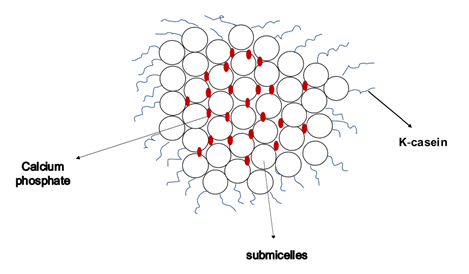
The primary mechanisms underlying the increased absorption of biologically active molecules by polymeric nanoparticles are (i) protection of the therapeutic agent from the hostile GI tract environment, (ii) extension of the holding time in the digestive tract by mucoadhesion, (iii) endocytosis of the particles, and/or (iv) the polymer’s permeabilizing effect [3]. Recently various scientists had limelight on preparation of polymeric nanoparticles to overcome the problem of bioavailability of anticancer drugs and the use of biodegradable polymer is increasing as it is less toxic and more compatible. There are various natural polymers such as alginate, fibroin, proteins, polysaccharides, peptides, collagen, albumin, gelatin, chitosan etc [4]. Among all these natural polymers recently casein polymers has achieved limelight as it is food protein, which can provide additional nutritional values, easily metabolizes, easily uptake drugs and increases the bioavailability of the drugs [5]. Casein consists of four subcomponents αS1, αS2, β, and ƙ andit also consists of about 6% of calcium phosphate, which makes casein acid sensitive and allows faster release of drug in acid medium 5 (Figure 1) . The self-assembling nature of casein into micellar structure due to its amphiphilic nature has made casein interesting entity [6] (Table 1).
| S.No. | Drug | Method of Preparation | Outcome | References |
|---|---|---|---|---|
| 1 | Triptolide | self-assembly | TP-Cas enhanced the absorption and improved oral bioavailability of TP | [7] |
| 2 | Folic acid | coacervation | Bioavailability increases about 50% higher than when formulated in aqueous solution | [8] |
| 3 | Celecoxib | It increased the solubility of celecoxib | [9] | |
| 4 | Myricetin | self-assembly | Bioavailability of myricetine was enhanced. | [10] |
| 5 | Resveratrol | coacervation | Oral bioavailability increased 10 fold. | [11,12] |
| 6 | Curcumin | Spray drying | Increase aqueous dispersibility | [13] |
| 7 | Enrofloxacin | ENR-Cas enhanced the absorption, prolonged the retention time, and improved the oral bioavailability of ENR. | [14] | |
| 8 | Celecoxib | Spray dried | Increased Oral Bioavailability | [15] |
| and Rapid Absorption | ||||
| 9 | Sorafenib | overcome its poor solubility and bioavailability | [16] | |
| 10 | flutamide | Spray drying | Increases solubility and sustain its release | [17] |
Table1: Impacts on bioavailability of anticancer drug.
Self-assembled casein nanoparticles loaded with Triptolide (TP) for the enhancement of oral bioavailability was developed by Liu and coworkers [7]. The Cmax value for this formulation was found to be (8.0 ± 4.4 μg/mL which was seen to be increased in relation to free TP (0.9 ± 0.3 μg/mL). AUC was also seen to be increased 4.3 fold i.e. from (0.6 ± 0.1 mg/L·h) to 2.8 ± 0.8 mg/L·h. with all these results it was concluded that absorption and oral bioavailability of TP was increased. 7 In another study Penalva and coworkers developed casein nanoparticles for the oral delivery of Folic acid. The Coacervation technique was used to formulate the nanoparticles. Casein nanoparticles were seen to be resistant in acid environments and after the study in rat model it was observed that it promotes the oral bioavailability, which increased 50 folds more than that when formulated as an aqueous solution [8]. Similarly, Madan and coworkers have developed casein nanoparticles as a carrier for Celecoxib. Celecoxib loaded casein nanoparticles seemed to be enhanced in dissolution rate as compared to pure Celecoxib along with enhanced solubility. The permeability of nanoparticles was seen to increase from 0.90 mg/cm2 to a maximum of 1.95 mg/cm2 after 10 min to 90 min [9]. Self- assembled Casein–Myricetin nano micelles was developed by Guo and coworkers to enhance the bioavailability of Myricetin. It improved the water solubility of Myricetin. The absorption rate of casein nano micelles was seen to be increased to 60% in comparison of the Myricetin standard sample which is 10.90%. Thus, this study concluded the effectiveness of casein for the formulation of oral anticancer drugs [10]. Resveratrol encapsulated casein nanoparticles was prepared by Peñalva and coworkers and found that Casein enhanced the absorption of Resveratrol and showed sustained release. The bioavailability of Resveratrol loaded casein nanoparticles was seen to be around 26.5%, which is 10 times more than that of oral solution [11]. Pan and coworkers encapsulated curcumin in casein nanocapsules to enhance the aqueous dispersibility of curcumin. When compared to just combining sodium caseinate and curcumin, hydrated spray-dried powder increased the amount of curcumin in clear dispersions by four times and this was four decades higher than curcumin’s water solubility. Dispersibility increased the curcumin bioreactivity and encouraged biological activity [13]. Yuan and coworkers developed pH driven Casein nanoparticles for the entrapment of Enrofloxacin. Cmax of the Casein formulation was seem to be increased from (2.292 ± 0.171 μg/ml) to (6.100 ± 0.974 μg/ml) that is 2.6 fold higher compared to ENR suspension. Mean residence time was increased from 9.287 ± 0.524 to 11.372 ± 1.139 hr and also AUC of ENR Casein was found to be 80.521 ± 6.624 μg·hr/ml, 3.8-fold higher than that of ENR suspension (20.850 ± 1.715 μg·hr/ml).14Morgen and coworkers formulated polymeric nanoparticles to increase the oral bioavailability and absorption of Celecoxib. Drug incorporated into polymer showed faster peak plasma concentration than marketed capsules that is the time taken to maximum drug concentration was 0.74 hr in human compared to 3hr for marketing capsules. According to this study Celecoxib was seen to be released rapidly and it also provided maximum dissolved drug concentration [15]. Mittal and coworkers formulated casein nanoparticle for the delivery of Sorafenib to treat hepatocarcinoma cells. The casein was derived from camel milk, and they also used calcium chloride as a linker. After the experiment, it was observed that the cytotoxic effect of Sorafenib loaded in casein nanoparticle was way more than that of free Sorafenib. It was concluded that casein may be used to enhance the effectiveness and distribution of water insoluble anti-cancer drugs [16]. Ahmed and coworkers prepared casein micelles as a vehicle for Flutamide by spray-dried technique. They did this experiment to increase the solubilization of Flutamide and to deliver in a controlled manner. Results showed that the circulation of Flutamide in plasma was prolonged in the micelles form in comparison to standard drug solution [17].
Conclusion
This mini review has shown the experiments done with the help of Casein nanoparticles to increase the bioavailability of anticancer drugs. The studies conclude that solubility, absorption, dispersibility, mean retention time, plasma peak level and oral bioavailability were increased by incorporating different anti-cancer drugs in Casein polymer. As being biocompatible and biodegradable casein has been perfect polymer for the formulation of novel drug delivery system. It can be also used as extra nutritional value as it is derived from milk. Nanotechnology field is being explored continuously and we expect that more work will be done in this sector to get the full benefit of anticancer drugs with minimum toxicity.
Acknowledgments
We gratefully acknowledge DIT University, Dehradun, India for support during writing the manuscript.
Notes
The authors declare no competing financial interest.
Ethical Approval and Consent to Participate
Not applicable.
Human and Animal Rights
No animals/humans were used for studies that are base of this research.
References
-
Chow SC (2014) Bioavailability and bioequivalence in drug development. Wiley Interdiscip Rev Comput Stat 6(4): 304-312.
-
Nasirizadeh S, Nikouei BM (2020) Solid lipid nanoparticles and nanostructured lipid carriers in oral cancer drug delivery. Journal of Drug Delivery Science and Technology 55: 101458.
-
Hu B, Huang QR (2013) Biopolymer based nano-delivery systems for enhancing bioavailability of nutraceuticals. Chinese Journal of Polymer Science 31(9): 1190-1203.
-
Idrees H, Zaidi SZJ, Sabir A, Khan RU, Zhang X, et al. (2020) A review of biodegradable natural polymer- based nanoparticles for drug delivery applications 10(10): 1970.
-
Gandhi, S, Roy I (2021) Technology, Drug delivery applications of casein nanostructures: A Minireview. Journal of Drug Delivery Science and Technology 66: 102843.
-
Horne DS (2002) Casein structure, self-assembly and gelation. Current Opinion in Colloid and Interface Science 7(5-6): 456-461.
-
Liu C, Jiang TT, Yuan ZX, Lu Y (2020) Self-assembled casein nanoparticles loading triptolide for the enhancement of oral bioavailability. Natural Product Communications 15(8).
-
Penalva R, Esparza I, Agueros M, Navarro CJG, Ferrero CG, et al. (2015) Casein nanoparticles as carriers for the oral delivery of folic acid. Food Hydrocolloids 44: 399- 406.
-
Madan JR, Ansari IN, Dua K, Awasthi R (2020) Formulation and _in-vitro_ evaluation of casein nanoparticles as carrier for celecoxib. Adv Pharm Bull 10(3): 408-417.
-
Guo H, Chen YF, Tang Y, Qian JQ (2020) Method for enhancing bioavailability of myricetin based on self‐assembly of casein-myricetin nanomicelles. IET Nanobiotechnol 14(3): 239-244.
-
Penalva R, Morales J, Navarro GCJ, Larraneta, E, Quincoces G, et al. (2018) Increased oral bioavailability of resveratrol by its encapsulation in casein nanoparticles. Int J Mol Sci 19(9): 2816.
-
Chimento A, Amicis FD, Sirianni R, Sinicropi MS, Puoci F, et al. (2019) Progress to improve oral bioavailability and beneficial effects of resveratrol. Int J Mol Sci 20(6): 1381.
-
Pan K, Zhong Q, Baek SJ (2013) Enhanced dispersibility and bioactivity of curcumin by encapsulation in casein nanocapsules. J Agric Food Chem 61(25): 6036-6043.
-
Yuan ZX, Deng S, Chen L, Hu Y, Gu J, et al. (2021) pH‐ driven entrapment of enrofloxacin in casein‐based nanoparticles for the enhancement of oral bioavailability. Food Sci Nutr 9(8): 4057-4067.
-
Morgen M, Bloom C, Beyerinck R, Bello A, Song W, et al. (2012) Polymeric nanoparticles for increased oral bioavailability and rapid absorption using celecoxib as a model of a low-solubility, high-permeability drug. Pharm Res 29(2): 427-440.
-
Mittal A, Mahala N, Krishna KV, Dubey US, Dubey SK (2022) Calcium chloride linked camel milk derived casein nanoparticles for the delivery of sorafenib in hepatocarcinoma cells. Biocell 46(1): 127-136.
-
Elzoghby AO, Helmy MW, Samy WM, Elgindy NA (2013) Biopharmaceutics, Spray-dried casein-based micelles as a vehicle for solubilization and controlled delivery of flutamide: Formulation, characterization and _in-vivo_ pharmacokinetics. Eur J Pharm Biopharm 84(3): 487- 496.
- Effects of 5-HTP and Melatonin on the Sleep Cycle of Medical Students
- Adsorption of Bisphenol A on NH4OH- Modified Rice Husk and Sugar Cane Bagasse Biochar
- Comparative Assessment of the Reinforcement Efficiency of Palm Fruit Fibre and Coconut Fibre in High Density Polyethylene (HDPE) Matrix Composite
- Importance of Bio Compounds Naturally Present in Food with Functionality in Animal Metabolism
- Sub-Acute Study on the Cardiotoxic Effects of Monosodium Glutamate Ingestion in Albino Rat
- Weight Management and Its Natural Solutions: A Review