
Consumption of Anxiolytics, Relaxants and Hypnotics in Patients at the Lanco Family and Community Hospital, and Its Relationship with the Sars Cov-2 Pandemic in Chile
In the current pharmacoepidemiological context, the objective of this study arises, to evaluate the influence of the effects caused by the pandemic on the consumption of anxiolytic, relaxant and sleep- inducing drugs in this population during the years 2019, 2020 and 2021, in the context of world evidence that refers to a negative psychosocial impact on people's mental health. During the 20th century there were significant changes in the demographic profiles and mortality in all regions of the world, although with different magnitudes, as is the case with the user population of the commune of Lanco, which is mostly adult and, in large number, belonging to native peoples. This study is observational, descriptive cross-sectional. Consumption data was collected from the hospital electronic record of all outpatients, who had consumption of any of the six drugs previously characterized as anxiolytics, relaxants and hypnotics and that are available in the pharmacological arsenal of this establishment. The results of all the drugs studied coincide with a profile of a patient mainly older than 55 years, female, of urban residence. Another relevant aspect is the increase in the consumption of these medications in the years studied, having as reference year the pre-pandemic consumption (2019). We can conclude that the use of benzodiapzepines must adhere to the ministerial regulations still in force. Do not prescribe hypnotic drugs for more than 6 months and include a comprehensive evaluation of the patient before prescription. Finally, it would be possible to know the influence of the development of the pandemic in Chile and the consumption of this group of drugs, carrying out, in another study, other statistical tests that manage to demonstrate or rule out such relationships, for now this is a first approach to this hypothesis investigative.
Introduction
In the current pharmacoepidemiological context, the objective of this study is to evaluate the influence of the effects caused by the pandemic on the consumption of anxiolytic, relaxant and sleep-inducing drugs in this population during the years 2019, 2020 and 2021, considering the global evidence which refers to a negative psychosocial impact on people’s mental health. Although many are affected in a pandemic, special interest should be directed to vulnerable populations:
- Patients and their families,
- People with pre-existing physical and/or mental medical conditions,
- Health workers, especially nurses and doctors who work directly with patients and the quarantined population [1].
The commune of Lanco is one of the 12 communes of the Los Ríos Region located in the northern part of the region, where the Lanco Family and Community Hospital is located, a low-complexity hospital, which provides closed care services and open [2]. During the 20th century there are significant changes in the demographic and mortality profiles in all the regions of the world, although with different magnitudes [3], as happens with the user population of this commune, which It is mostly adult and, in large number, belonging to native peoples. These demographic and epidemiological contexts have led to long-term pharmacological treatments [4], in accordance with that, it is important to consider the real benefits provided by the services and available treatments. This hospital, being a low-complexity establishment, has a limited pharmacological arsenal, but it is capable of responding to benefits that are mainly primary care, mainly chronic diseases and in the closed care setting, less complex benefits, mainly treatment continuity, in patients referred from the high complexity hospital, but who are already stable and without seriousness. As background, it is also important to note that there is worldwide evidence of potentially inappropriate medications in the elderly population [5], which also makes it imperative to know and analyze the behavior of use in a periodic. In this pharmacoepidemiological context, the objective of this study arises, to evaluate the influence of the effects caused by the pandemic on the consumption of anxiolytic, relaxant and sleep-inducing drugs in this population during the years 2019, 2020 and 2021, in the context of the worldwide evidence that refers to a negative psychosocial impact on people’s mental health.
Target
To describe and analyze the consumption of relaxing and hypnotic anxiolytics, during the periods October to December 2019, 2020 and 2021 in patients of the Family and Community Hospital of Lanco and its relationship with the SarsCov-2 pandemic in Chile.
Materials and Methods
This study is observational, descriptive cross-sectional. Consumption data was collected from the hospital’s electronic record of all outpatients who had consumed one of the six medications previously characterized as anxiolytics, relaxants and hypnotics and which are available in the pharmacological arsenal of this hospital. Establishment. These correspond to: alprazolam 0.5 mg, clonazepam 0.5 mg, clonazepam 2.0 mg, diazepam 10 mg, cyclobenzaprine 10 mg and zopiclone 7.5 mg. The data collected, according to a convenience sampling, were processed protecting sensitive data and correspond to the periods October, November, December 2019, October, November, December 2020 and October, November, December 2021. The year 2019 will be used as a reference of a normal annual consumption, the variables used in the study were: number of patients, age, residence, sex and duration of treatment. For each year, a description and comparative analysis was carried out, according to the variables used, tabulating and graphing the findings found.
Results
The results obtained and to facilitate the analysis were grouped into three categories according to the therapeutic activity of the drugs studied: benzodiazepines, muscle relaxants and sleep inducers. Benzodiazepines: Benzodiazepines were considered for the study: alprazolam 0.5 mg, clonazepam 0.5 mg, clonazepam 2.0 mg and diazepam 10 mg. The main results are shown in the following Figure 1, the trend lines show the increase in the use of benzodiazepines in outpatients, in a sustained manner, since 2019:
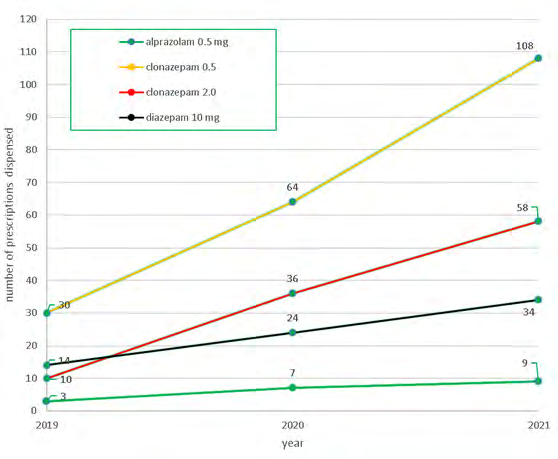
Source: self-made. Figure 1: Use the benzodiazepines outpatient Lanco hospital from October from December 2019-2020-2021.
Regarding the average age of the patients who are prescribed this group of drugs, it is over 49 years old, where only clonazepam 0.5 mg lowers the age of consumption from 60 years in 2019 to 49 years in 2021 (Figure 2).
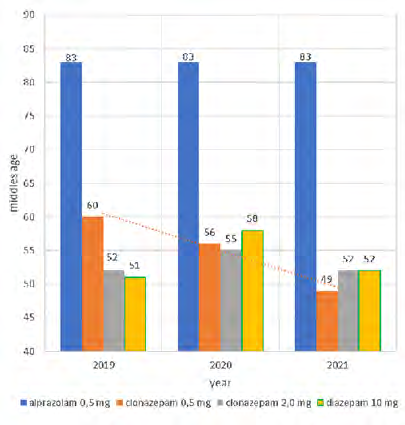
Source: self-made. Figure 2: Mean age of benzodiazepines users Lanco hospital from October from December 2019-2020-2021.
Another important aspect is the percentage of patients over 55 years of age who use these drugs, in the case of alprazolam 0.5 mg it corresponds to 84%, clonazepam 0.5 mg 46%, clonazepam 2.0 mg and diazepam 10 mg 48%. The results of the residence variable, by type of benzodiazepine, are as follows Figure 3.
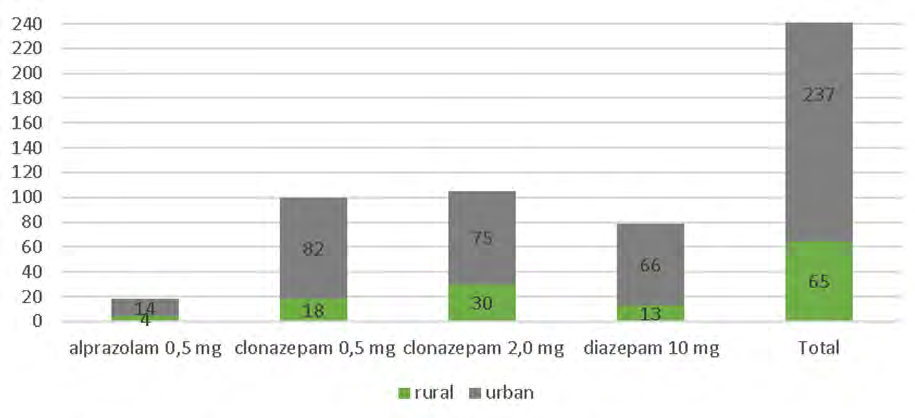
Source: self-made. Figure 3: Patients of the Lanco hospital benzodiazepines users from October from December 2019-2020-2021 according to residence.
The graph shows that of the total population that consumed some benzodiazepine in the period, only 22% lived in rural areas, while 78% lived in urban areas (Figure 4).
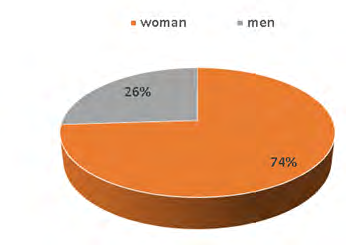
Source: self-made. Figure 4: Patients of the Lanco hospital benzodiazepines users from October from December 2019-2020-2021 according to sex.
The results regarding the sex of the patients who received benzodiazepines show a predominant consumption of women over men with 74%. Regarding the period of prescription of benzodiazepines, it is observed that the four are prescribed for mainly chronic treatments. Understanding this classification as use for a period of thirty days or more, acute use will be considered use of less than thirty days (Figure 5).
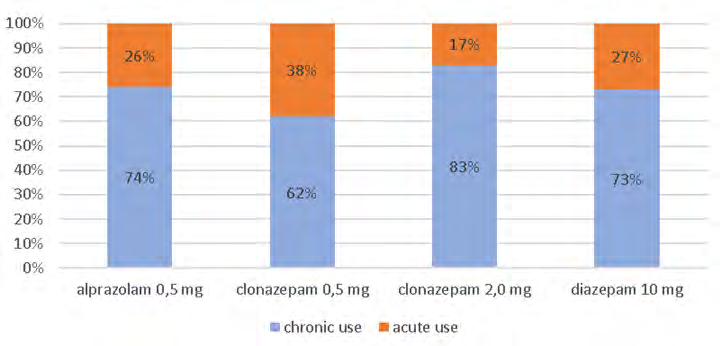
Source: self-made. Figure 5: Patients of the Lanco hospital benzodiazepines users from October from December 2019-2020-2021 according to duration of treatment.
Muscle relaxants: Lanco Hospital has only one drug with this therapeutic action, cyclobenzaprine 10 mg. Despite the fact that consumption falls in 2021 compared to 2020, the number of prescriptions dispensed also exceeds the reference year (2019) by 33% (Figures 6 & 7).
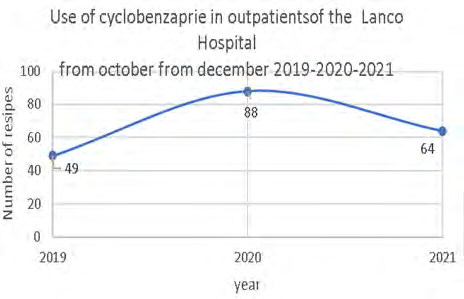
Source: self-made. Figure 6: Use of cyclobenzaprine in outpatients of the Lanco hospital from October from December 2019-2020-2021.
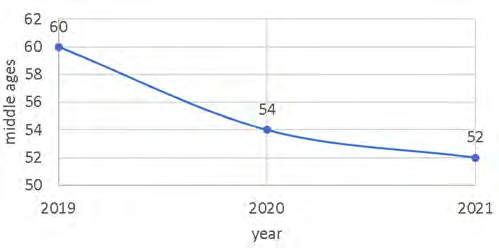
Source: self-made. Figure 7: Mean age of cyclobenzaprine users of the Lanco hospital from October from December 2019-2020-2021.
In the case of the average age of patients who have been prescribed cyclobenzaprine 10 mg, it has decreased since 2019, from 60 to 52 years. Additionally, only 42% of the patients who consumed this drug in the last quarter of
2021 are over 55 years of age (Figures 8 & 9). The results of the residence and gender variables for this medication are shown below:
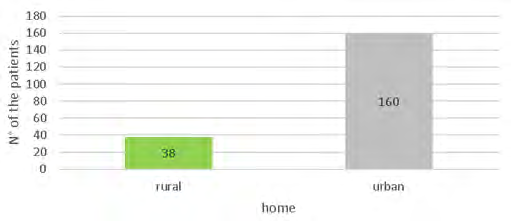
Source: self-made. Figure 8: Patients of the Lanco hospital users of cyclobenzaprine 10 mg from October from December 2019-2020-2021 according to residence.
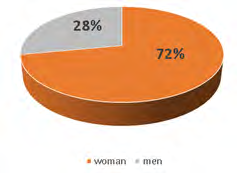
Source: self-made. Figure 9: Patients of the Lanco hospital users from cyclobenzaprine 10 mg from October from December 2019-2020-2021 according to sex.
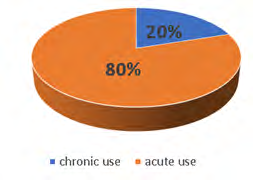
Source: self-made. Figure 10: Patients of the Lanco hospital users of cyclobenzaprine 10 mg from October from December 2019-2020-2021 according to duration of treatment.
Likewise, that, in the case of the benzodiazepine group, the patients is mostly women of urban residence (Figure 10).
Regarding the duration of treatment of this medication, we can observe that it is used mainly in acute diagnoses.
Sleep Inducer: In this group of medications, we found only one presentation in the hospital arsenal, zopiclone 7.5 mg. The use of this drug also showed an increase, especially in the last year of the study, 2021, as shown in the Figure 11
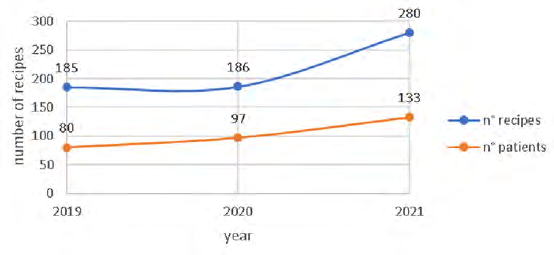
Source: self-made. Figure 11: Number of prescriptions dispensed recetas/number of users of zopiclone 7,5 mg from October from December 2019-2020-2021.
Regarding the chronic consumption of zopiclone 7.5 mg, it is noteworthy that on average 55 out of 100, that is, approximately 50% of the patients who use this medication do so in chronic use. The average age of the patients who use this drug is also a very relevant aspect, since 66% of the entire sample is over 55 years old.
Discussion
The results of this study show, in general terms, an increase in consumption in the three lines of drugs investigated, being necessary to recognize the differences in vulnerability of the different population groups, especially those related to gender, age and socioeconomic level. The mental health impact of an epidemic is generally more marked in populations that live in precarious conditions, have few resources and have limited access to social and health services [6]. In the case of the consumption of benzodiazepines, it is clinically relevant for the medical team of this establishment to consider the profile of patients who receive these prescriptions, above all, due to their age and comorbidity. In addition, that its use increases the total sleep time, reducing the latency time, prolonging phase 2 of NREM sleep and reducing both REM sleep and low sleep waves, even alprazolam, as a base, does not have a hypnotic effect [7]. Also considering that clonazepam (17-60 hrs) and diazepam (20-100 hrs) are classified as having a long half-life. In this context, its adverse effects can cause falls in patients, which ultimately lead to an important risk factor for hospitalizations. On another point, this prescription behavior also transgresses the Chilean ministerial technical norm, which states that these drugs must be used in low doses and for a short time, always evaluating the benefit-risk of patients, avoiding inappropriate prescription practices that entail risk of pathogenesis [8]. Regarding the use of cyclobenzaprine, it is mainly used in acute pathologies, which shows a good use of the therapeutic tool, however, the increase in its use could be related to a greater number of acute musculoskeletal conditions, derived from confinement , teleworking, economic situation of families, among other consequences of the SARS Cov-2 pandemic in Chile [9], to confirm this observation other background information is required, which was not considered in this research, such as structured interviews with patients. Regarding the consumption of sleep-inducing drugs, zopiclone 7.5 mg shows a clear first-line use in sleep disorders, since more than 50% of patients use it chronically, surely based on the fact that they have a lower degree of dependence, tolerance and adverse drug reactions (ADRs) [10]. However, considering the technical resources available in this hospital, ideally a multidisciplinary approach for these patients would be the most appropriate, always trying non- pharmacological measures first. Finally, it is relevant to note that it is described, within the BEERS criteria [11], the list of potentially inappropriate medications in older adults, where they are, benzodiazepines and sleep inducers or “z” drugs, as they are also known.
Conclusion
We can conclude that the use of benzodiapzepines must adhere to the ministerial regulations, evaluating a possible local protocol in case it is required, with this the difficulty of withdrawing them later would be avoided, a more complex adverse effect in the use of these drugs, dependence. Do not use hypnotic drugs for more than 6 months and include a comprehensive evaluation of the patient before prescription. In cases of patients with initial insomnia, use drugs with a short half-life and in cases of maintenance insomnia, use drugs with a long half-life. It would be possible to know the influence of the development of the pandemic in Chile and the consumption of this group of medicines, carrying out, in another study, other statistical tests that manage to demonstrate or rule out such relationships, for now this is a first approach to this research hypothesis.
Thanks
To Mr. Germán Olivera Fuentealba, Pharmaceutical Chemist, head of the pharmacy unit of Hospital de Lanco, who provided the coded database for this study.
References
-
Torales J, O’Higgins M, Castaldelli Maia JM, Ventriglio A (2020) The outbreak of COVID-19 coronavirus and its impact on global mental health. Int J Soc Psychiatry 66(4): 317-320.
-
(2020) Municipality of Lanco.
-
Wyles H, Rehman HU (2005) Inaptitude polypharmacy in the elderly. European J Intern Med 16(5): 311-313.
-
Yunes J (1971) The population dynamics of developed and underdeveloped countries. Rev Public Health 5(1): 129-150.
-
Téllez Lapeira JM, Torres Hidalgo JL, Alcaraz LG, Martínez IP, Gras CB, et al. (2017) Consumption of anxiolytics and hypnotics and associated factors in the elderly. Spanish Journal of Geriatrics and Gerontology 52(1): 31-34.
-
Ribot V, Chang N, Gonzalez A (2011) Effects of COVID-19 on the mental health of the population. Rev Haban Cienc Méd 19(1): e3307.
-
Howell H, McQueeney M, Bostwick JR (2011) Prescription Sleed Aids for the Treatment of Insomnia. Medscape.
-
(1994) General technical standard No. 5, on rational prescription of benzodiazepines Exempt Resolution No. 1252. Ministry of Health.
-
Cañas BE (2021) Musculoskeletal effects of teleworking and working at home in a pandemic situation due to Covid-19. Specialization degree work, University of Antioquia Medellin, Colombia.
-
Bjarke E, Wafford KA, Deacon S (2006) Treating insomnia: Current and investigational pharmacological approaches. Pharmacol Ther 112(3): 612-629.
-
Delgado E, Muñoz M, Montero B, Saánchez C, Gallagher P, et al. (2009) Inappropriate drug prescription in older patients: STOPP/START criteria.
- Epidemiological Surveillance and Rumors on Social Media
- Awareness and Treatment of Uncontrolled Hypertension in US Overweight/Obese Youths Aged 16–24 Years, NHANES 2021–2023
- Strengthening EPI Through Parental Engagement: Lessons from Dhaka Slums for IA-2030
- Mothers Knowledge of the Prevalence, Causes, Effects, Prevention and Control of Diarrhoea among Children in Ife East Local Government Area, Ile Ife, Osun State, Nigeria
- Covid-19 Reinfections Case Series from October 2023 to October 2024 in A General Medicine Office in Toledo (Spain)
- Water Contact! One Risk Too Many: Risk Factors Associated with Schistosoma haematobium infection in Osun State, Nigeria