
Self-Medication in Covid-19: Retrospective Epidemiological Study
The COVID-19 pandemic has devastated the lives of millions of people and brought the most diverse damage to all of humanity, and, as a result, the discovery of therapies capable of halting the devastating action of the SARS-Cov-2 virus is imminent. Several drugs have been evaluated regarding their possibility of being useful in the prevention and/or control of this viral disease, but there are still no results that allow their use to contain the progression of the pandemic, however, the dissemination and indication of use and ease of access to such substances may have led the population to self-medicate, which ends up increasing the risks and minimizing the benefits of such substances. The present work is a retrospective and exploratory study, which aimed to evaluate the consumption and the occurrence of adverse effects resulting from the consumption of medicines for the treatment of COVID-19, by citizens residing in the metropolitan region of Vale do Paraíba. The main tool for making the project viable consisted of a questionnaire developed by the researchers themselves, dealing with the practice of drug consumption and adverse reactions resulting from the consumption of drugs claimed to be effective in preventing COVID-19. It was observed that self-medication had a low adherence (25,58%) , that ivermectin was the most used drug in this process (67,27%) and that there were adverse reactions, mainly diarrhea (55,55%) but they were not serious, however the importance of pharmaceutical care aimed at the rational use of medications should be highlighted, since, if for the research participants, the reactions were little impactful, with the increase in their irrational use, a greater possibility of occurrence of more serious adverse reactions may be possible.
Introduction
In mid-December 2019, in Wuhan City, Hubei Province, at the wholesale seafood market, an outbreak of an infection caused by a highly infectious virus began. A betacoronavirus was discovered from the analysis of samples from a group of patients with pneumonia of unknown cause, its causative agent being called SARS-CoV-2 [1]. SARS-CoV-2 (Severe Acute Respiratory Syndrome Coronavirus 2) is an RNA virus belonging to the Coronaviridae family, as it can be found mainly in bats. SARS-CoV-2 predominantly infects bats, although it can be transmitted to humans, is related to the high mortality of sick patients with critical health status [2]. The main means of spreading COVID-19 are direct contact with infected people through respiratory secretions and droplet spread. According to the World Health Organization
(WHO) and its recommendations, it is of paramount importance to follow preventive measures to reduce the contagion of the coronavirus, such as social distancing, hand hygiene, wearing a mask, and staying in quarantine within their respective areas home [3].
Due to its high transmissibility, the infection caused by this virus has reached pandemic proportions and the World Health Organization (WHO), a specialized health agency subordinate to the United Nations (UN) has led an extensive global response to the coronavirus pandemic through protocols and preventive measures. The WHO in February 2020 named the new Coronavirus COVID-19 referring to the year it was discovered [4]. In a short time, the virus spread reaching the world population, not choosing ethnicity, social and economic class. On March 11, 2020, the WHO declared a pandemic status, and since then, the number of deaths and infections has only grown every day [5]. There is still no effective treatment for COVID-19, but measures are used to reduce the spread of the disease [6, 7]. Thus, the present study aimed to evaluate the consumption and the occurrence of adverse effects resulting from the consumption of drugs with a claim of efficacy for the treatment of COVID-19, by residents in the metropolitan region of Vale do Paraíba, and, specifically, to verify whether the participant tested positive for COVID-19 and the intensity of symptoms they presented.
Methodology
The main tool to make the project viable consisted of a questionnaire that was approved by the Research Ethics Committee of UniFUNVIC (CAAE: 47193621.1.0000.8116), dealing with the practice of drug consumption and adverse reactions resulting from the consumption of drugs claimed to be effective for the prevention of COVID-19.
It is a questionnaire developed by the researchers themselves, containing questions related to the possibility that research participants are consuming or have previously consumed drugs with claimed efficacy for the prevention of COVID-19, possible adverse reactions resulting from such practice, duration time of treatment, as well as whether there was positivity for COVID-19 and, when positive, the intensity of symptoms.
The adverse reactions contained in the questionnaire, as possible, were based on the reactions described in the Micromedex database of International Business Machines (IBM), which is validated and considered an international reference in information related to medicines, which is available in the www.micromedex.com or on the Micromedex app, available for Android and IOS, upon payment. For the other questions, it was intended to follow logic of the relationship between the consumption of drugs considered to be potential for preventive use in COVID-19 and the possibility of effectiveness and reactions resulting from this use.
To guarantee people’s access to the questionnaire with a guarantee of social distance, it was made available on virtual platforms, such as Facebook. The questionnaire was directed to inhabitants of municipalities in the Vale do Paraíba, and their participation took place upon agreement with the Free and Informed Consent Term, and this document was included in the first part of the questionnaire, only allowing the continuity of responses, through agreement with that term. Non-agreement implied non-access to the questions.
People over 18 years of age who agreed to participate in the research were included in the research by clicking on the option: “I am aware of my way of participating in the research, as well as the risks and benefits of this, and therefore I agree to participate”. Those under 18 years of age and those who did not agree to participate in the research were excluded.
The results obtained were statistically evaluated to determine their relevance and the differences between the means obtained, using the Chi-square and G-test and using the BioEstat 5.0 software as a support tool.
Results
After the end of the survey application period, out of a total of 221 questionnaires, 215 (97.28%) were used to compose the results, since 6 (2.71%) participants chose not to respond. Among the research participants, 67.44% (145/215) were female, with a mean age of 34 years. 76.27% (164/215) chose to inform their age, and of these, 46.34% (76/164) were between 18 and 29 years old, 40.85% (67/164) were between 30 and 49 years old, and 12.8% (21/164) were over 50 years of age. It was observed that, of the total of 215 participants in the research, 55 (25.58%) reported having already used self-medication, with this portion being significantly smaller (Chi-square - p<0.0001) than that corresponding to those who did not practice self-medication as a way of trying to prevent infection by COVID-19. It was also possible to observe that there was no significant difference (p=0.1675/chi-square) between the proportion of men and women who practiced self- medication, with 37.28% (24/70) among men and 21.37 % (31/145) among women, also with no significant difference in the proportion of participants who chose to self-medicate, in relation to different age groups. The drug Ivermectin was the most used (Chi-square/p<0.0001) for this purpose, with 37 reports (67.27%) to use. The other medications used by the participants are highlighted in Figure 1.
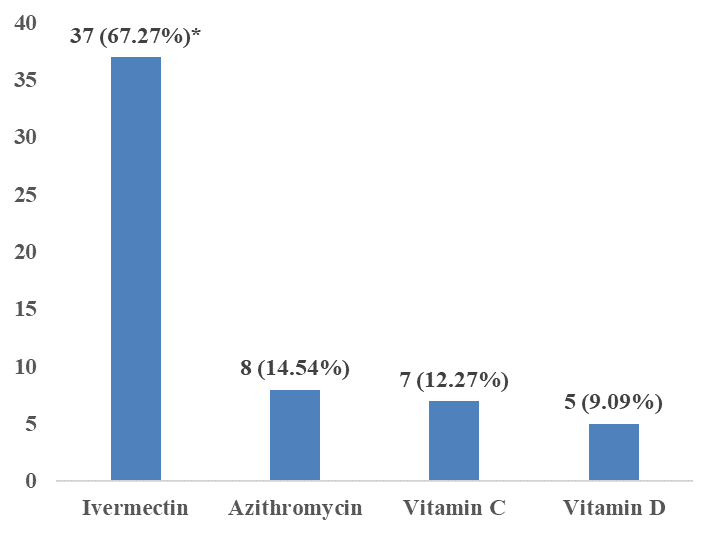
*Chi-square / p<0.0001 Figure 1: Medications most used as self-medication in COVID-19 in the Vale do Paraíba region in 2021.
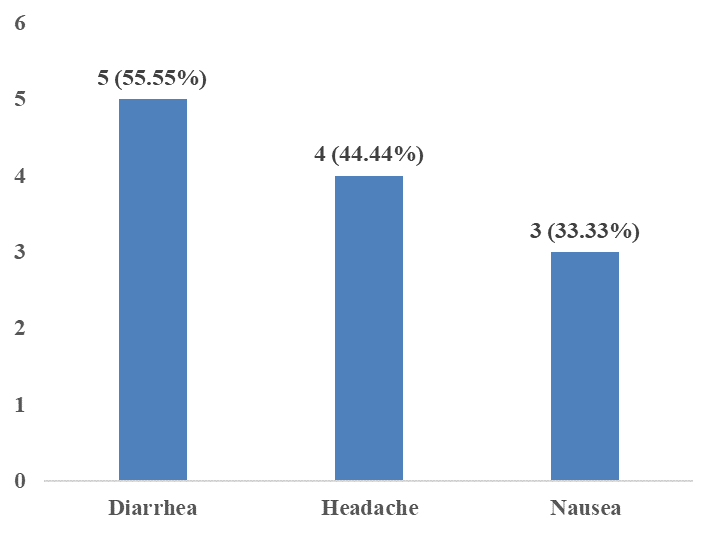
Regarding the occurrence of adverse reactions due to self-medication, there was a predominance (Chi- square/p<0.0001) of participants who did not complain of undesirable symptoms, since, of the 55 who reported adherence to this practice, only 9 (16.36%) had some type of adverse reaction, with 5 (55.55%) pointing to diarrhea as a symptom and the remaining 4 had other undesirable reactions, as shown in figure 2.
Regarding the duration of self-medication, 33 (60%) answered that they used the medication for a short period, corresponding to a significantly larger portion (Chi-square/ p<0.01) in relation to those who answered that they used the medication. for a medium or long period, as shown in Figure 3.
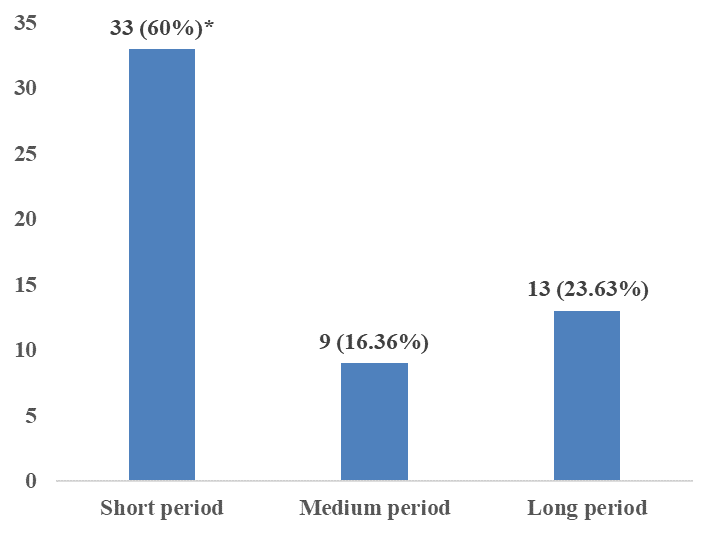
*Chi-square / p<0.01 Figure 3: Duration of self-medication practice in COVID-19 in the Vale do Paraíba region in 2021.
It is noteworthy that, when asked about the persistence of self-medication, 13 participants (23.63%) reported that they continued to self-medicate until the date of the interview, with Ivermectin being the most used drug (G test/p< 0.05) when compared to Azithromycin, as shown in Figure 4.
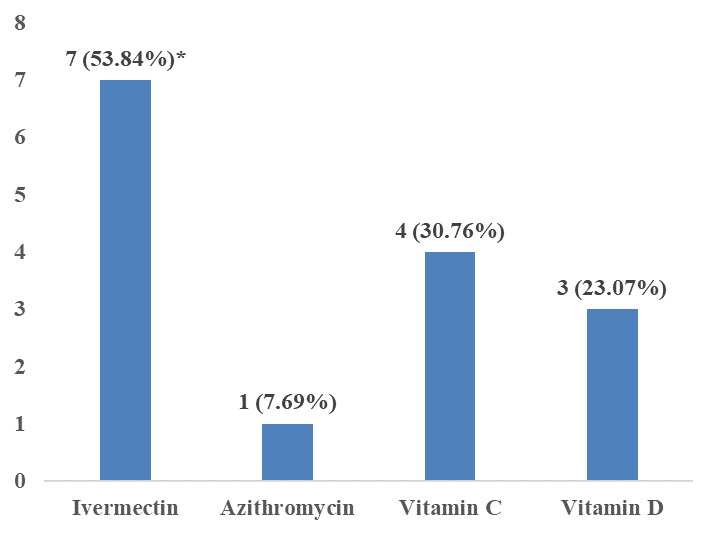
*Significant difference (G test / p<0.05) in relation to Azithromycin. Figure 4: Medicines that continued to be used in the practice of self-medication in COVID-19, Vale do Paraíba in 2021.
It was found that 2 (3.63%) individuals responded that they had not previously used any medication, but had recently started to use it, namely Azithromycin and vitamin D.
Figure 5 shows the list of people who continue to self- medicate and who did not self-medicate before, but started to adhere to the practice, as well as those who already self-medicated and no longer self-medicate, a portion that predominated (Chi-square/ p<0.0001) in relation to the other two.
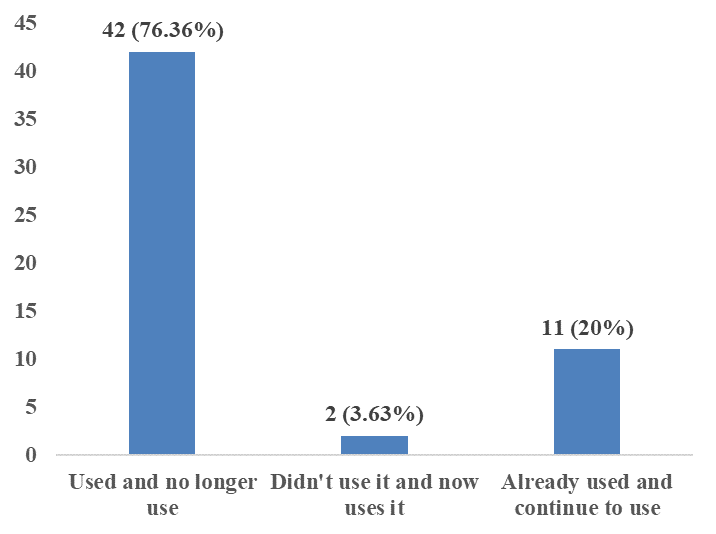
*Chi-square/ p<0.0001. Figure 5: Persistence of self-medication as a way of trying to prevent COVID-19, Vale do Paraíba in 2021.
Regarding the practice of self-medication in relation to age, it was observed that 27.27% of the participants did not respond to age, and among those who informed their ages, 23 participants belonged to the age group between 18 and 35 years old, and of these, 41 .81% practiced self-medication in COVID-19. In addition, 17 of the participants were over 35 years old and of these, 30.90% practiced self-medication, with no significant difference (Chi-square/p = 0.9828) as seen in Figure 6.
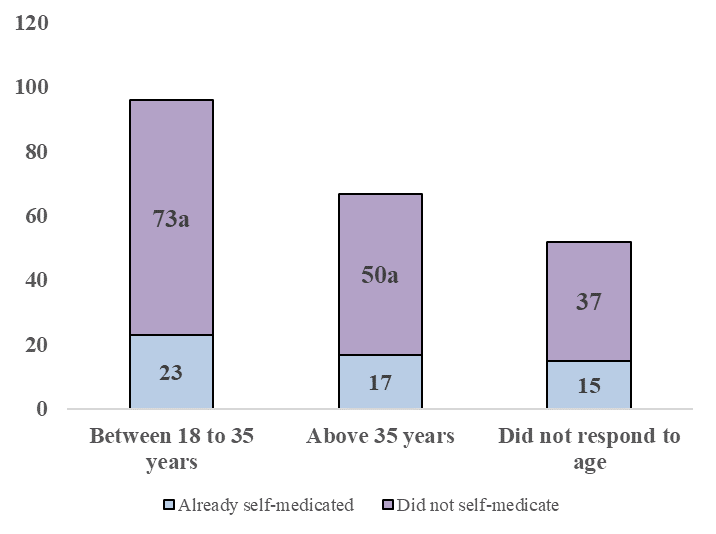
a-no significant difference. Figure 6: Age ratio of participants who self-medicated and those who did not adhere to the practice of self-medication in Vale do Paraíba in 2021.
Regarding gender, there was no significant difference (Chi-square / p=0.317) in the proportion of men or women who adhered to the practice of self-medication in COVID-19, as seen in Figure 7.
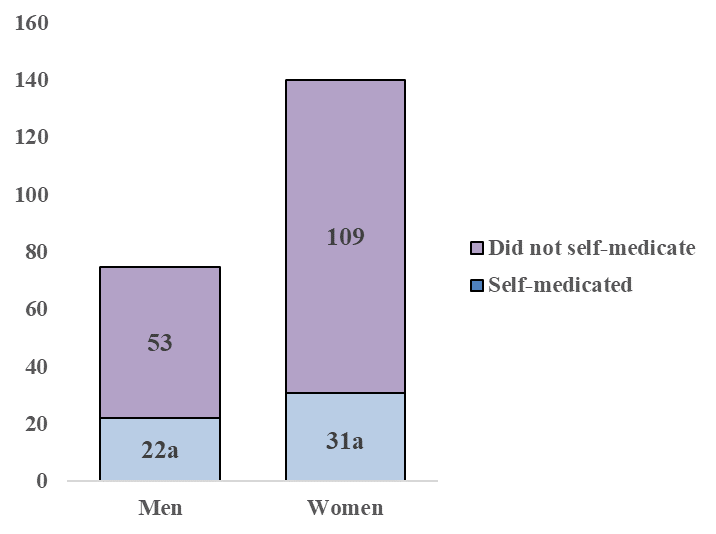
a -no significant difference Figure 7: Proportion of men and women who self-medicated for COVID-19, in Vale do Paraíba in 2021.
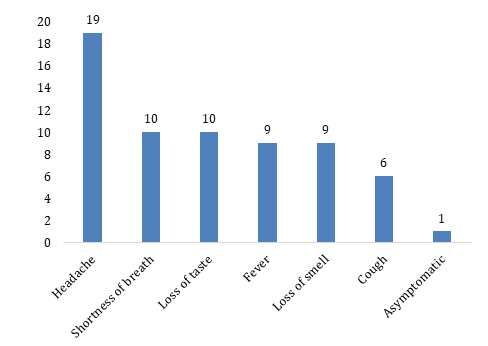
When asked if they had ever had COVID-19, of the 215 participants, 42 (19.53%) answered yes and 173 (80.46%) answered no. Among those who had COVID-19, 23 (54.76%) reported mild symptoms, 16 (38.09%) moderate symptoms and only 3 (07.14%) reported severe symptoms, corresponding to a significant minority (Chi-square/ p<0.0001). Only 2 individuals (4.76%) needed hospitalization Regarding the symptoms reported among patients who had COVID-19, there was a predominance of headache, followed by shortness of breath and loss of taste, as seen in Figure 8.
to treat the disease and the other 40 (95.23%) recovered without needing hospitalization.
Discussion
According to the results obtained, it was observed that there was no predominance of the practice of self-medication among the participants as a way of trying to prevent infection by COVID-19, however, of those who self-medicated, the drug Ivermectin stands out, and, in Regarding the vitamin supplement, there was a prevalence of Vitamins C and D, which are the most used to prevent or treat infections by COVID-19. Souza MNC, et al. [8] obtained similar results in their research, where participants who practiced self- medication used Ivermectin, Azithromycin, Vitamins C and Silva LG, et al. [9] report that the tested evidence of Ivermectin as an antiviral and not just as an antiparasitic should be considered, it is important that there is new evidence and recognition of Ivermectin in the prophylactic treatment of COVID-19.
Silva JNB, et al. [10] point out that most researchers reported that Ivermectin would be a potent inhibitor of SARS-CoV-2 replication according to in vitro laboratory experiments. Sharun K, et al. [11] report that in vitro studies are being carried out using Ivermectin against a class of viruses associated with RNA and DNA, such as SARS-CoV-2, and proves its antiviral activity. According to Formiga FR, et al. [12], an in vitro study is being carried out on the use of Ivermectin in the prophylactic treatment of COVID-19, and these studies provide evidence of the effectiveness of Ivermectin in preventing viral replication common in infections caused by COVID-19. Jans DA, et al. [13] also report that Ivermectin has a proven spectrum of antiparasitic action, and since 2012, it has been studied in infections caused by viruses with satisfactory results, showing great potential as an antiviral drug. According to Ferreira LLG, et al. [14], in the current pandemic scenario, Ivermectin has been used in search of solutions even without its proven effectiveness against COVID-19.
According to Ramalho TC, et al. [15], Ivermectin was able to inhibit the replication of viral strains and reduce serum levels of viral proteins, both in in vitro and in vivo studies, and, when incorporated into liposomes, its efficacy was high and toxicity was reduced. This drug has shown potential for the treatment of dermatological disorders due to its anti-inflammatory activity, highlighting the success of repositioning for the treatment of papulopustular rosacea. Thus, using the example of Ivermectin, it can be inferred that the repositioning of traditional medicines for the treatment of common or rare diseases, as well as in the face of a pandemic, becomes a promising tool in terms of research and development drugs. Self-medication is a practice that has been growing in the country since most people admit to taking medicines without a prescription in Brazil. The fact that people self-medicate without knowing the real reason why they are using certain medications can be harmful, given that no medication is harmless to health [16].
Another important fact related to the practice of self- medication is the disclosure, indication of use without a prescription, and the ease of access to such substances. Even with ANVISA (National Health Surveillance Agency) regulations regarding the promotion of the rational use of medicines, efforts aimed at orienting those who consume them are still incipient. The act of buying medication without a prescription does not mean that the individual can take it the way they want, for this reason, pharmaceutical care, guidance programs for professionals such as pharmacists and clerks and the general population, and especially inspection are important [17].
Also, according to the results, it was noted that there was no significant difference regarding the practice of self-medication in relation to gender, disagreeing with the results evidenced by Arrais PSD, et al. [18] who perceived a predominance of such practice among women. According to these authors, women are always looking for health promotion within the family and are likely to correspond to the perspective of drug advertisements. The discrepancy in the results of the practice of self-medication observed in the present study, according to which there was no significant difference in relation to gender, is probably related to the time in which the research by Arrais PSD, et al. [18] was designed since it took place in 1997, the period in which there was no pandemic bias and no exhaustive debate about the search for drugs to prevent any pandemic disease, as is happening today.
Otherwise, at the time of designing the present work, the overexposure of scientific data related to possible treatment strategies for COVID-19, combined with the political discussion on this topic, not only irresponsibly popularized the practice of self-medication but also ended up inducing fear of getting sick, factors that, when added together, affected the entire population and not just the naturally cautious female gender. It is noteworthy that among the participants who adhered to the practice of self-medication, some had adverse reactions, with diarrhea as the most mentioned symptom. The occurrence of diarrhea as the main adverse effect is probably related to the fact that the majority of respondents in the present study reported using Ivermectin, which is known to be capable of causing such a symptom, especially when used in the long term [19].
Among participants who had already had COVID-19, more than half reported that they had mild symptoms, with the most prevalent symptom being a headache. Moreira RS [20] in his analysis of latent classes with covariates on symptoms, presented a model with the best-fit parameters, with headache being the most predominant symptom in mild cases. The results presented here also agree with those exposed by Peixoto VR, et al. [21], according to which recent international epidemiological studies have shown that headache is the most prevalent symptom among young people aged 15 to 39 years who have contracted COVID-19.
Conclusion
Based on the results obtained, it is possible to conclude that there was a low adherence to the practice of self- medication in the face of COVID-19, without distinction between genders, but with a predominance among young people between 18 and 35 years old, and that, despite the occurrence of adverse reactions, these were not serious. Ivermectin was used as the main form of self-medication, but without any adverse reaction, in addition to diarrhea. Finally, it can be inferred that to minimize the risks of drug-related problems, the pharmacist must act ethically, thus minimizing the possibility of problems related to self-medication in COVID-19.
References
-
Zhu N, Zhang D, Wang W, Li X, Yang B, et al. (2020) A Novel Coronavirus from Patients with Pneumonia in China, 2019. N Engl J Med 382(8): 727-733.
-
Parry J (2020) Wuhan: Britons to be evacuated as scientists estimate 44 000 cases of 2019-nCOV in the city. BMJ 368: 351.
-
Vincent S, Joseph J (2017) The Combined Effectiveness of Gaze Stability Exercise and Otago Exercise on Balance and Fall Risk in Elderly People. International Journal of Medical and Exercise Science 3(3): 390-401.
-
Zu ZY, Jiang MD, Xu PP, Chen W, Ni QQ, et al. (2020) Coronavirus Disease 2019 (COVID-19): A Perspective from China. Radiology 296(2): E15-E25.
-
Oliveira AG, Silveira D (2020) Experimental drugs in clinical trial for Covid‑19 treatment: challenges and perspectives. Infarma 32(1): 3-5.
-
Wang M, Cao R, Zhang L, Yang X, Liu J, et al. (2020) Remdesivir and chloroquine effectively inhibit the recently emerged novel coronavirus (2019-nCoV) in vitro. Cell Res 30: 269-271.
-
WHO (2019) COVID-19 vaccines.
-
Souza MNC, Ricardino IEF, Sampaio K, Silva MR, De Lima APG, et al. (2021) Occurrence of Self-medication in the Brazilian population as a preventive strategy for SARS- CoV-2. Research, Society and Development 10(1): 1-9.
-
Silva LG, De Freitas LT (2021) Ivermectin: the panacea for prophylactic treatment of COVID-19. Brazilian Journal of Development 7(5): 49612-49599.
-
Silva JNB, Brito MES, Júnior DAS, Silva AS (2020) Does Ivermectin Have Therapeutic Action In Covid-19?. Anais do Congresso de Geriatria e Gerontologia do UNIFACIG 1(1): 3-1.
-
Sharun K, Dhama K, Patel SK, Pathak M, Tiwari R, et al. (2020) Ivermectin, a new candidate therapeutic against SARS-COV-2/COVID-19. Ann Clin Microbiol Antimicrob 19(1): 23.
-
Formiga FR, Leblanc R, Rebouças JS, Farias LP, De Oliveira RN, et al. (2021) Ivermectin: an award-winning drug with expected antiviral activity against COVID-19. J Control Release 329(1): 758-761.
-
Jans DA, Wagstaff KM (2020) Ivermectin as a Broad- Spectrum Host-Directed Antiviral: The Real Deal?. Cells 9(9): 2100.
-
Ferreira LLG, Andricopulo AD (2020) COVID-19: Small- Molecule Clinical Trials Landscape. Curr Top Med Chem 20(18): 1577-1580.
-
Ramalho TC, Sousa RWR, Gomes DM, Carvalho ALM, Souza RP, et al. (2020) Ivermectin: is necessary to think outside the box to reposition it. Research and Society Development 9(11): e68191110611.
-
Musial DC, Dutra JS, Becker TCA (2007) Self-Medication among Brazilians. SaBios Rev 2(2): 5-8.
-
(2001) Self-medication. Rev Ass Med Brasil 47(4): 269- 295.
-
Arrais PSD, Coelho HLL, Batista MCDS, Carvalho ML, Righi E, et al. (1997) Aspects of self-medication in Brazil. Rev Saúde Pública 31(1): 71-77.
-
Popp M, Tegemann M, Metezendorf M, Gould S, Krank P, et al. (2021) Ivermectin for preventing and treating COVID-19. Cochrane Database of Syst Rev 7(7): CD015017.
-
Moreira RS (2021) Latent class analysis of symptoms related to COVID-19 in Brazil: results of the PNAD- COVID19. Cad Saúde Pública 37(1): e00238420.
-
Peixoto VR, Vieira A, Aguiar P, Abrantes A (2020) The importance of mild symptoms in the control of COVID-19 in Autumn / Winter 2020: Beyond cough, fever, shortness of breath and taste and smell disorders. National School of Public Health, NOVA University of Lisbon 1(1): 1-12.
- Epidemiological Surveillance and Rumors on Social Media
- Awareness and Treatment of Uncontrolled Hypertension in US Overweight/Obese Youths Aged 16–24 Years, NHANES 2021–2023
- Strengthening EPI Through Parental Engagement: Lessons from Dhaka Slums for IA-2030
- Mothers Knowledge of the Prevalence, Causes, Effects, Prevention and Control of Diarrhoea among Children in Ife East Local Government Area, Ile Ife, Osun State, Nigeria
- Covid-19 Reinfections Case Series from October 2023 to October 2024 in A General Medicine Office in Toledo (Spain)
- Water Contact! One Risk Too Many: Risk Factors Associated with Schistosoma haematobium infection in Osun State, Nigeria