
“ Indented writing” A modern technique in forensic Sciences
"Questioned document examination is a forensic science discipline that investigates documents of disputed authenticity." "Questioned documents often contain symbols, marks, or other features that convey hidden messages. Indented writing is commonly observed in cases involving suicide notes, extortion letters, ransom demands, kidnappings, and theft. Questioned documents recovered from a crime scene can provide valuable clues. Indentation marks are created when an object applies pressure, leaving a negative impression on the page below. Even if only indented documents are found, they can give investigators leads pointing to specific suspects."
Chavan PN¹*, Malkar SB² , Kankute SD¹ and Ghumatkar SG¹
¹Department of Home, Regional Forensic Science Laboratory, India ²Department of Home, Directorate of Forensic Science Laboratory, India
Introduction
“Handwriting refers to the unique writing style of individuals using pens or pencils, characterized by curves, blocks, and various fonts. Due to its distinctiveness, handwriting can verify a document’s author.
In the word of forensic science, the analysis of written documents plays a critical role in investigating crimes and resolving disputes. However, in many cases, the most important information is not what is written on the surface, but rather what lies beneath. Indented writing also known as indentation analysis, is a specialized technique used to recover and analyze the impressions left on a surface by written or printed text [1].
The field of indented writing analysis has evolved significantly in recent years ,driven by advances in technology and the development of new methodologies. This technique has been successfully applied in a wide range of contexts ,from forensic investigations and legal proceedings to historical research and cultural preservations.
Indentation marks, varying from person to person, can be recovered from multiple pages below the original writing. Indentation depends on the neuromuscular force applied during writing [2].
Document examination plays a crucial role in investigations involving documentary evidence, such as: Suicide notes, wills, checks. Forensic document examination helps determine whether a note was written by the deceased or forged to manipulate the crime. Questioned documents admissible in court prove their legitimacy”.
This discussion will provide an overview of the principles, methods and applications of indented writing analysis ,highlighting its potential to reveal hidden information and shed new light on the world of forensic document examination [3].
Definition and Principles
- Indented writing-refers to the impressions or indentations left on a surface by written or printed text.
- Pressure and friction-The act of writing or printing creates pressure and friction, resulting in indentations on the surface.
Modern Technique used to Reveal Indented Writing
• ESDA – Electrostatic Detection device easy to use.
- Nondestructive technique.
- Non contaminated.
- Quick results, extremely sensitive
- Easy to handle.
Principle: Indented areas of document carry less negative charge than surrounding areas. This causes the toner used in the EDD to be attracted to these areas. Revealing indentation that are present. Preservation of documents by fixing contend cellophane sheets.
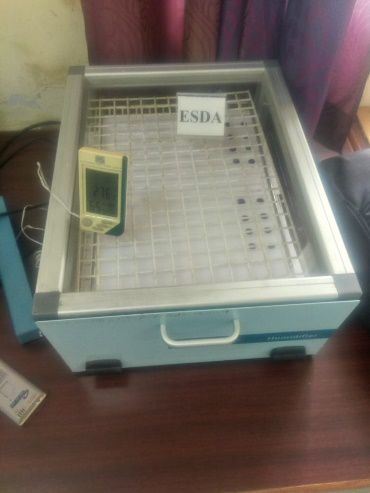
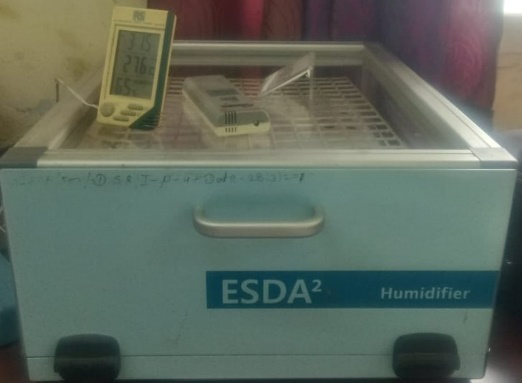
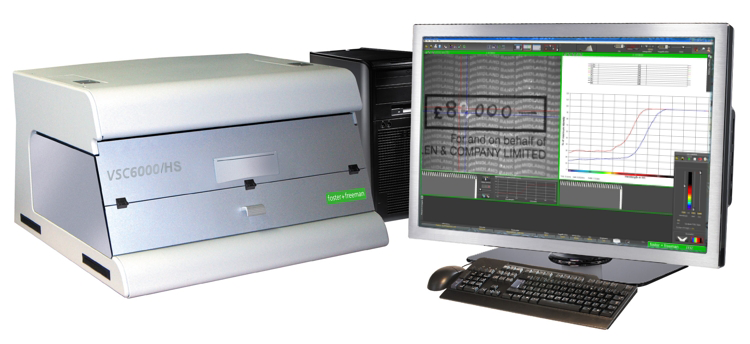
Video Spectral Comparator(VSC-6000/HS)
- Easy to use
- Sample used multiple time
- Quick results
- Non contaminated Principle: Reflection, Absorption, Transmission ,Luminescence.
VSC is a forensic tool used in document examination to analyses and comparevarious features of questioned documents. • Non-destructive technique
Oblique Light or Glancing Light (VSC 6020)
- In oblique lighting uses a light source positioned at a low angle.
- Usually used to show details by creating shadows on the surface.
- Commonly used when photographing impressions, tool marks and fingerprints.
Side Lights(Right and Left)
Side lighting is non – destructive technique used to reveal indented writing on paper. Use side lighting to reveal
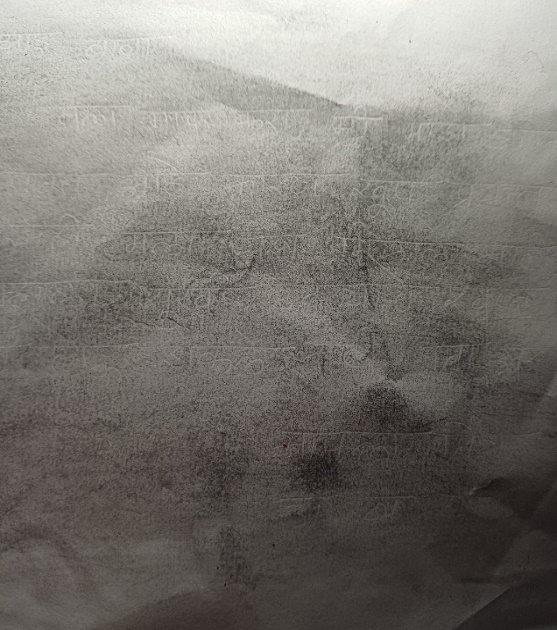
surface details and areas that contain impressions. After using side lighting ,machine can recover the impressions without damaging the paper.
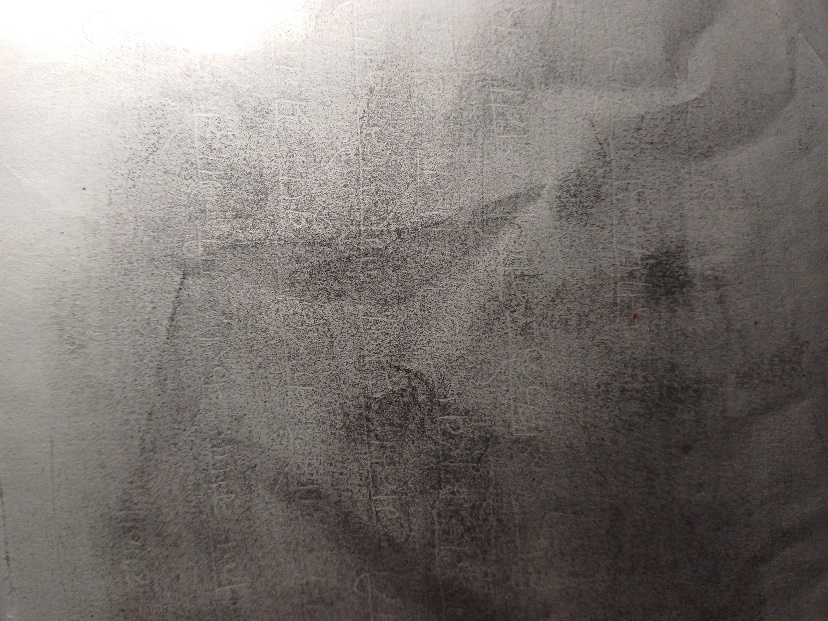
Pencil Shading Method
Pencil dose not reach the depressions of writing ,so the contrast is developed which makes the indentations clear .
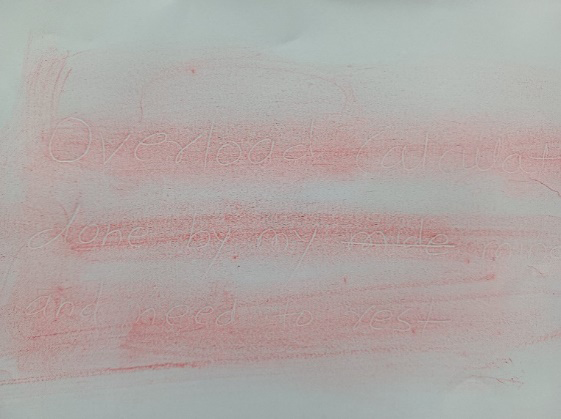
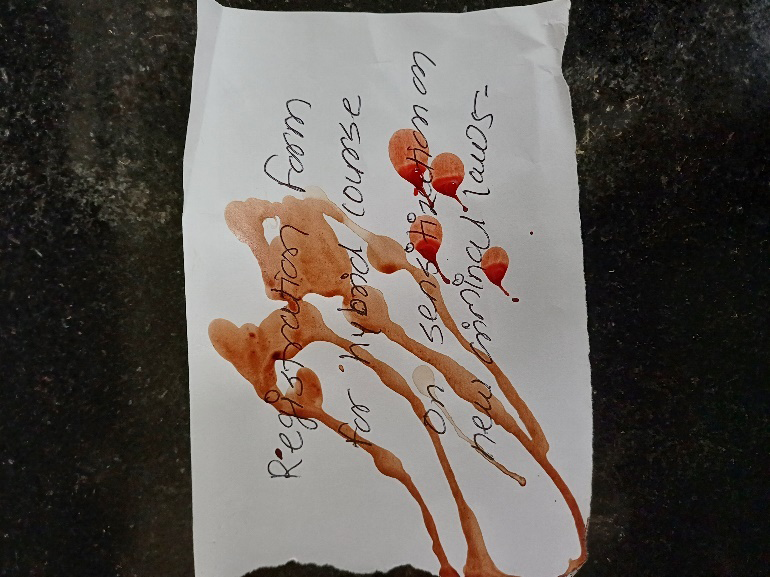
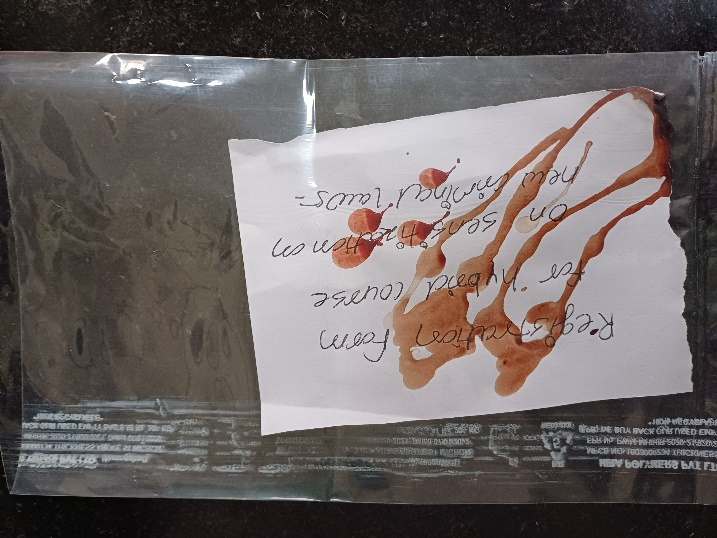
Blood Soaked Document
Law of analysis – The analysis can be no better than the sample analyzed law of circumstantial fact “facts do not lie, men can and do”
Collection and Packaging
“During the collection process, it’s crucial to handle documents with care, considering that paper is a fragile substance prone to:
- Absorbing surrounding materials (oils, dirt, water, or liquids)
- Damage from cuts, tears, or liquid exposure
- Improper handling can harm evidence and compromise document condition.
- To preserve latent indented writing:
- Handle documents carefully to avoid damage.
- Package indented writing meticulously.
• Use large, sturdy cardboard boxes or protective envelopes for safe storage.”
Conclusion
Emphasizing the Significance of Indented Writing Analysis
Indented writing analysis is a groundbreaking technique that has revolutionized the field of forensic science .By recovering and analyzing indentations left on surfaces, expert can uncover crucial evidence that may have otherwise gone undetected [4].
Highlighting the Future Potential of Indented Writing Analysis
Indented writing analysis is a rapidly advancing filed that holds tremendous promise for the future. As technology improves and expertise grows ,this technique is likely to become an indispensable tool in forensic science [5, 6, 7, 8, 9].
Emphasizing the Importance of Expertise and Collaboration
Indented writing analysis is a complex and specialized technique that requires expertise and collaboration to produce reliable results. As this technique continues to grow in importance ,it is essential that forensic scientists, investigators
Acknowledgement
Author thanks to the Director General (Legal & Technical) Home Department, Government of Maharashtra and The Director, Directorate of Forensic Science Laboratory, Mumbai, for the facilities to do this analysis.
References
-
Biology Methods Manual (1978) Metropolitian Police Forensic Science laboratory, England, UK.
-
Sharma BR (2020) Questioned documents and examination.
-
Cullford BJ (1971) The examination and typing of the blood stains in the crime laboratory, U.S. govt. printing office, Washington D.C, USA, pp: 62-66.
-
Question documents and examination. Books and mannuals.
-
Shanmukhavalli S (2020) Decipherment of indented writing ppt.
-
Krushnamurty R (2010) Crime scene investigation.
-
Elyashiv A, Sarena W (2021) Optical Profilometry as a method for detecting indented writing.
-
Dansena P, Bag S, Pal R (2022) Pen Ink Discrimination in handwriting documents using statistical and motif texture analysis.
-
Majid Ali K (2022) Writer verification of partially damaged handwritten Arabic documents based on individual character shapes.
- Forensic Implications of Adverse Drug Reactions in Schizophrenia A Case Series
- Narcotics and Digital Forensics: Bridging Crimes in the Digital Age
- Ethics in Forensic Psychiatry: Principles, Dilemmas, and Human Rights
- Impact of Acute Stress on Attentional Orienting to Social Cues
- Head Injury and Intracranial Hemorrhage in Western Region of Libya
- A Forensic Study on Handedness: Examination of Handwriting Features in Right and Left Handed Writers