
Killer Nurse with Hydrochloric Acid, Autopsy Report
This particular example is known in the news as the case of the killer nurse. In the end, the nurse was sentenced to 30 years in prison. We describe the unusual case (both the reasons for and the use of an unusual substance in these cases) of a nurse who used hydrochloric acid to kill a patient. To date we are not aware of any such cases having been described in the medical literature. This is a very special case because the nurse did not use a drug to kill the patient, as already described in numerous previous cases, but used a caustic substance: hydrochloric acid.
Introduction
It is not news that nurses kill their patients, but it is a sad possibility described in many instances. In the various cases described, children [1] or adults have been killed. In some cases, nurses have used their medical knowledge to kill their own relatives [2, 3].
Poisoning has been the most popular method of killing with insulin [4], heparin, coumarin-containing drugs [5], muscle relaxants, benzodiazepines [6], and opiates all used. Cardiac medications have also been used, such as digoxin, lidocaine [7], or propofol [8]. Many cases have also been described in which injections of potassium chloride, or of air, choking, oral medications, and tampering with equipment have been used [9].
The main reasons behind this insane gesture of killing patients are often boredom and the desire to be in an emergency situation. Some caregivers simply seemed to get sadistic satisfaction from killing certain types of patients. In one case, the possibility of obtaining additional profit from a funeral home was also described as a motivation [10].
We describe the unusual case (both the reasons for and the use of an unusual substance in these cases) of a nurse who used hydrochloric acid to kill a patient. To date we are not aware of such cases having been described in the medical literature.
This case has gone through all three levels of trial of the Italian legal system. In the end, the Supreme Court of Cassation confirmed the sentence of 30 years in prison for the nurse. After the death of the male patient, the investigators managed to prove the killer nurse’s guilt, which included images from the video surveillance cameras at the supermarket, not far from the hospital, where she bought the acid only (nothing else), which she sprayed into the mouth of the elderly patient.
The victim was the father of a colleague; the killer nurse wanted to take revenge against the patient’s daughter who had managed to keep her place in the small hospital where they worked because of her father’s state of health and had not been transferred to another bigger hospital; however, the killer nurse was transferred but before that she took her revenge.
The 77-year-old patient was initially hospitalized in the long-term care center (due to a severe ischemic stroke a few months earlier). He was bedridden, aphasic, and uncooperative. He died after a week of agony in intensive care, due to burns to his internal organs caused by the substance that the nurse had sprayed with a large syringe directly into his throat.
The doctor on duty found him dyspneic with strange skin lesions and a strong smell of a caustic substance. The patient was immediately transferred to the nearest general hospital. The doctors in the emergency room immediately highlighted various caustic lesions on the patient’s lips, mouth, and right shoulder; there was a strong smell of a caustic substance on the patient’s undershirt and pajama jacket.
The severely dyspneic patient was immediately transferred to intensive care where he was intubated with mechanical artificial ventilation for suspected caustic injury with burns to the mouth, pharynx, and larynx.
With urgent total body computed tomography without contrast medium, inhomogeneous parenchymal consolidation in the basal site posterior to the right lung was highlighted, and there were no signs of perforation of the airways. With esophagogastroduodenoscopy, necrotic lesions of the mucous membrane of the oral cavity, pharynx, larynx, and upper and middle third of the esophagus, gastritis, and caustic erosive duodenitis were seen.
In the days that followed, the lung lesions worsened, involving the lower lobes entirely bilaterally and sparing only part of the upper lobes.
Meanwhile, the forensic police laboratories identified the caustic substance present in the patient’s clothes as hydrochloric acid—an acid identical to that purchased by the nurse.
After 8 days the patient died of cardiac arrest in very severe respiratory acidosis and hypoxemia.
We were instructed to perform the judicial autopsy on the victim’s body.
There were numerous chemical burn injuries affecting the head, the neck, and the right shoulder with varying degrees of severity. These were erythematous areas at times with complete destruction of the surface lining of the epidermis. The shoulder injury was vast and severe. In fact, in this context the chemical burn was so extensive with superficial necrosis of the epidermis that the epidermal vascular reticulum was clearly evident see (Figures 1a & 1b). In the posterior region of the neck, there was another lesion of the epidermis that was likely caused by posterior drainage of the chemical.
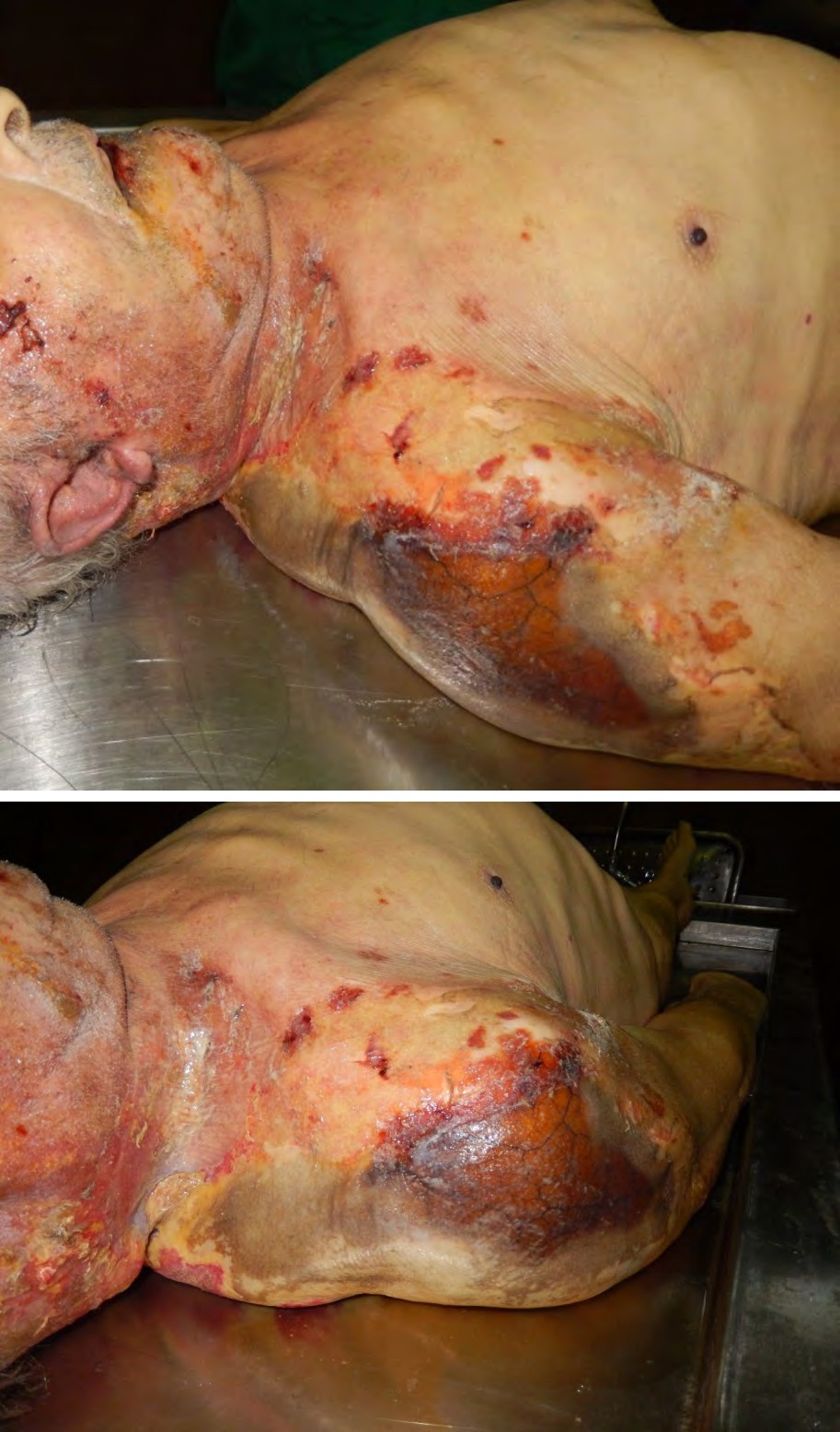
Figure 1a: Right Shoulder Injuries (A) The Extensive Chemical Burn is Clearly Evident.
Figure 1b: Right shoulder Injuries (B) The superficial Necrosis of the Epidermis make the Subcutaneous Vascular Reticulum Visible.
The mouth was affected by numerous erythematous lesions, erosions, and even ulcerations of the skin and/or superficial mucous lining. The palate was also covered with yellowish necrotic material see (Figures 2a & 2b).
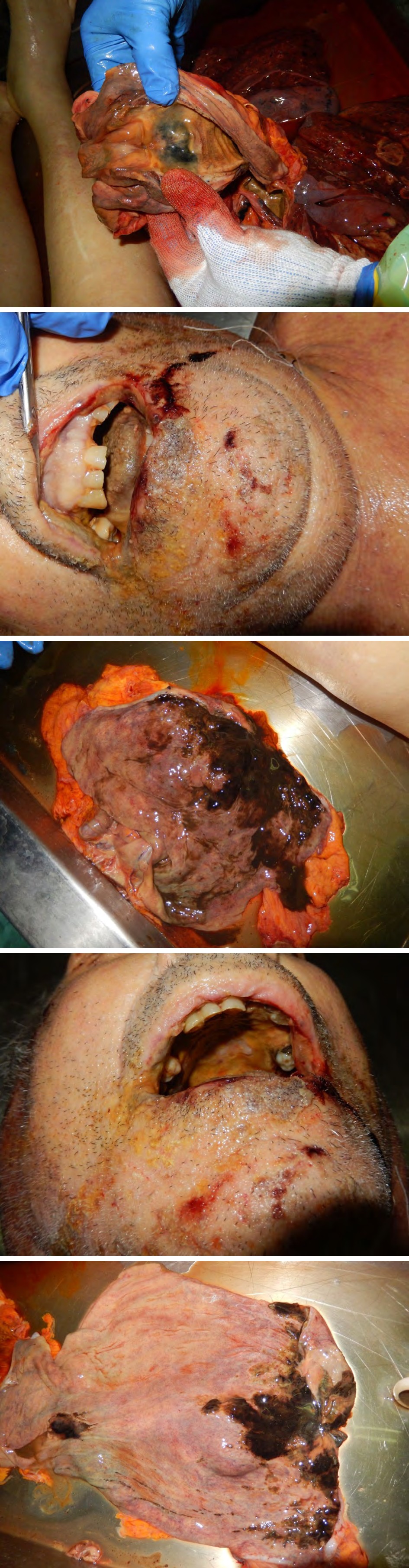
Figure 2a: Injuries to the mouth and palate (A) The mouth has numerous erythematous lesions.
Figure 2b: Injuries to the Mouth and Palate. (B) The Palate was Altered by Numerous Erythematous Lesions with Ulcers Lined with Necrotic Material.
By carefully examining the main injured organs, the whole tongue was covered with a yellowish patina of superficial and easily desquamating necrotic material; vascular reticulum was easily observed and lateral to the tongue small erosions/ulcers were evident.
Below the vocal cords a roundish blackish-gray lesion was clearly evident; this finding could be interpreted as the point of contact of the jet of substance with the upper respiratory tract. In the proximal third of the esophagus there was a blackish gray lesion similar to the laryngeal one but less extensive see (Figures 3a & 3b).
Figure 4a: Stomach injuries (A)
Figure 4b: In the stomach there are bleeding ulcers caused by the caustic substance; there is also abundant blood material.
The stomach was significantly altered due to the presence of two ulcerated (but not perforated) and bleeding areas—one very extended from the cardia to the gastric fundus and a smaller one in the antral site. These viscera contained abundant brownish blood material see (Figures 4a & 4b).
There was no perforation of the airways but only superficial necrosis and very strong irritation. The right lung appeared completely subverted in its structure and altered by the presence of solid, nodular, white-yellowish areas. The left lung was affected by similar phenomena but to a lesser extent see (Figures 5a & 5b). There was a modest bilateral serum-hematic pleural effusion.
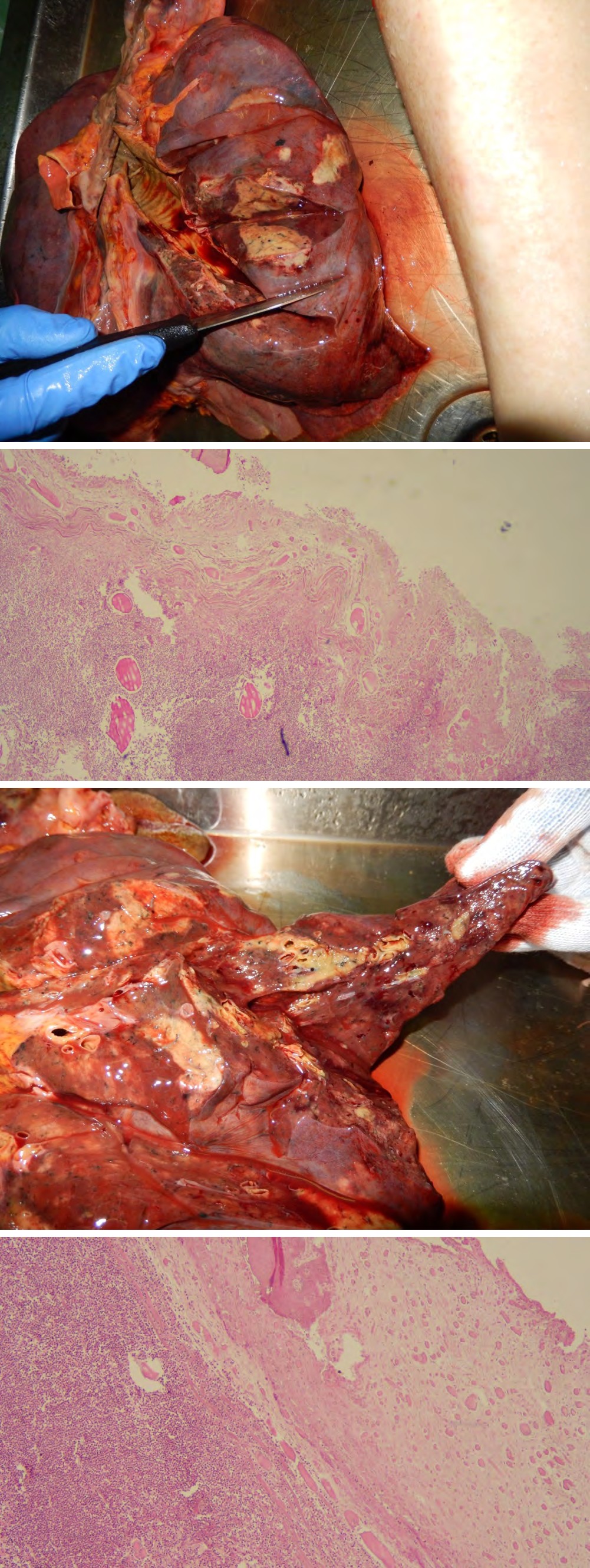
Figure 5a: Injuries to the lungs.
Figure 5b: Numerous White-Yellowish Nodular Lesions Are Present.
With the examination of the brain, an area of cortical- subcortical necrosis of 10x4 cm, compatible with the previous stroke known in the anamnesis, at the temporoparietal site, was highlighted in the right cerebral hemisphere.
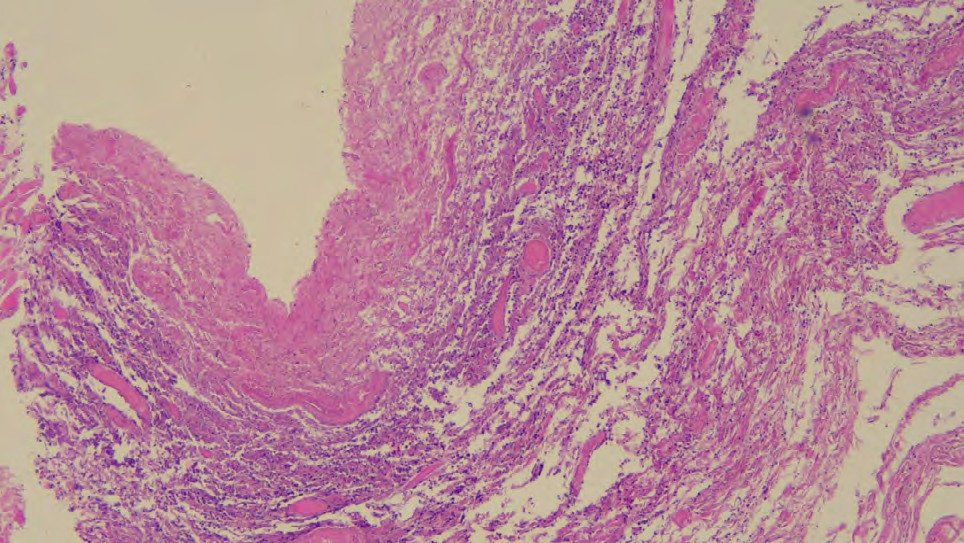
On histological examination, the tongue, pharynx, larynx, and trachea showed complete necrosis of the superficial epithelium with involvement of the subepithelial connective tissue. In the tongue, necrosis also involved the muscular structures of this organ at various locations. In the trachea, cartilage structures were sometimes involved. The lungs were affected by acute bronchopneumonia with diffuse parenchymal necrosis.
The esophagus and stomach showed massive necrosis of the superficial epithelium extending up to the muscular layer. Since a few days had passed between the chemical insult and the patient’s death, the phenomena of necrosis caused by the acid were associated with extensive acute inflammation in all the areas concerned. Therefore, overall, the histological findings were characterized by extensive tissue necrosis associated with acute inflammation see (Figures 6a & 6b).
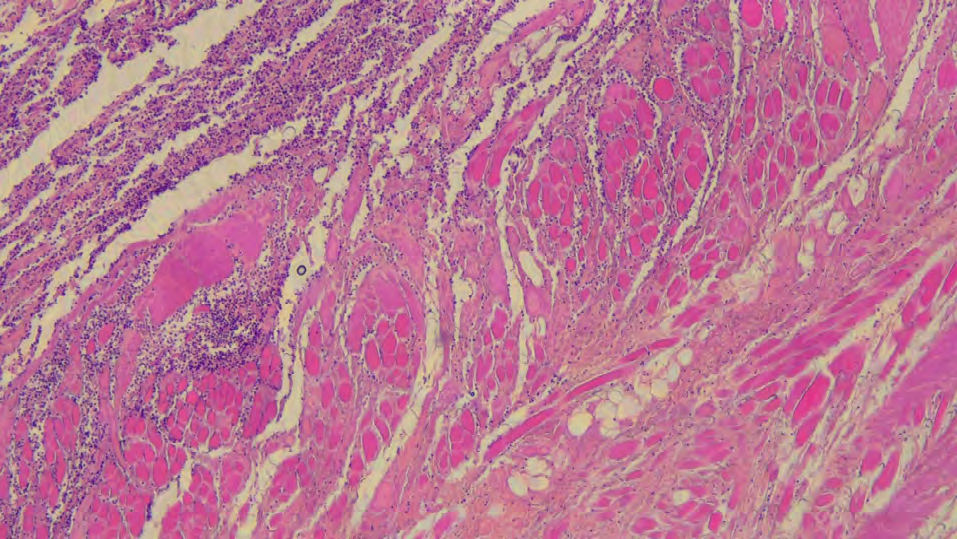
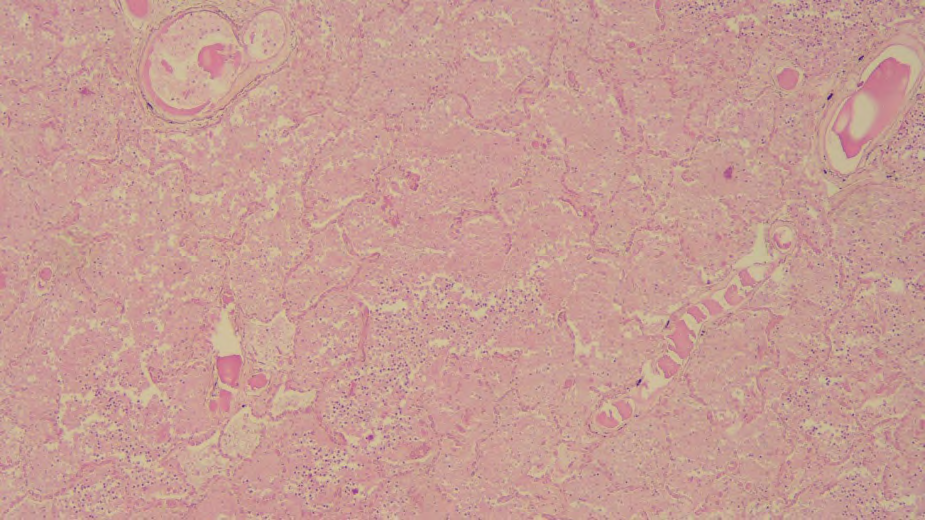
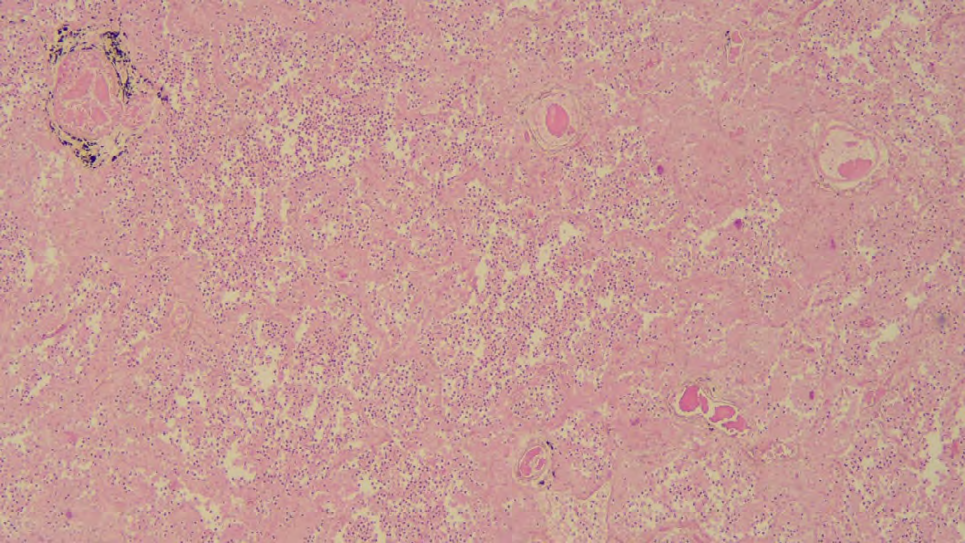
In the central nervous system, there was extensive cerebral necrosis associated with gliosis, mainly cortical but also in the surrounding structures in correspondence with the area affected by the earlier ischemic stroke, which had previously been described macroscopically.
The findings collected were compatible with the forced ingestion of a caustic substance caused by another person. In fact, the right lung was massively affected by the lesions. This was likely because the right lung is connected to the trachea by the right bronchus, which has a more rectilinear course than the contralateral. The left bronchus has a more curved course and this anatomical detail preserved the left lung from more significant involvement. In addition, the upper digestive system together with the upper respiratory tract were simultaneously affected by injuries.
Discussion
Unfortunately, the phenomenon of killer nurses is not uncommon. Nurses from around the world have murdered at least 1000 patients in the past 25 years, yet the profession is no closer to identifying potential murderers before they commit their crimes [11].
The case presented by us is particular for a number of reasons. First is the use of a substance not present in the hospital and purposely purchased and introduced by the nurse: hydrochloric acid. The use of acid—a fairly crude and archaic method—is unusual for a nurse to use. He or she could have made use of numerous drugs that are easy to find in the hospital and/or used other methods that are much more invisible.
There are many publications on scientific lesions of the gastrointestinal tract after ingestion of hydrochloric acid. The consequences are often dire. Hydrochloric acid swallowing constitutes an extraordinary severe emergency, with a high mortality [12, 13, 14, 15]. While most pediatric caustic injuries are accidental, adults more often ingest caustic materials as a suicide attempt or due to psychiatric illness; accidental injuries in adults are less common [16]. There are only three records of using hydrochloric acid for murder: one from 70 years ago and two historical cases of the medical museum of the University of Belgrade from 1928 [17, 18].
Second the use of a large 60 mL irrigation squirt syringe (as verified by investigators) which is usually used to give drink, or liquid foods, or to clean the oral cavity for non-self- sufficient patients was an unusual choice for our killer nurse. If the aim was to kill, she used a method that was not very effective and one that hardly suited such a professional.
However, the method used was quite striking and easy to identify and discover, not only for the lesions produced but also for the smell of the acid used. Usually, when a patient is deliberately killed by a nurse, the death is presumed to be a natural one. In this particular case, using acid was a sensational but extremely naive method. Not getting caught was practically impossible.
The poor patient was an ideal victim typical of those targeted by murderous nurses: he was old and sick, lay helpless in bed, could not defend himself, and could not even scream.
The patient was not simply murdered: the manner of the murder made this event much more barbaric. In fact, the patient died after a week of atrocious suffering. It almost seems that the killer wanted to punish the victim, even before killing him.
Finally, the reason for this murder was revenge against a colleague who would have been transferred from the hospital where she worked with the killer nurse if it wasn’t for her father’s serious illness; instead, the killer nurse was soon to be transferred to another hospital where she did not want to go. The killer wanted to kill the cause of her colleague’s privilege.
A study of nurses convicted of murder reveals shared traits, or “red flags,” that could be used to prevent future crimes [19]; however, they were always serial cases and very difficult to identify. The case under consideration was an unpredictable and very strange single event.
Conclusion
The killing of a patient by a nurse is unfortunately possible and impossible to predict. Any suspicious case should be investigated immediately and not underestimated.
The case we describe here was very atypical and striking—compared to the other events already described— due to the methods of implementation and the reasons behind the gruesome gesture itself.
This case, reported in the news as “the case of the killer nurse,” should be called “the case of the naive killer nurse.” The role of the autopsy in this type of case is fundamental.
Compliance with Ethical Standards: Not Applicable.
- Ethics statement: The authors retain a signed informed consent of the relatives for the case publication. The manuscript is in accordance with the rules of the Institutional Ethics Committee.
- Conflict of Interest: None.
- Financial Support: None
- Disclosure of Potential Conflicts of Interest: None.
- Research Involving Human Participants and/or Animals: No.
- Informed Consent: The authors retain a signed informed consent of the relatives for the case publication.
- Ethical Approval: The manuscript is in accordance with the rules of the Institutional Ethics Committee.
References
-
Marks V, Richmond C (2008) Beverly Allitt: the nurse who killed babies. J R Soc Med 101(3): 110-115.
-
Procaccianti P, Farè F, Argo A, Casagni E, Arnoldi S, et al. (2017) Determination of propofol by GC/MS and fast GC/MS-TOF in two cases of poisoning. J Anal Toxicol 41(9): 771-776.
-
Marks V, Richmond C (2008) Kenneth Barlow: the first documented case of murder by insulin. J R Soc Med 101(1): 19-21.
-
Marks V (2009) Murder by insulin: suspected, purported and proven-a review. Drug Test Anal 1(4): 162-176.
-
Schneider W, Girmann G, Luthe R, Wagner HJ (1975) [Attempted murder with phenprocoumon (marcumar) (author’s transl)]. Dtsch Med Wochenschr 100(37): 1838-1841.
-
Vuori E, Pelander A, Rasanen I, Juote M, Ojanperä I (2013) A rare case of serial killing by poisoning. Drug Test Anal 5(9-10): 725-729.
-
Kalin JR, Brissie RM (2002) A case of homicide by lethal injection with lidocaine. J Forensic Sci 47(5): 1135-1138.
-
Kirby RR, Colaw JM, Douglas MM (2009) Death from propofol: accident, suicide, or murder?. Anesth Analg 108(4): 1182-1184.
-
Field J, Pearson A (2010) Caring to death: the murder of patients by nurses. Int J Nurs Pract 16(3): 301-309.
-
Yorker BC, Kizer KW, Lampe P, Forrest ARW, Lannan JM, et al. (2006) Serial murder by healthcare professionals. Journal of Forensic Sciences 51(6): 1362-1371.
-
Field J (2008) Why nurses kill. Nurs Stand 23(9): 24-25.
-
Muñoz EM, García-Domingo MI, Rodríguez Santiago J, Veloso E, Molina CM (2001) Massive necrosis of the gastrointestinal tract after ingestion of hydrochloric acid. Eur J Surg 167(3): 195-198.
-
Zeng Q, Zhou H, Zheng X, Li Z, Zhou M, et al. (2009) Total gastrointestinal tract necrosis after ingesting a considerable amount of hydrochloric acid. J Gastrointest Surg 13(3): 578-580.
-
Sari I, Zengin S, Pehlivan Y, Davutoglu V, Yildirim C (2008) Fatal myocardial infarction after hydrochloric acid ingestion in a suicide attempt. Am J Emerg Med 26(5): 634e5-7.
-
Muñoz EM, Boix PB, Ormazabal PC, Santiago JR, Pons GG, et al. (1998) Swallowing of hydrochloric acid: study of 25 cases. Rev Esp Enferm Dig 90(10): 701-707.
-
Tohda G, Sugawa C, Gayer C, Chino A, McGuire TM, et al. (2008) Clinical evaluation and management of caustic injury in the upper gastrointestinal tract in 95 adult patients in an urban medical center. Surg Endosc 22(4): 1119-1125.
-
Pozzato R (1952) Homicide with oral administration of hydrochloric acid; experimental study. Minerva Medicoleg 72: 120-124.
-
Nikolić S, Živković V (2015) Two cases of homicidal corrosive poisoning: once upon a time. Forensic Science Medicine and Pathology 11: 136-141.
-
Dean E (2015) How to spot a nurse killer. Nurs Stand 29(21): 20-22.
- Forensic Implications of Adverse Drug Reactions in Schizophrenia A Case Series
- Narcotics and Digital Forensics: Bridging Crimes in the Digital Age
- Ethics in Forensic Psychiatry: Principles, Dilemmas, and Human Rights
- Impact of Acute Stress on Attentional Orienting to Social Cues
- Head Injury and Intracranial Hemorrhage in Western Region of Libya
- A Forensic Study on Handedness: Examination of Handwriting Features in Right and Left Handed Writers