
A Forensic Study on Handedness: Examination of Handwriting Features in Right and Left Handed Writers
Handwriting is a complex motor activity influenced by various physiological and biomechanical factors, among which handedness plays a crucial role. The present study aims to examine and compare the handwriting characteristics of right- handed and left-handed individuals in order to identify distinguishing features of forensic significance. A total of 100 handwriting samples were collected, including 50 from right-handed participants and 50 from left-handed participants. The samples were analysed based on selected handwriting parameters such as alignment, slant, spacing, connecting strokes, size of letters, and margin. The results of the study indicate noticeable variations between right-handed and left-handed writers across the examined parameters. These variations can be attributed to differences in writing posture, hand movement, and motor coordination associated with handedness. The findings highlight the importance of handwriting characteristics as supportive indicators in determining the handedness of a writer. In conclusion, the study emphasizes that handedness has a measurable influence on handwriting characteristics, contributing to individual writing patterns.
Amir A¹*, Sharma D¹, Mishra M¹, Chaudhary A¹, Pal A¹ and Zeeshan M²
¹Department of Forensic Science, M.Sc. Student, Teerthanker Mahaveer University, India ²Department of Medical Elementology & Toxicology, M.Sc. Student, School of Chemical and Life Sciences, India
Introduction
Handwriting is one of the most important forms of personal identification used in forensic science. It’s a complex and highly individualized human activity that involves the coordinated functioning of the brain, nervous system, muscles and skeletal structures of the hand and arm [1]. It’s not merely a mechanical act of putting pen to paper but a learned motor skill that developed gradually through practice, education, and personal habit formation [2]. As individuals grow and repeatedly practice writing, their handwriting evolves into a distinctive pattern characterized by uniqueness features such as letter formation, stroke sequence, slant spacing, alignment and writing rhythm [3]. Due to this individuality, handwriting has long been recognised as an important tool for personal identification in the field of forensic science, particularly in the examination of questioned documents. In forensic document examination, handwriting analysis plays a crucial role in determining the authenticity and authorship of documents [4]. Questioned Documents may include handwritten letters, signature wills, contracts, anonymous notes, suicide notes, and other written materials that are involved in legal investigations. Forensic document examiners analyze various handwriting characteristics to determine whether a particular individual has written a document or whether the writing has forged or disguised [5]. The principle underlying handwriting examination is that although people learned a standard writing style during their early education, they gradually develop individual writing habits that become unique to them over time [6]. These individual characteristics remain relatively consistent and can therefore be used for identification purposes.
Several factors influence the development and appearance of handwriting. These includes age, education, writing speed, writing instruments, writing surface, psychological condition and physical health, and neuromuscular coordination [7]. Among these factors the hand dominance play a significant role in determining the manner in which handwriting is produced. Hand dominance refers to the natural preference of an individual to use one hand over the other for performing skilled tasks such as writing l, drawing, and handling tools. In general population, the majority of individuals are right handed, while a smaller proportion are left handed [8]. This difference in the hand dominance affects the biomechanics of the writing and results in the variations in handwriting characteristics.
Writing thus becomes composed of countless subconscious habitual patterns that are deeply ingrained in each writer’s unique assembly of personal habits or mannerisms. Age, health status, mental condition, and other variables all have an impact on handwriting. Generally speaking, a person’s writing will vary more and alter more over time the more they write. It is an ingrained subconscious behaviour [9]. It is a system of muscles and nerves that is impacted by an image in the mind and occasionally altered by the attention and mimicry of the writer The process of handwriting involves a series of controlled muscular movements that originates in the brain and are executed through the fingers, wrist and arm [10]. In right handed individuals, writing generally occurs in a smooth and natural left-to-right motion that aligns well with the direction of most writing system such as English and many other languages. The hand moves across the page in such a way that writer can easily observe the text being written, allowing better visual control and smoother stroke formation [11]. As a result, right handed handwriting often exhibits relatively consistent slant, balanced spacing and smooth line quality. In contrast, left handed individuals often experience certain mechanical and positional challenges while writing, particularly in languages written from left to right. Because the left hand moves across the written text, left handed writers may adopt different writing postures and had positioned to avoided smudging the ink and to maintain visibility of the text [12]. Some left handed writers bent their wrist above the writing line (a posture sometimes referred to as the “hooked” position), while other rotates the paper or adjust their writing angle. These adoption may lead to distinctive handwriting characteristics such as variations in slant, altered stoke directions, difference in pen pressure, irregular spacing and variations in baseline alignment. From a forensic perspective, understanding the differences between right-hand and left-hand handwriting is particularly important when examining questioned documents [13]. In some cases, individuals may attempt to disguise their handwriting internationally to avoid identification. One common method of disguise involves writing with the non dominant hand. However, writing with the non dominant hand often results Is noticeable changes in handwriting features because the writer lacks the same level of motor control and co ordination. Such writing may characteristics such as tremors, poor line quality, inconsistent letter formations, uneven spacing, and slower writing rhythm [14]. By studying the natural difference between handwriting produced by the dominant and non-dominant hand, Forensic documents examiners can better recognize signs of disguised writing. An essential objective of the forensic studies is the identification of writer Group attributes from handwriting, such as gender, age, and handedness. Using This method, the document examiner can eliminate a large number of suspects In a variety of document instances.
A person’s handwriting reveals something about their personality. Men’s Rea, Or the intention of the accused, is taken into account while considering a matter In a court of law; hence, the person’s personality is taken into account when Determining intention. Additionally, a suspect’s handwriting is a key tool for Questioning them in fraud and forgery cases. Therefore, handwriting analysis Plays a very important and major role in case of criminal cases. The Behavioural pattern of the person is predicted from the psychological traits Like size, slant, pressure, baseline, number of breaks, margins, and speed of Writing and spacing between the words of handwriting [15]. The attributes like line Separation, slant, machine learning techniques were utilized to statistically Demonstrate individuality utilizing character forms, etc., that are used by Forensic document examiners. The comprehensive method of handwriting Analysis is thought to be valuable for diagnosis and shows promise in terms of Offering recommendations for treatment.
When a person writes a letter, the letter first forms in his mind [16]. He then attempts to write a duplicate of the letter using materials and hand muscles because the brain controls the muscles that form the letters, and every vibration of movement has an unconscious effect on the writer. In this study, the horizontal stroke and slope direction are used to try and distinguish between left- and right-handed writers [17]. It is believed that left-handed writers write from the right to the left and right-handed writers from the left to the right. There are additional characters, such as slope, that distinguish right-handed from left-handed writing. This incline can be evaluated only with cursive writing. Writers who are right-handed create a forward slope, while left- handed writers create a backward slope. Using this method, document examiners eliminate a lot of suspects in document investigations.
The comparative analysis of right-hand and left- hand handwriting enhances our comprehension of the neuromuscular processes involved in writing. Writing movements are regulated by the central nervous system and are shaped by the dominance of one cerebral hemisphere over the other. This neurological dominance impacts motor coordination and muscle control, subsequently affecting the characteristics of handwriting [18]. Thus, the examination of hand dominance in handwriting holds not only forensic significance but also offers insights into human motor behavior and the evolution of writing skills. Moreover, identifying specific handwriting features linked to each hand can aid forensic specialists in differentiating between natural variations in writing and intentional modifications. Attributes such as letter slant, stroke direction, pen pressure distribution, writing speed, line quality, and overall writing rhythm may differ based on the hand employed for writing [19]. A thorough comparison of these attributes can yield valuable reference data for forensic document analysts during handwriting evaluations. In the view of forensic science importance of handwriting examination, the present study focuses on the comparative analysis of handwriting produced by the right hand and left hand. The objective of this research is to identify and analyze the observable difference in handwriting characteristics resulting from hand dominance [20]. Various handwriting writing parameters such as slant, alignment, size of letters, spacing between letters and words, line quality, margin and writing rhythm are examined to determine how they differ when writing is performed with different hands. By analyzing these variations, the study aim to contribute useful information to the field of forensic question document examination and to enhance the understanding of handwriting characteristics related to hand dominance [21, 22]. Materials and Methods The present study was conducted to examine the differences between handwriting characteristics of right- handed and left-handed individuals. The study focuses on identifying and analyzing specific handwriting features that may vary depending on the dominant writing hand of an individual. Handwriting samples were collected from both groups were carefully examined and compared in order to determine whether consistent distinguishing characteristics exist between right handed and left handed writers. A structured methodology was followed to maintain uniformity in sample collection and analysis. Standardized writing material and a fixed paragraph were used to ensure consistency, and the collected samples were carefully examined to identify distinctive handwriting characteristics.

Material Used
The study required the use of basic yet essential materials and instruments to ensure the systematic collection, and detailed examination of handwriting samples. Each material was selected carefully to maintain the uniformity in writing process and to facilitate accurate observation of handwriting characteristics. • Ball Point Pen: A standard ball point pen was used by all the participants for the writing the given paragraph on the sample Performa. The use of uniform writing instrument helped in maintaining consistency in ink flow, stroke formation, and line quality across all samples. Ball point pen are commonly used in daily writing, and therefore, they allowed participants to write in their natural and habitual style. • Standard Sample Performa: A pre design sample Performa was used for the collection of handwriting samples. The Performa provided a uniform layout and adequate writing spaces ensuring that all the participants wrote under similar conditions. The standardized format minimize variations that could arise due to differences in paper size, margins, or writing space. • Magnifying Glass: A magnifying glass was used as an important tool for the detailed examination of handwriting characteristics. It enabled closer observation of fine details such as line quality, pen lifts, tremors, ink distribution and stroke direction. The magnification helped in identifying subtle differences in handwriting that may not be visible to the naked eyes. • Scale (Ruler): A scale was used to measure various spatial aspects of handwriting, such as the size of letters, spacing between letters and words, and alignment of text along the baseline. These measurements provided a more objective basis for comparison between different handwriting samples. • Coloured Pencil (Red and Blue): Red and blue colour pencils were used for marking and highlighting specific handwriting characteristics during the examination process. These markings clearly identifying important features such as unusual letter formations , variations in slant, spacing, irregularities, and other distinctive trait. The use of different colours allowed for better differentiation of observed features and facilitated easier comparison between samples during analysis.
Selection of Participants
For the purpose of the present study, a total of 100 handwriting samples were collected from different participants. The samples were divided into groups consisting of 50 samples written by naturally right-handed individuals and 50 samples written by naturally left-handed individuals. All the participants involved in the study were students studying at Teerthanker Mahaveer University, Moradabad. These students belonged to various states of India, thereby representing a diverse sample population. The participants were selected without considering their academic discipline or handwriting style in order to maintain natural variation in the collected samples. Before collecting the handwriting samples, the purpose and objective of the study were clearly explained to all the participants. After understanding the nature of research, verbal consent was obtained from the subjects, and only those who voluntarily agreed to participate were included in the study. The participants assured that their handwriting samples would be used solely for academic research purposes.
Sample Collection
The handwriting samples were collected under the controlled conditions to ensure uniformity in the writing process. Each participants was provided with a A4 size sample collection form and asked to write standard passage in English along with few sentences. The participants were instructed to write naturally at comfortable speed without attempting to alter their handwriting style. The writing samples were collected in the sitting position on a flat writing surface to maintain consistency in writing conditions. The separate sets of handwriting samples were collected from right handed and left handed individuals, ensuring that each participant used only their natural dominant hand while writing. The study didn’t involved the same person writing with both hands, as the objective was to analyse the natural handwriting characteristics associated with the dominant hand.
Sample Observation
After the collection of handwriting samples, the document were subjected to careful visual examination. The following handwriting characteristics were observed and studies in the present study to identify and compare the variations between right handed and left hand individuals. • Alignment: Alignment refers to the manner in which the hand writing follows an imaginary baseline on the paper. It indicates whether the written text appear straight, ascending (rising upward), descending (sloping downward) or irregular. Proper alignment reflects good motor control and writing stability, whereas irregular alignment may indicate lack of coordination or difficulty in maintaining consistent hand movement. • Slant: slant refers to angle or inclination of letters in relation to the vertical axis. Handwriting may exhibit a right slant, left slant, or vertical slant. Slant is influenced by writing postures, and hand dominance, and muscle coordination. Variation in slant can be significant in distinguishing between different writing styles and identifying natural or altered handwriting. • Spacing: spacing refers to the distance maintained between letters, words, and line handwriting. It includes inter-letter spacing and inter-word spacing. Consistent spacing indicates good writing rhythm and control, while uneven or crowded spacing may suggest lack of fluency or hesitation in writing. Spacing is an important characteristic for evaluating the overall organization of handwriting. • Connecting Strokes: Connecting strokes are lines or strokes used to join letters within a word. These may be continuous, breaking, curved, or angular depending on the writer style. The presence and absence of connecting strokes and well as their form, provide valuable information about writing speed, rhythm and individual writing habits. • Size of Letters (Proportion): The size of letters refers to the relative height and width of characters in handwriting. It includes the proportion between uppercase and lowercase letters as well as the size of the upper, middle and lower zones of letters. Consistency in size reflects controlled writing while variations may indicate differences in hand movement or writing pressure. • Margins: refers to the space left on the sides of papers, particularly the left and right margins, while writing. It indicates how the writer organizes the text on the pages. Some writers maintain uniformity margins, while other may show irregular or fluctuating margins. Margin analysis helps in understanding writing habits, Spatial arrangement and planning ability of the writer. To facilitate systematic analysis, the observed handwriting characteristics were marked directly on the handwriting samples using a red or blue colour pencils. These markings helped in clearly identifying and highlighting the distinctive handwriting features and variations present in the samples.
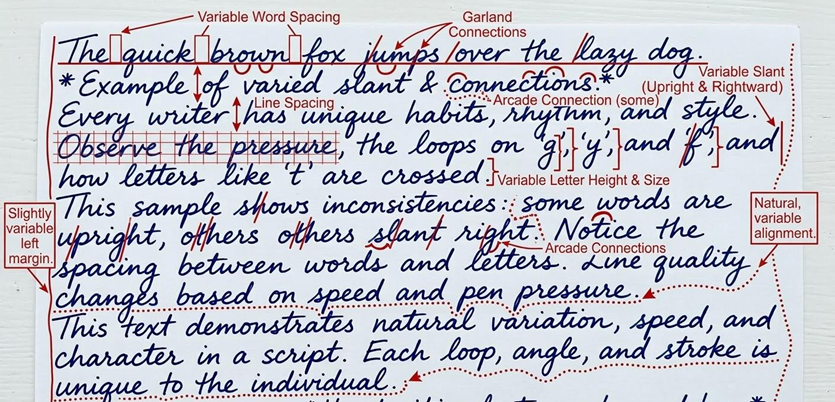
Finally, the marked handwriting samples were comparatively analyze to identify the similarities and differences between the handwriting characteristics of right-handed and left-handed individuals. The observation obtained from this comparative examination formed the basis for interpreting the results of the study.
Result and Analysis
The present research was undertaken to examine and contrast the handwriting traits of individuals who are naturally right-handed and those who are naturally left- handed, with a focus on forensic implications. A total of 100 handwriting samples were analysed, consisting of 50 samples from right-handed individuals and 50 samples from left-handed individuals. The analysis aimed to uncover differences in specific handwriting parameters that are frequently utilized in forensic document analysis. To ensure a thorough evaluation, particular handwriting characteristics were chosen, including alignment, slant, spacing, connecting strokes, letter size, and margin. Each sample was meticulously scrutinized through visual inspection, supplemented by the use of a magnifying glass for detailed observation and a scale for assessing proportional attributes such as spacing and size. The identified characteristics were highlighted on the samples using red and blue coloured pencils to enhance clarity in identification and comparison. The results obtained from the analysis are presented below in a parameter-wise manner.
Parameter 1: Alignment
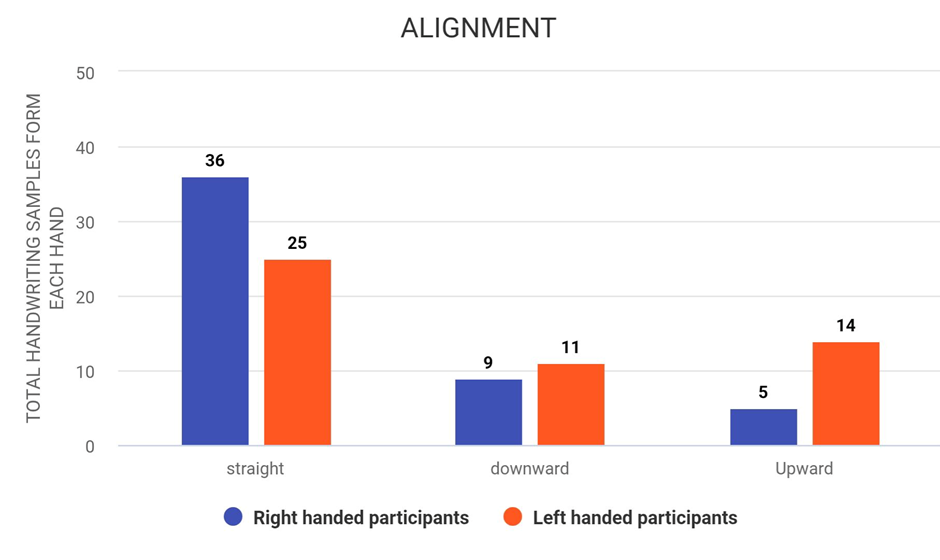
In the present study, the alignment was examined in a total of 100 handwriting samples, comprising 50 samples each from right-handed and left-handed participants. Among the right handed participants, a clear predominance of straight alignment was observed. Out of the 50 samples analysed, 36 samples (72%) exhibited straight alignment, indicating that most right handed writers maintain a stable and consistent baseline while writing. Whereas the downward alignment was identified in 9 samples (18%), while the upward alignment was observed in only 5 samples (10%). The relatively lower occurrence of upward and downward alignment suggests minimal deviation from the baseline among right handed individuals. In contrast, the left-handed participants demonstrated a more diverse distribution of alignment patterns. Out of the 50 samples examined, 25 samples (50%) showed straight alignment, which is significantly lower as compared to right handed writers. Downward alignment was observed in 11 samples (22%), while upward alignment was present in 14 samples (28%). The higher proportion of upward alignment in left handed individuals is particularly noteworthy. When comparing both groups, it becomes evident that straight alignment is more characteristic of right handed writers, whereas left-handed writers exhibited greater variability in alignment. The proportion of upward alignment in left-handed participants (28%) is considerably higher than that in right hand participants (10%), suggesting a tendency among left-handed writers to deviate above the baseline. Similarly, the downward alignment is slightly more frequent in left-handed participants (22%) compared to the right handed writers (18%). These may be attributed to differences in writing mechanics between the two groups, left handed writers often adopt a different hand posture and writing angle, which may lead to altered movement patterns and less stable baseline control. Consequently. This results in increased variability in alignment. Overall the analysis of alignment as a Handwriting parameter indicates right-handed writer predominantly exhibit straight alignment, left handed writers display a comparatively balanced distribution across straight, upward and downward alignments, highlighting alignment as a significant parameter for differentiation based on handedness.
Parameter 2: Slant
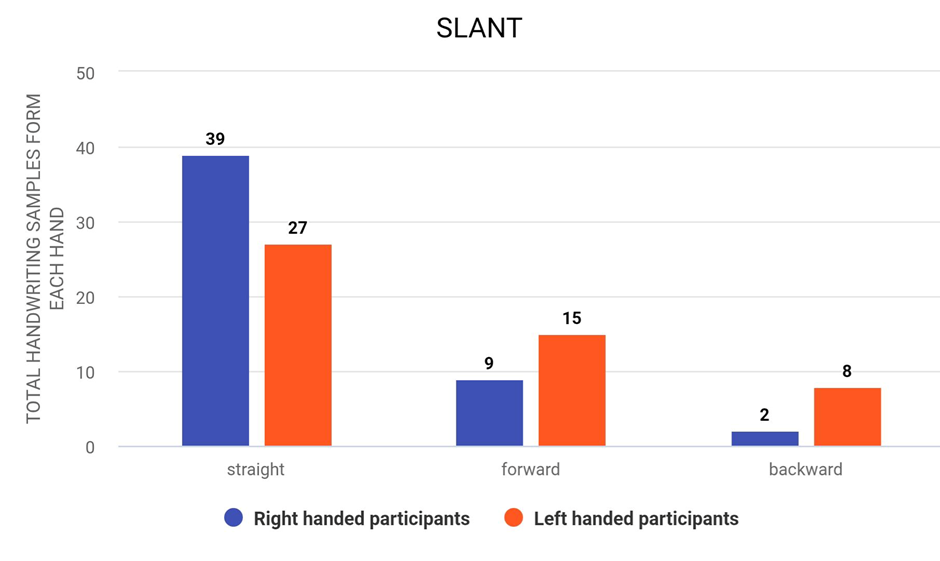
The slant was analysed in total of 100 handwriting samples, comprising 50 samples each from right handed and left-handed participants. Among the right handed participants, straight slant was found to be the most predominant feature. Out of 50 samples, 39 samples (78%) exhibited straight slant. Indicating strong tendency among write handed writers to maintain vertical letter formation. Forward slant was observed in 9 samples (18%). While only 2 samples (4%) showed backward slant. This distribution suggests that right handed individuals generally demonstrate controlled and consistent letter inclination, with minimal deviation towards backward slant. In contrast, the left-handed participants demonstrated a more diverse distribution of slant patterns. Out of the 50 samples examined, 27 samples (54%) showed straight slant, which is significantly lower as compared to right handed writers. Forward slant was observed in 15 samples (30%), while backward slant was present in 8 samples (16%). The relatively higher occurrence of both forward and backward slants among left-handed writers indicates greater variability in letter inclination. A comparative study of both groups highlighting the clear difference in slant characteristics. Straight slant is considerably more common among write handed writers (78%) than left-handed writers (54%). On the other hand the forward slant is most frequently observed in left-handed participants (30%) compared to right handed participants (18%). Similarly backward slant is also more predominant among left-handed writers (16%) than write handed writers (4%). These findings suggest that left- handed participants tends to exhibit more variation in slant, possibly due to differences in writing postures, grip, and hand movement dynamics. At last the right-handed writers predominantly exhibit straight slant with minimal variations, while left handed individuals demonstrated a more diverse range of slant, including higher proportion of both forward and backward inclination.
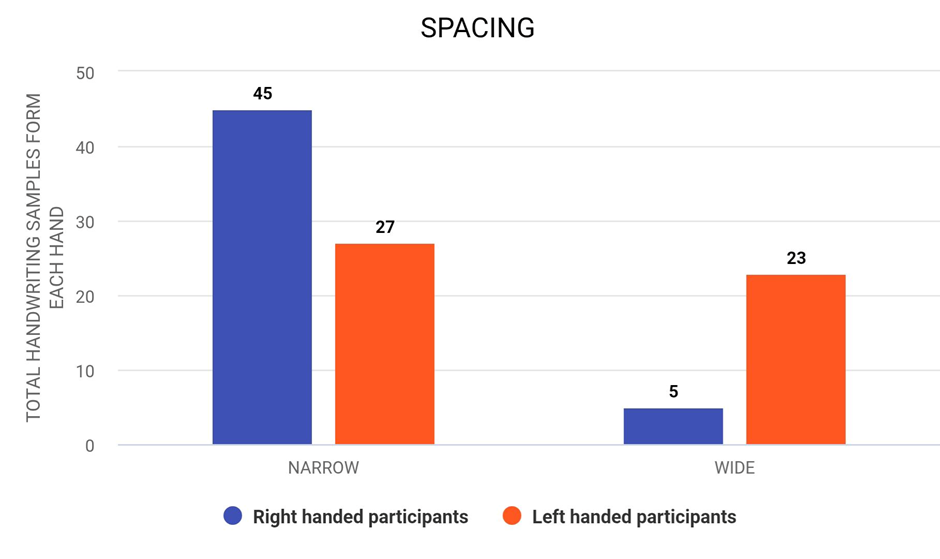
Parameter 3: Spacing A comprehensive evaluation was also conducted on 100 handwriting specimens for this parameter, comprising 50 samples collected from right-handed individuals and 50 from left-handed individuals. Among the participants who are right-handed, narrow spacing was identified as the predominant feature. Out of a total of 50 samples, 45 samples (90%) displayed narrow spacing, suggesting that right-handed writers typically write with letters and words that are closely positioned. In contrast, only 5 samples (10%) showed wide spacing. This distribution indicates a strong inclination among right-handed individuals to maintain handwriting that is compact and closely arranged. Conversely, left-handed participants exhibited a notably different pattern. From the same set of 50 samples, 27 samples (54%) displayed narrow spacing, while a significant number, 23 samples (46%), demonstrated wide spacing. This reveals a more balanced distribution between narrow and wide spacing among left-handed writers, with a clear tendency towards wider spacing in comparison to their right-handed counterparts. A comparative analysis of both groups reveals distinct differences in their spacing characteristics. Narrow spacing is significantly more common among right-handed participants (90%) than among left-handed participants (54%). On the other hand, wide spacing is considerably more prevalent among left-handed writers (46%) compared to right-handed writers (10%). In summary, spacing serves as a crucial handwriting parameter that distinguishes between right-handed and left-handed individuals. While right-handed writers predominantly exhibit narrow spacing, left-handed writers show greater variability, with a stronger inclination towards wide spacing.
Parameter 4: Connecting Strokes
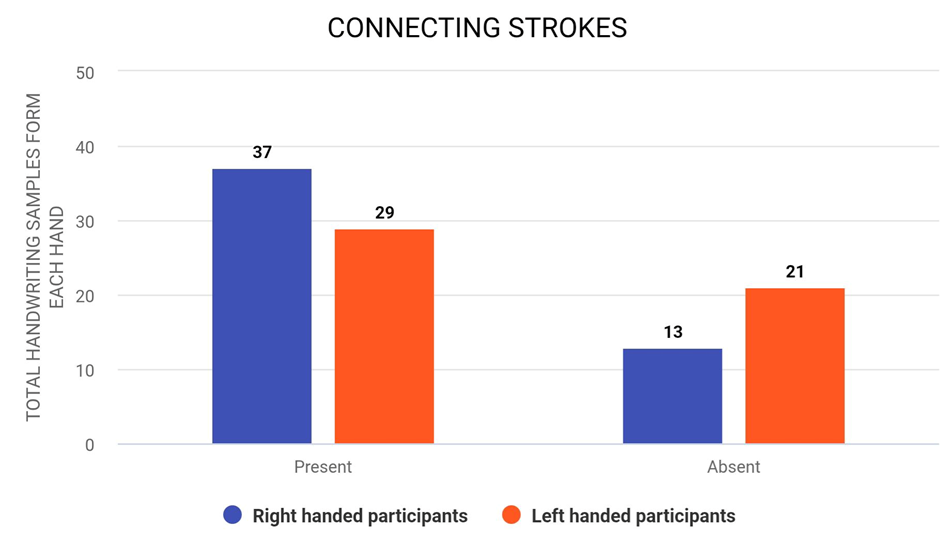
Among the participants who are right-handed, connecting strokes were predominantly observed. Out of a total of 50 samples, 37 samples (74%) exhibited connecting strokes, suggesting that the majority of right-handed writers prefer a more continuous and cursive style of writing. Conversely, 13 samples (26%) did not show connecting strokes, indicating a lesser frequency of disconnected or print-style writing. In the case of left-handed participants, the occurrence of connecting strokes displayed a greater degree of variation. From the same 50 samples, 29 samples (58%) revealed the presence of connecting strokes, while 21 samples (42%) did not. This suggests that although a majority of left-handed writers also utilize connecting strokes, a significant number tend to write with disconnected letter forms. A comparative analysis between the two groups indicates that connecting strokes are more prevalent among right-handed writers (74%) than among left-handed writers (58%). On the other hand, the absence of connecting strokes is more commonly found in left-handed participants (42%) compared to their right-handed counterparts (26%). In summary, right-handed individuals generally produce more connected and fluent writing, left-handed individuals exhibit a greater variability, with a stronger inclination towards discontinuity in their letter formation.
Parameter 5: Size of Letters
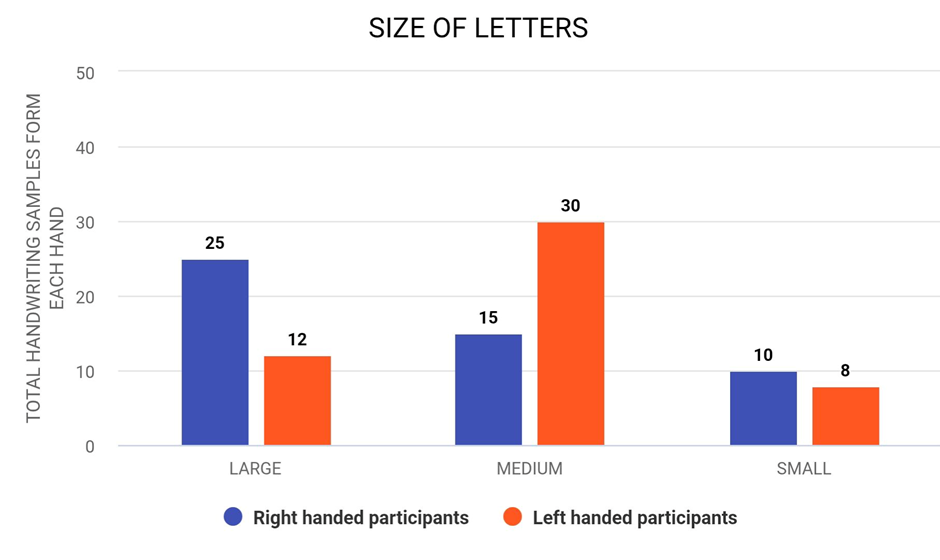
Among the participants who are right-handed, large letters were identified as the most prevalent. Out of a total of 50 samples, 25 samples (50%) displayed large letter sizes, suggesting a tendency among right-handed individuals to create handwriting that is relatively larger and more expansive. Medium-sized letters were noted in 15 samples (30%), while 10 samples (20%) were characterized by small letter sizes. This distribution indicates that, despite some variation, right-handed individuals primarily favour larger letter forms. In contrast, the left-handed participants exhibited a different trend, showing a greater preference for medium-sized letters. From the same set of 50 samples, 30 samples (60%) were found to have medium letter sizes, establishing it as the most prevalent category within this group. Large letters appeared in 12 samples (24%), while small letters were noted in 8 samples (16%). This suggests that left-handed writers tend to maintain a moderate and more regulated letter size.
A comparative analysis of the two groups highlights notable differences in the distribution of letter sizes. Large letters are more frequently observed among right-handed writers (50%) in comparison to left-handed writers (24%). On the other hand, medium-sized letters are significantly more prevalent among left-handed participants (60%) than among right-handed participants (30%). The incidence of small letters is relatively low in both groups, although it is slightly higher among right-handed writers (20%) than among left-handed writers (16%).
These disparities may be linked to differences in writing posture, hand movement, and control. Right-handed writers may demonstrate broader hand movements, resulting in larger letter formations, while left-handed writers typically employ more controlled and compact movements, which leads to a preference for medium-sized letters.
Parameter 6: Margin
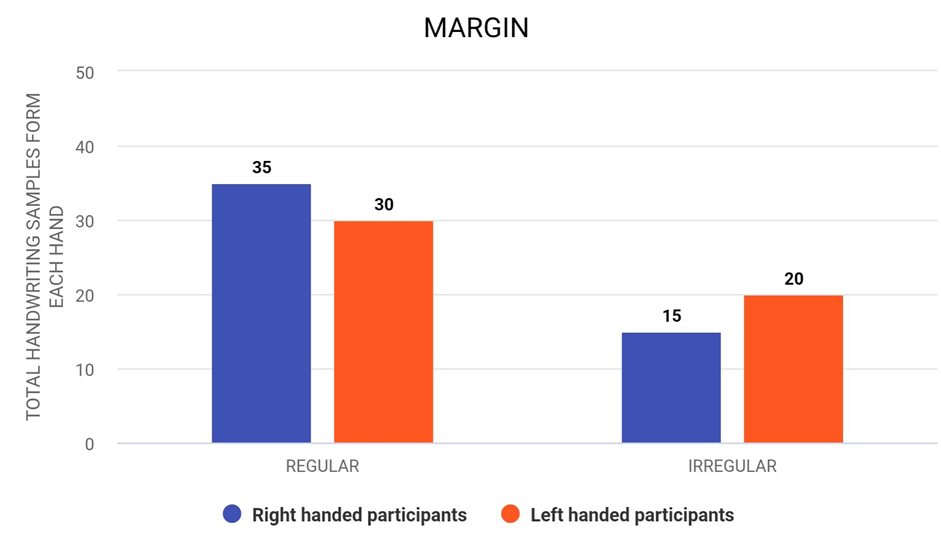
Margin denotes the space allocated at the peripheries of a written page, especially along the left and right borders. In this study, margins were classified into two categories: regular and irregular. A total of 100 handwriting samples were analysed, comprising 50 samples from both right- handed and left-handed individuals. Among the right-handed individuals, regular margins were predominantly noted. From the 50 samples, 35 samples (70%) displayed regular margins, indicating that the majority of right-handed writers maintain uniform spacing along the edges of the page. Conversely, 15 samples (30%) exhibited irregular margins, suggesting occasional discrepancies in margin upkeep. For left-handed individuals, a slightly reduced percentage of regular margins was recorded. Out of 50 samples, 30 samples (60%) showed regular margins, while 20 samples (40%) presented irregular margins. This suggests a relatively higher inclination towards irregularity in margin maintenance among left-handed writers.
A comparison between the two groups indicates that regular margins are more prevalent among right-handed individuals (70%) than among left-handed individuals (60%). On the other hand, irregular margins are more commonly found in left-handed writers (40%) compared to right-handed writers (30%).These discrepancies may be linked to differences in writing posture and hand movement. Right-handed writers typically have a clearer perspective of the writing area and can sustain consistent alignment along the margins. In contrast, left-handed writers may encounter difficulties such as hand positioning and visual obstruction while writing, which can result in less consistent margin maintenance.
Discussion
The present study was conducted to examine and compare handwriting characteristics between right handed and left-handed individuals, with the objective of identifying distinguishing features of forensic significance. A total of 100 handwriting samples (50 from right handed and 50 from left-handed participants) were analysed based on parameters including alignment, slant, spacing, connecting strokes, size of letters, and margin. The findings revealed consistent patterns as well as notable variations between the two groups, which can be attributed to differences in writing mechanism, motor control, and hand posture.
Alignment analysis demonstrated that right handed writers predominantly exhibit straight alignment (72%), indicating better baseline control and uniformity in writing direction. In contrast, write handed writers showed better greater variability, with only 50% maintaining straight alignment, and a higher proportion displaying upward (28%) and downward (22%) tendencies. This variation in the left handed writers may be due to differences in writing postures, particularly pushing motion of the pen and altered wrist positioning, which can effect directional consistency. With respect to the slant, a strong preference of straight slant (78%) was observed among write handed participants, whereas left-handed participants showed diverse distribution, including higher proportion of forward (30%) and backward (16%) slant. This increased variability in slant among left-handed writers may be linked to the difference in hand movement dynamics and writing angles, as they often adjust their hand position, to maintain visibility while writing. This adjustment can lead to inconsistency in letter inclination.
Spacing analysis further highlighted clear distinction between the two groups. Right handed participants overwhelmingly exhibited narrow spacing (90%), suggesting compact and highly arranged handwriting. In contrast, left handed writers demonstrated a more balanced distribution, with 54% showing narrow spacing and substantial 45% exhibited wide spacing. The tendency towards wide spacing among left-handed individuals may be a compensatory mechanism to avoid smudging and to ensure clearity of the written text. The analysis of connecting strokes indicated that right-handed individuals typically generate more continuous and interconnected handwriting, with 74% of samples demonstrating the existence of connecting strokes. In contrast, left-handed writers, while still exhibiting a majority presence (58%), displayed a notably higher rate of disconnected writing (42%). This implies that right-handed individuals generally show smoother and more fluid writing motions, whereas left- handed individuals may face interruptions in their writing flow due to ergonomic challenges.
Regarding letter size, right-handed participants primarily produced large letters (50%), while left-handed participants favoured medium-sized letters (60%). The occurrence of smaller letters was relatively minimal in both groups. These results imply that right-handed writers may utilize broader hand movements, leading to larger letter formations, whereas left-handed writers tend to maintain more controlled and moderate dimensions in their writing. Margin analysis indicated that both groups largely maintained regular margins. However, right handed writers showed greater consistency (70%) compared to left- handed participants (60%). A higher proportion of irregular margins among left handed participants (40%). Suggests comparatively less Spatial uniformity, which may again be influenced by differences in hand positioning and visual alignment during writing.
Overall, the result of this study clearly indicated that the handwriting characteristics vary between right handed and left-handed individuals. Right handed writers tends tk demonstrate greater uniformity, consistency and fluency across most parameters, whereas left-handed writers exhibited comparatively higher variability in alignment, slant, spacing, and margin. These differences are preliminary influenced by biomechanical and ergonomic factors associated with handedness from the forensic perspective, these findings hold significant value. The observed variations can assist Forensic document examiners in narrowing down the possible handedness during handwriting analysis. Although the handedness alone cannot serve as a sole basis for identification, it can act as a supportive characteristic when combined with other individualizing features. In summary, the research underscores the significance of handwriting features as indicators of motor behavior and personal characteristics. The distinctions observed between right-handed and left-handed writers add to the scientific comprehension of handwriting analysis and improve its relevance in forensic examinations. Conclusion The current study was undertaken to examine the differences in handwriting characteristics between right handed and left-handed individuals, with a focus on parameters such as alignment, slant, spacing, connection strokes, size of letters, and margin. Based on the analysis of 100 handwriting samples, clear distinction as well as overlapping features were observed between the two groups. The findings indicate that the right handed participants generally exhibited greater consistency and uniformity in their handwriting. This is reflected in the predominance of straight alignment, vertical slant, narrow spacing, presence of connection strokes, larger letter size, and regular margins. In contrast, left handed writers demonstrated comparatively higher variability across most parameters, including greater deviation in alignment and slant, wider spacing, more frequent absence of connecting strokes, preference for medium sized letters, and relatively irregular margins. These variations can be attributed to differences in writing mechanics, hand posture, and movement dynamics associated with handedness. Despite the observable difference, it’s important to note that no single handwriting characteristic can independently determine the handedness with absolute certainty. There exist a degree of overlap between right handed and left-handed writing features, emphasizing that handwriting identification should always be based on a combination of characteristics rather than a single parameter. From a forensic perspective, the study highlights the significance of handwriting analysis as a supportive tool in document examination. These identified patterns can assist Forensic experts in forming preliminary opinions regarding handedness of a writer. Further research can be conducted with larger and more diverse sample sizes to enhance the reliability and generalizability of the findings. In conclusion, the study successfully demonstrated that handedness has a noticeable influence on handwriting characteristics, with right handed and left-handed individuals exhibiting distinct tendencies. The findings contributed to the existing body of knowledge in forensic document examination and reinforce the importance of comprehensive handwriting analysis in forensic investigations. References
1. Davis T (2007) The practice of handwriting identification. Library 8(3): 251-276.
2. Huber RA, Headrick A (1999) Handwriting Identification: Facts and Fundamentals.
3. Izenman AJ (2020) Comparing handwriting in questioned documents. In: Comparing handwriting in questioned documents. pp: 341-363.
4. Galekovic J, Tkalac Z, Ledić A (2024) Forensic examination of handwriting and documents. In: IntechOpen eBooks.
5. Muehlberger R, Newman K, Regent J, Wichmann J (1977) A statistical examination of selected handwriting characteristics. J Forensic Sci 22(1): 206-215.
6. Srihari S, Cha S, Arora H, Lee S (2002) Individuality of handwriting. J Forensic Sci 47(4): 1-17.
7. Marum O (1945) Character Assessment from Handwriting. J Ment Sci 91(382): 22-42.
8. Chapran J, Fairhurst M, Guest R, Ujam C (2008) Task- related population characteristics in handwriting analysis. IET Comput Vis 2(2): 75-87.
9. Hardy H, Fagel W (2018) Methodological aspects of handwriting identification. J Forensic Doc Exam 28: 125- 147.
10. Ghosh S, Shivakumara P, Roy P, Pal U, Lu T (2020) Graphology based handwritten character analysis for human behaviour identification. CAAI Trans Intell Technol 5(1): 55-65.
11. Saini K, Kaur M (2019) Forensic study on the effect of age and illness (Parkinsonism) on handwriting characteristics. Egypt J Forensic Sci 9(1).
12. Lorr M, Lepine LT, Golder JV (1954) A factor analysis of some handwriting characteristics. J Pers 22(3): 348-353.
13. Saba Noor, Amaan Amir, Ravi Kumar (2026) Forensic Application of Poroscopy: Determination of Age and Sex Through Sweat Pore Characterstics. Sch Int J Anat Physiol 9(2): 37-46.
14. Tanaka T (2020) Forensic Handwriting Identification: Fundamental Concepts and Principles. J Am Soc Questioned Doc Exam 23(2): 41-42.
15. Aggreko F, Omigie M (2015) Assessment of speed of writing among left-handed and righthanded undergraduate students of University of Benin. Bayero J Pure Appl Sci 8(1): 29.
16. Dziedzic T (2013) Right hand writing vs. left hand writing of one person. A comparative study. Problems of Forensic Sciences 94: 564–577.
17. Stetter L, Sattler JB, Marquardt C, Hermsdörfer J (2023) Handwriting kinematics during learning to write with the dominant left hand in converted left-handers. Sci Rep 13(1): 2171.
18. Dziedzic T (2011) The development of left-handed writing features of a right-handed person who has undertaken training in writing with his left hand. Problems of Forensic Sciences.
19. Amir A, Sharma D, Zeeshan M, Tripathi S (2025) Difference between fingerprint patterns among the South Indian and North Indian population. J Forensic Sci Res 9(2): 210-215.
20. Meulenbroek RG, Thomassen AJ (1991) Stroke-direction preferences in drawing and handwriting. Hum Mov Sci 10(2-3): 247-270.
21. Alkahtani AA (2012) The influence of right or left handedness on the ability to simulate handwritten signatures and some elements of signatures: A study of Arabic writers. Sci Justice 53(2): 159-165.
22. Sahu M, Vaibhav S, Suneet K, Gupta A, Syeed A, et al. (2017) Differentiation and comparison of left handed and right handed writers on the basis of strokes and slope of letter. Int J Curr Res Rev.
- Forensic Implications of Adverse Drug Reactions in Schizophrenia A Case Series
- Narcotics and Digital Forensics: Bridging Crimes in the Digital Age
- Ethics in Forensic Psychiatry: Principles, Dilemmas, and Human Rights
- Impact of Acute Stress on Attentional Orienting to Social Cues
- Head Injury and Intracranial Hemorrhage in Western Region of Libya
- Techniques for Latent Fingerprint Development Using Natural and Synthetic Powders: A Review