
Narcotics and Digital Forensics: Bridging Crimes in the Digital Age
The increase in drug crimes in the digital era has amplified the need to integrate forensic toxicology and digital forensic methods. Drug analysis and device-based evidence traditionally fall into separate forensic workflows, leading to fragmented investigative results and delayed interventions. In this paper we propose a cyber-toxicological framework to systematically link narcotic related digital traces (messaging apps, encrypted chats, online markets, location data, payment records) with toxicological outcomes from laboratory analysis of biological samples. The framework outlines a systematic workflow for the collection and preservation of digital evidence, temporal metadata alignment with toxicology profiles and risk-based case prioritization for substances such as new psychoactive substances (NPS), opioids and stimulants. The model embeds digital forensic intelligence into drug-crime investigation, improving the reconstruction of trafficking patterns, identification of key actors and detection of high-risk users. It also discusses legal, technical and resource challenges in the Indian forensic setting, including chain-of-custody requirements, data-admissibility standards and infrastructural deficiencies. The proposed approach is presented as a practical tool to assist more holistic and timely investigations of narcotics-related offences in the digital age for forensic-medicine departments, toxicology laboratories and cyber-crime units. This makes it relevant to international forensic-science audiences, as it is adaptable to different jurisdictional practices and the convergence of chemical and digital evidence.
Abbreviations
NPS: New Psychoactive Substances; AI: Artificial Intelligence.
Introduction
Drug trafficking crime trends worldwide have experienced significant changes due to the growth in digital technology use. Traditionally, the methods involved in drug trafficking were limited to physical transactions and drug delivery on streets within localized criminal networks. However, the evolution in technological advances in the modern world has transformed the drug trade network through the use of cyberspace and cybercrime. The increased accessibility of internet facilities, cryptography, encrypted communication networks, virtual currency, and anonymity tools have enhanced the ability to perform illegal narcotics transactions efficiently [1, 2].
The increase in narcotics crimes in cyberspace is an indication of a major change in narcotics trafficking crime patterns from the traditional methods used in narcotics crime to more contemporary and digital narcotics networks. Previous narcotics crimes were characterized by human contact, surveillance, and territorial distribution methods. Today, however, narcotics crimes use modern cyberspace methods that allow for remote coordination of drug purchase, transportation, payment, and delivery. As a result, the new narcotics trafficking networks have become highly globalized and operate internationally through hidden online networks [3, 4].
Among many factors leading to the evolution of narcotics crime into a technologically enabled phenomenon is the emergence of darknet markets and encryption services. Darknet market websites offer the ability to sell various types of substances, including opioid drugs, stimulants, cannabis- based goods, synthetic drugs, and new psychoactive substances [5, 6].
Darknet marketplaces usually have structures similar to conventional e-marketplaces and include rating and feedback services for vendors, escrow payments, and cryptocurrency transactions.
In their study of darknet drug markets, scholars argue that traffickers increasingly rely on communication tools that facilitate encryption, anonymization, and obfuscation in order to ensure operational security and minimize law enforcement efforts. Popular encryption services that are widely used in the context of darknet markets include Telegram, Signal, Wickr, and other encryption services, which include features such as end-to-end encryption, pseudo- anonymity, disappearing messages, and private sharing of files [7, 8].
As cyber-related narcotics crime becomes more sophisticated, there is an increasing significance of digital forensic tools and methods in narcotics investigations. Digital devices such as mobile phones, cryptocurrency wallets, cloud storage accounts, web browsers, and various digital applications may serve as sources of digital forensic evidence and help determine trafficking patterns and criminal relationships [9, 10].
Modern artificial intelligence algorithms, machine learning tools, and graph analytics are commonly used to analyze encrypted information and detect patterns and behaviors that suggest illicit narcotics trafficking. Machine learning and artificial intelligence significantly enhance the speed and quality of digital forensic investigations [11, 12].
While digital forensics becomes increasingly significant for detecting and investigating cyber-based narcotics crime, the role of forensic toxicology is important for detecting and analyzing the effects of narcotic substances. Forensic toxicologists are often responsible for the analysis of bodily fluids in order to identify the presence and amount of narcotics in a human body. However, in traditional forensic analysis of drug crimes, toxicological and digital-forensic evidence are analyzed separately, which complicates case reconstruction [13, 14].
Hence, the current situation necessitates a combined approach that integrates forensic toxicology with digital forensic science. Such a kind of multidisciplinary approach would be instrumentally beneficial in analyzing cyber- narcotics crime, determining networks and identifying high-risk users, correlating various types of evidence, and investigating organized drug crimes in the cyber realm [2, 9].
Digital Transformation of Narcotics Crime
Technological development has brought about radical changes in narcotics crime in terms of how such illegal activities are organized, managed, and operated on an international scale. Criminal drug networks have been increasingly shifting their activities away from conventional street-based operations towards more sophisticated criminal ecosystems using digital technologies like encryption, anonymous payment methods, and virtual drug markets on the Internet. As a result, modern narcotic offenders have been able to boost the effectiveness of their activities and minimize their risk of detection while conducting cross- border transactions [2, 3].
The application of the Internet technologies in narcotics crime has led to a dramatic change in the organizational structure, turning it into a highly decentralized system based on remote contact between suppliers, distributors, and clients using digital technologies. Therefore, modern narcotics crime is associated with cybercrime, organized crime, and money laundering. The Expansion of Cyber-Enabled Drug Markets Cyber-Based Online Systems for Narcotics Trafficking Digital communication infrastructure and the Internet has considerably expanded the availability and distribution channels of illegal narcotics. Online systems for narcotics trafficking include advertising, negotiating, selling, and delivering the illicit substance without requiring physical face-to-face interaction between the buyer and the seller. The use of such digital systems is facilitated through the employment of encrypted apps, darknets, anonymous online forums, and social networking websites, thereby minimizing the exposure to law enforcement intervention [1, 4].
Compared to conventional drug trafficking, the online markets for narcotics continue operating around the clock in several geographical locations. Besides, online marketing makes it easier to target more consumers, including recreational users, organized crime networks, and vulnerable individuals looking for narcotics through the Internet [15].
Darknets and Anonymity of Drug Trade The dark web provides a platform for conducting anonymous transactions in narcotics trade. Mainly accessible through the use of TOR technology, darknet websites operate similarly to regular online retailers by having seller profiles, user reviews, encrypted messaging services, and a trusted escrow system [5, 6].
Illegal substances sold on the dark web include opioids, stimulants, counterfeit drugs, synthetics, and NPS while masking the identity and location of both buyers and sellers. Payment transactions made using cryptocurrencies further protect user anonymity and hinder law enforcement from tracking their funds during criminal investigations [16].
Recent studies reveal that there are several factors contributing to the increased resilience of darknet markets, including decentralization, mirror websites, and hidden- service design that hinder the ability of authorities from detecting and blocking drug markets [17, 18].
Global Distribution of Illicit Drugs The online market for narcotics has made drug trafficking a global business activity. Using digital systems and international shipment, traffickers can engage in illegal drug distribution without the need for a physical presence in foreign nations. Individuals who wish to buy narcotics can do so anonymously from overseas sellers through the use of encrypted communication channels and anonymous payment services.
Due to globalization, cyber-based narcotics trade has enabled the rapid spread of synthetic opioids, counterfeited drugs, and NPS. These products are usually manufactured in one country, advertised through the online market, and shipped to other nations through mail couriers [19].
Digital Platforms Facilitating Narcotics Crime
Encrypted Messaging Applications One of the biggest hurdles for law enforcement authorities in combating digital drug trafficking is the proliferation of encrypted messaging applications. Platforms such as Telegram, Signal, Wickr, Session and WhatsApp all offer end-to-end encryption, message disappearance, pseudo-user names and safe file sharing features, allowing for secret conversations between suppliers, distributors and consumers [7]. Secret communications are now arranged through encrypted communication systems to co- ordinate negotiations, arrange deliveries, exchange financial information and hire couriers. Therefore, encrypted messaging services [9]significantly complicate the use of digital forensic analysis.
Social Media and Hidden Communities The development of social media has provided new opportunities for promoting drugs, recruiting customers, and performing secret transactions with them. Narcotics traffickers apply coded speech, hashtags, hidden groups, and ephemeral accounts to advertise illegal substances and maintain contact with clients without being detected by authorities [3]. Moreover, some online communities can be viewed as sources of information exchange since they allow the participants to share information about the quality of drugs, dosages, suppliers, and drug delivery methods. Online hidden communities contribute to the popularization of the drug culture in the digital environment among young people [20].
TOR Browsers, VPNs, and Anonymizing Services Various technologies facilitating anonymity on the Internet have been actively used to hide users’ personal data, protect from forensic investigations, and perform illicit activities. For example, TOR browser allows the use of hidden services and darknet marketplaces through layered encryption, hiding IP addresses and browsing history [21]. In addition, various virtual private network (VPN) services help users to maintain anonymity online and mask their locations through encryption of all internet traffic. With the help of these technologies, criminals can maintain secure communications, conduct illicit transactions, and create websites for their business.
Cryptocurrency and Blockchain Technologies Cryptocurrency transactions have become an integral part of the online drug trade since they guarantee a certain level of anonymity, decentralization, and the ability to conduct financial operations across national borders [22]. Blockchain technologies that can facilitate anonymous online payments and money transfers have been widely applied in dark web markets for buying and selling drugs [16]. Cryptocurrency transactions often involve the use of mixers or tumblers, as well as multi-layered wallets to.
| Use in Narcotics Crime | Features Mostly Used | |
|---|---|---|
| Social Media Platforms | Used for promoting drugs and contacting buyers | Fake profiles, disappearing messages |
| Messaging Applications | Helps traffickers communicate privately | Encrypted chats and auto-delete messages |
| Dark Web Forums | Used for illegal drug discussions and sales | Hidden identities and anonymous access |
| Cryptocurrency Exchanges | Used for sending and receiving illegal payments | Anonymous wallet transactions |
| Cloud Storage Services | Stores criminal data and records online | Remote access and encrypted storage |
| Online Gaming Platforms | Sometimes used for secret communication | Voice chat and private groups |
Table 1: Common Digital Platforms used in Narcotics Operations.
Evolution of Criminal Modus Operandi
Usage of Burner Telephones and Synthetic Online Identities Today’s narcotics trafficking networks typically engage in their operations using burner telephones, single-use SIM cards, fake social media accounts, and synthetic digital identities, thereby avoiding leaving any traces for law enforcement to investigate. Burner telephones are often used temporarily and discarded shortly after to evade forensic tracing [9]. Similarly, fake accounts and artificial online personas are used to infiltrate different digital communities, endorse illicit substances and broker deals across various platforms [23].
Digital Concealment and Forensics Evasion Cyber-narcotics operations regularly use anti-forensics measures to erase or hide the digital footprints left by criminals. This includes encrypted drives, wiping programs, steganographic communication, hidden partitions, self- destructing messages, and anonymization services [2]. These methods significantly impede evidence retrieval and thus place higher technological standards on forensic examiners and crime labs.
Use of Artificial Intelligence and Automation in Cybercriminal Operations Artificial intelligence (AI) and automation play an increasingly significant role in cybercriminal activities, particularly in narcotics trafficking. These technologies facilitate the operations of cybercriminals through the deployment of automated bots, intelligent communication algorithms, and machine learning systems. These tools enable the analysis of various markets, targeting of individuals, categorization of behaviors, and overall enhancement of operational effectiveness [11]. Furthermore, machine learning algorithms are utilized to scrutinize darknet forums, illicit markets, and patterns of encrypted communication, contributing to a more organized and efficient framework for criminal enterprises in the digital realm [12].
Transnational Cooperation within Cyber-Narcotics Trafficking Through cyberspace, criminal organizations can efficiently coordinate their narcotics trafficking across numerous jurisdictions with suppliers, distributors, couriers, handlers, and consumers operating from different countries. Transnational cooperation becomes possible using encrypted channels and anonymizers that allow for seamless coordination without detection by law enforcement [24].
International collaboration is further complicated due to jurisdictional concerns, lack of cross-border cooperation, and issues with evidence sharing [18].
The Dark Web and Narcotics Trafficking
The advent of dark web platforms has greatly affected the nature of online narcotics trafficking by providing anonymous digital environments for carrying out criminal operations. Dark web platforms serve as important components of drug distribution networks that enable traffickers and customers to conduct illicit activities under the guise of anonymity.
Anonymization technologies, cryptocurrencies, encrypted channels, and dark service providers have all helped facilitate the development of advanced online narcotics trafficking networks across borders [2, 4].
Dark web marketplaces are gradually mirroring legitimate e-commerce websites through vendor profiles, customer reviews, escrow services, and reputation management [1].
Structure and Functioning of the Dark Web
Surface Web, Deep Web, and Dark Web Distinction
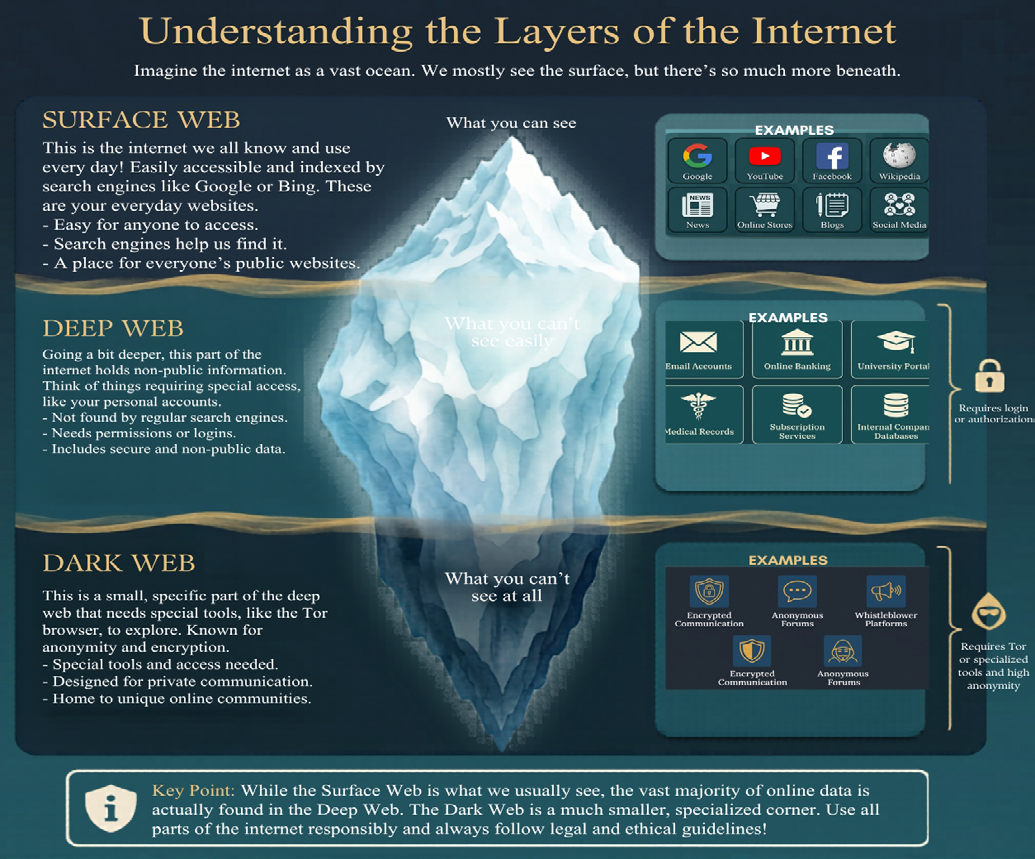
Internet is usually segmented into three parts namely surface web, deep web, and dark web. Surface web consists of publicly available websites that are searchable using regular search engines like Google and Bing. On the other hand, deep web includes unindexed websites that include databases, private intranets, academic institutions’ research libraries, corporate systems, and password-protected websites that are not searchable using regular search engines [25].
Dark web consists of the concealed section of the deep web that uses specific software configuration to browse. As opposed to surface web, dark web sites purposely conceal identities of users, servers, and communication routes by using encrypted technology. This makes dark web an ideal place for carrying out criminal activities such as drug trafficking, computer hacking, identity theft, and money laundering activities.
Anonymous Web Hosting Systems
Anonymous web-hosting systems provide additional protection of narcotics trafficking via dark web platforms because they ensure the anonymity of the servers on which these web sites are located. Such hosting services use distributed infrastructures, encrypted data communication, and offshore hosting providers for increasing the resistance of the system against possible actions of law enforcement agencies [8].
Dark Web Drug Marketplaces
Vendor System and Ratings It is quite common for dark market drug marketplaces to mirror the structures of legitimate retail websites. Vendors develop elaborate profiles featuring the products sold, feedback from previous customers, transaction records, and credibility ratings [6]. Customer feedback and vendor-rating systems are used by buyers to verify vendors’ credibility and quality of the goods on sale [6].
Such rating systems play a pivotal role in facilitating trust among anonymous criminals, which enables repeated transactions and stable buyer-seller relationships despite the lack of face-to-face interactions [26].
Drug Advertising and Transactions
Extensive advertising systems can be found in the narcotics markets existing on the dark web. The advertisements often contain detailed product descriptions, purity levels, dosages, costs, and delivery methods [1]. Online transactions occur via encrypted messengers and cryptocurrencies to minimize financial traces. The availability of anonymous transactions has enabled narcotics traffickers to increase their operations internationally without facing direct contact with law enforcement officials [27].
Escrow and Drug Delivery Systems
Escrow systems are widely applied by vendors in dark web drug marketplaces. According to this system, cryptocurrency payments are placed into escrow until a buyer confirms receiving the ordered goods [4].
Escrow transactions significantly decrease the risk of fraud and increase consumers’ trust in digital black markets [4].
The typical forms of drug delivery include concealment, fake labeling, international shipping via postal or courier services, and the use of drop-points [19]. The dark web narcotics marketplaces often exploit international shipment systems when distributing synthetic drugs and prescription substances.
Illicit Drug Trade: Opioids, Stimulants, and NPS
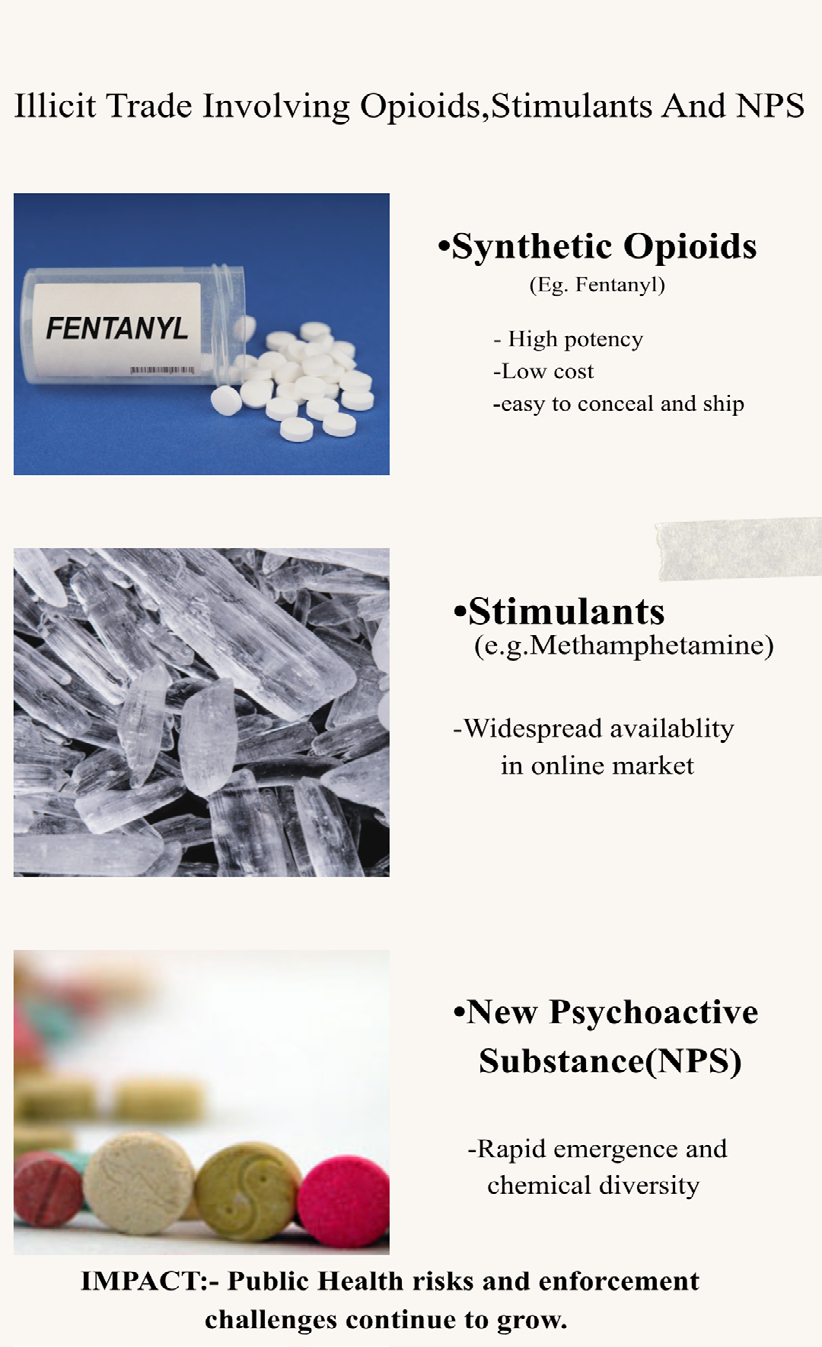
Dark web drug marketplaces serve as essential distribution channels for opioids, stimulants, and new psychoactive substances (NPS). Synthetic opioids and fake benzodiazepines are among the most popular products because of their high potencies, low costs of production, and ability to conceal them during transportation [19].
The emerging trends associated with NPS in dark web markets represent a serious challenge for forensic toxicology and public health services since many new drugs cannot be identified using traditional toxicological screening techniques [2].
Digital Threat Intelligence and Marketplace Monitoring
Crawling Methods for the Dark Web Automated methods that collect and process information from dark websites and marketplaces are frequently employed in contemporary dark web investigations. For instance, dark web crawlers are capable of navigating and extracting marketplace listings, vendor pages, hyperlinks, interaction patterns, and transactions [28].
Dark web crawling is an important method for cyber threat intelligence as it allows the identification of emerging trends in the drug trade, as well as discovering criminal networks and suspicious behavior of marketplaces [29]. However, there are many technical difficulties that make the task complicated, including instability of hidden services, encryption, restricted access protocols, and changes in marketplace architectures [30].
Visualization of Hyperlinks and Graph-Based Networks
Modern cybersecurity experts use graph-based methods to visualize dark web environments and detect connections among various darknet elements. Analyzing hyperlinks is a useful tool for identifying relationships between hidden services, criminal forums, vendors, and illegal marketplaces [21]. These methods also assist forensic specialists in understanding the structure of narcotics trafficking networks and identifying high-risk nodes in cybercrime ecosystems. Visual models can help investigators gain a clearer picture of communication channels in the dark web [31].
Machine Learning for Analysing the Dark Web
Machine learning and artificial intelligence are used to investigate dark web platforms as an aid to the discovery and analysis of illegal operations conducted by cybercriminals. Machine learning algorithms help to detect suspicious content, analyze narcotics-related communication, find anomalies in transactions, and forecast criminal activity [11].
Deep learning and transformers have proved themselves efficient in classifying the data from the dark web and social media related to narcotics smuggling and cybercrimes. Therefore, AI-enabled analytical tools can be considered vital components for future cyber investigations [10, 12].
Role of Digital Forensics in Narcotics Investigations
The ongoing digitization of narcotic crime has led to an increase in the importance of digital forensics in modern criminal investigations. Drug traffickers and organized crime groups rely heavily on digital technology for communication, financial transactions, logistics, marketing online, and hiding criminal activities. Thus, digital evidence has become an important component in building criminal trafficking schemes, establishing connections between criminals, tracking money transfers, and linking suspects to crimes related to narcotic trafficking [9].
Digital forensics helps investigate crimes by enabling the systematic identification, collection, preservation, analysis, and presentation of electronic evidence collected from computers, mobile phones, cloud computing, communications networks, and other storage devices. During cyber-enabled narcotic investigations, digital forensics helps collect intelligence, conduct behavioral analysis, reconstruct chronology, and provide evidence corroborating toxicological results and other physical evidence [2].
It is essential to mention that the integration of digital forensics into narcotic investigations has become increasingly important with the rising popularity of darknet markets, encryption services, crypto-currency, and anonymity in online communications. Modern technological advances have pushed narcotic investigations to adopt a new approach moving beyond conventional policing strategies and embracing multidisciplinary forensic practices that include cyber intelligence and electronic evidence evaluation [3].
Fundamentals of Digital Forensics
Definition and Scope The term digital forensics is used to refer to the scientific practice of identifying, gathering, preserving, analyzing, investigating, and presenting electronic evidence acquired from digital devices and IT infrastructures for investigation and litigation purposes. The field includes many specialties, including computer forensics, mobile forensics, network forensics, cloud forensics, crypto-forensics, and internet investigation [34].
During the investigations on narcotics, the application of digital forensics does not merely include recovering data, but it may also involve reconstructing communications, digital transactions, traffic flows, geolocation activities, and other forms of clandestine digital activity. Digital forensics techniques may also help identify anonymous users, uncover anti-forensic activities, and reconstruct the timeline of illegal operations [9].
Types of Digital Evidence
Digital evidence can be defined as any information of evidentiary value that is stored and/or transmitted in digital form. Some types of digital evidence that may be used in narcotic investigations include:
- Textual communications on mobile phones
- Emails and instant messaging services
- Online financial transactions (dark web)
- Digital wallet contents
- Cloud computing data
- Web browsing history
- Geolocation data
- Social networking communications
- Multimedia files
- Metadata [2]
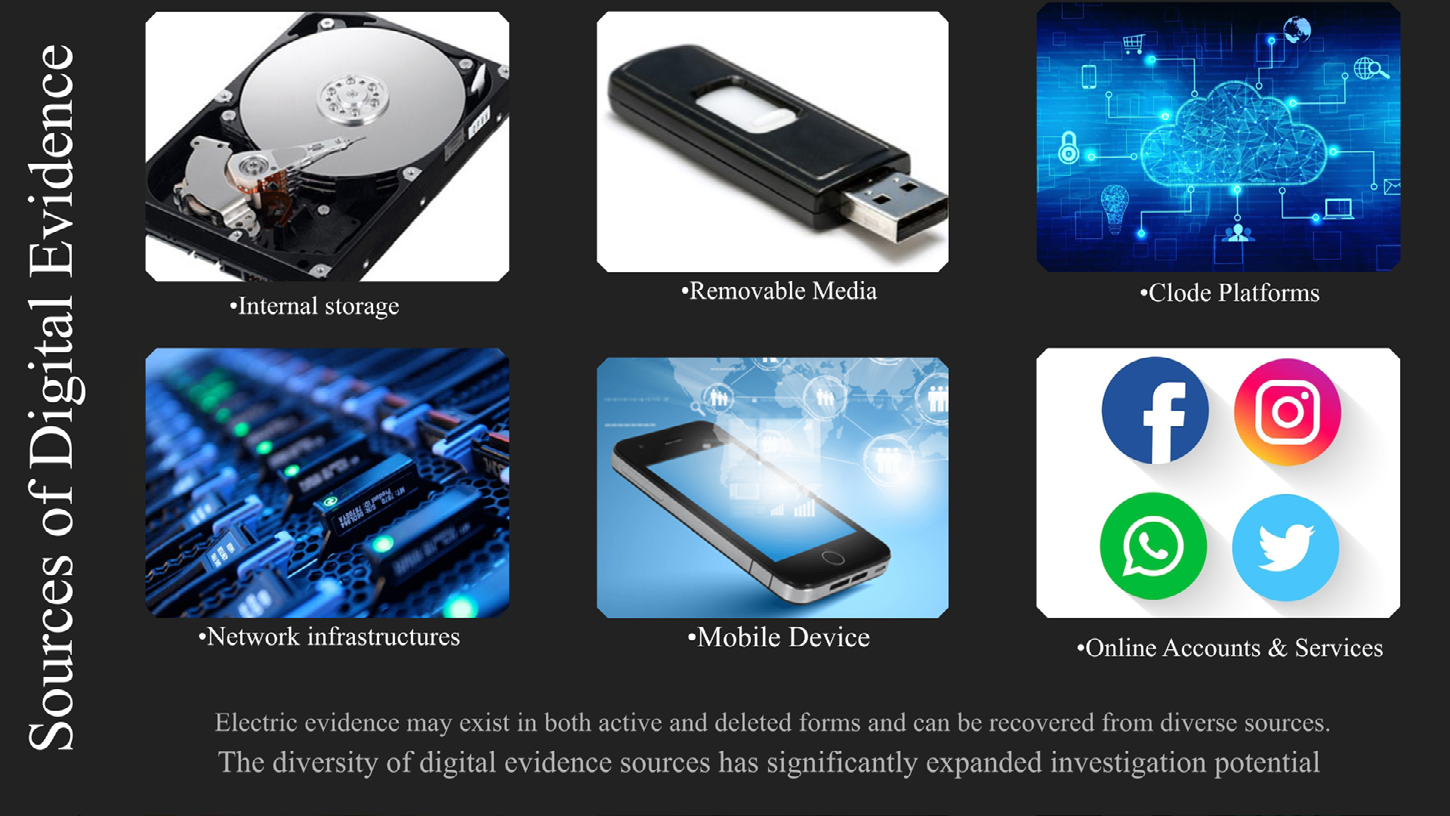
Electronic evidence can be classified as active or deleted and recovered from internal storage, external media, cloud services, and network architectures. The variety of digital evidence sources has greatly expanded the potential usefulness of digital forensics to narcotics cases [30].
Importance of Cyber-Enabled Narcotics Crimes
Forensic science plays an important role in investigating cyber-enabled narcotics crimes because of the increased use of computer systems for the execution of contemporary crimes. The use of encryption software in communicating and coordinating the distribution process leaves digital tracks that provide insight into the business structure, trafficking routes, financial connections, and hierarchy [10]. Digital- forensic investigation also assists in intelligence-led policing by allowing for identification of suppliers, dealers, couriers, and customers involved in online narcotics activities. In some instances, the use of digital evidence is more effective in linking suspects to crimes compared to physical evidence [7].
Sources of Digital Evidence
Mobile Devices and Smartphones Mobile devices form one of the key sources of digital evidence in narcotics investigations. Smartphones have information including call records, contact lists, encrypted chat messages, emails, multimedia documents, browsing histories, apps data, and geolocation information. These may include evidence linked to narcotics offenses [9]. It is common for drug traffickers to use smartphones to communicate and coordinate delivery of the illicit substance as well as perform transactions online through darknet websites.
Cloud Storage and Communication Platforms
The use of cloud-based technologies and platforms for conducting online communication has become increasingly prevalent in narcotic trafficking operations using digital tools. In many cases, criminals utilize cloud storage to store the transaction history, encrypted data, shipment details, identity data, as well as any documentation associated with the narcotics business, minimizing the danger of the device being seized by law enforcement agencies [8].
Common platforms for organizing transactions on the Dark Web include encrypted chat applications such as Telegram, Signal, Wickr, and Discord, and other messaging services with features like disappearing messages and distributed data storage, creating obstacles for forensic analyses [8].
Financial and Cryptocurrency Records
It is important to note that digital financial documents can help investigate narcotics trafficking crimes. Financial evidence related to drug trafficking may include online banking statements, transactions with cryptocurrencies stored in wallet software, information from blockchain transactions, and records of virtual asset exchanges [16]. Some of the most popular cryptocurrencies used in dark web markets are Bitcoin and Monero because they offer anonymity through their decentralized nature. Blockchain forensics may effectively track illicit financial transactions and identify suspicious trends [22].
Metadata, Geolocation, and Browsing History
One should note that metadata and geolocation data can provide investigators with context regarding drug trafficking crimes conducted via digital means. This kind of evidence might consist of timestamps, communication logs, IP address data, device identifiers, and data regarding file creation times, allowing investigators to trace criminal activity [31]. Data retrieved from GPS tracking devices, cell phone towers, Wi-Fi networks, and applications can allow investigators to reconstruct a suspect’s movements and correlate geolocation data with the location of drug trafficking meetings. In addition, browsing history and search history can help track the activity of users’ involvement with dark net marketplaces and other websites [21].
| Type of Data Recovered | Importance in Investigation | |
|---|---|---|
| Smartphones | Chats, call history, GPS locations | Helps identify suspects and contacts |
| Laptops and Computers | Documents, browser history, transaction records | Shows planning and online activities |
| Social Media Accounts | Messages, photos, videos | Detects recruitment and drug promotion |
| Cryptocurrency Wallets | Wallet addresses and transaction history | Tracks illegal money transfers |
| Cloud Storage Platforms | Uploaded files and backups | Helps recover hidden information |
| CCTV and IoT Devices | Video footage and access logs | Verifies movement and activities |
Table 2: Common Sources of Digital Evidence in Narcotics Investigations.
Digital Evidence Collection and Preservation
Chain of Custody in Cyber Investigations
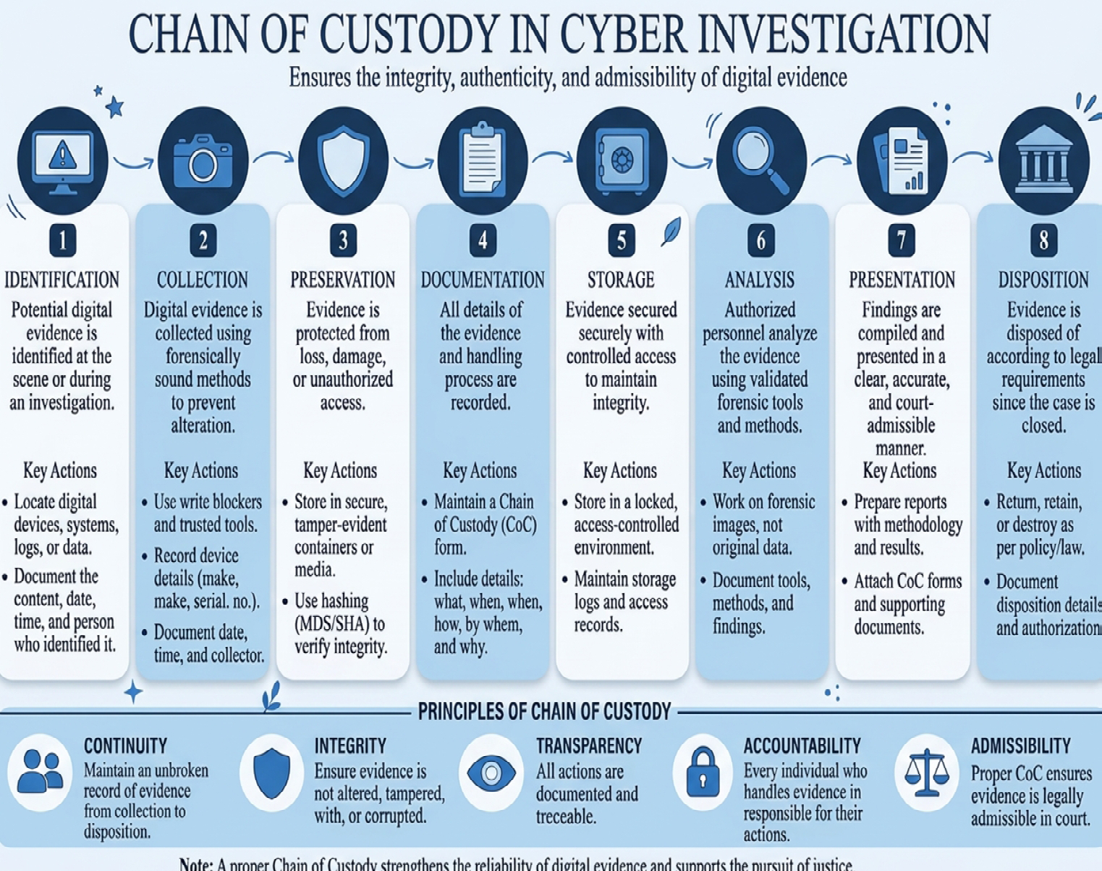
The continuous chain of custody is crucial in maintaining the integrity of the evidence. Chain of custody refers to the documentation process used in recording the history of the seizure, handling, transportation, analysis, and retention of digital evidence. It covers all stages from the time of seizure through examination up until presentation in court [34].
Any tampering, contamination, or inappropriate handling of digital evidence can jeopardize its value and lead to potential challenges during prosecution. Hence, proper documentation and strict adherence to procedures is vital in cyber forensics concerning narcotics crimes [9].
Imaging and Data Extraction Process
Imaging and data extraction procedures involve creating forensic images or bit-by-bit copies of the storage media in a way that enables forensic experts to examine evidence without changing the original evidence. This process is usually done using forensic tools which ensure that the original evidence is not altered in any way [30].
There are several types of data extractions including logical data extraction, physical data extraction, file-system acquisitions, and cloud acquisitions depending on the type of storage media used by the suspects and permissions granted by the user. This procedure allows the forensic investigator to retrieve deleted, active, encrypted, or hidden information related to narcotics.
Legal Admissibility of Digital Evidence
The admissibility of digital evidence in legal proceedings relies on the standards of authenticity, reliability, integrity, and following proper procedure when collecting and examining the evidence. Legal systems mandate investigators to prove that the electronic evidence collected was in its original form and acquired using proper legal means [24].
Furthermore, in many legal systems, electronic evidence must satisfy specific statutory requirements regarding certification, chain of custody, and expert confirmation before it can be used in legal proceedings. Further complications related to international laws, such as accessing electronic information from other countries, privacy concerns, and encryption also make the issue more difficult in cyber- enabled narcotics cases [24].
| Main Function | Use in Investigation | |
|---|---|---|
| Mobile Forensic Tools | Extract data from mobile phones | Recover chats, media files, and call records |
| Network Analysis Tools | Monitor internet traffic | Track communication activities |
| Blockchain Analysis Tools | Trace cryptocurrency transfers | Identify illegal financial transactions |
| Password Recovery Tools | Access locked devices and systems | Recover encrypted evidence |
| OSINT Tools | Collect information from public sources | Monitor suspicious online activities |
| Data Visualization Tools | Show links between suspects | Help investigators understand criminal networks |
Table 3: Digital Forensic Tools Used in Narcotics Investigations.
Forensic Toxicology and Narcotics Analysis
The use of forensic toxicology is an important part of the scientific process involved in investigating narcotics-related offences, including the identification and interpretation of drugs, poisons, metabolites, toxins, and other substances in the body. The emergence of cyber-based narcotics crime necessitates forensic toxicology to provide objective biochemical evidence to support the digital-forensic intelligence in establishing drug abuse, distribution, overdose, and poisonings [14].
With the fast development of darknet markets, pharmaceutical trade via the Internet, and the production of synthetic drugs, the scope of the work of modern forensic toxicology has become much broader. Today, forensic toxicology needs to tackle challenges arising from the appearance of new psychotropic substances, fake pharmaceuticals, new generation designer drugs, and synthetic opioids available on obscure digital platforms [19].
Combining results of toxicological analysis and digital evidence is important for understanding and explaining narcotics-related criminal activities. Correlation of results of laboratory testing with digital communication records, geolocations, online transaction history, and digital behavior will help improve forensic results and help identify distributors, suppliers, and potential drug abusers [9].
Forensic Toxicology Overview
Role in Narcotics-Related Investigations Forensic toxicology refers to the scientific field dealing with applications of toxicological principles in solving cases involving drugs, alcohol, poisons, and chemicals. In narcotics investigations, forensic toxicologists work to detect illicit drugs, measure drug levels, study their effects, and explain cases of drug abuse, intoxication, overdose, and fatalities caused by drugs or poisoning [13]
Forensic toxicology helps support medico-legal and criminal investigations through providing scientific evidence regarding the occurrence of drug poisoning, substance abuse, overdose, and related fatalities. The analysis will be used to prove drug abuse, determine fatal overdose situations, identify patterns of drug use, and connect individuals to drug distribution cases [14].
In addition to assisting in medico-legal and criminal investigations, forensic toxicology also makes a significant contribution to intelligence-based policing by helping track trends in drugs, monitor synthetics, and promote public health measures in relation to substance abuse and poisoning [2].
Analysis of Biological Samples Forensic toxicology involves analyzing various biological specimens such as blood, urine, saliva, hair, vitreous humour, stomach contents, and tissue samples, each providing distinct toxicological insights influenced by exposure time, metabolism, and excretion processes [19]. Blood analysis is crucial for determining recent drug intake and pharmacological intoxication, while urine testing is effective for identifying metabolites indicative of past substance use. Hair analysis can reveal patterns of chronic substance use or repeated exposure [13]. Modern forensic toxicology laboratories utilize advanced analytical techniques including Gas Chromatography-Mass Spectrometry (GC-MS), Liquid Chromatography-Tandem Mass Spectrometry (LC-MS/ MS), High-Performance Liquid Chromatography (HPLC), and immunoassays for the detection and quantification of narcotic drugs and their metabolites [14].
Identification of Drugs and Metabolites Identifying drugs and their metabolites is crucial in forensic toxicology, as it helps interpret toxicological findings and substance-related behaviors. Narcotics undergo metabolic changes, producing metabolites that can persist beyond the excretion of the parent substance [19]. Toxicological analysis involves determining the nature, concentration, and possible physiological effects of detected substances. This analysis is vital in cases of multi- substance use, artificial substances, counterfeit medications, and designer drugs, especially those available on the dark web [27]. Furthermore, drug and metabolite identification assists law enforcement in linking specific drugs to online purchase records, distribution networks, and other cyber communication related to narcotics transactions [9].
Emerging Trends in Drug Toxicology
Synthetic Opioids and Fentanyl Analogues Synthetic opioids, particularly fentanyl and its analogues, pose a grave danger due to their high potency and rising prevalence in illegal drug markets. Their sale occurs on darknet platforms owing to the ease of transportation, profitability, and the concealability in transport [2]. Fentanyl analogues can be extremely toxic, and their use can cause overdoses at relatively lower levels, posing a serious challenge to forensic toxicologists. Moreover, rapid changes in synthetic opioids lead to complications during toxicological screening, where new substances are excluded from the usual panels [19].
New Psychoactive Substances (NPS)
These substances are drugs altered chemically to replicate the effects of legally prohibited narcotics but escape regulation due to the change in chemical properties. They include synthetic cannabinoids, cathinones, phenethylamines, and novel hallucinogens. The majority of the NPS products are sold illegally on the internet via the dark web [27]. Their changing chemistry makes the identification of these products complicated for labs as the lack of validated standards and detection techniques can limit proper detection and analysis. Internet marketing of NPS leads to poisoning and overdoses among youths and other groups.
Counterfeit Pharmaceuticals and Benzodiazepines
Counterfeit pharmaceuticals represent an emerging cyber-enabled crime in terms of trafficking in narcotics. Darknet platforms have been selling counterfeited benzodiazepines, opioids, stimulants, and other prescription medications containing hazardous chemicals and inappropriate dosages (Jurásek et al., 2020). Counterfeited benzodiazepines are highly dangerous as they contain potent synthetic substances and unregulated formulations. These products are usually sold online through anonymous vendors and dark web platforms to consumers seeking unauthorized prescription drugs [27].
Challenges in Toxicological Interpretation
In contemporary toxicology, one of the main challenges is the increasing complexity of illegal drugs because of their composition such as polydrug abuse, fake pills, structure alteration, and variable purity.Some of these challenges include detecting the highly potent drugs in small amounts, lack of data regarding new psychoactive substances in the field of toxicology, and absence of protocol for identifying novel drugs online.
| Examples | Common Distribution Method | |
|---|---|---|
| Stimulants | Cocaine, Methamphetamine | Sold through dark web shipping |
| Opioids | Heroin, Fentanyl | Distributed using encrypted marketplaces |
| Synthetic Drugs | MDMA, LSD | Shared through social media contacts |
| Prescription Drugs | Tramadol, Xanax | Sold through illegal pharmacy websites |
| Cannabis Products | Marijuana, THC oils | Delivered through courier services |
| Designer Drugs | Synthetic cannabinoids | Transactions done using cryptocurrency |
Table 4: Types of Narcotics Found in Cyber-Enabled Markets.
Correlation Between Toxicology and Digital Behaviour
Drug Consumption Patterns and Online Activity Toxicology combined with digital behaviors can reveal information about narcotics activities. Drug consumption patterns have been correlated with searches on the Internet, social media, encrypted chat messages, online purchases, and drug procurement through the dark web [3]. The digital footprint provides information on drug preferences, discussions regarding drug dosage, supplier communications, techniques used and prevailing trends that assist in supporting toxicology analysis [20].
Connecting Communication Data to Toxicology Results
Data obtained from communications using mobile phones, encrypted applications, email communications, and social media posts can be correlated with the outcomes of toxicology analysis. This is done by correlating conversations related to drugs, purchases, payments, and delivery dates, and comparing them to the results obtained in the laboratory [9]. This cross-disciplinary technique assists in connecting people involved in supply and distribution of illegal substances with those who facilitate it using cyber means as well as identifying consumers [7].
Temporal Reconstruction of Narcotics Incidents
Temporal reconstruction involves connecting toxicology with digital timeline to map the sequence of events. Metadata, timestamps, location data, transaction logs, and digital footprint synchronized with toxicology are used to trace drug acquisition, consumption, overdose, trafficking or distribution [31].
Temporal reconstruction enhances investigative efficiency by linking physical involvement in the use of narcotics with digital footprints of cyber-enabled activities and cyber-enabled narcotics crimes [9].
Artificial Intelligence and Machine Learning in Cyber-Toxicology
AI-Based Detection of Cybercriminal Activities Algorithms for Threat Detection Artificial intelligence has developed algorithms capable of detecting illicit activities within the cyber realm. The study by Sangher KS, et al. [33] introduces a new cyber-threat intelligence model, which uses dark web forums to conduct an analysis on illegal activities proactively. Panem C, et al. [11] emphasized ML and AI in the process of identifying malicious behavior within the cyberspace.
Kühn P, et al. [18] analyzed differences between manual and semi-automated evaluation of dark web forums, discovering the advantages of combining the two techniques. Finally, William P, et al. [35] provided instructions on dark web threat intelligence and evolution detection, arguing that adaptive algorithms are necessary due to the dynamic, evolving nature of illegal networks.
Application of Pattern Recognition within Narcotics Cases Pattern recognition proves helpful in dark web investigations, particularly with narcotics. Madimi R, et al. [9] developed a forensic methodology for investigating dark web marketplaces dedicated to drugs, including credible sources and URL-patterns used by criminals. Similarly, Rao UN, et al. [10] investigated drug trading on the dark web using machine learning to conduct analysis with the help of crawlers and scrapers.
Baravalle A, et al. [1] conducted preliminary research of mining the dark web for drugs and fake IDs, describing techniques of collecting data for later applications. As the research suggests, recognizing repeated patterns in transactions and communication plays a critical role in investigating narcotics-related crimes.
Dark Web Monitoring System Automation
Automated dark web surveillance proves useful for monitoring activities on the network. For example, Bergman J, et al. [28] reviewed the state-of-the-art regarding dark web crawlers, listing their implementation strategies and effectiveness. Moreover, Pavkovic M, et al. [30] developed SInFo – structure-driven forum crawlers to minimize duplicating and retrieve user-generated information from dark web forums.
Park addressed difficulties with hidden service crawling on the dark web and provided solutions to optimize monitoring. To monitor the dark web further, Paju A, et al. [17] introduced a method of deploying honeypots to evaluate onion-site discovery and Tor users’ interests. Finally, Dalvi A, et al. [20] identified dark web marketplace monitoring as a developing trend in cybersecurity business practices.
Machine Learning in Drug Market Analysis
Classification of Dark Web Content ML classification for dark web content has evolved from single keyword identification techniques to multimodel approaches. Basha MSA, et al. [12] leveraged machine learning, deep learning, and transformers to classify dark web-related social media discussion, proving the supremacy of modern models in identifying intricate criminal communication. Dalvi A, et al. [36] utilized graph decomposition techniques for keyword identification and labeling of hidden services content to achieve an effective classification process for massive amounts of unlabeled data.
Nazah S, et al. [2] traced the development of dark web threat analysis and detection processes from the use of filters based on rules to the application of artificial neural networks, along with current problems, such as lack of data and obfuscation techniques.
Predictive Intelligence Systems
In addition to classifying the dark web content, ML is employed to create predictive tools to predict future actions or changes in the criminal environment. For example, Williams R, et al. [37] examined the possibility of incremental hacker forum exploit collection and classification for proactive threat intelligence, demonstrating how time-series analysis of the content could be used to predict the emergence of new attack techniques. Sangher KS, et al. [33] oriented their system to predict outcomes to facilitate proactive police response.
Bracci A, et al. [15, 27] proved the value of dark web markets’ predictive potential by tracking the reactions of marketplaces to COVID-19 and related vaccine products, demonstrating that machine learning systems help capture crime trends in real-time.
Behavioural Profiling of Offenders
ML-based behavioural profiling helps identify, classify and track offenders on pseudonymous platforms. Howell CJ, et al. [23] employed a multidisciplinary approach to classify the stolen data market by examining the behaviours of buyers and sellers across darknet markets. Choi KS, et al. (2023) [38] studied the dark web markets related to hacking services and the operation of underground justice systems by employing a crime script analysis method.
Data Mining and Visualization Techniques
Network Analysis Using Graphs Graphs have been widely utilized in the structural analysis of dark web networks. Aoki T, et al. [21] introduced a graph visualization tool for dark web hyperlinks, which used topology metrics to quantify the connectivity and clustering behavior of illegal websites. A study by Aoki T, et al. [5] on dark web hyperlink graph analysis indicated that time series graph analysis can help trace the dynamics of site relations in the dark web. In a study conducted by Paul S, et al. [39], knowledge management was investigated in the deep web using graphs, highlighting the encoding of relational information by graphs other than tables.
The graphical representation of hyperlinks is crucial for understanding how criminal platforms connect with each other. For example, Aoki T, et al. [5] have visually depicted dark web hyperlinks to identify hub and spoke, along with island-like clustering of connections associated with criminal groups.
In their second study from 2021, they included feature analysis to understand more about market architecture related to drugs and weapons. Bergman J, et al. [28] highlighted the significance of crawlers in constructing hyperlink graphs because partial crawling skews the results.
Hyperlink Visualization of Illicit Platforms
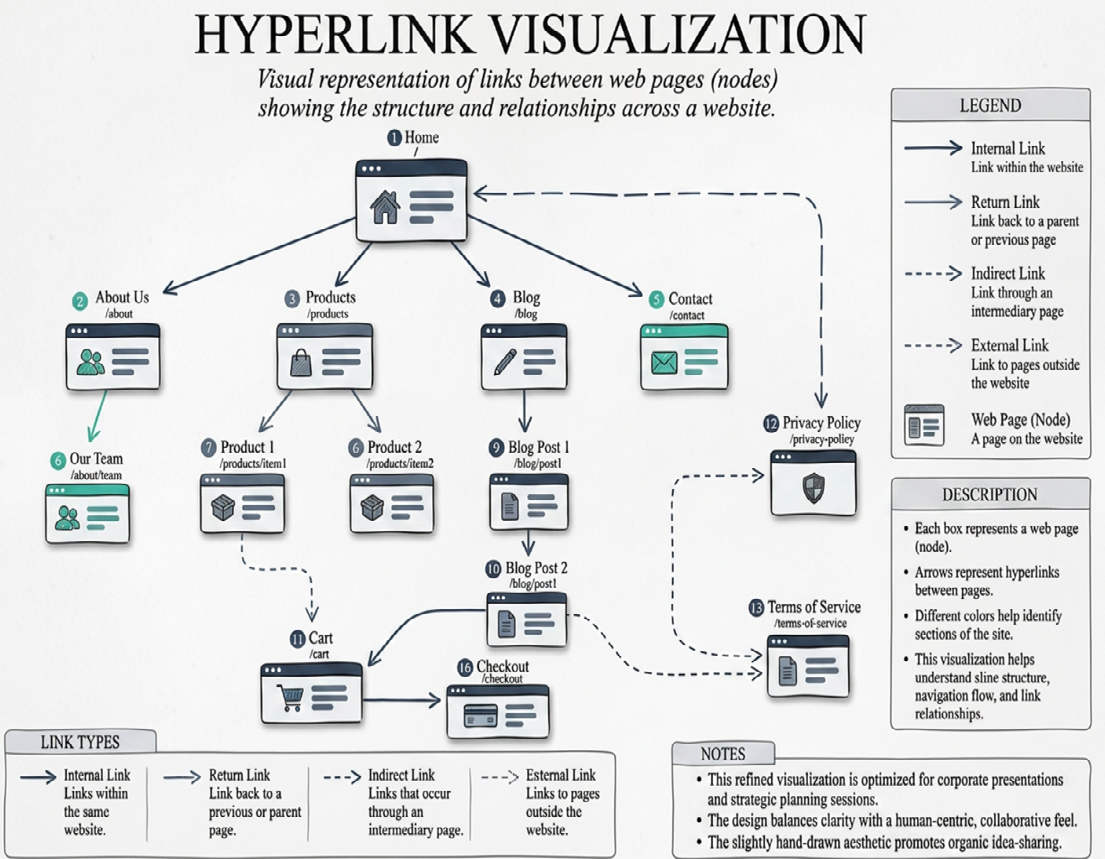
Trafficking Relationships and Communications Mapping
Data mining and visualization techniques are instrumental in identifying patterns of trafficking relationships and communications between criminals. Madimi R, et al. (2023) visualized criminal networks of drug markets in forensic analysis to trace vendors’ activities and communication.
Oosthoek K, et al. [6] applied data mining methods to determine the amount of illicit income in dark web stores and construct its economic geography. Labrador V, et al. [4] conducted trend analyses of modern dark web markets by investigating operational strategies and inter-market linkages to explain network evolution post-intervention. Rawat R, et al. [3] analyzed the existing literature on social media and internet platforms’ contribution to dark web drug trafficking and communication mapping. Abinaya and Rubika A, et al. [40] introduced the Attack Forestalling algorithm for the real-time tracking of attackers on virtual private networks in dark web stores.
| Application Area | Benefit in Investigation | |
|---|---|---|
| Machine Learning | Analysing drug trafficking patterns | Predicts criminal activities |
| Natural Language Processing | Monitoring online chats and posts | Detects drug-related keywords |
| Behavioural Analytics | Studying user activities | Identifies suspicious behaviour |
| Data Mining | Finding hidden relationships in data | Helps identify criminal networks |
| Predictive Analytics | Forecasting future narcotics trends | Supports proactive investigations |
| Visualization Systems | Displaying data in graphical form | Makes network analysis easier |
Table 5: Applications of Artificial Intelligence in Cyber-Narcotics Investigations.
Challenges in Investigating Digital Narcotics Crime
Technical Challenges Encryption and Anonymization The primary obstacles that stand before investigators of cybernarcotics crime are encryption and anonymization.
In addition, according to various studies, dark web narcotics offenders benefit from using layered encryption and multi-hop relay techniques provided by the Tor network, which renders standard network monitoring virtually powerless. The review conducted by Nazah et al. (2020) highlights that dark web threats continue to evolve from the ongoing competition between increasingly sophisticated anonymization and detection methods.
In turn, Turen SH, et al. [8] emphasize a multilayered obfuscation approach used by dark web narcotics offenders. Encryption is applied at the transport, communication, transaction, and storage layers, thus providing protection of the identity even when an investigator manages to gain access to a particular online marketplace. The emerging tendency of adopting encrypted communication applications to conduct dark web commerce further adds to law enforcement challenges [7].
Legal and Ethical Challenges
Data Privacy and Surveillance Concerns Tools used for investigating the dark web are in some countries equivalent to those that privacy law was meant to restrict and are subject to the same restrictions as mass surveillance. Jordan SB, et al. [13] considered how cyberbiosecurity intersects with the use of artificial intelligence, demonstrating that transparency poses two threats to essential human rights. The same artificial intelligence systems that can be used to detect signs of criminal behavior are also able to discriminate against innocent people should misapplication or ineffective governance happen. Kovalchuk explicitly stated this issue of the architectural structure of the dark web protects both criminal anonymity, and the same structural features that provide anonymity to legitimate anonymous communication will be affected by such surveillance techniques directed at one will put the other at risk.
Kühn P, et al. [18] admitted that their proposed semi-automated evaluation methods for cyber threat intelligence exist in a legal gray area in many jurisdictions, where the limits of legally permissible monitoring/legally forbidden interception remain poorly defined. The use of user behavioral data collected on dark web platforms by law enforcement agencies creates major issues under the data protection regulatory framework (e.g., General Data Protection Regulation, etc.)—these issues increase significantly if the collection occurs without prior judicial authorization or collects data about individuals residing in multiple sovereign jurisdictions.
Admissibility of Electronic Evidence
According to Madiimi R, et al. [9] the preservation of forensic integrity and the ability to legally admit electronic dark web evidence contribute to a new and somewhat elaborate technical challenge associated with prosecuting a crime. To combat this, they developed their forensic analysis method specifically for dark web drug marketplaces, with a focus on establishing the credibility and verifiability of electronically collected evidence. They explained that evidence collected during investigation using automation techniques (crawlers and scrapers) must meet a significantly higher standard of evidentiary quality than open-source intelligence.
| Description | Impact on Investigation | |
|---|---|---|
| Encryption Technologies | Criminals use encrypted platforms for communication | Makes evidence collection difficult |
| Anonymous Browsing Networks | Use of TOR and VPN services | Hides user identity |
| Cross-Border Jurisdiction | Crimes involve multiple countries | Delays legal procedures and cooperation |
| Cryptocurrency Anonymity | Financial transactions are difficult to trace | Complicates financial investigation |
| Data Volume Overload | Huge amount of digital evidence collected | Increases investigation time |
| Lack of Skilled Personnel | Limited trained investigators and experts | Reduces investigation efficiency |
Table 6: Technical and Legal Challenges in Cyber-Narcotics Investigations.
Further, the challenges that prosecutorial and judicial teams are faced with in relation to electronic evidence collected from the dark web include the inability to satisfy chain of custody requirements for digital evidence (i.e., demonstrating that evidence has not been modified from the time of collection until the time presented to the court) Additionally, Howell et al. illustrated in their multidisciplinary review on the challenges associated with prosecuting those involved in black market activities via the dark web that due to the complexity of producing evidence from darknet markets (e.g., cryptocurrency transactions, secured messaging, and pseudonymously identified vendors), legal teams attempting to build admissible cases are faced with considerable obstacles.
Institutional and Resource Limitations
Lack of Interdisciplinary Expertise Digitally facilitated criminal investigations must require inter-disciplinary competency in computer science, forensic chemistry, criminal law, behavioural assessment and financial intelligence to carry out effectively; however, very few investigators and/or law enforcement organizations currently possess the ability to integrate these disciplines as a whole [34]. The authors suggested that the education of cyber skills is an underdeveloped area of education for criminologists, whereby most criminal justice educational programs provide inadequate foundational technical training for practitioners to adequately analyze dark web materials [41]. Further they expressed that digital forecasting for crimes committed on or through the dark web require specialist knowledge that is technical as well as domain- specific, in addition to the requirement that the operational cultures of members of criminal dark web communities require a level of contextual understanding that cannot be taught through solely technical training.
Panem C, et al. [11] discussed that law enforcement does not currently possess the capacity required to implement a mechanism using machine learning or AI algorithms to assist in the detection of criminal activities conducted using the internet and therefore most law enforcement organizations within developed and developing Nations are unable to utilize these technologies to their full potential. Additionally, Sangher KS, et al. [33] point out that the proactive cyber- threat intelligence systems they developed initially assumed law enforcement agencies had the analytical infrastructure and requisite sterile skills to interpret the output from these algorithmically-based cybercrime detection systems; however, the authors suggested that most law enforcement have equivalent capabilities due to an uneven distribution of analytical infrastructure and requisite sterile skills on a global basis, contributing to the asymmetries that have developed with respect to criminal networks operating on the dark net to avoid detection; furthermore, since criminal networks operate globally, many of these networks can exploit any disproportionality that may exist with respect to the distribution of analytical infrastructure and requisite sterile skills from developed Countries to developing Countries.
Delays in Cyber-Forensic Processing
Delays in cyber-forensic processing present substantial challenges for evidence gathering in dark web criminal activities due to the rapid evolution of these platforms, often outpacing traditional forensic analysis. Bergman J, et al. [28] note that dark web marketplaces can quickly vanish or relocate, necessitating nearly real-time data collection to preserve transient evidence, as emphasized by Williams R, et al. [37]. To address this urgency, Pavkovic M, et al. [30] introduced an incremental forum crawler for continuous user content collection. However, Labrador V, et al. [4] indicate that slow forensic analysis can lead to the loss of critical data, compromising operational effectiveness.
Coordination Gaps Between Agencies
Coordination gaps between law enforcement, intelligence agencies, and public health authorities exacerbate these challenges. Waller L, et al. [24] highlight structural coordination failures that arise from siloed organizational cultures, inhibiting integrated responses to dark web investigations. Nazah S et al. [2] observe a discrepancy between ideal inter-agency data sharing frameworks and the actual limitations observed in practice. Additionally, Gokhale C, et al. [42] note the reliance on collaboration among internet service providers, intelligence services, and law enforcement in South Africa—an aspect often missing in other jurisdictions. Jordan SB, et al. [13] emphasize that successful integration of AI into cybercrime investigations demands clear governance frameworks to mitigate operational, legal, and ethical risks.
Proposed Cyber-Toxicological Framework
Need for Integrated Investigation Models The convergence of narcotics crime and digital technology necessitates an integrated forensic approach that combines traditional toxicology with digital forensics, as highlighted by Madimi R, et al. [9]. This is crucial for addressing evidence in dark web drug marketplaces, which encompasses both chemical and digital elements. Studies by Jurásek B, et al. [19] and Panem C, et al. [11] further stress the importance of contextual intelligence in detecting counterfeit pharmaceuticals and employing AI-driven systems. Fragmented approaches, as described by Nazah S, et al. [2], fail to synthesize evidence effectively, while Bracci A, et al. [15] advocate for correlating digital data with public health to strengthen cyber-toxicological frameworks. The importance of interdisciplinary methods spans criminal law, financial intelligence, and data science, necessitating specialized training for cybercrime investigators.
Collaborative efforts across institutions and governance frameworks are imperative to ethically integrate AI in investigations and enhance detection systems. Overall, a multidisciplinary strategy is essential to navigate the complexities of digitally facilitated drug crime.
Components of the Framework
Digital evidence acquisition is critical within cyber- toxicological frameworks, necessitating protocols for collecting and authenticating electronic evidence, especially from dark web narcotics platforms. Madimi R, et al. [9] introduced a forensic procedure tailored to the challenges of Tor services, focusing on URL discovery and content archiving. Rao UN, et al. [10] advocated for web crawlers and scraping tools to systematically gather data, addressing manual collection’s limitations. Bergman J, et al. [28] underscored the necessity for methodologies specific to the dark web, tackling issues like ephemerality and anti-crawling measures of marketplaces. Pavkovic M, et al. [30] presented incremental crawlers for ongoing evidence gathering while Paju A, et al. [17] proposed honeypot techniques to enhance onion site discovery, improving evidence comprehensiveness.
Toxicological profiling serves as a vital link between digital marketplace intelligence and public health, involving the chemical characterization of substances identified online, mapping them to pharmacological risks, and tracing novel psychoactive substances back to suppliers. Jurásek B, et al. [19] demonstrated this through an analysis of counterfeit benzodiazepines sourced from the dark web. Bracci A, et al. [15] emphasized public health implications by using dark web data to predict emerging threats like counterfeit vaccines, while Baravalle A, et al. [1] contributed to the classification of substances based on dark web listings for public health surveillance.
Regarding risk-based case prioritization, Sangher KS, et al. [33] argue for a framework that prioritizes cases based on risk, utilizing a proactive cyber-threat intelligence approach that scores threats by cybercrime type and activity volume. Rao UN, et al. [10] employed machine learning classifiers to rank vendors based on risk indicators. Oosthoek K, et al. [6] highlighted revenue distribution among vendors, suggesting that targeting high-revenue sellers can enhance investigative effectiveness. Moreover, Labrador V, et al. [4] identified structural indicators for vendor significance in risk assessments, while Abinaya G, et al. [40] advanced prioritization techniques using the Attack Forestalling algorithm to rank key actors based on their operational significance and evasion strategies.
Applications of the Framework
The operational application of a cyber-toxicological framework plays a crucial role in reconstructing drug trafficking networks by utilizing digital evidence to create structural maps that delineate supply relationships and communication pathways. Research by Aoki T, et al. [5] shows the power of graph-based visualizations and hyperlink topology analysis on dark web platforms in identifying criminal networks. Howell CJ, et al. [23] developed a template for mapping stolen data market ecosystems, while Madimi R, et al. [9] exemplified how forensic analysis of dark web marketplace data can effectively reconstruct drug distribution networks. Rawat R, et al. [3] broadened this approach across dark web and encrypted social media platforms, with Büsgen A, et al. [7] highlighting the advantages of user profiling across various channels, emphasizing the value of comprehensive network maps.
In terms of identifying critical actors in trafficking operations, Oosthoek K, et al. [6] utilized revenue-based analysis of dark web shops to uncover economically significant suppliers, while Choi KS, et al. [38] differentiated operational roles through behavioral signature analysis. Laferrière D, et al. [26] explored trust-signaling strategies in vendor shops, revealing insights into operational sophistication.
Moreover, Basha MSA, et al. [12] leveraged transformer- based machine learning to classify high-risk users based on their posting behaviors, enhancing public health and law enforcement efforts.
The framework also supports medico-legal and judicial investigations by combining digital and toxicological evidence, linking digital supply chains to physical harm. Jurásek B, et al. [19] connected chemical analysis of counterfeit benzodiazepines to dark web supply chain intelligence, underlining its significance in court. Devlin C, et al. [14] asserted that properly documented dark web forensic evidence satisfies admissibility standards across legal systems. Additionally, Madimi R, et al. [9] stressed judicial admissibility in forensic protocols, while McAlister R, et al. [43] pointed to the necessity for education among practitioners to ensure effective evaluation of cyber- toxicological evidence in legal contexts.
Furthermore, the cyber-toxicological framework functions as an early warning system for emerging drug threats, identifying new substances and trafficking methods before they affect public health. Studies by Bracci A, et al. [44] revealed that monitoring dark web marketplaces enables quicker identification of counterfeit vaccine markets than traditional methods. Labrador V, et al. [4] showed that analyzing dark web trends can indicate shifts in availability and market dynamics of substances. Kühn P, et al. [18] highlighted the need for semi-automated monitoring systems to capture transient threats. Proactive threat intelligence, as advocated by Sangher KS, et al. [33] is vital for enhancing public safety concerning novel psychoactive substances, while Nazah S, et al. [2] emphasized evolving detection strategies towards predictive models for effective public health responses.
Global and Indian Forensic Perspectives
International Trends in Cyber-Narcotics Investigations Global Dark Web Monitoring Initiatives The rise of dark web narcotics markets has spurred global monitoring efforts, as highlighted by Oosthoek K, et al [6] who called for comprehensive frameworks due to the economic scale of these markets.
Bergman J, et al. [28] emphasized the need for standardized crawler technologies to enhance data comparability across monitoring initiatives. Kühn P, et al. [18] assessed current monitoring tools, uncovering gaps in methodologies that impede international intelligence sharing, while Paju A, et al. [17] advocated for passive monitoring techniques to reveal hidden platforms.
International cooperation remains hindered by structural barriers, notably fragmented cybercrime legislation, as identified by Waller L, et al. [24]. Gómez HG, et al. [45] urged coordinated governance to tackle challenges presented by the dark web, noting that unilateral enforcement actions often lead to rapid adaptation by criminals [46, 47, 48, 49, 50]. Emerging cyber-forensic policies are adapting to these challenges; Kühn P, et al. [18] discussed gaps in legal frameworks surrounding AI-assisted tools, whereas Jordan SB, et al. [13] promoted proactive policy development in AI governance. Furthermore, Nazah S, et al. [1] highlighted advancements needed in evidentiary standards for cyber-forensic evidence to achieve international consistency.
In India, the NDPS Act of 1985 currently lacks provisions addressing digital narcotics, resulting in legislative gaps amidst rising digital trafficking. Insufficient cybercrime laws, as per Panem C, et al. [11] and Sangher KS, et al. [33], also fail to support dark web investigations. Legislative reform is necessary to clarify offense definitions and procedural standards for digital evidence[51, 52, 53, 54, 55, 56, 57, 58, 59].
The increasing prevalence of encrypted communication platforms like Telegram and WhatsApp in India has provided narcotics trafficking networks with new channels. Indian and international drug market operations exhibit significant parallels. Law enforcement faces challenges due to major platform providers’ resistance to comply with decryption orders, thereby complicating the enforceability of cybercrime laws against foreign corporations. Additionally, India’s inconsistent cyber-forensic infrastructure hinders investigations, aggravated by technical training deficits. Establishing specialized cyber-toxicology units is vital for integrating digital evidence, marketplace intelligence, and chemical analysis to enhance drug enforcement efficacy. Collaborative approaches among existing forensic institutions could form a foundational support for such units, although this would require ongoing political and financial commitment.
Future Directions
The integration of artificial intelligence (AI) with forensic toxicology is poised to significantly enhance cyber-narcotics investigations by automating substance classification and predicting toxicological risks. Research indicates that AI can correlate digital supply chain information with toxicological data efficiently, as showcased by various studies demonstrating its superiority over manual analysis. Innovations in blockchain intelligence are similarly crucial, allowing for the tracing of financial activities linked to narcotics trafficking, thus providing pivotal forensic evidence by leveraging transaction records’ immutable nature. Real-time cyber-toxicology surveillance systems are being developed to monitor dark web activities and integrate them with forensic data, transitioning the field from reactive to proactive threat identification. Furthermore, the international standardization of cyber-forensic protocols is necessary for consistent evidence handling across jurisdictions, addressing variability issues that challenge transnational enforcement efforts. This standardization must align with contemporary technological advancements to ensure that AI-driven forensic evidence meets validation and transparency criteria essential for legal contexts.
Conclusion
The chapter explores the transformative impact of the dark web on narcotics trafficking, emphasizing the need for a shift in forensic and investigative sciences. It underscores the integration of digital technologies, such as Tor-based services and cryptocurrency, which blur the lines between physical and digital realms. The text argues for cohesive analytical frameworks that combine forensic toxicology with digital forensics, supported by extensive literature.
Research reveals that merely analyzing chemical substances is insufficient without understanding digital supply chains, as indicated by Jurásek B, et al. [19]. Conversely, studies by Madimi R, et al. [9] illustrate that digital marketplace forensics fail to account for public health repercussions without toxicological insights. The chapter highlights significant findings at the nexus of digital data and real-world indicators of substance harm, an area where cyber-toxicology plays a crucial role.
Adaptive investigative models are needed due to the rapid adjustments of criminal networks to enforcement efforts, as noted by Labrador V, et al. [4] and William P, et al. [35], with static models proving ineffective, according to Nazah S, et al. [2]. The convergence of fields like AI, blockchain intelligence, and real-time surveillance aligns with the goals of cyber-toxicology, as shown in studies by Sangher KS, et al. [33] and Kühn P, et al. [18]. Furthermore, the chapter stresses the importance of establishing frameworks for governance, legal implications, and educational infrastructure to ensure sustainable implementation of these technological advancements, as suggested by Waller L, et al. [24] and others. The objective is to create a comprehensive cyber- toxicological framework that integrates forensic standards and encourages interdisciplinary collaborations, focusing on both historical investigations and future public health monitoring in the evolving digital landscape.
References
-
Baravalle A, Lopez MS, Lee SW (2016) Mining the Dark Web: Drugs and Fake Ids. 2016 IEEE 16th International Conference on Data Mining Workshops: 350-356.
-
Nazah S, Huda S, Abawajy J, Hassan MM (2020) Evolution of Dark Web Threat Analysis and Detection: A Systematic Approach. IEEE Access 8: 171796-171819.
-
Rawat R, Mahor V, Chouhan M, Pachlasiya K, Telang S, et al. (2022) Systematic Literature Review (SLR) on Social Media and the Digital Transformation of Drug Trafficking on Darkweb. In: Proceedings of International Conference on Network Security and Blockchain Technology. Springer, Singapore, pp: 181-192.
-
Labrador V, Pastrana S (2022) Examining the trends and operations of modern Dark-Web marketplaces. 2022 IEEE European Symposium on Security and Privacy Workshops, pp: 163-172.
-
Aoki T, Goto A (2020) Graph visualization of the dark web hyperlink. 2020 Eighth International Symposium on Computing and Networking, pp: 89-94.
-
Oosthoek K, Van Staalduinen M, Smaragdakis G (2023) Quantifying Dark Web Shops’ Illicit Revenue. IEEE Access 11: 4794-4808.
-
Büsgen A, Klöser L, Kohl P, Schmidts O, Kraft B, et al. (2023) From Cracked Accounts to Fake IDs: User Profiling on German Telegram Black Market Channels. In: Data Management Technologies and Applications. Springer, Switzerland, pp: 176-195.
-
Turen SH, Islam R, Eustace K (2023) Analysing the Threat Landscape Inside the Dark Web. In: Emerging Trends in Cybersecurity Applications. Springer, Switzerland, pp: 95-114.
-
Madimi R, Subramanian N (2023) A Forensic Analysis Procedure for Dark Web Drug Marketplaces. 2023 14th International Conference on Computing Communication and Networking Technologies, pp: 1-6.
-
Pratham Rao UN, Guruprasad RR, Shetty OJ, Sarasvathi V, Rapate GS (2024) Data Analysis of Dark Web Marketplaces using Machine Learning. 2024 7th International Conference on Signal Processing and Information Security, pp: 1-6.
-
Panem C, Gundu SR, Vijaylaxmi J (2023) The Role of Machine Learning and Artificial Intelligence in Detecting the Malicious Use of Cyber Space. In: Robotic Process Automation. Wiley, United Kingdom.
-
Basha MSA, Vinay Kumar KM, Ruchitha ND (2025) Classifying Dark Web–Related Social Media Discourse using Machine Learning, Deep Learning, and Transformer Models. 2025 6th International Conference on IoT Based Control Networks and Intelligent Systems, pp: 1772- 1777.
-
Jordan SB, Fenn SL, Shannon BB (2020) Transparency as Threat at the Intersection of Artificial Intelligence and Cyberbiosecurity. Computer 53(10): 59-68.
-
Devlin C, Chadwick S, Moret S, Baechler S, Rossy Q, et al. (2024) Illuminating the dark web market of fraudulent identity documents and personal information: An international and Australian perspective. Forensic Sci Int 357: 112203.
-
Bracci A, Nadini M, Aliapoulios M, Gray I, McCoy D, et al. (2021) Dark Web Marketplaces and COVID-19: The vaccines. SSRN Electron J.
-
Al-Hashedi KG, Magalingam P, Maarop N, Samy GN, Abdul Manaf A (2021) A Conceptual Model to Identify Illegal Activities on the Bitcoin System. In: Advances in Cyber Security. Springer, Singapore, pp: 18-32.
-
Paju A, Abdullah W, Nurmi J (2025) Measuring Onion Website Discovery and Tor Users’ Interests with Honeypots. 2025 IEEE International Conference on Big Data: 6863-6872.
-
Kühn P, Wittorf K, Reuter C (2024) Navigating the Shadows: Manual and Semi-Automated Evaluation of the Dark Web for Cyber Threat Intelligence. IEEE Access 12: 118903-118922.
-
Jurásek B, Čmelo I, Hájková K, Kofroňová E, Kuchař M (2020) Counterfeit benzodiazepines—A phantom menace. Int J Clin Pract 74(10).
-
Dalvi A, Raut SM, Joshi N, Bhuta DR, Nalla S, et al. (2022) Content Labelling of Hidden Services With Keyword Extraction Using the Graph Decomposition Method. In: Using Computational Intelligence for the Dark Web and Illicit Behavior Detection. IGI Global, United States, pp: 181-199.
-
Aoki T, Goto A (2021) Graph visualization of dark web hyperlinks and their feature analysis. Int J Netw Comput 11(2): 354-367.
-
Mason N, Halgamuge MN, Aiyar K (2021) Blockchain and Cryptocurrencies. In: Industry Use Cases on Blockchain Technology Applications in IoT and the Financial Sector. IGI Global, United States, pp. 132-150.
-
Howell CJ, Fisher T, Muniz CN, Maimon D, Rotzinger Y (2023) A Depiction and Classification of the Stolen Data Market Ecosystem and Comprising Darknet Markets: A Multidisciplinary Approach. J Contemp Crim Justice 39(3): 1-20.
-
Waller L, Johnson SC, Satchell N, Gordon D, Daley GLK, et al. (2022) Woe is the dark Web: the main challenges that governments of the Commonwealth Caribbean will face in combating dark Web-facilitated criminal activities. Transform Gov People Process Policy.
-
Weimann G (2016) Going dark: Terrorism on the dark web. Stud Conflict Terrorism 39(3): 195-206.
-
Laferrière D, Décary-Hétu D (2023) Examining the Uncharted Dark Web: Trust Signalling on Single Vendor Shops. Deviant Behav 44(1): 37-52.
-
Bracci A, Nadini M, Aliapoulios M, McCoy D, Gray I, et al. (2021) Dark Web Marketplaces and COVID-19: before the vaccine. EPJ Data Sci 10(1).
-
Bergman J, Popov OB (2023) Exploring Dark Web Crawlers: A Systematic Literature Review of Dark Web Crawlers and Their Implementation. IEEE Access 11: 35914-35933.
-
Aldridge J, Décary-Hétu D (2016) Hidden wholesale: The drug diffusing capacity of online drug cryptomarkets. Int J Drug Policy 35: 7-15.
-
Pavkovic M, Protic J (2019) SInFo – Structure-Driven Incremental Forum Crawler That Optimizes User- Generated Content Retrieval. IEEE Access 7: 126941- 126961.
-
Lee S, Afroz S, Park H, Wang ZJ, Shaikh O, et al. (2022) Explaining Website Reliability by Visualizing Hyperlink Connectivity. 2022 IEEE Visualization and Visual Analytics: 26-30.
-
Khan SP, Rizvi MA, Khan R (2022) Internet of Things Security Challenges and Concerns for Cyber Vulnerability. In: Dark Web Pattern Recognition and Crime Analysis Using Machine Intelligence. IGI Global, United States, pp: 190-210.
-
Sangher KS, Singh A, Pandey HM, Kumar V (2023) Towards Safe Cyber Practices: Developing a Proactive Cyber-Threat Intelligence System for Dark Web Forum Content by Identifying Cybercrimes. Information 14(6): 349.
-
McAlister R, Campbell-West F (2021) Programming the Criminologist: Developing Cyber Skills to Investigate Cybercrime. In: Researching Cybercrimes. Springer, Switzerland, pp: 43-58.
-
William P, Jawale MA, Pawar AB, Bibave RR, Narode P (2022) Systematic Approach for Detection and Assessment of Dark Web Threat Evolution. In: Using Computational Intelligence for the Dark Web and Illicit Behavior Detection. IGI Global, United States, pp: 230- 249.
-
Dalvi A, Patil G, Bhirud SG (2022) Dark Web Marketplace Monitoring - The Emerging Business Trend of Cybersecurity. 2022 International Conference on Trends in Quantum Computing and Emerging Business Technologies, pp: 1-6.
-
Williams R, Samtani S, Patton M, Chen H (2018) Incremental Hacker Forum Exploit Collection and Classification for Proactive Cyber Threat Intelligence: An Exploratory Study. 2018 IEEE International Conference on Intelligence and Security Informatics, pp: 94-99.
-
Choi KS, Lee CS (2023) In the Name of Dark Web Justice: A Crime Script Analysis of Hacking Services and the Underground Justice System. J Contemp Crim Justice 39(3): 1-18.
-
Paul S, Koner C, Kabir RI, Mitra A (2022) Issues of Knowledge Management in Deep Web and Its Graph- Based Analysis. In: Proceedings of the 3rd International Conference on Communication, Devices and Computing. Springer, Singapore, pp: 213-223.
-
Abinaya G, Rubika A (2026) Attack Forestalling (AF) Algorithm in Dark Web Shops and Tracking Attackers in VPN Servers. In: International Conference on Intelligent Computing, Advanced Communication and Materials. Springer, Switzerland.
-
McAlister R, Monaghan R (2020) Animal Rights Extremism and the Internet. In: Digital Extremisms. Springer, Switzerland, pp: 133-151.
-
Gokhale C, Olugbara OO (2020) Dark Web Traffic Analysis of Cybersecurity Threats Through South African Internet Protocol Address Space. SN Comput Sci 1(5).
-
McAlister R, Campbell-West F (2022) Putting the Cyber into Cybercrime Teaching. In: Teaching Criminology and Criminal Justice. Springer, Switzerland, pp: 107-122.
-
Bracci A, Nadini M, Aliapoulios M, McCoy D, Gray I, et al. (2022) Vaccines and more: The response of Dark Web marketplaces to the ongoing COVID-19 pandemic. PLOS ONE 17(11): e0275288.
-
Aguillon Gómez HR (2023) Dark web: Sistema para la desestabilización de la seguridad nacional. Revista Ciberespacio, Tecnología e Innovación 2(3): 5-15.
-
Vaghela H, Adhvaryu R (2025) A Review on Digital Forensic Frameworks for Investigating Dark Web-Based Cyber Espionage. 2025 Artificial Intelligence and Smart Technologies for Sustainability Conference, pp: 1-6.
-
Singh KP, Pilli ES, Laxmi V (2026) Dark Web Surveillance and User Profiling Framework for Evidence Extraction Using OSINT. In: Information Security, Privacy and Digital Forensics. Springer, Singapore, pp. 361-376.
-
SÖNMEZ E, SEÇKİN CODAL K (2021) Terrorism in Cyberspace: A Critical Review of Dark Web Studies under the Terrorism Landscape. Sakarya Univ J Comput Inf Sci.
-
Bracci A, Nadini M, Aliapoulios M, McCoy D, Gray I, et al. (2020) The COVID-19 Online Shadow Economy. SSRN Electron J.
-
Elangovan R (2020) Encyclopedia of Criminal Activities and the Deep Web.
-
Varol Arisoy M, Küçüksille Eu (2019) Performance Comparison of TOR Hidden Service Crawlers. Bilecik Şeyh Edebali Üniversitesi Fen Bilimleri Dergisi 6(2): 147-156.
-
Kaur S, Randhawa S (2020) Dark Web: A Web of Crimes. Wirel Pers Commun 112: 2131-2158.
-
Alkhatib B, Basheer RS (2019) Mining the Dark Web: A Novel Approach for Placing a Dark Website under Investigation. Int J Mod Educ Comput Sci 11(10): 1-13.
-
Ghanem MC, Mulvihill P, Ouazzane K, Djemai R, Dunsin D (2023) D2wfp: a novel protocol for forensically identifying, extracting, and analysing deep and dark web browsing activities. J Cybersecur Priv 3(4): 808-829.
-
Schäfer M, Fuchs M, Engel M (2019) BlackWidow: Monitoring the dark web for cyber security information. Proceedings of the 11th International Conference on Cyber Conflict: 1-21.
-
Becheru T, Ruse L, Stanescu D, Chiper M (2025) Monitoring and Analyzing Cybersecurity Conversations in Darkweb Forums. 2025 24th RoEduNet Conference: 1-9.
-
Chawki M (2022) The Dark Web and the future of illicit drug markets. J Transp Secur 15(3): 173-191.
-
Sudan HK, et al. (2023) Decrypting the cryptomarkets: Trends over a decade of the Dark Web drug trade. Drug Sci Policy Law 9: 20503245231215668.
-
Norbutas L (2020) Trust on the Dark Web: An analysis of illegal online drug markets. Utrecht University, Netherlands.
- Forensic Implications of Adverse Drug Reactions in Schizophrenia A Case Series
- Ethics in Forensic Psychiatry: Principles, Dilemmas, and Human Rights
- Impact of Acute Stress on Attentional Orienting to Social Cues
- Head Injury and Intracranial Hemorrhage in Western Region of Libya
- A Forensic Study on Handedness: Examination of Handwriting Features in Right and Left Handed Writers
- Techniques for Latent Fingerprint Development Using Natural and Synthetic Powders: A Review