
Role of Laser and Consciousness on the Nanoparticles: A Bio-Assay Study of Zinc Oxide Nano Particle against Culex quinquifasciatus (Say)
Can human consciousness affect nano synthesis? Can an observer’s effect be observed during experimentation? This is a significant question for future science. In nano-biotechnology, we can incorporate the uses of biological entities in the synthesis of nanoparticles. We have observed that the gel extract of Aloe barbadensis Mill. Integrated with Zinc oxide Nanoparticles (ZnO NPs) can actively act against Culex quinquifasciatus (Say) larvae. This is validated by the characterization of synthesized ZnO NPs via UV-Vis Spectroscopy, XRD and DLS analysis techniques. The efficacy test of synthesized ZnO NPs has been performed against different instars of Culex larvae. By increasing dose concentration of nanoparticles, % mortality also increased. It is also attempted to study how the amalgamation of Laser and Human consciousness can affect the geometry of nanoparticles, therefore by further experimentation we can predict about subtler energy levels of human attention which can also modify nano synthesis.
Introduction
Can Human consciousness or an observer affect nanosynthesis? This idea needs to be validated by conducting regular experimentation during nanosynthesis. Actually, no such experiment directly has shown evidence of efficacy of human attention in biology. It could be a new direction to allow integration of human energy into the synthesis of nanomaterial; this could provide a basic desideration for conducting new investigations. Various modern control techniques had been applied at a large scale to control mosquito vector-borne diseases but during the course of evolution, many species have developed resistance against the controlling measures. With the rising insecticidal resistance, it became necessary to find an alternative method that should be economical, effective as well as safe for non- target organisms.
Nano-biotechnology has emerged as a new scientific tool in mosquito control. Green synthesis of nanoparticles using the plant extracts and microbes is safe, environment- friendly and effective in controlling mosquito vectors [1]. Plant extracts have the interesting ability to reduce the metallic ions which can be utilized in synthesizing metallic nanoparticles. Also, laser irradiation can affect the geometry of nanoparticles as stated by Farooq, et al. [2] as expansion (increase in size) and deformation can take place in the nano- dimensions. In our present investigation, we have attempted to find out how Laser irradiation with and without human attention and concentration affect the geometry of the ZnO nanoparticles.
We had previously worked upon the nanosynthesis from different fungal and plant species [3, 4, 5, 6, 7, 8, 9, 10, 11] and had also studied the effect of Laser technology on the geometry of Gold nanoparticles [12]. Relevant effect of consciousness in man, mosquito, and microbes have also been studied previously [13, 14, 15, 16, 17, 18, 19, 20, 21, 22]. In our present investigation, gel extract of Aloevera has been utilized for the synthesis of Zinc oxide nanoparticles. Applications of Zinc oxide Nanoparticles is widely distributed in various commercial fields like sensors, communication, biology, and medical industry. Due to its crystalline structure, it has been used in biomedical fields and also has properties such as anticancer, anti-bacterial, and anti-fungal. The role of Zinc oxide nanoparticles as mosquitocidal is less explored, hence in our study; we have attempted to provide the missing link to uncover the potential use of Zinc oxide nanoparticle for the mosquito control.
It is well known that human consciousness phenomena can make possible changes while human interaction and the behavior of humans can also change but is it possible that how human consciousness can affect the matter also is a significant question for the future of science [23]. From the current research point of view the role of human consciousness and how it affects the matter at nano level could be a cumulative effect, therefore more research is warranted at quantum biology level for confirmation. Systematically replicating and extending these findings on other nano syntheses could be an eye-opener for many disciplines [24, 25, 26, 27, 28, 29, 30].
Materials and Methods
Experimental Design
In the present study, our aim is to synthesize Zinc oxide Nanoparticle using Aloe vera plant extract and to test its efficacy against Culex quinquifasciatus larvae and also observe how the amalgamation of Laser technology can affect the geometry of nanoparticles. The main aim of the study lies in the fact that how human consciousness can affect the nanosynthesis?.
Preparation of Gel Extract of the Aloe barbadensis Mill. (Aloe vera)
Aloe vera leaves were collected from the Botanical garden of the DEI campus Agra, India. They were washed under tap water and dried at room temperature. The leaves were peeled off and the gel part was collected in the beaker and accordingly 10% aqueous solution was prepared, as suggested by other experimentation [30, 31] the solution was heated between 75℃-85℃ for 30 min. on magnetic stirrer cum hot-plate (Figure S1) after that it was cooled at room temperature and then filtered using Whatman filter paper [32].
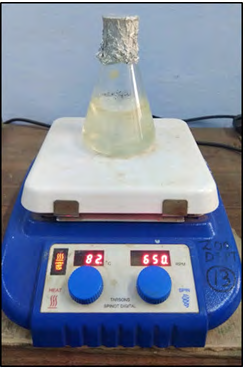
Figure S1: Heating process of plant extract.
Synthesis of Zinc oxide Nanoparticle
50 ml of the prepared 10 % aqueous gel extract was heated at 80oC for 20 minuteson a magnetic stirrer-cum hot plate. To the extract, 0.25 M Zinc nitrate solution was added using micropipette. The solution was then allowed to cool and stored at room temperature in dark. The solution was light yellowish in appearance after synthesis.
Characterization of the Synthesized Zinc Oxide Nanoparticle
Ultraviolet and visible (UV-Vis) absorption spectroscopy was performed to record the absorption spectra of the nanoparticles within the range and to check whether the solution was in dispersed form or in agglomerated form. The absorption spectra of the diluted sample were recorded in a range between 200 nm-500 nm using UV-Visible spectroscopy on a Shimadzu UV-1800Spectrophotometer. The dried powdered sample was used for the analysis of the XRD spectrum by using D8 Advance Bruker Diffract meter for the identification of the crystalline lattice structure and purity of the synthesized nanoparticles. Particle size was determined by Dynamic Light Scattering technique using Malvern ZS90 instrument. All the characterization procedures were performed in the Chemistry Department of Dayalbagh Educational Institute Agra, India.
Testing The Efficacy Of The Mosquito Larvae
Larvae of Culex quinquefasciatus mosquito were collected from the ponds of Botanical garden of the DEI campus, Agra. Larvae were washed in distilled water and were segregated according to different instars and the assessment of the larvicidal activity of prepared nanoparticles was tested following the standard protocol of the World Health Organization, 2005 [32]. The experiment was set up against 2nd and 3rd instar larvae taking 25 larvae in 100 ml of distilled water in various beakers (Figure S2) kept at room temperature and other optimal environmental conditions in our lab. After that different doses of the synthesized nanoparticles were introduced into the beaker and % mortality was recorded after 24 h and 48 h in each case.
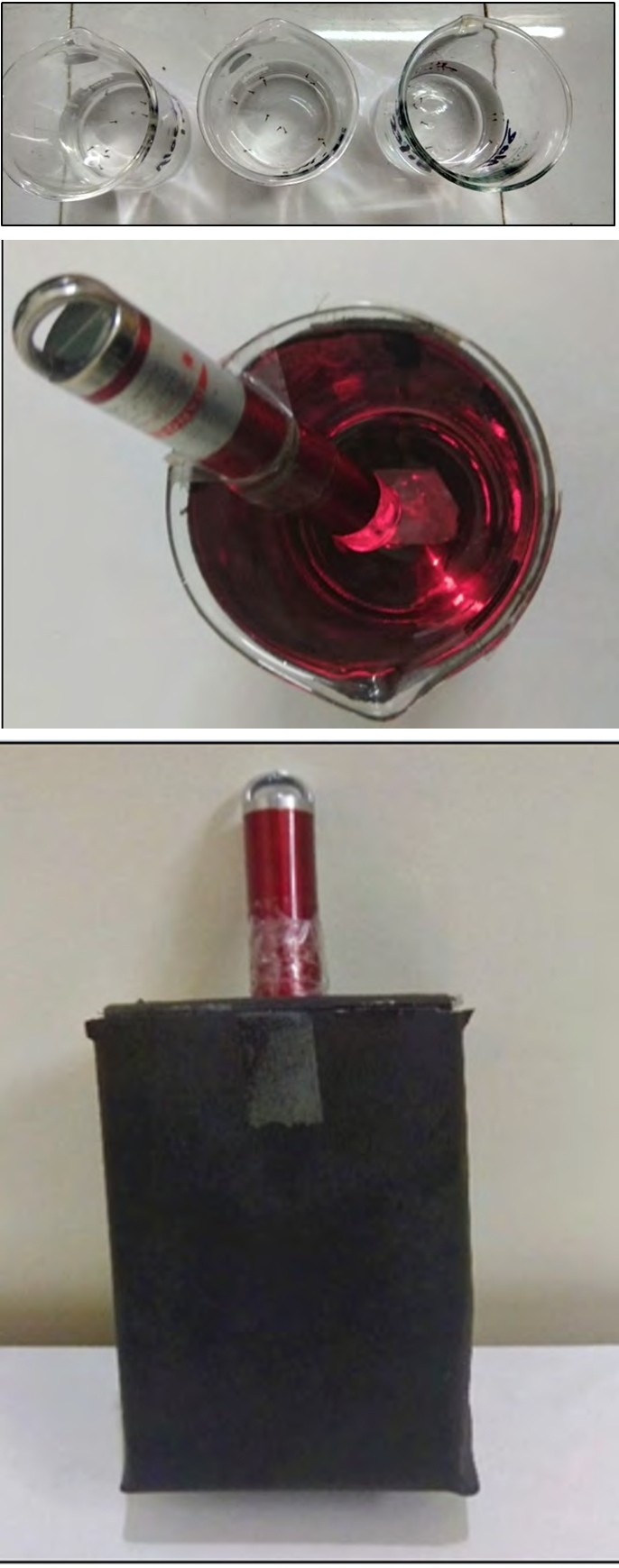
Figure S2: Setup for testing efficacy of Culex larvae.
Testing the laser Radiation Effect and Human Consciousness Phenomena
Synthesized ZnO NPs present in the beaker were kept in a small box covered by a black sheet for obstructing the penetrance of the natural light, after that Laser light having wavelength range 630 nm -680 nm was suspended from the ceiling of the box and was left for few hours (Figure S3), the experiment was conducted at optimal environmental factors in our lab.
Figure S3: Setup for Laser radiation effect without human observation.
Similarly, another set up was kept simultaneously with the previous one but this time synthesized ZnO NPs were directly kept in the beaker which was covered by a black sheet for obstructing the penetrance of the natural light but was kept open from above and the Laser light having wavelength range 630 nm -680 nm was attached to the beaker (Figure S4) so that we can easily observe it with concentrated human eye and focusing and can observe the effect of human consciousness phenomena.
Figure S4: Setup for Laser radiation effect with human observation.
Results
X-Ray Diffraction (XRD) Analysis of Zinc Oxide Nanoparticles
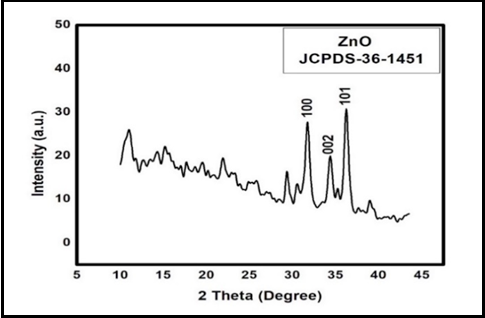
The diffraction pattern (Figure 1) shows that following peaks were observed at 31.79°, 31.42°, 36.52° of 2θ which corresponds to (100), (002), (101) crystal planes respectively and the data was in good coordination with the standard diffraction card of JCPDS - 36 - 1451 for Zinc oxide nanoparticles.
Ultra Violet Visible Spectroscopy (UV-Vis Spectroscopy) Of Zinc Oxide Nanoparticles
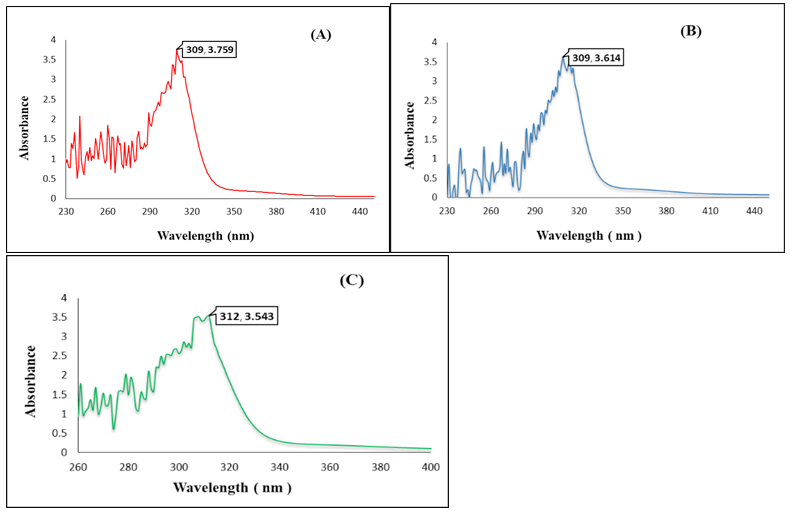
The absorption spectra of the diluted sample were recorded in a range between 200 nm-500 nm. The highest absorbance peak of the normally synthesized nanoparticles was observed at 309 nm (Figure 2A), while there was variation in the absorption spectra when the nanoparticles were kept under Laser irradiation effect without any human observation, highest observation peak was observed at 309 nm (Figure 2B). The absorption spectra varied significantly for the nanoparticles when kept under Laser irradiation effect with human observation and the highest peak was observed at 312 nm (Figure 2C).
Dynamic Light Scattering (DLS) Analysis Of Zinc Oxide Nanoparticles
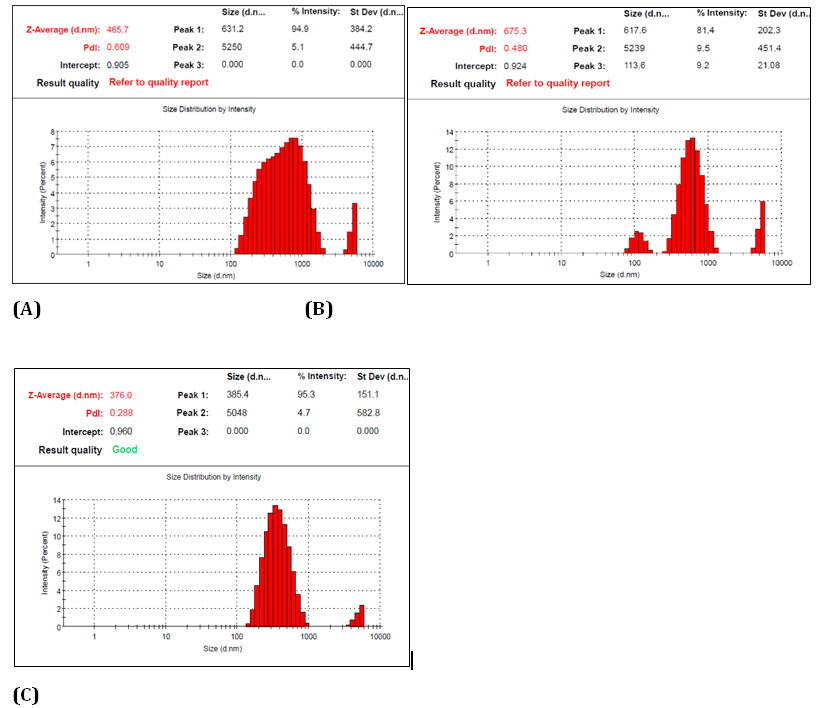
The average particle size of ZnO nanoparticles was 465.7 nm (Figure 3A) and also the intensity was high throughout the scanning from which we can infer that the nanoparticles were present in the highly agglomerated form. It was observed that after Laser irradiation effect without any human observation average particle size of the nanoparticles increased i.e. 675.3 nm and the graph recorded was also discontinuous (Figure 3B) but it was observed that the average particle size after Laser irradiation effect in human observation decreased i.e. 376 nm (Figure 3C), from this observation we can infer that human consciousness/ brain waves phenomena with cumulative effect of Laser irradiation can change the physical and geometrical properties of the nanoparticles. The symmetrical nanoparticle synthesis happening due to brain waves of consciousness which are very subtle but found effective in altering the geometry of ZnO nanoparticles.
Bioassay and Data analysis
The obtained toxicity data was tabulated in MS Excel and average mortality was calculated. Statistical technique regarding the estimation of % mortality, Probit of kill and LC90 were calculated by using Probit analysis and Finney’s table [24].
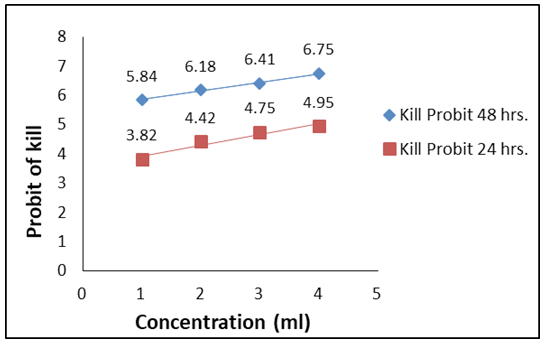
A comparative probit regression graph was generated for bioassay result after 24h and 48h of exposure (Figure 4). Probit equations were generated from the data, % mortality calculated was 48% and 96% at 24 h and 48 h for 3 ml dose concentration and LC90value was estimated at 2.44 of test concentrations of ZnO NPs after 48h. The coefficient of determination (R2) was 0.994 and 0.944 for 24h and 48h respectively which indicated the reliability of data and the high fitness of regression line for the obtained data on the plot (Tables 1&2).
| Concentration of synthesized ZnO nanoparticles | % Mortality (24h) | % Mortality (48h) | Probit of kill (24h) | Probit of kill (48h) |
|---|---|---|---|---|
| 0.5 ml | 12% | 80% | 3.82 | 5.84 |
| 1 ml | 28% | 88% | 4.42 | 6.18 |
| 2 ml | 40% | 92% | 4.75 | 6.41 |
| 3 ml | 48% | 96% | 4.95 | 6.75 |
Table 1: Data of conc. of ZnO NPs and % mortality after 24 h and 48 hours.
| % Mortality after Probit equation | 24 hrs. | 48 hrs. |
|---|---|---|
| ( y = a + bx ) R2 | y = 0.372 x + 3.55 | y = 0.296 x + 5.55 |
| 0.9945 | 0.9441 |
Table 2: Data of Probit equation and R2 values after 24 h and 48 hours.
Discussion
While conducting this investigation we observed that Aloe vera synthesized ZnO NPs shows better efficacy at low concentrations which can be due to the smaller geometry and size of nanoparticle which is able to transport across the cuticle of the mosquito larvae.
From the characterization point of ZnO nanoparticles, we observed that the absorption spectra of UV-Vis Spectroscopy for all setups varied, hence from the results we can infer that the variation can be because of laser effect with and without human observation, by which we can conclude that laser and human consciousness may have affected the geometry of the ZnO NPs. XRD analysis of ZnO NPs was validated from the standard diffraction card no. JCPDS-36-1451, hence we can infer about the purity of ZnO NPs. The variation in the average particle size was analyzed by the DLS technique and from the results we can infer that the size of the nanoparticles could have increased due to internal stress and defects after laser effect without human observation and the reduction in size could be because of the human focusing and the energy radiated while observing with concentrated human eye and could also be possible because of exothermic reaction taking place in the medium itself.
The difference in the results due to human interference can be due to subtler consciousness phenomenon, which is being originated at a subtle energy level (i.e. at Planck’s level) however, this outcome at nano level can be the cumulative effect. The role of consciousness as suggested by Nikola Tesla, et al. [25] to study the non-physical phenomena and that it will make progress in one decade, although in all previous centuries of its existence, this was in terms of energy, frequency, and vibrations. Also, Einstein has indicated that there is “spooky action at a distance” [26, 27] and there are also other significant findings indicating the role of human consciousness which perhaps work at Planck’s level (10-35).
Conclusion
The modern scientific studies have proved that human consciousness can affect the behavior of human beings however, no such studies are available how could it affect nano synthesis? Therefore study conducted will facilitate new divergence to this science and could be a milestone in this direction warranting more detailed study [28]. Theories of Quantum Mechanics observed where the entanglement of the observer’s mind is essential for giving reality to the probability waves in nature [29]. This can provide promising physical explanation of consciousness. We, therefore report here for the scientific community to see the role of subtler energy of human consciousness in nano synthesis.
Acknowledgment
We sincerely acknowledge Prof P. S. Satsangi Sahab, Chairman, of Advisory Committee on Education, Dayalbagh Educational Institute (DEI), Prof. P.K. Kalra, Director, DEI for providing support and encouragements for the work. We wish to thank Prof. Sahab Dass, Dept. of Chemistry, Dayalbagh Educational Institute, for providing UV-Vis Spectroscopy, XRD and DLS facilities. We also thank Miss Shweta Yadav and Miss Savy P. Minal for their relevant support and help during the study.
References
-
Al Dhabi N, ValanArasu M (2018) Environmentally- Friendly Green Approach for the Production of Zinc Oxide Nanoparticles and Their Anti-Fungal, Ovicidal and Larvicidal Properties. Nanomaterials 8(7): 500.
-
Farooq WA, Ali SM, Tawfik W, Fatehmulla A, Aslam M, et al. (2014) Influence of laser irradiation on the optical properties of nano-sized powder of metal oxide. Russian Journal of Physical Chemistry A 88(13): 2446-2450.
-
Soni N, Prakash S (2012) Fungal-mediated nano silver: an effective adulticide against mosquito. Parasitology research 111(5): 2091-2098.
-
Soni N, Prakash S (2012) Entomopathogenic fungus generated Nanoparticles for enhancement of efficacy in Culex quinquefasciatus and Anopheles stephensi. Asian Pacific Journal of Tropical Disease 2: S356-S361.
-
Soni N, Prakash S (2012) Efficacy of fungus mediated silver and gold nanoparticles against _Aedesaegypti_ larvae. Parasitology research 110(1): 175-184.
-
Soni N, Prakash S (2013) Possible mosquito control by silver nanoparticles synthesized by soil fungus (Aspergillusniger 2587). Adv Nanoparticles 2_:_ 125-132.
-
Soni N, Prakash S (2014) Microbial synthesis of spherical nanosilver and nanogold for mosquito control. Annals of microbiology 64(3): 1099-1111.
-
Soni N, Prakash S (2015) Antimicrobial and mosquitocidal activity of microbial synthesized silver nanoparticles. Parasitology research 114(3): 1023-1030.
-
Soni N, Prakash S (2015) Different geometrical AgNPs for vector control and their added value of antibacterial activity. J Parasitol Photon 105: 232-243.
-
Minal SP, Prakash S (2016) Cu-Zn and Ag-Cu bimetallic nanoparticles as larvicide to control malaria parasite vector: A comparative analysis. In Humanitarian Technology Conference (R10-HTC), pp: 1-6.
-
Minal SP, Prakash S (2018) Characterization and Nano- Efficacy Study of Palladium Nanoparticles against Larvae of Anopheles stephensi (Liston). International Journal of Advanced Engineering and Nano Technology 3(10): 1-5.
-
Yadav S, Prakash S (2018) Effect of LASER on the Synthesis of Gold Nanoparticles with Reference to Geometries. Advances in Nanoparticles 7: 69-76.
-
Chaturvedi DK, Prakash S (2016) Role of Electric and Magnetic Energy Emission in Intra and Interspecies Interaction in Microbes_AJRC.
-
Chaturvedi DK, Prakash S (2016) The Consciousness in Mosquitoes. Journal of Mosquito Research, pp: 6.
-
Richa (2017) Study on possible measurement of Consciousness in microbes, mosquitoes, animals and man with special reference to Bio field. Dayalbagh Educational Institute, pp: 1-6.
-
Richa DK, Chaturvedi SP (2013) Consciousness Measurement Problem in Man, Mosquitoes and Microbes: A Review. Proceedings of the Toward a science of consciousness, TSC, pp: 3-9.
-
Richa DK, Chaturvedi S, Prakash (2014) The Possible Consciousness. In: Proceedings of the Toward a science of consciousness, TSC 2014. Arizona, USA.
-
Richa DK Chaturvedi, Prakash S (2015) Bio electromagnetics in microbes and mosquitoes: a comparative study with special reference to biofield. In: Proceedings of the toward a science of consciousness, TSC 2015. Helsinki, Finland.
-
Prakash S (2017) The Science Of Quantum Soul And A New Theory Of Consciousness Study? The 24th annual conference on ‘The science of consciousness’ (TSC), June 5-10, 2017. La Jolla, California, USA, pp: 260.
-
Prakash S (2017) Microcosm & Macrocosm-A Relationship Study On Quantum Consciousness. The 24th annual conference on ‘The science of consciousness’ (TSC), June 5-10, La Jolla, California, pp: 261.
-
Soam Prakash (2017) An Analysis of Bio field As a Parameter O Wellness and Consciousness: A Squid Based Meg Study’. The 24th annual conference on ‘The science of consciousness’ (TSC), La Jolla, California, USA, pp: 113.
-
Prakash S (2018) Parallel Universe are Quantum States of Big Bang at Macrocosm? A Validation of Hamer off- Penrose Tubulin Consciousness Model at Microcosm’. The 25th annual conference on ‘The science of consciousness’ (TSC), The University of Arizona- Centre for consciousness studies, USA, pp: 216.
-
Radin D, Michel L, Galdamez K, Wendland P, Rickenbach R, et al. (2012) Consciousness and the double- slit interference pattern: Six experiments. Physics Essays 25(2).
-
Finney D J, Tattersfield F (1952) Probit analysis. 2nd (Edn.), Cambridge University Press; Cambridge, USA, pp: 318.
-
Raković D (2006) Tesla and quantum-coherent states of consciousness: Case study for understanding quantum- holographic nature of creativity. Proc. Ideas of Nikola Tesla, ASA RS, Banja Luka.
-
Einstein A, Podolsky B, Rosen N (1935) Can quantum- mechanical description of physical reality be considered complete? Physical review 47(10): 777.
-
Salart D, Baas A, Branciard C, Gisin N, Zbinden H (2008) Testing the speed of spooky action at a distance. Nature 454(7206): 861.
-
Satsangi PS, Hameroff S (2016) Consciousness: Integrating Eastern and Western Perspectives. ND: New Age Books, pp: 282-311.
-
Shanker A, Popov K, Madsen C, Girish N (2015) Wave Mechanics of the Mind-C-7, TSC, 2015, Arizona, USA.
-
Parthasarathy G, Saroja M, Venkatachalam M (2017) Bio- synthesized nano-formulation of Zinc oxide-_Aloe vera_ and to study their characterization and antibacterial activities against multiple pathogens. International Journal of Pharmaceutical Sciences and Research 8(2): 900.
-
Sangeetha G, Rajeshwari S, Venckatesh R (2011) Green synthesis of Zinc oxide Nanoparticles by _Aloebarbadensis_ miller leaf extract: Structure and optical properties. Materials Research Bulletin 46(12): 2560- 2566.
-
World Health Organization (2005) _Guidelines for_ _laboratory and field testing of mosquito larvicides_ (No. WHO/CDS/WHOPES/GCDPP/2005.13). World Health Organization, Geneva.
- California Red-Legged Frog and Non-Listed Amphibians Response to Non-Native Fish Removal
- Industrial Standardization of the Bio-OS: Algorithmic Codification of Resilience Engineering Guidelines and Version V8 Architecture
- Climate Variability and the Sustainability of Snail Farming in Nigeria: Past Trends, Present Challenges and Potential Outlook
- The Evaluation of the Surveillance System of Anthrax in Gilgit-Baltistan, Pakistan, 2018
- Natural Decline to Extinction of A New Zealand Rabbit Population
- Mitochondrial Bio-Logistics: Steering Co-Enzyme Q10 and Lycopene Synergies within the Science 4.0 Bio-OS Framework