
New Data on the Chronological and Chorological Composition, Structure, Distribution, and Biology of the Conservation of Algerian Carnivora (Mammalia)
New data on the chronological and chorological composition, structure, distribution, and biology of the conservation of Algerian Carnivora (Mammalia). Information on the status of species at a regional scale is essential for effective conservation planning. Algeria, the largest country in Africa in terms of surface area and with a large opening onto the Mediterranean Sea, boasts a mammalian heritage of 111 species, of which only 19 species, or 17.11%, are carnivores, with the majority facing threats. In this present work, we offer a global vision of the country's carnivore heritage, with a comparison of its structure and composition according to a chronological evolution of contacts established during a historical period (18th century–2017) and the most recent contacts (2017–2024). A chorological analysis with a distribution map with old and new locations throughout the territory is carried out for each species, with mention of the state of conservation and heritage status. Our results show that there is a significant level of decreasing or unknown numbers in 12 of the 19 carnivore species in Algeria, representing 63.14 percent of the total. The conservation status based on the IUCN Red List criteria at international and regional (Mediterranean) levels shows that there are no CR (critically endangered) species at the global level, while four species are at the Mediterranean level. Endangered species (EN) are represented at the Mediterranean level by Acinonyx jubatus ssp. Heckii. There are three vulnerable species (VU) at the global level and a single species at the Mediterranean level; two are near threatened species (NT) at the global level and three at the Mediterranean level; and the species that are least concern (LC) at the global level are numbers 14 at the global level and 10 at the Mediterranean level. All these analyses give us an overview of demographic trends and parameters for appropriate management and allow us to identify gaps in knowledge and priorities for research.
Ahmim M¹*, Ziane M² and Harzllah M³
¹Department of Environmental Biological Sciences, University of Bejaia, Algeria ²Department of Chemical Engineering, National Polytechnic School of Algiers, Algeria ³Algerian Wildlife Watchers Association, Algeria Keywords: Carnivora; Algeria; Historical Data; Recent Data; Conservation
Abbreviations
VU: Vulnerable Species; LC: Least Concern; NT: Near Threatened; EN: Endangered Species; CR: Critically Endangered; WWA: World of Wildlife in Algeria; GBIF: Global Biodiversity Information Facility; Mol: Map of Life; ICT: Information and Communication Technologies.
Introduction
There are 5,487 species of mammals on earth, including 4,943 terrestrial, 1,447 flying (all bats), and 124 marine, of which 1,219 are threatened with extinction or have recently disappeared, and more precisely, more than a quarter (26.2%) are threatened [1]. For Burgin CJ, et al. [2] there are 305 species of carnivores existing in the world and they are classified into 16 families and Fernández- Sepúlveda J, et al. [3] state that 290 of these species are the most threatened among all mammals in general (26.9% ) and have a significantly higher proportion of species in decline (48.3%) and according to Bencatel J, et al. [4] citing different sources, they constitute a charismatic group which well illustrates the relevance of collecting precise data on their distribution and their situation because they are important both at the species level and at the community level, and they also have an important effect on ecosystems both as functional regulators (e.g. seed dispersal, prey regulation and providers of various ecosystem services (e.g. tourist attraction, intangible existence values), furthermore, they are often species of extreme concern due to both conservation concerns and the potential for conflict with humans [5, 6, 7, 8]. It is for this purpose that they are the subject of numerous management and/or conservation strategies, which must be informed by parameters such as population trends and changes in the areas of distribution [9, 10, 11]. In this context, the combined use of historical and current chronological and chorological distribution data provides the opportunity to study a wide range of ecological characteristics in these species, such as range expansion and/or contraction and distribution and the times and rates of spread of invasive or non-invasive species [12, 13, 14, 15, 16, 17]. Cardillo M, et al. [18] have previously reported that some species are likely to move toward extinction more quickly than others by predicting extinction risks based on their biology. They argued that a precautionary approach to conservation is necessary to protect species that may not be threatened now but could become so in the near future. Loyola RD, et al. [19] also included evolutionary and ecological traits of species in different prioritization scenarios for neotropical mammals and were able to indicate regions less affected today due to human activities while still harboring the most vulnerable species. The order Carnivora includes several major conservation icons and many other flagship, umbrella, keystone, and indicator species [20, 21]. Their regional extinction could produce marked alterations in the composition and structure of communities as part of a more general defaunation affecting mesopredators, omnivores, and herbivores, which can even modify the dynamics of plant populations on a regional scale [22, 23]. In the Mediterranean region, there are 38 species of carnivores, of which 2 are endemic and
33.33% are threatened and species richness was positively associated with large areas of cover of trees, shrubs, and rocks, which constitute the typical structure of scrublands, which are a typical habitat in the Mediterranean region and which provide the best shelter area available, a key element for the conservation of carnivores in the region [24]. Mangas JG, et al. [25] found that carnivores are umbrella species, and species richness was positively associated. Algeria’s carnivore heritage is represented by 19 species out of the 111 species of mammals that live there, i.e., a rate of 17.11%, which is relatively low, and of which 5 are threatened (45.45%), and they belong to 7 families and 16 genera. Historical and current chronological and chorological distribution data show that the vast majority of species are seeing their numbers decreasing and that we should be guided towards the adoption of better protection and monitoring methods to better protect them, because conservation measures more adequate than those currently applied are mandatory and more than necessary and they could offer the opportunity to study a wider range of ecological characteristics in these species, and the objective of our present work is to present the composition and structure historical and recent history of species and population as well as the heritage status of species at the global and regional level to have an idea of the qualitative and quantitative evolution of the different species for better protection
Material and Methods
Study Area
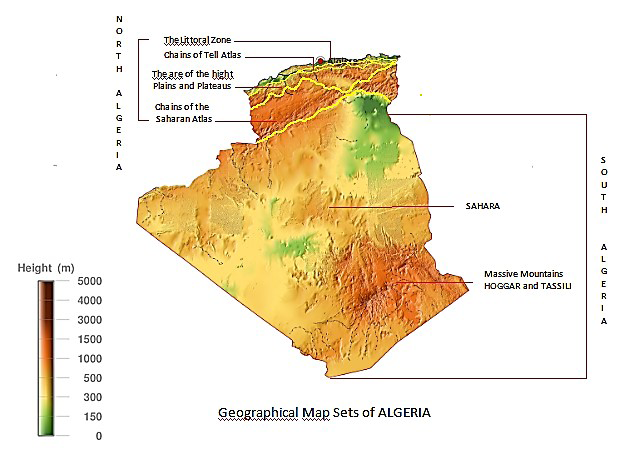
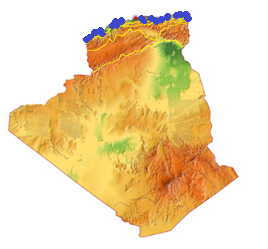
Algeria, the largest country in Africa in terms of surface area with its 2,381,741 km2 has a coastline of 2,148 kilometers along the Mediterranean Sea and is administratively divided into 58 wilayas, or departments. It is made up of two distinct geographic regions: northern Algeria and southern Algeria. Northern Algeria is divided into seven ecoregions: the coastal zone, the eastern Tell, the central Tell, the western Tell, the Tellian Atlas, the highlands, and the Saharan Atlas, and southern Algeria is divided into seven ecoregions [26]: the xéric steppe and woods of the northern Sahara; the Western Sahara Desert; the Eastern Sahara Desert; the Southern Sahara Desert; the savannah Saharan acacia trees; the Eric montane forests of Western Sahara; and the flooded Saharan lymphatic grasslands and savannahs. The coastal zone is characterized by 2,148 kilometers of coastline with 32 islands and 208 islets. It is naturally bordered by the Outed Kiss in the Wilaya of Tlemcen to the west and the Oued Souani Es Sebaa in the Wilaya of El Tarf to the east [27, 28]. Ecologically, the steppe regions serve as a buffer between the north and the Sahara [29] (Figure 1).
Data Compilation
To get an idea of the evolution of the carnivorous heritage chronologically and chorologically, we gave the number of old records (since the 18th century until 2017) and new records (from 2017 to 2024) for each species in order to have a global idea of their chronological evolution, and we have mentioned all the old and new contacts in the 58 departments that make up Algeria. We carried out an in-depth review of the scientific literature available on carnivores, and we did not think in terms of the number of individuals, but in terms of the number of times the species has been observed and where it has not been observed or not been observed.
The data for this study come from our own work and from various bibliographical references, including specialist works, field research, and information collected from colleagues and acquaintances. Additionally, valuable contributions from social media platforms like Facebook have contributed significantly to this work.
This highlights the crucial role of ICT (information and communication technologies) in the natural and life sciences. A key bibliographic source was used, that of Kowalski K, et al. [30] who wrote the first work, which covers all directly reported mammals of Algeria as well as data from raptor pellets or the remains of mammals that they had to analyze. Other sources come from museum archives and the work of Ahmim M [31]. From 2017 to 2024, we collected the new data from a variety of sources, including recent publications and work, our fieldwork, and social media. Regarding the data obtained from social networks, we had to carefully select, verify, and extract reliable data from different groups of wildlife photographers, including the well-structured WWA group (World of Wildlife in Algeria) and the Save the Wildlife Group in Algeria. A significant innovation is the use of the Moll portal (Map of Life, https://mol.org/), which offers updated information on the distribution of species by region based on data from GBIF (Global Biodiversity Information Facility). From which we extracted all the data relating to wild mammals in Algeria from 2017 to 2024. The works of Haltenorth TH, et al. [32, 33] as well as Aulagnier S, et al. [34] were used to present the general characteristics of the different species studied.
Cartography
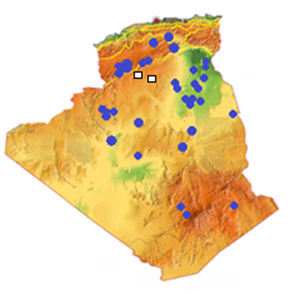
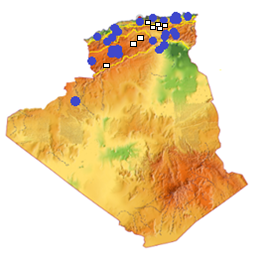
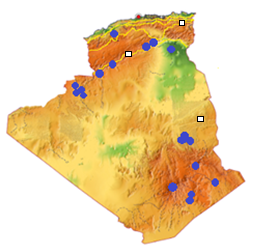
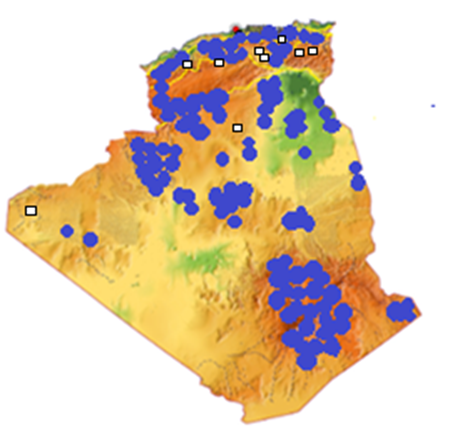
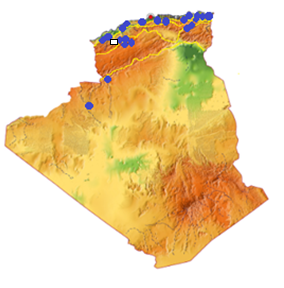
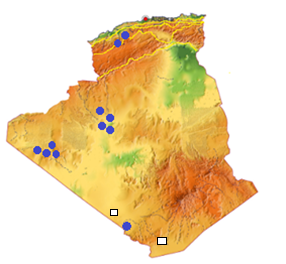
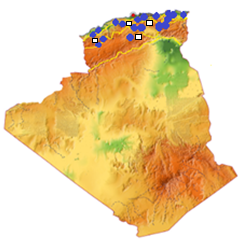
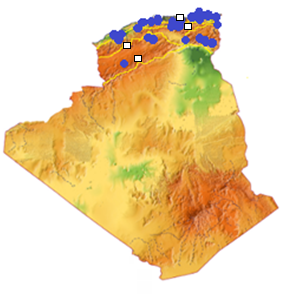
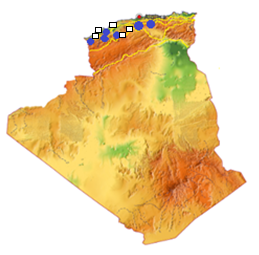
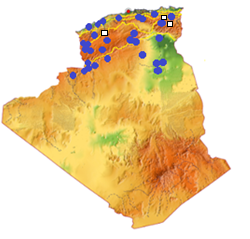
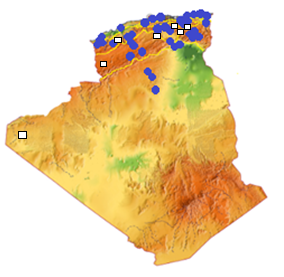
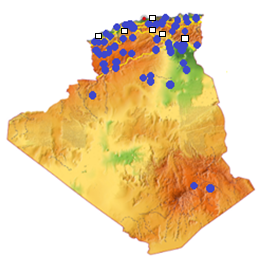
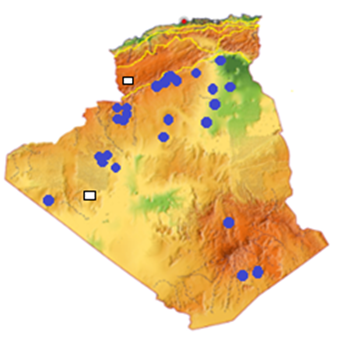
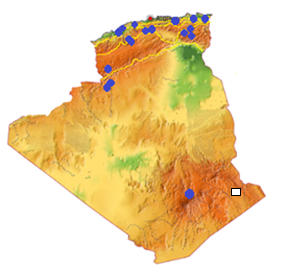
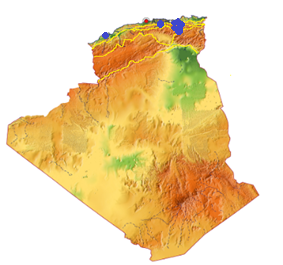
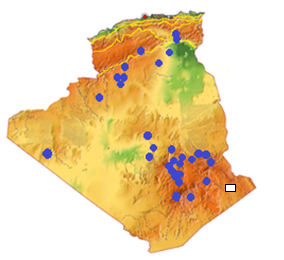
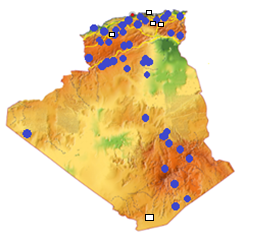
All species inventoried and described have been represented on a map, which gives chronological and chorological information on each species. The map contains the historical and updated distribution of each species. The historical distribution refers to observations made from the 18th century until 2017 and is represented by a circle on the map established by Ahmim M [35], and the updated data (from 2017 to 2024) are represented by squares. On the chorological level, each circle or square represents the place where the species was contacted in the 58 departments of the Algerian territory.
Data Analysis
We used ecological composition indices such as total richness (S) which corresponds to the total number of species making up a population; The frequency of occurrence (Constancy) F: It represents the ratio of appearance of a given species pi taken into consideration to the total number of records P: F(%) = pi × 100/ P (F(%): frequency of occurrence; pi: number of records containing the species i; P: total number of records. A species is said to be: Omipresent if F = 100%; Constant if 75% ≤ F ˂ 100%; Regular if 50% ≤ F ˂ 75%; Incidental if 25% ≤ F ˂ 50%. For the biology of conservation we had to consult the IUCN red List of threatened species; http://www.iucnredlist.org/; The criteria we used for our work come from version 16 of March
2024 [36]. Conservation and sustainable development site, particularly for Saharan species http://www.cons-dev. org/, DORIS underwater flora: http://doris.ffessm.fr/, GBIF: https://www.gbif.org/fr/country/dz/ and Mol: Map of Life : https://mol.org/
Results
Richness
The Algerian carnivore heritage is represented by a richness estimated at 19 species, which are divided into 7 families: the felids with 6 species (31.57%), the mustelidae with 5 species (26.31%), the canids with 4 species (21.05%), and Viverridae, Herpestidae, Hyanidae, and Phocidae with 1 species (5.26%). There is only one fissiped carnivorous species: the monk seal, Monachus monachus (Table 1).
| Family | Species | Vernacular name |
| Canidae | Canis anthus | The African Golden wolf |
| Canidae | Fennecus zerda | The Fennec fox |
| Canidae | Vulpes rueppelli | The Rüppel's fox |
| Canidae | Vulpes vulpes | The Red fox |
| Mustelidae | Ictonyx libycus | The Libyan Striped Weasel |
| Mustelidae | Mustela nivalis | The Least Weasel |
| Mustelidae | Lutra lutra | The Eurasian Otter |
| Mustelidae | Mellivora capensis | The Honey Badger |
| Mustelidae | Mustela putorius furo | The Domestic ferret |
| Viverridae | Genetta genett | The Common Genet |
| Herpestidae | Herpestes ichneumon | The Egyptian Mongoose |
| Hyaenidae | Hyaena hyaena | The Striped Hyena |
| Felidae | Caracal caracal | The Caracal |
| Felidae | Acinonyx jubatus heckii | The Cheetah |
| Felidae | Felis margarita | The Sand cat |
| Felidae | Felis libya | The Wild cat |
| Felidae | Leptailurus serval | The Serval |
| Felidae | Panthera pardus | The Leopard |
| Phocidae | Monachus monachus | The Mediterranean Monk Seal |
Table 1: Total carnivore species richness.
Data on the Chronological Records Evolution
The results of the evolution of carnivore sightings show that there have been a total of 1095 mentions or contacts from different localities, divided into 768 historical records (67.39%) and 357 recent records (32.60%) (Table 2).
| Species | Number of records | |||
|---|---|---|---|---|
| Historical records | Recent records | Total | ||
| Canidae | Canis anthus | 96 | 76 | 172 |
| Canidae | Fennecus zerda | 40 | 7 | 47 |
| Canidae | Vulpes rueppelli | 12 | 12 | 24 |
| Canidae | Vulpes vulpes | 34 | 82 | 116 |
| Total Canidae | 182 | 177 | 359 | |
| Mustelidae | Ictonyx libycus | 38 | 12 | 50 |
| Mustelidae | Mustela nivalis | 28 | 6 | 34 |
| Mustelidae | Lutra lutra | 33 | 5 | 38 |
| Mustelidae | Mellivora capensis | 11 | 3 | 14 |
| Mustelidae | Mustela putorius furo | 1 | 7 | 8 |
| Total Mustelidae | 111 | 33 | 144 | |
| Viverridae | Genetta genett | 70 | 29 | 99 |
| Total Viverridae | 70 | 29 | 99 | |
| Herpestidae | Herpestes ichneumon | 49 | 19 | 68 |
| Total Herpestidae | 49 | 19 | 68 | |
| Hyaenidae | Hyaena hyaena | 89 | 56 | 145 |
| Total Hyeanidae | 89 | 56 | 145 | |
| Felidae | Caracal caracal | 48 | 12 | 60 |
| Felidae | Acinonyx jubatus heckii | 34 | 4 | 38 |
| Felidae | Felis margarita | 19 | 8 | 27 |
| Felidae | Felis libyca | 39 | 16 | 55 |
| Felidae | Leptailurus serval | 19 | 2 | 21 |
| Felidae | Panthera pardus | 24 | 1 | 25 |
| Total Felidae | 183 | 43 | 226 | |
| Phocidae | Monachus monachus | 54 | 0 | 54 |
| Total Phocidae | 54 | 0 | - | |
| TOTAL | 738 | 357 | 1095 | |
Table 2: Data on the evolution of carnivore sightings in Algeria.
Frequency of Occurrence by Family
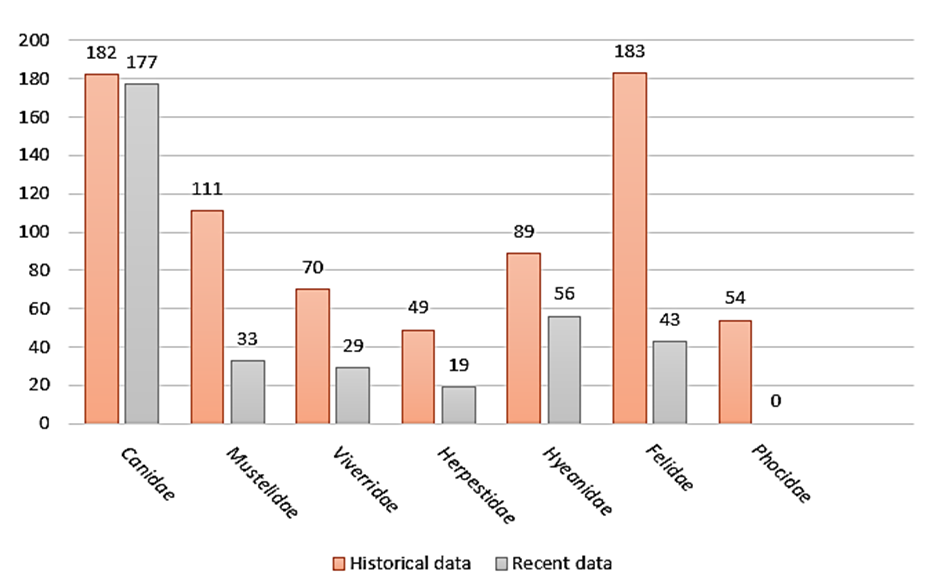
The frequency of occurrence by family shows us that there is a big difference between the number of observations during the historical period and the recent period (Table 3 & Figure 2).
| Frequency of occurrence F(%) | ||||||
|---|---|---|---|---|---|---|
| Family | pi Historical | F (%) Historical | Pi Recent | F(%) Recent | Total | F (%) Total |
| Canidae | 182 | 24.64 | 177 | 16.16 | 359 | 32.78 |
| Mustelidae | 111 | 15.04 | 33 | 9.24 | 144 | 13.15 |
| Viverridae | 70 | 9.48 | 29 | 8.12 | 99 | 9.04 |
| Herpestidae | 49 | 6.63 | 19 | 5.32 | 68 | 6.21 |
| Hyeanidae | 89 | 12.05 | 56 | 15.68 | 145 | 13.24 |
| Felidae | 183 | 24.79 | 43 | 12.04 | 226 | 20.63 |
| Phocidae | 54 | 7.31 | 0 | 0 | 54 | 4.93 |
| Total (N) | 738 | 100 | 357 | 100 | 1095 | 100 |
Table 3: Frequency of occurrence by family.
| for header rows | for data cells | Frequency of occurrence F(%) | |||||||
|---|---|---|---|---|---|---|---|---|---|
| Family | Species | Frequency of occurrence F(%) | |||||||
| pi Historical | F (%) Historical | pi Recent | F(%) Recent | Total | F (%) Total | ||||
| Family | Species | Canis anthus | 96 | 13 | 76 | 21.28 | 172 | 15.7 | Incidental |
| Family | Species | Fennecus zerda | 40 | 5.42 | 7 | 1.96 | 47 | 4.29 | Incidental |
| Mustelidae | Vulpes rueppelli | 12 | 1.62 | 12 | 3.36 | 24 | 2.19 | Incidental | |
| Mustelidae | Vulpes vulpes | 34 | 4.6 | 82 | 22.96 | 116 | 10.59 | Incidental | |
| Mustelidae | Ictonyx libycus | 38 | 5.14 | 12 | 3.36 | 50 | 4.56 | Incidental | |
| Mustelidae | Mustela nivalis | 28 | 3.79 | 6 | 1.68 | 34 | 3.1 | Incidental | |
| Mustelidae | Lutra lutra | 33 | 4.47 | 5 | 1.4 | 38 | 3.47 | Incidental | |
| Mustela capensis | Mellivora capensis | 11 | 1.49 | 3 | 0.84 | 14 | 1.27 | Incidental | |
| Mustela capensis | Mustela putorius furo | 1 | 0.13 | 7 | 1.96 | 8 | 0.73 | Incidental | |
| Viverridae | Genetta genett | 70 | 9.48 | 29 | 8.12 | 99 | 9.04 | Incidental | |
| Herpestidae | Herpestes ichneumon | 49 | 6.36 | 19 | 5.32 | 68 | 6.21 | Incidental | |
| Hyaenidae | Hyaena hyaena | 89 | 12.05 | 56 | 15.68 | 145 | 13.24 | Incidental | |
| Felidae | Caracal caracal | 48 | 6.5 | 12 | 3.36 | 60 | 5.47 | Incidental | |
| Felidae | Acinonyx jubatus heckii | 34 | 4.6 | 4 | 1.12 | 38 | 3.47 | Incidental | |
| Felidae | Felis margarita | 19 | 2.57 | 8 | 2.24 | 27 | 2.46 | Incidental | |
| Felidae | Felis libyca | 39 | 5.28 | 16 | 4.48 | 55 | 5.02 | Incidental | |
| Felidae | Leptailurus serval | 19 | 2.57 | 2 | 0.56 | 21 | 1.91 | Incidental | |
| Felidae | Panthera pardus | 24 | 3.25 | 1 | 0.28 | 25 | 2.28 | Incidental | |
| Phocidae | Monachus monachus | 54 | 7.31 | 0 | 0 | 54 | 4.93 | Incidental | |
| Total (N) | 738 | 100 | 357 | 100 | 1095 | ||||
Table 4: Frequency of occurrence by species.
Chorological Analysis by Species
The chorological analysis that corresponds to the distribution of different species by administrative department of the country gives us results that can guide us on the presence-absence of a species and this to better identify the regions that require better attention by wildlife managers for any given species. The results of this analysis are given in Table 5.
| Ca | Fz | Vv | Vr | Ll | Mc | Mn | Mpf | Il | Gg | Hi | Fm | Ls | Fl | Cc | Pp | Ajh | Hh | Mm | |
|---|---|---|---|---|---|---|---|---|---|---|---|---|---|---|---|---|---|---|---|
| 1 | =+ | = | = | + | =+ | ||||||||||||||
| 2 | = | = | = | + | = | ||||||||||||||
| 3 | = | + | + | =+ | =+ | =+ | =+ | =+ | = | =+ | |||||||||
| 4 | + | =+ | = | ||||||||||||||||
| 5 | =+ | =+ | + | + | =+ | =+ | |||||||||||||
| 6 | =+ | =+ | =+ | =+ | =+ | = | = | + | = | =+ | = | ||||||||
| 7 | = | = | + | = | =+ | = | =+ | ||||||||||||
| 8 | =+ | = | =+ | =+ | =+ | = | =+ | =+ | =+ | =+ | + | = | = | =+ | |||||
| 9 | =+ | = | = | = | = | =+ | = | = | = | =+ | |||||||||
| 10 | =+ | + | =+ | = | = | = | =+ | ||||||||||||
| 11 | =+ | =+ | =+ | =+ | = | =+ | =+ | ||||||||||||
| 12 | = | = | |||||||||||||||||
| 13 | =+ | =+ | + | = | = | = | + | = | |||||||||||
| 14 | =+ | =+ | =+ | + | =+ | =+ | =+ | + | =+ | =+ | |||||||||
| 15 | = | =+ | = | = | = | = | = | = | = | = | = | ||||||||
| 16 | = | = | =+ | = | = | =+ | =+ | = | = | = | = | ||||||||
| 17 | =+ | + | =+ | + | + | = | =+ | =+ | |||||||||||
| 18 | =+ | = | = | = | + | =+ | = | = | = | ||||||||||
| 19 | =+ | + | = | + | = | =+ | |||||||||||||
| 20 | =+ | =+ | + | + | + | + | = | + | =+ | ||||||||||
| 21 | = | =+ | =+ | = | =+ | = | =+ | = | |||||||||||
| 22 | = | + | = | =+ | =+ | ||||||||||||||
| 23 | =+ | = | = | = | = | = | = | = | = | = | |||||||||
| 24 | =+ | = | = | = | = | = | = | = | = | = | |||||||||
| 25 | =+ | + | = | = | = | =+ | |||||||||||||
| 26 | = | = | =+ | ||||||||||||||||
| 27 | = | = | = | + | = | = | = | ||||||||||||
| 28 | + | = | = | + | = | + | = | = | = | ||||||||||
| 29 | = | = | = | ||||||||||||||||
| 30 | =+ | = | |||||||||||||||||
| 31 | = | = | = | =+ | = | = | = | =+ | = | = | = | = | = | ||||||
| 32 | =+ | + | + | =+ | =+ | = | + | =+ | + | =+ | |||||||||
| 33 | =+ | =+ | + | = | =+ | = | =+ | ||||||||||||
| 34 | + | + | + | =+ | + | + | + | ||||||||||||
| 35 | = | = | + | ||||||||||||||||
| 36 | = | = | = | = | = | = | =+ | = | = | = | =+ | = | |||||||
| 37 | + | + | = | = | |||||||||||||||
| 38 | + | = | + | = | = | + | =+ | ||||||||||||
| 39 | = | = | = | = | = | = | |||||||||||||
| 40 | + | = | = | ||||||||||||||||
| 41 | = | = | = | + | |||||||||||||||
| 42 | = | = | = | = | = | =+ | = | = | =+ | ||||||||||
| 43 | + | + | + | ||||||||||||||||
| 44 | = | + | = | =+ | |||||||||||||||
| 45 | =+ | =+ | =+ | + | + | = | = | = | = | ||||||||||
| 46 | + | = | = | + | = | ||||||||||||||
| 47 | + | = | = | = | = | = | = | ||||||||||||
| 48 | + | = | =+ | ||||||||||||||||
| 49 | = | = | |||||||||||||||||
| 50 | + | ||||||||||||||||||
| 51 | |||||||||||||||||||
| 52 | = | = | = | = | |||||||||||||||
| 53 | = | ||||||||||||||||||
| 54 | + | + | |||||||||||||||||
| 55 | = | =+ | = | ||||||||||||||||
| 56 | + | =+ | = | + | |||||||||||||||
| 57 | |||||||||||||||||||
| 58 | = | = |
+ : New location ; = Historical record, =+ : Historical and recent record.. Species ( Ca : Canis anthus ;Fz : Fennecus zerda ;Vv : Vulpes vulpes ;Vr :Vulpes rueppellii ;Ll : Lutra lutra ;Mc : Mellivora capensis ;Mn : Mustela nivalis ;Mpf : Mustela putorius furo ; Il : Ictonyx libica ; Gg : Genetta genett ; Hi : Herpestes ichneumon ; Fm : Felis margarita ; Ls : Leptailurus serval ; Fl : Felis libyca ; Cc : Caracal caracal ; Pp : Panthera pardus ;Ajh : Acinonyx jubatus heckii ; Hh :Hyaena hyaena ; Mm : Monachus monachus ) . Departments ( 01 :Adrar ; 02 : Chlef ; 03 : Laghouat ; 04 :Oum El Bouaghi ; 05 : Batna ; 06 : Béjaïa ; 07 : Biskra ; 08 : Béchar ; 09 : Blida; 10 : Bouira ; 11 :Tamanrasset ; 12 :Tébessa ; 13 :Tlemcen ; 14 : Tiaret ; 15 : Tizi Ouzou ; 16 :Algeirs, 17 :Djelfa; 18 : Jijel ; 19 : Sétif ; 20 : Saïda; 21 : Skikda ; 22 : Sidi Bel Abbès ; 23 : Annaba ; 24 : Guelma ; 25 : Constantine ; 26 : Médéa ; 27 : Mostaganem ; 28 : M’Sila ; 29 : Mascara ; 30 :Ouargla ; 31 : Oran ; 32 :El Bayadh ; 33 : Illizi ; 34 :Bordj Bou Arreridj ; 35: Boumerdès ; 36 : El Tarf ; 37 : Tindouf ; 38 :Tissemsilt ; 39 :El Oued ; 40 : Khenchela ; 41 : Souk Ahras ; 42 :Tipaza ; 43 : Mila ; 44 : Aïn Defla ; 45 :Naâma; 46 : Aïn Témouchent ; 47 :Ghardaïa ; 48 : Relizane ; 49 :Timimoun ; 50 :Bordj Badji Mokhtar ; 51 :Ouled Djellal ; 52 : Béni Abbès ; 53:In Salah ; 54 :In Guezzam ;55 : Touggourt ; 56 :Djanet ; 57 :El M’Ghair ; 58 :El Meniaa.) Table 5: Data on the chorology and chorology analysis of species by administrative department.
Biology of Conservation
We used the IUCN Red List criteria as well as population trends for each species and the results are given in the tables to have a precise idea of the conservation status of the different species at the global level (Table 6) and at the Mediterranean level (Table 7).
| Order | Specis | IUCN Global Status | Population Trend |
|---|---|---|---|
| Carnivora | Monachus monachus | VU | Increasing |
| Carnivora | Acinonyx jubatus ssp heckii | VU | Decreasing |
| Carnivora | Panthera pardus | VU | Unknown |
| Carnivora | Hyaena hyaena | NT | Decreasing |
| Carnivora | Lutra lutra | NT | Decreasing |
| Carnivora | Felis margarita | LC | Unknown |
| Carnivora | Leptailurus serval | LC | Unknown |
| Carnivora | Mellivora capensis | LC | Decreasing |
| Carnivora | Canis anthus | LC | Decreasing |
| Carnivora | Caracal caracal | LC | Unknown |
| Carnivora | Fennecus zerda | LC | Stable |
| Carnivora | Vulpes rueppelli | LC | Stable |
| Carnivora | Vulpes vulpes | LC | Stable |
| Carnivora | Ictonyx libycus | LC | Unknown |
| Carnivora | Mustela nivalis | LC | Stable |
| Carnivora | Mustela putorius furo | LC | Decreasing |
| Carnivora | Genetta genett | LC | Stable |
| Carnivora | Herpestes ichneumon | LC | Stable |
| Carnivora | Felis libyca | LC | Unknown |
| Order | Species | IUCN Regional Status | Population trend |
| Carnivora | Leptailurus serval | CR | Decreasing |
| Carnivora | Panthera pardus | CR | Decreasing |
| Carnivora | Monachus monachus | CR | Decreasing |
| Carnivora | Felis libyca | CR | Unknown |
| Carnivora | Acinonyxjubatus ssp heckii | EN | Stable |
| Carnivora | Hyaena hyaena | VU | Decreasing |
| Carnivora | Lutra lutra | NT | Decreasing |
| Carnivora | Caracal caracal | NT | Unknown |
| Carnivora | Felis margarita | NT | Unknown |
| Carnivora | Mellivora capensis | LC | Decreasing |
| Carnivora | Canis anthus | LC | Decreasing |
| Carnivora | Fennecus zerda | LC | Stable |
| Carnivora | Vulpes rueppelli | LC | Stable |
| Carnivora | Vulpes vulpes | LC | Stable |
| Carnivora | Ictonyxlibycus | LC | Unknown |
| Carnivora | Mustela nivalis | LC | Stable |
| Carnivora | Mustela putorius furo | LC | Decreasing |
| Carnivora | Genetta genett | LC | Stable |
| Carnivora | Herpestes ichneumon | LC | Stable |
Table 6: Data on the chorology and chorology analysis of species by administrative department.
Discussions
The carnivore species heritage of Algeria is relatively low; it is represented by only 19 species out of the 33 that exist in North Africa [35]. In terms of chronological and chorogical sightings, the families in which there were the most mentions were canids (359), felids (226), followed by hyaeanids and mustelids, with 145 (13.24%) and 144 (13.15%) observations, respectively. The least contacted families are the viverrids and the herpestids, with respectively 99 (9.04%) and 68 (6.21%) records, and the phocids are the least contacted family, with 54 (04.93%) records. We can already observe a significant discrepancy between the old and recent records, suggesting a possible cause: Older ones represent 67.39% of the total, and this is due to either sampling effort or to the observation period, which is spread over time since the occupation of Algerian territory by the French from the 18th century until 2017, but this could not be a good reason given that there were fewer means and techniques of observation than what we currently have and that the number of the different species was greater. Recent recordings only represent 32.60%, or more than half of the old ones, and this would suppose that this is due to the period of observations that only extended from 2017 to 2024, but with the technologies of current observations, which are larger and more sophisticated, and also with the deployment of larger naturalist, forester, and scientific observers, and above all with direct and indirect testimonies on social networks that did not exist before. These results allow us to affirm that there has been a decline in numbers during the recent period from 2017 to 2024.
The frequence of occurrence by family shows that during the historical period, the most recorded family was the felidae, with 183 contacts representing 20.79%, followed by the canidae with 182 contacts (24.64%), the mustelidae with 111 contacts (15.04%), the hyeanidae with 89 contacts (12.05%), the viverridae with 70 contacts (9.48%), and the and the phocidae with 54 contacts (7.31%). The least contacted family were the herpestidae, with 49 contacts (6.63%). Concerning the recent period, the most recorded family is the canidae family with 177 contacts (16.16%), followed by the hyaenidae with 56 contacts (15.68%), the felidae with 43 contacts (12.04%), the mustelidae with 33 contacts (9.24%), and the viverridae with 29 contacts (8.12%). Phocidae have not been contacted since 2017 on the Algerian coast. From the results, we notice that 5 of the 6 families were contacted less, and one family was not contacted at all (Phocidae). The largest contact gap appears among the felidae, with 140 fewer contacts, followed by the mustelidae (78), the phocidae (54), the viverridae (41), the hyaenidae (33), and the herpestidae (30). The least impacted are the canidae, with a contact difference of a contact difference of 5 contacts as shown in the Figure 2.
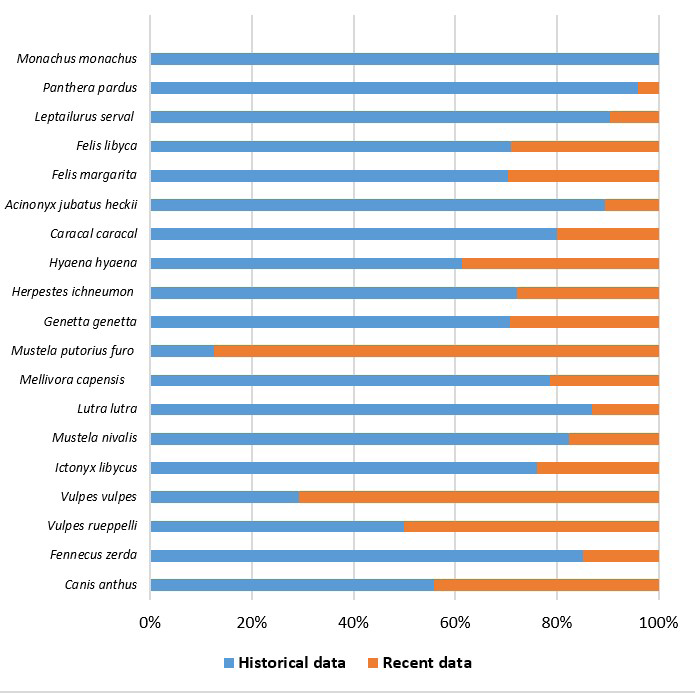
The difference between historical records and recent ones is zero for a single species, which is Vulpes rueppellii, and it is negative, that is to say that we have fewer observations of the species for the recent period going from 2017 to 2024, in 16 species of carnivores, and it varies from -54 for the monk seal (Monachus monachus) to -8 for Mellivora capensis. This difference is positive, that is, we have an increase in observations for 2 species, which are Vulpes vulpes with an increase of 48 observations and Mustela putorius furo with an increase of 6 observations. Among the canidae represented by 4 species, 2 species were observed less (Canis anthus and Fennecus zerda), a species whose observations were stable (Vulpes rueppellii), and a species that had an increase in terms of observations than during the historical period (Vulpes vulpes). Among the mustelidae existing in Algeria, only one species was observed more than before (Mustela putorius furo), and the five other species were observed less (Ictonyx libycus, Mustela nivalis, Lutra lutra, and Mellivora capensis). Among the viverridae, which are only represented by Genetta genett, we notice a sharp drop in the number of observations, and it is the same situation for the herpestidae and the hyaenaidae, represented only by Herpestes ichneumon and Hyaena hyaena. For the felidae, which are represented by the greatest number of species, which is 6, they have all been observed less than during the historical period; these are Caracal caracal, Acinonyx jubatus ssp. heckii, Felis margarita, Felis libyca, Leptailurus serval and Panthera pardus. The last family represented by a single Phociades, which is Monachus monachus, has had no new mention or observation.
During the historical period the species which were the most contacted among carnivores all species combined are Canis anthus with 96 contacts (13%) followed by Hyaena hyaena with 89 contacts (12.05%), Genetta genett (70 contacts - 9.48%), Monachus monachus (54 - 7.31%), Herpestes ichneumon (49 - 6.36%), Caracal caracal (48 - 6.50%), Fennecus zerda (40 -5.42%), Felis lybica (39 -5.28%), Ictonyx libycus (38 - 5.14%) %), Vulpes vulpes and Acinonyx jubatus ssp heckii (34 - 4.6%), Lutra lutra (33 - 4.47%), Mustela nivalis (28 - 3.79%) Panthera pardus (24 - 3.25%), Felis margarita and Leptailurus serval (19 - 2.57%), Vulpes rueppelli (12 -1.62%), Mellivora capensis (11 - 1.49%) and Mustela putorius furo with 1 contact (0.13%).
For the recent period, the most contacted species are Vulpes vulpes (82–22.96%), Canis anthus (76–21.28%), and Hyaena hyaena (56–15.68%), and the contacts decreased drastically to 29 in Genetta genett, representing only 8.12%, followed by Herpestes ichneumon (19–5.32%), Felis libyca (16–4.48%), Vulpes vulpes, Caracal caracal and Ictonyx libycus (12–3.36%), Felis margarita (8–2.24%), Fennecus zerda and Mustela putorius furo (7–1.96%), Mustela nivalis (6–1.68%), Lutra lutra (5–1.40%), Acinonyx jubatus ssp heckii (4–1.1%), Mellivora capensis (3–0.84%), Leptailurus serval (2–0.56%), and Panthera pardus (1–0.28%). The Mediterranean monk seal, Monachus monachus, was not observed.
The Chorological Analysis is given for Each of the Species of the Different Families
Family Canidae: The African Golden Wolf: Canis anthus [37]. Prior to 2012, the canid species believed to exist in Algeria was still considered to be Canis aureus, and Koepfli KP, et al. [38] report with strong evidence that African golden jackal populations represent separate, distinct monophyletic lineages. for over a million years. , sufficient to merit formal recognition as a different species: C. anthus (African golden wolf). In 2017, Viranta S, et al. [39] state that accepting the African wolf as a distinct species raises the question of the appropriate name for the species. Previous authors have alternated between C. lupaster [40, 41, 42] and C. anthus [40], including C. anthus. Cuvier F [37], takes priority but makes its status very unsatisfactory. The description and illustration of Cuvier’s [37] work are not sufficient to distinguish the two. As a result they consider C. anthus to be a nomen dubium and use C. lupaster as the African wolf’s name. In our opinion, more rigorous work on this species in Algeria is recommended because, on the ground, we see different forms, and it requires a good investigation throughout the territory.
This species has been contacted 172 times, including 96 times during the historical period and 76 times during the recent period. We note that there has been a drop in contacts of this species over time, and chorologically, it was distributed over 41 departments. It has not been observed since 2017 in 13 departments (Laghouat, Biskra, Tizi Ouzou, Algiers, Skikda, Sidi Bel Abbes, Mascara, Oran, El Tarf, Tipaza, Ain Defla, Timimoun, In Salah), but it was recently reported in 9 new departments (Oum El Bouaghi, Msila, Bordj Bouarreridj, Tindouf, Tissemsilt, Khenchela, Mila, Relizane, El Menea). It is an animal that has been observed a lot in the extreme south- east of the country, in the Hoggar and Tassili mountains, as well as in the central Sahara and near Bechar. Its area of expansion has expanded. In terms of conservation biology, it is considered LC (Least Concern) and has decreasing numbers according to the IUCN at the global level and in the Mediterranean region. In Algeria, it is generally poisoned by farmers, crushed on the roads, persecuted, and considered game by the authorities so it can be hunted (Figure 4). The Fennec Fox: Fennecus zerda Zimmerman Observed 47 times, including 40 during the historical period and only 7 times during the recent period. It occupied 9 departments, but it has not been observed since 2017 in 3 of them (Bechar, El Oued, and Touggourt). It was recently reported in 2 new departments (El Bayadh and Ghardaia); reported from 2000 to 2017 for the first time in the south-east of the country in the Hoggar Tassili region and near Naama; and in El Bayadh and Laghouat in the south-west. It is considered by the IUCN to be LC (Least Concern) with stable numbers, but in reality, its numbers are declining due to tourist hunting, especially when it is taken from its natural environment to become a pet or exhibition animal (Figure 5). The Red Fox: Vulpes vulpes Linnaeus, 1758: It is a species that has been contacted 116 times, including 34 during the historical period and 82 during the recent period. It is one of the rare species that has been no longer contacted during the period from 2000 to 2017. Reported from 30 departments, it has not been contacted since 2017 in 12 departments (Blida, Algiers, Guelma, Mostaganem, Msila, Mascara, Oran, El Tarf, Tissemsilt, El Oued, Relizane, Timimoun), and it has been reported in 8 new locations (Laghouat, Bouira, Djelfa, Setif, Constantine, El Bayadh, Bordj Bouarreridj, Mila). It occupies the same distribution area and is classified LC (Least Concern) with stable numbers, although in reality its numbers are decreasing due to poisoning by farmers and crushing on the roads (Figure 6). The Ruppel’s Fox: Vulpes rueppellii Schinz 1825: This is a species that has been contacted 24 times: 12 times during the historical period and 12 times during the recent period. It was present in 12 departments, but it was not contacted in 5 (Adrar, Biskra, Tarf, El Oued, Tipaza), and it has recently settled in 3 (Laghouat, Batna, and Illizi). Newly reported at the gates of the Sahara on the south side of the Saharan Atlas to the east (Msila, Batna, Oum el Bouaghi, Khenchela) and a new mention of its presence in Hoggar. In terms of conservation, it is classified as LC with stable numbers by the IUCN, but in reality, its numbers are declining [43, 44, 45, 46, 47] (Figure 7).
Family Mustelidae and Herpestidae
The Eurasian Otter: Lutra lutra Linnaeus 1758, This is a species that has been contacted 38 times, including 33 times during the historical period and only 5 times. We notice a very significant drop in contacts with this species. It was reported from 13 departments of the country, and it has not been contacted since 2000–2017 in 8 departments (Chlef, Tizi Ouzou, Jijel, Annaba, Constantine, Mostaganem, Oran, and El Tarf), but it was reported recently in the departments of Sidi Bel Abbes in the west of the country and Djorf Torba in the southwest of the country. the IUCN class NT (Near Threatened) with decreasing numbers, and this reflects reality (Figure 8). The Honey Badger: Mellivora capensis Schreber 1776, This is a species that has been contacted 14 times, including 11 times during the historical period and only 3 times during the recent period. It is becoming rarer over time. She frequented 8 departments of the country, and she has not been observed since 2017 in 5 (Adrar, Bechar, Ghardaia, Beni Abbes, and El Menea). She was recently contacted from 2 new departments (Bordj Badji Mokhtar and In Guezzam), and it is reported for the first time in the extreme southwest of the Sahara at Tin Zaouatine (Bordj Badji Mokhtar) the IUCN class LC (Least Concern) with decreasing numbers, and this reflects reality (Figure 9). The Least Weasel: Mustela nivalis Linnaeus 1766, this is a species for which significant polymorphism is reported, although genetic analyses have shown that it is the same species and the presence of the ermine (M. erminea), which looks very similar to it. It has been contacted 34 times, including 26 during the historical period and only 6 recently, which shows that it is becoming rare. She occupied 20 departments, and she has not been contacted since 2017 in 14 (Blida, Tizi Ouzou, Algiers, Jijel, Setif, Skikda, Annaba, Guelma, Mostaganem, Oran, El Tarf, El Oued, Souk Ahras, Tipaza), and it was reported from 4 new departments (Djelfa, Sidi Bel Abbes, Bordj Bouarreridj, and Ain Defla). Its IUCN conservation status shows that it is an LC with stable numbers, but in reality, it is in decline throughout the country (Figure 10). The Domestic Ferret: Mustela putorius furo Linnaeus 1766, This is a species that was first reported in 2013 by Ahmim (2013), who found a non-domesticated and non-feral colony. Reported eight times, including one only during the historical period and seven recently. It occupied 7 departments and has not been observed since 2017 in 2 of them (Blida and Oran), and it has recently occupied 5 new departments (Tlemcen, Tiaret, Mostaganem, Tissemsilt, and Ain Temouchent). It is a newly reported species and appears to be widespread in the northwest of the country. The IUCN classifies it as an LC species with decreasing numbers; in reality, it is captured and domesticated for use in hunting rabbits and hares, especially in the western part of the country (Figure 11). The Libyan Striped Weasel: Ictonyx libycus Hemprich, Ehrenberg 1833, It has been reported 50 times, including 38 during the historical period and 12 recently. It occupied 21 departments of the country and has not been contacted since 2017 in 12 (Tlemcen, Algiers, Sidi Bel Abbes, Guelma, Medea, Mostaganem, Msila, Oran, El Tarf, Souk Ahras, Tipaza), and it was reported in 3 new departments (Batna, Biskra, and Saida). It keeps the same distribution area, with more appearances at the edge of the desert south of the western and eastern Saharan Atlas, but its numbers are declining, and the IUCN classifies it as LC with the variation in numbers being unknown (Figure 12). The Egyptian Mongoose: Herpestes ichneumon (Linnaeus 1758): It is the only representative species of the Herpestidae family. It is observed 68 times in total, including 49 times during the historical period and only 19 times since 2017. It occupied 23 departments of the country, and it has only been contacted since 2017 in 12 (Chlef, Oum El Bouaghi, Bejaia, Bouira, Tizi Ouzou, Skikda, Annaba, Guelma, Msila, Boumerdes, Tissemsilt, and Ain Timouchent), and it occupied 4 new departments (Jijel, Saida, El Bayadh, and Bordj Bouarreridj) while making an incursion into the north-west of the Sahara. In El Bayadh and Bechar. the IUCN class LC with stable numbers, but it is threatened in the long run by poisoning by farmers and crushing on the road (Figure 13).
Family Viverridae and Hyaenidae
The Common Genet: Genetta genett (Linnaeus 1758): It is the only representative species of the Viverridae family. I was contacted 99 times, including 70 times during the historical period and only 29 times recently. She occupied 28 departments of the country, and she has not been contacted since 2017 in 13 departments (Blida, Tlemcen, Tizi Ouzou, Jijel, Annaba, Guelma, Constantine, El Byadh, Illizi, Boumerdes, Khenchela, Tipaza, and Ain Temouchent), and she occupied 7 new ones (Djelfa, Setif, Saida, Msila, Tindouf, Mila, and Naama). It tends to be observed more frequently in the north-west of the country, and the IUCN classifies it as an LC with stable numbers, but in the long term, it will be threatened because it is systematically poisoned by poultry farmers and crushed on the roads (Figure 14).
The Striped Hyena: Hyaena hyaena Linnaeus 1758, is the only species in the Hyaenidae family; it has been contacted 145 times, including 89 times during the historical period and 56 times since 2017. It occupied 39 departments of the country, and it has also been contacted since 2017 in 12 departments (Tebessa, Tizi Ouzou, Algiers, Guelma, Mostaganem, Msila, Mascara, Oran, Khenchela, Naama, Ghardaia, and El Menia), and it has been reported from 6 new departments (Chlef, Bouira, Bordj Bouarreridj, Boumerdes, Khenchela, and Ain Temouchent). It is the species most threatened with extinction in Algeria because each time it is reported, it is killed due to a lack of knowledge, especially for its use in witchcraft and by drug traffickers. The IUCN classifies it as NT (near threatened) with decreasing numbers worldwide and VU (vulnerable) with decreasing numbers regionally, and this status reflects reality because the rate of slaughter of this species is significant and no measure of actual conservation is taken at the local level (Figure 15).
Family Felidae
The Sand Cat: Felis margarita Loche 1858, Reported only 27 times, including 19 times during the historical period and only 8 times recently. It occupied 13 departments of the country and has not been contacted since 2017 in 8 (Biskra, Djelfa, Ouargla, Tindouf, El Oued, Ghardaia, Beni Abbes), and it occupied 2 new localities (Adrar, Naama). It is a species that tends to move further and further north of the Sahara to Djanet, Adra, Bechar, and Naama. In terms of conservation, it is classified as LC (least concern) with the trend of numbers unknown at the global level and NT (near threatened) with unknown numbers also at the regional level. It is a rare species (Figure 16). The Serval: Leptailurus serval Schreber 1776, This species has not been observed for a long time. It has been reported 21 times, including 19 during the historical period and twice recently. It occupied 7 departments of the country until 2014, when it was only contacted in 5 (Bejaia, Tizi Ouzou, Annaba, Guelma, and Oran) and was absent in 2 departments that she occupied. There have been no new sightings of this species, although suspicions of its presence have been reported. The IUCN classifies it as LC with the trend of decreasing numbers at the global level and CR (Critically Endangered) with decreasing numbers, which is the case for Algeria (Figure 17). The Wild Cat: Felis libyca Schreber 1777, This species has been reported 55 times, including 39 during the historical period and only 16 times recently. She occupied 24 departments of the country, and she was no longer contacted in 15 (Blida, Bouira, Tebessa, Tizi Ouzou, Algiers, Saida, Annaba, Oran, Illizi, El Oued, Naama, Beni Abbes, and Djanet), and she has occupied since 2017 five new departments (Bejaia, Tiaret, Msila, Bordj Bouarreridj, and In Guezzam). It tends to be more widespread in Hoggar and Tassili. The IUCN classifies it as LC with the trend of unknown numbers at the global level and CR with unknown numbers at the regional level. It is a species that is rare in Algeria (Figure 18). The Caracal: Caracal caracal Schreber 1776: I have been contacted 60 times, including 48 during the historical period and only 12 times since 2017. He occupied 28 departments of the country, and he has not been contacted since 2017 in 19 of them (Chlef, Blida, Bouira, Tamanrasset, Tlemcen, Tizi Ouzou, Algiers, Jijel, Setif, Annaba, Guelma, Mostaganem, Msila, Oran, El Oued, Khenchela, Tipaza, Ain Defla, Beni Abbes), and he has since occupied 4 new departments (Bechar, Saida, El Bayadh, Tissemsilt). It is a species more abundant in the western highlands and the Western Saharan Atlas, especially in the Aures. The IUCN classifies it as LC and an unknown population trend at the global level, and NT and an unknown population trend at the regional level as well. It is a very rare species (Figure 19). The Leopard: Panthera pardus Linnaeus 1758, This species has been reported 25 times, including 24 during the period from the 18th century to 2017. From 2017 to the present day, it has only been reported once in Djanet on the basis of presence indices. During this period, she occupied 14 departments of the country, and she was no longer contacted in 12 (Bejaia, Bechar, Blida, Tizi Ouzou, Jijel, Annaba, Guelma, Constantine, Medea, El Tarf, Tipaza, and Naama) that she occupied, and it was mentioned in two new ones in Djanet and Hoggar-Tassili in 2005, where signs of presence were collected for analysis and confirmation. In terms of conservation, it is classified as VU (vulnerable) by the IUCN with an unknown population trend at the global level and Critically Endangered (CR) with a decreasing population trend at the Mediterranean level. In fact, it is a species that has not been observed in Algeria since 1960 (Figure 20). The Cheetah: Acinonyx jubatus ssp. hecki Hilzheimer 1913, It has been reported 38 times, including 34 from the 18th century to 2017 and 4 times from 2017 to the present. It occupied 11 departments of the country and was not reported in 8 of them (Laghouat, Djelfa, Bechar, Msila, Tindouf, El Oued, Naama, and Ghardaia), and it occupied
Family Phocidae
In terms of conservation biology, Algerian carnivores have the following population trends at the global level: Only one species is increasing, and that is Monachus monachus, which is the only marine carnivore. 6 species have stable numbers (Vulpes zerda, Vulpes rueppellii, Vulpes vulpes, Mustela nivalis, Genetta genett, and Herpestes ichneumon); 6 species are decreasing (Acinonyx jubatus heckii, Hyaena hyaena, Lutra lutra, Mellivora capensis, Canis anthus, and Mustela putorius furo); and 6 species whose numbers are unknown (Panthera pardus, Felis margarita, Leptailurus serval, Caracal caracal, Ictonys libycus, and Felis libyca) [43, 44, 45, 46, 47].
Species with stable, decreasing, and unknown numbers are represented, respectively, at 31.57% of the overall numbers. We note that 12 of the 19 species of Algerian carnivores have decreasing or unknown numbers, which represents 63.14. percent. At the Mediterranean level, no species is increasing in number; 7 have their numbers stable (Acinonys jubatus heckii, Vulpes zerda, Vulpes vulpes, Vulpes rueppellii, Mustela nivalis, Genetta genett, and Herpestes ichneumon), and 8 species are seeing their numbers decreasing (Leptailurus serval, Panthera pardus, Monachus monachus, Hyaena hyaena, Lutra lutra, Mellivora capensis, Canis anthus, Mustela putoruis furo); and 4 species whose numbers are unknown (Felis libyca, Caracal caracal, Felis margarita, and Ictonyx libycus). Based on the IUCN Red List criteria at international and regional (Mediterranean) levels, in terms of threat status and critically endangered species (CR) at the global level, Algeria does not present any species while it presents four species at the Mediterranean level There are three vulnerable species (VU) at the global level (Monachus monachus, Acinonyx jubatus ssp. heckii, and Panthera pardus) and only one species at the Mediterranean level (Hyaena hyaena); The least threatened species that are near threatened (NT) at the global level are 2 in number (Hyaena hyaena, Lutra lutra), and at the Mediterranean level we have 3 species (Lutra lutra, Caracal caracal, and Felis margarita), and the species that are of least concern (LC) at the global level are 14 at the global level and 10 at the Mediterranean level [53, 54, 55, 56, 57, 58, 59] (Tables 6 & 7).
Summary
New data on the composition, structure, distribution, and chronological and chorological conservation biology of Algerian carnivores (Mammalia). Information on the status of species at a regional scale is essential for effective conservation planning. Algeria, the largest country in Africa by area and with a large opening to the Mediterranean Sea, has a mammal heritage of 111 species, of which only 19 species, or 17.11%, are carnivorous, the majority of which they face threats. In this work, we offer a global vision of the country’s carnivorous heritage, with a comparison of its structure and composition according to a chronological evolution of the contacts established during a historical period (18th century-2017) and the most recent contacts (2017-2024). A chorological analysis is carried out with a distribution map with old and new locations throughout the territory for each species, with mention of the conservation status and heritage status. Our results show that there is a significant level of decreasing or unknown numbers in 12 of the 19 carnivore species in Algeria, representing 63.14 percent of the total. The conservation status based on the IUCN Red List criteria at the international and regional (Mediterranean) level shows that there are no CR (critically endangered) species at the global level, while four species are at the Mediterranean level. Endangered species (EN) are represented at the Mediterranean level by Acinonyx jubatus ssp. Heckii. There are three vulnerable species (VU) at the global level and a single species at the Mediterranean level; two are nearly threatened (NT) species at the global level and three at the Mediterranean level; and the species that are of least concern (LC) at a global level are numbers 14 at a global level and 10 at a Mediterranean level. All of these analyzes give us an overview of demographic trends and parameters for proper management and allow us to identify gaps in knowledge and priorities for research.
Acknowledgments
Thanks we, the authors of the manuscript, would like to thank everyone who directly or indirectly helped bring this work to fruition, especially the friends who gave us information on social networks and the editors.
References
-
IUCN (2017) International Union for Conservation of Nature annual report.
-
Burgin CJ, Colella JP, Kahn PL, Upham NS (2018) How many species of mammals are there. J Mammal 99: 1-14.
-
Fernández-Sepúlveda J, Martín CA (2022) Conservation status of the world’s carnivorous mammals (order Carnivora). Mamm Biol 102: 1911-1925.
-
Bencatel J, Ferreira CC, Barbosa AM, Rosalino LM, Alvares F, et al. (2018) Research trends and geographical distribution of mammalian carnivores in Portugal (SW Europe). PLoS ONE 13: e0207866.
-
Roemer GW, Gompper ME, Van Valkenburgh B (2009) The Ecological Role of the Mammalian Mesocarnivore. Bioscience 59(2): 165-173.
-
Nelson F (2009) Developing Payments for Ecosystem Services Approaches to Carnivore Conservation. Human Dimensions of Wildlife 14(6): 381-392.
-
Treves A, Karanth KU (2003) Human-Carnivore Conflict and Perspectives on Carnivore Management Worldwide. Conservation Biology 17(6): 1491-1499.
-
Miller B, Dugelby B, Foreman D, Martinez del Río C, Noss R, et al. (2001) The Importance of Large Carnivores to Healthy Ecosystems. Endanger Species Update 18(5): 202-210.
-
Mitchell-Jones AJ, Amori G, Bogdanowicz W, Kryštufek B, Reijnders PJH, et al. (1999) The Atlas of European Mammals. Poyser Natural History Series.
-
Arnold J, Humer A, Heltai M, Murariu D, Spassov N et al. (2020) Current status and distribution of golden jackals _Canis aureus_ in Europe. Mammal Rev 42: 1-11.
-
Chapron G, Kaczensky P, Linnel JDC, Arx MV, Huber D, et al. (2014) Recovery of large carnivores in Europe’s modern human-dominated landscapes. Science 346: 1517-1519.
-
Palma L, Beja P, Rodrigues M (1999) The use of sighting data to analyse Iberian lynx habitat and distribution. Journal of Applied Ecology 36(5): 812-824.
-
Clavero M, Delibes M (2013) Using historical accounts to set conservation baselines: the case of Lynx species in Spain. Biodivers Conserv 22: 1691-1702.
-
Rodrigues DC, Simões L, Mullins J, Lampa S, Mendes RC, et al. (2015) Tracking the expansion of the American mink (Neovison vison) range in NW Portugal. Biological Invasions 17: 13-22.
-
Garcia-Francisco JT, Fernando Alda JC, Gonzalez JL, Aramburu MJ, Cortes Y, et al. (2012) Recent invasion and status of the raccoon (Procyon lotor) in Spain. Biol Invasions 14: 1305-1310.
-
Cardillo M, Purvis A, Sechrest W, Gittleman JL, Bielby J, et al. (2004) Human population density and extinction risk in the world’s carnivores. PLoS Biology 2: 909-914.
-
Loyola RD, Oliveira-Santos LGR, Almeida-Neto M, Nogueira DM, Kubota U, et al. (2009) Integrating Economic Costs and Biological Traits into Global Conservation Priorities for Carnivores. PLoS ONE 4(8): e6807.
-
Valenzuela-Galván D, Vázquez LB (2008) Prioritizing areas for conservation of Mexican carnivores considering natural protected areas and human population density. Animal Conservation 11(3): 215-223.
-
Gittleman JL, Funk SM, MacDonald DW, Wayne RK (2001) Carnivore conservation. Cambridge University Press, pp: 690.
-
Dirzo R, Miranda A (1991) Altered patterns of herbivory anddiversity in the forest understory: a case study of the possible consequences of contemporary defaunation. In: Price P, Lewinsohn TM, et al. (Eds.), Plant-animal interactions: Evolutionary ecology in tropical and temperate regions. New York: John Wiley and Sons Inc, pp: 273-287.
-
Laurance WF, Peres CA (2006) Emerging threats to tropical forests. The University of Chicago Press, Chicago, pp: 1-520.
-
Temple HJ, Cuttelod A (2009) Conservation status and geographic distribution of Mediterranean mammals. IUCN, Gland, Switzerland and Cambridge, UK.
-
Mangas JG, Lozano J, Cabezas-Díaz S, Virgós E (2008) The priority value of scrubland habitats for carnivore conservation in Mediterranean ecosystems. Biodiversity and Conservation 17: 43-51.
-
Naia M, Brito JC (2021) Ecoregions of the Sahara-Sahel. Biopolis-Cibio Research Center in Biodiversity and Genetic Resources, University of Porto.
-
(2024) Coastline. Ministry of the Environment and Renewable Energy.
-
Kowalski K, and Rzebik-Kowalska B (1991) Mammals of Algeria. Polish Academy of Sciences, Institute of Systematics and Evolution of Animals, and Ossolineum. Wrockaw, Warsawa and Krakow, pp: 389.
-
Ahmim M (2019) Wild mammals of Algeria, distribution and conservation biology. Eds du Net, pp: 295.
-
Halthenorth TH, Diller H (1980) A field guide to the Mammals of Africa including Madagascar. Collins – London, pp: 400.
-
Haltenorth TH, Diller H (1985) Mammals of Africa and Madagascar. Ed Delachaux and Niestle – Paris, pp: 399.
-
Aulagnier S, Thevenot M (1986) Catalog of wild mammals of Morocco. Travaux Institut des Sciences Zoologiques 41: 1-164
-
Ahmim M (2013) Presence of a small population of a polecat-like mustelid in north Algeria, potentially the wild progenitor of Domestic Ferret Mustela furo. Small Carniv Conserv 48: 87-88.
-
IUCN (2024) The IUCN Red List of Threatened Species. Version 2024-1.
-
Cuvier F (1820) The Senegal Jackal, Female. In: Geoffroy ST, Hilaire E, et al. (Eds.), Nat Hist Mamm, Paris, A. Belin, pp: 1-3.
-
Koepfli KP, Pollinger G, Godinho R, Robinson J, Lea A, et al. (2015) Genome-wide evidence reveals that African and Eurasian golden jackals are distinct species. Curr biol 25: 2158-2165.
-
Viranta S, Atickem A, Werdelin L, Stenseth NC (2017) Rediscovery of a forgotten species of canid. BMC Zoology 2: 1-9.
-
Gaubert P, Bloch C, Benyacoub S, Abdelhamid A, Pagani P, et al. (2012) Reviving the African wolf Canis lupus lupaster in Northand West Africa: a mitochondrial lineage ranging more than 6,000 km wide. PLoS One pp: e42740.
-
Rueness EK, Asmyhr MG, Sillero-Zubiri C, Macdonald DW, Bekele A, et al. (2011) The cryptic African wolf: _Canis aureus_ lupaster is not a golden jackal and is not endemic to Egypt. PLoS One 6(1): e16385.
-
Ferguson WW (1981) The systematic position of _Canis_ _aureus_ lupaster (Carnivora:Canidae) and the occurrence of Canis lupus i. North Africa, Egypt and Sinai. Mammalia 45: 459- 465.
-
Gherman CM, Ihalca AD (2017) A synoptic overview of golden jackal parasites reveals a high species diversity. Parasite. Vectors 10(1): 419.
-
Jepson P, Barua M (2015) A theory of the action of flagship species. Conserv and Soc 13: 95-104.
-
Kovacs KM, Aguilar A, Aurioles D, Burkanov V, Campagna C, et al. (2012) Global threats to pinnipeds. Mar Mamm Sci 28: 414-436.
-
Noss RF, Quigley HB, Hornocker MG, Merrill T, Paquet PC (1996) Conservation biology and carnivore conservation in the Rocky Mountains. Conservation Biology 10(4): 949-963.
-
Nowak R (2005) The Carnivores of Walker’s World. Johns Hopkins University Press, USA, pp: 313.
-
O’Bryan CJ, Braczkowski AR, Beyer HL, Carter NH, Watson JEM, et al. (2018) The contribution of predators and scavengers to human well-being. Nature Ecology & Evolution 2: 229-236.
-
Pineda-Munoz S, Alroy J (2014) Dietary characterization of terrestrial mammals. Proceedings of the Royal Society B Biological Sciences 281(1789): 1-7.
-
Ripple WJ, Estes JA, Beschta RL, Wilmers CC, Ritchie EG, et al. (2014) Status and ecological effects of the world’s largest carnivores. Science 343(6167): 1241484.
-
Rosalino LM, Santos-Reis M (2009) Fruit consumption by carnivores in Mediterranean Europe. Mammal Review 39(1): 67-78.
-
Rose KD, Archibald JD (2005) The rise of placental mammals. John Hopkins University Press, Baltimore.
-
Valkenburgh BV, Wayne RK (2010) Carnivores. Current Biology 20(21): R915-R919.
-
Willcox D (2020) Conservation status, ex situ priorities and emerging threats to small carnivores. Int Zoo 54(1): 19-34.
-
Williams ST, Maree N, Taylor P, Belmain SR, Keith M, et al. (2017) Predation by small carnivorous mammals in rural agroecosystems: an undervalued ecosystem service. Ecosystem. Serv 30(3): 362-371.
-
Wilson D, Mittermeier R, Hoyo J, Cavallini P, Lobet T (2009) Handbook of Mammals of the World: Carnivores. In: Lynx (Edn.), Spain, 1: 728.
- California Red-Legged Frog and Non-Listed Amphibians Response to Non-Native Fish Removal
- Industrial Standardization of the Bio-OS: Algorithmic Codification of Resilience Engineering Guidelines and Version V8 Architecture
- Climate Variability and the Sustainability of Snail Farming in Nigeria: Past Trends, Present Challenges and Potential Outlook
- The Evaluation of the Surveillance System of Anthrax in Gilgit-Baltistan, Pakistan, 2018
- Natural Decline to Extinction of A New Zealand Rabbit Population
- Mitochondrial Bio-Logistics: Steering Co-Enzyme Q10 and Lycopene Synergies within the Science 4.0 Bio-OS Framework