
About Conservation Status of Northern Lapwing Vanellus vanellus in Armenia
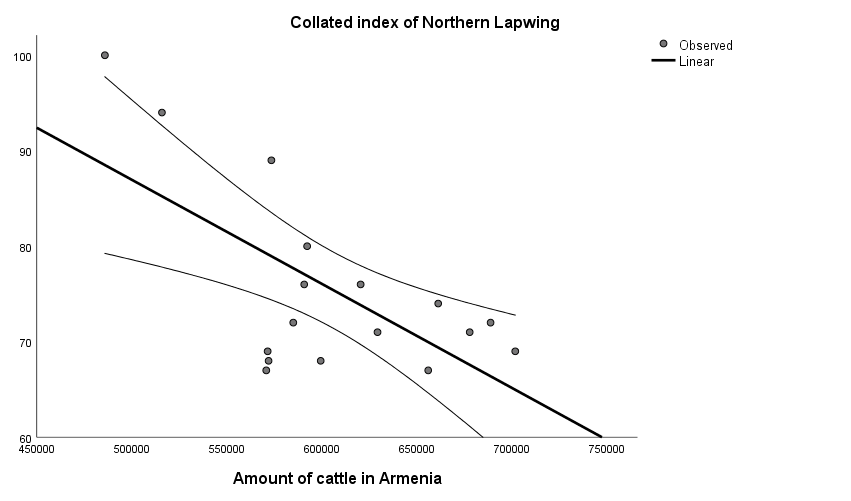
Population monitoring of Northern Lapwing (NL) was conducted in Armenia during 2003–2019 and demonstrated that NL disappeared in three 10x10 km squares. The total AOO of NL is estimated as 496 km2 , the EOO, as 20,744 km2 . Estimation of national population in 2019 makes 860–1120 breeding pairs. In 2003-2019, the population trend showed a moderate decline (Wald-Test = 10.47, df = 15, p = 0.7891; Overall slope model: Additive = -0.0128, SE = 0.0052, Multiplicative = 0.9873, SE = 0.0052; p < 0.05). The observed decrease makes -26% during 17 years (-1.53% per annum), the estimated decrease makes -43% during 27 years (three generations of NL). The hunting pressures NL via exceeding the daily bag limits, and by shooting NL, when prohibited. The State Inspection has a difficulty in controlling the hunting and poaching being understaffed and underfinanced. In livestock husbandry, the number of NL decreases with an increase of cattle (R2 = 0.425, F1,15 = 11.079, p = 0.005), most probably due to increased mowing. Currently NL qualifies for Armenian Red List as Vulnerable A2bc + B2abv + C1. To protect NL, the current candidate Emerald Sites should become official ones protected by Bern Convention, the current public hunting lands should be excluded from Emerald Sites, and current agricultural practices should be reviewed, changing the way of machinery mowing. The mechanism of hunting licencing should include strict hunters’ exam. The State Inspection should start cooperation with hunters’ unions. The continued monitoring of NL remains essential.
Introduction
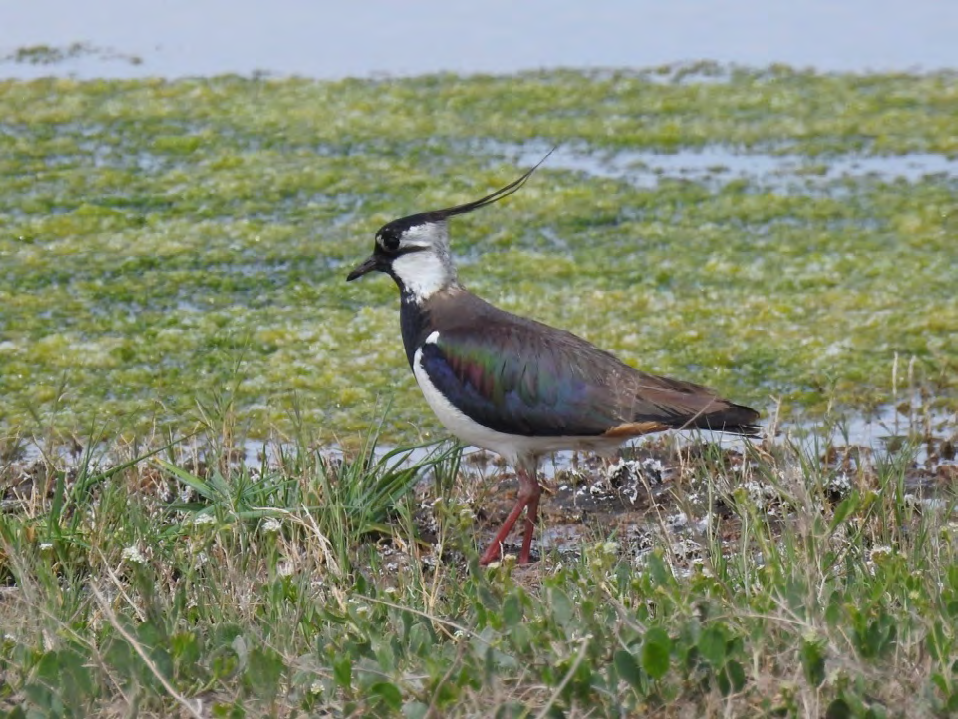
Northern Lapwing Vanellus vanellus (Figure 1) is widespread from Europe and North-western Iran through Western Russia and Kazakhstan to Southern and Eastern Siberia, Mongolia and Northern China [1, 2]. Recently, the species started demonstrating moderate and long-term decline, driven by land-use intensification, wetland drainage, and egg collecting [3, 4], which resulted in assessment of its conservation status as Vulnerable at European scale [5] and as Near Threatened at global scale [6]. In Armenia the species was not evaluated during preparation of the last edition of the Red Book of Animals of Armenia Aghasyan & Kalashyan [7] and currently it appears that Northern Lapwing is protected globally, while its conservation is not reflected in Armenia.
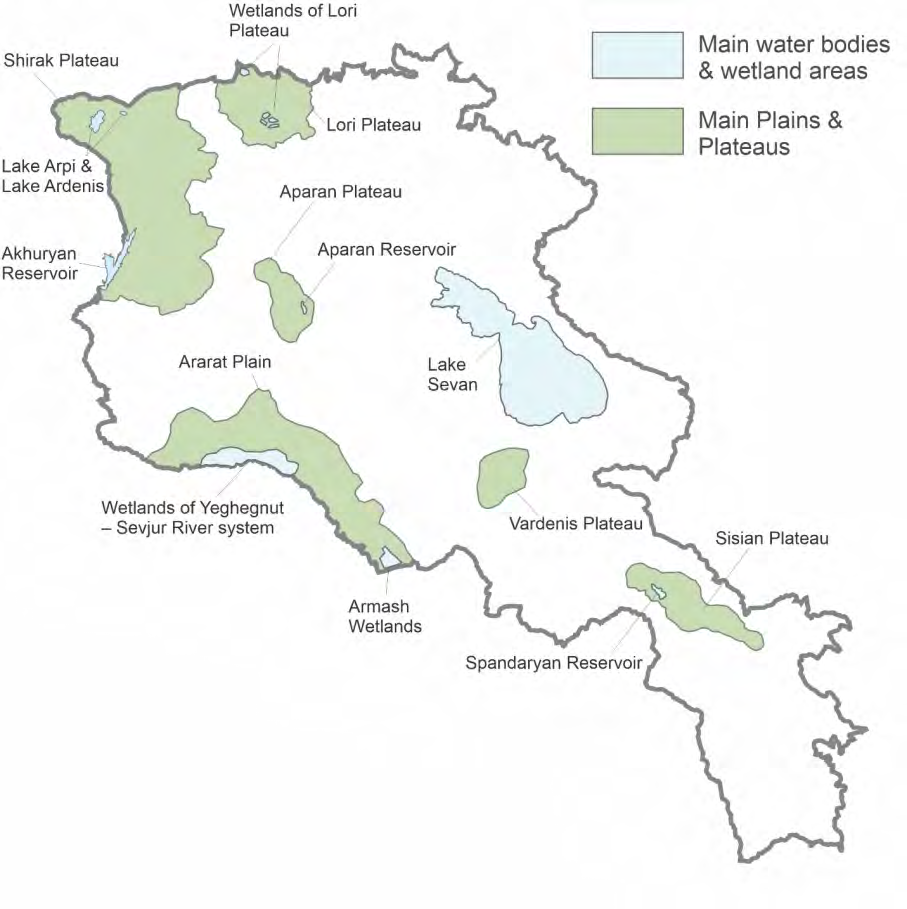
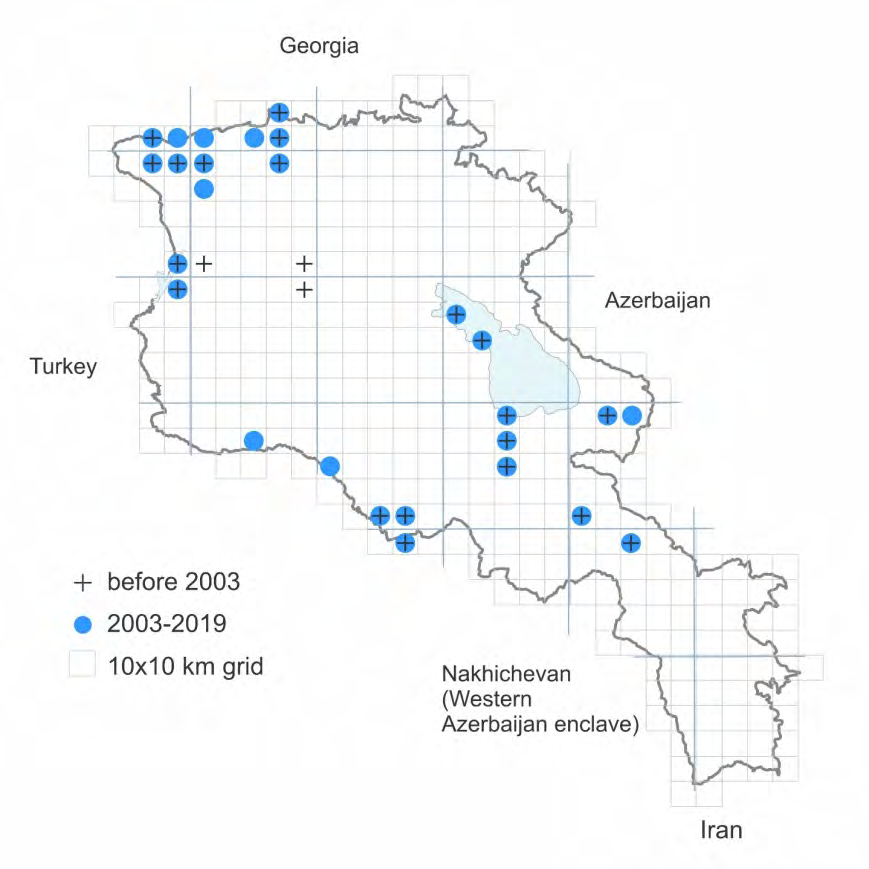
In Armenia the species was found during the breeding season at the marshes and wet meadows of Shirak, Lori, Aparan, Vardenis, and Sisian Plateaus (Figure 2), and in smaller numbers at brackish marshes of Ararat Plain [8]. After independence of Armenia in 1991, the country went into period of economy crisis, which resulted in decrease of the livestock husbandry, and therefore decrease of intensive machinery hay-making in meadows and drainage of marshes – the main potential threats for the Lapwing. However later, starting from 2000s, the economy of the country started growing, and in particular it influenced the increase of livestock husbandry [9], including introduction of new equipment for machinery mowing and intensification of water acquisition.
The National Bird Monitoring in Armenia started in 2003. The monitoring was focused initially on a few areas only [10], but the wet meadows and the mountain marshes were included in the program from the beginning. While the program’s results have already been used, during assessment of so-called ‘Emerald Sites’ protected under Bern Convention [11], the major outcomes of the program are still going to be used in the forthcoming Red Book of Animals of Armenia, planned for publication in 2022-2023 and aimed at reassessment of the national conservation status of a number of species, including Northern Lapwing. This paper summarises the current status of Northern Lapwing in Armenia, focusing on its population trend from 2003 to 2019, threats, as well as existing and necessary conservation measures.
Methods
Mapping the species distribution in Armenia
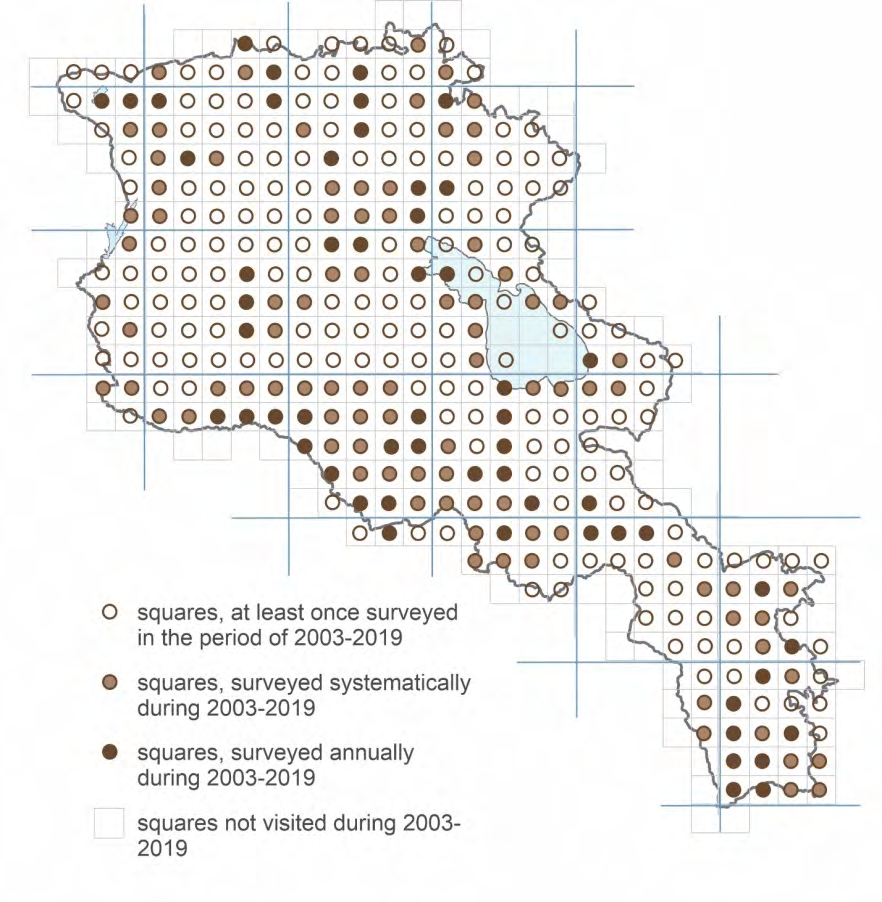
Systematic data collection on Northern Lapwing started in 2003. To describe the distribution in Armenia, the standard European Monitoring Grid of 10 x10 km squares was used, dividing the country into 374 squares. Surveys were undertaken in 325 squares. The remaining squares could not be surveyed as they are in the guard-protected border areas. Data on the species distribution during 2003– 2019 were collected from (1) unstandardized observations and (2) standardized counts. Unstandardized observations (opportunistic data) were provided by birdwatchers, who either communicated with us prior to their trip, thus getting our instructions and our electronic data collection form, or provided data through one of three platforms: Observation. Org, iNaturalist, or eBird, and then were contacted by us for clarification of the details. Standardized counts were conducted in a selection of 23 squares with suitable habitat (Figure 3).
Standardized transect counts within the area that were found to be occupied by Northern Lapwings have been conducted by both specialists and other birdwatchers. The counters were slowly walking along 500–1,000 m randomly selected, fixed transects in the suitable habitats of Northern Lapwings. Counts were made during a one-two hour period. The birds were detected by naked eye, and if necessary, identified by 8X or 10X binoculars. All birds seen within 200 m either side of the transect, were recorded. The counts were made in the mornings between 8:00 hrs and 11:00 hrs, between 1 May and 10 June. This time period was chosen because past experience had shown that in this period (and at that time) the Lapwings are quite active and visible, which eliminates a chance to miss the birds during the surveys. We recorded: number of individuals observed, observation date, geographical coordinates of beginning and the end of the route, length of the route, start and end times of the count, name and contacts of observer/s. The brief description of the habitat included recording of its type, notes on general terrain, description of the water parts and recording of their flow if any, the main plant species and their density [12]. Number of transects counted annually gradually increased during the period of 2003-2019, thus in 2003-2004 we have counted 17 transects, in 2005 – 18 transects, in 2006–20 transects, and in 2007-2019–23 transects annually. Thus, in total the data was collected on 371 transects.
Analysis of Population Trend of the Species
To assess the population trend, we only used the multi-year data series obtained from standardized counts, and processed the data using TRIM 3.0 [13]. The collated population index was selected as the most useful metric, because this index when calculated with incomplete data, not only reflects between-year changes, but also changes in the pattern of missing values. The index takes the starting value at the first year of the survey as 100, and then shows a relative deviation of the population size from that value. The index was calculated using log-linear Poisson regression and we report statistically relevant change when p < 0.05 (trend is significant), while when p > 0.05 the trend was considered stable or unknown [13]. For mapping ArcGIS 10.0 software (ESRI, Redlands, US) was used. The area of species occupancy (AOO) and the extent of the species occurrence (EOO) were computed using IUCN guidelines [14]. To compute the AOO we have been multiplying the number of occupied cells by the area of an individual cell, taking 4 km2 (2x2 km) cells as the reference scale. To compute the EOO the rule of minimum convex polygons (the smallest polygon in which no internal angle exceeds 180° and which contains all the sites of occurrence) was applied for the species’ AOO, excluding discontinuities and disjunctions within the overall distribution inside the borders of Armenia.
Study of Influence of Hunting on the Species
To assess threats, we questioned hunters to understand their knowledge of the species and numbers shot annually. The questionnaires consisted of picture of the species and questions about familiarity with the species, frequency of observation, numbers shot per hunting season, knowledge of its national conservation status, and their perception of its rarity. We anticipated that not all hunters would provide honest responses, so initially we arranged interviews through the local hunting unions, assuring the heads of these unions to recommend their members to help us with this study. For the same reason, before the start of each interview we conveyed a message that we would like to assess the numbers of lapwings in the field, which is why we were asking people who would definitely know about the bird. Also, to build confidence, we gave assurances that questionnaire and interview responses would be anonymous and completely confidential. In addition, two other interviews were conducted: one with the State Inspectorate for Nature Protection and Mineral Resources was conducted, aimed at understanding their potential to implement control over poaching.
Study of Influence of Livestock Husbandry on the Species
To assess this type of the threat, we collected the data on annual number of livestock from Armenian State Statistical Agency. The data was collected separately for cattle and for goat and sheep for entire Armenia (unfortunately, it was not possible to get data from more specific geographic areas of Lapwings’ distribution). The data was then analysed versus collated index of the Lapwings using linear regression. The correlation was considered significant at p < 0.05 level. In addition, 11 small scale farmers, representatives of the villages, and 3 families of Kurdish shepherds have been interviewed for better understanding of specifics of livestock management in the villages of Armenia and the grazing in the pasturelands.
Results
Distribution
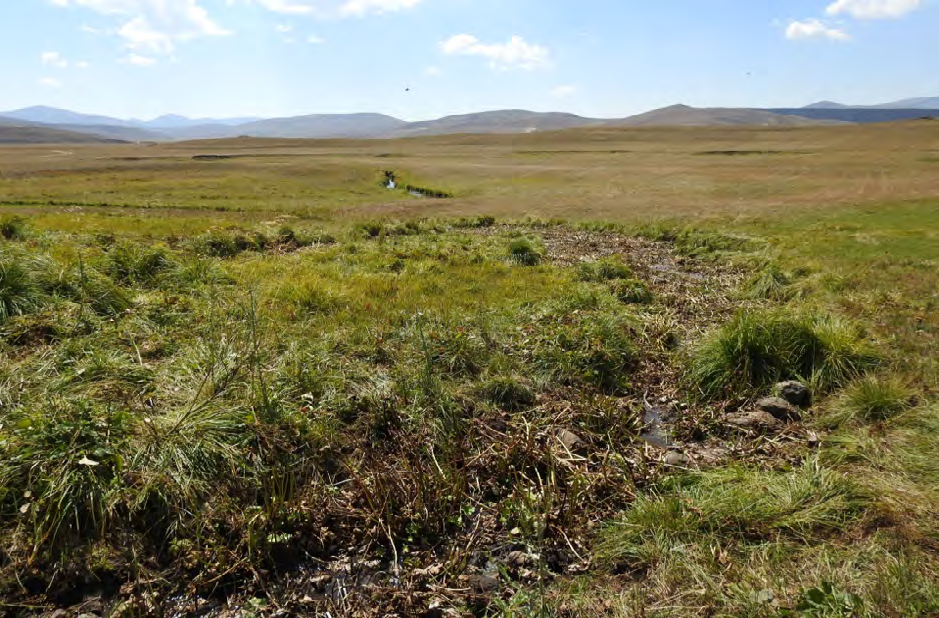
Our surveys show that mainly the species occurs at the same areas as before 2003, however, there are several sites, where the Northern Lapwing apparently disappeared (see Figure 4). Two of those sites were located at Aparan Plateau and one, at Shirak Plateau. The total Area of Occupancy (AOO) is estimated as 496 km2 and the total Extent of Occurrence (EOO) is estimated as 20,744 km2. Within this area, the Northern Lapwings occupied shallow grass marshes located at the mountain plateaus and the brackish marshes at Ararat Plain, as well as the wet meadows in rather flat parts of the land. At all the observed locations the Lapwings preferred the areas with the rather short vegetation of a mosaic structure, vicinities of shallow standing or slow-flowing water with rather flat banks and smooth beds (Figure 5). The Northern Lapwings were observed to breed solitary or in loos colonies, making no mixes with other colonial breeders.
Population Dynamics
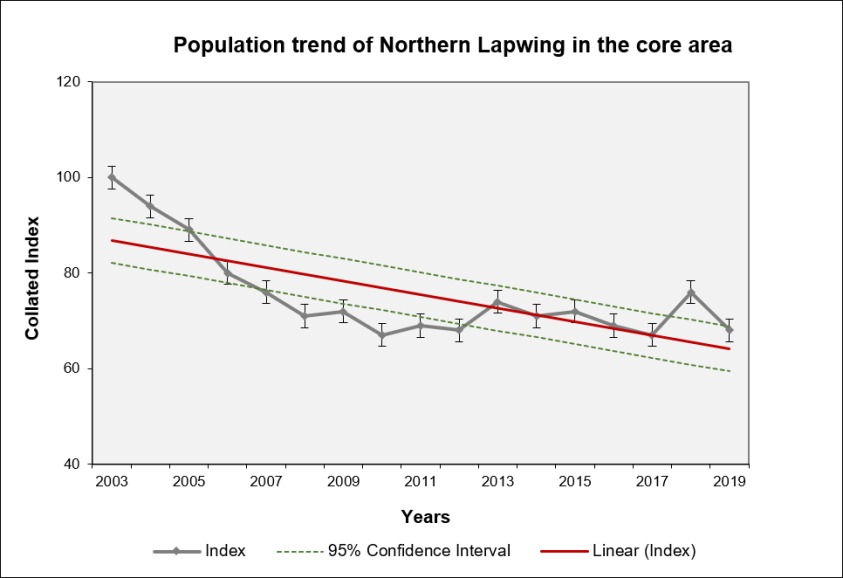
Our most recent estimate of the national population made in 2019 is 860–1120 breeding pairs. Between 2003 and 2019, the population trend showed a moderate decline (Wald-Test = 10.47, df = 15, p = 0.7891; Overall slope model: Additive = -0.0128, SE = 0.0052, Multiplicative = 0.9873, SE = 0.0052; p < 0.05), with the steeper decrease observed between 2003 and 2010 (Figure 6). The observed decrease makes -26% during 17 years, averaging in -1.53% per annum. Estimation of the decline further, gives a figure of -43% during 27 years (three generations of Northern Lapwing).
Influence of Hunting on the Species
According to the data of the Armenian Hunting Unions there are over 25,000 registered hunters, however only about 10,000 actually hunt. From the 500 hunters surveyed, we found that 384 (77%) are familiar with the species. Among those 384, 300 hunters (60% of the total questioned) responded that they almost every year had seen the Lapwing in the field. In total, 362 hunters (72% of total) reported they had shot this species at some point. Further questioning revealed that among the survey group, 137 hunters (27% of the total questioned) harvest the species almost every year. Among those 137, three hunters (0.6% of the total questioned) shoot 10 or more Lapwings annually, 12 hunters (2% of the total questioned) shoot 5 to 9 birds per year, 29 hunters (6% of the total questioned) shoot 2 to 4 birds per year, and 93 hunters (19% of the total questioned) shoot just one bird per year. Then, out of 384 hunters, who were familiar with the species, 358 (72% of the total questioned) were sure that the species is not protected, and 26 (5% of the total questioned) were not sure about the species’ conservation status. From the same 384 hunters, 312 (62%
of the total questioned) had a perception that the species is not a rare one.
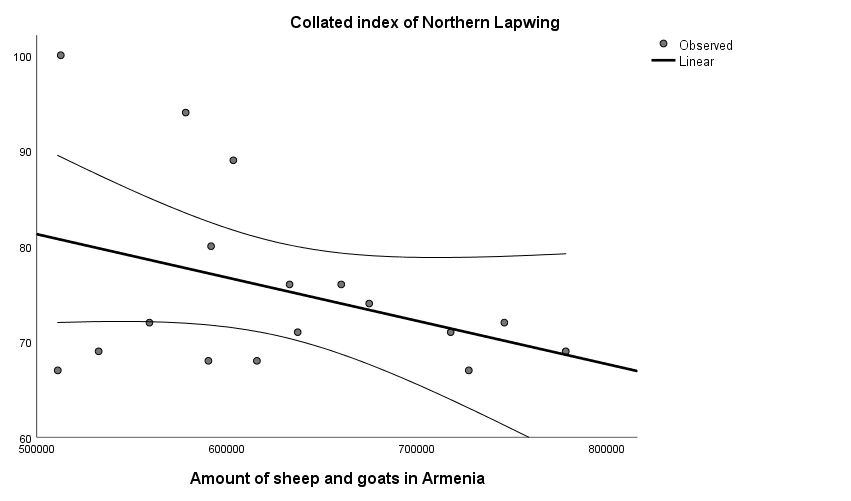
The interviewed State Inspectorate’s staff informed us that they face a difficulty controlling the daily bag limits of the hunters, as well as controlling which species are being shot. According to Inspection, this basically happens, because of insufficient number of Inspectors in the field. Answering then to the question of ‘what is conditioning the low number of inspectors in the field during hunting season, they informed us that the State Inspectorate is understaffed and the inspection, as the process is not well budgeted, neither as personal compensation to the people who perform risky work, nor as financing of the necessary travels to the public hunting lands. Influence of Livestock Husbandry on the Species The data on the number of cattle, sheep and goat in Armenia obtained from Armenian Statistical Agency is represented in the Table 1. Analysis of number of cattle versus Collated Index of the Northern Lapwing showed significant negative correlation (R2 = 0.425, F1,15 = 11.079, p = 0.005; Figure 7), meaning that with the increase of number of cattle in Armenia, the number of Lapwings is decreasing. Similar analysis of number of sheep and goats, however, didn’t show a significant correlation (R2 = 0.138, F1,15 = 2.410, p = 0.141; Figure 8)
| Year | Number of Cattle | Number of Sheep and Goat | Total number of livestock |
|---|---|---|---|
| 2003 | 485,811 | 512,609 | 998,420 |
| 2004 | 515,804 | 578,272 | 1,094,076 |
| 2005 | 573,340 | 603,305 | 1,176,645 |
| 2006 | 592,116 | 591,637 | 1,183,753 |
| 2007 | 620,241 | 632,908 | 1,253,149 |
| 2008 | 629,122 | 637,143 | 1,266,265 |
| 2009 | 584,832 | 559,216 | 1,144,048 |
| 2010 | 570,633 | 511,029 | 1,081,662 |
| 2011 | 571,357 | 532,515 | 1,103,872 |
| 2012 | 599,243 | 590,214 | 1,189,457 |
| 2013 | 661,003 | 674,731 | 1,335,734 |
| 2014 | 677,584 | 717,574 | 1,395,158 |
| 2015 | 688,553 | 745,770 | 1,434,323 |
| 2016 | 701,535 | 778,069 | 1,479,604 |
| 2017 | 655,771 | 727,082 | 1,382,853 |
| 2018 | 590,585 | 660,059 | 1,250,644 |
| 2019 | 571,861 | 615,705 | 1,187,566 |
Table 1: Statistics on livestock in Armenia for the period 2014–2019.
Discussion
Distribution in Armenia
Our surveys show that during 2003-2019 in most of the cases, the Lapwings were found breeding in the same areas as before 2003. The three exceptions are related to Aparan Plateau and in vicinity of Horom village of Shirak Plateau. In both areas the disappearance of the species is accompanied by intensification of the livestock production and introduction of the new machinery haymaking. The land-use intensification and change of agricultural schemes, as one of the main causes of decline of the Lapwings was also reported for Europe [3, 15], and it seems that remains an issue until now by reducing breeding productivity due to drainage of wet meadows, application of inorganic fertilizers and reseeding [16], and increased growing of “winter-crops” [17]. The disturbance, as an effect of intensified agricultural practice has another effect: the Lapwings may suffer from and nest predation by crows, which are getting access to the eggs of disturbed birds [18].
Causes of Observed Population Trend
The observed decrease of the Lapwings in Armenia coincides with the growing of livestock husbandry in the country, specifically, it shows a negative correlation with the growing number of cattle, but not the sheep and goat. Most probably it is caused by the character of the cattle grazing in the country. In general, the livestock grazes on the slopes, while the flatter areas of meadows are mostly used for machinery hay-making. According to our interviews, among the total number of the livestock, the sheep and goat are mainly managed by the Kurdish shepherds, who are keeping the animals in the lowlands from late autumn to early summer, and take them to the uplands starting from the mid-summer. This type of sheep and goat management doesn’t assume a large-scale hay-making, because the animals can find the food in a winter. The cattle are mostly kept in the local villages, and therefore, their management doesn’t assume long-distance movements of this type of the livestock. During winters, the cattle is kept in the cages and are fed by the hay, which was made during the summer. Therefore, growing of number of cattle is accompanied by increase of hay-making, which increasingly becomes a machinery process throughout the country. Meanwhile, the hay-making practice in Armenia is conducted in a way, which can increase nestling mortality of the terrestrial ground- nesting birds, like it was shown on the example of Corn Crake in Britain and Ireland [19] and in Armenia [20], when the use of machinery mowing is proceeded from the outside of the field inwards. Such practice can affect the breeding success of the Northern Lapwings as well.
The Northern Lapwing was included in the list of huntable species during 2014-2017 [21, 22, 23, 24], and then in 2018 it was excluded from list of game birds together with some other waders [25], while in next year all the waders have been excluded from the list of game birds [26] as it is shown in the Table 2. Applying the survey data for the period of 2014-2017 and assuming that 0.6% of 10,000 hunters shoot 10 birds, 2% shoot 5 birds, 6% shoot 2 birds, and 19% shoot just one bird, we obtain a number of 4,700 Lapwings harvested annually. The number already exceeds the limit listed in Governmental Decree of 2014 [21], as well as exceeds the total population of the Lapwings in Armenia. At first, it indicates, that there should be significant number of migrants among the shot Lapwings. At second, it shows that the control over the daily bag limits doesn’t work. Application of the survey results for the period 2018 to 2019, says that the Lapwings have been shot in the time, when they have been prohibited for hunting, and most of the hunters (72%) were sure that the species is not protected. It indicates that the control over the composition of species, which are allowed for hunting, doesn’t work too, as well as the mechanism of hunters’ awareness about the governmental decrees. In turn, it means that even the legal hunting could have the negative effect on population of the Lapwings in Armenia, as well as poaching of the species in the years, when it was prohibited for hunting. Partly, the roots of the issue can be laid in the mechanism of obtaining the hunter’s license. The hunters obtain their hunting licenses by passing a simple test, which examines their knowledge of safe handling the weapon, but not their knowledge of game birds and red- listed species, and their skills of quick identification of the species in the field, also it doesn’t test their knowledge to obtain the proper information about game birds’ species list and daily bag limits of the specific year. It means that here we can face the issue of unintentional killing during the legal shooting season, which is linked to hunters’ education, awareness of the legal status of different quarry species, and their identification abilities. Our interview with the State Inspectorate for Nature Protection and Mineral Resources showed that they lack financial and human resources for the effective control of illegal shooting of this and other species. Also, in accordance to their opinion the relatively low penalty for illegal shooting or trapping of Northern Lapwing, which is less than 2 Euros [27], doesn’t support its protection and should be raised along with stronger education campaign among hunters.
| Factor | Year | |||||
|---|---|---|---|---|---|---|
| 2014 | 2015 | 2016 | 2017 | 2018 | 2019 | |
| Start of season | 24-Aug | 23-Aug | 15-Sep | 2-Sep | 18-Aug | NA |
| End of season | 31-Dec | 31-Dec | 10-Feb | 28-Feb | 28-Feb | NA |
| Duration of season (days) | 129 | 130 | 148 | 179 | 194 | NA |
| Species or groups of Waders allocated for hunting | Waders (excluding Red-listed Species) | Waders (excluding Red-listed Species) | Waders (excluding Red-listed Species) | Waders (excluding Red-listed Species) | Waders (Little Ringed Plover, Ruff, Common Sandpiper, Terek’s Sandpiper, Marsh Sandpiper, Green Sandpiper, Redshank, Wood Sandpiper, Greenshank, Snipe, Dunlin, Little Stint) | Not allowed |
| Number of Waders in the public hunting lands | NA | NA | NA | NA | NA | NA |
| Daily bag for Waders (no more than) | 5 | 5 | 5 | 4 | 4 | NA |
| Count of the game species implemented | No | No | No | No | No | No |
| Maximum number allowed to take during the hunting season | 3,000 | NA | NA | NA | NA | NA |
Table 2: Statistics on waders’ hunting in Armenia for the period 2014–2019.
Present Conservation Measures
The species is not included in Red Book of Animals of Armenia [7], but is included in Appendix II of Convention on Migratory Species as well as in African-Eurasian Water bird Agreement. Currently only 16.71 km2 of the species’ breeding sites are covered by the Armenian Protected Area network (Lake Arpi and Lake Sevan National Parks, and Khor Virap Sanctuary), making 3% of its AOO. Some of the species breeding sites though, have been covered by candidate sites of the Bern Convention’s Emerald Network [11]. Those Emerald Sites, which do not overlap with the existing Protected Areas, are: Lori Lakes, Akhurian Reservoir, Metsamor (Yeghegnut) Wetlands, Araks Valley (Armash) Wetlands, Jermuk, and Gorhayk. Although the Northern Lapwing is not included in the list of bird species of Resolution 6 [28], the proposed candidate sites, which are designated for protection of over 90 breeding and non-breeding birds that fall under the Resolution, would cover the core areas of Northern Lapwing.
Proposed Conservation Measures
Conservation status: Northern Lapwing currently qualifies as Vulnerable IUCN Standards and Petitions Committee [14] on the Armenia Red List under: criteria A2 (population reduction is observed or estimated to decline over 30% during three generations of the species) and points ‘b’ – an index of abundance appropriate for the taxon and ‘c’ – a decline of area of occupancy (AOO), extent of occurrence (EOO), and/or habitat quality; criteria B2 (as the area of occupancy is less than 2,000 km2) and points ‘a’ – population is severely fragmented and ‘b’ continuous decline observed in ‘v’ – number of mature individuals; and criteria C1 (number of mature individuals is fewer than 10,000 and an observed or estimated decline is at least 10% in three generations). Therefore, its current conservation status should be read as Vulnerable A2bc + B2ab_v_ + C1. Habitat protection: In the meantime, it is important to begin official adoption of the candidate Emerald Sites and their designation by the Bern Convention, and then to start development of the management plans for those Emerald Sites. One of the important steps of the future management plans of the newly born Emerald Sites should be excluding of the public hunting lands from their territory. Another important step is review of current agricultural practices and, as part of it, is a change of the way of machinery mowing in the wet meadows from inside outwards [29]. Also, it is important to delay hay-mowing until most birds have large young [29] that in case of Lapwings takes place in August. Species Protection: There is an obvious need to change the mechanism of raising the awareness of the species which are not allowed for hunting during the specific season. This responsibility should be delegated to the Hunting Unions, which have to be punished in case, when their members shoot a red-listed species. Also, it is important to change the hunting licence conditions in order to include an obligatory exam testing identification skills and knowledge of protected species. The State Inspectorate Body also needs to be strengthened to improve control over poachers. The improvement, should suppose increase of financing and staffing of the Inspectorate Body, as well as increase of cooperation between the State Inspectorate and hunters’ unions, with some inspection functions delegated to responsible hunters. The proposed conservation measures should be supported by regular monitoring of the Lapwings to track the further trend in the Lapwing’s population as an indicator of efficiency of the proposed conservation efforts and the management planning of the Emerald Sites.
Acknowledgement
Monitoring of the species in Armenia was supported by members of the Birding Association of Armenia (past Armenian Birdwatching Association). Data archiving was supported by the Observation Foundation. During 2010- 2019 the data collection was supported by Whitley Fund for Nature in frames of series of grants on Sustainable Wetland Management in South Caucasus, and during 2015–2017 the survey was also supported by the European Bird Census Council through a grant from the MAVA Foundation for the European Breeding Bird Atlas - EBBA2. The Deutsche Gesellschaft für Internationale Zusammenarbeit (GIZ) GmbH supported Environmental Programme contributed to the data analysis. The administrative support was provided by the Ministry of Environment of RA, Lake Arpi National Park, Lake Sevan National Park, and Armash carp-farm LLC.
References
-
Cramp S, Perrins CM (1983) _Handbook of the birds_ _of Europe, the Middle East and Africa. The birds of_ _the western Palearctic. Vol 3: Waders to Gulls_. Oxford University Press, Oxford, UK.
-
Wiersma P, Kirwan GM, Sharpe CJ (2020) Northern Lapwing (_Vanellus vanellus_). In: del Hoyo J, et al. (Eds.), Handbook of the Birds of the World Alive Cornell Lab of Ornithology, Ithaca, NY, USA.
-
del Hoyo J, Elliott A, Sargatal J (1996) Handbook of the Birds of the World, vol. 3: Hoatzin to Auks. Lynx Edicions, Barcelona, Spain.
-
Nagy S, Langendoen T (2018) Report on the Conservation Status of Migratory Waterbirds in the Agreement Area, 7th (Edn.), 13th Meeting of the Standing Committee 03-05 July 2018. Doc. AEWA/StC13.14. Wetlands International, The Hague, The Netherlands.
-
BirdLife International (2015) _Vanellus_ _vanellus_. The IUCN Red List of Threatened Species 2015: e.T22693949A60072158.
-
BirdLife International (2017) _Vanellus vanellus_ (amended version of 2016 assessment). The IUCN Red List of Threatened Species 2017: e.T22693949A111044786.
-
Aghasyan A, Kalashyan M (2010) The Red Book of Animals of the Republic of Armenia. Ministry of Nature Protection, Yerevan, Armenia.
-
Adamian M, Klem D (1999) Handbook of the Birds of Armenia. American University of Armenia, California, USA.
-
Tumanian R (2001) Country pasture profile for Armenia.
-
Aghababyan KE, Ter Voskanyan H, Tumanyan S, Khachatryan A (2015) First National Atlas of the Birds of Armenia. Bird Census News 28 (Suppl): European Atlas News: 52-58.
-
Fayvush G, Arakelyan M, Aghababyan K, Aleksanyan A, Aslanyan A, et al. (2016) In: Baloyan S (Eds.), The “Emerald” Network in the Republic of Armenia, Ministry of Nature Protection, Yerevan, Armenia.
-
Bibby CJ, Burgess ND, Hill DA (2000) Bird Census Techniques, 2nd (Edn.), Academic Press, London, UK.
-
van Strien A, Pannekoek J, Hagelmeijer W, Verstrael T (2004) A loglinear Poisson regression method to analyse bird monitoring data. In: Anselin A (Eds.), Bird Numbers 1995, Proceedings of the International Conference and 13th Meeting of the European Bird Census Council, Pärnu, Estonia, Bird Census News 13: 33-39.
-
IUCN Standards and Petitions Committee (2019) Guidelines for Using the IUCN Red List Categories and Criteria. Version 14. Prepared by the Standards and Petitions Committee.
-
Wilson AM, Ausden M, Milsom TP (2004) Changes in breeding wader populations on lowland wet grasslands in England and Wales: causes and potential solutions. Ibis 146(2): 32-40.
-
Baldi A, Batary B, Erdos S (2005) Effects of grazing intensity on bird assemblages and populations of Hungarian grasslands. Agriculture Ecosystems & Environment 108(3): 251-263.
-
Eggers S, Unell M, Pärt T (2011) Autumn-sowing of cereals reduces breeding bird numbers in a heterogeneous agricultural landscape. Biol Conserv 144(3): 1137-1144.
-
Hart JD, Milsom TP, Baxter A, Kelly PF, Parkin WK (2002) The impact of livestock on Lapwing _Vanellus vanellus_ breeding densities and performance on coastal grazing marsh. Bird Study 49(1): 67-78.
-
Green R, Stowe T (1993) The Decline of the Corncrake _Crex crex_ in Britain and Ireland in Relation to Habitat Change. Journal of Applied Ecology 30(4): 689-695.
-
Aghababyan K, Khachatryan A, Ghazaryan A, Gevorgyan V (2021) About the state of Corn Crake _Crex crex_ Bechstein 1803 in Armenia. Bird Census News 34(1): 9-17.
-
Ministry of Nature Protection (2014) Decree on the number of game-animal shooting permits and the period of hunting in the territory of the Republic of Armenia in 2016–2017. Ministry of Nature Protection, Decree No 236-A, 21.08.2014.
-
Ministry of Nature Protection (2015) Decree on the number of game-animal shooting permits and the period of hunting in the territory of the Republic of Armenia in 2016–2017. Ministry of Nature Protection, Decree No. 237-A, 13.08.2015. Ministry of Nature Protection, Yerevan, Armenia.
-
Ministry of Nature Protection (2016) Decree on the number of game-animal shooting permits and the period of hunting in the territory of the Republic of Armenia in 2016–2017. Ministry of Nature Protection, Decree No. 201-A, 17.08.2016. Ministry of Nature Protection, Yerevan, Armenia.
-
Ministry of Nature Protection (2017) Decree on the number of game-animal shooting permits and the period of hunting in the territory of the Republic of Armenia in 2017–2018. Ministry of Nature Protection, Decree No. 254-N, 01.08.2017. Ministry of Nature Protection, Yerevan, Armenia.
-
Ministry of Nature Protection (2018) Decree on the number of game-animal shooting permits and the period of hunting in the territory of the Republic of Armenia in 2018–2019. Ministry of Nature Protection, Decree No. 229-N, 31.07.2018. Ministry of Nature Protection, Yerevan, Armenia.
-
Ministry of Environment (2019) Decree on the number of game-animal shooting permits and the period of hunting in the territory of the Republic of Armenia in 2019–2020. Ministry of Environment, Decree No. 279- N, 20.08.2019. Ministry of Nature Protection, Yerevan, Armenia.
-
Parliament of Republic of Armenia (2017) HO-82-N Decree on changes and additions in RA law “About penalties for a harm to the representatives of flora and fauna, caused by environmentally illegal actions”.
-
Convention on the conservation of European wildlife and natural habitats (2011) Revised Annex I of Resolution 6 (1998) of the Bern Convention listing the species requiring specific habitat conservation measures (year of revision 2011). T-PVS/PA (2011) 15. Council of Europe, Strasbourg, France.
-
Green R (2020) Corn Crake conservation. British Birds 113: 671-685.
- Lessons to Learn: Trees are More than the Lungs of the World
- Community Forestry Enterprises as a Model for Sustainable Forest Development: The Case Of The "Baja Tarahumara" in Chihuahua, Mexico
- Ecological and Socio-Economic Impacts of Chromolaena odorata and Mesosphaerum suaveolens, Two Invasive Alien Species in Central and Southern Benin, West Africa
- Epigenetic Sustainability: Modeling the Human Factor as a Natural Resource through Science 4.0 and the NR3C1 Biological Pilot
- Growth-at-Risk: A Framework for Assessing Economic Vulnerability
- The Rural Territory as a Socioecological System for the Management of Public Policy for Sustainable Rural Development