
Assessment of Bahr El-Baqar Drain and its Environmental Impact on Manzala Lake in Egypt
Polluted drains are considered one of the most important dangerous elements for the surrounded aquatic environment. The use of polluted water from drains outfalls in fish farms and agricultural lands has a very dangerous environmental effect on plants, soil, and groundwater. Over a year period starting May 2018, 75 water samples were collected from bahr El-Baqr drain outlet, Manzala wetland and Manzala Lake to examine and classifies it water quality and evaluates its suitability for reuse in safe irrigation. Based on physical, chemical and bacteriological results obtained, the calculated water quality index (WQI) classified Bahr El-Baqr drain as poor drainage water, while gradual improvement recognized at the end of wetland stages specially in subsurface follow basin and Manzala Lake as medium quality that attributed most probably to self-purification and dilution concepts. Out of 200 bacterial isolates, 29.8% and 70.2% were recovered from Bahr El-Baqar drain and all wetland station sites, respectively. Identified bacterial strains were verified using 16S-rDNA and all nucleotide sequence data were submitted to the NCBI GenBank database, USA and gained their accession numbers. The bioinformatics analysis supported the analytical data and the correlation coefficient matrix between physicochemical and bacteriological pairs recorded several positive and negative significant relationships. The study recommended continuous treating domestic wastewater and directing it to locations distant from direct disposal in Lake Water and pointed out its possible reuse in cultivating cereal, industrial and fodder crops of economic importance to mitigate health problems outbreaks or any aquatic ecosystem disorders.
Introduction
Water is a vital and fateful natural resource for human being’s survival and sustenance; it is also a fundamental resource for agricultural and economic activities [1, 2]. The population growth and subsequent economic and urban evolution have increased the demand for water throughout many countries around the world. Yet, climate change, land degradation, unregulated withdrawal of water, agricultural, and industrial pollution, have procured to water scarcity and deterioration . Urbanization and human activities influence most of the water bodies. The use of low-quality water leads to various environmental impacts [3, 4].
Bahr El-Baqar drain system in Egypt receives untreated waste water starting from east of Cairo, at El-Gebel El-Asfar and then joined by the Belbeis drain, down to Qalubiya drain. The length of the main drain is 170 km with a depth of 1 to 3 meter and width is about 30 to 70 meter [5]. El-Manzala Lake receives and carries the greatest part of wastewater (about 3 million m3 per year) into Lake, which passed through Qalubyia, Sharkia, Ismailia and Port Said regions. It is surrounded with great areas of wetlands. The fish production is high and once supplied about 30% of Egypt’s totals catch. Four main sources of pollutants cause deterioration in Bahr El-Baqar drain. Waste waters of the industrial activities in region including metal, food processing, detergents and soaps manufacturing, textile and paper production are discharges into the drain. These aquatic systems receive many pollutants, such as ammonia, anions, cations and heavy metals [6].
Microbiological water quality, chemical composition, and hazardous effects on Lake Manzala water and living organisms caused by Bahr El-Baqar drain water were studied by Abukila [7], Elmorsi [8], Aboulfotoh [9], Redwan and Elhaddad [10]. The discharge of industrial, agricultural and municipal wastewaters in Bahr El-Baqar drain led to contamination of soils, which irrigated by water of this drain. Karaman [11] concluded that 58% of the total drainage water of Bahr El-Baqar drain comes from agricultural drainage, 2% from industrial drainage and 40% from domestic and commercial drainage.
The purpose of drainage and wastewater treatment is to remove solids (suspended, colloidal and floated), biodegradable organic matters, nutrients and elimination of pathogenic microorganisms. Water quality criteria for irrigation generally take into account characteristics such as crop tolerance to salinity, sodium concentration, and phytotoxic trace elements. It is important to reuse both drainage and treated wastewater in order to blocking the gap in water needs [9].
Constructed wetlands are artificial transitional zones between terrestrial and aquatic system serving ecological functions such as fish, wildlife, waterfowl and aquatic plants. They also trap sediments and pollutants, cycle nutrients, and reuse treated water in agriculture. The Global Environmental Facility / United National Development Program (GEF/UNDP) funds the project, with a main objective of treating 25,000m3 per day of the polluted drainage water as a demonstration for low-cost technique for wastewater treatment to protect the ecology of Lake Manzala and Mediterranean Sea. A collaborative study is underway with the National Water Quality and Availability Management project (NAWQAM), financed by the Governments of Egypt and Canada, which will investigate the safe drainage water reuse guidelines in irrigation using low-cost treatment methods.
In view of aforementioned challenges, this study aims to highlight the potential hazards of Bahr El-Baqar drainage water discharge on El Manzala Lake at the city of Zagazig concerning the efficiency of Lake Manzala wetland stages and the possible associated water quality among bacteriological and physicochemical parameters for safe reusing of treated effluent in agricultural purposes and irrigation. In addition, applying rapid technique depends on 16s rRNA gene for identification of aquatic bacterial strains. Health hazards encountered with this problem will be also discussed.
Materials and Methods
Study Area: Bahr El-Baqr drain (BBD) is largest and most polluted drain of the seven drains discharging in Lake Manzala (5.5 billion m3/day) [5]. The drain originates from Cairo collecting agricultural, industrial and sewage water for three other governorates before reaching Lake Manzala with a total length of more than 200 km. Wastewater in the drain is composed of particulate, nutrient, heavy metals, hydrocarbons, and residues of toxic compounds such as herbicides and pesticides [6]. Despite the fact that Bahr El- Baqr is the largest drain in the Eastern Delta, it was excluded from supplying El-Salam Canal delivering mixed drainage and fresh water to Sinai due to the high level of pollution. This condition results in loss of large amounts of water that could have been reused for irrigation.
Lake Manzala Constructed wetland is planned to treat 25,000m3/day of wastewater from Bahr El-Baqr before it reaches lake Manzala as illustrated in Figure 1. A five-stage treatment will be considered in the constructed wetland starting with pumping station lifting water from Bahr El- Baqr drain that will be retained in the sedimentation basin for 2 days [2].
The high sediment load in the drain consists approximately 65% sand, 23 % silt and 12% clay. Sediment
adsorbed organic carbon ranges from 17% to 75% of the total organic carbon levels and is indicative of high potential for adsorption of metals. Water will flow by gravity from the sedimentation basin to ten surface-flow engineered wetland treatment beds. The wetland beds will be operated in parallel to investigate the treatment performance for different hydraulic loading rates with an average retention time of 2 days and different plant species. Combinations of plants species in the treatment cells will include common reed, cattail, water hyacinth, etc. Only 500 m3 of the water from the wetland cells will undergo further level of treatment through a subsurface-flow gravel bed engineered wetland (reciprocating units). Eventually treated water will be used to supply fish hatchery and fingerling production ponds and the wastewater will be returned to the sedimentation basin.
![Figure 1: A five-stage treatment will be considered in the constructed wetland starting with pumping station lifting water from Bahr El- Baqr drain that will be retained in the sedimentation basin for 2 days [2].](/fulltextimages/9006/fig_1.png)
Collection Sample Period
The study was conducted during the period from May 2018 to June 2016. Water samples were gathered from (1) Bahr El-Baqr drain outlet, (2) Pump station, (3) sedimentation basin, (4) drying basin, (5) surface follow basin, (6) subsurface flow basin and exits from (7) Lake Manzala with an overall of 75 water samples.
Collection of Water Samples
All samples were examined according to water and wastewater examination standards [12]. Water samples collection was in clean and sterile polyethylene plastic bottles from subsurface layer at depth 50 cm. All samples for either physico-chemical or bacteriological analysis were stored using an ice box and were immediately sent to the laboratory for analyses. All analyses were carried out in the Central Laboratory for Environmental Quality Monitoring (CLEQM) National Water Research Center (NWRC), Cairo, Egypt. Water Samples Analysis: All analyses were done according to Water and Waste water Examination Standards [12]. Physico-Chemical Analysis: All field parameters including pH, Temperature, electric conductivity (EC), dissolved oxygen (DO) and total dissolved solids (TDS) were carried out in the field by utilizing the multi-probe system, model Hydro lab- Surveyor, Germany then rechecked in laboratory to ensure data accuracy. As soon as the samples were received in the lab, they were mixed by shaking and examined as following: Ammonia (NH3) was measured by using ammonia selective electrode, ORION model 95-12 attached to bench-top Ion analyzer, ORION model 940. Nephelometric turbidity meter HACH, model 2100 was used for turbidity measurements. Biochemical oxygen demand (BOD) was determined using ORION BOD fast respiratory system, model 890. Chemical Oxygen Demand (COD) was measured using potassium permanganate method. Titrimetric Method was used for Total hardness, Calcium hardness (Ca. hardness), and Magnesium hardness (Mg. hardness) measurements. Chloride (Cl-) was measured by Argentometric method. Nitrate (NO3-), nitrite (NO2-), phosphate (PO4 -3), and sulphate (SO4 -2) were measured by ion chromatography. Total alkalinity was measured by titration method. The concentrations of major cations including Calcium (Ca+2), Sodium (Na+), Magnesium (Mg+2) and Potassium (K+) as well as trace metals including zinc (Zn), arsenic (As), cadmium (Cd), lead (Pb), chromium (Cr), copper (Cu), nickel (Ni), aluminum (Al), manganese (Mn) and iron (Fe) were measured by ICP-OES Model Varian lab Liberty Series II. Bacteriological Analysis: All of samples were examined according to Water and Wastewater Examination Standards APHA and AWWA [12] within 6 hours after collection. Standard plate count (SPC) of bacteria was determined by applying pour plate method at 22°C and 37°C. Fecal coliforms (FC), Total coliforms (TC), and fecal streptococci (FS) count were carried out using M-FC agar, M-Endo agar LES, and M-Enterococcus agar media, respectively as a dehydrated form (Difco-USA). All water samples used for bacteriological analysis were using sterile surface gridded Sartorius’’ membrane filter (pore size, 0.45µm and diameter, 47mm) coupled with stainless steel autoclavable manifold and oil-free ‘‘Millipore’’ vacuum/pressure pump. Results were recorded as colony forming unit (CFU 100mL-1) using the following equation:
CFU∕100mL=CFU×100∕ml of filterd sample
Isolation And Identification Of Aquatic Bacteri
Some aquatic bacteria have a potential significant health risk to humans were given prime concern for investigation as follows [12]:
Escherichia Coli: E. coli detection was done according to standard method No. 9213 D using m-TEC agar medium. After incubation at 44.5°C ± 0.2°C for 24h, yellow or yellow-brown colonies are developed. These colonies were confirmed by streaking on Eosin Methylene Blue agar plates showing pink growth with golden metallic sheen.
Pseudomonas Aeruginosa: Standard method No. 9213 E was applied using M-PA-C agar medium. After incubation at 41.5 ± 0.5°C for 72 h, colonies (0.8 to 2.2mm in diameter) showing flat appearance with light outer rims and brownish to greenish black centers were selected and isolated as P. aeruginosa. These colonies were confirmed by streaking on cetrimide agar plates, a selective medium which inhibits other bacterial growth and enhances fluorescein and pyocynin “Blue green” pigment production.
Staphylococcus aureus: According to standard method No. 9213 B, Baird-Parker agar medium was used. After incubation at 35°C for 48 h, black shiny colonies surrounded by a narrow clear zone were picked up, and confirmed by streaking on Mannitol salt agar plates to give golden yellow colonies.
Enterococcus faecalis: Using M-Enterococcus agar medium (standard method No. 9230C), colonies showing red to pink color were isolated as presumptive E. faecalis.
Identification by Analytical Profile Index (API) 20 Strips
The Analytical Profile Index (API) 20 E strips obtained from Biomerieux, France were used as biochemical system for identification of enterobacteriaceae and other non- fastidious gram-negative rod bacteria. The API 20 E strip consists of 20 micro-tubes containing dehydrated substrates. These tests are inoculated with a bacterial suspension that reconstitutes the media. The strips were incubated for 18- 24 h at 37 °C. During incubation, metabolism produces color changes that are either spontaneous or revealed by the addition of reagents. The reactions were read according to the reading table and the identification was obtained by referring to the Analytical Profile Index [13].
Water Quality Index (WQI):
Water quality index is a 100 point scale that was used to summarize results from a total of eight measurements by using Microsoft Excel Version, 2013 according to National Sanitation Foundation, USA [14]. The used parameters are: DO, BOD, FC, pH, Temp, PO4 3- , NO3- and turbidity. The WQI makes reduction of large amounts of data thus ranking water into one of five categories: very bad from 0_-25, bad from 25- 50, medium from 50-70, good from 70-90 and excellent from 90-_100.
Identification of Bacterial Isolates By 16S-Rdna
Genomic DNA were extracted using Bacterial Genomic DNA Isolation Kit RKT09 (Chromous Biotech Pvt. Ltd., Bangalore, India) and visualized on 0.8% (w/v) agarose gel. Gene amplification was carried out using a Thermal cycler (ABI 2720) in 100 µl reaction volume containing 2.5 mM of dNTP, 10x PCR buffer, 3U of Taq DNA polymerase, 10 ng template DNA, and 400 ng of primer (F) 5’-GGGGGATCTTCGGACCTCA-3’, and primer (R) 5’-TCCTTAGAGTGCCCACCCG-3’ which were designed for aquatic gram negative bacteria according to Tripathi [15] and Azzam [16]. The amplification program was set as an initial denaturation at 94°C for 5 min., followed by 35 cycles of 94°C for 30 s, 55°C for 30 s, 72°C for 2 min and a final extension at 72°C for 5 min. The sequencing was performed according to manufacturer’s protocol using Big Dye Terminator Cycle Sequencing Kit (V. 3.1, Applied Bio-system) and analyzed in an Applied Bio-system analyzer.
The sequences of 16S-rDNA for these strains were finally submitted to the NCBI GenBank database, USA, and compared to other available sequences using an automated alignment tool blast program, and assigned their accession numbers. Phylogenetic tree showing the genetic relationship between the Egyptian strains obtained in this study and other recorded strains was constructed using Clustalw with the help of MEGA software version 6.0 [17].
Statistical and bioinformatics analysis
Data interpretations involving many variables were carried out through correlation coefficient matrixes between of bacteriological and physico-chemical parameters using SPSS version 23 statistical software program. For bioinformatics and molecular analysis, the following programs were employed in the study:
• Basic local alignment search tool (BLASTN and BLASTP).
• Clustalw program (version 1.74).
• Molecular Evolutionary Genetic Analysis (MEGA) software (version 6.0).
• DNAMAN software (Madison, Wisconsin, USA, version 5.2.9).
Results and Discussion
Physico-Chemical Characteristics of Water Samples
Temperature: The results showed temperature changes ranging from 28-33°C for Bahr El-Baqar drain outlet (1), Manzala Lake wetland basins (2-6) and Manzala Lake outlet (7) (Table 1). These changes depend on climatic changes and sampling time. All values were within the normal limits established by Law 48 of 1982 indicating that the water temperature of all collected samples was affected only by the ambient air temperature with no thermal pollution [18]. Correlation coefficient matrix revealed that temperature was positively correlated with pH (r = 0.55). This is due to the increase in temperature is usually accompanied by hydrolysis of HCO3- and CO32- ions, leading to the appearance of hydroxyl (OH-) ions that increase pH value, similar relationship was reported by Satar A, et al. [19]. pH: All pH values of Bahr El-Baqar drain outlet, Manzala Lake basins (2-6) and Manzala Lake outlet (7) were ranged between 7.29 to 9.10 as shown in Table (1). These values are within the permissible limits of Law 48 for year of 1982 7.0 to 8.5, with exception of Bahr El-Baqar Drain (1), sedimentation basins (3) and water pumping station (2) which were reported to be 9.10, 9.0 and 8.6 respectively. The pH affects biological and chemical reactions in aquatic environment. The increase in the pH of rivers could be related to photosynthesis and growth of aquatic plants, where photosynthesis consumes CO2 leading to rise in pH values [1]. Turbidity: From data given in Table 1, turbidity values ranged from 12.80 to 92.00 NTU for Bahr El-Baqar drain outlet (1), Manzala Lake wetland basins (2-6) and Manzala Lake outlet (7). Values exceeding permissible limits were mainly recorded in Bahr El-Baqar drain outlet (1) and the minimum values were recorded in Manzala Lake (7), such high values of turbidity may be attribute to drain discharge [2]. High levels of turbidity can come from urban runoff, wastewater Increased turbidity negatively affects aquatic life by reducing light penetration needed for photosynthesis. As far as concerning humans, increased turbidity requires greater processes to clean up water for human consumption [4]. Positive correlations were found between turbidity values and all studied parameters. Turbidity values are negatively correlated with dissolved oxygen (DO) (r = -0.68). Total Dissolved Solids (TDS): TDS values for all collected water samples ranged between 266-409 mgL-1 for Manzala Lake wetland basins (3-7) and these values are within the permissible limits of Law 48 for year of 1982 (not to exceed 500 mgL-1) (Table 1) with exception of Bahr El-Baqar Drain (1) and water pumping station (2) which were reported to be 1104 and 974, respectively. Zaghloul SS, et al. [20] found high TDS values ranged from 1384-1748 mgL-1 at Gharbiah drain, Egypt. Total Suspended Solids (TSS): TSS values for all collected water samples ranged between 14-145 mgL-1 for Bahr El-Baqar drain (1), Manzala Lake wetland basins (2-6) and Manzala Lake outlet (7), these values are within the permissible limits of Law 48 for year of 1982 (Table 1). HYPERLINK "https://www.sciencedirect.com/science/ article/pii/S2352186422000335#!"Elkorashey RM [2] found high TSS values ranged from 368-411 mgL-1 at Bahr El-Baqar drain outlet, Egypt. Electric Conductivity (EC): EC value depends on the concentration and the degree of dissociation of the ions, temperature and migration velocity of the ion in the electric filed. Ions concentration depends on the environment, movement and sources water. EC values (Table 1) ranged between 355- 1670 µmhos∕cm for water samples collected from bahr El-Baqar drain outlet (1), Manzala Lake Wetland basins and Manzala Lake outlet (7), respectively. The maximum value was recorded in outlet of El-Baqar drain where receive sewage, agricultural and industrial wastes. The El-Bahr El-Pharaony Drain in the same governorate recorded 112-510 μmohs/cm [21]. In parallel to these findings, TDS, EC and turbidity values revealed positively strong correlation to each other (r = +0.99). EC exhibited negative correlation with DO (r = -0.76) and high positive correlations with different studied parameters, our results were in accordance with Zaghloul SS, et al. [21] and Azzam MI, et al. [22]. Ammonia (NH3): Ammonia is present in water as result of the biological degradation of nitrogenous organic matter. The unionized form (NH3) is extremely toxic while the ionized form (NH4+) is not and both are grouped as total ammonia [21]. As indicated from Table 1, the values for NH3 fluctuated between 2.07 – 25.02 mgL-1 for water samples collected from Bahr El-Baqar drain outlet (1) and Manzala Lake wetland basins (2-5). The values of ammonia for the most of water samples were above the permissible limits of Law 48 for year of 1982 (values should not exceed 0.5 mgL-1), with exception of subsurface flow basins (6) and Lake Manzala (7) within the limits of value 0.04 and 0.09 mgl-1, respectively.
The maximum values were recorded in outlet of Bahr El- Baqar drain.
The maximum values were recorded in outlet of Bahr El-Baqar drain and initial basins that designed to treatment of drainage water where the water receives domestic, fecal wastes and sanitation discharges. It is worth mentioning that, NH3 in raw water may increase the chlorinated compounds, which may lead to “break-point” chlorination phenomenon. During chlorination, up to 68% of the initial chlorine may react with NH3 forming chloramines, as well as drainage water may contain nitrite as result of ammonium- oxidizing bacteria [23]. Statistical analysis showed positive correlations of NH3 with NO3-, BOD and bacteriological measurements (r = +0.45), while negative correlation was observed with DO. This confirms the impact of sewage discharge and agricultural runoff in this area.
Dissolved Oxygen (DO): The values of DO showed ranges fluctuated between 0.24_-_5.11 mgL-1 for water samples collected from outlet of Bahr El-Baqar drain (1), Manzala Lake wetland basins (2-6) and Manzala Lake outlet (7). All DO values were less than the permissible limits according to Law 48/1982 (Not less than 6) (Table 1). The depletion of DO indicates unfavorable environmental conditions in which anaerobic bacteria metabolism leads to production of ammonia and H2S gases, in addition to decomposition of organic matters [24]. Biochemical Oxygen Demand (BOD): BOD values (Table 1) fluctuated between 8.2 mgL-1 and 61.0 mgL-1 for Bahr El-Baqar drain outlet (1) and Manzala Lake wetland basins (2-6). All BOD values were above limits (not to exceed 6 mgL-1) (Law 48/1982) except for Manzala Lake (7) within the permissible limits which recorded 6.0 mgL-1. On the other hand, BOD revealed high positive correlations with all bacteriological parameters (r = +0.82) and a significantly positively correlated to temperature (r = 0.67) and pH (r = 0.55) mainly due to removal of free oxygen by bacteria during decomposition of organic matter which is usually followed by BOD levels increase. Ghannam HE, et al. [21] recorded high BOD values (10.2-7.6 mgl-1) in the water samples collected from El-Bahr El-Pharaony drain, El-Menoufia governorate, Egypt.
| Parameters | Sites Code | Law 48/1982 ** | ||||||
|---|---|---|---|---|---|---|---|---|
| 1 * | 2 | 3 | 4 | 5 | 6 | 7 | ||
| Temperature °C | 28 | 29 | 30.5 | 32 | 32.1 | 32.4 | 33 | *** - |
| pH (Unit) | 9.1 | 8.6 | 9 | 8.08 | 8.05 | 8.11 | 7.29 | 6.5 - 8.5 |
| Turbidity (NTU) | 92 | 56 | 41.3 | 37 | 19.1 | 15.2 | 12.8 | - |
| EC (μmhoscm-1) | 1670 | 560 | 510 | 481 | 473 | 422 | 355 | - |
| TDS (mgl-1) | 1104 | 974 | 409 | 368 | 321 | 308 | 266 | Not to exceed 500 |
| TSS (mgl-1) | 145 | 110 | 84 | 57 | 39 | 21 | 14 | - |
| Ammonia (mgl-1) | 25 | 19 | 12.01 | 8.05 | 2.07 | 0.04 | 0.09 | Not to exceed 0.5 |
| DO (mgl-1) | 0.24 | 1.6 | 3.77 | 3.81 | 4.01 | 4.93 | 5.11 | Not less than 6 |
| BOD (mgl-1) | 61 | 44 | 37 | 25 | 10 | 8.2 | 6 | Not to exceed 6 |
| COD (mgl-1) | 79 | 63 | 42 | 39.3 | 17 | 10.6 | 8 | Not to exceed 10 |
Table 1: Physico-chemical properties of bahr El-Baqar drain outlet, Manzala Wetland and Manzala Lake.
* 1: Bahr El-Baqar Drain, 2: water pumping station, 3: sedimentation basins, 4: drying basins, 5: surface flow basins, 6: subsurface flow basins, 7: Manzala Lake. Law 48/1982: Egyptian Law for protection of the River Nile and water ways from pollution. * - : No available guidelines. Table 1: Physico-chemical properties of bahr El-Baqar drain outlet, Manzala Wetland and Manzala Lake.
Chemical Oxygen Demand (COD): COD is used to determine the quantities of organic matter in the water so it is an indicator of organic pollution in the surface water [25]. In the relation to the BOD test, the COD test is used for detection of toxic conditions and the presence of biologically resistant organic substances [26]. COD values (Table 1) fluctuated between 79mgL-1 and 10.6mgL-1 for Bahr El-Baqar drain outlet (1), Manzala Lake basins (2- 6) and Manzala Lake outlet (7). All COD value in samples collected from inlets were above limits (not to exceed 10 mgL-1), while water sample collected from Manzala Lake recoded 8.0 mgL-1 and within limits according to Law 48/1982.
Total Hardness, Anions and Cations Trace Metals
All presented data collected from of Bahr El-Baqar drain outlet (1), Manzala Lake wetland basins (2-6) and Manzala Lake outlet (7) were within the acceptable limits according to Law 48/1982 as given in Table 2. Both of Al, Ba, Co, Mo and Sr concentrations in all water samples within the permissible limits as shown in Table 3. The highest trace metal concentrations (Cd, Cr, Cu, Fe, Pb, Mn, Ni and Zn) in both of Bahr El-Baqar drain outlet (1), water pumping station (2), drying basin and Manzala Lake were above the permissible limits of law 48/1982. Many studies recorded high levels from anions, cations and heavy metals in bahr El- Baqar drain outlet, Manzala Lake wetland [2]. Increasing of some anions, cations and trace metals specially in drainage water due to biological and chemical biodegradation process for in organic and organic compounds which detected in sewage water.
| Parameters | Sites Code | Law 48/1982 ** | ||||||
|---|---|---|---|---|---|---|---|---|
| 1 * | 2 | 3 | 4 | 5 | 6 | 7 | ||
| NO - 2 | 0.6 | 0.04 | 0.2 | 0.01 | 0.01 | 0.09 | 0.2 | *** - |
| NO - 3 | 17.2 | 16.5 | 16.9 | 12.5 | 14.7 | 15.1 | 6.87 | - |
| Cl- | 2048 | 1696 | 1711 | 1631 | 1705 | 1609 | 1321 | - |
| F- | 0.7 | 0.64 | 0.67 | 0.49 | 0.31 | 0.49 | 0.55 | - |
| Ca+2 | 256 | 244 | 241 | 241 | 208 | 193 | 178 | - |
| Mg+2 | 216.2 | 108.5 | 96.2 | 94 | 88.1 | 71.1 | 57.9 | - |
| Na+ | 1240.4 | 668.3 | 660 | 651 | 641.8 | 637.1 | 622.5 | - |
| K+ | 36.2 | 36 | 36 | 32.1 | 28.6 | 28.6 | 27.4 | - |
Table 2: Trace metals concentrations (mgl-1) of Bahr El-Baqar drain outlet, Manzala wetland and Manzala Lake.
* 1: Bahr El-Baqar Drain, 2: water pumping station, 3: sedimentation basins, 4: drying basins, 5: surface flow basins, 6: subsurface flow basins, 7: Manzala Lake. Law 48/1982: Egyptian Law for protection of the River Nile and water ways from pollution. * - : No available guidelines. Table 2: Major anions and cations concentrations (mgl-1) of Bahr El-Baqar drain outlet, Manzala Wetland and Manzala Lake.
| Parameters | Sites Code | Law 48/1982 ** | ||||||
|---|---|---|---|---|---|---|---|---|
| 1 * | 2 | 3 | 4 | 5 | 6 | 7 | ||
| Al | 0.115 | 0.005 | 0.005 | 0.005 | 0.005 | 0.01 | 0.081 | *** - |
| Ba | 0.672 | 0.4 | 0.027 | 0.041 | 0.088 | 0.032 | 0.681 | - |
| Cd | 0.81 | 0.001 | 0.001 | 0.001 | 0.001 | 0.001 | 0.022 | Not to exceed 0.001 |
| Co | 0.372 | 0.005 | 0.014 | 0.075 | 0.002 | 0.001 | 0.001 | - |
| Cr | 0.061 | 0.005 | 0.014 | 0.075 | 0.002 | 0.001 | 0.044 | Not to exceed 0.05 |
| Cu | 1.498 | 0.11 | 0.017 | 0.004 | 0.001 | 0.001 | 0.461 | Not to exceed 0.01 |
| Fe | 0.903 | 0.814 | 0.026 | 0.21 | 0.002 | 0.001 | 0.079 | Not to exceed 0.5 |
| Pb | 0.028 | 0.001 | 0.001 | 0.001 | 0.001 | 0.001 | 0.001 | Not to exceed 0.01 |
| Mn | 2.417 | 0.15 | 0.006 | 0.006 | 0.006 | 0.006 | 0.305 | Not to exceed 0.2 |
| Mo | 0.04 | 0.001 | 0.001 | 0.001 | 0.001 | 0.001 | 0.001 | - |
| Ni | 0.048 | 0.002 | 0.001 | 0.001 | 0.001 | 0.001 | 0.05 | Not to exceed 0.02 |
| Sr | 0.06 | 0.005 | 0.005 | 0.001 | 0.001 | 0.004 | 0.004 | - |
| Zn | 0.372 | 0.009 | 0.001 | 0.001 | 0.001 | 0.001 | 0.001 | Not to exceed 0.01 |
Table 3: Trace metals concentrations (mgl-1) of Bahr El-Baqar drain outlet, Manzala wetland and Manzala Lake.
* 1: Bahr El-Baqar Drain, 2: water pumping station, 3: sedimentation basins, 4: drying basins, 5: surface flow basins, 6: subsurface flow basins, 7: Manzala Lake. Law 48/1982: Egyptian Law for protection of the River Nile and water ways from pollution. * - : No available guidelines. Table 3: Trace metals concentrations (mgl-1) of Bahr El-Baqar drain outlet, Manzala wetland and Manzala Lake.
Bacteriological Characteristics of Water Samples
Bacterial standard plate count (SPC): Bacteriological characteristics are still the primary issue in any water quality assessment program, especially those used for irrigation and agricultural purposes. Bacteriological analyses of water samples collected from Bahr El-Baqar drain outlet, five main Manzala Lake wetland basins and Manzala Lake outlet located in Portsaid Governorate (7 sites) were presented in Figure 1.
Standard plate count (SPC) was used to indicate the total number of bacteria and the microbial status of water. Results
presented in Table 4 showed obvious detectable difference in SPC levels among the seven studied sites. SPC at Manzala Lake (7) showed minimum value 116 × 105 and 23 × 105 cfu ml−1 at 22°C and 37°C, respectively) to the maximum value at Bahr El-Baqar drain outfall (1) (296 × 106 and 144 × 106cfu ml−1 at 22°C and 37°C, respectively). On the other hand, SPC along Manzala Lake basins ranged between 148 × 106 to 282 × 106 cfu ml−1 at 22°C and 67 × 102 to 131 × 106cfu ml−1 at 37°C with marked variation from site to another being the maximum at water pumping station (2). SPC count is useful to evaluate the efficiency of treatment processes as well as monitoring the bacterial re-growth potential and biofilm development within the wastewater treatment plants [22]. Total coliforms (TC): Total coliforms are commonly used as bacterial indicators of sanitary quality of water since they belong to family enterobacteriaceae. TC count in area of study depending on site location from pollution sources (Table 1) fluctuated around a maximum of 43 × 105 cfu 100 ml−1 at Bahr El-Baqar drain outfall (1) and a minimum of 79 × 103 cfu 100 ml−1 at Manzala Lake outlet (7), while the recorded values in water pumping station (2), sedimentation basins (3), Drying basin (4), surface flow basins (5) and subsurface flow basins (6) were 200, 86, 99, 61 and 45 × 104 cfu 100ml−1, receptively. It is worth to mention that, all monitored points exceeded than the international standard limits (5000 cfu 100ml−1) recommended by Tebbutt [27]. Much more restricted limits have been reported by Cabelli [28] who recommended a maximum total coliforms count of 1000 cfu 100ml−1, particularly in surface water (Rosetta branch in our study) that are going to be used as drinking water supply.
| Parameters | Sites Code | Guidelines*** | ||||||
|---|---|---|---|---|---|---|---|---|
| 1 * | 2 | 3 | 4 | 5 | 6 | 7 | ||
| SPC** (22°C) (cfuml-1) | 296X106 | 282X106 | 265X106 | 212X106 | 190X106 | 148X106 | 116X105 | **** - |
| Log 10 | 8.47 | 8.75 | 8.42 | 8.33 | 8.28 | 8.17 | 7.06 | - |
| SPC** (35°C) (cfuml-1) | 144X106 | 131X106 | 110X106 | 107X106 | 84X106 | 67X106 | 23X105 | - |
| Log 10 | 8.16 | 8.12 | 8.04 | 8.03 | 7.92 | 7.83 | 6.36 | - |
| TC** (35°C) (cfu100ml-1) | 43X105 | 200X104 | 168X104 | 99X104 | 61X104 | 45X104 | 79X103 | Not to exceed 5000 Tebbutt (1998) |
| Log 10 | 6.53 | 6.3 | 6.23 | 5.99 | 5.79 | 5.56 | 4.89 | - |
| FC** (44.5°C) (cfu100ml-1) | 90X104 | 70X104 | 49X104 | 31X104 | 20X103 | 17X103 | 52X102 | Not to exceed 2000 (1998) Tebbutt |
| Log 10 | 5.95 | 5.85 | 5.69 | 5.49 | 4.3 | 4.23 | 3.72 | - |
| FS** (35°C) (cfu100ml-1) | 320X103 | 189X103 | 160X103 | 28X103 | 13X102 | 900 | 500 | Not to exceed 35 (APHA, 2017) |
| Log 10 | 5.51 | 5.28 | 5.2 | 4.45 | 3.11 | 2.95 | 2.69 | - |
* 1: Bahr El-Baqar Drain, 2: water pumping station, 3: sedimentation basins, 4: drying basins, 5: surface flow basins, 6: subsurface flow basins, 7: Manzala Lake. SPC: standard plate count; TC: total coliforms; FC: fecal coliforms; FS: fecal streptococci. * Guidelines: Restricted limits according to Tebbutt (1998) and American Public Health Association (APHA, 2017). ** - : No available guidelines. Table 4**: Microbiological parameters with log values in Bahr El-Baqar drain outlet, Manzala Wetland and Manzala Lake.
Fecal coliforms (FC): Fecal pollution is a major issue for surface water, drains outfalls and rivers all over the world. Human fecal material is generally considered great risk to human health, as it is more likely to contain human enteric pathogens [29]. Throughout this study, collected samples were contaminated with highly undesirable levels of fecal coliforms (FC). Data presented in Table 4 showed that FC count in our area of study depending on site location from pollution sources fluctuated around a maximum of 90 × 104 cfu 100ml−1 at Bahr El-Baqar drain (1) and a minimum of 52 × 102 cfu 100ml−1 at Manzala Lake outlet (7), while the recorded values in water pumping station (2), sedimentation basins (3), Drying basin (4), surface flow basins (5) and subsurface flow basins (6) were 70 x 104, 49 x 104, 31 x 104, 20 x 103 and 17 x 103 cfu 100 ml−1, receptively. According to previous results, it seems that, all monitored points exceeded than the international standard limits of Tebbutt [27] (FC count did not exceed 2000 cfu 100 ml−1). Restricted limits (200cfu 100 ml−1) for surface water intended for use as drinking water supply indicate unsafe water from bacteriological point of view [28]. El-Dougdoug [30] record variations of FC count ranged between 112-275x103 CFU100mL-1 in five drains outlets at Giza Governorate, Egypt during 2018-2019.
Fecal streptococci (FS): Fecal streptococci comprise
bacteria that are normally present in feces and gut of warm- blooded animals. The ratio FC/FS has been suggested in several reports as a method for tracing whether fecal pollution is from human or animal sources. A ratio greater than 4 indicates human fecal contamination, whereas a ratio of less than 0.7 suggests contamination by non-human sources. However, some investigators have questioned the usefulness of this ratio since it is valid only for recent (24 h) fecal pollution and FS count should not be less than 100 cfu 100 ml−1 [12, 31]. As given from the data in Table 4, the FS counts in our area of study were fluctuated around a maximum of 320 × 103 cfu100 ml−1 at Bahr El-Baqar drain outlet and a minimum of 500 cfu100 ml−1 at Manzala Lake outlet, while the recorded values in water pumping station (2), sedimentation basins (3), Drying basin (4), surface flow basins (5) and subsurface flow basins (6) 189, 160, 28, 13 x 103 and 900 cfu 100 ml−1, receptively. All recorded values in all locations were exceeding the standard limits (33–35 cfu 100 ml−1) as given by APHA and AWWA [12]. El-Hamid [32] found a fluctuated range of FS (100 - 550x103 CFU100mL-1) for outfalls of River Nile drains in Egypt.
Statistical analysis
Statistical analysis indicated highly positive significant correlation with r = +0.88 between all studied bacteriological parameters (SPC, TC, FC and FS) as shown in Figure 2. This reflects strong evidence for bacterial contamination. Impact of nine major drains (Faraskor, Al Sarw, Baghous, Abu Garida and Bahr El-Baqar) and canals on wetland basins units and Manzala Lake outlet was remarkable from Bahr El-Baqar drain since it collects significant domestic wastes and the last drain consider the most polluted which carries mostly untreated wastewater originating from Cairo and contributing much to the deteriorating water quality of the lake. These results were in agreement with those reported by Elmorsi [8]. In Manzala Lake wetland basins, the bacterial contamination was maximum directly in water pumping station and decreased gradually along the wetland to arrive Manzala Lake outlet. Although 90% of monitored sites were not complying with standard limits, yet observable improvement and decrease in fecal pollution was recorded at the end of the wetland and presented about 99.9%. The self- purification, dilution effect and plant basin could interpret this improvement. Our results harmonize with similar findings reported by Xiong [33], Sauvage [34], Semenov [35].
![Figure 2: This reflects strong evidence for bacterial contamination. Impact of nine major drains (Faraskor, Al Sarw, Baghous, Abu Garida and Bahr El-Baqar) and canals on wetland basins units and Manzala Lake outlet was remarkable from Bahr El-Baqar drain since it collects significant domestic wastes and the last drain consider the most polluted which carries mostly untreated wastewater originating from Cairo and contributing much to the deteriorating water quality of the lake. These results were in agreement with those reported by Elmorsi [8]. In Manzala Lake wetland basins, the bacterial contamination was maximum directly in water pumping station and decreased gradually along the wetland to arrive Manzala Lake outlet. Although 90% of monitored sites were not complying with standard limits, yet observable improvement and decrease in fecal pollution was recorded at the end of the wetland and presented about 99.9%. The self- purification, dilution effect and plant basin could interpret this improvement. Our results harmonize with similar findings reported by Xiong [33], Sauvage [34], Semenov [35].](/fulltextimages/9006/fig_2.png)
Figure 2: Correlation matrix of physicochemical and bacteriological parameters of seven sites. Temp.: temperature, Tur.: Turbidity, DO: dissolved oxygen, BOD: biological oxygen demand, TDS: total dissolved solids, EC: electrical conductivity, COD: chemical oxygen demand, TSS: total suspended solids, NO3: nitrate, NH3: ammonia, TBC: total bacterial count, TC: total coliform, FC: fecal coliform, FS: Fecal streptococci.
Water Quality Index (WQI)
Results showed that the quality of Bahr El-Baqar drain outlet (1) was very bad, while the quality of water pumping station (2), sedimentation basins (3), Drying basin (4), surface flow basins (5) and subsurface flow basins (6) sites was bad with slightly variation from site to another according to the level of chemical and biological pollutants and degree of these units to reduction of many contaminants. But the quality of Manzala Lake outlet (7) was medium but not good (Table 5). Being not very good most probably due to elevated turbidity values that exceeded limits in additional to increasing anions, cations and trace metals values as previously mentioned. This water quality index values confirmed the analytical data recorded in our study.
| Sites | 1* | 2 | 3 | 4 | 5 | 6 | 7 |
|---|---|---|---|---|---|---|---|
| WQI Quality | 24 | 32 | 32 | 36 | 41 | 48 | 55 |
| Quality Degree | Very bad | Bad | Bad | Bad | Bad | Bad | Medium |
Table 5: Total number and percentages of identified bacteria in water samples.
Manzala Lake. * 1: Bahr El-Baqar Drain, 2: water pumping station, 3: sedimentation basins, 4: drying basins, 5: surface flow basins, 6: subsurface flow basins, 7: Manzala Lake. Table 5: Values of WQI for samples collected from Bahr El-Baqar drain outlet, Manzala Wetland and
Identification of Bacterial Isolates
In the present study, a total number of 200 bacterial isolates were obtained from collected water samples. Out of which, 180 were identified representing about 90.0%. Only 20 isolates (10.0%) were not identified and were categorized as unknown isolates. As shown in Table 6, the identified bacteria comprised four species belonging to four main bacterial families; Enterobactericeae, Pseudomonadaceae, Staphylococcaceae and Enterococcaceae. Total Gram-negative bacteria recovered from the collected water samples were 115 isolates representing 63.9% which represented higher percentage compared to total Gram-positive bacteria 65 isolates representing 36.1%. Ninety strains were found to be belonged to E. coli, 25 to Pseudomonas aeruginosa, 30 to Staphylococcus aureus and 35 to Entero coccus faecalis as shown in Figure 3 (a, b, c and d).
| Species | No. of isolates | % of isolates |
|---|---|---|
| Escherichia coli | 90 | 50 |
| Pseudomonas aeruginosa | 25 | 13.9 |
| Staphylococcus aureus | 30 | 16.7 |
| Enterococcus faecalis | 35 | 19.4 |
Table 6: Total number and percentages of identified bacteria in water samples.
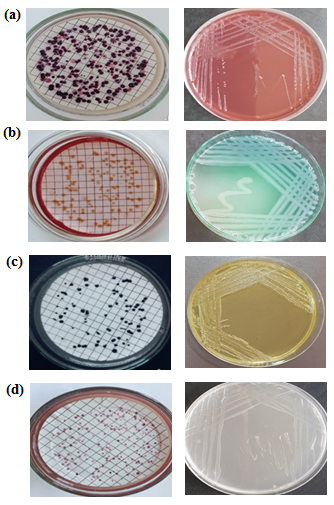
Figure 3: Growth of isolated and identified bacterial isolates on specific cultural media.
- E. coli colonies on (modified mTEC) and MacConkey agar medium, respectively.
- P. aeruginosa colonies on M-PA-C and cetrimide agar medium, respectively.
- S. aureus colonies on Baird-parker and Mannitol salt agar medium, respectively.
- E. faecalis Colonies on M-Enterococcus and nutrient agar medium, respectively.
In general, the bacteria identified in this investigation were reported to be potential human pathogens of public health concern [4, 36, 37]. The most widespread bacteria obtained were E. coli and E. faecalis, which indicates that the water in Bahr El-Baqar drain, Manzala Lake wetland basins and Manzala Lake is subjected mainly to sewage pollution. High incidence of E. coli correlated with fecal coliforms supports such findings [38]. On the other hand, the presence of P. aeruginosa and S. aureus in considerable densities in water resources is a matter of concern since these organisms cause a wide range of infections including skin, urinary and respiratory tract infections. Body contact increases the chance of infections through nose, mouth, ears and cuts in the skin [39]. Salmonella sp. was detected only in bahr El- Baqar drain outlet subjected to feces of infected humans or animals particularly from poultry farms [40]. Fortunately, all sites along wetland basins and Manzala Lake were negative for Salmonella.
Genotypic Identification of Some Bacterial Isolates
Genotype-based identification systems are becoming the method of choice in aquatic microbiology, owing to circumvent the problems of phenotypes variability and species misidentification [41]. Based on prevalence of microbial pollution in collected water samples we selected both of E. coli and P. aeruginosa isolates for molecular verification of detection and identification protocol of E. coli and P. aeruginosa in water traced through this study involved selection of two strains (R1 and R2) for 16S-rDNA sequence analysis, based on their recognizable positive results in biochemical tests and showed high prevalence in collected water samples as well as purity of DNA and PCR amplified products.
Concentrations of extracted DNA were checked using spectrophotometer at wave length A260/A280 giving values 1.7 and 1.85 for R1 and R2, respectively. The PCR amplified products were run on 2% agarose gel electrophoresis to
ensure purity giving three distinct fragments with different molecular weights; R1 (818 bp) and R2 (1119 bp).
Multiple sequence alignment (MSA) was displayed to compare the nucleotide sequences of the two Egyptian strains with other strains from different localities. Nucleotide sequences were submitted to the NCBI GenBank database, USA, and were assigned the accession numbers MK064165.1and MK071734.1, respectively. Interestingly, these strains were 100% confirmed by16S-rDNA-based PCR assay. Our results agree with those reported by Azzam [16] who mentioned that, the potential for misidentification of E. coli, E. faecalis, S. aureus and P. aeruginosa in water using molecular techniques were nearly negligible. Meanwhile, conventional cultural methods could hamper identification of contamination sources and implementation of effective control measures. Molecular methods mediated superior specificity and sensitivity than phenotypic diagnostic tests with percentages reaching 90–100% accuracy in similar studies [42, 43, 44].
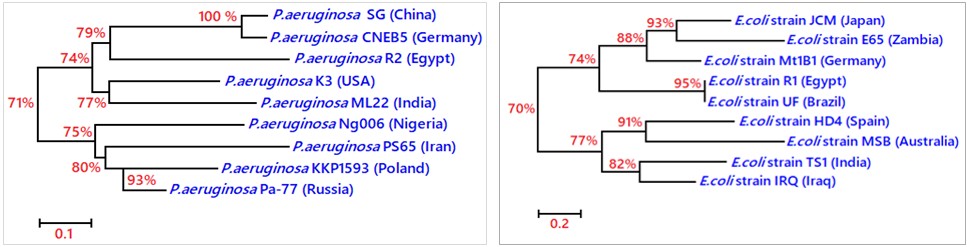
Based on MSA analysis, the phylogenetic tree was constructed to show the genetic relationship between E. coli strain R1 and P. aeruginosa strain R2 strains and other recorded strains from GenBank according to sequence similarity values. Eight clusters are clearly demonstrated in Figure 4a & b in each strain and both of strain R1 and UF showed 95% homology with each other and 79% homology between strain R2, SG and CNEBS. The two strains were found to be highly homologous (70%) with other geographically distant strains recorded in GenBank as shown in Figure 4 a&b).
(a) (b) Figure 4: Phylogenetic tree pf identified bacterial strains (A- E. coli & B- P. aeruginosa) and related strains published in GenBank based on 16S rRNA gene sequences.
The above results indicate observable genetic variability among E. coli and P. aeruginosa strains detected by 16S rRNA gene sequencing analysis. This definitely reflects the broad-spectrum ability of bioinformatics analysis tools using universal mix primers employed in this study to target a wide array of bacterial pathogen E. coli and P. aeruginosa strains in water as much as possible, and supports its high specificity (94.0%) concluded from earlier statistical analysis. Thus, it is more advantageous to get benefit from the specificity effect of more than one primer rather than using them individually [45]. Although the initial purified bacterial concentration is considered a major contributing factor governing the likelihood of a significant and variable results, yet the number of input primers established in this study was maximized to increase the probability of genetic material yield and high concentration of purified extract product. Accordingly, our future vision and efforts are depicted to maximize the number of newly isolated and molecular characterized aquatic bacterial strains especially in drainage and surface water that highly polluted with chemical and biological factors. This approach could open new prospects for direct detection of pathogens from water specimens without the need to isolate pure bacterial cultures. Our vision is consistent with Danis-Wlodarczyk [46]; Alsaffar and Jarallah [47]; Ezzat and Azzam [48]; Ahmad A [49].
Conclusion
The present study concluded that, Bahr El-Baqar drain outlet was suffering from quality disorders concerning physico-chemical and bacteriological characteristics that effected directly throughout Manzala Lake basins which designed for treating water drain and discharge in Manzala lake. Bahr El-Baqar water was categorized being of very bad quality due to industrial, agricultural, and sewage wastes problems. Manzala basins suffered mainly from elevated turbidity, depletion in dissolved oxygen and increasing in both of biological and chemical oxygen demand because diversity of bacterial load. Drain outlet was categorized being of very bad but all Manzala wetland basins were bad as well as Manzala Lake outlet was medium quality. Our study recommends the protection of surface water resources from pollution by enforcement of actual applying of LAW 48∕1982. Furthermore, our results recommend the use of advanced molecular techniques and bioinformatics tools for rapid and accurate identification of bacterial pathogens.
Acknowledgments
The authors wish to express their gratitude to Dept. of Microbiology, Faculty of Science, Ain Shams Univ.; Dept. of Agric. Microbiology, Faculty of Agriculture, Ain Shams Univ.; Dept. of Microbiology, Central Laboratory for Environmental Quality Monitoring (CLEQM) at National Water Research Center (NWRC), Egypt for their support.
Conflict of Interest
The authors have declared no conflict of interest.
References
-
Elbahnasawy MA, El Sayed EE, Azzam MI (2021) Newly isolated coliphages for biocontrolling multidrug- resistant _Escherichia coli_ strains. Environ Nanotechnol Monit Manage 16: 100542.
-
Elkorashey RM (2022) Utilizing chemometric techniques to evaluate water quality spatial and temporal variation. A case study: Bahr El-Baqar drain-Egypt. Environ Tech & Inno 26: 102332.
-
Fattah MKA, Helmy AM (2015) Assessment of water quality of wastewaters of Bahr El-Baqar, Bilbies and El-Qalyubia drains in East Delta, Egypt for irrigation purposes. Egypt J Soil Sci 55(3): 287-302.
-
Azzam MI, Ezzat SM, Othman BA, El Dougdoug KA (2017) Antibiotics resistance phenomenon and virulence ability in bacteria from water environment. Water Science 31(2): 109-21.
-
Fouad HA, Hefny RM, Kamel AM, Liethy MAE, Hemdan BA (2020) Assessment of biological augmentation technology of hazardous pollutants existing in drainage water in Bahr El-Baqar drain, Egypt. Egypt J Chem 63(7): 2551-2563.
-
Raslan AM, Riad PH, Hagras MA (2020) 1D hydraulic modelling of Bahr El-Baqar new channel for northwest Sinai reclamation project, Egypt. Ain Shams Engineering J 11(4): 971-982.
-
Abukila AF (2015) Assessing the drain estuaries, water quality in response to pollution abatement. Wat Sci 29(1): 1-18.
-
Elmorsi RR, Hamed MA, Abou-Elsherbini KS (2017) Physicochemical properties of Manzala Lake, Egypt. Egypt J Chem 60(4): 519-535.
-
Aboulfotoh AM (2021) Chemical enhancement of bahr el baqar drain in Egypt using alum, ferric chloride, cement kiln dust and fly ash. J Mater Environ Sci 12(8): 1036- 1045.
-
Redwan M, Elhaddad E (2022) Heavy metal pollution in Manzala Lake sediments, Egypt: sources, variability, and assessment. Environ Monit Assess 194(436): 2-16.
-
Karaman HG (2013) Identifying uncertainty of the mean of some water quality variables along water quality monitoring network of Bahr El Baqar drain. Water Sci 27(54): 48-56.
-
American Public Health Association (APHA) and American Water Works Association (AWWA) and Water Environment Federation (WEF) (2017) Standard Methods for the Examination of Water and Wastewater, 23rd (Edn.), American Public Health Association, Washington, DC.
-
Juang DF, Morgan JM (2001) The application of the API 20 E and API rapid NET systems for the identification of bacteria from activated sludge. Electron J Biotechnol 4(1): 1-7.
-
Tyagi S, Sharma B, Singh P, Dobhal R (2013) Water quality assessment in terms of water quality index. Am J Water Resour 1(3): 34-38.
-
Tripathi P, Banerjee G, Gupta M, Saxena S, Ramteke PW (2013) Assessment of phylogenetic affiliation using 16s rRNA gene sequence analysis for _P. aeruginosa_ in patients of lower respiratory tract infection. Indian Journal of Medical Research 138(4): 557-559.
-
Azzam MI, Korayem AS, Othman SA, Mohammed FA (2022) Assessment of some drinking water plants effciency at El-Menofeya Governorate, Egypt. Environ Nano Monit & Mang 18: 1-11.
-
Kumar S, Stecher G, Tamura K (2016) MEGA7: Molecular Evolutionary Genetics Analysis Version 7.0 for Bigger Datasets. Mol Biol Evol 33(7): 1870-1874.
-
WHO (World Health Organization) and UNICEF (United Nations International Children’s Emergency Fund) 2010 Progress on Sanitation and Drinking-Water: Update. Geneva: WHO/UNICEF.
-
Satar AMA, Ali MH, Goher ME (2017) Indices of water quality and metal pollution of Nile River, Egypt. Egypt J Aquat Res 43(1): 21-29.
-
Zaghloul SS, Elwan H (2011) Water quality deterioration of middle Nile Delta due to urbanization expansion, Egypt. Fifteenth International Water Technology Conference, Alexandria, Egypt, pp: 1-17.
-
Ghannam HE, Talab AS, Jahin HS, Gaber S (2014) Seasonal Variations in Physicochemical Parameters and Heavy Metals in Water of El-Bahr El-Pharaony Drain, El-Menoufa Governorate, Egypt. Res J Environ Earth Sci 6(3): 174-181.
-
Azzam MI, Ibrahim SS (2021) Novel and rapid technology for dissecting and removing microbial community in aquatic environment. Egypt J of Appl Sci 36(7): 85-204.
-
Gammal HAE, Shazely HSE (2008) Water Quality Management Scenarios in Rosetta River Nile Branch, Egypt. Twelfth International Water Technology Conference, IWTC12 2008, Alexandria, Egypt, pp: 901- 912.
-
Gupta N, Pandey P, Hussain J (2017) Effect of physicochemical and biological parameters on the quality of river water of Narmada, Madhya Pradesh, India. Water Sci 31(1): 11-23.
-
Ngwenya F (2006) Water Quality Trends in the Eerste River, Western Cape, 1990-2005. A minithesis submitted in partial fulfillment of the requirements for the degree of Magister Scientiae, Integrated Water Resources Management in the Faculty ofNatural Science, University of the Western Cape, pp: 1-109.
-
Azzam MI (2010) Application of enteric viruses in the detection of water pollution. M Sc Thesis Fac Agric., Ain Shams Univ Cairo, Egypt, pp: 1-186.
-
Tebbutt T (1998) Principles of Water Quality Control, 5th (Edn.), Hallam University.
-
Cabelli V (1978) New standards for enteric bacteria. _In_: Mitchell R et al, (Eds.), Water Pollution Microbiology, 2. John Wiley, New York, pp: 233-271.
-
Bhadra B, Mukherjee S, Charkraborty R, Nauda AK (2003) Physico-chemical and bacteriological investigation on the River Torsa of North Bengal. Environ Biol 24(2): 125- 133.
-
El-Dougdoug N, Nasr Eldin M, Azzam MI, Mohamed A, Hasaa M (2020) Improving wastewater treatment using dried Banana leaves and bacteriophage concktial. Egyptian Journal of Botany 60(1): 199-212.
-
Mishra M, Arukha AP, Patel AK, Behera N, Mohanta TK, et al. (2018) Multi-Drug Resistant Coliform: Water Sanitary Standards and Health Hazards. Front Pharmacol 9: 311.
-
Abd El Hamid AA, Saad El Din M, Azzam MI, Amer AS, Ghobashy MA (2021) Distribution of enteric protozoa in the River Nile drains: Egypt using field and remote sensing studies. J Egypt Soc Parasitol 51(1): 153-162.
-
Xiong G, Wang G, Wang D, Yang W, Chen Y, et al. (2017) Spatio-Temporal Distribution of Total Nitrogen and Phosphorus in Dianshan Lake, China: The External Loading and Self-Purification Capability. Sustainability 9(4): 500.
-
Sauvage S, Sánchez Pérez JM, Vervier P, Naiman RJ, Alexandre H, et al. (2018) Modelling the role of riverbed compartments in the regulation of water quality as an ecological service. Ecol Eng, 118: 19-30.
-
Semenov MY, Semenov YM, Silaev AV, Begunova LA (2019) Assessing the Self-Purification Capacity of Surface Waters in Lake Baikal Watershed. Water 11(7): 1-18.
-
Cheesbrough M (2006) District Laboratory Practice in Tropical Countries, 2nd (Edn.), Cambridge University Press, New York, pp: 1-442.
-
WHO (World Health Organization) (2011) Guidelines for Drinking-Water Quality, 4th (Edn.), WHO, Geneva.
-
Henry R, Schang C, Coutts S, Kolotelo P, Prosser T, et al. (2016) Into the deep: evaluation of source tracker for assessment of faecal contamination of coastal waters. Water Res 93: 242-253.
-
Tsoraeva A, Martinez C (2000) Comparison of two culture media for selective isolation and membrane filter enumeration of _P. aeruginosa_ in water. Rev Latinoam Microbiol 42: 149-154.
-
Geldreich EE (1996) Pathogenic agents in fresh water resources. Hydrol Process 10(2): 315-333.
-
Ramirez-Castillo FY, Loera Muro A, Jacques M, Garneau P, Avelar Gonzalez FJ, et al. (2015) Waterborne pathogens: detection methods and challenges. Pathogens 4(2): 307- 334.
-
Altaai ME, Aziz IH, Marhoon AA (2014) Identification of Pseudomonas aeruginosa by 16S rRNA for differentiation from other _Pseudomonas_ species that isolated from patients and environment. Baghdad Science Journal 11(2): 1028-1034.
-
Khattab MA., Nour MS, El Sheshtawy NM (2015) Genetic identification of Pseudomonas aeruginosa virulence genes among different isolates. Journal of Microbial and Biochemical Technology 7(5): 274-277.
-
Deshmukh RA, Joshi K, Bhand S, Roy U (2016) Recent developments in detection and enumeration of water born bacteria: a retrospective minireview. Microbiology Open 5(6): 901-922.
-
Cui X, You J, Sun L, Yang X, Zhang T, et al. (2016) Characterization of _Pseudomonas_ _aeruginosa_ phage C11 and identification of host genes required for virion maturation. Scientific Reports 6: 39130.
-
Danis Wlodarczyk K, Olszak T, Arabski M, Wasik S, Majkowska Skrobek G, et al. (2015) Characterization of the newly isolated lytic baceriophages KTN6 and KT28 and their efficacy against Pseudomonas aeruginosa biofilm. PLoS ONE 10(5): e0127603.
-
Alsaffar M, Jarallah EM (2016) Isolation and characterization of lytic bacteriophages infecting _Pseudomonas_ _aeruginosa_ from sewage water. International Journal of Pharm Tech Research 9(9): 220- 230.
-
Ezzat SM, Azzam MI (2020) An approach using a novel phage mix for detecting _Pseudomonas aeruginosa_ in water. Wat Environ J 34(2): 189-202.
-
AhmadA, Al-Ghadeer S, Al-Hosni TK (2020) Study on gray water treatment using cement kiln dust and chemical coagulants. J of Appl Wat Engin and Res 8(2): 161-170.
- Lessons to Learn: Trees are More than the Lungs of the World
- Community Forestry Enterprises as a Model for Sustainable Forest Development: The Case Of The "Baja Tarahumara" in Chihuahua, Mexico
- Ecological and Socio-Economic Impacts of Chromolaena odorata and Mesosphaerum suaveolens, Two Invasive Alien Species in Central and Southern Benin, West Africa
- Epigenetic Sustainability: Modeling the Human Factor as a Natural Resource through Science 4.0 and the NR3C1 Biological Pilot
- Growth-at-Risk: A Framework for Assessing Economic Vulnerability
- The Rural Territory as a Socioecological System for the Management of Public Policy for Sustainable Rural Development