
Assessing the Ecological Potential of Plant Based Biochar (Nypa fruticans Wurmb and Eichhornia crassipes (Mart) Solms) As Briquettes for Sustainable Wetland Ecosystem Restoration
Nearly half the world’s population is dependent on wood as their primary source of energy. Consequently, deforestation and ecosystem degradation has become increasingly prevalent in many regions of the developing world, therefore is an urgent need to improve the combustion efficiency of domestic source of fuel or/ and find alternative fuel sources. This investigation was aimed at exploring the energy production potential of Eichhornia crassipes (Mart) Solms and Nypa fruticans Wurmb as alternative source of waste utilization; with the objectives of waste to wealth conversion of loose biomass to biochar as a sustainable approach to aquatic weed management, and evaluating their potential as source of biofuel and combustion characteristic in relation to environmental consequences. Standard procedures of sample collection, processing by drying, carbonization, and densification methods and data analyses by ANOVA were adapted. Result indicated E. crassipes with significantly higher moisture (28.20+1.51), ash (54.55+3.48), and volatile matter (8.30+1.34) than N. fruticans which recorded significantly faster ignition time (19.00+2.65), higher fixed carbon (54.39+5.76), water boiling rate (740.00+69.74),bulk density (0.002+0.00),shatter resistance (94.83+2.63), heat of combustion (3196.55+230.55) and burning time (13480.00+570.26). Conclusively, the low moisture content of the produced briquette, the low volatile matter content of the briquettes are affirmation that they are environmentally friendly hence harmful substances like carbon and sulphur are not released into the ecosystem and with the proficiency in thermal capacity the ecosystem balance can be checked with the use of briquettes from these plant species.
Introduction
Historically the development of Biochar is evolving in light of diverse ecological scenarios particularly in areas of environmental alterations and restoration options [1]. It is one of humanity’s earliest sources of energy from biomass renewable energy source particularly in rural areas where it is often the only accessible and affordable source [2]. Biochar is a carbon rich product of biomass, such as wood, manure or leaves when heated in a closed container with little or no available air [3]. In other words it is produced by thermal decomposition of organic material under limited supply of oxygen and at relatively low temperature (<700°C) in a process termed Pyrolysis [4]. Similarly, from the International Biochar Initiative (IBI) such product is seen as the solid material obtained from the thermochemical conversion of biomass in an oxygen-limited environment. Such thermal decomposition is usually on different types of organic feedstock of biomass materials (such as plantations that produce energy crops, natural vegetable growth, organic wastes and residues (animal wastes, forest residue, agricultural residue, etc.) in varying pyrolysis degrees [5]. Carbonized organic matter can essentially have different physical and chemical properties based on the technology (e.g. slow pyrolysis, intermediate pyrolysis, fast pyrolysis, gasification, hydrothermal carbonization (HTC) or flash carbonization) used for its production [6]. Pyrolysis temperature can be distinguished by the residence time, pyrolic temperature of the material (slow and fast pyrolysis), pressure, size of absorbent, the heating rate and method and carbonization process [7, 8, 9].
Biochar from a chemical point of view other than a productive point is much more difficult to elucidate due to the wide variety of biomass and charring conditions used for its production. They are made from biomass that has different chemical and physical properties which are important in the pyrolysis process especially in the proximate analysis (moisture content, ash and fixed carbon and volatile matter), calorific value, percentage lignin, cellulose and hemicellulose percentage, composition of inorganic substance, bulk, true density and particle size [10, 11]. Although carbon is the major constituent of carbonaceous materials the exact composition and physical properties of biochar depends on the production material and the conditions in which it was produced. Statutorily it has a high carbon content comprised of aromatic compounds with six C atoms linked together with O or H. However, elemental analysis has shown that biochar primarily has five elements viz: hydrogen (H), oxygen (O), nitrogen (N), sulfur (S) and carbon (C) which may vary in percentages based on the characteristic of the conversion process (temperature) and type of the biomass feedstock [12, 13, 14].
Over the last few decades, biochar has attracted global attention due to its high potential multiplier effect in diverse endeavours of human existence, in light of which several studies have reported its potential in soil amendment in terms of soil fertility [15]; agricultural productivity [16]; heavy metal sequestration [17]; soil pH regulation [18]; enhanced soil microbial activity [19]; enhanced cation exchange capacity [20]; improved soil health in terms of decrease in bulk density, increased porosity and water holding capacity [13, 21]; waste management in terms of heavy metal, metalloids, contaminants and pollutants removal [22, 23, 24] and environmental remediation. Other potential entails wastewater treatment, water purification, power generation, energy storage, carbon sequestration, and building sector, etc. [25, 22, 26, 27, 28, 29, 30]; as a catalyst for tar removal from syngas and production of biofuel and soil conditioner [31].
However, the present study goes beyond the aforementioned qualities and potentials of biochar, as it focuses on the energy production ability of two alien invasive plant species biochar as briquettes to help control their infestation in the aquatic ecosystem. Raw materials that can substitute fossil energy as source of fuel are biomass and biofuel [32]. One of the ways of obtaining biofuel is by biomass briquetting of alien invasive species such as water hyacinth (Eichhornia crassipes) and Nypa palm (Nypa fruticans). Of great importance, the replacement of energy sources with energy obtained from untapped biological sources would lower the carbon footprint and overall global pollution status; such energy from biomass materials offers the potential to reduce the greenhouse gas emissions from fossil fuels [33]; guarantee energy security and tackle environmental problems [34], and contributes to its efficient management and to developing rural areas economically [35]. The potential of using biomass in producing high energy concentrated fuels in the form of briquettes has been explored [36].
Water hyacinth by its growth pattern covers water surfaces with the consequences of impacting on sea route navigation and aquatic lives [37], while Nypa palm displaces traditional indigenous mangal species with serious ecological threat to mangrove biodiversity [38]. The United Nation (2000) attested that water hyacinth can never be eradicated; instead it is a situation that must be continually managed. This informed the bases for the initiation of this research with the aim of exploring the comparative advantage in the energy potential of Eichhornia crassipes and Nypa fruticans for briquette production as an alternative option to untapped waste utilization and eradication of alien species invasion, with the objectives of waste to wealth conversion of Eichhornia crassipes and Nypa fruticans to biochar as a sustainable approach for adequate aquatic weed management, unveiling an effective methods for converting Water hyacinth and Nypa palm biomass to briquettes and evaluating their role as source of biofuel.
This study is concerned at making an appropriate and efficient use of these invaders in energy briquetting which will serve as an alternative to local wood fuels, preventing deforestation, pollution by waste management and helps to control the influx of carbon into the atmosphere. Briquetting offers the opportunity of these biomass materials to have good characteristics and fuel properties. It serves as a good source of energy for local communities, stimulate a shift from petroleum products like, kerosene, coal, and diesel and reduce emission since the briquette is a carbon neutral source. This work therefore, will guarantee energy security, tackle environmental problems such as invasive alien species proliferation associated with Niger Delta wetlands and contributes to the development of littoral rural communities.
Materials and Methods
Description of Study Area, Location and Site
The study area is Rivers state located between long.6°23 E and 7°36′ E and lat. 4°18′ N and 5°45′ N of the equator (Figure 1). The State is surrounded by Imo River and Akwa-Ibom in the east, Bayelsa State in the west, Imo and Abia States in the North and Atlantic Ocean in the south. It is characterized by tropical rainforest and mangrove vegetation with a climatic condition variable rainfall ranging between 2,500 to 3,500 mm annually and relative humidity under the influence of latitudinal and seasonal variation, influence of the Atlantic Ocean, Mean maximum monthly temperature range of 28 to 33oC and minimum monthly temperature of 17oC and 24oC [39]. The study area is composed of 23 local council authorities including Opbo/Nkoro and Ahoada East study locations (Figure 4.1).
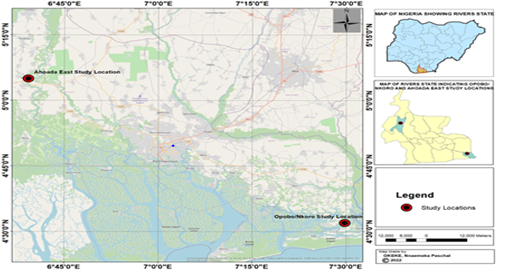
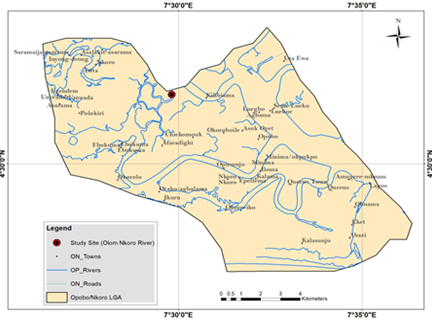
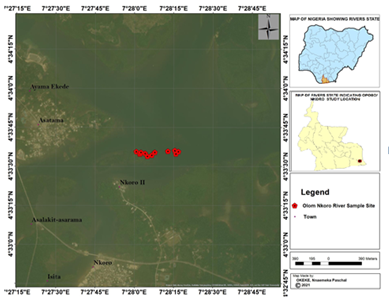
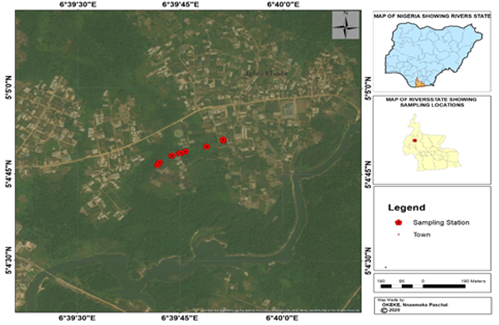
The Opbo/Nkoro study location is situated at lat. 5o4’30’’N and 4o5’0’’N, Long. 6o39’30’’E and 6o40’0’’E, with constant varying climatic condition due to tidal influence and an average temperature of 250C and 79% humidity. This location is comprised of two major towns, viz: Opobo and the study site – Nkoro, (Figure 2) a littoral coastal town consisting of eight communities including the sample site – Olom-Nkoro (Figure 3) with diverse mangrove species being totally surrounded by saline water of a high tidal correlation with the plant species found in it and largely occupied by the invasive Nipa plant highly prolific in nature. The species encroaches the sampled point - the Olom-Nkoro River (Figure 4.3), a water body high in salinity thereby making the plant species halophytic. The site is largely invested with Nipa palm making it very distinctive; with a muddy flat black soil. It experience twice-daily flooding by ocean tide.
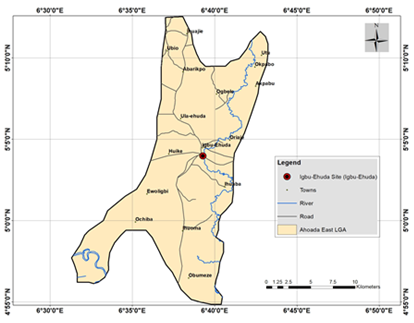
The Ahoada East study location is situated between lat. 5o4’30’’N and 4o5’0’’N, long.6039’30’’E and 6040’0’’E characterized by a tropical climatic temperature condition ranging 170C - 330C, with such a warm wet season and moist dry season. The study site is Igbu-Ihunda (Figure 4), a town known for its daily market activities in Ahoda East. The sampled site is Emene Oshi River (Figure 5), a fresh water habitat with high nutrient value making a luxuriant spontaneous growth of plant species that colonize the site. The water is of a low salt content and the soil is a fine sandy soil.
Biomass Species Sampling
The Eichhornia crassipes (Figure 6a) was collected by uprooting the sample from Emene Oshi River sampled site habitat at Igbu-Ehunda Study site in Ahoada East study location. This was done careful to ensure the entire biomass of the sample on fresh weight bases was maintained. The Nypa fruticans (Figure 4.6b) was collected from the Olom- Nkoro River sampled site at Nkoro II study site in Opobo / Nkoro study location using a machete to cut of mature bunch of fruit from the plant stand. The mature fruit were collected to reduce dispersion hence they can easily get loose from stand. The sampled site were validated using a hand - held Geographic Positioning System (GPS - Garmmi Dakota 10 model) for the georeferencing of the exact sampled point of the species in question (Table 1) and imagery production of the sampled sites (Figures 3 & 5) with the plant species biomass identified and recorded from the sampled sites.
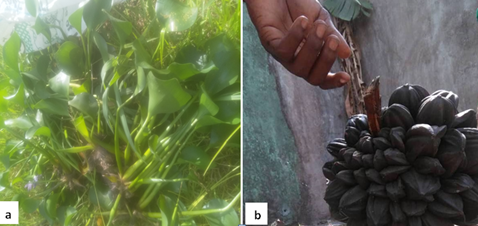
Figure 6 a & b: Fresh Biomass Feedstock (A) E. Crassipes & (B) N. Fruticans.
| Eichhornia crassipes (Mart) Solms | ||
|---|---|---|
| Lat.(North) | Long. (East) | Alt.(ft) |
| 05°04′483″ | 006°39′440″ | 4 |
| 05°04′487″ | 006°39′451″ | 6 |
| 05°04′487″ | 006°39′453″ | 6 |
| 05°04′487″ | 006°39′453″ | 3 |
| 05°04′490″ | 006°39′460″ | 6 |
| 05°04′499″ | 006°39′491″ | -8 |
| 05°04′509″ | 006°39′515″ | 4 |
| 05°04′511″ | 006°39′515″ | 11 |
| 05°04′467″ | 006°39′419″ | 3 |
| 05°04′471″ | 006°39′422″ | 7 |
| Nypa fruticans Wrumb | ||
| 04°33′357″ | 007°28′008″ | 5 |
| 04°33′347″ | 007°28′021″ | 9 |
| 04°33′349″ | 007°28′023″ | 9 |
| 04°33′354″ | 007°28′026″ | 4 |
| 04°33′350″ | 007°28′042″ | 1 |
| 04°33′339″ | 007°28′051″ | 6 |
| 04°33′343″ | 007°28′067″ | 3 |
| 04°33′354″ | 007°28′079″ | 1 |
| 04°33′355″ | 007°28′101″ | 0 |
| 04°33′358″ | 007°28′129″ | 3 |
| 04°33′361″ | 007°28′155″ | 4 |
| 04°33′348″ | 007°28′159″ | 10 |
| 04°33′357″ | 007°28′169″ | 10 |
Table 1: GPS Coordinates of Sampling Points for Biomass.
Processing of Sampled Biomass
Drying
The Nipa seeds were separated from the bunch of fruit with a cutlass. Initial moisture content of Eichhornia crassipes and Nypa fruticans seeds as collected were 85.16% and 72.2% wet basis (w.b), respectively. Both materials were then sun dried and subsequently oven dried to reduce the moisture content (Figure 1). The entire processing and analyses were carried out in Chemical Engineering Laboratory, University of Port Harcourt.
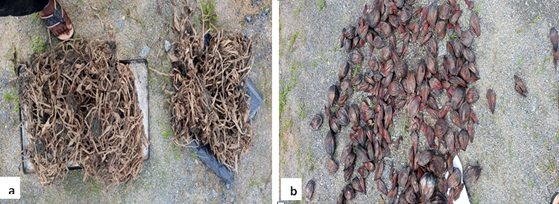
Figure 7 a & b: Dried biomass of feedstock (a) Eichhornia crassipes & (b) Nypa fruticans seeds.
Carbonization of Biomass to Biochar
The Carbonization of the dried Water hyacinth and Nipa was carried out using a muffled furnace (Carbolite Sheffield England LMF 4) which allows limited supply of air. Carbonization was done at 350OC for two hours and allowed to cool at room temperature for three hours prior to briquette production. Upon removal of samples from the furnace, water was poured on it to arrest or prevent it from forming ash (Figure 2).
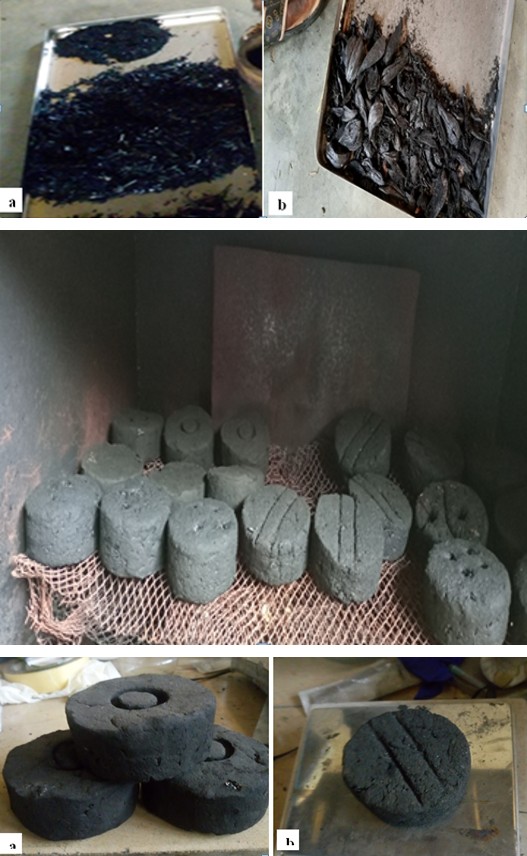
Figure 8 a& b: Carbonized biomass; (a) E. crassipes biochar & (b) Nypa fruticans biochar.
Briquette Production
The carbonized samples were crushed to have reduced particles using the crushing machine. Starch was used as the binder hence it is the most effective binding agent for briquette production. The binder was gelatinized using hot water and mixed properly with the crushed particles. The briquettes were formed in a cylindrical mold. The mold was filled with the mixture and densified under constant operating conditions (temperature of 28oC) with a manually operated hydraulic piston press. After densification, the resultant briquettes were placed in an oven (Figure 3) and left to dry before testing for properties. Briquettes were made from each biochar sample (Figure 6 a&b) and with their initial densities measured.
Figure 10 a & b: Biochar briquettes (a) Eichhornia crassipes & (b) Nypa fruticans.
Briquette Characterization
The briquette product were analysed for physical properties and characteristics to ascertain the environmental friendly suitability based on the following indices: Determination of Proximate Analysis: ASTM defines proximate analysis as the determination by prescribed methods of moisture, volatile matter, ash and fixed carbon. The proximate analysis of Nipa and Water hyacinth was carried out following the procedures given below.
- Moisture Content (MC) The moisture content was determined by oven dried method in accordance with ASTM D2444 [40]. The percentage moisture content was taken on wet basis and is calculated with the formula ( ) ( ) Weight before-Weight after %MC wet basis = g ×100 Weight before
- Volatile Matter (VM)
The volatile matter was determined using the ASTM D3175- 18 [41] method with the v calculation as follows ( ) ( ) Weight of Volatile Matter = g ×100 Oven Dry weighy Volatile matter %
- Ash Content (AC) The test method for ash content was the ASTM D3174- 12 [42] and with the percentage ash content calculated as follows Weight of Ash = ×100 Weight of sample Ash content % ( )
- Fixed Carbon Content (FC) This is the percentage of carbon available for char combustion. This is not equal to the Total amount of carbon in the Briquette. After the Ash was separated, what was left was carbon; percentage fixed carbon was calculated using the British Standard Method (BSI) [43]. % fixed carbon = 100% - (%Ash + %Moisture + %Volatiles) Bulk Density Determination (BD): The density of the briquettes was determined in accordance with ASTM D2444- 16 [44] method; and with the result extrapolated from the analysed data calculated as the ratio of the mass of the briquette to the volume of the briquette using formula below:
$$ \left| \rho \mathrm {b} = \frac {\mathrm {M}}{\mathrm {V}} \right| $$
Where ρb is the Bulk Density, M is the mass, and V is the particle volume Determining of Shattering Index (SR): The durability of the Briquette was determined with the Shattering Index as adapted in ASTM D440-86 [45] following the formula below:
Initial Weight before shatter-Weight after shattering Percentage Weight loss = Initial Weight of briquette before shattering Shatter resistance = 100 – Percentage weight loss Thermal Analysis: • Ignition Time: (IT) This is the average time taken to light the briquettes to get burning as adapted by Onuegbu et al. [46] with a known mass of dry briquette sample been clamped to a clamp stand then ignited with match stick. The time taken for a certain amount of the sample to be ignited is noted at the first appearance of visible ignition.
• Burning Time (BT) This is the time taken for a complete unit of known mass to burn completely.
• Burning Rate (BR) This is the rate of which specific mass is lost due to the combustion of the Briquette. It was determined by burning the briquette in a controlled environment. A known mass of the briquette was burned and time taken. A stopwatch was used for take timing and the briquette was burned until completely exhausted. The burning rate is the ratio of the mass of the fuel (Briquettes) burnt in grams to the time taken for it to burn in minutes as adapted in [46] and was calculated using the formula below:
( ) Mass of fuel consumed Total time taken min Burning rate= • Water Boiling Test (WBT) This is the function of the volatile matter and calorific value. It is the time taken by a briquette to boil a certain volume of water as adapted by Onuegbu et al_._ [46] with a beaker of water kept on the briquette and the briquette ignited. The time taken for the water to boil was taken. The specific fuel consumption indicate the ratio of the mass of fuel consumed (g) to the quantity of boiling water in liters.
Specific Heat of Combustion (SHC): The energy content of the briquette is determined by adapting the bomb calorimeter method [47] and with the heat released being calculated as follows;
Specific heat= 0.35 [(147.6×FC) + (144×VM) + (%Ash)]
Data Analysis
Samples data were subjected to Analysis of Variance (ANOVA) and Fisher’s Least Significance Difference (LSD) test to determine the significant difference between the various briquette characteristics. Descriptive statistics that includes mean and standard deviation of estimates was also used to describe the data, where the significant differences were encountered; the means were separated using Duncan Multiple Range Test (DMRT) using least significant difference (LSD) tests at 0.05 probability level. Pearson correlation was applied to determine the degree of relationship among the parameters of Eichhornia crasaipes briquettes and Nypa fruitican briquettes. All analysis was done using the SPSS software Version 20.0, 2020 (IBM, Chicago)
Results
Proximate Analysis
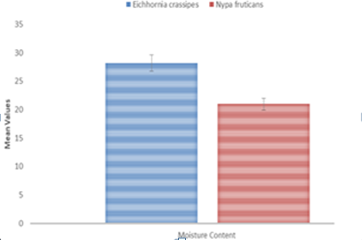
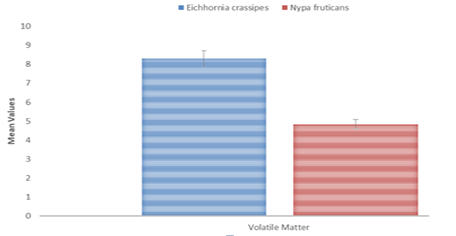
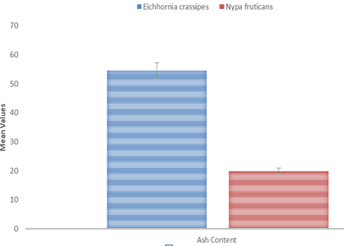
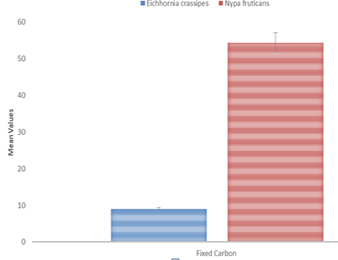
This result as summarized in Table 2, showed that Echhornia crassipes had a significantly (P<0.05) higher Moisture content with mean value 28.20 ± 1.51 than Nypa fruticans with mean values 20.99 ± 1.36 as represented in Figure 11. The volatile matter content in E. crassipes as shown in Figure 12 was significantly (P<0.05) higher with mean value 8.30 ± 1.34, than N. fruticans with mean value 4.84 ± 2.68; which also recorded a significantly (P<0.05) lower Ash content (19.86 ± 2.25) than E. crassipes with a higher Ash content (54.55 ± 3.48) (Figure 13). However, the fixed Carbon content exemplified in Figure 14, showed that N. fructicans recorded a significantly (P<0.05) higher mean value (54.39 ± 5.76) than E. crassipes with mean value (8.94 ± 1.71).
| Eichhornia crassipes | Nypa fruticans | (P<0.05) | |
|---|---|---|---|
| Moisture Content | 28.20 ± 1.51a | 20.99 ± 1.36b | 0.952 |
| Volatile Matter | 8.30 ± 1.34a | 4.84 ± 2.68b | 0.977 |
| Ash Content | 54.55 ± 3.48a | 19.86 ± 2.25b | 0.771 |
| Fixed Carbon | 8.94 ± 1.71b | 54.39 ± 5.76a | 0.703 |
| Bulk Density | 0.001±0.00003a | 0.002 ± 0.003a | 1 |
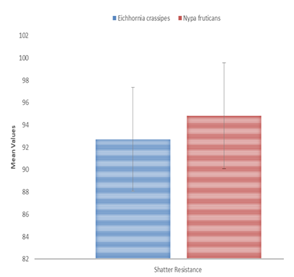
| Shatter Resistance | 92.72 ± 4.65b | 94.83 ± 2.63a | 0.986 |
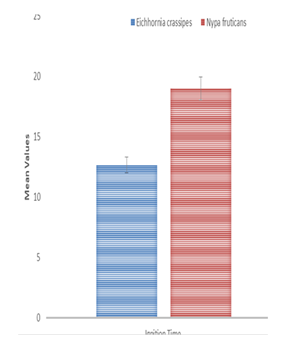
| Ignition Time | 12.67 ± 0.58b | 19.00 ± 2.65a | 0.958 |
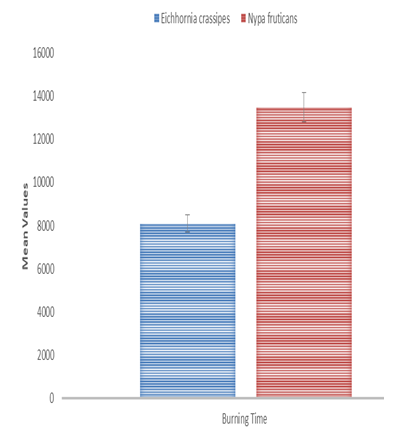
| Burning Time | 8100 ± 216.33b | 13480 ± 570.26a | 0 |
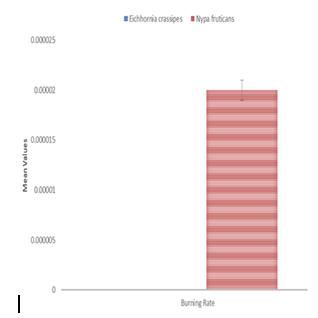
| Burning Rate | 0.00 ± 0.00a | 0.00002 ± 0.00003a | 1 |
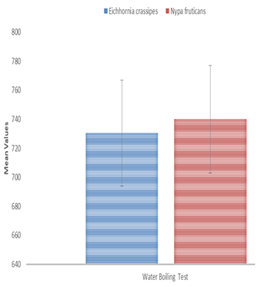
| Water Boiling Test | 730.33 ± 103.76b | 740.00 ± 69.74a | 0.935 |
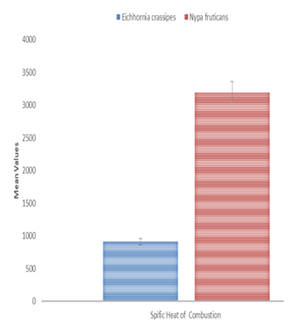
| Specific Heat of Combustion | 909.37 ± 143.04b | 3196.55 ± 230.55a | 0 |
Table 2: Briquetting Characteristics of E.crassipes and N.fruticans.
Values are expressed as Mean ± SD Table 2: Briquetting Characteristics of E.crassipes and N.fruticans.
Bulk Density
The result as represented in Figure 15 showed that N. fruticans had a higher BD with mean value 0.002 ± 0.003 than E. crassipes with mean value 0.001 ±0.00003. However, there was no significant difference (P<0.05) in the BD of both biomass briquettes.
Shattering Resistance
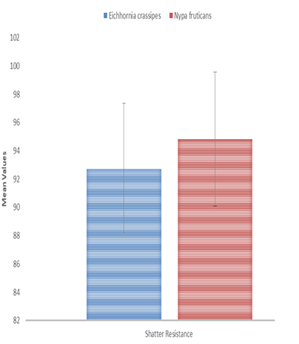
The result as represented in Figure 16, recorded N.fruticans with a significantly (P<0.05) higher Shattering Resistance of 94.83 ± 2.63 than E. crassipes with mean value (92.72 ± 4.65).
Thermal Analysis
The result as represented in Figure 17, showed N. fruticans with a quicker Ignition Time (IT) with mean value (13480 ± 570.26) significantly higher (P<0.05) than E. crassipes with mean value of 8100 ± 216.33. Similarly the burning time (BT) in Figure 18, showed that N. fruticans had a Burning Time with mean value (13480 ± 570.26) significantly higher (P<0.05) than E. crassipes with mean value of 8100 ± 216.33.
The Burning rate (BR) as represented in Figure 19, showed that N. fruticans had a higher Burning rate with mean values 0.00002 ± 0.00003than E. crassipes with mean values 0.00 ± 0.00 (Table 3). However, there was no significance difference (P<0.05) between the two species briquettes. But the Water boiling test represented in Figure 20, showed that N. fruticans had a higher water boiling test with mean value 740 ± 69.74 significantly (P<0.05) higher than E. crassipes with mean value of 730.33 ±103.76.
| MC | AC | VM | FC | IT | BT | BR | WBT | BD | SR | SHC | |
|---|---|---|---|---|---|---|---|---|---|---|---|
| MC | 1 | ||||||||||
| AC | .934** | 1 | |||||||||
| VM | .858* | 0.691 | 1 | ||||||||
| FC | -.979** | -.985** | -0.794 | 1 | |||||||
| IT | -0.772 | -.895* | -0.37 | .845* | 1 | ||||||
| BT | -.922** | -.990** | -0.638 | .973** | .942** | 1 | |||||
| BR | -0.665 | -0.61 | 0.79 | 0.662 | 0.376 | 0.553 | 1 | ||||
| WBT | -0.085 | -0.115 | 0.024 | 0.065 | -0.041 | 0.037 | -0.141 | 1 | |||
| BD | -0.235 | -0.407 | 0.236 | 0.323 | 0.768 | 0.519 | -0.145 | -0.278 | 1 | ||
| SR | -0.328 | -0.319 | 0.037 | 0.279 | 0.403 | 0.336 | -0.206 | 0.72 | 0.323 | 1 | |
| SHC | -.977** | -.978** | -0.773 | .992** | .839* | .968** | 0.576 | 0.132 | 0.326 | 0.354 | 1 |
Table 3: Pearson Correlations of the Briquette Characteristics. Note: MC= Moisture Content; AC= Ash Content; VM=Volatile Matter;
Table 3: Pearson Correlations of the Briquette Characteristics. Note: MC= Moisture Content; AC= Ash Content; VM=Volatile Matter; FC= Fixed Carbon; IT = Ignition Time; BT = Burning Time; BR = Burning Rate; WBT = Water Boiling Test; BD = Bulk Density; SR = Shatter Resistance; SHC = Specific Heat of Combustion. **. Correlation is significant at the 0.01 level (2-tailed). *. Correlation is significant at the 0.05 level (2-tailed).
Specific Heat of Combustion
The result of SHC has shown that N. fruticans had a significantly (P<0.05) higher SHC with mean value of 3196.55 ± 230.55 than E. crassipes with mean value of 909.37 ± 143.04 (Figure 11).
Discussion
Briquetting offers the opportunity of making flora biomass to have good biofuel characteristics and properties, thereby making biomass a good source of energy for the society with less emission when compared with fossil fuel. As presented in summary Tables 2 & 3 of briquettes indices and correlation between and among the indices respectively, this investigation focused on exploring the potentials of N. fruticans and E. crassipes in briquettes production as well as their combustion characteristics in light of their physical properties.
Based on the report the moisture content was significantly higher in E. crassipes briquette than in the N. fruticans briquette. Study shows that the tolerance level of moisture content for briquette is between 8% and 12%, which may depend on the nature of the biomass feedstock [48]. Similarly, further study has shown that a moisture content that is less than 4% or 5% will reduce the stability of briquettes [49] and make the briquette too dry, hence making it burn out quickly. This was observed as exemplified in a significantly negative correlation between the MC and BT (r = 0.922, P< 0.05) in the present study (Table 3). Moisture content in briquette is considered as an impurity and could lower the heating value [50].
The liquids present in the charcoal other than water which are easy to vaporize are called volatile matters (VM). The briquetting characteristics have recorded significantly higher volatile matter content in E. crassipes than in Nipa briquettes. Large moisture content results in the formation of fumes It was observed that the moisture content of these briquettes weren’t less than 5% which made the briquette stable, and also were not very high preventing the formation of fumes as it is seen in a strong positive correlation with volatile matter (r = 0.858; P< 0.05). This corroborates the findings of Rezania, et al. [51] in their production of briquettes using E. crassipes, empty fruit bunches of oil palm (palm oil mill residue) and cassava starch.
High fixed carbon content of a briquette means it is mostly made up of carbon. In this present study, it was observed that as the moisture content decreased, the fixed carbon content of the briquette also increased. This possibly could have contributed to more carbon atoms in Nipa briquette. Compared with the E. crassipes briquette produced, it had a significantly higher fixed carbon with a strong negatively significant correlation (r = - 0.979; P<0.05). The Briquette characteristics showed that the briquettes having higher fixed carbon have lower ash content. This corroborates a strongly negative correlation (r = - 0.985; P<0.05) between the fixed carbon and Ash content. The fewer the residues left after combustion, the greater amount of fixed carbon and combustible substance such as the volatile matter content present. Also, the ash content was found to decrease as moisture content decreased, which also corroborates a strong positive correlation (r = 0.934; P<0.05) between the Ash and moisture properties.
Density is an important parameter for the briquetting process. The density of the feedstock, binder, briquetting pressure, temperature and time, to a large extent, determines the eventual density of the briquette [52]. The higher the density in briquettes, the higher the energy/volume ratio as well as the longer the burning time [53], however, other combustion properties of such briquettes may be negatively affected [54]. Report from the study has shown that E. crassipes briquette displayed a lower bulk density mean value than the Nipa briquette with higher BD and BT. This can be exemplified in highly positive significant correlation (r = 0.519 P<0.05) between BD and BT, which implies that a higher BD will result to a longer BT. It has been opined that briquette density is affected significantly by the raw material particle size, wherein finely ground materials make very dense briquettes [55]. This corroborates the assertion by Mitchual et al. [56] who posited that raw material with finer particles size provides a larger surface area for bonding, which results in the production of briquette with a higher density. Owing to the inclination to absorb water, the lower values of E. crassipes briquette could be due to a decrease in the briquette weight or a rise in the briquette volume after drying and stabilizing, as observed by Okot, et al. [57]. Studies have also noted that briquettes produced from hydraulic piston presses have unit densities lower than 1.00 g/cm3 because of limited pressure [49] which was the method with which this briquette was produced. For economic purposes, low density raises the costs of briquette transportation and decreases the energy density.
Shatter resistance is a direct means of gauging the strength of briquettes for the purposes of handling, transportation and storage. In recent study it has been recorded that Nypa has a significantly higher shatter resistance than E. crassipes making them very good for transportation and storage as they won’t easily break off. The present study has recorded a corresponding synergy in the increased shatter resistance of Nypa briquette with a decrease AC and VM as well as increased FC, BD, IT, BT and SHC. This corroborates a negative correlation (r = -0.319; P<0.05) between SR and AC; positive correlations (r = 0.037; P<0.05) between SR and VM; (r = 0.279; P<0.05) between SR and FC; (r = 0.323; P<0.05) between SR and BD; (r = 0.403; P<0.05) between SR and IT; (r = 0.336; P<0.05) between SR and BT and (r = 0.034; P<0.05) between SR and SHC. It has been asserted that the shatter index of briquettes should be at least 90% [58]. However, a minimum value of 50% can also be considered an acceptable shatter index for fuel briquettes developed for industrial and domestic applications [59].
It is has been shown that Burning rate of the E. crassipes briquettes increased with increased volatile matter as it burns faster than Nypa briquette which correlates positively ( r = 790; P< 0.05). Density has been reported as a parameter that can influence the combustion rate and is characterized by low porosity and reduce the infiltration of oxidant and outflow of the combustion products during combustion .This can be exemplified in a negative correlation (r = -0.145; P<0.05) between BD and VM. The density influences the flame propagation in briquettes; fewer free spaces for mass diffusion (low porosity), hinders drying, depolarization and burning. Reduction in porosity and consequently increasing density can influence the combustion rate of briquettes by hampering the outflow and infiltration rate of oxidant during combustion.
A higher quantity of specific heat value was produced by the Nypa briquette compared to E. crassipes. The high quantity of heat energy produced is a result of the high content of carbon it has and the less amount of moisture in it hence it can improve heat release. This can be exemplified in a significantly positive correlation (r = 0.992; P<0.05) between SHC and FC and significantly negative correlation (r = -0.977; P<_0.05) between SHC and MC. The quantity of heat released was seen in action on the water boiling test as the briquette boiled 100ml of water with the respective mean value for the two species biomass proving _Nypa briquette to give out more heat quantity. This corroborates the positive correlation (r = 0.132; P<0.05) between SHC and WBT. The results of the proximate, mechanical and thermal analysis show that the Nypa biomass had a better potential in biochar energy than E. crassipes which indicate Nypa as a good briquette.
Conclusion
From the findings of this project it is quite evident that briquetting for energy production from N. fruticans and E. crassipes is an appropriate means of regulating invasion of these species on water ways. It was observed that the Volatile matter content of these species briquettes was extremely low and these volatiles are water vapour leaving the briquettes. The Ecosystem can duly be restored by the replacement of some harmful sources of energy by this briquette specifically as the supposed harmful substances (carbon mono-oxide, carbondioxide and sulphur) are not released into the atmosphere on its use. These substances were trapped and taken out from the briquette during the process of carbonization making the briquette ecosystem friendly and a good source of energy. Energy production is evolving and the need to produce a good and profitable energy is necessary. Renewable energy from biomass materials offers this opportunity as it serves a neutral carbon source. It can therefore be strongly recommend there should be a total deviation from deforestation for energy production to an exploitation of biomass materials in Briquetting. Importantly, the process of carbonization should be practiced as this would not degrade the ecosystem.
Acknowledgments
This paper is an excerpt of the result of an approved research project at the University of Port Harcourt, Nigeria. The authors thank colleagues and Cartographer that contributed to the fieldwork in the course of the study.
Funding: This research received no external funding it was funded by the authors.
References
-
Kajitani S, Tay HL, Zhang S, Li CZ (2013) Mechanisms and kinetic modelling of steam gasification of brown coal in the presence of volatile-char interactions. Fuel 103: 7-13.
-
Demirbas A (2004) The Combustion characteristics of different biomass fuels. Progressive Energy Combustion Science 30: 219-230.
-
Nartley OD and Zhao B (2014) Characterization and evaluation of biochars derived from agricultural waste biomasses from Gansu. Proceedings of the World Congress on Advances in Civil, Environmental, and Materials Research 6: 1.
-
Lehmann J, Jospeh S (2009) Biochar for Environmental Management: Science and Technology, 1st (Edn) _Earthscan_: UK, pp: 1-448.
-
Razzaghi F, Obour PB, Arthur E (2020) Does biochar improve soil water retention? A systematic review and meta-analysis. Geoderma 361: 114055.
-
Zhang M, Gao B, Varnoosfaderani S, Hebard A, Yao Y, et al. (2013) Preparation and characterization of a novel magnetic biochar for arsenic removal. Bioresour Technol 130: 457-462.
-
IEA Bioenergy (2010) IEA Bioenergy Task 34: Pyrolysis.
-
Zhou S, Mourant D, Lievens C, Wan Y, Li C, et al. (2013) Effect of sulfuric acid concentration on the yield and properties of the bio-oils obtained from the auger and fast pyrolysis of Douglas Fir. Fuel 104: 536-546.
-
Asensio V, Vega FA, Andrade ML, Covelo EF (2013) Tree vegetation and waste amendments to improve the physical condition of copper mine soils. Chemosphere 9(2): 603-610.
-
Angin D (2013) Effect of pyrolysis temperature and heating rate on biochar obtained from pyrolysis of safflower seed press cake. Bioresour Technol 128: 593- 597.
-
Shivaram P, Leong KY, Yang H, Zhang KD (2013) Flow and yield stress behavior of ultrafine Mallee biochar slurry fuels: the effect of particle size distribution and additives. Fuel 104: 326-332.
-
Liu N, Charrua AB, Weng CH, Yuan X, Ding F (2015) Characterization of biochars derived from agriculture wastes and their adsorptive removal of atrazine from aqueous solution: a comparative study. Bioresource Technol 198: 55-62.
-
Duku MH, Gu S, Hagan EB (2011) Biochar production potential in Ghana: a review. Renew Sustainable Energy Reviews 15(8): 3539-3551.
-
Kambo HS, Dutta A (2015) A comparative review of biochar and hydrochar in terms of production, physico- chemical properties and applications. Renewable and Sustainable Energy Reviews 45: 359-378.
-
Singh R, Pardeep S, Hema S (2019) Impact of sole and combined application of biochar, organic and chemical fertilizers on wheat crop yield and water productivity in a dry tropical agro: ecosystem. Biochar 4: 78-95.
-
Laird DA (2008) The Charcoal Vision: A Win–Win–Win Scenario for Simultaneously Producing Bioenergy, Permanently Sequestering Carbon, while Improving Soil and Water Quality. Journal of Agronomy 100: 178-188.
-
Ahmad Z, Gao B, Mosa A, Yu H, Yin X, et al. (2018) Removal of Cu (II), Cd (II) and Pb (II) ions from aqueous solutions by biochars derived from potassium- rich biomass. Journal of Cleaner Production 180: 437-449.
-
Rodriguez L, Salazar P, Preston TR (2009) Effects of biochar and digester effluent on growth of maize in acid soils. Livestock Research for Rural Development 21(7): 110.
-
Zheng W, Sharma BK, Rajagopalan N (2010) Using biochar as a soil amendment for sustainable agriculture. Illinois Department of Agriculture, Illinois, USA, Field Report.
-
Lehmann J, Gaunt J, Rondon M (2006) Biochar sequestration in terrestrial ecosystems -a review. Mitigation Adaptation Strategies for Global Change 11: 403-427.
-
Zhang M, Gao B, Yao Y, Xue Y, Inyang M, et al. (2012) Synthesis of porous MgO-biochar nanocomposites for removal of phosphate and nitrate from aqueous solutions. Chemical Engineering Journal 210: 26-32.
-
Ahmad M, Lee SS, Yang JE, Ro HM, Lee YH, Ok YS (2014) Effects of soil dilution and amendments (mussel shell, cow bone, and biochar) on Pb availability and phytotoxicity in military shooting range soil. Ecotoxicology and Environmental Safety 79: 225-231.
-
Rajapaksha AU, Chen SS, Tsang DC, Zhang M, Vithanage M, et al. (2016) Engineered/designer biochar for contaminant removal/immobilization from soil and water: potential and implication of biochar modifcation. Chemosphere 148: 276-291.
-
Yin Q, Zhang B, Wang R, Zhao Z (2017) Biochar as an adsorbent for inorganic nitrogen and phosphorus removal from water: a review. Environ Sci Pollut Res Int 24(34): 26297-26309.
-
Ackerman F (2000) Waste management and climate change. Local Environment 5: 223-229.
-
Chen M, Zeng G, Zhang J, Xu P, Chen A, et al. (2015) Global landscape of total organic carbon, nitrogen and phosphorus in lake water. Scientific reports 5: 1.
-
Leng L, Yuan X, Huang H, Shao J, Wang H (2015) Applied Surface Science Bio-char derived from sewage sludge by liquefaction: characterization and application for dye adsorption. Applied Surface Science 346: 223-231.
-
Mahmood ASN, Brammer JG, Hornung A, Steele A, Poulston S (2013) The intermediate pyrolysis and catalytic steam reforming of Brewers spent grain. Journal of Analytical and Applied Pyrolysis 103: 328-342.
-
Tan X, Liu Y, Gu Y, Xu Y, Zeng G, et al. (2016) Biochar- based nano composites for the decontamination of wastewater: a review. Bioresource Technol 212: 318- 333.
-
Oliveira FR, Patel AK, Jaisi DP, Adhikari S, Lu H, et al. (2017) Environmental application of biochar: current status and perspectives. Bioresour Technol 246: 110- 122.
-
Chen W, Meng J, Han X, Lan Y, Zhang W (2019) Past, present, and future of biochar. Biochar 1: 75-87.
-
Sirajudin N, Jusoff K, Yani S, Ifa L, Roesyadi A (2013) Biofuel production from catalytic cracking of palm oil. World Applied Sciences Journal 26: 67.
-
Trubetskaya A, Leahy JJ, Yazhenskikh E, Muller M, Layden P, et al. (2019) Characterization of woodstove briquettes from torrefied biomass and coal. Energy 171: 853-865.
-
Sawadogo M, Kpai N, Tankoano I, Tanoh ST, Sidib S (2018) Cleaner production in Burkina Faso: Case study of fuel briquettes made from cashew industry waste. Journal Clean Production 195: 1047-1056.
-
Duca D, Riva G, Foppa Pedretti E, Toscano G (2014) Wood pellet quality with respect to en 14961-2 standard and certifications. Fuel 135: 9-14.
-
Zheng S, Liang W, Chu H, Zhou H (2020) Effects of radiation reabsorption of C1-C6 hydrocarbon flames at normal and elevated pressures. Fuel 266: 117061.
-
Julien M, Orapa W (1999) Successful Biological Control of Water hyacinth (Eichhornia Crassipes) in Papua New Guinea by the Weevils Neochetinabruchi and Neochetina Eichhorniae (Coleoptera: Curculinidae). In: Spencer NR (Eds.), _Proceedings of the X International Symposium on_ _Biological Control of Weeds,_ Bozeman, Monatana, pp: 1027.
-
Numbere A (2019) Impact of Invasive Nypa Palm (_Nypa_ _Fruticans_) on Mangroves in Coastal Areas of the Niger Delta Region, Nigeria: Coasts in Crisis. Switzerland: Springer International Publishing, pp: 425-454.
-
Kuruk P (2004) Customary water loss and practices: Nigeria.
-
ASTM D2444-16 (2016) Standard Test Methods for Direct Moisture Content Measurement of Wood and Wood-Based Materials; ASTM International: West Conshohocken, PA, USA.
-
ASTM D3175-18 (2018) Standard Test Method for Volatile Matter in the Analysis Sample of Coal and Coke; ASTM International: West Conshohocken, PA, USA.
-
ASTM D3174-12 (2012) Standard Test Method for Ash in the Analysis Sample of Coal and Coke from Coal; ASTM International: West Conshohocken, PA, USA.
-
British Standard Institution (2005) “Solid biomfuels- determination of total content of carbon, hydrogen and nitrogen- instrumental methods.” draft biomass standard, DD CEN/TS 15104.
-
ASTM D2395-17 (2017) Standard Test Methods for Density and Specific Gravity (Relative Density) of Wood and Wood-Based Materials; ASTM International: West Conshohocken, PA, USA.
-
ASTM D440-86 (2002) Standard Test Method of Drop Shatter Test for Coal; ASTM International: West Conshohocken, PA, USA.
-
Onuegbu TU, Epunobi UE, Ogbu IM, Ekeoma MO, Obumzelu FO (2011) Comparative Studies of Ignition Time and Water Boiling Test of Coal and Biomass Briquettes Blend. 7: 2.
-
Fuizel HM, Latiff ZA, Wahud Mazlan A, Dans AN (2019) Physical and Combustion Characteristics of Biomass Residues from Palm Oil Mills. New Aspects of Fluid Mechanics, Heat Transfer and Environment, pp: 34-38.
-
Chin OC, Siddiqui KM (2000) Characteristics of some biomass briquettes prepared under modest die pressures. Biomass and Bioenergy 18: 223-228.
-
Tumuluru SJ, Wright CT, Hess JR, Kenney KL (2011) A review of biomass densification systems to develop uniform feedstock commodities for bioenergy application. Biofuels, Bioprod. Bioref 5: 683-707.
-
FAO (2002) Food and Agricultural Organization Main Aquatic Weed Problems in Africa.
-
Rezania S, Ponraj M, Din MFM, Songip AR, Sairan FM, Chelliapan S (2016) The diverse applications of water hyacinth with main focus on sustainable energy and production for new era: an overview. Renewable and Sustainable Energy Reviews 4: 943-954.
-
Tumuluru SJ, Christopher WT, Kenny KL, Hess JR (2010) A Review on Biomass Densification Technologies for Energy Application. Idaho National Laboratory: Falls, Idaho.
-
Kers J, Kulu P, Aruniit A, Laurmaa V, Krizan P, et al. (1990) Determination of physical, mechanical and burning characteristics of polymeric waste material briquettes. Journal of Engineering X 16: 307-316.
-
Eriksson S, Prior M (1990) The Briquetting of Agricultural Wastes for Fuel. FAO: Rome, Italy 11: 137.
-
Boasiako AC, Acheampong BB (2016) Strength properties and calorific values of sawdust-briquettes as wood-residue energy generation source from tropical hardwoods of different densities. Biomass Bioenergy 85:144-152.
-
Mitchual SJ, Mensah FK, Darkwa NA (2013) Effect of species, particle size and compacting pressure on relaxed density and compressive strength of fuel briquettes. International Journal Energy Environmental Engineering 4: 30.
-
Okot DK, Bilsborrow PE, Phan AN (2018) Effects of operating parameters on maize COB briquette quality. Biomass Bioenergy 112: 61-72.
-
Borowski G, Ste¸ pniewski W, Oliveira WK (2017) Effect of starch binder on charcoal briquette properties. International Agrophysics 31(4): 571-574.
-
Richards SR (1990) Physical Testing of Fuel Briquettes. Fuel Processing Technology 25: 89-100.
- Lessons to Learn: Trees are More than the Lungs of the World
- Community Forestry Enterprises as a Model for Sustainable Forest Development: The Case Of The "Baja Tarahumara" in Chihuahua, Mexico
- Ecological and Socio-Economic Impacts of Chromolaena odorata and Mesosphaerum suaveolens, Two Invasive Alien Species in Central and Southern Benin, West Africa
- Epigenetic Sustainability: Modeling the Human Factor as a Natural Resource through Science 4.0 and the NR3C1 Biological Pilot
- Growth-at-Risk: A Framework for Assessing Economic Vulnerability
- The Rural Territory as a Socioecological System for the Management of Public Policy for Sustainable Rural Development