
Physico-Chemical Assessment of the Quality of Sewage Sludge from the Lukaya Water Treatment Plant in Mont-Ngafula in DR Congo
Water treatment generates several by-products consisting mainly of sludge. At a time when landfill admission conditions are strengthening, the quantities of waste sludge from factories are only increasing. The combination of these two factors poses significant challenges for the future, and makes it imperative to control the fate of sludge. The evaluation of physicochemical parameters of sludge constitutes a vast field of action and a heavy responsibility for factories. On the one hand, it is necessary to limit the cost on an economic level while protecting the environment by developing solutions that can minimize nuisance. To this end, our work aimed to evaluate the physicochemical parameters (hydrogen potential (pH), electrical conductivity (EC), dryness, humidity, nitrate ion) of the sludge at the level of the Lukaya water treatment plant in Mont-Ngafula. The results obtained prove that the sewage sludge from the Lukaya Plant benefits from pre-treatment inside the plant before being released into nature, where the environment will not be contaminated after excrement. of this sludge in nature. He results showed neutral pH contents ranging from 8 to 8.2 in the 3 samples analyzed, thus proving that these sludges have acceptable pH contents because the required average is between 7-8 for sludges disposable in the environment. The electrical conductivity remained in the range of 16 and 17 mS/cm, it is well below the standard which requires it to be between 200 and 800 mS/cm. itrate levels remain below 50 mg/L in all samples analyzed, which makes this sludge low in nitrogen. He dryness tells us that it is solid sludge because it is between 67 and 68%, which ipso facto implies a low moisture content of around 75%. Thus, in view of these results, our study concludes that the upstream treatment of the sludge by the plant is effective and needs to be strengthened in order to further stabilize the physicochemical parameters of this sludge, in this case the conductivity. Electrical and nitrate content before release into the environment. This is how recommendations aimed at strengthening upstream treatment efforts for sewage sludge by the plant were also formulated.
Mudinga MD¹*, Mbompongi BE¹, Bakaka BF², Palabina GC³, Seki KT¹ and Ngandote MA¹
Keywords: Evaluation; Physico-chemical; Sludge; Purification
Introduction
Issue
In the Democratic Republic of Congo, the supply of drinking water to urban populations is a major problem in view of the strong population growth in urban areas and their expansion. Indeed, this rapid increase in the urban population requires the creation of several water treatment plants downstream in order to meet the growing demand for this commodity. The supply of drinking water is an activity that generates several by-products consisting mainly of sludge [1]. At a time when the conditions for admission to landfill of this sludge are strengthening, especially in developed countries, the qualities of urban and industrial residual sludge are only increasing in southern countries in general and in the Democratic Republic of Congo in particular. The combination of these two factors poses major challenges for the future, and makes it imperative to control the fate of sewage sludge. To this end, our study focuses more particularly on the assessment of the physicochemical quality of sewage sludge from the Lukaya water treatment plant with a view to considering a rational and sustainable management model for this by-product [2].
To achieve this, a major question comes to mind, namely: • What is the physicochemical quality of the sewage sludge obtained after water treatment at the Lukaya plant?
• To this question are added two other subsidiary questions, namely:
• What are the major environmental consequences linked to the poor management of this sludge?
• What is the management model to be set up with a view to rational and sustainable management of this sludge?
Hypotheses
Following the questions asked in our problem, we formulate the following hypotheses: Given the diversity of chemicals and the complexity of the techniques used to supply drinking water, the sewage sludge resulting from this activity would be polluted despite its upstream treatment and would present physicochemical parameters that do not comply with WHO standards. This polluted sludge would also cause several environmental nuisances in the event of discharge without prior treatment. And in order to preserve the environment against any harm resulting from the wild discharge of this sludge into nature, a rational and sustainable management model taking into account the physicochemical nature of this sludge would be essential for the treatment of drinking water in order to determine its quality in isolation and find a future for it [3, 4].
Objectives of the Study
The overall objective of this study is to determine the physicochemical quality of sewage sludge after water treatment at the Lukaya plant [5]. In view of this overall objective, some specific objectives are added, namely: Determination of physicochemical parameters: hydrogen potential (pH), electrical conductivity (EC), dryness, humidity, nitrate and sulfate ion; Assess the potential environmental risks associated with the discharge of this raw sludge into the environment; Propose a model for the rational and sustainable management of this sludge.
Study Environment
Geographical location The Kimwenza district is located in the southern part of the city of Kinshasa and is one of the districts of the urban- rural commune of Mont-Ngafula. It is bordered:
- To the north by the Matadi-Mayo, Matadi-Kibala, N’djili, Kinlambo and Musangu districts;
- To the south by the Mbuku district, separated by the SEP Congo pipe;
- To the east by the Kimbuta district separated by the Brique River;
- To the west by the Mitendi district separated by the Lukaya River.
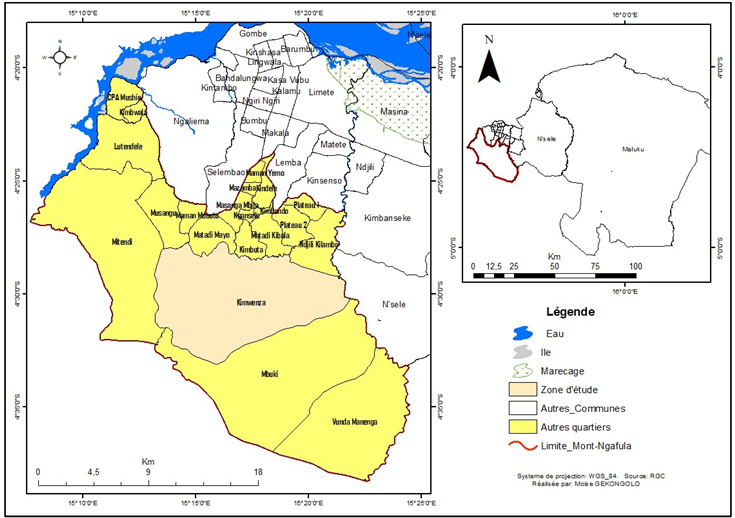
Source: Daniel Mudinga. Map 1: The Kimwenza district in the Commune of Mont- Ngafula.
Presentation of the Regideso Lukaya station
Geographical location The LUKAYA plant is located south of the city of Kinshasa in the Kimwenza Valley between the Mino-Kongo poultry farm and the Kimwenza quarry (CARRIKIM) in the commune of Mont-ngafula, on the right bank of the LUKAYA River from which the raw water is drawn and which gave its name to the plant [6].
It is located between the south latitude 4°27’ and 4°41’,
the longitude is 15°10’ and 15°20’. And covers a distance of about 50 km. It takes its source in the province of Kongo Central precisely in the valley of the village Ntampa, to flow into the village N’djili-kilambu in the N’djili River, which, at which it flows directly into the Congo River in the city province of Kinshasa [7].
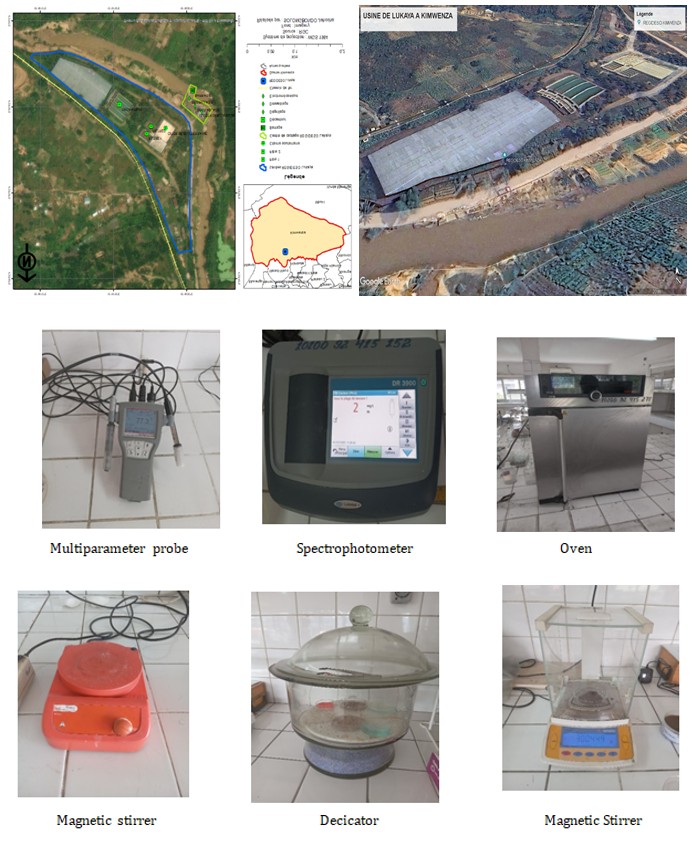
Source: Daniel Mudinga. Map 2: Plan of the water treatment plant.
Presentation of the Lukaya plant With a capacity of 36,300 m3 per day but operating in overload (40,000 m3/day), the LUKAYA plant can supply up to 239,000 people with drinking water in certain districts of the communes of Lemba, Mont-Ngafla, Selembao all in the western part of the city province of Kinshasa. The first phase began operating in 2006, with a capacity of 18,600 m3/day, on its own funds. Fruit of cooperation between the DRC and the World Bank. The second phase of the plant was put into service on Saturday, July 27, 2013. The major mission assigned to the Lukaya plant, as to all water purification plants, is to produce healthy water that is clean for human consumption and to make it available to users.
Materials and Methods
Materials used
This section aims to elucidate the apparatus, glassware and other laboratory materials, the reagents used during our laboratory analyses but also the operating methods, principles, protocols and dosages of these products. Below are images of the main materials used:
Source: Daniel Mudinga (Laboratoire Central de la Regideso) Figure 1: Regideso Central Laboratory.
Methodology
Nature of sludge and sampling technique: The sludge used in our experiment was collected at the wastewater discharge point of the Lukaya plant, it is of a dark yellowish color, odorless and directly discharged into the Lukaya River from the Lukaya plant. The samples were taken manually in plastic boxes and the samples were stored in bottles protected from light until they were transported to the laboratory. A total of 3 samples were collected at the effluent discharge point of the Plant [8].
Determination of pH and electrical conductivity: Le pH de la boue préparée est déterminé par le pH-mètre en diluant une portion de cette dernière dans l’eau distillée [9]. Procedure
- Weigh 20g of air-dried fine earth (element ≤ 2mm) and place them in a 100ml beaker.
- Add 50 ml of boiled distilled water.
- Stir the soil vigorously to obtain a suspension, either with a glass stirrer or with a magnetic stirrer for a few minutes.
- Before measuring the pH, calibrating the pH meter.
- Just before introducing the electrode into the solution, resuspend all the soil using a stirrer.
- The pH reading is taken when the needle of the device has stabilized. In general, stabilization is acquired after one minute, sometimes it is only after 2, 3 or 4 minutes. After each measurement, rinse the electrodes with distilled water and test them with Joseph paper. The EC is determined by a conductivity meter in the same solution prepared for the pH determination.
Determination of dry matter, water content and dryness
In order to determine the dry matter content of the sludge, a mass (m1) was placed in the oven at 105 ° C for 2 hours, the sludge was then placed in the desiccator to stabilize without temperature and protect it from the humidity of the air, then weighed [10].
The mass thus weighed after heating in the oven will be noted, m2. Dryness is the mass percentage of dry matter. It is determined from the weight percentage obtained after drying in the oven at 105 ° C overnight, or about 15 hours. The difference between the weight before and after drying expresses the water content of the initial sample. The dryness rate, also called the dry matter rate, is calculated as follows:
Determination of the Nitrate content (NO3-)
In the presence of sodium salicylate, nitrates give sodium paranitrosalicylate, colored yellow and capable of spectrometric determination.
Procedure: Introduce 10ml of water to be analyzed and 1ml of sodium salicylate into a beaker, the mixture is brought to evaporation at 75°C until the total vaporization of the liquid. After cooling, 2ml of sulfuric acid are added, the solution is then left to stand for 10 min for the complete course of the reactions. 15 ml of distilled water and 15 ml of sodium hydroxide tartrate solution (NaOH) are added. After 10 min of rest, the final result is passed to the spectrophotometer at a wavelength of 415nm [11].
Presentation of the laboratory : We had to do our analysis and evaluation at the central laboratory of Régideso located in the large factory of N’djili in Kinshasa.
Results and Discussion
This section interprets and discusses the results.
Presentation of the Results
| NO | Parameter | Sample 1 | Sample 2 | Sample 3 | Standards |
|---|---|---|---|---|---|
| 1 | Ph | 8.1 | 8.2 | 8 | 6.5-8.5 |
| 2 | EC | 16.7 | 16.8 | 17.0 | 200-800 mS/cm |
| 3 | Nitrate | 2.2 | 2.1 | 2.3 | 50mg |
| 4 | Dryness | 68.8 | 67.6 | 68.5 | 25-85 |
| 5 | Humidity | 37.1 | 37.0 | 36.8 | 75-15% |
Table 1: Overall result of the samples analyzed.
Source: Results obtained after laboratory analyses. Table 1: Overall result of the samples analyzed.
Here, the results are confined in the same table, thus indicating the values obtained for each parameter per sample and this in reference to the WHO standards in this area.
Hydrogen potential (pH)
| Parameter | Sample 1 | Sample 2 | Sample 3 | Standards |
|---|---|---|---|---|
| Ph | 8.1 | 8.2 | 8 | 6.5-8.5 |
Table 2: Results of the pH of the analyzed samples.
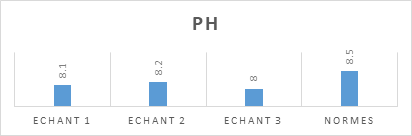
Figure 1: pH of the sludge is located in a very specific range of values.
The pH of the sludge does not experience major changes for the three samples, fresh sludge is characterized by an acidic pH that goes to basicity after a certain month of storage. Generally the pH of the sludge is located in a very specific range of values: 7- 8. For our samples, the average is 8. So it is an almost neutral pH tending to basicity [12].
Electrical conductivity (EC)
| Parameter | Sample 1 | Sample 2 | Sample 3 | Standards |
|---|---|---|---|---|
| CE | 16.7 | 16.8 | 17.0 | 200-800 m/c S m |
Table 3: Results of nitrate ions of the samples analyzed.
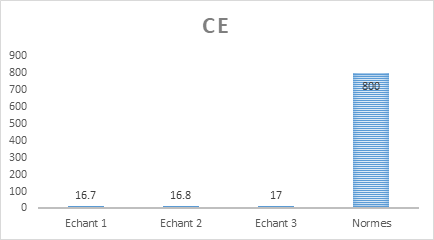
Figure 2: Electrical conductivity informs us about the chemical composition of the ions constituting the sludge.
The electrical conductivity of the sludge determines its degree of salinity. A variation in the conductivity of the sludge is observed over time according to the sampling intervals, this is sometimes due to the release of mineral salts such as phosphates and ammonium ions by the decomposition of organic substances. In addition, the low value of this conductivity in fresh sludge is due to the chemical additives added during water treatment.
Interpretation of nitrate ions NO3 -
| Parameter | Sample 1 | Sample 2 | Sample 3 | Standards |
|---|---|---|---|---|
| Nitrate | 2,2 | 2,1 | 2,3 | 50mg |
Table 4: Results of nitrate ions of the samples analyzed.
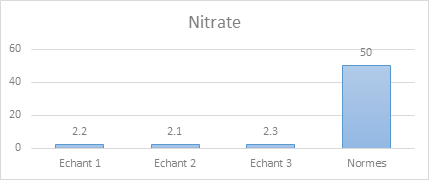
Figure 3: Lukaya Plant is of a low nitrogen nature because it has nitrogen contents.
After the colorimetric measurement according to the wavelengths, we read the absorbances. Using the calibration curve, we obtain the result directly, we can conclude that the sludge of the Lukaya Plant is of a low nitrogen nature because it has nitrogen contents lower than 50 mg/L.
Dryness
| Parameter | Sample 1 | Sample 2 | Sample 3 | Standards |
|---|---|---|---|---|
| Dryness | 68.8 | 67.6 | 68.5 | 85 |
Table 5: Results of the dryness of the samples analyzed.
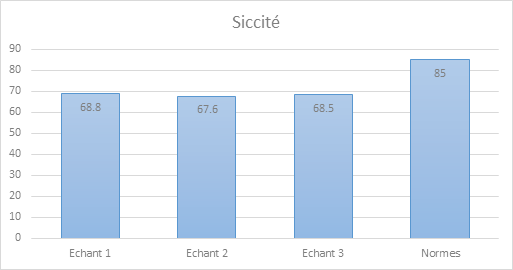
Figure 4: For the sludge from the Lukaya Plant, the percentage of dryness.
The dryness of the sludge is a parameter that is considered the most important because the dryness values are relative and depend essentially on the drying and dehydration methods adopted during treatment, the time factor and climatic factors (temperature, precipitation). Which change the physical state of the sludge in general (pasty, liquid, dry, etc.) For the sludge from the Lukaya Plant, the percentage of dryness is high, i.e. 67 percent, which confirms the very humid and solid nature of this sludge [13].
Moisture
| Parameter | Sample 1 | Sample 2 | Sample 3 | Standards |
|---|---|---|---|---|
| Moisture | 37.1 | 37.0 | 36.8 | 75-15% |
Table 6: Moisture results of the analyzed samples.
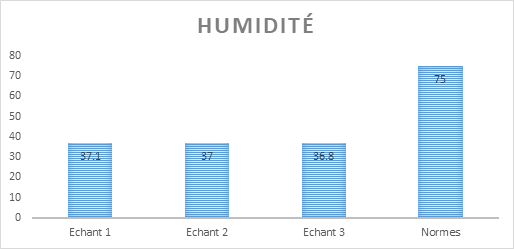
The moisture contained in the sludge depends on the type of water treatment plant, some plants implement significant means for sludge dehydration operations, but for the case under study our plant by its nature and by its main activity which is water treatment, the sewage sludge resulting from the Lukaya plant has a low moisture content of around 75% depending on the dryness rate which is high.
Conclusion and Recommendations
The overall objective of this study is to determine the physicochemical quality of sewage sludge after water treatment at the Lukaya plant. The results obtained prove that the sewage sludge from the Lukaya Plant benefits from pre-treatment inside the plant before being released into the environment. The said treatment is thus the basis for the stabilization of the physicochemical parameters of this sludge as demonstrated by this study by analyzing the samples collected at the discharge point. This sludge thus treated upstream reveals downstream very minimal risks for the environment and human health by generally presenting values of physicochemical parameters close to the WHO standards for effluent discharges into the environment. Thus, we reject the initial hypothesis according to which the diversity of chemicals and the complexity of the techniques used for the supply of drinking water by the Lukaya plant would make the sewage sludge resulting from this activity polluted with physicochemical parameters that do not comply with WHO standards in this area despite upstream treatment and that in order to preserve the environment against any harm resulting from the discharge of this sludge into nature despite upstream treatment, a rational and sustainable management model taking into account the physicochemical nature of this sludge would be essential.
This study thus demonstrates that the treatment carried out upstream by the plant on this sludge before its discharge is effective and requires strengthening with a view to sustainability; The discharge of these effluents into the Lukaya River does not pose a significant risk to this ecosystem and the sustainable management model to be implemented for the rational management of these effluents and the strengthening of the plant’s capacities with a view to modernizing and perpetuating the treatment of sewage sludge upstream.
Thus, we propose the following to the country’s authorities and stakeholders in the water sector in Kinshasa: Strengthening the capacities of the Lukaya plant in the field of sewage sludge treatment; Establishing a permanent monitoring system to monitor the effectiveness of the treatment of sewage sludge upstream by the plant; Establishing a system for treating sewage sludge before discharge into all other water treatment plants in the country; Establishing a national policy for the recovery of sewage sludge instead of returning it to nature. This is, in all modesty, the contribution of our research to the general problem of the management of sewage sludge in drinking water treatment plants in Kinshasa. Of course, we have not exhausted all the material, and we are thus leaving a gap for other scientists to address other aspects still related to this theme.
References
-
Caevel B, Devos M, Chabrier JP, Pollet O (2007) review of treatment channels, sludge recovery, criteria for choosing a suitable channel and associated tree, final report.
-
World Bank (1999) Environmental assessment volume I, French edition, pp: 17.
-
Djamal S (1995) general pedology, Ed. inra, Paris, pp: 332.
-
Emilie S (2002) Organic composition of residual sludge from Lorraine wastewater treatment plants; molecular characterization and effects of biodegradation, Henri poin caré university of Nancy I, Réfea technical team, physicochemical analysis.
-
Grondin JL (1982) Physicochemical parameters of water, in situ measurements, technical note, Dakar Hann center.
-
Frans, Lemaire E (1975) dictionary of the environment, Ed. Marabout University, Belgium.
-
Marie P (2012) structure, official methods for the analysis of sewage sludge PANORAMA and comparative analysis of methods, improvement of chemical analysis methods, AQUAREF report, pp : 62.
-
Nadine Bipendu (2017) Effects of industrial discharges from the Kinshasa water treatment plant on the physicochemical and biological quality of the waters of the Matete and N’djili rivers, Unikin, Kinshasa.
-
Collin PH (2004) Dictionary of environment and ecology.
-
Pote J, Haller L, Loizeau JL, Garcia Bravo A, Sastre V, et al. (2008) Effects of the extension of a wastewater treatment plant outlet pipe on the distribution of contaminants in the sediments of Vidy Bay, Lake Geneva, Switzerland. Biores Techn 99(15): 7122-7131.
-
Protocol for determining physicochemical and bacteriological parameters, regional center for drinking water and low-cost sanitation (CREA).
-
Soumia A (2005) Contribution to the recovery of sludge from sewage treatment plants by composting: fate of metallic and organic micropollutants and the wet balance of the compost, National Polytechnic Institute of Toulouse.
-
Vincent P, Marc H (2007) characterization of municipal sewage sludge, University of Quebec, Canada.
- Lessons to Learn: Trees are More than the Lungs of the World
- Community Forestry Enterprises as a Model for Sustainable Forest Development: The Case Of The "Baja Tarahumara" in Chihuahua, Mexico
- Ecological and Socio-Economic Impacts of Chromolaena odorata and Mesosphaerum suaveolens, Two Invasive Alien Species in Central and Southern Benin, West Africa
- Epigenetic Sustainability: Modeling the Human Factor as a Natural Resource through Science 4.0 and the NR3C1 Biological Pilot
- Growth-at-Risk: A Framework for Assessing Economic Vulnerability
- The Rural Territory as a Socioecological System for the Management of Public Policy for Sustainable Rural Development