
Applying the Rumsfeld Matrix to Biodiversity Loss: A Brief Review
Biodiversity loss is accelerating in the Anthropocene, driven by land and sea use changes, climate change, pollution, unsustainable exploitation of natural resources and the spread of invasive species. This paper uses the Rumsfeld Matrix—a tool for categorizing knowledge—to understand the impacts of these drivers of biodiversity loss. What are the relationships between extinction risks, ecosystem resilience, and the chain reactions that biodiversity loss triggers? By identifying gaps in knowledge—such as species adaptation, climate tipping points, and human-driven environmental changes—the study highlights challenges in predicting and preventing biodiversity loss due to cascading impacts. Known-Unknowns in biodiversity include species adaptability, ecosystem recovery, and pollinator decline, highlighting important areas in long-term ecological forecasting. Unknown-Unknowns in biodiversity studies include unforeseen ecosystem collapses, new diseases, and the biodiversity impacts of tipping points in the AMOC or Amazon rain forest, highlighting unpredictable, nonlinear risks requiring improved predictive modeling. The paper explores evolutionary theories like punctuated equilibrium and gradualism, which explain past extinctions like the K–Pg event (an unknown known), applying these lessons to modern conservation. Economic estimates of biodiversity loss remain uncertain, facing methodological issues, hidden costs in key sectors, and overlooked regional ecosystem dependencies. The paper argues that new technologies—including machine learning and computer vision, as well as time-series analysis—are improving species tracking and prediction of biodiversity changes, enabling scientists to unravel the unknown unknowns within the biodiversity loss agenda.
Part I: Introduction and Research Objectives
Introduction
Biodiversity loss is now ongoing at an unprecedented pace. In fact, extinction rates are 100 to 1000 times higher than natural background rates due to human actions [1]. The World Wildlife Fund (WWF) reports that “the rapid loss of species we are seeing today is estimated by experts to be between 1,000 and 10,000 times higher than the natural extinction rate” [2]. Researchers estimate that one million species are at risk of extinction within decades [1, 2, 3, 4, 5, 6, 7, 8, 9, 10]. The loss of intact ecosystems, with over 75% of terrestrial environments and 66% of marine environments significantly altered by human activity, underscores the urgency of intervention [11, 12].
The planet’s climate has in 2024 with high probability passed the Paris Agreement threshold of 1,5C global warming. This raises the risk that climatic tipping points begin to move. In this century there is a real risk of accelerated ecological change, pushing species beyond their temperature limits and niches.
Therefore, a deeper examination of these interactions is urgently needed [13, 14, 15, 16, 17, 18, 19, 20, 21, 22, 23, 24]. There is already a strong research agenda unfolding on the climate-biodiversity nexus. But the cascading effects of species loss on ecosystem stability, food security, and climate stability remain poorly understood.
Adaptive Limits and Extinction Risks
Biodiversity loss and particularly loss of genetic diversity may limit future adaptive potential in the face of these risks, reducing the resilience of many species to climate change. Punctuated equilibrium theory, proposed by Stephen Jay Gould and Niles Eldredge, suggests that evolution does not occur at a constant, gradual pace but rather in long periods of stability (stasis) punctuated by short bursts of rapid change [25, 26, 27, 28, 29, 30, 31, 32, 33, 34, 35, 36, 37, 38, 39, 40, 41, 42, 43, 44, 45, 46, 47, 48, 49, 50, 51, 52].
It is clear that mankind may well be causing exactly such a short burst of rapid change on ecosystems and species populations [53]. Yet, there is still many unknowns around biodiversity loss, that lie ahead in the Anthropocene.
The Anthropocene is characterized by human-driven environmental changes that have accelerated extinction rates. Unlike the K–Pg event, the Sixth Mass Extinction refers to the accelerated loss of biodiversity due to human interference – some researchers call it an anthropogenic mass extinction. Current extinction rates now impact ecosystems, species diversity, and long-term ecological stability [54].
The Earth has experienced multiple mass before, each reshaping biodiversity. The Cretaceous–Paleogene (K–Pg) extinction, approximately 66 million years ago, nearly 75% of species, including non-avian dinosaurs, likely due to an asteroid impact at the Chicxulub crater. The disrupted equilibrium that emerged from the event now serves as a model for understanding how extinction processes unfold [55].
The Drivers of Biodiversity Loss
While today’s biodiversity loss differs from an asteroid impact, it is accelerating due to the drivers of biodiversity loss as identified by the IPBES, namely climate change, land use and sea change, pollution, overexploitation of populations, and the spread of invasive species.
Land and sea use change leads to widespread habitat loss, fragmentation, and ecosystem degradation, driving significant biodiversity loss.
Pollution from agricultural runoff, industrial emissions, and urban waste contaminates ecosystems, endangering wildlife and reducing reproductive success. Climate change alters temperature and rainfall patterns, triggering species migration, extinction, and destabilizing ecosystems worldwide. Overexploitation through unsustainable harvesting of wildlife and marine resources drastically reduces species populations, threatening ecological balance. The spread of invasive species disrupts ecosystems by outcompeting native organisms, altering food webs, and accelerating biodiversity declines globally [56].
The interplay between gradual ecological decline and abrupt tipping points mirrors the unknown-unknowns described in the Rumsfeld Matrix. These tipping points risks that defy prediction.
Research Objectives
- To apply the Rumsfeld Matrix as a structured risk framework for understanding the cascading risks of biodiversity loss, identifying knowledge gaps, and prioritizing research strategies in the face of climate change and ecosystem destabilization [57, 58].
- Examine how extinction theories help us understand past and present biodiversity crises, including the balance between slow ecological decline and sudden environmental tipping points.
- Examine how technologies such as machine learning and computer vision improve biodiversity monitoring and prediction through the lens of the Rumsfeld Matrix.
Research Questions
- How can the Rumsfeld Matrix help categorize known and unknown risks in biodiversity loss, and what insights does it offer for research and policy development?
- How can emerging technologies improve biodiversity monitoring? [59]
Research Methodology This study relies on a literature review, drawing from research in biodiversity loss, conservation biology, and environmental science. It synthesizes findings from peer- reviewed journals and relevant reports to assess key risks associated with biodiversity decline.
To frame these risks, the paper includes a focused review examining how the Rumsfeld Matrix has been applied effectively in various other disciplines, aiming to identify optimal ways to adapt this analytical framework. Currently, the study primarily depends on secondary research and sources. A valuable avenue for future research would involve incorporating primary data collection through interviews, data collection and, or fieldwork, thereby enhancing the depth, validity, and credibility of the paper's conclusions [60].
Part II: Frameworks
This section gives background on key extinction drivers, the Rumsfeld Matrix framework, and how structured risk analysis can help us understand the risks surrounding biodiversity loss.
Introducing the Rumsfeld Matrix Risk Framework
By categorizing biodiversity loss research into Known Knowns, Known Unknowns, Unknown Knowns, and Unknown Unknowns, the paper helps prioritize research and conservation efforts by identifying areas where scientific knowledge is solid, and where gaps remain.
A simple Rumsfeld framework is useful for addressing various types of risks, and is presented in Figure 1 below [61, 62, 63, 64, 65, 66].
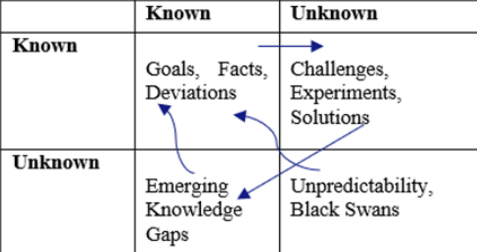
Using the Rumsfeld Matrix on the dynamics of biodiversity loss is fairly new. However, the framework has been used on other subject matters such as IT, counter intelligence and healthcare.
Öbrand, et al. explore IT risk management through Rumsfeld’s quadrants, emphasizing a performative perspective on handling uncertainties and decision-making in technology-driven environments.
Also, Bailly applies the Rumsfeld Matrix to anticancer natural product target discovery, categorizing known and unknown factors to rethink therapeutics. Researchers Sandhu, et al. [66] apply the Rumsfeld Matrix to quality improvement in healthcare, optimizing clinical decision- making; they categorize known and unknown risks, helping healthcare professionals in identifying gaps in knowledge, improving patient outcomes, and enhancing medical practice.
The Rumsfeld Matrix has also been applied to extreme climate change, such as the study of the tipping point in the AMOC [63, 64]. Unknown-knowns such as the Great American Dust Bowl were found to be useful historical case to understand a post-AMOC tipping point world with regional water scarcity. But a subsequent paper also pointed to a discussion on the unknown-unknowns of cascading socio-economic impacts from an AMOC tipping point, and the paper emphasized declining farmland productivity and farmer dislocation post-AMOC as key risks that could materialize.
Biodiversity impacts aside, an AMOC tipping point may have a probable series of economic impacts unfolding, with cascading impacts on rainfall patterns and more frequent droughts in Europe, much lower winter temperatures in Northern Europe, migration from rural to urban areas, etc.
Analyzing the cascading impacts implies a need for a regional focus, and the paper did not analyze the AMOC’s tipping point’s impact in the biodiversity rich tropics, as the Southern hemisphere may warm dramatically post-AMOC collapse and changes may occur in Monsoons, etc [65, 66, 67, 68, 69, 70].
All in all, my previous paper on cascading risks and non- linear dynamics lead to a more advanced theoretical Rumsfeld framework. Here, more elements are integrated into an Advanced Rumsfeld Matrix, presented in Figure 2 [71].
The Advanced Rumsfeld Matrix Applied to Biodiversity Loss sums up insights from articles and books on risks, non- linearity, systemic shocks, black swans, worst-case scenario modelling, extreme climate change modelling, and cost- benefit analysis in extreme climate change, etc. We turn back to biodiversity loss; by applying the concepts in the knowledge quadrants, we can pinpoint gaps in understanding and focus research on mitigating biodiversity loss [72, 73].
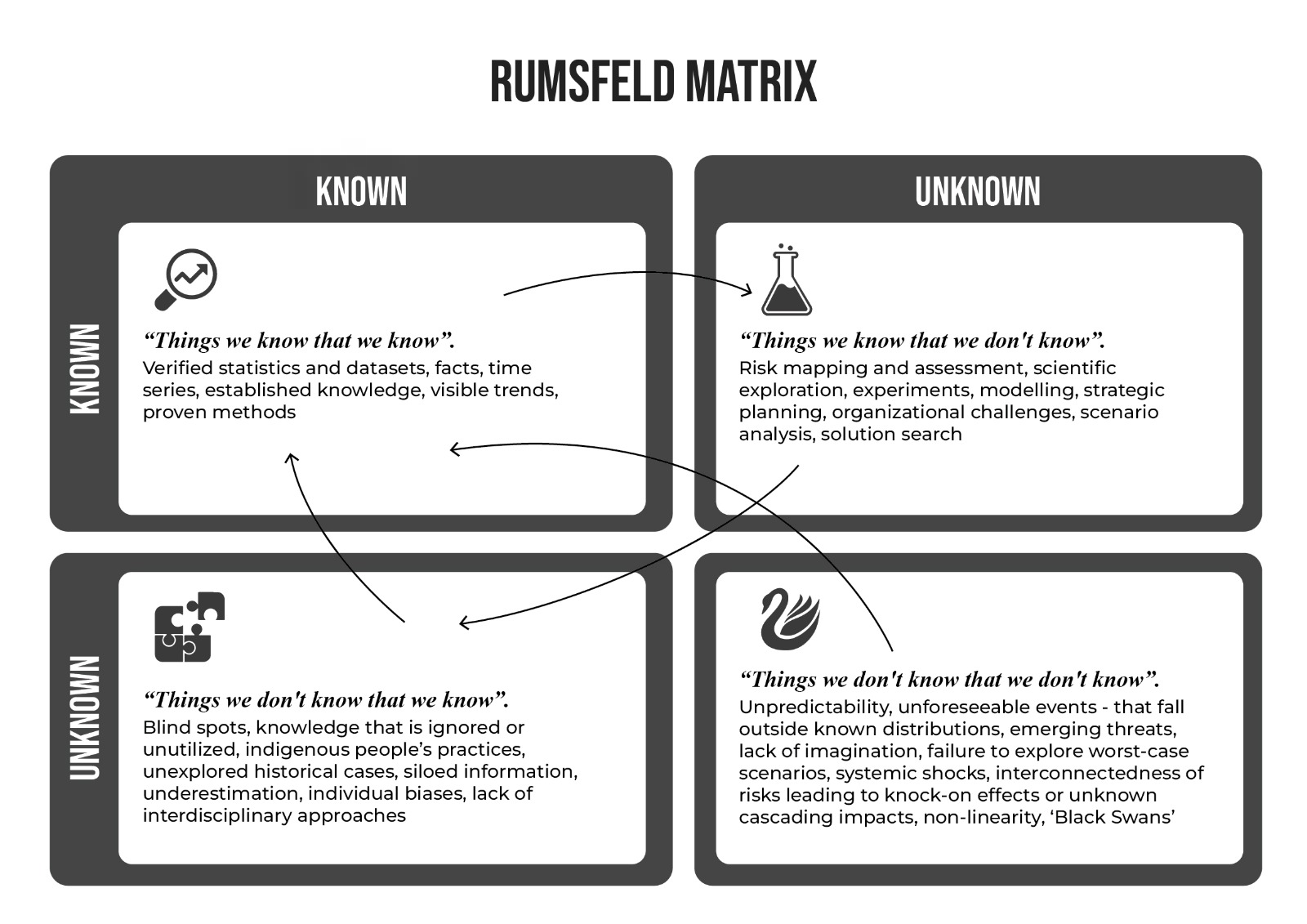
Part III: An Advanced Rumsfeld Matrix Applied to Biodiversity Loss
The goal of this paper is now to apply this advanced Rumsfeld framework to biodiversity loss. This section will align the challenges with what we already know (the known knowns), the overlooked indigenous understanding (the unknown knowns) and the areas of biodiversity research that needs to be scaled up and spread (the known unknowns), and the most severe threats of biodiversity loss represented by the tipping points that lead to unforeseen ecological shifts.
Here, extreme climate change could lead to unpredictable ecosystem responses, further loss of pollinators, etc [74, 75].
Looking for Knowledge Gaps in Assessing Biodiversity Loss
| Known Knowns | Known Unknowns |
| Climate change, habitat destruction, pollution, and overexploitation are primary drivers of biodiversity loss [33].Detailed accounts of species decline in specific ecosystems [34].Network Collapse in Ecological Systems: Biodiversity loss follows a non-linear trajectory, where the disappearance of keystone species can trigger disproportionate ecosystem collapses [35].While direct species loss is well-documented, the full extent of cascading interactions—where a seemingly minor species decline accelerates systemic breakdown—remains underappreciated in mainstream conservation policies. | Uncertainty around the full impact of climate change on biodiversity, with emphasis on marine ecosystems and polar regions [36].Tipping points within the climate-biodiversity nexus. While the potential collapse of the Atlantic Meridional Overturning Circulation (AMOC) is recognized as a significant risk that could materialize mid-century, its full impacts on global climate and ecosystems remain poorly understood [37,38].Challenges in quantifying the economic value of biodiversity and ecosystem services accurately, impacting policy and investment decisions [39].The exact number of species at risk of extinction due to rapid climate change and a new hyperthermal period [40].The economic implications of biodiversity loss, with examples where ecosystem service degradation has led to financial losses, e.g. in the Amazon region, or in least developed countries [41].Zoonotic Diseases: The link between biodiversity loss and the emergence of zoonotic diseases such as avian flu, and its ability to mutate, and cause risks to mammal species and humans is acknowledged, but predicting specific outbreaks remains challenging.Biodiversity-climate feedback loops: The extent to which biodiversity loss reinforces climate change remains incompletely modeled. E.g. microbial communities in soil influence carbon sequestration, yet the thresholds at which species loss disrupts these cycles are poorly quantified [42]. |
| Unknown Knowns | Unknown Unknowns |
| Indigenous people’s low-impact lifestyles that have historically contributed to biodiversity preservation, also due to mosaic population distributions [43].Plant, fungal, and marine species harbor biochemical compounds with potential applications in medicine, biotechnology, and climate resilience.Natural innovations remain underexplored because research is often dictated by economic incentives rather than ecological significance, leading to missed opportunities in biodiversity-driven innovation [44].Successful conservation strategies that have been documented to work in certain regions, offering models for replication [45].Hidden resilience factors within ecosystems that may offer unexpected buffers against biodiversity loss, yet are not fully understood [46]. | Unforeseen impacts of climate change on biodiversity, including the emergence of new diseases and the collapse of ecosystems.Emergence of novel diseases that could affect wildlife and plant species, with cascading impacts on ecosystems and human societies.Potential for sudden, dramatic shifts in ecosystems as a result of climate tipping points being reached, leading to unforeseen consequences on global biodiversity.Rapid environmental shifts may activate dormant genetic traits or epigenetic adaptations in species, leading to unforeseen evolutionary trajectories.Revolutionary technologies such as AI or DNA sequencing that could either mitigate or exacerbate biodiversity loss, which are unpredictable. |
Table 1: An Advanced Rumsfeld Matrix Applied to Biodiversity Loss.
The Known Knowns: Established Drivers, Documented Decline
We know with considerable certainty that climate change, habitat loss, pollution, and overexploitation stand out as primary drivers of biodiversity loss. Detailed records from various ecosystems clearly show how deforestation, pollution, and climate change directly accelerate species decline. We also understand that ecological systems can collapse in a network-like fashion, wherein the disappearance of keystone species provokes a disproportionately large impact on the entire ecosystem. While the reality of direct species loss is well-established, the broader implications of cascading interactions—where seemingly minor declines can trigger system-wide breakdown—are still underrepresented in mainstream conservation strategies [76, 77, 78, 79].
Moreover, the significant proportion of undiscovered and undescribed species—estimated at 86% of terrestrial and 91% of marine species—highlights the hidden dimensions of biodiversity loss. The direct consequences of human actions, including agriculture-driven deforestation, unsustainable fisheries, pollution, and climate-induced habitat shifts, are well-documented drivers of species decline.
Pollinator decline and Economic Impacts: In the realm of known knowns, the decline of pollinators stands out as a well-documented global food security and agricultural productivity. Economic analyses quantify the negative impacts of biodiversity loss on various sectors, emphasizing that the degradation of ecosystem services leads to measurable financial losses.
However, the economic ramifications of biodiversity loss remain somewhat underexplored. Sectors such as agriculture, food production, and pharmaceuticals are particularly vulnerable to declining biodiversity, and thus sector dependencies need to be unpacked further.
For one, pollinators are essential to food security. Pollinator populations-agriculture and global economic stability.
Recently, research has found that an estimated 3-5% of fruit, vegetable, and nut production is lost globally due to inadequate pollination, resulting in approximately 427,000 excess deaths annually from reduced healthy food consumption. The economic ramifications of this loss are significant and unevenly distributed. In three case-study countries - Honduras, Nepal, and Nigeria - the economic value of crop production was calculated to be 12-31% lower than if pollinators were abundant. These figures underscore the immediate and quantifiable impacts of biodiversity loss on human health and economic stability.
The cascading sectoral impacts of biodiversity loss present a complex challenge that spans multiple industries, including agriculture, food security, and biodiversity- dependent sectors such as forestry, paper, pulp beverage production. These economic impacts can be effectively analyzed using the Rumsfeld Matrix.
The Known Unknowns: Gaps, Unknown Outcomes
In biodiversity studies, Known-Unknowns refer to verified gaps in our understanding, such as the specific mechanisms by which species adapt, their evolutionary responses and how ecosystems recover and reorganize after species go extinct. While it is established that new species can emerge post-extinction, the rate and ecological consequences of these processes are more uncertain.
The precise limits of species’ adaptability to rapid change and the effectiveness of conservation strategies remain uncertain. Similarly, the long-term adaptability of species to global warming, land use change such as habitat fragmentation, and shifting rainfall patterns on ecosystems highlights areas for further study. Despite over 250 years of taxonomic efforts, approximately 86% of terrestrial and 91% of marine species remain undescribed. This leaves substantial uncertainty about how biodiversity loss influences ecosystem function. The role of microbial biodiversity, for instance, is recognized as essential to soil health, carbon sink potential, yet remains poorly understood.
Going back to pollinators, parts of the pollinator decline issue belongs in the known unknowns. The exact repercussions extend beyond pollination, encompassing a range of ecosystem services crucial for agriculture, including soil health and natural pest control. To address these challenges, allocating resources to and prepare for unknown risks to agricultural systems is important.
Therefore, protecting pollinators supports resilient agricultural systems and sustains economies reliant on these processes. The loss of pollinators and seed-dispersing animals, as studied by Rogers, et al. [65], demonstrates how species loss triggers cascading ecosystem disruptions. The unpredictable effects of removing keystone species— such as food web instability—underscore the complexity of forecasting the impacts of biodiversity collapse1.
Economic Estimations of Biodiversity Loss: Estimates Are Uncertain
Quantifying the economic value of biodiversity and ecosystem services remains challenging due to methodological inconsistencies, valuation complexity, and limited data availability, hindering effective policy formulation and investment2. But in recent years, systematic efforts have begun to quantify the value of ecosystems services and the value of biodiversity, although methodologies are subject to debate.
The IPBES estimates annual global economic losses of up to $25 trillion, a staggering amount reflecting hidden environmental costs from agriculture, energy, and fishing industries. These sectors fail to internalize damages caused by biodiversity loss, climate disruption, and human health, exacerbating interconnected crises and undermining long- term economic sustainability. More regional studies are emerging: The inaugural Global Nature Positive Summit highlighted that half of Australia’s economy relies on healthy natural systems, emphasizing the economic risks posed by biodiversity decline.
Estimating species extinction risk under rapid climate change is complicated by unknown evolutionary limits, unpredictable ecosystem responses, and incomplete species data, obscuring the true magnitude of biodiversity loss.
Financial impacts of biodiversity loss emerge clearly through disrupted ecosystem services, especially when extreme climate events alter hydrological cycles. For example, severe droughts undermine the resilience and functionality of rainforests, notably the Amazon. The Amazon’s intact ecosystem delivers substantial economic benefits globally. Benefits include carbon sequestration, climate regulation, rainfall patterns critical to agriculture worldwide, and biodiversity preservation essential for medicines and food security. These benefits far exceed local or regional boundaries, although quantifying this economic value remains challenging.
Known Unknowns: Recognized But Understudied Risks
First, applying the Rumsfeld Matrix to biodiversity loss provides a clear framework for understanding the climate- biodiversity nexus, particularly the risks posed by unknown- unknowns. In this context, climate change denial exemplifies a known risk that is frequently ignored or underreported. Despite overwhelming scientific consensus, some still downplay or reject the role of climate change in biodiversity loss. This not only hinders effective policymaking and mitigation strategies, but also accelerates species decline as misinformation continues to spread.
Second, despite clear evidence about evolutionary potential—a species’ genetic capacity to adapt to environmental changes—many conservation strategies continue to overlook factors such as population size, genetic diversity, mutation rates, and gene flow. Similarly, it is widely documented yet frequently disregarded that extinction risk increases dramatically with extreme climate variability, not just gradual climate change. For example, Forester, et al. demonstrate that species resilient under incremental warming can rapidly collapse when exposed to sudden climatic shifts, highlighting underappreciated non-linear responses and hidden ecological tipping points within populations.
Third, many industries underestimate the sectoral economic dependencies on biodiversity by failing to incorporate them into corporate risk assessments. This oversight increases their vulnerability, especially in sectors such as pharmaceuticals that depend on genetic resources to develop new drugs. Beverage companies also rely on stable ecosystems to maintain water quality and agricultural inputs. A decline in biodiversity therefore poses serious risks to supply chains, productivity, reliability and overall business sustainability.
Fourth, tipping points—such as the Amazon rainforest’s diminishing capacity for self-regulation—highlight how unforeseen ecological shifts can trigger rapid, irreversible change. A recent OECD report identified 13 tipping points in the climate, and these domino-like effects underscore the need for further study, as several of them will have major biodiversity implications for biodiversity and the ability to adapt to sudden shifts [59].
By acknowledging known risks before they escalate, we can better prevent the accelerated loss of biodiversity and mitigate long-term ecological and economic consequences. The K–Pg extinction serves as a reference for understanding biodiversity collapse. While it led to the emergence of new species over millions of years, the rapid pace of human- driven extinction leaves little time for recovery.
These are risks that are recognized, and studied to some degree, but not fully understood. Several key risks fall into this category such as the AMOC Collapse: The probable tipping point in the Atlantic Meridional Overturning Circulation (AMOC) is now acknowledged as a major risk this century, yet still under analyzed and not part of mainstream policy- making.
Other unknown knowns means studying adaptive capacity, species interactions, and ecosystem self- regulation—may offer insights into mitigating biodiversity loss. These factors, present in ecological systems, are not always integrated into conservation strategies. Indigenous and local knowledge provides insights into ecosystem stability, habitat management, and species coexistence. Traditional practices, shaped by centuries of observation, highlight biodiversity resilience mechanisms that scientific approaches may overlook. The role of non-native species in ecosystems remains a complex, understudied aspect of biodiversity dynamics.
Unknown Unknows: Neither Identified Nor Understood Risks
Perhaps the most concerning category includes risks that are neither identified nor understood, and that may have non-linear effects. These are risks that are both unknown, unpredictable, and unacknowledged. The quadrant of Unknown Unknowns contains the unforeseen impacts of climate change, such as new diseases and potential ecosystem collapses, highlighting the unpredictability and black swan events in biodiversity. New and unforeseen disruptions in ecosystems due to biodiversity loss, which have not yet been identified or studied. In ecology, these may include emerging ecosystem disruptions. Biodiversity loss may trigger ecosystem changes that have not yet been studied; the decline of key species could cause unforeseen chain reactions in ecological networks, leading to unexpected collapses of entire habitats. Additionally, disruptions in species interactions, such as predator-prey relationships, could destabilize food webs.
From Tipping Points to Pathogen Spillovers
The AMOC and Amazon rainforest tipping points exemplify ecological shifts whose exact timing and full impacts remain deeply uncertain. These tipping points may trigger nonlinear responses, leading to profound yet unforeseen consequences for global climate stability, biodiversity, and ecosystems. Given the complexity and unpredictability of these events, their precise effects are challenging to anticipate or integrate effectively into current conservation planning. As such, despite awareness of their potential existence, the magnitude and nature of their impacts remain largely unknown, classifying these tipping points as “unknown-unknowns” within the Rumsfeld Matrix.
Disrupted ecosystems or isolated species that suddenly interact with humans could facilitate the emergence of new viruses and pathogens, posing unforeseen risks to both wildlife and human populations [15]. Biodiversity loss has been linked to the new zoonotic diseases, such as avian flu.
While researchers acknowledge the relationship between ecosystem disruption and disease transmission, predicting when specific outbreaks will occur remains a challenge. As habitats shrink and species are forced into closer contact, the likelihood of pathogen spillover increases. Unknown viruses and bacteria may adapt to new hosts, creating significant public health threats. Here, the COVID-19 pandemic serves as a stark reminder of how biodiversity loss and habitat destruction can contribute to the emergence of infectious diseases.
Unforeseen environmental shifts, new evolutionary patterns, or human innovations that could drastically alter extinction dynamics. Unknown unknowns, such as ecosystem tipping points e.g. in the Amazon rain forest that may shift from rain forest to savannah, and accelerate rain forest die back also underscore the need for predictive modeling and scenario-based conservation planning.
Addressing Unknown-Unknowns: Emerging Technologies to Fill Critical Gaps in Biodiversity Loss Monitoring
Where do we go from here? By applying the Rumsfeld Matrix, we examined what we know, what remains uncertain, and now new tools can help us fill the voids. Emerging technologies can fill knowledge gaps—enhancing conservation strategies while recognizing their limitations in addressing the root causes of biodiversity loss.
This section explores how AI, machine learning, and predictive analytics improve species tracking and ecosystem assessments.. Technology is transforming biodiversity conservation and the ability to predict species decline.
Longitudinal Studies on Biodiversity Trends: There is a significant gap in longitudinal research that tracks biodiversity trends over time, particularly in response to climate change and human activities. One researcher found a strong need for longitudinal studies on Asian wildlife to assess population trends, habitat changes, species interactions, and conservation challenges amid climate change, habitat loss, and human-wildlife conflict [20]. It argues that short- term studies fail to capture ecological dynamics and urges sustained monitoring for informed conservation strategies.
AI, Sensors, Drone for Species and Ecosystem Monitoring: New technologies now enable automated species identification, ecosystem pattern recognition, and real-time monitoring. They improve our ability to detect biodiversity shifts and assess threats. Integrating AI-driven analytics with longitudinal studies allows for deeper insights into species adaptation, habitat changes, and climate-induced stressors, ultimately strengthening conservation policies and proactive management strategies. New technology gives conservationists better tools to track species, habitats, and threats. Camera traps and radio tracking now work with AI, drones, and satellites to monitor wildlife in real time, assisting with tracking of rare and endangered species such as snow leopards.
These tools help identify species at risk and guide conservation efforts, which is presented in Table 2 below.
| Description | Application in Conservation | |
|---|---|---|
| Thermal Imaging | Infrared cameras detect heat emitted by animals. | Effective for nocturnal or cryptic species, anti-poaching efforts. |
| Passive Acoustics | Audio loggers recording animal vocalizations and environmental sounds. | Used for monitoring bird, amphibian, and marine mammal populations. |
| Active Sonar | Underwater acoustic technology that emits sound waves to detect objects. | Tracks fish populations, maps habitats, and identifies marine species. |
| Biologging (GPS, Accelerometers, etc.) | Devices attached to animals collecting movement and physiological data. | Tracks migration, feeding behavior, and climate change impacts on species. |
| Drones (UAVs) | Unmanned aerial vehicles capturing high-resolution imagery. | Wildlife tracking, habitat mapping, and illegal activity detection (e.g., poaching, deforestation). |
| Machine Learning/Deep Learning | Automated data processing for species identification and population trends. | Algorithms enhance monitoring efficiency, and reduces manual work in conservation projects. |
Table 2: Key Technologies for Biodiversity Monitoring and Conservation.
That biologists, rangers and local government officials make the best use of these tools will ensure an improved data- driven approach to biodiversity preservation not just in the OECD countries but also in tropical regions rich on biodiversity.
From Tracking to Prediction
This uptake of technology by researchers not only helps with species discovery and population monitoring, but also permits us to develop scenarios of how the “Unknown Unknowns” of biodiversity loss could play out. If global temperatures rise beyond 2.5°C, some regions will experience faster warming than others, affecting species’ survival and migration abilities. Identifying the most vulnerable species—those unable to adapt or relocate— remains a critical challenge.
Advancing biodiversity loss studies with cutting-edge technologies can help refine research agendas and improve conservation strategies.
Also, DNA sequencing is unravelling the genetic blueprints of known and unknown species, and in that way, the number of species in the world may still rise significantly [64]. Artificial intelligence and machine learning can enhance our capacity to process large datasets in conservation. AI may predict trends and identify patterns in species behavior.
Li, et al. highlight that the successful application of rapidly emerging deep learning techniques in machine vision has brought new opportunities for fish classification [24]. Thus, by leveraging deep learning and machine vision, we can automate species identification and monitoring, leading to rapid biodiversity assessments [41]. Integrating such technological advancements enhances conservation work, helping to uncover the “Unknown Knowns” and “Unknown Unknowns” of biodiversity [57].
Furthermore, image recognition technology stands as a powerful tool for species identification and monitoring, enabling rapid biodiversity assessment [51]. Enabling the rapid assessment of biodiversity in various habitats and improving the accuracy of wildlife inventories. By integrating these technological advancements, conservation strategy and policy can be enhanced and more responsive to the dynamic nature of ecosystems. Also predictive modeling and economic analysis may inform more strategic conservation planning and policy-making, and the interplay between Big Data, prediction and ecosystem understanding is a growing field. Here, the use of AI and machine learning techniques in predictive analytics offers a promising avenue for understanding the effects of climate change on biodiversity. AI helps understand and model climate impacts on biodiversity. Furthermore, the application of Big Data facilitates the processing of vast and complex ecosystem and species population datasets, revealing new patterns and correlations that can guide conservation work. The role of data scientists is critical in ensuring the scientific integrity and use of these insights.
While new technologies help track ecosystem health and species populations, they are not a complete solution. But by using the Rumsfeld Matrix to categorize conservation technologies, we can see how these tools not only help track species but also fill important knowledge gaps about biodiversity loss and decline.
Conclusion
Frameworks like the Rumsfeld Matrix highlight both the risks we understand and the uncertainties that demand further study. While evolutionary theories such as punctuated equilibrium and gradualism provide insight into species adaptation, they also underscore the unprecedented nature of today’s biodiversity crisis. Unlike past extinctions, human-driven environmental change is accelerating at a rate that leaves little room for natural recovery. Therefore, future research should prioritize the development and application of advanced technologies for biodiversity monitoring and conservation.
Refining existing tools like DNA sequencing and machine learning is necessary [64]. But so is the innovation of novel approaches that deepen our understanding of ecosystem processes. Predictive models must incorporate non-linear ecological dynamics, cascading risks, and feedback loops to prevent rapid biodiversity loss by improving conservation outcomes.
Conservation efforts must shift from reactive to proactive strategies. Therefore, while AI-enhanced camera traps, satellite monitoring, and passive acoustics already improve species detection, real-time ecosystem surveillance through nanosatellites and drone-based sensing can further close critical data gaps The full extent of biodiversity-climate feedback loops remains poorly quantified, particularly the role of microbial communities in carbon sequestration and the links between biodiversity loss and extreme climate variability. One of the most pressing examples is the Amazon Rainforest, which faces a tipping point where sustained deforestation, rising temperatures, and reduced rainfall could shift it into a dry savannah.
This shift would not only collapse one of the planet’s most biodiverse ecosystems but also release vast amounts of stored carbon, further intensifying global warming. The resulting loss of vegetation cover would disrupt regional and global weather patterns, reinforcing climate instability. Addressing the biodiversity-climate nexus requires integrating structured risk analysis with large-scale nature- based solutions that prevent ecosystem degradation before irreversible thresholds are crossed.
Conservation planning must incorporate the economic implications of biodiversity loss, which are already evident in sectors such as agriculture, fisheries, and pharmaceuticals. The economic valuation of biodiversity and ecosystem services remains an unresolved challenge, limiting effective policymaking and investment decisions.
This paper provides a structured framework for assessing biodiversity risks, but it has limitations. The Rumsfeld Matrix categorizes knowledge gaps but does not inherently provide solutions or predictive models. However, by systematically distinguishing between known and unknown risks, it enhances decision-making in conservation policy, technological innovation, and resource allocation.
Additionally, while indigenous knowledge and technological advancements hold promise, further research is needed to operationalize them in conservation strategies. Future studies should establish comprehensive, long-term monitoring programs leveraging AI, big data, and machine learning [73, 74]. A more integrated approach—combining ecological science, risk frameworks, and emerging technologies— can improve our ability to mitigate biodiversity loss before irreversible tipping points are reached. Expanding the application of structured uncertainty frameworks like the Rumsfeld Matrix can help bridge critical knowledge gaps and enable more adaptive, forward-looking conservation strategies.
Disclaimer
The opinions expressed in this research article are my own as an individual, and do not reflect the opinions of my current employer. The contents of this research article are not meant to recommend courses of actions or investment decisions on the basis of the nature risks identified and analyzed. The contents are intended to inform you as a reader, and to identify research and policy gaps for further work. Any financial gain or loss incurred by a reader because of this article will result from decisions taken by the reader as an individual. I am not a certified financial advisor. Every investor must conduct their own due diligence.
References
-
Armstrong McKay, David I (2022) Exceeding 1.5 °C Global Warming Could Trigger Multiple Climate Tipping Points. Science 377: 6611.
-
Bailly C (2024) Application of the Rumsfeld Matrix to Anticancer Natural Product Target Discovery. Pharmacological Research-Reports 2: 100023.
-
Baker, Jessica CA, Dominick Spracklen V (2019) Climate benefits of intact Amazon forests and the biophysical consequences of disturbance. Frontiers in Forests and Global Change 2: 47.
-
Benton Michael J (2018) Hyperthermal-Driven Mass Extinctions: Killing Models during the Permian–Triassic Mass Extinction. Philosophical Transactions of the Royal Society A: Mathematical, Physical and Engineering Sciences 376: 2130.
-
Biswajit B (2025) Risk Management Governance. AIM.
-
Taleb NN (2007) The Black Swan.
-
Borja A, et al. (2024) Innovative and Practical Tools for Monitoring and Assessing Biodiversity Status and Impacts of Multiple Human Pressures in Marine Systems. Environmental Monitoring and Assessment 196(8): 694.
-
IPBES (2019) Summary for Policymakers of the Global Assessment Report on Biodiversity and Ecosystem Services of the Intergovernmental Science‐Policy Platform on Biodiversity and Ecosystem Services. Population and Development Review 45: 680681.
-
Paul B. Heinonen T, Lahti P (2007) Heisenberg’s Uncertainty Principle. Physics Reports 452(6): 155-176.
-
Cheung William WL (2009) Projecting Global Marine Biodiversity Impacts under Climate Change Scenarios. Fish and Fisheries 10(3): 235-251.
-
Coppinger Raymond P, Kay Smith C (1989) A Model for Understanding the Evolution of Mammalian Behavior. Current Mammalogy 2: 335-374.
-
Cowie Robert H (2022) The Sixth Mass Extinction: Fact, Fiction or Speculation?. Biological Reviews 97(2): 640- 663.
-
Copernicus Climate Change Service (2024) Copernicus: 2024 Is the First Year to Exceed 1.5°C above Pre- Industrial Level.
-
Couzin Iain D, Heins C (2023) Emerging Technologies for Behavioral Research in Changing Environments. Trends in Ecology & Evolution 38(4): 346-354.
-
Tal D, Blekhman R, Graur D (2006) The ‘Domino Theory’ of Gene Death: Gradual and Mass Gene Extinction Events in Three Lineages of Obligate Symbiotic Bacterial Pathogens. Molecular Biology and Evolution 23(2): 310-316.
-
Davidson Eric A (2012) The Amazon basin in transition. Nature 481.7381: 321-328.
-
Sandra D (2015) The IPBES Conceptual Framework- Connecting Nature and People. Current Opinion in Environmental Sustainability 14: 1-16.
-
Ditlevsen P, Ditlevsen S (2023) Warning of a forthcoming collapse of the Atlantic meridional overturning circulation. Nature Communications 14(1): 4254.
-
Ditlevsen P (2024) Fingerprinting the AMOC and Predicting a Collapse. EGU General Assembly Conference Abstracts.
-
Shermin DS (2016) Need for Longitudinal Studies of Asian Wildlife in the Face of Crises. Global Ecology and Conservation 6: 276-285.
-
De Vos, Jurriaan M (2015) Estimating the Normal Background Rate of Species Extinction. Conservation Biology 29(2):452-462.
-
Elewa Ashraf MT, Ashraf Elewa MT (2008) K-Pg Mass Extinction. Mass Extinction pp: 129-131.
-
Ashraf MT, Ahmed Abdelhady A (2020) Past, Present, and Future Mass Extinctions. Journal of African Earth Sciences 162: 103678.
-
Colin F, Jeffrey Sieracki M (2016) Machine Vision Automated Species Identification Scaled towards Production Levels. Systematic Entomology 41(1): 133-143.
-
Ferrier S (2002) Mapping Spatial Pattern in Biodiversity for Regional Conservation Planning: Where to from Here?. Systematic Biology 51(2): 331-363.
-
Carl F, Colding J, Berkes F (2003) Building Resilience and Adaptive Capacity in Social-Ecological Systems. Navigating Social-Ecological Systems Cambridge University Press pp: 352-387.
-
Folke C (2021) Our Future in the Anthropocene Biosphere. Ambio 50: 834-869.
-
Jonathan A (2007) Amazonia revealed: forest degradation and loss of ecosystem goods and services in the Amazon Basin. Frontiers in Ecology and the Environment 5(1): 25-32.
-
Brenna FR (2022) Linking Evolutionary Potential to Extinction Risk: Applications and Future Directions. Frontiers in Ecology and the Environment 20(9): 507- 515.
-
Gould SJ (1982) Darwinism and the Expansion of Evolutionary Theory. Science 216(4544): 380-387.
-
Gould SJ (1994) The Evolution of Life on the Earth. Scientific American 271(4): 84-91.
-
Gould SJ, Eldredge N (1986) Punctuated Equilibrium at the Third Stage. Systematic Zoology 35(1): 143-148.
-
Hald-Mortensen C (2025) An Uncertain Water-Energy Nexus: What Role for Hydropower, Desalination, Energy Positive Wastewater Treatment and Leakage Reduction on the Path to Net Zero?. Journal of Ecology & Natural Resources 9(1).
-
Hald-Mortensen C (2024) Applying the Rumsfeld Matrix: Unknown Unknown Climate Risks in an AMOC Collapse Scenario. Journal of Ecology & Natural Resources 8(1).
-
Hald-Mortensen C (2024) Cascading Nature Risks: Applying the Rumsfeld Matrix to Case Studies on Pollinator Decline, an AMOC Collapse, and Zoonotic Pandemics. Journal of Ecology & Natural Resources 8(3).
-
Hald-Mortensen C (2024) The Anthropocene: A Review of Recent Climate Science, Physical Impacts & Adaptation Investment Areas. Journal of Ecology & Natural Resources 8(4).
-
Hald-Mortensen C (2024) The Climate-Biodiversity Nexus Reviewed: Navigating Tipping Points, Science- Based Targets & Nature-Based Solutions. Journal of Agri Earth & Environmental Sciences 3(6): 1-11.
-
Hald-Mortensen C (2023) The Main Drivers of Biodiversity Loss: A Brief Overview. Journal of Ecology & Natural Resources 7(3): 000346.
-
James A (2012) The Rumsfeld Effect: The Unknown Unknown. Journal of Experimental Psychology: Learning, Memory, and Cognition 38(2): 340.
-
Sean H (2024) Too Simple, Too Complex, or Just Right? Advantages, Challenges, and Guidance for Indicators of Genetic Diversity. BioScience 74(4): 269-280.
-
Høye Toke T (2021) Deep Learning and Computer Vision Will Transform Entomology. Proceedings of the National Academy of Sciences 118(2): e2002545117.
-
Monica I (2022) Long-Term Drought Intensification over Europe Driven by the Weakening Trend of the Atlantic Meridional Overturning Circulation. Journal of Hydrology: Regional Studies 42: 101176.
-
IPBES (2019) Global Assessment Report on Biodiversity and Ecosystem Services of the Intergovernmental Science-Policy Platform on Biodiversity and Ecosystem Services. IPBES Secretariat, Bonn, Germany.
-
Forest I (2023) Expert Perspectives on Global Biodiversity Loss and Its Drivers and Impacts on People. Frontiers in Ecology and the Environment 21(2): 94-103.
-
Philippe J (2025) The Anthropocene and the Biodiversity Crisis: An Eco-evolutionary Perspective. Comptes Rendus. Biologies 348(G1): 1-20.
-
Pedro J (2022) The Direct Drivers of Recent Global Anthropogenic Biodiversity Loss. Science Advances 8(45): eabm9982.
-
Binoy K (2021) The Known Knowns of Donald Rumsfeld. CounterPunch.
-
Lagerstrom Katherine M (2022) From Coral Reefs to Joshua Trees: What Ecological Interactions Teach Us about the Adaptive Capacity of Biodiversity in the Anthropocene. Philosophical Transactions of the Royal Society B 377(1857): 20210389.
-
Lahoz-Monfort José J, Michael Magrath JL (2021) A Comprehensive Overview of Technologies for Species and Habitat Monitoring and Conservation. BioScience 71(10): 1038-1062.
-
Daoliang L (2022) Recent Advances of Machine Vision Technology in Fish Classification. ICES Journal of Marine Science 79(2): 263-284.
-
Xiaolong L, Pan D, Yu J (2024) Intelligent Identification System of Wild Animals Image Based on Deep Learning in Biodiversity Conservation Law. Journal of Computational Methods in Sciences and Engineering 24(3): 1523-1538.
-
Logan DC (2009) Known Knowns, Known Unknowns, Unknown Unknowns and the Propagation of Scientific Enquiry. Journal of Experimental Botany 60(3): 712-714.
-
Longrich Nicholas R, Tokaryk T, Field DJ (2011) Mass Extinction of Birds at the Cretaceous–Paleogene (K– Pg) Boundary. Proceedings of the National Academy of Sciences 108(37): 15253-5257.
-
Mahecha Miguel D (2024) Biodiversity and Climate Extremes: Known Interactions and Research Gaps. Earth’s Future 12(6): e2023EF003963.
-
Francis M, Selosse M (2008) The Laccaria Genome: A Symbiont Blueprint Decoded. New Phytologist pp: 296- 310.
-
Honghu M (2021) Biodiversity Arks in the Anthropocene. Regional Sustainability 2(2): 109-115.
-
Sajid N, Kaleem M (2021) Advances in Image Acquisition and Processing Technologies Transforming Animal Ecological Studies. Ecological Informatics 61: 101212.
-
Nelson Grace M (2024) An Anthropogenic Mass Extinction: Speculation about the Future of Humanity and Other Species.
-
OECD (2022) Climate Tipping Points: Insights for Effective Policy Action. OECD Publishing.
-
O’Brien Michael J (2024) Punctuated Equilibrium at 50: Anything There for Evolutionary Anthropology? Yes; Definitely. Evolutionary Anthropology: Issues, News, and Reviews 33(1): e22009.
-
Maria Rita P (2021) Thinking about the Biodiversity Loss in This Changing World. Geosciences 11(9): 370.
-
Charles P, Folke C, Mäler K (1992) The Ecology and Economics of Biodiversity Loss: The Research Agenda. Ambio 21(3): 201-211.
-
Stefan R (2024) Is the Atlantic Overturning Circulation Approaching a Tipping Point?. Oceanography, 37(3): 16- 29.
-
Susanne R (2020) Unravelling the Hidden Biodiversity– the Establishment of DNA Barcodes of Fish-Parasitizing Acanthocephala Koehlreuther, 1771 in View of Taxonomic Misidentifications, Intraspecific Variability and Possible Cryptic Species. Parasitology 147(13): 1499-1508.
-
Rogers Haldre S. (2021) Cascading Impacts of Seed Disperser Loss on Plant Communities and Ecosystems. Annual Review of Ecology, Evolution, and Systematics 52(1): 641-666.
-
Sandhu Roopinder K, Jason Andrade G (2023) Quality Improvement and the Rumsfeld Matrix. Heart Rhythm 20(7): 1009-1010.
-
Jean-Michel S (2011) Valuing Biodiversity and Ecosystem Services: Why Put Economic Values on Nature?. Comptes Rendus. Biologies 334(5-6): 469-482.
-
Nancy S (2007) Understanding Ecological Response to Disturbance: Mechanisms and Management Strategies in a Changing World.
-
Smith Matthew R (2022) The Lost Opportunity from Insufficient Pollinators for Global Food Supplies and Human Health. The Lancet Planetary Health 6(1): S3.
-
Hannah S (2019) Literature review as a research methodology: An overview and guidelines. Journal of business research 104(2019): 333-339.
-
Nassim Nicholas T (2008) The Black Swan. Penguin Books.
-
Waldron A (2022) The Costs of Global Protected-Area Expansion (Target 3 of the Post-2020 Global Biodiversity Framework) May Fall More Heavily on Lower-Income Countries. bioRxiv.
-
Jana W, Mäder P (2018) Machine Learning for Image Based Species Identification. Methods in Ecology and Evolution 9(11): 2216-2225.
-
Guiming W (2019) Machine Learning for Inferring Animal Behavior from Location and Movement Data. Ecological Informatics 49: 69-76.
-
Warren Michael D (1996) Indigenous Knowledge, Biodiversity Conservation and Development. Sustainable Development in Third World Countries: Applied and Theoretical Perspectives pp: 81-88.
-
Weitzman Martin L (2009) On Modeling and Interpreting the Economics of Catastrophic Climate Change. The Review of Economics and Statistics 91(1): 1-19.
-
Joseph W (2025) Clustered Warming Tolerances and the Nonlinear Risks of Biodiversity Loss on a Warming Planet. Philosophical Transactions B 380(1917): 20230321.
-
Wai-Ming W, Kachel S (2024) Camera Trapping— Advancing the Technology. Snow Leopards, Academic Press pp: 415-428.
-
World Wildlife Fund (WWF) Biodiversity.
- Lessons to Learn: Trees are More than the Lungs of the World
- Community Forestry Enterprises as a Model for Sustainable Forest Development: The Case Of The "Baja Tarahumara" in Chihuahua, Mexico
- Ecological and Socio-Economic Impacts of Chromolaena odorata and Mesosphaerum suaveolens, Two Invasive Alien Species in Central and Southern Benin, West Africa
- Epigenetic Sustainability: Modeling the Human Factor as a Natural Resource through Science 4.0 and the NR3C1 Biological Pilot
- Growth-at-Risk: A Framework for Assessing Economic Vulnerability
- The Rural Territory as a Socioecological System for the Management of Public Policy for Sustainable Rural Development