
Thanatophoric Dysplasia
Bone disease is uncommon in neonates, and when is present is most will be congenital either autosomal dominant or resistive, lethal or associated with others disease. Thanatophoric dysplasia is lethal type of bone disease, it is autosomal dominant, it can be diagnosed antenatal, Thanatophoric dysplasia is caused by mutations in the FGFR3 gene and counseling of parents before the baby delivered.
Najia Hojaili*, Attia Al Zahrani, Ibrahim Kutbi, Laila AL Abasi, Amal Zubani, Liza O Sallam and Moayed Almehmadi
Maternity children hospital Makkah, Saudi Arabia
Introduction
Thanatophoric dysplasia is a severe skeletal disorder characterized by extremely short limbs and folds of extra (redundant) skin on the arms and legs. Other features of this condition include a narrow chest, short ribs, underdeveloped lungs, and an enlarged head with a large forehead and prominent.
Types
Two types of thanatophoric dysplasia
Type I thanatophoric dysplasia is distinguished by the presence of curved thigh bones and flattened bones of the spine (platyspondyly).
Type II thanatophoric dysplasia is characterized by straight thigh bones and a moderate to severe skull abnormality called a cloverleaf skull.
Inheritance
Autosomal dominant.
This condition occurs in 1 in 20,000 to 50,000 newborns.
Incidence
This condition affects about 1 in 60,000 births Type I Thanatophoric dysplasia is more common than type II. Causes Thanatophoric dysplasia is caused by mutations in the FGFR3 gene. This gene provides instructions for making a protein that is involved in the development and maintenance of bone and brain tissue. Mutations in this gene cause the FGFR3 protein to be overly active, which leads to the severe problems with bone growth that are seen in Thanatophoric dysplasia. It is not known how FGFR3 mutations cause the brain and skin abnormalities associated with this disorder [1]. Our Case Full term product of gravida 3 para 2 cicerone section, mother had similar case died before 5th year. He had antenatal ultrasound showed lethal form of skeletal dysplasia good APGAR SCORE, Baby dysmorphic in form of large head, flat facial appearance, abnormal ears ,short neck small narrow thorax, short, deformed limbs, dwarfism, severe short stature protruded abdomen.
Vital sign HR=180 RR=40PPM So2=96% MBP=45,
Baby needed respiratory support in form of mechanical ventilator, no murmur 1st and 2nd Heart sound normal, no organomegaly, developed convulsion loaded by phenobarbitone.
Investigation
Blood gas showed severe respiratory acidosis. , ventilator setting was adjusted. Complete blood count was normal, bone profile was normal. Skeletal survey was done. Brain us normal no IVH. Echocardiograms small PDA, small PF.
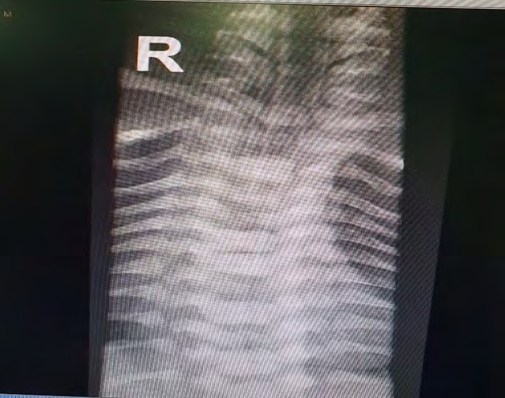
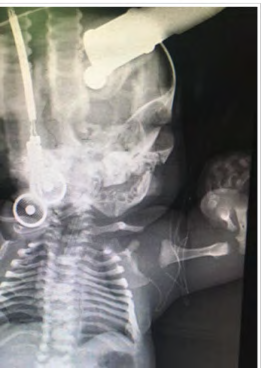
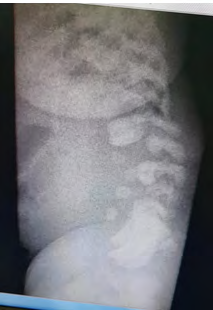
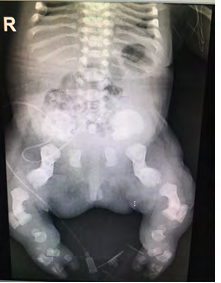
Course and Prognosis
Baby admitted in NICU under mechanical ventilator received one dose of surf anta, septic work up done started ampicillin and gentamycin. Blood was taken for chromosomal, TANDAM was sent, DNA sent through father to send out side by advice of genetic and metabolic consultant, parent was counseling and gave appointment to specialized hospital for next pregnancy and informed them about poor prognosis Baby expired due to respiratory failure.
Discussion
This case was admitted to NICU, with history of similar case died 8th year ago baby had dimorphic feature, its going with Dyssegmental dysplasia, silverman-handmaker type. This is a rare genetic ,primary bone dysplasia disorder and lethal form of neonatal short-limb dwarfism characterized by anisospondyly severe short stature and limb shortening and deformed, metaphyseal flaring and dimorphic feature, he had flat facial appearance abnormal ears .short neck narrow thorax. Joint contractures, bowed limbs. Talipes equinovarus. Urogenital and cardiovascular abnormalities. Its lethal form and autosomal dominant.
Reference
1. Karczeski B, Cutting GR (2013) Thanatophoric Dysplasia. Gene Reviews.
References
-
Karczeski B, Cutting GR (2013) Thanatophoric Dysplasia. Gene Reviews.
- Psychogenic Erectile Dysfunction in Late Adulthood: A Case Report on Clinical Intervention and Intimacy Restoration
- Clinical Trials on COVID-19 in 2025: A New Chapter in Global Health Research
- Innovations and Challenges in Contemporary Medical Clinical Trials: An Editorial Perspective
- Innovations and Challenges in Contemporary Medical Clinical Trials: A Critical Perspective
- Reimagining Clinical Trials: The Power of Continuous Feedback from Medical Reports
- Factors Influencing Brain Drain: Perspectives from a Medical School in Turkey