
Assessment of the Level of Knowledge Regarding Breast Cancer among the Female Students of Basic B.Sc. in Nursing at Square College of Nursing, Dhaka, Bangladesh
Health care system in Bangladesh has been achieved changed and improved status now. But there is still a field where we have to work a lot and that is the slow progress in improving health care system in Bangladesh. Specially, it is very important to increase knowledge and awareness and knowledge about breast cancer among young generation, however all ages people. Breast cancer is the highest public detected cancer among female population in the majority of countries worldwide. There are many risk factors that may increase the chances of developing breast cancer, these include - age, sex, family history of breast cancer, drug abuse, obesity, hormone replacement therapy. We collected some information about breast cancer from the SQUARE College of Nursing, among the female students about age of (19-23) years. The aim of this study was to find out the knowledge among the female students at the SQUARE College of Nursing in Dhaka city. This study adopted a descriptive type of cross-sectional study design. This study used questionnaire as data collection instruments. This study has been carried out for assessing the knowledge regarding about breast cancer among the female students using simple random sampling technique in face to face. The collected data was checked complied in various tables, charts, and analyzed by using SPSS (Statistical Package for Social Science) program. The mean age of the female respondents was 21 years, most of them were Muslims by religion. Educational qualification of female respondents was undergraduate B.Sc. in nursing students. Most (90%) respondents’ mother were housewife and most (35%) respondents’ father were business man. In this study 25% respondent's had excellent knowledge, 6.7% respondents had very good knowledge, 13.3% respondent's had good knowledge, 55% respondents had below average knowledge about breast cancer. On the other hand, breast cancer early detection purpose and the presence of family history of breast cancer were considered facilitators to regular practice BSE. A statistically significant relationship existed between knowledge about the steps of applying the BSE and regular practicing. A training program should be implemented to increase the level of awareness about BC and practicing BSE.
Introduction
Breast cancer is the most common life-threatening cancer and the leading cause of cancer mortality among woman [1]. Breast cancer is a disease in which abnormal breast cells grow out of control and form tumors [2]. We conduct this research to assess the level of knowledge regarding breast cancer among the female students of B.Sc. in Nursing. This chapter presents background and significance of the problem, justification, research question, research objective, conceptual framework, and operational definition [3].
Adequate knowledge of nursing student regarding Breast Cancer is very much needed to be effective in providing care of breast cancer patient which reduce morbidity and mortality. Moreover, if the nursing students carry a good knowledge about breast cancer, they will be able to create awareness in society and family members of the patient [4, 5].
Background and Significance of the Problem
Breast cancer is the most common malignancy in women worldwide [6]. According to WHO fact sheet 2020, there were 2.3 million women diagnosed with breast cancer and 685,000 deaths globally [7]. The National Cancer Registry Program, India 2020, database reported that 162,468 women were newly detected with breast cancer in India accounting for 27.7% of all cancers. About 87,090 women died due to breast cancer in India, which accounts for 23.5% of all cancerrelated deaths in women. Currently, there is an increase in prevalence of breast cancer in younger age group (25 to 49 yrs.), which is 37.7% of all cancer cases [8].
It is the most frequent cancer among women globally, impacting 2.1 million women each year, and is predicted to grow to approximately 3.2 million new cases per year by 2050 [9]. There were 13,028 new breast cancer cases (19% of all cancer types among females) in Bangladesh in 2020 [10]. Although the incidence rate is higher among women older than 50 years, the rate of diagnosis with breast cancer among young women under 50 years of age has increased. Breast cancer also causes the greatest number of cancer-related deaths among women. For example, an estimated 627,000 women died from breast cancer in 2018 in Bangladesh, contributing to nearly 15% of all cancer deaths among women. Delay in seeking treatment after diagnosis or seeking medical help after experiencing symptoms of breast cancer lowers the level of successful treatment outcome and thus decreased survival length. But most breast cancer patients are diagnosed in developing countries, including Bangladesh, at an advanced stage due to a lack of understanding and insufficient access to health care facilities. In Bangladesh, breast cancer is ranked as the 2nd leading cancer after cervical cancer and together breast and cervical cancer account for 38% of all cancer among women. Generally, this disease occurs more frequently among older women above 50, but in recent years, the rising population in this age range has led to a surge in the absolute number of younger women diagnosed with breast cancer. According to Ahmadian M, et al. [7], Asian women get breast cancer at a younger age (40 to 49 years old), than their Western counterparts, who develop it at a later age, (between 50 to 59 years old). In Bangladesh, Mammography and MRI screening are available at some tertiary level hospitals. However, mammography is more sensitive at detecting cancer in older women and MRI is expensive and it may detect more changes that require investigation but turn out to be non- cancerous (about one in ten chances of this) and it has not been shown to improve overall survival in women who are screened. It is currently only considered for young women at very high risk. For breast cancer screening, Bangladesh has adopted the clinical breast examination (CBE) method a simple and low-cost method, feasible in low resource settings that allows rapid training for the providers [11, 12]. Currently, 271 Upazilas Health Complexes (UHCs) have established CBE centers in all districts of Bangladesh and the current training is equipping senior staff nurses from 14 additional UHCs located in 7 Districts to conduct screening. The American Cancer Society also recommends that women should be familiar with how their breasts normally feel via breast self-examination (BSE) and report any breast changes promptly to their health care providers. The ‘National Cancer Control Strategy and Plan of Action 2009–15’ in Bangladesh advocates encouraging clinical breast examination (CBE) and BSE as breast cancer’s early detection approach for disease downstage and survival improvement. In addition, the Breast Health Global Initiative (BHGI) guideline for low- and middle-income countries suggest BSE as the first step in preventing breast cancer. BSE is an easy, expedient, non-invasive and no-cost way to check out women’s own breasts to find any changes in their breasts. BSE can identify symptoms of breast cancer at early stages of cancer, when the condition can be more successfully treated and thus increasing survival rate from breast cancer. BSE aids women by making them conversant about how their breasts should look and feel thus leading to ‘breast awareness’ and also enable them to identify changes in their breasts in the initial stage. It can be performed on a regular basis, at any age and is suitable for low resource countries like Bangladesh. Conversely, mammography screening is not a practical approach to pursue breast cancer prevention due to its high costs for the health system and individual women (in terms of out-of-pocket costs). Although inappropriate or inaccurate BSE enactment may produce both false positives and false negatives for women, BSE is still regarded as a legitimate and realistic alternative for early breast cancer screening in women. In Bangladesh, a previous study reported poor knowledge and awareness of breast cancer and lack of adherence to any recommended screening method of breast cancer, including BSE. However, very few studies have been conducted with young and educated females who are within their reproductive age (i.e., female university students). It is crucial to assess their level of knowledge and practice of BSE as this assessment of knowledge may reflect the awareness level of a large proportion of the population. Although breast cancer incidence is lower in this age group of women than for older women, it is important for younger women to practice BSE in order to identify changes in breast tissue in the future and hopefully prevent incurable, late-stage cancers [13, 14, 15, 16]. Nevertheless, using the case of Square College of Nursing, this study aimed to investigate the knowledge of symptoms, risk factors, treatment modalities and screening methods of breast cancer among young females who represent the most educated segment of population, as well as to examine the practice of BSE and the barriers that are hindering the practice of BSE [17, 18].
Justification
Breast cancer (BC) is the most frequent type of cancer among women in low-, middle-, and high-income regions. Breast cancer is a major global health concern and a prominent reason of mortality among females. Breast cancer also causes the greatest number of cancer-related deaths among women. In addition, the Breast Health Global Initiative (BHGI) guideline for low- and middle-income countries suggest BSE as the first step in preventing breast cancer. BSE is an easy, expedient, non- invasive and no-cost way to check out women’s own breasts to find any changes in their breasts. BSE can identify symptoms of breast cancer at early stages of cancer, when the condition can be more successfully treated and thus increasing survival rate from breast cancer. If we had a good knowledge regarding breast cancer, we may aware about breast cancer. Being a would-be nurse to have sufficient knowledge about BC it is highly needed in terms of providing advance nursing care to the client & to create awareness among health care providers and general people.
Research Question
What is the level of knowledge regarding breast cancer among the female students of Basic B.Sc. in Nursing in the SQUARE College of Nursing?
Research Objectives
General Objective To assess the level of knowledge regarding breast cancer among the female students of Basic B.Sc. in Nursing in the SQUARE College of Nursing, Dhaka, Bangladesh.
Specific Objectives To identify the demographic information of the respondents. To assess the knowledge regarding
- Concept about breast cancer
- Types of breast cancer
- Symptoms of breast cancer
- Prevention of breast cancer
- Diagnostic tests
- Warning Signs
- Epidemiology
Conceptual Framework
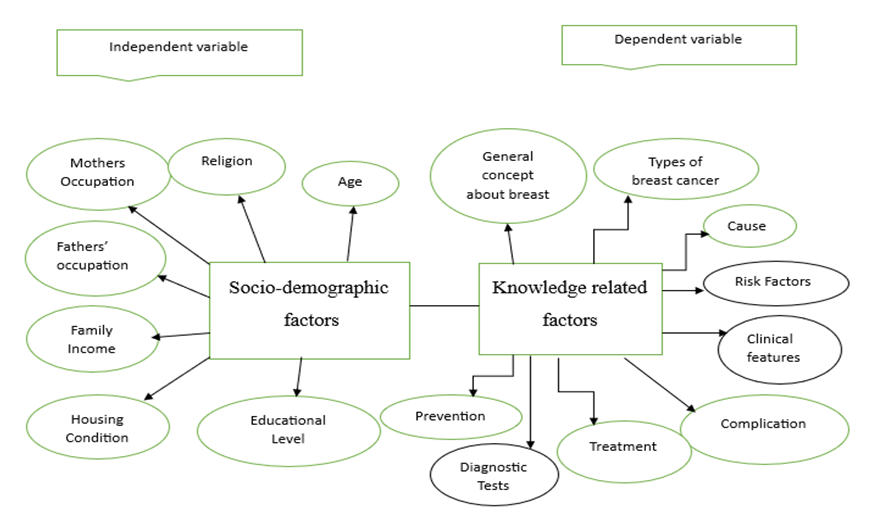
Operational Definition
Breast cancer is a disease in which abnormal breast cells grow out of control and form tumors. It includes: Mastitis: Mastitis is an inflammation of breast tissue that sometimes involves an infection. Breast abscess: A breast abscess is a painful collection of pus that forms in the breast. Breast lump: A breast lump is a mass or growth that develops in the breast.
Knowledge: The level of knowledge regarding Breast Cancer. Nursing Student: The nursing student who currently doing study at SQUARE College of Nursing. Excellent Knowledge: Respondants who gave correct answers 80% knowledge based question. Very Good Knowledge: Respondants who gave correct answers 70 -79% knowledge based question. Good Knowledge: Respondants who gave correct answers 60- 69% knowledge based question. Poor Knowledge: Respondants who gave correct answers less than 0-59% knowledge based question.
Literature Review
Literature review refers to an extensive, exhaustive and systematic examination of publication relevant to the research study.
I was researching on knowledge about breast cancer. My study objective was to assess the level of knowledge regarding about breast cancer among the students of Basic B.Sc. in Nursing at SQUARE College of Nursing, Dhaka, Bangladesh. For that purpose, I was reviewing the following literatures:
A survey was conducted by Safar M, et al. [15] to estimate the awareness of breast cancer and its screening measurements among public and assess the knowledge about Breast Self-Examination (BSE) and their opinion about its effectiveness in early diagnosis of breast cancer to detect the relationship between awareness and socioeconomic status. This study was a cross-sectional prospective study, with a sample of 1046 participants aged between 12 and 80 years (male and female) from the Asir region evaluated by questionnaire after attaining consent.
The selection of participants was based on the simple random sampling method. The majority of participants were of age 20 to less than 30 years (56.9%). About half of them were males (52.7%). The majority was single (61.2%). Most of them (74.0%) have a high education level (University and more). About one-third of the participants (32.7%) worked in the medical field, and most of them worked in the non- medical field (46.6%). Regarding general knowledge, the score was 60.2%, which represented a relatively good knowledge. The overall knowledge regarding breast cancer as recorded by our population reported that only 18.8% had good knowledge. Participants of this resettlement colony have poor knowledge about breast cancer, be it about risk factors, signs, and symptoms, or early detection procedures, where the overall knowledge score was only 18.8% A survey was conducted by Saleha Q, et al. [16] to explore breast cancer knowledge and perceived barriers to help seeking among pre-clinical and clinical female medical students of King Edward Medical University, Lahore: a cross- sectional study. This study suggested that clinical training may have improved knowledge of female medical students regarding breast cancer; yet the knowledge related to the symptoms and risk factors of breast cancer and frequency of breast self-examination of female medical students is less than anticipated.
A survey was conducted by Samira S, et al. [17] about Breast Cancer Knowledge and Practice of Breast Self- Examination among Female University Students, Gaza. A self-administered questionnaire was used to assess the knowledge about breast cancer and related items, and an observation checklist was used to test practicing BSE using a breast simulator. Eighty-six students participated in the study, 58.1% studying nursing and 41.9% studying clinical nutrition in the third (40.7%) or the fourth level (59.3%). Of them, 24.4% had previous family history of breast cancer.
The majority of the students (80.2%) had previous information about breast cancer acquired from different sources, university studies (57%), the Internet (45%), and social media (41%). Findings showed good scores (≥70%) regarding signs and symptoms and risk factors of breast cancer; however, low knowledge scores (<70%) were detected regarding general knowledge about breast cancer disease, methods of early detection and management, and applying steps of practicing BSE. Roughly all the students (96.5%) have heard about BSE, and 69.8% knew the time to do BSE; however, only 31.4% practice it regularly. Three barriers to practice were dominant among students who do not have a breast problem (39.7%), do not know how to do it (37.9%), and being busy 31%. On the other hand, breast cancer early detection purpose and the presence of family history of breast cancer were considered facilitators to regular practice BSE. A statistically significant relationship existed between knowledge about the steps of applying the BSE and regular practicing. A training program should be implemented to increase the level of awareness about BC and practicing BSE.
A survey was conducted by Tanmayee S, et al. [18] to enhance breast cancer awareness among women and primary healthcare providers in an Urban Health Centre (UHC) of a private medical college in Visakhapatnam, Andhra Pradesh. The data collection was performed in two phases: pre-intervention and postintervention. Baseline knowledge regarding breast cancer was obtained by face‐to‐face interview A survey was conducted by Syed AR, et al. [19] about the awareness about Breast Cancer and Breast Self-Examination among Female Students at the University of Sharjah. This study used a cross sectional survey design. Participants were 241 undergraduate female students (aged ≥18 years) from three University of Sharjah campuses. Data were collected from March to April 2017 using a self-administered questionnaire.
The questionnaire covered: Sociodemographic characteristics; knowledge about breast cancer, risk factors, and warning signs/symptoms; and knowledge and practice of BSE. Data were analyzed using descriptive statistics and Pearson’s chi-square tests.
Results: About 38.6% of participants were from the medical campus, 37.3% were from the Women’s campus, and 24% were from the Fine Arts and Design campus. Most (99%) participants had heard of breast cancer. About 50% were knowledgeable about the risk factors, but only 38% were knowledgeable about warning signs/symptoms.
The most commonly identified risk factors were family and personal histories of breast cancer, and the most commonly identified warning sign/symptom was breast lump. There was a significant association between knowledge about risk factors and campus type. Participants from the Medical campus was more knowledgeable about risk factors than participants from the other two campuses. Overall, 68.5% of participants had heard of BSE, but few participants actually performed BSE. Reasons for not performing BSE included “forgetting” and “not knowing how.” Conclusions: Although most participants were aware of breast cancer, knowledge about risk factors and warning signs/symptoms was relatively poor. Knowledge about performing BSE was particularly low. This highlights the importance of increasing awareness about breast cancer and BSE among young women in the UAE.
A study was conducted about the level of awareness and knowledge of breast cancer in Nigeria. A systematic review by Agodirin S, et al. Studies was conducted on Nigerian populace from 2000 to date was reviewed systematically. Search was made in PROSPERO, PubMed/MEDLINE, AJOL, Cochrane library, GOOGLE, ResearchGate and ACADEMIA. Primary outcome was level of awareness about breast cancer entity.
Result: Fifty-one eligible (48 descriptive surveys, 3 interventional ones) studies were reviewed. They included 19,598 respondents (98.5% females; 43% rural dwellers). 17,086(87.2%) were laypersons in various walks of life; 2,512(12.8%) were healthcare professionals. There were high levels of awareness of breast cancer entity, BSE, knowledge of fatality and benefit of early detection (weighted percentages 80.6%, 60.1%, 73.2% and 73.9% respectively). Weighted percentages of knowledge of symptoms/signs were 45.1%. Weighted percentages of sense of susceptibility and performance of BSE were low-26.8% and 22.9% respectively. Generally, rate of performance of screening did not vary with changes in the level of awareness/knowledge of concepts.
Methodology
Study Design
A descriptive type of cross-sectional study design was used to assess the level of knowledge about breast cancer among the students of Basic B.Sc. in Nursing at SQUARE College of Nursing.
Study Setting and Study Area: The study was conducted at SQUARE College of Nursing, Dhaka. Study Period: The division of the study was from first week of August 2023 to third week of February 2024. Study Population: Population had taken from the students of Basic B.Sc. in Nursing at SQUARE College of Nursing, Dhaka, Bangladesh. Study Sample: The sample was collected from the students of Basic B.Sc. in Nursing at SQUARE College of Nursing, Dhaka during the period of data collection. Sampling Technique: Simple random sampling technique was utilized for the study. Sample Size: The sample size in this study was 60 students of 1st year, 2nd year and 3rd year Basic B.Sc. in Nursing students. Selection Criteria Inclusion Criteria
- Nursing students who were voluntary participation on study.
- Nursing students who were present during data collection.
- Nursing students who were 1st, 2nd and 3rd year Basic B.Sc. in Nursing students.
Methods of Participant Selection
Simple random sampling techniques was used to recruit participants according to selection criteria. This study was conducted at SQUARE College of Nursing, Dhaka. The researcher individually approaches them and invite them to participate in the study. An information sheet for the participants was given to each participants to read and explain by the investigator as appendix-1. Any of those participants who provided a written consent to take part in the study, was included in the sample appendix-2. The students, volunteering to participate in this study, was assured that their confidentiality and anonymity was maintained. A SRS sample of 60 students was interviewed considering the time frame given the university. Validity Validity is the extent to which a test measures, what it is supposed to measure. A study was made to develop and test a tool to measure a subject’s knowledge about breast cancer screening in order to implement effective strategies for prevention and early detection. Validity tested by three experts from related area.
- Expert in nursing
- Expert in research
- Expert in research methodology
Reliability
The reliability of this questionnaire was tested through the piloting of the questionnaire. Amendments to the questionnaire was made following feedback from the pilot work. The final questionnaire was structured in the light of the pilot work. The same questionnaire was used for all participants in a single set and using correct language for the questions or correct method of the data collection.
Participant Anonymity
The name of the participants and places was removed from the survey and result documents; thus the participant’s anonymity was ensured in the study.
Confidentiality
To maintain confidentiality, the investigator was the only person with access and was maintained participant’s privacy and anonymity.
Safe Storage of Data
After completing the study all record of the data was kept securely in a custody or locked cupboard. The data was kept for the period of five years. After that all records was disposed of accordingly.
Data Collection Instruments
The questionnaire was developed by the researchers to assess basic knowledge about early warning signs and risk factors of breast cancer among female students. Content validity was ascertained by experts. The questionnaire consisted mainly of two sections. The first part included 13 questions about demographic characteristics of the participant such as age, ethnic origin, religion, marital status and residency. The source of their knowledge regarding breast cancer was also requested from students. The second part included 17 questions concerning general knowledge about breast cancer.
Development of Questionnaire The pilot study was undertaken in order to ensure the accuracy and relevancy of the research questions. Necessary minor correction was made after piloting the questionnaire. The questionnaire contains. Items that focus the assessment of knowledge regarding Brest cancer. The questionnaire was grouped into following categories:
- Demographic information
- Questions of knowledge based information.
Data Collection Technique: Data collection was done by questionnaire method.
Data Management and Analysis: Statistical package for the social science (SPSS) version 23.0 a computer program was used to entry and analyzed the collected data proportion was presented by frequency and cross tabulation analysis.
Ethical Consideration
The research proposal was submitted to the ethics committee of the SQUARE College of Nursing to obtain approval of this study. Following the approval by this committee, the investigators personally was communicated the Principal of the SQUARE College of Nursing, Bangladesh, for seeking permission to conduct the study. The investigator was explained what the participants were required to done for the study assured them the anonymity and confidentiality was as maintained. The participants were assured that they have a right to refuse to participate of withdraw from the study at any time without any changes to the level of the care they normally received. The participants were also informed that if any question caused them distress or make them upset, the investigators counseled them immediately and then only continued the interview if this was appropriate. The investigators read the information sheet for those participants who were illiterate. After this description of verbal and written information the participant’s signature were obtained. All participants and place name were removed from the survey and result documents. The participants consent in written were taken as a part in the study. On completion of the study all record of the data was taken as the part in the study. On completion of the study, all records of the data were kept 4 securely in locked cupboard for a period of five years. To maintain confidentiality, the researcher was the only person with access and maintain the participant’s privacy and anonymity.
Limitation of the study
The study findings were not be utilized to represent whole country or whole population of the country as the sample size was small and chosen purposively for fulfilling academic requirement.
Outcome
The result of this study was implications for both nursing research and practice. Students should be participate in breast cancer related seminars, social awareness programs so that they can improve their knowledge about breast cancer. Health care professionals should be arrange special training about breast self-examination for women to increase their well-being so that they can prevent breast cancer. Awareness concerning program for health care professionals should be arrange by health care agency & organization. The study findings were making the students aware and conscious and also their family members, friends and relatives.
Results
In this chapter, the study findings are presented in two parts and conclude with discussion as (Figure 1-27):
1. Sociodemographic characteristics of the respondents. 2. Level of knowledge regarding breast cancer among the B.Sc. in nursing students at SQUARE College of Nursing in Dhaka.
All data were analyzed by using Statistical Packages for Social Science (SPSS) software version (23.00).
Socio-demographic information of the respondents:
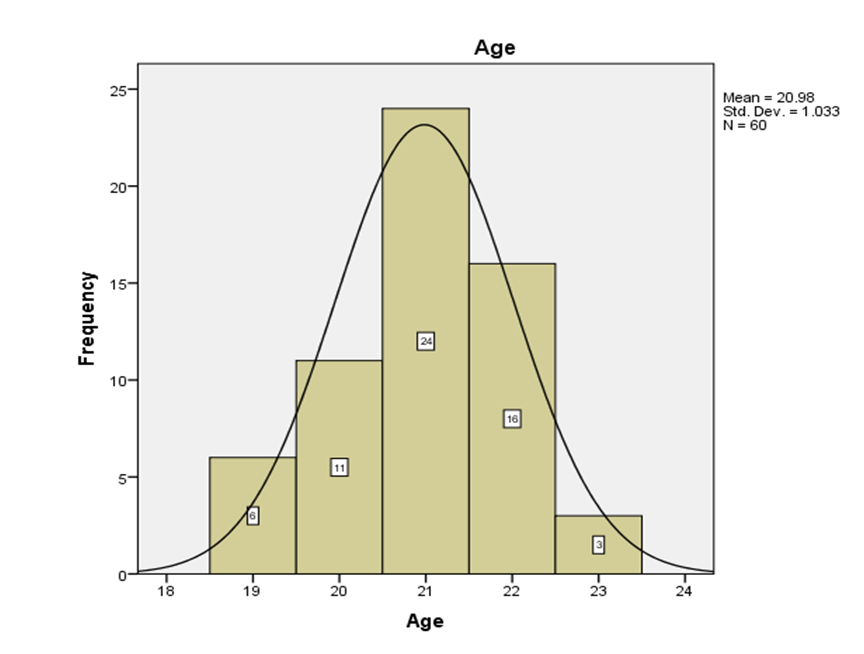
This histogram shows the level of age where include 19- 23 years age. Here, the below level of age is 19 years and it is 10 percent and the high level of age is 23 years and it is 5 percent.
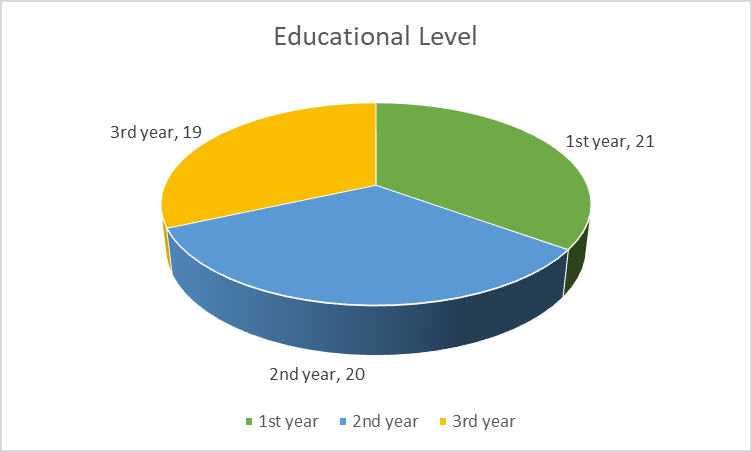
This pie chart shows that, the different level of education. Among 60 students the 21 students are in 1st year, 20 students are in 2nd year & 19 students are 3rd year.
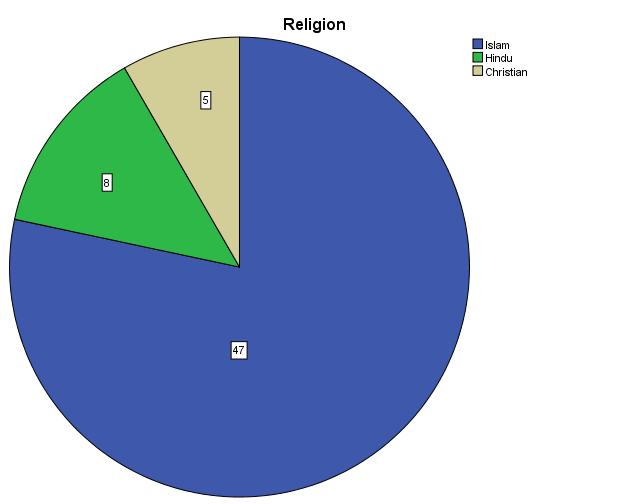
This pie chart shows that, the different religions and percentage of religion. Here, most of the students belongs to Islam religion and its frequency is 47 people. Among 60 students, the 8 students belong to Hindu religion and the 5 students belongs to Christian religion. Here Islam religion is high level and the Christian religion is low level.
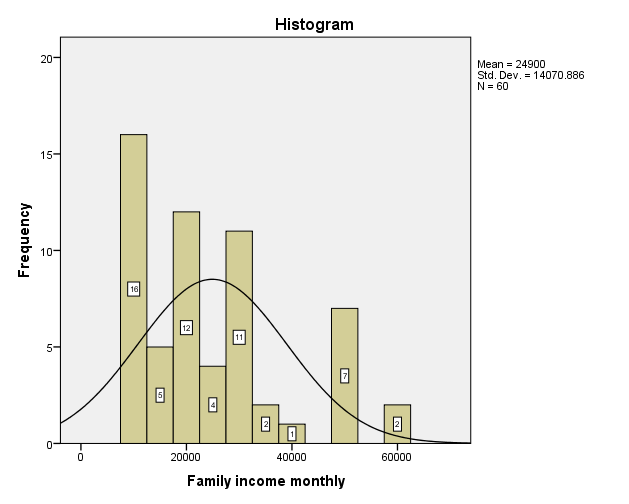
This histogram chart shows the monthly family income of respondent’s family. Here the lowest amount is 10,000 which frequency is 12 and among the respondents most of the family bear this amount of income which is 20%. And the highest amount is 60,000 which frequency is only 2 and percentages is 3.3%.
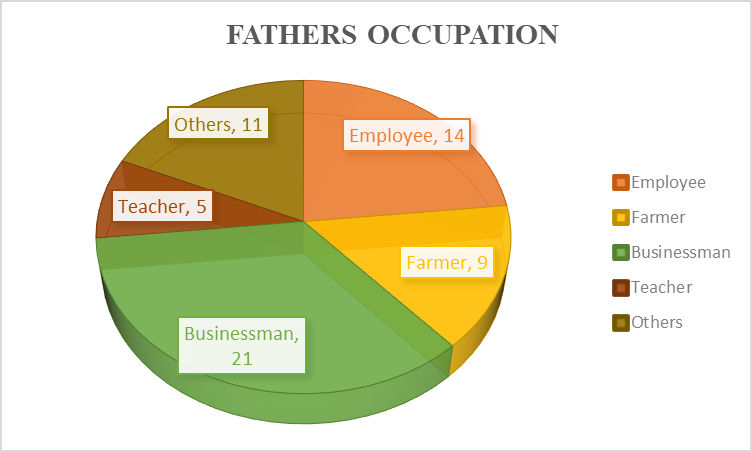
This pie chart shows that, the different father’s occupation and percentage of it. Here, most of the occupation belongs to businessmen and it’s frequency is 21persons & the lowest of the occupation belongs to teacher & its frequency is 5 persons. Here 14 belongs to employee and 9 belongs to farmer & 11 belongs to others occupations, among 60 fathers.
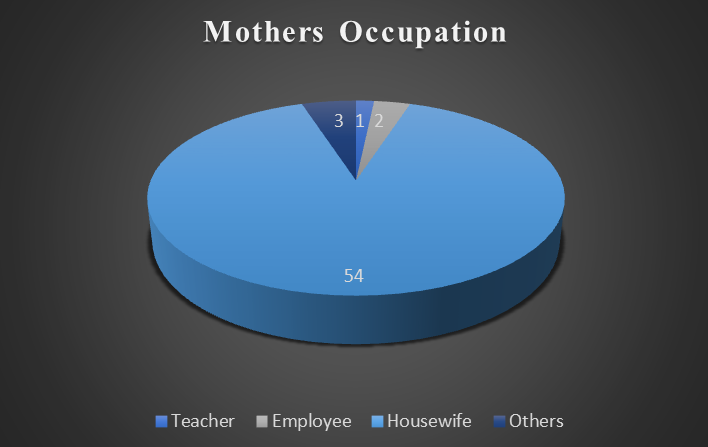
This pie chart shows that, the different mother’s occupations and percentage of it. Here, most of the occupation belongs to housewife and it’s frequency is 54 person & the lowest of the occupation belongs to teacher & its frequency is 1. Here 2 belongs to employee and the 3 belongs to others among 60 mothers.
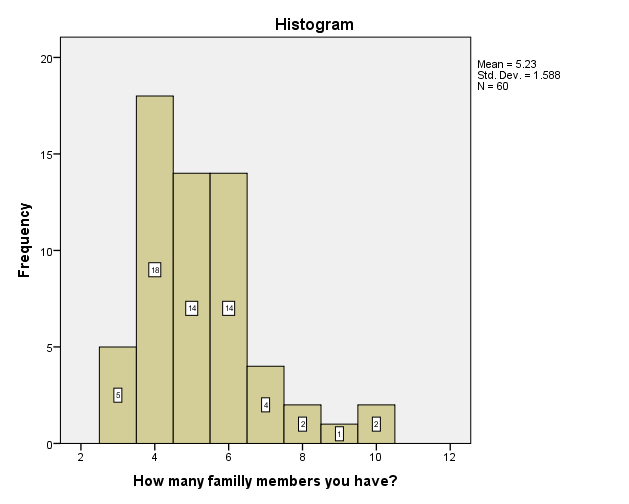
The histogram shows that the different number of family members and their percentages. Here most of the family members are 4 persons which is 30% and the below level of members is 9 person which is 1.7%. Here 14 members are belonging in two families.
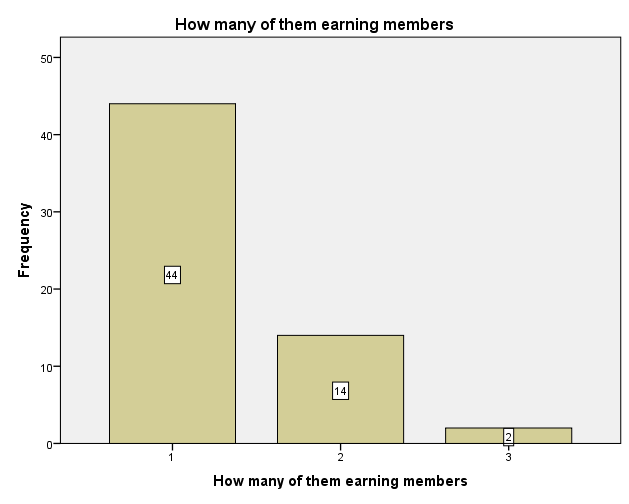
The bar charts show that, how many of them earning members and their percentage. According to the respondents there are 44 people have 1 earning members which percentages are 73 3%. 14 people have 2 earning members which percentage are 23.3%. And 2 people have 3 earning members which percentage are 3.3%.
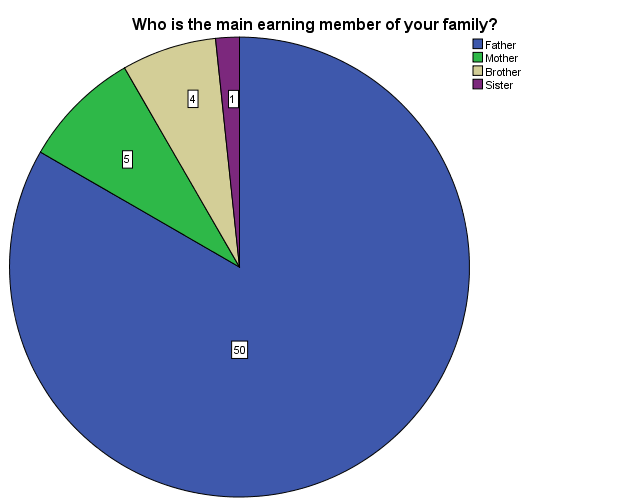
This pie chart shows the percentages of main earning members of respondent’s family. In this chart we can see that father is the main earning member among 83.3% families which frequency is 50. In 8.3% family’s mother is the main earning member which frequency is 5. Among these respondents there are 6.7 % families main earning member is brother which frequency is 4. Only in 1.7% families main earning member is sister which frequency is the lowest amongst these respondents’ families which frequency is only 1.
In this chart we can see that among these families in most of the family father is the main earning member, these number of families shows highest percentage in this chart.
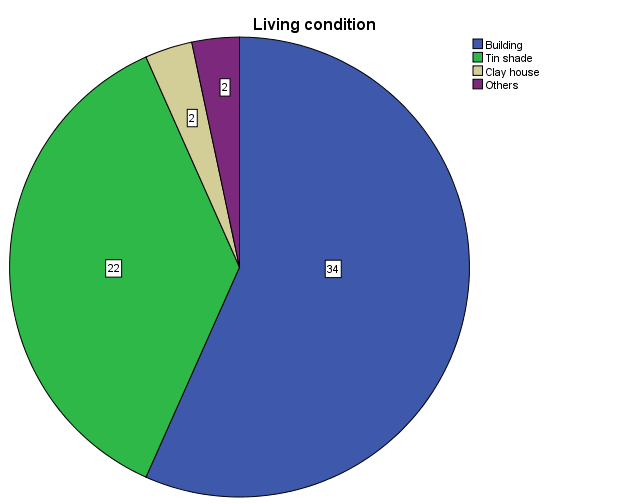
This pie chart shows the percentages of living conditions of respondents. Here 56.7% respondents live in building which frequency is 34. Among 60 respondents 36.7% respondents lives in tin shades which frequency is 22. Here 3.3 % students’ lives in clay house which frequency is 2.
And 3.3% students’ lives in others conditions except building, tin shades, and clay house, this frequency is 2.
In this study most of the respondents are lives in building. And lowest number of respondents are lives in clay house and others.
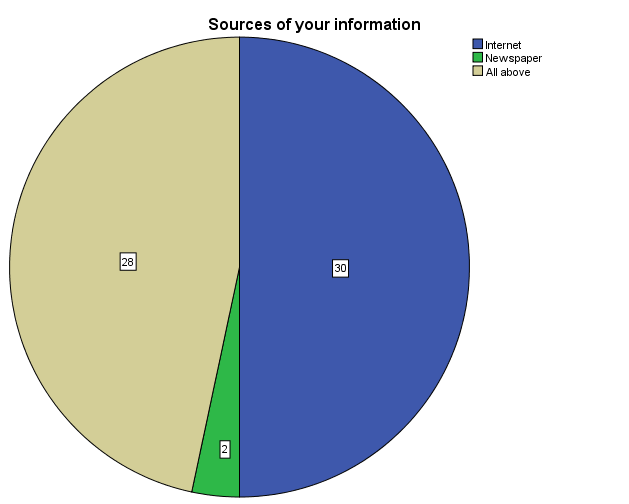
This pie chart shows the different sources from where the respondents knows the information’s of BC. Here 50% students know about BC from internet which frequency is 30. 46.6% students know about breast cancer through newspaper, internet and seminar, which frequency is 28. Only 3.3 % respondents are knowing about BC through newspaper, which frequency is only 2. In this pie chart the highest sources of information is internet, and the lowest sources is newspaper.
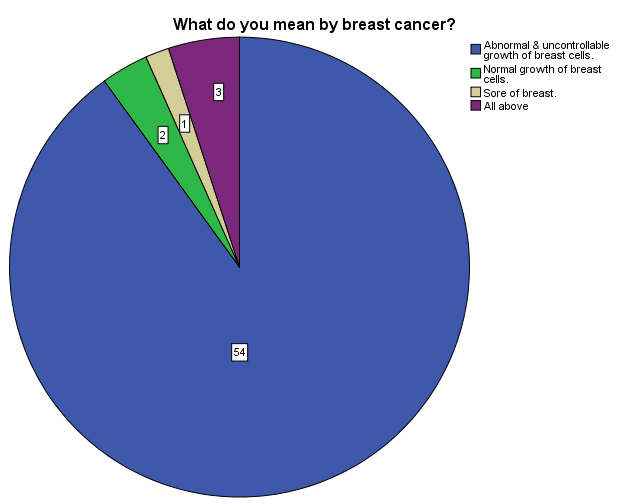
This pie chart shows that among 60 respondents 54 students (90%) said that breast cancer means abnormal and uncontrollable growth of breast cells & this answer is correct. And other students gave the wrong answer.
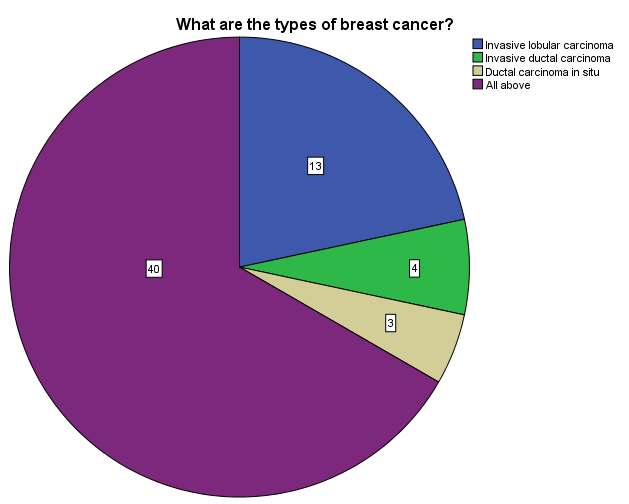
This pie chart shows the percentages of types of breast cancer. Here among 60 respondents 40 students gives the right answer. And others 20 students give the wrong answer.
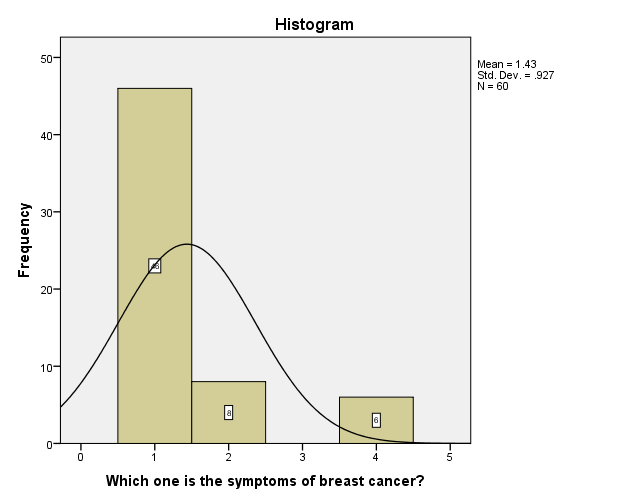
This histogram shows the percentages of symptoms of breast cancer. Here 46 students (76.7%) answered that the symptoms of BC is a new lump with sore nipple. 13.3% students said nipple sore without lump & 10% answered all above.
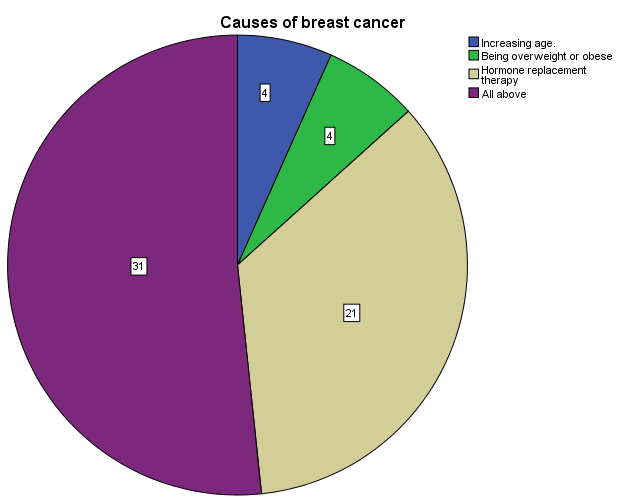
This pie chart shows that the causes of breast cancer. Here, 4 Students said increasing age is the causes of breast cancer. Other 4 person said being overweight or obese. 21
persons said Hormone replacement therapy All above and 31 students said all above.
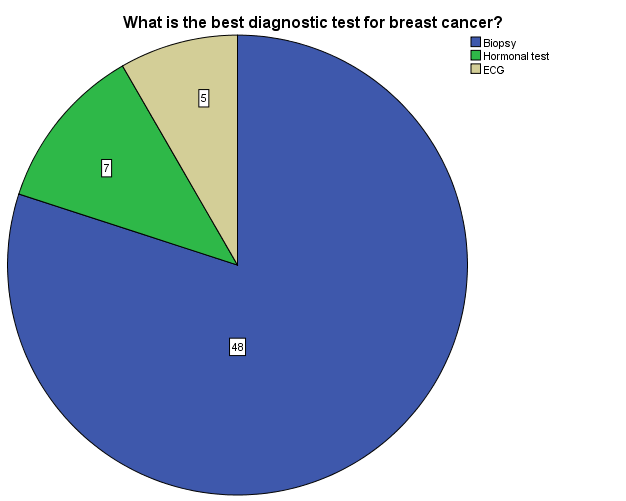
This pie chart shows that the best diagnostic test for breast cancer. Here,80% students knows that biopsy is the best diagnostic test for best cancer it’s frequency is 48. Then 11.7% students knows that hormonal test it’s frequency 7% and 8.3% student know that ECG its frequency is 5. Most of the students have given correct answer that is 80%.
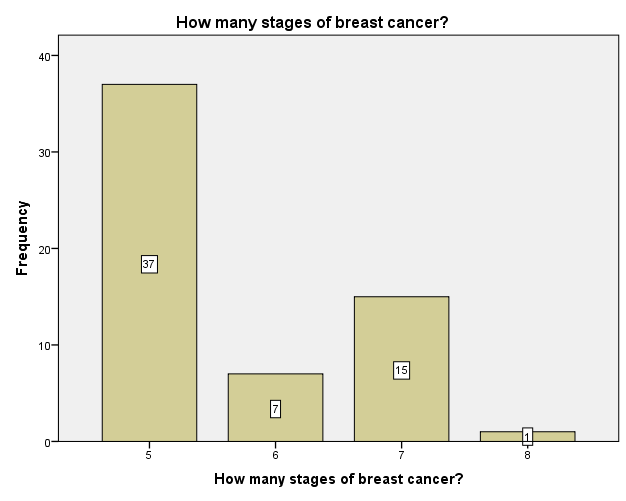
This bar chart shows the distribution by respondents about Stages of breast cancer. Here 61.7% students answer that BC has 5 stages, 11.7% students said that BC has 6 stages, 25% students said BC has 7 stages & 1.7% students said that BC has 8 stages.
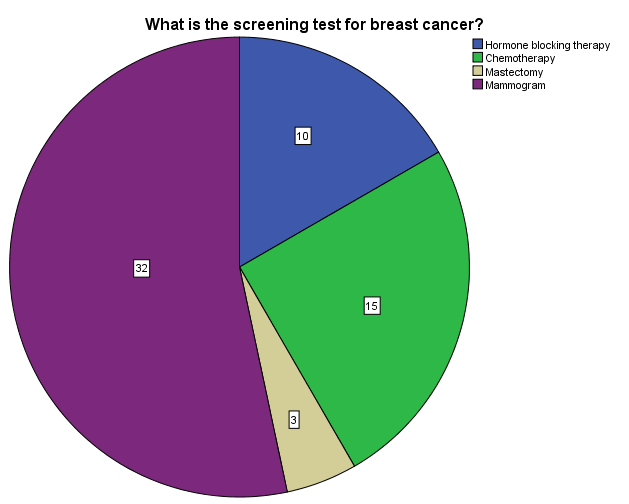
The pie chart shows that the screening test for breast cancer. Here 32respondant give answer mammogram is the screening for breast cancer. There respondents give answer mastectomy 15 respondents give answer chemotherapy and 10 respondents give answer hormone blocking therapy. Most of the student given correct answer and its percentage is 53.3%.
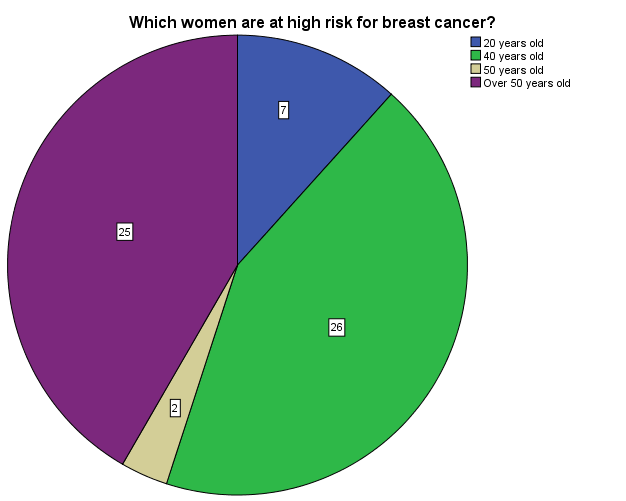
The pie chart shows that the women are at high risk for breast cancer. Here 7 students said that 20 years old women are high risk for breast cancer. 26 students said 40 years old women said 50 years old women 25 students said over 50-year-old most of the student give correct answer.
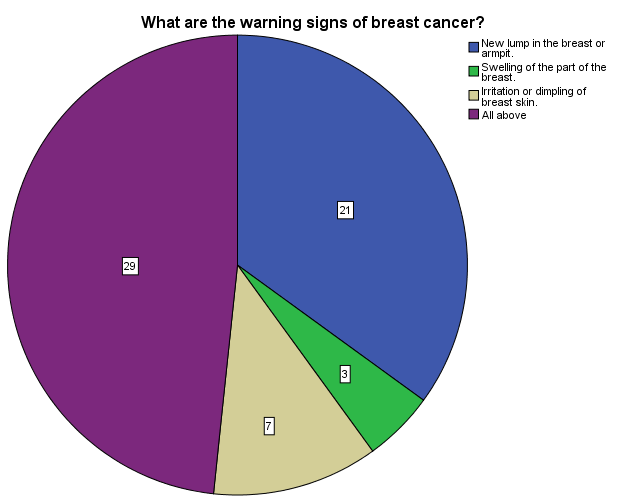
This pie chart shows that the warning signs of breast cancer. Here, 29 students give correct answer. On the other hand, 31 students have given the wrong answer.
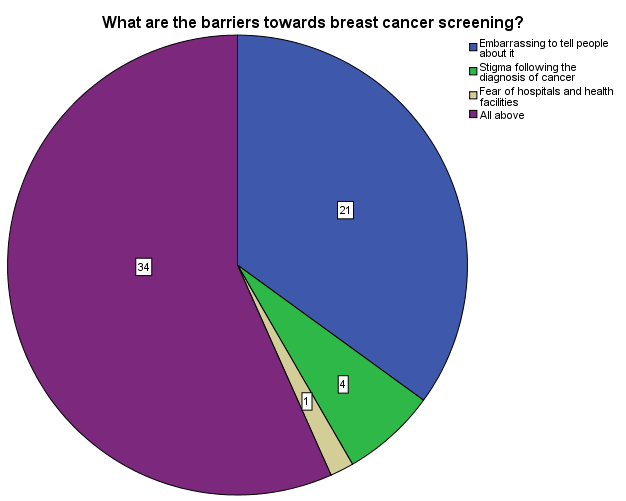
This pie chart shows that the barriers towards breast cancer screening. Here 35.0% people embarrassing to tell people about it, its frequency is 21. And 6.7 % stigma following the diagnosis of cancer & frequency is 4.
The lowest percentage (1.7%) is fear of hospital & health facilities, its frequency is only 1 & the highest percentage is
56.7% where included all above barriers & its frequency is 34.
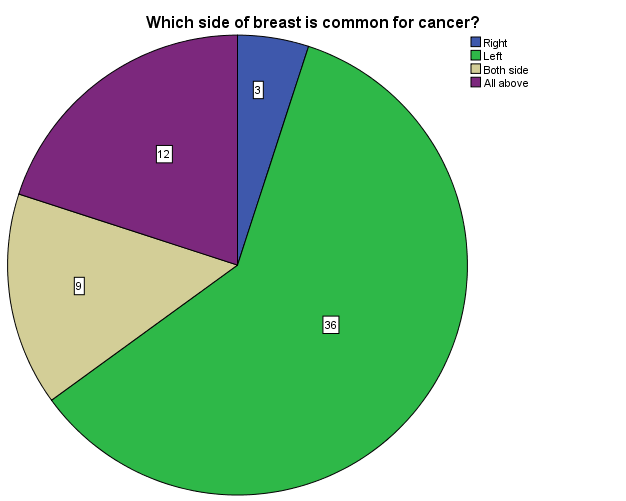
The pie chart shows that the common side of breast for cancer. According the respondent’s maximum are known that’s the common side is left which percentage are 60%. And less common is right and it’s percentage are 5%.
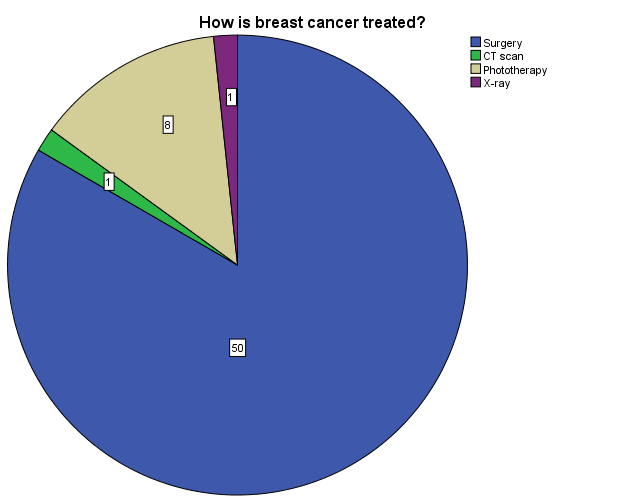
The pie chart shows that the breast cancer treated. Here 50student give correct answer which is 83.3% on the other hand 10 students give the wrong answer.
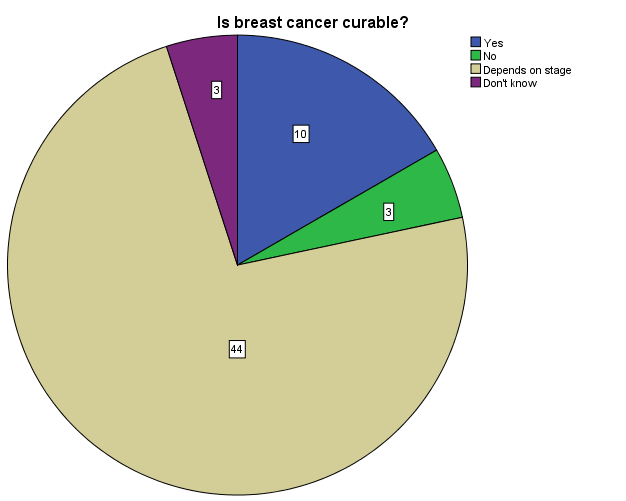
This pie chart shows that 44 students said that breast cancer depends on the stage.3 students said that breast cancer is not curable.10 students said that breast cancer is curable and 3 students said that they don’t know if breast cancer is curable or not. Most of the students have given correct answer and it is 73.5%.
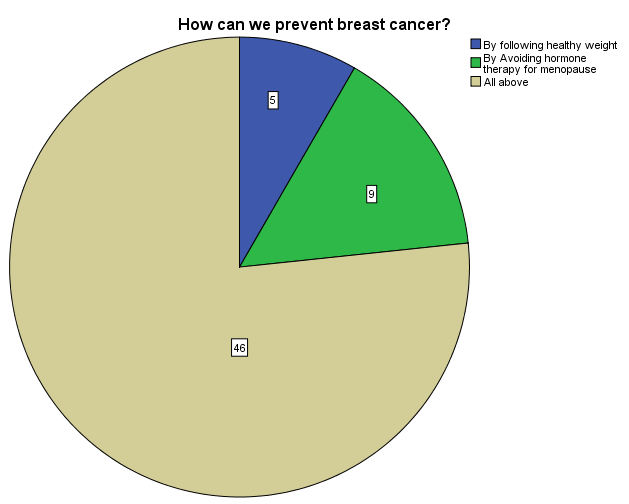
This Pie chart shows that, the prevention of breast cancer. Here most of the respondents give the correct answer and It’s frequency is 46. On the other hand, a few respondents have given the wrong answer and its frequency is 14.
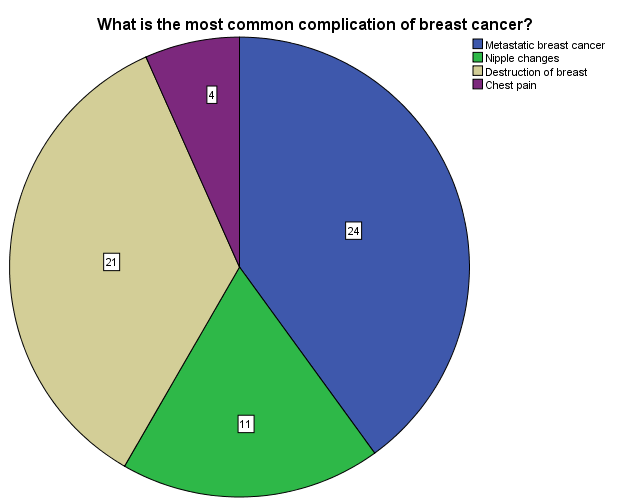
This pie chart shows that there have many complications arise in breast cancer but the most common complication is metastatic breast cancer which is 40% and it’s frequency 24. On the other hands less common is chest pain which is 6.7 % and it’s frequency only 4.
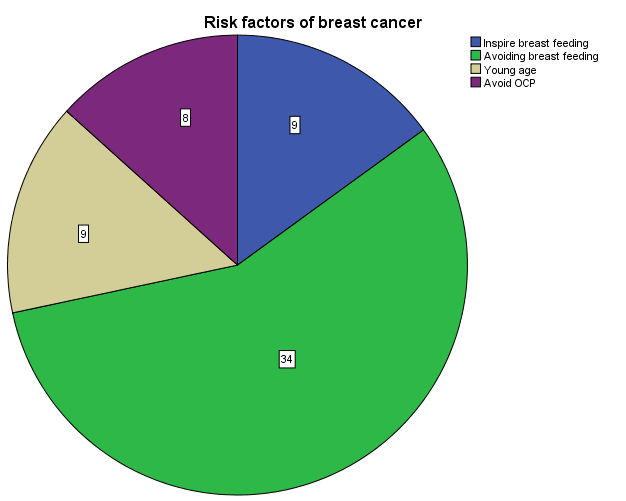
The pie chart found that avoiding breast feeding is the leading risk factor for breast cancer, contributing to 56.7% of cases,34 students given this right answer. Inspired breastfeeding also notable at 13.3%, while avoiding OCP use and the young age each contribute 15.0% those other students given wrong answer.
Discussion
Breast cancer is the most common life-threatening cancer and the leading cause of cancer mortality among woman. Breast cancer is a disease in which abnormal breast cells grow out of control and form tumors. The descriptive types of cross sectional study focused on the girls knowledge regarding breast cancer which indicates the girls awareness to care of their health and positive attitude towards health and health problems to others.
Socio-demographic of Respondents
Age, education, family type identification is very much important factors to observe knowledge for caring health. This study shows the level of age where include 19-23 years age. Here, the below level of age is 19 years and it is 10 percent and the high level of age is 23 years and it is 5 percent.
This pie chart shows that, the different religions and percentage of religion. Here, most of the students belongs to Islam religion and its frequency is 47 people. Among 60 students, the 8 students belong to Hindu religion and the 5 students belongs to Christian religion. Here Islam religion is high level and the Christian religion is low level.
This histogram chart shows the monthly family income of respondent’s family. Here the lowest amount is 10,000 which frequency is 12 and among the respondents most of the family bear this amount of income which is 20%. And the highest amount is 60,000 which frequency is only 2 and percentages is 3.3%.
This pie chart shows that, the different father’s occupation and percentage of it. Here, most of the occupation belongs to businessmen and its frequency is 21persons & the lowest of the occupation belongs to teacher & its frequency is 5 persons. Here 14 belongs to employee and 9 belongs to farmer & 11 belongs to others occupations, among 60 fathers.
This pie chart shows that, the different mother’s occupations and percentage of it. Here, most of the occupation belongs to housewife and it’s frequency is 54 person & the lowest of the occupation belongs to teacher & its frequency is 1. Here 2 belongs to employee and the 3 belongs to others among 60 mothers.
The histogram shows that the different number of family members and their percentages. Here most of the family members are 4 persons which is 30% and the below level of members is 9 person which is 1.7%. Here 14 members are belonging in two families.
The bar chart shows that, how many of them earning members and their percentage. According to the respondents there are 44 people having 1 earning members which percentages are 73 3%. 14 people have 2 earning members which percentage are 23.3%. And 2 people have 3 earning members which percentage are 3.3%.
This pie chart shows the percentages of main earning members of respondent’s family. In this chart we can see that father is the main earning member among 83.3% families which frequency is 50. In 8.3% family’s mother is the main earning member which frequency is 5. Among these respondents there are 6.7 % families main earning member is brother which frequency is 4. Only in 1.7% families main earning member is sister which frequency is the lowest amongst these respondents’ families which frequency is only 1.
In this chart we can see that among these families in most of the family father is the main earning member, these number of families shows highest percentage in this chart.
This pie chart shows the percentages of living conditions of respondents. Here 56.7% respondents live in building which frequency are 34. Among 60 respondents 36.7% respondents lives in tin shades which frequency is 22. Here 3.3 % students’ lives in clay house which frequency is 22. And 3.3% students’ lives in others conditions except building, tin shades, and clay house, this frequency is 2. In this study most of the respondents are lives in building. And lowest numbers of respondents are lives in clay house and others.
This pie chart shows the different sources from where the respondents know the information’s of BC. Here 50% students know about BC from internet which frequency is 30. 46.6% students know about breast cancer through newspaper, internet and seminar, which frequency is 28. Only 3.3 % respondents know about BC through newspaper, which frequency is only 2. In this pie chart the highest sources of information is internet, and the lowest sources is newspaper.
Conclusion
Assessment of the level of knowledge regarding about breast cancer among the students of Basic B.Sc in Nursing in the SQUARE College of Nursing, Dhaka, Bangladesh. The Sample used in this study consist of 60 nursing students with a simple random sampling technique. Data were collected by face to face interviews using pretested and structured questionnaire. Data analyzed through use of descriptive and inferential statistic. In this study 25% respondent’s had excellent knowledge, 6.7% respondent’s had very good knowledge, 13.3% respondent’s had good knowledge, 55% respondent’s had below average knowledge about breast cancer.
Recommendation
The study explored excellent knowledge had 15 respondent’s which was (25%).The very good knowledge had 4 respondent’s which was (6.7%).The good knowledge had 8 respondent’s which was (13.3%).The below average knowledge had 33 respondent’s which was (55%). Students should be participate in breast cancer related seminars, social awareness programs so that they can improve their knowledge about breast cancer. Health care professionals should be arranging special training about breast self- examination for women to increase their well-being so that they can prevent breast cancer. Awareness concerning program for health care professionals should be arrange by health care agency & organization.
References
-
Hortobagyi GN, Salazar JDLG, Pritchard K, Amadori D, Haidinger R, et al. (2005) The Global Breast Cancer Burden: Variations in Epidemiology and Survival. Clin Breast Cancer 6(5): 391-401.
-
WHO (2020) Internarional Agency for Research on Cancer.
-
DeSantis C, Ma J, Bryan L, Jemal A (2014) Breast Cancer Statistics. CA Cancer J Clin 64(1): 52-62.
-
Bray F, Ferlay J, Soerjomataram I, Siegel RL, Torre LA, et al. (2018) Global Cancer Statistics 2018: Globocan Estimates of Incidence and Mortality Worldwide for 36 Cancers in 185 Countries. CA Cancer J Clin 68(6): 394- 424.
-
Youlden DR, Cramb SM, Dunn NA, Muller JM, Pyke CM, et al. (2012) The Descriptive Epidemiology of Female Breast Cancer: an International Comparison of Screening, Incidence, Survival and Mortality. Cancer Epidemiol 36(3): 237-248.
-
Hossain MS, Ferdous S, Karim-Kos HE (2014) Breast Cancer in South Asia: a Bangladeshi Perspective. Cancer Epidemiol 38(5): 465-470.
-
Ahmadian M, Samah AA (2012) A Literature Review of Factors Influencing Breast Cancer Screening in Asian Countries. Life Science Journal 9(2): 585-594.
-
Hellquist BN, Duffy SW, Abdsaleh S, Bjorneld L, Bordas P, et al. (2011) Effectiveness of Population-Based Service Screening with Mammography for Women Ages 40 to 49 Years: Evaluation of the Swedish Mammography Screening in Young Women (SCRY) Cohort. Cancer 117(4): 714-722.
-
Moore SG, Shenoy PJ, Fanucchi L, Tumeh JW, Flowers CR (2009) Cost-Effectiveness of MRI Compared to Mammography for Breast Cancer Screening in a High Risk Population. BMC Health Serv Res 9: 9.
-
World Health organization (2020) WHO Supports Early Detection and Control of Cervical and Breast Cancer in Bangladesh.
-
Hussain SA, Sullivan R (2013) Cancer Control in Bangladesh. Jpn J Clin Oncol 43(12): 1159-1169.
-
Yip CH, Anderson BO (2007) The Breast Health Global Initiative: Clinical Practice Guidelines for Management of Breast Cancer in Low-and Middle-Income Countries. Expert Rev Anticancer Ther 7(8): 1095-1104.
-
Huguley CM, Brown RL, Greenberg RS, Clark WS (1988) Breast Self-Examination and Survival from Breast Cancer. Cancer 62(7): 1389-96.
-
Anderson BO, Braun S, Lim S, Smith RA, Taplin S, et al. (2003) Early Detection of Breast Cancer in Countries with Limited Resources. Breast J 9 Suppl 2: S51-S59.
-
Alam NE, Islam MS, Ullah H, Molla T, Shifat SK, et al. (2021) Evaluation of Knowledge, Awareness and Attitudes towards Breast Cancer Risk Factors and Early Detection among Females in Bangladesh: A Hospital Based Cross-Sectional Study. PLoS One 16(9): e0257271.
-
Nemenqani DM, Abdelmaqsoud SH, Al-Malki AHA, Oraija AA, Al-Otaibi EM (2014) Knowledge, Attitude and Practice of Breast Self Examination and Breast Cancer among Female Medical Students in Taif, Saudi Arabia. Open Journal of Preventive Medicine 4(2): 69-77.
-
Boulos DNK, Ghali RR (2013) Awareness of Breast Cancer among Female Students at Ain Shams University, Egypt. Glob J Health Sci 6(1): 154-161.
-
Gilani SI, Khurram M, Mazhar T, Mir ST, Ali S, et al. (2010) Knowledge, Attitude and Practice of a Pakistani Female Cohort towards Breast Cancer. J Pak Med Assoc 60(3): 205-208.
-
Karayurt O, Ozmen D, Cetinkaya AC (2008) Awareness of Breast Cancer Risk Factors and Practice of Breast Self Examination among High School Students in Turkey. BMC Public Health 8: 359.
-
Al-Dubai SAR, Ganasegeran K, Alabsi AM, Manaf MRA, Ijaz S, et al. (2012) Exploration of Barriers to Breast- Self Examination among Urban Women in Shah Alam, Malaysia: A Cross Sectional Study. Asian Pac J Cancer Prev 13(4): 1627-1632.
-
Akhtari-Zavare M, Juni MH, Ismail IZ, Said SM, Latiff LA (2015) Barriers to Breast Self Examination Practice among Malaysian Female Students: A Cross Sectional Study. Springerplus 4: 692.
-
Alwan NAS, Al-Attar WM, Eliessa RA, Madfaic ZA, Tawfeeq FN (2012) Knowledge, Attitude and Practice Regarding Breast Cancer and Breast Self-Examination among a Sample of the Educated Population in Iraq. East Mediterr Health J 18(4): 337-345.
-
Rafique S, Waseem Z, Sheerin F (2018) Breast Cancer awareness, Attitude and Screening Practices among University Students: Intervention Needed. Biomed J Sci Tech Res 4(5): 4-7.
-
Islam RM, Bell RJ, Billah B, Hossain MB, Davis SR (2015) Awareness of Breast Cancer and Barriers to Breast Screening Uptake in Bangladesh: A Population Based Survey. Maturitas 84: 68-74.
-
Ahmed MS, Sayeed A, Mallick T, Syfuddin H (020) Knowledge and Practices on Breast Cancer among Bangladeshi Female University Students: A Cross- Sectional Study. Asian Pacific Journal of Cancer Care 5(1): 19-25.
-
Sama CB, Dzekem B, Kehbila J, Ekabe CJ, Vofo B, et al. (2017) Awareness of Breast Cancer and Breast Self- Examination among Female Undergraduate Students in a Higher Teachers Training College in Cameroon. Pan Afr Med J 28: 91.
-
Ahmed BA (2010) Awareness and Practice of Breast Cancer and Breast-Self Examination among University Students in Yemen. Asian Pac J Cancer Prev 11(1): 101- 105.
-
Wardle J, Steptoe A, Smith H, Groll-Knapp E, Koller M, et al. (1995) Breast Self-Examination: Attitudes and Practices among Young Women in Europe. Eur J Cancer Prev 4(1): 61-68.
-
Iheanacho P, Ndu A, Emenike AD (2013) Awareness of Breast Cancer Risk Factors and Practice of Breast Self Examination among Female Undergraduates in University of Nigeria Enugu Campus. Open Journal of Nursing 3(1): 29571.
-
Yan YY (2009) Breast Cancer: Knowledge and Perceptions of Chinese Women in Hong Kong. Global journal of health science 1(2): 97-105.
-
Alam AA (2006) Knowledge of Breast Cancer and its Risk and Protective Factors among Women in Riyadh. Ann Saudi Med 26(4): 272-277.
-
Al-Dubai S, Qureshi AM, Saif-Ali R, Ganasegeran K, Alwan MR, et al. (2011) Awareness and Knowledge of Breast Cancer and Mammography among a Group of Malaysian Women in Shah Alam. Asian Pac J Cancer Prev 12(10): 2531-2538.
-
Aruna S (2010) A Study to Assess Knowledge Regarding Breast Cancer and BSE among Working Women in Chennai. Prism’s Nurs Pract 5: 34-36.
-
Shalini, Varghese D, Nayak M (2011) Awareness and Impact of Education on Breast Self Examination among College going Girls. Indian J Palliat Care 17(2): 150-154.
- Psychogenic Erectile Dysfunction in Late Adulthood: A Case Report on Clinical Intervention and Intimacy Restoration
- Clinical Trials on COVID-19 in 2025: A New Chapter in Global Health Research
- Innovations and Challenges in Contemporary Medical Clinical Trials: An Editorial Perspective
- Innovations and Challenges in Contemporary Medical Clinical Trials: A Critical Perspective
- Reimagining Clinical Trials: The Power of Continuous Feedback from Medical Reports
- Factors Influencing Brain Drain: Perspectives from a Medical School in Turkey