
Suicide and the Emotions of Men and Women in Uniform
Introduction: This article is the result of research work carried out by Dr. Aurida Pardini under the supervision of Dr. Domenico Piccininno on the study of the well-being and burnout of members of the police force. Materials and Methods: A test 'Psycho-socio-criminological questionnaire for members of the police force' created by Dr. Aurida Pardini and supervised by Dr. Domenico Piccininno was used with the aim of analysing in depth the emotional and relational sphere of uniformed officers, examining how prolonged stress, experiences of isolation, critical events and dysfunctional hierarchical dynamics contribute to psychophysical wear and tear and, in extreme cases, to suicidal ideation. The data obtained from the Pardini test were compared with those concerning suicides through the analysis of the phenomenon within the police force, taken from Clelio Lafrate's Facebook page and from the National Suicide Observatory of the CerchioBlu Association. Results: In this study, the sample under review consisted of 127 subjects belonging to the forces of law and order, almost the entire sample being male, with a significant presence in the age range 41-60 years for the forces of law and order, and 31-40 years for prison officers. People with a diploma, married and with children predominate. Family value is central, but compromised by shifts, transfers and isolation. About 47.8% of the operators chose their job for passion, while among prison officers economic motivation prevails. Only 43% would make the same professional choice again. The predominant emotions are anger (87%), anxiety (76%), helplessness (62%) and distrust (83%). The responses highlighted the need for a cultural and structural change in the institutions to restore meaning, recognition and support to the person behind the uniform. Conclusion: From the analysis of the data obtained through the research, it emerged that law enforcement officers are individuals who have, in most cases, made this choice driven by deep-rooted motivations, linked to values of loyalty, justice, sense of duty, who have invested in their training at the expense, on many occasions, of their own well-being and family ties, which has led them to 'clothe' their personal identity with their work identity, only to find themselves, at a certain point in their working history, having to confront, on their own, emotions of anger, impotence and mistrust, caused on the one hand by an extremely bureaucratic and hierarchical system, lacking support from colleagues but especially from superiors, and on the other hand clashing with a 'critical and judging outside', causing in many cases a fall in their self-esteem and their work. In such a 'shattered' context with no stable points of reference, emotional support programmes, psychological debriefing and emotional regulation training within the armed institutions become indispensable in order to listen to their voices, emotions and suffering, so that the increased awareness of the psychic impact of their work the recognition of the importance of their work and the construction of a more humane and cooperative organisational climate may represent fundamental levers for improving the quality and personal and work well-being and consequently prevent suicidal phenomena by restoring dignity and listening to the person behind the uniform.
Piccininno D¹* and Pardini A²
¹Department of Forensic Criminology, Castel San Giorgio, Italy ²Psychologist, Forensic Science Academy, Center in Grosseto, Italy
Key Points
To become aware of one’s own emotions experienced during the performance of one’s service, to confront oneself on the critical events considered to be most impactful, to discuss one’s work motivation, one’s sense of belonging to the work context, one’s perception of the support received from colleagues and superiors, one’s state of health and psychophysical and relational well-being, carried out within interpersonal dynamics that are very often ‘abusive’ and marked only by the achievement of profit objectives that do not take people into consideration, would allow this category of workers to share experiences and perceptions and not to feel isolated, thus increasing personal and work well-being and going some way to affecting the suicide phenomenon. Introduction Parallel to a survey conducted on the wellbeing and burnout of prison officers1, the present study broadened the range of subjects involved by investigating the emotions, work wellbeing and burnout of other categories of members of the various law enforcement agencies, with the aim of capturing similarities and differences, both between the various law enforcement agencies and between them and the sample of prison officers.
The aim of this study was to probe the emotions of those who wear a uniform, trying to highlight which types of emotions are most experienced during the course of duty and which critical events are considered most impactful.
Another objective was to analyse the differences between the various police forces not only with respect to the emotions experienced but also with respect to work motivation, the sense of belonging to the context and work climate, the perception of support received from colleagues and superiors, the interference of work on family and personal life, the state of health and psychophysical and relational well-being.
An analysis of everything that revolves around a complex and delicate job, embedded, on the one hand, within interpersonal dynamics that are very often ‘abusive’ and marked only by the achievement of profit objectives that do not take people into account, and on the other, in the service of citizens who do not always have a good perception of those who perform this type of work.
The study then analysed the phenomenon of suicides within the forces of law and order, with data taken both from Clelio Lafrate’s Facebook page 2 and from the National Suicide Observatory of the CerchioBlu Association3, to check for possible correlations.
In fact, in professions with high emotional exposure, such as uniformed personnel, there is an increasing urgency to investigate the psychosocial variables that contribute to widespread malaise and, in some cases, to the onset of suicidal ideation. The national observatory on suicides in the police force has reported an increase in the phenomenon in recent years. The purpose of this study was to investigate the impact of unprocessed emotional experiences, relational deficiencies and exclusion dynamics that deeply mark the identity of the operator.
Suicide, in fact, as a complex and multifactorial phenomenon, does not arise from a vacuum and in a vacuum, but is part of a complex system in which biological, relational and environmental factors converge, and which is often arrived at in a state of mind of such resignation that it manifests itself with a cover of tranquillity and serenity that does not arouse suspicion either among colleagues or family members, due to a breaking point reached in the months preceding the event.
Project Objectives and Structure
The primary objective of the project is the development of criminological scientific research in Italy, in particular on a sample such as that of the forces of law and order in general and members of the prison police in particular, which, while in other countries has seen a flourishing of studies and research over the years, in Italy there is very little research, due to the extreme closure of these circles by the ‘non- experts’.
The secondary objective of the project is to set up comparison, support and sharing groups between members of the various police forces, through which they can express their difficulties, discuss emotions and experiences during their service, analyse the impact of critical events on themselves and on the quality of their work but also on their personal lives, and create authentic relationships with colleagues, in order to create working groups that are more aware of their own and other people’s emotions, their difficulties but also their resources, creating bonds of trust between operators, in order to lead to an improvement in the quality and effectiveness of work.
Materials and Methods
The original questionnaire, addressed only to the sample of prison officers, consists of 86 multiple-choice items, divided into 4 main areas: 1. Anamnestic area
- Master data
- Family, friendship and leisure context
- Education received and values 2. Working area
- Work motivation
- Work-family interaction
- Working climate, sense of membership and support 3. Psychophysical and occupational well- being
- Health
- Emotions 4. Socio-criminological area
- Critical events and emotions
- Violence suffered in the workplace
Setting And Participants: Group Description
The reference sample consists of two groups: the group of law enforcement officers consisting of 92 people. The questionnaire for members of the other police forces,
Law Enforcement
although adapted in content, maintained the analysis of the main areas of the original questionnaire addressed to the sample of prison officers. The questionnaires were administered through Google Forms, both through internal channels (prison in Grosseto) and through dissemination on social networks, guaranteeing anonymity. The statistical analysis of the data included a qualitative and quantitative reading of the results, supplemented with textual extracts from free comments and interviews.
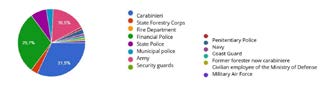
(31.9% Carabinieri, 29.7% Guardia di Finanza, 16.5% Army and other answers given by small percentages of members of the state police, forestry corps, municipal police, coastguards and others; (Figure 1) and the group of prison officers made up of 35 persons, a total of 127 answers.
Results
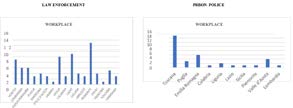
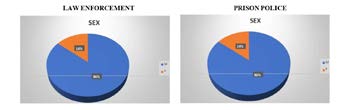
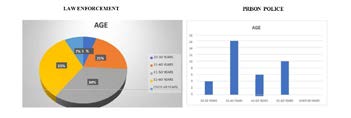
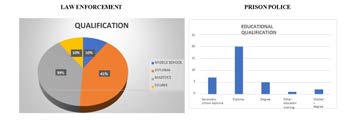
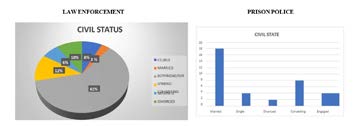
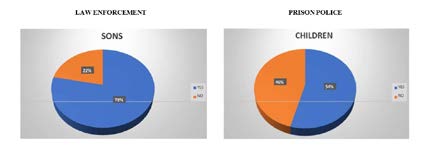
exclusively the prerogative of the male sex; with respect to age, in the police force, the 41-60 age group prevails (67%), while among prison officers the 31-40 age group prevails (57.14%), i.e. a sample belonging to a younger age group (Figure 4); with regard to educational qualification, in both groups a diploma prevails (Figure 5); with regard to marital status, married persons prevail (Figure 6); finally, with regard to the presence of children, the majority of the sample has one or more children (Figure 7). Personal Data Anamnestic area: with respect to the geographical area of origin of the answers, among the law enforcement agencies, most of the answers were given by persons from Northern Italy (Figure 2); with respect to gender, in both samples 86% were men (Figure 3), confirming the prevalence of this work choice on the part of the male sex and this fact makes us reflect on how much this type of work activity is still almost
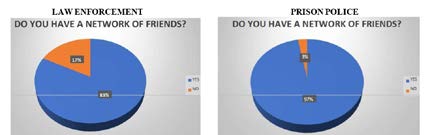
Family, friendship and leisure context: with respect to the network of friendships (Figure 8), this appears to be present in most part of the cases, as well as in both groups, there are numerous hobbies (Figure 9).
Family, Friendship and Leisure Context
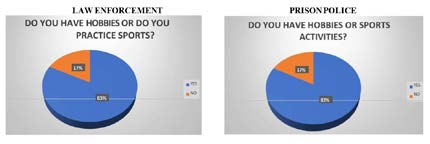
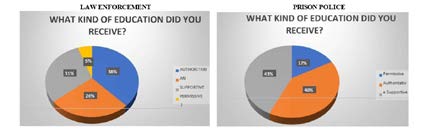
With regard to the upbringing received, an authoritarian upbringing prevails in both samples (Figure 10), probably due to the fact that many members of the police come from families in which one or both parents have themselves been members of the police.
Education Received and Values
In terms of values, loyalty and honesty (72.83%), family (46.73%) and the sense of justice (38.04%), prevail among the law enforcement, whereas loyalty and honesty (79.92%), a sense of justice (28.57%) and family (25.71%) prevail among prison officers (Figure 11).
Since the family is such an important value, the distance from it due to constant relocation is a factor that has a great weight on the psyche of the practitioner, as is having a constantly changing rota has a considerable influence on this area, with consequences both on the relationship and on the growth and upbringing of the children.
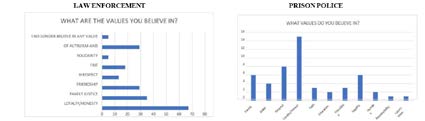
These figures make us reflect on how working in environments where there is often buraucratisation, excessive hierarchy and little consideration for people can lead to a nullification of all that was once believed in. Although a small percentage (5.43%; 11.1% between the army and 4.4% among the carabinieri) there are people who say they no longer believe in any values! These values, over time for some, disappear (5.43%), especially for those who work in the army (11.1%) e those belonging to the Carabinieri (4.4%), probably due to negative experiences during their work. Among the various corps, the Carabinieri is the one that believes the least in a sense of justice (16%). The values expressed by the various members of the police force are mainly values linked to the ethics of training and discipline provided to them at the beginning of their careers to which they remain attached for the rest of their lives. They are values on which they base their identity not only at work but also personally and on which they are prepared to make any sacrifice. Most people enter these police corps with a great enthusiasm and a strong sense of justice, and at the same time, at the beginning of their training, the various corps offer the image of being one big family, but after a short time these ideals collide with a reality that is often aimed exclusively at achieving certain levels and objectives, by constant compromises, threats and continuous mortification, with impediments for those lower down the hierarchical ladder, to participate in competitions, to move up the ladder or to face transfers or family closures denied or postponed indefinitely.
Many members of the police force say they no longer believe in any values today none, I believed in values before enlistment or those who say after my experiences in the administration, I no longer believe in anything or those who say, after the last few years in the military I doubt all values except the value of my resilience. On the other hand, a prison officer says I believe in respect for one’s neighbour, especially for the most fragile. I believe in a civil state that offers everyone due attention, no one should be left behind, I believe in the recovery of all people, and I believe in the value of peace.
Job Area: with respect to the role held, most of the answers come from people who do not occupy top positions, this is probably because they are also the least interested to do emerge data or problematic or, above all, because they are also the ones who experience the least problems and are least willing to share spaces for reflection to work on (Figure 12).
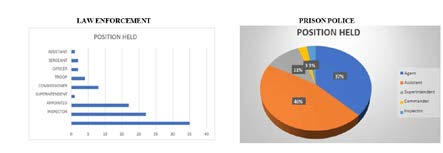
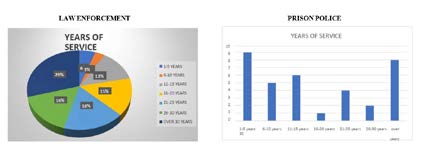
Figure 12: As far as the police force is concerned, the answers came mainly from those in the role of inspector, constable and superintendent, whereas as far as the prison police are concerned, the answers came mainly from assistants and officers. With respect to years of service, among law enforcement officers, the answers come from a sample with more years of service while among prison officers from people who work for less time (Figure.13).
This can be related to the fact that working within a prison context can accelerate the process of psychophysical wear and tear and the search for shared spaces.
With respect to the work motivation, among the law enforcement officers the choice of this job for passion prevails (47.8%), in all three corps (47.83% law enforcement officers vs. 5.71% prison officers), whereas among the prison officers the choice is mainly dictated by economic stability (45.71%) (Figure 14). This fact can be related to the fact that those who have chosen this work for passion, because they believe in it, will also be those who will invest more in this work and will carry it out effectively and efficiently, whereas those who have chosen it as a fallback or for convenience will easily do it superficially. At the same time, those who have chosen it out of passion will forge their personal identity, and not only their work identity, of this work, and when they will encounter with reprimands or pressures or abuses or other disciplinary measures or with sudden transfers from one corps to another or with impediments to competitions or career or departmental changes, what will result will not only be a work issue but will become a personal issue that will affect and invest the whole personality of the person with inevitable physical, emotional, relational consequences Work Motivation that may in some cases put the person’s life itself at risk. At the same time, those who work in the prison police, 65% of whom chose this job solely for economic security or by chance, working in a different, delicate and complex environment, and in many situations alienating, will be at greater risk of developing symptoms of psychophysical malaise quickly.
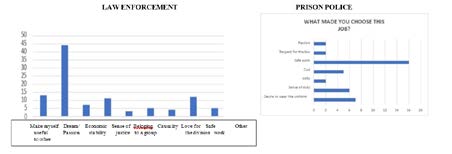
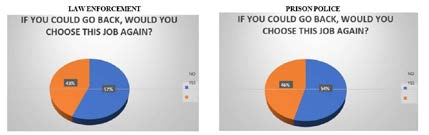
Figure 14: Among the police, the motivation behind the choice of this type of work was dictated by passion, whereas among the prison police, a choice based on economic stability prevails. When asked if you could go back, would you choose this job again, as many as 57% of the law enforcement officers would not make this choice again (66% of the carabinieri, 56% of the Guardia di Finanza and 44% of the army), as well as 54% of the prison officers (Figure 15). Among the police forces, only 34% of carabinieri would make the same choice again if he could go back in time. Among the comments were ‘I thought I would find the best, instead I found the worst’, ‘I was an idiot’, I loved my job, now I don’t, ‘I still wonder’. So only those who work in the military would tend to make this choice again, while most others would not.
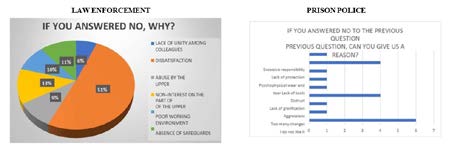
Among law enforcement officers, those who replied that they would not choose this job again, cited as, dissatisfaction (51%), lack of interest on the part of superiors (23%), the bad working environment (10%) as well as the lack of unity among colleagues (6%) and the absence of protection (4%).
(Among the Carabinieri, dissatisfaction prevails (73.7), among the Guardia di Finanza the working environment and t h e absence of administration (47%) and among the Army the toxic environment (87.5%).
Among the prison officers, dissatisfaction (36.9 per cent), the fact that it is a job they do not like (31.6 per cent), the lack of protection (21 per cent) and then, excessive responsibility, psycho-physical wear and tear, lack of tools, mistrust in the system and constant aggression (Figure 16). Thus, predominantly this job would not be chosen again because of dissatisfaction and the environmental context, abuse and disinterest from superiors.
Among the comments of those who said they would make a choice job choice different, we highlight the context working environment is very bad, because I expected a place of rectitude or at least integrity and instead we are just a cross- section of the society we live in because there is no listening, no empathy, noone does group, not one collaboration, no one, neither the colleague nor the superior shows the right attention to personal issues, because passion note been cultivated by the administration, because the your hierarchical superior is always better than you, in everything, and this causes you to lose your personality... you are not valued at all, but rather used, because I want to be a person, not a tool, in the hands of Incapacity, because many times I wish disappear.
In contrast to those who answered that they would choose this job again, among the police the motivations are to believe in it (51%), economic security (13%), being able to help others (10%) and special experiences (8%). (the Guardia di Finanza for 91.7% because they like it and 8.3% because of the unity among colleagues; among the Carabinieri 60% because they like it, 30% because of the social usefulness, and 20% because of the economic stability; the army 40% because of personal satisfaction, 30% because they believe in it and because of the economic security and 10% because of their colleague). Among prison officers 37.5 per cent because they like it, 25 per cent for job security and 6.2 per cent to help others (Figure 17).
Law Enforcement Prison Police
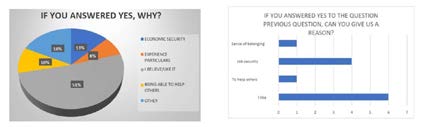
Among those who said they would make the same choice again among the comments were “it has made me who I am”, “because I get up happy”, because I still believe in what I stand for and what I do, because I like working for people, making myself useful and being able to help them, because I enjoy it. So whoever would do this job choice again, would do it again because he still believes in it and likes it, still believes in the ideals pursued that go beyond the internal work context.
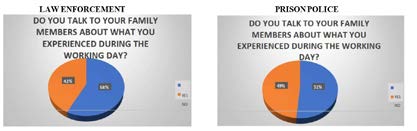
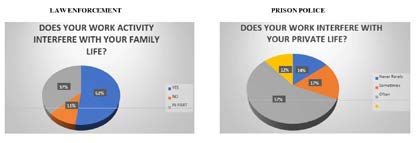
With respect to work-family interaction, 58% of law enforcement officers talk to their family members about their work activity, as do 51% of the prison officers (Figure 18). With regard to the interference of work with private life, this is found in 52% of the police forces and 67% of the prison officers (Figure 19). We have to make a reflection here. With regard to the predominant values, that of the family prevails. If we look at the answers concerning the interference of work with one’s private life, we see how high it is. Now this Work-Family Interaction interference can be due to multiple causes:
- Distance from the family of origin (hence emotional isolation, lack of emotional support in times of difficulty, not being able to raise their children).
- Interference of work shifts in one’s life (think of the officer who is woken up in the middle of the night for an emergency and may have no one to leave the children with).
- Interference in one’s daily life (work notifications at any time of the day or night.
- Frequency with which officers transferred away from home sleep in barracks and prison accommodation, having no boundaries between personal and working life.
With regard to leaving one’s emotions at the office, 38 per cent of the police forces succeed in doing so (this percentage rises to 67 per cent among the financial police, falls to 22 per cent in the army and 31 per cent in the carabinieri) while it rises to 69 per cent among prison officers (Figure 20). With respect to leaving one’s thoughts at the office, only 24% of the police manage to do so (29% among the carabinieri, 11 in the army and 44% in the Guardia di Finanza) while it rises to 51% among prison officers (Figure 21). Prison officers are those who are most successful in separating work and personal life in terms of both thoughts and emotions.
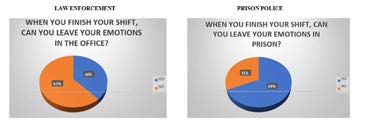
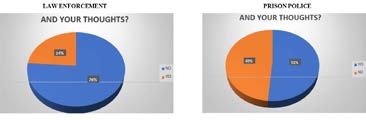
Figure 21: 70% of law enforcement officers do not manage to leave their work-related thoughts in the office, whereas 51% of prison police officers manage to do so. Working climate: with respect to the sense of belonging 37% of the police have it high and 39% medium (44% high and 30% medium among the finance, 44% medium and 33% Sense Of Belonging high among the army, 48% medium and 34% high among the carabinieri) while 51.43% high among prison officers and 42.56% medium (Figure 22).
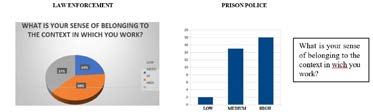
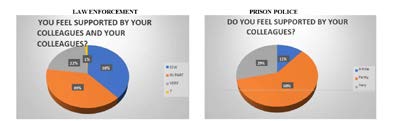
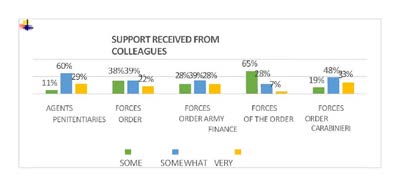
Figure 22: 39% of members of the police force have a medium sense of belonging to the work context and 37% a high one, whereas among members of the prison police 51.43% have a high sense of belonging to the context and medium in 42.65% of cases. With regard to support from colleagues, among the police this is high in 22% of cases and partial in 39% (7% high and 28% partial among the carabinieri, 28% high and 39% partial in the army, 33% high and 48% partial among the carabinieri) while high in 29% of cases and partial in 60% among prison officers (Figures 23 and 24).
Support Received from Colleagues
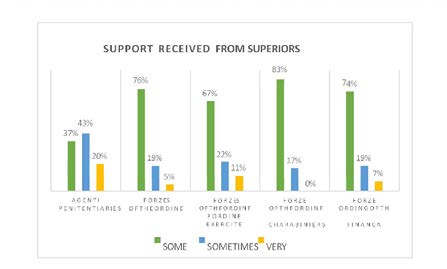
With respect to support from superiors, among the police 76% state that it is low (74% finance, 67% army and 83% carabinieri) and 37% among prison officers (Figure 25 and 26).
Support Received from Superiors
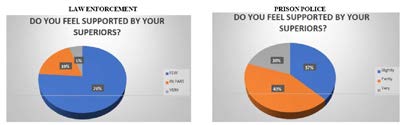
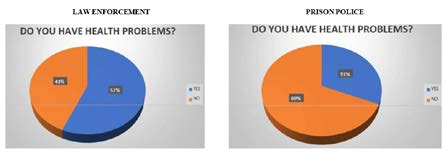
Psychophysical and occupational well-being: with respect to health problems, 57% of the police admit to having them (37% finance, 33% army and 55% carabinieri) and 37% among prison officers (Figure 27). With regard to health problems, the Carabinieri is also the one with the most complaints (55%). Health Problems
With respect to the type of complaints, gastrointestinal disorders (54%) and chronic fatigue (46%) prevail among the police (carabinieri: gastrointestinal disorders for 56.2%, chronic fatigue for 56.2% and cardiovascular disorders 52%;
army: gastrointestinal complaints, 41.7% and chronic fatigue 33.3%; finance: gastrointestinal complaints (70%) and complaints (36.4%), frequent headaches and cardiovascular complaints (27.3%) among prison officers (Figure 28).
Types of Disorders
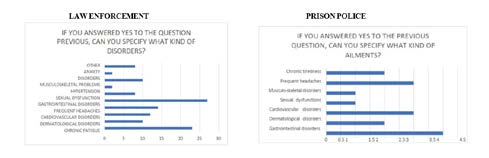
If we try to reflect on the relationship between support received from colleagues and especially that received from superiors and health disorders (which is very low among the police force and especially among carabinieri), in particular gastrointestinal disorders and chronic fatigue, we can see how stress caused by bad or absent relationships in the service environment if protracted over time, causes a continuous inflammatory state on the organism with consequences on the state of physical and psychological health with the possible development of depressive pathologies. A Ministry of Defence official has stated I have never cried so much in Sleep Quality my life as in these years of service. A representative of the Guardia di Finanza says, I have suffered from gastrointestinal disorders for as long as I can remember and I don’t live without taking medication and so do my colleagues.
Among health disorders, gastrointestinal disorders prevail, which are closely linked to the area of emotions.
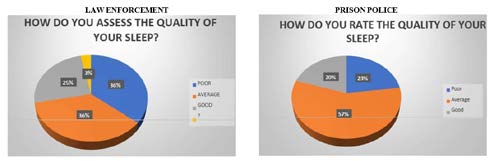
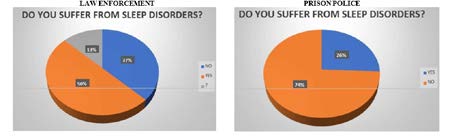
With respect to sleep among the police we have 50 per cent sleep disorders (with a peak of 61 per cent in the army) and only 26 per cent among prison officers (Figure 29).
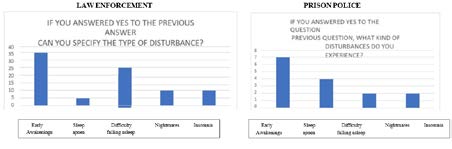
With respect to the type of disorders, early awakenings (74.5%) and difficulty falling asleep (46.8%) prevail in the forces and the same disorders (77.8% and 44.4%) among prison officers (Figure 30 and 31).
Types of Sleep Disorders
In the Carabinieri force, there are the highest number of not only health problems but also sleep disorders. Think how these can affect work! With respect to absences from work due to illness, among the police this percentage is very low Absence From Work Due To Illness (83% never or hardly ever absent) as well as among prison officers (86% never or hardly ever absent) (Figure 32 and 33). In all groups, absences due to illness are very low.
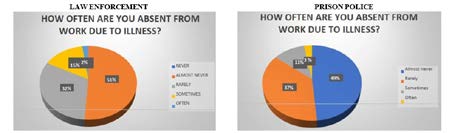
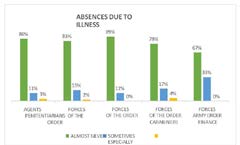
If we consider that a large part of the police force’s salary is made up of allowances, and falling ill means perhaps not being able to pay a mortgage or other expenses or risking being sent on leave or whatever, it is easy to understand why there is such a low rate of sick leave.
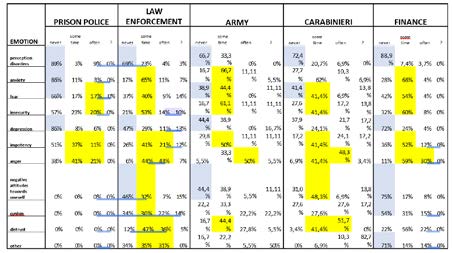
With regard to emotions, in both bodies the most frequently experienced emotions are anger, distrust, anxiety, helplessness and insecurity (Figure 34). Among prison officers, anger (62%), helplessness (48%) and insecurity (43%) prevail.
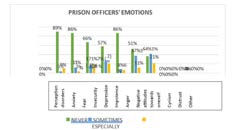
Emotions: anger (87%), distrust (83%), anxiety (76%) prevail among the police, insecurity (67%) and powerlessness (62%). (Army: anger (83.3%), anxiety and insecurity (77,8%) and mistrust (72.4%); carabinieri: distrust (93,1%), anger (89,7%) and anxiety (72,3%); finance: anger (89%), distrust (78%), anxiety (72%) and insecurity (68%) (Figure 35 and 36).
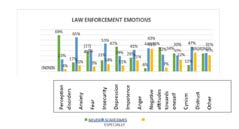
With respect to the control of one’s own emotions, for 96 per cent of the police and 91 per cent of the prison officers, knowing one’s own emotions is fundamental to understanding the other person and consequently can help in one’s own work (Figure 35). In addition to this, 91 per cent of police and 76 per cent of prison officers claim to be in control of their emotions in emotionally and physically complex situations (Figure 37). Control of One’s Emotions
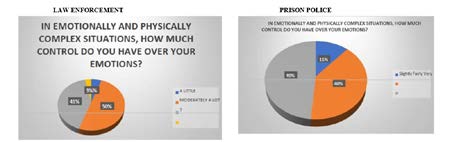
Figure 37: Among members of the police force, 50% state that they have a fair degree of control over their emotions and 41% a high degree of control. Socio-criminological area: as far as critical events and emotions are concerned, compared to law enforcement, the situations considered to be the most distressing events are the suicide of a colleague (25 %), violence against minors and family quarrels (19.56 %), the death of a colleague (18.4 %) and psychological violence (4%) (Figure 38-40). (Army:
psychological violence 22.2% and suicide of a colleague, death and injury of a colleague (16.7%); carabinieri: violence against minors, suicide of a colleague and family quarrels (34.5%), reporting a death (24.1%) and road accidents and death of a colleague (20.7%); finance: suicide of a colleague (22.2%) and death of a colleague (18.5%).
Law Enforcement
Law Enforcement
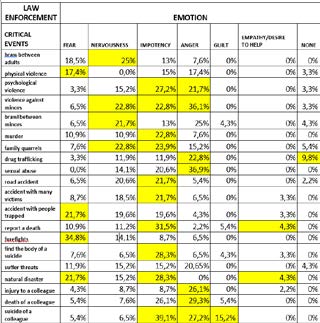
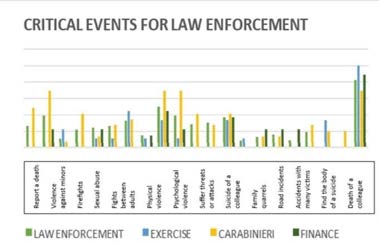
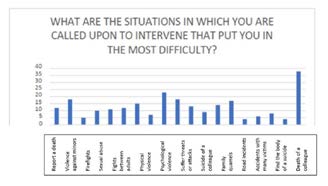
between adults (34.3%) (Figure. 41-43). Across all bodies as a highly stressful critical event are the death and suicide of a colleague.
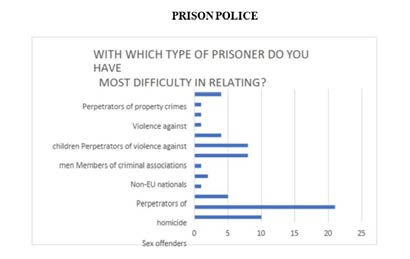
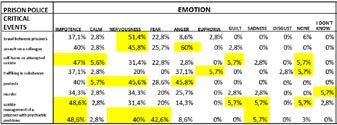
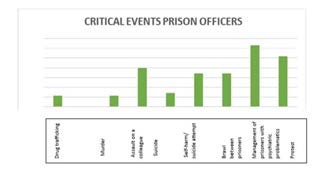
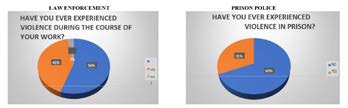
Figure 43: With respect to critical events, among prison officers, the most emotionally impactful events are dealing with prisoners with psychiatric problems, being threatened, suicide attempts and fights between adults. Violence experienced during work: among police officers, 72% claim to have experienced some form of violence during the course of their work, in particular physical violence (61.9%), psychological (33.3 per cent), verbal (28.6 per cent) and mobbing (19 per cent), while among prison officers 31 per cent stated that they had experienced violence, in 50 per cent of cases aggression and in 21.4 per cent physical and verbal threats and assaults (Figure 44) Violence Suffered in the Course of Employment
Reflections From the Interviews
Compared to the comments of the police, these were the statements but above all the demands: We need more solidarity in the workplace. We need protocols to deal with suicides of colleagues or personal losses.
More psychological support, also for the family psychological support must be decoupled from administration. A weapon psychologist will always be an officer first rather than a doctor. Colleagues cannot be trusted, sooner or later they will try to hurt you where the sun never shines.
Psychological support for all members of the ffoo.
A sharing space to share what? Service in the police force is confidential, and you can only share it with those you do. I broke down doors, commanded law and order services, seized machinery and companies but what took my sleep away was not the threats I received, either directly or by mail, but the corruption that invested my superiors. As soon as they could retaliate, a fine, a disciplinary investigation for suspension, another fine, transfer of office, etc.... etc... Everything is needed to help those in distress, but more than anything else, an autonomous body is needed to control the actions of the ruling class. Many managers are good people, others just looters. The rogue handful exploit bureaucracy and hierarchy to make victims sick who are first isolated and then clubbed. If you are directly involved, it is better to keep quiet because the law and the administration do not give discounts and you risk imprisonment. I am a survivor; someone they would have driven to suicide just because I was impartial and denounced those in my command who had caused fiscal damage and other crimes. They were in agreements with the administrators and so everyone knew but no one reported, so I was and am inconvenient and therefore to be done away with managers (or in any case those who manage personnel) should take courses in managing relationships. In the military world (at least in the environment in which I work) there is no possibility of dialogue and confrontation, only hierarchical relations prevail.
I hope there will be more such tests and serious scholars who are committed to pointing out the problems behind the veneer of the fake perfect form that is perceived from the outside. We all have a superman complex, which is used to deal with critical issues. We must learn to understand that it comes off with the uniform and the uniform is not us.
In my work there is little empathy between colleagues, I have not found a welcoming place where I can share my emotions or have friendships. There is always a tendency to denigrate the erring colleague rather than help him. Superiors are not willing to listen to others but always ready to look at the service aspect rather than the human aspect. We are men and women who feel emotions and we need more listening and understanding. It is appropriate x to avoid extreme gestures that the management class with humility and support starts to take care of its staff, a commander is the alpha and omega in his department, and nothing moves that he does not want.
I think it is useful, but the current working environment does not allow for the comparison between colleagues to be truthful.
I would like a comfortable working environment, where one can meet with colleagues. It would be useful to demilitarise, at least in peacetime, the armed forces and police forces with military regulations to give them back some humanity and truth, because militariness is synonymous with omertà imposed with the threat of discipline used as a stick. Trying to find a meeting point as harmonious as possible to face the unforeseen daily working events by trying to support each other.
In our administration, the soldier who asks for psychological assistance must not be pilloried or professionally destroyed. Among colleagues lurk the worst elements. One starts to feel better when one removes c o- workers from one’s life. There are no friendly and trusting relationships with them.
The assistance and proximity of superiors, which is currently completely absent, and greater organisation of work would be important.
I have been part of military representation, you must do targeted courses with psychologists or qualified people. The first to do the courses should be the managers, because if you have a commander with problems, he ruins an entire department made up of men, soldiers and families behind him. The Guardia di Finanza does initial interviews x the competition selections, then once you get in, nothing even after major problems, after suicides, death of a parent or child, after separations, etc.” “There would like support totally outside the military structure that allows both personnel suffering harassment to be helped and to identify superiors who abuse their powers and position. It is too easy to make psychological violence on a soldier (e.g. threatening to deny leave, not to go to mission, to be transferred temporarily or permanently to an inconvenient place of work far from the family) and there are no means to oppose it.
The flats at fddo should be heard, on a voluntary basis, by professionals from outside their administration. The
physical and psychological health of uniformed workers is not taken into account at all when it is mandatory for the employer. Too afraid to speak out, superiors judge you.
Suicide
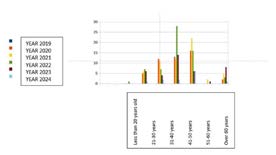
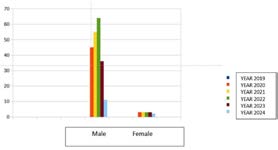
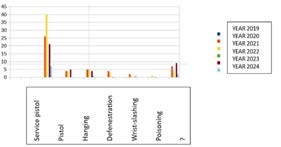
Let us now analyse the figure for suicides among the police force (5) (Figure 45 and 46). Suicides prevail among the male sex, a fact consequential to the fact that almost all members of the various police corps are men; with respect to age, the 41-50 age group prevails and the 51- 60 age group, an age in with regard to the weapon used, the service pistol prevails, which is omnipresent in the life of a person belonging to any police force and therefore always available; with regard to the body they belong to, those belonging to the State Police, the Prison Police and the Carabinieri prevail; and with regard to the role they hold, agents, chief assistants and deputies prevail.
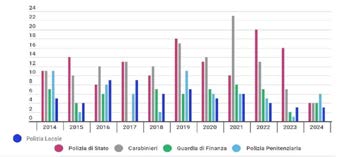
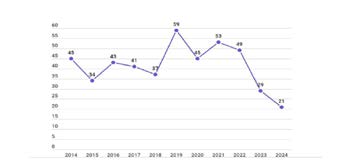
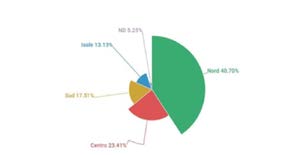
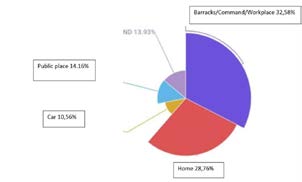
Figure 46: The years in which there were the most suicides were 2019 and 2021. With regard to the analysis of suicides among the police forces, the data analysed show that the risk increases with age, peaking between 45 and 64 years of age (Figure 47); with regard to gender, the male gender prevails (Figure 48); with regard to the type of police force, those belonging to the State Police, the Penitentiary Police and the Carabinieri Corps prevail (Figure 49); with regard to the role held, agents, chief assistants and police officers prevail (Figure 50); with respect to the region of residence, Lombardy, Lazio and Sicily prevail (Figure 51); with respect to the modality used, the use of the service weapon is the predominant modality (Figure 52), reflecting the accessibility and effectiveness of these weapons, followed by death by hanging and by precipitation; with respect to the place, the workplace is the most common context, followed by the home (Figure 53).
AGE
Gender
Branch Of Service
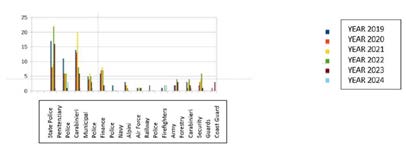
Position Held
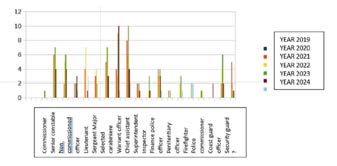
Region Of Residence
Mode Used
Place
Results
• Organisational climate and belonging the sense of belonging is medium to low. The data indicate a perception of poor support from superiors (76%) and only partial support from colleagues (39%). Critical relationships, hyper- hierarchisation and the impossibility of career advancement are among the factors most cited as sources of frustration. • Psychophysical well-being 57% report health complaints, in particular gastrointestinal complaints and chronic fatigue. 50% report sleep disorders. The interference of work in private life is reported by more than half of the sample. Only a minority manage to leave their emotions at the office. • Critical events and suicidal ideation the suicide of a colleague is considered one of the most impactful events. Intense emotional responses also emerge in the face of child abuse, death of colleagues and family conflicts. Some subjects report thoughts of renunciation and loss of meaning, while others testify to a deep disillusionment with their initial values. Discussion Many thoughts can be drawn from the data in our possession. Suicide may be preceded by signs and risk factors, but human behaviour is unpredictable.
Talking about suicide is crucial, and one should not believe that talking about it means encouraging it, quite the contrary. If one talks about it, the person can vent, can confront, can feel heard and understood.
The person who commits suicide or is thinking about it, is a person who is experiencing extreme distress, a person with great inner suffering, considering this pain and recognising it can be of great help to the person.
But why would an apparently strong person such as a man or woman in uniform, who in order to be able to wear that uniform, whatever corps he or she belongs to, has had to pass countless physical and psychological tests, undergo lengthy training, take oaths, in many cases leave family and affections, renounce passions and friendships, come to think or be able to commit suicide?
The answers can be many and varied.
But the emotion that underlies this event more than any other is despair and a sense of helplessness.
One chooses to ‘disappear’ when one thinks and ‘feels’ that there is nothing one can do about the malaise that devours from within.
Numerous attempts have probably been made previously to be able to rebel against this emotional situation, but all have failed miserably against walls of silence, of not listening, leading the person to think that he or she cannot do anything more and at the same time to know that he or she cannot continue to live and work with that nothing inside made of loneliness and pain. So, this leads us to understand why suicide can affect members of anybody they belong to, in any city they live in, at any age, whatever their role and whatever their family situation.
Lack of tools, feelings of failure, fear, shame, not being listened to, powerlessness, anger, loss of identity: if we mix all these experiences, the end result will be devastating.
But the suicide committed by those belonging to the various police corps takes on a different meaning than the suicide committed among the general population, because most people who choose this type of work, in most cases do so because they chose it, out of passion, because it was their dream, and this leads to the person’s work identity becoming their own identity, or rather their personal identity being replaced by their work identity. Now let us consider how much everything that can happen within the work environment affects the individual’s very personality. If, within these working contexts, the person does not feel listened to, taken into consideration, feels threatened, unsupported by colleagues and superiors, intimidated by disciplinary notes, prevented from falling ill for fear of being subjected to a visit or of losing the allowances that help him to increase his salary, forced to accept transfers even very far from his affections, all this will have a boomerang effect on his mental and physical health.
The conversations I had with several members of the police force, who experience these feelings every day on their skin and read them in the eyes of their colleagues, made me realise how the predominant emotion in these cases is powerlessness under which lives an over- controlled anger and infinite sadness in addition to an urgent need to be listened to in a neutral and above all non-judgmental manner. Emotions that, in the long run, take away the will to live, to relate, emotions that make people shut in on themselves, emotions that make the body and mind sick, emotions that cry out silently and echo through everyday life, that fill the head and make people arrive at the end of the day without strength.
And whether this happens in a small provincial town or in a large metropolitan city is of no importance; to those who risk their lives every day or who drive around the streets of the small town and the most important thing that can happen to them is to settle a family quarrel is of no importance; to those who have a stable family situation or those who are separating is of no importance; of course there are many factors that come into play but none is so strong as to override these emotions.
The factors that can precipitate borderline situations are relationship, communication, exchange, sharing, confrontation perpetually absent and impossible apart from always having the weapon at hand.
When the suicide of a colleague happens, one not only experiences anger and helplessness, but also guilt, because we realise that we could have noticed it earlier, that small signs have escaped us and that come back to us only after the event has happened, because we have not asked our colleague ‘how are you’, because we are too focused on work, on ourselves, on the no time that overwhelms us. At the same time, we try to quickly forget the event and go about our daily lives as if nothing had happened, either because the pain is great, or because in some cases we know that we have also thought about it, or because death is frightening and therefore it is good to quickly distance ourselves from it, or because for the work we do it can be considered a ‘disgrace’, as we are told by so many suicides of members of the various police forces often passed off as accidental events, often hidden or disguised and often when recognised attributed to family problems. There is an urgent need to promote emotional support programmes, psychological debriefing and emotional regulation training within armed institutions. Awareness of the psychological impact of work and the construction of a more humane and cooperative organisational climate can be key levers for suicide prevention. It is necessary to restore dignity and listen to the person behind the uniform because between being well and committing suicide there are a thousand nuances!
Conclusion
The analysis of the data obtained through the research showed that law enforcement officers are individuals who have, in most cases, made this choice driven by deep- rooted motivations, linked to values of loyalty, justice, and a sense of duty, who have invested in their training at the expense, on many occasions of their own well-being and family ties, which led them to ‘clothe’ their personal identity with their work identity, only to find themselves, at a certain point in their working history, having to confront, on their own, emotions of anger, impotence and distrust, caused on the one hand by an extremely bureaucratic system and hierarchical, lacking support from colleagues but above all from superiors, and on the other hand to clash with a critical and judging outside, causing in many cases a drop in their self- esteem and their work. In such a ‘shattered’ context with no stable points of reference, emotional support programmes, psychological debriefing and emotional regulation training within the armed institutions become indispensable to listen to their voices, their emotions and suffering, so that the increase in awareness of the psychic impact of their work, the recognition of the importance of their work and the building of a more human and cooperative organisational climate can be key levers for improving personal and occupational quality and well-being and consequently preventing suicidal phenomena by restoring dignity and listening to the person behind the uniform.
Consent to publication
The study participants, by signing the informed consent and data processing, consented to the publication of the data in anonymous and aggregated form. Aurida Pardini was responsible, together with the Forensic Science Academy and Dr. Domenico Piccininno, for collecting and maintaining the data. The authors, following current legislation, consent to the publication of the contents of this clinical study.
Availability of data and material: The subjects who participated in the study requested and obtained that the authors of this pilot study become aware of the participants’ data in exclusively anonymous form. The authors make themselves available, with a formal request to be evaluated on a case-by- case basis, to disclose the data and materials of the research, exclusively in aggregate and anonymous form, following the regulations in force and the informed consent to data processing signed by the participants, subject to authorisation by the heads of the facilities involved.
Authors’ Contribution
Aurida Pardini designed the study, Dr Domenico Piccininno contributed to the supervision of the data and this manuscript and supervised it during the revision and publication phase.
Acknowledgements
We would like to thank all research participants for allowing this study to be carried out free of charge and for philanthropic purposes.
References
-
Avesani M, Carrieri CP (2021) Handbook of criminology and forensic science, DirittoPiu.
-
Baiocco R, Crea G (2004) Psychosocial risk in the helping professions, Erikson.
-
Basco P, Del Citerna L (2009) The Words of Freedom, Franco Angeli.
-
Battagli F and Lori G (2015) The stress of police work, CerchioBlu.
-
Baudino, M (2014) The prison police between prison overcrowding and burnout: The internal debate. Criminol Magazine. Vittimol. Si-cure 8: 104-119.
-
Bertelli, B, Crepaldi B (2011) Re-educational opportunities and security in the representation of prison operators Results and reflections from a survey conducted in 7 institutions in Northern Italy. Journal of Criminology, Victimology and Security 1: 4-33.
-
Buffa P (2020) Torture and detention: some considerations on abuse, ill-treatment and violence in detention.
-
Buffa P (2019) The Suicide of Prison Police Personnel: An Attempt to Get Out of the Mist of Human Suffering. Law. Criminal Man Crim. law buzz 7: 155-176.
-
Carrier F, Garbarino S (2015) Working in the police: stress and burnout.
-
Clemmer S. Prisonization, 1940 Freeman, San Francisco.
-
Concato G, Cullo ML (2005) Supervision for prison operators, Ed Franco Angeli.
-
Concato G., Rigione S (2005) So as not to die in prison, Franco Angeli.
-
Confuorto AL (2024) Prison Law, DirittoPiu Edizioni.
-
Cosentino N (2013) The prison worker and foreign prisoners: an exploratory survey; Quaderni ISSP no. 12.
-
Angelo DC, Gozzoli C, Mezzanotte, D (2015) New detention cultures: Livelihoods and impacts on the role and well-being of prison police. Narrating I Groups 10: 233-251.
-
De Leo G, Patrizi P (1992) The explanation of the crime, Il Mulino.
-
De Leo G, Patrizi P (2006) The criminologist psychologist, Giuffre Editore.
-
Ferrario G, Campostrini F, Polli C (2012) Psychology and prison, Franco Angeli.
-
Gallo L (2018) Occupational stress in prison police: review of available literature and analysis of the Italian context.
-
Garbarino S, Carrier F (2020) Police service stress: between perception and reality, Ed. Franco Angeli.
-
Lucaroni S (2021) The darkness under the uniform.
-
Lucchetti L (2014) Fallen without the honour of arms: the study and prevention of suicide in the police force.
-
Maculano A, Vianello F, Ronconi L (2016) Penitentiary police: Working conditions and organisational health in Veneto penitentiary institutions. Rasso. Criminol 1: 18-
-
Milazzo S, Rizzo A (2009) The perception of work problems in prison police personnel.
-
Monti M (2013) The psychosocial risk in the penitentiary police force.
-
Pagano L (2020) The warden: forty years of work in prison, Sulphur.
-
Pardini A (2023) Living and working in confinement: prison officers and prisoners: what kind of violence and what are its consequences? DirittoPiu Edizioni.
-
Pajardi D (2008) Beyond monitoring and punishing: experiences and reflections of operators on treatment and are in prison.
-
Pasquali S Results of intervention research on prison worker burnout and subsequent interventions to promote organisational well- being, Review of penitentiary psychology and criminology.
-
Piccininno D (2021) Neurocriminology meets Dhyana knowledge Meditation practices as a tool for enhancing the restorative justice model, European Archives of Prison Studies 1(2).
-
Piccininno D (2022) Notes on reasoned criminology: emotional neurocriminology of deviance and reparative justice, Diritto- Piu.
-
Prati G, Boldrin S (2011) Stress factors and organisational well-being in prison police officers. G. Ital. Med. Labour Er-gon 33: B33-B39.
-
Rebeschini M (2025) I just wanted to just do the carabiniere.
-
(2019) Journal of Prison Police The evil of life of prison officers, Justi-ciety and Security Society, pp: 270.
-
Salce M (2024) Suicide in uniform: a look at the “hidden phenomenon” in the Armed Forces and Police.
- Reassessing Baldus Study Data
- The Need to Teach Research Methods to Criminal Justice Students
- Combating Cyber VAT Fraud in the EU Member States: A Comparative Study of Criminal and Criminal Procedure Law
- Cyber VAT Fraud in the EU: A Criminological Analysis
- Advancing Compassionate Justice: Redefining Victim and Offender Rights in Victimology and Penology
- The Political Economy of Preventive Justice