
Potentiality of Resveratrol in Mitigating Exercise-Induced Inflammation - A Bioinformatic Study on Interleukin-6 (IL-6) in Athletes
Background: Athletes, engaging in vigorous exercise, confront elevated reactive oxygen species (ROS) and inflammation. Dietary antioxidants, abundant in diverse foods, offer protection. Resveratrol, a potent polyphenol from grapes and berries, explores its anti-inflammatory potential and mechanism through in-silico analysis in athletes. Method: Initial steps involved IL-6 data retrieval (PDB ID 1alu), receptor preparation, and ligand selection (Resveratrol, CID 445154). IL-6 receptor binding site identification utilized literature and PyMol. Molecular docking was facilitated by AutoDock, validated through re-docking and overlay methods. Lead molecule selection in in silico virtual screening was based on binding energy (-5 to -15 kcal/mol). The evaluation concluded with interaction assessment and binding affinity calculation. Result and Discussion: The study utilized IL-6 from the Protein Data Bank. Resveratrol was prepared for molecular docking. Docking outcomes showed optimal fit and interaction of resveratrol with IL-6, forming three bonds and exhibiting a low binding energy of -5.2 kcal/mol. The research addressed exercise-induced inflammation, emphasizing IL-6's role. Bioinformatics and molecular docking provided insights into IL-6 binding. Resveratrol demonstrated a potential inhibitory effect on IL-6 action, presenting a promising avenue for anti-inflammatory intervention in athletes. Conclusion: Exploring resveratrol's anti-inflammatory potential on IL-6, our study used molecular docking, suggesting its protective effects in athletes. Ongoing research is vital for validation and broader implications.
Graphical Abstract
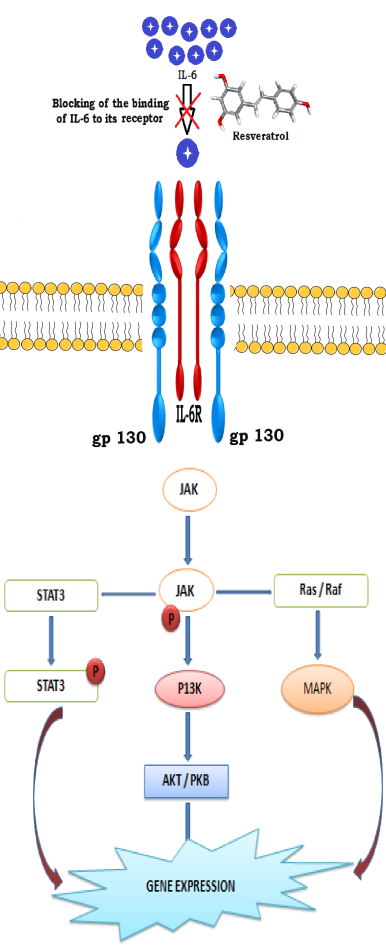
Abbreviations: PDB: Protein Data Bank; ROS: Reactive Oxygen Species.
Introduction
Vigorous participation in intense physical activity makes athletes more susceptible to heightened levels of circulating reactive oxygen species (ROS) in the body and is contingent on the mode, intensity, and duration of exercise [1]. A solitary session of intense exercise is sufficient to generate substantial amounts of ROS, leading to increased levels of inflammatory markers. Inflammation is considered as a complex biological response of body tissues to harmful stimuli, such as pathogens, damaged cells, or irritants. It is a protective mechanism that involves immune cells, blood vessels, and molecular mediators. The purpose of inflammation is to eliminate the initial cause of cell injury, clear out damaged cells and tissues, and initiate tissue repair. Exercise, especially intense or prolonged physical activity, can cause micro-damage to muscle fibers, leading to inflammation. While this is a natural part of the muscle repair and strengthening process, excessive inflammation can delay recovery, leading to prolonged soreness and reduced muscle function and proper management helps in faster recovery and repair of these tissues. While exercising, active muscle fibers exhibit oxygen consumption rates 200 times higher than during periods of rest, resulting in the production of inflammatory markers [2, 3]. Various potential explanations exist for the diverse outcomes observed in relation to exercise and its effects on proinflammatory and inflammation-responsive cytokines and there has been reported an elevation in interleukin-6 (IL-6) concentration of 50-folds after the end of a marathon run in the participants [4]. Earlier findings have shown a connection between dietary interventions, such as the consumption of antioxidant-rich foods, and decreased levels of inflammatory mediators in athletes, both during periods of rest and after exercise [5]. This discovery motivated scientists to explore alternative foods that enhance athletes’ oxidative stress and diminish their inflammatory markers.
Antioxidants, abundant in diverse foods, act as vital defenders against oxidative stress caused by free radicals [6, 7, 8]. Fruits like berries and citrus, alongside vegetables such as spinach and kale, are rich sources. Nuts, seeds, and oils, coupled with beverages like green tea, offer additional avenues to bolster antioxidant intake [9]. Various plant products, vitamins and antioxidants show different mitigating roles of various complications [10, 11, 12]. For athletes, the anti-inflammatory effects of antioxidants hold particular significance. Strenuous physical activity elevates oxidative stress, leading to inflammation. Antioxidants play a crucial role in mitigating this inflammatory response, supporting athletes in recovery and injury prevention [13]. By incorporating antioxidant-rich foods, athletes may experience reduced inflammatory markers, promoting overall health. Beyond their anti-inflammatory impact, antioxidants contribute to cardiovascular well-being, fostering heart health through improved blood flow and oxidative damage reduction [14]. This dual benefit is especially pertinent for athletes aiming to optimize performance and recovery. While a balanced diet is the primary means of antioxidant intake, targeted consumption of these compounds emerges as a strategic approach for athletes seeking to enhance their athletic capabilities and mitigate the inflammatory effects associated with intense training.
Resveratrol, a potent polyphenol, is found in certain foods like grapes, red wine, and berries. Known for its antioxidant properties, resveratrol has gained attention for potential health benefits [15]. It demonstrates anti- inflammatory effects, contributing to cardiovascular health by improving blood flow and reducing oxidative stress. Additionally, studies suggest its potential in supporting longevity and cognitive function [16]. While available in supplement form, obtaining resveratrol through a balanced diet remains ideal for maximizing its positive impact on overall health. Moreover, numerous interventions have utilized these dietary components to explore their influence on inflammatory markers. To date, there has been no research investigating the anti-inflammatory potential of resveratrol and it mechanism of interaction in athletes. Hence, the present study seeks to assess the impact of resveratrol on IL-6 in athletes through an in-silico analysis, exploring its mechanism of action.
Materials and Methods
Sequence Retrieval
The sequence and structure of IL-6 were obtained from the Protein Data Bank (PDB) with the PDB ID 1alu. The receptor protein was readied by eliminating the ligand and water from the active site and introducing polar hydrogens [17].
Compound Preparation
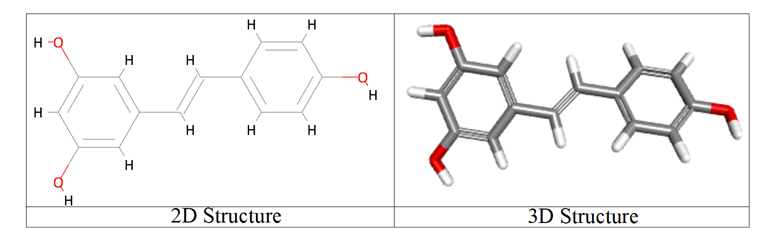
3D conformer of resveratrol (C14H12O3), PubChem CID 445154 was downloaded and used as a ligand in this study.
Identification of Binding Site
Exploring scientific literature, researching articles, and utilizing databases are common methods for identifying the ligand binding site of the human IL-6 protein. The IL-6 receptor binding site was discerned through the utilization of PyMol, protein visualization software [18].
Molecular docking
Following the methodology established in our previous work i.e. Bhattacharjee S, et al. [19] molecular docking was undertaken using IL-6 (PDB ID 1alu). The macromolecular file preparation involved adding polar hydrogens and introducing charges via ADT with default Kollman charges, automatically incorporating Kollman charges for a peptide. Protein parameters were integrated, saving files as 1alu. pdbqt. The ligand, resveratrol (PubChem CID 445154), was converted to PBD format using Open Babel 2.3.2a, loaded into ADT, and configured as instructed, resulting in ligand. pdbqt. Creating a grid with sufficient space for unrestricted ligand rotation Wang S, et al. [18], parameters were stored in molecule.gpf, and a new file, 1alu.gpf, was saved. Autogrid4 generated maps, producing 1alu.glg during the Run. Docking Parameter File creation involved reading macromolecular pdbqs and ligand.out.pdbq files. AutoDock, using the Lamarckian genetic algorithm, initiated the docking task. Terminal access to .dlg files recorded final docked energy, Gibbs free energy, and inhibition constant for each of the 500 runs, ensuring optimal results.
Validation of Docking Approach
The diverse docking parameters were confirmed through individual re-docking of a crystallized ligand molecule against the IL-6 receptor. Validation of the molecular docking simulation technique was conducted using the overlay method and chemical similarity assessment [20].
Computer-Based Screening
After validating the docking approach, an in silico virtual screening was carried out through molecular docking simulations.
Evaluation of Virtual Screening Results
After conducting molecular docking simulations, lead molecules were selected based on the lowest binding energy within the specified range of -5 to -15 kcal/mol. The assessment of results emphasized hydrophilic and lipophilic interactions among binding residues within the active ligand binding site of the protein and the ligand. The calculation of the ligand’s binding affinity for a specific target was performed as illustrated in the following equation:
$$ K i = e \left[ \Delta G / R T \right] $$
Here, ΔG represents the change in free energy upon binding, R denotes the gas constant, and T signifies the temperature in Kelvin.
Results
Chosen and Prepped Macromolecule
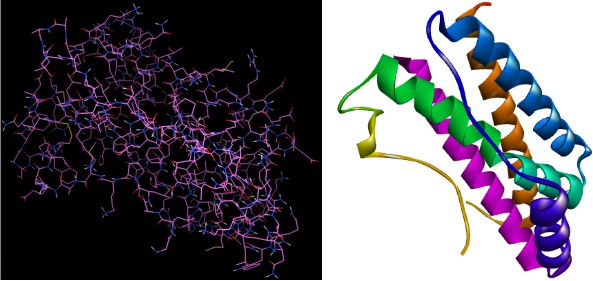
The human IL-6 (PDB ID: 1alu), obtained from the Protein Data Bank, comprises a single protein chain consisting of 157 amino acids. The three-dimensional structure model of IL-6 is depicted in Figure 1. After the end of the processing of the protein molecule, it was saved in *pdbqt format using AutoDock software.
The Ligand Primed For Molecular Docking
The ligand molecule contained three rotatable bonds, all of which were maintained in their rotatable state.
Subsequently, the prepared ligand was stored in *pdbqt format. In Figure 2 it is shown that the resveratrol molecule contains 12 atoms of hydrogen with 3 atoms of oxygen.
| Protein | x-D | y-D | z-D | x center | y center | z center |
|---|---|---|---|---|---|---|
| 1-alu | 122.89 | 102.65 | 43.69 | 40.096 | 40.079 | 40.038 |
Table 1: Coordinates utilized for the preparation of the grid box.
| Protein | Ligand | Interacting residues | Types of Bonds | Binding energy (kcal/mol) |
|---|---|---|---|---|
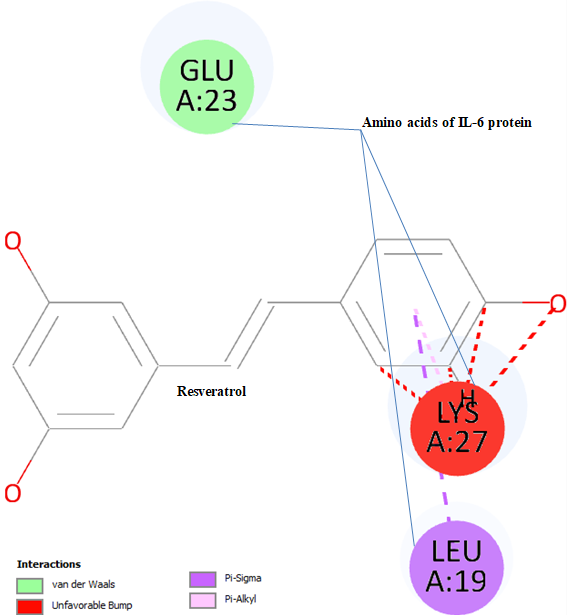
| 1-alu | Resveratrol | Glu A:23 | van der Walls | -5.2 |
| 1-alu | Resveratrol | Leu A:19 | Pi-Sigma | -5.2 |
| 1-alu | Resveratrol | Lys A:27 | Pi-Alkyl | -5.2 |
Table 2: Docking Outcomes of the Ligand Bound to the Human IL-6 Receptor.
Discussion
Heavy exercise has long been associated with numerous health benefits, including improved cardiovascular health and enhanced physical fitness. However, recent research has shed light on a potential downside to intense physical activity - the increased levels of Interleukin-6 (IL-6) among sports persons. IL-6 is a cytokine that plays a crucial role in the body’s inflammatory response [21]. While moderate exercise is known to have anti-inflammatory effects, heavy exercise can lead to an upsurge in IL-6 levels, contributing to inflammatory problems [22]. The paradox of exercise- induced inflammation lies in the delicate balance between the positive effects of moderate exercise and the potential drawbacks of excessive physical exertion [23]. High levels of IL-6 can trigger an inflammatory response that may manifest as muscle soreness, joint pain, and even systemic inflammation [24]. This has significant implications for athletes and fitness enthusiasts, as chronic inflammation is associated with various health issues, including an increased risk of chronic diseases [25, 26]. When there is an excessive increase in cytokine production, it leads to a phenomenon known as a cytokine storm. This heightened inflammatory reaction may contribute to the development of multiple organ dysfunction syndrome as well as inflammatory response syndrome [27, 28]. In response to this emerging challenge, the scientific community has turned to innovative approaches, particularly bioinformatic applications, to unravel the complex interplay between exercise, IL-6, and inflammation. Bioinformatics leverages computational tools and techniques to analyze vast amounts of biological data, facilitating a deeper understanding of molecular pathways and interactions [29, 30]. Researchers are now using bioinformatics to explore the intricate mechanisms through which heavy exercise influences IL-6 levels and subsequent inflammatory responses [29, 31]. This multidisciplinary approach enables the identification of potential targets for intervention, paving the way for the development of anti-inflammatory drugs tailored to mitigate the negative consequences of intense physical activity.
The integration of bioinformatics in sports medicine and pharmaceutical research represents a promising avenue for precision medicine [32]. The preeminent computational method for probing protein active sites and ligand conformation within the targeted protein’s active pocket is molecular docking. The scrutinized docked complexes, stemming from these studies, were evaluated for binding affinities (Kcal/mol), molecular interactions, and bonding interactions. The lowest binding energy value serves as a key indicator of the ideal conformational position of the ligand within the active region of the targeted protein IL-6 [33]. By deciphering the molecular intricacies of exercise-induced inflammation, scientists aim to develop personalized interventions that optimize the health benefits of exercise while minimizing the associated inflammatory risks. This holistic approach not only benefits athletes striving for peak performance but also contributes to our broader understanding of the intricate relationship between physical activity, inflammation, and overall health. As we delve deeper into the realms of bioinformatics, the quest for anti- inflammatory drugs tailored to the needs of sports persons takes on a more informed and targeted trajectory.
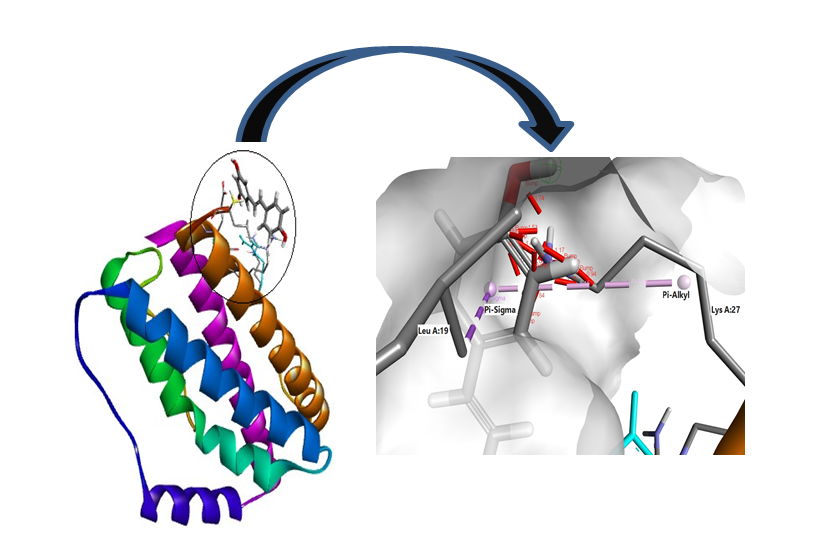
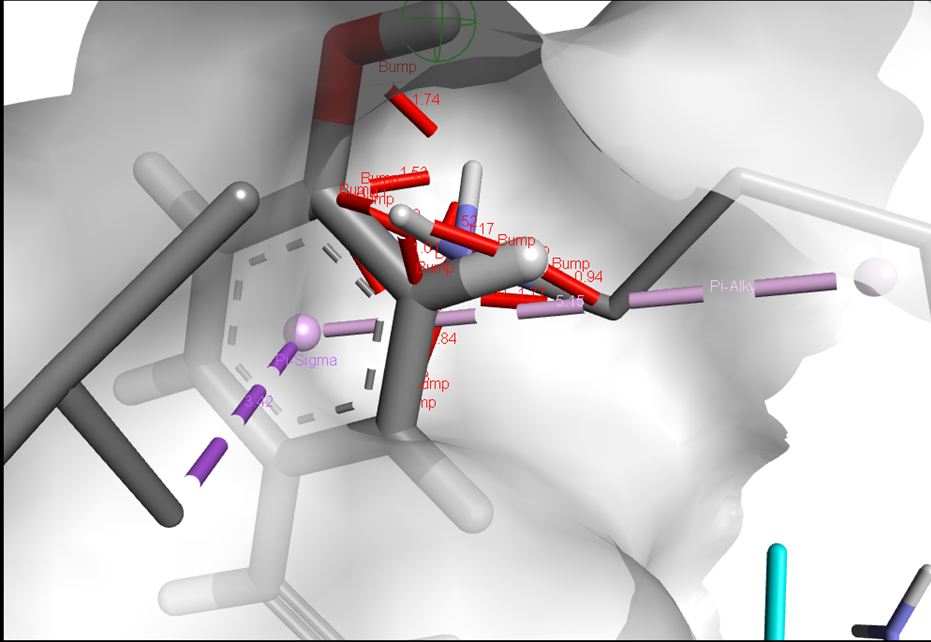
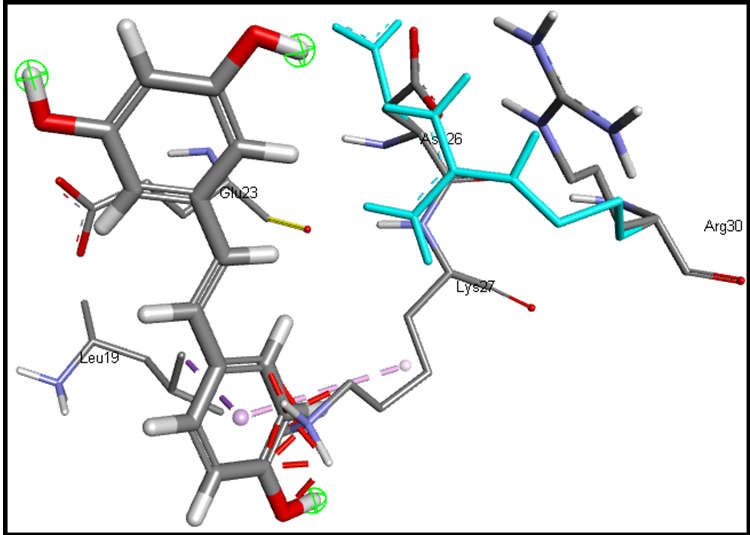
In our study we have found that, resveratrol exhibited a perfect fit within the IL-6 binding site, demonstrating the lowest binding energy of -5.2 kcal/mol in the results after (Table 2). According to Figures 5, 6 and Table 2, resveratrol forms 3 bonds namely, van der Waals, Pi-sigma and Pi-Alkyl bonds with Glu A:23, Leu A:19 and Lys A:27 respectively. So, it could be possible mechanisms for the inhibition of IL-6 action the ligand compound. A study has shown that quercetin could demonstrably bind to the IL-6R by partially (30%-35%) blocking IL-6 binding. It has been reported that the lys and glu residues provoke a complete loss of ligand binding to the IL-6R. Hence, the interplay among quercetin, catechin, gallic acid, and IL-6R is expected to impede IL-6 ligand binding to the receptor through modifications in receptor affinity or protein conformation. According to Chu M, et al. [34, 35] found that resveratrol is potentially effective in diminishing or regulating elevated IL-6 levels linked to physical activity. However, its impact on IL-6 changes related to factors like age might be limited. The data presented suggests that resveratrol exhibits anti-inflammatory and protective effects during exercise by reducing IL-6 levels. Nevertheless, further studies in the future are necessary to validate this hypothesis. The results of the current study propose that disrupting interactions within IL-6 signaling pathways or the IL-6R could interrupt the signaling associated with inflammatory diseases triggered by increased IL-6 expression. Additionally, this study shares similarity with the findings of Ezaouine A, et al. [29].This mechanism could provide a potential therapeutic approach for addressing inflammatory bowel diseases.
Conclusion
Our study delved into the potential anti-inflammatory impact of resveratrol on IL-6 in athletes through in-silico analysis. Molecular docking revealed resveratrol’s optimal fit within the IL-6 binding site, forming three key bonds. Resveratrol may mitigate IL-6 levels during exercise, suggesting protective effects. Ongoing investigations are crucial for validating and expanding on these insights, contributing to bioinformatics in sports medicine for inflammation management in intense physical activity.
Conflict Of Interest Declaration: The authors declare no conflicts of interest.
Funding: Nil.
References
-
Gomez Cabrera MC, Viña J, Ji LL (2016) Role of Redox Signaling and Inflammation in Skeletal Muscle Adaptations to Training. Antioxidants 5(4): 48.
-
Deaton CM, Marlin DJ (2003) Exercise-associated Oxidative Stress. Clini. Tech. Equine Prac 2(3): 278–291.
-
Mazani M, Nemati A, Amani M, Haedari K, Mogadam RA, and et al. (2018) The effect of probiotic yoghurt consumption on oxidative stress and inflammatory factors in young females after exhaustive exercise. J Pak Med Assoc 6(12): 1748-1754.
-
Pedersen BK, Hoffman-Goetz L (2000) Exercise and the immune system: regulation, integration, and adaptation. Physiological reviews 8(3): 1055-1081.
-
Koivisto AE, Olsen T, Paur I, Paulsen G, Bastani NE et al. (2019) Effects of antioxidant-rich foods on altitude- induced oxidative stress and inflammation in elite endurance athletes: A randomized controlled trial. PloS one 1(6): e0217895.
-
Sarkar C, Bhattacharjee S, Pal S (2013) Mitigating role of folic acid and vitamin B12 against sodium arsenite induced oxidative stress in rat testis. Journal of Applied Bioscience 39(1):16-23.
-
Bhattacharjee S, Pal S (2014) Antilipidemic and cardioprotective effects of vitamin B12 and folic acid against arsenic toxicity. IJPCBS 4(2): 353-360.
-
Abdali D, Samson SE, Grover AK (2015) How effective are antioxidant supplements in obesity and diabetes? Medical principles and practice. 24(3): 201-215.
-
Lobo V, Patil A, Phatak A, Chandra N (2010) Free radicals, antioxidants and functional foods: Impact on human health. Pharmacognosy reviews 8(4): 118-126.
-
Bhattacharjee S, Pal S (2022) Arsenic- induced oxidative stress in cardiac tissue of rats: synergistic effects of folic acid and vitamin B12. Challenges and Advances in Pharmaceutical Research 8: 49-63.
-
Bhattacharjee S (2023) Applications of Laportea interrupta as a traditional therapeutic agent by the tribes of Tripura and it’s potentiality in pharmaceuticals. International Journal of Pharmaceutical Sciences and Research 14(8): 3728-3741.
-
Yasmin R, Gogai S, Bora J, Chakraborty A, Dey S, et al. (2023) Nobel insight into the cellular and molecular signalling pathways of Hibiscus sabdariffa on cancer prevention: a review. Journal of Cancer Prevention 28(2): 77-92.
-
Clemente-Suárez VJ, Bustamante-Sanchez Á, Mielgo- Ayuso J, Martínez-Guardado I, Martín-Rodríguez, A et al. (2023) Antioxidants and Sports Performance. Nutrients, 15(10): 2371.
-
Bojarczuk A, Dzitkowska-Zabielska M (2022) Polyphenol Supplementation and Antioxidant Status in Athletes: A Narrative Review. Nutrients 15(1):158.
-
Koushki M, Amiri-Dashatan N, Ahmadi N, Abbaszadeh HA, Rezaei-Tavirani M (2018) Resveratrol: A miraculous natural compound for diseases treatment. Food science & nutrition 6(8): 2473-2490.
-
Csiszar A (2011) Anti-inflammatory effects of resveratrol: possible role in prevention of age-related cardiovascular disease. Annals of the New York Academy of Sciences 1215(1): 117-122.
-
Somers W, Stahl M, Seehra JS (1997) 1.9 A crystal structure of interleukin 6: implications for a novel mode of receptor dimerization and signaling. The EMBO journal, 16(5): 989-997.
-
Wang S, Shi M, Fang L, Xu S, Wang C, et al. (2019) Design of dual inhibitors of human TNF-α and IL-6 with potentials for the treatment of rheumatoid arthritis. Tropical Journal of Pharmaceutical Research 18(11): 2305-2312.
-
Bhattacharjee S, Chakraborty S, Sharma A, Chakraborty A, Das PK, et al. (2024) Molecular Insights into the Interaction of Vitamin C (Ascorbic Acid) with Glutathione Peroxidase: A Comprehensive Computational Study. Med Anal Chem Int J 8(1): 000188.
-
Mujwar S, Pardasani KR (2015) Prediction of riboswitch as a potential drug target and design of its optimal inhibitors for Mycobacterium tuberculosis. Int J Comput Biol Drug Des 8(4): 326-347.
-
Docherty S, Harley R, McAuley JJ, Crowe LAN, Pedret C, Kirwan, et al. (2022). The effect of exercise on cytokines: implications for musculoskeletal health: a narrative review. BMC sports science, medicine & rehabilitation 14(1): 5.
-
Cerqueira É, Marinho DA, Neiva HP, Lourenço O (2020) Inflammatory Effects of High and Moderate Intensity Exercise-A Systematic Review. Frontiers in physiology 10: 1550.
-
El Assar M, Álvarez-Bustos A, Sosa P, Angulo J, Rodríguez- Mañas L (2022) Effect of Physical Activity/Exercise on Oxidative Stress and Inflammation in Muscle and Vascular Aging. International journal of molecular sciences 23(15): 8713.
-
Sebba A (2021) Pain: A Review of Interleukin-6 and Its Roles in the Pain of Rheumatoid Arthritis. Open access rheumatology : research and reviews 13: 31-43.
-
Nash D, Hughes MG, Butcher L, Aicheler R, Smith, et al. (2023) IL-6 signaling in acute exercise and chronic training: Potential consequences for health and athletic performance. Scandinavian journal of medicine & science in sports, 33(1), 4-19.
-
Tanaka T, Narazaki M, Kishimoto T (2014) IL-6 in inflammation, immunity, and disease. Cold Spring Harbor perspectives in biology 6(10): a016295.
-
Kellum JA, Kong L, Fink MP, Weissfeld LA, Yealy DM, et al. (2007) Understanding the inflammatory cytokine response in pneumonia and sepsis: results of the Genetic and Inflammatory Markers of Sepsis (GenIMS) Study. Archives of internal medicine 167(15): 1655-1663.
-
Jaffer U, Wade RG, Gourlay T (2010) Cytokines in the systemic inflammatory response syndrome: a review. HSR proceedings in intensive care & cardiovascular anesthesia 2(3): 161-175.
-
Ezaouine A, Salam MR, Nouadi B, Anachad O, Messal ME, et al. (2022) In Silico Prediction of the Bioactive Profile and Metabolites of Satureja nepeta in Diseases Related to the Excessive Production of Interleukin-6. Bioinformatics and biology insights 16.
-
Rakhecha B, Agnihotri P, Dakal TC, Saquib M, Monu, et al. (2022) Anti-inflammatory activity of nicotine isolated from Brassica oleracea in rheumatoid arthritis. Bioscience reports 42(4): BSR20211392.
-
Morettini M, Palumbo MC, Bottiglione A, Danieli A, Del Giudice S, et al. (2024) Glucagon-like peptide-1 and interleukin-6 interaction in response to physical exercise: An in-silico model in the framework of immunometabolism. Computer methods and programs in biomedicine 245: 108018.
-
Marques L, Costa B, Pereira M, Silva A, Santos J, et al. (2024) Advancing Precision Medicine: A Review of Innovative In Silico Approaches for Drug Development, Clinical Pharmacology and Personalized Healthcare. Pharmaceutics 16(3): 332.
-
Malik A, Naz A, Ahmad S, Hafeez M, Awan FM, et al. (2021) Inhibitory Potential of Phytochemicals on Interleukin- 6-Mediated T-Cell Reduction in COVID-19 Patients: A Computational Approach. Bioinformatics and biology insights 15: 11779322211021430.
-
Chu M, Tsang MS, He R, Lam CW, Quan ZB, et al. (2020) The Active Compounds and Therapeutic Mechanisms of Pentaherbs Formula for Oral and Topical Treatment of Atopic Dermatitis Based on Network Pharmacology. Plants (Basel, Switzerland) 9(9): 1166.
-
Vafaee R, Hatamabadi H, Soori H, Hedayati M (2019) The Impact of Resveratrol Supplementation on Inflammation Induced by Acute Exercise in Rats: Il6 Responses to Exercise. Iranian journal of pharmaceutical research: IJPR 18(2): 772-784.
- An Evaluation of Distraction Control in Experienced Cyclists During a 20 Minute Time-Trial Performance
- Do Games Missed Predict Rankings in the NBA A Machine Learning Approach
- Elite Taekwondo Athletes: The Relationship among Sport Psychology, Mental Health, and the National Sport Organization
- Immediate Effect of Continuous Running on Red Blood Cells (RBC), Packed Cell Volume (PCV) and Red Blood Cell Distribution Width (RDW) Among Physically Trained Boys
- Echocardiographic Insights into Left Ventricular Functional Adaptation in Track and Field Athletes: A Comprehensive Review
- Could there be a Relationship between early Specialization and Load Management Practices in Professional Athletes