
Microbiological, Nutritional and Sensory Evaluation of Ogba Instant Native ‘Ukashi’ Soup
Ogba native soup prepared using indigenous leafy vegetables is relished by the people irrespective of social status. Although native soups are popularly known to be nutritious, they are predisposed to microbial contamination that poses a threat to human health. In this study, cooked and uncooked native ‘ukashi’ soups were prepared and the samples were subjected to microbiological and proximate analysis using Standard methods. Sensory evaluation of the samples involved the use of 9 point Hedonic scale. Heterotrophic bacterial count and total fungal count of uncooked ‘ukashi’ soup (UUS) is 7.15 log10CFU/ml each, whereas no values was recorded for cooked ‘ukashi’ soup (CUS). Yeasts were found in the UUS. In the same sample, Vibrio spp., Enterobacter spp., Salmonella spp., Citrobacter spp., Klebsiella spp., and Pseudomonas aeruginosa were present while Salmonella spp. and Enterobacter spp were found in the CUS. The moisture, ash, carbohydrate, lipid, crude fibre and protein of CUS/UUS is 27.1/33.65 %, 4.60/3.85 %, 32.89/31.11 %, 19.71/15.49 %, 7.41/5.45 %, and 8.30/10.45 %, respectively. Based on the sensory evaluation report, cooked ‘ukashi’ soup is preferable than uncooked ‘ukashi’ soup
Introduction
Different tribes in Nigeria enjoy eating varieties of soups which is usually part of their culture [1, 2]. Soup is enjoyed by low, middle and high class individuals in the society [3]. Instant ‘ukashi’ soup is a native soup associated with the people of Ogba in Rivers state, Nigeria. Ogba is one of the three major ethnic groups in Ogba/Egbema/Ndoni Local Government Area (ONELGA) of Rivers state. The land mass of the LGA is 1, 621 sq. km. Estimtaed population of the residents is 350, 000 [4]. Traditionally, instant ‘ukashi’ soup is prepared using ‘okazi’ leaves (Gnetum africanum) without subjecting it to cooking. The process of preparing instant ‘ukashi’ soup by the people of Ogba without subjecting it to heat predisposes the soup to contamination by microorganisms. Depending on individual’s choice, ‘ukashi’ soup can be mixed with other types of soup such as ‘egusi’ or ‘okro’. A study carried out by Hart, et al. [5] in Rivers state reported that soup prepared using ‘okazi’ is consumed by 4 % and 8 % of households in Port Harcourt and Igwuruta, respectively. Soups are liquid foods popularly known for its savory characteristics. It is prepared using stewing ingredients which include fish, meat, vegetables and indigenous thickeners/legumes such as ‘ogbono’, ‘achi’, groundnut seeds and cocoyam. Most people prefer to be served hot soup. ‘Drinking’ and ‘eating’ soups are two categories of soups consumed by Nigerians [2]. The first category of soup is consumed alone by drinking it from a bowl whereas the second category is eaten alongside heavy starchy foods such as pounded yam, ‘tuwon shinkafa’, ‘eba’, ‘amala’, ‘tuwon masara’, ‘fufu’, ‘tuwon dawa’, among others which ordinarily have a bland taste, but consumers enjoy eating it together with soups [1].
Incorporating indigenous leafy vegetables to soup could serve as a good supply of minerals, vitamins, fats and proteins to promote good health. In addition, eating reasonable quantity of vegetables aid digestion and help to prevent diseases [6, 7, 8]. Indigenous leafy vegetables is known to improve the sensory characteristics of diets [9, 10]. Dada, et al. [11] evaluated the nutritional and medicinal values of some indigenous green leafy vegetables which include ‘okazi’ scientifically known as Gnetum africanum. It is known as ‘Eru or Kok’, ‘Koko’ and ‘Ntuoumou’ in Cameroun, Republic of Central Africa and Angola, respectively_. In Nigeria, it is called ‘_Afang’ or ‘Okazi’ by the Efik and Igbos, respectively [12]. The nutritional and anti-nutritional composition of Gnetum africanum have been extensively reported by different researchers [6, 13, 14]. The leaves of G. africanum is rich in protein (7.2-17.9 %), fiber (25.5-87.8 %) and carbohydrate (0.2-44.0 %). It can be used in the treatment of sore throats and enlarged spleens, among others [15]. The leaves can be eaten raw [16]; sliced and used for preparing stews and soup especially by the Igbos in the South-Eastern part of Nigeria [16, 17, 18].
The nutiritonal composition of native soups to some extent meets the nutritional needs of the people. Generally, native soups are delicious. The people regard native soups as nutritious and safe for human consumption. There is dearth of information from published works to support the notion that varieties of native soups are microbiologically safe, nutritious and well acceptable based on sensorial attributes.
A study carried out by Obiakor-Okeke, et al. [19] reported that moisture, ash, protein, fat, fibre and carbohydrate content of ‘nsala’ soup prepared with ‘okazi’ leaves is 52.49, 4.94, 31.77, 8.20, 8.20 and 46.52 %, respectively. During preparation of soup, it could be contaminated by microorganisms [2]. Eke- Ejiofor, et al. [20] reported the presence of Staphylococcus sp. in both native and afang soup while Escherichia coli was found in afang soup prepared using ‘okazi’ leaves. The contamination of leafy vegetables and other ingredients used in preparing soups by pathogenic microoganisms could result in foodborne infections and intoxication. Therefore, this study is aimed at carrying out microbiological analysis, proximate composition and sensory evaluation of cooked and uncooked ‘ukashi’ native soup.
Materials and Methods
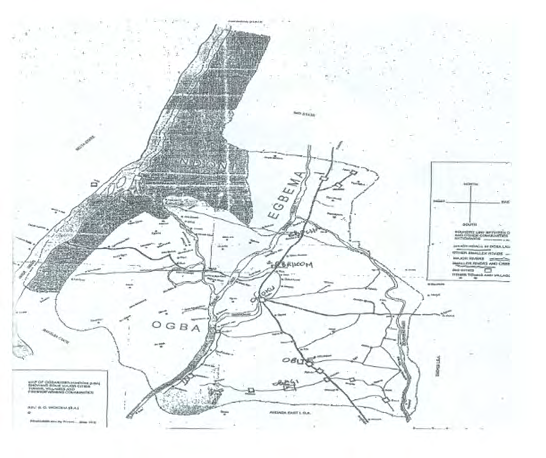
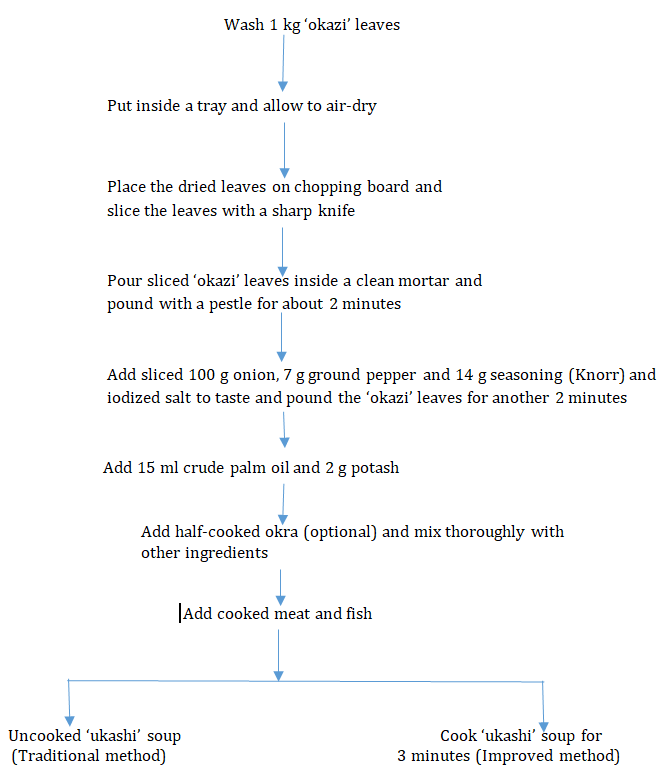
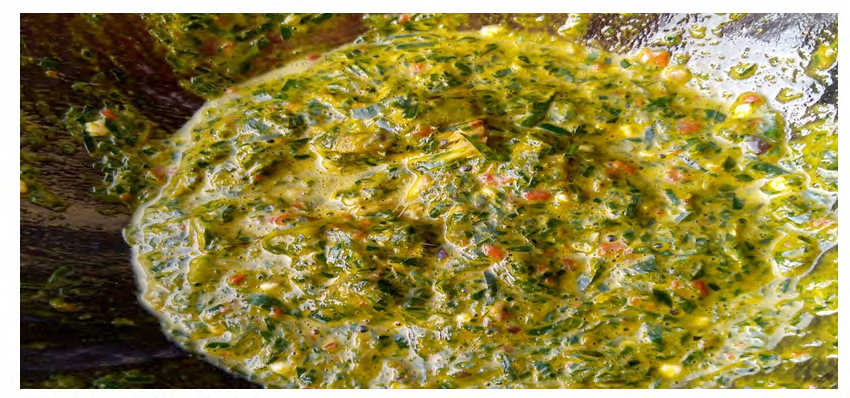
Okazi leaves (Gnetum africanum), potash, okra, onions, salt, seasoning, local brand of palm oil, and fresh fish were obtained from Akabuka market using a big sterile polythene bag. Okazi leaves used in the study was authenticated and identified in the Department of Plant Science and Biotechnology, University of Port Harcourt. All the materials were transported to the Food and Industrial Microbiology Laboratory, University of Port Harcourt in less than 12 hours from the time of purchase. Ogba ‘ukashi’ soup was prepared in the laboratory using the soup ingredients purchased from the market. Map showing the ancestral home of Ogba people in Ogba/Egbema/Ndoni Local Government Area (ONELGA) of Rivers State is depicted in Figure 1. The flow chart for the preparation of cooked and uncooked Ogba instant ‘ukashi’ native soup is shown in Figure 2. The freshly prepared ‘ukashi’ soup is depicted in Figure 3.
Serial Dilution
Twenty-five (25) grams of ‘ukashi’ soup was added to 225 ml of sterile normal saline (1:9) in a sterile conical flask to obtain the inoculum. From the inoculum, 1 ml was pipetted into 9 ml sterile normal saline. Ten-fold dilution was carried out by stepwise transfer of 1 ml dilution from the first test tube into subsequent tubes using sterile pipettes for each transfer. Exactly 1 ml dilution 10-4, 10-5 and 10-6 was pipetted into separate sterile Petri dishes in duplicate.
Microbiological Analysis
Under aseptic conditions, 1 ml dilutions 104, 105 and 106 was transferred into sterile Petri dishes in duplicate and 15 ml of freshly prepared nutrient agar were added to the Petri dishes containing the diluted samples. The dishes were rocked gently to achieve uniform distribution of the samples and the medium. The inoculated plates were incubated at 37°C for 24 hours. Isolation of fungi involved inoculating 1 ml dilutions 104, 105 and 106 into a sterile Petri dishes in duplicate followed by addition of 15 ml freshly prepared potato dextrose agar. The inoculated plates were incubated at room temperature (25± 2oC) for 72 hours. The colony forming units observed on the Petri dishes were counted and recorded.
Obtaining Pure Isolates
Discrete bacterial colonies on the Petri dishes were picked using a sterile wire loop and plated on freshly prepared nutrient agar and incubated at 37°C for 24 hours. Similarly, discrete fungal isolates were also plated on potato dextrose agar and incubated at room temperature (25± 2oC) for 5 days. The pure isolates obtained were stored in slants for further identification.
Identification of Isolates
The colonial morphology of the bacterial isolates in the Petri dishes were observed and noted. Gram staining of the bacterial isolates were carried out, followed by biochemical reactions which include catalase, citrate, oxidase, motility, indole, methyl red Voges Proskauer, triple sugar iron agar (TSIA) and sugar fermentation tests. The colonial morphology of the fungal isolates were noted followed by lactophenol cotton blue staining. The stained fungal isolates were viewed using 10X and 40X objective lens of the microscope.
Proximate Analysis
The method described by Lawal, et al. [7] was adopted. Both cooked and uncooked ‘ukashi’soups in liquid state was dried using hot air flow at 65oC for 4 hours. Thereafter, the temperature of the hot air flow was reduced to 50oC; maintained at that temperature (50oC) until the samples were completely dried. The proximate composition of the dried samples were determined using standard methods described by AOAC [22]. The proximate parameters evaluated were crude protein, crude fiber, moisture, ash content and crude fat. The carbohydrate content was calculated by difference [23].
Sensory Evaluation
The method described by Mepba, et al. [9] was adopted in carrying out sensory evaluation of the soups. A nine (9) point Hedonic scale which ranged from 9 to 1 representing like extremely and dislike extremely, respectively was used in evaluating the colour, mouth feel, taste, aroma, appearance, and overall acceptability of the soups. Ten (10) panelists between the ages of 18 to 25 years familiar with soups were served freshly prepared uncooked and cooked ukashi instant soup coded with three alphabets UUS and CUS, respectively. Potable water in glass cups was provided for the panelist to rinse their mouth after evaluating each sample. Sensory evaluation of the samples were carried out under bright light at room temperature (25 ± 2oC).
Statistical Analysis
The data obtained were subjected to statistical analysis to obtain means and standard deviation using SPSS (Statistical Package for Social Science) version 20.
Results
Presented in Figure 4 is the total heterotrophic bacterial count (THBC) and enteric bacterial population in cooked and uncooked ‘ukashi’ soups. The THBC recorded for uncooked ukashi soup (UUS) is 7.15 Log10CFU/ml. No viable bacterial growth was observed in cooked ukashi soup (CUS) cultured in nutrient agar, deoxycholate cholate agar, eosin methylene blue agar and MacConkey agar. Total fungal count (TFC) recorded for cooked and uncooked ‘ukashi’ soup is presented in Table 1. No viable fungal count was recorded in CUS whereas 7.15 Log10CFU/ml was recorded for UUS. Presented in Table 2 is the biochemical characteristics of bacterial isolates from cooked and uncooked ‘ukashi’ soup. The bacterial species isolated from uncooked ‘ukashi’ soup were Vibrio spp., Enterobacter spp., Salmonella spp., Citrobacter spp., and Klebsiella sp., and Pseudomonas aeruginosa while Salmonella spp. and Enterobacter spp were present in the cooked ‘ukashi’ soup. The fungi isolated from uncooked ‘ukashi’ soup is yeasts.
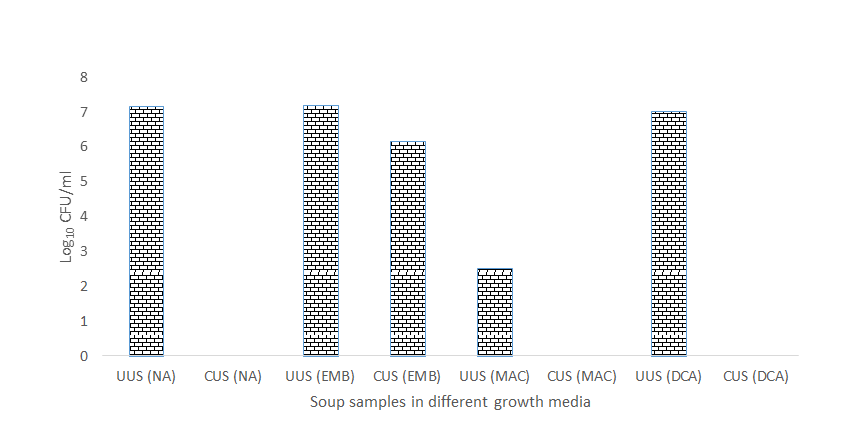
Keys: UUS-Uncooked ukashi soup; CUS-Cooked ukashi soup; NA-Nutrient agar; EMB-Eosin methylene blue agar; MAC- MacConkey agar; DCA-Deoxycholate citrate agar Figure 4: Total heterotrophic bacterial count and enteric bacterial population in cooked and uncooked ‘ukashi’ soups.
| Sample | Media | Dilution | CFU/ml | Log CFU/ml 10 |
|---|---|---|---|---|
| UUS | PDA | 10-5 | 1.46 x 10⁷ | 7.15 |
| CUS | PDA | 10-4 | NG | NG |
Table 1: Total fungal count of cooked and uncooked ‘ukashi’ soup.
Keys: UUS-Uncooked ukashi soup; CUS-Cooked ukashi soup; PDA- Potato dextrose agar; NG-No growth Table 1: Total fungal count of cooked and uncooked ‘ukashi’ soup.
| Isolates | Oxidase | Catalase | Indole | Motility | Lactose | Sucrose | Glucose | MR | VP | Shape | Citrate | H S 2 | Gas | But | Slant | Gram reaction | Suspected organism |
|---|---|---|---|---|---|---|---|---|---|---|---|---|---|---|---|---|---|
| UUS1 | - | + | + | + | AG | AG | AG | + | - | Rods | + | + | + | B | A | - | Citrobacter spp. |
| UUS2 | - | + | - | + | AG | A | A | + | - | Rods | + | + | + | A | A | - | Enterobacter spp. |
| UUS3 | + | + | + | + | AG | AG | A | + | - | Rods | + | + | + | A | B | - | Vibrio spp. |
| UUS4 | - | + | + | - | A | A | A | + | - | Rods | - | + | + | A | B | - | Citrobacter spp. |
| UUS5 | - | + | - | - | B | A | AG | + | - | Rods | + | + | - | A | B | - | Klebsiella spp. |
| UUS6 | + | + | - | + | AG | AG | A | + | - | Rods | + | - | + | A | B | - | Pseudomonas aeruginosa |
| UUS7 | + | + | - | + | AG | AG | AG | + | - | Rods | - | + | + | A | A | - | Citrobacter spp. |
| UUS8 | + | + | + | + | AG | AG | AG | + | - | Rods | + | + | + | A | B | + | Vibrio spp. |
| UUS9 | - | + | - | + | A | A | A | + | - | Rods | - | - | + | A | B | - | Vibrio spp. |
| UUS10 | - | + | - | - | B | AG | AG | + | - | Rods | + | + | + | A | B | - | Salmonella spp. |
| CUS1 | - | + | - | + | B | AG | AG | + | - | Rods | + | + | - | A | A | - | Salmonella spp. |
| CUS2 | - | + | - | + | AG | AG | A | + | - | Rods | + | + | + | A | A | - | Enterobacter spp. |
Table 2: Biochemical characteristics, and gram reaction of suspected bacterial isolates from cooked and uncooked ‘ukashi’ soup.
Keys: UUS-Uncooked ukashi soup; CUS-Cooked ukashi soup; A-Acid; AG-Acid and gas; A-Acid; B- Base; + Positive; -Negative; MR- Methyl Red; VP-Voges Proskauer Table 2: Biochemical characteristics, and gram reaction of suspected bacterial isolates from cooked and uncooked ‘ukashi’ soup.
The cultural and morphological characteristics of fungal isolates from uncooked and cooked ‘ukashi’ soup is depicted in Table 3. Presented in Figure 5 is the proximate composition of cooked and uncooked ‘ukashi’ soup. Table 4 depicts the average sensory score of cooked and uncooked ‘ukashi’ soup.
| Sample | Cultural characteristics | Microscopy | Suspected organism |
|---|---|---|---|
| UUS | White shiny clustered colony in chains of two and three | White-like colony in budding form | Yeast |
| CUS | No growth | No growth | No organism |
Table 3: Cultural and morphological characteristics of suspected fungal isolate from uncooked and cooked‘ukashi’ soup.
Keys: UUS-Uncooked ukashi soup; CUS-Cooked ukashi soup. Table 3: Cultural and morphological characteristics of suspected fungal isolate from uncooked and cooked‘ukashi’ soup.
| Sample | Colour | Mouthfeel | Aroma | Appearance | Taste | Overall acceptability |
|---|---|---|---|---|---|---|
| UUS | 5.3±0.9 | 7.5±1.2 | 4.2±0.8 | 5.6±1.0 | 8.0±0.8 | 6.7±0.7 |
| CUS | 7.4±0.7 | 6.6±0.9 | 8.1± 0.8 | 7.5±1.3 | 7.0±0.9 | 8.0±0.6 |
Table 4: Cultural and morphological characteristics of suspected fungal isolate from uncooked and cooked‘ukashi’ soup.
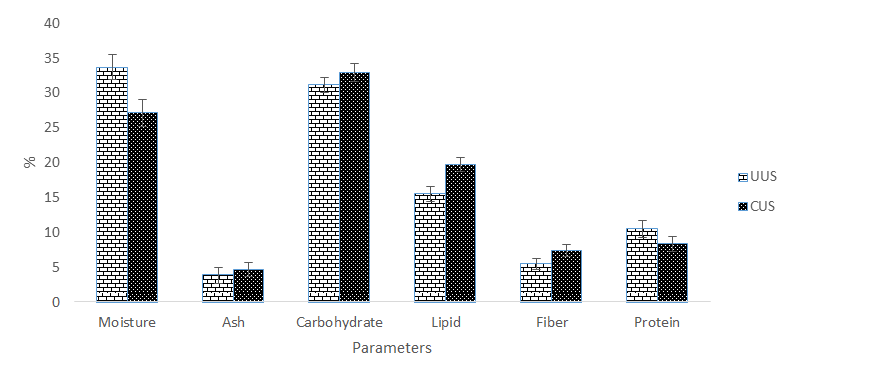
Keys: UUS-Uncooked ‘ukashi’ soup; CUS-Cooked ‘ukashi’ soup Figure 5: Proximate composition of cooked and uncooked ‘ukashi’ soup.
Discussion
The results obtained in this study indicate that ukashi instant soups both cooked and uncooked were contaminated with high bacterial population. The heterotrophic bacterial count of uncooked ukashi soup is 7.15 log10CFU/ml whereas no viable bacterial count was recorded for cooked ukashi soup (CUS). This could be as a result of heat applied during cooking of ukashi soup which killed a lot of viable microorgansims in the soup. The use of enrichment media (EMB) for microbiological analysis of CUS indicate that the sample was contaminated with fecal bacteria (6.15 log10CFU/ml). It is worthy to note that bacterial population was recorded for uncooked ‘ukashi’ soup cultured in various enrichment media used in this study. In a related study, Akter, et al. [24] reported that total viable bacteria in homemade cooked ready-to-eat chicken soup samples is 1.3 x 10³ CFU/g whereas no fungal count was recorded. This result is in agreement with the findings from this study which reported no viable fungal count in cooked ‘ukashi’ soup. However, total fungal count (7.15 log10CFU/ml) was recorded for uncooked ‘ukashi’ soup.
According to Food Standards Australia New Zealand (FSANZ), the microbial acceptable limit for cooked ready-to- eat food is as follows: Standard plate count is < 105 CFU/g; Enterobacteriaceae 102 to < 104 CFU/g; Escherichia coli and coliforms 3 to < 102 CFU/g; other pathogens 102 to 103 CFU/g [24]. The result obtained from this study shows that cooked and uncooked ‘ukashi’ soup did not meet all the requirement stipulated by FSANZ. Therefore, consumption of the soup could pose a threat to public health if it is not heated properly and consumed immediately after preparation. The result obtained from this study revelaed that ten (10) bacterial isolates were encountered in uncooked ‘ukashi’ soup. The percentage occurrence of the isolates belonging to six (6) bacterial species are Citrobacter spp. (30 %),Vibrio spp. (30 %), Enterobacter spp. (10 %), Klebsiella sp. (10 %), Salmonella spp (10 %) and Pseudomonas aeruginosa (10 %). Only two (2) bacterial isolates namely Enterobacter sp. (50 %) and Salmonella sp. (50 %) were found in cooked ‘ukashi’ soup. The absence of four (4) bacterial species in cooked ‘ukashi’ soup that were earlier detected in uncooked ‘ukashi’ soup could be attributed to the effect of heat/cooking that killed the microorganisms. It is worthy to note that two (2) predominant bacterial species – Citrobacter sp. and Vibrio sp. that were encountered in uncooked ‘ukashi’ soup were not detected in cooked ‘ukashi’ soup.
The presence of Citrobacter sp. in uncooked ‘ukashi’ soup could be traced to ‘okazi’ leaves (Gnetum africanum) used in preparing the soup. The bacterium was not detected in cooked ‘ukashi’ soup. This could be attributed to the effect of heating the soup in the process of cooking which killed the bacterium. In a related study, Adegun, et al. [25] reported the presence of Citrobacter spp. in African spinach (tete), worowo, egg plant and jute leaf (ewedu). Okwu, et al. [8] reported the presence of Leuconostoc spp., Streptococcus spp., Bacillus cereus, Staphylococcus aureus and Aspergillus brasilensis in sliced and unsliced leaves of Gnetum africanum. Apart from vegetables, Citrobacter sp. is usually isolated from water and soil. The diseases associated with the bacterium include neonatal septicemia, neonatal meningitis, urinary tract infections, and brain abscess [26]. In some parts of Iran, Aminharati, et al. [27] reported outbreak of foodborne diseases associated with Citrobacter freundii. Therefore, the presence of Citrobacter species in ‘ukashi’ soup might pose a threat to health status of consumers. One of the possible sources of Vibrio spp in uncooked ‘ukashi’ soup is the fish used in preparing the soup. According to Sampaio, et al. [28] Vibrio spp is capable of surviving in marine and fresh water which usually contaminate aquatic animals. Consumption of food contaminated with some species of Vibrio could cause diarrhea, gastroenteritis, and vibrosis.
Findings from this study shows that uncooked ‘ukashi’ soup was contaminated with Pseudomonas aeruginosa. In a related study, Ire and Eruteya [29] isolated Pseudomonas aeruginosa strain PG1 from ‘atama’ soup. This bacterium is a common opportunistic bacteria ubiquitous in nature. It is known to cause food spoilage.Therefore, the presence of P. aeruginosoa in uncooked ‘ukashi’ soup might lead to quick spoilage of the soup.
Enterobacter sp was isolated from both cooked and uncooked ‘ukashi’ soup. Klebsiella sp. was only reported in uncooked ‘ukashi’ soup. In a related study, Kone, et al. [30] reported the presence of Enterobacter cloacae, E. aerogenes, E. amnigenus, E. asburiae, Klebsiella pneumoniae in fish soup and other foods sold in restaurants located in university campuses.Klebsiella sp. and Enterobacter sp. are implicated in urinary tract infections. Salmonella species is one of the bacterial genera isolated from cooked and uncooked ‘ukashi’ soup. This result is in agreement with the findings of Abakari, et al. [31] from a related study which reported the presence of Salmonella species in ‘tuo-zaafi’ which refers to a local meal prepared using maize flour and served with soup (‘ayoyo’). Preparation of the soup involves mixing dry okra, raw vegetables and meat followed by cooking. Samuel [32] also reported the presence of Salmonella sp. in street vended owho, banga and egusi soup. Consumption of food contaminated with Salmonella sp. could cause a disease known as salmonellosis. The bacterium inhabit the gastrointestinal tract (GIT) of both domestic and wild animals. Contaminated vegetables among few other foods and the environment are possible sources of Salmonella sp. Food handlers who are carriers of the bacterium; poor hand washing commonly observed among food handlers increases the risk of contaminating food with Salmonella sp. The bacterium has been linked with several foodborne outbreak illnesses in different parts of the world [33].
Proximate analysis of uncooked ‘ukashi’ soup indicate that protein (10.45± 1.26 %) and moisture content (33.65± 1.80 %) is higher than the corresponding values 8.3 ± 1.10 % and 27.1±1.94 % for cooked ‘ukashi’ soup, respectively. In a related study, Kolawole and Obueh, et al. [34] reported that protein and moisture content of afang + beef (Gnetum africanum) purchased from food sellers is 4.59 % and 56.81 %, respectively. The significant differences in protein and ash content of the soup samples could be as a result of different types of ingredients and quantity of each ingredient used in preparing the soup, different cooking procedures and cooking time. Proximate analysis of cooked ‘ukashi’ soup shows that the ash content (4.6±1.02 %), lipid (19.71±0.96 %), and fiber (7.4±0.90 %) and carbohydrate content (32.89±1.27 %) is higher than the values recorded for uncooked ‘ukashi’ soup which is 3.85±1.14 %, 15.49±1.08 % and 5.45±0.82 % and 31.11±1.03 %, respectively. According to Kolawole and Obueh (2012), the ash, fat, crude fibre and carbohydrate content of afang + beef (Gnetum africanum) soup is 2.14 %, 9.98 %, 6.71 % and 19.77 %, respectively. Overall acceptability of cooked ‘ukashi’ soup was assigned an average sensory score interpreted as liked very much by the panelist. Although the process of cooking ‘ukashi’ soup probably enhanced its overall acceptability and drastically reduced the level of microbial contamination, it might have resulted in lower protein content of the soup when compared with the value recorded for uncooked ‘ukashi’ soup. The interpretation of average sensory score assigned to uncooked ‘ukashi’ soup based on overall acceptability is liked slightly. The mouthfeel of cooked ‘ukashi’ soup was assigned an average sensory score interpreted as liked slightly whereas other sensory parameters of the soup sample which include colour, appearance, and taste were assigned average sensory scores interpreted as liked moderately. As for the uncooked ‘ukashi’ soup, the interpretation of average sensory score for taste is liked very much. A slightly lower sensory score interpreted as like moderately was assigned to mouthfeel of the uncooked soup sample. The panelist neither liked nor disliked the colour and appearance of uncooked ‘ukashi’ soup based on the interpretation of the average sensory scores assigned to the two parameters. Going by the average sensory score assigned to aroma of uncooked soup sample, the panelist disliked it [35].
Conclusion
The population of different bacterial species isolated from uncooked ‘ukashi’ soup is higher that the result recorded for cooked ‘ukashi’ soup. A total of six (6) bacterial species which include Vibrio spp., Klebsiella sp., Enterobacter spp., Salmonella spp., Citrobacter spp., and Pseudomonas aeruginosa were isolated from uncooked ‘ukashi’ soup while two (2) bacterial species namely Salmonella sp. and Enterobacter sp were found in cooked ‘ukashi’ soup_._ Yeast was isolated from uncooked ‘ukashi’ soup but no viable fungal species were detected in cooked ‘ukashi’ soup. The carbohydrate, ash, lipid and fibre content of cooked ukashi soup is higher than the values recorded for uncooked ‘ukashi’ soup. The uncooked ‘ukashi’ soup had higher moisture and protein content compared with the values recorded for cooked ‘ukashi’ soup. Based on the overall sensory evaluation report, cooked ‘ukashi’ soup is preferable than uncooked ‘ukashi’ soup.
Recommendation
‘Okazi’ leaves and other soup ingredients which include onions, pepper, meat and fish obtained from the market should be washed properly before using them to prepare Ogba ‘ukashi’ soup. The use of clean kitchen utensils and potable water in cooking the soup is recommended. Longer
cooking time (5-10 minutes) compared with 3 minutes applied during preparation of cooked ‘ukashi’ soup could eliminate pathogenic microorgansims in the soup. Handlers of soup ingredients in the market should observe good personal and environmental hygienic practices. Good kitchen hygiene practices should be implemted during preparation of cooked ‘ukashi’ soup and other soup varieties to prevent cross contamination.
References
-
Kayode OF, Ozumba AU, Ojeniyi S, Adetuyi DO, Erukainure OL (2010) Micro nutrient content of selected indigenous soups in Nigeria. Pakistan Journal of Nutrition 9(10): 962-965.
-
Datsugwai MSS, Aisha A, Vincent BT (2019) Microbial quality and sensory characteristics of instant Nigerian egusi soups. Annals Food Science and Technology 20(3): 494-501.
-
Bassey SO, Aburime LC, Ijokgwung GE, Onabe V, Agiang MA (2020) Standardization and nutrient composition of melon and groundnut soups as consumed in Cross River state, Nigeria. Asian Food Science Journal 17(3): 34-43.
-
Ajayi FO, Aboh CL, Singer O, Adesope OM (2015) Indigenous poultry production among rural hoseholds in Ogba/Egbema/Ndoni local government are, Rivers state. Journal of Agriculture and Social Research 15(1): 19-27.
-
Hart AD, Azubike CU, Barimalaa IS, Achinewhu SC (2005) Vegetable consumption pattern of households in selected areas of the old Rivers state in Nigeria. African Journal of Food Agriculture Nutrition and Development 5(1): 1-19.
-
Ekpo FE, Asuquo ME, Uwanta EJ (2012) Comparative study of nutrient and anti-nutrient content of _Gnetum_ _africanum_ (afang) and _Heinsia crinita_ (Atama). Global Journal of Pure and Applied Sciences 18(1 &2): 37-41.
-
Lawal OM, Adebayo FI, Enujiugha VN (2018) Nutritional assessment of Nigerian ethnic vegetable soups (Marugbo, Tete and Ila_)._ Journal of Nutrition, Food and Lipid Science 1: 32-39.
-
Okwu GI, Abolo CO, Obimba CG (2021) Microbial load of sliced and unsliced commercialized indigenous vegetable; _Gnetum africanum_ in Abia state, Nigeria. Global Journal of Medical Research: L Nutrition and Food Science 21(1)1:1-6.
-
Mepba HD, Eboh L, Banigo DEB (2007) Effects of processing treatments on the nutritive position and consumer acceptance of some Nigerian edible leafy vegetables. African Journal of Food Agriculture Nutrition and Development 7(1): 1-18.
-
Olayemi RA, Rahman A (2013) Thermal properties of some neglected Nigerian soups. Agricultural Sciences 4(5B): 96-99.
-
Dada TE, Otitoloju K, Adjonu R, Crockett J, Nwose EU (2021) Nutritional and medicinal values of common green leafy vegetables consumed in Delta State, Nigeria: a review. International Journal of Community Medicine and Public Health 8(5): 2564-2571.
-
Usunomena U, Samuel EI (2016) Studies on in vitro antioxidant activities, mineral composition and phytochemical screening of _Gnetum africanum_ leaves. Saudi Journal of Biomedical Research 1(2): 48-51.
-
Okerulu IO, Onyema CT (2015) Comparative assessment of phytochemicals, proximate and elemental composition of _Gnetum africanum_ (okazi) leaves. American Journal of Analytical Chemistry 6(7): 604-609.
-
Adu AA, Aderinola OJ, Mekuleyi GO, Nnadi CH (2020) Phytochemical and heavy metal contents in _Gnetum_ _africanum_ (Welw. 1984) collected from three local markets in Lagos, Nigeria. International Journal of Herbal Medicine 8(4): 39-44.
-
Ali F, Assanta MA, Robert C (2011) _Gnetum africanum_: a wild food plant from the African forest with many nutritional and medicinal properties. J Med Food 14(11): 1289-1297.
-
Iweala EEJ, Uhegbu FO, Obidoa O (2009) Biochemical and histological changes associated with long term consumption of _Gnetum africanum_ Welw. leaves in rats. Asian Journal of Biochemistry 4(4): 125-132.
-
Iloh AC, Isu NR, Kuta DD (2009) In vitro callus initiation of a ‘threatened’ Nigerian vegetable, _Gnetum africanum_ (WILW). International Journal of Biodiversity and Conservation 1(4): 81-86.
-
Ogbonnaya EC, Chinedum EK (2013) Health promoting compounds and in vitro antioxidant activity of raw and decoctions of _Gnetum africanum_ Welw. Asian Pacific Journal of Tropical Disease 3(6): 472-479.
-
Okeke OPN, Obioha BC, Onyeneke EN (2014) Nutrient and sensory evaluation of traditional soups consumed in Igbere community in Bende local government area, Abia State, Nigeria. International Journal of Nutrition and Food Sciences 3(5): 370-379.
-
Ejiofor JE, Beleya EA, Allen JE (2019) Microbiological analyses of ready-to-eat foods in Rivers State University and its environment. Delta Agriculturist 11 (2/3): 41-49.
-
Ononugbo CP, Avwiri GO, Umoren YEC (2011) Impact of gas explotation on the environmental radioactivity of Ogba/Egbema/Ndoni area, Nigeria. Energy and Environment 22(8): 1017-1027.
-
Horwitz W, Latimer GW (2005) Official Methods of AOAC International, 18th (Edn.), Gaithersburg, USA.
-
Pearson D (1976) The Chemical Analysis of Foods. 7th(Edn.), Churchill Livingstone, London.
-
Akter M, Sultana S, Munshi SK (2019) Microbiological quality assessment of ready-to-eat fried chicken and chicken soup samples in Dhaka metropolis, Bangladesh_._ Sumerianz Journal of Biotechnology 2(7): 48-54.
-
Adegun BR, Oluduro AO, Aregbesola OA (2019) Isolation and molecular characterization of _Citrobacter_ species in fruits and vegetables sold for consumption in ILE-IFE, Nigeria. Scientific African 6: e00173.
-
Poonam AR, Bilolikar AK, Reddy SG (2019) Prevalence and antimicrobial susceptibility pattern of _Citrobacter_ species n various clinical samples in a tertiary hospital. Journal of Medical and Scientific Research 7(4): 103-108.
-
Aminharati F, Ehrampoush MH, Dallal MMS, Yaseri M, Tafti AAD, et al. (2019) _Citrobacter freundii_ foodborne disease outbreaks related to environmental conditions in Yazd province, Iran. Iran J Public Health 48(6): 1099- 1105.
-
Sampaio A, Silva V, Poeta P, Aonofriesei F (2021) _Vibrio_ spp.: life strategies, ecology, and risks in a changing environment. Diversity 14(2): 97.
-
Ire FS, Eruteya OC (2017) Antimicrobial susceptibility of spoilage bacteria of ‘atama’ (_Heinsia crinata_) soup. Int J Curr Microbiol App Sci 6(4): 2664-2672.
-
Kone A, Adingra AA, Kambire O, Koffi Nevry AR (2022) Prevalence of _Klebsiella pneumoniae_ isolated from public universities’ restaurants of Abidjan, Côte d’ Ivoire. Journal of Applied Biology and Biotechnology 10(1): 206-212.
-
Abakari G, Adusei A, Cobbina SJ (2019) Microbial quality of soups served with ‘tuo-zaafi’ vended in the central business district of the Tamale metropolis. Journal of Food and Industrial Microbiology 5(1): 1-6.
-
Samuel OO (2012) Bacteriological quality and safety of street vended foods in Delta State, Nigeria. Journal of Biology, Agriculture and Healthcare 2(5): 114-119.
-
Ehuwa O, Jaiswal AK, Jaiswal S (2021) _Salmonella_, food safety and food handling practices. Foods 10(5): 907.
-
Kolawole SE, Obueh HO (2012) Proximate and micronutrient compositions of some selected foods and diets in south-south Nigeria. Scholarly Journals of Biotechnology 1(3): 45-48.
-
Ajinwo ORJ, Godwin ND (2021) Phytochemical and GC-MS analysis of _Gnetum africanum_: a potential chemopreventive Nigerian vegetable. Global Scientific Journals 9(4): 2995-3002.
- Antifungal Activity of New Acetophenone Derivatives
- Interconnected Microbiomes Human Health Within an Environmental Framework
- Silkworm-Based Vaccine Production for H5N1: A One Health Approach to Pandemic Preparedness
- Microbial Diversity and Lipolytic Activity of Bacteria and Fungi from Oil-Contaminated Sites in Makurdi Metroplois
- Antibiotic Resistance Profile of Bacteria Isolated at the Central Laboratory of the National Hospital Center of Nouakchott
- Epidemiology and Sensitivity to Antibiotics of Germs Isolated from Blood Cultures in the Laboratory of the National Hospital Center of Nouakchott-Mauritania