
Role of Bioinformatics in Identifying Potential Biomarkers of Cervical Cancer
Cervical cancer is the one of the leading causes of death among women worldwide. The cancer evolves over a longer period of time and can be screened by different laboratory tests. In developed countries although the rate of incidence and mortality has been reduced, in developing countries the incidence rate still remains high. A large number of factors have been reported that promote the risk of cervical cancer. Some host factors play crucial role in the induction of the malignant transformation. These include micro RNAs that have known to act as oncogenes or tumor suppressor genes in tumors of cervical cancer. Certain high throughput technologies have generated data on miRNAs that are significant in the pathogenesis of cervical cancer. The data has been investigated extensively with the help of tools of bioinformatics for identification of potential biomarkers of cervical cancer. In the current article, we aim to discuss the properties of the tools of bioinformatics that have paved the research on cervical cancer. It is concluded that there is a need of development of large number and various types of tools of bioinformatics facilitating identification of potential biomarkers of cervical cancer for early diagnosis and better treatment regimen.
Introduction
Cervical cancer is the fourth most common cancer affecting women worldwide after breast, colorectal and lung cancers [1]. In India, it is the most common cancer [2] that has precancerous stages and evolves over 10-15 years or more [3]. In a previous study, it has been reported that
43% of diagnosed patients fall below 45 years of age and 20- 28% fall below 40 years of age [4]. The screening of cervical cancer is done by cytology, visual inspection with acetic acid (VIA) and HPV DNA testing [5, 6, 7]. It is reported that the sensitivity of pap cytology ranges from 30% to 87% and the specificity ranges from 86% to 100% [8]. Amongst all the screening tests HPV DNA testing is the most reproducible screening test [9]. However, some of the disadvantages of the test such as cost, time-consumption and labor limit its use to more of research settings [10]. In developed countries, the rate of incidence and mortality has been reduced which is attributed to the rapid screening of the infected population. Whereas, in developing countries the incidence rate still remains high accounting 85% of all the cases. It has been seen that earlier the diagnosis, better is the patient prognosis and overall patient survival [11].
Several factors have been reported that promote the risk of cervical cancer. These include early age onset of sexual activity, multiple sexual partners, tobacco smoking, immunosuppressive medications and use of combined hormonal oral contraceptives for more than 5 years and infection with STDs such as HIV, herpes, Chlamydia, gonorrhea and syphilis [12, 13, 14, 15]. WHO recommends two prophylactic vaccines, a quadrivalent vaccine, Gardasil (Merck, USA) and a bivalent vaccine, Cervarix (Glaxo Smith Klein, Belgium) for prevention of HPV related diseases. However, development of a new vaccine is underway and it is a nonavalent vaccine (9-valent) which incorporates a total of nine HPV types [7].
Human Papilloma Virus (HPV) is the leading cause of cervical cancer [16]. Human Papilloma viruses belong to the family Papillomaviridae. The virions are non-enveloped with approximately 55 nm diameter in size and contain a double- stranded DNA genome of approximately 7.9 kb in length [17]. HPV transmission occurs through oral, vaginal, or anal sex with infected persons [18]. However, it can also be transmitted through mouth-to-mouth contact or by vertical transmission from infected mother to child during pregnancy [19]. The anal HPV infections are most prevalent in MSM (Men who have Sex with Men) and HIV infected individuals. In a study, transmission between hands and genitals, as well as apparent self-inoculation events (primarily in men) have been also reported Hernandez BY, et al. [20]. The prevalence rate of HPV is generally constant across age groups in India unlike most populations in developed countries [21, 22].
Although in majority of the cases of cervical cancer, infection with oncogenic subtypes of HPV-16 or -18 is reported, it is well defined that HPV infection alone is insufficient in malignant transformation. Other factors including host genes and subsequent genetic events independently or in concert with HPV infection are required in the induction of cervical cancer [3]. In comparison to risk in uninfected women, the risk of developing squamous cell carcinoma of the cervix is about 400 times higher following infection with HPV-16 and about 250 times higher in individuals infected with HPV-18 [7]. In men, the most common oncogenic genotypes include HPV-6, HPV-16 and HPV-52.
It is known that HPVs are epitheliotropic in nature and infect the cervical squamous epithelium through small abrasions in the tissue. The viral infection is then closely linked to keratinocyte differentiation. Initially, in the proliferating basal epithelial cells following viral infection, the viral genome is maintained as a low copy episome [23]. With progressive keratinocyte differentiation, viral genome amplification and gene expression increase until late “L” gene expression and virion production occur in the terminally differentiated superficial cells. This form of infection leads to koilocytosis, nuclear enlargement, dyskeratosis, and multinucleation and in some cases also low grade SIL [16].
It has been observed that viral oncogene deregulation, particularly integration of HR-HPV into the host genome plays a major role in HPV-related carcinogenesis as it is detected in 90% of all cervical carcinomas [24]. The HPV DNA integration results in elevated expression of HPV E6 and E7 oncoproteins [24]. These oncoproteins subsequently allows the virus to replicate through inhibitory effects on the tumor suppressor proteins p53 and pRb, respectively [25, 26]. The epidemiological studies from different locations of India show that HPV-16 is most prevalent and HPV-68 is least prevalent [27]. However, HPV-16 and 45 were more prevalent in Northern India compared to Southern India, whereas HPV-35 appeared to be more prevalent in Southern India compared to Northern India. The overall prevalence of HPV in India was found to be similar to high-risk areas in Latin America, but lower than that observed in some parts of sub-Saharan Africa [28]. It has been also reported that HPVs associated with CaCx have been found in 6% - 88% of females with CaCx in India [29, 30, 31, 32, 33]. It is clear that studies pertaining to population prevalence of HPV and cervical intraepithelial neoplasias (CIN) act as important indicators to evaluate disease burden in a community, monitor performance of CaCx screening program and assess impact of HPV vaccination program [34].
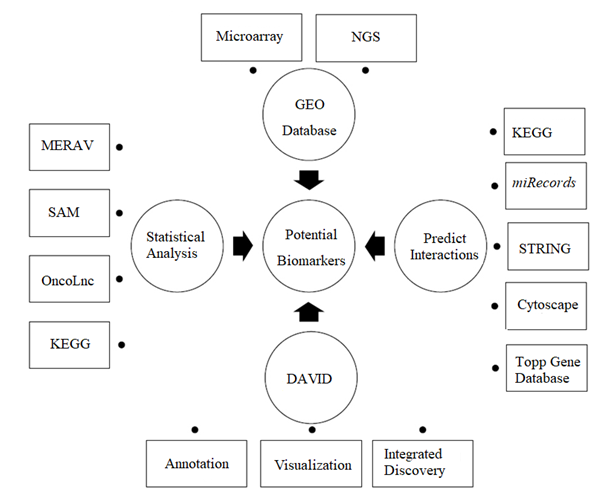
In a study, it has been reported that certain miRNAs act as oncogenes or tumor suppressor genes and exhibit altered expression profiles in cervical cancer tumors [35]. MicroRNAs (miRNAs / miRs) are small non-coding single stranded RNAs that regulate gene expression and play important role in regulating cellular proliferation, differentiation and apoptosis [36, 37]. A large amount of data has been generated on miRNAs utilizing high- throughput technologies. This publically available data has been investigated extensively with the help of tools of bioinformatics including Gene Expression Omnibus, GEO2R, DAVID (Database for Annotation, Visualization and Integrated Discovery), STRING (Search Tool for the Retrieval of Interacting Genes), miRecords, MERAV, Gene Ontology (GO), KEGG (Kyoto Encyclopedia of Genes and Genomes), SAM (Significance Analysis of Microarrays), Cytoscape, Topp Gene database, OncoLnc etc. for identification of potential biomarkers of cervical cancer [38, 39, 40, 41].
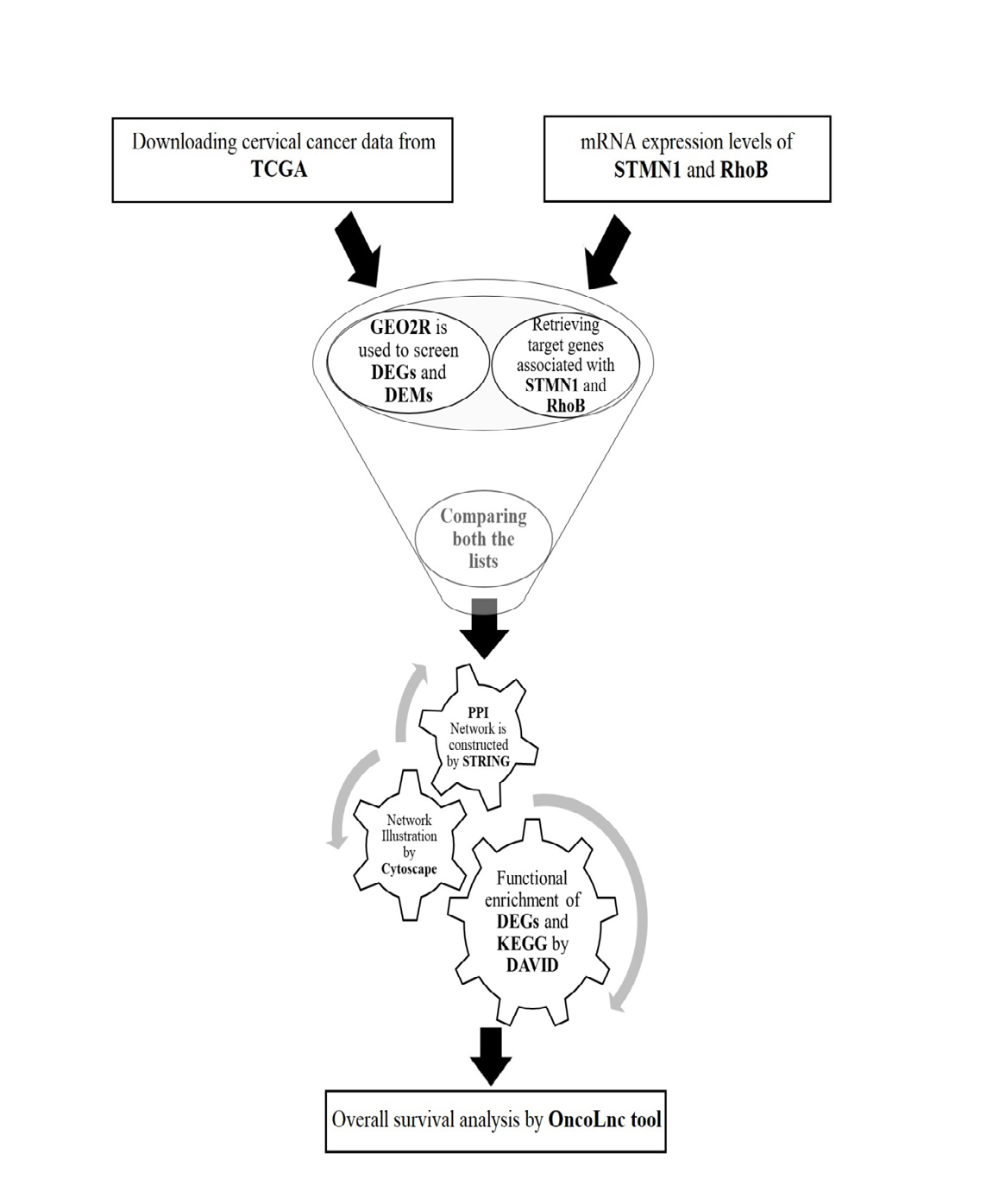
In a study, potential biomarkers in cervical cancer were identified with combined public mRNA and miRNA expression microarray data analysis [11]. The study utilized database; Gene expression Omnibus. The tool GEO2R was used to screen genes as DEGs (Differentially Expressed Genes) and DEMs (Differentially Expressed microRNAs) between cervical cancer and normal tissue samples. The construction of Protein-protein interaction (PPI) network was carried- out by STRING database, functional pathway enrichment analysis of the DEGs and Kyoto Encyclopedia of Genes and Genomes, and Gene Ontology studies were completed by DAVID. The miRecords tool was used to identify miRNAs and their target genes. Using OncoLnc tool, an overall survival analysis was conducted for patients having cervical cancer. The association of cervical cancer with the DEGs regulated by DEMs was studied by downloading all cervical cancer data from TCGA and analyzing the association between RhoB / STMN1 expression and survival time for patients with cervical cancer.
It was found that ‘Integrin-mediated’, ‘proteolysis’ and ‘phosphoinositide 3 kinase-protein kinase 3’ signaling pathways were most enriched in the DEGs. Three of the DEGs were validated as DEM target genes, including stathmin 1 (STMN1), Ras homolog family member B (RhoB) and cyclin D1 (CCNB1). Using OncoLnc survival analysis, it has been identified that STMN1 was associated with a significantly reduced overall survival, whereas RhoB was associated with a significantly longer overall survival time in patients having cervical cancer. Furthermore, the Cancer Genome Atlas (TCGA) revealed an association between the mRNA expression levels of STMN1 and RhoB, and the overall survival time for patients with cervical cancer. It was concluded that RhoB and STMN1 are key genes that may provide potential targets for cervical cancer diagnosis and treatment. In another study, similar analysis was carried- out [40]. Several other genes important in carcinogenesis of cervix have been identified using similar approach. For eg. DPP4, EDN3, FGF14, TAC1 and WNT16 have been suggested to be involved in the pathogenesis of cervical cancer [39].
Identifying host genes and the molecular mechanisms involved in pathogenesis of cervical cancer has become necessary to develop better treatment regimen. In the present study we aim to discuss the tools of bioinformatics that have been extensively utilized in identifying potential biomarkers of cervical cancer (Figure 1).
Bioinformatics Tools
Gene Expression Omnibus Database
It is a public depository that documents microarray, next- generation sequencing, and other forms of high-throughput functional genomics data. The database is an international archive. The three major aims of GEO are, providing a robust and versatile database to efficiently store high-throughput functional genomic data, offering simple formats and methods for data submission and finally providing user- friendly mechanisms enabling users to inquire, determine, analyse and download studies and gene expression profiles of interest (https://www.ncbi.nlm.nih.gov/geo/info/overview. html). The database has been used extensively for screening of Differentially Expressed Genes (DEGs) and micro RNAs (DEMs) involved in cervical cancer [38, 41].
GEO2R
It is one of the bioinformatics tools that permit users to analyse two or more than two groups of samples in a GEO Series in order to identify genes that are differentially expressed across experimental conditions. The tool performs comparisons among original submitter-supplied processed data tables utilizing the GEOquery and limma R packages from the Bioconductor project. In addition, it provides a simple interface that allows users to perform R statistical analysis without expertise in command line. The results obtained through GEO2R are presented as a table of genes arranged in the order of significance [42].
David
DAVID is a Database for Annotation, Visualization and Integrated Discovery and is available online at http:// www.david.niaid.nih.gov. The database addresses the need of functional annotation of differentially expressed genes which is achieved through dissemination of biologically important information across large datasets and subsequent graphical display of the functional information. The four web-based analysis modules of DAVID are (i) Annotation tool – appends descriptive data from several public databases to list of genes (ii) GoCharts – assigns genes of interest based on user selected classifications and term specificity level to Gene Ontology functional categories (iii) KeggCharts – further assigns genes to KEGG metabolic processes and also enables visual display of biochemical pathway maps (iv) Domain Charts – groups genes according to PFAM conserved protein domains. Following analysis through these four web- based modules, the database enables the identification of the function of the genes [43].
String
Search Tool for the Retrieval of Interacting Genes (STRING) is a biological database of confirmed and predicted protein-protein interactions. In STRING, the associations between proteins are defined as, direct (physical) and indirect (functional). STRING aims to collect and integrate available experimental data on protein-protein interactions together with importing established pathways and protein complexes from selected databases. Additionally, the predictions stem from five other sources such as analysis of systemic co-expression, identification of selective signals across genomes that are common, automated text mining of the scientific literature, exchange of interaction knowledge amongst organisms based on gene orthology using in silico methods and previous knowledge in databases. The STRING resource is available online, at http://string-db.org/ and currently covers 96, 43,763 proteins derived from 2,031 organisms [44].
miRecords is an integrated resource for animal microRNA-target interactions and is available at http:// miRecords.umn.edu/miRecords. The current release of miRecords includes 1135 records of authenticated miRNA - target interactions between 301 miRNAs and 902 target genes in seven animal species. Using Predicted Targets component of miRecords stores, it predicted miRNA targets produced by 11 established miRNA target prediction programs. It is a useful resource for experimental miRNA researchers and informatics scientists developing the next- generation miRNA target prediction programs [45].
Merav
The tool stands for Metabolic Gene Rapid Visualizer and is available at http://merav.wi.mit.edu. MERAV can query a database composed of ~ 4300 microarrays. The microarray data represents human gene expression in normal tissues, cancer cell lines and primary tumors. It is a powerful tool for whole genome analysis which offers several advantages including genes search in parallel, comparison of gene expression among different tissue types as well as between normal and cancer cells, download of raw data, generation of heat maps and ultimately utilizing its internal statistical tools [46].
Gene Ontology (GO)
The Gene Ontology Consortium is a joint project of a total of three model organism databases: FlyBase16, Mouse Genome Informatics17 (MGI) and Saccharomyces Genome Database (SGD). The aim of the project is to produce a structured, precisely defined, common and controlled vocabulary for describing the roles of genes and gene products in any organism. The three categories of Consortium include biological processes, molecular function and cellular component. Since the development of Consortium, it has been used to describe all entities within an area of reality and all relationships between those entities. Ontology is composed of well-defined terms exhibiting well-defined relationships and thus may be a vital tool enabling researchers to turn data into knowledge [47].
KEGG
Kyoto Encyclopedia of Genes and Genomes (KEGG) tool is a systematic analysis of gene functions that links genomic information with higher order functional information. It includes three databases, GENES, PATHWAY and LIGAND. All the databases are daily updated and freely available at http://www.genome.ad.jp/kegg/. GENES database stores genomic information, PATHWAY database stores higher order functional information and LIGAND database stores information about chemical compounds, enzyme molecules and enzymatic reactions. It provides Java graphics tools for data analysis [48].
SAM
It is Significance Analysis of Microarrays (SAM) that detects statistically significant variation in expression of genes on a microarray. The tool functions by specifically assigning each gene a score based on its change in gene expression in relation to the standard deviation of repeated measurements for that gene. The operating system of the software is Linux/Unix, Mac OS and Windows with programming language, R [49].
Cytoscape
It is an open source software project that prepares a unified conceptual framework by integrating biomolecular interaction networks with high-throughput expression data and other molecular states. It`s software core provides basic functionality to query and layout the network; to visually integrate the network with expression profiles, phenotypes and other molecular states and to finally link the network to databases of functional annotations. The tool runs on all major operating systems and is freely available for download from Java application [50].
Topp Gene Database
The tool is available at http://toppgene.cchmc.org and free to all users. It is a one-stop portal for
- Functional enrichment of gene list
- Prioritization of candidate gene using either functional annotations or network analysis and
- Identification and prioritization of novel disease candidate genes in the interactome. The computing includes a fuzzy-based similarity measure to determine the similarity between any two genes based on semantic annotations. The ToppGene Suite performs better than other three commonly used methods for candidate gene prioritization that are SUSPECTS [51], PROSPECTR [52] and ENDEAVOUR [53].
OncoLnc
The tool is known for maintaining survival data for 8,647 patients from 21 cancer studies performed by The Cancer Genome Atlas (TCGA), including RNA-seq expression for mRNAs and miRNAs from TCGA, and lncRNA expression from Mi Transcriptome beta. The record of survival data allow users to separate patients by gene expression and construct Kaplan-Meier plots for publication and also download the data for comprehensive analyses for further studies. Additionally, the tool keeps the record of precomputed survival analyses that allow users to probe survival correlations for up to 21 cancers in a single click [54].
Conclusion
It is concluded that there is a need of development of a large number and various types of tools of bioinformatics for identification of potential biomarkers of cervical cancer. It would facilitate diagnosis of cervical cancer at early stages and designing better treatment regimen. Finally, the survival rate of patients suffering from cervical cancer would increase and incidence rate would decrease.
Conflict of Interest
The authors declare that there is no potential conflict of interest.
References
-
WHO (2012) Global Cancer Observatory.
-
Parkin DM, Bray F, Ferlay J, Pisani P (2005) Global cancer statistics, 2002. CA Cancer J Clin 55(2): 74-108.
-
Rajkumar T, Sabitha K, Vijayalakshmi N, Shirley S, Bose MV, et al. (2011) Identification and validation of genes involved in cervical tumourigenesis. BMC Cancer 11(80): 1-14.
-
Chen W, Zheng R, Baade PD, Zhang S, Zeng H, et al. (2016) Cancer statistics in China, 2015. CA Cancer J Clin 66(2): 115132.
-
WHO (2013) WHO guidelines for screening and treatment of precancerous lesions for cervical cancer prevention, pp: 1-60.
-
WHO (2013) WHO guidance note, comprehensive cervical cancer prevention and control: a healthier future for girls and women.
-
WHO (2014) Weekly epidemiological record 2014. 89(43):465-492.
-
Nanda K, McCory DC, Myers ER, Bastian LA, Hasselbad V, et al. (2000) Accuracy of the Papanicolaou test in screening for and follow-up of cervical cytologic abnormalities, a systematic review. Ann Intern Med 132(10): 810-819.
-
Mishra GA, Pimple SA, Shastri SS (2016) Prevention of Cervix Cancer in India. Oncology 91(suppl 1): 1-7.
-
Bhatla N, Moda N (2009) The clinical utility of HPV DNA testing in cervical cancer screening strategies. Indian J Med Res 130(3): 261-265.
-
Wang S, Chen X (2018) Identification of potential biomarkers in cervical cancer with combined public mRNA and miRNA expression microarray data analysis. Oncol Lett 16(4): 5200-5208.
-
Harper DM, Demars LR (2014) Primary strategies for HPV infection and cervical cancer prevention. Clin Obstet Gynecol 57(2): 256-278.
-
Appleby P, Beral V, González ABD, Colin D, Franceschi S, et al. (2006) Carcinoma of the cervix and tobacco smoking, collaborative reanalysis of individual data on 13,541 women with carcinoma of the cervix and 23,017 women without carcinoma of the cervix from 23 epidemiological studies. Int J Cancer 118(6): 1481-1495.
-
Parkin DM, Boyd L, Walker LC (2011) The fraction of cancer attributable to lifestyle and environmental factors in the UK in 2010. Br J Cancer 105 Suppl 2 (Suppl S2): S77-S81.
-
Shields TS, Brinton LA, Burk RD, Wang SS, Weinstein SJ, et al. (2004) A case control study of risk factors for invasive cervical cancer among U.S. women exposed to oncogenic types of human papillomavirus. Cancer Epidemiol Biomarkers Prev 13(10): 1574-1582.
-
Southern SA, Herrington CS (1998) Molecular events in uterine cervical cancer. Sex Transm Infect 74(2): 101- 109.
-
Syrjänen KJ, Gissmann L, Koss LG (1987) Papillomaviruses and Human Disease. In: Syrjänen K, (Eds.), Papillomaviruses, particles, genome organisation and proteins. Springer-Verlag, Berlin, pp: 1-18.
-
CDC (2015) Human Papillomavirus (HPV)-Associated Cancers.
-
Rautava J, Syrjanen S (2011) Human papillomavirus infections in the oral mucosa. J Am Dent Assoc 142(8): 905-914.
-
Hernandez BY, Wilkens LR, Zhu X, Thompson P, McDuffie K, et al. (2008) Transmission of human papilloma virus in heterosexual couples. Emerg Infect Dis 14(6): 888- 894.
-
Datta S, Agarwal M, Chatterjee S, Gogoi HK, Veer V, et al. (2015) Detection of human papillomavirus in women attending Pap cervical screening camp at a peripheral hospital of North-Eastern India. Med J Armed Forces India 71(2): 182-185.
-
Sankaranarayan R, Bhatla N, Gravitt PE, Basu P, Esmy PO, et al. (2008) Human papillomavirus infection and cervical cancer prevention in India, Bangladesh, Sri Lanka and Nepal. Vaccine 26(Suppl 12): M43-M52.
-
Schneider A, Koutsky LA (1992) Natural history and epidemiological features of genital HPV infection. IARC Sci Publ 119: 25-52.
-
Munoz N, Castellsague X, Gonzalez ABD, Gissmann L (2006) HPV in the etiology of human cancer. Vaccine 24 Suppl 3: S3/1–/10.
-
Johansson H, Bjelkenkrantz K, Darlin L, Dilllner J, Forslund O (2015) Presence of high‑risk HPV mRNA in relation to future high‑grade lesions among high‑risk HPV DNA positive women with minor cytological abnormalities. PLoS One 10: e0124460.
-
Naucler P, Ryd W, Törnberg S, Strand A, Wadell G, et al. (2007) Human papillomavirus and Papanicolaou tests to screen for cervical cancer. N Engl J Med 357(16): 1589‑1597.
-
Galloway DA (2009) Human papillomaviruses: a growing field. Genes Dev 23(2): 138-142.
-
Bhatla N, Lal N, Bao YP, Ng T, Qiao YL (2008) A meta- analysis of human papilloma virus type-distribution in women from South Asia, implications for vaccination. Vaccine 26(23): 2811-2817.
-
Clifford GM, Gallus S, Herrero R, Munoz N, Snijders PJF, et al. (2005) Worldwide distribution of human papillomavirus types in cytologically normal women in the International Agency for Research on Cancer HPV prevalence surveys, a pooled analysis. Lancet 366(9490): 991-998.
-
Arora R, Kumar A, Prusty BK, Kailash U, Batra S, et al. (2005) Prevalence of high-risk human papillomavirus (HR- HPV) types 16 and 18 in healthy women with cytologically negative Pap smear. Eur J Obstet Gynecol Reprod Biol 121(1): 104-109.
-
Franceschi S, Rajkumar R, Snijders PJF, Arslan A, Mahe C, et al. (2005) Papillomavirus infection in rural women in southern India. Br J Cancer 92(3): 601-606.
-
Sowjanya AP, Jain M, Poli UR, Padma S, Das M, et al. (2005) Prevalence and distribution of high-risk human pailloma virus (HPV) types in invasive squamous cell carcinoma of the cervix and in normal women females in Andhra Pradesh, India. BMC Infect Dis 5: 116.
-
Das D, Rai AK, Kataki AC, Barmon D, Deka P, et al. (2013) Nested multiplex PCR based detection of human papillomavirus in cervical carcinoma patients of North- East India. Asian Pac J Cancer Prev 14(2): 785-790.
-
Sarma U, Mahanta J, Borkakoty B, Sarmah B (2015) Distribution of human pailloma virus infections of uterine cervix among women of reproductive age-a cross sectional hospital-based study from North East India. Asian Pac J Cancer Prev 16(4): 1519-1523.
-
Chatterjee S, Chattopadhyay A, Samanta L, Panigrahi P (2016) HPV and Cervical Cancer Epidemiology - Current Status of HPV Vaccination in India. Asian Pac J Cancer Prev 17(8): 3663-3673.
-
Forouzanfar MH, Foreman KJ, Delossantos AM, Lozano R, Lopez AD, et al. (2011) Breast and cervical cancer in 187 countries between 1980 and 2010, A systematic analysis. Lancet 378(9801): 14611484.
-
Ivey KN, Srivastava D (2010) MicroRNAs as regulators of differentiation and cell fate decisions. Cell Stem Cell 7(1): 36‑41.
-
Sirotkin AV, Lauková M, Ovcharenko D, Brenaut P, Mlyncek M (2010) Identification of microRNAs controlling human ovarian cell proliferation and apoptosis. J Cell Physiol 223(1): 49‑56.
-
Parra ADC, Bracho AP, Torres AP, González GF, Retana JF, et al. (2016) Comprehensive transcriptome analysis identifies pathways with therapeutic potential in locally advanced cervical cancer. Gynecol Oncol 143(2): 406- 413.
-
Liu MY, Zhang H, Hu YJ, Chen YW, Zhao XN (2016) Identification of key genes associated with cervical cancer by comprehensive analysis of transcriptome microarray and methylation microarray. Oncol Lett 12(1): 473-478.
-
Xu Z, Zhou Y, Shi F, Cao Y, Dinh TLA, et al. (2017) Investigation of differentially expressed microRNAs and genes in cervical cancer using an integrated bioinformatics analysis. Oncol Lett 13(4): 2784-2790.
-
Wang M, Li L, Liu J, Wang J (2018) A gene interaction network-based method to measure the common and heterogeneous mechanisms of gynecological cancer. Mol Med Rep 18(1): 230-242.
-
Dennis GJr, Sherman BT, Hosack DA, Yang J, Gao W, et al. (2003) DAVID: Database for Annotation, Visualization, and Integrated Discovery. Genome Biol 4(5): 3.
-
Szklarczyk D, Morris JH, Cook H, Kuhn M, Wyder S, et al. (2017) The STRING database in 2017, quality-controlled protein–protein association networks, made broadly accessible. Nucleic Acids Res 45(D1): D362-D368.
-
Xiao F, Zuo X, Cai G, Kang S, Gao X, et al. (2009) miRecords, an integrated resource for microRNA–target interactions. Nucleic Acids Res 37(Database issue): D105-D110.
-
Shaul YD, Yuan B, Thiru P, Upham AN, McCallum S, et al. (2016) MERAV, a tool for comparing gene expression across human tissues and cell types. Nucleic Acids Res 44(D1): D560-D566.
-
Ashburner M, Ball CA, Blake JA, Botstein D, Butler H, et al. (2000) Gene Ontology: tool for the unification of biology. The Gene Ontology Consortium. Nat Genet 25(1): 25-29.
-
Kaneisha M, Goto S (2000) KEGG, Kyoto Encyclopedia of Genes and Genomes. Nucleic Acids Res 28(1): 27-30.
-
(2019) Significance analysis of microarrays.
-
Shannon P, Markiel A, Ozier O, Baliga NS, Wang JT, et al. (2003) Cytoscape: A Software Environment for Integrated Models of Biomolecular Interaction Networks. Genome Res 13(11): 2498-2504.
-
Adie EA, Adams RR, Evans KL, Porteous DJ, Pickard BS (2005) Speeding disease gene discovery by sequence based candidate prioritization. BMC Bioinformatics 6: 55.
-
Tiffin N, Kelso JF, Powell AR, Pan H, Bajic VB, et al. (2005) Integration of text- and data-mining using ontologies successfully selects disease gene candidates. Nucleic Acids Res 33(5): 1544-1552.
-
Aerts S, Lambrechts D, Maity S, Loo PV, Coessens B, et al. (2006) Gene prioritization through genomic data fusion. Nat Biotechnol 24(5): 537-544.
-
Anaya J (2016) OncoLnc, linking TCGA survival data to mRNAs, miRNAs, and lncRNAs. Peer J Computer Science 2: e67.
- Antifungal Activity of New Acetophenone Derivatives
- Interconnected Microbiomes Human Health Within an Environmental Framework
- Silkworm-Based Vaccine Production for H5N1: A One Health Approach to Pandemic Preparedness
- Microbial Diversity and Lipolytic Activity of Bacteria and Fungi from Oil-Contaminated Sites in Makurdi Metroplois
- Antibiotic Resistance Profile of Bacteria Isolated at the Central Laboratory of the National Hospital Center of Nouakchott
- Epidemiology and Sensitivity to Antibiotics of Germs Isolated from Blood Cultures in the Laboratory of the National Hospital Center of Nouakchott-Mauritania