
Isolation of Plastic Degrading Fungi from Plastic Dumped Sites
Plastics that are biodegradable can be considered environment friendly, they have an increasing range of potential application and are driven by the growing use of plastics in packaging. In this study, the biodegradation of Low-density Polyethylene films was analyzed about 1 month of incubation in liquid culture method. In this investigation, soil samples were collected from two different plastic dumped sites and the fungus were isolated through spread plate technique from diluted soil samples. Among the six fungal isolates were tested for checking its degradation ability of plastics. This study showed the cultural analysis for its ability to adhere and grow on the LDPE films. The activity enzyme produced by these fungal isolates was responsible for the biodegradation. Isolating plastic-degrading fungi from plastic dumped sites serves several important purposes, Understanding the role of fungi in plastic degradation can shed light on the ecological impact of plastic pollution on ecosystems. It can also help identify potential solutions to mitigate this impact. Isolating fungi from plastic dumped sites contributes to the exploration of microbial biodiversity in these environments. It can lead to the discovery of novel fungal species with unique abilities to degrade plastic.
Introduction
Plastics are polymers derived from petrochemicals which are further synthetically made from monomers by some chemical processes to produce these long chain polymers [1]. Plastics are light weight, low cost, highly durable and are of high strength. In our daily life the plastics are available in various forms such as nylon, polycarbonate, polyethylene terephthalate, polyvinylidene chloride, Urea formaldehyde, polyamides, polyethylene, polypropylene, polystyrene, polytetraflour ethylene, polyurethane and polyvinyl chloride [2]. The annual production of plastics has doubled over the past 15 years to 245 million tons. Production of plastic has increased from 204 million tons in 2002 million tons in
2013, representing a 46.6 % increase. During the past three decades, plastic materials are widely used in transportation, food, clothing, shelter construction, medical and recreation industries, fishing nets, packaging, food industry and agricultural field [3].
Under the natural condition, a degradable or non- degradable organic materials are considered as the major environmental issues e.g., plastics. The accumulation of these plastic wastes created serious threat to nature, environment and wild life. So it leads to the environmental air, water and soil pollution. The dispersal of urban and industrial polythene wastes contaminate the soil subsequently. Environmental pollution is caused by synthetic polymers, such as wastes of plastic and water-soluble synthetic polymers in wastewater. Many animals die of waste plastics either by being caught in the waste plastic traps or by swallowing the waste plastic debris to exert ruinous effects on the ecosystem [4]. Burning plastics usually produce some noxious gases like furans and dioxins which are dangerous greenhouse gases and play an important role in ozone layer depletion. In fact, dioxins cause serious health issue in the human endocrine hormone activity, thus becoming a major concern for the human health. Dioxins also cause soil pollution immensely, causing a great concern for scientific community worldwide. Some of the plastic products cause human health problems because they mimic human hormone. Vinyl chloride is classified by the International Agency for the Research on Cancer (IARC) as carcinogenic to humans [5]. It has also shown to be a mammary carcinogen in animals. PVC is used in numerous consumer products, including adhesives, detergents, lubricating oils, solvents, automotive plastics, plastic clothing, personal care products (such as soap, shampoo, deodorants, fragrances, hair spray, nail polish) as well as toys and building materials. Styrene is classified by IARC as possibly carcinogenic to humans and is shown to cause mammary gland tumours in animal studies. It also acts as an endocrine disrupter. BPA has been linked with premature birth, intrauterine growth retardation, preeclampsia and still birth. It has also been noted that prolonged exposure to BPA shows a significant effect on the sex hormones (progesterone) in females [6].
Methodology
Soil Samples and Isolation Of Fungus
Two soil samples were collected at ….. depth from the plastic dumped site located in Pannaiyur (Sample A) and Virahanoor areas (Sample B)of Madurai district of Tamil Nadu. Each one gram of soil sample was taken and the fungus colonies were isolated using serial dilution technique. The dilutions of samples were made upto 106. After dilution, 0.1 ml of aliquate was taken and spread on Rose Bengal Agar plates and incubated at 37 ˚C for 3 to 5 days. Fungal isolates were selected based on the colony morphology. The fungal isolates were subculture thrice and purified and maintained as pure culture in RBA slants.
Isolation of Plastic Degrading Fungi
Minimal agar was prepared with 0.1% LDPE powder and plated. Pure fungal isolates were inoculated on the center of the minimal agar plates individually. Based on the colony growth (i.e.) size of the colony, the fungal isolates were selected for degradation of polyethylene film.
In Vitro Bioefficacy on Plastic Degradation By Fungus
Pre-weighted (how much milligram?) and sterilized polythene discs of 1” x 1” from polythene bag were aseptically transferred to the boiling tubes containing 20ml minimal broth medium. Fungus isolates were inoculated individually in polythene film amended broth.Untreated control was also maintained with polythene film in the medium which was free from fungus. Each treatment was replicated thrice and the experiment was executed. The fungus incorporated polythene minimal broth cultures were incubated at 37oC for 30 days. After incubation period, the plastic film was taken out, washed with distilled water, dried and then weighed for its final weight at ten days interval at three times. By following formula, weight loss of the polythene bag i.e. degradation of polythene film was calculated. Percentage of degradation = initial weight - final weight of sample initial weight of the sample × 100
Result and Discussion
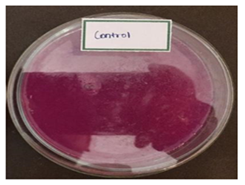
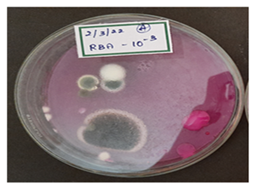
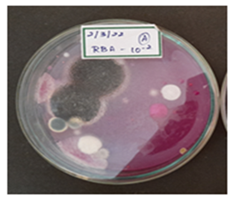
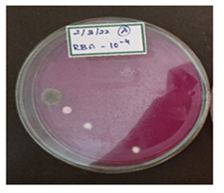
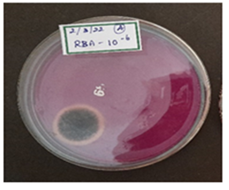
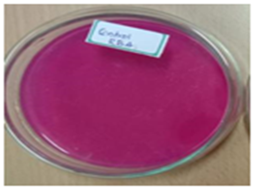
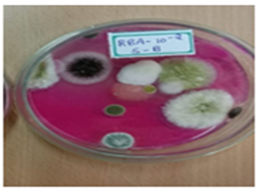
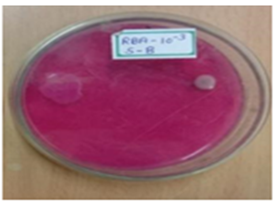
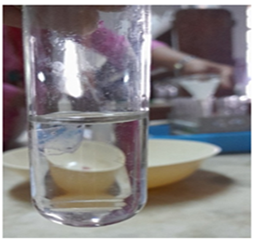
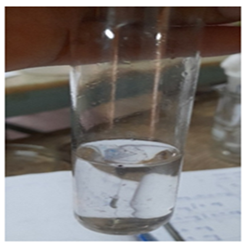
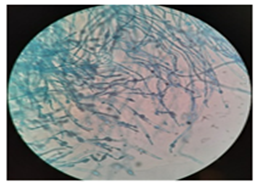
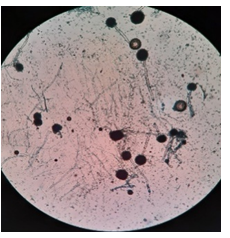
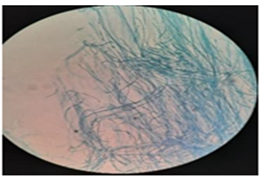
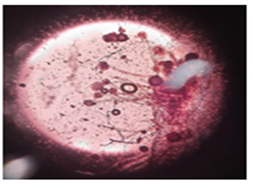
The present study deals with the isolation, identification and degradative ability of plastic degrading microorganisms from plastic dumped soils. From the results of isolation by using RBA media, 3 fungal isolates from sample A and 5 fungal isolates from sample B were obtained (Figures 1-10). The isolates were identified and characterised by the colour of the spores and morphology of the colony. Table 1 shows the total heterotrophic count from the two samples, sample A1 shows high C.F. U/ g (6 ×10-46 C.F. U/ g).The fungal isolates were sub cultured by slant culture technique in different test tubes and the process was repeated to maintain the isolates as pure culture (Figures 11 & 12). All the eight isolates were then inoculated into minimal agar contains LDPE powder for the identification of degrading ability of fungi for further degradation level. Figure 12 four LDPE degrading fungal isolates were identified, on the basis of its growth on the minimal agar plates. The plastic degrading fungal isolates were examined under microscope pre-weighted polythene bags (1” x 1”) were then subjected to degradation (Figure 13). The four plastic degrading fungal isolates separately grown in the minimal medium (Figures 14-19). After 15 days of incubation of the film showed significant weight loss. (Tables 2,3) the percentage of the weight loss was calculated from all the four samples. The isolate A2 showed high degrading ability when compared with other three.
Sample-A
SAMPLE- B
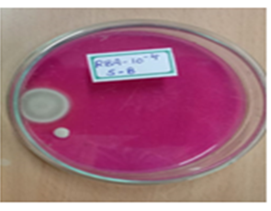
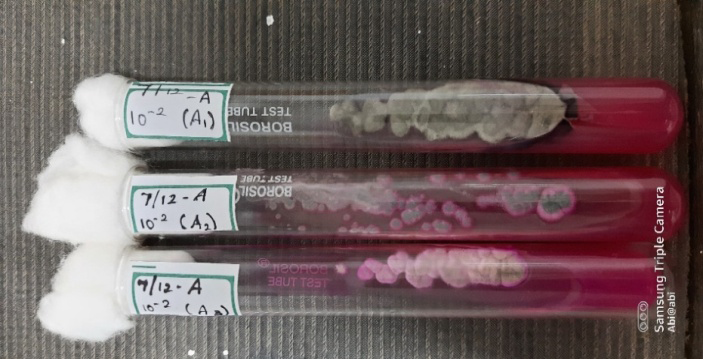
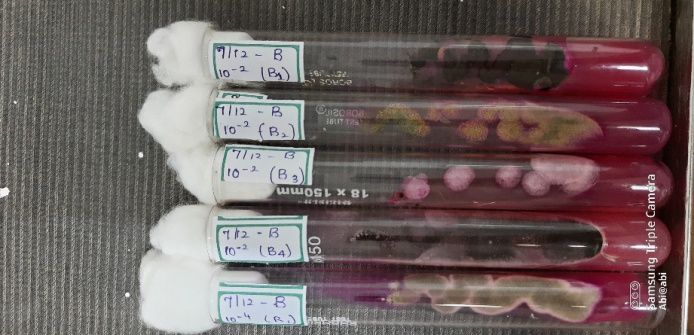
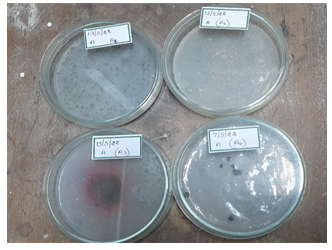
Degradation of Polyethylene Films Before and After.
| Dilution | Number of Fungal Isolates(Sample A) | CFU/g (Sample A) | Number of Fungal Isolates (Sample B) | CFU/g (Sample B) |
|---|---|---|---|---|
| 10¯2 | 16 | 1.6 × 10⁴ | 11 | 1.1 × 10⁴ |
| 10¯3 | 10 | 1.0 × 10⁴ | 2 | 2.0 × 10⁻³ |
| 10¯4 | 3 | 3.0 × 10⁵ | 2 | 2.0 × 10⁻⁵ |
| 10¯5 | Nil | Nil | Nil | Nil |
| 10¯6 | 1 | 1.0 × 10⁶ | Nil | Nil |
Table 1: Enumeration of Soil Fungi from Sample A and Sample B.
| SI. NO | Name of the Fungal Isolates | Initial Weight of Polythene Film (gms) | Final Weight of Polythene Films (gms) | Percentage of Degradation (%) |
|---|---|---|---|---|
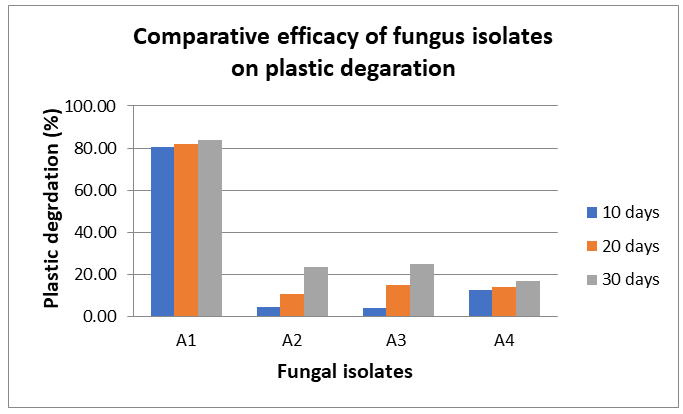
| 1 | A1 | 24.5 | 4.75 | 80.6 |
| 2 | A2 | 4.7 | 4.5 | 4.3 |
| 3 | A3 | 5.25 | 5.05 | 3.8 |
| 4 | A4 | 5.15 | 4.5 | 12.6 |
Table 2: Degradations of Polythene by Fungi after 10 Days.
| SI. NO | Name of the Fungal Isolates | Initial Weight of Polythene Film (gms) | Final Weight of Polythene Films (gms) | Percentage of Degradation (%) |
|---|---|---|---|---|
| 1 | A1 | 21.5 | 3.85 | 82.1 |
| 2 | A2 | 5.7 | 5.1 | 10.5 |
| 3 | A3 | 6.52 | 5.55 | 14.9 |
| 4 | A4 | 7.25 | 6.25 | 13.8 |
Table 3: Degradations of Polythene by Fungi after 20 Days.
| SI.NO | Name of the Fungal Isolates | Initial Weight of Polythene Film (gms) | Final Weight of Polythene Films (gms) | Percentage of Degradation (%) |
|---|---|---|---|---|
| 1 | A1 | 27.5 | 4.45 | 83.8 |
| 2 | A2 | 8.5 | 6.5 | 23.5 |
| 3 | A3 | 7.52 | 5.65 | 24.9 |
| 4 | A4 | 6.5 | 5.4 | 16.9 |
Table 4: Degradations of Polythene by Fungi after 30 Days.
Conclusion
Among the fungal isolates, the efficient isolates namely A1 isolate collected from Pannaiyur location registered its efficiency higher on plastic degradation compared to the other three isolates. This may be taken further to enlighten this study for complete full-fledged degradation studies under field evaluation. The isolation of plastic-degrading fungi from plastic dumped sites holds significant promise for addressing the pressing issue of plastic pollution. A mechanism of plastic degradation not only enhances our understanding of microbial ecology but also provides valuable insights for the development of innovative biotechnological applications, such as biodegradable plastics or enzyme production. Ultimately, the isolation and study of plastic-degrading fungi represent a crucial step towards a more sustainable and environmentally conscious future.
References
-
Shimao M (2001) Biodegradation of plastics. Curr Opin Biotechnol 12(3): 242-247.
-
Smith WM (1964) Manufacture of plastic. Technology and Engineering, Reinhold Pub. Corp, USA.
-
Anbuselvi SV (2014) Isolation and Characterization of Polythene Degrading Bacteria from Polythene Dumped Garbage. Int J Pharm 25(2): 205-206.
-
Usha R, Sangeetha T, Swamy MP (2011) Screening of polyethylene degrading microorganisms from garbage soil. Libyan Agric Res Cent J Int 2(4): 200-204.
-
Rudel RA, Attfield RK, Schifano JN, Brody JG (2007) Chemicals causing mammary gland tumors in animals signal new directions for epidemiology, chemicals testing and risk assessment for breast cancer prevention. Cancer 109(12 Suppl): 2635-2666.
-
Hao J, Wang J, Zhao W, Ding L, Gao E, et al. (2011) Effect of bisphenol a exposure on sex hormone level in occupational women. Wei Sheng Yan Jiu 40(3): 312-314.
- Antifungal Activity of New Acetophenone Derivatives
- Interconnected Microbiomes Human Health Within an Environmental Framework
- Silkworm-Based Vaccine Production for H5N1: A One Health Approach to Pandemic Preparedness
- Microbial Diversity and Lipolytic Activity of Bacteria and Fungi from Oil-Contaminated Sites in Makurdi Metroplois
- Antibiotic Resistance Profile of Bacteria Isolated at the Central Laboratory of the National Hospital Center of Nouakchott
- Epidemiology and Sensitivity to Antibiotics of Germs Isolated from Blood Cultures in the Laboratory of the National Hospital Center of Nouakchott-Mauritania