
Caves, the Mysterious World of Microorganisms
The unique structures of the remote caves, and the microorganism creatures living in this extreme dark environment should be investigated as an exceptional source for several new products and knowledge. Microorganisms obtained from such environment can be highly beneficial to science, health, and industry. Searching for novel isolates secreting potent secondary metabolites, and having promising biological activities is the target of current researches all over the world. In this review, it was highlighted that screening for microbes in remote areas especially remote caves following safety protocols will always result in isolation and identification and discovery of promising isolates with remarkable bioactivities. Many studies are required to complete investigating potentials of the promising isolated microorganisms.
Introduction
Caves, the mysterious and one of the most interesting earth formations on the planet, have been used, studied, and researched by people for several purposes from the past to the present. Caves between the earth and the underworld are important geological forms that can be investigated for several amazing facts. The caves that we define as cavities or gaps into which a person can enter are usually visited by people for several different purposes. Caves are important for studies on environments in terms of biology and geology due to their extreme conditions [1, 2]. The mechanisms by which living creatures survive in caves environments, adapt to the extreme conditions, and develop for survival have been the topics of the researchers. Microorganisms and physical factors are responsible for the occurrence and formation of different geological forms [3, 4]. Studies on cave microbiology have been aimed at exploring the functions of these microorganisms and many literature have described such work [5, 6, 7, 8, 9, 10]. On the other hand, these environment- specific microorganisms carry a great potential to possess new and different enzymes or antimicrobial substances. The discovery of new features and new microorganisms is also important as it adds new information to the science of systematics and as generous source of promising bioactive compounds for pharmaceutical applications [11, 12, 13, 14, 15].
The topics on caves and their microbiology, which have been studied by few researchers throughout the world, are less commonly studied in Egypt [16]. The protection of the cave environment while people enter into them for touristic, sports, and scientific causes is of historical and scientific importance. Different groups of microorganisms such as bacteria, archaea, viruses and fungi are found in caves. Caves can be sources of novel microorganisms and biomolecules such as enzymes and antibiotics that may be suitable for biotechnological purposes [17, 18, 19]. Caves can be terrestrial or aquatic and are usually oligotrophic in nature (nutrient limited) although some may be rich in specific minerals naturally or due to exposure to nutrient-laden sources. Consequently, different caves will have different groups of microorganisms inhabiting varying ecological places and alongside cave wildlife and environmental factors such as CO2, temperature and organic matter content. Microorganisms found in caves can be native to the caves or introduced by humans, animals, water flow, wind action and others [14].
Caves contain a broad variety of bacteria belonging to the Proteobacteria, Firmicutes, Actinobacteria and Acidobacteria. Proteobacteria appeared to be the major group detected [20, 21]. In open caves such as show caves, bacteria belonging to different genera such as Cyanobacter, Pseudomonas, Bacillus, Micrococcus, Arthrobacter Staphylococcus and Mycobacterium have been identified. Some, like Cyanobacter are photoautotrophs found at the cave entrance or around light installations [22]. Others such as Pseudomonas and Bacillus are heterotrophs, degrading organic matter in the form of insects and animal droppings and extraneous matter. While these heterotrophic activities contribute to the biogeochemical cycle in caves [23]. Cave systems contain different groups of heterotrophic fungi that exist in the form of mycelia or spores. Over 500 genera of fungi, slime moulds and fungus-like taxa have been reported in caves worldwide [24]. These belong to different taxa such as Ascomycota, Basidiomycota, Zygomycota, Mycetozoa, Oomycota and Chytridiomycota [24]. Ascomycota appears to be the most dominant group irrespective of whether culture dependent or independent tools have been used [21]. Commonly detected genera were Aspergillus, Penicillium, Mucor, Fusarium and Cladosporium. Cave fungi such as Trichurus, Fusarium and Cladosporium can function as decomposers of dead cave insects, animal, droppings and organic matter [25]. Some fungi such as Isaria farinosaare parasites of cave insects, while others are food sources to cave invertebrates and protozoa. Fungi growing on cave surfaces alongside bacteria and archaea may be involved in speleothem formation [24, 26].
Many studies have reported on microbial communities and their roles in ecosystems in various environments. Cave is a natural underground opening with no sunlight and a limited supply of nutrients, but that has a stable temperature, high humidity, and high partial pressure of CO2 compared to the external environment [27, 28]. A cave can be divided into four zones according to the amount of light: entrance, twilight, transition, and deep dark zones [1]. The entrance zone is the area directly below the entry of the cave. The twilight zone is the area that receives a small amount of sunlight; this zone is occupied by green vegetation to where the sunlight reaches. The transition zone is the area from the entrance to where the dark zone starts. The deep dark zone has very stable physical parameters: no sunlight, relatively low temperature, and relatively high CO2 pressure and humidity (Figures 1-4). The temperature in this zone changes little over the seasons. Therefore, in this oligotrophic environment, microorganisms survive by using alternative pathways, such as ureolysis, ammonification, sulfate reduction, and methane oxidation, rather than photosynthetic activity [29, 30]. Sampling, transferring, and cultivation of obtained microorganisms should be conducting following safety protocols. Generally, cultivation of isolates is usually performed using potato dextrose, Czapek’s media in case of fungi, starch casein medium for isolating actinomycetes, and nutrient agar and De Man, Rogosa and Sharpe (MRS) in case of bacteria, but sometimes special modified media were used for the same purpose [31, 32].
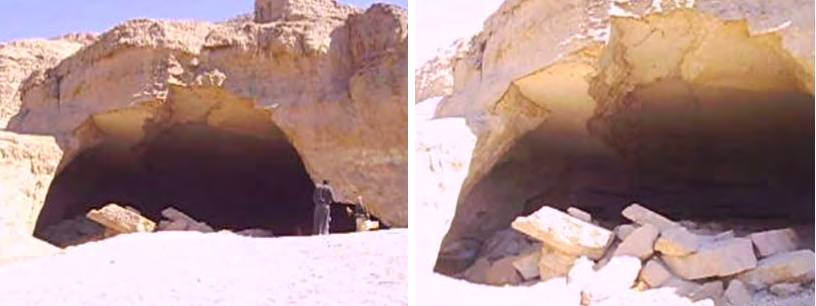
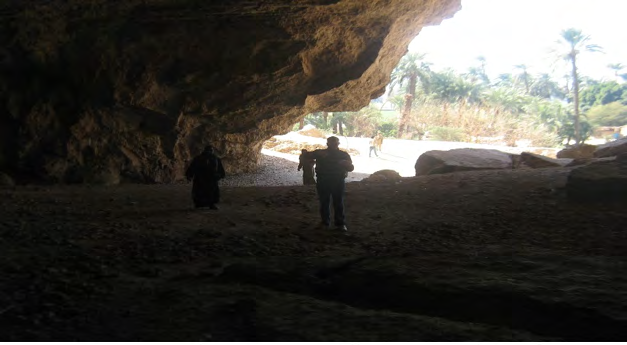
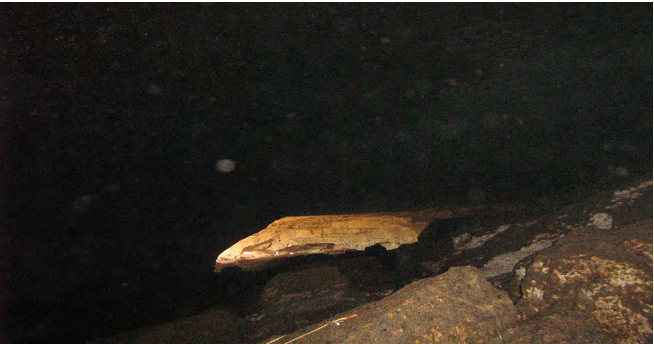
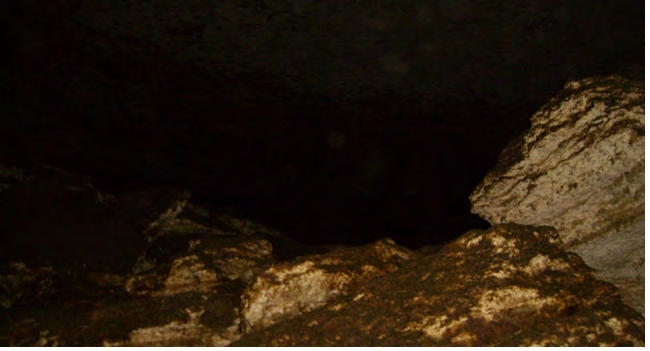
Caves can be classified based on type of rock and formation method. The most common types of caves are limestone and other calcareous rocks [33, 34]. Microbial communities in a cave are highly influenced by various factors such as water flow and mineralogical properties [28, 30]. Investigation of cave microorganisms is required to study the cave environment [16]. Caves microbiome are generally underexplored and overlooked.
Microorganisms Having Promising Biological Activities Isolated from Caves
Cave methanotrophic and heterotrophic microorganisms are producers of bioactive compounds and may be potential sources of metabolites with antibacterial, antifungal or anticancer activities of interest in pharmacological and medical research, as well as enzymes with a further biotechnological use [35]. Caves are oligotrophic, dark and less-explored environments and are considered as sources of promising microbial strains in biotechnology. Actinomycetes are the masters of antibiotics production, they are responsible for the production of about two thirds of the medically important antibiotics [16, 36, 37]. Identification of novel isolates or isolates exhibiting potent biological activities is of great interest [38]. Hence, isolation of actinomycetes especially from remote area is attracting attention all over the world. Elkhateeb, et al., reported that a remote bat cave located in Assiut governorate, Egypt has been chosen as a source to isolate actinomycetes [16]. Out of the resulted isolates, Streptomyces zaomyceticus strain AA1 was isolated and identified, by 16s rRNA. Streptomyces zaomyceticus strain AA1 was investigated for potential biological activities using two different growth media, ISP2, and starch casein. Streptomyces zaomyceticus extracts showed strong antioxidant activities and similar strong anti- breast cancer activity against MCF7 cell lines where they exerted cytotoxicity of 97.01±0.8% and 96.27±0.2% for extracts developed from ISP2 and starch casein broth media respectively. For anticancer activity, a rare actinobacterium Spirillospora albida strain CMU-PNK470 was isolated from Phanangkhoi cave in northern Thailand [38]. This bacterium showed activity against human small lung cancer cell (NCIH1870) with an IC50 value of 10.18µg/ml.
Recently, there is an urgent need for new drugs due to the emergence of drug resistant pathogenic microorganisms and new infectious diseases. Hampoeil Cave is located in massive dolomite with thin bedded limestone in north-western of Iran. In an isolation and screening program, various samples from soil, water, floor, wall and ceiling of Hampoeil cave and its invertebrates were collected. Among 33 various samples, 76 Actinobacteria from various genera, including Streptomyces, Micromonospora, Micrococcus, Kocuria and Corynebacterium were isolated. Eighty percent of the strains had one of the studied hydrolytic enzyme activity. Cave is a good source in finding cave-living Actinobacteria potent in producing hydrolytic enzymes and bioremediation [39]. Members of phylum Actinobacteria are promising source of bioactive compounds notably antibiotics. The search for such new compounds has shifted to extreme or underexplored environments to increase the possibility of discovery. Cave ecosystems have attracted interest of the research community because of their unique characteristics and the microbiome residing inside including Actinobacteria. 47 species in 30 genera of Actinobacteria were reported from cave and cave related habitats. Novel and promising bioactive compounds have been isolated and characterized [40, 41]. Several members of diverse actinobacterial taxa were also found to produce wide range of other biologically active compounds, for examples antibacterial, anticancer, or antifungal drugs [42, 43, 44, 45].
Streptomyces, Micromonospora, Streptosporangium, and Dactylosporangium were isolated from five caves (Cheondong, Kosoo, Nadong, Seonglyu, and Ssangyong) in Korea [46]. They showed activity against at least one of plant pathogenic fungi (Alternaria solani, Colletotrichum gloeosporioides, Fusarium oxysporum f.sp. lycopersici, Magnaporthe grisea, Phytophthora capsici, and Rhizoctonia solani). Similarly, members of genera Streptomyces and Janibacter isolated from limestone cave in Hundung, Manipur, India were reported to show anticandidal and biocontrol activities against rice fungal pathogens (Curvularia oryzae, F. oxysporum, Helminthosporum oryzae, Pyricularia oryzae, R. pryzae-sativae, and R. solani) as well as antibacterial activity [47, 48, 49]. Belyagoubi, et al., reported that five Streptomyces spp. from Chaabe cave in Algeria was reported to produce non-polyenic antifungal substances active against Candida albicans [48].
Conclusion
Emergence of new lethal diseases require continuous screening for new microorganisms that possibly produce novel compounds capable of treating such diseases through supporting the action of currently available drugs and/ or substitute them. The remote nature of caves, their exceptional environment, as well as their unique content of living microorganisms attract and encourage for searching inside these remarkable places for new species that may contribute in saving health of humanity.
References
-
Barton HA (2006) Introduction to cave microbiology: a review for the nonspecialist. J Cave Karst Stud 68(2): 43- 54.
-
Candiroglu B, Gungor ND (2017) Cave Ecosystems: Microbiological View. European Journal of Biology 76(1): 36-42.
-
Engel AS (2010) Microbial diversity of cave ecosystems. In: Geomicrobiology: Molecular and Environmental Perspective, pp: 219-238.
-
Engel AS (2015) Bringing microbes into focus for speleology: an introduction. Microbial life of cave systems. DeGruyter, Germany, pp: 1-22.
-
Somavilla JF, Khayyat N, Arroyo V (1978) Notice A comparative study of the microorganisms present in the Altamira and La Pasiega caves. Inter Biodeterior Bull 14(4): 103-109.
-
Martin-Sanchez PM, Jurado V, Porca E, Bastian F, Lacanette D, et al. (2014) Airborne microorganisms in Lascaux cave (France). Inter J Speleol 43(3): 295-303.
-
Hillebrand-Voiculescu A, Itcus C, Ardelean I, Pascu D, Persoiu A, et al. (2014) Searching for cold-adapted microorganisms in the underground glacier of Scarisoara ice cave, Romania. Acta Carsologica 43(2-3): 319-329.
-
Parker CW, Auler AS, Barton MD, Sasowsky ID, Senko JM, et al. (2018) Fe (III) reducing microorganisms from iron ore caves demonstrate fermentative Fe (III) reduction and promote cave formation. Geomicrobiol J 35(4): 311- 322.
-
Mazina S, Kozlova E, Popkova A, Kochetkov S, Mannapova R, et al. (2020) A first assessment of the microbiota of Taurida Cave. Ecologica Montenegrina 37: 1-10.
-
Blatnik M, Culver DC, Gabrovšek F, Knez M, Kogovšek B, et al. (2020) Microbial Underground: Microorganisms and Their Habitats in Škocjanske Jame. In: Karstology in the Classical Karst, pp: 169-181.
-
de Kamp V, Lee J (2004) Microbial biodiversity in Tasmanian caves (Doctoral dissertation, University of Tasmania.
-
Cheeptham N (2012) Cave microbiomes: A novel resource for drug discovery 1.
-
Sadoway T, Rule D, Watson K, Moote P, Soliman LC, et al. (2013) Cure from the cave: volcanic cave actinomycetes and their potential in drug discovery. Inter J Speleol 42(1): 5.
-
Adetutu EM, Ball AS (2014) Microbial diversity and activity in caves. Microbiology Australia 35(4): 192-194.
-
Ghosh S, Kuisiene N, Cheeptham N (2017) The cave microbiome as a source for drug discovery: reality or pipe dream?. Biochemical Pharmacol 134: 18-34.
-
Elkhateeb WA, Mohamed MA, Fayad W, Emam M, Nafady IM, et al. (2020) Molecular Identification, Metabolites profiling, Anti-breast cancer, Anti-colorectal cancer, and antioxidant potentials of Streptomyces zaomyceticus AA1 isolated from a remote bat cave in Egypt. Res J Pharma Technol 13(7): 3072-3080.
-
Adetutu EM, Thorpe K, Bourne S, Cao X, Shahsavari E, et al. (2011) Phylogenetic diversity of fungal communities in areas accessible and not accessible to tourists in Naracoorte Caves. Mycologia 103(5): 959-968.
-
Adetutu EM, Thorpe K, Shahsavari E, Bourne S, Cao X, et al. (2012) Bacterial community survey of sediments at Naracoorte Caves, Australia. International Journal of Speleology 41(2): 137-147.
-
Gouveia A, Reboleira A, Gonçalves F, Marques S (2018) Caves as a source of new antimicrobial agents: the case study of antibacterial activity from microorganisms inhabiting Cerâmica Cave, Portugal, 1: e30142.
-
Groth P, Schumann L, Laiz S, Sanchez-Moral JC, Cañveras C, et al. (2001) Geomicrobiological study of the grotta dei cervi, Porto Badisco, Italy. Geomicrobiology Journal 18(3): 241-258.
-
Gherman VD, Boboescu IZ, Pap B, Kondorosi É, Gherman G, Maróti G (2014) An acidophilic bacterial-archaeal- fungal ecosystem linked to formation of ferruginous crusts and stalactites. Geomicrobiology Journal 31(5): 407-418.
-
Saiz-Jimenez C (2012) Microbiological and environmental issues in show caves. World J Microbiol Biotechnol 28(7): 2453-2464.
-
Schabereiter-Gurtner C, Saiz-Jimenez C, Piñar G, Lubitz W, Rölleke S (2004) Phylogenetic diversity of bacteria associated with Paleolithic paintings and surrounding rock walls in two Spanish caves (Llonin and La Garma). FEMS Microbiol Ecol 47(2): 235-247.
-
Vanderwolf KJ, Malloch D, McAlpine DF, Forbes GJ (2013) A world review of fungi, yeasts, and slime molds in caves. International Journal of Speleology 42(1): 77-96.
-
Jurado V, Sanchez-Moral S, Saiz-Jimenez C (2008) Entomogenous fungi and the conservation of the cultural heritage: A review. International Biodeterioration & Biodegradation 62(4): 325-330.
-
Bastian F, Alabouvette C, Saiz‐Jimenez C (2009) The impact of arthropods on fungal community structure in Lascaux Cave. Journal of Applied Microbiology 106(5): 1456-1462.
-
Akob DM, Kusel K (2011) Where microorganisms meet rocks in the Earth’s Critical Zone. Biogeosciences 8: 3531-3543.
-
Park S, Cho YJ, Jung DY, Jo KN, Lee EJ, et al. (2020) Microbial Diversity in Moonmilk of Baeg-nyong Cave, Korean CZO. Frontiers in Microbiology 11: 613.
-
Ortiz M, Neilson JW, Nelson WM, Legatzki A, Byrne A, et al. (2013) Profiling bacterial diversity and taxonomic composition on speleothem surfaces in Kartchner Caverns AZ. Microb Ecol 65(2): 371-383.
-
Zhu T, Dittrich M (2016) Carbonate precipitation through microbial activities in natural environment, and their potential in biotechnology: a review. Front Bioeng Biotechnol 4: 1-4.
-
Bender KE, Glover K, Archey A, Barton HA (2020) The impact of sample processing and media chemistry on the culturable diversity of bacteria isolated from a cave. International Journal of Speleology 49(3): 3.
-
Algoo JD, Penton K, Bachmann B (2020) Isolation and Single Cell Chemical Biological Analysis of Natural Product Producing Cave Microorganisms. The FASEB J 34(S1): 1-11.
-
Northup DE, Lavoie KH (2001) Geomicrobiology of caves: a review. Geomicrobiol J 18(3): 199-222.
-
Barton AH, Taylor MR, Pace NR (2004) Molecular phylogenetic analysis of a bacterial community in an oligotrophic cave environment. Geomicrobiol J 21(1): 11-20.
-
Martin-Pozas T, Gonzalez-Pimentel JL, Jurado V, Cuezva S, Dominguez-Moñino I, et al. (2020) Microbial Activity in Subterranean Ecosystems: Recent Advances. Applied Sciences 10(22): 8130.
-
Sivalingam P, Hong K, Pote J, Prabakar K (2019) Extreme Environment Streptomyces: Potential Sources for New Antibacterial and Anticancer Drug Leads?. International Journal of Microbiology 19: 1-20.
-
Mohamed MA, Elkhateeb WA, Taha MA, Daba GM (2019) New Strategies in Optimization of Rapamycin Production by Streptomyces hygroscopicus ATCC 29253. Research Journal of Pharmacy and Technology 12(9): 4197-4204.
-
Manteca A, Yagüe P (2019) Streptomyces as a Source of Antimicrobials: Novel Approaches to Activate Cryptic Secondary Metabolite Pathways. In: Antimicrobials, Antibiotic Resistance, Antibiofilm Strategies and Activity Methods. Intech Open, London, UK.
-
Hamedi J, Kafshnouchi M, Ranjbaran M (2019) A Study on actinobacterial diversity of Hampoeil cave and screening of their biological activities. Saudi journal of biological sciences 26(7): 1587-1595.
-
Fang BZ, Han MX, Liu L, Zhang ZT, Liu WL, et al. (2017) Lentzea covernae sp. nov., an actinobacterium isolated from a karst cave sample, and emended description of the genus Lentzea. Int J Syst Evol Microbiol 67: 2357- 2362.
-
Rangseekaew P, Pathom-Aree W (2019) Cave actinobacteria as producers of bioactive metabolites. Frontiers in Microbiology 10: 387.
-
Barka EA, Vatsa P, Sanchez L, Gaveau-Vaillant N, Jacquard C, et al. (2016) Taxonomy, physiology, and natural products of actinobacteria. Microbiol Mol Biol Rev 80: 1-43.
-
Genilloud O (2017) Actinomycetes: still a source of novel antibiotics. Nat Prod Rep 34(10): 1203-1232.
-
Castro JF, Razmilic V, Gomez-Escribano JP, Andrews B, Asenjo J, et al. (2018) The ‘gifted’ actinomycetes Streptomyces leeuwenhoekii. Antonie van Leeuwenhoek 111(8): 1433-1488.
-
Takahashi Y, Nakashima T (2018) Actinomycetes, an inexhaustible source of naturally occurring antibiotics. Antibiotics 7(2): 45.
-
Kim BS, Lee JY, Hwang BK (1998) Diversity of actinomycetes antagonistic to plant pathogenic fungi in cave and sea-mud soils of Korea. J Microbiol 36(2): 86- 92.
-
Nimaichand S, Devi AM, Tamreihao K, Ningthoujam DS, Li WJ (2015) Actinobacterial diversity in limestone deposit sites in Hundung, Manipur (India) and their antimicrobial activities. Front Microbiol 6: 413.
-
Belyagoubi L, Belyagoubi-Benhammou N, Jurada V, Dupont J, Lacost S, et al. (2018) Antimicrobial activities of culturable microorganisms (Actinomycetes and fungi) isolated from Chaabe cave, Algeria. Int J Speleol 47(2): 189-199.
-
Nakaew N, Pathom-aree W, Lumyong S (2009) First record of the isolation, identification and biological activity of a new strain of Spirillospora albida from Thai cave soils. Actinomycetologica 23: 1-7.
- Acido Labile or Gastro Irritant Apis and Enteric Release in Galenic Practice: An Overview
- A Study on Knowledge, Attitude and Practice of Hand Hygiene among Healthcare Professionals at a Tertiary Care Hospital, India
- Influence of Inoculum Concentration on In Vivo Incubation Period of Emmia lacerata, Pathogenesis and Management of Wilt in Pepper (Capsicum annuum L.)
- Vanilla’s Chemistry
- Marine Anti-Cancer Compounds and Adverse Effects of Global Warming on Oceans: An Overview
- Serological Investigation of Chikungunya Virus Antibody among Malaria-Suspected Febrile Patients in Some Healthcare Facilities in Rivers State