
Ameliorative Potentials of Methanol and Ethyl Acetate Fractions of Peristophe Bicalyculata on Streptozotocine -Induced Diabetic Rats
Objective: The study investigated the ameliorative potentials of the ethyl acetate and methanol fractions of P. bicalyculata leaf extract on experimental rat models. Materials and Methods: A total of 35 albino Wistar rats were used for the study. They were randomly divided into 7 groups of 5 rats each. Group 1, the standard control, received 250mg/kg body weight (b.wt) of the anti-diabetic drug, Metformin, group 2 and 3 received 200 and 400mg/kg b.wt respectively of the methanol fraction of P. bicalyculata, (group 4 and 5 received 200 and 400mg/kg b.wt of the ethyl acetate fraction of P. bicalyculata respectively while groups6 and 7 were the diabetic control (DC) and normal control (NC) groups, respectively. Results: There was a significant decrease (p<0.05) in the serum levels of total cholesterol, TG, LDL, VLDL, and increased level of HDL cholesterol in streptozotocin (STZ) induced diabetic treated groups. The study also showed that there was a significant reduction in the fasting blood glucose (FBG) levels of the entire STZ induced diabetic rats treated with ethyl acetate and methanol extract of P. bicalyculata at 200mg/kg and 400mg/kg b.wt respectively. Also, the glycated haemoglobin and estimated average glucose concentrations showed a significant decrease (p<0.05) in the low and high doses of P. bicalyculata extract-treated groups compared to the DC. There was no significant (p>0.05) differences in the sex hormones (testosterone, luteinizing hormone and follicle stimulating hormone levels of rats in the treatment groups when compared to the NC group. Conclusion: The results obtained in the present study provide the scientific rationale for the use of P. bicalyculata as an antidiabetic agent in the management of diabetes.
Introductions
Diabetes mellitus is a common and very prevalent disease affecting the citizens of both developed and developing countries. It is a chronic condition with high levels of treatment non-adherence. Treatment outcome is largely driven by patient self-management, which includes modifying life activities based on regular feedback about blood glucose control. Better glycaemic control and prevention of diabetic complications have been linked with improved fertility in men. Recent studies using animal models have shown that herbs like Vernonia amygdalina and Gongronema latifolia may provide alternative in the treatment of the condition [1]. However, the impact and efficacies of most of these plants in alleviating diabetic conditions are largely unknown. The present research focused on the key phytochemicals in P. bicalyculata that have been noted to be anti-diabetic, hence may help in the management of diabetes and its related conditions. Medicinal compounds from higher plants have been a source of ingredients for the production of a great number of modern clinical drugs by pharmaceutical companies [2]. More so; traditional medicine of botanical origin has been the mainstay in combating sicknesses and diseases in most developing countries of the world. Several research into the biological activities of plants during the past centuries, have yielded compounds which have led to the development of modern synthetic organic chemical and the emergence of medicinal chemistry as a major subject for the discovery of novel and effective therapeutic agents [3].
Showed that ethanol fraction of this plant possess therapeutic bioactive components that can be exploited for drug production [4]. Thus, the evaluation of the biochemical and antioxidant activity of Peristrophe bicalyculata on experimental rat models in this study is justified. Peristrophe bicalyculata (Retz) is a herb native to the warm tropical regions of Africa, in the Sahel part of the region from Mauritania to Niger and Northern Nigeria, India, Burma and Thailand [5]. The plant belongs to the family Acanthaceae, and it can grow up to 60-180 cm in height. It is commonly known as Tubanindawaki by the Hausas meaning floor of the horse [5]. The herb is used for its antibacterial property (tuberculostatic), as an antidote against snake poison, in bone fracture and sprain. The leaf extract is also used for fever, cold and cough, and the mucilage medicines are used for ear and eye treatments among others [6].
;
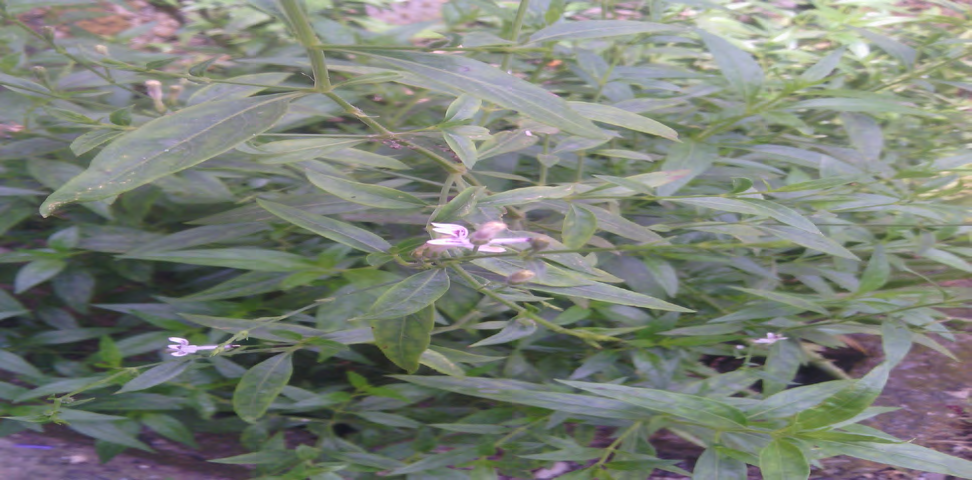
Plant 1: Peristrophe bicalyculata (Vinegar plant).
Materials and Methods
Reagent/Chemicals
Ethanol, Methanol, Ethyl acetate, FOX reagent, Phosphate buffer, Riboflavin, distilled water, Acetate buffer, TPTZ (2,4,6-tripyridyltriazine), FRAP reagent, Streptozotocin (STZ), Metformin (Glucophage), Thiobarbituric Acid (TBA), FSH-Enzyme Reagent solution.
Equipment
Refrigerator, Spectrometer, Chromatographic column, PTSPANELS® cardiocheck automated lipid analyzer kit, EDTA and heparin tubes, Florescent lamp, glucometer, Fortress assay kit, Microplate wells, What man 1 filter paper, Absorbent paper.
Plant materials
Fresh Peristrophe bicalyculata leaves were purchased from Watt Market in Calabar Municipality, Calabar, Cross River State. A sample of the leaf was identified and confirmed by Prof. Ani Nkang in the Department of Botany, University of Calabar. Voucher specimen deposited in the Departments herbarium number EUDBS01/19 was kept for future reference. The leaves were cleaned and dried at room temperature for 7days, after which they were blended with a manual blender into powdered form.
Extraction
The blended leaves, weighing 1500g, was extracted using 5300/ml (5.3l) of 80% ethanol for 48hours (2/days). The extract was double filtered, firstly using chess cloth and subsequently with Whatman 1 filter paper. The filtrate (extract) was concentrated under reduced pressure at 45°C in rotary evaporator to 10% volume and then left to complete dryness using water bath to yield a black paste, which was the crude extract. This was stored in the refrigerator, from where it was taken from for fractionation.
Fractionation of Plant Extract Using Column Chromatography
The extract of Peristrophebicalyculata was chromatographically fractionated using two different solvents, methanol and ethyl acetate in a glass column packed with silica gel of mesh size 60-120. The ethyl acetate fraction was collected and evaporated in rotary evaporation at 50°C to 10% of its original volume and was further evaporated to paste form in water bath at 50°C. The fraction and the remaining crude extract were stored in a refrigerator at -4°C for further use.
Gas Chromatography-Mass Spectrometry (GC- MS) Analysis
Gas chromatographic analysis of the fractionated sample was carried out using GC-MS-QP 2010 plus (SHIMADZU-
JAPAN), comprising of AOC-2010 auto sampler and gas chromatography interfaced with a mass spectrometer.
Experimental Animals
Thirty-five (35) albino Wistar rats were purchased from the Pharmacology Department, University of Calabar. The animals were weighed and then acclimatized in the Departmental animal house for a period of one (1) week after which grouping and induction followed. They were housed in rectangular cages with wire guaze fitted covers, having openings for the water bottle to go in.
Experimental Design
Adult wistar rats weighing 200-250 g were used in the study and were conditioned for two weeks on a standard rat diet and water and libitum before the start of the experiment. All animals were kept under condition that prevented them experiencing unnecessary pain according to the guide lines of institutions ethical committee approved by the ministry of health, Government of Nigeria.
Induction of Diabetes Mellitus
Rats were made diabetic by intraperitoneal administration of 45mg/kg b.w of the diabetogenic agent, Streptozotocin (STZ). Their blood sugar levels were ascertained 24 hours after administration of the required dosage of STZ to confirm the onset and extent of hyperglycaemia. Diabetes was successfully induced in all animal subjects.
Study Design
This study was conducted for 28 days (4 weeks) during which the rats were treated with the fractions of Peristrophe Bicalyculata and the standard antidiabetic drug, Metformin (Glucophage) via the use of a gavage while being maintained on rat chow. During this period, their blood glucose levels and lipid profile indices (TG and HDL) were monitored on a weekly basis. At the end of the 28 day period, the animals were sacrificed, whole blood samples were collected by cardiac puncture and their final glucose levels and lipid profile were ascertained.
| Group | Group name | No. of rats | Treatment |
|---|---|---|---|
| 1 | Metformin treated | 5 | 250mg/kg of Metformin |
| 2 | LD Methanol fraction treated | 5 | 200mg/kg of Methanol fraction of PB |
| 3 | HD Methanol fraction treated | 5 | 400mg/kg of Methanol fraction of PB |
| 4 | LD Ethyl acetate fraction treated | 5 | 200mg/kg of Ethyl acetate fraction of PB |
| 5 | HD Ethyl acetate fraction treated | 5 | 400mg/kg of Ethyl acetate fraction of PB |
| 6 | Diabetic control | 5 | 0.2ml 10% DMSO |
| 7 | Normal control | 5 | 0.2ml 10% DMSO |
Table 1: ** Grouping of the animal models.
DMSO= Dimethylsulphuoxide, LD- Low Dose, HD = High Dose. Table 1: Grouping of the animal models.
The same was done for the 0.2ml and 0.4ml ethyl acetate treatment. Stock solutions were also prepared.
Administration of the treatments was done through the use of a gastric gavage. The animals receiving the graded doses of the PB fractions were treated twice daily while those receiving the standard antidiabetic drug, metformin, were treated once daily throughout the 28 day period of the study.
Collection of Samples for Analysis
After 28 days experimental period, food was withdrawn from the rats. Animals were fasted overnight with access to water. The rats were then anaesthetized over chloroform vapour and sacrificed. Whole blood was collected via cardiac puncture using sterile syringes and needles. Blood was divided into 2 portions: 1ml into EDTA bottle for hematological analysis and the remainder emptied into another EDTA bottle and allowed for 2 hours stored in a refrigerator at 4oC. The refrigerated blood sample was then centrifuged at 3000rpm for 10 minutes to recover the plasma from cells. Plasma was separated with sterile syringes and stored frozen until used for biochemical analysis.
Estimation of Biochemical Parameters
Determination of the blood glucose levels This was achieved by the use of a glucometer. Blood was gotten from the tip of the tail with the aid of a lancet. A drop of blood was then dropped on a test strip already inserted into the glucometer, the displayed glucose level was then recorded and the strip was discarded. This was done weekly throughout the 28days (4 weeks) of the research.
Estimation of Serum Testosterone
The method employed was micro well immunoassay (ELISA) using analytical grade regents. Analytical grade reagents kits were used in this analysis. Basically, enzyme immunoassays combined the specificity of antibodies with the sensitivity of simple spectrophotometric enzyme assays by using antibodies or antigen coupled to an easily assayed enzyme which possessed a high turnover number.
Statistical Analysis
Data were presented as mean ± standard error of mean (SEM), and analyzed using one-way ANOVA with the aid of a statistical package. SPSS version 20.0 for windows. The differences were considered significant at 95% confidence (p<0.05).
Results
Fasting Blood Glucose of Diabetic Rats Administered Fractions of Peristrophe Bicalyculata
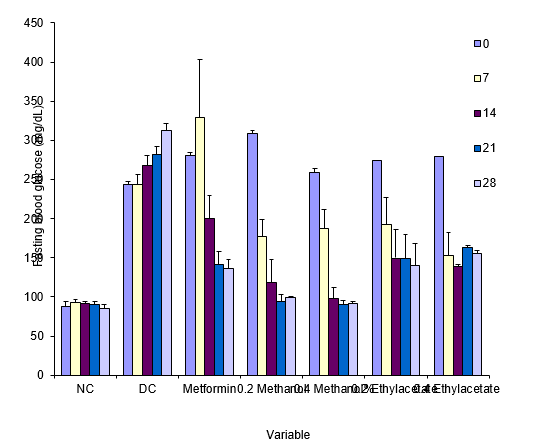
Presented in figure 1 is the weekly fasting blood glucose of experimental animals administered fractions of P. bicalyculata. From the result, it was observed that the fasting blood glucose (FBC) of the DC group showed a significant (p<0.05) increase in concentration throughout the experimental period compared to the NC group. However, upon the administration of the ethyl acetate and methanol fractions of P. bicalyculata to diabetic rats, there was a progressive reduction in the fasting blood glucose (FBC) levels of the experimental animals at 7, 14, 21 and 28 days respectively. Both fractions (methanol and ethyl acetate) of P. bicalculata compared avourably with the standard drug, metformin, in the reduction of weekly fasting blood glucose. More so, the ethanol fractions of P. bicalculata exhibited a greater FBC lowering ability in the diabetic rats when compared to the ethyl acetate fractions of P. bicalyculata.
Effect of Methanol and Ethyl Acetate Fractions of Peristrophe bicalyculata on Glycated Haemoglobin and Estimated Average Glucose Concentrations in Diabetic Rats
Figure 2 Shows the effect of extracts of Peristrophe bicalyculata on glycated haemoglobin (HbA1c) concentration in experimental rat models. From the result, the HbA1c concentration of DC group showed a significant (p<0.05) increased concentration compared to the NC. On treatment with test drug (Metformin) and extract of P. bicalyculata, a significant (p<0.05) decrease in concentration of HbA1c was observed compared to DC, with more remarkable effect on the low dose (LD) methanol treated group.
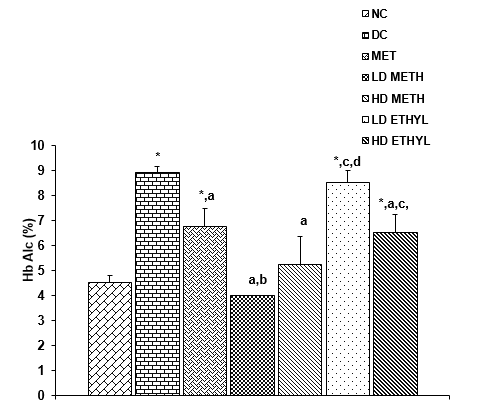
Figure 2: Comparison of glycated haemoglobin concentrations in the different experimental groups. Values are expressed as mean + SEM, n = 5. *significantly different from NC at p<0.05; a = significantly different from DC at p<0.05; b = significantly different from Metformin at p<0.05; c = significantly different from meth 200mg/kg b.w.at p<0.05; d = significantly different from meth 400mg/kg b.w.at p<0.05; e = significantly different from ethyl 200mg/kg b.w.at p<0.05.
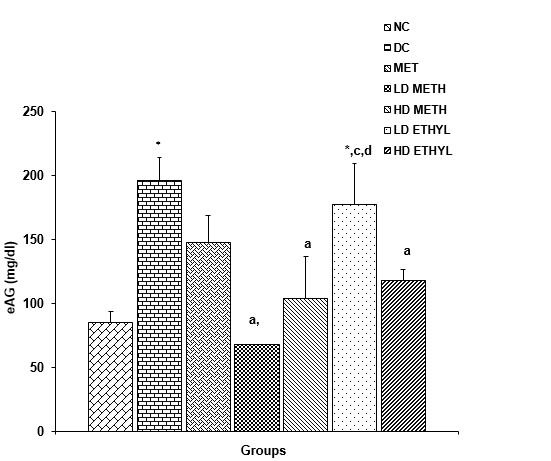
Figure 3: Comparison of concentrations of estimated average glucose in the different experimental groups. Values are expressed as mean + SEM, n = 5. *significantly different from NC at p<0.05; a = significantly different from DC at p<0.05; b = significantly different from Metformin at p<0.05; c = significantly different from meth 200mg/kg b.w.at p<0.05; d = significantly different from meth 400mg/kg b.w.at p<0.05.
Figure 2 shows the effect of extract of P. bicalyculata on estimated average glucose eAG concentration in experimental rat models. From the result, the eAG concentration of DC group showed a significant (p<0.05) increased in concentration compared to the NC group. On treatment with test drug (Metformin) and extracts of P. bicalyculata, a significant (p<0.05) decrease in concentration of eAG was observed compared to the DC group, with more remarkable effect on the LD methanol treated group.
Effect of Methanol and Ethyl Acetate Fractions of Peristrophe bicalyculata on Sex Hormones’ Levels in Diabetic Rats
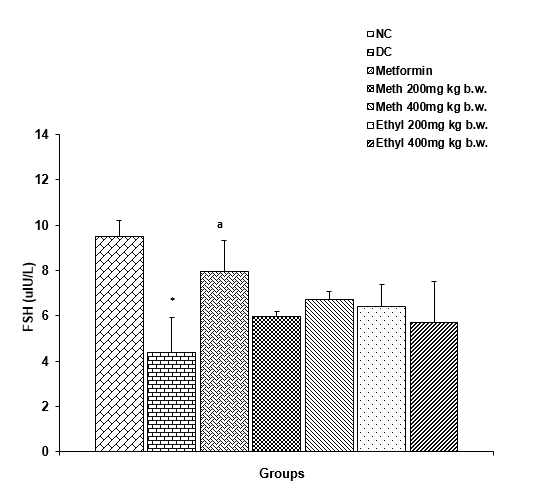
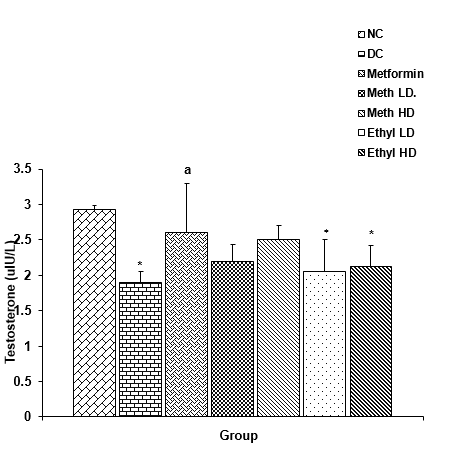
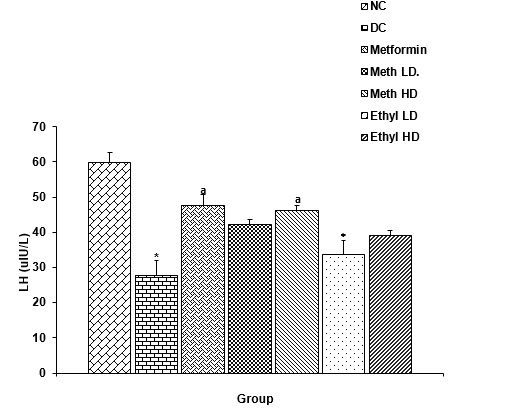
From figure 4 it was observed that the level of FSH between NC, DC and experimental were not significantly (p<0.05) different from each other. It was also observed from the results in figure 5, that the testosterone concentration levels between NC and DC well significantly (p<0.05) different. The methanol (200mg/kg b w) and ethyl acetate (200 mg/kg between) treated groups showed a significant (p<0.05) increase when compound to the NC, while other treated groups showed no significant (p<0.05) changes differences in testosterone levels. It was observed from the result in figure 6 that DC had LH levels significantly (p<0.05) higher than that of the NC, while the metformin treated group showed a significant (p<0.05) decrease as compared to the NC and other P. bicalyculata treated groups. However, the other treated groups showed a significant (p<0.05) increase when compared to the NC and also the DC except for the Ethyl acetate (200mg kg b.w) which showed a significant (p<0.05) decrease when compared to the DC.
Discussion
The glucose enzymes activity and concomitant reduction in the catalyzing enzymes in the liver of diabetic rats were confirmed on this present study. The diabetogenic ability of streptozotocin used in this study is to evaluate the anti- diabetic potential of some medicinal plants in animal model.
Some of the enzymes in the glycolytic pathway are responsible for glucose metabolizing enzymes in the liver which catalyzes the final step of glycogenolysis and gluconeogenesis in which glucose -6-phosphate is herby hydrolsed to yield glucose and phosphate. Glucose-6-phosphatase is one of the glycolytic enzymes that is capable of balancing the concentration of free glucose and then store glucose as glycogen. When the body lack energy due to unavailability of glucose in the cells, the increased activity of the enzymes glucose-6-phosphatase become very important in regulating its response to stimulate or trigger the pancreatic hormones insulin and glucagon to release insulin via the plasma glucose concentration. However, this actually explains the usual increase in the activity of the enzymes in STZ-induced cellular glucose loses. In the present study comparing the diabetic control rats, it has significantly showed that they was in both Peristrophe bicalyulata and METF treated diabetic animals .This observation is consist with the claim of [7, 8, 9]. Who posited that metformin is an established inhibitor of glucose-6- phosphatase. The ability of Peristrophe bicalyulata extract to reverse the STZ-induced the pancreatic hormones is suggestive of a pro-insulin effect for the extract. The extract may have promoted insulin secretion from the beta cells of the pancreas, consequently enhancing glucose mobilization into the cells and slowing down the process of glycogenolysis and gluconeogenesis in which most of the glycolytic enzymes play significant roles.
From the result of this study, it was observed that the fasting blood glucose of the DC group showed a significant increase throughout the experimental period compared to the NC group. However, this observed significant increase was remarkably reduced in all experimental treated group. The administration of streptozotozin concurrently elevated fasting blood glucose level with a reduction in plasma insulin levels as reported earlier [10]. Streptozotocin destroyed specific cells which alters glucose homeostasis. Absence of Insulin hormone disturbs glucose transportation across the cell’s membrane, thereby decreasing the body weight of the diabetic animals. Importantly, the administration of methanol fraction of P. bicalyculata significantly recovered fasting blood glucose and plasma Insulin level in diabetic rats. This present research in is line with the finding of [11]. It may therefore be inferred that methanol extract of P. bicalyculata most probably has the ability to regenerate pancreatic B-cells.
The effect of extracts of P. bicalyculata on HbA1c concentration in experimental rat models was evaluated in this study. From the result, the HbA1c concentration of DC group showed a significant increased concentration compared to the NC. On treatment with test drug (metformin) and extract of P. bicalyculata, a significant decrease in the concentration of HbA1c was observed compared to DC, with more remarkable effect on the low dose (LD) methanol treated group. The effect of extract of P. bicalyculata on eAG concentration in experimental rat models was evaluated in this study. Also, from the result of this study, the eAG concentration of DC group was significantly increased compared to the NC group. On treatment with test drug (metformin) and extracts of P. bicalyculata, a significant decrease in concentration of eAG was observed compared to the DC group with more remarkable effect on the LD methanol treated group.
Glycated haemoglobin (HbA1c), a marker of chronic hyperglycaemia, is the standard measure for monitoring glucose control in diabetic patients and recently was recommended for use in the diagnosis of diabetes [6]. Elevated HbA1c strongly predicts the development of diabetes and is independently associated with cardiovascular outcomes even in individuals without a diabetes diagnosis. One pathway by which hyperglycaemia may contribute to cardiovascular disease risk is via the development of hypertension. For example, previous research demonstrates associations of hyperglycaemia with endothelial dysfunction and vascular stiffness, both of which are linked to increased hypertension and cardiovascular disease risk [12]. In addition, long-term (observational) follow-up of diabetes control and complications trial (DCCT) participants with type 1 diabetes demonstrated that intensive glucose control significantly reduced the risk of incident hypertension by nearly 25%, suggesting that strategies to improve glucose control might lower hypertension risk among people with diabetes [13].
It was observed that the level of follicle stimulating hormone (FSH) between NC, DC and experimental groups were not significantly different from each other in this study. The results from this study that the testosterone levels between NC and DC well significantly different. The methanol and ethyl acetate treated groups showed a significant increase when compared to the NC, while the other treated groups showed no significant differences in testosterone level. It was observed that DC had luteinizing hormone (LH) levels significantly higher than that of the NC, while the metformin treated group showed a significant decrease as compared to the NC and other P. bicalyculata treated groups. However, the other treated groups showed a significant increase when compared to the NC and DC, except for the ethyl acetate which however showed a significant decrease when compared to the DC.
Androgenic hormones are known to regulate spermatogenesis. In the present study, plasma testosterone and LH level were not affected in diabetic rats while FSH level was remarkably high. It was observed that diabetes did not alter the functions of pituitary glands and Leydig cells but affected Sertoli cell functions, probably owing to reduced FSH receptors. Follicle stimulating hormone plays a predominant role in proliferation and differentiation of Sertoli cells members and decrease in germ cells. Since Sertoli cells are involved in developing sperm cells and regulating internal environment of seminiferous tubules through blood testes barrier, reduction in their number further decease spermatogenic output [14]. Reduced glucose uptake considerably decreases cellular glycogen contents which serve as energy sources for sperm development. Glycogen depletion therefore inhibits generation of lactate by systolic cell.
This study shows that methanol fractions of P. bicalyculata administration could bring about a marked restoration in epididymal sperm count, sperm motility and sperm abnormalities towards control levels. The protective effects of P. bicalyculata extract may be due to it free radicals scavenging properties [15]. Interestingly, had previously identified some other medicinal plants as antidiabetic function. Hence, the presence of the flavonoid in Peristrophe bicalyulata is likely responsible for it significant effects on glucose metabolizing enzymes noted on the study. The ability of P.B to respectively activate some key metabolic pathway in this study suggests that it may be a treatment option for diabetic patients whose fasting hyperglyceamia is primarily as a results of increased hepatic glucose output, and the efficiency of the plant extract may also account for it anti- diabetic potentials.
Conclusions
This study concluded that the plant could exert its blood glucose lowering (anti-diabetic) effect through the stimulation of insulin release from pancreatic beta cells or through alteration of some hepatic enzymes involved in glucose metabolism. The bioactive components of the plant rich in antioxidant properties could be similar in mode of action to conventional drugs used in the management of diabetes mellitus.
References
-
Ebong PE, Atangwho IJ, Eyong EU, Egbung GE, Ikpeme EV (2011) Effect of co-administration of extracts of _Vernonia_ _amygdalina_ and _Azadirachta indica_ on lipid profile and oxidative stress in hepatocytes of normal and diabetic rats. Agriculture and Biology Journal of North America 2(7): 1087-1095.
-
Baker JT, Borris RP, Carte B, Cordell GA, Soejarto DD, et al. (1995) Natural product drug discovery and development: New perspective on international collaboration. Journal of Natural Products 58(9): 1325-1357.
-
Roja G, Rao PS (2000) Anticancer compounds from tissue cultures of medicinal plants. Journal of Herbs, Spices & Medicinal Plants 7(2): 71-102.
-
Jeffrey JS, Elliot LC _(_2012) The pathogenesis of diabetic atherosclerosis. Diabetes and Peripheral Vascular Disease, Springer, pp: 13-26.
-
Burkill HM (1985) The useful plants of West tropical Africa. 2nd (Edn.), Royal Botanic Gardens Kew, UK, 1: 510.
-
Giacco F, Brownlee M (2010) Oxidative stress and diabetic complications. Circulation research 107(9): 1058-1070.
-
Tahrani AA, Baily CJ, Prato SD, Barnett AH (2011) Management of type 2 diabetes: new and future developments in treatment. Lancet 378(9786): 182-197.
-
Jung M, Park M, Lee HC, Kang ES, Kim SK, et al. (2006) Antidiabetic agents from medicinal plants. Curr Med Chem 13(10): 1203-1218.
-
Shrikhande GV, Scali ST, da Silva CG, Damrauer SM, Kaczmarek E, et al. (2010) O-Glycosylation regulates ubiquitination and degradation of the anti-inflammatory protein A20 to accelerate atherosclerosis in diabetic ApoE-Null Mice. PloS one 5(12): e14240.
-
Hother-Nielsen O, Faber O, Sørensen NS, Beck-Nielsen H (1988) Classification of newly diagnosed diabetic patients as insulin-requiring or non-insulin-requiring based on clinical and biochemical variables. Diabetes Care 11(7): 531-537.
-
Bucala R, Vlassara H (1995) Advanced glycosylation end products in diabetic renal and vascular disease. American journal of kidney diseases 26(6): 875-888.
-
Evans JMM, Donally LA, Emslie-Smith AM, Alessi DR, Morris AD (2005) Metformin and reduced risk of cancer in diabetic patients. British Medical Journal 30(7503): 1304-1305.
-
Willis D, Mason H, Gilling-Smith C, Franks S (1996) Modulation by insulin of follicle-stimulating hormone and luteinizing hormone actions in human granulosa cells of normal and polycystic ovaries. The Journal of Clinical Endocrinology & Metabolism 81(1): 302-309.
-
DeFronzo RA, Ferranini E (1991) Insulin resistance: a multifaceted syndrome responsible for NIDDM, obesity, hypertension, dyslipidaemia and atherosclerosis cardiovascular disease. Diabetes Care 14(3): 173-194.
-
Patil R, Patil R, Ahirwar B, Ahirwar D (1991) Current status of Indian medicinal plants with antidiabetic potentials: a review. Asian Pac J Trop Biomed 1(2): S291-S298.
- Acido Labile or Gastro Irritant Apis and Enteric Release in Galenic Practice: An Overview
- A Study on Knowledge, Attitude and Practice of Hand Hygiene among Healthcare Professionals at a Tertiary Care Hospital, India
- Influence of Inoculum Concentration on In Vivo Incubation Period of Emmia lacerata, Pathogenesis and Management of Wilt in Pepper (Capsicum annuum L.)
- Vanilla’s Chemistry
- Marine Anti-Cancer Compounds and Adverse Effects of Global Warming on Oceans: An Overview
- Serological Investigation of Chikungunya Virus Antibody among Malaria-Suspected Febrile Patients in Some Healthcare Facilities in Rivers State