
Medicinal Chemistry of Curcumin and its Therapeutic Approaches from Ancient Medicine to Recent Potential
Many natural medicinal plants have been utilised to cure a range of disorders since ancient times and are regarded as a possible source of phytochemicals for the creation of new medications. One of these is curcumin, a bioactive molecule that is easily available, affordable, and harmless. It is a vital, naturally occurring, highly lipophilic and phenolic chemical. Curcumin (diferuloylmethane), a low-molecular-weight chemical derived from the roots of Curcuma longa L. (family Zingiberaceae), is mostly used as a curry spice, flavouring agent, insect repellant, food colouring agent, traditional medication, and cosmetic component. Curcumin is a tautomeric molecule that exists in organic solvents as an enolic form and in water as a keto form.Though inconclusive, epidemiological findings show that turmeric intake may lessen the incidence of some malignancies and provide other beneficial biological benefits in people. Turmeric’s biological benefits have been linked to its ingredient curcumin, which has been extensively researched for its anti-inflammatory, anti-ulcer, anti-diabetic, anti-viral, antioxidant, wound healing, and anti-cancer properties. Curcumin is a low-toxicity nutraceutical that has been utilised successfully in a variety of medical ailments, as discussed in this article.
Introduction
Since ancient times, humans have used herbs and plants to heal a variety of ailments [1, 2]. Plants have been utilised for numerous reasons throughout human history, and evidence supporting the use of herbal medicine continues to grow. Traditional and indigenous medicines are currently receiving a lot of interest from researchers all around the world because of their great therapeutic potential and lack of known or reported negative effects. Curcumin is a well- known, lucrative, and vital traditional plant ingredient. Curcumin (diferuloylmethane), a polyphenolic molecule isolated from the rhizomes of Curcuma longa L. and related species, is the natural yellow colour in the roots of turmeric (family Zingiberaceae). Curcumin’s chemical name is 1,7-bis(4-hydroxy-3-methoxyphenyl)-1,6-heptadiene- 3,5-dione, and it is water insoluble. Curcumin is fragrant, having a faint orange and ginger scent, yet it has a bitter taste [3]. It accounts for around 4% of the drug’s dry weight [4]. Maceration, microwave treatment, digestion, infusion, and Soxhlet extraction procedures have all been utilised to extract curcumin from turmeric. When all of the published techniques are compared, Soxhlet extraction comes out on top. Curcumin may be extracted in huge quantities with less solvent, saving time, money, and energy [5].
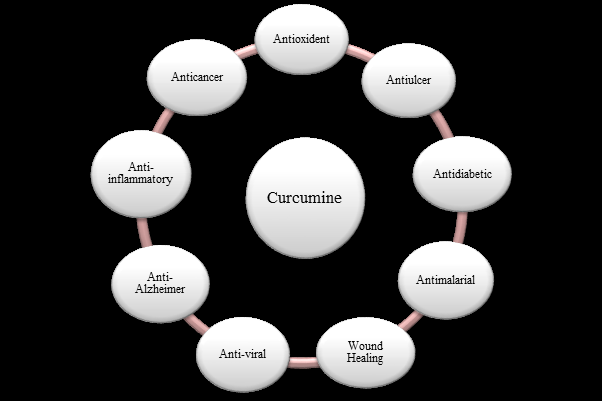
Turmeric has a carbohydrate content of 69.4 %, 13.1 % water, 6.3 % protein, 5.1 % fat, and 3.5 % minerals [6, 7]. Turmeric fractions are known as curcuminoids. Curcuminoids make up commercial curcumin, which contains around 77 % curcumin (curcumin I), 18 % demethoxycurcumin (curcumin II), 5 % bisdemethoxycurcumin (curcumin III), and cyclocurcumin (curcumin IV) [8]. Other components of raw turmeric include tumerone, zingiberone, atlantone, carbohydrates, proteins, and resins, as well as numerous volatile oils including tumerone, zingiberone, and atlantone. Turmeric has been used as a culinary spice in curry for ages in numerous Asian nations to give it its distinct flavour and colour. Turmeric has also established itself as an important folk medicinal herb with reported therapeutic properties for a variety of ailments and diseases, including inflammation and infection. It’s also used as a tonic and “blood purifier,” as well as a topical ointment, in bath soaps, and to heal cuts, bruises, and sprains. Because of its high pharmacological actions and health advantages, curcumin has long been regarded one of the most well investigated natural compounds. In this article, we go through the chemistry of curcumin and how it may be used to treat a variety of disorders, as seen in Figure 1.
Chemistry and Structure Activity Relationship (SAR) of Curcumin
Curcumin was extracted from the medicine for the first time in 1815, but its structure wasn’t discovered until 1913. Curcumin’s naturally occurring curcuminoids ratios are around 5% bisdemethoxycurcumin, 15% demethoxycurcumin, and 80% curcumin. Figure 2 Curcumin is insoluble in water while soluble in ethanol and acetone. The most essential active element responsible for turmeric’s biological action is curcumin [1, 7-bis (hydroxyl-3- methoxyphenyl)-1,6- heptadiene-3, 5-dione] (C21H20O6). Curcumin is relatively unstable in phosphate buffer at pH 7.4, and its stability is greatly enhanced by reducing the pH or adding glutathione, N-acetyl cysteine, ascorbic acid, or rat liver microsomes [9].
Curcumin is a bis-α, β-unsaturated β-diketone that occurs in equilibrium in both the keto and enol forms as in Figure 3. It has been discovered that the keto form predominates in neutral and acidic settings, whereas the enolic form predominates in alkaline circumstances.
O O
H3CO
OCH3
HO
OH
pH < 8 pH > 8
OH O
H3CO
OCH3
HO
OH Figure 3: Keto-enol tautomerism in curcumin.
Curcumin’s structure shows that it is made up of two phenyl rings joined by a seven-carbon keto-enol linker and replaced with hydroxyl and methoxy groups (C7). While curcumin is sourced from nature, its derivatives are usually made by a chemical process involving aryl-aldehydes and acetylacetone. This type of assembly can produce a variety of chemical analogues, such as molecules containing alkyl substituents on the linker’s middle carbon (C7 moiety) [10, 11]. The presence of a coplanar hydrogen donor group and α-diketone moiety is required for antiandrogenic action in the treatment of prostate cancer, according to a SAR investigation of curcumin derivatives, and reducing the linker from seven carbon atoms (C7) to five carbon atoms (C5) promotes antiandrogenic activity [12]. The benzyl rings are especially important for tumour growth inhibition, and adding hydrophobic substituents to them (R1, R2, R3, R4 in) has been associated to improved anticancer efficacy of curcumin derivatives [13, 14]. O-methoxy substitution was found to be more effective in suppressing nuclear factor κ-light-chain-enhancer of activated B cells (NF-κB), but this modification has also affected the lipophilicity of curcumin [15]. A summary of the potential sites of modification on the curcumin molecule is illustrated in Figure 4.
Chemical (in) Stability
Compound 1 degrades by two main pathways: solvolysis and oxidative degradation. The solvolysis (nucleophilic substitution or elimination by solvent molecules of the heptadienedione chain in aqueous alkaline buffer results in 90% compound degradation within 30 min. The major identified products are vanillin (5), ferulic acid (6), and feruloylmethane (7, Figure 5A). While the relative abundance of these degradation products differs at different incubation pH or temperature, they are also observed upon incubation of 1 in cell culture medium (RPMI 1640, Roswell Park Memorial Institute medium) and human blood. Recent spectroscopic analysis has revealed that solvolysis is only a minor pathway, and the major chemical degradation product is a bicyclopentadione (8) that is produced by autoxidation (Figure 5B). While oxidative degradation does not require photochemical initiation, photochemical degradation of 1 does occur in both the crystalline and solubilized forms. Crystalline 1 is degraded by exposure to sunlight to give primarily 5, 6, ferulic aldehyde (9), and vanillic acid (10, Figure 5C). The same degradation pattern is observed for 1 in organic solvents when it is exposed to light. Several solvent-dependent products are also formed. In methanol, isopropanol, and chloroform, an internal cyclization product is formed. Isopropanol can also behave as a reactive substrate, leading to the formation of a guaiacol derivative (11, Figure 5D).
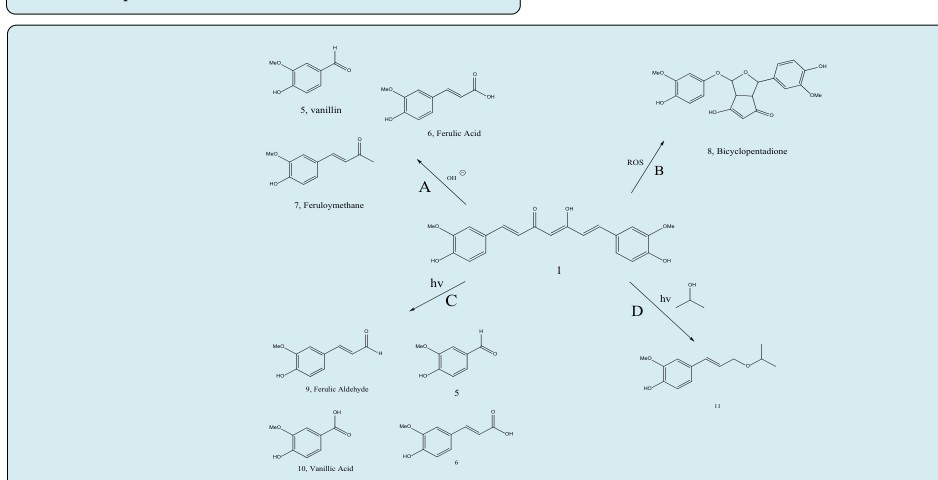
Figure 5: Major chemical degradation pathways of compound 1. (A) Solvolysis under alkaline pH in buffered aqueous solution rapidly leads to multiple fragmentation byproducts [16]. (B) Autoxidation in buffered medium creates a bicyclopentadione (8) that is the major degradation product in aqueous conditions [17]. (C) Photodegradation of 1 can occur when in crystalline form and dissolved in organic solvent [18]. (D) When dissolved in certain organic solvents (like isopropanol), photodegradation can include reaction with the solvent as a substrate [19].
Multiple Molecular Targets
Extensive evidence suggests that curcumin interacts with a wide range of molecular targets, including transcription factors, growth factors, cytokines, kinases, enzymes, receptors, and different proteins that regulate cell proliferation and death (Figure 5). Curcumin has direct interactions with cyclooxygenase-2 (COX-2), DNA polymerase, lipoxygenase (LOX), and glycogen synthase kinase-3 (GSK-3) and an autophosphorylation-activated protein kinase. It interacts with a number of transcription factors indirectly, including nuclear factor NF-kappa-B (NF- B), activator protein 1 (AP-1), catenin, signal transducer and activator of transcription (STAT) proteins, and peroxisome proliferator-activated receptor (PPAR). Curcumin has been shown to inhibit the function of several growth factors, including epidermal growth factor (EGF), fibroblast growth factor (FGF), platelet-derived growth factor (PDGF), transforming growth factor (TGF-), and other proteins involved in growth signalling and cell proliferation.
There is evidence that curcumin-induced apoptosis is linked to lower expression of proapoptotic proteins, vascular H MeO O O MeO HO OH
Versatile Activities of Curcumin
Turmeric has long been ingested by the people of endothelial growth factor (VEGF) and vascular endothelial growth factor receptor 1 (VEGFR-1). Curcumin completely inhibits the activity of a variety of protein kinases, including EGF receptor (EGFR) kinase, endoplasmic reticulum kinase, protein kinase A (PKA), protein kinase B (PKB), protein kinase C (PKC), and Janus kinase (JAK), while activating mitogen-activated protein kinases (MAPK). Curcumin inhibits cell cycle progression in many types of tumor cells. It has been shown to arrest the cell cycle at the G0/G1 or G2/M phase transitions by upregulating cyclin-dependent kinase inhibitors (e.g., p21, p27) and tumour suppressor p53, while downregulating G2/mitotic-specific cyclin-B1 and cell division control protein 2 homolog (encoded by CDC2) in immortalised human umbilical vein endothelial (ECV304) cells. Curcumin-induced apoptosis is also related with caspase-8 activation, Bcl-2 homology domain 3 (BH3)- interacting domain death agonist (BID) cleavage, Bcl-2-like protein 1 (Bcl2-L-1), cytochrome c release, caspase-9 and caspase-3 activation, and PARP cleavage [20, 21, 22]. Curcumin’s capacity to mediate several molecular targets, as well as its benign nature, making it an excellent therapeutic medication for a variety of chronic disorders.
OH
O O MeO
OMe
HO
HO O
8, Bicyclopentadione
ROS
B
OMe
D hv
MeO
O
HO
11 India and other subcontinent regions, not just in food but also in the treatment of a wide range of maladies, with no known negative effects. Curcumin is the active ingredient in turmeric (diferuloylmethane). Curcumin has lately piqued the interest of chemists due to its broad spectrum of possible medicinal uses for a wide range of ailments. As seen in Table 1, chemical changes to curcumin exhibit varying levels of activity. In the next sections, we discuss curcumin’s possibly major significance as a possible therapeutic agent in several illness conditions.
| S No | Curcumin derivatives | Chemical structure | Chemical modification | Activity |
|---|---|---|---|---|
| 1 | Tetrahydrocurcumin (THC) | Chemical structure of Tetrahydrocurcumin | Hydrogenated diketone moiety | Enhanced antioxidant activity |
| 2 | Gallium,vanadium,and indium complexes | Chemical structure of Gallium,vanadium,and indium complexes | Metal complexation by the β-diketones | Enhanced cytotoxic activity |
| 3 | Dimethyl curcumin | Chemical structure of Dimethyl curcumin | Methyl groups substitution on R2andR4 | Enhanced activity toward prostate and breast cancer |
| 4 | Hydrazinocurcumin | Chemical structure of Hydrazinocurcumin | Replacing the diketone moiety with hydrazine derivative | Higher efficacy in inhibition of colon cancer progression via antagonism of Ca2+/CaMe function |
| 5 | Curcumin carbocyclic analogues | Chemical structure of Curcumin carbocyclic analogues | Introducing carboxyl group at the diketone moiety | Enhanced antioxidant activity and stronger inhibition of HIV d1 protease |
Table 1: Pharmacological activity of curcumin derivatives.
Antioxidant Activity
Curcumin has been found in several studies to be effective at scavenging superoxide radicals, hydrogen peroxide, and nitric oxide (NO) from activated macrophages, as well as decreasing iron complexes and preventing lipid peroxidation [23]. These acts might be the primary mechanism by which curcumin exerts its pharmacological / therapeutic effects [24]. Curcumin therapy has also been shown to reduce lipid peroxidation and oxidative stress caused by smoking [25]. Curcumin has been demonstrated to protect renal cells and brain glial cells from oxidative damage [26]. Curcumin has also been shown to boost the activity of other anti- oxidants such as superoxide dismutase (SOD), catalase, and glutathione peroxidase. Curcumin also protects endothelial cells from oxidative stress by inducing haem oxygenase-1 [27]. Curcumin at a concentration of 0.1 percent was fed to retinol-deficient rats for three weeks and reduced the degree of lipid peroxidation in their tissues [28]. Curcumin’s anti- oxidant properties can protect tissues against the effects of oxidative stress caused by radiation (REF), metals, and severe skeletal muscle damage [29]. Its antioxidant activity is mostly attributed to the phenolic hydroxyl group, which scavenges free radicals by donating its H (electron) atom.
Antiulcer Activities
Ali, et al. developed and characterized mucoadhesive microspheres of curcumin for the potential use of treating gastric adenocarcinoma, gastric and duodenal ulcer associated with Helicobacter pylori [30]. The drug released from the optimized formulation showed a controlled-release pattern that offered both local and systemic action for effective treatment of H. pylori infection. Li, et al. studied curcumin– piperine mixtures in self microemulsifying drug delivery systems (SMEDDS) for the treatment of ulcerative colitis [31].
For in vivo studies, mice were used to test its therapeutic effectiveness against ulcerative colitis. Acute ulcerative colitis was induced by the oral administration of 5% dextran sulfate sodium (DSS) ad libitum for seven consecutive days. They measured the severity of clinical symptoms by assessing the body weight loss, stool consistency and stool blood, and finally, they evaluated the therapeutic effects of curcumin– piperine SMEDDS treatment. Their findings demonstrated that curcumin–piperine SMEDDS treatment significantly suppressed DSS-induced colitis in mice by improving their body weight and stool consistency as well as decreasing intestinal bleeding.
Antidiabetic Activity
Curcumin has shown to be effective against various causative factors of diabetes mellitus and its associated complications. Joshi, et al. increased the effectiveness of curcumin by introducing a self-nanoemulsifying drug delivery system (SNEDDS) for curcumin to enhance its bioavailability and then evaluated its efficacy in experimental diabetic neuropathy and found that it has significant therapeutic potential for the treatment of various diabetes complications [32]. Steigerwalt, et al. evaluated the improvement of diabetic angiopathy and retinopathy with curcumin [33]. They administered curcumin at the dosage of 2 tablets/day (each tablet containing 500 mg curcumin phospholipid, corresponding to 100 mg curcumin) for at least 4 weeks. These observations indicated the potential value of curcumin in the management of diabetes-associated peripheral microangiopathy and retinopathy [34].
Antimalarial Activity
Malaria has long been a major global health problem, as it is the most common parasite illness and the leading cause of illness and mortality worldwide. Curcumin has been proven in several studies to have antimalarial action both in vitro and in vivo [35, 36, 37]. Curcumin and an ethanolic extract of Curcuma longa have been shown to have significant in vitro inhibitory effectiveness against Plasmodium falciparum, Leishmania major, Coccida, and Trypanosoma species [38, 39, 40]. Curcumin’s leishmanicidal activity has also been demonstrated in vitro [41]. Curcumin has recently been found to be beneficial in the treatment of malaria [42].
Wound Healing Activity
Wounding or physical strain are the most common causes of skin injury. Skin injury triggers a complex and well-orchestrated healing process that culminates in the complete restoration of the integrity of damaged tissue and the restoration of this functional barrier [43, 44, 45]. Complete healing takes a long time in situations of serious injury. As a result, several researches on wound dressings that improve wound healing and reduce scar formation have been conducted. Curcumin research suggests that it may heal wounds and reduce the likelihood of scar formation more efficiently than other synthetic medicinal substances [46, 47, 48].
Anti-Viral Activity
Several in vivo and in vitro investigations have shown that curcumin has moderate to high inhibitory action against some viruses such as human simple-virus-2 and type I HIV [49, 50, 51]. Curcumin had no effect on HIV-1 proliferation in acutely infected MT-4 cells [52]. Two curcumin analogues, dicaffeolymethan and rosmarinic acid, have been found to have more antiviral action than curcumin [53]. Curcumin has been demonstrated to be effective in reducing P24 antigen production in cells infected with HIV-1, whether acutely or persistently, and also suppressing HIK 1 intergase enzymatic activities but not in other viral (HIV-1 reverse transcriptase) or cellular (RNA polymerase II) nucleic acid processing enzymes [54, 55].
Anti-Alzheimer’s Activity
Because of the anti-inflammatory and anti-oxidant actions of curcumin, it was tested against Alzheimer’s disease [56]. An alternative mechanism of these effects is metal chelation, which may reduce amyloid aggregation or oxidative neurotoxicity. Metals can induce beta aggregation and toxicity, and are concentrated in Alzheimer’s disease brain. The chelators desferrioxamine and clioquinol have exhibited anti- Alzheimer’s disease effects [57]. Review of Tang et al include the mechanism of phytochemicals (curcumin) in Alzheimer’s disease [58].
Anti-Inflammatory Activity
Curcumin was shown to be more efficient than hydrocortisone at inhibiting leukotriene production in rat peritoneal polymorphonuclear neutrophils [1, 2, 3, 4, 5, 6, 7, 8, 9].
Curcumin protected rats from urethral occlusion- induced renal interstitial inflammation and fibrosis. Inhibition of the NF-kappaB-dependent pathway is engaged in the processes, however AP-1 inhibition is unlikely to be implicated in curcumin’s positive effects [59].
Huang, et al. showed that curcumin inhibits proliferation of blood mononuclear cells and vascular smooth muscle cells [60]. Curcumin, according to the authors, might be employed clinically in transplant atherosclerosis. Curcumin has been demonstrated to block IL-1stimulated gene expression of a neutrophil chemotactic peptide, interleukin–8 (IL– 8), as well as lipopolysaccharide-induced IL-1 and TNF production by a human monocyte protein macrophage cell line [61, 62]. In addition, curcumin has been shown to inhibit the proinflammatory l Th1 cytokine profile, and NF-kappaB activation pathway [63, 64, 65]. Curcumin also suppresses MMP overexpression, presumably due to its ability to inhibit protein kinase C [66].
Anticancer Activity
Carcinogenesis is a three-stage process that comprises of three distinct but interconnected stages: initiation, promotion, and progression. The promotion of cancer is aided by oxidative and inflammatory tissue damage. Curcumin, as an anti-inflammatory and anti-oxidant substance, has the potential to prevent cancer by reducing tumour promotion. It also slows cell development and promotes apoptosis in a variety of cell types. Curcumin interacts with a variety of cell regulatory proteins, including the MAP cascade. It inhibits v-Src directly, resulting in decreased phosphorylation of Src, cortactin, and focal adhesion kinase (FAK). Curcumin also directly inhibits the activity of FAK. This results in a lack of Src-mediated cell motility, which has crucial consequences for invasion and metastasis. Bone inflammation and cancer are both disorders that cause bone resorption to rise. Curcumin has been shown to promote cell death and decrease bone resorption. As a result, it has been proposed for usage in cases of bone inflammation and malignancy.
Toxicological Properties of Curcumin
Curcumin is known to be non-toxic in both humans and animals. Adults in India are estimated to consume 80–200 mg of curcumin each day [67]. Except for a few occurrences of contact dermatitis, there have been no reports of side effects from curcumin or its equivalents [68]. In a phase 1 clinical research involving 25 volunteers, treatment of up to 8000 mg of curcumin per day for three months resulted in no detectable toxicity. Five more clinical trials in which individuals were administered 1125–2500 mg curcumin per day validated the substance’s apparent safety. Turmeric may have an antiplatelet activity, and its concurrent use with anticoagulants may lead to an additive effect [69]. Although there have been no instances of this in humans, it should be avoided in individuals with bleeding problems and bile duct blockage, and should only be used in individuals with gallstones under the guidance of a physician. According to the literature, curcumin has no harmful effects. Curcumin has also been pronounced safe and well tolerated by the US Food and Drug Administration, even at dosages of 8 g/day for 3 months and 12 g/day for 3 to 4 months [70, 71, 72, 73, 74, 75].
Limitations of Curcumin
Despite curcumin’s diverse pharmacological potential, its use has some serious drawbacks, including poor water solubility, low oral bioavailability, poor absorption from the gastrointestinal (GI) tract, rapid clearance from the body, and degradation at alkaline pH, which reduces its bioavailability and absorption in the preintestinal region, resulting in a reduction in the drug’s dose [76, 77, 78, 79]. Curcumin has a fast metabolic rate and a short biological half-life. It has a low physicochemical stability.
Conclusion
Curcumin has been widely utilised for its numerous health advantages all over the world. It may also aid in the control of multiplication of Pharmacological activity in health, as well as enhance the health for bodily advantages for human health, hence increasing recuperation and subsequent performance in active individuals. Curcumin is a nutraceutical ingredient featuring diverse pharmacological properties, some of which have been studied and tested in both humans and animals. The study discussed in the preceding sections emphasise the important function of curcumin in the treatment and even cure of many illnesses. Furthermore, the findings reported here show that using curcumin at large dosages for long periods of time is quite safe and nontoxic. Overall, our findings show that curcumin has significant medicinal value and scope in future.
References
-
Chotchoungchatchai S, Saralamp P, Jenjittikul T, Pornsiripongse S, Prathanturarug S (2012) Medicinal plants used with Thai Traditional Medicine in modern healthcare services : A case study in Kabchoeng Hospital , Surin Province , Thailand. J Ethnopharmacol 141(1): 193-205.
-
Goel A, Kunnumakkara AB, Aggarwal BB (2008) Curcumin as ‘“ Curecumin ”’: From kitchen to clinic. Biochem Pharmacol 75(4): 787-809.
-
Lal J (2012) Turmeric, Curcumin and Our Life : A Review. Bull Environ Pharmacol Life Sci 1(7): 11-17.
-
Eigner D, Scholz D (1999) Ferula asa-foetida and Curcuma longa in traditional medical treatment and diet in Nepal. J Ethnopharmacol 67(1): 1-6.
-
Nabati M, Mahkam M, Heidari H (2014) Isolation and characterization of curcumin from powdered rhizomes of turmeric plant marketed in Maragheh city of Iran with soxhlet technique. Quarterly Journal of Iranian Chemical Communication 2(4): 236-325.
-
Bagchi A (2012) Extraction of Curcumin. IOSR-JESTFT 1(3): 1-16.
-
Heffernan C, Ukrainczyk M, Gamidi RK, Hodnett BK, Rasmuson ÅC (2017) Extraction and Purification of Curcuminoids from Crude Curcumin by a Combination of Crystallization and Chromatography. Org Process Res Dev 21(6): 821-826.
-
Esatbeyoglu T, Huebbe P, Ernst IMA, Chin D, Wagner AE, et al. (2012) Curcumin — From Molecule to Biological Function. Angew Chem Int Ed Eng 51(22): 2-27.
-
Oetari S, Sudibyo M, Commandeur JNM, Samhoedi R, Vermeukn NPE (1996) Effects of Curcumin on Cytochrome P450 and Glutathione S-Transferase Activities in Rat Liver. Biochemical Pharmacology 51(1): 39-45.
-
Chen W, Deng S, Zhou B, Yang L, Liu Z (2006) Curcumin and its analogues as potent inhibitors of low density lipoprotein oxidation : H-atom abstraction from the phenolic groups and possible involvement of the 4-hydroxy-3-methoxyphenyl groups. Free Radic Biol Med 40(3): 526-535.
-
Ohtsu H, Xiao Z, Ishida J, Nagai M, Wang H, et al. (2002) Antitumor Agents. 217. † Curcumin Analogues as Novel Androgen Receptor Antagonists with Potential as Anti- Prostate Cancer Agents. J Med Chem 45(23): 5037-5042.
-
Lin L, Shi Q, Su C, Shih C, Lee K (2006) Antitumor agents 247 . New 4-ethoxycarbonylethyl curcumin analogs as potential antiandrogenic agents. Bioorg Med Chem 14(8): 2527-2534.
-
Xu G, Chu Y, Jiang N, Yang J, Li F (2012) The Three Dimensional Quantitative Structure Activity Relationships (3D-QSAR ) and Docking Studies of Curcumin Derivatives as Androgen Receptor Antagonists. Int J Mol Sci 13(5): 6138-6155.
-
Yadav B, Taurin S, Rosengren RJ, Schumacher M, Diederich M, et al. (2010) Synthesis and cytotoxic potential of heterocyclic cyclohexanone analogues of curcumin. Bioorg Med Chem 18(18): 6701-6707.
-
Sandur SK, Pandey MK, Sung B, Ahn KS, Murakami A, et al. (2007) Curcumin, demethoxycurcumin, bisdemethoxycurcumin, tetrahydrocurcumin and turmerones differentially regulate anti-inflammatory and anti-proliferative responses through a ROS- independent mechanism. Carcinogenesis 28(8): 1765- 1773.
-
Wang YY, Pan MH, Cheng AL, Lin LI, Ho YS, et al. (1997) Stability of curcumin in buffer solutions and characterization of its degradation products. J Pharm Biomed Anal 15(12): 1867-1876.
-
Griesser M, Pistis V, Suzuki T, Tejera N, Pratt DA, et al. (2011) Autoxidative and cyclooxygenase-2 catalyzed transformation of the dietary chemopreventive agent curcumin. J Biol Chem 286(2): 1114-1124.
-
Tønnesen HH, Karlsen J, Henegouwen GB (1986) Studies on curcumin and curcuminoids. VIII. Photochemical stability of curcumin. Z Lebensm Unters Forsch 183(2): 116-122.
-
Khurana A, Ho CT (2006) High Performance Liquid Chromatographic Analysis of Curcuminoids and Their Photo-oxidative Decomposition Compounds in Curcuma Longa L. Journal of Liquid Chromatography 11(11): 2295-2304.
-
Kasi PD, Tamilselvam R, Skalicka-wo K, Nabavi SF, Daglia M, et al. (2016) Molecular targets of curcumin for cancer therapy : an updated review. Tumour Biol 37(10): 13017-13028.
-
Xue X, Yu J, Sun D, Zou W, Kong F, et al. (2013) Curcumin as a multidrug resistance modulator — A quick review. Biomed Prev Nutr 3(2): 173-176.
-
Ravindran J, Prasad S, Aggarwal BB (2009) Curcumin and Cancer Cells : How Many Ways Can Curry Kill Tumor Cells Selectively ?. AAPS J 11(3): 495-510.
-
Tilak JC, Banerjee M, Mohan H, Devasagayam TPA (2004) Antioxidant Availability of Turmeric in Relation to its Medicinal and Culinary Uses. Phytother Res 18(10): 798- 804.
-
Scartezzini P, Speroni E (2000) Review on some plants of Indian traditional medicine with antioxidant activity. J Ethnopharmacol 71(1-2): 23-43.
-
Cohly HH, Taylor A, Angel MF, Salahudeen AK (1998) Effect of turmeric, turmerin and curcumin on H2O2- induced renal epithelial (LLC-PK1) cell injury. Free Radic Biol Med 24(1): 49-54.
-
Reddy AC, LokeshBR (1994) Effect of dietary turmeric (Curcuma longa) on iron-induced lipid peroxidation in the rat liver. Food Chem Toxicol 32(3): 279-283.
-
Motterlini R, Foresti R, Bassi R, Green CJ (2000) Curcumin, an antioxidant and anti-inflammatory agent, induces heme oxygenase-1 and protects endothelial cells against oxidative stress. Free Radic Biol Med 28(8): 1303-1312.
-
Kaul S, Krishnakantha TP (1997) Influence of retinol deficiency and curcumin / turmeric feeding on tissue microsomal membrane lipid peroxidation and fatty acids in rats. Mol Cell Biochem 175(1-2): 43-48.
-
Vignaud A, Cebrian J, Martelly I, Caruelle J, Ferry A (2005) Effect of anti-inflammatory and antioxidant drugs on the long-term repair of severely injured mouse skeletal muscle. Exp Physiol 90(4): 487-495.
-
Hatcher H, Planalp R, Cho J, Torti FM, Torti SV (2008) Review Curcumin : From ancient medicine to current clinical trials. Cell Mol Life Sci 65(11): 1631-1652.
-
Sharma RA, Steward WP, Gescher AJ (2007) Pharmacokinetics and Pharmacodynamics of Curcumin. Adv Exp Med Biol 595: 453-470.
-
Ji HF, Shen L (2014) Can improving bioavailability improve the bioactivity of curcumin ? Trends Pharmacol Sci 35(6): 265-266.
-
Amalraj A, Pius A, Gopi S, Gopi S (2016) Biological activities of curcuminoids, other biomolecules from turmeric and their derivatives e A review. J Tradit Complement Med 7(2): 205-233.
-
Mahmood K, Zia KM, Zuber M, Salman M, Anjum MN (2015) Recent developments in curcumin and curcumin based polymeric materials for biomedical applications: A review. Int J Biol Macromol 81: 877-890.
-
Takahashi M, Uechi S, Takara K, Asikin Y, Wada K (2009) Evaluation of an Oral Carrier System in Rats : Bioavailability and Antioxidant Properties of Liposome- Encapsulated Curcumin. J Agric Food Chem 57(19): 9141-9146.
-
Yallapu MM, Jaggi M, Chauhan SC (2012) Curcumin nanoformulations: a future nanomedicine for cancer. Drug Discov Today 17(1-2): 71-80.
-
Baglole KN, Boland PG, Wagner BD (2005) Fluorescence enhancement of curcumin upon inclusion into parent and modified cyclodextrins. Journal of Photochemistry and Photobiology A: Chemistry 173(3): 230-237.
-
Rasmussen HB, Christensen SB, Kvist LP, Karazmi A (2000) A Simple and Efficient Separation of the Curcumins , the Antiprotozoal Constituents of Curcuma longa. Planta Med 66(4): 396-398.
-
Allen PC, Danforth HD, Augustine PC (1998) Dietary modulation of avian coccidiosis. Int J Parasitol 28(7): 1131-1140.
-
NII-Electronic Library Service.
-
Koide T, Nose M, Ogihara Y, Yabu Y, Ohta N (2002) Leishmanicidal Effect of Curcumin in Vitro. Biol Pharm Bull 25(1): 131-133.
-
Reddy RC, Vatsala PG, Keshamouni VG, Padmanaban G, Rangarajan PN (2005) Curcumin for malaria therapy. Biochem Biophys Res Commun 326(2): 472-474.
-
Cui J, Yu B, Zhao Y, Zhu W, Li H, et al. (2009) Enhancement of oral absorption of curcumin by self-microemulsifying drug delivery systems. Int J Pharm 371(1-2): 148-155.
-
Gao Y, Li Z, Sun M, Li H, Guo C, et al. (2010) Preparation, characterization, pharmacokinetics, and tissue distribution of curcumin nanosuspension with TPGS as stabilizer. Drug Dev Ind Pharm 36(10): 1225-1234.
-
Gota VK, Maru GB, Soni TG, Gandhi TR, Kochar N, et al. (2010) Safety and Pharmacokinetics of a Solid Lipid Curcumin Particle Formulation in Osteosarcoma Patients and Healthy Volunteers. J Agric Food Chem 58(4): 2095- 2099.
-
Mohanty C, Acharya S, Mohanty AK, Dilnawaz F, Sahoo SK (2010) Curcumin-encapsulated MePEG / PCL diblock copolymeric micelles : a novel controlled delivery vehicle for cancer therapy. Nanomedicine (Lond) 5(3): 433-449.
-
The Molecular Targets and Therapeutic Uses of Curcumin in Health and Disease.
-
Mukerjee A, Vishwanatha JK (2009) Formulation, Characterization and Evaluation of Curcumin-loaded PLGA Nanospheres for Cancer Therapy. Anticancer Res 29(10): 3867-3875.
-
Bourne KZ, Bourne N, Reising SF, Stanberry LR (1999) Plant products as topical microbicide candidates : assessment of in vitro and in vivo activity against herpes simplex virus type 2. Antiviral Res 42(3): 219-226.
-
Moghadamtousi SZ, Kadir HA, Hassandarvish P, Tajik H, Abubakar S, et al. (2014) A Review on Antibacterial , Antiviral , and Antifungal Activity of Curcumin. BioMed Research International 2014: 1-12.
-
Jiang M, Lin J, Chen SS (1996) Inhibition of HIV- 1 Tat-Mediated Transactivation by Quinacrine and Chloroquine. Biochem Biophys Res Commun 226(1): 1-7.
-
Artico M, Santo R Di, Costi R, Novellino E, Greco G, et al. (1998) Geometrically and Conformationally Restrained Cinnamoyl Compounds as Inhibitors of HIV-1 Integrase: Synthesis, Biological Evaluation, and Molecular Modeling. J Med Chem 41(21): 3948-3960.
-
Mazumder A, Neamati N, Sunder S, Schulz J, Pertz H, et al. (1997) Curcumin Analogs with Altered Potencies against HIV-1 Integrase as Probes for biochemical mechanisms of drug action. J Med Chem 40(19): 3057-3063.
-
Li CJ, Zhang LJ, Dezube BJ, Crumpacker CS, Pardee AB (1993) Three inhibitors of type 1 human immunodeficiency virus long terminal repeat-directed gene expression and virus replication. Proc Natl Acad Sci U S A 90(5): 1839-1842.
-
Burke TR, Fesen MR, Mazumder A, Wang J, Carothers AM, et al. (1995) Hydroxylated Aromatic Inhibitors of HIV- 1 Integrase. J Med Chem 38(21): 4171-4178.
-
Baum L, Ng A (2004) Curcumin interaction with copper and iron suggests one possible mechanism of action in Alzheimer ’ s disease animal models. J Alzheimers Dis 6(4): 367-377.
-
Hamaguchi T, Ono K, Yamada M (2010) Review: Curcumin and Alzheimer’s Disease. CNS Neuroscience & Therapeutics 16(5): 285-297.
-
Tang M, Taghibiglou C (2017) The Mechanisms of Action of Curcumin in Alzheimer’s Disease. Journal of Alzheimer’s Disease 58(4): 1003-1016.
-
Kuwabara N, Tamada S, Iwai K, Teramoto K, Kaneda N, et al. (2005) Attenuation of renal fibrosis by curcumin in rat obstructive nephropathy. Urology 67(2): 440-446.
-
Huang MT, Ma W, Yen P, Xie JG, Han J, et al. (1997) Inhibitory effects of topical application of low doses of curcumin on 12- O -tetradecanoylphorbol-13-acetate- induced tumor promotion and oxidized DNA bases in mouse epidermis. Carcinogenesis 18(1): 83-88.
-
Chaudhary LR, Avioli L V (1996) Regulation of interleukin-8 gene expression by interleukin-1beta, osteotropic hormones, and protein kinase inhibitors in normal human bone marrow stromal cells. J Biol Chem 271(28): 16591-16596.
-
Gupta B, Ghosh B (1999) Curcuma longa inhibits TNF- a induced expression of adhesion molecules on human umbilical vein endothelial cells. Int J Immunopharmacol 21(11): 745-757.
-
Kang BY, Song YJ, Kim K, Choe YK, Hwang SY, et al. (1999) Curcumin inhibits Th1 cytokine profile in CD4+ T cells by suppressing interleukin-12 production in macrophages. Br J Pharmacol 128(2): 380-4.
-
Chen YR, Tan TH (1998) Inhibition of the c-Jun N-terminal kinase (JNK) signaling pathway by curcumin. Oncogene 17: 173-178.
-
Plummer SM, Holloway KA, Manson MM, Munks RK, Kaptein A, et al. (1999) Inhibition of cyclo-oxygenase 2 expressions in colon cells by the chemopreventive agent curcumin involves inhibition of NF- k B activation via the NIK/IKK signalling complex. Oncogene 18(44): 6013- 6020.
-
Onodera S, Kaneda K, Mizue Y, Koyama Y, Fujinaga M, et al. (2000) Macrophage Migration Inhibitory Factor Up-regulates Expression of Matrix Metalloproteinases in Synovial Fibroblasts of Rheumatoid Arthritis. J Biol Chem 275(1): 444-450.
-
Commandeur JN, Vermeulen NP (1996) Cytotoxicity and cytoprotective activities of natural compounds. The case of curcumin. Xenobiotica 26(7): 667-680.
-
Morgan CJ, Haworth AE, Morgan CJ (2003) Domestic Setting pp: 224-238.
-
Shah BH, Nawaz Z, Pertani SA, Roomi A, Mahmood H, et al. (1999) Inhibitory effect of curcumin, a food spice from turmeric, on platelet-activating factor- and arachidonic acid-mediated platelet aggregation through inhibition of thromboxane formation and Ca2+ signalling. Biochem Pharmacol 58(7): 1167-1172.
-
Lao CD, Ruffin MT, Normolle D, Heath DD, Murray SI, et al. (2006) Dose escalation of a curcuminoid formulation. BMC Complement Altern Med 6: 10.
-
Das KC, Das CK (2002) Curcumin (diferuloylmethane), a singlet oxygen ((1)O(2)) quencher. Biochem Biophys Res Commun 295(1): 62-66.
-
Dhillon N, Aggarwal BB, Newman RA, Wolff WA, Kunnumakkara AB, et al. (2008) Cancer Therapy : Clinical Phase II trial of Curcumin in Patients with Advanced Pancreatic Cancer. Clin Cancer Res 14(14): 4491-4500.
-
Aggarwal BB, Sung B (2008) Pharmacological basis for the role of curcumin in chronic diseases : an age-old spice with modern targets. Trends Pharmacol Sci 30(2): 85-94.
-
Mishra K, Ojha H, Chaudhury NK (2012) Estimation of antiradical properties of antioxidants using DPPH assay: A critical review and results. Food Chemistry 130(4): 1036-1043.
-
Abe Y, Hashimoto S, Horie T (1999) Curcumin inhibition of inflammatory cytokine production by human peripheral blood monocytes and alveolar macrophages. Pharmacol Res 39(1): 41-47.
-
Yu H, Huang Q (2010) Enhanced in vitro anti-cancer activity of curcumin encapsulated in hydrophobically modified starch. Food Chem 119(2): 669-674.
-
López-lµzaro M (2008) Review Anticancer and carcinogenic properties of curcumin : Considerations for its clinical development as a cancer chemopreventive and chemotherapeutic agent. Mol Nutr Food Res 1: S103-S127.
-
Tuba Ak, Gülçin I (2008) Antioxidant and radical scavenging properties of curcumin. Chemico-Biological Interactions 174(1): 27-37.
-
Schaaf C, Shan B, Buchfelder M, Losa M, Kreutzer J, et al. (2009) Curcumin acts as anti-tumorigenic and hormone- suppressive agent in murine and human pituitary tumour cells in vitro and in vivo. Endocr Relat Cancer 16(4): 1339-1350.
- Acido Labile or Gastro Irritant Apis and Enteric Release in Galenic Practice: An Overview
- A Study on Knowledge, Attitude and Practice of Hand Hygiene among Healthcare Professionals at a Tertiary Care Hospital, India
- Influence of Inoculum Concentration on In Vivo Incubation Period of Emmia lacerata, Pathogenesis and Management of Wilt in Pepper (Capsicum annuum L.)
- Vanilla’s Chemistry
- Marine Anti-Cancer Compounds and Adverse Effects of Global Warming on Oceans: An Overview
- Serological Investigation of Chikungunya Virus Antibody among Malaria-Suspected Febrile Patients in Some Healthcare Facilities in Rivers State