
Pharmacological Action of Taxifolin: A Review
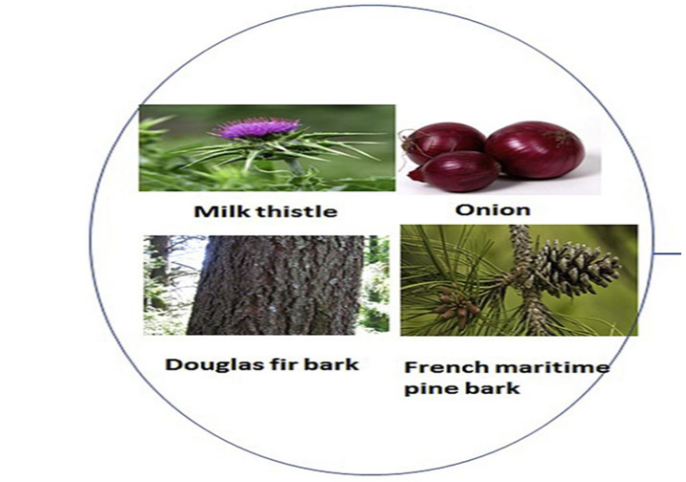
Taxifolin is a potent plant flavonoid. The most sources of taxifolin include onions, tamarind seeds, French maritime bark and milk thistle and are also commercially available in semisynthetic forms. It was within the mid-1950s that scientists for the first time extracted and respected taxifolin, (dihydroquercetin) which is an analogue of quercetin or rutin but with somewhat different properties. It displays vitamin P activities, boosting vascular membranes and inflammatory reactions, reducing allergic and also has many properties not shared by the majority of other bioflavonoids. Taxifolin therefore exerts a much more potent antioxidant action than most flavonoids. The main pharmacological actions of taxifolin are antibacterial, antioxidative, antifungal, anticancer and even anti-inflammatory actions. Hence, an attempt was taken to review the therapeutics actions of taxifolin.
Introduction
The bioactive compounds, obtained from plants, have been identified as novel agents, which indicated a vital role in the inhibition and mitigation of different human ailments such as cancer, inflammation, neurodegenerative disease and cardiovascular disease over the last few decades [1]. Flavonoids are phenolic compounds present in various plants. Even though they were isolated in 1814 by the scientist E. Chevreul, it was 1936 before they were properly discovered nearly accidentally by Hungarian scientist Albert Szent Gyorgyi A friend of his had succeeded in stopping his gums bleeding by taking a crude vitamin C preparation separated from lemon. According to the researches a wide range of pharmacological activities of flavonoids has been identified that includes, anti-inflammatory, hepatoprotective, antioxidant, antiangiogenic properties [2], anti-diabetic [3], neuroprotective, anti-Alzheimer’s disease [4], cardioprotective [5], which is mainly due to their degree of hydrox-ylation, substitutions other structural class and conjugations, and degree of polymerization along with metal chelation activity [6]. Recent studies shows that higher flavonoid intake within the diet is inversely related to mortality threat [7].
It was within the mid-1950s that scientists for the primary time extracted and represented taxifolin, or dihydroquercetin, that is Associate in Nursing analogue of quercetin or rutin however with somewhat totally different properties. They need shown that taxifolin protects cell membranes, improves capillary activity and blood microcirculation throughout the body and normalises metabolism at a cellular level. It conjointly has medicine, hepatoprotective and anti-oedema effects, and reduces each steroid alcohol levels and therefore the development of blood clots and body.
Sources
Flavonoids are the most large secondary metabolite found in plants Figure 1 with significant health-promoting effects [8, 9]. It is evaluated that the dietary intake of flavonoids to be 50 and 800 mg per day [10, 11]. Taxifolin is 3,5,7,3′,4′-pentahydroxyflavanone (dihydroquercetin) which is a class of polyphenols. It is largely found in olive oil, onion, in citrus fruits and grapes [5]. Along with that it is also found in conifers like the Larix sibirica, Siberian larch, in Pinus roxburghii, in Cedrus deodara [12] and in the Chinese yew, Taxus chinensis var. mairei [13].
Chemistry
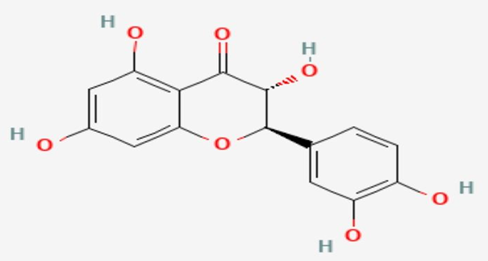
Taxifolin is a subclass of flavanonols, in flavonoids family. The essential structure of the taxifolin Figure 2 consists of two phenyl groups which are joined together by a heterocyclic ring referred to as ring C [14, 15]. Derivatives of dihydroquercetin (DHQ), a kind of flavonoid found in nature, seem in numerous forms that include free and glycosylated phenol ethers, as well as esters [16].
Pharmacological Actions
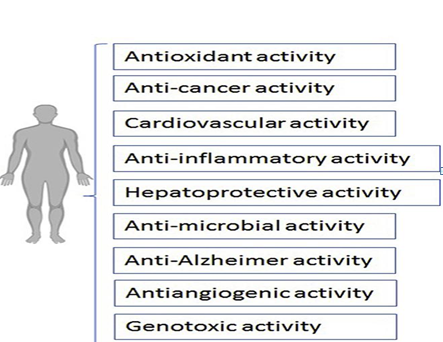
Taxifolin has numerous pharmacological benefits, including anti-cancer therapeutic [17, 18] anti-ageing [19], antioxidant [20] and anti-inflammatory [21] properties. Moreover, Taxifolin has been reported to inhibit tyrosinase, while simultaneously increasing tyrosinase protein levels [22]; it has also been used in depigmentation drugs, whitening cosmetics, food additives and health-care products [23, 24] (Figure 3).
Cardiovascular activity
Hyperlipidemia is that the most important factor for the development of atherosclerosis and coronary cardiovascular disease due to increase in the cholesterol or LDL cholesterol level [25]. Scientists have shown that evaluate inhibits lipid peroxidation, a process that often leads to atherosclerosis [26]. In an animal study indicated that taxifolin inhibited peroxidation of serum and hepatic lipids following toxic ionising radiation [27]. Its inhibitory effects are boosted by vitamins C and E6. By preventing the peroxidation of potentially dangerous low density lipoproteins, taxifolin helps inhibits atherosclerosis.. In a study it has been indicted that the pretreatment of HepG2 cells with taxifolin causes the prevention of the cholesterol synthesis along with the reduction of the HMG-CoA reeducates activity [28].
Besides the regulation of lipid profile taxifolin has additionally been found to act on the many pathways to regulate the blood pressure and showed antihypertensive activity. Taxifolin has been found to have the possess to lower blood pressure and to improve endothelial function. Bernatova and Liskova documented all the achievable mechanisms from preclinical studies through which taxifolin showed its antihypertensive activity in the cardiovascular system mainly via endothelial NO production, and also iNOS expression and reduction of ACE activity [29]. Additional studies have shown that taxifolin lowers serum and hepatic lipid levels and cholesterol concentrations in rats, its action showing much more effective than that of quercetin.
Antioxidant Activity
Taxifolin is related with antioxidant activity and capillary protecting action [30]. Also, taxifolin has been found that the 3.4 times greater effectiveness than quercetin at the dose of 100 mg/kg and 4.9 times for the dose of 300 mg/kg. It is also indicating that taxifolin has antioxidant activity in vivo, which was evaluated in Wistar Rats, suffering from tetra chloromethane induced hepatitis [31]. In recent study, the rats treated with taxifolin show a decrease in the lipid peroxidation in liver and serum by reacting with the thiobarbituric acid, which reveals the antioxidant property of taxifolin [32]. The antioxidant activity of taxifolin is also exhibited through its neuroprotective action via the inhibition of oxidative neuronal injuries in rat cortical cells, that was supported by the DPPH radical scavenging activity and the inhibition of macromolecule peroxidation [33]. The inhibitor potential of taxifolin was also evaluated by the deoxyribose degradation assay for its electrochemical redox potentials [34].
Inhibition of Intestinal Mobility
Taxifolin administrated by intraperitonealat dose of 100−200 mg/kg reduced (23−41%; P < 0.05−0.01) intestinal transit at doses of 100−200 mg/kg. This effect was antagonized byphentolamine (87–91%) and yohimbine (87−96%) and however not by prazosin, atropine, propranolol, hexamethonium, naloxone, mepyramine and cyproheptadine. Yohimbine (92-96%) also antagonized the inhibitory effect of flavonols (12.5–50 mg/kg) (P < 0.05– 0.01) on intraluminal accumulation of fluid and looseness of the bowels evoked by castor oil. Against, this verapamil potentiated the flavone effect. It is indicated that these effects, influenced by the structure of the molecules, are mediated by alpha-2 adrenergic receptors and calcium [35].
Anti-Inflammatory Activity
On the report of the experiment conducted by Wang and his co re-searchers, taxifolin can regulate the stimulation of NF-κB in rats diagnosed with cerebral ischemia-reperfusion injury. Additionally, taxifolin is also associated with the inhibition of leukocyte infiltration and the expression iNOS and COX-2 in brain [36]. This evidence for the antioxidant efficacy of taxifolin through the activation of NF-κB pathway. It is also beneficial against osteoclastogenesis which was examined through both in vivo and in vitro models as well [37]. Recently study has been found that taxifolin causes the prevention of osteoclast genesis through RANKL via suppression of the RANKL induced gene expression without significant cytotoxicity that was evaluated via in vitro study [38]. The stimulation of rat basophilic leukemia (RBL)-2H3 cells, bone marrow-derived mast cells and human mast cell line by the action of taxifolin was also evaluated in other study. They showed that taxifolin inhibits the degranulation, production of interlukin-6 (IL-6), generation of leukotriene C4 and expression of cyclooxygenase-2 (COX-2) in bone marrow-derived mast cells. Taxifolin also causes the inhibition of RBL-2H3 and HMC-1 cells activation through MAPKs/cPLA2 and Act/IKK/NF-κB signal pathway [39]. In overall it concluded that taxifolin could become a prospective drug contender for the treatment of inflammatory and allergic diseases. Furthermore, taxifolin can reduce the inflammation and oxidative stress and triggers autophagy. It is also suggested that taxifolin provides a protective mechanism against the CPF-induced BV2 cell toxicity through the up regulation of pump level along with the stimulation of Nrf2/HO-1 signaling pathway [40].
Antifungal Activity
The antifungal activity of taxifolin has also been through numerous studies. According to the previous research the antifungal activity of taxifolin was being assessed in five totally different fungal species such As Alternaria alternata (Fr.) Keissler, Aspergillus niger van Tieghem, Aspergillus fumigatus Fresenius, Macrophomina phaseolina Goid and lPenicillium citrii. They were treated by different concentrations (100, 300, 500, 700, 900, and 1000 ppm) of taxifolin that showing as excellent antifungal activity through the numerous inhibition of fungal growth in a dose dependent manner [41].
Prevents Complications of Diabetes
In diabetics, taxifolin has been indicated to protect against two common causes of sight loss: degeneration and cataract. The previous develops when the area of the retina responsible for detailed vision starts to deteriorate. Taxifolin promotes blood flow to this present of the eye, providing protection against loss of vision. Additionally, by inhibiting the activity of an enzyme in the lens, it may also help prevent cataract formation in diabetics. Effect of taxifolin on diabetes related disorders. The function of taxifolin on the metabolism of glucose and water-salt in urinary organ with metabolic syndrome rats was evaluated. The results showed that taxifolin considerably opposes the urinary organ indices and histopathological alterations in MS rats. Along with that taxifolin additionally will increases the protein levels related with downstream glucose metabolism pathway of PI3K/AKT and maintains the glucose homeostasis with inhibition of RAAS and inflammatory responses [27].
Diabetics retinopathy (DR) is one among the leading causes of blindness. It has been expressed that taxifolin provides a protective effect against alloxan-induced DR, during which taxifolin effectively suppressed reactive oxygen species, IL-1b and TNF-a production which demonstrate that taxifolin treatment could be very important alternative for the treatment of DR [42]. Taxifolin is also related with the anticataractogenesis activity And will attenuate the diabetic retinopathy in streptozotocin induced diabetic rats. Results from the study suggested that the treatment of the Diabetes induced rats with taxifolin showed reduced status of oxidative stress and causes inhibition of p38 MAPK, ERK ½ and aldose reeducates Levels. Treatment with taxifolin additionally improved the lens opacity in STZ-induced diabetic retinopathy rat models [43].
Boosts The Immune System
This Studies shows that taxifolin may help combat serious infections such as pneumonia or Human immunevirus. Researchers evaluate the effects of taxifolin on patients suffering from acute pneumonia. When subjects following a standard treatment supplemented with an antioxidant formula containing taxifolin, they improvement better from the symptoms of lung inflammation than patients receiving the traditional treatment alone [44]. Preclinical studies seem to indicate that taxifolin may help combat the HIV virus. It was recently found to inhibit the activity of an enzyme used by viruses such as Human immune virus to replicate their genetic [45].
Conclusion
Taxifolin can be used instead of various alternative flavonoids which are currently in use today and even have no side effects at all, along with better action as an ant carcinogen or an antioxidant and so helps in increasing immunity of the body. Hence, it should be incorporated into the daily diet as it can greatly increase the incidence of disease.
References
-
Ahmadi A, Shadboorestan A, Nabavi SF, Setzer WN, Nabavi SM (2015) The role of hesperidin in cell signal transduction pathway for the prevention or treatment of cancer. Curr Med Chem 22(30): 3462-3471.
-
Butler MS (2004) The role of natural product chemistry in drug discovery. J Nat Prod 67(12): 2141-2153.
-
Liu YJ, Zhan J, Liu XL, Wang Y, Ji J, et al. (2014) Dietary flavonoids intake and risk of type 2 diabetes: a meta- analysis of prospective cohort studies. Clin Nutr 33(1): 59-63.
-
Min HY, Jang HJ, Park KH, Hyun SY, Park J, et al. (2019) The natural compound gracillin exerts potent antitumor activity by targeting mitochondrial complex II. Cell Death Dis 10: 810.
-
Hooper L, Kroon PA, Rimm EB, Cohn JS, Harvey I, et al. (2008) Flavonoids, flavonoid-rich foods, and cardiovascular risk: a meta-analysis of randomized controlled trials. Am J Clin Nutr 88(1): 38-50.
-
Heim KE, Tagliaferro AR, Bobilya DJ (2002) Flavonoid antioxidants: chemistry, metabolism and structure- activity relationships. J Nutr Biochem 13(10): 572-584.
-
Godos J, Castellano S, Ray S, Grosso G, Galvano F (2018) Dietary polyphenol intake and depression: results from the Mediterranean healthy eating, lifestyle and aging (MEAL) study. Molecules 23(5): 999.
-
Pingili RB, Pawar AK, Challa SR, Kodali T, Koppula S, et al. (2019) A comprehensive review on hepatoprotective and nephroprotective activities of chrysin against various drugs and toxic agents. Chem Biol Interact 308: 51-60.
-
Nabavi SF, Braidy N, Habtemariam S, Orhan IE, Daglia M, et al. (2015) Neuroprotective effects of chrysin: from chemistry to medicine. Neurochem Int (90): 224-231.
-
Pietta PG (2000) Flavonoids as antioxidants. J Nat Prod 63 (7): 1035-1042.
-
Xu H, Luo J, Huang J, Wen Q (2018) Flavonoids intake and risk of type 2 diabetes mellitus: a meta-analysis of prospective cohort studies. Medicine 97(19): 0686.
-
Stefan W, Mumtaz A, Maarit K, Markku R, Mohammad A, et al. (2009) Extractives in bark of different conifer species growing in Pakistan. Holzforschung 63(5): 551- 558.
-
C Li (2008) Chemistry of Chinese yew, Taxuschinensis var. mairei Biochem Syst Ecol 36: 266-282.
-
Ibrahim RK (1998) Introduction to Flavonoids, 2000. Volume 2. Chemistry and Bio-Chemistry of Organic Natural Products By Bruce A. Bohm (University of British Columbia). Harwood Academic Publishers: Amsterdam 122(14): 3565-3566.
-
Beecher GR (2003) Overview of dietary flavonoids: nomenclature, occurrence and intake. J Nutr 133(10): 3248-3254.
-
Kiehlmann E, Slade PW (2003) Methylation of dihydroquercetin acetates: synthesis of 5-O-methyldihydroquercetin. J Nat Prod 66(12): 1562- 1566.
-
F Nar M, Gocer H, Kalin P, Kocyigit UM, Gülçin İ, et al. (2016) Antioxidant activity of taxifolin: an activity- structure relationship. J Enzyme Inhib Med Chem 31(4): 674-683.
-
Pew JC (1948) A Flavonone from Douglas-Fir Heartwood. J Am Chem Soc 70(9): 3031-3034.
-
Lee SB, Cha KH, Selenge D, Solongo A, Nho CW (2007) The chemopreventive effect of taxifolin is exerted through ARE-dependent gene regulation. Biol Pharm Bull 30(6): 1074-1079.
-
Potapovich AI, Kostyuk VA (2003) Comparative study of antioxidant properties and cytoprotective activity of flavonoids. Biochemistry (Moscow) 68: 514-519.
-
Garcia Lafuente A, Guillamón E, Villares A, Rostagno MA, Martínez JA (2009) Flavonoids as anti-inflammatory agents: implications in cancer and cardiovascular disease. Inflammation Res 58(9): 537-552.
-
An SM, Kim HJ, Kim JE, Boo YC (2008) Flavonoids, taxifolin and luteolin attenuate cellular melanogenesis despite increasing tyrosinase protein levels. Phytother Res 22(9): 1200-1207.
-
Vega Villa KR, Remsberg CM, Ohgami Y, Yáñez JA, Takemoto JK, et al. (2009) Stereospecific high- performance liquid chromatography of taxifolin, applications in pharmacokinetics, and determination in tu fu ling (Rhizoma smilacis glabrae) and apple (Malus × domestica). Biomed Chromatogr 23(6): 638-646.
-
Yang LJ, Chen W, Ma SX, Gao YT, Huang R, et al. (2011) Host-guest system of taxifolin and native cyclodextrin or its derivative: Preparation, characterization, inclusion mode, and solubilization. Carbohydr Polym 85(3): 629- 637.
-
Itaya S, Igarashi K (1992) Effects of taxifolin on the serum cholesterol level in rats. Biosci Biotechnol Biochem 56(9): 1492-1494.
-
Jeong KW, Lee JY, Kang DI, Lee JU, Shin SY, et al. (2009) Screening of flavonoids as candidate antibiotics against Enterococcus faecalis. J Nat Prod 72(4): 719-724.
-
Kanwal Q, Hussain I, Siddiqui HL, Javaid A (2010) Antifungal activity of flavonoids isolated from mango (Mangifera indica L.) leaves. Nat Prod Res 24(20): 1907- 1914.
-
Theriault A, Wang Q, Van Iderstine SC, Chen B, Franke AA, et al. (2000) Modulation of hepatic lipoprotein synthesis and secretion by taxifolin, a plant Flavonoid, J Lipid Res 41(12): 1969-1979.
-
Bernatova I, Liskova S (2021) Mechanisms modified by (-)-epicatechin and taxifolin Relevant for the treatment of hypertension and viral infection: knowledge from preclinical studies. Antioxidants 10(3): 467
-
Kolhir VK, Bykov VA, Baginskaja AI, Sokolov SY, Glazova NG, et al. (1996) Antioxidant activity of a dihydroquercetin isolated from Larixgmelinii (Rupr.), Rupr. Wood. Phytother Res 10(6): 478-482.
-
Teselkin YO, Babenkova IV, Kolhir VK, Baginskaya AI, Tjukavkina NA, et al. (2000) Dihydroquercetin as a means of antioxidative defence in rats with tetra chloromethane hepatitis. Phytother Res 14(3): 160-162
-
Salah N, Miller NJ, Paganga G, Tijburg L, Bolwell GP, et al. (1995) Polyphenolicflavanols as scavengers of aqueous phase radicals and as chainbreaking antioxidants, Arch Biochem Biophys 322(2): 339-346.
-
Dok Go H, Lee KH, Kim HJ, Lee EH, Lee J, et al. (2003) Neuroprotective effects of antioxidative flavonoids, quercetin, (+)- dihydroquercetin and qu ercetin 3-methyl ether, isolated from Opuntiaficus-indica var. saboten. Brain Res 965(2): 130-136.
-
Chobot V, Hadacek F, Bachmann G, Weckwerth W, Kubicova L (2016) Pro- and antioxidant activity of three selected flavan type flavonoids: catechin, eriodictyol and taxifolin. Int J Mol Sci 17(12): 1986.
-
Carlo G Di, Autore G, Izzo AA, Maiolino P, Mascolo N, et al. (1993) Inhibition of intestinal motility and secretion by flavonoids in mice and rats: Structure-Activity relationships. J Pharm Pharmacol 45(12): 1054-1059.
-
Wang YH, Wang WY, Chang CC, Liou KT, Sung YJ, et al. (2006) Shen, Taxifolin ameliorates cerebral ischemia- reperfusion injury in rats through its anti-oxidative effect and modulation of NF-kappa B activation. J Biomed Sci (13): 127-141.
-
Cai C, Liu C, Zhao L, Liu H, Li W, et al. (2018) Effects of taxifolin on osteoclastogenesis in vitro and in vivo, Front Pharmacol 9: 1286.
-
Zhang HQ, Wang YJ, Yang GT, Gao QL, Tang MX (2019) Taxifolin inhibits Receptor activator of NF- κB ligand-induced osteoclastogenesis of human bone marrow-derived macrophages in vitro and prevents lipopolysaccharide-induced bone loss in vivo Pharmacology 103(2): 101-109.
-
Pan S, Zhao X, Ji N, Shao C, Fu B, et al. (2019) Inhibitory effect of taxifolin on mast cell activation and mast cell-mediated allergic inflammatory response. Int Immunopharmacol 71: 205-214.
-
Zhang C, Zhan J, Zhao M, Dai H, Deng Y, et al. (2019) Protective mechanism of taxifolin for chlorpyrifos neurotoxicity in BV2 cells. Neurotoxicology 74: 74-80.
-
Fedosova NF, Alisievich SV, Lyadov KV, Romanova EP, Rud'ko IA, et al. (2004) Mechanism underlying diquertin-mediated regulation of neutrophil function in patients with non-insulin-dependent diabetes mellitus. Bull Exp Biol Med 137(2): 143-146.
-
Gao L, Yuan P, Zhang Q, Fu Y, Hou Y, et al. (2020) Taxifolin improves disorders of glucose metabolism and water-salt metabolism in kidney via PI3K/AKT signaling pathway in metabolic syndrome rats. Life Sci (263):
-
Ahiskali I, Pinar CL, Kiki M, Mammadov R, Ozbek Bilgin A, et al. (2019) Effect of taxifolin on development of retinopathy in alloxan-induced diabetic rats. Cutan Ocul Toxicol 38(3): 227-232.
-
Liu F, Ma Y, Xu Y (2020) Taxifolin shows anticataractogenesis and attenuates diabetic retinopathy in STZ-diabetic rats via suppression of aldose reductase, oxidative stress, and MAPK signaling pathway. Endocr Metab Immune Disord Drug Targets 20(4): 599-608.
-
Kolhir VK, Bykov VA, Teselkiu Yu O, Babenkova IV, Tjukavkina NA, et al. (1998) Use of a new antioxidant diquertin as adjuvant in the therapy of patients with acute pneumonia. Phytotherapy Research 12(8): 606-608.
- Acido Labile or Gastro Irritant Apis and Enteric Release in Galenic Practice: An Overview
- A Study on Knowledge, Attitude and Practice of Hand Hygiene among Healthcare Professionals at a Tertiary Care Hospital, India
- Influence of Inoculum Concentration on In Vivo Incubation Period of Emmia lacerata, Pathogenesis and Management of Wilt in Pepper (Capsicum annuum L.)
- Vanilla’s Chemistry
- Marine Anti-Cancer Compounds and Adverse Effects of Global Warming on Oceans: An Overview
- Serological Investigation of Chikungunya Virus Antibody among Malaria-Suspected Febrile Patients in Some Healthcare Facilities in Rivers State