
A Review on Holarrhena Anti-dysenterica
Holarrina anti-dysenterica (syn. H.pubenscens) belongs to the Apocynaceae family and is commonly known as kurchi in Hindi. It is a small tree found in dry forests all over the world, including India. H. Antidysenterica is frequently used in traditional medicine in India to treat stomach, intestinal, diarrhea and intestinal infections. Plants such as bark are often used in antibiotics, antiseptics, and antibiotics to treat amebiasis, pneumonia, gastroenteritis, and gastroenteritis. Plants have formed the basis of many traditional medicines around the world and have been used for thousands of years, and can offer people new treatments.
Introduction
The Herbal medicines play important role in health care systems worldwide. The plant-derived medicinal products have been used into the modern medicinal products through the use of plant material as indigenous knowledge also as a traditional health care system [1]. Herbal medicine use to increased globally for a public health problem and discover new product and their safety recognized. Some of this medicine are untested these are also not monitored, the lack of knowledge on the possible toxic effect of traditional medicinal plants to the consumers [2]. The health authorities questions about the discovery and production of medicinal plant drugs; the pharmaceutical and patient industries should be .considered [3]. Many medicinal plants have considered to the different conventional applications have shown toxicity after acute and sub-acute treatment [4] on toxicological examination. Therefore, toxicological tests were performed which predict the protection for human to the use of herbal medicines and other plant-derived products.
The Kingdom plantae are the rich wellspring of natural compound, many of which a significant number have been utilized for medicinal purposes. If Into the Indian culture, there is having numerous natural crude drugs that can possibly treat many diseases and maintain equilibrium of the body.one of the Holarrhena antidysentrica Linn. Palnt from having Apocynaceae family which is widely distributed throughout in India and which commonly known in different languages like in English (kurchi, conessi tree, canessi bark), hindi (kuda, kudaiya), telugu (kodisepala, kodaga),karachi, kurachi (bengali), kuda (marathi),kudo (gujarati), vepalli (tamil), korachi (kannada), kodagapala (malyalam), kherva (urdu), kenara (punjabi), kutaj,vatsak, girimallika,yavaphala (sanskrita) [5].
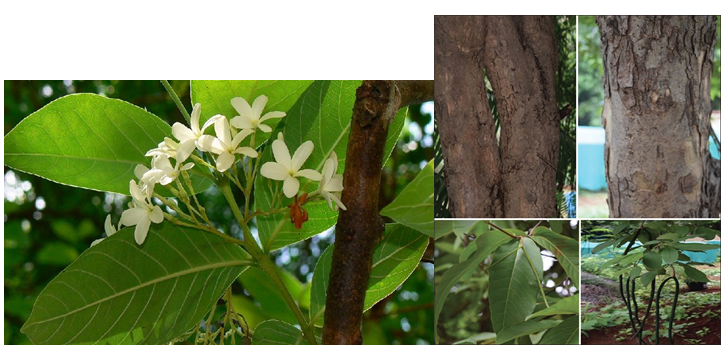
Taxonomical classification
Kingdom: Plantae Order: Gentianales Family: Apocynaceae (Apocyns, Dogbane) Class: Magnoliopsida Super division: Embryophyta Genus: Holarrhena R Species: Holarrhena Pubescens wall ex G. Don.
Plant Description
H. anti-dysenterica Linn is a small tree or deciduous tree with a clear trunk 3 to 7 meters tall, which can grow up to 13 meters high and 1.1 meters wide. Its shape is oval, membranous, strong, arched; petiole is 1.5 cm long; glitters are 3-6 cm in diameter; blunt at base, usually equal or painful; 10-14 pairs are healthy, mutual and sessile. Oval or ovaloval its seeds are light brown, 1-2 cm long, linear or oblong, concave, and have a long coma. They taste bitter [6].
Origin and Distribution
This plant is common in India, especially in the Himalayas. HA has a traditional use and legend in India. In the Indian state of Odisha, the leaves of this plant are served with rice during the Nabanna festival [6]. This plant is found in tropical and subtropical regions of Asia and Africa. The tree grows in Myanmar, Sri Lanka and Pakistan, Nepal and Africa and blooms from May to July. In India it is found throughout the country, especially in the deciduous forests of the tropical Himalayas, at an altitude of 900-1250m [7] Chemical Constituents It is reported that the hard stem and seeds of this plant contain many steroid alkaloids such as canavanine, 3-aminocanavanine, 20-aminocanavanine, 3-aminopregnane and 3,20-diaminopregnane and their derivatives. A new steroid alkaloid called Holadysenterine has been isolated and characterized. It is based on the molecular formula C23H38N2O3 [8]. The root bark of Holarrina anti- dysenterica also contains conessin (C24H40N2), isokonessin (C24H40N2), conesimin/isokonessimin (C23H38N2), conarrhimin (C21H34N2) [9].
Macroscopy of H. Anti-dysenterica
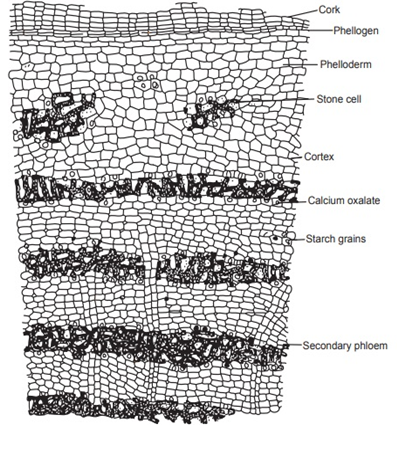
Sizes and shapes are re-bending of parts of various sizes and thicknesses. Small re-bending parts in various sizes and thicknesses. The exterior is rough and light yellow to brown. The wood usually sticks to the inside of the leather. It has a slightly bitter taste and smell. The outer cork has stone cells and smooth, transversely wide yellow shell with extensive phloem, medullary rays and tangentially layered stone. The medicine takes a short, jagged break [10].
H. Microscopic Examination of Anti-dysenterica
Periderm- yellowish cells with fungus and easy elongation. The phyllogen is colorless and two-celled. The yellow shell consists of 5-10 layers of thin-walled rectangles, sometimes well arranged. Rhomboid crystals and a small amount of starch can be seen in the parenchymal cells. Cortex They are large, composed of groups of lignified, pitted stone cells of varying shapes (from rectangular to elongated) and graduated sizes. Rhomboid crystals can be found in the cortical parenchyma surrounding the stones and in the stones themselves. Cortical parenchyma contains starch. The cortex contains one or two tufts of non-woody pericyclic fibers. Secondary phloem consists of phloem parenchyma, medullary rays, and tangential lithoblasts separated by medullary rays. The parenchyma consists of rhombic calcium oxalate crystals covering the stones of the secondary phloem.
Size and Shape various sizes and thicknesses of little re-curved pieces. Various sizes and thicknesses of little re- curved pieces. The exterior surface rough buff to brownish.
Wood often adheres to the inner bark. Taste is bitter and No odour. Smoothed Surface Transverse Wide Phelloderm having stone cells and wide phloem with medullary ray and tangentially organized stone cells is shown on the outer cork. The drug show short and granular fracture [10].
Mechanism of Action
Anti-dysenteric sea urchin extract causes intestinal stimulation by activating histamine receptors and relaxes the intestinal tract by blocking Ca2+ ion channels, thus reducing diarrhea [11]. Ethanol extract of the seeds causes an increase in dry stool and a decrease in stool retention [12]. Antioxidant properties- The antioxidant properties of H. anti-dysenterica indicate that the methanolic leaf extract scavenges superoxide ions and hydroxyl ions and reduces the ability to convert Fe3 to Fe2 10.
Pharmacological Activities: Anti-amnesic activity Application of the ethanolic extract of dysentery-resistant Hora Rayna seeds to various STZ groups for 28 days reduced AChE levels and prevented the increase in MDA levels and GSH depletion in a dose-dependent manner compared to the disease [12]. Cholinergic dysfunction is assessed by acetylcholinesterase activity. Decrease in AChE levels of MDA and Glutathione showed anti amensic property of Holarrhena anti-dysenterica. Neuroprotective Activity: MEHA treatment significantly prevents weight loss and lowers blood sugar and blood cholesterol levels relative to diabetes control, HbA1C level is considered an important indicator of AGEs, and available studies show that MEHA treatment significantly affects HbA1c levels. MEHA-treated mice showed improved locomotor performance compared to untreated mice, suggesting protection against diabetic neuropathy [13]. Acetylcholinesterase Inhibition b AChE microplate assay was performed on the anti-dysenteric alkaloid extract of Hora Reina seeds and showed 91% inhibition of anti-inflammatory acetylcholinesterase. Column chromatography of alkaloid extract on MCI-GEL using gradient weight system MeOH- H2O (50%, 60%, 70%, 80%, 90% (v/v) to obtain three fractions (Fr. 1) up to Fr. .3). The AChE inhibitory activity of these five compounds was tested by the Ellman method in 96-well microplates [14, 15]. Anti-diabetic Activity: HA ethanol extracts reduced blood glucose concentration within 1/2 hour after glucose administration in normoglycemic rats. Diabetic mice showed weight loss during the experiment. Weight gain was observed in rats in the diabetic group treated with Shigelladysenteriae and glibenclamide. Blood glucose levels as well as total cholesterol, triglycerides, AST, ALT, urea, and serum creatinine decreased in the ROM treatment group [16]. Methanolic extract of antidysenteric choleraema showed the same effect in diabetic rats. These restrictions indicate better metabolic control and stronger immunity [17] Hepatic glucose-6-phosphatase is an important enzyme in glucose homeostasis [18] and is negatively regulated by insulin [19]. After application of the aqueous extract, a significant improvement was noted in the biosensors, which may be due to the recovery of insulin [20]. Inhibiting intestinal α-glucosidase activity is an important strategy for controlling postprandial hyperglycemia in diabetes. Compared to the control group, the group administered acarbose or different doses of hydro-methanol extract showed a decrease in blood sugar results. Phenolic compounds and flavonoids in the extract are responsible for inhibiting α-glucosidase activity, thereby inhibiting glucose absorption content for postprandial hyperglycemia control [21]. Anti-urolithiasis Activity: In vitro studies have shown that HA crude extract can inhibit DPPH (2,2-diphenyl-1- picrylhydrazyl) free radicals, thus exerting antioxidant effects and inhibiting lipid peroxidation caused by rat kidney homogenate. Ha. Cr is not toxic to MDCK (kidney epithelial cell line) cells. In in vivo experiments, Ha.Cr had no significant effect on CaOx crystalluria. The stone- forming group lost weight compared to the saline group. Co- administration of Ha. Cr prevents weight loss. Co-application with Ha.Cr reduced polyurea and water uptake compared to conventional concrete. In lampreys, oxalate excretion increases while Ca++ excretion decreases. In histological studies, the number of CaOx crystal deposits was less in the Ha.Cr-treated group [22]. From this article it is suggested that the inhibitory effect of plant extracts on renal tubular CaOx crystal accumulation may be due to its antioxidant activity. These data therefore indicate that the protection of Holarrina anti-dysenterica in urolithiasis is mediated by different methods. Various articles have reviewed ulcerative colitis and bleeding hemorrhoids [23, 24]. Antibacterial Activity: The study for antibacterial activity was carried out by analyzing the millimeter inhibition zone or three bacteria (Staphylococcus aureus, Salmonella typhimurium and Escherichia coli). There was an inhibition zone of 10.05mm where the bark extract had the highest antibacterial activity against Staphylococcus aureus, while for Salmonella and E. coli this value was only 6.65mm and 2.7mm, respectively. Holarrena anti-dysenterica seed extract at 100% concentration also showed antibacterial activity against Staphylococcus aureus. Callus extract at 100% concentration showed a 4mm zone of inhibition against Staphylococcus aureus but little activity against E. coli. Many researchers have found that plant extracts have antibacterial properties in many ways [25, 26]. Anti-Inflammatory and Analgesic Activity: Methanol leaf extract of Holarrina anti-dysenterica with carrageenan showed inhibitory effect on paw edema in rats. Additionally, methanol extract of Holarrina antidysenterica inhibited the acetic acid-induced writhing response in a dose-dependent manner and exhibited an analgesic effect by improving tail beat latency [27]. An ethanol extract of Shigelladysenteriae exhibited analgesic effects by inhibiting the writhing response in albino mice [28]. Methanolic bark extract of Shigelladysenteriae showed decreased nitric oxide and malondialdehyde and increased superoxide dismutase and glutathione-Dinitrophenylsulfonic acid causes colitis in male albino Wilstar rats. Decreased nitric oxide levels suggest that decreased iNOS production may be responsible for the drug’s anti-inflammatory effects. H. Antidysenteric therapy also prevents goblet cell rupture, inflammatory cell infiltration, and inflammation of the mucosal layer [29]. Antimalarial Activity: H. conessin isolated from the root bark of anti-dysenterica showed the greatest anti-Plasmodial activity with a reproducible IC50 value of 1.3μg/ml in in vitro experiments and in vivo experiment at 10°C. It can prevent parasitemia increased by 88.95% mg/kg. It has also been shown to be related to conesin cytotoxicity in liver function tests. The liver is the most affected organ in the early stages of malaria, causing significant changes in host hepatocyte physiology and morphology. Increased alkaline phosphatase (ALP) and bilirubin levels indicate malaria-induced damage to liver cells. Increased ALP and bilirubin levels decreased at the 30mg/k dose [30]. The bark extract of H. anti-dysenterica has significant in vitro and in vivo effects on albino mice infected with Plasmodium falciparum and Plasmodium berghei. Chloroform extract showed antiplasmodial activity with IC50 values.
Uses of H. Anti-dysentery
Anti-dysentery is used in both Ayurveda and traditional Chinese medicine. Its seeds are used to treat diseases. Its bark has anti-inflammatory properties [31] In Ayurvedic medicine, it is used to treat anemia, jaundice, dysentery, stomach ache, diarrhea, epilepsy and cholera. It is widely used in the treatment of Asra (blood or blood diseases), Atisara (diarrhea), Kustha (leprosy), Pravahika (amebiasis) and Jwaratisara (diarrhea). Bark The bark is widely used in Ayurvedic medicine for the treatment of hemorrhoids, diarrhea, leprosy, bile and spleen diseases. The bark is used to treat menorrhagia, hemorrhoids and headaches. In Unani medicine, its bark is used to treat malaria, chest pain, asthma, bronchopneumonia, stomach problems, indigestion, diarrhea and dysentery [32]. Konessin is a steroid alkaloid extracted from the bark of Shigelladysenteriae and has significant antiviral activity with low cytotoxicity. Shigelladysenteriae has in vitro antimalarial activity against Plasmodium falciparum chloroquine with an IC50 of 5.5g/ml. The bark helps detoxify the blood.
Conclusion
Antidysenteric horaraena is a medicinal plant that has many medicinal properties and can be used in some medical applications due to its benefits and protection. H. Antidysenteric drugs are used to treat many conditions such as dyspepsia, diarrhea, and as antioxidant and anti- inflammatory drugs. There are few studies on the biological potential of moso bamboo stem bark. Current research on different products and parts of the plant has tested many antioxidant and anti-inflammatory methods that may help prevent many diseases and oxidative stress. As a result, researching the active phytoconstituents of Holarrene species is important for the development of new treatments for the benefit of humans.
Acknowledgement
The authors are thankful to the Department of Pharmacy, Matoshri Institute of Pharmacy, Dhanore, Tal. Yeola, Dist. Nashik, Maharashtra, India for their kind support and guidance for this review article.
References
-
Sheng P (2001) Ethnobotanical approaches of traditional medicine studies: some experiences from Asia. Pharm Biol 39(1): 74-79.
-
Ekor M (2014) The growing use of herbal medicines: issues relating to adverse reactions and challenges in monitoring safety. Front Pharmacol 10(4): 177.
-
Kognou A, Tchamgoue A, Tchokouaha L, Ngima D, Nthenge N, et al. (2018) Acute and sub-chronic toxicity studies of Dichaetanthera africana (Hook. F.) Jacq. Fel. (Melastomataceae) stem bark ethanol extract. J Appl Pharm Sci 8(6): 147-155
-
Atsamo A, Nguelefack T, Datté J, Kamanyi A (2011) Acute and subchronic oral toxicity assessment of the aqueous extract from the stem bark of Erythrina senegalensis DC (Fabaceae) in rodents. J Ethnopharmacol 134(3): 697- 702.
-
Srivastava N, Saxena V (2015) Antibacterial activity of kutaj (Holarrhena antidysentrica Linn). in childhood diarrhea – In vitro study. Pharma Innovation 4(4): 97-99.
-
Ganapathy P, Ramachandra Y, Rai S (2011) In vitro antioxidant activity of Holarrhena Antidysenterica Wall. Methanolic leaf extract. J Bsic Clin Pharm 2(4): 175-178.
-
Sinha S, Sharma A, Reddy P, Rathi B, Prasad N, et al. (2013) Evaluation of phytochemical and pharmacological aspects of Holarrhena Antidysenterica (Wall.): A comprehensive review. Journal of pharmacy research 6(4): 488-492.
-
Kumar N, Singh B, Bhandari P, Gupta A, Kaul V (2007) Steroidal Alkaloids from Holarrhena Antidysenterica (L.) WALL. Chem Pharm Bull 55(6): 912-914.
-
Yang Z, Duan D, Xue W, Yao X, Li S (2012) Steroidal alkaloids from Holarrhena Antidysenterica as acetylcholinesterase inhibitors and the investigation for structure–activity relationships. Life Sciences 90(23): 929-933.
-
Sharma DK, Gupta V, Kumar S, Joshi V, Mandal R, et al. (2015) Evaluation of antidiarrheal activity of ethanolic extract of Holarrhena antidysenterica seeds in rats. Vet World 8(12): 1392-1395.
-
Mrinal, Navjeet S, Nitin B (2016) Anti-amnesic Activity of Holarrhena Antidysenterica Extract in Streptozotocin- Induced Memory Deficient Rats. Sch Acad J Pharm 5(8): 317-325.
-
Bansal N, Singh N, Mrinal (2016) Holarrhena Antidysenterica Extract Promotes Recovery of Peripheral Neuropathy in Diabetic Rats. Am J Pharm Tech Res 6(4): 2249-3387.
-
Orhan I, Sener B, Choudhary M, Khalid A (2004) Acetylcholinesterase and butyrylcholinesterase inhibitory activity of some Turkish medicinal plants. J Ethnopharmacol 91(1): 57-60.
-
Umashanker K, Chandra S, Sharma J (2012) Antidiabetic Efficacy Of Ethanolic Extract of Holarrhena Antidysenterica Seeds in Streptozotocin – Induced Diabetic Rats and Its influence on certain Biochemical Parameters. Journal of Drug Delivery & Therapeutics 2(4): 159-162.
-
Mana S, Singhal S, Sharma NK, Singh D (2010) Hypoglycemic Effect of Holarrhena Antidysenterica Seeds on Streptozotocin induced Diabetic Rats. International Journal of PharmTech Research 2(2): 1325-1329.
-
Berg JM, Tymoczko JL, Stryer L (2001) Glycolysis and gluconeogenesis. In Biochemistry 5th (Edn.), WH Freeman pp: 425-464.
-
Ali KM, Chatterjee K, Bera T, Devika D, Ghosh D (2009) Efficacy of aqueous extract of seed of Holarrhena Antidysenterica for the management of diabetes in experimental model rat: A correlative study with antihyperlipidemic activity. International Journal of Applied Research in Natural Products 2(3): 13-21.
-
Ali KM, Chatterjeea K, Dea D, Janaa K, Beraa T, et al. (2011) Inhibitory effect of hydro-methanolic extract of seed of Holarrhena Antidysenterica on alpha- glucosidase activity and postprandial blood glucose level in normoglycemic rat. Journal of Ethnopharmacology 135(1): 194-196.
-
Khan A, Khan SR, Gilani AH (2012) Studies on the in vitro and in vivo antiurolithic activity of Holarrhena antidysenterica. Urol Res 40(6): 671-681.
-
Patel MV, Patel KB, Gupta SN (2010) Effects of Ayurvedic treatment on forty-three patients of ulcerative colitis. Ayu 31(4): 478-481.
-
Paranjpe P, Patki P, Joshi N (2000) Efficacy of an indigenous formulation in patients with bleeding piles: a preliminary clinical study. Fitoterapia 71(1): 41-45.
-
Lin J, Opoku AR, Geheeb KM, Hutchings AD, Terblanche S, et al. (1999) Preliminary screening of some traditional zulu medicinal plants for anti-inflammatory and antimicrobial activities. J Ethnopharmacol 68: 267-274.
-
Parekh J, Chanda S (2006) In vitro antimicrobial activities of extract of Launaea procumbens Roxb.(Labiateae), Vitis vinifera (Vitaceae) and Cyperus. rotundus (Cyperaceae). Afr J Biomed Res 9(2): 89-93.
-
Ganapathy PS, Ramachandra YL, Rai SP (2010) Anti- inflammatory and analgesic activities of Holarrhena antidysenterica Wall. Leaf extract in experimental animal models. IJBPS 4(2): 101-103.
-
Shwetha C, Latha KP, Asha K (2014) Study on analgesic activity of Holarrhena antidysenterica leaves. International Journal of Herbal Medicine 2(3): 14-16.
-
Darji VC, Deshpande S, Bariya AH (2013) Comparision between the effect of aqueous and methanolic extracts of Holarrhena Antidysenterica bark against experimentally induced inflammatory bowel disease. IRJP 4(1): 131- 134.
-
Dua VK, Verma G, Singh B, Rajan A, Bagai U, et al. (2013) Anti-malarial property of steroidal alkaloid conessine isolated from the bark of Holarrhena antidysenterica. Malaria journal 12(1): 194.
-
Verma G, Dua VK, Agarwal DD, Atul PK (2011) Anti- malarial activity of Holarrhena antidysenterica and Viola canescens, plants traditionally used against malaria in the Garhwal region of north-west Himalaya. Malar J 10(20): 1-5.
-
Sharma D, Gupta V, Kumar S (2015) Evaluation of antidiarrheal activity of ethanolic extract of Holarrhena antidysenterica seeds in rats. Veterinary World 8(4): 1392-1395.
-
Dey A, De JN (2012) Ethnobotanical Survey of Purulia district, West Bengal, India for medicinal plants used against gastrointestinal disorders. J Ethnopharmacol 143(1): 68-80.
-
Zahara K, Panda S, Swain S, Luyten W (2020) Metabolic diversity and therapeutic potential of holarrhena pubescens: An important ethnomedicinal plant. Biomolecules 10(9): 1-28.
-
Singh AK, Raghubanshi AS, Singh JS (2002) Medical ethnobotany of the tribals of Sonaghati of Sonbhadra district, Uttar Pradesh, India. J Ethnopharmacol 81(1): 31-41.
- Acido Labile or Gastro Irritant Apis and Enteric Release in Galenic Practice: An Overview
- A Study on Knowledge, Attitude and Practice of Hand Hygiene among Healthcare Professionals at a Tertiary Care Hospital, India
- Influence of Inoculum Concentration on In Vivo Incubation Period of Emmia lacerata, Pathogenesis and Management of Wilt in Pepper (Capsicum annuum L.)
- Vanilla’s Chemistry
- Marine Anti-Cancer Compounds and Adverse Effects of Global Warming on Oceans: An Overview
- Serological Investigation of Chikungunya Virus Antibody among Malaria-Suspected Febrile Patients in Some Healthcare Facilities in Rivers State