
Formulation and Evaluation of Herbal Hair Oil
Herbs and herbal medications have been shown in studies to promote hair growth. Men and women alike are very concerned about hair loss issues, with fading, dandruff and hair falling being the main issues linked to hair loss. Comparing herbal hair oils to synthetic drugs, which can have adverse effects like burning, itching and localized irritation, has drawn attention to these alternatives. They could result in systemic adverse effects such headaches and dizziness as well as dermatological reactions. Therefore, the creation of herbal hair oil is necessary to stop hair loss and promote strong hair growth without causing any negative side effects. There are several synthetic medications available for hair loss, but they have serious adverse effects and don’t provide permanent relief. The primary goal of this endeavor is to create a herbal hair oil formulation that can address issues with hair loss and other hair-related conditions. For the creation of the hair oil, herbs as hibiscus, amla, shikakai, Fenugreek seeds, coconut oil, almond oil and neem oil were chosen. After being prepared, the hair oil was assessed.
Introduction
Hair is essential to human existence. In India, the custom involves mixing different medications that promote hair growth with hair oils. Given that Indian women are renowned for having long, glossy and healthy hair, it is not unexpected that hair care is a major component of their self- care routines. The canonical text on Ayurvedic medicine, the Charka Samhita, stresses the need of oiling the scalp and hair in order to preserve healthy hair and stop hair loss. It was advised to oil your hair every day using suitable herbs that suited other ingredients and this practice has persisted to this day.
The preparations for hair oil are included to treat split ends, dandruff and other issues. The main purpose of hair oil preparations is to cool the scalp in order to promote luscious hair development in both men and women. Different types of oils, such as castor, coconut, almond and onion oils, are administered topically to the scalp in combination with appropriate herbal medications. Because it absorbs into hair strands more effectively than other oils and is more cost- effective than other oils, coconut oil is the most deserving oil base of them all. For the finest hair development, coconut oil mixed to herbal medications is the recommended way [1].
Our head hair serves as our first line of defense against UV radiation from the sun. Hair care products are nothing more than formulas designed to alter the texture of hair. Because they have fewer side effects and are made using readily available components, herbal cosmetics are very popular. These days, herbs are added to hair care cosmetics and their effects are more noticeable than those of synthetic ingredients. Because hair oils are beneficial in treating hair issues, their use in hair care routines has increased in recent years.
Hair oils are composed of both synthetic and natural ingredients [2]. Because of the growing interest in herbal cosmetics among people, as well as the fact that their ingredients are readily available and their effectiveness is greater than their minimal adverse effects, herbal cosmetics are in high demand. An integral component of herbal cosmetics is herbal hair oil. Herbal hair oil is increasingly widely utilized and preferred for many hair conditions. In addition to encouraging hair growth, they also give the scalp the essential moisture, which results in gorgeous hair. Hair tonics are made of herbal oils that also contain herbal medications. Many vital nutrients found in herbal hair oil are crucial for preserving the sebaceous gland’s regular function and encouraging the growth of hair on its own. These are one of the most well recognized products for the treatment of hair. The use of hair oil is increasing every day in line with the improvement in standard of living of people to give natural flavors and colors to hair oil the herbal essences and perfumes are added [3].
Hair oils can be made in a variety of ways, including direct boiling, paste and cloth processes. The evaluation of formulation is the next major step after preparation. The therapeutic efficacy of the product is the next and final phase. The major goal of our study is to develop and test herbal hair oil for hair growth improvement [4]. Types of Herbal Hair Oil Available in Market
- Amla hair oil
- Coconut hair oil
- Bhringraj hair oil
- Jasmine hair oil
- Brahmi hair oil
- Cantharidin hair oil
- Onion hair oil
Benefits
- It gives hair its natural sweetness.
- Vitamins and micronutrients found in herbal oil serve as sustenance for hair.
- Hair oil is a great way to tame frizzy hair and prevent hair loss.
- Herbal oil provides hair ends with the pampering and nourishment they require.
- The problem of premature grey hair can be resolved by regularly using hair oil.
- Prevents dandruff, enhances hair growth and keeps the scalp hydrated.
- Presents a radiant radiance.
- Reduction of stress.
Structure
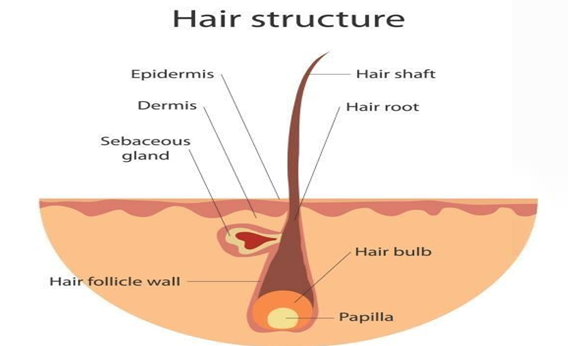
Materials and Methods
Shikakai
| Botanical Name | Acacia Concinna |
|---|---|
| Kingdom | Plantae |
| Division | Magnoliophytas 3 |
| Class | Magnoliopsida |
| Order | Fabales |
| Family | Fabaceae |
| Genus | Senegalia |
| Species | S. rugata |
| Part Used | Fruit |
Table 1: Shikakai.
![Figure 2: Shikakai [5].](/fulltextimages/12067/fig_2.png)
Plant Description: Habit: A big climbing shrub with a rachis of leaves and branches dotted with many hooked prickles. Bark: Pale brown, polished. Leaves: Bipinnate, spiky on the rachis but not on the stipules, with 12-25 pairs of leaflets and a big gland located between the uppermost or two uppermost pairs of pinnae and in the center of the petiole beneath the pinnae. Inflorescence: It is a cluster of two or three spherical, stalked flower heads that appear paniculate, or to form panicles, in the axils of the top reduced leaves. The velvety stalk, or peduncles, that holds the cluster is 12.5 cm long. Mature flower heads have a diameter of approximately 1 cm. Flowers: Complete, activity morphic, hermaphrodite, white or yellowish Fruits: Thick, meaty pods that are 7–12 cm long and 1.8-2.8 cm wide. The pods are slightly constricted between the seeds and wrinkle when they get dry Six to ten seeds. Flowering and Fruiting Time: August-October-November Amla
| Botanical Name | Phyllanthus Emblica |
|---|---|
| Kingdom | Plantae |
| Division | Magnoliophyta |
| Class | Magnoliopsida |
| Order | Euphorbiales |
| Family | Euphorbiaceae |
| Genus | Phyllanthus L |
| Species | Phyllanthus E L |
| Part Used | Fruit |
Table 2: Amla.
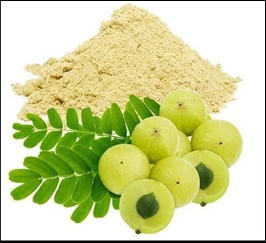
Plant Description: The tree is tiny to medium in size, growing to a height of 1 to 8 meters (3 feet 3 inches to 26 feet 3 inches). The branch lets are often deciduous, 10-20 cm (3.9-7.9 inch) long and neither glabrous nor finely pubescent. Simple, subsessile, light green leaves that resemble pinnates are tightly clustered along branch lets. The flowers have a yellow-green color. The fruit has six vertical stripes or furrows and is almost spherical in shape. Its look is rigid and smooth. Its color is pale greenish yellow [6, 7]. Geographic Source: Amla is native to the subtropical South Asian countries of India, Pakistan and Bangladesh. Amla is grown in topical desert areas of India and is commercially produced in northern India. It is revered by the Hindu and its use has been woven into religious rites and ceremonies. Chemical constituents: Vitamin C, pectin, phenolic compounds, gallic acid, ellagic acid, corilagin, phyllantidine and phyllantine (both alkaloids) are all highly concentrated in amla. It contains 1000–1700 mg of ascorbic acid per 100 grams. The hydrolyzable tannins pedunculagin, punigluconin and emblicanins A and B are also present. Curry Leaves
| Kingdom | Plantae |
|---|---|
| Division | Magnoliophyta |
| Class | Magnoliopsida |
| Order | Euphorbiales |
| Family | Euphorbiaceae |
| Genus | Phyllanthus L |
| Species | Phyllanthus E L |
| Part Used | Fruit |
Table 3: Curry leaves.
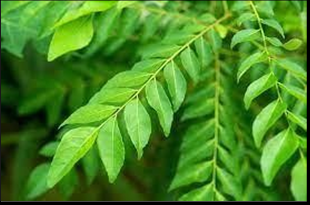
Plant Description: Curry leaves average 2-4 centimeters in length and 1-2 cm in width. They are modest in size, long, slender and oval in shape, narrowing to a point. Each branch of the glossy, dark green leaves, which grow pinnately along a stem, can support up to twenty closely grouped leaves. Curry leaves have been likened to citrus, asafoetida, anise and lemongrass due to their powerful flavor and intense scent. Curry leaves have a nutty scent and a mild, somewhat aromatic bite when cooked [8]. Geographic Source: Murraya Koenigii is native to China and Hainan, stretching eastward from Pakistan, Sri Lanka and India. In South-East Asia, certain regions of the United States and Australia, it has been widely farmed. It is grown in several tropical African nations, such as Nigeria, Kenya, Tanzania and the majority of the Indian Ocean Islands, where Indian immigrants have made their home [9]. Powder Characteristic: The key distinguishing features include its green hue, lack of order or flavor, unicellular, bent or curved trichomes, two-layered palisade, part of its secretory canals, well-developed pericyclic fibers and a few prismatic calcium oxalate crystals. Green, pinnate leaves are produced. The leaves have a fragrant and harsh taste [9]. Fenugreek Seeds
| Division | Magnoliophyta – Flowering plants | ||
|---|---|---|---|
| Kingdom | Plantae | Class | Magnoliopsida – Dicotyledons |
| Division | Magnoliophyta | Order | Malvales |
| Class | Mangnoliopsida | Family | Malvaceae – Mallow family |
| Order | Fabales | Genus | Hibiscus L – Rose mallow |
| Family | Fabaceae | Species | Hibiscus rosa-sinensis L |
| Genus | Trigonella | Part Used | Flower |
| Species | Foenum-gracecum Linn | ||
| Part Used | Seeds |
Table 5: Fenugreek Seeds.
![Figure 5: Fenugreek Seeds [10].](/fulltextimages/12067/fig_5.png)
Plant description: The fenugreek plant, Trigonella foenum- graecum, is an annual herbaceous plant in the Fabaceae family that is farmed for its leaves and seeds, which are used as a spice and herb. The plant can have one stem or branches at the base of the stem. The plant has small, trifoliate leaves with oval leaflets that range in hue from green to purple. Seeds: The seeds are plain-surfaced, 3-5 cm long, 2 mm thick and yellow in color. They have a rhomboidal, pebble- like shape. There is no taste or flavor to the nutritional fiber and protein that make up the majority of fenugreek seeds. It has been discovered that plant tissue cultures from seeds cultivated in ideal conditions can yield up to 2% diosgenin and lower amounts of gitogenin and trigogenin. High concentrations of proteins, carbohydrates, flavonoids, alkaloids, saponin, free amino acids, glycosides, mucilage, minerals and much more are the main ingredients of fenugreek seeds. Additional research has demonstrated its efficacy in treating gastrointestinal irregularities, decreasing cholesterol and lowering blood glucose levels.
Hibiscus
| Botanical Name | Triglmellafoenum-graecum |
|---|---|
| Kingdom | Plantae |
| Division | Magnoliophyta |
| Class | Mangnoliopsida |
| Order | Fabales |
| Family | Fabaceae |
| Genus | Trigonella |
| Species | Foenum-graceum Linn |
Table 4: Hibiscus.
![Figure 6: Hibiscus [11,12].](/fulltextimages/12067/fig_6.png)
Plant Description: The Hibiscus rosa-sinensis is a tiny tree or shrub with glossy leaves that grows to a height of 2.5–5 m (8–16 ft) and a width of 1.5–3 m (5–10 ft). It blooms brilliant red in summer and autumn in solitary flowers. The five- petaled flowers have a diameter of 10 cm (4 in) and stand out due to their scarlet anthers with orange tips. Chemical Constituents: β-sitosterol, stigmasterol, taraxeryl acetate, three cyclopropane chemicals and their derivatives are found in the leaves and stems. Flowers are rich in flavonoids, vitamins, niacin, thiamine, riboflavin and cyanidin diglucoside. Deep yellow flowers have been found to contain quercetin-3-diglucoside, 3,7-diglucoside, cyanidin-3,5-diglucoside and cyanidin-3-sophoroside-5- glucoside; ivory white flowers have been found to contain all of the aforementioned compounds as well as kaempferol-3- xylosylglucoside. Uses: The flowers of Hibiscus rosa-sinensis are edible and are used in salads in the Pacific Islands. The flower is additionally used in hair care as a preparation. It is also used to shine shoes in certain parts of India. It can also be used as a pH indicator. Almond Oil
| Botanical Name | Prunus Dulciss |
|---|---|
| Kingdom | Plantae |
| Division | Magmoliophyta |
| Class | Magnoliopsida |
| Order | Rosales |
| Family | Rosacea |
| Genus | Purnus |
| Species | P. amygdalus |
| Part Used | Seeds |
Table 6: Almond oil.
![Figure 7: Almond oil [13].](/fulltextimages/12067/fig_7.png)
Plant Description: Almond trees have a hardy dormant season and are deciduous. The trees, which typically reach heights of 3 to 4.5 meters (10 to 15 feet), are incredibly stunning when they bloom. North of the equator, they bear fragrant, five-petaled, pink to white blooms from late January to early April. Chemical Constituents: About 68% of the oil was discovered to be oleic acid (C18:1), 25% to be linoleic acid (C18:2), 4.6% to 4.8% to be palmitic acid (C16: 0) and a little amount of palmitoleic acid (C16:1) and stearic acid (C18: 0). Arachidic acid (C20: 0) was also detected in trace amounts. Uses:
- Almond oil is used as a scalp treatment.
- Its fungicidal and antibacterial qualities enable it to effectively balance the yeast responsible for dandruff. Almond oil works effectively to moisturize the scalp, clean the hair follicle, reduce frizz and repair damaged hair since it absorbs well into the epidermis.
- Apply a dime-sized amount or less to the end of hair before drying to hydrate and decrease frizz.
- Almond oil rich in vitamin E is used in the treatment of hair loss and strengthens the hair [13].
Coconut Oil
| Botanical Name | Prunus Dulciss |
|---|---|
| Kingdom | Plantae |
| Division | Magmoliophyta |
| Class | Magnoliopsida |
| Order | Rosales |
| Family | Rosacea |
| Genus | Purnus |
| Species | P. amygdalus |
| Part Used | Seeds |
Table 7: Coconut oil.
![Figure 8: Coconut oil [13].](/fulltextimages/12067/fig_8.png)
Coconut oil is derived from milk of the coconut palm fruit. Coconut oil is used as meals oil and is used in industrial applications for cosmetics and detergent production. Plant Description: The smooth, columnar, light grey-brown trunk of a cocos nucifera tree measures 30 to 40 cm in diameter at breast height and it is crowned by a terminal crown of leaves. Dwarf alternatives also exist; tall alternatives can reach a height of 24–30 m. The trunk is normally erect but may be bent or bending. It is slender and just slightly enlarged at the base. On the broadest section, the leaves are pinnate, feather- shaped and 4–7 m long by 1-1.5 m wide. The leaf stalks are thornless and range in length from 1-2 cm. Tiny, pale yellow flowers appear in groups from canoe-shaped sheaths encasing portions of the leaves. The hollow inside of the nut is partially filled with a liquid that is called “coconut milk.” In unripe fruit, coconut milk is significant, but it is gradually absorbed. Chemical Constituents: Cocos nucifera’s chemical components have a variety of biological effects, including anticancer, antihelmintic, anti-inflammatory, antinociceptive, antioxidant and antifungal properties.
Neem Oil
| Botanical Name | Azadirachta Indica |
| Kingdom | Plantae |
| Division | Magnoliophyta |
| Class | Magnoliopsida |
| Order | Sapindales |
| Family | Meliaceae |
| Genus | AzadirachtaA. Juss |
| Species | Azadirachta indica |
| Part Used | Leaf |
Table 8: Neem oil.
Raw Materials
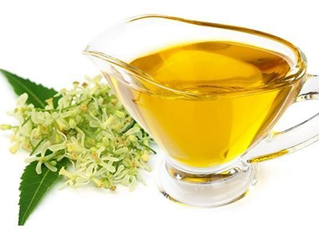
Plant Description: Height 15–20 m (about 50–65 feet Flowers Extremely fragrant and sweet-smelling, especially at night; blooms from March to May; white and fragrant; auxiliary; typically arranged in somewhat drooping panicles up to 25 cm (10 in.) long; inflorescences branch up to the third degree, bearing 150–250 flowers; blooms are 5–6 mm long and 8–11 mm wide; protandrous, bisexual and male flowers exist on the same individual. Fruit Ripes in July and August; evergreen; branches widely spaced; old foliage remaining long after new leaves have sprouted. Leaves: The terminal leaflet is frequently absent and the petioles are short. The opposite, pinnate leaves measure 20–40 cm (8–16 in.) in length, with 20–31 medium–to–dark green leaflets measuring 3–8 cm (1–3 in.) in length.
Chemical Constituents: Main chemical components are nimbin, nimbinene, azadirachtin, azadirachtol, azadirachnol, desacetynimbinene, nimbandiol, nimbolide, quercetin, beta- sitosterol, n- hexacosanol, nimbiol and nimocin
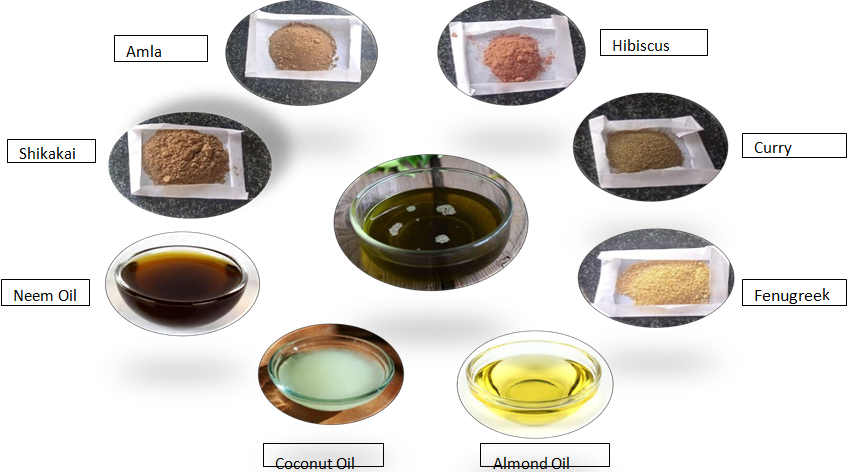
| Ingredients | Quantity (100 ml) | |
|---|---|---|
| 1 | Shikakai | 5% |
| 2 | Amala | 10% |
| 3 | Curry | 2% |
| 4 | Fenugreek Seeds | 4% |
| 5 | Hibiscus | 1% |
| 6 | Almond Oil | 60% |
| 7 | Coconut Oil | 25% |
| 8 | Neem Oil | 3% |
Table 9: Formula.
Method of Preparation
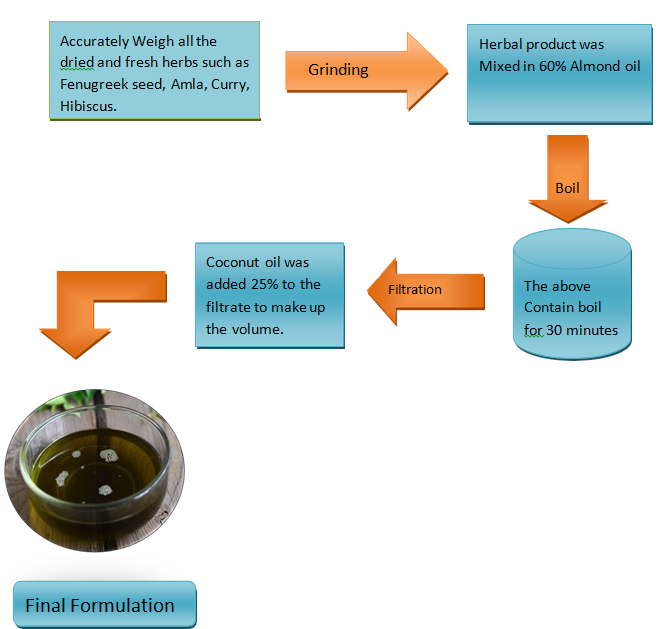
- Accurately weigh all the dried and fresh herbs such as, Fenugreek seed, Amla, Curry, Hibiscus.
- Herbal product was mixed in 60% Almond oil. The above content was boiled for 30 min.
- Boiled mixture was subject for filtration through muslin cloth. After filtration coconut oil was added 25% to the filtrate to make up the volume.
- Finally, flavouring agent was added to the oil and was placed in a bottle [1].
Evaluation Parameters: Evaluation Test for Hair Oils 1. Physical appearance
| Sr. No | Parameters | Result |
|---|---|---|
| 1 | State | Liquid |
| 2 | Colour | Greenish Brown |
| 3 | Order | Aromatic |
Table 10: Evaluation Parameters.
2. Determination of pH: The pH of hair oil was determined using a pH meter. (Janki pH meter J 35) 3. Acid Value: Preparation of 0.1 molar solutions: Weighed 0.56 g KOH pellets and dissolved in 100 mL of distilled water and stirred continuously. The prepared 0.1 molar KOH solution was filled in the burette. Preparation of sample 10 mL oil was measured and dissolved in 50 mL of 1:1 ethanol and ether mixture and shacked vigorously. 1 mL of phenolphthalein solution was then added and titrated with 0.1 molar KOH solutions. 4. Saponification Value: Accurately weigh 1 ml of oil into a 250 ml of conical flask and 10 ml of ethanol: ether mixture (2:1) was added. To this flask, 25 ml of 0.5 N alcoholic KOH was added. Keep the flask for 30 min and the flask was cooled. The cooled solution was titrated against 0.5 N HCl using phenolphthalein as indicator. Similarly, the blank titration was performed without taking oil (sample). The amount of KOH in mg used was calculated. Saponification value = B-S) N/W Were, S = ml of KOH required to neutralize the substance B = ml of KOH required for blank N= Normality of standard Hydrochloric acid. W = Weight of the sample taken for the test (g). 5. Sedimentation: Keep the whole preparation aside for overnight and check for sedimentation occur in oil.
2. Determination of pH: The pH of hair oil was determined using a pH meter. (Janki pH meter J 35) 3. Acid Value: Preparation of 0.1 molar solutions: Weighed 0.56 g KOH pellets and dissolved in 100 mL of distilled water and stirred continuously. The prepared 0.1 molar KOH solution was filled in the burette. Preparation of sample 10 mL oil was measured and dissolved in 50 mL of 1:1 ethanol and ether mixture and shacked vigorously. 1 mL of phenolphthalein solution was then added and titrated with 0.1 molar KOH solutions. 4. Saponification Value: Accurately weigh 1 ml of oil into a 250 ml of conical flask and 10 ml of ethanol: ether mixture (2:1) was added. To this flask, 25 ml of 0.5 N alcoholic KOH was added. Keep the flask for 30 min and the flask was cooled. The cooled solution was titrated against 0.5 N HCl using phenolphthalein as indicator. Similarly, the blank titration was performed without taking oil (sample). The amount of KOH in mg used was calculated. Saponification value = B-S) N/W Were, S = ml of KOH required to neutralize the substance B = ml of KOH required for blank N= Normality of standard Hydrochloric acid. W = Weight of the sample taken for the test (g). 5. Sedimentation: Keep the whole preparation aside for overnight and check for sedimentation occur in oil.1. 6. Skin Irritation Test: The prepared herbal oil was applied on 1 cm skin of hand and exposed to sunlight for 4-5 min.
| Ingredients | Importance |
| Shikakai | Anti-dandruff |
| Amla | Stimulate Hair Growth |
| Curry | Treat Damaged Hair |
| Fenugreek Seeds | Hair Growth |
| Hibiscus | Stop Hair Loss |
| Almond Oil | Treat hair loss and strengthens the hairs |
| Coconut Oil | Moisturizes dry hair |
| Neem Oil | Reduce Dandruff |
Table 11: Role of Ingredients.
Result and Discussion
| Sr. No | Evaluation Parameter | Inference |
|---|---|---|
| 1 | Physical Appearance | No |
| 2 | State | Liquid |
| 3 | Colour | Greenish Brown |
| 4 | Order | Aromatic |
| 5 | Determination of pH | 6.2 |
| 6 | Acid Value | 2.24 |
| 7 | Saponification Value | 194.2 |
| 8 | Sedimentation | No |
| 9 | Skin | No skin irritation |
Table 12: Results.
Conclusion
As a preservative, the herbs Shikakai, Amla, Curry leaves, Fenugreek seeds, Hibiscus, Almond oil, Coconut oil and Neem oil are included in the formulation of the herbal hair oil that is being studied in this study. The goal of the current study is to identify the different components such as minerals and amino acids that are present in herbal extracts and may be responsible for the notable action in hair growth. In addition to their exceptional efficacy, none of these medications have any possible negative effects as compared to synthetic medications.
It provides hairs with nutrients because it is absorbed into the scalp more quickly. It functions as a natural hair nourisher, reducing hair loss and promoting hair growth. Neem is added, which also functions as a preservative and antidandruff hair tonic. Amla and Eclipta Alba aid in thickening and blackening hair. Hibiscus promotes healthy hair development by softening hair. All of these powdered and dry medications combined with enough almond and coconut oils will provide a long-term cure for hair loss and healthy hair development. Because of its cooling properties, this hair tonic is particularly useful for curing headaches and relieving disorders related to stress and tension. Since all of its ingredients are naturally occurring crude pharmaceuticals, it has demonstrated good benefits in terms of hair growth without causing any allergies or adverse consequences.
References
-
Pavan S, Pratibha C, Kavitha P, Saraswathi C (2021) Formulation and Evaluation of Herbal Hair Oil. International Journal of Pharmaceutical Research and Applications 6(5): 1285-1299.
-
Yamini N, Sudha, Jyotsana, Pratyusha K, Pratyusha J, et al. (2018) Formulation and Evaluation of Polyherbal Hair oil. Journal of Pharmacognosy and Phytochemistry 7(3): 3254-3256.
-
Suman K, Kumar B, Mukopadayay S (2022) Herbal hair oil: A review. International Journal of Health Sciences 6(2): 13449-13465.
-
Gaurav T, Ruchi T (2021) Research Article on Assessment of Nutraceutical Potential of Herbs for Promoting Hair Growth: Formulation Considerations of Herbal Hair Oil. The Open Dermatology Journal 15: 78-83.
-
Shamali S, Karishma A, Anuja S, Mahesh S, Pratiksha O (2022) Research Article On Evaluating Hair Growth Activity of Herbal Hair Oil. World Journal of Pharmaceutical and Life Sciences 8(11): 88-95.
-
Swetha D, Krishna M (2014) Review Article on Current Trends in the Research of Emblica officinalis (Amla) A Pharmacological Perspective. Int J Pharm Sci Rev Res 24(2): 150-159.
-
Pawar S, Bharati R, Sathe G, Dawane K, Umalkar D (2021) A phrmlogical review on amla (emblica) international journal of creative research thoughts. International Journal of Creative Research Thoughts 9(2): 3482-3488.
-
Divya B (2022) A review on Hair Conditioner Containing Curry Leaves, Amla, Aloe vera, Neem & Flaxsee. International Journal of Creative Research Thoughts 10(1): 635-652.
-
Sinha P, Akhtar J, Batra N, Jain H, Bhardwaj A (2012) Review on Curry Leaves – A Medicinal Herb. Asian Journal of Pharmaceutical Research 2(2): 51-53.
-
Sajad Ahmad Wani, Pradyuman Kumar (2016) Fenugreek: A Review on Its Nutraceutical Properties and Utilization in Various Food Products. Journal of the Saudi Society of Agricultural Sciences 17(2): 97-106.
-
Usha K, Rajesh, Sindhu A (2017) Herbs Used in Formulating Poly Herbal Hair Oil – A Review. Indo American Journal of Pharmaceutical Sciences 4(6): 1527-1539.
-
Chinju M, Feka S (2021) A Review: Medicinal Value of Hibiscus Rosa Sinensis. International Journal of Pharmacognosy and Chemistry 2(1): 1-11.
-
Nemane S, Dharmaraj S (2022) Review on: Comparative Study Of Different Constituents Of Enerally Used Polyherbal Oil. International Journal of Creative Research Thoughts 10(1): 654-672.
- Acido Labile or Gastro Irritant Apis and Enteric Release in Galenic Practice: An Overview
- A Study on Knowledge, Attitude and Practice of Hand Hygiene among Healthcare Professionals at a Tertiary Care Hospital, India
- Influence of Inoculum Concentration on In Vivo Incubation Period of Emmia lacerata, Pathogenesis and Management of Wilt in Pepper (Capsicum annuum L.)
- Vanilla’s Chemistry
- Marine Anti-Cancer Compounds and Adverse Effects of Global Warming on Oceans: An Overview
- Serological Investigation of Chikungunya Virus Antibody among Malaria-Suspected Febrile Patients in Some Healthcare Facilities in Rivers State