
Comprehensive Study on Pharmaceutical Delivery: Mouth Dissolving Tablets
Fast-disintegrating tablets are one of the most often utilized dose forms available, particularly for youngsters whose nervous and muscular systems are still developing in comparison to adults. in grownups. and in adult individuals who have hand tremors or Parkinson's disease. Due to swallowing difficulties caused by dysphagia, many fixed dose forms, including tablets and capsules, no longer comply with prescribed dosages, making therapy ineffective. Oral dosage forms and the oral route with certain constraints, such as first-pass liver metabolism, mental patients, at-risk patients, and non-co-operators, are the most recommended modes of administration for many medications. MDTs don't require water to dissolve; saliva does the heavy lifting. Saliva dissolves mouth dissolving tablets in less than 60 seconds at the very least. Additionally, these tablets digest incredibly quickly. Super disintegrates are added to MDT formulations to speed up the pace at which tablets break down in the buccal cavity. MDTs are advantageous due to their ease of manufacturing, appropriate dosage, strong chemical and physical makeup, and suitability as a substitute for both adult and pediatric patients. Due to MDTs' quicker rate of absorption and breakdown, the drug's dose form and in vitro release duration both lengthen and improve bioavailability. Both in traditional tablet and liquid dosing forms, MDT formulations provide unique benefits. There are numerous processes available for mass extrusion, direct freeze pressing/lyophilization, sublimation, cotton candy, phase transition, spray drying, and melt granulation. This review gives a quick introduction of MDT, covering its definition, advantages, requirements, and essential features. It also discusses its limitations, different development obstacles, and commercially available tablet formulations that promote rapid digestion, among other things.
Abbreviations
USFDA: United States Food and Medicine Administration; ODTs: Oral Disintegrating (Dispersible) Tablets; DCL: Direct Compressible Lactose; MDTs: Mouth Dissolving Tablets.
Introduction
The production of pharmaceuticals in a presentable form is today’s fundamental demand and requirement. A drug delivery device that is utilized to administer a medication to a living body is called a dosage form. There are numerous dose forms with various drug delivery methods, including tablets, syrups, suspensions, suppositories, injectables, transdermal, and patches. There are benefits and drawbacks to these traditional and contemporary dose forms. Thus, in the present situation, the pharmacist’s biggest issue is coming up with the perfect drug delivery device. The medication must be administered to the surgical site at a concentration and rate that optimizes therapeutic benefit and minimizes side effects in order to produce the intended result. It must go through a thorough analysis of the physicochemical principles that control particular drug formulations in order to establish an appropriate dose form [1].
A large percentage of the entire dosage form, up to 50– 60%, can be taken orally. Fixed dosage forms are well-liked because they are simple to administer, provide for accurate dosage, allow for self-medication, prevent pain, and—above all—they promote patient adherence. The most common applications for solid dosage forms are in the form of capsules and tablets; however, swallowing difficulties might be a significant drawback for certain individuals.
Oral dose forms are typically ingested while drinking water. When experiencing abrupt episodes of coughing due to colds, allergies, or bronchitis, as well as motion sickness (kinetosis), patients may find it difficult to take standard dosage forms, such as tablets without water. Because of this, there has been a lot of interest in pills that dissolve or disintegrate quickly in the mouth [2]. Due to hand tremors, dysphasia, fear of swallowing, delayed muscles and nervous systems in youth, and schizophrenia, swallowing difficulties are widespread in elderly patients and often result in poor patient compliance. Due to poor adherence to oral tablet drug therapy, which occurs in about one-third of the population (mainly adults and children), the overall effectiveness of the therapy is reduced. This is why there has been a lot of interest in tablets that dissolve or break down quickly in the tongue [3].
A rapidly disintegrating tablet (MDT) is described as “a solid dosage form containing a drug or active ingredient that dissolves easily within an hour to seconds when placed on the tongue” by the United States Food and medicine Administration (USFDA) [3, 4]. In order to provide children and elderly patients with an alternative to traditional dose forms, rapid digestion was initially developed in drug delivery systems in the late 1970s. Usually, it takes less than 60 seconds for these pills to dissolve or dissolve in saliva [5]. Oral disintegrating (dispersible) tablets (ODTs), quickly disintegrating (Disintegrating) tablets (MDTs), or oral melts are innovative oral dosage methods developed by pharmaceutical engineers. MDTs are rapid-release tablets that dissolve in saliva quickly, usually within a few seconds, without the need for water.
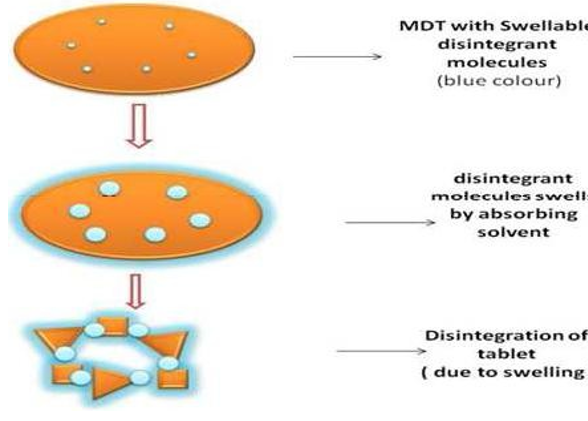
Mouth Dissolving Tablet Requirements
Patient Variables
- Mouth-dispersing pills are suitable for people (especially young and old) who have trouble swallowing regular tablets and capsules when paired with an 8-ounce glass of water [3]. Among them are the following:
- Individuals who have difficulty digesting or swallowing solid dose forms.
- Patients who comply because they worry about choking.
- Elderly individuals suffering from depression who might not be able to consume solid dosage forms
- Why An eight-year-old allergy patient would prefer a more convenient dosing form than syrup containing antihistamines.
- An elderly patient receiving radiation treatment for breast cancer could feel too queasy to take her H2- blocker.
- A patient with schizophrenia who used to attempt to smuggle a traditional tablet under his or her tongue in order to skip taking an atypical antipsychotic medication as prescribed.
- A patient who suffers from chronic nausea, who might be on the go, or who has little or no access to water.
Factor of Effectiveness
The primary benefits of these products are their quick onset of action and higher rate of bioavailability [5, 6, 7, 8, 9, 10]. In situations where the medication is easily soluble, the dispersion of saliva in the mouth cavity results in pregastric absorption of some of the formula’s ions. Many drugs are consumed in the buccal, pharyngeal, and stomach regions. For medications undergoing hepatic metabolism, pre-gastric absorption can be quite advantageous as it stops the first stage of metabolism. Additionally, medications with oral absorption of numerous ion fractions and those that produce several hazardous metabolites through first-pass hepatic and stomach metabolism can have their safety profiles improved.
Mouth-Dispersing Tablet Benefits
a) The tablet can be swallowed without water [6, 7]. b) Patients with mental disabilities, the elderly, and youngsters can all easily access MDTs. c) Proper dosage in relation to fluids. d) The medication has a quick start of action and is readily absorbed and digested. e) This is a benefit of liquid medications in terms of administration or transport: as other medications are absorbed from the mouth, throat, and esophagus via saliva going into the stomach, the bioavailability of those medications rises. f) Increased security is achieved by reducing the rate of early metabolism, which enhances bioavailability and reduces dosage and adverse effects. g) Appropriate for tasks requiring continuous or regulated discharge. h) Doses of drugs up to 90% are acceptable.
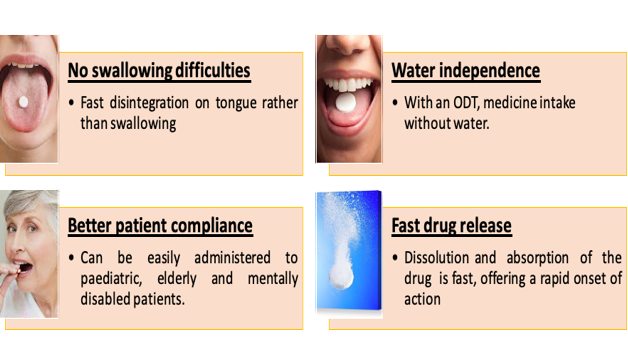
MDT Limitations
- The mechanical strength of the tablets is one of MDT’s primary drawbacks [4, 5, 6].
- MDT is compressed into low compression tablets or has metrics that are very porous and softly curved. Because of this, the pills become more delicate and fresher, making them harder to grasp.
- I have trouble making MDT taste good; therefore, caution should be used while creating a medication like this.
- Many hygroscopic MDTs may require specific packaging in order to maintain their physical integrity at normal humidity levels.
- Those who produce a lot of dry saliva might not be the best candidates for these pill formulations.
- The rate at which saliva is absorbed is known as general bioavailability.
- The medication’s and the dosage form’s stability.
- The mechanical strength of the tablets is one of MDT’s primary drawbacks.
- MDT is compressed into low compression tablets or has metrics that are very porous and softly curved. Because of this, the pills become more delicate and fresher, making them harder to grasp.
- I have trouble making MDT taste good, therefore caution should be used while creating a medication like this.
- Under typical humidity circumstances, many hygroscopic MDTs might not retain their physical integrity, necessitating specific packaging.
- Those who produce a lot of dry saliva might not be the best candidates for these pill formulations.
- The rate at which saliva is absorbed is known as general bioavailability.
- The medicine’s and the dose form’s stability.
- Patients who travel or do not have access to water may find it more convenient because the dosage form does not require water to be swallowed. Some medications are absorbed from the mouth, throat, and esophagus as saliva flows through the stomach.
- Rapid drug absorption and digestion leads to a quick commencement of action. In these situations, the drug’s bioavailability is boosted.
- Pre-gastric absorption may lower dose and boost bioavailability;
- If side effects are reduced, there may be improved clinical
- Feeling nice in the mouth believes that this characteristic, particularly in younger patients, helps to alter the impression of the medication as a bitter tablet.
- Physical barrier reduces the possibility of contamination during oral delivery of a traditional product, hence enhancing safety.
- Possess commercial prospects in areas like lifecycle management, patent renewal, product promotion, and distinctiveness.
- Helpful when ultra-rape action is needed, such as in cases of motion sickness, sudden episodes of allergic reaction, or cough.
- Because these tablets degrade quickly, there is an improved bioavailability, particularly for insoluble and hydrophobic medicines. stability throughout time as a result of the medication’s solid dose form until it is used.
- It thus combines the benefits of a liquid dosage form with dose bioavailability and a solid dosage form with strength. It is also easily adjustable and adaptable to current processing and packaging machinery. It also allows for a high dose of the drug at a reasonable cost.
Challenges in Development of MDTs Palatability
Since most medications are not pleasant, MDTs frequently have the active ingredient hidden in the flavor [3, 10]. The active components that come into touch with the patient’s taste buds are released by the MDTs as they dissolve or break down in the oral cavity. Instead, masking the taste of the drug may be essential for ensuring patient compliance [3, 11].
The Disintegration Time and Mechanical Strength
Porous and soft matrices can be compressed or compressed into tablets with extremely little compression force, which can make the tablet brittle and/or brittle, making it difficult to grasp, in order to break the MDT in the oral cavity. They frequently call for specific peelable blister packs, which raises the price. Only two technologies—wow tab and durasolv, for example—are able to adequately harden tablets and package them in multi-dose bottles.
The Ability to Hygroscopic
Numerous dosage formulations for oral disintegrants are hygroscopic, meaning they cannot maintain their physical integrity in typical temperature and humidity settings [3, 11]. As a result, they need appropriate product packaging to protect them from moisture [3].
The Amount of Medicine
The amount of medication that can be incorporated in each unit dose restricts the utilization of technologies used for MDT. For insoluble medications, the drug dose in lyophilized dosage forms should not exceed 400 mg, and for soluble pharmaceuticals, it should not exceed 60 mg. When oral films or platelets are rapidly melting, this characteristic is particularly difficult to work with [3].
Solubility in Water
Due to their tendency to form eutectic mixtures, which reduce the freezing point and produce glassy solids that can collapse during drying from a lack of support, water- soluble pharmaceuticals pose a number of formation-related issues. The addition of different matrix-forming excipients, like mannitol, which induces crystallinity and gives the amorphous compound rigidity, can occasionally avoid collapse [3].
Tablet Dimensions
The size of the tablet affects how quickly it is administered. According to the statement, the tablet’s easy size for swallowing is 7-8 mm, while its simple size for holding is considerably bigger at over 8 mm. As a result, it is challenging to create a pill size that is simple to use and administer [3, 5].
Tongue Sensation
In the oral cavity, MDT cannot be broken down into big particles. The Diffn particles that emerge from MDT decay ought to be as little as feasible. The oral sensation can be enhanced by adding other scents and refrigerants, including menthol [5].
Environmental Circumstances Sensitivity
Since most of the components used in MDTs should dissolve in a small amount of water, MDTs should be less sensitive to environmental factors like temperature and humidity [5].
MDT Formulation Criteria for Excipients
- Their unique qualities shouldn’t have an impact on the MDT [5, 10, 11, 12, 13].
- It ought to be simple to dismantle.
- It must not combine adversely with medications or other excipients.
- The ultimate strength and integrity of the product must be considered when choosing a binder (one or more binders).
- The excipients that are employed should have melting points between 30 and 35 °C.
- It shouldn’t compromise the product’s organoleptic qualities or efficacy.
- The binder’s composition can be polymeric, liquid, semi- solid, or solid.
Ingredients Used to Prepare MDT
A super disintegrant, a diluent, a lubricant, and possibly a swelling agent, a permeabilizing agent, sweeteners, and flavoring agents are some of the additional excipients [5, 13, 14, 15, 16, 17, 18, 19, 20]. At least one should be included in MDTs.
| Sr No. | excipient | percent used |
|---|---|---|
| 1 | Super disintegrants | 1-15 percent |
| 2 | Binders | 5-10 percent |
| 3 | Agent Antistatic | 0-10 percent |
| 4 | Diluents | 0-85 percent |
Table 1: Various excipients’ names and weight percentages in MDTs [1,15].
During the day, there is an increased demand for quicker breakdown. Because of this, the pharmacist needs to create super disintegrants, or disintegrants that dissolve more quickly and effectively at lower doses. Super disintegrants work by inducing inflammation. When inflammatory pressure is applied in an exterior or radial direction, the tablet bursts or the water is quickly absorbed, which results in a significant increase in the number of particles that enhance grain disintegration [21, 22].
Factors taken into account when choosing super disintegrants
Disintegration To produce the volume expansion and hydrostatic pressure necessary for the tablet to disintegrate quickly in the mouth, the disintegrant should be easily mixed into the saliva of the tablet [5, 16, 23].
Harmony For the production of solid tablets, it is important to have an MDT with less friability and appropriate stiffness at a given compression force. This will increase production speed and eliminate the need for specific packaging.
Mouth Feel A harsh mouthfeel may result from large particles. Smaller particles are therefore preferred. But the tablet turns into a gel when it comes into touch with water, giving it a sticky feel that many users find objectionable.
Flow The super integrants employed in a normal tablet formulation should make up at least 2–5% of the total weight. tablet composition. When MDT forms, the disintegrant level could be increased [16].
| S. No. | Super disintegrant | Mechanism of Action | Specific Properties |
|---|---|---|---|
| 1 | Croscarmellose sodium | Expands 4-8 times within 10 seconds; swells and wicks | Works well at low doses; significant swelling due to carboxyl ester cross-linking |
| 2 | Crospovidone | Combination of swelling and wicking; expands 7-12 times in 30 seconds | Effective at 1-3% concentration; quickly disperses and expands in water |
| 3 | Cross-linked alginic acid | Hydrophilic colloidal material with high absorption capacity | Swelling and wicking together cause disintegration |
| 4 | Gellan gum | Swells significantly when in contact with water | Anionic polysaccharide consisting of linear tetrasaccharides; effective as a superdisintegrant |
| 5 | Sodium starch glycolate | Swells significantly when in contact with water; expands 7-12 times within 30 seconds | Quickly absorbs water leading to up to 6% swelling; high concentrations may cause gelling |
| 6 | Soy polysaccharide | Rapid disintegration | Starch and sugar-free, suitable for diabetic products |
| 7 | Xanthan gum | Extensive swelling for faster disintegration | Highly hydrophilic with low gelling tendency; low water solubility |
Table 2: List of super disintegrants [5,23].
Materials in Bulk Tablets require bulking agents to facilitate quick dissolution, aid as diluents and fillers, and reduce costs [7, 23]. These agents enhance the tablet’s texture, which aids in the breakdown within the mouth, and also increase the volume while decreasing the active ingredient concentration in the formulation. Bulking agents used in this dosage form should preferably be sugar-based, such as mannitol, polydextrose, lactose derivatives (especially direct compressible lactose or DCL), and starch hydrolysates, due to their higher water solubility and improved sensory properties. Mannitol, in particular, provides a cooling effect and is highly soluble in water, offering a strong sensory response due to the endothermic dissolution process. Bulking agents are typically incorporated into the final formulation at a weight percentage ranging from 10% to 90%.
- Type 1 saccharides, which have a high rate of dissolution but a low moldability (lactose and mannitol).
- Type 2 saccharides, which have a low rate of dissolution but a high moldability (maltose and maltitol).
Agents that Emulsify
Emulsifiers enable to quickly dissolve and release the medication without requiring rubbing, swallowing, or drinking water, which is why they are frequently employed to create and dissolve tablets [5, 23]. Emulsifiers also boost bioavailability and enhance necessary components. Lecithin, sucrose esters, propylene glycol esters, alkyl sulfates, and similar fast melting emulsifiers are used in tablet formulations. It can be incorporated in the final formulation in an amount ranging from 0.05% to about 15% by weight.
Lubricants
They are not necessary excipients, however after the tablets dissolve in the tongue, they can enhance their flavor. Lubricants have the ability to ease discomfort and facilitate the passage of medication from the mouth into the stomach [5, 12].
Sweeteners and Flavors (Taste-Masking Agents)
The products taste better and are better for patients because of tastes and flavoring ingredients. By combining these components, part of the active’s bitterness and unpleasant taste can be mitigated [5, 23]. It is possible to improve the organoleptic characteristics of rapid tablet digestion by using both artificial and natural flavors. There are many different types of sweeteners available, such as sugar, fructose, and dextrose, as well as non-nutritive sweeteners including sucralose, aspartame, saccharin sodium, and sugar alcohols. The majority of formulas taste good because to the addition of sweeteners.
Methods for Making Tablets that Dissolve in the Mouth Traditional Technologies
Different traditional production processes for FDDDS
Lyophilization or Freeze-Drying
This is a pharmaceutical technique that uses a vacuum to extract water via sublimation, allowing drying at low temperatures of biological materials and heat-sensitive medications [2]. The medications are dissolved or spread in an aqueous carrier solution, moved to a preform in blister packs, frozen by nitrogen purging, and the procedure is finished by putting the preform in a refrigerator. Lyophilization procedures are characterized by high porosity, a specific surface area, and easy oral solubility, all of which indicate a high drug bioavailability. This system’s primary drawbacks are its high cost, processing time loss, and susceptibility, which render conventional packaging unsuitable for packing this dose form and stressing strength issues.
Advantages
The primary benefit of this method is that, because of the quick melting process, the tablets produced have a pleasant mouthfeel and a very short breaking time.
Method of Moulding
To obtain optimal drug solubility, hydrophilic components are employed in the construction of tablets [19]. A hydroalcoholic solvent is used to cover the powder mass before it is compacted into a dosage form. After then, the solvent system is left to evaporate. By spraying a solidified mixture of sodium carbonate, lecithin, hydrogenated cottonseed oil, and polyethylene glycol with the active component in a lactose-based tablet triturate, the flavor of the drug particles is improved. The removal of the solvents by drying results in a porous mass that facilitates faster melting, which is one of the characteristics of the molding procedure.
Granulation Melt
It is possible to gather medicinal powders in a soluble binder using the melt granulation technique [24, 25]. This method has the benefit over traditional granulation in that it doesn’t require the use of organic solvents or water. Compared to wet granulation, the technique takes less time and energy because there is no drying stage. This method works well for speeding up the breakdown of medications that aren’t very soluble in water, such griseofulvin.
Extrusion in Mass
This combination is passed through an extruder to make thin rolls, and the additives are softened using a water- soluble material (polyethylene glycol) and methanol as the solvent [24, 25].
To create tiny tablets, a heated blade is used to make additional cuts. This method is characterized by the ability of its products to improve oral bioavailability by masking the bitter taste of medications that form tiny granules.
Sublimation
In order to create a porous mass and achieve rapid decomposition and the decomposition factor, inert solid components that break down quickly, such as urea, camphor ammonium carbonate, ammonium bicarbonate, and hexamethylenetetramine, must be added [18]. They are combined with additional components and compressed. By lowering the temperature and decreasing the pressure, the volatile material is altered, leaving the bulk in a porous state. The porous structure of the sublimation process allows for the use of solvents like benzene and cyclohexane.
![Figure 3: Diagrammatic representation of the sublimation methods used to make mouth-dispersing tablets [24]. Direct Compression The most widely used method for producing tablets is disintegrant technology, often known as direct compression, because it offers the following benefits: • Excessive dosages and alternative approaches may be employed to avoid taking the last tablet weight. The simplest method for producing tablets [4]. • Standard tools and instruments are utilized. • Fewer than necessary processing steps.](/fulltextimages/12988/fig_3.png)
Figure 3: Diagrammatic representation of the sublimation methods used to make mouth-dispersing tablets [24]. Direct Compression The most widely used method for producing tablets is disintegrant technology, often known as direct compression, because it offers the following benefits:
- Excessive dosages and alternative approaches may be employed to avoid taking the last tablet weight. The simplest method for producing tablets [4].
- Standard tools and instruments are utilized.
- Fewer than necessary processing steps.
The disintegrant’s efficacy will be impacted by the tablet’s size and hardness. Large, hard tablets take longer to dissolve than is often required. Small, extremely smooth tablets have little mechanical strength. In order to obtain high disintegration rates and quick disintegration, the minimal class and concentration of disintegrant should be selected. However, the degradation time stays nearly constant or even rises over the critical concentration level.
| Sr.no | Optimal Need | Benefit | Restrictions |
|---|---|---|---|
| 1 | Flow-ability | Cost effective production | Separation |
| 2 | Compressibility | increased API stability | Differences in functionality |
| 3 | Potential for dilution | Quicker disintegration | Minimal potential for diluting |
| 4 | Workability | Punch wear and tear is reduced | Workability |
| 5 | Consistency | Simple validation | API’s poor compressibility |
| 6 | regulated particle size | Low microbial contamination | sensitivity of lubricant |
Table 3: Specifications, benefits, and drawbacks of direct compression [25].
Cotton Candy Process
This process is named for its use of a distinctive spinning mechanism that creates a liquid crystal structure similar to cotton candy. In this method, a matrix of polysaccharides or carbohydrates is formed through the combined actions of flash melting and spinning [5]. Partially recrystallizing the resulting matrix enhances its flow and compressibility. This cotton candy-like matrix is then crushed, mixed with excipients and active ingredients, and compressed into mouth dissolving tablets (MDTs). Other polysaccharides, such as polymaltodextrins and polydextrose, can also be transformed into fibers at temperatures 30–40% lower than sucrose. This temperature adjustment allows for the safe inclusion of thermolabile drugs in the formulation. Tablets produced using this process have a highly porous structure, providing an especially pleasant mouthfeel.
Spray-Drying
Using mannitol as a filler, sodium starch glycolate or croscarmellose sodium as a disintegrant, hydrolyzed and non-hydrolyzed gelatin as a carrier, and either an acidic or alkaline ingredient (such as citric acid or decomposition) are all part of the previously mentioned method of combining the components. Force [21]. The dosage form offers a quick (less than 20 seconds) solution when it comes into contact with an aqueous medium, which is one benefit of the spray drying approach.
Phase Transition Process
A phase shift occurs in sugar alcohols comprising mannitol (166°C), trehalose (97°C), xylitol (93–95°C), and erythritol (edge point 122°C) in this technique of MDT breakdown [25]. To make tablets, a powder made of two sugar alcohols with different melting points is crushed and heated to a middle temperature. The tablets didn’t fit well enough and weren’t firm enough before heating. Heating results in the formation of interparticle linkages, which raises the hardness of the tablet because the low melting temperature sugar alcohol phase transition forms a connecting surface on the tablet.
![Figure 4: Direct Compression Process [25].](/fulltextimages/12988/fig_4.png)
The Process of Nanoionization
With the use of a unique wet milling procedure, the medicine is ground to a nanoscale particle size in the newly created nanotealing technology [25, 26, 27, 28, 29]. Select stabilizers were adsorbed onto the drug nanocrystals’ surface to fortify them against agglomeration. These stabilizers were then added to the MDT. This method works particularly well for medications that are not very soluble in water. Other benefits of this technology include a cost-effective manufacturing method, traditional packaging because of its remarkable resilience, and the quick dissolution or melting of nanoparticles, which increases absorption and, consequently, improved bioavailability and decreased dose. and a greater range of doses (drug up to 200 mg per unit).
Thin Film Oral Disintegration or Mouth Dissolution
Fast-release pills offer a simple way to consume nutrients and drugs. This is a new area in the field [25, 26, 27, 28, 29]. This method involves the preparation of an aqueous solution using a water- soluble film-forming polymer (sodium alcohol, pullulan, carboxymethylcellulose, hydroxypropylmethylcellulose, hydroxylethylcellulose, or polyvinylpyrrolidone). alginate, ensfh.), medication ensfh., a flavor-mapping substance that is permitted to evaporate and form a film. If the medication is bitter, the film may contain coated drug microparticles or a resin adsorbate. When this film is placed in the mouth, it dissolves or dissolves quickly, releasing the medication as a suspension or solution. This system’s characteristics include flavor and fast medication delivery, breakdown in 5 seconds, and thin paper films smaller than 2 × 2 inches.
Patented Methods for Tablets that Dissolve in the Mouth
A common explanation for the MDT’s fast melting is that water entered the tablet matrix quickly, causing the MDT to break down quickly. Based on different aspects of formulation, procedures, and patents from numerous pharmaceutical businesses, numerous technologies have been developed. This is how the patented technology is explained [30].
The Zydis Technology
Zydis is a unique lyophilized tablet where the medication is either dissolved or physically contained within a matrix of quickly melting carrier material [30]. The lyophilized framework breaks off as soon as the zydis units are placed in the mouth and does not require water to aid in swallowing. The main components of the zydis matrix are numerous elements intended to accomplish various objectives. To give strength and resistance to treatment, polymers including alginates, gelatin, and dextran are added. This particular form is an iridescent, amorphous structure that provides energy.
Disadvantages
- For insoluble medications, the usual dosage is less than 400 mg, and for soluble pharmaceuticals, it is less than 60 mg.
- It is recommended that the insoluble drug’s particle size be between 50 and 200 μm in order to avoid sedimentation during processing.
Advantages
- The stomach and buccal pharynx are the regions where this formulation is absorbed. Drugs with a high liver metabolism may benefit from any pre-gastric absorption, which stops first-pass metabolism.
- Patients experiencing dysphagia, stroke, or other health issues like gastroesophageal reflux, multiple sclerosis, Parkinson’s disease, or difficulty swallowing oral medications; Zydis’ composition is self-preserving because the final water concentration in the lyophilized product is too low to support microbial growth.
Technology by Orasolv
The CIMA laboratories developed the technique known as Orasolv [5, 10]. The active medication in this approach is kept in the flavor. An effervescent disintegrant is also included. To reduce the oral disintegration time, tablets are manufactured using the direct compression process with a certain brief compression force. The tablets are made with a tablet machine and traditional mixers. This method produces quick-drying, soft tablets that come with a unique positioning and selection mechanism.
Advantages
There is a twofold flavor mask that is easily absorbed [30]. For medication strengths ranging from 1 mg to 750 mg, this method is employed. The disintegration period of a tablet can be tailored to vary between 10 and 40 seconds, contingent upon its size and formulation.
Disadvantages
Because they have an effervescent mechanism, they are moisture sensitive and need to be packaged carefully. inadequate mechanical strength [30].
Durasolv Technology
CIMA Laboratories patented the technology known as Durasolv [4, 5]. This method produces tablets that have a lubricant, filler, and medication. This typical tableting machine is used to prepare the tablets, which have a decent hardness. They can be enclosed in a standard packaging method, like blister packs. Another useful technology for goods that only need tiny amounts of the active ingredient is Durasolv.
Advantages
Because DuraSolv technology compresses tablets to a maximum hardness of 15–100 N, it produces an ODT that is more durable, making it excellent for tablets containing tiny amounts of active ingredient (125 mcg to 500 mg) [30]. This method thereby makes packaging flexible, enabling the pills to be put into blisters and bottles.
Disadvantages
Due to the formulation being subjected to high pressure during compression, the method is incompatible with higher concentrations of the active ingredient. During compression, the Durasolv powdered powder covering may crack, exposing the patient to the harsh medication taste [30].
The WOW Tab Technology
Yamanouchi Pharmaceutical Co. is the patent holder of this tablet technology. WOW stands for “no water” [4, 5, 30, 31]. To create a firm tablet that melts quickly, a blend of high and low formability carbohydrates is utilized in this procedure. Their high and low ductility combined are used to create boards that are sufficiently hard.
Advantages
Yamanouchi Pharmaceutical Co. is the patent holder for this tab technology. WOW stands for “Without water”. To create a firm tablet that melts quickly, a blend of high and low formability carbohydrates is utilized in this procedure. Their high and low ductility combined are used to create boards that are sufficiently hard.
Disadvantages
There was no significant change in bioavailability.
The Flash Dose Technology
Fuisz used twelve flash technologies. Nurofen melt let, an innovative orodispersible tablet form of ibuprofen made with flash dosing technology, is the first product that Biovail Corporation is putting on the market. A self-binding matrix with a shear form known as a thread makes up flash tablets [4, 23, 30]. Rapid heat treatment is used to quickly produce shear matrices.
Advantages
large dissolving surface area
Disadvantages
- Drugs that are sensitive to heat, moisture, or both may not be able to be used because of the high temperature needed to melt the matrix.
- The drug’s maximum dosage on the dosage form is 600 mg.
- Because the generated pills are soft, exceedingly fresh, and moisture-sensitive, special packaging is needed.
Pharmabust Technology
SPI Pharma holds a patent for the pharmaburst technology. This method of making tablets consists of a dry mixture of the medication, taste, and lubricant, compressed into tablets that dissolve in 30 to 40 seconds [5, 12]. This method produces tablets that are strong enough to be sealed in vials and blisters [32, 33, 34, 35, 36, 37, 38, 39].
Flashtab Technology
Another fast-melting/disintegrating tablet composition is called Flashtab technology. Prographarm Labs use technology from Flashtab [38, 39].
Oraquick Technology
On this technology, K.V.S. Pharmaceutical holds a patent [30, 31, 32, 33]. It makes use of a technique known as micromask, a taste microsphere mask that offers significant mechanical strength, a faster rate of product degradation or melting, and a better mouthfeel than taste mask alternatives. The process of flavor secretion does not involve the utilization of all solvent types. As a result, manufacturing will increase and become more efficient more quickly.
Advantages
quicker and more effective production, ideal for medications that are heat-sensitive
The Dispersible Tablet Technology
Patents for dihydroergotoxin and cimetidine dispersible pills, which are said to disintegrate in less than a minute when contacted with water at room temperature, were granted by Leak in Yugoslavia [5]. Dihydroergotoxin is not very soluble in water in its unaltered state. Dispersible tablets containing 0.8 to 10%, preferably about 4% by weight of organic acids, showed better breakdown of this dihydroergotoxin methanesulfonate. The disintegrant ion formation is one of the primary excipients of cimetidine. It results in quick disintegration and/or rapid swelling and/ or a good capacity to read tablets. Disintegrants include starches such cyclodextrin polymers, cross-linked sodium carboxymethylcellulose, alginic acid, microcrystalline cellulose, and modified starch. Better disintegration outcomes are obtained when two or more disintegrants are combined.
The Advatab Technology
Advatab pills dissolve quickly in the mouth, typically in under 30 seconds, making it possible to administer the medication orally without the need for water [39]. Patients who have trouble swallowing pills and capsules should take particular note of these tablets. Advatab is different other MDT technologies in that it can be used in conjunction with other Eurand particulate technologies, like its Diffucaps® controlled release technology and its state-of-the-art flavor masking technology, Microcaps®.
Nanocrystal Technology
Elans’ proprietary nanocrystalline technology can produce and enhance the composite activity and end product qualities for rapid tablet melting [5, 12, 30]. The melting rate rises when the particle size is reduced because it increases the surface area. With the use of nanocrystalline technology, this can be effectively predicted. Nanocrystalline particles are produced by grinding the medication using a unique wet milling technology. They are easily small drug particles, usually with a diameter of less than 1000 nanometers (nm).
The Technology of Nanocrystal Mouth Dissolving Allows for
- The fast tablet matrix breakdown that results from orally delivered nanoparticles (<2 microns) has pharmacokinetic benefits.
- A variety of products built on a blend of patented and proprietary technology components.
- Production procedures that are economical and employ scalable, conventional unit operations.
Frosta Technology (Akina)
Akina is the technology’s implementer [5, 12, 13]. Frosta technology produces solid tablets with high porosity by compressing plastic granules at low pressure using a simple principle. A porous plastic material is combined with a water penetration enhancer in this method, and then it is granulated with a binder.
| S. No. | Author | Drug | Method/Polymer | Interference |
|---|---|---|---|---|
| 1 | Lee et al. (2013) | Megestrol | Spray drying | Improves dissolution rate and masks taste |
| 2 | Szamost et al. (2013) | Phenylpropanolamine Lamina HCL | Direct compression | Melts with low compression force at 37°C |
| 3 | Constantine (2011) | Ondansetron | Polyethylene glycol | Utilized for treating dysphagia |
| 4 | Singh et al. (2006) | Nimesulide | Sodium starch glycolate | Dissolves or breaks down in the digestive tract |
| 5 | Aggarwal et al. (2005) | Galanthamine | Direct compression | Applied in the treatment of Alzheimer’s |
| 6 | Callihan et al. (2005) | Aspirin | Direct compression | Mannose helps in rapid dissolution and disintegration |
| 7 | Szamost et al. (2013) | Ibuprofen | Direct compression | Offers a pleasant mouth feel |
| 8 | Khawla et al. (2013) | Ibuprofen | Melt extrusion | Needs minimal compression force |
| 9 | Callihan et al. (2005) | Caffeine | Direct compression | Promotes quick dissolution |
Table 4: patents pertaining to various MDTs, or mouth-dispersing medication delivery systems [4,6,7,40].
Nearly any medicine may be produced with this technology, including ones that are sold and ones that prolong the innovator’s patent. Clinical research demonstrates that MDTs can enhance patient adherence, have a quick start of effect, and boost bioavailability. It won’t be long before the bulk of oral formulations are created in MDT forms, given the many advantages of MDTs.
Lyo (Pharmalyoc)
After making an oil-water emulsion, it was put straight into the blister cavities and allowed to lyophilize [5, 12, 13]. It is possible to avoid inhomogeneity during lyophilization by increasing the viscosity at the conclusion of sedimentation by adding an inert filler. Because to the high filler content, the tablets’ porosity is decreased, which lowers light refraction.
Sheaform Technology
The method’s foundation is the preparation of a thread, sometimes referred to as a shear, from a matrix that the feed object produces [5]. Sugar carrier-containing broth treated with flash heat. In this procedure, the sugar is subjected to a temperature gradient and centrifugal force at the same time. This elevates the mass’s temperature and creates an internal flow state that permits some of the sugar to move in relation to a certain mass. Since the resulting yarn is amorphous by nature, it must be further chopped and recrystallized using a variety of methods.
Marketed Products of Mouth Dissolving Tablets
Tables Nos. 5 and 6 include the MDT commercialized products that are now on the market.
| Brand | Manufacturer | Active Drug | |
|---|---|---|---|
| 1 | Acepod O | ABL Lifecare, IN | Cefpodoxime |
| 2 | Acufix DT TAB | Macleods, | Cefixime |
| 3 | Alepam | Scoshia Remedy, IN | Amoxicillin trihydrate |
| 4 | Bigecef DT TAB | Bestochem, IN | Cefuroxime |
| 5 | Clonazepam ODT | Par Pharmaceutical | Clonazepam |
| 6 | Dompan | Medley Pharmaceuticals, IN | Pantoprazole and Domperidone |
| 7 | Mosid-MT | Torrent Pharmaceuticals, IN | Mosapride Citrate |
| 8 | Minoclav DT TAB | Minova Life Sciences, IN | Amoxicillin trihydrate |
| 9 | Nulev | Schwarz Pharma, IN | Hyoscyamine Sulfate |
| 10 | Nimulid MDT | Panacea Biotech, New Delhi, IN | Nimesulide |
| 11 | Numoxylin CV DT | Gepach International, IN | Amoxicillin trihydrate |
| 12 | Zyrof Meltab | Zydus Cadila, IN | Rofecoxib |
| 13 | Romilast | Ranbaxy Labs Ltd, New Delhi, IN | Montelukast |
| 14 | Torrox MT | Torrent Pharmaceuticals, Ahmedabad, IN | Rofecoxib |
| 15 | Valus | Glenmark, IN | Valdecoxib |
Table 5: Various Products of Mouth Dissolving Tablets Available in the Indian Market [2-8].
| Brand | Manufacturer | Active Drug | |
|---|---|---|---|
| 1 | Benadryl Fastmelt | Warner-Lambert, USA | Diphenhydramine |
| 2 | Claritin RediTab | Schering-Plough Corp, USA | Loratadine |
| 3 | Domperidone Ebb | Ebb Medical, Sweden | Domperidone |
| 4 | Domperon | Astra Pharma, Bangladesh | Domperidone |
| 5 | Feldene Fast Melt | Pfizer Inc. USA | Piroxicam |
| 6 | Febrectol | Prographarm, Chateauneuf, France | Paracetamol |
| 7 | Gaster D | Yamanouchi | Famotidine |
| 8 | Imodium Instant Melts | Janssen, UK | Loperamide HCl |
| 9 | Maxalt MLT | Merck & Co, USA | Rizatriptan |
| 10 | Nasea OD | Yamanouchi | Ramosetron HCl |
Table 6: Different Mouth Dissolving tablets products available in international market [2-6].
New dosage forms called rapidly disintegrating tablets have been created expressly to address some of the issues with the typical rapid dosage form, such as children and elderly patients having trouble swallowing the pill. Fast- digesting pills are made to dissolve in saliva, often within 60 seconds (sometimes as little as 5–60 seconds). Compared to traditional oral dosage forms, fast-disintegrating tablets are safer, more convenient, offer improved biopharmaceutical qualities, and improve patient adherence and intake. In recent decades, the MDT has become increasingly popular. For patients who are psychotic, at-risk, elderly, or young, as well as those who don’t have access to water or are constantly on the go, MDT should be created. Some of these patented and conventional ingredients are used in the development of MDT formulations.
Conflict of Interests
Declare none
References
-
Hannan PA, Khan JA, Khan A, Safiullah S (2016) Oral dispersible system: a new approach in drug delivery syste. Indian J Pharm Sci 78(1): 2-7.
-
Bhowmik D, Chiranjib B, Krishnakanth, Pankaj, Chandira RM (2009) Mouth Dissolving tablet: an overview. J Chem Pharm Res 1: 163-177.
-
Siddiqui N, Garg G, Sharma PK (2010) Mouth Dissolving tablets: preparation, characterization and evaluation: an overview. Int J Pharm Sci Rev Res 2: 87-96.
-
Gupta DK, Bajpai M, Chatterjee DP (2014) Fast mouth dissolving disintegrating tablet and patient counselling points for FDDTs review. Int J Res Dev Pharm L Sci 3(3): 949-958.
-
Nautiyal U, Singh S, Singh R, Gopal, Kakar S (2014) Mouth Dissolving tablets as a novel boon: a review. J Pharm Chem Biol Sci 2: 5-26.
-
Kaur T, Gill B, Kumar S, Gupta GD (2011) Mouth Disintegrating tablets: a novel approach to drug delivery. Int J Curr Pharm Res 1: 1-7.
-
Patel TS, Sengupta M (2013) Mouth Dissolving tablet technology. World J Pharm Sci 2: 485-508.
-
Ashish P, Harsoliya MS, Pathan JK, Shruti S (2011) A review: formulation of mouth Disintegrating tablet. Int J Pharm Res 1: 1-8.
-
Sharma R, Rajput M, Prakash M, Sharma S (2011) Mouth Dissolving drug delivery system. Int Res J Pharm 2: 21- 29.
-
Pagar R, Ahirrao S, Yallatikar T, Wagh M (2014) Review on orodispersible tablets. Int J Res Dev Pharm L Sci 3: 949-958.
-
Mishra US, Prajapati SK, Bhardwaj P (2014) A review on formulation and evaluation for mouth Disintegrating tablet. World J Pharm Pharm Sci 8: 1778-1810.
-
Kuchekar BS, Badha AC, Mahajan HS (2003) Mouth Disintegrating tablets: a novel drug delivery system. Pharmatimes 35: 7-9.
-
Sharma S (2008) New generation of the tablet: Mouth Dissolving tablet. Latest Rev Pharmainfo Net pp: 6.
-
Kumari S, Visht S, Sharma PK, Yadav R (2010) Mouth Dissolving drug delivery system: a review article. J Pharm Res 3: 1444-1449.
-
Mohanachandran PS, Sindhumol PG, Kiran TS (2011) Super disintegrants: an overview. Int J Pharm Sci Rev Res 6: 105-109.
-
Deshmukh VN (2012) Mouth Disintegrating drug delivery system: a review. Int J Pharm Tech Res 4: 412- 421.
-
Kumaresan C (2008) Orally disintegrating tablet-mouth Disintegrating, sweet taste and target release profile. Pharm Rev 6: 1.
-
Parkash V, Maan S, Deepika, Yadav SK, Hemlata, et al. (2011) Mouth Dissolving tablets: opportunity in drug delivery system. J Adv Pharm Technol Res 2(4): 223-235.
-
Nagar P, Singh K, Chauhan I, Verma M, Yasir M, et al. (2011) Orally disintegrating tablets: formulation, preparation techniques and evaluation. J Appl Pharm Sci 1(4): 35-45.
-
Velmurugan S, Vinushitha S (2010) Oral disintegrating tablets: an overview. Int J Chem Pharm Sci 1: 1-12.
-
Sri KV, Raj GB, Ravishanker D, Kumar CA (2012) Preparation and evaluation of montelukast oral dispersible tablets by direct compression method. Int Res J Pharm 7: 315-318.
-
Yang D, Kulkarni R, Behme RJ, Kotiyan PN (2007) Effect of the melt granulation technique on the dissolution characteristics of griseofulvin. Int J Pharm 329(1-2): 72- 80.
-
Khan A, Tripuraneni A (2014) Fast Dissolving tablets–a novel approach in drug delivery.
-
Chowdary YA, Soumya M, Madhubabu M, Aparna K, Himabindu P (2012) A review on Mouth Dissolving drug delivery systems-A pioneering drug delivery technology. BEPLS 1: 8-20.
-
Abdulraheman ZS, Patel MR, Patel KR (2014) A review on immediate release tablet. Int J Univers Pharm Bio Sci 3: 93-113.
-
Patel P, Dhanani C, Kadeval A, Patel M, Patel N‚ et al. (2012) A modern approach on Mouth Dissolving tablets. Int J Modern Pharm Res 1: 1-17.
-
Shukla D, Chakraborty S, Singh S, Mishra B (2009) Mouth Dissolving Tablets II: An Overview of Evaluation Techniques. Sci Pharm 77: 327-341.
-
Hirani JJ, Rathod DA, Vadalia KR (2009) A review in orally disintegrating tablets. Tropical J Pharm Res 8(2): 161-172.
-
Menat AK, Patel MS, Patel MR, Patel NM (2012) Mouth Dissolving tablets a novel approach to drug delivery. Asian J Pharm Sci Res 2: 13-21.
-
Roshan K, Bharkatiya M, Rathore KS, Shyama SK, Sirvi G, et al. (2015) Fast disolving tablet drug delivery system- an overview.
-
Acosta C, Tabare R, Ouali A (1998) US patent 5: 807.
-
Gohel M, Patel M, Amin A, Agrawal R, Dave R, et al. (2004) Formulation design and optimization of mouth dissolve tablets of nimesulide using vacuum drying technique. AAPS Pharm Sci Tech 5(3): e36.
-
Mohan SC, Margret CR (2011) Recent Advances in Orodispersible Tablets a Review. Int J Drug Discovery Herbal Res 1(2): 78-83.
-
Yourong F, Yang S, Jeong SH, Kimura S, Park K (2004) Orally Mouth Dissolving Tablets Developments Technologies Tastemasking and Clinical Studies. Crit Rev Ther Drug Carrier Syst 21(6): 433-476.
-
Jeong SH, Fu Y, Park K (2005) Frosta a new technology for making fastmelting tablets. Expert Opin Drug Delivery 2(6): 1107-1116.
-
Sreenivas SA, Dandagi PM, Gadad AP, Godbole AM, Hiremath SP, et al. (2005) Orodispersible tablets new fangled drug delivery system a review. Indian J Pharm Educ Res 39: 177-181.
-
Seager H (1998) Drug-deliver products and the zydis fast Disintegrating dosage. J Pharm Pharmacol 50(4): 375-382.
-
Takagi H, Kajiyama A, Yanagisawa M (2005) Rapidly disintegrable pharmaceutical composition. US Patent 6: 899.
-
Divate S, Kunchu K, Sockan GN (2011) Fast Disintegrating Tablets An Emerging Trend. Int J Pharm Sci Rev Res 6(2): 18-22.
-
Asija R, Asija S, Gupta A, Hemlata A (2014) A review on Mouth Dissolving drug delivery system. Int J Res Pharm Sci 4: 7-12.
-
Lachman L, Lieberman HA and Kanig JL (1991) The Theory and Practice of Industrial Pharmacy. 3rd (Edn.), Varghese Pub. House, Bombay, pp: 293-245.
-
Rang HP, Dale MM, Ritter JM, Flower RJ, Henderson G (2012) Rang and Dale’s Pharmacology. 7th (Edn.), Elsevier/Churchill Livingstone, Edinburgh 350: 199- 202.
-
Catania JS, Johnson AD (1997) US Patent 563300.
-
Nelson SL (1998) US Patent 5766622.
-
Eby III, Georage A (1991) US Patent 5002970.
- Acido Labile or Gastro Irritant Apis and Enteric Release in Galenic Practice: An Overview
- A Study on Knowledge, Attitude and Practice of Hand Hygiene among Healthcare Professionals at a Tertiary Care Hospital, India
- Influence of Inoculum Concentration on In Vivo Incubation Period of Emmia lacerata, Pathogenesis and Management of Wilt in Pepper (Capsicum annuum L.)
- Vanilla’s Chemistry
- Marine Anti-Cancer Compounds and Adverse Effects of Global Warming on Oceans: An Overview
- Serological Investigation of Chikungunya Virus Antibody among Malaria-Suspected Febrile Patients in Some Healthcare Facilities in Rivers State