
Uncontrolled Dumpsite Activities as a Catalyst for Ecosystem Services Distortion and Biodiversity Loss in the Aluu Precinct of Rivers State
The processes of disposing of household and industrial waste have in recent times become a daunting task for waste managers in growing economies like Nigeria. It has become so difficult to find a suitable site to locate receptacles that most waste managers choose to harness and convert derelict mine sites such as borrow pits as final dumpsites. Such actions have over time caused colossal damage to the environment leading to other health-related hazards and distortions in the ecosystem in addition to phenomenal biodiversity loss. This study was designed to assess the effects of waste dumpsites on biodiversity and ecosystem services within the Aluu Precinct of Rivers State. The study is a cross-sectional survey that adopted the quantitative strategy as it aims to measure and test the effect of waste dumpsites on biodiversity and ecosystem services within the Aluu Precinct using objective and reliable methods. A representative sample of airborne bacteria was collected at three different points within the dumpsite using a High-Volume Air Sampler (HVAS). The study used a plate count method to identify and quantify the airborne bacteria from the HVAS samples, and further deployed descriptive statistics to analyse the data and answer the research questions. Findings indicate that there is a concentration of airborne microorganisms in the three samples collected at different distances from the dumpsite, result indicates that dumpsite activities have a negative impact on the biodiversity and ecosystem services in the study area, as the concentration of almost all the microorganisms except E. coli exceeds the safety limits in all three samples, implying a high level of bioaerosol contamination in the air near the dump site. The study recommends amongst others constant engagement with the local authorities, communities, and waste management agencies to ensure effective waste disposal and minimize environmental harm. Establish long-term monitoring programs to track biodiversity recovery. Measure changes in species diversity, soil quality, and vegetation.
Introduction
Wastes are generally classed as materials that are produced daily by humans such as leftovers, newspapers, devices, dyes, bottles, and equipment [1]. These materials have the capacity to damage the environment, contaminate the water supply system, disrupt the sewage system, and pose collection and storage challenges if they are not disposed of properly. Therefore, the proper collection and final disposal of solid wastes is critical to both humans and the environment [2].
The notion of waste management in the past was very limiting because it involved small groups of people who collect and dispose of trash from the streets and dump it at a selected site [3]. Some of the initial methods of waste management comprised simple landfill techniques ladened with several disadvantages. Gradually, the crude methods improved and replaced the inherent challenges with several advanced ways [4]. With time, several improved skills and equipment became available and waste management processes became easier [3].
It is a natural phenomenon that man cannot survive without the support of the ecological systems of plants and animals and their interrelationships, which are collectively known as ‘the characteristic components of the biosphere. Thus, the physical environment has been subjected to a process of material balance, where the proper functioning of the environment requires the extraction of resources from their natural occurrences, transforming them into end- products for consumption, and disposal of large amounts of dissipated and/or chemically transformed resources for nutrients replenishments. These transformed materials which are no longer useful to the process are what can be described as wastes [5, 6].
It is such that any material, substance, or by-product eliminated or discarded as no longer useful or required after the completion of a process, therefore, constitutes a ‘waste material’. The natural environment is expected to maintain a given carrying capacity over waste materials, beyond which there is bound to be an ecological problem. As more resources are extracted from the environment and used up, so more wastes are pushed back into the environment, putting pressure on its limited capacity which is naturally designed to protect humans, animals, and plants against harmful effects [5, 7].
Waste generation is as old as the existence of man on earth as most human activities involve the production of waste in the form of the by-products of their daily processes [5]. The higher the material turnover, and the complexity and diversity of the materials produced as waste, the more challenging it is for waste management to reach the goals of protecting man and the environment and resource conservation. Waste management involves the process of collecting, discarding, transporting, segregating, destroying, recycling, controlling processing, monitoring, and regulating garbage, sewage, and other waste products to save the environment from detrimental effects, freeing it from pollution, and also safeguarding human health from the hazards contained therein [8, 9, 10].
Previous studies that have investigated waste dumpsites in similar contexts show that they have used various criteria to select and classify the waste dumps according to their types and levels of waste management practices. Some of these criteria include: the age, size, shape, location, topography, geology, hydrology, climate, vegetation, accessibility, security, ownership, operation, regulation, supervision, maintenance, waste sources, waste composition, waste quantity, waste quality, waste segregation, waste collection, waste transportation, environmental impacts, health impacts, social impacts, economic impacts, and sustainability impacts [11, 12, 13, 14, 15, 16, 17]. These studies have shown that the types and levels of waste management practices have significant effects on the environmental and health quality of the waste dumps and the surrounding areas.
Waste management and disposal in Port Harcourt, the capital city of Rivers State of Nigeria has been characterised by poor management and uncoordinated approaches, resulting in unsustainable methods which are significantly affecting the health of living organisms, which culminates in biodiversity losses. Gobo AE, et al. [18] indicates several factors that are responsible, in addition to poor management and coordination which include unhealthy cultural attitudes and habits, urbanisation patterns, population growth, non- mechanized waste disposal methods, and poor financing of the sector. In the city of Port Harcourt, refuse is usually generated from domestic, commercial, and industrial sources [19], and requires thorough sorting for fair treatments and recycling before final dumping. Dumping practice in Port Harcourt had been carried out in places believed to be wastelands, such as borrow pits in the suburbs where liquid (sewage) and solid wastes are dumped together [19].
Over the years, waste management in Port Harcourt and its environs has become a tedious and difficult task as there has been a rapid growth in population, urbanisation, industrialisation, modernisation, and digitalisation, all increasing varieties of wastes such as domestic, industrial, and commercial, mining, radioactive, agricultural, hospital, electronic wastes and many more, without a corresponding application of contemporary technology to engender sustainable waste management [20, 21]. Areas where dumpsites are created have become susceptible to the hazards of unsorted wastes which threaten biodiversity including humans in these areas. The hygienic consideration in waste management compelled the creation of dump sites within the suburbs where dwellings were scanty and the well-being of dwellers also dependent relatively on biodiversity. Recent urbanization has engulfed these suburbs into the city and thereby made dwellers susceptible to the effects of previous dumpsites where all sorts of wastes including sewage had been dumped [9].
Statement of the Problem
There have been indiscriminate and unsustainable waste disposal activities within the Aluu Precinct leading to biodiversity loss and human health challenges. Human health and nature’s well-being have therefore been threatened as genetic mutations and species extinction are significantly ongoing because of the unchecked waste disposal systems [22, 23]. Human dependence on the environment is facilitated by the variety of organisms that serve human well-being in one way or another. The unchecked unsustainable dumping of refuse in the Aluu Precinct has created a lot of concern, leading scholars, and notable researchers to understand the dynamics of indiscriminate waste dumpsite practices on biodiversity [21, 24, 19].
Aim and Objectives
Aim
This study aims to assess the effects of waste dumpsites on Biodiversity and ecosystem services within the Aluu Precinct of Rivers State.
Study Area
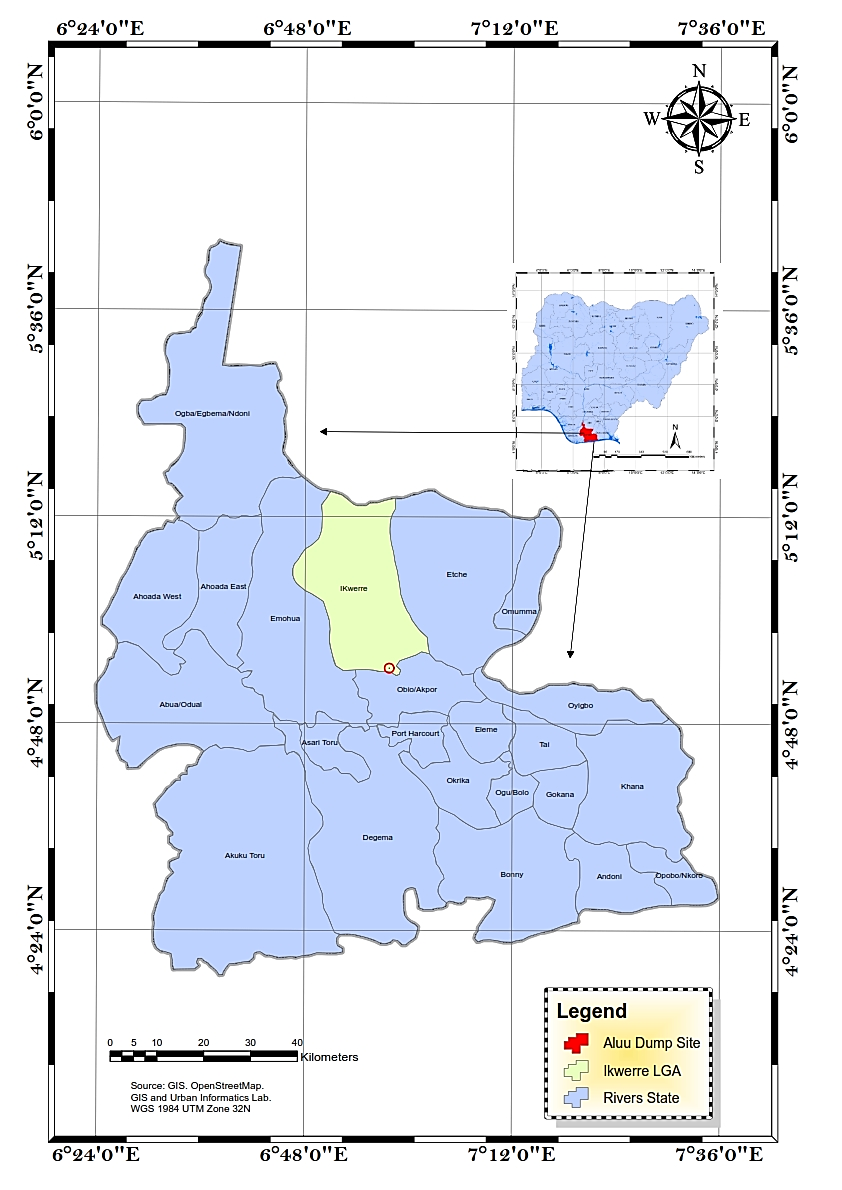
The study area comprises the entire area stretch of the dumpsite and the contiguous land within Aluu town, Ikwerre Local Government Area (LGA). Aluu town is a community in Ikwerre Local Government Area, Rivers State, Nigeria. It is located at 4°56’01.8”N (4.9338400°), 6°56’58.1”E (6.9494600°) behind the University of Port Harcourt (Figure 1).
Biodiversity and Ecosystem Services
Ecosystem services represent some of the inherent benefits got from ecosystems. These benefits include but are not limited to the provisioning and regulating the cultural and supporting services. Ecosystem services enable the sustenance of human life by providing clean water, regulating disease and climate, providing nutritious food, and supporting the pollination of crops. Other services include the provision of recreational, cultural, spiritual and soil formation benefits. The survival of any ecosystem services is dependent on the functionality and resilience capacity of such ecosystems, which in turn relies on the diversity and interactions of living organisms. Globally, ecosystem services are grossly overlooked and undervalued in decision-making, leading to the degradation and eventual loss of ecosystems and their services [25].
Biodiversity and ecosystem services are interconnected aspects of nature that support human livelihoods, health, and well-being in various ways. Biodiversity, ecosystems, ecosystem services, and human well-being are consistent. Since biodiversity reinforces ecosystems, it provides ecosystem services that contribute to the well-being of humans. The structure and function of the ecosystem influence the biodiversity in each area [26].
There exists a fundamental nexus between biodiversity and ecosystem services because biodiversity contributes to the processes that reinforce ecosystem services. It is such that biodiversity can serve as an ecosystem service (for example, genetic resources for drug development). Similarly, biodiversity establishes an ecosystem good that is beneficial and highly valued by humans. Significant environmental change such as climate change, poses risks to ecosystems, species, and other services that humans rely on [27].
Palpable evidence of the interrelations between biodiversity and ecosystem services include:
- Agriculture depends on biodiversity for crop pollination, pest control, soil fertility, genetic diversity, water regulation and quality, and climate regulation. Agriculture also affects biodiversity through land use change, habitat fragmentation, pesticide use, nutrient runoff, and greenhouse gas emissions. Sustainable agricultural practices can enhance both biodiversity and ecosystem services.
- Fisheries rely on biodiversity for maintaining habitats, water quality, food webs, fish stocks, and resilience to disturbances. Fisheries also affect biodiversity through pollution, habitat destruction, overexploitation, bycatch, and the introduction of invasive species. Sustainable fisheries management can conserve both ecosystem services and biodiversity.
- Forests depend on biodiversity to maintain forest diversity, productivity, structure, function, and resilience. Forests also provide biodiversity with habitats, refuges, corridors, and sources of food. Forests provide ecosystem services such as timber, fuelwood, non-timber forest products, carbon sequestration, water regulation and purification, soil erosion control, recreation, and cultural values. Forests are affected by human activities such as deforestation, degradation, fragmentation, logging, fire, hunting, and climate change. Sustainable forest management can protect both biodiversity and ecosystem services.
- Biodiversity is a source of new drugs and medicines for human health. Many drugs are derived from natural compounds produced by plants, animals, or microorganisms. Biodiversity also contributes to human health by regulating disease transmission and providing food security and nutrition. Biodiversity is threatened by human activities such as habitat loss, overexploitation, pollution, climate change and bio-piracy. Conserving biodiversity can benefit both human health and ecosystem services [25].
Biodiversity and Waste Dumpsites
The effect of waste dumpsites on biodiversity has gained currency due to their capacity to threaten species’ survival and disrupt ecosystems. Understanding the concepts and theoretical frameworks that underpin the relationship between waste dumpsites and biodiversity is crucial for assessing their impact and designing effective mitigation strategies [28].
Characteristics of Waste Dumpsites
Waste dumpsites are locations where waste materials liquid and solid are deposited and accumulated over a period. The composition theory suggests that the nature and composition of waste deposited in dumpsites significantly influence biodiversity. For instance, the toxicity levels, organic content, and the rate of decomposition often significantly impact the ecological systems adjoining the dumpsites. Therefore, understanding the specific characteristics of waste in dumpsites is crucial for evaluating their potential impact on biodiversity [29].
Ecological Effects of Waste Dumpsites
Waste dumpsites have varying ecological effects on biodiversity. For instance, there is habitat fragmentation because dumpsites have the capacity to fragment habitat resulting in altered species composition, reduced habitat availability, and increased vulnerability to extinction [30]. The emphasis is on the importance of spatial connectivity and habitat continuity when assessing the impact of waste dumpsites on biodiversity. Fragmented habitats may limit the movement and dispersal of species, disrupt ecological interactions, and ultimately lead to population decline and loss of biodiversity.
Direct and Indirect Effects on Biodiversity
Waste dumpsites can have both direct and indirect impacts on biodiversity. The direct impact model explains the immediate and observable effects of waste dumpsites on biodiversity, such as soil and water contamination, habitat degradation, and soil compaction [31]. Indirect impacts refer to the secondary effects caused by dumpsites, including changes in nutrient cycling, disruption of ecosystem processes, and modifications of species interactions. These indirect impacts can have cascading effects throughout the food web, altering the abundance and distribution of species and affecting overall biodiversity [32].
Materials and Methods
This study is a cross-sectional survey that adopted the quantitative strategy as it aims to measure and test the effect of waste dumpsites on biodiversity and ecosystem services within the Aluu Precinct using objective and reliable methods. A representative sample of airborne bacteria was collected at different points within the dumpsite using a High-Volume Air Sampler (HVAS). The study used a plate count method to identify and quantify the airborne bacteria from the HVAS samples, and further deployed descriptive statistics to analyse the data and answer the research questions.
The data was collected using the HVAS device that captures a large volume of air (up to 1000 m3/h) and collects the particles on a filter. The device was placed at a height of 1.5 m above the ground level at various locations around the dump site. The device was calibrated before and after each sampling session to ensure accuracy and consistency. The filters were labelled and stored in sterile containers at 4°C until analysis.
All the samples were transported to the laboratory in a cooler box with ice packs and analysed within 4 hours of collection. The analysis involved the enumeration and identification of the airborne microorganisms present in the samples. Some of the parameters measured include the total fungi count, the total bacteria count, and the E. coli count. The total bacteria count was determined by serial dilution and spread plate method on nutrient agar plates, incubated at 37°C for 24 hours. The total fungi count was determined by serial dilution and spread plate method on potato dextrose agar plates, incubated at 25°C for 72 hours. The E. coli count was determined by membrane filtration and chromogenic medium method on Colilert-18 plates, incubated at 35°C for 18 hours. The colonies were counted using a digital colony counter and expressed as colony-forming units per cubic meter of air (CFU/m3). The identification of the microorganisms was performed by gram staining, biochemical tests, and molecular techniques. The results were compared with the safety limits recommended by the World Health Organization (WHO) and the American Conference of Governmental Industrial Hygienists (ACGIH).
Another data analytical method deployed in this study also involves the use of a plate count method that consists of diluting a sample with sterile saline or phosphate buffer diluent until the bacteria are dilute enough to count accurately. Different types of nutrient media, such as tryptic soy agar, nutrient agar, or MacConkey agar, depending on the indicator organisms are used. The data analysis plan for this study consisted of descriptive statistics. The descriptive statistics summarized the characteristics of the airborne bacteria samples, such as frequency, mean, and standard deviation. The data analysis plan used appropriate software such as SPSS and Excel Spreadsheets.
Site Selection
Three sampling sites were selected from within the dumpsite based on their closeness to residential, commercial, and farmlands occupied by humans near the waste dumpsites. Aluu Town is a semi-urban community in Rivers State. The dumpsite at Aluu Town generates about 100 tonnes of solid waste per day, which is mostly disposed of in open dumpsite without proper treatment and control. This dumpsite poses serious environmental and health concerns for the residents and the surrounding areas, such as groundwater contamination, air pollution, soil degradation, biodiversity loss, and disease transmission. This dumpsite in the study area is a semi-controlled solid waste dumpsite located proximate to a swamp and has been in use for about 10 years, with an approximate area of about 0.8km2 with a depth of about 18.6m Bello R, et al. [33] and receives waste from markets, schools, health facilities and households. The dump is not completely fenced or covered and is accessible to scavengers and animals alike. The dumpsite has no drainage or leachate collection system, and it is prone to flooding and erosion due to the condition of the terrain [34].
Analytical Method
The plate count method is a culture-based method that involves the direct plating of filter samples on solid media or the serial dilution and plating of liquid samples on solid media. The plates are incubated at appropriate temperatures and times, and the bacterial colonies are counted and expressed as colony-forming units (CFU) per volume of air sampled. The plates can be also examined for colony morphology, colour, shape, size, and haemolysis. Different types of media can be used to select specific groups of bacteria, such as blood agar for haemolytic bacteria, MacConkey agar for Gram-negative bacteria, or mannitol salt agar for Staphylococcus spp.
The plate count method can be used to detect and quantify various indicator organisms on the filters and media, such as:
- Total bacteria: Plate the filter samples or liquid samples on nutrient agar (NA) and incubate at 37°C for 24 to 48 hours. Count the total number of colonies on the plates and calculate the concentration of total bacteria in the ambient air.
- Total fungi: Plate the filter samples on malt extract agar (MEA) or potato dextrose agar (PDA) and incubate at 25°C for 5 to 7 days. Count the total number of colonies on the plates and calculate the concentration of total fungi in the ambient air. Escherichia coli: Plate the filter samples on Eosin Methylene Blue agar (EMB) and incubate at 44.5°C for 24 hours. Count the number of colonies that appear dark purple with a green metallic sheen on EMB and confirm them as E. coli by performing an indole test using Kovac’s reagent. A positive indole test results in a red colour change in the reagent. Calculate the concentration of E. coli in the ambient air.
The concentration of each indicator organism in the ambient air was calculated by dividing the number of colony- forming units (CFU) by the volume of air sampled (m3). For example, Concentration (CFU/m3) = Number of CFU / Volume of air sampled (m3).
Data Analysis Techniques
The data obtained from the laboratory analysis was analysed and compared using descriptive statistical methods. These are methods that summarise and display the data using measures of central tendency, such as mean, and measures of dispersion, such as range. Descriptive statistics are useful for exploring and presenting the basic features of the data.
The results obtained from the statistical methods were interpreted and discussed in relation to the research question, objectives, and literature review. The interpretation and discussion should include a clear statement of the descriptive statistics for each variable and a comparison of the descriptive statistics with the relevant international and national environmental standards for each indicator organism and parameter.
The ecological risk of the airborne microorganisms was assessed using the hazard quotient (HQ) method, which compares the exposure concentration of a contaminant with its reference value (RV), such as a no-observed-adverse- effect level (NOAEL) or a lowest-observed-adverse-effect level (LOAEL).
The HQ is calculated as:
$$ H Q = \frac {E C}{R V} \dots \dots \dots \dots \dots 1 $$
where EC is the exposure concentration and RV is the reference value.
A HQ greater than 1 indicates a potential risk to the exposed organisms, while a HQ less than or equal to 1 indicates no significant risk.
The exposure concentration of the airborne microorganisms was estimated as the mean count of each parameter in each sample. The reference values of the airborne microorganisms were obtained from the literature, based on the WHO and ACGIH guidelines for occupational and environmental exposure to bioaerosols.
The HQ values of the airborne microorganisms in the three samples are shown in Table
The HQ values of the airborne microorganisms in the three samples are shown in Table 1. It also shows the risk level of each parameter in each sample, based on the following criteria: • Low risk: HQ ≤ 1 • Moderate risk: 1 < HQ ≤ 10 • High risk: 10 < HQ ≤ 100 • Very high risk: HQ > 100
Findings and Discussions
Impact of Dumping Activities on the Biodiversity and Ecosystem Services in the Study Area
Available data in Table 1 shows that the HQ values of all three microorganisms are greater than 1 in all three samples, indicating a potential ecological risk to the exposed organisms. The Table also shows that the risk level of all three microorganisms ranged from moderate to very high at the dumpsite (S3), low to very high at 10 m from the dumpsite (S2), and low to very high at 50 m from the dumpsite (S3). The Table also shows that the E. coli count has no HQ value in all three samples, due to the no-reference value, implying an uncertain risk of faecal contamination and pathogenicity.
| Parameter | Sample | HQ | Risk Level |
|---|---|---|---|
| Total bacteria count | S1 | 4.0 x 10⁻¹ | Low |
| S2 | 5.5 x 10⁻¹ | Low | |
| S3 | 7.2 x 100 | Moderate | |
| Total fungi count | S1 | 7.0 x 10⁻¹ | Low |
| S2 | 3.6 x 100 | Moderate | |
| S3 | 1.4 x 101 | High | |
| E. coli count | S1 | - | Uncertain |
| S2 | - | Uncertain | |
| S3 | - | Uncertain |
Source: Fieldwork (2023). Table 1: Hazard Quotient (HQ) Values and Risk Levels of the Airborne Microorganisms in the three Samples within the dumpsite.
The result of the laboratory analysis in Table 1 further shows the concentration of airborne microorganisms in the three samples collected at different distances from the dumpsite. The Table displays the mean, standard deviation, range, and safety limit for each parameter (total bacteria count, total fungi count, and E. coli count) across the three samples. The safety limits are based on the WHO and ACGIH guidelines for occupational and environmental exposure to bioaerosols.
The result indicates that dumpsite activities have a negative impact on the biodiversity and ecosystem services in the study area, as the concentration of almost all the microorganisms except E. coli exceeds the safety limits in all three samples, implying a high level of bioaerosol contamination in the air near the dump site. The concentration and abundance of airborne microorganisms in the study area were influenced by the distance from the dumpsite, as well as the environmental and meteorological conditions. It showed that the dumpsite and its vicinity were exposed to a moderate to high ecological risk of bioaerosols, based on the hazard quotient (HQ) method. The HQ method compares the exposure concentration of a contaminant with its reference value, such as a no-observed-adverse-effect level (NOAEL) or a lowest-observed-adverse-effect level (LOAEL). A HQ value greater than 1 indicates a potential ecological risk to the exposed organisms. The study found that the HQ values of all three microorganisms were greater than 1 in all three samples, with the highest value being 14 for total fungi in Sample 3. This suggests that the bioaerosols in the study area could cause adverse effects on the respiratory, immune, and allergic systems of humans and animals, as well as on plant growth and diversity.
Exposure to bioaerosols also has harmful effects on the health of humans and other living organisms [35, 36, 37]. Dumpsite activities, such as landfills and waste disposal approaches can also affect the biodiversity and ecology of the area by altering the diversity, abundance, and distribution of plants and animals. Diversity refers to the number and variety of species and their genetic variation in the area. Abundance refers to the population size and density of each species in the area. Distribution refers to the spatial and temporal patterns of occurrence and movement of each species in the area. Dumping activities can reduce the native vegetation and wildlife by destroying their habitats, introducing invasive species, and causing mortality and morbidity [38, 36].
Conclusion
The study investigated the impact of waste dumpsites on biodiversity and ecosystem services within the Aluu Precinct of Ikwerre Local Government Area, Rivers State. The study used a combination of literature review, field survey, and laboratory analysis to assess the effects of the dumpsite on the soil, water, air, and microbial diversity of the surrounding area. Some of the findings of this study underscore the urgent need for effective waste management practices to mitigate the adverse effects on both human health and the environment. It showed that waste dumpsites have a negative impact on the biodiversity and ecosystem services of the surrounding environment, as they increase the concentration of airborne bacteria and fungi which can cause infections, allergies, and respiratory diseases for humans and animals. It also showed that waste dumpsites pose a serious threat to the ecosystem services and human well-being of the Aluu precinct and its surroundings, as they reduced the aesthetic appeal and the economic value of the area, as well as the health and livelihoods of the residents.
Recommendations
Based on the findings and objectives, here are the recommendations of the study:
- Engage local authorities, communities, and waste management agencies to ensure effective waste disposal and minimize environmental harm.
- Encourage recycling, composting, and community awareness programs. Educate residents about waste-related health risks and involve them in waste management decisions. Empower local leaders to champion clean-up initiatives and engage citizens in waste reduction efforts.
- Establish long-term monitoring programs to track biodiversity recovery. Measure changes in species diversity, soil quality, and vegetation.
References
-
Ekmekçioğlu M, Kaya T, Kahraman C (2010) Fuzzy multicriteria disposal method and site selection for municipal solid waste. Waste management 30(8-9): 1729-1736.
-
Arıkan E, Şimşit-Kalender ZT, Vayvay Ö (2017) Solid waste disposal methodology selection using multi- criteria decision-making methods and an application in Turkey. Journal of Cleaner Production 142(1): 403-412.
-
Brancoli P, Bolton K, Eriksson M (2020) Environmental impacts of waste management and valorisation pathways for surplus bread in Sweden. Waste Management 117: 136-145.
-
Cremonez PA, Teleken JG, Meier TRW, Alves HJ (2021) Two-Stage anaerobic digestion in agro-industrial waste treatment: A review. Journal of Environmental Management 281: 111854.
-
Statistics Canada (2013) Human activity and the environment: Introduction.
-
Ayres RU, Ayres LW (1999) Use of materials balances to estimate aggregate waste generation in the United States. In: Schulze PC, et al. (Eds.), Measures of environmental performance and ecosystem condition: National Academy Press, Washington DC, USA, pp: 96-116.
-
Zhang Y, Liang J, Liang J, Wang X, Zhang Y, et al. (2020) Evaluating urban resource and environment carrying capacity based on ecological civilization: A case study of Beijing-Tianjin-Hebei region in China. Environmental Science and Pollution Research 27(35): 44516-44528.
-
European Parliamentary Research Service (2015) Understanding waste management: policy challenges and opportunities.
-
World Bank (2022) Solid waste management.
-
Rakesh P (2023) 8 Solutions for Overcoming Common Waste Management Challenges. Upper Route Planner.
-
Adeolu OA, Oriaku AV, Gbenga AA, Adebayo AO (2011) Assessment of groundwater contamination by leachate near a municipal solid waste landfill. African Journal of Environmental Science and Technology 5(11): 933-940.
-
Oni OO, Oyekale AS, Oyekale TO (2011) Determinants of households’ willingness to pay for improved solid waste management in Osogbo, Osun State, Nigeria. Environmental Economics and Policy Studies 19: 821- 838.
-
Nartey K, Zhao B, Liao X, Chen H, Amoako J, et al. (2012) Heavy metal contamination in soils and water in some selected towns in Dunkwa-on-Offin District in the Central Region of Ghana as a result of small-scale gold mining. Journal of Environmental Protection 3(6): 531- 539.
-
Popoola LTB, Amusat AI (2015) Assessment of groundwater quality near two waste dumpsites in Ibadan and Lagos, Nigeria. Journal of Environmental Protection 6: 446-456.
-
Tanee FBG, Eshalom-Mario GN (2015) Effects of leachates from municipal solid wastes on soil properties: A case study of Eneka dumpsite in Port Harcourt Metropolis, Rivers State Nigeria. International Journal of Scientific Research in Environmental Sciences 3(8): 286-292.
-
Adekunle IM, Adetunji MT, Gbadebo AM, Banjoko OP (2017) Assessment of groundwater quality in a typical rural settlement in southwest Nigeria. International Journal of Environmental Research and Public Health 4(4): 307-318.
-
Okwelogu SI, Gbarakoro TN, Oka PO, Bassey DA (2019) A geophysical investigation of a solid waste landfill using vertical electrical sounding method in Aluu community, Rivers State, Nigeria. Physical Science International Journal 24(6): 1–11.
-
Gobo AE (2002) Solid waste management in Port Harcourt metropolis: A case study of Rumuokoro area of Obio/Akpor local government area of Rivers State (Unpublished master’s thesis). Rivers State University of Science and Technology.
-
Ayotamuno JM, Gobo AE (2004) Municipal solid waste management in Port Harcourt, Nigeria: Obstacles and prospects. Management of Environmental Quality: An International Journal 15(4): 389-398.
-
Ohanuna CU, Nwanyanwu KC (2020) Household energy conservation, waste and water management practices in Port Harcourt metropolis, Rivers State. International Journal of Innovative Research and Development 6(1): 81-92.
-
Binafeigha UJ, Njoku RE, Aharanwa BC, Umunnakwe BA (2017) Household waste quantities and problem of management in Port Harcourt. American Journal of Environmental and Resource Economics 6(1): 1-10.
-
World Health Organization (2015) Biodiversity and health.
-
Seymour V (2016) The human–nature relationship and its impact on health: A critical review. Frontiers in Public Health 4: 260.
-
Nkwocha AC, Ekeke IC, Kamalu CIO, Kamen FL, Uzondu FN, et al. (2017) Environmental assessment of vehicular emission in Port-Harcourt city, Nigeria. International Journal of Engineering Research and Applications 7(1): 1-6.
-
IPBES (2019) Summary for policymakers of the global assessment report on biodiversity and ecosystem services of the Intergovernmental Science-Policy Platform on Biodiversity and Ecosystem Services. Díaz S, et al. (Eds.), IPBES secretariat, Bonn, Germany, pp: 56.
-
US Geological Survey (2017) Ecosystems, ecosystem services, and biodiversity. In: Reidmiller D, et al. (Eds.), Impacts, Risks, and Adaptation in the United States: Fourth National Climate Assessment, US Global Change Research Program, USA pp: 268-321.
-
NCA4 (2018) Impacts, Risks, and Adaptation in the United States. In: Fourth National Climate Assessment. US Global Change Research Program, Washington, DC, USA.
-
Oka P, Bassey BJ (2017) Biodiversity of City Dumpsites: What Future for the Environment. Journal of Humanities and Social Science IOSR-JHSS 22(2): 111-119.
-
Smith JK (2018) Waste composition and its impact on biodiversity in dumpsites. Journal of Environmental Science and Management 10(2): 75-88.
-
Wilcox RT, Johnson PL, Anderson EM (2020) Habitat fragmentation theory: Implications for waste dumpsites and biodiversity. Ecological Applications 30(1): e02020.
-
Brown S, Jacobson R (2019) The direct impact of waste dumpsites on biodiversity. Environmental Pollution 248: 1022-1031.
-
Jones C, Smith A, Johnson D (2021) Indirect impacts of waste dumpsites on biodiversity: A conceptual framework. Conservation Biology 35(2): 436-446.
-
Bello R, Emujakporue GO, Mkpese UU, Gladman BG (2017) The use of vertical electrical sounding (VES) to investigate the extent of groundwater contamination and lithology delineation at a dumpsite in Aluu community, Rivers State. Scientia Africana 16(1).
-
Nwankwoala HO, Offor SC (2018) Contamination assessment of soil and groundwater within and around semi-controlled solid waste dumpsites in Port Harcourt, Nigeria. Journal of Waste Recycling 3(2): 8.
-
Georgakopoulos DG, Després V, Fröhlich-Nowoisky J, Psenner R, Ariya PA, et al. (2009) Microbiology and atmospheric processes: biological, physical, and chemical characterisation of aerosol particles. Bio- geosciences 6(5): 721-737.
-
Mousavi SH, Kavianpour MR, Alcaraz JLG (2023) The impacts of dumping sites on the marine environment: a system dynamics approach. Applied Water Science 13: 109.
-
Mandal J, Brandl H (2011) Bioaerosols in indoor environment-a review with special reference to residential and occupational locations. The Open Environmental & Biological Monitoring Journal 4(1): 83- 96.
-
Donázar-Aramendía I, Irabien Á, Zuloaga O (2020) The impacts of dredging and disposal operations on the mobility and bioavailability of metals in marine sediments. Science of the Total Environment 714: 136792.
- Electronic Waste Management in the Top Ten Economies in the World: A Critical Review on Waste Generation, Regulations, Collection, Recycling and Environmental Challenges
- Some Challenging Transdisciplinary Aspects of the Sustainable Waste Management in the Permacrisis Context
- Use of Mobile Autonomous Systems for Pollution Control of Inland Water Bodies
- Environmental Impact Perspective Sustainable Online Textile Retailing: Harnessing Augmented Reality-Based Digital Twins in Bangladesh
- Composite Treatment Module for Removing Acidity and Metal (Loid)S from Acid Rock Drainage
- Household E-Waste Management Systems [E-Wms] in Malaysia