
Knowledge, Attitudes, Anxiety, and Preventive Behaviors Regarding Covid-19 Affliction among Healthcare Workers in Pakistan
Introduction: We sought to assess the knowledge, attitudes, anxiety, and preventative behaviors of healthcare workers among high-risk persons regarding Covid-19 affliction. Methodology: The participants in this cross-sectional study were healthcare workers (physicians, nurses, administrators, pharmacists, medical lab technologists, non-physician specialists, and technicians) working in various hospitals and clinics in Pakistan’s twin cities (Islamabad/ Rawalpindi). To assess knowledge, attitude, anxiety, and preventive behaviors about Covid-19 affliction, a self-administered questionnaire was employed. Results: Every participant (n=470) said they were aware of the Covid-19 affliction. Regarding the knowledge of HCWs, 65.5% have good knowledge with a mean score of 6.77±1.17. It was discovered that physicians and pharmacists scored much higher on knowledge tests than other health professionals (P< 0.0001). The percentage of positive attitudes among healthcare workers and the mean score was 93.4 and, 7.22±1.24, associated with education, i.e. P = 0.045. 16.1% of HCWs reported having mild anxiety, 57.9% had moderate anxiety, and 26% had severe anxiety with a mean score of 12.29±3.73 with a significant association with education (P<0.0001), healthcare domain (P<0.0001), and frontline HCW domain (P<0.0001). The preventive behaviors indicate that 93.8% had good conduct (mean score = 3.65±0.63) with a positive association with education (P=0.045) and the healthcare domain (P=0.045). The Healthcare workers exhibited adequate awareness regarding Covid-19 affliction. Conclusion: The knowledge, attitudes, anxiety, and preventative behaviors of HCWs in twin cities of Pakistan related to the Covid-19 affliction study are relatively positive; however, anxiety problems in the present research must be resolved to effectively counter the Covid-19 affliction.
Introduction
On 31st Dec 2019, a strange infection-causing virus has been publically reported in Wuhan, China which was identified as a new strain named SARS-CoV-2(β-coronavirus enveloped non-segmented positive-sense RNA virus). The nucleic acid detection kit helped in identifying the confirmed cases and their spread from human to human. In 2002-03 the SARS-COV has drawn global attention due to 774 altogether deaths and now the Covid-19(SARS-CoV-2) emergency was finally declared a Public Health Emergency of International Concern (PHEIC) by the World Health Organization (WHO) [1].
SARS-CoV-2 belongs to the Coronaviridae Family whose subclass comprises four coronaviruses that is alpha-, beta- , gamma-, and delta-coronavirus. It is a positive-strand RNA virus whose genome encodes for four structural viral proteins, called spike(S), envelope(E), membrane(M), and nucleocapsid(N) that plays an important role in its entry and a major cause of pneumonia in humans. In particular, the receptor-binding and successful entry into the host cell is the responsibility of the S protein reason it is considered a significant therapeutic target. The viral assembly is done by M and E proteins and the N protein is essential for RNA synthesis [2].
Covid-19 is responsible for influencing people’s psychological health worldwide, resulting in stress, isolation, social distancing, avoiding gatherings, and working from home. These situations result in an increased risk of infection and chances to infect others. Strict Social distancing rules increased the demands of people and reduced social support. The panic caused by Covid-19 stigmatizes the first- line healthcare workers within the community and in their friends and family because of their work and the fear of getting infected by them [3].
The pandemic era is the most critical era for healthcare workers mainly Physicians, pharmacists, paramedics, and medical lab technologists to provide the best services to patients. They aimed to handle sensitive situations and manage the stress and anxiety associated. The most difficult thing for them is to maintain their health especially physical and mental [4].
Each day, new scientific information about Covid-19 and SARS-CoV-2 emerges. Healthcare workers (HCWs) are required to keep up with the latest testing, treatment, and guideline developments. According to studies, disinformation about Covid-19 is extremely common among HCWs, especially from social media [5].
Healthcare workers are fighting the Covid-19 affliction from the front lines, and as a result, thousands of them are getting the virus while treating Covid-19 patients around the world. The situation is even worse in underdeveloped nations with poor healthcare systems. According to reports, healthcare workers are frequently infected with Covid-19 as a result of the lack of healthcare providers and the increasing demand. For instance, Covid-19 infects 20% of healthcare providers in Italy, 26% in Spain, 16% in the USA, and 19.6% in the Netherlands, and the issue will get worse in subpar healthcare environments. Additionally, it may raise the prevalence of stress disorders, and anxiety among front-line healthcare workers [6].
The study aims to assess healthcare workers’ knowledge, attitude, anxiety, and, preventive behaviors toward Covid-19 affliction. The main objectives are to find out the consciousness and awareness of pandemic diagnosis and treatment strategies in healthcare professionals at individual levels, to analyze, the implementation of guidelines of SOP, and to assess the magnitude of psychological pressures like stress, and workload among the front-line health professionals to treat the patients and to assess how they analyze the impact of Covid-19 on environmental factors, professional strength, and community stigmatization.
Methodology
Study Design
A questionnaire-based cross-sectional survey was conducted. A self-administered questionnaire comprised of four sections was developed and duly validated. The questions were developed by obtaining information from various standard National and International guidelines standing at the time of the study, which included different questions, comprising sociodemographic characteristics, knowledge, attitude, and practices [7].
Sample Source and Time-Frame
The questionnaire was first developed and thoroughly checked. A total of 470 responses were collected. The duration of the survey was six months from Sept 2021 to Feb 2022. It was assessed that completing the questionnaire would take seven minutes; no incentives were offered to any respondents. The study was conducted mainly for the health care providers, to determine the knowledge, attitude, anxiety, and preventive behaviors toward covid-19 among them in twin cities of Pakistan. So, Doctors, Surgeons, Dentists, Pharmacists, Nurses, and other para-medics working in hospitals and community pharmacies of Rawalpindi and Islamabad, were included in the study. The general population was excluded. Data Collection A structured questionnaire consisting of 34 questions was used and the responses were collected. 6 questions were multiple-choice type and 28 questions were in yes/no format. The structure of the questionnaire contains closed-ended and open-ended questions comprised of four sections, described. First of all, the demographic data of the participants were taken, seven questions collecting basic information on the characteristics of the participant (gender, age, field, etc.). In the first section, 8 questions aim to evaluate the participants’ knowledge of Covid-19. In the second and third sections, participants’ attitudes and anxiety were evaluated that is having 6 and 16 questions respectively. In the last section, respondents were investigated by asking 4 questions regarding the preventive behaviors they took as a front line against the virus. These healthcare professionals include physicians, pharmacists, nurses, administrators, paramedical staff, and medical lab technologists. The sociodemographic characteristics, knowledge, attitude, practices, and psychological implication of survey questions were analyzed using descriptive statistics i.e., frequencies and percentages regarding Covid 19 from healthcare professionals, to better analyze these parameters quantitatively and qualitatively. In the demographic section; age frequency is applied to assess whether they are experienced or beginners. In other sections, one or two questions have descriptive response options to take a percentage of their thought related to the viral affliction.
Statistical Design Data Analysis
Data is entered into Excel for documentation and interpretation of results. For data organization and analysis, SPSS version 23.0 was used. Each correct answer to the knowledge question contributes one unit to the total score, and the total score is converted into a percentage. The chi- square test was applied to check the significant association between scores of knowledge, anxiety, attitudes, and, preventive behaviors and the study variables (age, gender, education, healthcare domain, and frontline healthcare worker).
Ethical Approval
Before data collection, verbal consent was taken from every participant. The confidentiality of the participants was ensured. Participation in this study was entirely voluntary and without compensation. Before data collection, the purpose of the survey was explained, and they were also informed that the questionnaire would be completed and submitted with their consent. Bioethics Committee IBADAT International University, Islamabad approved the research work having lettered no. BEC/0509.
Results
Out of 487 participants, 470 participated in this study with a 96.5% response rate.
Demographical Status
The respondents from the 25-30 age group were 231(49.1%) in number, while respondents from 31-35 were
146(31.1%), 36-40 were 54(11.5%), 41-45 were 27(5.7%), 46-50 were 9(1.9) and greater than 50 were only 3(0.6%) respondents. 197(41.9%) were male and 273(58.1%) were females. The educational status showed, 32(6.8%) respondents were intermediate, 205(43.6%) respondents were undergraduate, 229(48.7%) were graduate, and only 4(0.9%) were Post Graduate. In the healthcare domain 178(37.9%) were physicians, 67(14.3%) were nurses, 38(14.3%) were administrators, 122(26%) were pharmacists, 27(5.7%) were medical lab technologists, 17(3.6%) were non-physician specialist and 21(4.5%) were technicians. Out of 470 healthcare workers, 449(95.5%) were frontline healthcare workers and 21(4.5%) were non- frontline healthcare workers (Table 1).
| Demographics | n (%) |
|---|---|
| Age(yrs.) | |
| 25-30 | 231(49.1) |
| 31-35 | 146(31.1) |
| 36-40 | 54(11.5) |
| 41-45 | 27(5.7) |
| 46-50 | 9(1.9) |
| >50 | 3(0.6) |
| Gender | |
| Male | 197(41.9) |
| Female | 273(58.1) |
| Education | |
| Intermediate | 32(6.8) |
| Undergraduate | 205(43.6) |
| Graduate | 229(48.7) |
| Postgraduate | 4(0.9) |
| Health Care Domain | |
| Physician | 178(37.9) |
| Nurse | 67(14.3) |
| Administrator | 38(8.1) |
| Pharmacist | 122(26.0) |
| Medical Lab Technologist | 27(5.7) |
| Non-Physician Specialist | 17(3.6) |
| Technician | 21(4.5) |
| Frontline Health workers | |
| Yes | 449(95.5) |
| No | 21(4.5) |
Table 1: Demographical Status (n=470).
Healthcare Worker’s Answers to Covid-19 Affliction Related Questions
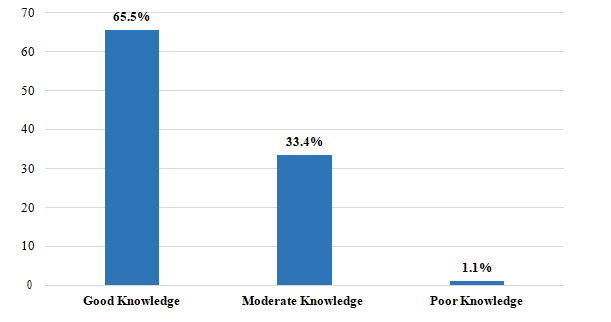
The main symptoms of Covid-19 are correctly answered by 61.5%. On inquiring about the absence of an effective cure for Covid-19, 91.7% of the participants responded that it is true. 17.7% responded that antibiotics are effective in the treatment of Covid-19 and 82.3% have the opposite opinion. Children and adults need to take measures to prevent the covid-19 virus infection was confirmed by 83.4%. A person can transfer the Covid-19 virus even if the fever was not present was acknowledged by 85.5%. Covid-19 spreads through respiratory droplets 92.8% agreed with it. Symptoms of coronavirus can appear between 2-14 days after catching an infection 92.6% agreed with it. The majority of Covid-19 infective patients will not develop illness but elderly patients having a chronic illness, DM, COPD, or pneumonia are likely to develop severe illnesses 87.2% of respondents agreed to it (Table 2). The overall knowledge result shows that 65.5% of the participants have good knowledge, 33.4% have moderate knowledge, and 1.1% had poor knowledge (Figure 1).
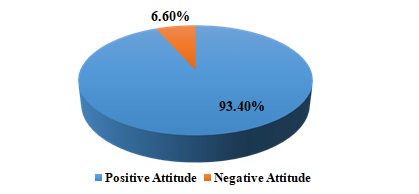
The attitudes study revealed that 85.3% were able to test their patients for Covid-19 quickly and easily, and 14.7% weren’t. 51.9% treated 0-5 Pt., 28.5% treated 6-10 Pt., 15.7% treated 11-15 Pt., and 3.8% treated more than 15 Patients. 94.0% were concerned about patients avoiding testing or treatment due to financial or health insurance barriers. 78.5% agreed that the government has taken appropriate measures to support the medical supply chain and ensure that your hospital/clinic has the medical supplies necessary to address the COVID-19 pandemic. 6.2% have increased their use of telemedicine in response to Covid-19, 24.5% didn’t and, 64.9% were planning to do it. Among the adult, children, elderly and immuno-compromised, 83.0% thought adults, 3.0% thought children, and 14.0% thought elderly and immunocompromised exhibit a high complication rate (Table 2). The final HCW’s positive attitude was 93.4% and the negative attitude was 6.6% toward Covid-19 affliction (Table 2, Figure 2).
| No. | Questions | Answer options | n (%) |
|---|---|---|---|
| Related to Knowledge | |||
| 1 | The main clinical symptoms of Covid-19? | Yes | 289(61.5) |
| No | 191(40.6) | ||
| 2 | There is currently no effective cure for Covid-19, but only symptomatic and supportive treatment can help most patients recover from the infection. | Yes | 431(91.7) |
| No | 39(8.3) | ||
| 3 | Are antibiotics effective against the coronavirus? | Yes | 83(17.7) |
| No | 387(82.3) | ||
| 4 | Children and adults also need to take measures to prevent infection by the Covid-19 virus. | Yes | 392(83.4) |
| No | 78(16.6) | ||
| 5 | Persons with Covid-19 cannot transmit the virus to others when fever is not present. | Yes | 402(85.5) |
| No | 68(14.5) | ||
| 6 | The Covid-19 virus spreads via respiratory droplets. | Yes | 436(92.8) |
| No | 34(7.2) | ||
| 7 | It takes 2-14 days for coronavirus symptoms to appear. | Yes | 435(92.6) |
| No | 35(7.4) | ||
| 8 | The majority of Covid-19 infective patients will not develop illness but elderly patients having a chronic illness, DM, COPD, or pneumonia are likely to develop severe illness. | Yes | 410(87.2) |
| No | 60(12.8) | ||
| Related to Attitude | |||
| 1 | Are you currently able to test your patients for Covid-19 quickly and easily? | Yes | 401(85.3) |
| No | 69(14.7) | ||
| 2 | How many patients have you treated with possible Covid-19 symptoms, but have not been able to test for Covid-19? | 0-5 | 244(51.9) |
| 6-10 | 134(28.5) | ||
| 11-15 | 74(15.7) | ||
| >15 | 18(3.8) | ||
| 3 | Are you concerned about patients avoiding testing or treatment due to financial or health insurance barriers? | Yes | 442(94.0) |
| No | 28(6.0) | ||
| 4 | Has the government taken appropriate measures to support the medical supply chain and ensure that your hospital/clinic has the medical supplies necessary to address the Covid-19 pandemic? | Yes | 369(78.5) |
| No | 101(21.5) | ||
| 5 | In response to Covid-19, have you increased your use of telemedicine technologies in your clinical practice? | Yes | 29(6.2) |
| No | 115(24.5) | ||
| We’re planning to | 326(69.4) | ||
| 6 | Among the elderly, children, immuno-compromised, and adults who do you think to exhibit a high complication rate? | Adult | 390(83.0) |
| Children | 14(3.0) | ||
| Elderly and Immuno- compromised | 66(14.0) | ||
| Related to Anxiety | |||
| 1 | How frequently do you wash your hands? | Every 15 minutes | 91(19.4) |
| Every 30 minutes | 58(12.3) | ||
| Every hour | 60(12.8) | ||
| When required | 261(55.5) | ||
| 2 | Do you feel anxious in gatherings due to Covid-19? | Yes | 339(72.1) |
| No | 131(27.9) | ||
| 3 | Do you think that following Covid-19 SOPs is leading to OCD (Obsessive Compulsive Disorder)? | Yes | 327(69.6) |
| No | 143(30.4) | ||
| 4 | In this pandemic, do healthcare professionals need mental assistance? | Yes | 315(67.0) |
| No | 155(33.0) | ||
| 5 | Are you anxious about following patients with Covid‐19? | Yes | 298(63.4) |
| No | 172(36.6) | ||
| 6 | Are you taking strict precautions against Covid-19? | Yes | 307(65.3) |
| No | 163(34.7) | ||
| 7 | Does Covid-19 have an impact on your personal life? | Yes | 303(64.5) |
| No | 167(35.5) | ||
| 8 | Due to long working hours and attending to patients, do you feel depressed/anxious? | Yes | 367(78.1) |
| No | 103(21.9) | ||
| 9 | Do you feel anxious about following all SOPs around Covid-19 patients? | Yes | 363(77.2) |
| No | 107(22.8) | ||
| 10 | Do you have fear of lack of medication and uncontrolled viral spread? | Yes | 359(76.4) |
| No | 111(23.6) | ||
| 11 | Are you anxious about counseling patients against non-compliance to the Covid-19 vaccine? | Yes | 337(71.7) |
| No | 133(28.3) | ||
| 12 | Does scarcity of ventilators give you depression? | Yes | 329(70.0) |
| No | 141(30.0) | ||
| 13 | How many sleeping hours? | 3-5h | 400(85.1) |
| 5-8h | 65(13.8) | ||
| 8-10h | 5(1.1) | ||
| 14 | Problems regarding concentrating on various things. | Yes | 284(60.4) |
| No | 186(39.6) | ||
| 15 | Disturbed eating habits due to poor appetite. | Yes | 277(58.9) |
| No | 193(41.1) | ||
| 16 | Any anti-depressant medicine used or prescribed during Covid-19? | Yes | 108(23.0) |
| No | 362(77.0) | ||
| Related to Anxiety | |||
| 1 | Have you been practicing social distancing? | Yes | 428(91.1) |
| No | 42(8.9) | ||
| 2 | Do you use other workers’ phones, desks, and tools? | Yes | 45(9.6) |
| No | 425(90.4) | ||
| 3 | Do you reuse a mask? | Yes | 35(7.4) |
| No | 435(92.6) | ||
| 4 | Do you prefer to stay at home during the quarantine? | Yes | 429(91.3) |
| No | 41(8.7) |
Table 2: Healthcare Worker’s Answers to Covid-19 Affliction Related Questions.
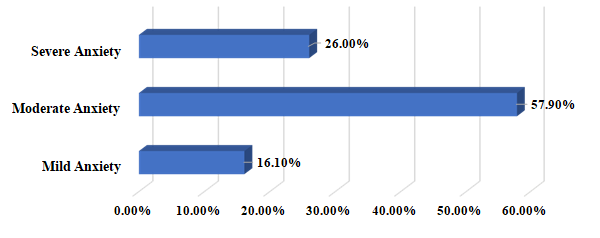
Regarding anxiety, 19.4% wash their hands every 15 minutes, 12.3% every 30 minutes, 12.8% every hour, and, 55.5% when required. 72.1% of respondents felt anxious in gatherings due to Covid-19. 69.6% thought that following Covid-19 SOPs leads to OCD. Healthcare professionals needed mental assistance during this pandemic 67.0% agreed to it. 63.4% of respondents felt anxious about following Covid-19 SOPs. 65.3% were taking strict precautions against Covid-19. 64.5% of respondents said that their personal lives were affected by Covid-19. 78.1% of respondents felt depressed due to long working hours. 77.2% felt anxious about following SOPs around Covid-19 patients. 76.4% had a fear of lack of medication and uncontrolled viral spread. 71.7% were anxious about counseling patients against non- compliance to the COVID-19 vaccine. 70.0% were anxious about the scarcity of ventilators and 30.0% weren’t. 85.1% had 3-5h, 13.8% had 5-8h and, 1.1% had 8-10h of sleeping. Of the respondents, 60.4% suffer from problems regarding concentration on various things. 58.9% had disturbed eating problems. 23% used antidepressant medicines (Table 2). The comprehensive results demonstrate that among HCWs, 16.1% have low anxiety, 57.9% have moderate anxiety and 26% have severe anxiety regarding Covid-19 affliction (Figure 3).
91.1% of respondents were practicing social distancing. 9.6% were using other workers’ phones, desks, and tools while 90.4% were not. 7.4% reuse mask while 92.6% don’t.
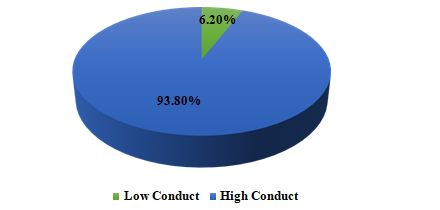
91.3% preferred to stay at home during quarantine and the rest 8.7% don’t (Table 2). On the whole, 93.8% demonstrate high conduct, and 6.2% exhibit low conduct (Figure 4).
Mean Scores of Knowledge, Attitudes, Anxiety, and, Preventive Behaviors
The mean scores and standard deviation of knowledge, attitudes, anxiety, and, preventive behaviors were 6.77±1.17, 7.22±1.24, 12.29±3.73 and, 3.65±0.63 respectively.
| Categories | Mean Scores ± SD |
|---|---|
| Knowledge | 6.77±1.17 |
| Attitudes | 7.22±1.24 |
| Anxiety | 12.29±3.73 |
| Preventive Behaviors | 3.65±0.63 |
Table 3: Mean Scores.
Relationship between the Demographical Characteristics of the HCWs and their Knowledge, Attitudes, Anxiety, and, Preventive Behaviors
According to the results, which are displayed in the table, there was a clear association between the participants’ level of Covid-19 knowledge and their age, education, healthcare domain, and frontline HCW, with a p-value of <0.0001 for each, in order. With a p-value of 0.045, there was also a significant correlation between the respondents’ attitudes toward Covid-19 and their level of education. Additionally, with a p-value of <0.0001 for each, there was a strong positive relationship between the respondents’ anxiety and their education, healthcare domain, and frontline HCW
domain. With p-values of 0.045 and 0.003, respectively, there was a statistically significant positive correlation between the respondents’ conduct and their education and healthcare domains concerning their preventive behaviors regarding Covid-19 affliction (Table 4).
| Demographic features | Knowledge n(%) | Attitudes n(%) | Anxiety n(%) | Preventive Behaviors n(%) | |||||||
|---|---|---|---|---|---|---|---|---|---|---|---|
| Poor (5) | Moderate (157) | Good (308) | Positive (439) | Negative (31) | Mild (76) | Moderate (272) | Severe (122) | Low (29) | High (441) | ||
| Age (years) | 25-30 | 4(80) | 97(61.8) | 130(42.2) | 216(49.2) | 15(48.4) | 38(50) | 135(49.6) | 58(47.5) | 16(55.2) | 215(48.8) |
| 31-35 | 1(20) | 48(30.6) | 97(31.5) | 137(31.2) | 9(29.0) | 27(35.5) | 79(29.0) | 40(32.8) | 8(27.6) | 138(31.3) | |
| 36-40 | 0(0) | 11(7.0) | 43(14.0) | 50(11.4) | 4(12.9) | 10(13.1) | 31(11.4) | 13(10.6) | 3(10.3) | 51(11.6) | |
| 41-45 | 0(0) | 1(0.6) | 26(8.4) | 25(56.9) | 2(6.5) | 0(0) | 20(7.4) | 7(5.7) | 1(3.4) | 26(58.9) | |
| 46-50 | 0(0) | 0(0) | 9(2.9) | 8(18.2) | 1(3.2) | 1(1.3) | 6(2.2) | 2(1.6) | 1(3.4) | 8(18.1) | |
| >50 | 0(0) | 0(0) | 3(0.9) | 3(6.8) | 0(0) | 0(0) | 1(0.4) | 2(1.6) | 0(0) | 3(0.6) | |
| P value | <0.0001 | >0.05 | >0.05 | >0.05 | |||||||
| Gender | Male | 2(40) | 75(47.8) | 120(39.0) | 185(42.1) | 12(38.7) | 37(48.7) | 103(37.9) | 57(46.7) | 16(55.2) | 181(41.0) |
| Female | 3(60) | 82(52.2) | 188(61.0) | 254(57.9) | 19(61.3) | 39(51.3) | 169(62.1) | 65(53.3) | 13(44.8) | 260(59.0) | |
| P value | >0.05 | >0.05 | >0.05 | >0.05 | |||||||
| Education | Intermediate | 3(60) | 25(15.9) | 4(1.3) | 28(6.4) | 4(12.9) | 2(2.6) | 9(3.3) | 21(17.2) | 3(10.3) | 29(6.6) |
| Undergraduate | 2(40) | 107(68.2) | 96(31.2) | 186(42.4) | 19(61.3) | 20(26.3) | 119(43.8) | 66(54.1) | 19(65.5) | 186(42.2) | |
| Graduate | 0(0) | 25(15.9) | 204(66.2) | 221(50.3) | 8(25.8) | 54(71.1) | 141(51.8) | 34(27.9) | 7(24.1) | 222(50.3) | |
| Postgraduate | 0(0) | 0(0) | 4(1.3) | 4(0.9) | 0(0) | 0(0) | 3(11.0) | 1(8.2) | 0(0) | 4(0.9) | |
| P value | <0.0001 | 0.045 | <0.0001 | 0.045 | |||||||
| Health Care Domain | Physician | 0(0) | 37(23.6) | 141(45.8) | 172(39.2) | 6(19.4) | 38(50.0) | 106(39.0) | 34(27.9) | 3(10.3) | 175(39.7) |
| Nurse | 0(0) | 27(17.2) | 40(13.0) | 63(14.4) | 4(12.9) | 9(11.8) | 37(13.6) | 21(17.2) | 4(13.8) | 63(14.3) | |
| Administrator | 3(60) | 29(18.5) | 6(1.9) | 34(7.7) | 4(12.9) | 1(1.3) | 12(44.1) | 25(20.5) | 4(13.8) | 34(7.7) | |
| Pharmacist | 0(0) | 38(24.2) | 84(27.2) | 114(26.0) | 8(25.8) | 21(27.6) | 74(27.2) | 27(22.1) | 9(31.0) | 113(25.6) | |
| MLT | 1(20) | 14(8.9) | 12(3.9) | 23(5.2) | 4(12.9) | 3(3.9) | 15(5.5) | 9(7.3) | 4(13.8) | 23(5.2) | |
| NP Specialist | 1(20) | 6(3.8) | 10(3.2) | 15(3.4) | 2(6.5) | 1(1.3) | 14(5.1) | 2(1.6) | 4(13.8) | 13(2.9) | |
| Technician | 0(0) | 6(3.8) | 15(4.9) | 18(4.1) | 3(9.7) | 3(3.9) | 14(5.1) | 4(3.3) | 1(3.4) | 20(4.5) | |
| P value | <0.0001 | >0.05 | <0.0001 | 0.003 | |||||||
| Frontline HCW | Yes | 2(40) | 142(90.4) | 305(99.0) | 420(95.7) | 29(93.5) | 76(100.0) | 265(97.4) | 28(96.6) | 421(95.5) | |
| No | 3(60) | 15(9.6) | 3(1.0) | 19(4.3) | 2(6.5) | 0(0) | 7(2.6) | 14(11.5) | 1(3.4) | 20(4.5) | |
| P value | <0.0001 | >0.05 | <0.0001 | >0.05 |
Table 4: Relationship between the Sociodemographic Characteristics of the Respondents and their Knowledge, Attitudes, Anxiety and
Discussion
According to the study’s demographics, the majority of respondents (49.1%) are between the ages of 25 and 30, indicating that they are youthful and active. Females outnumbered males by 58.1% to 41.9%. The majority (48.7% graduated) had completed their studies and were undergraduates (43.6%). Among other healthcare workers, physicians have the largest percentage (37.9%). The majority of them (91.1%) were frontline healthcare professionals.
According to this research, the knowledge of HCWs regarding the Covid-19 Affliction was good i.e. 65.5% including the clinical symptoms of the disease and viral transmission via respiratory droplets of infected individuals. This study is comparable to the studies conducted in Yemen in 2020 and Saudi Arabia in 2021 where it is 69.8% and 67.8%
respectively [8, 9] and lower (74.9%) than the findings of research conducted in Southern Ethiopia in 2021 [10] and in Punjab Province of Pakistan in 2020 (75.5%) [11] Yet greater than studies performed in India in 2021 (54.7%) [5] and Saudi Arabia [12]. In this survey, the knowledge of healthcare workers regarding Covid-19 was substantially correlated with age (P<0.0001), education (P<0.0001), healthcare domain (P<0.0001), and frontline HCW (P <0.0001). The association in this study of knowledge can be compared with a study done in Yemen in 2020 [13].
Regarding attitudes, 93.4% HCWs possess a good attitude which is significantly associated with educational status (P=0.045). This research is relatable to the studies conducted in Pakistan (86.5%) in 2020, Yemen (85.1%) in 2020, and Southern Ethiopia (84.2%) in 2021 [11, 8, 10]. However lower in studies conducted in Northeast Ethiopia (67.3%) and 53.4% in Nepal [14].
The study enlightens the participants’ knowledge, attitudes, anxiety, and preventive behaviors regarding Covid-19, which is needed to eradicate Covid-19. Most (65.5%) HCWs were aware of the Covid-19 Affliction, 93.4% have a positive attitude, 57.9% from moderate anxiety, and 93.8% are taking proper preventive measures and were well prepared to fight against Covid-19. This study reports mild (16.1%), moderate (57.9%) and severe anxiety (26%) among healthcare workers in twin cities of Pakistan therefore, and there is a need to take care of the mental health and well-being of healthcare workers who are caring for patients during this pandemic. This study reports mild (16.1%), moderate (57.9%) and severe anxiety (26%) among healthcare workers in twin cities of Pakistan therefore, and there is a need to take care of the mental health and well-being of healthcare workers who are caring for patients during this pandemic. In the Frontline HCWs, the mental illness risk was more as compared to non- frontline healthcare workers. In the emergency department, a frontline doctor committed suicide which is reported in The New York Times on 27th April and alarming news for the medical fraternity worldwide [15].
Regarding the anxiety of HCWs in this study, 16.1% suffered from mild anxiety, 57.9% suffered from moderate anxiety and 26% suffered from severe anxiety with significant association with the education (P <0.0001), healthcare domain (P <0.0001), and frontline healthcare worker domain (P<0.0001). It can be linked with the study performed in Yemen where the percentage of mild anxiety was 21.3, the percentage of moderate anxiety was 51 and the percentage of severe anxiety was 27.7% with a significant P value related to education was 0.004, and a study, in southern Ethiopia, in which the increase in several confirmed cases, lack of adherence to preventive measures, increased risk of infection among friends and families, and lack of specific medicines was increasing the level of anxiety among health care workers which was calculated as 21.5% [3].
The HCWs had good conduct regarding Covid-19 affliction (93.8%) and associated with education (P= 0.045) and healthcare domain (P=0.003) which is relatable to a study performed in Yemen (87.7%), Nepal (81.5%) and Pakistan (73.4%) [8, 14, 11].
The difference in the outcomes may be due to the population size, study methodology (cut-off marks), sampling size, and risk of infection, stressful work environment, and job concerns.
Limitations
This study has also limitations. The study is limited because the cross-sectional study design was used, which lacks in developing a causal relationship with the respondents and there is a need for longitudinal studies addressing these issues more appropriately. The responses provided were self- reported questionnaires to calculate knowledge, attitudes, anxiety, and preventive. Despite these limitations, this study gives valuable information about the knowledge, attitude, anxiety level, and preventive measures of healthcare workers regarding Covid-19 affliction in the twin cities of Pakistan.
Conclusion
The knowledge, attitudes, anxiety, and preventative behaviors of HCWs in twin cities of Pakistan related to the Covid-19 affliction study are relatively positive; however, anxiety problems in the present research must be resolved to effectively counter the Covid-19 affliction [16].
To improve the knowledge and reduce the mental distress in healthcare workers the management of hospitals and the government of Pakistan needs to take healthcare workers in confidence and make sure that they are getting medical coverage for themselves and their families. Online counseling and mental health support through trained psychologists are recommended [17].
References
-
Lai X, Wang X, Yang Q, Xu X, Tang Y, et al. (2020) Will Healthcare Workers Improve Infection Prevention and Control Behaviors as COVID-19 Risk Emerges and Increases, in China? Antimicrobial Resistance and Infection Control 9(1): 1-9.
-
Song Z, Xu Y, Bao L, Zhang L, Yu P, et al. (2019) From SARS to MERS, Thrusting Coronaviruses into the Spotlight. Viruses 11(1): 59.
-
Wayessa ZJ, Melesse GT, Hadona EA, Wako WG (2021) Prevalence of Depressive Symptoms Due to COVID-19 and Associated Factors among Healthcare Workers in Southern Ethiopia. SAGE Open Medicine.
-
AlAteeq DA, Aljhani S, Althiyabi I, Majzoub S (2020) Mental Health among Healthcare Providers during Coronavirus Disease (COVID-19) Outbreak in Saudi Arabia. J Infect Public Health 13(10): 1432-37.
-
Mehrotra S, Jambunathan P, Jindal M, Gupta A, Kapoor K (2021) A Cross-Sectional Survey to Assess the Knowledge Regarding Coronavirus Disease (COVID-19) among Health Care Professionals. Medical Journal Armed Forces India 77(S2): S437-S442.
-
Kassie BA, Adane A, Tilahun YT, Kassahun EA, Ayele AS, et al. (2020) Knowledge and Attitude towards COVID-19 and Associated Factors among Health Care Providers in Northwest Ethiopia. PLoS ONE 15(8):1-12.
-
Qasim M, Awan UA, Afzal MS, Saqib MAN, Siddiqui S, et al. (2020) Dataset of Knowledge, Attitude, Practices and Psychological Implications of Healthcare Workers in Pakistan during COVID-19 Pandemic. Data in Brief 32: 106234.
-
Alrubaiee GG, Al-Qalah TAH, Al-Aawar MSA (2020) Knowledge, Attitudes, Anxiety, and Preventive Behaviours towards COVID-19 among Health Care Providers in Yemen: An Online Cross-Sectional Survey. BMC Public Health 20(1):1-11.
-
Almohammed OA, Aldwihi LA, Alragas AM, Almoteer AI, Gopalakrishnan S, et al. (2021) Knowledge, Attitude, and Practices Associated With COVID-19 Among Healthcare Workers in Hospitals: A Cross-Sectional Study in Saudi Arabia. Frontiers in Public Health 23(9): 643053.
-
Yesse M, Muze M, Kedir S, Argaw B, Dengo M, et al. (2021) Assessment of Knowledge, Attitude and Practice toward COVID-19 and Associated Factors among Health Care Workers in Silte Zone, Southern Ethiopia. PLoS ONE 16(10): e0257058.
-
Salman M, Mustafa Z, Asif N, Zaidi HA, Shehzadi N, et al. (2020) Knowledge, Attitude and Preventive Practices Related to COVID-19 among Health Professionals of Punjab Province of Pakistan. J Infect Dev Ctries 14(7): 707-712.
-
Abbag HF, El-Mekki AA, Al Bshabshe AA, Mahfouz AA, Al- Dosry AA, et al. (2018) Knowledge and Attitude towards the Middle East Respiratory Syndrome Coronavirus among Healthcare Personnel in the Southern Region of Saudi Arabia. Journal of Infection and Public Health 11(5): 720-722.
-
Iqbal L, Nazeer A, Sahar N, Khan R, Iqbal K, et al. (2024) Prevalence of Depression, Anxiety and Stress among University Teachers of Islamabad. International Journal of Pharmacy & Integrated Health Sciences 5(1).
-
Limbu DK, Piryani RM, Sunny AK (2020) Healthcare Workers’ Knowledge, Attitude and Practices during the COVID-19 Pandemic Response in a Tertiary Care Hospital of Nepal. PLoS ONE 15(11): e0242126.
-
Amin F, Sharif S, Saeed R, Durrani N, Jilani D (2020) COVID-19 Pandemic- Knowledge, Perception, Anxiety and Depression among Frontline Doctors of Pakistan. BMC Psychiatry 20(1): 459.
-
Hayat K, Arshed M, Fiaz I, Afreen U, Khan FU, et al. (2021) Impact of COVID-19 on the Mental Health of Healthcare Workers: A Cross- Sectional Study From Pakistan. Frontiers in Public Health 9: 603602.
-
Tripathi R, Alqahtani SS, Albarraq AA, Meraya AM, Tripathi P, et al. (2020) Awareness and Preparedness of COVID-19 Outbreak Among Healthcare Workers and Other Residents of South-West Saudi Arabia: A Cross- Sectional Survey. Frontiers in Public Health 8: 482.
- Hydrogen Peroxide Scavenging by Methanolic Extracts of Coriander: An In Vitro Antioxidant Study
- Aromatherapy in Palliative Care: A Fragrant Quest for Relief
- Empowering Women, Securing Futures: Contraception’s Role in Socioeconomic Progress in India
- Effect of Crospovidone, Croscaramellose Sodium in Combination on the Drug Release of Anti diabetic Medication in Tablet Form
- “Competitive Landscape and Brand Equivalents: Implications for ANDA (Abbreviated New Drug Application) Approval”
- Novel Advancements in Mouth Dissolving Film Technology