
Preventive Effect of Xylitol in Dental Caries
Xylitol, a 5-carbon sugar alcohol, is used in paediatric dentistry, with or without fluoride. For a long time, our dentists have been using xylitol and fluoride at random, without the knowledge of pathogen’s growth curve. These Gram positive pathogens grow in clusters which are linked via chain. Previously it has not been very effective due to lack of knowledge about the growth curve. Now, with knowledge of growth curve published recently we believe in a new combination therapy where fluoride needs to be added first within 100 ppm (not bacteriocidal dose) followed by xylitol (2% or more). Even the combination therapy of xylitol and fluoride may not be necessary if xylitol is present in the environment all along. Xylitol (more than 2%) significantly inhibits the growth of the pathogens by interfering in StkP and PBP2x assembly in bacterial cell wall cleavage at the septal and peripheral junction which is also very important for StkP – PASTA signalling activity.
Introduction
Mitis group S. pneumomiae and dental pathogen S. mutans are closely related by their low G/C content. They have similar growth curve (heterogenerity of growth phases – pre-competent, competent and post-competent) and carry xylitol locus (loci). An alternative preventive therapy should target the bio-signalling of these diplococcic pathogenic bacteria belonging to Mitis group and the dental pathogen S.mutans responsible for dental caries. Fortunately all these diplococcic Gram-positive pathogens carry xylitol loci but not the complete operon like Gram negative E.coli C [1, 2]. Dr J Lederberg’s E.coli K- 12 does not carry xylitol loci, therefore it remains unaltered even in the presence of xylitol (low or high) [3]. Diplococcic members of Mitis group bacteria if grown in rich broth containing xylitol (a low calorie five carbon sugar-alcohol), the xylitol phosphate is formed which directly affects bacterial signal transduction and their biological reproduction. In 2016, we have published a growth curve of Gram–positive diplococcic streptococcus. Unlike Gram-negative E.coli K-12, this diplococcic Streptococci sp. grow in heterogeneity of their growth phases (pre-competent phase, competent phase and post –competent phase). In our research laboratory we have mostly used two kinds of growth media, either liquid broth or solid blood agar (1.5% agar) medium. In order to distinguish between Lac+ and Lac- colonies, McCkonkey lactose agar medium with bile salts have been used.
In 1928, Dr Fred Griffith has recorded in his laboratory note book that he has observed two kinds of colonies, smooth and rough on his blood agar medium when he has streaked blood samples collected from the patient with lobar pneumonia. In fact, smooth colonies become rough colonies after much longer incubation (about 48 hours). When grown in such solid blood agar medium (TSB with 1.5% agar, sheep’s blood also added to such solid medium, if necessary) the nutrients will get exhausted after long growth (> 30hrs) and starvation begins. Because of their heterogeneity of growth phases, we have observed that a fraction of population (likely the fraction in post-competent phase) is autolysed. Nutrients thus released by bacteria in post-competent phase but utilised by the population in growth phase (pre- competent and competent). In a recent article, we have shown that the Gram-positive bacterium S. mutans (dental) grow in heterogeneity of their growth phases: pre-competent, competent and post-competent (growth curve) [4].
The 5-carbon sugar alcohol in combination with fluoride has been applied by investigators without the knowledge that the Gram positive dental pathogen grows in a chain. Use of xylitol alone is still not desirable but the use of fluoride without xylitol has a risk. Why? In 2005, Maehera, et al. have assumed that there is synergism between fluoride and xylitol on glycolysis without the knowledge of the growth curve of diplococcic S. mutans [5]. In 2016, Palchaudhuri, et al. [1] have published the growth curve of Gram positive S. mutans which grows in- clusters and chains (At any particular time all the members in the chain are not competent to take up xylitol because of heterogeneity of their growth phases). Therefore the presence of fluoride together with xylitol is necessary to dissociate them into individuals to initiate growth and the uptake of xylitol. Let us understand the growth curve of diplococcic streptococci, not only mitis group but also dental pathogen S. mutans. We should briefly discuss the “growth curve” of this pathogen and how xylitol and fluoride affects this growth curve. At any particular time all the members in a chain or clusters linked by a chain are not equally competent to uptake xylitol from their immediate environment because of their heterogeneity of growth phases. Therefore the presence of fluoride, not exceeding 100ppm together with xylitol (2% or higher) is necessary to dissociate them into individuals to initiate uptake of xylitol. In view of such a fact, we should understand their growth patterns (growth curve). We therefore discuss at length the growth curve of these diplococcic pathogens. They are irreversibly affected even by xylitol alone or together with a low dose of fluoride (about 100ppm). We should avoid the bactericidal doses of fluoride.
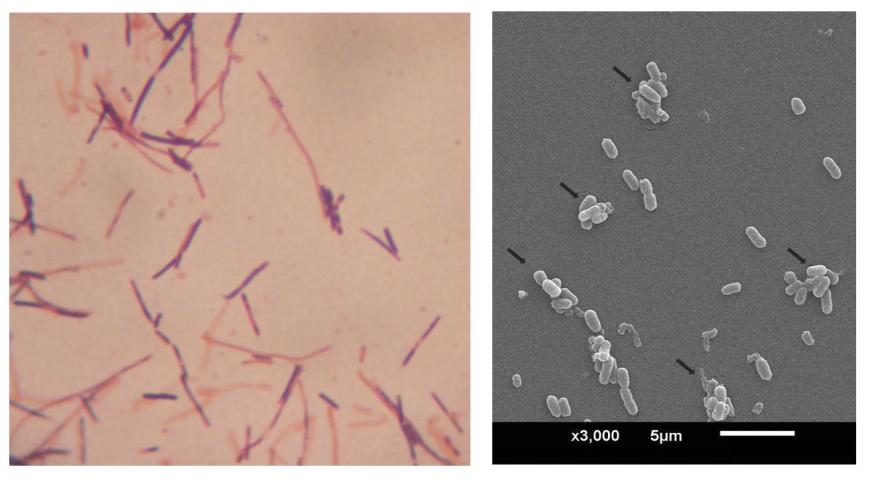
We have added sucrose to a final concentration of 6.5% after 7 hours of growth to minimize breakage of their chains. We have selected one of these clusters/chains as shown in Figure 1(b) and enlarged 12,000X to understand the difference between the members in the cluster and the clusters are still held together by their old parents. Many of the clusters are in competent phase (early, mid and late). Of course, we have also observed some smaller and spherical in shape (pre- competent) and some hardly visible but comparable with the size of pre-competent. Heterogeneity of growth phases in chain is fully confirmed as shown in Figure 1(a).
Materials and Methods
Bacterial strains and experimental conditions Gram- positive diplococcic, catalase negative, non-hemolytic (gamma) and bile- esculin negative Streptococcus oralis (ATCC 6249) and a dental pathogen S. mutans (ATCC 25175) were used. These strains are saved in their separate stabs (mother stock). Bacteria were always genetically purified as a single colony isolate and then grown in the BHI broth containing dextrose 5g/liter (DIFCO, Becton Dickinson) or in solid BHI-agar media (1.5%). Whenever necessary, they were also grown at 37°C as well as at ambient temperature. Bacterial growth was monitored by counting the colony forming units on a BHI agar media after appropriate dilutions as well as by measuring optical density at 580 µm.
Gram-positive diplococcic Streptococcus overnight cultures of S.oralis were diluted 10,000 –fold in a rich broth TSB or BHI by our previously described dilution procedure and grown at 37°C with shaking to saturation [6]. Occasionally we have observed spontaneous lysis in our 24 hour old cultures but not the cultures grown in the presence of 2% xylitol. Optical microscopies after Gram- staining technique with crystal violet and scanning electron microscopy have been used. Crystal violet solution was always prepared fresh and filtered through a sterile membrane filter disc (0.2um). Before starting the experiment we had streaked overnight cultures on blood agar medium and the single colony transferred with sterile tooth picks onto CNA as well as MacConkey-lactose plates. Then the pure colony which grew only on CNA medium was used in our experiments. After shadowing with gold for 10 to 20 seconds, the sample was visualized by a scanning electron microscope, JEOL JSM -7600F at 15 kV.
Fluoride Experiments
For one experimental set varying concentrations of fluoride: 0 to 300 ppm (NaF, Bio labs) were added to the overnight cultures of Streptococcus oralis without diluting the growth media. After addition of fluoride the bacteria were incubated at 22°C for 2-20 min.
In another experimental set the overnight cultures of Streptococcus oralis were diluted 100 fold in fresh BHI medium containing xylitol with varying concentrations of Xylitol (Xylitol stock solution (20% in BHI), pre-warmed to 37°C, was used to have varying concentrations of xylitol without diluting the growth media. The resulting cultures were incubated in a water bath at 37°C with shaking and samples were withdrawn at one hour time intervals with varying concentrations of fluoride (0 to 300 ppm). The logarithmic growth -phase of the bacteria was monitored by counting the colonies on rich agar medium as well as by measuring optical density at 580 nm. Gram- stain preparations of S.oralis were made after growing similarly in BHI medium. These experiments were repeated several times using the standard Gram-staining technique and optical microscopy (final magnification 1000-fold).
Scanning Electron Microscopy (SEM)
Bacterial overnight culture is diluted 1000-fold in BHI broth containing 6.5% sucrose is fixed on a mica sheet with 2.5% glutaraldehyde. Bacteria on the mica sheet were washed serially with 25% ethanol to absolute ethanol and the bacteria were finally dried and shadowed with gold particles for 10 seconds to 20 seconds. They were then seen by a scanning electron microscope (JEOL JSM- 7600F) at 15KV. The aliquot of the same bacterial sample has also been critically examined by optical microscopy following a standard Gram-staining procedure.
For each condition in this study at least 3 replicates were performed.
Results and Discussion
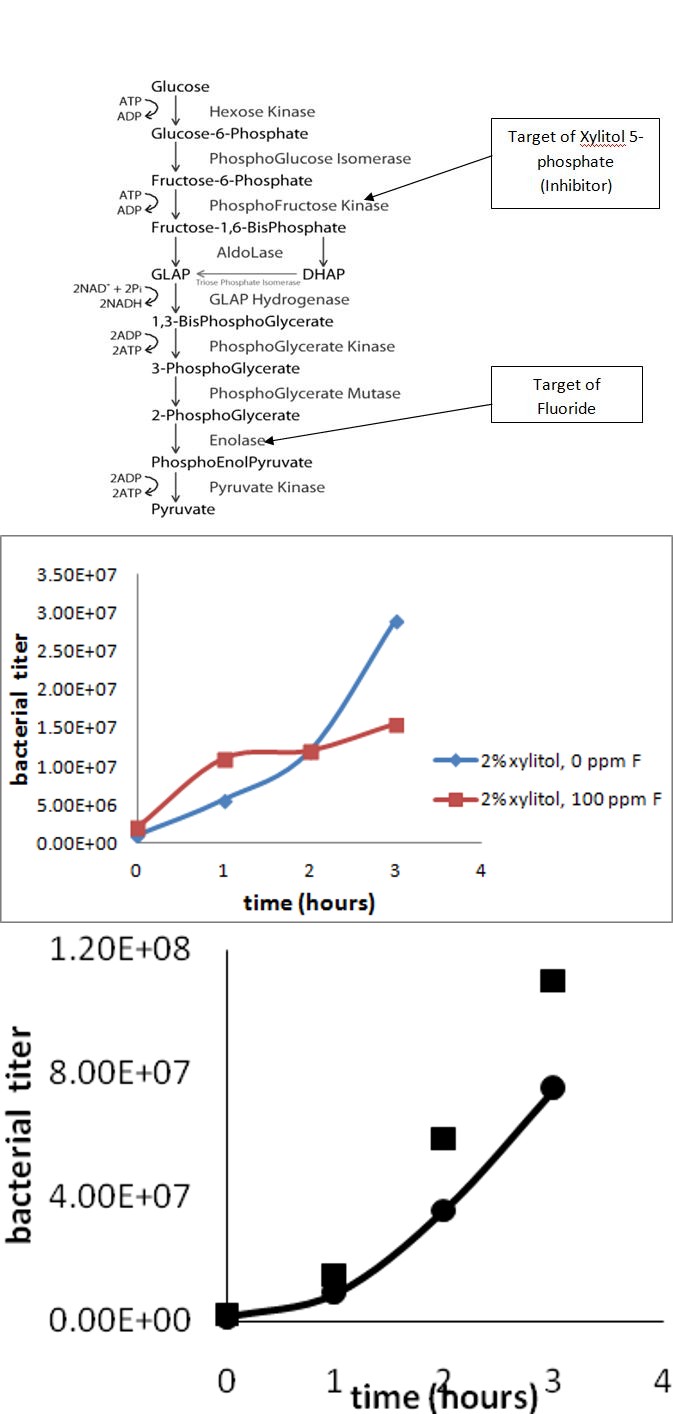
Fluoride alone targets the enolase step of glycolysis pathway thus preventing it from proceeding forward. Xylitol is taken up by many strains of Strep mutans and Strep sanguis even if these organisms are unable to metabolize xylitol. It enters the bacteria by the phosphotransferase system. Xylitol uptake by these bacteria takes place by the phosphotransferase system [6]. The xylitol-5-phosphate thus formed is a competitive inhibitor of the rate limiting step of glycolysis by the Phospho Fructose Kinase. As a result, even in the presence of glucose or fructose (6-carbon sugar), xylitol will stop the glycolytic pathway. After accumulation of xylitol-5-P, its de-phosphorylation takes place reverting back to xylitol [7]. Previous investigators had suggested about synergism but without the knowledge of growth curves of these diplococcic Gram-positive pathogens [8] (Figure 2).
Mode of Drug delivery
Previously we have shown that after application of xylitol, growth curve reaches a plateau after about ten minutes, regardless of its concentration level [8]. We therefore think a combination therapy is not bad idea but it is not for synergism. Our objective is to add xylitol first and then add fluoride to break the chain of pathogen that are not in growth phase; formation of xylitol phosphate is absolutely necessary to irreversibly trap them from running away (Figures 3a and 3b).
Figure 3(a): ● Growth curve of S.oralis; ∎ Increase of S.oralis titer when the samples from log-phase culture are withdrawn at different time intervals and exposed to 100 ppm fluoride (F).
At one hour time intervals, samples are withdrawn and exposed to fluoride (100 ppm) to assay the live CFU after vortexing. Additional increase indicated with solid square means that these bacteria grow in clusters. This also holds goods for S. mutans.
Figure 3(b): If xylitol is simultaneously present with 100ppm of fluoride.
After two hours of growth in the presence of xylitol, they are stabilized and exposure to fluoride does not show any additional increase. Because of the heterogeneity of their growth phases and the presence of fructose, the 100% of the population is not permeable to the entry of xylitol, the simultaneous exposure to fluoride and xylitol is preferred and alternatively repeated exposure to xylitol together with fresh nutrients may guarantee their success in such therapy.
SEM Analysis of Population after 3 hours of Growth in 2% Xylitol (No Septum Formation Means no Cell Division)
Previously, we have shown that the chains of S.mitis, are stabilized upon growth in xylitol [2]. In continuation of our project, we are now reconfirming by the SEM of the bacterial population at 3 hr (log phase) and at 7hr growth (stationary phase) in the presence of 2% xylitol. Fleurie, et al. have shown that during cell division of S.pneumoniae Map Z and Fts Z assembly at mid cell is important for septal formation but Map Z activity is regulated by StkP activation [9]. Our proposed sugar –alcohol xylitol interferes in StkP and PBP2x assembly in bacterial cell wall cleavage at the septal and peripheral junction which is also very important for StkP –PASTA signalling activity. Therefore, xylitol inhibits cell division by interfering in StkP signalling and in consequence septum formation is inhibited [9]. In support of this event, we have observed elongated body with no similarity with diplococcic shaped mother (Figures 4a and 4b) and a fraction of this population is biologically dead because they have lost their ability to form colony forming unit (CFU). This gives an idea of bacterial family planning. We warn with a note of caution is that the addition of fluoride alone at a non- bactericidal dose without xylitol is not recommended but the simultaneous presence of xylitol is preferred even in the pre-competent phase of S.pneumoniae.
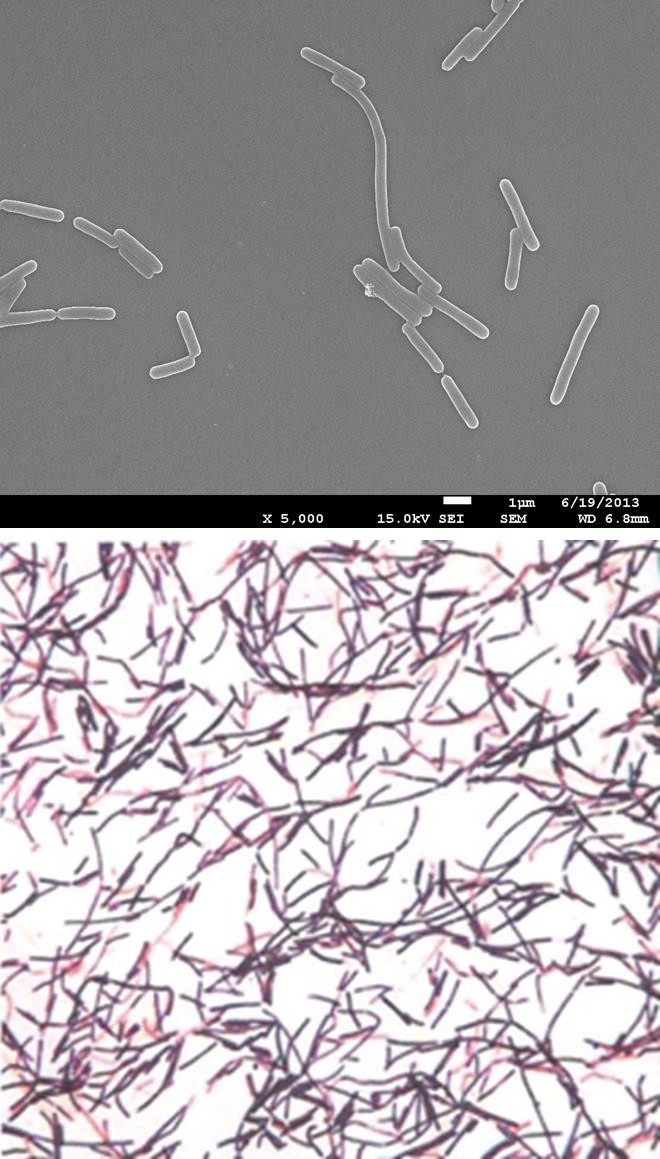
Figure 4(a): SEM of the same population both has grown in the combination of fluoride (100ppm) and xylitol (2%) for 3 hours.
They are growing but with the thinning of cell walls they are no longer capable of effectively interacting with the crystal violet molecules (irreversibly) but the entire population is stabilized within 3 hours and therefore their titre (CFU) does not increase any more, magnification 5000X. Many members are lyses during sample for SEM. The fewer bacteria are seen compared to the sample as observed by Gram staining technique as seen under optical microscope, Figure 4(b). We have selected an area where the population density of bacteria is low.
Figure 4(b): Optical microscopy of the population grown in the combination of both xylitol (2%) and fluoride (100ppm), magnification 1000X.
They appear as chains with a combination of purple and pink (thin, can’t be stained). Pink population is much thinner and easily ruptured because of our ignorance about such thinning of cell wall in post –competent phase. Even the population has up taken crystal violet (CV) shows heterogeneity of color intensity. Purple and dark purple, and the pink are mostly pinkish without much gradient in interacting with CV.
References
-
Palchaudhuri S, Palchaudhuri A, Chatterjee B (2016) Growth curve of Streptococcus oralis. EJBR 6(1): 36- 41.
-
Palchaudhuri S, Rehse SJ, Hamasha K, Syed T, Kurtovic E, et al. (2011) Raman spectroscopy of xylitol uptake and metabolism in Gram-positive and Gram-negative bacteria. Appl Environ Microbiol 77(1): 131-137.
-
Ledeberg J, Cavalli LL, Lederberg EM (1952) Sex compatibility in Escherichia Coli. Genetics 37(6): 720- 730.
-
Palchaudhuri S, Chatterjee B, Palchaudhuri A (2015) Xylitol in Prevention of Dental Caries and Respiratory Diseases caused by Diplococcic Streptococcus. Archives of Clinical Microbiology 6(4): 1-7.
-
Maehera H, Iwami Y, Mayanagi H, Takahashi N (2005) Synergistic inhibition by combinations of fluoride and xylitol on glycolysis of mutans streptococci and its biochemical mechanism. Caries Res 39(6): 521-528.
-
Czarnecki G, Dissanayake P, Palchaudhuri S (2013) Gram-positive S. mitis become sensitive to colistin and nalidixic acid when grown in xylitol. J Mol Genet Med 7(4): 1-4.
-
Waler SM, Rolla G (1990) Xylitol, mechanisms of action and uses. Nor Tannlaegeforen Tid 100(4): 140- 143.
-
Tapiainen T, Kontiokari T, Sammalkivi I, Ikaheimo I, Koskeia M, et al. (2001) Effect of xylitol on growth of the Streptococcuspneumoniae in the presence of fructose and sorbitol. Antimicrob. Agents Chemother 45: 166-169.
-
Fleurie A, Lesterlin C, Manuse S, Zhao C, Cluzel C, et al. (2014) MapZ marks the division sites and positions FtsZ rings in _Streptococcus pneumoniae._ Nature 516: 259-262.
- Understanding Pediatric Multiple Sclerosis: Clinical Presentation, Diagnostic Criteria, Therapeutic Advances, and Supportive Care Approaches
- Hemophilia in Children
- Xia-Gibbs Syndrome- A Case Report
- A Study to Assess Effectiveness of Play Therapy in Reducing Post-Operative Pain among Children Age 2 To 5 Year who have Undergone General Surgeries in Selected Pediatric Hospitals of Vadodara
- Preterm Birth: Scope of the Problem, Cost of Care, Potential Complications and Current Guidelines for Management
- Noradrenaline: Can we Use it to Manage Hemodynamic Instability among Neonatal Septic Shock at the NICU?