
Streptomyces: Sources of Novel Discoveries in Antibiotic Research to Combat Antimicrobial Resistance
Antimicrobial resistance (AMR) is one of the most serious challenges to global public health this century. The first World Health Organization (WHO) Global report on AMR surveillance, published in April 2014, collected data for the first time from national and international surveillance networks, demonstrating the extent of this phenomenon in many parts of the world as well as the presence of significant gaps in existing surveillance. Given the rising reporting of multi-resistant bacteria and the shortage of newly licensed treatments, researchers have started looking into severe and uncommon conditions as a new supply of antibiotics. Streptomyces, a genus of gram-positive, filamentous bacteria, represents a cornerstone of natural product discovery in antibiotic research. Streptomyces species are well-known for their ability to create a wide range of bioactive secondary metabolites, including more than two-thirds of therapeutically useful antibiotics. This paper explores the biological and genomic characteristics of Streptomyces, their role in natural product biosynthesis, and recent advancements in leveraging these organisms for novel antibiotic discovery. We also discuss the challenges in addressing antibiotic resistance and strategies for maximizing the potential of Streptomyces through modern biotechnology. Antimicrobial resistance (AMR) has emerged as one of the most serious public health issues of the twenty-first century, threatening the effective prevention and treatment of an ever-increasing range of infections caused by bacteria, parasites, viruses, and fungi that are no longer susceptible to the common antibiotics used to combat them.
Singh N¹*, Das D², Sherwani N¹ and Sinha A²
¹Virology Lab, Department of Microbiology, Pt. JNM Medical College, India ²Department of Community Medicine, Pt. JNM Medical College, India
Abbreviations
PKS: Polyketide Synthase Pathways; RiPPs: Ribosomally Synthesized and Post-Translationally Modified Peptides; NRPS: Non-Ribosomal Peptide Synthetase Pathways; BGCs: Biosynthetic Gene Clusters; WHO: World Health Organization; LPSN: List of Prokaryotic Names; DNA: Deoxyribonucleic Acid.
Introduction
Research is primarily focused on the resistance of many pathogenic bacteria and fungi to bioactive secondary metabolites in common use, and novel antifungal and antibacterial compounds are required to combat these pathogens [1, 2, 3]. The rise of antibiotic resistance has created an urgent need for novel antimicrobial agents. Streptomyces, first described in 1943 with the discovery of streptomycin, have been central to antibiotic innovation. These soil- dwelling actinobacteria are characterized by their complex life cycle, production of aerial mycelia, and capacity for synthesizing structurally diverse secondary metabolites [4]. The genus is a prolific source of antibiotics, antifungals, immunosuppressants, and anticancer agents, making it a focal point for pharmaceutical research. The World Health Organization (WHO) has classified antimicrobial resistance (AMR) as one of the top 10 hazards to human health, declaring it a global health emergency [5]. Antibiotic-resistant bacteria were directly responsible for 1.27 million fatalities in 2019 and were linked to 4.95 million deaths. Addressing the situation requires creating new medicines and expanding access to both new and old treatments. However, despite increased financing and focus on AMR, the global response is not on track [5, 6].
Biological and Genomic Characteristics of Streptomyces
The genomes of Streptomyces are unusually large for bacteria, typically ranging from 8 to 10 Mbp, and harbor a high GC content. These vast genomes encode an abundance of biosynthetic gene clusters (BGCs) responsible for secondary metabolite synthesis [7]. Advanced sequencing technologies have revealed that many of these BGCs are “cryptic,” meaning their products remain unknown under standard laboratory conditions, suggesting a vast untapped reservoir of bioactive compounds. Streptomyces are filamentous, Gram-positive bacteria that are members of the Actinobacteria phylum [8]. According to Kampfer, multicellular life cycles involve the transformation of a vegetative mycelium into the reproductive spores required for dispersion [9]. Furthermore, with 685 species with valid published names (827 species including synonyms, LPSN data), it is the largest genus of prokaryotes [8, 9].
According to Flardh and Buttner and van Dissel, et al. Streptomyces species begin their life cycle with spore germination, which is followed by the formation of vegetative mycelia, which includes tip extension and the commencement of new branches [10]. Then, morphological differentiation and secondary metabolite production are triggered by cues such as nutrition deprivation [10, 11, 12]. Streptomyces included a large number of genes implicated in this intricate developmental process, including bld genes connected to aerial mycelium deficit [13], whi genes connected to spore formation [14], ram genes linked to hydrophobic protein synthesis [14, 15], and ssg genes associated with sporulation- specific cell division [15].
Secondary Metabolite Production
Historical Contributions
Streptomyces species have contributed to the discovery of iconic antibiotics, such as streptomycin, tetracycline, erythromycin, and vancomycin. These compounds target diverse bacterial pathways, including protein synthesis, cell wall biosynthesis, and DNA replication, underpinning their therapeutic importance [16, 17]. Medicine, agriculture, and biotechnology are just a few of the disciplines that have historically benefited greatly from the research and application of secondary metabolite synthesis [18]. Different from primary metabolites, secondary metabolites are organic substances that are not straight engaged in an organism’s steady development, growth, or reproduction but often have ecological purposes including competition, signaling, or defense [19, 20]. Alexander Fleming’s discovery of penicillin in 1928 was a significant step in secondary metabolite research [20]. Penicillin, a secondary metabolite produced by the fungus Penicillium notatum, ushered in the antibiotic era, saving countless lives by treating bacterial infections [21]. Streptomycin, discovered in 1944 by Selman Waksman from Streptomyces griseus, was the first effective treatment for tuberculosis and expanded the known applications of secondary metabolites [22]. Secondary metabolites like paclitaxel (Taxol), derived from the Pacific yew tree (Taxus brevifolia), and doxorubicin, an anthracycline antibiotic from Streptomyces species, have become essential in cancer therapy. The discovery of cyclosporine, a secondary metabolite from the fungus Tolypocladium inflatum, revolutionized organ transplantation by preventing graft rejection [22, 23] (Figure 1).
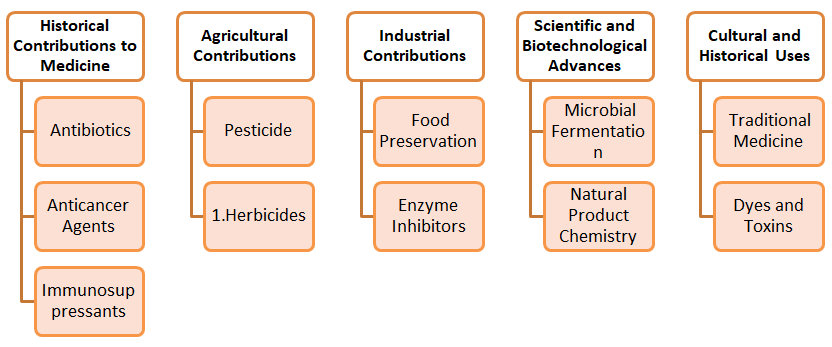
Ongoing advancements in genomics and artificial environmental science have prolonged our capacity to engineer secondary metabolite production [24]. This historical foundation has positioned secondary metabolites as a cornerstone in developing new therapeutics, sustainable agriculture, and industrial bioprocesses [24, 25].
Their role underscores the intersection of natural product discovery and innovation in addressing global challenges.
Mechanisms of Biosynthesis of Antimicrobial Compounds by Streptomyces
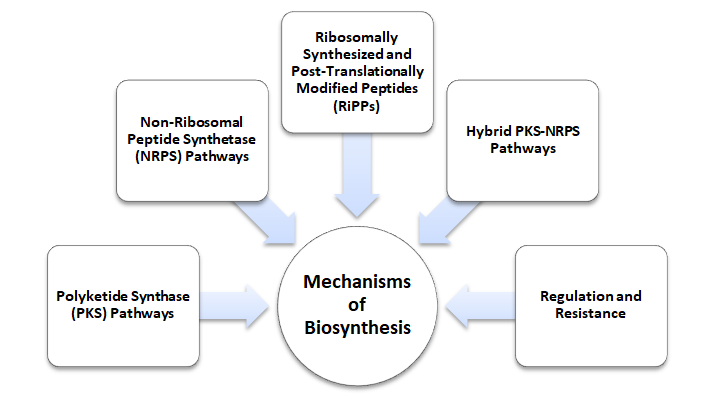
Streptomyces is renowned for producing a wide array of antimicrobial compounds through complex biosynthetic pathways [25, 26]. These secondary metabolites, including antibiotics like streptomycin, erythromycin, and tetracycline, are synthesized via tightly regulated enzymatic mechanisms encoded in biosynthetic gene clusters (BGCs). Biosynthesis of antimicrobial compounds by Streptomyces includes following major pathways: Polyketide Synthase (PKS) Pathways: Polyketides, such as erythromycin, are synthesized by modular or iterative PKS enzymes. These enzymes catalyze the stepwise condensation of acyl-CoA precursors, leading to the assembly of diverse carbon skeletons [27]. Post-assembly tailoring steps, such as glycosylation and oxidation, enhance the bioactivity and specificity of the compound.
NRPS (Non-Ribosomal Peptide Synthetase Pathways): NRPs like vancomycin and actinomycin are assembled by NRPS enzymes [28]. These large, multifunctional proteins incorporate amino acid building blocks through an assembly line process involving activation, condensation, and modification [28].
Hybrid PKS-NRPS Pathways: Some antimicrobial compounds, such as rifamycin, are synthesized through a combination of PKS and NRPS systems, leveraging the diversity of both pathways for structural complexity [27, 28, 29].
Ribosomal Synthesized and Post-Translationally Modified Peptides (RiPPs): Streptomyces also produces RiPPs like lantibiotics [30]. These compounds are initially synthesized as precursor peptides by ribosomes and then enzymatically modified to form mature bioactive structures. Regulation and Resistance: Biosynthesis is tightly regulated by transcriptional regulators and environmental cues [31]. Self-resistance mechanisms, such as target modification or efflux pumps, ensure the producing strain is not harmed by its own antibiotics.
By leveraging these sophisticated biosynthetic pathways, Streptomyces generates structurally and functionally diverse antimicrobials, contributing significantly to medicine and biotechnology [32, 33]. Advances in genomics and metabolic engineering continue to uncover and enhance the antimicrobial potential of Streptomyces [34] (Figure 2).
Strategies for Novel Antibiotic Discovery
Streptomyces is a prolific antibiotic producer, accounting for more than two-thirds of all therapeutically relevant natural antibiotics [35]. However, discovering novel antibiotics requires innovative strategies due to the challenges of rediscovery and resistance. The following approaches are commonly employed: Genome Mining: Unexplored Biosynthetic Gene Clusters (BGCs); Advances in sequencing technologies have revealed that Streptomyces genomes harbor numerous “cryptic” or “silent” BGCs that are not expressed under standard laboratory conditions [36]. Platforms like AntiSMASH and PRISM predict potential secondary metabolites from genomic data, guiding targeted discovery efforts. Cloning and expressing silent BGCs in heterologous hosts or through CRISPR/Cas-based activation can lead to the production of novel antibiotics [37].
Environmental and Niche Exploration: Isolating Streptomyces from unique environments (e.g., deep-sea sediments, arid soils) increases the likelihood of finding novel compounds [38]. Culturing under stress, co-culture with competing microbes, or nutrient-limited environments can activate dormant BGCs, leading to the discovery of new metabolites.
High-Throughput Screening (HTS): Screening vast Streptomyces libraries for bioactivity against drug-resistant pathogens using automated HTS platforms enables rapid identification of promising candidates [39].
Metabolomics: Mass Spectrometry (MS) and Nuclear Magnetic Resonance (NMR) techniques detect and characterize novel metabolites directly from cultures [40]. Comparing metabolic profiles under different conditions can uncover unique bioactive compounds.
Resistance-Guided Discovery: Leveraging Streptomyces’ inherent resistance mechanisms helps identify novel antibiotics designed to evade known resistance pathways [41]. Identifying compounds that inhibit unexplored bacterial targets increases the novelty of the discovered antibiotics [42].
Machine Learning and Artificial Intelligence: AI models analyze large datasets, including genomic, metabolomic, and environmental data, to predict potential new antibiotics and guide experimental efforts [43].
Collaborative and Open-Source Approaches: Collaborative platforms like crowdsourced antibiotic discovery programs pool resources and knowledge to accelerate the discovery of new compounds [44]. By combining these strategies, researchers aim to unlock the untapped potential of Streptomyces, addressing the urgent need for novel antibiotics to combat rising antimicrobial resistance [45, 46] (Table 1).
| Streptomyces sp. | Name of Antibiotic | |
|---|---|---|
| 1. | S. orchidaccus | Cycloserin n |
| 2. | S. orientalis | Vancomycin |
| 3. | S. fradiae | Neomycin, Actinomycin, Fosfomycin, Dekamycin |
| 4. | S. nodosus | Amphotricin B |
| 5. | S. noursei | Nystatin |
| 6. | S. mediterranei | Rifampin |
| 7. | S. griseus | Streptomycin |
| 8. | S. knanamyceticus | Kanamycin |
| 9. | S. tenebrarius | Tobramycin |
| 10. | S. spectabilis | Streptomycin |
| 11. | S. viridifaciens | Tetracyclin |
| 12. | S. lincolensis | Lincomycine, clindamycin |
| 13. | S. rimosus | Oxytetracyclin |
| 14. | S. erythraeus | Erythomycin |
| 15. | S. vensuella | Chloramphenicol |
| 16. | S. aureofaciens | Chlotetracycline, dimethychlor |
| 17. | S. ambofaciens | Spiramycin |
| 18. | S. avermitilis | Avermicin |
| 19. | S. elboniger | Puromycin |
| 20. | S. niveus | Novobicin |
| 21. | S. platenisi | Platenmycin |
| 22. | S. roseosporus | Daptomycin |
| 23. | S. ribosidificus | Ribostamycin |
| 24. | S. garyphalus | Cycloserine |
| 25. | S. vinaceus | Viomycin |
| 26. | S. davuligerus | Cephalosporin |
Table 1: A compilation of antimicrobial compounds that produced by Streptomyces species.
Challenges in Antibiotic Discovery
In the process of developing an antibiotic, discovery and exploratory research are crucial since they allow for the identification of novel chemical classes and biological targets [47]. The vast majority of antimicrobial compounds discovered have insufficient biological activity, toxicity issues, or unfavorable pharmacokinetics for development into a drug, making discovery and exploratory research highly challenging. More “push” funding for early-stage research has been called for (mostly by small teams in the public, corporate, and not-for-profit sectors) [48]. Many national and international public and philanthropic funding organizations give financing for this field. However, the entire attrition rate and the first difficulties in completing effective early-stage research have been anticipated to necessitate an additional global expenditure of $250 million to $400 million per year. It’s possible that policymakers are misjudging who could be best positioned to succeed as well as why current attempts to research and develop new antibiotics have failed [49]. One frequently given explanation for the dearth of new antibiotics is that big Pharma and other institutions are not very interested in conducting antimicrobial discovery research and development because the potential profits from these drugs do not provide a high enough return on investment to warrant the risk and expenditure. Thus, several businesses have stopped researching and developing antibiotics [50, 51].
Because of this lack of business interest, politicians are concentrating on financial and regulatory tools to stop big pharmaceutical companies from leaving, particularly through “pull” incentives [52, 53]. However, pull incentives do not address the barriers to early-stage research and the high attrition rates that follow from them. They aim to replicate the predicted earnings that firms typically obtain for new medications under patent.
Overcoming Challenges in Antibiotic Discovery
Despite their promise, several challenges hinder the exploitation of Streptomyces. The rediscovery of known compounds, limited scalability of some natural products, and regulatory hurdles complicate the pipeline from discovery to clinical use. Addressing these challenges requires integrated efforts across genomics, chemistry, and pharmaceutical development.
Conclusion
Streptomyces is still an important source of antibiotics and other bioactive chemicals, providing hope in the fight against antibiotic-resistant infections. The integration of traditional microbiological techniques with cutting-edge genomic and synthetic biology approaches promises to unlock the full potential of these organisms. Continued investment in Streptomyces research will not only yield novel antibiotics but also advance our understanding of microbial ecology and natural product biosynthesis.
CRediT Authorship Contribution Statement
NS, NS contributed to data collection; conceptualization; NS, AS, DD concept designing; review; drafting; conceptualization, writing manuscript.
Data Availability
Data sharing is not applicable to this article as no new data were created or analysed in this review. All data discussed are cited from published sources available in the referenced literature.
Declaration of Competing Interest
The authors declare that they have no known competing financial interests or personal relationships that could have appeared to influence the work reported in this review article.
References
-
Damavandi MS, Shojaei H, Esfahani BN (2023) The anticancer and antibacterial potential of bioactive secondary metabolites derived from bacterial endophytes in association with Artemisia absinthium. Scientific Reports 13(1): 18473.
-
Singh N, Rai V (2011) Isolation and characterization of Streptomyces sp. from Durg District of Chhattisgarh for antimicrobial activity. Current Trends in Biotechnology and Pharmacy 4(5): 1038-1047.
-
Singh N, Rai V, Tripathi CKM (2012) Production and optimization of oxytetracycline by a new isolate Streptomyces rimosus using response surface methodology. Medicinal Chemistry Research 21(10): 3140-3145.
-
Meenakshi S, Hiremath J, Meenakshi MH, Shivaveerakumar S (2024) Actinomycetes: Isolation, Cultivation and its Active Biomolecules. Journal of Pure and Applied Microbiology 18(1):118-143.
-
WHO (2023) Antimicrobial Resistance.
-
Antimicrobial Resistance Collaborators (2019) Global burden of bacterial antimicrobial resistance in 2019: a systematic analysis. The Lancet 399(10325): 629-655.
-
Singh N, Rai V (2013) In vitro antimycotic activity of a new isolate Streptomyces fradiae MTCC 11051 against the multi-drug-resistant pathogenic fungi. Journal of Pharmacy Research 7(4): 331-336.
-
Singh N, Rai V, Tripathi CKM (2013) Purification and chemical characterization of antimicrobial compounds from a new soil isolate Streptomyces rimosus MTCC 10792. Applied Biochemistry and Microbiology 49(5): 467-475.
-
Kämpfer P (2015) Bergey’s manual of systematics of archaea and bacteria. In: Whitman W, et al. (Eds.), Streptomyces, New York.
-
Singh N, Rai V (2012) Optimization of cultural parameters for antifungal and antibacterial metabolite from microbial isolate; Streptomyces rimosus MTCC10792 from soil of Chhattisgarh. International Journal of Pharmacy and Pharmaceutical Sciences 4(4): 94-101.
-
Flärdh K, Buttner MJ (2009) Streptomyces morphogenetics: Dissecting differentiation in a filamentous bacterium. Nature Reviews Microbiology 7: 36-49.
-
Singh N, Patil S, Shahnawaz M, Rai V, Patil A, et al. (2024) Green extraction of puromycin-based antibiotics from Streptomyces albofaciens (MS38) for sustainable biopharmaceutical applications. Frontiers in Chemistry 11: 1326328.
-
Singh N, Bhange K (2024) The Growing Threat of Antimicrobial Resistance in India: Challenges and Solutions. Virology & Immunology Journal 8(3): 000352.
-
El-Bendary M, Priest FG, Charles JF, Mitchell WJ (2005) Crystal protein synthesis is dependent on early sporulation gene expression in Bacillus sphaericus. Federation of European Microbiological Societies 252(1): 51-56.
-
Ashraf SI, McLoon AL, Sclarsic SM, Kunes S (2006) Synaptic protein synthesis associated with memory is regulated by the RISC pathway in Drosophila. Cell 124(1): 191-205.
-
Singh N, Rai V, Tripathi CKM (2012) Oxytetracycline production by immobilized cells of a new isolate of Streptomyces rimosus MTCC 10792. Journal of Pharmacy Research 5(6): 2477-2480.
-
Singh N, Rai V (2012) Improved antimicrobial compound production by a new isolate Streptomyces hygroscopicus MTCC 4003 using Plackett-Burman design and response Surface methodology. Bioinformation 8(21): 1021-1025.
-
Bhange K, Singh N (2023) Rising antibiotic resistance: growing concern. Journal of Bacteriology Mycology Open Access 11(2): 110-112.
-
Berdy J (2012) Thoughts and facts about antibiotics: Where we are now and where we are heading. Journal of Antibiotics 65(8): 385-395.
-
Erb M, Kliebenstein DJ (2020) Plant Secondary Metabolites as Defenses, Regulators, and Primary Metabolites: The Blurred Functional Trichotomy. Plant Physiology 184(1): 39-52.
-
Singh N, Bhange K, Sherwani N, Rai V (2022) Antifungal Potential of Actinomycetes Isolated from Region of Bhilai, Chhattisgarh, India. Indian Journal of Applied Microbiology 24(1): 9-22.
-
Woodruff HB (2014) Selman A Waksman, winner of the 1952 Nobel Prize for physiology or medicine. Applied and Environmental Microbiology 80(1): 2-8.
-
Garditz KF, Czesnick H, (2024) Paclitaxel-a Product of Fungal Secondary Metabolism or an Artefact?. Planta Medica 90(9): 726-735.
-
Chaachouay N, Zidane L (2020) Plant-Derived Natural Products: A Source for Drug Discovery and Development. Drugs Drug Candidates 3: 184-207.
-
Singh N, Sherwani N, Bhange K (2024) Harnessing the potential of antimicrobial peptides: current advances and future applications. Journal of Bacteriology Mycology: Open access 12(1): 31-34.
-
Siupka P, Hansen FT, Schier A, Rocco S, Sorensen T, et al. (2021) Antifungal activity and biosynthetic potential of new Streptomyces sp. MW-W600-10 strain isolated from coal mine water. International Journal of Molecular Sciences 22: 7441.
-
Yang D, Eun H, Prabowo CPS (2023) Metabolic Engineering and Synthetic Biology Approaches for the Heterologous Production of Aromatic Polyketides. International Journal of Molecular Sciences 24(10): 8923.
-
Jaremko MJ, Davis TD, Corpuz JC, Burkart MD (2020) Type II non-ribosomal peptide synthetase proteins: structure, mechanism, and protein-protein interactions. Natural product reports 37(3): 355-379.
-
Hwang S, Lee N, Cho S, Palsson B, Cho BK (2020) Repurposing Modular Polyketide Synthases and Non- ribosomal Peptide Synthetases for Novel Chemical Biosynthesis. Frontiers Molecular Biosciences 7: 87.
-
Westhoff S, Kloosterman AM, Hoesel SFAV, Wezel GPV, Rozen DE (2021) Competition Sensing Changes Antibiotic Production in Streptomyces. mBio scientific journal 12(1): e02729-e02820.
-
Singh N, Bhange K, Soni S, Jain K, Rai V, et al. (2023) In vitro antimycotic activity against C. albicans ATCC 24433 by the soil isolate Streptomyces sp. M7. Annals of Experimental Biology, pp: 1-4.
-
Liu J, Cai J, Wang R, Yang S (2016) Transcriptional Regulation and Transport of Terpenoid Indole Alkaloid in Catharanthus roseus: Exploration of New Research Directions. International Journal of Molecular Sciences 18(1): 53.
-
Hopwood DA (2007) Streptomyces in nature and medicine: The antibiotic makers. Oxford University Press, UK.
-
Quinn GA, Banat AM, Abdelhameed AM, Banat IM (2020) Streptomyces from traditional medicine: sources of new innovations in antibiotic discovery. Journal of Medical Microbiology 69(8): 1040-1048.
-
Cibichakravarthy B, Jose PA (2021) Biosynthetic Potential of Streptomyces Rationalizes Genome-Based Bioprospecting. Antibiotics 10: 873.
-
Wezel GPV (2011) Unlocking Streptomyces diversity for drug discovery. Microbial Biotechnology 4(2): 256-267.
-
Mao D, Okada BK, Wu Y, Xu F, Seyedsayamdost MR (2018) Recent advances in activating silent biosynthetic gene clusters in bacteria. Journal of Medical Microbiology 45: 156-163.
-
Covington BC, Xu F, Seyedsayamdost MR (2021) A Natural Product Chemist’s Guide to Unlocking Silent Biosynthetic Gene Clusters. Annual Review of Biochemistry 90: 763- 788.
-
Sivakala KK, Gutiérrez-García K, Jose PA, Thinesh T, Anandham R, et al. (2021) Desert Environments Facilitate Unique Evolution of Biosynthetic Potential in Streptomyces. Molecules 26(3): 588.
-
Ayon NJ (2023) High-Throughput Screening of Natural Product and Synthetic Molecule Libraries for Antibacterial Drug Discovery. Metabolites 13(5): 625.
-
Emwas AH, Roy R, McKay RT, Tenori L, Saccenti E, et al. (2019) NMR Spectroscopy for Metabolomics Research. Metabolites 9(7): 123.
-
Muteeb G, Rehman MT, Shahwan M, Aatif M (2023) Origin of Antibiotics and Antibiotic Resistance, and Their Impacts on Drug Development: A Narrative Review. Pharmaceuticals (Basel) 16(11): 1615.
-
Parte AC, Carbasse JS, Meier-Kolthoff JP, Reimer LC, Göker M (2023) List of prokaryotic names with standing in nomenclature (LPSN) moves to the DSMZ. International Journal of Systematic and Evolutionary Microbiology 70(11): 5607-5612.
-
Wright GD (2014) Something old, something new: Revisiting natural products in antibiotic drug discovery. Canadian Journal of Microbiology 60(3): 147-154.
-
Thomas J, Navre M, Rubio A, Coukell A (2018) Shared Platform for Antibiotic Research and Knowledge: A Collaborative Tool to SPARK Antibiotic Discovery. ACS Infectious Diseases 4(11): 1536-1539.
-
Miethke M, Pieroni M, Weber T, Brönstrup M, Hammann P, et al. (2021) Towards the sustainable discovery and development of new antibiotics. Nature Reviews Chemistry 5: 726-749.
-
Murugaiyan J, Kumar PA, Rao GS, Iskandar K, Hawser S, et al. (2022) Progress in Alternative Strategies to Combat Antimicrobial Resistance: Focus on Antibiotics. Antibiotics (Basel) 11(2): 200.
-
Piddock LJV, Malpani R, Hennessy A (2024) Challenges and Opportunities with Antibiotic Discovery and Exploratory Research. ACS Infectious Diseases 10(8): 2445-2447.
-
Wasan H, Singh D, Reeta KH, Gupta YK (2023) Landscape of Push Funding in Antibiotic Research: Current Status and Way Forward. Biology (Basel) 12(1): 101.
-
Dutescu IA, Hillier SA (2021) Encouraging the Development of New Antibiotics: Are Financial Incentives the Right Way Forward? A Systematic Review and Case Study. Infection and Drug Resistance 14: 415- 434.
-
Klug DM, Idiris FIM, Blaskovich MAT, Delft FV, Dowson CG, et al. (2021) There is no market for new antibiotics: this allows an open approach to research and development. Wellcome Open Research 6: 146.
-
WHO (2020) Lack of new antibiotics threatens global efforts to contain drug-resistant infections.
-
Morel CM, Lindahl O, Harbarth S, Kraker MEAD, Edwards S, et al. (2020) Industry incentives and antibiotic resistance: an introduction to the antibiotic susceptibility bonus. Journal of Antibiotics 73: 421 428.
- hMPV: Is It Another Covid-19 Like Situation?
- A Review of Mosquitoes (Diptera: Culicidae) and Their Biodiversity, Medical and Veterinary Importance
- Past and Current Immunotherapy in Cancer
- Hematological Cancer and Viral Infection
- The Growing Threat of Antimicrobial Resistance in India: Challenges and Solutions
- The Role of NEU1 in Coronavirus Infection and Pathogenesis