
Phytochemical Constituents and Antidiarrhoeal Activities of Ethanolic Extract of Maesobotrya barteri (Bush Cherry) Leaves in Albino Rats
Maesobotrya barteri, commonly known as bush cherry is used in orthodox medicine for the treatment of different ailments including diarrhoea. Hence, this study was designed to investigate the phytochemical compositions, acute toxicity (LD50) and the effect of ethanolic extract of Maesobotrya barteri leaves as an antidiarrhoeal agent. Castor oil was used to induce diarrhoea in albino rats. 500mg/kg, 1000mg/kg and 2000mg/kg extracts of M. barteri were used to protect the rats against castor oil induced diarrhoea. The quantitative phytochemical screening of M. barteri revealed the presence of flavonoids, Saponin, Phenol, alkaloid, oxalate and phytate at the concentrations of 101.06ug/g, 21.32ug/g, 7.42ug/g, 1.75ug/g, 1.50ug/g and 0.57ug/g respectively. No experimental animal used to determine the LD50 up to 5000mg/kg extract died. The result of the anti-diarrhoeal property of M. barteri after pretreatment with the extract showed a considerable dose – dependent decrease in the production of diarrhoeal faeces, reduced the rate of defecation and the onset of diarrhoea in albino rats. The inhibition of diarrhoea by the extract as shown in the result may be attributed to the high concentration of flavonoid present in the plant.
Introduction
Plant materials are globally known to be sources of high concentrations of various groups of drugs. Hence, lots of researches are ongoing by scientists to unveil the potency of most plants since it is believed that all plants possess hidden virtues that will help combat diseases of nature if discovered. Owing to the outbreak of various diseases and microbial resistance to most conventional Phytochemical Constituents and Antidiarrhoeal Activities of Ethanolic Extract of Maesobotrya barteri (Bush Cherry) Leaves in Albino Rats drugs, proper identification and evaluation of the usefulness of any plant involves the investigation of proximate analysis and phytochemical constituents of such plants [1]. Despite great advances in modern medicine, many species of plants have been claimed to possess antibiotic activities in orthodox medical practice [2].
Ann Adv Biomed Sci
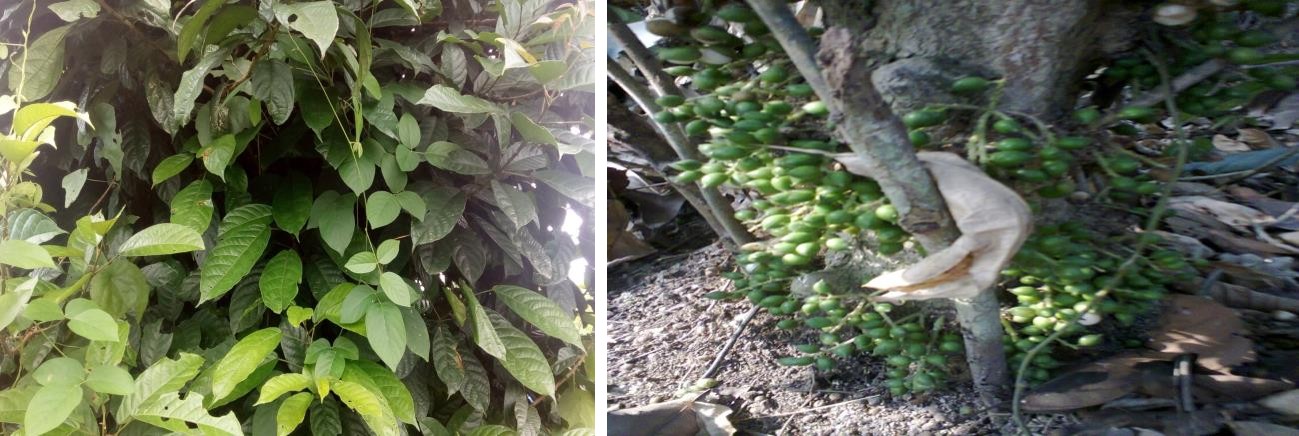
Maesobotrya barteri (bush cherry) belongs to Euphorbiacea family. It is a broad leafed plant of about 10m long, found mainly in the Southern and Eastern parts of Nigeria, Sierra lone and West Africa. In Nigeria, the Benin people locally called it “Oruru” the Efik/ Ibibios, called it Nyanyatet and the Yorubas called it “Odun or Obomodu”. It bears fruits from April to June [3]. The fruits are about 1cm long, ovoid and distinctly pointed, bearing succulent black-purple berries that are edible and stain the tongue [4]. The plant is highly cherished by the people of south eastern Nigeria, not just for it succulent edible fruits but also for its acclaimed medicinal effect on most ailments [5]. For a very long time, various parts of M. barteri have been in use in the local communities for the treatment of diarrhoea, dysentery, urethral discharge, Jaundice, cough, measles and others. Also, in the eastern and southern Nigeria, the stem is preferentially used as chewing stick and as an important raw material for juice making [6]. The fruits of M. barteri enhance waste removal and the fibres help lower cholesterol absorption by preventing plaque formation [7]. However, this plant remains under exploited globally as a result of lack of useful information on its potential as sources of substances that are vital to humans with respect to nutrition and medicines.
Diarrhoea is referred to as a condition of passing out at least three loose or liquid faeces per day [8]. It is characterized by an increased fluidity and hypermotility of the intestine as a result of an imbalance between the absorptive and secretary mechanisms in the gastrointestinal tract. This leads to loss of excess fluid and electrolytes in stools [8, 9, 10].
Diarrhoea is one of the most vulnerable and life threatening diseases worldwide, reaching epidemic proportions. It has long been known as one of the most significant health challenges in developing [11]. It is the next leading cause of infant mortality after pneumonia globally, accounting for about 5-8 million deaths throughout the world annually, mostly in children under the age of 5 [12]. According to Venkat [13], diarrhoea claimed 1,793,000 lives in European countries in the year 2001. Similarly, the World Health Organization (WHO) has estimated that four to five billion cases of diarrhoea occur annually with one billion in children under 5 years of age and 5 million deaths occur in diarrhoea each year with 50% in children under 5 years of age [14]. Diarrhea is mainly caused by infectious agents, plant and animal toxins, poorly absorbable matter and inflammatory problems of the gastrointestinal tract [6]. Additionally, Nwachoko and Jack [15] reported that diarrhoea is also connected with some terminal ailments like AIDS and Ebola viral infection and this usually contributes to the immediate death of those patients due to excessive fluid loss resulting from electrolyte imbalance. However, most pharmaceutical antidiarrhoeal drugs are not readily available particularly to those in the rural areas. Therefore, to combat the problem of diarrhoea, the World Health Organization has initiated a diarrhoeal disease control programme that encourages study of herbal medicines for treatment and prevention of diarrhoea with plants, since patients who cannot afford treatment with conventional medicines usually resort to the use of herbs [16].
Materials and Methods
Collection and Identification of Plant Sample
The leaves of Maesobotrya barteri were collected in a farmland behind Canty Grammar School, in Etche Local Government Area of Rivers state, Nigeria. The plant was taxonomically identified and authenticated by Dr. Okeke Chiemezie of the Department of Plant Science and Biotechnology, University of Port Harcourt, Rivers State, Nigeria. A voucher specimen with the herbarium number: UPH/V/1250 was deposited in the herbarium of the aforementioned department.
Experimental Animal Acquisition and Maintenance
Male/female albino rats weighing 100-150g were used for the experiments. The animals were obtained and housed in the Animal House of the Department of Biochemistry, University of Port Harcourt, Nigeria. The albino rats were kept for one week for acclimatization at room temperature with proper ventilation and under a naturally illuminated environment of 12hours day and night cycle. They were given standard diet (Top feeds grower’s mash) and had access to clean water ad libitum. Animal care protocols were followed in accordance with the National Institute of Health Guide for the care and use of laboratory animals (NIH, 1996).
Preparation of Ethanolic Extract of M. barteri
The leaves of Maesobotrya barteri were washed in a running tap water to remove sand and other particles and then air-dried at room temperature in an emptied well ventilated room for two weeks. The dried leaves were ground into coarse powder using an electric grinder. 1000g of the sample was weighed into a macerating jar and macerated with 5000ml of 99% ethanol for 72 hours with constant shaking. It was sieved using a muslin cloth and after which filtered with No.1 Whatman filter paper. The filtrate was placed in a rotary evaporator to recover the solvent and thereafter, concentrated to dryness in an evaporating dish placed on a water bath at 45°C. The weight of the concentrates was taken and the percentage yield calculated, the extract was kept at 4°C in a refrigerator prior to usage.
Extraction of Phytochemicals
One gram (1g) of sample was measured and placed in a test tube, ethanol (15ml) and potassium hydroxide (10ml of 50%) was added. The test tube was kept in a water bath to react at 60°C for 60 minutes. Thereafter, the sample was placed in a filtrating funnel and washed thoroughly using 20ml of ethanol, 10ml of hot water and 3ml of hexane. The extract was then washed three times using 10ml of aqueous ethanol, the solution was dried using anhydrous sodium sulfate and the solvent was evaporated. The product was then solubilized in 1000ul of pyridine of which 200ul was measured into a vial for analysis.
Quantification by GC-FID
The analysis of the sample was performed on a BUCK M910 Gas Chromatography equipped with a flame ionization detector. A RESTEK 15 Meter MXT-1 column (15um x 250umx 0.15um) was employed. The temperature was 280°C with split less injection of 2ul of sample and a velocity of 30cms$^{-1}$. The oven which operated initially at 200°C was then heated to 330°C at a rate of 3°C min$^{-1}$ and the detector was set at a temperature of 320°C. The phytochemicals were then evaluated as the ratio of the area and mass of internal standard to the area of the identified phytochemicals. The amount of the different phytochemicals was expressed in ug/g.
Determination of Acute Toxicity
The acute toxicity LD${50}$ was determined in albino rats, following Lorke [17] method with little modification (use of rats instead of mice). Twelve (12) albino rats weighing 100-125g were divided into 4 groups of 3 rats per group. The ethanolic extract of Maesobotrya barteri was given orally in doses of 1000, 2000, 3000 and 5000mg/kg body weight respectively to the animals. Each group received single dose of the extract and the general signs and symptoms of toxicity such as ingestion of food and water, mortality, alterations in physical appearance and behavioural changes were noticed for a period of 48 hours and then for a period of 7 days. The acute toxicity LD${50}$ was estimated as geometric mean of the dose which resulted in 100% lethality and that which caused no lethality at all.
Experimental Procedure on Castor Oil induced Diarrhoea in Albino Rats and Faecal Count
Castor oil-induced diarrhoea was determined by the method employed by Awouters, et al. [18]. Twenty albino rats of both sexes, weighing between 100-150g were fasted for 18 hours and distributed into five groups of four animals each. Group1 which served as the control were given distilled water (1ml) via the oral route, Group2 received the standard drug, Loperamide hydrochloride (5mg/kg body weight), while Group3, 4 and 5 were administered with the ethanolic extract of M. barteri at doses of 500, 1000 and 2000mg/kg body weight respectively. One hour after drug pretreatment, all the animals were given 1ml of castor oil orally. The animals were then placed in metabolic cages on a clean and dried floor for faecal count. The positions of the metabolic cages were changed after each hour. The rats were monitored for seven hours after castor oil administration. The time taken for onset of diarrhoea was recorded, the mean faecal droppings evaluated and expressed as percentage (%) inhibition of diarrhea [19].
Percentage inhibition of wet faeces = $\frac{T_0 - T_1}{T_0}$ x 100
Where
T0 = number of wet faeces in control group
T1 = number of wet faeces in test group
Results
The result of quantitative phytochemical analysis of M. barteri is as shown in Table 1. The table shows the concentration of flavonoids to be highest followed by concentration of saponin while phytate had the least concentration of 0.57ug/ml. There was no death noticed in the rats upon oral administration of ethanol extract of M. barteri even at 5000mg/kg body weight. This signifies that the LD50 of the plant extract was higher than 5000mg/kg. Also, apart from slight sedation and weakness noticed at doses of 3000mg/kg and 5000mg/kg, the plant extract did not show any significant signs of toxicity in albino rats during the observation period.
The effect of M. barteri on castor oil induced diarrhoea in albino rats is as shown in Table 2. The result showed 60 to 120 minutes delay before the onset of diarrhoea in animals with the extract treated groups and percentage inhibition of diarrhoea was highest in Group 2 while the
least percentage inhibition was noticed in Group 3.
| Component | Subclass | Concentration (ug/g | ||||||
|---|---|---|---|---|---|---|---|---|
| Flavonoid | Kaemferol | 45.49 | ||||||
| Flavonoid | Rutin | 27.85 | ||||||
| Flavonoid | Catechin | 25.18 | ||||||
| Flavonoid | Epicatechin | 2. 54 | ||||||
| Saponin | - | 21.32 | ||||||
| Phenol | - | 7.42 | ||||||
| Alkaloid | Ribalidine | 1.75 | ||||||
| Oxalate | - | 1.5 | ||||||
| Phylate | - | 0.57 |
Table 1: Quantitative Phytochemical Constituents of leaves of _M. barteri._
| G | rou | p | Treatment | OD (MIN | ) | MWF | I (%) | |||||||
|---|---|---|---|---|---|---|---|---|---|---|---|---|---|---|
| 1 | Control | 60 | 3.57±1.02b | - | ||||||||||
| 2 | Loperamide 5mg/kg | 240 | 0.43±0.30 | 87.96 | ||||||||||
| 3 | Extract 500mg/kg | 60 | 2.14±0.74 | 40.06 | ||||||||||
| 4 | Extract 1000mg/kg | 60 | 2.00±0.69 | 43.98 | ||||||||||
| 5 | Extract 2000mg/kg | 120 | 0.71±0.36b | 80.11 |
Table 2: Effect of ethanolic extract of _Maesobatrya barteri_ leaves on faecal count of castor oil-induced diarrhoea in albino ra
Table 2: Effect of ethanolic extract of Maesobatrya barteri leaves on faecal count of castor oil-induced diarrhoea in albino rats. Results reported as Means ± standard error (M ± SEM), n =7 The Superscript “b” indicates a statistical significant difference (p < 0.05) when the extract treated groups are compared to the control group. Key: OD = Onset of diarrhoea MWF= Mean wet faeces after 7 hours I = Inhibition
Discussion
M. barteri which is generally known as ‘bush cherry’ belongs to a Euphorbiacea family. It is used in the traditional system in managing diarrhoea by orthodox medical practitioners mostly in Southern and Eastern Nigeria [4, 6]. The study was designed to investigate the phytochemical constituents and antidiarrhoeal property of ethanolic extract of M. barteri leaves.
Table 1 showed the concentration of phytochemicals of Maesobotrya barteri leaves in this order; Flavonoids > Saponin > Phenol > Alkaloid > Oxalate > Phytate. The Phytochemical result revealed high to moderate concentrations of kaemferol, rutin, catechin, epicatechin as subclasses of Flavonoid and ribalidine, a subclass of alkaloid. This result has provided useful information on the phytochemical compositions of M. barteri leaves. The result corroborates with the findings of Ogunka–Nnoka, et al. [6] who opined that due to lack of useful information on the potential of M. barteri as sources of substances that are vital to humans with respect to nutrition and medicine, the plant has remained under exploited globally. Additionally, Nwachoko, et al. [15] reported that proper identification and evaluation of the usefulness of any plant involves the investigation of proximate analysis and phytochemical constituents of such plant. Research has shown that medicinal plants are the valuable bisource of drugs used frequently in traditional system of medicine and pharmaceutical intermediates for synthetic drugs [20]. Also, reports from several findings noted that the phytochemicals found in most medicinal herbs are responsible for their antimicrobial, antibiotic, anticancer, anti- helmithic and anti- sickling properties [21, 22, 23, 24].
The acute toxicity result of the ethonolic of M. barteri in albino rats indicated a high LD50. This shows that the plant may be regarded as safe and this high level of safety agrees with its popular consumption by the people of the Southern and Eastern Nigeria Table 2, showed the inhibitory effect of ethanolic extract of M. barteri leaves on the wet faecal count of castor oil induced diarrhoea in albino rats. The 2000mg/kg extract treated group (Group 5) which had a mean wet faecal count value of 0.71±0.36 showed a significant decrease (P > 0.05) when compared with the control group (Group 1) which had 3.57±1.02 mean wet faecal count value. Animals administered with the 500mg/kg and 1000mg/kg extract (Group 3 and 4) showed a non-significant decrease (P>0.05) in their mean wet faecal count (2.14±0.74 and 2.00±0.69), when respectively compared to that of the control group. Also, the result of the percentage inhibition of castor oil induced diarrhoea as shown in Table 2, revealed that the inhibitory effect of the plant extract was dose- dependent when the group pretreated with standard drug (Group 2) which had 87.96 percentage inhibition was compare with the extract treated group (Group 3,4 and 5) with percentage inhibition of 40.06, 43.93 and 80.11 respectively. The prevention of diarrhoea and the decrease in defecation rate are the basis of pharmacological investigation of a viable antidiarrhoeal agent [25]. Castor oil causes diarrhoea due to its active metabolite ricinoleic acid, which produces irritation and inflammation in the intestinal mucosa. This lead to the liberation of prostaglandin that elicits hypersecretion and changes the electrolytes permeability in the intestinal mucosa [26, 27]. Reports have shown that plants phytochemical components (Flavonoids) are capable of evoking anti-diarrhoeal effect due to their ability to form complexes with protein to inactivate microbial adhensions, decrease intestinal motility and hyperhydrolitic secretion [19, 26, 28, 29, 30]. Hence, the presence of flavonoids at high concentration as shown in Table 1, may be responsible for the antidiarrhoeal properties of M. barteri leaves.
Conclusion
This study revealed that the plant contains phytochemicals that are of medicinal important and its ethanolic extract showed remarkable dose-dependent decrease in the production of diarrhoeal stool, reduced the frequency of defecation and delayed the onset of diarrhoea in castor oil induced diarrhoea in albino rats. The findings suggested that the extract of M. barteri may have antidiarrhoeal potential which may provide a scientific rationale for its used by traditional healers for the management of various diarrhoeal related conditions.
Acknowledgements
The authors appreciate the efforts of Dr. N. Nwachoko, Mr. David, Joshua; Mr. Fiase, Emmanuel and the management of pharmacognosy and phytotherapy laboratory, University of Port Harcourt.
References
-
Nwachoko N, Jack IR (2015) Phytochemical screening and anti-diarrhoea activities of _tetracarpidium_ _conophorum_ induce in albino rat. Sky Journal of Biochemitry Research 4(4): 021-024.
-
Das K, Tiwari RKS, Shrivastava DK (2010) Techniques for evaluation of medicinal plant products as antimicrobial agent: current methods and future trends. Journal of Medicinal Plants Research 4(2): 104-111.
-
Keany RWJ (1989) Trees of Nigeria clavendon press Oxford, UK.
-
Ogbuagu MN, Agu B (2008) Fruit nutritive composition of _Maesobotrya barteri_, an under- exploited tropical Africa tree. Fruits 63(6): 357-361.
-
Okon B, Ibom LA, Ina-Ibor OB, Owai PO (2016) Nutritional evaluation of giant African land snail fed diet containing full fat rubber as a replacement for soybean. Nigerian journal of Agriculture and Environment 12(2): 1-8.
-
Ogunka-Nnoka CU, Onwumere BT, Igwe FU (2016) Protective effects of _Maesobotrya barteri_ aqueous leaf extract on Acetaminophen- induced hepatic injury in wastar rats. European journal of Biotechnology and Bioscience 4(8): 4-8.
-
Akobundu ENT (1999) Healthy foods in human nutrition. Agric Environment 4: 1-7.
-
WHO (1999) WHO Monographs on selected medicinal plants. Bulbus Alii scapae, World Health Organisation, Geneva, pp: 289.
-
Ahlquist DA (2001) Constipation and diarrhoea. ln: Principle of Internal Medicines, Medical Publishing Division, Mc Graw Hill, New York, pp: 241-247.
-
Chitme HR, Chandra R, Kaushik S (2004) Studies on anti-diarrheal activity of calotropis gigatean R. Br. in experimental animals. Journal of Pharmaceutical Science 7(1): 70-75.
-
Snyder JD, Merson M (1982) The magnitude of global problem of acute diarrhoeal disease: a review of active surveillance data. Bull 60(4): 605-613.
-
Schiller LR, Sellin JH, Feldman M, Friedman LS, Brandt LJ (2010) Sleisenger and Fordtran’s gastrointestinal and liver disease, 8th (Edn.), Saunders Elsevier, pp: 166.
-
Venkat M (2010) The basic diarrhoea, digestive disorder / digestive disease- diarrhoea.
-
Abdullahi IA, Azbo MO, Amos S, Gamaniel KS, Wambebe C (2001) Anti- diarrhoeal activity of the aqueous extract of _Terminalia avicinnoides_ root_._ Phytotherapy Research 15(5): 431-434.
-
Nwachoko N, Essien EB, Ayalogu EO (2015) Proximate and quantitative phytochemical analysis of _Aframomum chrysanthum_. Open Access Library Journal 2(5): e1529.
-
Cynthia BP, Lana V, Kenyi S (2008) Estimating child mortality due to diarrhoea in developing countries: A meta – analysis review. Bull WHO 86(9): 710-717.
-
Lorke D (1983) A new approach to practical acute toxicity testing. Archieve Toxicology 54(4): 275-287.
-
Awouters F, Niemegers CJE, Lenaerts FM, Janseen PA (1978) Delay of castor oil diarrhoea in rats: A new way to evaluate inhibition of prostaglandin biosynthesis. Journal of Pharmacy and Pharmacology 30(1): 41-45.
-
Mukherjee PK, Saha K, Murugeban T (1998) Screening of Antidiarrhoeal profile of some plant extracts of a specific region of West Bengal, India. Journal of Ethnopharmacology 60(1): 85-89.
-
Ncube NS, Afolayan AJ, Okoh AI (2008) Assessment Techniques of antimicrobial properties of natural compounds of plant origin: current methods and future trends. African Journal of Biotechnology 7(12): 1797-1806.
-
Dixon RA, Dey PM, Lamb CJ (1983) Phytoalexins: enzymology and molecular biology. Advance in Enzymology and Related Areas of molecular biology 55: 1-136.
-
Pandey AK, Mishra AK, Mishra A, Kumar S, Chandra A (2010) Therapeutic potential of C. zeylannicum extracts: an antifungal and antioxidant perspective. International Journal of Biological and Medical Research 1: 228-233.
-
Mishra AK, Kumar S, Bhaugava A, Sharma B, Pandey AK (2011) Studies on _in-vitro_ antioxidant and antistaphylococcal activities of some important medicinal plants. Cellular and Molecular Biology 57(1): 16-25.
-
Preshant T, Bimlesh K, Mandeef K, Gurpreet K, Harken H (2011) Phytochemical screening and analysis. A review_._ International pharmaceutical scientia 1(1): 98-106.
-
Akuodor GC, Usman MI, Ugwu C, Akpan JL, Irogbeyi LA, et al. (2010) Ethanolic leaf extract of _Verbena_ _hastate_ produces antidiarrhoeal and gastrointestinal motility slowing effects in albino rats. Journal of medicinal plants Research 4(16): 1624-1627.
-
Galvez T, Zarzuelo A, Creapo MIE, Lorente MD, Ocete MA, et al. (1993) Antidiarrhoeal Activity of _Euphorbia_ _bita_ Extract and Isolation of an Active Flavonoids Constiuent. Plant medicine 59(4): 333-336.
-
Gaginella TS, Stewart JJ, Okon WA, Base P (1975) Actions of ricinoleic and electrolyte absorption _in_ _vitro_. Journal of Pharmacological Experiment 195(2): 355-361.
-
Rao VSN, Santos FA, Sobrieka TT, Souza MF, Melo LL, et al. (1997) Investigation of the gastroprotective and antidiarrhoeal properties of tetramethoxyflavone from egletes. Planta Med 63(2): 1496-1497.
-
Dicarlo G, Autore G, Izzo AA, Maibline P, Mascolo N, et al. (2005) Inhibition of intestinal mobility and secretion by flavonoids in mice and rats: structure activity relationships. Journal of pharmacology 45(12): 1054-1059.
-
Ammon HV, Thomas PJ, Philips SF (1974) Effect of oleic and ricinoleic acid on jejuna water and electrolyte movement. Journal of Clinical Investigation 53(2): 374-379.
- Origin, Evolution, and Functional Impact of Short Insertion- Deletion Variants in Human Genomes: A Review
- Harnessing Molecular Glues for Next-Generation Vaccine, Cancer and Cardiovascular Disease Drug Development: A Comprehensive Review
- Lateral Cervical Epidermal Inclusion Cyst in a Paediatric Patient: A Rare Case Report
- Malarial Plasmodium Falciparum with Hepatitis B and C Virus Infections among Blood Donors in Ife Central Local Government Area, Ile Ife, Osun State, Nigeria
- Withanolides and Withaferin A- What’s next in Ashwagandha Research
- Designing of Dual Pulse Photoacoustic Tomography for Imaging of Drug-Response and Tumor Growth