
Personalized and Precision Medicine (PPM) as a Unique Healthcare Model to be Set Up to Secure the Human Healthcare and Biosafety
Over the course of its history, medicine and healthcare philosophy have given special attention to the already diseased individual, focusing on a type of clinically manifested disease (nosology) rather than on one’s health or the socalled pre-illness conditions, whilst the latter being left in the shade. No comments but the Resources of Canonical Medicine have been Missed -That is The Fact! And thus the clinical efficacy, chronification & diiability rates and the human longevity must be drastically improved soon!
Editorial
Over the course of its history, medicine and healthcare philosophy have given special attention to the already dis-
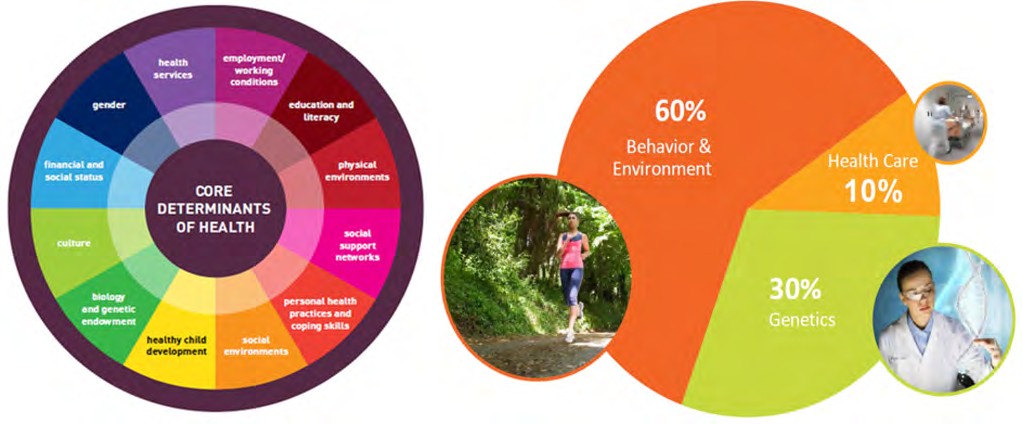
Figures 1A & 1B: Basic (Core) Determinants of Health.
eased individual, focusing on a type of clinically manifested disease (nosology) rather than on one’s health or the so- called pre-illness conditions, whilst the latter being left in the shade. No comments but the Resources of Canonical Medicine have been Missed -That is The Fact! And thus the clinical efficacy, chronification & diiability rates and the human longevity must be drastically improved soon!
A group of the recognized experts in the PPM-related area has presented an evidence-based and well-documented assessment of global trends in medicine and healthcare development to be valuable for the implementation and securing the efficacy of the new model in the daily clinical practice (Figures 1A & 1B).
And stressed the exclusive value of the next-step model of healthcare services being entitled as Personalized & Pre- cision Medicine (PPM) (Figures 2A & 2B).
PPM as being the Grand Challenge to forecast, to predict and to prevent is rooted in a big and a new science generated by the achievements of (Figures 3 &):
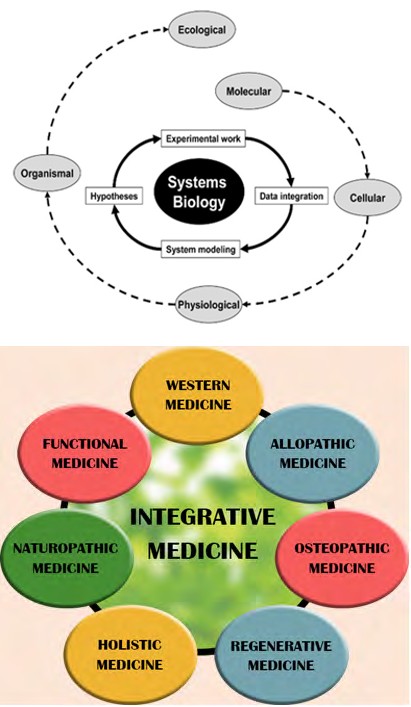
Figure 4A: Integrative Medicine.
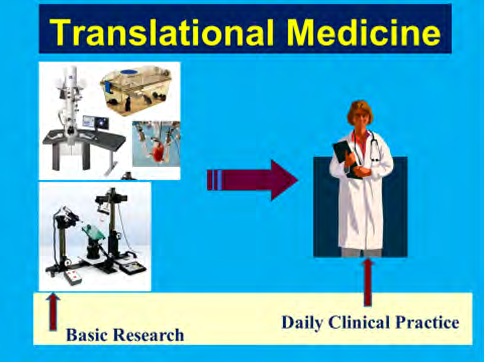
Figure 4B: Translational Medicine (Figure 4B).
Whilst integrating and consolidating platforms of Fundamental Sciences and Newer OMICs Technologies (Figure 5A) whose data is analyzed, integrated, mined and
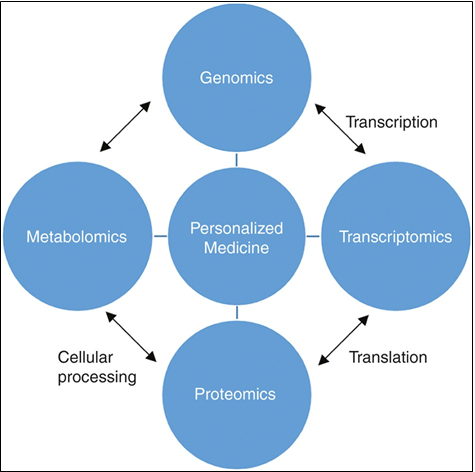
Which are being implemented as The Newest ENTITIES into the daily medical practice to secure Clinical, Subclinical & Predictive maneuvres & manipulations of the next-step generation? And are implemented into the daily medical practice to secure Clinical, Subclinical, Prognostic &
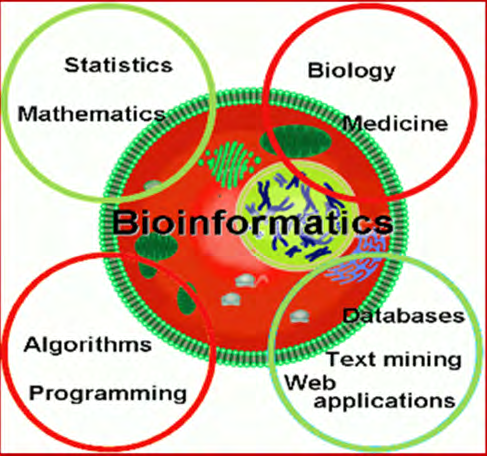
clinically interpreted by a set of algorithms and software of bioinformatics, block chain and artificial intelligence (AI) (Figure 5B).
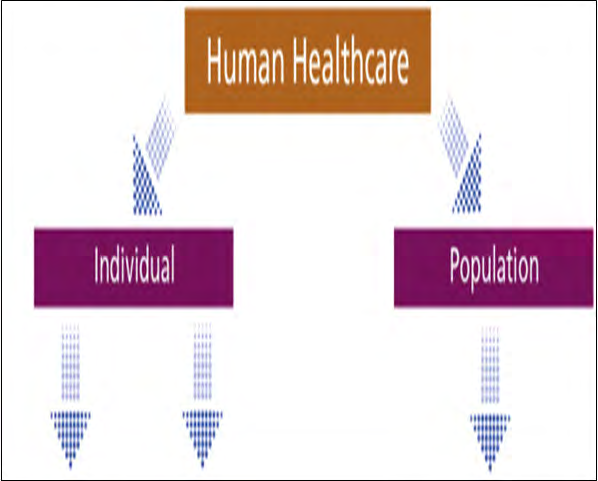
Predictive maneuvres & manipulations, being personalized PPM as a Model of Healthcare Services of the Next-Step Generation is the Science and ART illustrating application of sets of the different Tools of the Model at the Population, Communities and Individuals (Figure 6).
And exerting reliable control over morbidity, mortality and disabling rates as well as significantly optimizing the cost and efficacy of treatment for those who had fallen ill (patients) and for persons-at-risk. This strategy would give a real opportunity to secure preventive, prophylactic, therapeutic and rehabilitative measures whose personalization could have a significantly positive influence on demographics.
To implement PPM resources into clinical practice, there is a strong need to develop a principally new strategy based on Biomarkers (Figure 7).
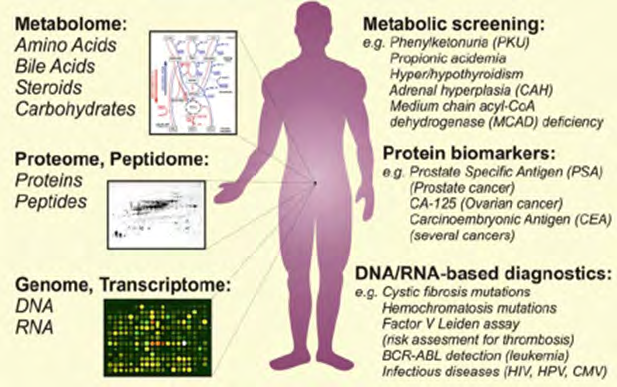
To really understand the fundamental nature of PPM we would have to understand the various fields of translational applications that provide the tools to exploit and practice PPM, and genomics tools, in particular (Figure 8).
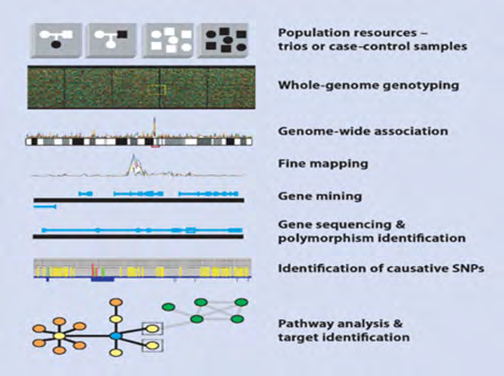
So, Genomics is considered to be a set of the unique biomarkers and thus the molecular tools to probe genome for its quality and now even be tested for Predictive and Prognostic biomarkers (Figure 9).
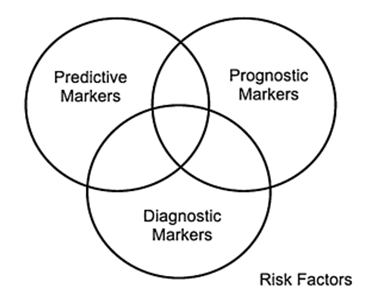
Genetic testing can provide information about person’s genes, their products and chromosomes. For instance and for special attention of general practice physicians:
- Regular diagnostic testing is used to identify or rule out a specific genetic or chromosomal condition. The results of a diagnostic test can influence a person’s choices about health care and the management of the disorder;
- Carrier testing to identify people who carry one copy of a gene mutation that, when present in two copies, causes a genetic disorder. This type of testing is offered to individuals who have a family history of a genetic disorder and to people in certain ethnic groups with an increased risk of specific genetic conditions;
- Predictive and presymptomatic testing can be helpful to people who have a family member with a genetic
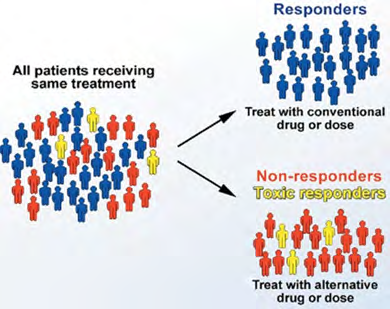
can be used to predict and to target medicines to good responders or to identify whether an individual has an in-creased risk of a specific adverse drug reaction from a particular medicine; and pharmacogenomics-related testing is aimed at tailoring drug therapy at a dosage that is most appropriate for an individual patient, with the potential benefits of increasing the clinical efficacy and individualized
disorder, but who have no features of the disorder themselves at the time of testing; Predictive testing can also identify mutations that increase a person’s risk of developing disorders with a genetic basis, such as certain types of cancer;
- Newborn testing to identify genetic disorders that can be treated early in life and other disorders in-cluding monogenic and orphaned diseases;
- Preimplantation testing (also called preimplantation genetic diagnosis (PIGD) is a specialized technique that can reduce the risk of having a child with a particular genetic or chromosomal disorder. It is used to detect genetic changes in embryos that were created using ART such as in-vitro fertilization;
- Pharmacogenetic tests (Figure 10).
safety.
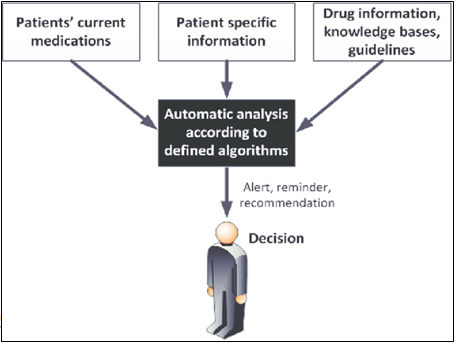
Improved patient (or persons-at-risk) outcomes with the application of the biomarker tests of the next-step genera- tion must consider not only increased survival or quality of life, but also improved clinical decision support (CDS) & making (Figure 11).
Having access to genomic information will become increasingly important as physicians are progressively receptive to incorporating genomics into clinical practice.
To predict risks (Figure 12) of the chronification and thus of disabling.
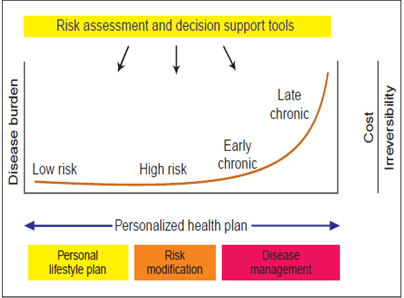
Meanwhile, a combination of genomic and phenomic biomarkers are becoming of great significance to be translated into the daily practice to predict risks of the chronification and thus of disabling since chronic diseases
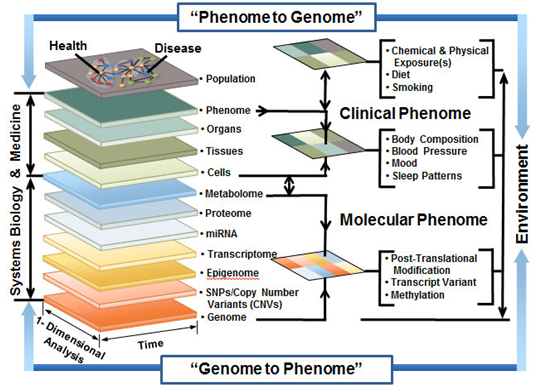
are preceded by a long subclinical (symptom-free) phase or a period of latency Genome being neighbored with Phenome (Figure 13).
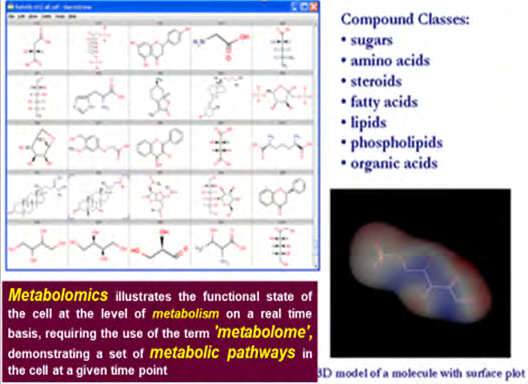
Phenome is a bridge from genome, proteome and metabolome (Figure 14) which are two important elements of phenomena.
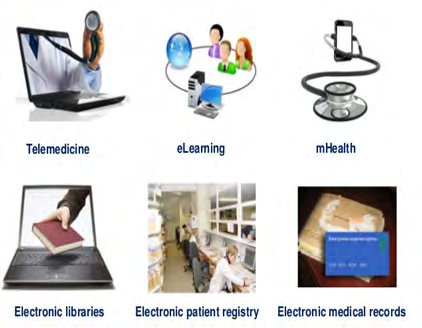
Who will Patients (or Persons-at-risk) and their Physicians trust to store and interpret the clinical data collected, harvested and mined? Health care information technology does offer a potential solution to those barriers (Figure 15).
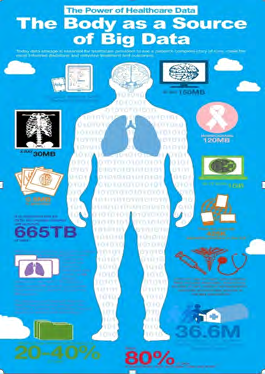
As a result, a patient or A Person-at-Risk becomes a data carrier (Figure 16).
It is becoming clear that further development of Molecular technologies, Risk prediction algorithms and Clinical Decision Support (CDS) is needed. Among the modern
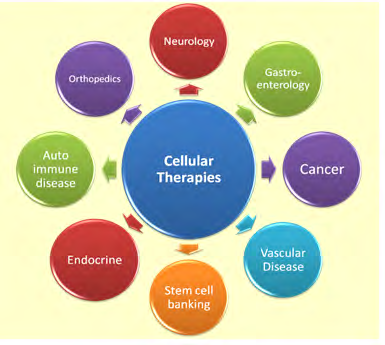
Figure 17A: Cell-based therapies in PPM-related.
therapeutic modes and clinical approaches to be applicable to PPM, we would stress the significance of Cellular therapies (including stem cell-based treatment) (Figures 17A-17C):
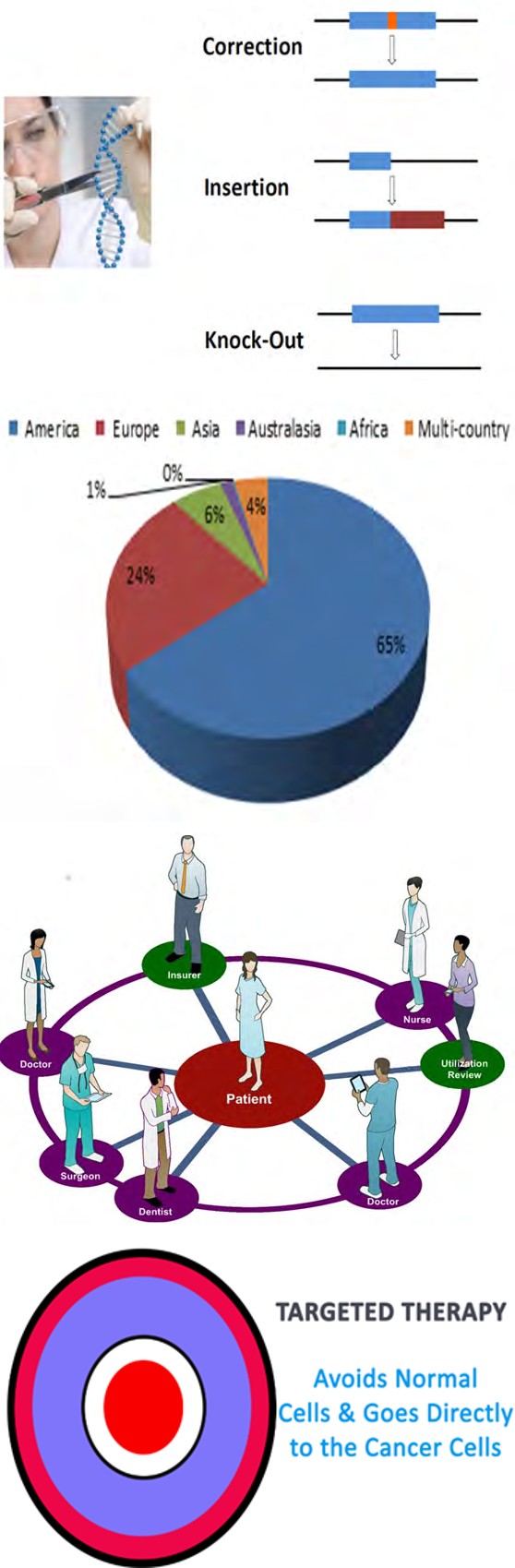
Figure 17B: Genome Editing Technologies in OOM-related practice.
Figure 17C: Gene therapy Clinical Trials (%).
Targeted therapy (Figures 18-18B) as the newest approach is considered to be a way to recommend a therapeutic protocol being tailored individually and to
Figure 18A: Gene therapy Clinical Trials (%).
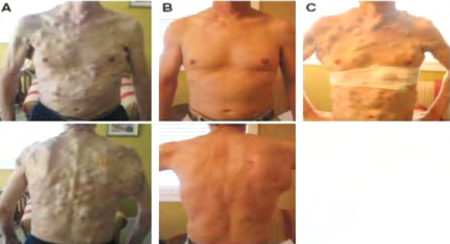
Figure 18B: Targeted Therapy in Case of Metastatic Melanoma. Of particular interest are the latest achievements and thus the trends in targeted immunotherapy. In this connection, establishing a strong bio bank practice could facilitate translational applications that will be able to allow doctors to create the best individualized treatment for their patients.
PPM calls for a trans disciplinary approach, and considerations for how best to develop innovation frameworks to support safe and effective deployment of the new enabling diagnostic and therapeutic technologies not to treat but to get cured!!! Indeed, the health technologies of the next-step generation and their applications can help strengthen and triangulate the Attendant evidentiary base for PPM whilst securing the ideal health and wellness!!!
Due to our viewpoint, all healthcare professionals of the future should be educated to deliver patient-centric care as members of interdisciplinary teams, emphasizing evidence- based practice, quality improvement approaches and bioinformatics (Figure 18). Personalized aims and objectives exist at every stage of disease initiation and progression to develop a Personalized Health Plan addressing lifestyle, risk modification and disease management, and later, Personalized Health Management & Wellness Program. In reality, we are experiencing a Renaissance primarily driven by next generation biotechnologies.
As you might see from the above-mentioned, PPM has drastically changed and is keeping on changing the landscape of healthcare And thus the above-mentioned PPM model would need for novel training since the society is in bad need of large-scale dissemination of novel systemic thinking and minding. Meanwhile, the healthcare industry, public policy sector, and consumer industries will be required to develop new and creative business models and products. And, no doubt, next generations will speak about the XXI century as a time, when medicine became preventive and personalized, and its outcomes predictive and guarantied.
- Origin, Evolution, and Functional Impact of Short Insertion- Deletion Variants in Human Genomes: A Review
- Harnessing Molecular Glues for Next-Generation Vaccine, Cancer and Cardiovascular Disease Drug Development: A Comprehensive Review
- Lateral Cervical Epidermal Inclusion Cyst in a Paediatric Patient: A Rare Case Report
- Malarial Plasmodium Falciparum with Hepatitis B and C Virus Infections among Blood Donors in Ife Central Local Government Area, Ile Ife, Osun State, Nigeria
- Withanolides and Withaferin A- What’s next in Ashwagandha Research
- Designing of Dual Pulse Photoacoustic Tomography for Imaging of Drug-Response and Tumor Growth