
Remediation of Toxic Cu (II) with Acrylamide-Based Hydrogels
Industrial developments and increasing urbanization increase the concentration of heavy metals in wastewater. Hydrogel composites are used as adsorbents for the removal of heavy metals from wastewater. In this study, superabsorbent hydrogels were synthesized and characterized using carboxymethyl cellulose (CMC) as biopolymers, halloysite (HNT) and montmorillonite (MMT) as clays, acrylamide (AM) and 2-acrylamido-2-methyl-1-propane sulfonic acid (AMPS) as monomers. Poly(ethylene glycol) diacrylate (PEGDA) was used as cross linker, tetramethylenediamine (TEMED) as accelerator, and ammonium persulfate (APS) as initiator. The effect of the co-monomer AMPS on Cu(II) remediation was determined by changing its ratio in the hydrogel. CuSO4.5H2O and Cu(NO3)2 aqueous solutions were used to determine the Cu(II) remediation capacity of the hydrogels. Infrared pectroscopy (UATR) was used for spectroscopic characterization of hydrogel composites and UVvis spectrophotometer was used for Cu(II) adsorption measurements. In the CuSO4.5H2O adsorption study at pH=neutral, adsorption % increased with increasing AMPS amount in AMPS containing hydrogels, while in the Cu(NO3)2 adsorption study at pH~1, adsorption % decreased with increasing AMPS amount in AMPS containing hydrogels.
Introduction
Copper (Cu) is an essential element for tissue, nerve and bone development and acts as a catalyst alongside enzymes in important reactions in the body. It shows toxic properties for humans when taken above the specified limits. Cu taken in through air, water, soil, plants and animals can accumulate in living organisms without degrading. Pollution from heavy metals is a serious problem in many parts of the world. Heavy metals, which come out as a result of industrial activities, pollute the environment. It can be said that the main branches of industry that discharge these wastes into the soil or water are factories that process copper mines, plastic and steel industry, organic and inorganic chemical industry, fertilizer industry, paper pulp production, etc. It has been analyzed that there is high concentration of copper in the wastewater of these industrial establishments [1, 2]. Cu taken into the body in high concentration causes Wilson’s disease as a result of accumulation in the brain, skin, liver, pancreas and heart muscle in humans. People exposed to high doses of Cu heavy metal for a long time may experience symptoms such as stress, irritability, depression, mental fatigue, memory impairment, lack of concentration, joint and muscle pain [3, 4]. Exposure to high doses of Cu dust causes damage to the liver, kidneys and brain. Poisoning occurs when Cu-containing substances are accidentally mixed into food and drink or when Cu salts are intentionally ingested. The limit value for Cu dust in the air at workplaces is 1 mg/ m³. In addition, Cu can cause coma and death depending on the dose taken. The limit value announced by the World Health Organization for drinking water is 2 mg/L. The maximum amount of copper that can be taken during the day has been determined as 12 mg/day for women, 10 mg/ day for men, and 3 mg/day for children aged 6-10 years [5]. Effective removal of Cu, which adversely affects human health and nature when found in high concentrations that are not biodegradable, from water is ecologically important. Nowadays, adsorption is considered the most popular method for the removal of heavy metals such as Cu from aqueous media due to its high efficiency, easy recovery and reusability. Natural and/or synthetic polymer-containing composites are used for the removal of Cu heavy metal in factory wastewater and in environmental waters [6, 7].
Hydrogels are networked structures that are insoluble in water and can swell at a certain level according to the crosslink density. Covalent and ionic interactions, Van der Waals forces, hydrogen bonding or hydrophobic interactions can be observed between the chemicals and polymers that make up the hydrogel [8]. Acrylamide (AM) is a white, odorless, crystalline monomer used in the synthesis of polyacrylamide [9]. AM is found in many products that is used in daily lives. It exists in two forms, monomeric and polymeric; the monomeric form is more harmful than the polymeric form and shows neurotoxic effects. AM is also used as a cleaning agent to filter out unwanted substances in the water treatment process [10]. 2-acrylamido-2-methyl- 1-propane sulfonic acid (AMPS) is a non-toxic monomer containing SO3H groups that can be ionized at any pH, showing hydrophilic properties, improving the mechanical properties of the substances to which it is added, and having high electrical conductivity. Thanks to these properties, it is frequently used in medical and industrial applications [11, 12, 13]. It is used as a co-monomer in hydrogel systems due to its hydrophilicity and thermal stability [14].
Halloysite (HNT) and montmorillonite (MMT) clays are used as supporting matrices in the synthesis of AM-based hydrogels. When these clays are added to the hydrogels used as adsorbents, they increase the mechanical strength and plasticity of the hydrogel, resulting in superior physical and chemical properties and making the hydrogel more thermally stable [15, 16]. The structure of MMT clay is given in Figure 1. MMT, whose general formula is Al1.67Mg0.33(Na0.33) Si4O10(OH)2.nH2O, is mostly composed of alkali and alkaline earth metal salts. MMT, which can swell in water, increases in volume and plasticity due to its water absorption property. MMT is frequently used in polymer composites and hydrogels due to its easy availability, high surface area and high surface reactivity [17, 18].
![Figure 1: MMT, whose general formula is Al1.67Mg0.33(Na0.33) Si4O10(OH)2.nH2O, is mostly composed of alkali and alkaline earth metal salts. MMT, which can swell in water, increases in volume and plasticity due to its water absorption property. MMT is frequently used in polymer composites and hydrogels due to its easy availability, high surface area and high surface reactivity [17,18].](/fulltextimages/10893/fig_1.png)
HNT is a kaolin group clay mineral with the formula Al2(OH)4Si2O5.2H2O. The inner (Al-OH) and outer surface (Si-O) have different ionic structures. The inner and outer surfaces of the tube walls carry a net negative charge, such as anions. Amphoteric tubes behave like a negative charge at high pH (basic medium) and like a positive charge at low pH (acidic medium). Thanks to these properties, it has become a preferred carrier in controlled drug release [19, 20]. In adsorption processes with pure HNT, HNT creates a colloidal structure in solution, while the addition of HNT to hydrogels strengthens the hydrogel mechanically and prevents the hydrogel from disintegrating in water [21, 22]. Metal ion chelating polymers contain one or more electron donor atoms such as N, S, O and P, which can form coordinate bonds with many of the toxic heavy metals. Therefore, hydrogels containing amide, amine, carboxylic acid and ammonium groups can bind metal ions and be used in water purification remediation [23]. Polymers containing atoms such as N, S, O and P, which behave like Lewis bases, have limited applications due to their weak mechanical strength and chelating only with certain metals. By adding different synthetic polymers or natural clay/biopolymers to these polymers, their use in metal remediation in wastewater has increased [24, 25]. Modified HNT clay Wang X, et al. [26] and nanocomposites containing HNT clay Chiew CSC, et al. [27, 28, 29] have been used for the removal of heavy metals such as Co, Cu and Pb from aqueous solution. It is known that hydrogels, which are networked and cross-linked polymeric systems, are very good water-retaining agents and are also used as adsorbents in some applications. Many studies have been conducted on the adsorption of heavy metal ions from aqueous solutions of AM-based hydrogels, which are super water-retaining, and positive results regarding remediation have been attained [30, 31]. The crystalline structure of HNT clay is given in Figure 2 [32].
![Figure 2: Crystalline structure of halloysite clay [32].](/fulltextimages/10893/fig_2.png)
In this study, AM-based hydrogels containing AMPS at different ratios were synthesized in series and spectroscopically characterized. In order to determine the Cu (II) remediation of these hydrogels, different concentrations of Cu(NO3)2 and CuSO4.5H2O solutions were used. In this article, in which the remidiation study of toxic copper was carried out, it was found that AM/AMPS hydrogels synthesized without using clay and/or biopolymer have higher adsorption capacity than AM/AMPS hydrogels using clay and/or biopolymer.
Material and Methods
Instrumental Measurements
UV-vis Spectrophotometer (Shimadzu (UV-1800 240V) was used for Cu(II) determination. For spectroscopic characterization of the hydrogels, Perkin Elmer Spectrum Two (UATR) IR spectrophotometer was used in the range of 4000-450 cm-1. Weighing was made with OHAUS brand analytical balance (0.0001 g sensitivity).
Chemicals Used
In this study, Acrylamide (AM) and 2-acrylamido- 2-methyl-1-propane sulfonic acid (AMPS) monomers were purchased from Sigma-Aldrich. Poly(ethylene glycol) diacrylate PEGDA (Aldrich) as crosslinker, ammonium persulfate (APS) as initiator, N,N,N’,N’- tetramethylethylenediamine (TEMED) as accelerator and Carboxy methyl cellulose (CMC, Mw ~90.000) as biopolymer from Sigma-Aldrich have been purchased. Raw HNT, <45 μ) and montmorillonite (MMT, <63 μ) clays were obtained from Esan-Eczacıbaşı [33, 34]. For Cu (II) solutions, CuSO4.5H2O (Aldrich) and a stock solution of Cu(NO3)2 in 0.5 mol/L HNO3 at 1000 mg/L (Aldrich) were used. The products obtained were of analytical purity and were used without any purification process.
Synthesis of Hydrogels
Before synthesis HNT and MMT clays were dried in an oven at 110 °C for 48 hours.
Synthesis of AM/AMPS (0/60/120/180/240) Hydrogels: AM/AMPS hydrogel was re-synthesized according to the literature [35, 36]. AM monomer (1 g) was dissolved in tridistilled water (1 mL). To this solution, different ratios (0/60/120/180/240) of AMPS monomer were added. PEGDA (0.25 mL) as crosslinker, APS (0.2 mL) as initiator, and TEMED (0.25 mL) as accelerator were added to the AM/AMPS solution, respectively. Then, it was allowed to polymerize by keeping it in an oven at 60 °C for 1 hour. The gels taken into the watch glass were dried in the oven.
Synthesis of AM/CMC/AMPS (0/60/120/180/240) Hydrogels: AM/CMC/AMPS hydrogel was re-synthesized according to the literature [35, 36, 37]. 2% solution of CMC was prepared. CMC (0.5 mL) and 0.5 mL tridistilled water were added to the monomer mixture containing AM and AMPS. The other experimental procedures were performed similarly to AM/AMPS synthesis.
Synthesis of AM/HNT and MMT/AMPS (0/60/120/180/240) Hydrogels: 0.5 mL of a 2% solution of HNT or MMT was taken and this suspension mixture was added to AM/AMPS solution containing 0.5 mL of tridistilled water [35]. The other experimental procedures were performed similarly to AM/AMPS synthesis.
Synthesis of AM/CMC/HNT and MMT/AMPS (0/60/120/180/240) Hydrogels: 0.5 mL of 2% solutions of CMC and/or HNT and/or MMT clay were taken and added to AM/AMPS solution containing 0.5 mL of tridistilled water [35]. The other experimental procedures were performed similarly to AM/AMPS synthesis. The contents of the synthesized hydrogels are given in Table 1.
| Name of the hydrogel | AM (g) | AMPS (mg) | CMC (mL) (2%) | HNT or MMT (mL) (2%) |
|---|---|---|---|---|
| AM/AMPS | 1 | 0, 60, 120, 180, 240 | - | - |
| AM/CMC/AMPS | 1 | 0, 60, 120, 180, 240 | 0.5 | - |
| AM/HNT/AMPS | 1 | 0, 60, 120, 180, 240 | - | 0.5 |
| AM/CMC/HNT/AMPS | 1 | 0, 60, 120, 180, 240 | 0.5 | 0.5 |
| AM/CMC/HNT | 1 | 0 | 0.5 | 0.5 |
| AM/CMC/MMT | 1 | 0 | 0.5 | 0.5 |
| AM/MMT | 1 | 0 | - | 0.5 |
Table 1: Compositions of the hydrogels.
Cu(II) Remediation
First, 0.1 M 1000 mL CuSO4.5H2O solution was prepared. This solution was diluted and used in the following experiments. 300 mg/L Cu(NO3)2 solution was prepared by diluting 1000 mg/L Cu(NO3)2 ready stock solution. Before starting the adsorption experiments, the maximum wavelength of Cu(II) solution was determined as 790 nm [38] for CuSO4.5H2O and 301 nm [39] for Cu(NO3)2 solution using UV-vis spectrophotometer. All of the experiments were triplicated.
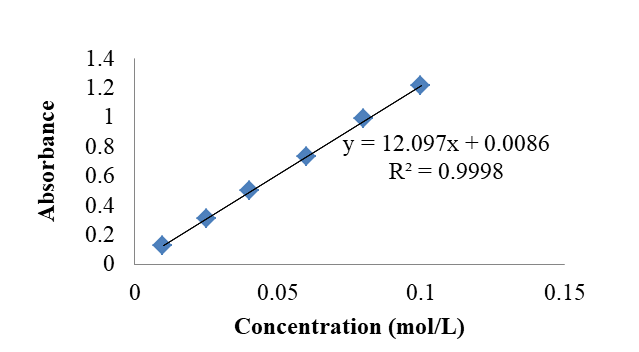
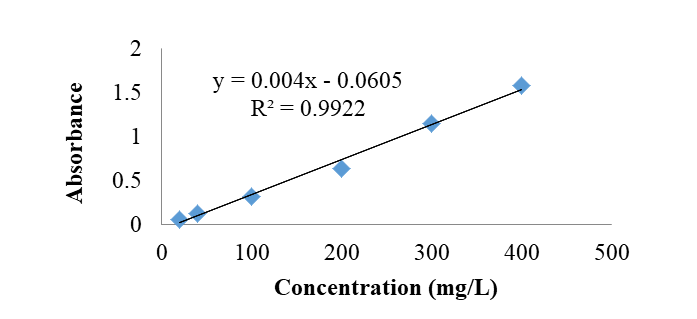
Calibration graphs in UV-vis were drawn for CuSO4.5H2O and Cu(NO3)2. According to the Lambert-Beer Equation (A = Ɛ. l. C), the absorbance (A) values measured against the concentration (C) data are plotted and the working curves of adsorption are given in Figures 3,4. The amount of Cu(II) adsorbed was calculated using Equation 1 [40, 41, 42].
Equation 1: Qe = (𝐶0−𝐶𝑒)V/m The percentage of adsorption (A%) was calculated using Equation 2.
Equation 2 : A% = (𝐶0−𝐶𝑒)/𝐶0 × 100 Qe: Amount of substance adsorbed on the adsorbent at equilibrium (mol/g or mg/g) C0: Initial concentration of Cu(II) solution (mol/L or mg/L) Ce: Equilibrium concentration of Cu(II) solution (mol/L or mg/L) V: Volume of solution (L) m: Adsorbent mass (g)
Result and Discussion
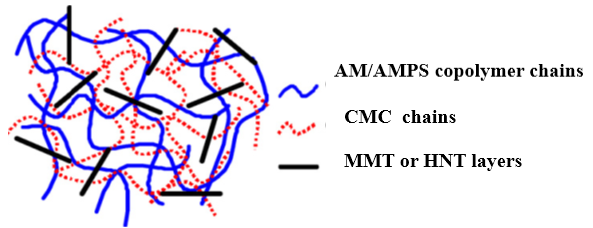
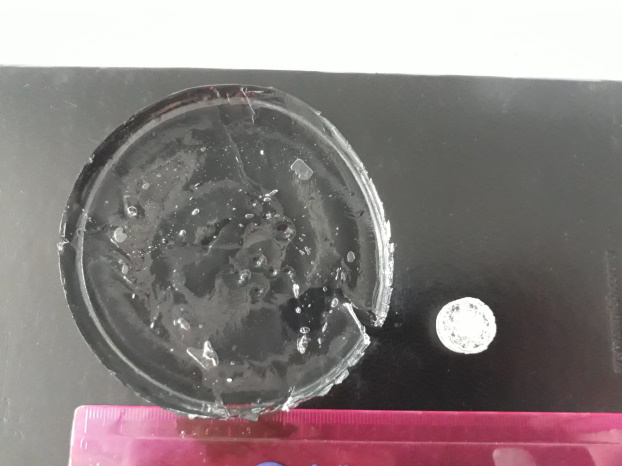
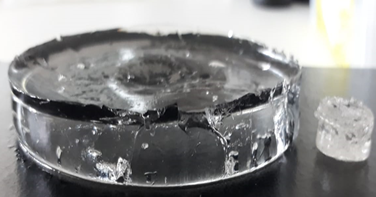
In this report, our aim is to synthesize AM, AMPS and PEGDA based cross-linked hydrogels by free radical solution polymerization using APS [43, 44, 45, 46, 47] and to investigate their Cu (II) metal sorption behavior. Subsequently, Cu(II) metal sorption behavior was investigated by adding MMT and/or HNT clay and CMC biopolymer to these hydrogels [48, 49, 50]. The probable structures of the hydrogels are given in Figure 5. The swelling capacity of the hydrogels can be seen in Figure 6.
FTIR Spectroscopy of Hydrogels
Synthesized AM/AMPS (0/60/120/180/240), AM/CMC/AMPS (0/60/120/180/240), AM/HNT/ AMPS (0/60)/120/180/240), AM/CMC/HNT/AMPS (0/60/120/180/240), AM/MMT/AMPS(0), AM/CMC/MMT/ AMPS (0) hydrogels were spectroscopically characterized with Perkin Elmer Spectrum Two (UATR) IR. Since there are many substances synthesized in this study, the FTIR spectra of the hydrogels with significant differences are given in Figure 7.
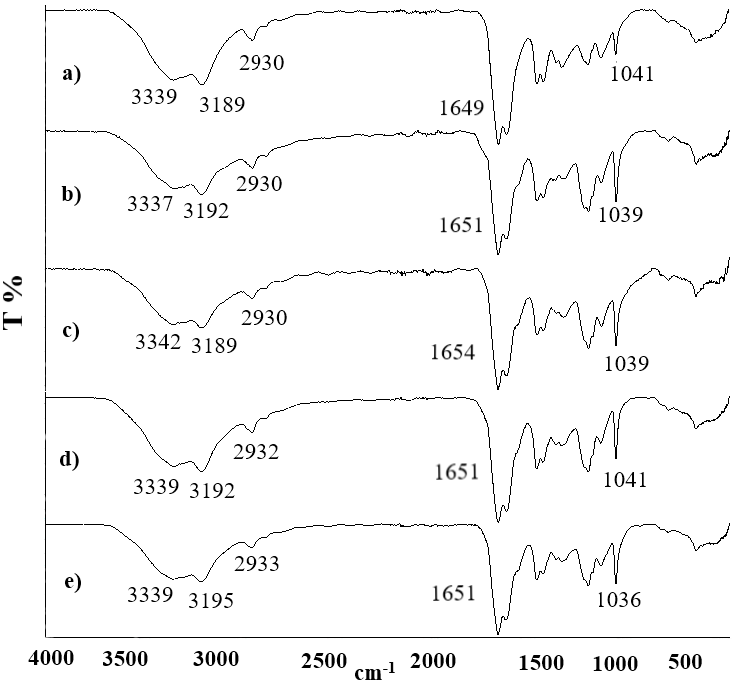
The most characteristic S=O peak of AMPS is observed in the range of 1036-1041 cm-1 [51]. It is seen that the sharpness of this peak increases as the AMPS ratio in the hydrogels increases Figures 7a,b. Amide carbonyl bond (-HN-C=O) stretching vibrations of AM/AMPS hydrogels are observed at ~1654 cm-1. The broad band seen between 3000-3500 cm-1 is known as the (N-H) stresses of AM and AMPS [51], it is observed that these peaks coincide with the (O-H) stresses in the same region in hydrogels containing CMC and HNT. The peak of CH2 stretching vibrations is observed at ~1450 cm-1, the peak of aliphatic C-N stretching vibrations is observed at 1122-1135 cm-1 and the peak of C-H stretching vibrations is observed at ~2930 cm-1. The absence of the characteristic S=O peak of AMPS in AMPS-free hydrogels is spectroscopic evidence for the formation of hydrogels (Figure 7). Considering the FTIR spectrum of the hydrogels containing HNT and/or CMC, a clear peak change could not be observed since 2% HNT and/or CMC were used in the synthesis of the hydrogel [34]. The fact that the C=C stretch peak belonging to the alkene observed at 1680-1620 cm-1 is not observed in any polymeric hydrogel is an evidence that polymerization has taken place.
Cu(II) Remidation of Hydrogels: CuSO4 .5H2O
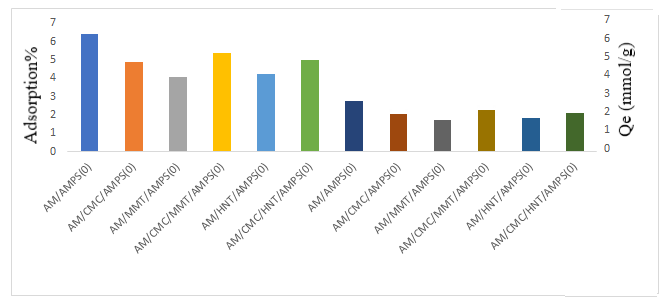
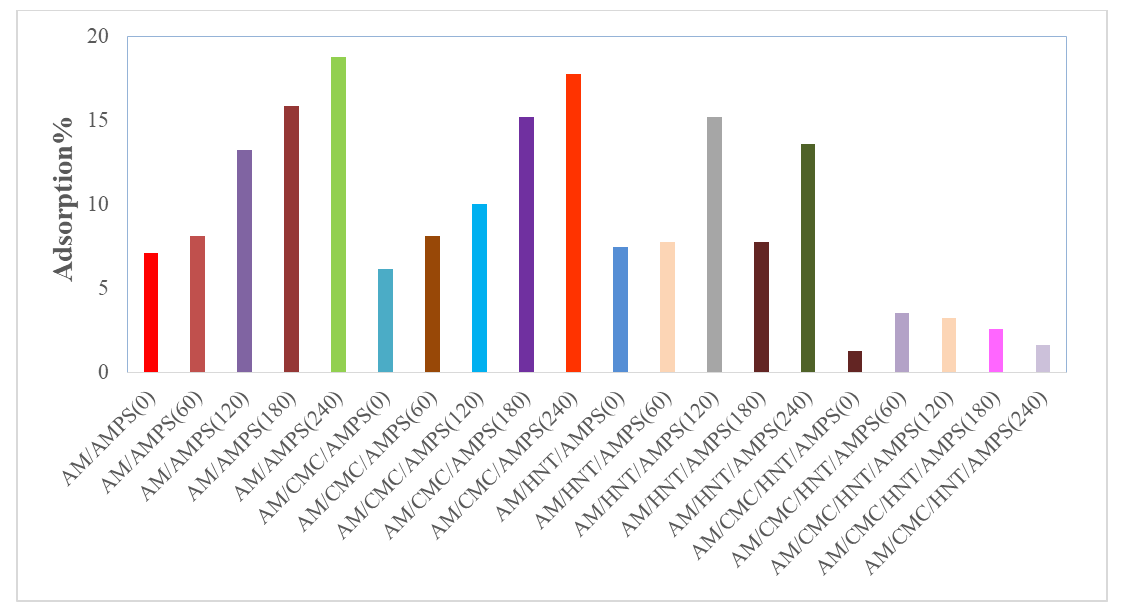
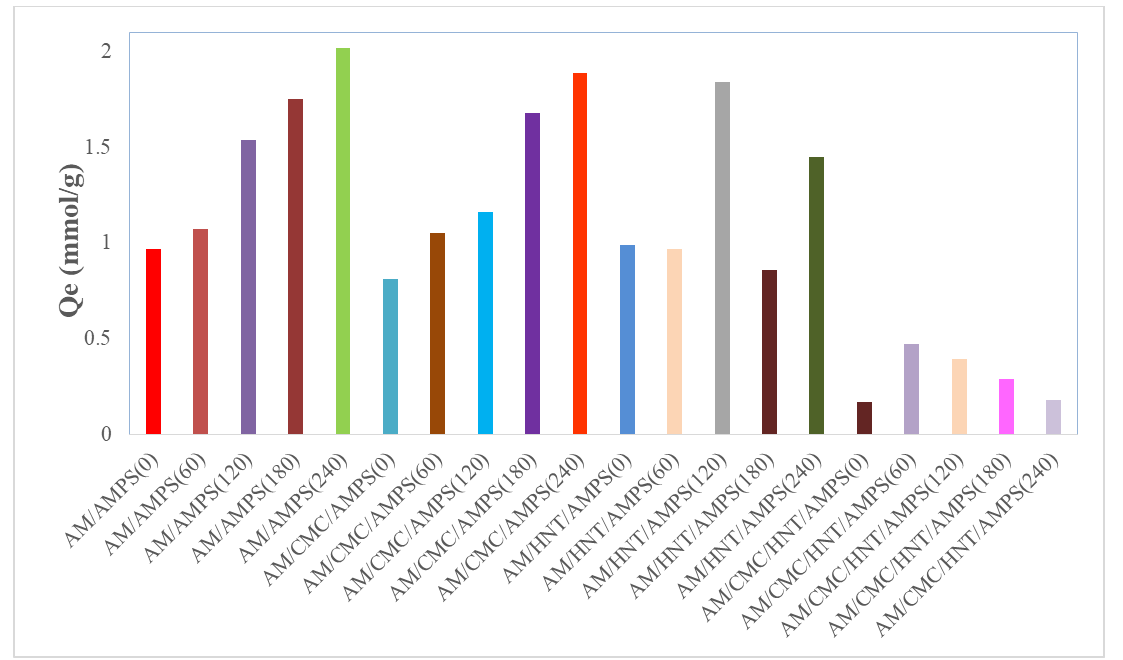
In CuSO4.5H2O solution used for Cu(II) remediation, AM/AMPS (0/60/120/180/240), AM/CMC/AMPS (0/60/120/180/240), AM/HNT/ AMPS (0/60/120/180/240), AM/CMC/HNT/AMPS (0/60/120/180/240), AM/MMT/AMPS(0), AM/CMC/ MMT/AMPS(0) hydrogels were used by weighing on a precision balance. AMPS-free (AM/AMPS(0), AM/CMC/ AMPS(0), AM/MMT/AMPS(0), AM/HNT/AMPS(0), AM/ CMC/HNT/AMPS(0), AM/CMC/MMT/AMPS(0)) hydrogels were kept in 0.08 M, 50 mL pH=neutral CuSO4.5H2O solution for 24 hours. The other hydrogels containing AMPS were kept in 0.025 M, 50 mL, pH=neutral CuSO4.5H2O solution for 1 hour. The concentration of Cu(II) ions not adsorbed in Cu solution was measured in UV-vis spectrophotometer at 790 nm. Adsorption % and adsorption capacity (Qe) (mmol/gr or mg/g) values are given in Figures 8-10.
It was determined that Cu(II) adsorption increased as AMPS amount increased in AM/AMPS hydrogels. Addition of CMC to AM/AMPS hydrogels containing different amounts of AMPS did not cause a significant change in Cu(II) adsorption. Addition of HNT clay to AM/AMPS hydrogels containing different amounts of AMPS decreased adsorption %. The addition of both CMC biopolymer and HNT clay to the AM/ AMPS hydrogel further reduced the adsorption %. The AM/ AMPS(240) hydrogel with the highest AMPS value showed maximum adsorption. Thus, no significant difference was observed between AM/AMPS (0/60/120/180/240) hydrogels, CMC, HNT, or hydrogels containing both CMC and HNT. Similar to the hydrogels that we synthesized, similar results were found in dye adsorption studies instead of Cu(II) metal. Erdener et al. found that the addition of MMT clay or CMC biopolymer, or both, to AM/AMPS hydrogels decreased dye adsorption [35]. In the AM/CMC/AMPS hydrogels synthesized by using different ratios of AMPS, the swelling ratio increased as the AMPS amount increased, while the addition of CMC or MMT to the hydrogel or both together decreased the dye holding capacity [35]. In other studies by this group, it was determined that the uranyl holding capacity increased as AMPS increased in uranyl metal adsorption studies of hydrogels containing different ratios of AMPS [52, 53].
In literature, HNT clay is known to aggregate [54]. It has been stated that increasing the amount of HNT clay in the composite makes it difficult to disperse in the matrix [55]. Matusik J stated that HNT particles cause aggregation and form adsorbent sedimentation in their dye adsorption study [56]. The reason why there was no change between HNT- containing hydrogels in this study may suggest that HNT is caused by the aggregation problem, even though HNT is used at a low rate.
Mellouk et al. synthesized organoclays by treating HNT clay with sodium acetate and opening the clay layers. They investigated the adsorption of this organoclay in CuSO4.5H2O solution. By trying different amounts of organoclays (1, 2.5, 5, 7.5, 10 g/L), they found that 2.5 g/L organoclay made maximum adsorption at pH=6 and contact time 2 hours [57]. Similar to our study, Atta et al. synthesized AM/AMPS hydrogels at different ratios and found that Cu(II) adsorption increased as the amount of AMPS in hydrogels increased (10, 30, 50, 70, 90 mol %) [58].
Cu(II) Remidation of Hydrogels: Cu(NO3)2
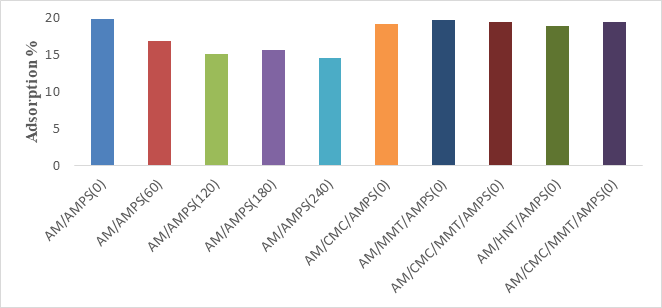
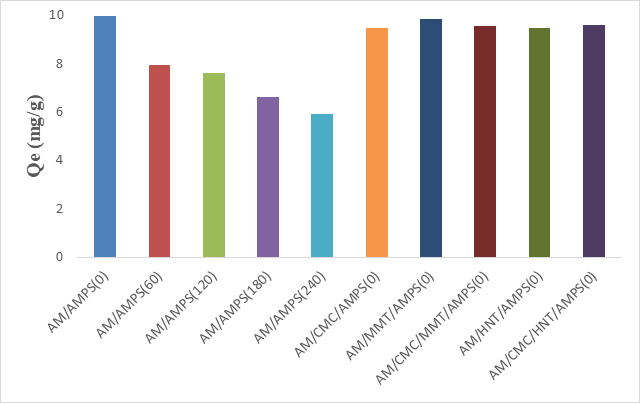
In Cu(NO3)2 solution used for Cu(II) remediation, AM/ AMPS (0/60/120/180/240), AM/CMC/AMPS(0), AM/ HNT/AMPS(0), AM/CMC/HNT/AMPS(0), AM/MMT/ AMPS(0), AM/CMC/MMT/AMPS(0) hydrogels were weighed on a precision balance and used. The hydrogels were kept in 300 mg/L 50 mL Cu(NO3)2 solution for 24 hours. There is HNO3 in the ready stock solution and the pH of the solution medium is ~1. The concentration of Cu(II) ions that were not adsorbed in the Cu(II) solution was measured at 301 nm in a UV-vis spectrophotometer. Adsorption % and Qe values are given in Figures 11,12. In the Cu(NO3)2 remediation study, it was found that the adsorption % decreased as the amount of AMPS increased in hydrogels containing AMPS, and the addition of clay or biopolymer had no significant effect. No significant difference was observed between hydrogels containing clay or biopolymer. The solution prepared from the ready stock solution at low pH causes the AMPS to be positively charged [59]. Atta et al. synthesized AM/AMPS hydrogels at different ratios and investigated the Cd(II) and Cu(II) ion retention behavior of these gels between pH=3-5.5 and Fe(III) ion between pH=1-3. They found that the adsorption capacity of the hydrogel increased with increasing pH. The amide groups of AM and SO3H groups of AMPS comonomer in the hydrogel structure are primarily responsible for thespecific binding of metal due to the coordination between metal ions and -CONH, -CONH2, and -SO3H groups [58]. At low pH, as the amount of AMPS increases, the positive charge also increases. Thus, the electrostatic interaction between AMPS-containing hydrogels and Cu(II) may decrease and the adsorption % may decrease. Hongjie et al. synthesized the APMS-silica gel adsorbent and found that the Cu(II) adsorption capacity increased when the pH was increased from 2 to 6 [59]. Kaşgöz, et al. synthesized AM/AMPS/MMT hydrogels containing different ratios of MMT (10, 30, 50%) and investigated the Cu(II) remidiation of these hydrogels in the pH=3-4.5 range. They found that Cu(II) adsorption in Cu(CH3COO)2 solution decreased with increasing clay content in the hydrogel [60]. Saraydin et al. synthesized AM/crotonic acid hydrogels containing crotonic acid at different ratios and investigated the retention behavior of these hydrogels for Hg(II), Cu(II), Cd(II) and Pb(II). Among these metals, the best adsorption was observed for Hg(II) while Cu(II) adsorption was low [61].
Conclusion
In this study, AM/AMPS (0/60/120/180/240), AM/ CMC/AMPS (0/60/120/180/240), AM/HNT/AMPS (0/60/120/180/240) containing different ratios of AMPS, AM/CMC/HNT/AMPS (0/60/120/180/240), AM/MMT/ AMPS(0), AM/CMC/MMT/AMPS(0) hydrogels were synthesized and spectroscopically characterized. Then, CuSO4.5H2O and Cu(NO3)2 solutions were used for Cu(II) remediation. Cu(II) remediation study was evaluated by UV- vis spectrophotometer. While in the Cu(NO3)2 adsorption study at pH~1, the adsorption % fell with increasing AMPS amount in AMPS-containing hydrogels, the adsorption percentage increased with increasing AMPS amount in CuSO4.5H2O hydrogels at pH=neutral. In the results obtained from the remediation of both solutions, it was observed that the addition of HNT and MMT clays and CMC biopolymer, or both, to the AM/AMPS hydrogel did not lead to a significant change.
The hydrogels used in this study can be used not only for Cu(II) remediation but also for remediation of other metals, paint, wastewater, pharmaceuticals, etc. and thus toxicology can be avoided. Hydrogels with different capacities can be developed with different biopolymer types, different clay types and their different ratios. We predict that such synthesized hydrogels and the current study will be a guide in fields such as biotechnology, pharmacology and toxicology.
Acknowledgments
This study was produced from Özmen Sökmen’s doctoral thesis, and we thank the Scientific Research Project Unit of Uşak University for their support with the project numbered 2017/TP018.
References
-
Adeeyo RO, Bello OS (2014) Use of composite sorbents for the removal of copper (II) ions from aqueous solution. Pak J Anal Environ Chem 15(2): 1-12.
-
Ahmad R, Kumar R, Haseeb S (2012) Adsorption of Cu2+ from aqueous solution onto iron oxide coated eggshell powder: Evaluation of equilibrium, isotherms, kinetics, and regeneration capacity. Arab J Chem 5(3): 353-359.
-
Akar ST, Akar T, Kaynak Z, Anilan B, Cabuk A, et al. (2009) Removal of copper(II) ions from synthetic solution and real wastewater by the combined action of dried Trametes versicolor cells and montmorillonite. Hydrometallurgy 97(1-2): 98-104.
-
Böck FC, Helfer GA, Costa AB, Dessuy M B, Ferrao MF (2022) Low cost method for copper determination in sugarcane spirits using Photometrix UVC® embedded in smartphone. Food Chem 367: 130669.
-
Seven T, Can B, Darende BN, Ocak S (2018) Heavy metals pollution in air and soil. National Environmental Science Research Journal 1(2): 91-103.
-
Sun S, Wang A (2006) Adsorption kinetics of Cu(II) ions using _N_,_O_-carboxymethyl-chitosan. J Hazard Mater 131(1-3): 103-111.
-
Güçlü G, Gürdağ G, Özgümüş S (2003) Competitive removal of heavy metal ions by cellulose graft copolymers. J Appl Polym Sci 90(8): 2034-2039.
-
Zhang XZ, Yang YY, Chung TS, Ma KX (2001) Preparation and characterization of fast response macroporous poly(N-isopropyl acrylamide) hydrogels. Langmuir 17(20): 6094-6099.
-
Hu Q, Xu X, Fu Y, Li Y (2015) Rapid methods for detecting acrylamide in thermally processed foods: A review. Food Control 56: 135-146.
-
Karagöz A (2009) Acrylamide and its presence in foods. TAF Prev Med Bull 8(2): 187-192.
-
Saikia AK, Aggarwal S, Mandal UK (2013) Preparation and controlled drug release characteristics of thermoresponsive PEG/Poly(NIPAM-co-AMPS) hydrogels. Int J Polym Mater 62(1): 39-44.
-
Nesic A, Panic V, Ostojic S, Micic D, Lijakovic IP, et al. (2016) Physical-chemical behavior of novel copolymers composed of methacrylic acid and 2-acrylamido-2- methylpropane sulfonic acid. Mater Chem Phys 174: 156-163.
-
Kundakci S, Üzüm ÖB, Karadağ E (2008) Swelling and dye sorption studies of acrylamide/2-acrylamido-2- methyl-1-propanesulfonicacid/bentonite highly swollen composite hydrogels. React Funct Polym 68(2): 458-473.
-
Lehto J, Vaaramaa K, Vesterınen E, Tenhu H (1998) Uptake of zinc, nickel, and chromium by n-ısopropyl acrylamide polymer gels. J Appl Polym Sci 68(3): 355- 362.
-
Dai J, Wei X, Cao Z, Zhou Z, Yu P, et al. (2014) Highly- controllable imprinted polymer nanoshell at the surface of magnetic halloysite nanotubes for selective recognition and rapid adsorption of tetracycline. RSC Adv 4(16): 7967-7978.
-
Bakr AS, Shafey HA, Arafa EI, Naggar AMA (2020) Synthesis and characterization of polymerized acrylamide coupled with acrylamido-2-methyl-1- propane sulfonic acid-montmorillonite structure as a novel nanocomposite for Cd (II) removal from aqueous solutions. J Chem Eng Data 65(8): 4079-4091.
-
Utracki LA (2004) Clay-containing polymeric nanocomposites. Rapra Technology Limited 1: 434.
-
Beyer G (2002) Nanocomposites: a new class of flame retardants for polymers. Plast addit compd 4(10): 22-28.
-
Zhang Y, Tang A, Yang H, Ouyang J (2016) Applications and interfaces of halloysite nanocomposites. Appl Clay Sci 119(1): 8-17.
-
Bertolino V, Cavallaro G, Lazzara G, Merli M, Milioto S, et al. (2016) Effect of the biopolymer charge and the nanoclay morphology on nanocomposite materials Ind Eng Chem Res 55(27): 7373-7380.
-
Liu M, Dai L, Shi H, Xiong S, Zhou C (2015) In vitro evaluation of alginate/ halloysite nanotube composite scaffolds for tissue engineering. Mater Sci Eng C 49: 700- 712.
-
Liu L, Wan Y, Xie Y, Zhai R, Zhang B, et al. (2012)The removal of dye from aqueous solution using alginate- halloysite nanotube beads. J Chem Eng 187: 210-216.
-
El Fadl FIA, El Mohdy HLA (2015) Removal of heavy metal ıons from aqueous solutions by radiation-ınduced chitosan/(acrylamidoglycolic acid-co-acrylic acid) magnetic nanopolymer. Polym Eng Sci 55(6): 1441-1449.
-
Arun KK, Vishalakshi B (2017) Pectin based ZnO nanocomposite hydrogel: evaluation as adsorbent for divalent metal ions from aqueous solutions. Elixir Nanotechnology 107: 47326-47331.
-
Nakhjiri MT, Marandi GB, Kurdtabar M (2018) Effect of bis[2-(methacryloyloxy)ethyl] phosphate as a crosslinker on poly(AAm-co-AMPS)/Na-MMT hydrogel nanocomposite as potential adsorbent for dyes: kinetic, isotherm and thermodynamic study. J Polym Res 25: 244.
-
Wang X, Chen Y, Zhang W, He W, Wang J, et al. (2016) Rapid adsorption of cobalt (II) by 3-aminopropyltriethoxysilane modified halloysite nanotubes. Korean J Chem Eng 33(12): 3504-3510.
-
Chiew CSC, Yeoh HK, Pasbakhsh P, Krishnaiah K, Poh PE, et al. (2016) Halloysite/alginate nanocomposite beads: Kinetics, equilibrium and mechanism for lead adsorption. Appl Clay Sci 119: 301-310.
-
Choo CK, Kong XY, Goh TL, Ngoh GC, Horri BA, et al. (2016) Chitosan/halloysite beads fabricated by ultrasonic- assistedextrusion-dripping and a case study application for copper ion removal. Carbohydr Polym 138: 16-26.
-
Chiew CSC, Yeoh HK, Pasbakhsh P, Poh PE, Tey BT, et al. (2016) Stability and reusability of alginate- based adsorbents for repetitive lead (II) removal. Polym Degrad Stab 123: 146-154.
-
Üzüm ÖB, Kundakcı S, Karadağ E (2007) Uranyl ion uptake from aqueous solutions by chemically crosslinked polyelectrolyte CAMA hydrogels. Polym Plast Technol Eng 46(8): 775-780.
-
Karadağ E, Üzüm ÖB, Kundakcı S, Saraydın D (2007) Polyelectrolyte CASA hydrogels for uptake of uranyl ions from aqueous solution. J Polym Sci 104(1): 200-204.
-
Yuan P, Tan D, Bergaya FA (2015) Properties and applications of halloysite nanotubes: recent research advances and future prospects. Appl Clay Sci 112-113: 75-93.
-
Sökmen O, Çankaya N, Azarkan SY (2023) Synthesis of Hydrogels Containing Halloysite and Investigation of Antiproliferative Activity. Advances in Clinical Toxicology 8(3): 1-10.
-
Çankaya N, Şahin R (2019) Chitosan/clay bionanocomposites: structural, antibacterial, thermal and swelling properties. Cellulose Chemistry and Technology 53(5-6): 537-549.
-
Karadağ E, Nalbantoğlu A, Kundakcı S, Üzüm ÖB (2014) Highly swollen polymer/clay composite sorbent-based AAm/AMPS hydrogels and semi-IPNs composed of carboxymethyl cellulose and montmorillonite and cross- linked by PEGDA. Polym Plast Technol Eng 53(1): 54-64.
-
Liu Y, Xie JJ, Zhang XY (2003) Synthesis and properties of the copolymer of acrylamide with 2-acrylamido-2- methylpropanesulfonic acid. J Appl Polym Sci 90(13): 3481-3487.
-
Varaprasad K, Vimala K, Ravindra S, Narayana RN, Raju KM (2011) Development of Sodium Carboxymethyl Cellulose-based Poly(acrylamide-co-2acrylamido-2- methyl-1-propane sulfonic acid) Hydrogels for In Vitro Drug Release Studies of Ranitidine Hydrochloride an Anti-ulcer Drug. Polym Plast Technol Eng, 50(12): 1199- 1207.
-
Kaya BS (2019) Amidoxime-polymer networks for copper (II) ion adsorption. Int J Interdiscip Multidiscip Stud 3(2): 151-156.
-
Sarakinou KM, Banti CN, Hatzidimitriou AG, Hadjikakou SK (2020) Utilization of metal complexes formed by copper(II) acetate or nitrate, for the urea assay. Inorganica Chim Acta 517: 120203.
-
Ekinci S, **İlter** Z (2021) Determination of the adsorption properties of alizarin yellow dye stuff from aqueous solution by nano adsorbent (MNPs-G1-Mu). Batman Univ Yaşam Bilim Derg 11(1): 27-41.
-
Ekinci S, **İlter** Z (2021) Investigation of the adsorption of Cr (III) ıons by MNPs-G1-Mu adsorbent prepared with ıron oxide nanoparticles modified with polyamidoamine dendrimer. Nevşehir bilim ve teknol derg, 10(2): 111- 123.
-
Kaşgöz H, Özgümüş S, Orbay M (2001) Preparation of modified polyacrylamide hydrogels and application in removal of Cu(II) ion. Polymer 42(18): 7497-7502.
-
Kaşgöz H, Durmuş A (2008) Dye removal by a novel hydrogel-clay nanocomposite with enhanced swelling properties. Polym Adv Technol 19(7): 838-845.
-
Ortaboy S, Acar ET, Atun G, Emik S, İyim TB, et al. (2013) Performance of acrylic monomer based terpolymer/ montmorillonite nanocomposite hydrogels for U(VI) removal from aqueous solutions. Chem Eng Res Des 91(4): 670-680.
-
Nakhjiri MT, Marandi GB, Kurdtabar M (2018) Effect of bis[2-(methacryloyloxy)ethyl] phosphate as a crosslinker on poly(AAm-co-AMPS)/Na-MMT hydrogel nanocomposite as potential adsorbent for dyes: kinetic, isotherm and thermodynamic study. J Polym Res 25(11): 244-263.
-
Maity J, Ray SK (2017) Removal of Cu (II) ion from water using sugar cane bagasse cellulose and gelatin based composite hydrogels .Int J Biol Macromol 97: 238-248.
-
Bakr ASA, Shafey HIA, Arafa EI, Naggar AMA (2020) Synthesis and characterization of polymerized acrylamide coupled with acrylamido-2-methyl-1- propane sulfonic acid-montmorillonite structure as a novel nanocomposite for Cd (II) removal from aqueous solutions. J Chem Eng Data 65(8): 4079-4091. **48. Çavuş S¸** Gürdağ G (2009) Noncompetitive removal of heavy metal ions from aqueous solutions by poly[2- (acrylamido)-2-methyl1propanesulfonic acid-_co_- itaconic acid] hydrogel. Ind Eng Chem Res 48(5): 2652- 2658.
-
Jalali MA, Koohi AD, Sheykhan M (2016) Experimental study of the removal of copper ions using hydrogels ofxanthan, 2-acrylamido-2-methyl-1-propane sulfonic acid, montmorillonite: Kinetic and equilibrium study. Carbohydr Polym 142: 124-132.
-
Kodoth AK, Badalamoole V (2020) Silver nanoparticle‑embedded pectin‑based hydrogel for adsorptive removal of dyes and metal ions. Polym Bull 77(2): 541-564.
-
Daşbaşı T, Saçmacı Ş, Çankaya N, Soykan C (2016) Synthesis, characterization and application of a new chelating resin for solid phase extraction, preconcentration and determination of trace metals in some dairy samples by flame atomic absorption spectrometry. Food Chem 211: 68-73.
-
Karadağ E, Nalbantoğlu A, Kundakcı S, **Üzüm** ÖB (2018) Uranyl ion sorption characteristics of novel polymer/ montmorillonite/carboxymethyl cellulose-composite biosorbent-based AAm/AMPS hydrogels and semi-IPNs. Adv Polym Technol 37(2): 575-585.
-
Kundakcı S, Üzüm ÖB, Karadağ E (2009) Behaviors of chemically crosslinked CAAMPS hydrogels in uptake of uranyl ıons from aqueous solutions. Polym Plast Technol Eng 48(1): 69-74.
-
Choo C K, Kong XY, Goh TL, Ngoh GC, Horri BA, et al. (2016) Chitosan/halloysite beads fabricated by ultrasonic-assisted extrusion-dripping and a case study application for copper ion removal. Carbohydr Polym 138: 16-26
-
Bulucu ED, Mashkoor SA (2022) Characterization of halloysite nanotube (HNT) reinforced polypropylene (PP) nanocomposites. JIST 38(3): 642-656.
-
Matusik J (2016) Halloysite for adsorption and pollution remediation. Dev Clay Sci 7: 606-627.
-
Mellouk S, Belhakem A, Khelifa KM, Schott J, Khelifa A (2011) Cu(II) adsorption by halloysites intercalated with sodium acetate. J Colloid Interface Sci 360(2): 716-724.
-
Atta AM, Ismail HS, Elsaaed AM (2012) Application of anionic acrylamide-based hydrogels in the removal of heavy metals from waste water. J Appl Polym Sci 123(4): 2500-2510.
-
Hongjie W, Jin K, Huijuan L, Jiuhui Q (2009) Preparation of organically functionalized silica gel as adsorbent for copper ion adsorption. Journal of Environmental Sciences 21(11): 1473-1479.
-
Kaşgöz H, Durmuş A, Kaşgöz A (2008) Enhanced swelling and adsorption properties of AAm-AMPSNa/clay hydrogel nanocomposites for heavy metal ion removal. Polym Adv Technol 19(3): 213-220.
-
Saraydın D, Yıldırım EŞ, Karadağ E, Güven O (2018) Radiation-Synthesized Acrylamide/Crotonic Acid Hydrogels for Selective Mercury (II) Ion Adsorption. Advances in Polymer Technology 37(3): 822-829.
- Evaluation of Skin Aging Preventive Effects of Cherry Blossom Petal Extracts Through Antioxidant and Anti-Glycation Activities
- Is Cell Death Responsible for False Positive Results of In Vivo Comet Assay?
- Pattern of Gonadal Hormones in Oral Testosterone-Supplimented Male Wistar Rats with Diabetes-Induced Hypogonadism
- Re-Evaluation of the Genotoxicity of Currently Used Food Dyes in Mouse Multiple Organs Via Continuous Administration by Drinking Using the Comet Assay
- Pharmacogenetics of Type 2 Diabetes Mellitus: Linking Genetic Variability to Drug Efficacy and its Cardiovascular Outcomes
- Exploratory Proteomic Profiling of SARS-CoV-2 Infected THP-1 Macrophages Reveals Alterations in Inflammatory Response and Cellular Metabolism