
Isoprene and its Overall Impacts: Review
A clean environment is a suitable medium for providing requirements that sustain the organisms living therein. Hence, it is a ‘natural-store house’ to receive and provide the metabolic needs of the biotic and abiotic systems. It also accomplishes the crucial geochemical cycles that maintain their appropriate balance. The metabolites may be quantitatively and qualitatively meagre but cause good and bad impacts. The organisms also contribute to these metabolites. The anthropogenic interference a prime causes of environmental disturbances and renders the environment unsuitable. Isoprene is one of the biogenic and abiogenic volatile organic compounds prominently present in the lower troposphere. Normally, this volatile compound interacts with ozone, hydroxyl and oxides of nitrogen and causes depletion of ozone. Trees that combat unfavorable fluctuations in environmental parameters like high winds, tornadoes, extreme temperature, drought (a complex impact), flood, wild fires, and deficiency of nutrition, experience the influence of isoprene. Mostly the developing countries encounter poor air quality that contains particulate matter, pollutants resulting in respiratory illness, cardiovascular and cancerous ailments. The presence of volatile organic components in human exhaled air indicates their metabolic or the ambient environmental origin. The endogenous organic volatile compounds present in human breath are the biomarkers for the pathophysiological conditions and are of clinical and biomedical significance, specifically during non-invasive estimations. Although, isoprene has attracted researchers but its pathophysiological impacts need more investigations, hence, this presentation to evaluate the effects of isoprene in biosphere.
Introduction
In atmosphere many non-methane biogenic volatile compounds (BVOC) emancipate and isoprene, (2-methyl-1,
3-butadiene) is the dominant one and around 90% is from terrestrial plant. This biogenic volatile compound influences the chemical aspects of atmosphere at least in the lower troposphere (nearer to earth). In a non-polluted atmosphere there are interactions between isoprene and ozone, hydroxyl and nitrogen oxide resulting in atmospheric depletion of ozone and hydroxyl radicals [1, 2]. In the polluted atmosphere having high nitrogen contents enhances the formation of ozone in troposphere; this affects human health and the yield of crops [2, 3]. Overall these atmospheric changes elevate the life time of atmospheric methane, efficacy of primary sink, and production of oxidation of hydroxyl radicals [4]. The secondary oxidation of isoprene forms particulate matter inducing haze, smog, and cloud condensation nuclei; this drastically affects the intensity of planetary (earth) albedo i.e., fraction of sun light diffusely reflected by earth. All these changes influence the climatology, astronomy and environmental management. Under normal conditions the earth’s albedo ranges within 30-35%. This albedo also depends on the cloud cover, type of the surface, geological and environmental parameters of the planet [3, 5]. In nature, isoprene is released mostly by plants like oaks, poplars, eucalyptus and leguminous plants. Even broad-leaf trees and shrubs also emit isoprene; the total isoprene emission is around 600 million tons [6]. This amount is approximately equals to the emission of methane and other hydrocarbons released in atmosphere. The deciduous forests, microscopic and macroscopic algae also add to the amount of isoprene emission [7]. Humans contribute is about 70% of the hydrocarbon exhaled and isoprene is one of the main endogenous of the human breath [8, 9, 10, 11, 12]. In one of the experiments conducted, showed 5-400 ppb of isoprene in the exhaled in human breath during exercise; the concentration is on higher side in case of older human. The concentration of isoprene declined in extended duration of exercise [12]. There are reports on isoprene showing no relation to the corresponding pathophysiological impacts or putative metabolic origin from mevalonate pathway. Thus, some of the researchers hesitate to use isoprene for interpretation and correlation with the clinical aspects [13].
Basic Mechanism of Synthesis of Isoprene
The enzymatic cleavage of dimethylallyl pyrophosphate (DMAPP) under the influence of enzyme isoprene synthase forms isoprene. The molecule of isopentenyl Pyrophosphate (IPP) structurally contains five carbon atoms and is a common precursor for all natural isoprenoids in classical mevalonate pathway. Isopentenyl pyrophosphate and dimethylallyl pyrophosphate (DMAPP) are the structural components of isoprenoids, also called terpenoids, in a biological system. These compounds also participate in the structural aspects of cholesterol and other steroids carotenoids, saponins and limonoids. There are two metabolic pathways for the formation of isopentenyl diphosphate and dimethylallyl pyrophosphate, namely ‘Mevalonate pathway and Non- mevalonate pathway. Mostly mevalonate pathway takes place in plants and non-mevalonate pathway in plant chloroplast, algae, cyanobacteria, eubacteria, and pathogens like Mycobacterium tuberculosis and malarial parasites [14, 15].
Basic Metabolic Mevalonate Pathway and its Significance
The mevalonate pathway is functionally key central metabolic pathway in case of advanced eukaryotic and prokaryotic cells (Figures 1 & 2). Isoprene is the product of cleavage of dimethylallyl pyrophosphate (DMAPP) under the influence of enzyme isoprene synthase. (Dimethylallyl pyrophosphate and isopentenyl diphosphate are metabolic products of Methyl-erythritol-4-phosphate pathway, (MEP Pathway). Basically, the methyl-erythritol 4-phospahte (MEP) pathway initiates by the condensation of pyruvate and D-glyceraldehyde-3-phoaphate to 1-deoxy-D- xylulose-5-phosphate. The two key isomers dimethylallyl pyrophosphate and isopentenyl diphosphate are the result of series of enzymatic interactions; it initiates with the change of 1-deoxy-D-xylose-5-phosphate into 2C-methyl- D-erythritol-4-phosphate. The enzymes involved in methyl- erythritol-4-phosphate pathway are of significance during the targeting of drugs to pathogens like malarial parasite and tuberculosis as this path way is of common occurrence in the organisms. The molecule of isopentenyl diphosphate (IPP) structurally contains five carbon atoms and is a common precursor for all natural isoprenoids in classical mevalonate pathway. Isopentenyl pyrophosphate and dimethylallyl pyrophosphate (DMAPP) are the structural components of isoprenoids, also called terpenoids, in a biological system. These also participate in the structural aspects of cholesterol and other steroids carotenoids, saponins and limonoids. There are the two metabolic pathways responsible for the formation of isopentenyl diphosphate and dimethylallyl pyrophosphate, namely ‘Mevalonate pathway and Non- mevalonate pathway. When isopentenyl pyrophosphate and dimethylallyl pyrophosphate undergo condensation it synthesizes isoprenoids in a given biosystem. The isoprenoids thus formed, further participate in the formation of cyclic terpenoids, protein prenylation and protein anchoring. Feedback system involving low-density lipoprotein receptors and the enzymes regulate this complete complex process. The mevalonate pathway is helpful in biomedically investigations related to the selected types of cancer and cardiac disorders; it also facilitates the therapeutic drug target regulating process. Mostly mevalonate pathway occurs in plants and non-mevalonate pathway in plant chloroplast, algae, cyanobacteria, eubacteria, and pathogens like Mycobacterium tuberculosis and malarial parasites [16, 17, 18].
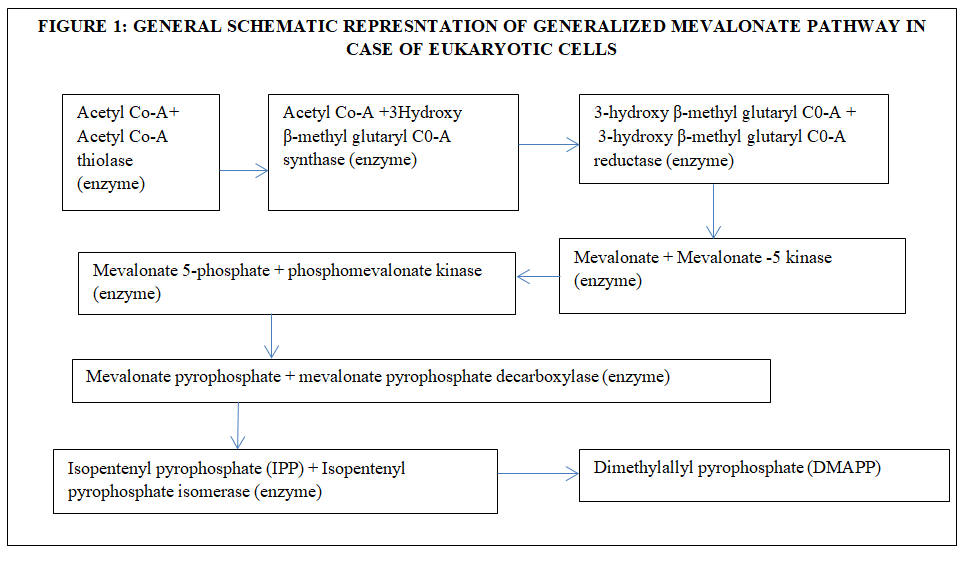
Figure1: General Schematic Representation of Generalized Mevalonate Pathway in Case of Eukaryotic Cells.
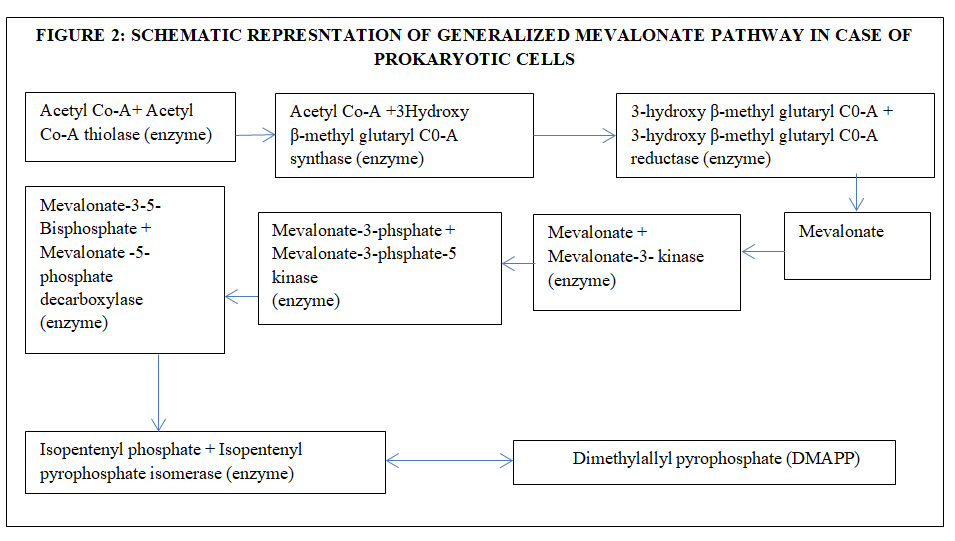
The mevalonate pathway (MAV pathway) and methyl- erythritol-pathway (MEV pathway) exhibit orthogonal nature in a biosystem, thus, each of these do not result in any derogative side effects and act as molecular links between different molecules; the molecules formed are precisely regulated because of the ‘well defined interfaces’. As a result there is no side negative interaction in a biosystem [19].
Investigations relating mevalonate pathway and methyl- erythritol-pathway both can help to target organisms that cause malarial, sexually transmitted diseases, tuberculosis, peptic ulcer, and food safety threats. The ‘fosmidomycin’ compound is effective in the preventive treatment of malaria caused due to Plasmodium falciparum. The inhibitors of methyl-erythritol-pathway are the probable guide line for the development of effective pharmaceuticals [19]. The intermediates of methyl-erythritol-pathway activate gamma delta T-cells; those T-cells that have gamma delta T-cell receptors (one gamma chain and other delta chain) [19, 20].
Physicochemical Properties of Isoprene (Computed Properties)
The molecular formula and structure formula are as follow:
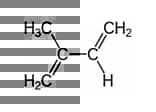
[Molecular formula: C5H8 (CH2=C(CH3) CH=CH2)] Structure formula Mol. Weight: 68.12 g/mol; Hydrogen bond acceptor count: 0; Rotatable bond count: 1; Exact mass: 68.062600255 g/ mol; Monoisotopic mass: 68.062600255 g/mol; Topological polar surface area: 0Å2; Heavy Atom count: 5; Formal charge: 0; Complexity: 51.1; Isotope atom count: 0; Defined Atom Stereocenter count: 0; Undefined atom Stereocenter count: 0; Defined Bind Stereocenter count: 0: Undefined bond Stereocenter count: 0; Covalently-bonded unit count: 1: Compound is canonicalized: yes:
Common physicochemical properties of isoprene; It is colorless liquid with mild aromatic odor; it can be seen as solid or very volatile colorless liquid with characteristic odor, It is hazardous substance with petrol like odor with boiling point 34.067ºC and melting point -145.95ºC. It is practically insoluble in water (642 mg/L at 25ºC. It is miscible in organic solvents like ethanol, ethyl ether, acetone and benzene. Its density is 0.679 g/cu cm at 20ºC; relative density (water=1): 0.7; vapour density 2.35 (air=1); vapour pressure: 550.0 mmHg. It is stable under recommended conditions: common stabilizers are 4-tert-butylpyrocatechol. On heating it decomposes and emits acrid smoke and fumes. Its viscosity is 0.3mm2/s at 20-25ºC. It has refractive index is 1.42160 at 20ºC.
Basic Behavior of Isoprene
The isoprene is among the important non-methane organic compounds primarily affecting atmospheric oxygen, ozone, and organic aerosols. Mostly, isoprene is evaluated using satellite based technique and an indirect approach. The indirect approach involves its oxidation compound formaldehyde formation. The source of non-isoprene, use formaldehyde formed as a result of the oxidation; the relationship of spatial fluctuation in the molecule of isoprene affects this process. To counter act the ‘Direct global isoprene’ evaluation mode is preferred; this process gives relatively more clear idea about the source, sink and the impacts due to atmospheric parameters. The completely physics retrieval technique the satellite-borne Cross-link Infrared Sounder appears to be very suitable to detect the spectral signature of isoprene in space, and depending on the observations a specific recovering algorithms should be developed using statistical and/or machine learning process such as the Royal Netherlands Meteorological Institute called The Dutch-OMI-NO2algorithm Satellite Aerosol Retrieval algorithm. In biology, system thinking is recent concept and is having contrasting views. This phenomena can be visualized by thinking ‘backward’ and ‘forward’ in between two specific biological entities and processes; the system should represent theoretical characteristics of the two [21, 22, 23].
Isoprenene and Isoprenoids
There are two carbon-carbon double bonds in a molecule of isoprene having molecular formula: C5H8 (CH2=C(CH3) CH=CH2). It is hemiterpene and volatile organic compound. It is a monomer present in natural rubber and acts as structural motif for isoprenoids. Metabolically, it plays significant functional role in plants. Isoprenoids have two to thousands of isoprene units in their molecules. There are one or more functional groups like hydroxyl and carbonyl in the carbon back bone of the isoprenoids. Isoprenoids exist in diversified forms [24]. Isoprenoids are a class of natural products with applications in many fields, including medicine and agriculture. Biosynthesis of isoprenoids has emerged as the most commercially viable option for their mass production. The isoprenoids are the products of an enzymatic pathway uses isoprenol as its substrate instead of a glucose-derived catabolite, making it radically different from naturally occurring pathways or their engineered variants. The pathway is only two steps long and uses a single cofactor, ATP. Isoprenoids decouple from central carbon metabolism and can sustain a very high flux. These advantages make it a noteworthy alternative to known isoprenoid pathways [24].
Isopentenol utilization pathway is an effective mode of natural and biological production of isoprenoid in large scale and its biological synthesis is apparently and inextricably associated with glucose metabolism. The complex regulation, duration of this process, and need of many cofactors are the parameters that limit this metabolic pathway. The ‘isopentenol utilization pathway’ produces isopentenyl diphosphate or dimethylallyl diphosphate. The isopentenol isomers isoprenol or prenol after sequential phosphorylation form isopentenyl diphosphate or dimethylallyl diphosphate. Thus isopentenol utilization pathway is useful to form many isoprenoids under controlled flux of this pathway [25].
Biological Influence of Isoprene
Trees that combat unfavorable fluctuations in environmental parameters experience the influence of isoprene. These environmental parameters like high winds, tornadoes, extreme temperature (cold and hot, around 40ºC range), drought (a complex impact), flood, wild fires, [abiotic stress parameters], and deficiency of nutrition induce isoprene pathway in these trees. Even the moderate degree of abiotic stress induces the mechanism of isoprene. Edaphic factors like pH range, high radiation, compaction, contamination, rapid rehydration and germination period also induces isoprene phenomenon [7, 9, 26]. Isoprene helps to combat such wide fluctuations in trees with large leaves. Isoprene also facilitates the stability of cell membrane during heat stress. The proportion of release of isoprene relates with mass, temperature and area of leaf and particular ‘photosynthetic photon flux density’ (PPFD). Nocturnal foliage (leaves) release of isoprene is very less while diurnal release during sunny day is up to 25µg/gram dry leaf weight/hour in most of the species of oak. Isoprene resists reactive oxygen species [27]. Isoprene synthesis protects transgenic tobacco plants from oxidative stress [28]. Miller, et al. described the active role of isoprene during homeostatic signalling process when a plant is under rough salinity stresses [29].
Isoprene in other Individuals
Humans produce about 17mg/day [8, 30]. Among humans isoprene is exhaled as a main hydrocarbon in the breath of humans and it ranges between 15 and 70 nmol/ litter and 37nmol/litre as its mean value. Its presence is also reported among vertebrates like rat, dog, ewe and cow. Its value in the blood of other animals is mostly lower than 1nmol/L [31, 32]. Some species of Actinomycetota or Actinobacteria use isoprene as fuel source for their energy requirements [26].
Basic Mode of Isoprene Regulation
The mechanism of regulation of isoprene is basically relates to the substrate – DIMETHYL-ALLYL PYRO- PHOSPHATE (DMAPP) and the enzyme called isoprene synthase. Parameters like CO2, O2, and light (photoperiod) influence the regulation of isoprene. The effect of parameter temperature depends on substrate and enzyme concentration in the biosystem.
Pathophysiological Aspects of Isoprene in Relation to Humans and Animals
The exhaled human breath consists of volatile inorganic organic compounds; most gaseous constituents are nitrogen (78.04%), oxygen (16%), carbon-di-oxide (4-5%), inert gases (0.9%) and water vapours; in addition to these gases other gaseous components are nitric oxide (10-50ppb), nitrous oxide (1-2ppb), ammonia (0.5-2 ppm), carbon monoxide (0-6ppm), hydrogen sulfide (0-1.3 ppm). The organic volatile compounds are also present in the exhaled human breath, namely, acetone (0.3-1ppm), ethanol and isoprene (~105ppb), ethane (0-10ppb), methane (2- 10ppm), pentene (0.10ppb) [33, 34]. The presence of volatile organic components in human exhaled air indicates that these are the products of metabolic activities occurring within human body or might have been entered from the ambient environment. The endogenous organic volatile compounds present in human breath are the biomarkers for the pathophysiological conditions and are of clinical and biomedical significance, specifically during non- invasive estimations. The concentration of isoprene varies with respect to age and gender; its concentration is very low in children in comparison to the adults. The amount of isoprene elevates at puberty and reports suggest higher concentration of isoprene in male as compared to female (adult) [34, 35, 36]. Endogenous breath isoprene in human is a metabolic outcome of biochemical pathway but its existence in human breath quite elusive but at the same time it appears to be of clinical significance. Isoprene in breath is one of the abundant endogenous volatile organic compounds and its presence reflects on many clinical health conditions and may act as non-invasive biomarker [13].
The monitoring of breath isoprene is a non-invasive potential biomarker for efficacy of low-lipid therapy, pharmacological procedures, dietary guide-lines and life style in an individual. The cancer screening is another application of investigating human breath isoprene [37]. The amount of isoprene in the breath of lung cancer patients relates with the degree of immune activation and lipid metabolism. The concentration values of isoprene in the breath samples of lung cancer patients on comparison with the values of concentration of immune activation marker neopterin, lipid parameters (routine enzymology) and C-reactive protein (CRP) and isoprene value are of medium range. There exists a correlation between isoprene concentration and total cholesterol and LDL cholesterol but no significant correlation with HDL cholesterol, triglycerides and C-reactive protein (CRP). An inverse correlation between the concentrations of isoprene and neopterin has been observed. The neopterin concentration also relates with total cholesterol, HDL and LDL cholesterol and C-reactive protein (CRP) but not with triglycerides. Thus, isoprene amount is in coordination with the degree of immune activation and changes in lipid metabolism [13, 38].
The isoprene investigations relate with cholesterol levels or rate of synthesis of cholesterol. The rate of production of isoprene dependent on age, diet, exercise, sex, and related investigations provide feasible estimation. There is a correlation between heart rate and exercise; isoprene concentration elevates during initial state of rapid exercise and attains normal steady state as the breath rate and exercise stabilizes. In man, heart rate varies in standing, reclining and sleep positions and so is the rate of breath isoprene. A drug atorvastatin treatment reduces the levels of cholesterol and low density lipoproteins and also the level of isoprene. This aspect reflects on the breath isoprene as a non-invasive biomarker for cholestrogenesis under careful supervision [39].
Whenever there is an increase in the vascular resistance the chances of chronic heart failure also elevate. This elevated vascular resistance also exerted load on left ventricle that lead to progression of myocardial failure, multiple organ failure and death in human. Increased oxidative stress is another parameter playing role in heart failure and affecting peripheral vascular endothelium [40]. The parameters like elevated sympathetic action, release of catecholamines and activation of renin-angiotensin system, vasopressin, endothelium-1 and neuropeptide-Y for the functional aspect of neurogenic and humoral processes influence derogative cardiac issues. These also result in conditions like vasoconstriction, accumulation of fluid and remodelling left ventricle. Physiological conditions in which the antioxidants declines and plasma lipid peroxide levels elevate that lead to heart failure. The free radicals damage the polyunsaturated fatty acids and disturb the free fatty acids. Isoprene is one of the final products of lipid hydroperoxide interaction and is present in the exhaled air (breath) [33, 41]. The isoprene level is quite low in the case of patients with heart failure as compared to the control individuals [0.66 nmol lˉ1 and 1.12 nmol l−1 respectively]. The rate for formation of isoprene is also declines significantly [83.3 (23.2) vs. 168 (19.8) pmol min−1 kg−1 respectively] [33, 40, 41, 42]. The isoprene is also identified as n-pentane in case of humans; possibly isoprene and n-pentane separate during investigation using mass spectrometry. One more reason is that the peek obtained for n-pentane responses like isoprene or as a mixture of n-pentane and isoprene during the estimation using gas chromatographic technique [41].
Isoprene and Cancer
Isoprene, 1, 3-Butadiene and chloroprene come under carcinogenic compounds [43]. Isoprene is a member of group 2B, this group of compound includes probable carcinogens. The available reports are based on the multiple carcinogenic effects on rats and mice of isoprene. Mostly the reports available are the combined impacts of isoprene 1, 3-butadiene and chloroprene. There is a need to explore deeper into the carcinogenicity of this organic volatile compound. Possibly, the isoprene (endogenous) targets T- cell that have gamma delta T-cell receptors (One gamma chain and other delta chain) and influence the derogative impact [20, 21]. Although I.3-butadiene and isoprene are chemically similar, isoprene is the 2-methyl analog of 1, 3-butadiene and both exhibit different levels of toxicities. Mostly, the level of toxicity of isoprene is very less. In a study in which a comparative relative toxicity and inflammatory gene expression due to 1.3-butadiene and isoprene are evaluated in the presence of nitric oxide involving gas chromatography and mass spectrometry techniques and A549-cell. [A549 cells are the adenocarcinogenic human alveolar basal squamous epithelial cells; these act as a cell line for testing the carcinogenicity of a compound for lung cancer]. 1. 3-butadiene forms acrolein, acetaldehyde, and formaldehyde as photochemical degradation products while isoprene are methacrolein, methyl vinyl ketone, and formaldehyde with range <200ppb of ozone. The levels of cytotoxicity and gene expression for interleukin (IL-8) act as biomarkers for inflammation with the air control. The products formed during photochemical interaction elevate the levels of cytotoxicity and aggravate the expression of gene expression for interleukin (IL-8) resulting in increased inflammation. These observations reflect on the higher ability of these products of photochemical degradation to affect the health in general; these also behave as proinflammatory agents along with 1.3-butadiene and isoprene [44]. There is a dire need of more investigatory studies based on isoprene in the direction of its probable carcinogenic tendency. This is more so in case of the individuals engaged in rubber industry as assumingly they are exposed to isoprene formed as a result of disintegration of butadiene and styrene. The breath analysis appears to most suitable noninvasive mode of investigations related to isoprene. The mode of elevation of isoprene level is ambiguous and its endogenic and metabolic origin appears to be obscure in exhaled breath. It is possible that isoprene may be produced during biosynthesis of cholesterol [45]. It is understandable that glucose has potential to influence the level of isoprene because of the carbohydrate response element-binding proteins [46]. The pulmonary isoprene increases during hypoglycemia, tachycardia and elevated flow of blood and in all probabilities there is either no or least fluctuation in the contents of individual volatile organic compounds or there may be presence of clusters of volatile organic compounds. This may not be so in case of hypoglycemic condition [47]. This observation reflects on the suitability of determination of isoprene or volatile organic compounds as noninvasive mode of investigations related to fluctuation in blood glucose in diabetic individuals and hypoglycemia [48].
Patients suffering from cystic fibrosis exhibit the mixed symptoms reflecting chronic systemic oxidative stress and free radical formation in their lungs. These systemic symptoms are the result of hyperimmune response, defective ability to scavenge the free radicals, malabsorption and elevated rate of consumption show presence of isoprene in their breath. The high concentration of parameters, like malondialdehyde (MDA), erythrocyte membrane polyunsaturated fatty acids, protein sulphydryls and protein carbonyl indicate oxydative stress. After antibiotic treatment, the rate of isoprene formation declines significantly as compared to the control samples [13, 40]. Based on the single end-expiratory breath samples, the analysis of isoprene in the case of patients with acute myocardial infarction and stable angina and the corresponding control group (age, sex, smoking habits, hypertension, and serum cholesterol level matched) had higher isoprene level in the acute myocardial infarction as compared to those with stable angina. The mechanism of rise in the level isoprene is ambiguous [13, 49].
Breath isoprene investigation is helpful to monitor blood cholesterol levels and rate of synthesis of cholesterol. The isoprene level changes with respect to age, state of exercise, position, and diet. On-line determination of breath isoprene detection is done using proton transfer reaction-mass spectrometry technique. The values of breath isoprene elevate as the heart rate increases after exercise and attains stability as the breath rate stabilizes. Atorvastatin treatment lowers the levels of serum cholesterol and low density lipoprotein and the level of isoprene also declines correspondingly. There are indications regarding the endogenous production of isoprene during the day and night, it shows that isoprene can be a possible biomarker for the cholestrogenesis and heart rate [13, 50].
Volatile organic compounds like isoprene, acetone, pentane, present in human breath are possible a non-invasive investigative biomarkers that reflect on the metabolic and pathophysiological state of an individual. Such studies are favorable to keep a check on the physiological state during heart surgery with extracorporeal circulation. The study of breath biomarker profiles illustrate the physiological conditions like oxidative and metabolic stress in an individual and helps to avoid poor outcome and probable organ damage during the surgical processes. The concentrations of such volatile organic compounds attain normal state post-surgery about two hours. The exhaled breath isoprene elevated after sternotomy and extracorporeal circulation. (Extracorporeal circulation is used during cardiac surgery in which blood circulation and respiration gets replaced and temperature also gets regulated).
Isoprene level attains normal or previous concentration after half an hour of the process. The isoprene concentration shows correlation with cardiac output [13, 51].
The breath hydrocarbons are the potential non-invasive biomarkers for metabolic status in an individual. There are ample evidences of production of endogenous isoprene during extrahepatic metabolism. This is evident during investigations related to muscular exercise and in patients with Duchenne muscle dystrophy and concentration of isoprene varied from 0.09 to 0.72nmol/l in peripheral blood (venous blood). But direct physiological mechanism appears to be obscure [52].
The mevalonate kinase enzyme along with other enzymes play significant role in the cholesterol metabolism and in biosynthesis of non-sterol isoprene and its deficiency causes mevalonic acidurea, an inheritance deficiency. This metabolic mechanism affects functioning of skeletal and other organs. The ubiquinone, a coenzyme Q-10, causes abnormalities in mitochondrial energy metabolism. There are many manifestations like failure to thrive, microcephaly, dysmorphic features, and neurological deficiencies like cerebellar atrophy, ataxia, and progressive myopathy in the suffering individuals.
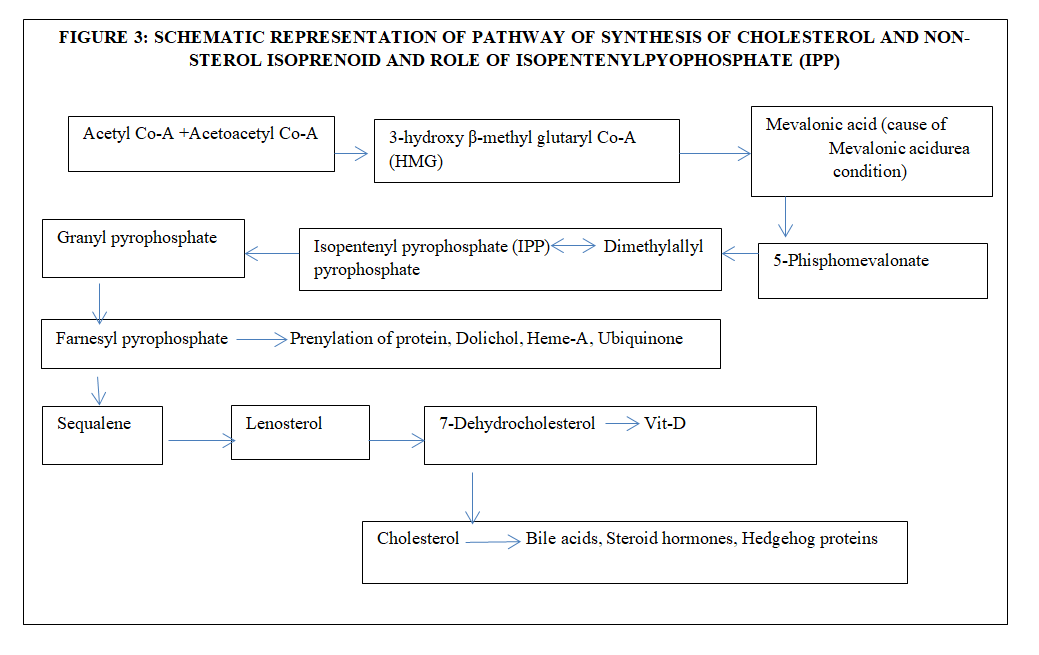
Individuals experience febrile episode, a condition in which seizure related with a high temperature without having any serious health issues, exhibit elevated levels of erythrocyte sedimentation rate, count of blood leukocyte, serum C-reactive protein levels, IgD and IgA-1 and urinary leukotriene excretion [13, 53]. Dolichols behave as carriers during the formation of carbohydrate chains involved in glycoproteins, ubiquinone (coenzyme Q-10) that helps in the electron transport, isopentenylated transfer RNA (needed for protein synthesis) and prenylated proteins. The prenylated proteins bring about the transduction of intracellular signals. The process of isprenylation of proteins plays major role during the functioning of proteins of cell that regulate the cellular growth and cell cycle [13, 53]. [Isprenylation, also known prenylation and lipidation, is a process in which hydrophobic molecules are linked to either protein or suitable biomolecule that bring about the attachment with cell member; the prenyl groups (3-methylbut-2-en-1-y) help the process of attachment with cell membrane, [54]. The cholesterol metabolism involves mevalonate and mevalonic acid (Figure 3). Mevalonic acid is a product of interaction between acetyl Co-A and Acetoacetyl Co-A, involving 3-hydroxy β-methyl glutaryl Co-A. Mevalonic acid metabolizes into isopentenyl pyrophosphate (IPP), it isomerates as dimethylallyl pyrophosphate (DMAPP). Isopentenyl pyrophosphate interacts with t-RNA and forms isopentenyl t-RNA. Isopentenyl pyrophosphate ultimately metabolizes into 7-dehydrochoelaterol and finally cholesterol is formed. The 7-dehydrocholesterol also helps in the formation of Vit-D and the final product cholesterol play significant role in the synthesis of bile acids, steroid hormones and Hedgehog proteins (Figure 3) [13, 53].
Isoprene and Environment
The space around our earth constitutes environment on biosphere and is very essential functional component of biotic and abiotic systems. The physicochemical features of this environment along with its components and the effects of solar radiations are the resultant product of interactions of biotic and abiotic components. The emission of isoprene and 1-3-butadiene varies from place to place, day and night durations, anthropogenic and biogenic conditions, temperature, season, and during heat wave. Generally, Cobb-Douglass production function is used for the isoprene estimation; (this is a widely adopted to show the technical relationship between two or more inputs) [55].
There are urban stressors that induce long term effects on vegetation and biomass [56]. Although, isoprene in very less concentration has a potential to affects the air quality of the specific region and is a topic of research interest and for national and international regulatory environmental agencies.
The parameters like ambient concentration of CO2 and duration of light available for photosynthesis, influence the emission of isoprene. Plants which have not been watered for four days and with 98% declined photosynthesis and 94% reduced leaf conduction exhibit normal level of isoprene emission. Plants having saturated CO2 concentration show significant level of isoprene emission. It is evident that isoprene is one of the usual plant metabolites and may not be considered as a response to restricted CO2 in the ambient atmosphere. The emission of isoprene is primarily due to plants in the tropospheric region [57]. The parameters like photosynthesis, leaf-gas exchange, and physiological aspects like chloroplast-P, exchange, stomatal conductance, and photorespiration may not influence the isoprene emission drastically but in all probabilities the chloroplast metabolism plays a significant role in the emission of isoprene. The enzyme isoprene synthase (a chloroplastic enzyme) is concerned with the conversion of dimethylallyl diphosphate (DMADP) and results in the formation of isoprene. The balance between inorganic phosphate and adenylate within chloroplast and the temperature affect the effectiveness of isoprene synthase enzyme. The status of photosynthetic electron transport system, stomatal diffusive flux rate, surface of leaf and stomatal conductance are the probable parameters that affect isoprene emission. The intracellular concentration of isoprene due to the closing and opening of stomata and rate of photosynthesis do not affect emission of isoprene [58].
Isoprene exhibits higher reactive capacity in addition to its ability to form ozone; these features of isoprene plays an effective functional role in the formation of ozone. Isoprene emission maximises at noon/midday specifically during summer days with high temperature and solar radiations; the suitable photochemical conditions and higher concentration of OH (hydroxyl radicals) also favour interaction between isoprene and ozone. During maximum rush hours of traffic during morning and evening and low concentration of OH and very weak solar radiation can also induce this interaction [59]. The biogenic volatile organic compounds, specifically isoprene boost the concentration of ozone in urban atmosphere. As the vehicular emission reduces anthropogenic isoprene and other volatile organic compounds also decline, then the biogenic emission appears to be prominently active. There is a difference in the annual concentration of isoprene and average diurnal concentration of isoprene that facilitates the interaction between isoprene and OH in summer and winter seasons. This indicates the role of isoprene emission that participates in atmospheric chemistry [59, 60].
Volatile Organic Compounds, Isoprene and Nanomaterials
Volatile organic compounds are known for their toxic and carcinogenic nature specifically trichloroethylene and vinyl chloride. The volatile organic compounds are present out-door and indoor air and these play significant role in the formation of atmospheric particulate matter of different sizes; these directly or indirectly derogate the air quality. Nanomaterials play very effective role in mitigating the environmental volatile organic compounds and secondary organic aerosols. The efficacy of these nanomaterials relates with their physicochemical features like porosity, size, electrostatic interaction, surface functionality and chemical composition and the techniques like adsorption, photocatalysis, and catalysis. The biogenic and anthropogenic volatile organic compounds and secondary organic aerosol show coexistence and also complicated interactions specifically, photooxidation. There have been investigations to mitigate volatile organic acids using nanomaterials like carbon nanomaterial, metallic and metal oxide nanomaterials, polymer nanocomposites. One of the most common processes is adsorption of volatile organic compounds from aquatic and areal media. Some of the catalysts in nanoforms using nanometals are in use to mitigate the volatile organic compounds (Table 1). The mixtures of the catalyst used are the products of various methods such as reduction, impregnation, flame spray pyrolysis, deposition or precipitation [71, 72, 73, 74, 75, 76, 77, 78].
Suitably functionalized nanomaterials are one of the preferred agents for mitigation or removal of volatile organic compounds. Mesoporous organosilica nanomaterials (size approximately 400nm diameter, surface area 977m2 /g, pore volume 0.92 cm3/g) act as an agents to mitigate hexanal and butyric acid vapours up to 99% of volatile organic compounds present in the given test samples [79].
| CATALYSTS WITH NANOMETAL | CONCENTRATION | VOLATILE ORGANIC COMPOUND | REFERENCE | |
|---|---|---|---|---|
| CATALYSTS WITH NANOMETAL | VOLATILE ORGANIC COMPOUND | REFERENCE | (ppm) | |
| 1 | Pt/SiO2 | 1000 | TOLUENE | 73 |
| 2 | Pt/TiO2 | 22 | FORMALDEHYDE | 74 |
| 3 | Pd/TiO2 | 10 | FORMALDEHYDE | 75 |
| 4 | Au/TiO2 | 1000 | PROPENE | 76 |
| 5 | Ag/TiO2 | 110 | FORMALDEHYDE | 77 |
| 6 | Ag/CeO2/SiO2 | 18,000 -22,000 | FORMALDEHYDE | 78 |
| 7 | Pt/SiO2 | 1000 | Benzene | 79 |
Table 1: Catalysts Containg Nanaomateals (Amalgamation) for Mitigation of Volatile Organic Compounds [71].
Volatile Organic compounds like benzene, toluene, ethylbenzene and xylene (BTEX) are among the most common industrial solvents and are released as untreated waste after use, hence, result in pollution. Such harmful pollutants can be remediated using adsorption on multiwalled carbon nanotubes functionalized. This technique involves catalytic vapour deposition and oxidation with the help of sodium hypochloride and as result these nanomaterials become suitable to adsorb such volatile organic solvents from aquatic medium [80]. These functionalized multiwalled carbon nanotubes have affinity for xylene, ethylbenzene, toluene and benzene respectively in decreasing order [80]. The adsorption process involves interactions based on π-π electron donor acceptor mechanism that plays significant role along with carboxylic oxygen atoms of multiwalled carbon nanotubes and the aromatic rings of these volatile organic compounds [81]. Multiwalled carbon nanotubes are preferred agent to remove chlorobenzenes and other volatile organic compounds using solid-phase extraction as sorbents or C18 silica [82]. Organic-inorganic hydrophobic mesoporous silica when functionalized involving condensation mode with tetraethoxysilane and vinyltriethoxysilane in acidic medium acts as an effective adsorptive agent for p-xylene (85.2%) in comparison to pure silica (56.2%) [83, 84]. The high-performance graphene based elastomer composites are other options to scan human breath for isoprene and related compounds. In such composites the interfacial interaction is a significant parameter that empowers their efficacy. The graphene/poly (styrene-b-isoprene-b-styrene composite is one such example and it is the product of evaporation- induced self-assembly process. These composites should be characterized using techniques such as scanning electron microscopy, UV-vis absorption spectra, tensile testing, Shore-A hardness (one of the scales to establish the level of resistance to deformation or indentation), surface resistance, thermal conductivity and thermogravimetric analysis. These techniques establish their microstructure and other functional properties. There is involvement of interfacial interactions of π-π stacking with phenyl groups of graphene/ poly (styrene-b-isoprene-b-styrene) and graphene; these interactions regulate the degree of functionality. The polymer composites that incorporate nanofillers like fullerene, carbon nanotubes, nanodiamonds, and silicates in layer form are some of the most preferred composites for the researchers [85]. Isoprene detector using nanomaterials are very suitable for detecting around 149 test breath samples. In these devices a chemoresistive, formulations using nanomaterials enhance their efficacy to detect ppb concentrations of the gaseous analytes; mass spectrometry technique is suitable to validate these values. These devices are able to investigate breath isoprene dynamics even during physical exercise and at resting conditions [86]. Detection of isoprene in breath sample has become a noninvasive mode of monitoring the breath in normal and pathophysiological conditions. Since the analytes are in very small quantity (60-1250 ppb) there is a need for very sensitive and portable corresponding monitoring device. Nanomaterials have become handy in such cases. The nanomaterials based devices consist of a sorption filter incorporating activated alumina; it eliminates hydrophilic volatiles before the test sample approaches micro-gas-sensor. This micro-gas-sensor has chemoresistive silica-doped tungsten trioxide (WO3) nanoparticles that quantify the analyte i.e., isoprene in test sample up to ppb level. Its efficacy during monitoring the breath samples while an individual in exercising or at rest enhances involving breath isoprene dynamics in linear correlation to proton transfer reaction mass spectrometry dimensions; (in these conditions Pearson’s coefficient is to be taken as 0.89) (Table 2). Thus, this isoprene monitor is suitable for online investigation of physical activities. In this device the high and variable concentrations of other volatile components like acetone, ethanol and methanol do not interfere with the estimation of isoprene [86].
| Name of the nanomaterials used in sensor | References | |
|---|---|---|
| 1 | Ti-doped ZnO | 88 |
| 2 | TiO2 | 89 |
| 3 | h-WO3 | 90 |
| 4 | ZnO quantum dots | 91 |
| 5 | Flowers In2O3 (Indium oxide) | 92 |
| 6 | Au loaded pyramid shaped ZnO | 93 |
| 7 | In2O3 nanoparticles | 94 |
Table 2: Applications of Nanomaterials in the Semiconducting Metal Oxide Gas Sensor Having Higher Sensitivity Uptom Parts Per Bil
Conclusion
The anthropogenic interference is one of the prime causes of environmental disturbances and renders the environment unsuitable. The isoprene is non-methane compound emitted into atmosphere; it relates with ozone, formation of aerosol, atmospheric oxidation and influences the nitrogen cycle globally. The emission of isoprene is not fixed and it fluctuates. The interaction between hydroxyl ions (OH) and isoprene help to maintain a sort of balance of isoprene in an atmosphere in a given region. The space around our earth constitutes environment of the biosphere and is very essential functional component of biotic and abiotic systems. The physicochemical features of this environment along with its components and the effects of solar radiations are the resultant product of the interactions of biotic and abiotic components [87, 88, 89]. The emission of isoprene and 1-3-butadiene varies from place to place, day and night duration, anthropogenic and biogenic conditions, temperature, season, and during heat wave. Trees that combat unfavorable fluctuations in environmental parameters experience the influence of isoprene. The endogenously and exogenously formed isoprene should be distinguished in the test samples [90, 91, 92, 93]. The electrochemical sensors are suitable potential tools for detection of physiopathological conditions like asthma, diabetes, traces of acetone, ethanol, volatile organic compounds and secondary organic compounds and other breath related physiological ailments. An effort must be made to elevate the sensitivity level of the nanomaterial based breath detector. Such devices should be easy to operate, portable, non-specific and provide reproducible and stable observations and nanomaterials like carbon nanotubes are suitable [94]. These devices should be able to nullify the interference of parameters like humidity and temperature with an ability to integrate with internet or software technology. The endogenous organic volatile compounds present in human breath are the biomarkers for the pathophysiological conditions [95, 96] and are of clinical and biomedical significance, specifically during non-invasive estimations. The related investigations will provide better insight and applications in the biomedical field.
Funding: No funding was used for this presentation.
Conflicts of Interest: The author declares no conflict of interest.
References
-
Guenther A, Hewitt CN, Erickson D, Fall R, Geron C, et al. (1995) Global-model of natural volatile organic- compound emissions. Journal of Geophysics Research Atmosphere 100(D5): 8873-8892.
-
Guenther AB, Jiang X, Heald CL, Sakulyanontvittaya T, Duhl T, et al. (2012) The Model of Emissions of Gases and Aerosols from Nature version 2.1 (MEGAN2.1): an extended and updated framework for modeling biogenic emissions, Geoscientific Model Development 5(6): 1471- 1492.
-
Larke-Mejía NL, Crombie AT, Pratscher J, McGenity TJ, Murrell JC (2019) Novel Isoprene-Degrading Proteobacteria from Soil and Leaves Identified by Cultivation and Metagenomics Analysis of Stable Isotope Probing Experiments. Frontiers of Microbiology 10: 2700.
-
Conte L, Szopa S, Aumont O, Gros V and Bopp L (2020) Sources and sinks of isoprene in the global open ocean: Simulated patterns and emissions to the atmosphere. Journal of Geophysical Research: Oceans 125: e2019JC015946.
-
Folberth GA, Hauglustaine DA, Lathière J, Brocheton F (2006) Interactive chemistry in the laboratoire de météorologie dynamique general circulation model: model description and impact analysis of biogenic hydrocarbons on tropospheric chemistry, Atmospheric Chemistry and Physics 6: 2273-2319.
-
Carlton AG, Wiedinmyer C, Kroll JH (2009) A review of secondary organic aerosol (SOA) formation from isoprene, Atmospheric Chemistry and Physics 9(14): 4987-5005.
-
Guenther A, Karl T, Harley P, Wiedinmyer C, Palmer PI, et al. (2006) Estimates of global terrestrial isoprene emission using ‘Model of emission of gasses and aerosols from nature’, Atmosphere Chemistry and Physics 6(11): 3181-3210.
-
Johnston A, Crombie AT, El-Khawand M, Sims L, Whited GM, et all. (2017) Identification and characterization of isoprene-degrading bacteria in an estuarine environment, Environmental Microbiology 19(9): 3526- 3537.
-
Gelmont D, Stein RA, Mead JF (1981) Isoprene: the main hydrocarbon in human breath, Biochemical and Biophysical Research Communications 99(4): 1456- 1460.
-
NTP (2016) Report on Carcinogens. In: 14th (Edn.), Isoprene (78-79-5), Research Triangle Park, NC: US Department of Health Human Services, Public Health Services.
-
Turner C, Spanel P, Smith D (2006) A longitudinal study of ammonia, acetone and propanol in the exhaled breath of 30 subjects using selected ion flow tube mass spectrometry, SIFT- MS, Physiological Measurements 27(4): 13-22.
-
Senthilmohan ST, Milligan DB, McEwan MJ, Freeman CG, Wilson PF (2000) Quantitative analysis of trace gases of breath during exercise using the new SIFT–MS technique, Redox Report 5(2-3): 151-153.
-
Cailleux A, Marc Cogny M, Allain P (1992) Blood isoprene concentrations in humans and in some animal species, Biochemical Medicine and Metabolic Biology 47(2): 157-160.
-
Sukul P, Richter A, Schubert JK, Miekisch W (2021) Deficiency and absence of endogenous isoprene in adults, disqualified its putative origin. Heliyon 7(1): e05922.
-
Goldstein JL, Brown SB (1990) Regulation of the mevalonate pathway. Nature 343(6257): 425-430.
-
Holstein SA, Hohl RJ (2004) Isoprenoids: Remarkable Diversity of Form and Function. Lipids 39(4): 293-309.
-
Buhaescu I, Izzedine H (2007) Mevalonate pathway: view of clinical and therapeutical implications. Clinical Biochemistry 40(9-10): 575-584.
-
Miziorko H (2011) Enzymes of the mevalonate pathway of isoprenoid biosynthesis, Arch Biochemistry and Biophysics 505(2): 131-143.
-
Dellas N, Thomas ST, Manning G, Noel JP (2013) Discovery of a metabolic alternative to the classical mevalonate pathway. eLife 2” e00672.
-
Testa CA. Brown MJ (2003) The methyl-erythritol phosphate pathway and its significance as a novel drug target. Current Pharmaceutical Biotechnology 4(4): 248- 259.
-
Holtmeier W, Kabelitz D (2005) Gamma-delta T cells link innate and adaptive immune responses, Chemical Immunology and Allergy 86: 151-183.
-
Boersma KT, Warrio AJ, Klaasen K (2011) Feasibility of system thinking in Biology education. Journal of Biological Education 45(4): 190-197.
-
Fu D, Millet DB, Wells KC, Payne VH, Yu S, et al. (2019) Direct retrieval of isoprene from satellite-based infrared measurements, Nature Communications 10: 3811.
-
Chatzivasileiou AO, Ward V, Edgar SM, Stephanopoulos G (2018) Two steps pathway for isoprenoid synthesis. PANAS 116(2): 506-511.
-
Murrell JC, McGenity TJ, Crombie AT (2020) Microbial metabolism of isoprene: a much- neglected climate- active gas. Microbiology (Reading) 166(7): 600-613.
-
Sharkey TD, Wiberley AE, Donohue AR (2008) Isoprene emission from plants: why and How, Annals of Botany 101(1): 5-18.
-
Vickers CE, Possell M, Cojocariu CI, Velikova VB, Laothawornkitkul J, et al. (2009) Isoprene synthesis protects transgenic tobacco plants from oxydative stress, Plant cell and Environment 32(5): 520-531.
-
Benjamin MT, Sudol M, Bloch L, Winer AM (1996) Low- emitting urban forests: A taxonomic methodology for assigning isoprene and monoterpene emission rates. Plant cell and Environment 32(5): 520-531.
-
Miller G, Suzuki N, Ciftci-Yilmaz S, Mittler R. (2010) Reactive oxygen species homeostasis and signalling during drought and salinity stresses. Plant Cell Environ 33(4): 453-467.
-
King J, Koc H, Unterkofler K, Mochalski P, Kupferthaler A, et al. (2010) Physiological modeling of isoprene dynamics in exhaled breath. Journal of Theoretical Biology 267(4): 626-637.
-
Cailleux A, Cogny M, Allain P (1992) Blood isoprene concentrations in humans and in some animal species, Biochemical Medicine and Metabolic Biology 42(2): 157-160.
-
Bajtarevic A, Ager C, Pienz M, Klieber M, Schwrz K, et al. (2009) Noninvasive detection of lung cancer by analysis of exhaled breath. BMC Cancer 9(1): 1-16.
-
Das S, Pal M (2020) Review- non-invasive monitoring of human health by exhaled breath analysis breath- comparative review. Journal of Electrochemical Society 163(3): o37562.
-
Taucher J, Hansel A, Jordan A, Fall R, Futrell JH, et al. (1997) Detection of isoprene inexpired air from human subjects using proton-transfer-reaction mass spectrometry, Rapid Communication in Mass Spectrometry 11(11): 1230-1234.
-
Lechner M, Moser B, Niederseer D, Karlseder A, Holzknecht B, et al. (2006) Gender and age specific differences in exhaled isoprene levels, Journal of Respiration Physiology and Neurobiology 154(3): 478- 483.
-
Smith D, Španěl P, Enderby B, Lenney W, Turner C, et al. (2010) Isoprene levels in the exhaled breath of 200 healthy pupils within the age range 7–18 years studied using SIFT- MS, Journal of Breath Research 4(1): 017101.
-
Salerno-Kennedy R, Cashman KD, (2005) Potential applications of breath isoprene as a biomarker in modern medicine: a concise overview, Wiener Klinische Wochenschrift 117(5-6): 180-186.
-
Fuchs D, Jamnig H, Heininger P, Klieber M, Schroecksnade S, et al. (2012) Decline of exhaled isoprene in lung cancer patients correlates with immune activation. Journal of Breath Research 6(2): 027101.
-
Kushch I, Arendacká B, Stolc S, Mochalski P, Filipiak W, et al. (2008) Breath isoprene--aspects of normal physiology related to age, gender and cholesterol profile as determined in a proton transfer reaction mass spectrometry study. Clinical Chemistry and Laboratory Medicine 46(7): 1011-1018.
-
McGrath LT, Patrick R, Mallon P, Dowey L, Silke B, et al. (2000) Breath isoprene during acute respiratory exacerbation in cystic fibrosis, The European Respiratory Journal 16(6): 1065-1069.
-
Kohlmuller D, Kochen (1993) Is n-pentene really an index of lipid peroxidation in humans and animals? A methodological revelation, Analytical Biochemistry 210(2): 268-276.
-
Hillbard F, Killard AJ (2011) Breath analysis: Clinical application and measurement, Critical Reviews in Analytical Chemistry 41(1): 21-25.
-
(1998) IARC Monographs Programme on the evaluation of carcinogenic risks to humans, most recently in February 71.
-
Doyle M, Sexton KG, Jeffries H, Bridge K, Jaspers I (2004) Effects of 1,3-butadiene, isoprene, and their photochemical degradation products on human lung cells, Environ Health Perspect 112(15): 1488-1495.
-
Stone BG, Besse TJ, Duane WC, Evans CD, DeMaster EG (1993) Effect of regulating cholesterol biosynthesis on breath isoprene excretion in men. Lipids 28: 705-708.
-
Lizuka K, Bruick RK, Liang G, Horton JD, Uyeda K (2004) Deficiency of carbohydrate response element-binding protein (ChREBP) reduces lipogenesis as well as glycolysis, Proceedings of National Academy of Science, USA. 101(19): 7281-7286.
-
Minh TDC, Stacy R, Oliver SR, Ngo J, Flores R, et al. (2011) Noninvasive measurement of plasma glucose from exhaled breath in healthy and type 1 diabetic subjects, American Journal of Physiology Endocrinology and Metabolism 300(6): E1166-E1175.
-
Neupane S, Peverall R, Richmond G, Blaikie TPJ, Taylor D, et al. (2016) Exhaled breath isoprene rises during hypoglycaemia in Type 1 Diabetes, Diabetes Care 39(7): e97-e98.
-
Mendis S, Sobotka PA, Euler DE (1994) Expired hydrocarbons in patients with acute Myocardial infarction, Free Radical Research 23(2): 117-122.
-
Karl T, Prazeller P, Mayr D, Jordan A, Rieder J, et al. (2001) Human breath isoprene and its relation to blood cholesterol levels: new measurements and modelling. Journal of Applied Physiology 91(2): 762-770.
-
Pabst F, Miekisch W, Fuchs P, Kischkel S, Schubert JK (2007) Monitoring of oxidative and metabolic stress during cardiac surgery by means of breath biomarkers: an observational study. Journal of Cardiothoracic Surgery 18(2): 37.
-
King J, Mochalski P, Unterkofler K, Teschl G, Klieber M, et al. (2012) Breath isoprene: Muscle dystrophy patients support the concept of a pool of isoprene in the periphery of the human body. Biochemical and Biophysical Research Communications 423(3): 526-530.
-
Haas D, Hoffmann GF (2007) Mevalonate kinase deficiency and autoinflammatory disorders, New England Journal of Medicine 356(26): 2671-2673.
-
Casey PJ, Seabra MC (1996) Protein prenyltransferases. Journal of Biological Chemistry 271(10): 5289-5292.
-
Dana H, Jaromír H (2006) The case of a converging economy. Czech Journal of Economics and finance 57(9- 10): 465-476.
-
Khan M, Anwar H, Schlich BL, Jenkin ME, Shallcross BMA, et al. (2018) A Two-decade anthropogenic and biogenic isoprene emissions study in a London Urban background and a London Urban traffic site. Atmosphere 9(10): 387.
-
Tingey DT, Evans R, Gumpertz M (1981) Effects of environmental conditions on isoprene emission from live oak. Planta 152: 565–570.
-
Sharkey TD, Monson RK (2017) Isoprene research-60 years later, the biology is still Enigmatic. Plant Cell Environment 40(9): 1671-1678.
-
Wagner P, Kuttler W (2014) Biogenic and anthropogenic isoprene in the near-surface urban atmosphere-A case study in Essen, Germany. Science of Total Environment 475(2014): 104-115.
-
von-Schneidemesser E, Monks PS, Gros V, Gauduin J, Sanchez O (2011) How importan is biogenic isoprene in an urban environment? A study in London and Paris. Geophysical Research Letters 38(19): 7
-
Laurent O, Hu JL, Li LF, Cockburn M, Escobedo L, et al. (2014) Sources and contents of air pollution affecting term low birth weight in Los Angeles County, California, 2001–2008. Environmental Research 134: 488-495.
-
Ostro B, Hu J, Goldberg D, Reynolds P, Hertz A, et al. (2015) Associations of mortality with long term exposures to fine and ultrafine particles, species and sources: Results from the California teachers study cohort. Environmental Health Perspectives. 123(6): 549-556.
-
Bryant DJ, Dixon WJ, Hopkins JR, Dunmore RE, Pereira KL, et al. (2020) Strong anthropogenic control of secondary organic aerosol formation from isoprene in Beijing. Atmospheric Chemistry and Physics 20(12): 7531-7552.
-
Surratta JD, Chana AWH , Eddingsaasa NC , Chanb M , Lozaa CL , et al. (2010) Reactive intermediates revealed in secondary organic aerosol formation from isoprene. PANS 107(15): 6640-6645.
-
Cerully KM, Bougiatioti A, Guo H, Xu L, Ng NL, et al. (2015) On the link between hygroscopicity, volatility, and oxidation state of ambient water-soluble aerosols in the south eastern United States. Atmospheric Chemistry and Physics 15: 8679-8694.
-
Xu L, Guo H, Boyd CM, Ng NL (2014) Effects of anthropogenic emissions on aerosol formation from isoprene and monoterpenes in the south-eastern United States. PANS 112(1): 37-42.
-
Li K, Zhang X, Zhao B, Bloss WJ, Lin C, et al. (2022) Suppression of anthropogenic secondary organic aerosol formation by isoprene. npj Climate and Atmospheric Science 5(12).
-
Wells KC, Millet DB, Payne VH, Deventer MJ, Bates KH, et al. (2020) Satellite isoprene retrievals constrain emissions and atmospheric Oxidation. Nature 585: 225- 233.
-
Kashyap P, Kumar A, Kumar RP, Kumar K (2019) Biogenic and anthropogenic isoprene Emissions in the subtropical urban atmosphere of Delhi. Atmospheric Pollution Research 10(5): 1691-1698.
-
Cheng Y, Ma Y, Hu D (2021) Tracer-based source apportioning of atmospheric organic carbon and the influence of anthropogenic emissions on secondary organic aerosol formation in Hong Kong. Atmospheric Chemistry and Physics 21: 10589-10608.
-
David E, Niculescu VC (2021) Volatile Organic Compounds (VOCs) as environmental pollutants: occurrence and mitigation using nanomaterials. International Journal of Environmental Research Public Health 18(24): 13147.
-
Chen C, Chen F, Zhang L, Pan S, Bian C, et al. (2015) Importance of platinum particle size for complete oxidation of toluene over Pt/ZSM-5 catalysts. Chemical Communications 51(27): 5936-5938.
-
Zhang C, Li Y, Wang Y, He H (2014) Sodium-Promoted Pd/ TiO2 for Catalytic oxidation of formaldehyde at ambient temperature. Environmental Science and Technology 48(10): 5816–5822.
-
Huang H, Leung DYC (2011) Complete Oxidation of Formaldehyde at Room Temperature Using TiO2 Supported Metallic Pd Nanoparticles. ACS Catalysts 1(4): 348-354.
-
Ousmane M, Liotta LF, Pantaleo G, Venezia AM, Di Carlo G, et al. (2011) Supported Au catalysts for propene total oxidation: Study of support morphology and gold particle size effects. Catalysis Today 176(1): 7-13.
-
Zhang J, Li Y, Zhang Y, Chen M, Wang L, et al. (2015) Effect of Support on the activity of Ag-based Catalysts for formaldehyde Oxidation. Scientific Reports 5: 12950.
-
Kharlamova T, Mamontov G, Salaev M, Zaikovskii V, Popova G, et al. (2013) Silica-sup-ported silver catalysts modified by cerium/manganese oxides for total oxidation of formaldehyde. Applied Catalysis A- General 467: 519-529
-
Liu G, Yang K, Li J, Tang W, Xu J, et al. (2014) Surface diffusion of Pt Clusters in/on SiO2 Matrix at elevated temperatures and their improved catalytic activitie in Benzene oxidation. Journal of Physical Chemistry C 118(39): 22719-22729.
-
Attia MF, Swasy MI, Ateia M, Alexis F, Whitehead DC (2019) Periodic mesoporous organosilica nanomaterials for rapid capture of VOCs. Chemical Communications 56(4): 607-610.
-
Lu C, Su F, Hu S (2008) Surface modification of carbon nanotubes for enhancing BTEX adsorption from aqueous solutions. Applied Surface Science 254(21): 7035-7041.
-
Su F, Lu C, Hu S (2010) Adsorption of benzene, toluene, ethylbenzene and p-xylene by NaOCl-oxidized carbon nanotubes. Colloids Surfaces A: Physicochemical and Engineering Aspects 353(1): 83-91.
-
Su L, Patton EG, Vilà-Guerau de Arellano J, Guenther AB, Kaser L, et al. (2016) Understanding isoprene photooxidation using observations and modeling over a subtropical forest in the south-eastern US, Atmospheric Chemistry and Physics 16: 7725-7741.
-
Li X, Yuan J, Du J, Sui H, He L (2020) Functionalized Ordered Mesoporous Silica by Vinyltriethoxysilane for the Removal of Volatile Organic Compounds through Adsorption/Desorption Process. Industrial and Engineering Chemistry Research 59(8): 3511-3520.
-
Li J, Liu H, Deng Y, Liu G, Chen Y, Yang J (2016) Emerging nanostructured materials for the catalytic removal of volatile organic compounds, Nanotechnology Reviews 5(1): 147-181.
-
Han X, Kong H, Chen T, Gao J, Zhao Y, et al. (2021) Effect of π–π Stacking interfacial interaction on the properties of graphene/poly (styrene-b-isoprene-b-styrene) composites. Nanomaterials 11(9): 2158.
-
Broek JVD, Mochalski P, Königstein K, Ting WC, Unterkofler K, et al. (2022) Selective monitoring of breath isoprene by a portable detector during exercise and at rest**.** Sensors and actuators-B. Chemical 357: 131444.
-
Güntner AT, Pineau NJ, Chie D, Krumeich F, Pratsinis SE (2016) Selective sensing of isoprene by Ti-doped ZnO for breath diagnostics. Journal of Material Chemistry B 4(32): 5358-5366.
-
Teleki A, Pratsinis SE, Kalyanasundaram K, Gouma PI (2006) Sensing of organic vapors by flame-made TiO2 nanoparticles. Sensors and Actuators B Chemistry 119(2): 683-690.
-
Gouma PI, Wang L, Simon SR, Stanacevic M (2017) Novel isoprene sensor for a Flu virus breath monitor. Sensors (Basel) 17(1): 199.
-
Park Y, Yoo R, Park S, Lee LH, Jung H, et al. (2019) Highly sensitive and selective isoprene sensing performance of ZnO quantum dots for a breath analyser. Sensors and Actuators B Chemistry 290: 258-266.
-
Han B, Wang J, Yang W, Chen X, Wang H, et al. (2020) Hydrothermal synthesis of flower-like In2O3 as a chemiresistive isoprene sensor for breath analysis. Sensors and Actuators B Chemistry 309: 127788.
-
Saito N, Haneda H, Watanabe K, Shimanoe K, Sakaguchi I (2021) Highly sensitive isoprene gas sensor using Au-loaded pyramid-shaped ZnO particles. Sensors and Actuators B Chemistry 326: 128999.
-
Zheng Q, Lee JH, Kim S-J, Lee H-S, Lee W (2021) Excellent isoprene-sensing performance of In2O3 nanoparticles for breath analyzer applications. Sensors and Actuators B Chemistry 327: 128892.
-
Liu G, Wang J, Zhu Y, Zhang X (2004) Application of Multiwalled Carbon Nanotubes as a Solid-Phase Extraction Sorbent for Chlorobenzenes . Analytical Letters 37(14): 3085-3104.
-
McGrath LT, Patrick R, Bernard S (2001) Breath isoprene in patients with heart failure. European Journal of Heart Failure 3(4): 423-427.
-
Williams J, Stönner C, Wicker J, Krauter N, Derstroff B, et al. (2016) Cinema audiences’ reproducibility vary the chemical composition of air during films, by broadcasting scene specific emission on breath. Scientific Reports 6: 25464.
- Evaluation of Skin Aging Preventive Effects of Cherry Blossom Petal Extracts Through Antioxidant and Anti-Glycation Activities
- Is Cell Death Responsible for False Positive Results of In Vivo Comet Assay?
- Pattern of Gonadal Hormones in Oral Testosterone-Supplimented Male Wistar Rats with Diabetes-Induced Hypogonadism
- Re-Evaluation of the Genotoxicity of Currently Used Food Dyes in Mouse Multiple Organs Via Continuous Administration by Drinking Using the Comet Assay
- Pharmacogenetics of Type 2 Diabetes Mellitus: Linking Genetic Variability to Drug Efficacy and its Cardiovascular Outcomes
- Exploratory Proteomic Profiling of SARS-CoV-2 Infected THP-1 Macrophages Reveals Alterations in Inflammatory Response and Cellular Metabolism