
Comparative Evaluation of Antioxidant Activity in Extracts and Fractions from Leaves and Stem of Geophila obvallata (Schumach.) Didr
Background: Oxidative stress, a condition characterized by an imbalance between reactive oxygen species (ROS) and antioxidant defences, is increasingly implicated in various human diseases. Medicinal plants with potent antioxidant properties hold promise for therapeutic interventions against oxidative stress-related pathologies. This study aimed to comparatively evaluate the antioxidant potential of leaf and stem extracts and fractions derived from Geophila obvallata. Methods: Methanolic extracts of G. obvallata leaves and stems were subjected to solvent partitioning to obtain fractions based on polarity. Total phenolic content (TPC) and total flavonoid content (TFC) were determined. The antioxidant capacities of the extracts and fractions were assessed using established assays, including hydroxyl radical scavenging (HRSA) and ABTS+ cation radical scavenging. Results: The highest concentrations of phenolics (86.35 and 79.72 mg/g tissue gallic acid equivalents – GAE) and flavonoids (67.56 and 64.92 mg/g tissue quercetin equivalents – QE) were observed in the leaf and stem methanol extracts, respectively. Remarkably, the antioxidant activity of both leaf and stem methanol fractions surpassed that of the standard controls (ascorbic acid, α-tocopherol, and trolox). The antioxidant capacity exhibited a decreasing trend across the various extracts and fractions, following the order: methanol > 1-butanol > chloroform > benzene > ethyl acetate > n-hexane > aqueous. These findings suggest superior free radical scavenging abilities in the leaf extracts and fractions compared to the controls.Conclusion: This investigation unveils the significant antioxidant potential of G. obvallata leaf extracts, highlighting their potential efficacy in combating diseases associated with oxidative stress. These findings warrant further exploration to elucidate the underlying mechanisms of action and validate their therapeutic potential in vivo models.
Introduction
The growing interest in natural therapies has spurred resurgence in the investigation of medicinal plants with bioactive potential Chaachouay, et al. These plants offer several advantages over synthetic pharmaceuticals, including high stability, diverse chemical composition, low toxicity, and a wide range of physiological applications [1]. Oxidative stress, a condition characterized by excessive free radical activity, is implicated in various human diseases such as cancer, hypertension, neurodegeneration, and the aging process [2]. In vitro assays have revealed the presence of potent antioxidants in many plants, particularly flavonoids, phenolics, alkaloids, and other bioactive compounds with broad biological functions [3]. These antioxidants have the potential to mitigate disease risk by scavenging free radicals.
Geophila obvallata (Schumach.) Didr. (Rubiaceae) is an under-explored, perennial rainforest herb native to tropical regions. Known for its creeping stems and long roots, it possesses a range of traditional medicinal uses in West Africa [4, 5]. Locals in Nigeria employ the leaves and stems of G. obvallata in various culinary preparations and therapeutic applications, including treating sores from guinea worm infections, diarrhea, infertility, and cardiovascular ailments [4, 6]. Previous studies have confirmed the presence of phytochemicals in G. obvallata leaves [4]. Additionally, research has established the plant’s safety profile through acute and sub-acute toxicity evaluations in rats [7]. Furthermore, investigations have revealed G. obvallata’s antimicrobial, anticholinesterase, antinephrotoxic, and renoprotective properties [8, 9, 10, 11].
While previous research has demonstrated the antioxidant activity of G. obvallata leaves Iserhienrhien LO, et al. [4], a comprehensive comparison of various fractions and their relative potencies has not been undertaken. Existing studies have solely compared methanol and aqueous extracts using free radical scavenging assays, neglecting other potential sources of antioxidants within the plant [4].
Given the limited knowledge regarding the most potent antioxidant-rich parts (leaves vs. stems), fractions, and specific constituents within G. obvallata, this present study aims to address this gap by comparatively evaluating the antioxidant activities of extracts and fractions derived from both the leaves and stems of this intriguing medicinal plant.
Methods and Materials
Plant Material Collection and Authentication
Fresh leaves and stems of Geophila obvallata were collected from the Gelegele forest. Professor H.E. Akinigboso, a taxonomist within the Department of Life Sciences at the University of Benin, verified and identified the plant material. A voucher specimen (UBHa 0312) was deposited for future reference.
Plant Material Preparation and Extraction
Under aseptic conditions, the leaves and stems were manually separated, thoroughly cleaned, and air-dried for a period of one month. Following desiccation, the plant materials were pulverized using a suitable grinding apparatus, weighed, and stored in labeled containers.
A Soxhlet extraction method, employing 70% methanol (1:10 w/v) as the solvent, was used to extract bioactive components from 300 grams each of the pulverized leaf and stem samples [12]. The extraction process involved homogenization and continuous agitation over five days. The resulting homogenate was filtered using Whatman No. 1 filter paper, and the collected crude methanol extract was concentrated by evaporation at 40°C [13].
Portions of the evaporated extracts from each plant material were subsequently dissolved in water and subjected to consecutive fractionation using solvents of increasing polarity, including n-hexane, benzene, ethyl acetate, chloroform, and 1-butanol. The remaining residue was then condensed under pressure to create a standard solution containing the combined fractions. All extracts and fractions were stored at 4°C until further analysis.
Qualitative Phytochemical Screening
Established methods Guleria S, et al. [14, 15] were employed to screen various fractions and extracts derived from the leaves and stems of Geophila obvallata for the presence of key secondary metabolites, including alkaloids, saponins, flavonoids, phenolics, tannins, steroids, and cardiac glycosides.
Quantification of TPC and TFC
Total Phenolic Content (TPC) and Total Flavonoid Content (TFC) Determination
The total phenolic content (TPC) of the extracts and fractions was determined using the Folin-Ciocalteu method [16]. Results were expressed as gallic acid equivalents per
100 grams of tissue. Total flavonoid content (TFC) was measured using colorimetric methods Jia ZS, et al. [17] and expressed as quercetin equivalents per 100 grams of tissue. Both assays utilized a UV-vis spectrophotometer (Biopac Systems, UK) to measure the absorbance of the blue-colored samples.
DPPH Radical Scavenging Activity
The free radical scavenging capacity of the stem and leaf fractions against the stable radical DPPH (2,2-diphenyl-1- picrylhydrazyl) was assessed using the method described by Brand-Williams, et al. [18]. Following a 30-minute incubation period, the absorbance was measured at 516 nm. The percentage inhibition of DPPH radical was calculated and expressed as IC50 values, which represent the concentration of the extract or fraction required to scavenge 50% of the DPPH radical.
Ferric Reducing Antioxidant Power (FRAP) Assay
The ferric reducing power of the extracts and fractions was evaluated using the Benzie and Strain method [19]. This assay measures the ability of the sample to reduce ferric ions (Fe³⁺) to ferrous ions (Fe²⁺). The results were expressed as milligrams of ascorbic acid equivalent (AAE) per milliliter.
Nitric Oxide (NO) Scavenging Assay
The capacity of the extracts and fractions to scavenge nitric oxide (NO) was determined using the method established by Sreejayan, et al. [20]. Sodium nitroprusside in phosphate buffer (pH 7.4) was added to the samples, and the percentage inhibition of NO was calculated as IC50 values. Ascorbic acid was employed as a positive control.
Hydroxyl Radical Scavenging Activity
The hydroxyl radical scavenging activity of the extracts and fractions was measured using the method of Leelavinothan P, et al. [21]. Similar to the DPPH and NO assays, the percentage inhibition was determined and expressed as IC50 values. α-Tocopherol served as the positive control in this assay.
ABTS Cation Radical (ABTS+•) Scavenging Activity
The ABTS+
- scavenging capacity was assessed using the method reported by Re, et al. [22]. The ABTS+
- radical cation was generated by reacting ABTS solution with sodium persulfate and kept in the dark for 30 minutes. The percentage inhibition of ABTS+
- was calculated as IC50 values, with Trolox used as a positive reference compound.
Statistical Analysis
Analysis of variance (ANOVA) was employed to evaluate statistical significance among the different fractionation solvents used in the experiments. For groups exhibiting statistically significant differences, Fisher’s pairwise comparison (FPC) test was performed using Minitab software to determine the homogeneity of means. All data are presented as mean ± standard error of the mean (SEM) from triplicate determinations.
- Results and Discussion
- Output (g/100 g dry wt. residue)
- Extract/Fraction
- Leaf
- Stem
- Aqueous
- 0.36
- 0.23
- Benzene
- 4.2
- 1.5
- Butanol
- 9.28
- 4.2
- Chloroform
- 4.56
- 2.3
- Ethyl
- 3.11
- 3.4
- Hexane
- 2.15
- 2.7
- Methanol
- 15.9
- 6.08
Table 1: Leaf and stem output of Geophila obvallata extracts
Extraction Yields
The leaf material consistently yielded higher extractable material compared to the stem material across all solvent fractions. The methanol extract displayed the most significant difference, with a yield of 15.90 g per 100 g dry weight of leaves compared to 6.08 g per 100 g dry weight of stems. Similar trends were observed for the butanol (leaf: 9.28 g/100 g dry weight; stem: not reported), chloroform (leaf: 4.56 g/100 g dry weight; stem: not reported), benzene (leaf: 4.20 g/100 g dry weight; stem: not reported), and aqueous fractions (leaf: 0.36 g/100 g dry weight; stem: not reported). These findings are consistent with previous research by Zhang, et al. [23], who reported higher yields from leaf extracts compared to stem fractions following ethanol extraction.
| C H 6 14 | Benzene | CH COOC H 3 2 5 | Chloroform | C H OH 4 10 | Methanol | H O 2 | |||||||||
|---|---|---|---|---|---|---|---|---|---|---|---|---|---|---|---|
| Phytochem. | Methods | S | L | S | L | S | L | S | L | S | L | S | L | S | L |
| Alkaloids | Kraut’s method | - | - | - | + | + | ++ | + | + | - | - | - | ++ | - | - |
| Saponins | Foam method | - | - | - | - | - | + | - | - | - | + | + | ++ | - | + |
| Flavonoids | CH COOPb method 3 | - | + | - | + | + | ++ | - | + | + | + | + | +++ | + | + |
| Phenols | FeCl method 3 | + | + | + | + | - | + | + | - | + | ++ | + | +++ | - | + |
| Tannins | Gelatin method | - | - | - | - | + | - | - | + | + | + | + | + | + | +++ |
| Steroids | Salkowski method | - | + | - | + | - | + | + | - | - | - | - | - | - | - |
| Cardiac glycosides | Keller kiiani’s method | + | - | + | - | - | + | + | - | - | + | - | + | + | + |
Table 2: Qualitative phytonutrient evaluation of G. obvallata methanol fractions and extracts. *S=Stem, L= Leaf, +++ Highly abund
Qualitative Phytochemical Analysis of Geophila obvallata Extracts and Fractions
The qualitative analysis of leaf and stem extracts/ fractions from Geophila obvallata revealed the presence of various phytonutrients with potential free radical scavenging properties (Table 2). These included alkaloids, saponins, flavonoids, phenols, tannins, steroids, and cardiac glycosides.
The results suggest that methanol emerged as the most effective solvent for extracting phenols, flavonoids, saponins, and alkaloids from G. obvallata leaves, exhibiting a high extraction affinity for these compounds Table 2. Furthermore, a high concentration of tannins was identified within the aqueous fraction obtained from pulverized leaf samples. These findings align with previous observations by Iserhienrhien, et al. [4], who reported the presence of similar phytonutrients in G. obvallata leaf extracts.
Total Phenolic Content (TPC)
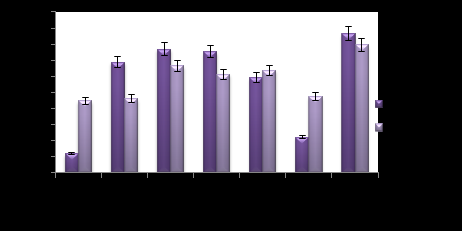
The total phenolic content (TPC) of Geophila obvallata extracts and fractions was determined using a standard Gallic Acid Equivalents (GAE) calibration curve (Y = 0.073x + 9.650, R² = 0.897). Results were expressed as milligrams of GAE per gram of tissue (mg/g tissue GAE) (Figure 1).
Fractions obtained through methanol extraction exhibited the highest TPC for both leaf and stem samples (86.35 mg/g and 79.72 mg/g tissue GAE, respectively). Conversely, aqueous fractions displayed the lowest TPC values (12.02 mg/g and 44.89 mg/g tissue GAE for leaf and stem, respectively). A statistically significant difference (p < 0.05) was observed between the TPC of the methanol leaf extract and all other fractions derived from the leaves.
This observation suggests a greater abundance of extractable phenolic compounds in the methanol leaf fraction compared to other solvents employed. The polarity of methanol likely facilitated the extraction of a wider range of complex phenolic compounds present in the Geophila obvallata leaves, aligning with previous findings reported in the literature [10, 24].
Total Flavonoid Content (TFC)
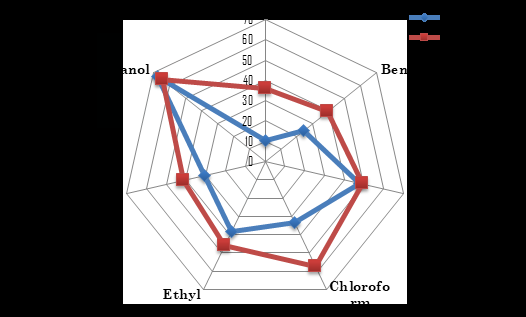
Figure 2 illustrates the TFC analysis of Geophila obvallata leaf and stem extracts and fractions. Interestingly, no significant variation was observed in the TFC of methanol- fractionated leaf (67.56 mg/g tissue quercetin equivalent [QE]) and stem (64.92 mg/g tissue QE) samples. The aqueous fraction exhibited the lowest efficiency in TFC extraction from both leaves (10.35 mg/g tissue QE) and stems (36.04 mg/g tissue QE). However, other fractionation solvents yielded considerable TFC values, similar to the trends observed in the TPC analysis.
A strong correlation coefficient (0.972) was established between the TPC and TFC of Geophila obvallata extracts and fractions (both stem and leaf derived). This finding suggests that flavonoid metabolites likely constitute the major phenolic component within Geophila obvallata.
Based on the provided information, a strong positive correlation (correlation coefficient of 0.972) was observed between the total phenolic content (TPC) and total flavonoid content (TFC) in the extracts and fractions derived from both the stem and leaves of Geophila obvallata. This finding suggests that flavonoid metabolites are likely to be the predominant phenolic compounds present in this plant species.
The gas chromatography-mass spectrometry (GCMS) analysis conducted by Iserhienrhien, et al. [9] identified the presence of several phenolic and flavonoid compounds, including quercetin, hyperin, naringenin, sapogenin, N-(1H- Tetrazol-5-yl) benzamide, Hydrofolic Acid, and 11-Oxa- dispiro [5.0.5.3] tetradec-11-ene-2,8-dione.
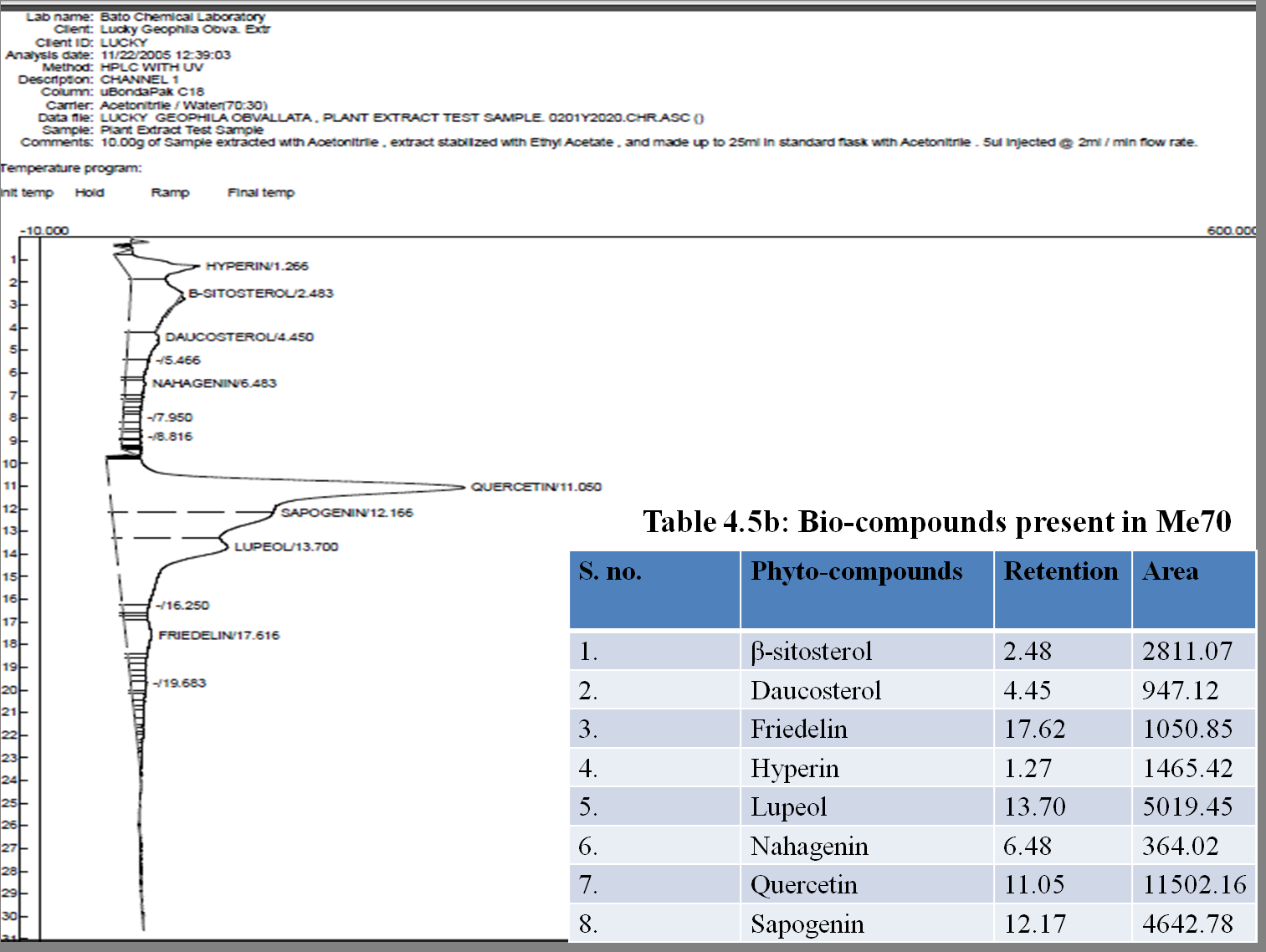
Additionally, high-performance liquid chromatography (HPLC) analysis of the methanolic extract (Me70) from Geophila obvallata leaves revealed the presence of various phytocompounds at different retention times. Among the identified compounds, friedelin (retention time of 17.62 minutes), lupeol (13.70 minutes), sapogenin (12.17 minutes), and quercetin (11.05 minutes) exhibited the highest retention times compared to other detected phytocompounds (Table 4).
The identified bioactive compounds present in Geophila obvallata extracts have been reported to exhibit various beneficial effects, as evidenced by the literature. Phenolic compounds are known for their antioxidant, anticancer, and antimicrobial properties. Specific compounds like quercetin have been associated with antipsychotic and anxiolytic activities, while lupeol is reported to possess antioxidant and hypocholesterolemic effects. Furthermore, sapogenin has been recognized for its antihelminthic, antimicrobial, and ophthalmic actions.
It is important to note that while the GCMS and HPLC analyses have identified several phenolic and flavonoid compounds, there is a possibility that additional unidentified compounds may be present in the extracts and fractions of Geophila obvallata. The strong correlation between TPC and TFC suggests that other flavonoid metabolites might contribute to the observed bioactivities of this plant species. Further investigations using complementary analytical techniques, such as liquid chromatography-mass spectrometry (LC-MS) or nuclear magnetic resonance (NMR) spectroscopy, could provide a more comprehensive characterization of the phytochemical profile and enable the identification of potentially undiscovered compounds.
HPLC Chromatogram of Geophila obvallata Leaves Methanolic Extract (Me70)
The bio-compounds found in Me70 were shown in the HPLC results Figure 3 as illustrated by the chromatogram at various retention times. Friedelin (17.62), lupeol (13.70), sapogenin (12.17) and quercetin (11.05) had the highest retention time compared to other phytocompounds Table 4.5b.
| IC (DPPH) mg/ml 50 | Control | ||
|---|---|---|---|
| Extract/Fraction | Leaf | Stem | Ascorbic Acid |
| Aqueous | 0.22±0.04g | 0.96±0.03a | 0.23±0.03g |
| Benzene | 0.54±0.02d | 0.34±0.02f | 0.23±0.03g |
| Butanol | 0.24±0.02g | 0.16±0.01h | 0.23±0.03g |
| Chloroform | 0.44±0.02e | 0.24±0.02g | 0.23±0.03g |
| Ethyl | 0.64±0.03c | 0.45±0.03e | 0.23±0.03g |
| Hexane | 0.74±0.04b | 0.64±0.02c | 0.23±0.03g |
| Methanol | 0.15±0.03h | 0.21±0.02h | 0.23±0.03g |
Table 3: Geophila obvallata anti-radical effects measured using DPPH assay.
The data were given as Mean ± SD for three determinations. Superscript alphabets differ due to differences in signifi- cance (P<0.05) using Fisher’s method (FT)
DPPH Radical Scavenging Activity
The 2, 2-diphenyl-1-picrylhydrazyl (DPPH) assay was employed to assess the free radical scavenging capacity of various extracts and fractions obtained from Geophila obvallata leaves and stems. As shown in Table 3, the methanol extracts from both plant parts exhibited the strongest DPPH radical scavenging activity, indicated by the lowest IC50 values. This suggests that these methanol extracts possess the greatest potential for neutralizing free radicals.
Conversely, the fractions obtained using hexane for leaf samples (IC50 = 0.74 mg/mL) and aqueous solvent for stem samples (IC50 = 0.96 mg/mL) demonstrated the weakest DPPH scavenging activity. Interestingly, the leaf methanol extract displayed superior free radical scavenging capacity compared to all other extracts and fractions tested. These findings align with previous reports by Dash and [8] who observed similar antioxidant potential in Geophila repens leaves. In the present study, the IC50 value of the Geophila obvallata leaf methanol extract (0.23 mg/mL) surpassed that of the control, further highlighting its potent antioxidant activity.
Ferric Reducing Antioxidant Power (FRAP) Assay
The FRAP assay was employed to evaluate the ability of different G. obvallata extracts and fractions (both leaf and stem) to reduce ferric ions (Fe3+ to Fe2+). As depicted in Table 4, the FRAP activity was significantly higher (p < 0.05) in leaf samples compared to stem samples. Furthermore, the highest FRAP activity was observed in the leaf methanol fraction (IC50 = 0.25 mg/mL) and the stem methanol fraction (IC50 = 0.37 mg/mL), indicating that methanol effectively extracts potent antioxidant compounds from G. obvallata.
The overall trend in FRAP activity across the various fractionating solvents was as follows: methanol > butanol > chloroform > hexane > benzene > ethyl acetate > aqueous fractions. This suggests that methanol is the most effective solvent for extracting compounds with ferric ion reducing ability in G. obvallata. The suitability of the FRAP assay for evaluating antioxidant potential in plant materials is well-established due to its sensitivity, as demonstrated by numerous studies [25, 26].
| IC -FRAP (mg/ml) 50 | Control | ||
|---|---|---|---|
| Extract/ Fraction | Leaf | Stem | Ascorbic Acid |
| Aqueous | 0.45±0.02fg | 0.83±0.02a | 0.23±0.01j |
| Benzene | 0.67±0.01c | 0.54±0.02d | 0.2±0.01j |
| Butanol | 0.42±1.04g | 0.67±0.02c | 0.23±0.01j |
| Chloroform | 0.47±1.21f | 0.53±1.02de | 0.23±0.01j |
| Ethyl | 0.55±1.05d | 0.76±0.05b | 0.23±0.01j |
| Hexane | 0.52±1.03de | 0.50±1.02e | 0.23±0.01j |
| Methanol | 0.25±0.02j | 0.37±0.03h | 0.23±0.01j |
| IC -NO (mg/ml) 50 | Control | ||
| Extract/ Fraction | Leaf | Stem | Ascorbic Acid |
| Aqueous | 0.35±0.05d | 0.65±0.01a | 0.23±0.03g |
| Benzene | 0.55±0.03b | 0.27±0.02ef | 0.23±0.03g |
| Butanol | 0.45±1.04c | 0.29±0.03g | 0.23±0.03g |
| Chloroform | 0.29±1.05e | 0.26±1.02fg | 0.23±0.03g |
| Ethyl | 0.36±1.04d | 0.30±1.04e | 0.23±0.03g |
| Hexane | 0.35±0.03d | 0.35±1.02e | 0.23±0.03g |
| Methanol | 0.25±0.02fg | 0.17±0.01h | 0.23±0.03g |
Table 4: Anti-radical effects of Geophila obvallata measured using nitrogen oxide (NO•) assay.
The data were given as Mean ± SD for three determinations. Superscript alphabets differ due to differences in significance (P<0.05) using Fisher’s method (FT)
The data were given as Mean±SD for three determinations. Different superscript letters differ significantly (P<0.05) using Fisher’s method (FT)
Nitric Oxide Scavenging Activity
The nitric oxide (NO.) scavenging assay revealed the ability of various Geophila obvallata extracts and fractions to neutralize NO radicals. Among all the tested samples, the methanol extracts obtained from both leaves and stems exhibited the most potent NO quenching activity, surpassing even the positive control (ascorbic acid) as shown in Table 5. Conversely, the aqueous fractions from the stem and the benzene fractions from the leaves demonstrated the weakest NO radical inhibitory effects. These findings suggest a potential variation in the distribution and potency of NO- scavenging compounds across different solvent fractions.
| IC -HRSA (mg/ml) 50 | Control | ||
|---|---|---|---|
| Extract/ Fraction | Leaf | Stem | α-Tocopherol |
| Aqueous | 0.83±0.02b | 1.64±0.03a | 0.25±0.01f |
| Benzene | 0.57±0.02c | 0.54±0.02c | 0.25±0.01f |
| Butanol | 0.40±0.03d | 0.24±0.02f | 0.25±0.01f |
| Chloroform | 0.43±0.04d | 0.31±0.12e | 0.25±0.01f |
| Ethyl | 0.43±0.11d | 0.30±0.20e | 0.25±0.01f |
| Hexane | 0.25±0.02f | 0.31±0.04e | 0.25±0.01f |
| Methanol | 0.15±0.04g | 0.18±0.01g | 0.25±0.01f |
Table 6: Geophila obvallata anti-radical effects measured using HRSA assay.
The data were given as Mean ± SD for three determinations. Superscript alphabets differ due to differences in significance (P<0.05) using Fisher’s method (FT)
Hydroxyl Radical Scavenging Activity
Hydroxyl radicals (OH·) are highly reactive species known to induce detrimental cellular chain reactions that can lead to cell death (Duan et al., 2007). Due to their fleeting nature, the presence of cellular antioxidants is crucial to neutralize these radicals and prevent damage to biomolecules [27]. Table 6 presents the hydroxyl radical scavenging activities of the Geophila obvallata extracts and fractions isolated from both leaves and stems.
The results demonstrate that the methanol extracts from both plant parts exhibited the strongest hydroxyl radical scavenging activity, signifying their superior ability to neutralize these harmful radicals. Conversely, the aqueous fractions from both the stem and leaf displayed the weakest activity compared to other solvent extracts and the reference standard (α-Tocopherol, IC50 = 0.25). These findings suggest that the bioactive compounds responsible for hydroxyl radical scavenging are more readily extracted using methanol compared to water.
| IC -ABTS (mg/ml) 50 | Control | ||
|---|---|---|---|
| Extract/Fraction | Leaf | Stem | Trolox |
| Aqueous | 0.26±0.08b | 0.32±0.12a | 0.33±0.01a |
| Benzene | 0.17±0.05de | 0.25±1.02b | 0.33±0.07a |
| Butanol | 0.12±0.04f | 0.20±0.02cd | 0.33±0.01a |
| Chloroform | 0.15±0.04def | 0.23±0.03bc | 0.33±0.01a |
| Ethyl | 0.20±0.04cd | 0.24±0.02bc | 0.33±0.01a |
| Hexane | 0.19±0.03cd | 0.27±0.01b | 0.33±0.01a |
| Methanol | 0.11±0.03f | 0.15±0.01ef | 0.33±0.01a |
Table 5: Inhibitory potentials of Geophila obvallata extracts fractioned in different solvents with IC50 values measured using AB
The data were given as Mean±SD for three determinations. Superscript alphabets differ due to differences in significance (P<0.05) using Fisher’s method (FT)
ABTS Cation Radical Scavenging Activity
The ABTS•+ scavenging assay evaluated the ability of various G. obvallata extracts and fractions to neutralize the unstable ABTS•+ radical cation. Results, presented in Table 7, revealed that the methanol extracts (both leaf and stem), along with the leaf’s n-butanol and chloroform fractions, exhibited significant ABTS•+ inhibitory activity. Interestingly, the scavenging capacity of these specific leaf fractions and extracts did not show any statistical difference (p > 0.05). However, the methanol extracts from both leaves and stems demonstrated greater potency compared to the remaining fractions and the Trolox control (IC50 = 0.33 mg/mL).
These findings align with observations by Hagerman, et al. [28, 29], who reported that compounds with higher molecular weight possess a greater capacity to scavenge free radicals like ABTS•+, thereby terminating free radical chain reactions and potentially mitigating lipid peroxidation.
The present study investigated the presence and distribution of bioactive compounds with antioxidant potential in various leaf and stem extracts/fractions of Geophila obvallata. The findings revealed that the methanol fractions exhibited the highest content of these bioactive agents, particularly within the leaf extracts. This observation was supported by the greater total phenolic and flavonoid content, as well as superior antioxidant activity, displayed by the leaf methanol fraction compared to the stem methanol fraction and other fractions from both tissues.
Based on these results, further research is recommended to elucidate the specific chemical structures and functionalities of the active ingredients responsible for the observed antioxidant properties within the G. obvallata extracts. Such investigations could involve chromatographic isolation and characterization of the bioactive compounds, along with exploring their potential mechanisms of action in free radical scavenging or other antioxidant processes. By delving deeper into the chemistry of these extracts, scientists can gain valuable insights for the development of novel antioxidant therapeutic agents or functional food additives derived from G. obvallata.
References
-
Nasim N, Sandeep IS, Mohanty S (2022) Plant- derived natural products for drug discovery: current approaches and prospects. Nucleus (Calcutta) 65(3): 399-411.
-
Jomova K, Raptova R, Alomar SY, Alwasel SH, Nepovimova E, et al. (2023) Reactive oxygen species, toxicity, oxidative stress, and antioxidants: chronic diseases and aging. Arch toxicol 97(10): 2499-2574.
-
Das A, Ringu T, Ghosh S, Pramanik N (2023) A comprehensive review on recent advances in preparation, physicochemical characterization, and bioengineering applications of biopolymers. Polymer Bulletin 80(7): 7247-7312.
-
Iserhienrhien LO, Okolie PN (2018) Phytochemical Screening and in vitro Antioxidant Properties of Methanol and Aqueous Leaf Extracts of Geophila obvallata. AJRB 3(2): 1-11.
-
Burkil HM (2004) The useful plants of West Tropical Africa. Royal botanic gardens kew. Journal of Natural Products 58(3): 909-915.
-
Iserhienrhien OL, Ngozi OP (2020) Acute and sub-acute toxicity profile of methanol leaf extract of Geophila obvallata on renal and hepatic indices in Wistar rats. Cogent Food Agric 6(1):1794240.
-
Dash UC, Sahoo AK (2017) In vitro antioxidant assessment and a rapid HPTLC bioautographic method for the detection of anticholinesterase inhibitory activity of Geophila repens. Journal of Integrative Medicine 15(3): 231-241.
-
Iserhienrhien LO, Okolie NP, Mudiaga F (2021) Antimicrobial effect of Geophila obvallata (Schumach) didr. leaf extracts against pathogenic microbes. Archives in Ecotoxicology 3(4):103-109.
-
Iserhienrhien LO, Okolie NP (2022) Protective effect of Geophila obvallata (Shumach) Didr leaf extract and its fractions against cadmium- in¬duced nephrotoxicity in male Wistar rats. Toxicology Reports 9: 87-93.
-
Lucky I, Aisuhuehien I, Adejoke MA (2024) Renoprotective effect of hyperin against CdCl2 prompted renal damage by activation of Nrf-2/Keap-1 ARE pathway in male mice. Toxicology Mechanisms and Methods pp: 1-10.
-
Aiyelaagbe OO, Osamudiamen PM (2009) Phytochemical screening for active compounds in Mangifera indica leaves from Ibadan, Oyo State. Plant Science Research 2: 11-13.
-
Edeoga HO, Okwu DE, Mbaebie BO (2005) Phytochemical constituents of some Nigerian medicinal plants. African Journal of Biotechnology 4: 685-688.
-
Guleria S, Dev K, Khosla PK (2016) Comparative analysis of phytochemicals and antioxidant activities of fruit and leaves of Terminalia chebula from Himachal Pradesh. IJBPAS 5(6): 1195-1206.
-
Harborne JB (1988) Introduction to Ecological Biochemistry. In: 3rd (Edn.), Academic Press, London, UK.
-
Singleton LV, Orthofer R, Lamuela-Raventos MR (1999) Analysis of total phenols and other oxidation substrates and antioxidants by means of Folin-ciocalteu reagent. Methods Enzymol 299: 152-178.
-
Jia ZS, Tang MC, Wu JM (1999) The determination of flavonoid content in mulberry and their scavenging effects on superoxide radicals. Food Chem 64: 555-559.
-
Brand-Williams ME, Cuvelier B, Berset C (1995) Use of a free radical method to evaluate antioxidant activity. LWT-Food Science Technology 28(1): 25-30.
-
Benzie IFF, Strain JJ (1996) The ferric reducing ability of plasma (FRAP) as a measure of ‘antioxidant power’: the FRAP assay. Analytical Biochemistry 239: 70-76.
-
Sreejayan, Rao MN (1997) Nitric oxide scavenging by cucuminoids. J Pharm Pharmacol 49(1): 105-107.
-
Leelavinothan P, Kalist S (2011) Beneficial effect of hesperetin on cadmium induced oxidative stress in rats: An in vivo and in vitro study. European Review for Medical and Pharmacological sciences 15(9): 992-1002.
-
Re R, Pellegrini N, Proteggente A, Pannala A, Yang M, et al. (1999) Antioxidant activity applying an improved ABTS radical cation decolorization assay. Free Radic Biol Med 26(9-10): 1231-1237.
-
Zhang W, Chen Z, Wang G, Lan G, Zhang L (2011) Comparative studies on antioxidant activities of extracts and fractions from the leaves and stem of Epimedium koreanum Nakai. J Food Sci Technol 50(6): 1122-1129.
-
Salih AM, Al-Qurainy F, Nadeem M, Tarroum M, Khan S, et al. (2021) Optimization Method for Phenolic Compounds Extraction from Medicinal Plant (Juniperus procera) and Phytochemicals Screening. Molecules 26(24): 7454.
-
Sowndhararajan K, Kang SC (2013) Free radical scavenging activity from different extracts of leaves of Bauhinia vahlii Wight and Arn. Saudi Journal of Biological Sciences 20: 319-325.
-
Pisoschi AM, Pop A, Cimpeanu C, Predoi G (2016) Antioxidant Capacity Determination in Plants and Plant- Derived Products: A Review. Oxid Med Cell Longev 2016: 9130976.
-
Jennings A, Welch AA, Fairweather-Tait C, Kay AM, Minihane P, et al. (2012) Higher anthocyanin intake is associated with lower arterial stiffness and central blood pressure in women. Am J Clin Nut 96(4): 781-788.
-
Hagerman AE, Riedl KM, Jones GA, Sovik KN, Ritchard NT, et al. (1998) High molecular weight plant polyphenolics (tannins) as biological antioxidants. Journal of Agricultural Food and Chemistry 46: 1887-1892.
-
Duan X, Wu G, Jiang Y (2007) Evaluation of the antioxidant properties of litchi fruit phenolics in relation to pericarp browning prevention. Molecules 12: 759-771.
- Evaluation of Skin Aging Preventive Effects of Cherry Blossom Petal Extracts Through Antioxidant and Anti-Glycation Activities
- Is Cell Death Responsible for False Positive Results of In Vivo Comet Assay?
- Pattern of Gonadal Hormones in Oral Testosterone-Supplimented Male Wistar Rats with Diabetes-Induced Hypogonadism
- Re-Evaluation of the Genotoxicity of Currently Used Food Dyes in Mouse Multiple Organs Via Continuous Administration by Drinking Using the Comet Assay
- Pharmacogenetics of Type 2 Diabetes Mellitus: Linking Genetic Variability to Drug Efficacy and its Cardiovascular Outcomes
- Exploratory Proteomic Profiling of SARS-CoV-2 Infected THP-1 Macrophages Reveals Alterations in Inflammatory Response and Cellular Metabolism