
A Review on Recall and Ban of Ranitidine: Facts & Theories
The twentieth century witnessed the rise of peptic ulcers as a chronic illness affecting up to 10% of people worldwide. Initially thought to be caused solely by factors like stress and diet, the discovery of Helicobacter pylori bacteria by Robin Warren and Barry J. Marshall in 1982 revolutionized the understanding and treatment of peptic ulcers. This led to the development and widespread use of drugs like ranitidine, a histamine H2-receptor antagonist, which effectively reduced stomach acid production and provided relief from ulcer symptoms. However, recent concerns about ranitidine’s safety arose when elevated levels of the carcinogenic contaminant N-nitrosodimethylamine (NDMA) were found in some formulations. This prompted regulatory actions, including recalls, and raised questions about the long-term use of ranitidine and its potential health risks.
Introduction
Without a doubt, the twentieth century saw the rise of the peptic ulcer. A chronic illness that affects up to 10% of people worldwide is peptic ulcer populace. Peptic ulcers are lesions that develop on the inside of the stomach, small intestine’s duodenum, and occasionally the esophagus. Long before it was generally accepted that bacteria were the primary cause of the illness, in 1958 Greek general practitioner John Lykoudis used antibiotics to treat patients with peptic ulcer disease. Two Australian scientists named Robin Warren and Barry J. Marshall discovered Helicobacter pylori as a contributing factor to ulcers in 1982. Warren and Marshall came to the conclusion that this bacterium colonized the stomach and caused the majority of gastric ulcers and gastritis. Of them, infections are the most frequent causes of peptic ulcers [1].
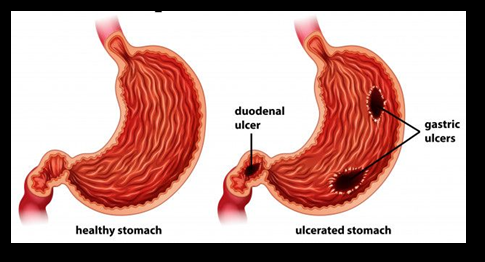
Figure 1 stomach ulcer is referred to as a gastric ulcer, whereas a duodenal ulcer occurs in the duodenum, which is the small intestine. The most typical signs of an upper abdomen pain that worsens after eating is a symptom of duodenal ulceration that causes nighttime awakenings. Eating may exacerbate the pain associated with a stomach ulcer. Most people describe the discomfort as a dull or burning aching. Belching, vomiting, weight loss, and appetite loss are some other symptoms. One-third of the elderly are asymptomatic. Bleeding, perforation, and stomach blockage are examples of complications. In the world, up to 15% of people experience bleeding [2].
History and Development of the Drug (Ranitidine)
In an effort to equal the success of Smith, Kline, and French (now part of GlaxoSmithKline) with the first histamine H2-receptor antagonist, cimetidine, ranitidine was initially developed by Glaxo (now GlaxoSmithKline). The creation of ranitidine came from a logical drug-design procedure employing what was by that point a reasonably well-developed model of the quantitative structure-activity relationships (QSAR) and histamine H2 receptor. By adding a furan ring with a nitrogen-containing substituent to replace the imidazole ring of cimetidine, Glaxo improved the concept even further and created ranitidine. It was discovered that ranitidine had ten times the activity of cimetidine, a far better tolerability profile (fewer adverse medication reactions), and a longer-lasting effect. Introduced in 1981, ranitidine surpassed all other prescription drugs in the globe in sales by 1988. Since then, the even more potent proton pump inhibitors have mainly replaced it. One drug that reduces the formation of stomach acid is Zantac. Frequently used to treat Zollinger Ellison syndrome, gastric reflux disease, and peptic ulcer disease Condition. It can be administered intravenously or intramuscularly, orally or by injection. It blocks the H2 receptor. Its molecular weight is 350.87, and its chemical formula is C13H22N4O3S. The crystalline, somewhat odorless powder known as ranitidine HCl is white to pale yellow in color and is light- and moisture-sensitive. Melts with decomposition at around 1400 C [3].
Ranitidine
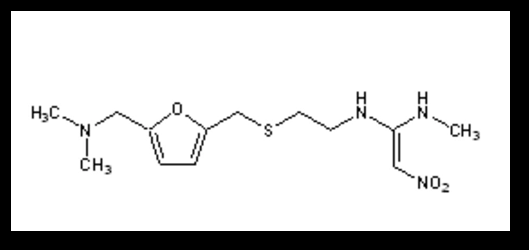
Figure 2 Ranitidine is a member of class of histamine H2-receptor antagonists which possess antacid activity. Ranitidine, which is sold under the brand name Zantac among others. Ranitidine was discovered in 1976 and in 1981 it came into commercial use. It is on the World Health Organization’s List of Essential Medicines and one of the safest and most effective medicines needed in a health system. It is available as a generic medication: Molecular formula: C13H22N4O3S Molecular Weight: 314.41 g/mole Physical description: solid Odour: charecteristic Taste: Bitter Bioavailability: 50% (by mouth) Protein binding: 15% Metabolism: Liver: FMOs, including FMO3; other enzymes Onset of action: 55–65 minutes (150 mg dose), 55–115 minutes (75 mg dose) Elimination half-life: 2–3 hours Excretion: 30–70% Kidney Boiling Point: 437.1±45.0 Melting Point: 134 pKa: 8.2 and 2.7 Solubility: soluble in water [4]
In India, various drug makers such as Dr. Reddy’s, sun pharma, Cadilapharma, GlaxoSmithKline, JB chemicals, and Zydus Cadila sell over 180 products based on Ranitidine. Below is the Table 1 indicating the different brand names of Ranitidine Manufactured in India in different pharmaceutical companies.
| Brand Name | Composition | Company |
|---|---|---|
| Acibloc. Tab | Ranitidine 150mg | Marc lab |
| Aciloc. Tab | Ranitidine 150mg | Cadila |
| Advene. Tab | Ranitidine 150mg | Abbott |
| Zoran. Tab | Ranitidine 150mg | Dr. reddy's lab |
| Histac. Tab | Ranitidine 150mg | Ranbaxy |
| Peploc. Tab | Ranitidine 150mg | Zydus Cadila |
| Zantac. Tab | Ranitidine 150mg | Glaxosmithkline |
Table 1: Few brand names of ranitidine manufactured in India.
Misconceptions Raised and Ban of the Drug
The problem first came to light in June 2019 when regulators were notified by the US online pharmacy Valisure that testing on samples they had conducted showed the medications appeared to have higher-than-permissible amounts of the cancer-causing contaminant nitrosamine (N-nitrosodimethyl amine, or NDMA) (geotaxis). On September 13, 2019, this company submitted a thorough citizen petition to the FDA. Declaring that “very high levels of [NDMA] in every lot tested, across multiple manufacturers and dosage forms of the drug ranitidine” were discovered, the report claimed [5].
According to the petition, Valisure found amounts per tablet of more than 3 million nanograms, significantly over the FDA’s Allowable intake per day of 96 ng. The FDA states that it has not received any complaints of adverse reactions or occurrences connected to the NDMA identified in ranitidine from any other authorities.
The Drug Controller of India (DCGI) has just notified the state drug authorities to instruct the producers to guarantee that the anti-acidic medicine ranitidine’s safety profile is confirmed and assured, although numerous drug regulators worldwide have prohibited its sale and manufacturing. Patient safety in the nation. The FDA recommended that businesses use laboratory testing to determine the levels of NDMA [6].
N-Nitrosodimethylamine (NDMA)
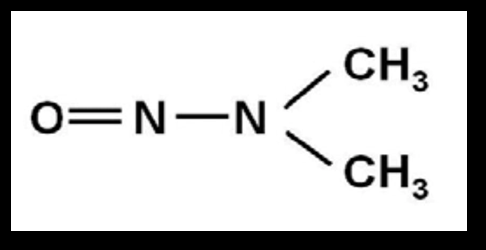
Figure 3 the formula for this chemical molecule is (CH3)2NNO. It is also referred to as dimethylnitrosamine. It belongs to a broad class of N-nitrosamines and is among the most basic constituents. Due to its significant hepatotoxicity and reputation as a carcinogen, NDMA has received a lot of attention. Animals used in laboratories. NDMA has a boiling point of 1510C. NDMA has a molar mass of 74.0819 g/ mol. NDMA has a density of 1g/cm3. Nitrosamines, or more accurately N-nitrosamines, are molecules that have the nitroso functional group attached to them. These compounds are dangerous because nitrosamine contaminants may cause cancer in people [7].
The Drug’s Actual Truth
The testing procedure VALISURE, which requires heating the sample, is to blame for these elevated NDMA levels. The FDA stated in its OCT 2 statement that “that method is not suitable for testing ranitidine because heating the sample generates NDMA.” Rather, the agency suggests use either of the following two methods: liquid chromatography-tandem mass spectrometry (LC-MS) or liquid chromatography- high-resolution mass spectrometry (LC-HRMS). In addition to being present in drinking water, food, especially meat, dairy products, and vegetables, NDMA is an environmental contaminant. It’s important to understand that there are no direct health dangers associated with the NDMA found in ranitidine products. NDMA is categorized as a potential carcinogen, however cancer may only result from prolonged, high-dose exposure [8].
Ranitidine is only advised for short-term usage in many circumstances. After giving 10 healthy volunteers 150 mg of Zantac in a 2016 Stanford University study, the researchers discovered that the NDMA levels in their urine later exceeded 47,000 nanograms. This is because the majority of the NDMA would have been digested before it reached the urine, the real. The researchers concluded that the amount in the body may have been significantly higher. The possibility of ranitidine entering the sewage treatment system and contaminating drinking water if it degrades into NDMA is another possible worry. According to an independent lab in Almada, California, “our preliminary data indicate that drug products containing ranitidine accumulate NDMA when exposed to elevated temperatures, which would typically be reached during shipment and storage.” Above all, these Circumstances develop after the manufacturer releases the lot [9].
Global Investigation
United States (US)
The US Food and Drug Administration (FDA) played a pivotal role in investigating ranitidine.In 2019, the FDA alerted the public about NDMA contamination in ranitidine products. As a result, several manufacturers voluntarily recalled ranitidine-based medications. Patients were advised to seek alternative treatments for acid-related conditions.
European Union (EU)
The European Medicines Agency (EMA) conducted a thorough review of ranitidine-containing medicines. In September 2019, the EMA suspended the use of ranitidine due to NDMA concerns. This suspension affected the availability of ranitidine across EU member states.
Canada, Bangladesh, and Egypt
These countries also took regulatory actions against ranitidine. Ranitidine-containing products were banned or restricted to protect public health. Healthcare authorities emphasized the need for safer alternatives.
Risk of Cancer
Because human exposure to nitrosamines typically occurs from contact with combinations of these substances, data from human research are not very useful. Numerous animal species have been proven to be carcinogenic to nitrosodimethylamine, and it has also been discovered to cause multiple flaws that cause cancers in different organs and through different routes of exposure. In rats and mice, higher frequencies of lung, kidney, and liver cancers were noted upon inhaling N-nitrosodimethylamine. Rats, mice, and hamsters that were orally exposed have also shown signs of liver tumors [10].
The FDA and other International agencies are still looking into the consequences of ranitidine since the danger of cancer has increased. The FDA stated on September 13, 2019, that According to preliminary testing, ranitidine, a medicine used by millions of Americans to treat heartburn, contains low quantities of N-nitrosodimethylamine (NDMA). The pharmaceutical companies Apotex and Novartis (via its generic company, Sandoz) declared that all of their US sold generic ranitidine medicines were being recalled [11].
These disclosures followed an FDA notification from an internet pharmacy in Connecticut that, under specific test circumstances, it had found NDMA in several ranitidine items. Consequences. As of September 27, 2019, there were recalls from two manufacturers of ranitidine in the US, which is better known by the brand name Zantac. The recalls were issued because Cancer concern because of the presence of NDMA, which is known to induce cancers and animal mortality in laboratory settings and is thought to be a possible human carcinogen. The FDA declared on September 13th that the early test results for ranitidine “barely exceeds amounts you might expect to find in common foods” and that NDMA is reasonably safe to ingest in short doses. How ranitidine formulations become contaminated with NDMA is unknown [12].
Recall of the Drug
FDA Request for Withdrawal
On April 1, 2020, the U.S. Food and Drug Administration (FDA) requested that manufacturers withdraw all prescription and over-the-counter (OTC) ranitidine drugs from the market immediately. This decision followed an ongoing investigation of a contaminant known as N-Nitrosodimethylamine (NDMA) in ranitidine medications (commonly known by the brand name Zantac). The agency determined that the impurity in some ranitidine products increases over time and when stored at higher than room temperatures, potentially exposing consumers to unacceptable levels of this impurity. As a result of this immediate market withdrawal request, ranitidine products are no longer available for new or existing prescriptions or OTC use in the U.S.
NDMA as a Probable Carcinogen
NDMA is classified as a probable human carcinogen, meaning it could cause cancer. While low levels of NDMA are commonly ingested through diet and water, sustained higher exposure may increase the risk of cancer in humans. The FDA conducted thorough laboratory tests and found NDMA in ranitidine at low levels. The agency warned the public in September 2019 of the potential risks and advised considering alternative OTC and prescription treatments.
Ongoing Monitoring and Safety Measures
The recall was a crucial step to prioritize patient safety. Healthcare providers continue to recommend alternative acid-reducing drugs like famotidine or omeprazole. The FDA remains committed to ensuring that medicines are safe and effective for consumers and patients.
Impact of the Ranitidine Ban on Pharmaceutical Companies
Financial Implications
The ban on ranitidine has significant financial repercussions for pharmaceutical manufacturers. Indian pharma companies, which produce and market ranitidine- based products, have been directly affected. For instance, Solara Active Pharma Sciences Limited, a major player in the industry, reported that ranitidine contributed 5% of its revenue.
Market Size and Global Sales
In India, over 180 ranitidine-based products are sold by various drug makers. The market size for ranitidine in India is approximately Rs 750 crores. Globally, ranitidine sales exceed $412 million. The ban disrupted revenue streams for companies relying on ranitidine
Voluntary Recalls and Alternatives
In response to regulatory actions, companies voluntarily recalled ranitidine products. Health care providers and patients sought alternative medications for acid-related conditions. Companies had to adapt their product portfolios to mitigate the impact of the ban.
Supply Chain and Manufacturing Challenges
The ban necessitated adjustments in supply chains and manufacturing processes. Companies had to reevaluate their production lines and find substitutes for ranitidine. Ensuring uninterrupted supply of other essential medicines became crucial.
Conclusion
Since ranitidine contains a carcinogenic ingredient, the heartburn medication ranitidine, which is also used to treat peptic ulcers, has been outlawed in some nations, including India. Nitrosodimethylamine (NDMA) is an impurity. Numerous pharmaceutical companies are recalling all ranitidine medicines with expiration dates ranging from September 2019 to June 2021.
References
-
(2019) Peptic ulcer disease. Wikipedia.
-
(2022) Overview: Peptic ulcer. Mayo Clinic.
-
(2019) Ranitidine. PubChem.
-
(2019) Information Note Nitrosamine impurities.
-
(2020) FDA Updates and Press Announcements on NDMA in Zantac (ranitidine). U.S Food & Drug Administration.
-
(2018) Liquid Chromatography-Mass Spectrometry.
-
Newspaper of chronicle Pharmabiz, October 10, 2019
-
Newspaper of chronicle Pharmabiz, October 3, 201
-
Chronicle Pharmabiz, vol. 19, no. 44
-
Dileep VK (2019) No need to panic over reports about Ranitidine drug. The New Indian Express.
-
Ranitidine Prescribing Information. Drugs.com.
-
(2024) Ranitidine. MedlinePlus.
- Evaluation of Skin Aging Preventive Effects of Cherry Blossom Petal Extracts Through Antioxidant and Anti-Glycation Activities
- Is Cell Death Responsible for False Positive Results of In Vivo Comet Assay?
- Pattern of Gonadal Hormones in Oral Testosterone-Supplimented Male Wistar Rats with Diabetes-Induced Hypogonadism
- Re-Evaluation of the Genotoxicity of Currently Used Food Dyes in Mouse Multiple Organs Via Continuous Administration by Drinking Using the Comet Assay
- Pharmacogenetics of Type 2 Diabetes Mellitus: Linking Genetic Variability to Drug Efficacy and its Cardiovascular Outcomes
- Exploratory Proteomic Profiling of SARS-CoV-2 Infected THP-1 Macrophages Reveals Alterations in Inflammatory Response and Cellular Metabolism