
“To Be or Not To Be Married”: Marriage as Turning Point to Adulthood in Arab Mediterranean Countries
Several authors stress the significance in transitions to adulthood of three focuses: education, employment and political participation. This triple transition aftermath of the famous tripartite division of the life course: preparation for personal life, professional life, and citizenship. In AMC’s, the delay in accessing social adulthood suffered by young Arabs consigns them to a liminal space in which they are neither children nor independent autonomous adults. In any case, for young people school-to work-transition is the main and decisive step, which very often shapes their whole life. Nevertheless, following diverse authors, marriage is the final objective to achieve social maturity influencing youth’s decision making in AMC’s. The findings of this paper emerge from a dialogue between qualitative and quantitative data collected during the period 2015- 2016 in the framework of SAHWA Project. Some questions emerge. What is the capability of Arab youths to decide about the orientation of their trajectories? Which are the factors (cultural, family, socioeconomic, educational, etc.) creating and shaping the expectations of young people about their transition from parental family to a family of their own? How do the changes in the transition to adulthood impact on the emergence of new cultural trends and values among Arab youths? And finally, how do young live the contradiction between current economic exclusion of youth and the cultural requirements to be considering an adult in the region?
Introduction
“For me marriage is ‘nisf eddine’, and the move away from the haram, they say live your life you while you’re young. I do not understand. What I want is to live my life with my wife... But you know marriage it’s still a dream ...” (24 Algerian unemployed young man) “I’m at marriage age and I am not married yet. It is my destiny, God wants it. In addition to that we find the high cost of living and the state’s neglect of the youth and indifference to their interests and needs.” (25 Algerian young women, Engineer) In the region, the categorization of a person as ‘youth’ present blurred frontiers. As a Moroccan stakeholder remarks: “however many countries have different definitions: for Morocco, it’s 18 to 30 years old; in Egypt, it’s 18 to 35, Bahrain, it’s 18 to 40. The definition depends on when the person leaves home and becomes the head of household. Thus, the householder becomes the person that has a statute in the society and therefore defining the youth is very complicated” (Moroccan Stakeholder) It is a defined limit in of the starting point of the period but the decisive attribute for young men is to leave parental house and becomes head of their own household. In this sense, if you consider the difficulties for young people to live alone in accord with dominant social norms as is expressed in focus groups discussions, and survey data confirms, more than 65% of the respondents live with their parents, as you can check in the map 1. To produce the SAHWA quantitative cartography, we have selected 50 questions from the SAHWA Youth Survey, elaborated with SPSS software and mapped using ArcGIS ArcMap software (see the webpage http://sahwa.eu/Media/Sahwa/ Cartography-of-change).
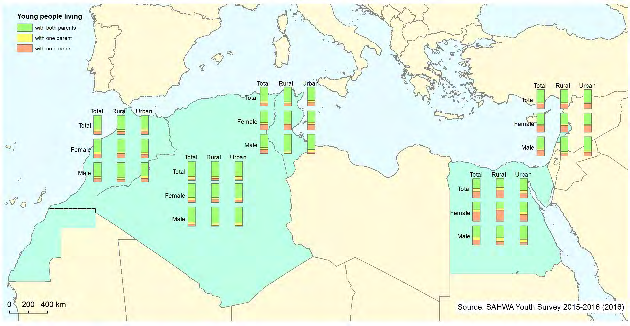
Map 1: Do you live with your parents? (Cartography of Change, 2017).
Moreover, from youth perspective, and considering the two quotes, you can perceive that young people are trapped in a world in which they are required to become adults to be married. Youths are placed in societies that understand young stage as a ‘transitional period’ to adulthood, which encompasses some ‘transitional’ social rituals such as marriage. Marriage as social marker, alters the social categorization of individuals and their relationships from youth to adulthood according to cultural construction of life course. These processes ‘naturalize’ the youth life stage and depending on the social and cultural differences, allow it to achieve its goal: the production of socially and politically mature individuals. This paper aims to analyse the interaction between the structural framework and the ability of individual action (agency) in the context of biographical experiences to achieve (or not) adulthood through marriage. Secondly, to detect main challenges, differences and changes in the youth strategies to face adulthood (and marriage), and finally describes some youth trajectories to marriage according with gender, class and educative differences in Arab-Mediterranean societies. In our analyses emerges the ways in which processes of transition are played out in the controversial arena of marriage and the sense of declining opportunities that young experience as delay marriage. In this situation of prolonged ‘immaturity’, they are defined as non-adult, a fate which they cannot escape despite the tantalizing knowledge that there are many others for whom escape routes of labour migration and wage labour have been paths to wealth and marriageability. Marriage is more than simply the mark of seniority to which youths aspired in their quest for identity and respectability. Through a focus on youth’s experience with, and articulation of, the practices surrounding matrimony, we describe and analyse the perceptions, perspectives and strategies of youth both man and women in the region. This perspective respond the demand of different scientific agencies to include subjective approaches of youth in the analyses, exploring motivations for delayed marriage and family formation, as no data currently exist on this phenomenon, limiting policy-makers’ ability to reduce barriers to these rites of passage to adulthood [1].
This analyses are guided by some weighty questions: 1) what is the capability of Arab youths to decide about the orientation of their trajectories? 2) which are the factors (cultural, family, socioeconomic, educational, etc.) creating and shaping the expectations of young people about their transition from parental family to a family of their own? 3) how do the changes in the transition to adulthood impact on the emergence of new cultural trends and values among Arab youths? and 4) how does young live the contradiction between current economic situation and the cultural requirements to be consider an adult in the region?
The next section discusses some ideas about youth transitions to establish our theoretical perspective and framework that permits us to understand trajectories to adulthood in the region. After a description of the data and methodology used in the analyses, third section discusses the idea of marriage as turning point for youth in AMC’s. Fourth section is about the perception of “marriage” by young ones and general social tendencies as well as the social situation and constraints affecting the youth agencies concerning marriage, mainly, through the survey data collection. After that, the discussion moves toward a perspective centred in biographical excerpts, that is, from the daily lives of young people as it is expressed through the fieldwork. The idea is to describe some trajectories as significant but not representative due to heterogeneity of Arab Mediterranean youth populations. The final section will summarize the main findings of the analyses of ‘marriage’ as social total fact.
Theoretical Framework: Transition, Trajectories and Intersectional Identities
Several authors stress the significance in transitions to adulthood of three focuses: education, employment and political participation [2, 3]. This triple transition aftermath of the famous tripartite division of the life course: preparation for personal life, professional life, and citizenship. Nevertheless, when comparing the strategies and aims of youth in Europe and in the Arab Mediterranean region one should consider the important differences in economic resources, education, values, cultural and social contexts. In the region, public investment in education, percentage of young people with higher education, unemployment rates according to levels of education, urban rural differences, the possibility of emigration, the role of the family, the penetration of the Internet and social networks, the scenario of precarious jobs in the informal economy among others are differential factors that must be taken into consideration in the analyses.
Following Elder [4] our analyses of youth transitions in Arab Mediterranean countries consider that the various changes in the life experience of people, as finalize mandatory education or university education, the beginning of the working life, leaving home and the birth of a son, are always part of broader social trajectories. These trajectories give them a distinctive shape and varying significance, according to the particularity of various historical moments and social conditions [5]. The model of life-course studies adopted considers the following distinctive emphases [6]. The changes in human lives are analysed from a perspective that privileges the long term, including the articulation of the different stages of life, and avoiding the consideration of events as particular or disconnected episodes. Secondly, the changes in human lives are investigated from a unit of analysis, the cohort, which corresponds to an aggregate of individuals experiencing the same event within the same time interval. Along with the above, changes in human lives are studied through specific domains of life, such as participation in the school system, work or family life, including interdisciplinary approaches in this task. Finally, the development of the life course is analysed as the result of a process that combines personal characteristics and individual action, as well as the historical and socio-cultural framework, institutional contexts and structural conditions.
If we focus in the last premise, agency is understood as performative agency to defend the combination of structural conditions and capacity of action of Arab Youths in their life course models. The influence of social norms and conditions that govern social life does that youth does not transit the same way their life. The decisions are taken with significant variations in the time and the reasons among youngster inclined by their social experiences and circumstances. Whatever the influence of social norms and conditions that govern social life, people of the same age do not similarly travel their life, there are significant variations in the timing and motives in which certain decisions are made. From the perspective of life course studies, it is pointed out that people, in the process of their life, live personal experiences and generate behaviours and dispositions from the different phases of their own development. In doing so, they interpret the new circumstances in terms of that personal history, developing forms of adaptation that can modify or alter their own course of life, although these, by the way, travel on socially structured boundaries and based on historically changing opportunities and limitations [7].
An imbricated concept with transition is trajectory. By one hand, trajectory could be understood as the full itinerary of life of the subjects; the process that marks the beginning and end of a life course understood as a unitary whole; a long-term life course, reveals a social path that includes several sequences of roles associated with different domains in which collective life unfolds. The trajectory view realizes a model of stability and change from an extended time perspective; the concept is useful to describe the global movements that occur throughout life or, to put it categorically, what happens between two vital limits: life and death. Contrasting the above, the concept of transition refers to the various episodes in that route is fragmented. These stages are not necessarily predefined or predetermined, but it marks changes in status, position or location of individuals within the social stratification, as it occurs when entering working life, leaving home, being a parent, and so on. The concept of transition, on the other hand, refers to specific events at certain times of life, which it establishes recognizable changes in the experience of subjects and defining the forms of participation, configuration status and roles assuming subjects within a given social order. In these trajectories, some events are particularly crucial as catalysts for change; these events are defined as turning points, which alter the direction of the lifetime, and that mark distinctions in individual and collective experience within the same cohort. In this case, marriage is understood as crucial turning point in the life course to achieve responsibilities and facilities of adulthood.
The youth agency is affected by social imposed identities. Mary Douglas [8] remarks that any social category is defined by identity attributes and characteristics through collective representations that are created by social institutions. In this sense, the discursive production of the category “youth” hides intersectional identities. The mechanism involves the diverse intersectional social identities of individuals to design their place in the social sphere. In relation with youth, the mechanisms are creating disadvantaged or privileged circumstances to decide about their life course [9]. The intersectional mechanism overlays social identities to individuals who confirm privilege or unfavourable positions, in the social structure causing relevant differences in life trajectories and transitional turning points as marriage represent [10, 11]. Thus, gender, social class, household, cultural capital or family capital (as a source of respectability, honesty, honour...…) determine the decisions of young Arabs on their way to adulthood. The imbrication of theses social conditions and identities conforms social inequalities could be a Matrix of Domination defined as “vectors of oppression and privilege” [12]. In consequence, there is no singular experience of transition to adulthood among young in Arab Mediterranean countries. Follow that it is necessary to consider social conditions and constraints of youth for a more complete understanding of the strategies adopted by youth to reach adulthood passing by marriage as social turning point.
Data Select and Methodology
Our analyses are based in the mixed method and bearing in mind our research questions, we have selected SAHWA survey questions and produced using SPSS software, considering only the cohort 24-29 and crossing with gender, place of residence and social class according with intersectional analyses methodology. The question of social stratification has always been a paradigm of difficult explanation in statistical terms. The reason should be sought in an objective that is very difficult in all the variables that make up the social conditions as a heterogeneous group. We have chosen to introduce the topic of social stratification and see how it relates to marriage. We used the question about self-perception of young people of their social position to cross with other variables as gender and place of residence. The question of self-positioning provides, of course, very high values for the middle class and very low values for the upper and lower classes. These data may suggest that there is a consensus regarding the social class, most the population belongs to the middle class. Also, the question on monthly income of the family contributes little information to the extent that it provides very high percentage of people who have not answered the question, especially in younger age cohorts, as younger age cohorts refer to their own high incomes. Thus, in the next section we combine quantitative and qualitative data -mainly from focus groups discussions- to produce a general picture of perceptions of youth on marriage of the selected age cohort (24-29 years old) The same kind of intersectional attributes is implemented in the qualitative data analyses. In this case, we have selected 12 life stories reports with these social characteristics:
| Country | Age | Gender | Residence | Occupation |
|---|---|---|---|---|
| Algeria | 25 | F | Ur | Engineer |
| Algeria | 28 | F | Ru | Teacher |
| Algeria | 24 | M | Ur | Salesman |
| Algeria | 25 | F | Ur | Student |
| Algeria | 24 | M | Ru | Unemployed |
| Egypt | 29 | F | Ur | Student |
| Egypt | 25 | M | Ur | Student |
| Lebanon | 29 | F | Ur | Office Worker |
| Morocco | 29 | M | Ru | Labourer/coffee shop |
| Morocco | 25 | M | Ur | Sales assistant computer (informal) |
| Tunisia | 26 | M | Ru | Student |
| Tunisia | 25 | F | Ru | Student |
Table 1: Selected cases from life stories.
The objective of this analysis is to illustrate singular trajectories and situations of youth concerning marriage. In this sense, life stories as biographical method in the studies of transition and turning points enable us to examine marriage as a process, progressing from first job until social maturity. As Nurse remarks, “this process always includes the individual’s own reflection” on social constraints and conditions” (Nurse, 2012; 120) and provides an agent-centred perspective that allow contrast with qualitative findings and go beyond the figures. Our focus is on strategies to face adulthood can facilitate “map” the transition to adulthood.
Marriage as Turning Point in AMC’s
In any case, for young people school-to work-transition is the main and decisive step, which very often shapes their whole life. Thus, following diverse authors and findings, in Arab Mediterranean countries marriage is the final objective to achieve social maturity influencing youth’s decision making [13, 14, 15]. The delay in accessing social adulthood suffered by young Arabs, both women and men, consigns them to a liminal space in which they are neither children nor independent autonomous adults [15, 16, 17, 18]. Marriage informs and organizes seemingly quite distinct social dimensions of youth life as labour, law, values, gender, politics or migration according to idea that it is an objective for several youths to achieve their “social maturity”. It is a “deep structure” that influences and is influenced by many different facets of youth life. We consider it as crosscutting issue in the region that condenses economic, educative, political and cultural dimension, social exclusion and inclusion. In addition, marriage as social institution establishes some continuity in the attitudes of young people in this region but, at same time, permits us to find new manners of understand it and, extensively, the changing values of youth related to adulthood. Marriage is a social total fact in the direction pointed by Marcel Mauss: “these phenomena are at once legal, economic, religious, aesthetic, morphological and so on… they may be entirely obligatory, or subject simply to praise or disapproval” [19]. Moreover, the analyses about marriage and adulthood is an illustration of the third methodological stage of SAHWA project. This stage, with a comparative and applied nature, is a dialogue between theoretical questions and fieldwork data (survey and ethnography), trying to go beyond the local and national level to make comparisons at the regional (Arab Mediterranean countries) is established.
In consequence, social maturity is regarded as the stage when the individual has completed their socialization stage. To fund a family of their own seems to be the main goal of youth according to the destination prescribed by hegemonic adult discourses. This place unmarried individuals in a liminal position within the social order: a transitory state aimed at reaching the adult stage of the life course through marriage and the birth of the first child. The single state is considered temporary, and must be exchanged for married status. This is ‘the desirable normal status’, while ‘not yet married’ refers to “a state of preparation and anticipation of a status still not realised” [13, 17, 20]. The question now is if young people are altering and subverting this hierarchical structure, model and discourse, and if so through what narratives and practices challenge this habitus and embody new manners of achieve adulthood.
Nevertheless, the inability of so many young people to find contentment in the present, to make the transition to adulthood through hegemonic process of form a family of their own, suggests a situation of widespread generational discontent as several authors pointed out. However, another recurring theme in the literature is that the outgrowth of youth affords a potential opportunity, a ‘demographic dividend’ or ‘demographic gift’ [21, 22, 23]. For this reasoning, a proportionately large youthful population becomes an advantage when human-capital policies harness the energies of youth for a certain path of development. Yet a shortcoming of measuring the value of youth through a human-capital framework, or one that looks primarily at the productive capacity of individuals, is that it privileges a neoliberal free-market model of economic development and does not adequately take into consideration issues of rights, equity, justice, citizenship, and aspirations of youth themselves. In other words, youth tend to be treated more as objects than as agents of social transformation in these approaches.
These analyses privilege a primarily economic view of the movement from childhood to adulthood and does not adequately take into consideration issues of rights, equity, justice, citizenship, and aspirations of youth themselves and the social constraints that they should manage. In other words, youth tend to be treated more as objects than as agents with decisiveness about their life. In consequence, our approach to Youth Transition to Adulthood will consider the strong link between the life experiences of Arab Youths, institutional frameworks in which they operate and the specific socio-historical contexts that influence this process. Beyond this, we will analyse the weight and influence acquired by youths in achieving this goal in front of the society. In other words, we are measuring the agency of youths to face social commitments that impose marriage as passage rites to adulthood.
According with life course perspective, where the changes in human lives are investigated from a unit of analysis, the cohort, which corresponds to an aggregate of individuals experiencing the same event within the same time interval, the analysis presented in this paper draws on qualitative and quantitative data collected during the research project SAHWA, in Algeria, Egypt, Lebanon, Morocco and Tunisia
focused on the cohort of 25-29 years old. Even so, resulting the idea of life trajectories, transitional turning points as movement and social reproduction process [24, 25] we can describe two main “transitional turning points” in Arab Mediterranean countries according to our survey results. In one hand, we can distinguish the transition to work or high education mainly between 14 and 24 years old. Afterward, when youth achieve their first job, in their own words, starts “a time to achieve responsibility” (SAHWA Video Life Stories: Ayoub, Morocco. https://www.youtube.com/ watch?v=447Vx3Qj9KM) a symbolic capital that increases social prestige and facilitates the find of wife or husband. And, secondly, the transition from high education or employment to adulthood, intimately related with marriage as social marker. The idea is to question qualitative and quantitative data focused on age cohort between 25-29 years old in due to they have been able (or not) to complete their transition and social recognition as adult.
Youth and Marriage in AMC’s
According to our framework perspective, we understand ‘marriage’, nikah, including its cultural specifies and meanings in the region to avoid ethnocentric perspectives. In general, marriage is considering a regulation of sexual aspects of society and ensure social reproduction through a legal contract established as a laudable and meritorious action more than a union between two legacies as civil law of modern States consider it [26]. At same time, we consider current characteristics of nikah as a product of contemporary situation, including different pathways of transformations and historical contexts, that conforms an “Islamic modernity” that influences the social meanings of marriage (2009). The current characteristics of nikah are rooted, at same time, in modern and traditional historical legacies. Nevertheless, following, Salvatore our perspective of tradition is not related with epistemological western dichotomies. In Salvatore words: “tradition should not be understood as non-reflexive, primordial culture but, more dynamically, as the ensemble of practices and arguments that secure the social bond and provide cohesiveness to human communities of varying scale. We need to disentangle the notion of tradition from its lopsided identification with all manifestations of socio-economic stagnation and blind dependence on unquestioned authority. In this sense, tradition is not the opposite of modernity intended as the manifestation of human autonomy and creativity” [27].
The significance of nikah as a contract regulated by a code of law rooted in religious precepts is understood socially as mandatory. As an Algerian man 26 years old remarks “for me marriage is nisf eddine (a sacred religious duty), and the move away from the haram, they say live your life you while you’re young. I do not understand. What I want is to live my life with my wife... But you know marriage it’s still a dream...” (26 Algerian young man). In the same focus group, the participants highlight that marriage is sacred religiously, and socially it may deter some young people from deviant behaviour. Thus, the use of haram (illicit behaviours and practices) and the idea of movement of the informant suggests the idea that marriage places the couple in a hallal (allowed behaviours or practices) situation related, mainly, to sexual relations and impede the social understanding of this relations as haram. Consequently, nikah normative sexual practices and forbid pre-matrimonial relations [28]. As a young Algerian express, “the beliefs and ‘rules’ dictate that a sex life or intimacy comes after marriage…. If a young man wants to marry he has to have money as my mother said”. Moreover, the nikah has suffered historical transformations and encounters with modernity that widen a gap between juristic and social notions of marriage in current times. Overall, nikah has acquired a more egalitarian legal structure and the patriarchal juristic model has been widely reasserted [29]. As contract, nikah establishes neither a shared matrimonial regime nor identical rights and obligations between the spouses but with the emergence of modern nation-states and the creation of modern legal systems in the early part of the twentieth century, the juristic rules of marriage were selectively reformed, codified, and grafted onto a unified legal system as in most Arab Mediterranean countries or were left intact to be applied by Islamic judges as in most African and Persian Gulf countries. In this sense, currently, the legal age of marriage has been regulated and established as follows in Algeria, Morocco, Tunisia and Egypt, ensuring the delay in marriage and avoiding:
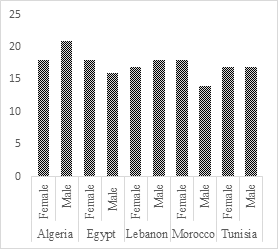
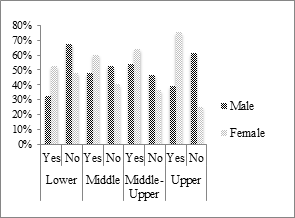
A great number of youth people imagine themselves married in the future as social horizon to achieve a new social status but changing social conditions difficult entering marriage due to job market deficits and diverse social constraints retards the marriage age. In the case of our age cohort, civil status situation describes that single is 67,20% of young men and 43% of young women; while 23,5% of young men are married, the figure increase until 38,50 % in the case of young women. Consequently, the delay in marriage affects more to young men than young women. This post-figurative future is, at same time, questioned by young men and women of the selected cohort recognize “do not want marry” for diverse reasons and emplacing them in a paradox between the mandatory obligation toward marriage and the own decision about it. Following Margaret Mead (1970), post-figurative cultures correspond with situations in which young people learn primarily from their elders; the co-figurative cultures appear in contexts in which young people learn from their peers; and, finally, pre-figurative cultures emerge in those social situations in which adults learn from young people. At this point is important to attend at the results of this question considering class and gender. We observe the higher figures of negative answers among men young self-perceived as lower and upper classes and similar results per middle classes. In the case of women, in all the cases, the positive answers are higher than negative.
Due to marriage is mandatory for both sexes, the reason for this different position about marriage is determined by gender model. For young men, “finding a spouse becomes central to a masculine trajectory and a man’s status in the eyes of others. Men’s heterosexuality and desire to be married is taken for granted” explains Ghannam about boys of al-Zawiya al-Hamra a lower income neighbourhood of Cairo. In this sense, the current situation causes a marriage paradox among young men for different reasons according with social class. As is pointed out in Algerian Focus Group, young people consider that marriage is a real-life project but it takes time and a lot of effort to start a family. In conclusion, one of the cause of this paradoxical situation is that “this is a project…, but you think immediately in the financial problem, people go into debt louse marry. Before it was something good, now it is not” as a 27 young Algerian man explains in a Focus Group discussion.
In the case of young women, a 25 years old Algerian engineer young women remarks “marriage means getting rid of her parents’ authority and more freedom… to create a family to complete life”. Or in the case of 29 years old student Egyptian young women that still lives with her parents and cannot have her independence and living alone is not quite an option as it is against culture and norms as she explained. Marriage will introduce her to a new life, but she is not searching for other ways to explore her potential or unleash a potential she does not even know or believe exists. Acquiring autonomy and emancipation is a key reason to understand the preference among youth women to marriage to end their transition to adulthood but, at same time, they want “to meet a man who respects me and helps me, so that I will be able to do everything I couldn’t do when I was living with my parents” a 25 years old Algerian young engineer women alleged.
If the choice of partner influences the decision making for youth girls, the economic situation disrupt the decision about life-plan for youth men. This gendered perspective is commonly accepted by society. As a Moroccan stakeholder remarks in a focus discussion, “I think that the key element is employment, since young people feel [that in this way they may] gain independence from their parents and then switch to another stage (marriage, future, and other issues that are necessarily problematic for youth)”. The economic difficulties are increase the marriage for young men, “they found apartments as unaffordable purchases and yet they felt it necessary in order to provide for their future spouses highlights that pressure many felt to fulfil social obligations. Similarly, young women often delayed marriage and family planning until much later” explains an office worker Lebanese young woman of 29 years old. Accordingly, the results of the question about the motivations to save money, young male present higher numbers than young women:
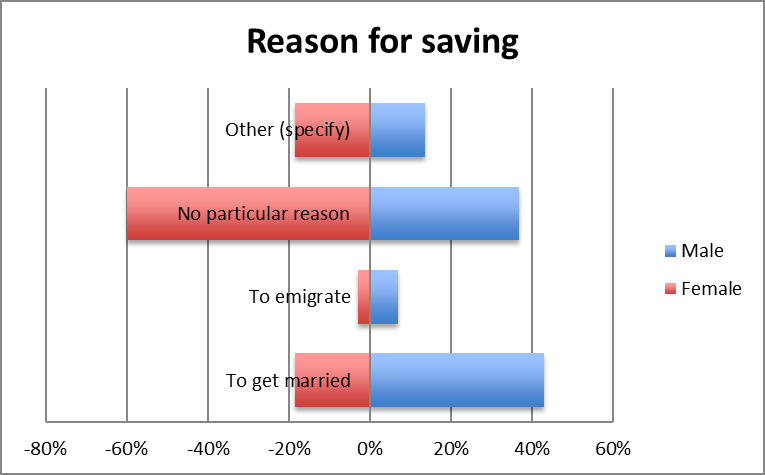
If you consider class position, you can find that 32.30% of youth men of lower classes, 47.60% of middle classes and 39.70% of upper classes has selected this choice while youth women selected this option in 10.70% per lower classes, 25.80% per middle classes and 18.20% per high classes. This figures suggests that economic effort to marry still falling on the male side but youth women, as was mentioned above, especially in middle classes are trying to change this custom and balance the situation. In the case of household dimension, we do not find significant differences.
Marriage, Youth and Family Politics
Family is a source of social capital. This means that family honour, respectability or wasta’ connections are resources for youth to achieve adulthood via marriage. Wasta’ is an Arab term to design the social networks system of an individual in the different dimensions of their life. In the current situation, the role of wasta’ and the importance of family networks in finding good jobs or partners is normally taken for granted. In consequence, good wasta’ connections are a source of inclusion for young people but while it could be perceived as negative depending on theoretical perspective of the researcher. But, also could be seen as positive social phenomenon. This paper is not related to this question that implies a discussion on epistemological approaches to other cultural and historical formations differentiated from Western perspectives. All these attributes are related with education, job position and economic circumstances to conform the prestige and reputation of youth as member of a family. Being young, in this situation means managing a whole range of complex identities, and rather than transition, it is about navigating through social and personal circumstances. These conditions influence the youth decision about marriage and their own possibilities of marry. Marriage is not a criterion for the success of the individual but success is necessary in studies, in having a good job position, in spending the money earned on supporting one’s family and to be “respectable”. The combination of this intersection identities the individual results on their “marriageable”. But, where youth are finding their mate?
Following our data management, survey clearly shows that the family is most common source to find a partner. We do not observe decisive differences between social strata and gender in the answer but the higher figures are 40.30% for youth men and 39.30% for youth women of lower strata; and the lowest 32.7% for youth men of middle classes. In the case of upper classes figures increase until 35.00% for boys and 37.20 for girls. Most significate differences are found attending to household dimension. In this case, in each social stratum, we find higher numbers for youth women. The average range from 46.90% of the middle classes to 33.30% of upper and 43.80% per lower classes. For youth men, the higher number is 37.50% for upper classes and 28.70% for lower classes.
The second most selected answer is “Neighbours”. If we attend to social strata and gender, we find 30.00% for middle class, 20.90% for lower classes and 17.50% for middle- upper classes youth men. This figures maintain similar averages for youth women except for lower classes where it increases until 27.70%. In the case of household and gender, the tendencies are similar that in the case of the answer “Family” with higher figures for youth women than youth boys: from 35.30% of the middle classes to 33.30% of upper and 26.90% per lower classes. In the case of youth men, the higher number is 26.20% for middle classes and 23,3% for lower classes.
The answer “Friend/ acquaintance” is the third option more selected but the figures does not overcome the 24,30% for urban upper classes youth male. The lowest percentage is 7.50 for rural lower classes youth. Several differences are found in the case of household social dimensions with higher numbers for urban youth of each stratum. This numbers suggest some conclusions. The youth in rural areas are more under the social control of the family in the decisive step to find a partner while in urban areas the possibilities to escape from this parental control could be easier. Other answers have not significate numbers as places of education or training, internet or group activities. The advent of the internet as a means of access to information but also communication and its strong use by young people does not seem to have considerably increased the possibilities of meeting between the sexes. Globally, we can assert that the family and neighbours plays a very important role in the choice of the spouse. Approximately 60% of relations between the two sexes arise from an initiative of the family circle or from the neighbours, including the compulsory spouses arranged by the family. Let us note here that girls seem to undergo more pressure from their parental circle in the choice of the spouse than boys. As a 29 years Lebanese women explains, “well…since we were small we had stories (of marriage) from our family. Someone who didn’t marry who stay/live within the family…but you know since I was 22 years my family were saying now is the age and time for you to marry. Here I am at nearly 30 and I am still not married. The days have passed by…”. From an anthropological perspective, the family follows trying to push to the marriage youths, especially women, as political question to save respectability and honourability, this is their social capital. At same time, the increasing importance of friends as social group to find a wife or husband announces a tendential change in the agencies of youth in this vital aspect of their way to adulthood according with social norms. Despite the obligation of marry, several youths try to decide by themselves their mate, an independent, autonomous choice is crucial when it comes to marriage for young people in the region.
A young woman teacher of Algerian rural area explains, “before, when the boy or girl grow up a little, they marry them, and for us it is as retrograde behaviour, because for people marry today first they must love”. Or in words of a 25 years old student women from a Tunisian rural area explains about marriage: “if it comes it is fine, otherwise I won’t regret it. What can I do? I won’t chase any man; I must first meet the person that I will love… at least when I would not have the opportunity to work he could take me in charge, (laugher), I want him to be... quite handsome... but not more beautiful than me... but rather good-looking... I want him to really... a man... a man, not like nowadays youths, futile.... (She laughs)”. In other sense, “the girl she thinks of another way, I know I’m getting married, but I must work because I do not totally trust a man, the day he leaves me, or I do not know I did not realize that on me, I’m independent”. As Cantini explains for Jordanian youth: “Values of family and marriage are major ones as they constitute fundamental ground in preserving patriarchy and gender roles. It is in this context that it is crucial to look at how romantic love is lived by young people in a country like Jordan, usually considered as being rather conservative in public morality [30].
An important attribute to choose a husband or wife is cultural capital. In focus groups discussions, the participants agreed that the reason to why the grade certificate is important lies in the society’s influence; either to get married or status in the society, they all believed that the educational process generally affected the way a person thinks. More education level is understood as more open mind person. Even though many agreed and assured that education is not a mean for social mobility, they reasoned it “in order to have a status in the society, you need to have a certificate or a master’s certificate or a diploma, only to have status in the society” remarks a young man in a focus group discussion in Cairo. And, “concerning marriage, the education has a priority, people treat him well because he has a degree… working means to start a career for one’s future. It is also a mean to satisfy needs as well as those of the family” explains an Egyptian young girl during a discussion in Imbaba. When dealing with people in issues concerning marriage, the educated has a priority, working means to start a career for one’s future. It is also a mean to satisfy needs as well as those of the family.
More than an obligation for these young women, marriage means freedom, love and autonomy in current days. In life stories, young women are combatant family control and three main features are especially valuated: love, freedom and economic independence.
A Story about Marriage and Social Constraints
M was born in 1987 and works in public institution. She is single and currently living with her family: her parents, four brothers and two sisters in Djelfa, a very conservative area. “I do not ask for money from my father, I work and I have my salary, I have almost the same salary as my father after he retired…Sometimes, I help in household expenses when I see the need, without someone else asking me…I am happy to help out with the household expenses from time to time and buy what is missing”.
For M, to get a job and have a salary makes her feel free, independent and socially useful and which manifest a hope for social change. “I love my job very much, but women working in the field of sport suffer from a kind of social pressure, the society where I live is patriarchal, it believes that some of the jobs are reserved for men, people don’t have a culture of women’s sports… I did not feel this gaze before or rather I did not care about it. At the beginning, I wore a sports tracksuit and I used to go out on the street, I could see questions in the eyes of others, asking me: are you a boy or a girl? People are not accustomed to seeing “liberal” girls, different from the other girls, walking with confidence in the street, especially as I don’t wear the hijab. Recently, since almost a year ago, this social gaze has started to bother me, I have started to feel like I draw attention in the street, like I am the focus of everyone’s attention... In my first year of work, I started working outdoors, in a stadium located under a bridge in the city centre in view of all without that bothering me but now if they asked me to work there I would not accept. Sometimes I regret choosing to work in a field that society doesn’t accept women working in and other times I say that I must do everything I can to exercise my work, which I love, in a place where there is a culture of women’s sport and accept women’s work in the field of sport… For example, I do not wear the hijab like most girls of my generation and I go out wearing a tracksuit and for reason that I am always “between brackets” in the street because I represent the exception. In the past, I did not care about that but now I have become sensitive to the looks of others. I feel that I have to submit to the prevailing lifestyle. I feel obliged to be and to live like the others so as to decrease the feeling of distress caused by the lack of acceptance by others… I want to live somewhere I’m freer”.
“If I had a good chance to migrate to another country, I would go on the condition that I make sure that I will live in better conditions. I’ve been thinking of migration since I graduated from university, I thought at first of local migration, to Algiers, I wanted to rent a flat and work there. I thought that I would be better there, I thought that I would find success in my work and could realise my goals there. Society and mentalities there are more open-minded but my father did not agree to let me stay in a flat alone. He told me that he would allow me to go to France if I had the opportunity, but not to another province in Algeria.
“In my case, I have few chances to get married in Djelfa. It is difficult to find a man who accepts me as I am, working in the field of sports and not wearing the hijab. Men here in Djelfa are afraid of this profile of girls and I’m not ready to change my way of being and abandon work to get married. I may accept wearing hijab for that, but it’s impossible to leave my job… marriage remains a holy…”.
The decision about their life, as you can see in the text, is very difficult for her, and finally her father has the lasts words. Her two options, migration or marry, includes surrender in her life plan: leave the family or her professional career and personal convictions on women role in the society. In consequence, despite her economic independence, her decisions are affected by external opinions and social constraints.
A story of Married Young Man
A is 29 years old married Moroccan young men. He has completed the social maturity, is married and have two children. He works as Cabran in a rural area. As is defined in the ethnographic report a “Cabran often plays an intermediary role between the workers and the farmer. The farmer has a particular job that needs to be done and informs the cabran about this. The cabran is then responsible for gathering the workers, transporting them to the field, organising and overseeing their work and paying them afterwards”. This is, an expert in human resources. He starts to work at 11 years old as craft apprentice in Fez. “I used to work during the holidays. At the beginning my father pushed me to work during the summer months. I much appreciated it, since it gave me the possibility to earn some money and to give part of it to my father. At the age of 13 I quit school… My work consisted of helping the “moâwin” (the artisan). I earned 80 to 100 dirhams (DH) on a good day. Sometimes I earned 60 to 70 DH a day. I worked there for six years but the problem was that I was not declared and did not have social security”.
At 14 he moved to rural area, he remember his first day of work: “the first day my cousins woke me up at 5 o’clock in the morning. We were four young men: my two cousins, one of their friends and myself. While walking from our house to the Mouqef, I wondered about the work and how I was going to do it. When the client arrived at the Mouqef -a gathering place, often situated on the outskirts of the agricultural centres, where wageworkers come in order to find a job for the day. A farmer, or intermediary (usually men) come with a pick-up and search for wage workers who can work for the day, or sometimes for a week, depending on the work- my cousins told the client that I would join them. We left in a Mercedes-Benz 207 (“mitin wseb3a”). My cousins told the client that it was my first day of work, and he replied that he would find an easy job for me. I carried the boxes in which the peaches are stored. We started at 7 o’clock in the morning and we finished at 12:30. I earned 80 dirhams. I was happy and took some peaches home”. After years of work, today he is a Cabran, “now people call me and inform me that a certain job needs to be done.” This professional network also played an important role in his professional development. His knowhow, network, and his professional reputation created trust among farmers who gradually gave him more responsibility in the work and provided him with the opportunity to upgrade his professional status: “I used to be a “simple labourer” and four years ago, I became Cabran.” As the ethnographer explains, “A. life story well reflects his concerns relating to dignity and to earning the money to feed his family. As a male worker, through his experiences and professional network he has been able to gradually upgrade his professional status and obtain more responsibilities and a higher salary…. His job search is accompanied by a quest for dignity both professionally and socially – his wish to build a house, establish a profitable project (which is not related to agriculture) and send his children to school”. He was a marriable men according with social norms.
Finally, he got married at 20 years old and her wife was 15 years old and she does not work. “She was very young when I married her. She didn’t have the legal age to marry. I had to pay 700 DH to the ‘lâadoul’ (the notary) so that he would assign me a ‘iltizam’ (commitment)”. A. explains that there are not many alternative options. He has to work in order to feed his two children. “Others who do not have any children can opt to migrate… I’m married and I am settled here. And yet at this moment I would like to go abroad”. A. life story is an excellent example of a figurative life-plan.
Final Considerations
Arab Mediterranean youths are simultaneously trapped by the physical and structural realities of poor education, unemployment, and failure of family formation, as well as by the cultural realities of societies quick to judge “deviant” attitudes. Whatever their class, gender, ethnic or religious origin, many young people cannot afford to start families and homes. Moreover, they cannot be fully independent and participate in the privileges and responsibilities of social adulthood associated to married status. Even if they have acquired economic independence, they are excluded from social and civic life as Backeberg and Tholen [31] remarks, so transition to adulthood is not complete until marriage is effective. Moreover, the social constraints for young people to achieve personal autonomy or emancipation through the traditional markers of it in Europe as economic independence or living alone could be not significate variables to measure the transition to adulthood of Arab youths.
Religious perspective follows being a strong value for young people at a personal level as well as in social life. More particularly when it is about professional, economic activity or marriage. These aspects of the social life seem to be strongly related to the religious principles of a majority of young people. It can be inferred that, even if young people are the bearers of new ideas, creative and ambitious, they remain attached to the major principles of the figurative culture based largely on historical traditions and religious references [32, 33, 34, 35, 36, 37, 38].
While some Arab Mediterranean youth are experiencing with new outlooks on what adulthood should “mean” in terms of personal space and property, others prefer the idea of complete their transition quickly. In both cases, however, the pivotal issue is choice: choosing to participate in the traditional family unit, and/or choosing to pursue a more individualistic worldview focusing on independence and the self to define a life plan. The economic constraints, particularly on marriage, remove the element of choice and leave youth of all persuasions reliant on their parents and family.
In general, those young people arrayed to figurative cultures have an easier way to arrive to marriage than those young people that are trying to follow a pre-figurative orientation in their decisions. Consequently, achieve adulthood and social maturity depends on the performative agency of individuals. But youth are in a framework of limited agency by social constrictions. This is an agency influenced but not determined by the context in which the subjects are located, which has internalized-reference frames, as well as the facts or actions of the environment that influence their own life experience. Finally, another feature of the transition from juvenile period is the temporary extension. It provokes postpone the definitive independence and assumption of traditionally defined roles for the adult population for a large mass of young people.
Our hypothesis could be defining as a “gender paradox”. While boys are still subject to traditional rules for marriage which involves the need to find stable and well-paid jobs to obtain the necessary goods to establish a new home, girls are building their transition from a more independent way. Somehow, the patriarchal model of gender plays against an effective transition to adulthood for young people, especially for youth women. This provokes heterogeneity in youth transitions in the region; a loss of sense of transition as a normative and linear sequence; and the crisis of the traditional model of dependency and preparation for adult life. Now you can describe an increase in the number of variants of transition that incorporate a higher level of complexity and uncertainty about the temporal and social boundaries of the juvenile period.
References
-
Salehi-Isfahani D, Navtej D (2008) Stalled youth transitions in the Middle East: A framework for policy reform. Middle East Youth Initiative Working Paper 8.
-
Kovatcheva S (2008) Work-life dilemmas: Changes in work and family life in the enlarged Europe. Sociological Problems.
-
Leccardi C, Feixa C (2012) Introduction: Youth in transition(s). In: Leccardi C, Feixa C, Kovatcheva S, Reiter H, Sejulik I, (Eds.), Young People and social change after the fall of the Berlin Wall, Council of Europe Publishing, Strasbourg, pp: 5-14.
-
Elder G (1994) Time, Human Agency and Social Change: Perspectives on the Life Course. Social Psychology Quarterly 57: 14-15.
-
Elder G, Kirkpatrick P (2003) The Life Course and Aging: Challenges, Lessons And New Directions”. In Settersten R (Edn.), Invitation to the Life Course: Toward New Understandings of Later Life. New York: Baywood, pp: 33.
-
Mayer KU (2009) New Directions in Life Course Research. In Annual Review of Sociology 35: 413-433.
-
Hitlin S, Eelder G (2005) Agency: An Empirical Model of an Abstract Concept. Paper presented at the Annual Meeting of the American Sociological Association.
-
Douglas M (1970) Natural Symbols: Explorations in Cosmology, Barrie & Rockliff, Cresset Press, London.
-
Furlong A (2009) Revisiting Transitional Metaphors: Reproducing Social Inequalities Under the Conditions Of Late Modernity. Journal of Education and Work 22(5): 343-353.
-
Creenshaw K (1993) Mapping the margins: Intersectionality, Identity Politics, and Violence Against Women of Color. Stanford Law Review 43(6): 1241-1299.
-
Yuval-Davies N (2012) The Politics of Belonging: Intersectional Contestations. University of East London, London.
-
Collins P (1986) Learning from the outsider within: the sociological significance of black feminist thought” in Social Problems (Oxford University Press) 33(6): S14-S32.
-
Rough A (1987) Reveal and conceal. Dress in Contemporary Egypt. American University Press, Cairo.
-
Singerman D (1995) Avenues of Participation. Family, politics and networks in Urban Quarters of Cairo. Princeton University Press, Princeton.
-
Ghannam F (2013) Live and die like a man. Gender dynamics in urban Egypt. Standford University Press, Standford.
-
Bayat A (2013) Life as Politics: How Ordinary People Change the Middle East, 2nd (Edn.), Standford University Press, Stanford.
-
Koning A (2009) Global Dreams: Class, Gender, and Public Space in Cosmopolitan Cairo. American University in Cairo Press, Cairo.
-
Sukarieh M (2012) From Terrorists to Revolutionaries: The emergence of “youth” in the Arab world and the discourse of globalization. Interface: a journal for and about social movements 4(2): 424-437.
-
Mauss M (1966) The Gift; Forms and functions of exchange in archaic societies. Cohen & West, London.
-
Singerman D (2007) The economic imperatives of marriage: emerging practices and identities among youth in the Middle East. Middle East Youth Initiative Working Paper 6.
-
Assaad R, Roudi-Fahimi F (2007) Youth in the Middle East and North Africa: demographic opportunity or challenge? Population Reference Bureau, Washington, DC.
-
Assaad R, Barsoum G (2007) Promoting the social and economic inclusion of young people in the Middle East. Youth Exclusion in Egypt: In Search of “Second Chances”, Middle East Youth Initiative.
-
Silver H (2007) Social exclusion: comparative analysis of Europe and Middle East Youth. Middle East Youth Initiative Working Paper 1.
-
Heinz W, Krüger H (2009) Youth Transitions in Age of Uncertainty. In: Furlong A (Edn.), Handbook of Youth and Young Adulthood; New Perspectives and Agendas, Routledge, London.
-
Machado Pais J (2000) Las transiciones y culturas de la juventud: formas y escenificaciones. In Revista Internacional de Ciencias Sociales. UNESCO, París, pp: 219-232.
-
Vercellin G (2003) Instituciones del Mundo Musulmán. Bellaterra, Barcelona.
-
Salvatore A (2009) The Reform Project in the Emerging Public Spheres. In: Khalid Masud M, Salvatore A, van Bruinessen M, (Eds.), Islam and Modernity. Key Issues and Debates. Edinburgh: Edinburgh University Press.
-
Roudi-Fahimi, F. and El Feki, S (2011) Facts of life: youth sexuality and reproductive health in the Middle East and North Africa. Population Reference Boureau.
-
Eickelman D (2002) The Middle East and Central Asia: An Anthropological Approach, 4th edition. Upper Saddle River NJ: Prentice Hall.
-
Cantini D (2012) Questions of love and social acceptability among young Jordanians. ”Paper presented at the International Workshop: The Trouble of Love in the Arab World: Romance, marriage, and the shaping of intimate lives. University of Lausanne, Switzerland.
-
Backeberg L, Tholen J (2017) The frustrated generation: The exclusion of young people in Arab Mediterranean countries from decent employment and long-term life perspectives.”Sahwa Scientific Paper-2.2”
-
Bennani-Chraïbi M, Farag I (2007) Jeunesse des sociétés arabes: par-delà les menaces et les promesses, CEDEJ/ Aux Lieux d’Etre, Cairo.
-
Bensalem L, Locoh T (2001) Les transformations du mariage et de la famille. In: Vallin J, Locoh T, (Eds.), Population et développement en Tunisie: la métamorphose, Cérès Éditions, Tunis.
-
Elder G, Crosnoe R (2004) The Emergence and Development of Life Course Theory”. In: Mortimer J, Shanahan J (Eds.), Handbook of the Life Course. New York: Springer, pp: 3-19.
-
Evans K (2007) Concepts of Bounded Agency in Education, Work and Personal Lives of Young Adults. International Journal of Psychology 42(2): 85-93.
-
Lesley z (2008) Life Course Transitions, Social Class and Gender: A Fifteen Year Perspective of the Lived Lives of Canadian Young Adults. Journal of Youth Studies 11(2): 15-145.
-
Murphy EC (2012) Problematizing Arab youth: generational narratives of systemic failure in Mediterranean Politics, pp: 5-22.
-
Sánchez GJ (2014) SAHWA Concept Paper: Contemporary Youth Research in Arab Mediterranean Countries: Mixing Qualitative and Quantitative Methodologies.
- The Indispensable Role of Informal Caregivers in Supporting the Aging Population
- Socio-Religious Significance of Kamakhya Temple in Guwahati, Assam
- Is Anthropology Possible?
- A Contribution to the History and Paleobiology of Harput/Elazığ Türkiye and Its Surroundings
- A Study on the Cowrie Shells of the Dimasas in Assam
- The Significance of International Organizations Cooperation in the Efficient Resolution of Global Conflict