
On the Pandemic Trail: Planning Post-Covid Outdoor and Indoor Healthcare
Human Settlements and Ecological Footprints: As such, the ecosystems are the planet's life-support systems for the human species and all other forms of life. The ecological alterations in turn may lead to irreparable climate change, and have repercussions on human health, which are complex. The ecological alterations affect the distribution of patterns of human settlement, nutritional and health status, and disease patterns including pandemics. COVID-19 Pandemic and the Clinical Fallouts: There have been turbulent times with the novel pandemic COVID-19, engulfing, imprisoning, and debilitating the humanity all over the Globe. The unabated transmission of the virus led to immense human suffering and overwhelmed healthcare facilities. The disease has high infectivity and fatality, and the survivors have propensity to suffer with organopathies and exacerbation of other pre-existing diseases. Changing Healthcare Scenario and Options: The fallouts of COVID-19 pandemic have been striking. The pandemic has been a reality check for various provisions of available healthcare. As the existing healthcare facilities were unable to cope with the sudden surge leading to an intense pressure on the system, the pandemic has acted as a transformation catalyst and accelerated transformation in healthcare including remote and Hospitalat-Home care. Planning Healthcare for Post-Covid illness: The COVID-19 now persists as endemic in most places with the infection affecting those with a high-risk. Presently, a heightened awareness is required for diagnosing post-Covid symptoms and complications. There are needed specialized OPD services for diagnostic workup, treatment, and regular follow up, along with a dedicated indoor facility for profiling the post-Covid illness, treatment, and intensive care.
Global Climate Change and Health
The Ecosystems and Human Settlements
As such, the ecosystems are the planet’s life-support systems for the human species and all other forms of life. Various activities related to human settlements such as agriculture and deforestation, urbanization, and industrialization have influence both on biological and non- biological components of the ecosystems. The ecological alterations described as ecological footprints may be short- term and permanent, local as well as global, and reversible and non-reversible. Further, the notion pertaining to ecosystems being human centered, labelled the anthropocentrism, is detrimental to the ecosystems.
The ecological alterations in turn lead to irreparable climate change, and have repercussions on human health, which are complex, and often indirect. The human health is also influenced by exposure to certain viruses, bacteria and other forms of microbes or parasites. The infectious agents, especially the viruses are constrained geographically and seasonally by ecosystems and sensitive to climatic and micro-environmental conditions and affected particularly by encroachment into or the destruction of wildlife habitat.
Ecological Footprints and Climate Change
During recent times, ecosystem alterations have occurred on a large scale with catastrophic effects. There is an increasing risk of accelerated multiple, abrupt, and potentially irreversible non-linear changes in ecosystems and increased likelihood of loss of biodiversity. There has been an upturn in the emergence or re-emergence of infectious diseases with due to factors such as intensified human encroachment on natural environments (Figure 1).
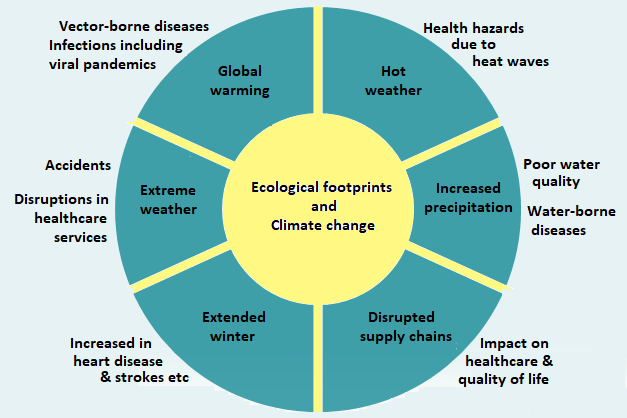
Other related contributory factors include global warming and extreme weather, reductions in biodiversity (including natural predators of vector organisms), the livestock and poultry production methods, and increased trade in wild animal species. Concurrently, habitat alterations lead to changes in vector breeding sites or their reservoir host distribution, and interspecies host transfers.
Concurrent Health Risks and Future Trends
The ecological alterations affect the distribution of patterns of human settlement, nutritional and health status, and disease patterns including infections. Several human diseases including influenza, tuberculosis and measles are zoonoses that long ago became established within human populations after crossing from domesticated animal species including chickens, cattle, and dogs. In addition, modern farming practices, trade practices, and travel are implicated in the emergence of various diseases including the recent COVID-19 pandemic.
The infectious diseases including zoonoses, due to ecological alterations are expected to increase and there is a need to identify the epidemiological correlates associated with ecological changes, including the demographic and geographical factors and explore possible future trends. As such, reducing anthropogenic carbon emissions is critical to the mitigation of climate change. There is a need to increase the resilience of the ecosystems in form of planned interventions to protect the earth and human health.
COVID-19 Pandemic: Epidemiological Update
There have been turbulent times with the novel pandemic COVID-19, engulfing, imprisoning, and debilitating the humanity all over the Globe. Concurrently, the disease was highly infectious with a high case fatality rate. There has been extensive research related to the agent factor, the pathogenesis, clinical features, and outcomes in COVID-19 patients, along with animal studies and preclinical studies pertaining to the immunity and immune response profiles to virus, SARS-CoV-2, and related to the Covid vaccines.
As disease entity, COVID-19 has had certain alarming epidemiological characteristics. It has a rapid exponential spread and a substantial transmission can occur without any presentation of clinical symptoms and signs. There is another epidemiological update showing that people who test positive for viral RNA may not be necessarily infectious [1]. In fact, the studies indicate that 10 percent of patients cause 80 percent of all the infections, whereas most patients to the tune of 90 percent do not infect further [2].
As the experience showed the unabated transmission overwhelmed healthcare facilities and curative options were limited. As a result, the Covid-19 pandemic because of high infectivity and fatality and has led to unprecedented challenges leading to certain key changes in provision of healthcare through hospitals and clinics and modified the modalities of healthcare delivery to protect both the public and healthcare workforce [3].
Impact of Covid-19 Pandemic on Health
The Disease Course: Short-term and Long-term
Those infected and survived Covid-19, following recovery can potentially suffer with organopathies and functional impairments, and exacerbation of other pre-existing diseases, such as heart disease, respiratory conditions, and diabetes. As the upper respiratory mucus membrane is the most probable starting point for COVID-19 infection, the SARS-CoV-2 virus infects various cells in the respiratory tracts, the cells of nasal cavity being the most infected and the least infected are deeper areas in the lungs. The gradient of infectivity decreases from the upper to the lower respiratory tracts [4]. The virus infects type II and type I pneumocytes and endothelial cells, leading to severe lung damage through cell pyroptosis and apoptosis.
In severe cases, there occurs lymphopenia, neutrophilia, depletion of CD4+ and CD8+ T lymphocytes, and massive macrophage and neutrophil infiltrates in lung tissues, and pulmonary damage is attributed to both the virus related cytopathy and immunopathologic damage. T cells have a more protective role than antibodies in immune response to the virus [5]. As with increasing age, the reservoir of T cells declines and immune response becomes less coordinated, there is increased susceptibility of elderly people to severe or fatal Covid-19. Post-mortem lung histology also shows the diffuse alveolar damage with perivascular T-cell infiltration along with disrupted cell membranes, presence of intracellular virus, and widespread thrombosis with microangiopathy in the pulmonary vasculature [6].
Cardiovascular complications are a major threat in COVID-19 apart from the respiratory complications [7]. There occurs myocardial injury with ST-segment elevation due to plaque rupture, cytokine storm, hypoxic injury, coronary spasm, microthrombi, and direct endothelial or vascular injury [8]. Also, myocardial injury is a common finding in hospitalized COVID-19 patients and those with a prior cardiovascular disease are more likely to suffer with myocardial injury than patients without CVD [9]. In fact, elevated troponin levels have been documented to have a higher risk of mortality [10].
The virus appears to infect endothelial cells and cause inflammation and signs of clotting. Thus, those with disorders compromising the endothelium, such as diabetes and hypertension, and elderly are at a greater risk of serious disease [11]. In addition, COVID-19 affects the brain, kidneys, liver, and other organs including skin [12]. The liver involvement is characterized by elevated AST and ALT, dilated sinusoids with lymphocytic infiltration of liver parenchyma, leading to non-Obstructive jaundice, and often no radiological hepatobiliary changes [13]. The impairment in liver enzymes, mainly ALT/AST, in severe Covid-19 pneumonia is significantly higher than patients with mild disease.
The Long-term Effects and Complications
As the virus hits especially lungs and heart, there is risk of long-term pulmonary and cardiovascular complications. In lungs, there occurs damage to alveoli and fibrosis. In heart myocardial infarction and myocardial damage potentially lead to cardiomyopathy and heart failure. In brain, apart from strokes, seizures and Guillain-Barre syndrome, there is increased risk of developing Parkinson’s and Alzheimer’s disease which have been related to vasculopathy and endothelial injury, and thrombosis [14]. The elderly people are more prone to long-term effects, but younger persons who had milder form of the disease may also suffer with persistent symptoms [15]. Covid-19 may trigger the onset of diabetes in healthy people. Diabetes, on the one hand, is associated with increased risk of Covid-19 severity and mortality. The virus appears to cause a complex dysfunction of glucose metabolism.
Further, a significant number of patients with exposure to COVID-19 infection following a short period of convalescence develops a relapse with persistent symptoms, especially myalgia, intense fatigue, sensation of fever, shortness of breath, chest tightness, tachycardia, headaches, and anxiety (Figure 2). The neurologic manifestations are common in hospitalized patients with COVID-19 and Romero-Sánchez et al have reported that more than half of patients presented some form of neurologic symptom [16].
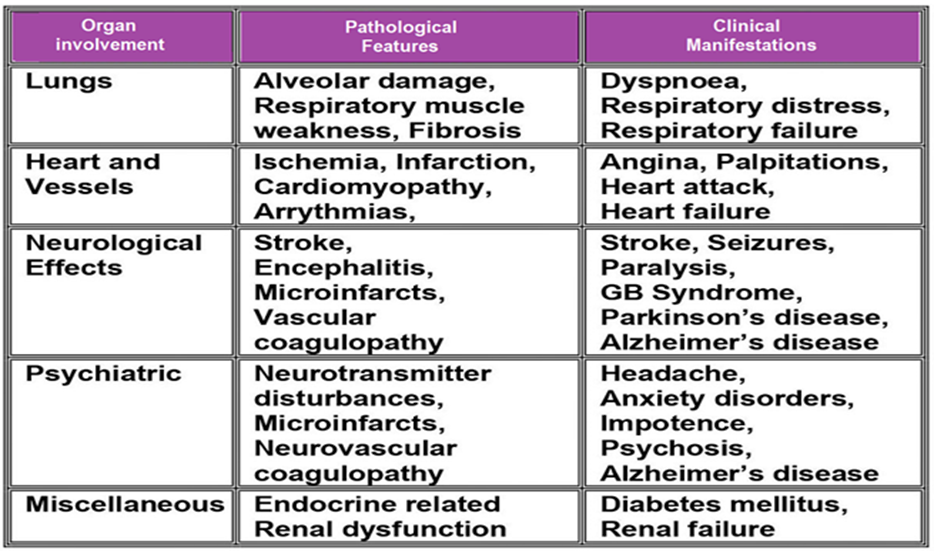
As per the study by Romero-Sánchez et al., the most common neurological or psychiatric condition was a cerebrovascular event in 77 patients (62%), followed by altered mental status in 39 (31%). In patients with altered mental status, 9 had an encephalopathy, and 7 had encephalitis. The other 23 patients (59%) had psychiatric disorders including psychosis, a neurocognitive syndrome, and affective disorders; 2 patients experienced exacerbations of pre-existing mental illness. Half of the patients with altered mental status were under age 60, whereas 82% of patients with cerebrovascular events were over age 60. The long-term psychological impact of the Covid-19 pandemic is yet to be fully understood.
The Evolving Healthcare Innovations
Changing Healthcare Scenario and Options
The effects and fallouts of COVID-19 pandemic are striking. It has impacted the social, economic, political, and healthcare aspects of human life. In fact, the pandemic is being considered a major health hazard that may continue to afflict human life in the foreseeable future. The pandemic has led to transformation of life at the individual level as well as at the community and collective levels.
As for the health systems, the pandemic has been a reality check for various provisions of available healthcare. As the existing healthcare facilities were unable to cope with the sudden surge and manage intense pressure on their workload, the pandemic has acted as a transformation catalyst. It has accelerated implementation of changes in healthcare with more emphasis on preventive measures, remote care, and utilization of innovative digital technologies. The Hospital- at-Home (HaH) concept which was already making inroads in conventional hospital-based healthcare approach has come to the fore as the next frontier in healthcare delivery [17].
Like the scenario in various sectors, the health services and healthcare too have had profound impact owing to COVID-19 pandemic. In fact, the COVID-19 pandemic has led to examine various provisions of healthcare available all over the globe in different countries, including the preventive and therapeutic, outdoor consult as well as indoor and intensive care. Whereas in China, the totalitarian regime was able to deal with the pandemic with an iron hand, fully bifurcate COVID-19 healthcare from that for non-COVID-19, and ably carry out preventive measures and vaccination program in an authoritarian way, the situation was dealt in other countries differently.
On the one hand, the public health surveillance programs and available infrastructures were shown as consistently suboptimal. On the other, the existing healthcare facilities were unable to cope with the sudden surge and manage extreme pressure on their workload especially in the settings of acute care. Further, even with contingency plans well laid out, healthcare system was incapable to cope with the abrupt surge in demand. The COVID-19 pandemic, thus, has acted as a transformation catalyst, accelerating the implementation and adoption of innovative changes in healthcare and the emerging prototypes of healthcare delivery appear to put more emphasis on remote care, and utilization of innovative digital technologies.
Transformation of Indoor and Outdoor Care
The COVID-19 pandemic has made us aware that a considerable proportion of healthcare can effectively be tendered remotely with technologically empowered approach instead of conventional way. In brief, the salient features of the healthcare in the post-COVID-19 period entail-
- Shifting of large number of patients to remote care: We have witnessed the use of telehealth for quality transfer of data, and audio and video communications during the COVID-19 pandemic. In fact, the pandemic has been a catalyst for swift implementation of digital and online practices for consultation, treatment and follow up and replaced the clinician/patient face-to-face consultations significantly.
- In the hospital setting, the remote care for indoor and ICU patients, and those visiting emergency has been and being widely used. Simultaneously, indoor and ICU monitoring and supervision of patients in hospital have effectively been done by off-site experts. This trend is likely to persist and expand as it provides a high coverage as well as convenience both for clinicians as well as patients.
- In the mental healthcare set up the remote consultation is proving helpful. It is likely that once mental healthcare institutions have developed the capabilities of serving their patients through digital technologies, a blended approach in future would emerge, where e-mental health solutions cover an increasingly greater part of routine services.
- The remote care system in form of HaH is likely to serve as an adjunct for the gradual adoption of newer and advanced technologies. Apart from teleconsultation and care, the use of drones as delivery vehicles for critical supplies, robotics, and smartphone-enabled monitoring for patients’ care have made inroads and are likely to be relied upon in a big way in near future.
- As related to the public health, with the availability of the digital and mobile-enabled technologies, there is an improved operation of surveillance systems and data analysis. These technologies can be deployed en-masse to monitor quarantined individuals and trace exposed individuals with temporal and geographical correlates.
The Evolution and Elements of HaH Concept
The healthcare, in general, is patient centered services and includes diagnosis and treatment and other supportive aspects of healthcare. The integrated healthcare involves adequate provision and efficient delivery of safe and quality health services, whereas the people-oriented approach implies planning the healthcare services by assessing the needs and expectations of community and applying them in a methodological and efficient way. The integration of modern technologies including telemedicine in healthcare services in form of HaH is likely to improve the quality of healthcare in general.
As apparent, the COVID-19 pandemic has led to realization about the limitations of existing healthcare systems and their capacity to respond to healthcare emergencies including infectious disease epidemics It has highlighted the necessity for proactive planning and preparedness and technologically oriented solutions for healthcare provision and the need for significant healthcare transformation. In this perspective, it has led to evolution and expansion of the concept of HaH incorporating communication technology-based approach as a major step to deliver healthcare at home or closer to home.
The Hospital-at-Home (HaH) concept was already making inroads in the conventional hospital-based healthcare approach for various chronic conditions. The hospice service for elderly as practiced in the United States being a surrogate example, in this respect. As now, the HaH is being dubbed as the next frontier in the healthcare delivery and the experience with the COVID-19 pandemic has fast accelerated the HaH programs. Build on the HaH elements, several diseases can be identified and suitably managed with home-based primary and secondary care (Figure 3). The emerging HaH programs have advantage of lower costs and readmission rate, while maintaining quality and safety levels, and better patient experience.
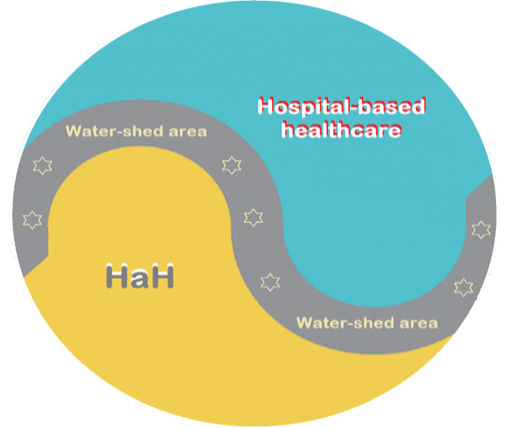
In fact, the HaH is likely to be modelled on lines of the hospice care as a home-based multidisciplinary team approach, and providing need-based services through freestanding facilities, in form of nursing homes, or within hospitals for handling potentially treatable conditions such as pneumonia, heart failure, and alike, with brief hospital stays whenever necessary.
The HaH describes a delivery paradigm where the entirety of the hospital-based inpatient care modality is substituted with intensive at-home treatment approach enabled by digital technologies, multidisciplinary teams, and ancillary services [18]. The HaH can be also useful for all those patients who need intense medical care and treatment but can be managed with help of technological monitoring and remote supervision by healthcare professionals at their homes with possible access to a nearby medical facility or hospital.
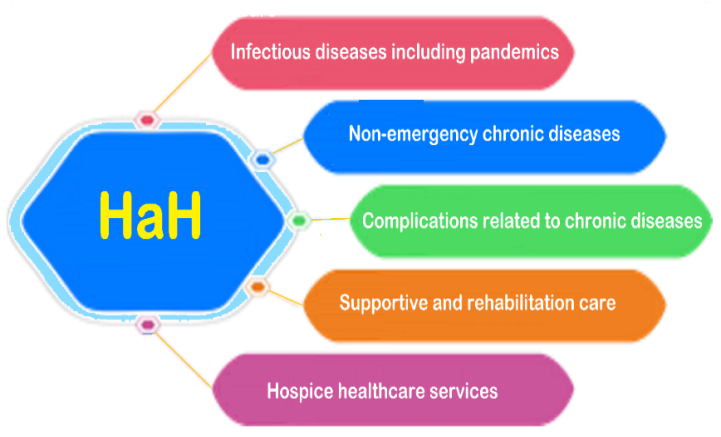
HaH can make possible for people to receive a variety of medical services in their homes and can satisfactorily deal with various health conditions, as it incorporates therapeutic and nursing care, and medical assistance (Figure 4). In fact, the HaH is being envisaged as an alternate attractive model for accommodating increased demand for inpatient health care and as we prepare for the post-COVID-19 pandemic era, there are evolving salient features of HaH potentially promising to maximize the benefits of transformed health care [19].
Comparing the Healthcare at Hospital and at Home
During the COVID-19 pandemic, there has been a decline in emergency department visits and hospital admission rates in various countries [20]. COVID-19 also influenced emergency department visits and hospital admissions unrelated to COVID-19 itself. The studies from Spain, Italy, and Canada have shown a reduction in admissions and procedures related to conditions like myocardial infarction and acute coronary syndrome [21, 22].
It seems that in addition to a shift to virtual healthcare, the limitations faced with the outpatient service and hospital admissions emphasize the need to develop an alternative modality of healthcare for patients with acute as well as chronic medical conditions [23]. It is obvious that the integration of modern technologies like electronic health record (EHR) and telemedicine in healthcare services will save time and resources and provide better healthcare to the users. There are certain novel technologies which are likely to reform hospital- as well as home-based healthcare, and include use of various biosensors, GPS, remote monitoring tools, electronic data and analysis, and telehealth. The e-Prescriptions generated are easy to be transmitted and compatible with the EHR.
The provision of HaH comprises following benefits:
- With the primary focus of HaH, people get medical support at home rather than spending time in a medical facility. Further, it allows people to stay comfortably at their residential facility rather than at hospitals, having lower cost and various psychological advantages.
- Activities of daily living are not altered and supported in-home in usual ways while maintaining a good quality of life for them in the known and perceptive atmosphere. The family members and friends can participate in patient care.
- With the home care provided to patients with chronic health issues such as diabetes and respiratory disease, clinical trials have shown fewer complications and better health outcomes. The personalized and skilled supervision is likely to improve overall response to the treatment.
- With the digital e-monitoring with technological equipment, the patients are seen and followed in real-time. Along with the AI and automation, the HaH aims to streamline the processes such as scheduling appointment, data collection, maintaining EHR, e-prescriptions, and providing ancillary health-related services to improve the overall outcomes.
- The HaH may also be seen as an alternative and attractive healthcare model for accommodating unprecedented demand for inpatient capacity as created by Covid-19 pandemic. It may also become a new vehicle for integrating non-medical services into healthcare as the post-Covid patients will require continuing support due to complexity of their illness.
Solutions for Post-Covid Healthcare
With the COVID-19 pandemic having impact on almost every aspect of human life, the lessons have been learned relating to provision of healthcare [24, 25]. The telemedicine and virtual online consultations have been helpful in dealing with sudden surge and demand for healthcare both outdoor consult as well as emergency visits, and indoor and ICU care. During the COVID-19 and now in post-COVID-19 phase the transformation in provision of healthcare has been enormous as the conventional healthcare encompassing outdoor consult and hospital-based care is being increasingly replaced by tele- and video- consultations, remote technologically assisted indoor care, and HaH. While the hospital-based care cannot be fully dispensed with, a large proportion of it may be increasingly assigned to HaH.
As obvious, a heightened awareness is needed for diagnosing post-Covid symptoms and complications. As is well known now that COVID-19 infection leads to various organopathies and functional impairments with hazardous effects on individual health and course of concurrent diseases, specialized OPD services for diagnostic workup, treatment, and regular follow up are needed. Simultaneously, a dedicated indoor facility for treatment of complications and intensive care should be planned and supervised by experienced physicians and trained healthcare professionals.
References
-
Bullard J, Dust K, Funk D, Strong JE, Alexander D, et al. (2020) Predicting infectious SARS-CoV-2 from diagnostic samples. Clinical Infectious Diseases 71(10): 2663-2666.
-
Kupferschmidt K (2020) Case clustering emerges as key pandemic puzzle. Science 368(6493): 808-809.
-
Park B, Steckler N, Ey S, Wiser AL, De Voe JE (2020) Co- Creating a Thriving Human-Centered Health System in the Post-Covid-19 Era - The clinical-burnout epidemic meets the Covid-19 pandemic “tail”: How health care leaders can respond. NEJM Catalyst: Innovations in Care Delivery.
-
Puelles VG, Lütgehetmann M, Lindenmeyer MT, Sperhake JP, Wong MN, et al. (2020) Multiorgan and Renal Tropism of SARS-CoV-2. NEJM 383(6): 590-592.
-
Moderbacher CR, Ramirez SI, Dan JM, Grifoni A, Hastie KM, et al. (2020) Antigen-specific adaptive immunity to SARS-CoV-2 in acute COVID-19 and associations with age and disease severity. Cell 183(4): 996-1012.
-
Hariri L, Hardin CC (2020) Covid-19, Angiogenesis, and ARDS Endotypes. N Engl J Med 383(2): 182-183.
-
Varga Z, Flammer AJ, Steigeret P, Haberecker M, Andermatt R, et al. (2020) Endothelial cell infection and endotheliitis in COVID-19. Lancet 395(10234): 1417- 1418.
-
Bangalore S, Sharma A, Slotwiner A, Yatskar L, Harari R, et al. (2020) ST-Segment Elevation in Patients with Covid-19—A Case Series. N Engl J Med 382(25): 2478- 2480.
-
Lala A, Johnson KW, Januzzi JL, Russak AJ, Paranjpe I, et al. (2020) Prevalence and Impact of Myocardial Injury in Patients Hospitalized with COVID-19 Infection. J Am Col Card 76(5): 533-546.
-
Adibe B, Hebert C, Perticone K, Dowd SM (2020) Creating Wellness in a Pandemic: A Practical Framework for Health Systems Responding to Covid-19. NEJM Catalyst- Innovations in Care Delivery.
-
Cyranoski D (2020) Why children avoid the worst coronavirus complications might lie in their arteries. Nature 582(7812): 324-325.
-
Wichmann D, Sperhake JP, Lütgehetmann M, Steurer S, Edler C, et al. (2020) Autopsy Findings and Venous Thromboembolism in Patients With COVID-19Autopsy findings and venous thromboembolism in patients with COVID-19: a prospective cohort study. Ann Intern Med 173(4): 268-277.
-
Wu J, Song S, Cao HC, Li LJ (2020) Liver diseases in COVID-19: Etiology, treatment and prognosis. World J Gastroenterol 26(19): 2286-2293.
-
Davido B, Seang S, Tubiana R, de Truchis P (2020) Post- COVID-19 chronic symptoms: a postinfectious entity?. Clin Microbiol Infect 26(11): 1448-1449.
-
Varatharaj A, Thomas N, Ellul MA, Davies NWS, Pollak TA, et al. (2020) Neurological and neuropsychiatric complications of COVID-19 in 153 patients: A UK-wide surveillance study. Lancet Psychiatry 7(10): 875-882.
-
Romero Sánchez CM, Díaz Maroto I, Fernández Díaz E, Larsen AS, Romero AL, et al. (2020) Neurologic manifestations in hospitalized patients with COVID-19: The ALBACOVID registry. Neurology 95(8): 1060-1070.
-
Nikhra V (2021) Compromised Health and Constrained Human Life, and Concurrent Healthcare Transformation. Biomedical Journal of Scientific & Technical Research 39(3): 31402-31407
-
Balatbat C, Kadakia KT, Dzau VJ, Offodile AC (2021) No Place Like Home: Hospital at Home as a Post-Pandemic Frontier for Care Delivery Innovation. NEJM Catalyst Innovations in Care Delivery.
-
Jazieh AR, Kozlakidis Z (2020) Healthcare Transformation in the Post-Coronavirus Pandemic Era. Front Med 7: 429.
-
Rennert May E, Leal J, Thanh NX, Lang E, Dowling S, et al. (2021) The impact of COVID-19 on hospital admissions and emergency department visits: A population-based study. PLoS ONE 16(6): e0252441.
-
Rodríguez Leor O, Cid Álvarez B, Ojeda S, Moreiras JM, Rumoroso JR, et al. (2020) Impact of the COVID-19 pandemic on interventional cardiology activity in Spain. Rec Interv Cardiol 2: 82-89.
-
De Filippo O, D’Ascenzo F, Angelini F, Bocchino PP, Conrotto F, et al. (2020) Reduced rate of hospital admissions for ACS during Covid-19 outbreak in northern Italy. N Engl J Med 383(1): 88-89.
-
Hick JL, Hanfling D, Wynia MK, Pavia AT (2020) Duty to Plan: Health Care, Crisis Standards of Care, and Novel Coronavirus SARS-CoV-2. NAM Perspectives.
-
Haldane V, De Foo C, Abdalla SM, Jung AS, Tan M, et al. (2021) Health systems resilience in managing the COVID-19 pandemic: lessons from 28 countries. Nat Med 27(6): 964-980.
-
Jarrett M, Garrick R, Gaeta A, Lombardi D, Mayo R, et al. (2022) Pandemic Preparedness: COVID-19 Lessons Learned in New York’s Hospitals. Jt Comm J Qual Patient Saf 48(9): 475-491.
- Are the Vaccines the Only Solution to Prevent the COVID-19 Pandemic? Part Two
- Clinical Characteristics of Women in this New Global Immunodeficiency
- Cell Dynamics in HIV Pathogenesis: Insights and Implications
- Determination of the CDR (CDR1, CDR2) « Complementary- Determining Region Invertebrate Primitive Antibody from Sea Star »
- Prioritizing Care for High-Risk COVID-19 Patients in the EU: 10 Civic Recommendations to the Institutions
- Comprehensive Insights into ModRNA Vaccines: Persistent PP-Spike Recombinant Protein, Hyperimmune/Inflammatory Reactions, Thrombotic Vasculopathy, Chronic Organ Complications and Excess Deaths