
Quality of Life in People with Alzheimer's Disease
More than a century after Alzheimer's disease (AD) has been described, it has become one of the greatest public health problems in the world due to the current prevalence. AD is also one of the diseases with the greatest social and economic impact for health systems, family groups and patients themselves, as it affects their functionality and decreases their quality of life. One of the problems caused by AD is the alteration of communication, since it is considered as an act of human psychic activity, derived from thought and language, which serves both to develop and manage psychosocial skills and to relate to the environment. Another characteristic of the human species is displacement, which is also affected in AD and requires the performance of physical activity and therefore, the exercise of the musculoskeletal components used towards the attainment of an end. For there is a relationship between walking and dementia, modulated by many factors, including the environment and lifestyle that influences cognitive ability In short, walking improves verbal communication of people with Alzheimer's Disease; The lower the degree of affectation of the disease, the physical exercise improves this communication; Aerobic exercise not only improves communication but also some cognitive functions such as association, sustained performance of activities of daily living and their quality of life.
Introduction
More than a century after Alzheimer’s disease (AD) was described; it has become one of the greatest public health problems in the world due to the current prevalence, the number of patients that are estimated for the coming years and the costs that this represents, both for developed and developing countries. AD is also one of the diseases with the greatest social and economic impact for health systems, family groups and the patients themselves, as it affects their functionality and decreases their quality of life. The relative aging of the population in developed countries has led to an increase in the incidence and prevalence of neurological diseases that cause disability. Different studies carried out in industrialized countries place the prevalence of any type of dementia between 2-10% of individuals older than 64 years, corresponding to Alzheimer’s type dementia between 50- 75% of all dementias, with a higher prevalence in women, while vascular dementia represents the second most important group with 10-30% of cases.
Currently in Spain there are approximately 430,000 patients diagnosed with Alzheimer’s disease, according to estimates made by the team coordinated by Dr. Jesús de Pedro, from the National Epidemiology Center, while about 610,000 people suffer from some type of dementia. This makes AD the main type of dementia by prevalence index. The progressive aging of the population that Western societies are experiencing, especially significant in our country, means that experts’ forecasts point to the number of diagnosed cases of AD in the world increasing by around 75% in the next 25 years if the current trend holds. If so, it would rank as the disease of the 21st century and one of the main challenges for researchers.
Alzheimer’s disease has its presentation from the age of 65 and the proportion of affected usually increases progressively with age. Thus, according to data from the Alzheimer’s Association (2010), 10% of people over 65 years of age suffer from the disease and the proportion increases to 30% in the case of individuals over 85 years of age. As a forecast for the future in Spain, it is estimated that, in 2050, one in three Spaniards will be over 65 years old. In 2004, there were 431,000 people affected by dementia; If the growth forecasts are correct, it is estimated that in 2030 the figure would reach almost 600,000 patients, and in 2050, close to one million. However, these figures probably underestimate the magnitude of the problem, since a percentage of cases remain undiagnosed or do not appear in official statistics (there are studies that suggest that in 2004 there were between 400,000 and 600,000 patients) [1].
These overwhelming figures allow us to influence dementia, as one of the main causes of disability both in Spain and in neighbouring countries, affecting both the patient and the caregiver, it is the chronic disease that causes greater dependency, above all of others such as stroke, Parkinson’s disease or cardiovascular diseases, and carries a high risk of institutionalization, with the socio-health burden that this entails. Finally, studies related to the Alzheimer’s Association (2010) [2] show that few years of education are associated with the probability of suffering from AD. As education is related to socioeconomic aspects, it is therefore suggested that academic achievements and place of residence may be roles in the prevalence of the disease. Because of this, the WHO (World Health Organization) (2005) has already warned of the possible consequences of this fact and encourages governments to take measures to reduce the socio-sanitary impact of this devastating pathology.
Objective: To make a correlation between the practice of physical exercise, walking, with the stage of physical, social and mental / psychological well-being.
Conceptual Model
Quality of Life Model
According to the Quality of Life Model of Schalock and Verdugo (2011), the quality of life is considered as “a concept identified with the movement of advancement, innovation and change in professional practices and services, allowing to promote actions at the level of the person, of the organization and of the social system ”. It involves a movement of advancement and innovation in practices and services, generating results that are translated into the daily lives of people with disabilities, centers and services and society. This forward movement translates into a conceptual change in daily tasks that is based on:
- Moving from a system focused on the limitations of the person to one focused on context and interaction, which involves an ecological approach.
- Move from a system focused on the effectiveness of services, programs and activities to one that focuses on advances in quality of life and the changes and improvements that must be reflected in each person.
- Moving from a system focused on professionals to one that takes into account the person and their families.
According to this author, the new paradigm of quality of life is essential in social and educational services, since it underlines the participation of the person in the planning of activities, programs, etc., by the professional team and generates a new way of planning the objectives of people with disabilities: Personalized Support Plans (PPA).
The new quality model is based on the quality of life dimensions developed by Shalock and Verdugo. Both authors present us with 8 dimensions of quality of life at the same time that they propose indicators and items for their evaluation.
- Dimension of emotional well-being that takes into account feelings and satisfaction, both on a personal and vital level, the self-concept of oneself, based on feelings of security-insecurity and capacity-incapacity, as well as absence of stress that contains aspects related to motivation, mood, behavior, anxiety and depression.
- Dimension of personal relations to from the interaction and maintaining relationships of closeness ( to participate in activities, have stable friends , good relationship with his family ) and if you show feel loved by the important people from contacts positive social and rewarding.
- Dimension of material Well-being that contemplates aspects of economic capacity, savings and sufficient material aspects that allow a comfortable, healthy and satisfactory life.
- Dimension of personal development that takes into account social competencies and skills, social utility, participation in the development of the PPA itself. Taking advantage of opportunities for personal development and learning new strategies or the possibility of integrating into the world of work with motivation and development of personal skills, adaptive behavior and the development of communication strategies.
- Dimension of physical well-being from health care (preventive, general, at home, hospital, etc.); It takes into account the aspects of pain, medication and how they affect your state of health and allow you to carry out a normalized activity . Physical well- being allows you to develop activities of daily living from your abilities and is facilitated with support products if you need them.
- Dimension Self determination, which is based on the personal life project in the choice, you have options. In it appear the goals and values, preferences, objectives and personal interests.
- These aspects facilitate decision-making and allow the person to have the option of defending ideas and opinions. Personal autonomy, as a fundamental right that assists each being, allows you to organize your own life and make decisions on issues of your own concern.
- Dimension of Social Inclusion, assessing whether there is rejection and discrimination on the part of others. We can assess it from knowing if your friends are wide or limited, if you use community leisure environments. Inclusion can be measured from participation and accessibility that allows breaking physical barriers that hinder social integration.
- Dimension of Defense the rights contemplated by the right to privacy the right to measurable respect from the treatment received in their environment.
It is important to inquire about the degree of knowledge and enjoyment of the rights of citizenship.
Implications in people with Dementia from an approach based on Occupational Therapy
The models of quality of life and quality of life related to health have a great concept in common, such as the repercussion within the activities of daily living (ADL); to complement these models, the model of the American Association of Occupational Therapists (AOTA, 2008) is developed. Disability according to the Inter - American Convention Against All Forms of Discrimination against Pe ople with Disabilities (2007) is defined from a bio approach p psychosocial, understood from a perspective that relates the deficit health of people with conditions that present environments in which they live and develop, generating participation restrictions [3] and limitations to develop activities of daily life ; While in the model described by the International Classification of Functioning, Disability and Health (CIF 2001) of dialectic between the medical and the social model, disability is understood as a problem of the person directly caused by an illness, trauma or Health condition, which requires medical care provided in the form of individual treatment by professionals, is considered a problem of social origin and mainly focused on the complete integration of people in the community.
The goal of the ICF is to provide a framework to describe and analyze human functioning and disability in interaction with the environment . In order to achieve the integration of the different dimensions of functioning, using a “Biopsychosocial” approach . Functioning is seen in relation to the body, activity and participation [4, 5] defends the conceptual model of the CIF (2001), whose objective is to provide a framework to describe and analyze human functioning and disability in interaction with the environment. Defining also the environmental factors of the environment as determinants in the positive or negative functioning of the person, having an impact on all the other components of the model: body functions, body structures, and activity and participation [6]. WHO, 2001. These environmental factors constitute the physical, social and attitudinal environment in which people live and develop their lives. In addition, the influence of environmental factors on the quality of life and on the participation of people with disabilities is shown. Since the characteristics of the person are affected by the presence or absence of disease, deprivation and disability. This situation affects and is affected by performance skills, the demands of the activity, and contextual and environmental factors.
Taking into account that all activities are carried out in an environment (physical and social environment that surrounds the person in which the occupations of daily life take place), according to AOTA (2008), there are two types of environments; the physical environment, referring to the natural environment (climate, terrain, humidity and snow) and the built environment (ramps, elevators, sign language), non- human and the objects within it; and the social environment, formed by the presence, relationships and expectations of the people, groups and organizations with whom the person has contact. Within this model, he also defines the term context, which is constantly used as a synonym for environment, referred to as the variety of interrelated conditions that are within and surrounding the person.
The literature indicates that there is need to understand l to influence of environmental factors in adjustment to disability. It is important to identify the variables in relation to independence, participation in society and adjustment to disability as well as the variables that act as sweeps r as participation and inclusion of people with disabilities in society and avoid adjustment process. Anyone with a chronic disability or illness Chainsaw Sign ra affectations facets of their daily lives [7] among which are the activities of daily life. One of the main causes of disability in the last years of life is dementia, which is characterized as a syndrome that produces a progressive global deterioration of intellectual function.
The activities of daily living are altered in the daily life of people with dementia; These activities degenerate and a feeling of helplessness or depression is created when the person is aware of their failures.
The biological component of the person must be an internal concern of the person, which includes all ADLs, such as hygiene, personal cleanliness, concern for medication, maintenance of medical check-ups, etc. All these activities begin to change from the beginning, with the first forgetfulness, but it is necessary to try that the person with dementia, such as the person with AD, maintains the concern, that he does not dissociate himself from his own care.
The psychological part is more complicated and fluctuates to a greater extent, as long as we think of the person, as being unique. The relationship of the person with AD and their main caregiver is the one that must be known in depth, because it is here, in this relationship, where the areas of the person will be modified.
The social side is surely the one that suffers the most from the beginning. We do not feel strong enough to meet someone when we realize that we are losing the thread of conversations, so our life and social relationships are gradually lost. The rhythm of losing relationships should not provoke the tendency to hide, but rather we should wait until the disability does not allow us to do things, not anticipating it, out of fear; on the contrary, social relationships should be fostered. On the other hand, as we have already commented, there is evidence suggesting that the benefits of physical activity influence brain functions and the process of cognitive control in particular. The effects of physical activity on cognition are exerted at the molecular system and cellular levels and are associated with changes in brain volume, blood fluidity in the brain, and growth factors. Physical exercise (for example, planning structured repetitive body movements that would add or maintain physical fitness) can be a method of preventing disability or decreasing a decline in physical activity and cognitive functions and its consequences in activities of daily living . Aerobic exercise, which improves the cardio-respiratory system, seeing the benefits of cognitive functions in adults. In summary, walking improves verbal communication in people with AD. To a lesser degree of involvement of the disease, physical exercise improves this communication. Aerobic exercise not only improves communication but also some cognitive functions such as association.
Methods
A sample study is carried out given the population of 15,000 people in Castilla y León with the main characteristic of being diagnosed with Alzheimer›s disease, with a confidence of 95%, indicating the size of the sample in 106 people with a confidence interval of 9, 5. To achieve the objectives, a prospective longitudinal study is proposed . Where a sample of 106 people is used, distributed in two randomized groups, one experimental and the other control, with 53 people each, without taking into account the distinction between genders. The experimental group will carry out aerobic exercise for 4 weeks in the form of walks through a familiar environment at a moderate pace without breaks lasting half an hour a day, while the control group will continue tomaintain their activities without increasing their physical activity. The intervention is carried out in a sample of people with Alzheimer’s type Dementia (AD) from some provinces of Castilla y León, in which each of the families that agree to participate in the study will be asked for an informed consent and the experiment It will be forwarded to the corresponding ethics committee for approval. The intervention consists of filling in the assessment instruments (SF-36 , Womac ) of all the participants in the study and randomly classifying them into the experimental and control group; Thus, the members of the experimental group perform the four weeks of aerobic exercise and the control group maintains its activities; After completing the four weeks, the same assessment instruments are filled in again to compare results, study normality and observe the correlations between physical activity and communication. It uses a database of people with Alzheimer ‘s disease between the years 2013-2015 were attending Associations of Relatives of Alzheimer Patients in the Community of Castilla y León (AFACyL).
Descriptive analysis
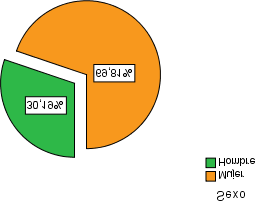
As can be seen in graph 1, the representation based on gender of the 106 participants was 30.19% men and 69.81% women.
Graph 1: Analysis by gender.
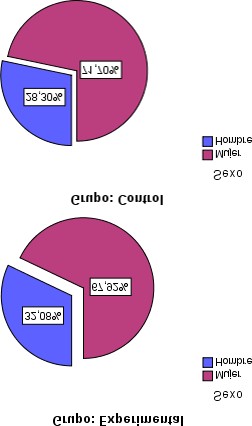
The following graphs show the division within the control and experimental groups of the participants by their sex, finding in the control group 28.30% of men and 71.70% of women; while in the experimental group 32.08% of men and 67.92% of women.
- Graph 2: Analysis of the control group according to sex.
- Graph 3: Analysis of the experimental group according to sex.
- Outcome
- Effect of Physical Activity on quality of life
- •
- SF-36
- At the end of the study, people with Alzheimer’s disease
- Group
- Media
- Deviation tip. t gl
- Sig. (bilateral)
- Control
- SF36Incial-SF39Final
- 792
- 5190
- 1112
- 52
- 271
- Experimental
- SF36Incial-SF39Final
- 1849
- 5500
- 2448
- 52
- ,018
Table 1: Comparison between control and experimental groups in the SF-36 test.
in the control group and the experimental group obtained a lower score in the SF-36 Test. When comparing the initial and final results in both groups by means of T tests, we only obtained statistically significant differences in the experimental group. (Table 1) Therefore, in this group, walking does not improve the perception of quality of life.
• Womac Both the control group and the experimental group obtained a higher score in the Womac Test at the end of the study. When comparing the initial and final results in both groups by means of T tests, we have only obtained statistically significant differences in the experimental group. (Table 2 ) Therefore, in this group, walking did not imply an improvement in the perception of health.
- Group
- Media
- Deviation tip. t gl
- Sig. (bilateral)
- Control
- Womac Incial- Womac Final
- -3,396
- 12,435
- -1,988
- 52
- ,052
- Experimental
- Womac Incial- Womac Final
- -44,340
- 15,041
- -2,100
- 52
- ,041
Table 2: Comparison between control and experimental groups in the Womac test.
Discussion
The definition of quality of life (QoL) that is most widely disseminated and known today is that of the World Health Organization (WHO), which describes it as the individual’s perception of their position in life, in the context of culture and systems. values in which he lives and in relation to his objectives, expectations, standards and concerns. That definition includes six main domains: (1) physical health, (2) psychological state, (3) levels of independence, (4) social relationship, (5) environmental characteristics, and (6) spiritual standard. We can see that the increase in quality of life can be given by the increase in physical activity, since the latter is one of the elements of people’s lifestyle. Lately, one of the factors related to lifestyle that is being influenced the most is physical exercise, which could be involved in the delay of cognitive deterioration and in the preservation of fluid intelligence in older people. Thus, physical activity has been associated with what is known as healthy cognitive aging, and has become a common component of intervention programs for health promotion in older adults. Progressively, physical activity is being recognized as a highly protective factor of the cognitive functions of the elderly both in normal brain aging states and in different phases of cognitive deterioration. In fact, regular physical exercise has been associated with increased brain volume in regions related to cognitive functions that decline with age [8, 9]. Likewise, it has been observed that the perception of quality of life has been diminished after carrying out physical exercise. Taking into account that its correlation is significant, the realization of physical exercise influences the perception of quality of life, since it helps to promote active aging.
Conclusion
The quality of life in people with Alzheimer’s disease is diminished in terms of the physical health of the person themselves and of the people who care for them; the psychological state of the person himself, his level of independence or dependence on others and the social relationships that the person himself has with his closest environment. Thus, in this study it is seen that thanks to physical exercise it is possible to facilitate the positive perception of their quality of life, understanding this as the state of physical, psychological and mental well-being and not only as the absence of disease.
References
-
Ferri CP, Prince M, Brayne C, Brodaty H, Fratiglioni L, et al. (2005) Global prevalence of dementia: a Delphi consensus study. Lancet 366(9503): 2112-2117.
-
Alzheimer’s Association (2010) Alzheimer Association Report: 2010 Alzheimer’s disease facts and figures. Alzheimer’s and Dementia 6(2): 158-194.
-
Gray DB, Hollingsworth HH, Stark S, Morgan KA (2008). A subjective measure of environmental facilitators and barriers to participation for people with mobility limitations. Disability and Rehabilitation 30(6): 434- 457.
-
Dahl TH (2001) International classification of functioning, disability and health: An introduction and discussion of its potential impact in rehabilitation services and research. J Rehabili Medic 34: 201-204.
-
American Occupational Therapy Association (2008) Occupational therapy practice framework: Domain and process. 2nd (Edn.), American Journal Occupational Therapy 62: 625-683.
-
CIF (2001) International Classification of Functioning, Disability and Health.
-
Badley EM (1995) The genesis of handicap: Definition, models of disablement, and role of external factors. Disabil Rehabil 17(2): 53-62.
-
Franco Martin M, Parra Vidales E, Gonzalez Palau F, Bernate Navarro M, Solis A (2013) Influence of physical exercise in the prevention of cognitive deterioration in the elderly. Systematic review. J Neurol 56 (11): 545-554.
-
Bellamy N, Bucahanan WW, Goldsmith CH, Campbell J, Stitt L (1988) Validation study of WOMAC: A health status instrument for measuring clinically important patient relevant outcomes following total hip or knee arthroplasty in osteoarthritis. J Orthop Rheumatol 15(12): 1833-1840.
- Electrolyte Considerations for Athletes
- Comprehensive Rehabilitation in Adults with Diabetic Peripheral Neuropathy: A Literature Review on Frequency, Intensity, and Duration Parameters
- Exercise Duration and Its Association with ADHD Symptom Severity in Children and Adolescents: A Parent-Reported Survey Study
- Adaptation of the Adult Neurophysiology of Pain Questionnaire for Use in Pediatrics
- A Non-Pharmacological Multidisciplinary Pain Program within a Hospital Wellness Program: A Mixed Methods Study
- The Effect of Frenkel's Exercise with PNF on Functional Reach in Stroke Survivors: A Randomized Control Trial