
Graded Motor Imagery and Fall Risk in Older Adults: An Exploratory Case Series
Background: Altered cortical maps can initiate and maintain a pain experience and older adults who move less may be at increased risk for pain, balance and fall risk issues. Purpose: To determine if a brief graded motor imagery (GMI) session to the plantar surface of the foot in older adults can influence self-reported pain, sensitivity of the nervous system and fall risk. Methods: Forty-one older adults (mean age 76.8) received pain neuroscience education, and GMI to the plantar surface of their feet. Measurements pre- and immediately post- intervention included self-reported pain (Numeric pain rating scale), laterality, fall risk (Brief-BESTest), gait speed (40-meter self-paced walk test - SPWT), and nerve sensitivity (Pressure Pain Thresholds - PPT) to the dorsum of the foot and web space dominant hand. Results: Immediately following treatment, mean self-reported pain improved by 1.24 points (p < 0.001), with a large sub-group meeting the minimal clinically important difference (MCID) for self-reported pain (1.7). Gait speed improved significantly (p < 0.001) meeting MCID (0.1 m/s). Left-right judgement task speed (p < 0.001) and accuracy (p = 0.04) improved. None of the PPT measurements improved. While mean composite Briefest test scores did not reach MCID values (9 points), statistically significant improvements were noted in the biomechanical constraints (p = 0.007) and sensory orientation (p = 0.009) subcomponent scores. Conclusion: A brief, one-time GMI session in older adults can decrease pain and improve scores on tests associated with fall risk but fail to decrease sensitivity of the nervous system. More research is needed to validate the results of this exploratory study.
Abbreviations
GMI: Graded Motor Imagery; MCID: Minimal Clinical Important Difference; MDC: Minimal Detectable Change; NPRS: Numeric Pain Rating Scale; PPT: Pressure Pain Thresholds; PT: Physical Therapy; SPWT: Self-Paced Walk Test; TUG: Timed-Up-and-Go.
Introduction
The world population is aging, and it is projected that one in five Americans will be over the age of 65 by the year 2030 [1, 2]. With aging comes increased prevalence of health- related issues, including fall risk, which is on the rise [3]. Falls are the leading cause of injury-related visits to emergency departments by adults 65 and older and significantly increase mortality [1, 4]. Increased risk of falls in the aging population includes female gender, older elderly (over the age of 80), lower cognitive status, previous history of falls, vision deficits, heart failure, etc. [3, 4, 5]. Various types of skilled interventions are known to decrease risk of falls including strengthening exercises, balance retraining, education, environmental changes, use of assistive devices, etc. [6, 7, 8]. While these interventions are effective, they require hours of training and don’t provide immediate fall risk improvements [9, 10]. Various studies have shown that a person’s physical body is represented in the brain by a network of neurons as a representation of that particular body part in the brain, or body schema, i.e., the primary somatosensory cortex [11, 12, 13, 14]. Body schema is dynamically maintained [15], and plays a significant role in a person’s pain experience [16, 17, 18, 19, 20, 21]. It is proposed that movement-based therapy (i.e., exercise) or tactile treatments (i.e., manual therapy), normalizes these maps, which in turn may ease pain and disability [22, 23, 24]. This has been explored extensively in complex pain conditions such as phantom limb pain, complex regional pain syndrome and chronic low back pain [13, 16, 17, 21, 25, 26]. Evidence suggests that in chronic pain there is a form of neglect, commonly described in neurological disorders [27, 28]. It has been reported that these body schema maps expand or contract thus increasing or decreasing the body map representation in the brain and changes in shape and size of body maps seem to correlate to increased pain and disability [16, 29]. A cycle soon emerges between decreased movement, cortical reorganization and increased pain [26].
It is postulated that a combination of ageing, sedentary lifestyle, decreased mobility, rigid orthopedic shoes (versus natural barefoot), altered gait, pain, and medical conditions such as diabetic or peripheral neuropathy may in fact lead to a potential altered mapping of the foot in the brain [30, 31]. Older adults in general present with decreased tactile acuity on their skin as a part of the primary aging process and compounded by pathologies such as diabetic peripheral neuropathy, which can drastically increase fall risk [32, 33]. With decreased acuity of cortical maps, pain perception can increase, which may result in the decline of physical activity, which has been tied to increased fall risk [3, 4]. In order to increase acuity of body maps, various tactile and movement-based strategies have been recommended and supported for research focusing on sensory discrimination [34]. Current evidence, specific to painful conditions related to alter cortical mapping, have shown growing evidence in reducing pain and disability [35, 36]. In regards to its ability to alter foot pain in older adults and decreasing fall risk, prior conference case study and case series presentations have suggested potential clinical benefit, but it has not been formally and systematically studied [30, 31]. The aim of this study was to determine if a sensory discrimination program for feet in older adults can positively influence self-reported pain, sensitivity of the nervous system and fall risk.
Methods
Participants
A convenience sample of community dwelling older adults (65 and older), male and female, was recruited for the study. Institutional review board approval was obtained from St. Ambrose University and participants provided written consent for participation in the study, and the study followed the Helsinki declaration of ethics for medical research. The study was registered at ClinicalTrials.gov (NCT05715112). Inclusion criteria included individuals over the age of 65 who were able to independently ambulate with or without the use of an assistance device, without open wounds or skin conditions impacting the plantar aspect of the feet, have the visual acuity to accurately detect images on a tablet, and possess fluent reading and writing skills in the English language. Exclusion criteria included patients unable to perform the various pre- and post-intervention tests or unable to tolerate touch/sensory input to their feet (i.e., hyperalgesia or allodynia). A community-based care facility was contacted to help recruit volunteers, and flyers were posted and distributed to residents and those interested enrolled in the study.
Study Design
A quasi-experimental case series design with pre- and post- assessment to assess the immediate carryover of the intervention on self-reported pain, pressure pain thresholds (PPT), balance, and gait was chosen. Prior to the intervention descriptive and baseline measures were taken to describe the cohort, followed by immediate post-intervention repeat measures of the tests to determine possible changes after intervention.
Outcome Measures
Demographic information gathered included age, gender, ethnicity, living arrangements, social status, assistive device use, height, weight, surgical history, self-reported balance concerns, fall episodes, sensation loss, other deficits related to their feet, diagnosis of neuropathy and/or radiculopathy, review of medical conditions associated with fall risk, and presence/location of current pain. All participants’ heart rate and blood pressure were measured to ensure safety for the tests and interventions. Formal measures were:
Pain: Self-reported pain for the lower extremity was measured using the numeric pain rating scale (NPRS). The NPRS has been used in various studies for older adults [37, 38, 39, 40]. The minimal clinically important difference (MCID) for chronic pain, including neuropathy, is 1.7 [41].
Left-Right Judgement Tasks: To assess the speed and accuracy of laterality (ability to identify a left or right body part), laterality application (Recognise™ - noigroup.com) was used for foot images. Patients viewed alternating foot images with no cofounding background or texture (vanilla feet) for 60 seconds. The program automatically tracks and reports on the speed and accuracy of the test. Two tests were completed by the patient and the mean score used as their final measure [42]. Normative data for accuracy has been reported as > 80% and recognition speed of 2 seconds / image with a standard deviation of 0.5 [43].
Balance: Fall risk was measured with the Brief-BESTest [44, 45, 46, 47, 48, 49, 50, 51, 52]. The Brief BESTest contains six tasks, one for each of the six subsystems of balance control and evaluates both static and dynamic balance. The test is scored out of a total of 24 points with lower scores representing more impaired balance, has shown excellent inter- and intra-rater reliability in community-dwelling older adults [44, 45, 46, 47, 48, 49, 50, 51, 52], and the minimal detectable change (MDC) has been reported as 9 points [53]. While no cut-offs for falls risk exist for community dwelling older adults, a cut-off of <11/24 points exists for people with Parkinson’s [54] and <10/24 points in older adults in nursing homes [49]. The BriefBESTest was selected over other assessments as it both separately and collectively assesses the 6 balance systems as well as covers two other evidence-based assessments including the Timed-Up-and- Go (TUG) which has validated for use in older adults to determine increased fall risk at >15 seconds in international populations [8] or >11 seconds in populations within the US [5].
Gait speed: To establish a performance-based assessment of physical function the 40m self-paced walk test (SPWT) was used [55]. The SPWT assesses the time it takes to walk 40m at a comfortable pace, without overexerting oneself. The time it takes to cover a specified distance is recorded in seconds. Walking velocity for males (meters/second) has been reported as 1.14 and females as 0.89 [56]. A change of gait speed of 0.10 to 0.20 m/sec has been reported to be the MCID [57]. Cut-off for increased falls risk of community dwelling older adults is between <0.8 m/s in international populations [8] and <1.0 m/s in populations within the US [5].
Nerve Sensitivity (PPT): To assess the sensitivity of the nervous system, pressure algometry was used. PPT followed standardized protocols [58, 59], and was measured in pounds (lbs.) at a local site (dorsum of the foot) and remote site - web space of the dominant hand. A change of 15% in PPT has been reported as the MCID [59].
Intervention
The treatment protocol was based on graded motor imagery (GMI) guidelines [35, 36, 43], and two exploratory conference presentations focusing on older adults with foot pain [30, 31]. Treatment was applied to patients while seated in a chair to the dorsal and plantar surfaces of their feet with the skin exposed (no socks). All sensory treatment was first verbally explained and followed by tactile touch to their dominant hand to prepare them for the stimuli for their feet during the treatment [7, 30, 31, 35, 36]. Each treatment station was completed for 3 minutes, for a total of 15 minutes and included.
Pain Neuroscience Education: Participants were taught about body maps in the brain, similar to a previous study [23], explaining how decreased use and stimulation of body areas cause maps to become “smudged” which is tied to increased sensitivity and pain in the foot and the series of treatments being done will aim to sharpen these maps.
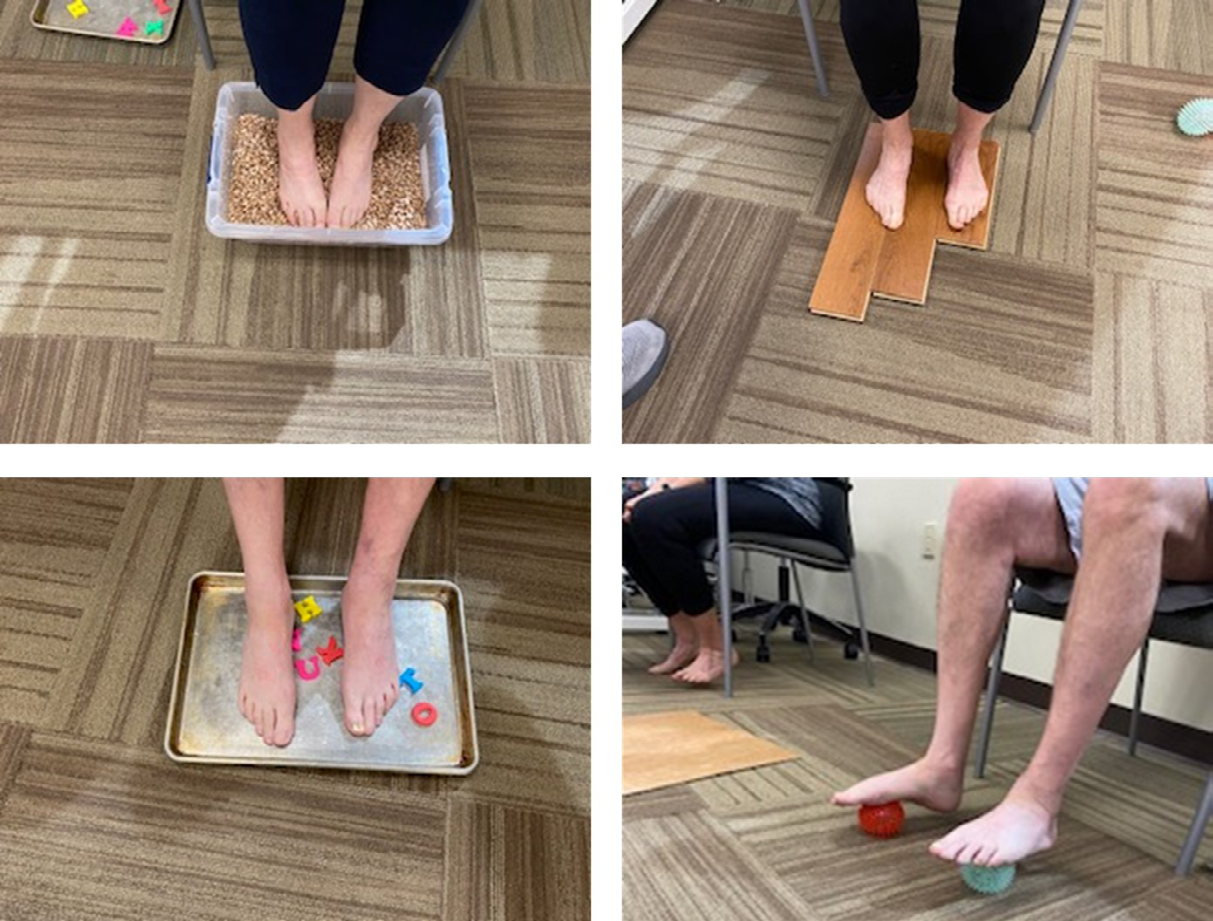
Sensory Integration: Participants placed their feet in a tub of beans and moved their feet through the tubs of beans to allow their feet to be stimulated with beans as a form of sensory awareness and integration. Participants were instructed to pay attention to “feeling the beans” against their feet.
Sensory Discrimination: Rectangular plastic toy blocks were placed in the tub of beans and participants were asked to identify (feel) with their feet for these blocks (instead of beans) with their eyes closed to work on sensory discrimination.
Two-Point Discrimination: A participant’s hand was touched with a two-point discriminator caliper to familiarize them with one or two points. Next, the plantar surface of the foot was randomly stimulated with one or two points and the participant (eyes closed) had to distinguish one or two points. The caliper was set at the norms for two-point discrimination for the foot (20.9 ± 8.9 millimeters) [60]. If participants were unable to differentiate, the calipers were moved 5mm further apart until a distinct one or two points were felt [60].
Sensory Integration: A medium-sized textured rubber ball was placed under the participant’s foot and asks them to roll the ball under their foot with special emphasis to cover as much of the bottom of the foot – front-to back and side-to- side to cover the plantar surface. Participants closed their eyes and were instructed to pay attention to the sensations on the various parts of the foot and “feel” the ball.
Sensory Discrimination: Flooring samples (hardwood, plush carpet, Berber carpet, etc.) were placed on the floor and participants went through a mental imagery process of “feeling” each surface with their foot and developing a mental image for each surface. Following the sensory integration/ motor imagery, participants closed their eyes, and a therapist randomly placed a floor sample in front of them and with eyes closed and only using their foot, asked to identify the floor samples (Figure 1).
Data Analysis
There was no attrition during the study and all participants were accounted for in post-treatment analysis. Data was entered into and analyzed using R™ Version 4.3.2. Summary statistics were generated for a wholistic overview of the study sample. The primary analysis for this exploratory study was a series of participant’s paired, one-sample t-tests with df = 40 were used to test for significant differences in NPRS, laterality testing, Brief BESTest, and PPT. A pre-defined significance level of a = 0.05 was used in this study for testing significance of analyses. Post-hoc power analysis showed that with n = 18, a = 0.05, and effect size of 0.8, the results of the paired, one-sample t-tests yielded power at 0.947, suggesting that the results of these tests can be reasonably generalized to a larger population which is demographically similar to the study sample.
Results
Participants
Forty-one participants volunteered for and participated in the study (Table 1).
| Characteristic | Participants (n = 41) |
|---|---|
| Female (%) | 28 (68.3) |
| Male (%) | 13 (31.7%) |
| Mean age - years (range) | 76.8 (66 - 93) |
| Ethnic group: (%) | |
| White, non-Hispanic | 38 (92.8) |
| African American | 1 (2.4) |
| Hispanic | 1 (2.4) |
| Not listed | 1 (2.4) |
| Living situation: (%) | |
| Lives independent with someone else. | 27 (65.9) |
| Lives independent by themselves | 14 (34.1) |
| Social status: (%) | |
| Married | 25 (61) |
| Widowed | 12 (29.3) |
| Single | 3 (7.3) |
| Divorced | 1 (2.4) |
| Currently experiencing pain (%) | 19 (46.3) |
| Mean pain rating for those experiencing pain | 1.7 |
| Mean duration (months) of those experiencing pain | 31.6 |
| Mean body-mass index (BMI) | 26.3 |
| Underweight (below 18.5) (%) | 0 (0) |
| Healthy (18.5-24.9) (%) | 18 (43.9) |
| Overweight (25 – 29.9) (%) | 15 (36.6) |
| Obese (Over 30) (%) | 8 (19.5) |
| Have had surgery (%) | 36 (87.8) |
| Currently using a cane/crutch (%) | 6 (14.6) |
| Currently having balance issues (%) | 17 (41.5) |
| Fallen in the past due to balance (%) | 22 (53.7) |
| Experiencing altered sensation in their feet (%) | 18 (43.9) |
| Diagnosed with neuropathy (%) | 4 (9.8) |
| Diabetic (%) | 4 (9.8) |
| Mean heart rate | 72.7 |
| Blood pressure (mmHg) | |
| Mean systolic blood pressure | 137.9 |
| Mean diastolic blood pressure | 76.4 |
Table 1: Participant demographics.
Self-Report Pain
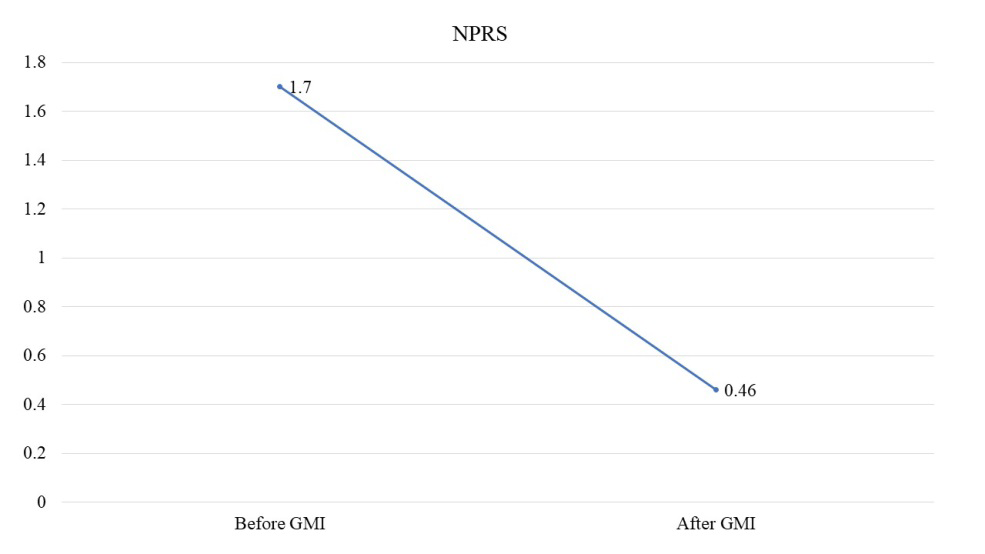
Mean self-reported pain rating before GMI was 1.7. Immediately following GMI, self-reported pain improved to a mean score of 0.46 (p < 0.001) (Figure 2). Mean self-reported pain improvement of 1.24 did not meet MCID, but 12 of the 17 participants (70.6%) who were experiencing pain at the time of the intervention improved their pain > the MCID after GMI (Figure 2).
Laterality Tasks
Prior to intervention, the mean speed of foot laterality (1.95 seconds) and accuracy (81.4%) were within normal limits. Sixteen participants (39%) displayed abnormal values with four (9.8%) displaying abnormal speed and accuracy values; 10 (24.3%) abnormal accuracy values and two (4.9%) abnormal speed. Following intervention, mean speed improved to 1.79 seconds (p<0.001) and mean accuracy improved to 83.5% (p = 0.04).
Nerve Sensitivity (Pressure Pain Thresholds)
Immediately following GMI, none of the PPT measures improved – dominant hand (p = 0.459), left foot (p = 0.512) and right foot (p = 0.24).
40m SWPT
Mean duration of the 40m SWPT improved from 37.34 seconds to 32.56 seconds after GMI (p = 0.03). Gait speed increased from 1.28 m/sec. to 1.41 m/sec after GMI (p < 0.001), with the improvement meeting/exceeding the MCID (0.1 m/s).
Balance – Brief BEST Test
Mean composite brief BEST test scores improved from 15.51 prior to GMI to 16.93 after GMI (p < 0.001), failing to meet MCID. Prior to GMI, 10 patients were rated as a fall risk (< 12.5 score), whereas 7 patients were at fall risk after GMI, yielding a 30% improvement. Prior to GMI, 12 patients required an assistive device for ambulation (< 14 score), whereas only 8 needed an assistive device post-training, for a 33% improvement. Individual category changes for brief BEST are displayed in Table 2.
| Test | Mean pre-score | Mean post-score | Difference | Significance |
|---|---|---|---|---|
| Biomechanical constraints | 1.05 | 1.51 | 0.46 | p = 0.007* |
| Stability limits (trial 1) | ||||
| Trial 1 distance | 29.68 | 30.62 | 0.94 | p = 0.446 |
| Trial 2 distance | 30.86 | 31.27 | 0.37 | p = 0.666 |
| Trial 1 score | 2.37 | 2.46 | 0.09 | p = 0.323 |
| Trial 2 score | 2.42 | 2.49 | 0.07 | p = 0.498 |
| Transitions – anticipatory postural adjustment | ||||
| Left | 1.44 | 1.66 | 0.22 | p = 0.07 |
| Seconds | 11.1 | 13.66 | 2.56 | p = 0.008* |
| Right | 1.49 | 1.56 | 0.07 | p = 0.445 |
| Seconds | 12.43 | 12.9 | 0.47 | p = 492 |
| Reactive postural response | ||||
| Left | 2 | 2.15 | 0.15 | p = 0.159 |
| Right | 2.02 | 2.1 | 0.98 | p = 0.412 |
| Sensory Orientation | ||||
| Trial 1 | 2.29 | 2.56 | 0.27 | p = 0.025* |
| Trial 2 | 2.39 | 2.59 | 0.2 | p = 0.009* |
| Stability in gait | ||||
| TUG Score | 2.66 | 2.78 | 0.12 | p = 0.256 |
| Time (sec) | 6.44 | 7.22 | 0.78 | p = 0.179 |
Table 2: Individual categories of the brief BEST test before and after intervention.
Discussion
This is the first formal study testing the ability of a GMI session to positively influence self-reported pain and fall risk in older adults. A brief, one-time GMI session applied to the plantar surface of older adults can decrease pain and improve scores on tests associated with fall risk but fails to decrease sensitivity of the nervous system.
This study tested an hypothesis that in older adults decreased movement and use of their feet could be associated with altered cortical body maps, which in turn may drive increased pain and higher fall risk [30, 31]. This study showed that the one-time, brief GMI session was able to significantly alter lower extremity self-reported pain, with a subgroup of participants seeing a shift beyond MCID. This result is supported by the findings in the previous conference presentations, but also tying GMI to its ability to positively influence self-reported pain [35, 36]. Altering pain in older adults is important since pain is common and has been tied to decreased mobility and increased fall risk [3, 8]. Fall risk was also positively influenced by the GMI session, which further underscores the importance of research such as this to explore the link between pain, cortical body maps and fall risk.
The 40-meter SWPT was significantly improved after GMI, exceeding the MCID for community-dwelling older adults [57]. Gait speed is described as the gold standard for fall risk assessment in older adults and being able to shift this measure with a brief, one-time treatment in PT shows promise for this type of treatment. It is important to note that while MCID was met for this population, at baseline, the individuals in this study were already considered to be well- above the threshold for fall risk at either of the cut-offs (<0.8 m/s or 1.0 m/s). Future studies should seek to incorporate older adults who are at a known fall risk to assess the impact on a higher need population within the aging population.
Changes in performance on the Brief-BESTest were also significant, further driving the notion that this intervention has a positive influence on fall risk [53]. The biomechanical constraints sub-component significantly improved after GMI, which may be tied to the fact that fear-avoidance and kinesiophobia is often tied to biomechanical constraints and have been shown to be decreased with GMI treatment [61]. Additionally, the sensory orientation sub-component of the Brief-BESTest also changed following GMI intervention. As GMI is linked to increased body awareness through spatial mapping, this intervention could prove promising for clinicians wishing to provide an immediately carryover in performance regarding this balance system [62, 63]. As PT providers have shifted to working on dynamic balance concurrently with static activities instead of the former stepwise progression, this immediate change could improve overall outcomes in steady state, anticipatory, and reactive postural control in the meantime. Using GMI, paired with other evidence-based interventions such as environmental adaptations and management of medical comorbidities that place patients at risk of falls, on the first visit would improve balance control until exercise interventions reach the threshold of change in functional and fall risk status [8, 10].
GMI has traditionally been tied to patients with chronic pain, especially neuropathic pain [35, 36, 64, 65]. Evidence is showing that GMI, and parts of the GMI treatment (i.e., mirror therapy) can be used very successfully in orthopedic conditions to improve self-reported pain, disability, and movement [22, 23, 66, 67]. Often patients with chronic pain are seen by a specialist, and it could be argued the same may be true for older adults - a geriatric specialist. This novel GMI approach can and should be done by any/all clinicians seeing older adults. Even though many questions arise from this exploratory study about dosage, frequency, short-and long- term functional impacts, home-exercise prescription, etc., the brief nature of the session along with its results on pain and fall risk should be seen as strength.
This study contains numerous limitations. First, it’s not uncommon to use a case series design in exploratory studies, but by design the lack of a control group limits the interpretation and strength of the results. Second, if the sample only included participants with pain, abnormal laterality or fall risk, versus a mixed cohort, stronger conclusions could potentially be drawn from the data. Third, no follow-up measurements or longitudinal tracking of falls rate was performed. Finally, as community-dwelling older adults tend to be highly mobile, the results from thus study cannot be extrapolated to sub-populations (i.e., dementia, individuals with high medical complexity, or people who live in more supportive care environments). Future studies should explore the various limitations of this exploratory case series.
Conclusion
A brief, one-time GMI session applied to the plantar surface of older adults can decrease pain and improve scores on tests associated with fall risk but fail to decrease sensitivity of the nervous system. More research is needed to validate the results of this exploratory study.
References
-
Fuller GF (2000) Falls in the elderly. Is FAM Physician 61(7): 2159-2168.
-
Moreland B, Ramakrishna K, Ankita H (2020) Trends in Nonfatal Falls and Fall-Related Injuries Among Adults Aged ≥65 Years - United States, 2012–2018. MMWR Morb Mortal Wkly Rep 69(27): 875-881.
-
Falcao RMM, Costa KNFM, Fernandes MG, Mara FP, Oliveira JS, et al. (2019) Risk of falls in hospitalized elderly people. Rev Gaucha Enferm 40(spe): e20180266.
-
Smith AA, Antonia OS, Rosalina APR, Maria ASP, Jordana AN, et al. (2017) Assessment of risk of falls in elderly living at home. Rev Lat Am Enfermagem 25: e2754.
-
Lusardi MM, Stacy F, Middleton A, Allison L, Mariana W, et al. (2017) Determining Risk of fall in Community Dwelling Older Adults: A Systematic Review and Meta- analysis Using Posttest Probability. J Geriatr Phys Ther 40(1): 1-36.
-
Ambrose TL, Jennifer CD, John RB, Larry D, Madden K, et al. (2019) Effect of a Home-Based Exercise Program on Subsequent Falls Among Community-Dwelling High- Risk Older Adults After a fall: A Randomized Clinical Trial. JAMA 321(21): 2092-2100.
-
Thomas E, Battaglia G, Antonino P, Jessica B, Antonio P, et al. (2019) Physical activity programs for balance and fall prevention in elderly: A systematic review. Medicine (Baltimore) 98(27): e16218.
-
Montero OM, Nathalie V, Martin FC, Petrovic M, Alexander NB, et al. (2022) World guidelines for falls prevention and management for older adults: a global initiative. Age Ageing 51(9).
-
Lesinski M, Tibor H, Thomas M, Albert A, Granacher U (2015) Effects of Balance Training on Balance Performance in Healthy Older Adults: A Systematic Review and Meta-analysis. Sports Med 45(12): 1721- 1738.
-
Sherrington C, Anne T, Nicola F, Jacqueline CT, Stephen L (2011) Exercise to prevent falls in older adults: an updated meta-analysis and best practice recommendations. NSW Public Health Bull 22(3-4): 78-83.
-
Wand BM, Luke P, Connell NE, Luomajoki H, Henry JM, et al. (2011) Cortical changes in chronic low back pain: current state of the art and implications for clinical practice. Man Ther 16(1): 15-20.
-
Penfield W, Boldrey E (1937) Somatic, motor and sensory representation in the cerebral cortex of man as studied by electrical stimulation. Brain: A Journal of Neurology 60: 389-443.
-
Flor H (2000) the functional organization of the brain in chronic pain. Prog Brain Res 129: 313-322.
-
Stavrinou ML, Penna SD, Pizzella V, Torquati K, Cianflone F, et al. (2007) temporal dynamics of plastic changes in human primary somatosensory cortex after finger webbing. Cereb Cortex 17(9): 2134-2142.
-
Holmes NP, Spence C (2004) the body schema and the multisensory representation(s) of peripersonal space. Cogn Process 5(2): 94-105.
-
Flor H, Braun C, Elbert T, Bribaumer N (1997) Extensive reorganization of primary somatosensory cortex in chronic back pain patients. Neurosci Lett 244(1): 5-8.
-
Maihofner C, Hermann OH, Bernhard N, Frank B (2003) Patterns of cortical reorganization in complex regional pain syndrome. Neurology 61(12): 1707-1715.
-
Moseley GL (2008) I can’t find it! Distorted body image and tactile dysfunction in patients with chronic back pain. Pain 140(1): 239-243.
-
Lotze M, Moseley GL (2007) Role of distorted body image in pain. Curr Rheumatol Rep 9(6): 488-496.
-
Moseley GL (2005) Distorted body image in complex regional pain syndrome. Neurology 65(5): 773.
-
Flor H, Elbert T, Muhlnickel W, Pantev C, Taub E, et al. (1998) cortical reorganisation and phantom phenomena in congenital and traumatic upper-extremity amputees. Exp Brain Res 119(2): 205-212.
-
Louw A, Kevin F, Lauren W, Justin U (2015) immediate effects of sensory discrimination for chronic low back pain: a case series. New Zealand Journal of Physiotherapy, pp: 60-65.
-
Louw A, kevin F, Landers M, Martin B, Goodman E, et al. (2017) The effect of manual therapy and neuroplasticity education on chronic low back pain: a randomized clinical trial. J Man Manip Ther 25(5): 227-234.
-
Neill M, Adriaan L, Jessie P, Nicholas M, Terry C, et al. (2022) A Case-Series of Dry Needling as an Immediate Sensory Integration Intervention. J Man Manip Ther 30(3): 165-171.
-
Flor H, Braun C, Elbert T, Birbaumer N, et al. (1997) Extensive reorganization of primary somatosensory cortex in chronic back pain patients. Neurosci Lett 224(1): 5-8.
-
Marinus J, Moseley GL, frank B, Baron R, Maihofner C, et al. (2011) Clinical features and pathophysiology of complex regional pain syndrome. Lancet neurology 10(7): 637-648.
-
Moseley GL, Gallagher L, Gallace A (2012) Neglect-like tactile dysfunction in chronic back pain. Neurology 79(4): 327-332.
-
Moseley GL, Flor H (2012) Targeting cortical representations in the treatment of chronic pain: a review. Neurorehabil Neural Repair 26(6): 646-652.
-
Lloyd D, Findlay G, Roberts N, Turo N (2008) Differences in low back pain behavior is reflected in the cerebral response to tactile stimulation of the lower back. Spine 33(12): 1372-1377.
-
Louw C (2013) These Feet were made for Walking. In Iowa Physical Therapy Fall Conference.
-
Zimney K (2016) Utilization of sensory discrimination training for improving balance and function in an older adult: A case report. In American Physical Therapy Association Combined Sections Meeting.
-
Falling C, Mani R (2016) Ageing and obesity indices influences the tactile acuity of the low back regions: A cross-sectional study. Man Ther 23: 25-31.
-
Riandini T, Eric YH, Bee CT, Subramaniam T, Melissa SP, et al. (2020) Fall Risk and Balance Confidence in Patients with Diabetic Peripheral Neuropathy: An Observational Study. Front Endocrinol (Lausanne) 11: 573804.
-
Moseley GL, Zalucki NM, Wiech K (2007) Tactile discrimination, but not tactile stimulation alone, reduces chronic limb pain. Pain 137(3): 600-608.
-
Daly AE, Bialocerkowski AE (2009) Does evidence support physiotherapy management of adult Complex Regional Pain Syndrome Type One? A systematic review. Eur J Pain 13(4): 339-353.
-
Bowering KJ, Neil EC, Tabor A, Mark JC, Hayley BL, et al. (2013) The effects of graded motor imagery and its components on chronic pain: a systematic review and meta-analysis. J Pain 14(1): 3-13.
-
Moseley GL (2003) Joining forces - combining cognition- targeted motor control training with group or individual pain physiology education: a successful treatment for chronic low back pain. J Man Manip Therap 11(2): 88-94.
-
Moseley L (2002) Combined physiotherapy and education is efficacious for chronic low back pain. Aust J Physiother 48(4): 297-302.
-
Moseley GL (2005) Widespread brain activity during an abdominal task markedly reduced after pain physiology education: fMRI evaluation of a single patient with chronic low back pain. Aust J Physiother 51(1): 49-52.
-
Cleland JA, Childs JD, Whitman JM (2008) Psychometric properties of the Neck Disability Index and Numeric Pain Rating Scale in patients with mechanical neck pain. Arch Phys Med Rehabil 89(1): 69-74.
-
Farrar JT, James PY, Linda L, John LW, Michael RP (2001) Clinical importance of changes in chronic pain intensity measured on an 11-point numerical pain rating scale. Pain 94(2): 149-158.
-
Zimney KJ, Wassinger CA, James G, Kingsbury T, Taylor K, et al. (2018) The reliability of card-based and tablet- based left/right judgment measurements. Musculoskelet Sci Pract 33: 105-109.
-
Moseley GL (2012) the Graded Motor Imagery Handbook. Adelaide Noigroup Publications.
-
Paixao C, Rebelo P, Oliveira A, Cristina J, Joana C, et al. (2021) Responsiveness and Minimal Clinically Important Difference of the Brief-BESTest in People with COPD after Pulmonary Rehabilitation. Phys Ther 101(11).
-
Hasegawa S, Matsui T, Kishi M, Kouchi H, Watanabe M, et al. (2021) Sensitivity to change and responsiveness of the Balance Evaluation Systems Test (BESTest), Mini- BESTest, and Brief-BESTest in patients with subacute cerebral infarction. J Phys Ther Sci 33(1): 69-74.
-
Aydogan AS, Savcun CD, Zekiye KK, Kubra U, Esra DK (2021) Reliability and Validity of Turkish Version of the Brief-BESTest in Stroke Patients. Top Stroke Rehabil 28(7): 488-497.
-
Ansari NA, Ansari NN, Ardakani MM, Nematizad M, Soofia N, et al. (2022) Reliability and validity of Persian versions of Mini-BESTest and Brief-BESTest in persons with Parkinson’s disease. Physiother Theory Pract 38(9): 1264-1272.
-
Franchignoni F, Giordano A (2020) On the Structural Validity of Bestest, Mini-Bestest and Brief-Bestest. J Rehabil Med 52(9): jrm00103.
-
Viveiro LAP, Gomes GC, Jessica MR, Nelson C, Marina E, et al. (2019) Reliability, Validity, and Ability to Identity Fall Status of the Berg Balance Scale, Balance Evaluation Systems Test (BESTest), Mini-BESTest, and Brief-BESTest in Older Adults Who Live in Nursing Homes. J Geriatr Phys Ther 42(4): E45-E54.
-
Leung RWM, Alison JA, McKeough ZJ (2019) Inter-rater and intra-rater reliability of the Brief-BESTest in people with chronic obstructive pulmonary disease. Clin Rehabil 33(1): 104-112.
-
Johns EC, Wamsley C, Whiting A (2019) Using the Brief-BESTest paired with a novel algorithm to provide targeted balance interventions for people with subacute stroke: a feasibility study. Top Stroke Rehabil 26(1): 32- 38.
-
Godi M, Giardini M, Arcolin I, Ferrante S, Antonio N, et al. (2019) Is the Brief-BESTest Brief Enough? Suggested Modifications Based on Structural Validity and Internal Consistency. Phys Ther 99(11): 1562-1573.
-
Marques A, Almeida S, Carvalho J, Joana C, Oliveira A, et al. (2016) Reliability, Validity, and Ability to Identify Fall Status of the Balance Evaluation Systems Test, Mini- Balance Evaluation Systems Test, and Brief-Balance Evaluation Systems Test in Older People Living in the Community. Arch Phys Med Rehabil 97(12): 2166-2173.
-
Duncan RP, Leddy A, James TC, Leland ED, Terry DE, et al. (2013) Comparative utility of the BESTest, mini-BESTest, and brief-BESTest for predicting falls in individuals with Parkinson disease: a cohort study. Phys Ther 93(4): 542- 550.
-
Dobson F, Hinman RS, Roos EM, Abbott JH, Startford P, et al. (2013) OARSI recommended performance-based tests to assess physical function in people diagnosed with hip or knee osteoarthritis. Osteoarthritis Cartilage 21(8): 1042-1052.
-
Kennedy D, Startford PW, Sonia MC, Marianne W, Linda JW (2002) Comparison of gender and group differences in self-report and physical performance measures in total hip and knee arthroplasty candidates. J Arthroplasty 17(1): 70-77.
-
Bohannon RW, Glenney SS (2014) Minimal clinically important difference for change in comfortable gait speed of adults with pathology: a systematic review. J Eval Clin Pract 20(4): 295-300.
-
Fernandez P, Madeleine P, Caminero AB, Square ML, Nielsen LA, et al. (2009) Generalized neck-shoulder hyperalgesia in chronic tension-type headache and unilateral migraine assessed by pressure pain sensitivity topographical maps of the trapezius muscle. Cephalalgia 30(1): 77-86.
-
Fernandez P, Rincon AI, Fernandez JC, Maria LC, Juan AP, et al. (2009) Bilateral widespread mechanical pain sensitivity in carpal tunnel syndrome: evidence of central processing in unilateral neuropathy. Brain 132(Pt 6): 1472-1479.
-
Catley MJ, Connell NE, Berryman C, Ayhan FF, Moseley GL (2014) Is Tactile Acuity Altered in People With Chronic Pain? A Systematic Review and Meta-analysis. J Pain 15(10): 985-1000.
-
Sertel M, Arslan SA, Yumin ET, Dermici CS, Simsek TT, et al. (2021) Investigation of the relationship between physical activity, kinesiophobia and fear of falling in older adults with chronic pain. Somatosens Mot Res 38(3): 241-247.
-
Breckenridge JD, Karen AG, Sarah BW, James HM (2019) Do People with Chronic Musculoskeletal Pain Have Impaired Motor Imagery? A Meta-analytical Systematic Review of the Left/Right Judgment Task. J Pain 20(2): 119-132.
-
Beisheim REH, Evan GH, Ryan TP, Medina J, Megan JS (2023) Body image and perception among adults with and without phantom limb pain. PMR 15(3): 278-290.
-
Shafiee E, Joy M, Tara P, Ruby G, Farzad M, et al. (2023) Rehabilitation Interventions for Complex Regional Pain Syndrome: An Overview of Systematic Reviews. Clin J Pain 39(9): 473-483.
-
Ferraro MC, Cashin AG, Benedict MW, Smart KM, Berryman C, et al. (2023) Interventions for treating pain and disability in adults with complex regional pain syndrome- an overview of systematic reviews. Cochrane Database Syst Rev 6(6): CD009416.
-
Louw A, Kevin F, Anthony N, Malley M, Terry C, et al. (2023) Virtual McKenzie extension exercises for low back and leg pain: a prospective pilot exploratory case series. J Man Manip Ther 31(1): 46-52.
-
Louw A, Emilio JP, Dave R, Parker P, Miller T, et al. (2017) Immediate Effects of Mirror Therapy in Patients With Shoulder Pain and Decreased Range of Motion. Arch Phys Med Rehabil 98(10): 1941-1947.
- Electrolyte Considerations for Athletes
- Comprehensive Rehabilitation in Adults with Diabetic Peripheral Neuropathy: A Literature Review on Frequency, Intensity, and Duration Parameters
- Exercise Duration and Its Association with ADHD Symptom Severity in Children and Adolescents: A Parent-Reported Survey Study
- Adaptation of the Adult Neurophysiology of Pain Questionnaire for Use in Pediatrics
- A Non-Pharmacological Multidisciplinary Pain Program within a Hospital Wellness Program: A Mixed Methods Study
- The Effect of Frenkel's Exercise with PNF on Functional Reach in Stroke Survivors: A Randomized Control Trial