
Determination of Caffeine and Chlorogenic Acid (CGA) in the Methanolic Extracts Coffee (C. arabica. L) To seeds and peels (Unroasted and Roasted) Cultivars Grown in Yemen by High Performance Liquid Chromatography (HPLC)
In this study methanolic extract of one plant namely Arabic coffee, were screened for the presence of analysis Constituents and tested for their of liquid chromatographic separation (HPLC). The quantitative HPLC analysis revealed the results showed presence of Caffeine, chlorogenic acid (CGA) is the concentration of the contents Seeds, peels (unroasted) samples is higher than their contents in the Seeds, and peels (roasted) samples. The highest concentration of Caffeine was 5,334 % in unroasted Arabica coffee peels (Udaini) in Ibb (Kafr) region, while the highest value of chlorogenic acid was 68,460% in unroasted Arabica coffee peels (Tufahi) in Ibb (Kafr). The highest concentration of Caffeine was 9,948% in unroasted Arabic coffee seeds (Udaini) in Ibb (Kafr) region, while the highest concentration of chlorogenic acid was 97,280% in unroasted Arabic coffee seeds (Udaini) in Ibb (Kafr) region. The highest concentration of Caffeine was 1,964 % in roasted Arabica coffee peels (Udaini) in Ibb (Kafr) region, while the highest value of chlorogenic acid was 26,260% in roasted Arabica coffee peels (Bura’ai.) in Sana'a (Haraz). The highest concentration of Caffeine was 2,324% in roasted Arabic coffee seeds (Udaini) in Al- Mahweet (Hufash) region, while the highest concentration of chlorogenic acid was 47,09% in roasted Arabic coffee seeds (Dawairi) in Al- Mahweet (Hufash).
Introduction
Arabic coffee is one of the most public and preferable beverages for many people around world. It is mainly prepared from roasted or green beans of Coffee Arabica L. (Rubiaceae) and consumed as hot or cold drink. The high global demand on the C. Arabica is due to its distinct taste, lovely flavor and sensory properties. In addition, many of its therapeutic benefits are associated with long-time consumption of it [1]. Meanwhile Yemeni Mocha coffee is regarded as the most traditional coffee and still one of the world’s greatest, uniquely delicious coffees. It takes its name from the Yemen port city called Mocha, [2]. In Yemen C. arabica is cultivated in many regions especially on the mountains and valleys. There are many coffee cultivars, and they are named according to their place of origin [3]. The cultivation of the arabica coffee began about five hundred years ago in Yemen and reached the southeast of Asia approximately in 1700. At the beginning of the 18th Century, progenies of a single plant were taken from Indonesia to Europe and Later to America [4]. Additionally, Nattapon, et al. [5], caffeine and Chlorogenic acid of unroasted coffee bean had higher the phenolic acids Content including caffeine and Chlorogenic acids were highest in unroasted Arabica bean. It was 74.07 and 536.35 mg/g respectively. According to Shady, et al. [6] the results showed that the lowest content of caffeine was found in the medium roasted coffee (166.72 mg/L) and the highest content of chlorogenic acid content was found in the medium roasted coffee (543.23 mg/L).
Materials and Methods
Sample Collection
Coffee beans were collected from three Governorate Al- Mahweet (Hufash) - Ibb (Kafr) - Sana’a (Haraz) -Yemen to four mains of from coffee (Udaini, Dawairi, Tufahi, and Bura’ai).
Roasting of Coffee Beans
Coffee beans were randomly selected of the three samples were placed into a pan and then roasted using a muffle roaster. The pan was positioned in the same place of the muffle roaster in an effort to ensure uniform roasting conditions. After roasting, the beans were cooled immediately. The roasting temperature for all samples were 100ºC for 15 minutes which was established based on weight loss measurements and visual inspection of the external color of beans, which is the most widely used in the coffee roasting industry [7].
Grinding and Storage
Unroasted and roasted coffee samples were stored in sealed containers at ambient temperature for a maximum period of 24 h. Just before each analysis, Unroasted and Roasted coffee beans were finely ground with an electric coffee grinder (Multi-Purpose disintegrator MJ-04) at 3.5 screen size (0.30 mm) and keep refrigerated in sealed plastic bag prior to analysis.
Sample Preparation
All samples both for Coffee (C. arabica. L) Seeds and peels (unroasted and roasted) were prepared for analysis in the Modern and Global Pharm of the Research and Center Sana’a.
Sample Extraction
Separately, used 20 g of each Coffee (C. arabica. L) Seeds and peels (Unroasted and roasted) powder were extracted by Soxhletation (Goettingen, Germany) using 400 mL methanolic. After the evaporation of the solvent, the residues were redissolved in 400 mL methanolic for About 24 hours at room temperature, filtered and then the solvent was evaporated using a rotary evaporator at 40°C under reduced pressure. Every sample was immediately frozen in liquid nitrogen and subsequently freeze-dried at -80°C. The resultant dry extract from each sample was weighted and stored at four oC until used [8].
Preparation of Standard and Working Solution
Standard solution of Caffeine dissolved better in dichloromethane (140mg/mL) than in water (22mg/mL) and standard solution of chlorogenic acid was prepared by dissolving 0.0173 g of analytical standards in methanol in 10-mL volumetric flask. The prepared stock solution was degassed using an ultrasonic for 15 min [9].
Determination of Caffeine and Chlorogenic Acid (CGA)
The method development was performed with a HPLC system consisting of an autosampler and an ultraviolet diode array detector. The detector was set at 247 nm and the chromatographic separation was carried out by using Enduro C18 G (250 mm ×4, 6 mm, and 5m). The sample injection volume at 20 μL, column temperature at 25 OC and data rate at 10 Hz (Table 2,3).The mobile phase is as follows. For the analysis of caffeine, methanol/water (37:63) and chlorogenic acid, methanol/water (40:60) with 1% acetic acid. The mobile phase was degassed prior to the analysis and delivered at a flow rate of 1.0 mL/min. Readings were made for caffeine at 247 nm and for chlorogenic acid at 278 nm.
Statistical Analysis
Analysis of variance was made for all data using (SPSS) version (25) computer program.
Results and Discussion
In this study, coffee samples were extracted and analyzed to assess the levels of caffeine and CGA using HPLC. The HPLC chromatograms for the caffeine and CGAs (standard solution and coffee extract samples) are also presented in the same supplementary.
Determination of Standard Solution using HPLC
Results showed that the HPLC chromatogram of Caffeine standard measured at 274nm wavelength and shows a typical chromatogram of caffeine, with retention time for caffeine recorded at 9,350 min with a well-separated peak, and results in the level of caffeine standard are described in Table 1 and illustrated in Figures 1 & 2 showed that the HPLC chromatogram of chlorogenic acid (CGA) standard measured at 278nm wavelength and shows a typical chromatogram of chlorogenic acid, with retention time for chlorogenic acid recorded at 17,540 min with a well-separated peak, and results in the level of chlorogenic acid (CGA) standard are described in Table 1 and illustrated in Figure 2. The identity of the analyses was determined by comparing the retention time extracted from the coffee samples with retention time of standards caffeine and chlorogenic acid (CGA). Under the optimized experimental condition, the retention time of caffeine and chlorogenic acid (CGA) obtained was 10.6 and 9, 5 minutes. For the quantitative determination of caffeine and chlorogenic acid (CGA) standards was selected from the reported literature (274 and 278nm).
| Sample name | Injection | Peak name | RT | Area(uV*sec) | %Area | Height(uV) |
|---|---|---|---|---|---|---|
| (time) | ||||||
| Standard | 1 | Caffeine | 9,350 | 5697156 | 100 | 401812 |
| Standard | 1 | chlorogenic acid | 17,590 | 256599 | 100 | 181200 |
Table 1: Peak name Caffeine and chlorogenic acid (CGA) standards.
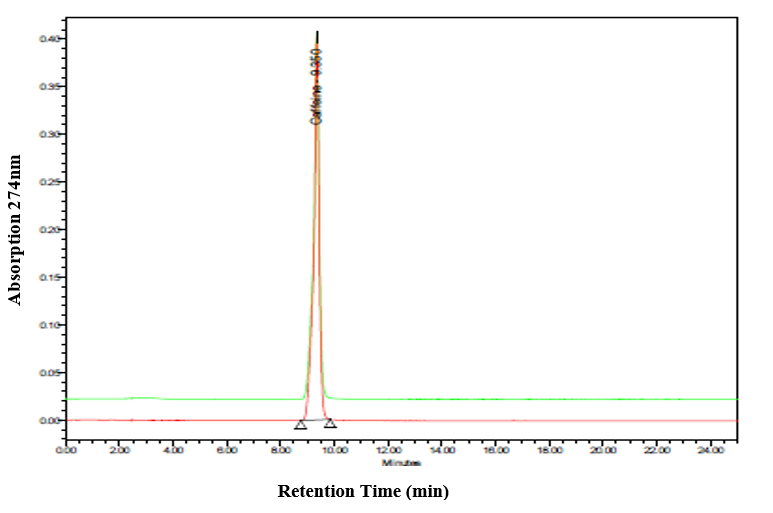
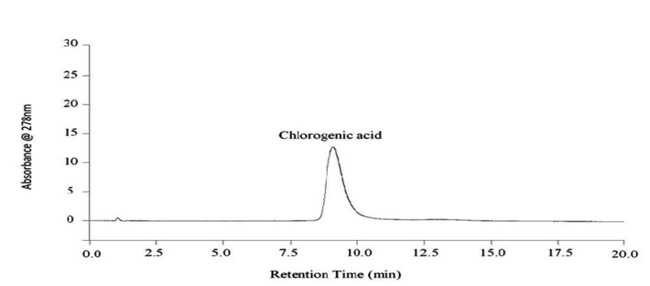
Figure 2: The HPLC chromatogram of chlorogenic acid standard. Enduro C-18G. (250 mm x 4.6 mm) column was used with methanol: acetic acid 1% (40:60) mobile Phase, the rate 1.0 mL/min Wavelength was set at 278 nm. A similar investigation done by Shibiru and Tesfa [10] showed the analytical precision of the method was assessed from the reproducibility of six determinations of 40-ppm caffeine solution and a relative standard deviation of 1.25% was calculated for peak area. The retention time of caffeine was 3.145 min, with a relative standard deviation RSD = 0.5%
therefore, in standard solutions, the HPLC method provides stable retention times. For the quantitative determination of caffeine standard was selected from the reported literature (272 nm). Similarly, [6], HPLC chromatogram of caffeine standard dissolved in MeOH: H2O [40:60] (RT = 3.84 min, λ = 273 nm).
In a study carried out by Abebe and Kebba [11], chlorogenic acid (CGA) standard shows the HPLC chromatogram of CGA standard measured at 278nm wave length, with retention time for chlorogenic acid recorded at 9,53 min with a well separated peak. A similar investigation done by Shady, et al. [6], showed that the HPLC chromatogram of CGA standard dissolved in MeOH (RT = 4.98 min, λ = 330 nm).
Caffeine and Chlorogenic Acid (CGA) Content in Unroasted Coffee (C. arabica. L)
In our study, Coffee (C. arabica. L) Seeds and peels (unroasted) samples were extracted and analyzed to assess the levels of Caffeine and chlorogenic acid (CGA) in three Governorate Al-Mahweet (Hufash) - Ibb (Kafr) - Sana’a (Haraz) – Yemen to four main kinds of from coffee (Udaini, Dawairi, Tufahi, and Burra’i) using HPLC. The experimental results for the caffeine and chlorogenic acid (CGA) analysis in coffee samples are presented in Table 2. The HPLC chromatograms for the caffeine and CGA (coffee extract samples) are also presented in the Figures 3(1-24). The concentrations of caffeine and CGA in percentage (μg/mL) and (%C) in seeds and peels (unroasted). The table 2 shows that the methanol extract Coffee (C. arabica. L) seeds and peels(unroasted) contain the highest caffeine, but the lowest chlorogenic acid (CGA) content, and shows in the table 2 level highest absorption rate caffeine and increased concentration for of the methanol extract Coffee (C. arabica. L) peels (unroasted) Udaini Ibb 1069970 μg, 5,334%, Udaini ALMahweet 987433 μg, 4,937% and Udaini Sana’a 939242 μg4,696%, and shows in the table (2) level highest absorption rate chlorogenic acid (CGA) and increased concentration for of the methanol extract Coffee (C. arabica. L) peels (unroasted) Tufahi Ibb 13692 μ, 68,460%, Dawairi Ibb 13280 μg, 66,400%, and Tufahi Sana’a 12857 μg, 64,285%, and shows in the table 2 level highest absorption rate caffeine and increased concentration for of the methanol extract Coffee (C. arabica. L) Seeds (unroasted) Udaini Ibb 1989629 μg, 9,948%, Tufahi ALMahweet 1516455 μg, 7,582%, and Udaini Sana’a 1106949 μg, 5,534%, and shows in the table 2 level highest absorption rate chlorogenic acid (CGA) and increased concentration for of the methanol extract Coffee (C. arabica) Seeds (unroasted) Udaini Ibb 19456 μg, 97,280%, Tufahi ALMahweet 19356 μg, 96,780%, and Udaini Sana’a 19293 μg, 96,465%.
| Governorates (Yemen) | Coffee Types | (unroasted) Caffeine (Average Peels) | (unroasted) CGA (Average Peels) | (unroasted) Caffeine (Average Seeds) | (unroasted) CGA (Average Seeds) | ||||
|---|---|---|---|---|---|---|---|---|---|
| (μg/mL) | (%) | (μg/mL) | (%) | (μg/mL) | (%) | (μg/mL) | (%) | ||
| Udaini | 652523 | 3,262 | 11406 | 57,030 | 688732 | 3,443 | 16507 | 82,535 | |
| ALMahweet (Hufash) | Tufahi | 987433 | 4,937 | 11414 | 57,070 | 1516455 | 7,582 | 19356 | 96,780 |
| Dawairi | 495395 | 2,476 | 10828 | 54,140 | 576956 | 2,884 | 15782 | 78,910 | |
| Bura’ai | 441669 | 3,099 | 11508 | 57,540 | 631881 | 3,159 | 15223 | 76,115 | |
| Ibb(Kafr) | Udaini | 1069970 | 5,3,34 | 10365 | 51,825 | 1989629 | 9,948 | 19456 | 97,280 |
| Tufahi | 743780 | 3,718 | 13692 | 68,460 | 852465 | 4,262 | 16489 | 82,445 | |
| Dawairi | 756366 | 3,781 | 13280 | 66,400 | 780816 | 3,904 | 17530 | 87,650 | |
| Bura’ai | 498303 | 2,491 | 10840 | 54,200 | 395607 | 2,785 | 14165 | 70,85 | |
| Sana’a (Haraz) | Udaini | 939242 | 4,696 | 11149 | 55,745 | 1106949 | 5,534 | 19293 | 96,465 |
| Tufahi | 659275 | 3,296 | 12857 | 64,285 | 683316 | 3,416 | 17003 | 85,015 | |
| Dawairi | 652523 | 2,582 | 11271 | 56,355 | 546404 | 2,732 | 16081 | 80,405 | |
| Bura’ai | 469330 | 2,346 | 11713 | 58,565 | 571536 | 2,857 | 16023 | 80,115 |
Table 2: Polyphenolic compounds of the unroasted seed and peel of C. arabica L.
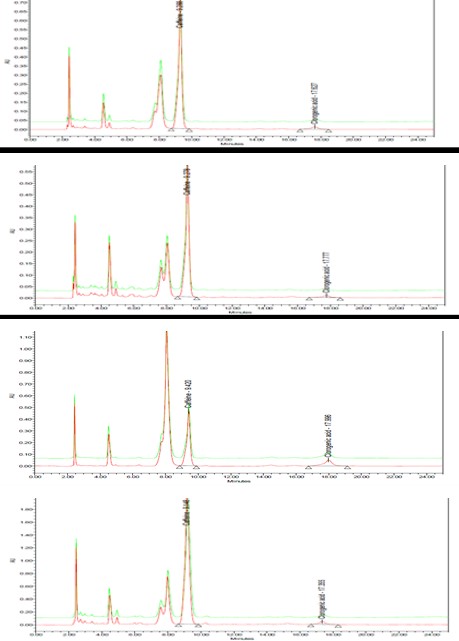
Figure 3(1): HBLC of caffeine and chlorogenic acid from the methanol sample extract Coffee (C. arabica. L) peels (unroasted) Udaini ALMahweet.
Figure 3(2): HBLC of caffeine and chlorogenic acid from the methanol sample extract Coffee (C. arabica. L) peels (unroasted) Tufahi ALMahweet.
Figure 3(3): HBLC of caffeine and chlorogenic acid from the methanol sample extract Coffee (C. arabica .L) peels (unroasted) Dawairi ALMahweet.
Figure 3(4): HBLC of caffeine and chlorogenic acid from the methanol sample extract Coffee (C. Arabica. L) peels (unroasted) Burra’ai ALMahweet.
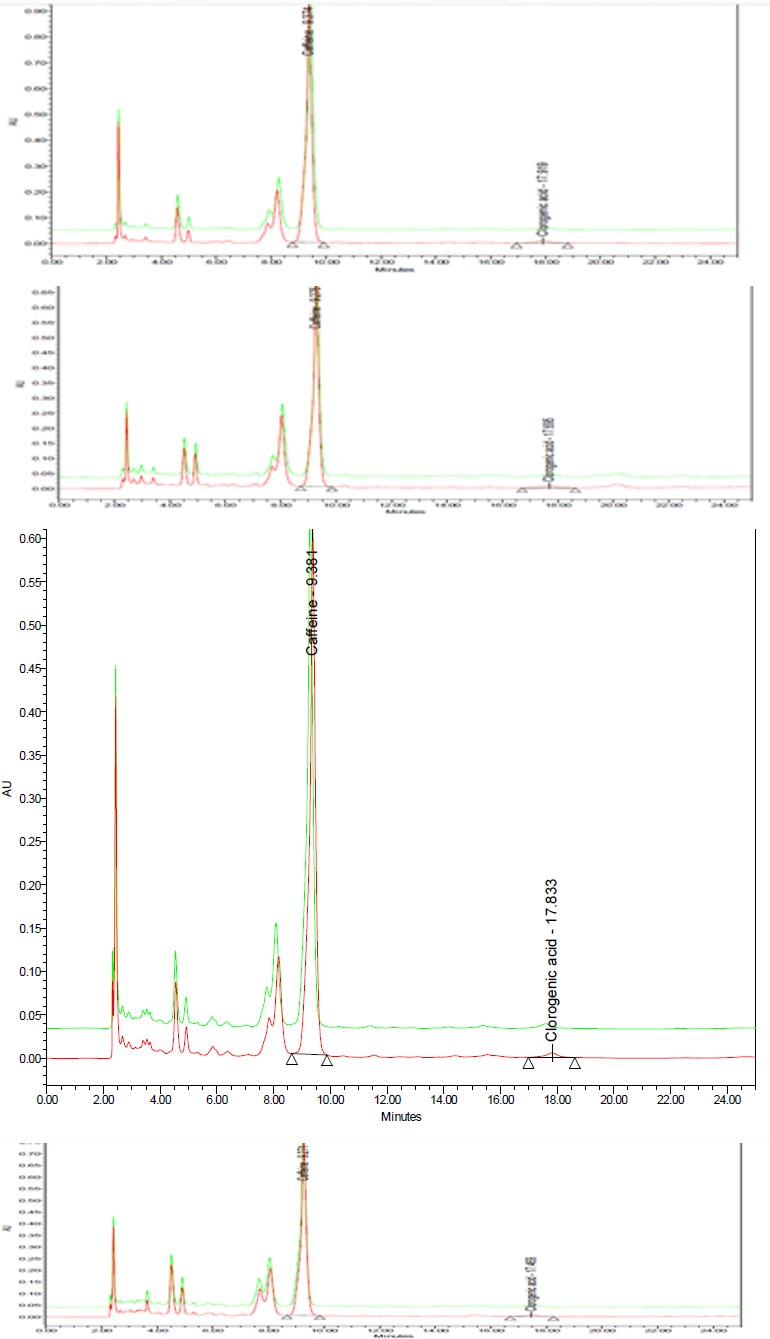
Figure 3(5): HBLC of caffeine and chlorogenic acid from the methanol sample extract Coffee (C. arabica .L) peels (unroasted) Udaini Ibb.
Figure 3(6): HBLC of caffeine and chlorogenic acid from the methanol sample extract Coffee (C. arabica. L) peels (unroasted) Tufahi Ibb.
Figure 3(7): HBLC of caffeine and chlorogenic acid from the methanol sample extract Coffee (C. arabica. L) peels (unroasted) Dawairi Ibb.
Figure 3(8): HBLC of caffeine and chlorogenic acid from the methanol sample extract Coffee (C. arabica. L) peels (unroasted) Bura’ai Ibb.
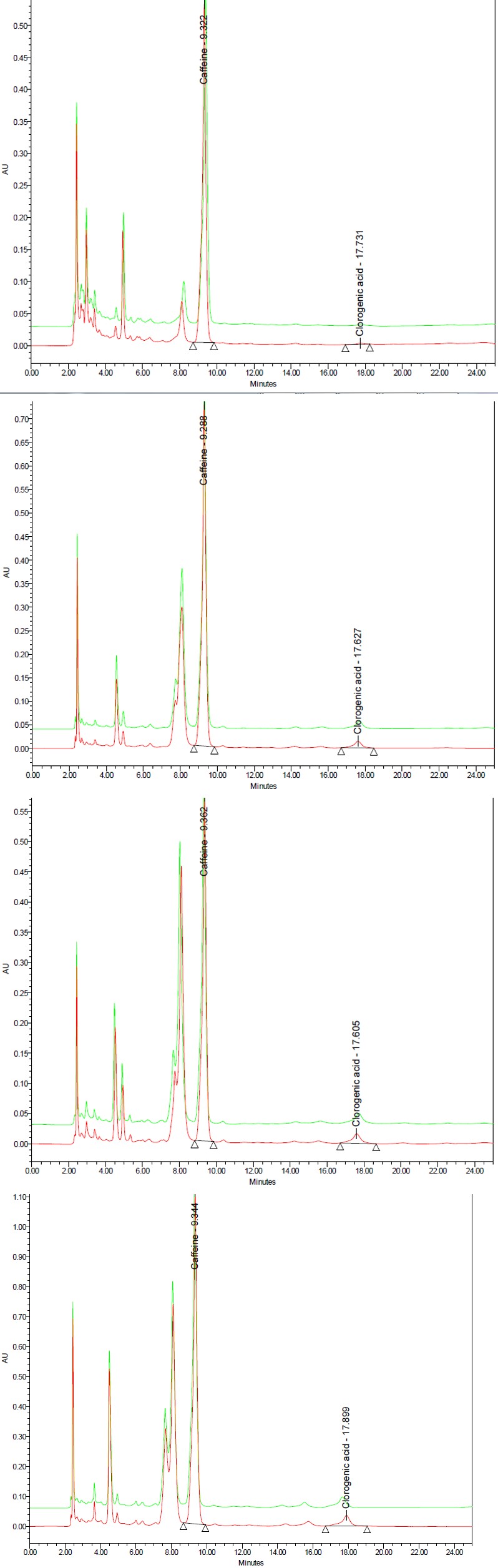
Figure 3(9): HBLC of caffeine and chlorogenic acid from the methanol sample extract Coffee (C. arabica .L) peels (unroasted) Udaini Sana’a.
Figure 3(10): HBLC of caffeine and chlorogenic acid from the methanol sample extract Coffee (C. arabica.L) peels (unroasted) Tufahi Sana’a.
Figure 3 (11): HBLC of caffeine and chlorogenic acid from the methanol sample extract Coffee (C. arabica. L) peels (unroasted) Dawairi Sana’a.
Figure 3(12): HBLC of caffeine and chlorogenic acid from the methanol sample extract Coffee (C. arabica. L) peels (unroasted) Bura’ai Sana’a.
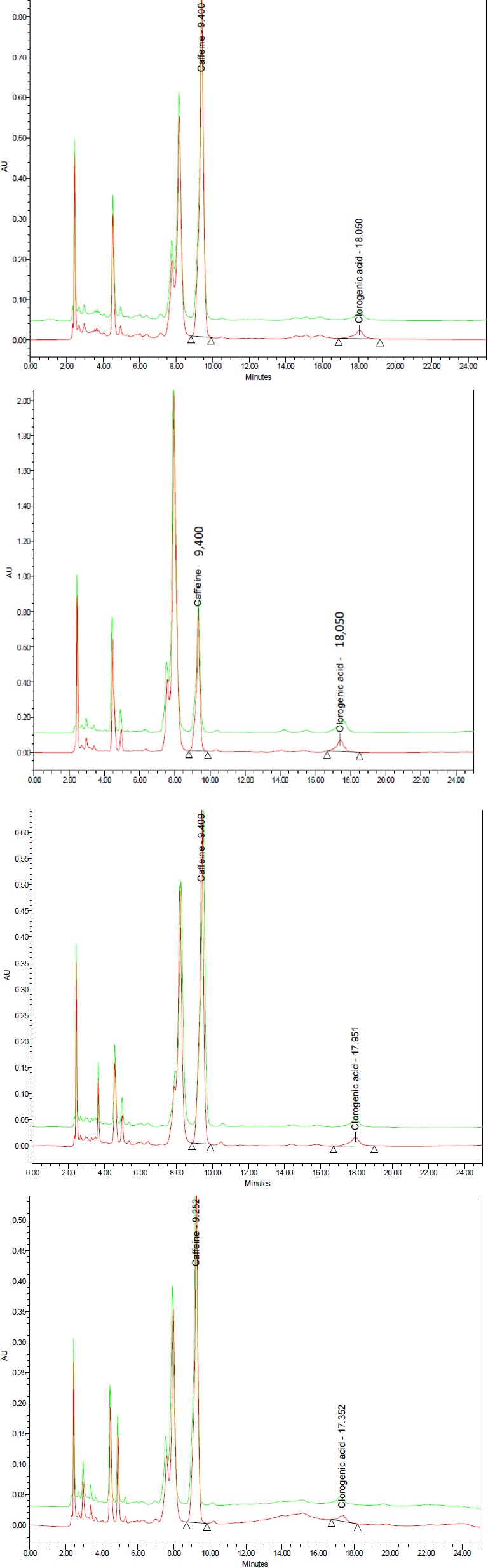
Figure 3(13): HBLC of caffeine and chlorogenic acid from the methanol sample extract Coffee (C. arabica .L) seeds (unroasted) Udaini ALMahweet.
Figure 3 (14): HBLC of caffeine and chlorogenic acid from the methanol sample extract Coffee (C. arabica. L) seeds (unroasted) Tufahi ALMahweet.
Figure 3 (15): HBLC of caffeine and chlorogenic acid from the methanol sample extract Coffee (C. arabica. L) seeds (unroasted) Dawairi ALMahweet.
Figure 3 (16): HBLC of caffeine and chlorogenic acid from the methanol sample extract Coffee (C. arabica. L) seeds (unroasted) Bura’ai ALMahweet.
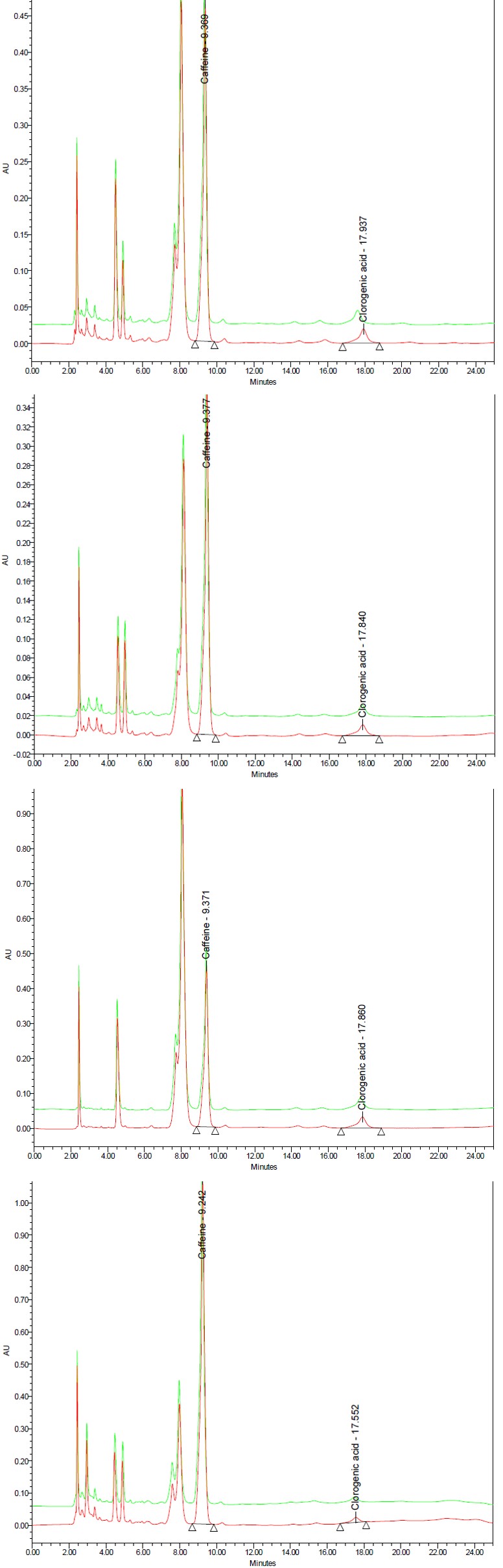
Figure 3(17): HBLC of caffeine and chlorogenic acid from the methanol sample extract Coffee (C. arabica. L) seeds (unroasted) Udaini Ibb.
Figure 3 (18): HBLC of caffeine and chlorogenic acid from the methanol sample extract Coffee (C. arabica. L) seeds (unroasted) Tufahi Ibb.
Figure 3 (19): HBLC of caffeine and chlorogenic acid from the methanol sample extract Coffee (C. arabica. L) seeds (unroasted) Dawairi Ibb.
Figure 3 (20): HBLC of caffeine and chlorogenic acid from the methanol sample extract Coffee (C. arabica.L) seeds (unroasted) Bura’ai Ibb.
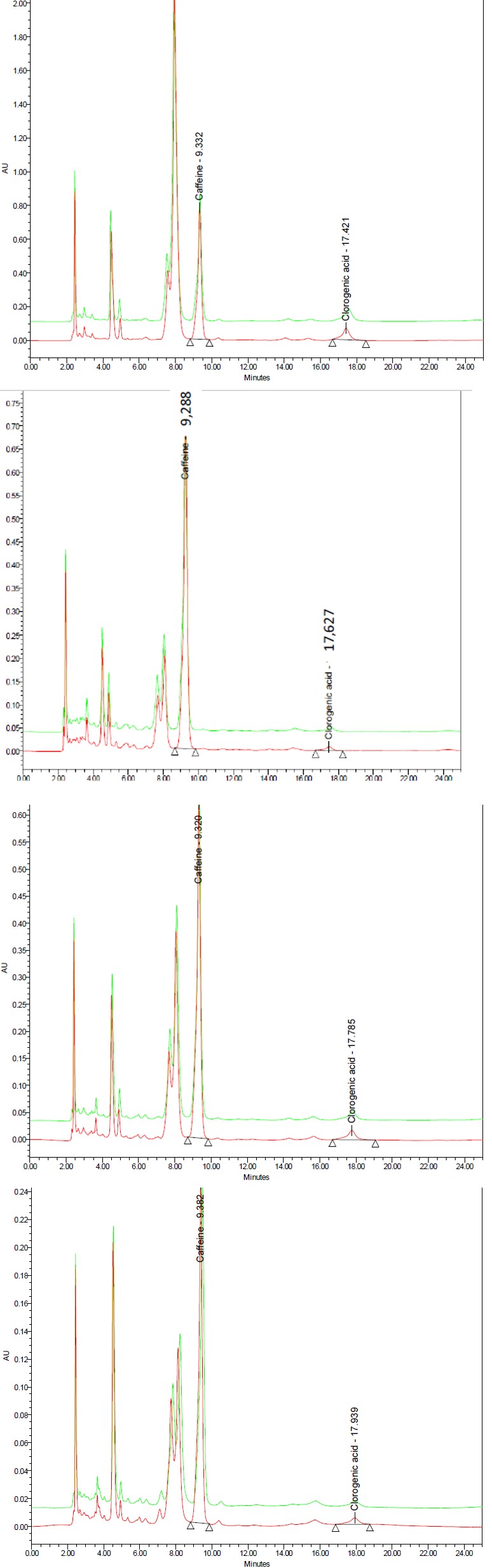
Figure 3 (21): HBLC of caffeine and chlorogenic acid from the methanol sample extract Coffee (C. arabica. L) seeds (unroasted) Udaini Sana’a.
Figure 3(22): HBLC of caffeine and chlorogenic acid from the methanol sample extract Coffee (C. arabica. L) seeds (unroasted) Tufahi Sana’a.
Figure 3(23): HBLC of caffeine and chlorogenic acid from the methanol sample extract Coffee (C. arabica. L) seeds (unroasted) Dawairi Sana’a.
Figure 3 (24): HBLC of caffeine and chlorogenic acid from the methanol sample extract Coffee (C. arabica. L) seeds (unroasted) Bura’ai Sana’a.
In a study done by Eva Brigitta [12], these analyses were carried out on the pericarp and seed immature samples of C. arabica. Nine polyphenolic compounds involving five phenolic acids (caffeic acid, chlorogenic acid, ferulic acid, p-coumaric acid, sinapic acid), and four flavones (quercetin, isoquercetin, kaempherol, rutin). Some differences were found in the non-hydrolyzed and hydrolyzed extracts of the pericarp and seed immature (unroasted) samples of C. arabica. In the non-hydrolyzed and hydrolyzed extracts, caffeic acid was found in the non-hydrolyzed and hydrolyzed extracts for immature pericarp (peel) (1.46 and 41.22μg/ mL). While in the non-hydrolyzed extracts, chlorogenic acid was the dominant compound in the immature pericarp (peel) (297.82μg/mL). In the non-hydrolyzed and hydrolyzed extracts, caffeic acid was found in the non-hydrolyzed and hydrolyzed extracts for immature seed (2.49 and 183.94μg/ mL). While in the non-hydrolyzed extracts, chlorogenic acid was the dominant compound in the immature seed (1741.00 μg/mL). Similarly, Shady, et al. [6] showed the concentrations of caffeine and CGA in percentage (mg/L, C %) in green coffee bean are 166.72 mg/L, 1.67%, and543.23 mg/L, 5.43%.A similar investigation done by Aidilla [13], revealed that caffeine and chlorogenic acid content was expressed in milligram per gram of weight sample (mg/g). The result from that study displayed comparable values of chlorogenic acid for unroasted C. arabica with the mean of 15 and 2.2 mg/g, respectively.
Our results for the caffeine and chlorogenic acid (CGA) analysis in coffee samples are presented in the Table 3. The HPLC chromatograms for the caffeine and CGA (coffee extract samples) are also presented in the same Supplementary Figures 4(25-48). The concentrations of caffeine and CGA in percentage (μg/mL) and (%C) in seeds and peels (Roasted). Table (3) shows that the methanol extract coffee seeds and peels (Roasted) contain the highest caffeine, but the lowest chlorogenic acid (CGA) content, and shows in the Table (3) level highest absorption rate caffeine and increased concentration for of the methanol extract coffee peels (roasted) Bura’ai ALMahweet 394581 μg, 1,972%,Udaini Ibb 392852 μg, 1,964%,and Tufahi Sana’a 369874 μg, 1,849%, and shows in the table 3 level highest absorption rate chlorogenic acid (CGA) and increased concentration for of the methanol extract Coffee(C. arabica. L) peels (Roasted) Bura’ai Sana’a 5252 μg, 26,260% , Udaini ALMahweet 5232 μg , 26,160%, and Udaini Ibb 4432 μg , 22,160%, and shows in the table (3) level highest absorption rate caffeine and increased concentration for of the methanol extract Coffee (C. arabica. L) Seeds (Roasted) Udaini ALMahweet 464978 μg , 2,324%, Burra’i Ibb 462807 μg , 2,314%, and Giedi ALMahweet 451228 μg , 2,256%, and shows in the table(3) level highest absorption rate chlorogenic acid (CGA) and increased concentration for of the methanol extract Coffee (C. arabica. L) Seeds (Roasted) Dawairi ALMahweet 9416 μg, 47,09%, Dawairi Sana’a 9303μg, 46,565%,and Udaini Ibb 9283 μg , 46,415%.
| Governorate (Yemen) | Coffee Types | (Roasted) Caffeine (Average Peels) | (Roasted) CGA (Average Peels) | (Roasted) Caffeine (Average Seeds) | (Roasted) CGA (Average Seeds) | ||||
|---|---|---|---|---|---|---|---|---|---|
| (μg/mL) | (%) | (μg/mL) | (%) | (μg/mL) | (%) | (μg/mL) | (%) | ||
| ALMahweet (Hufash) | Udaini | 280486 | 1,402 | 5232 | 26,160 | 464978 | 2,324 | 8655 | 43,275 |
| Tufahi | 121365 | 0,606 | 4645 | 23,225 | 395607 | 1,978 | 9233 | 46,155 | |
| Dawairi | 92126 | 0,460 | 3642 | 18,210 | 431258 | 2,156 | 9416 | 47,09 | |
| Bura’ai | 394581 | 1,972 | 72184 | 9,255 | 451228 | 2,256 | 8360 | 41,800 | |
| Ibb (Kafr) | Udaini | 392852 | 1,964 | 4432 | 22,160 | 400965 | 2,008 | 9283 | 46,415 |
| Tufahi | 369874 | 1,849 | 1593 | 7,965 | 447689 | 2,238 | 8731 | 43,655 | |
| Dawairi | 363990 | 1,819 | 1751 | 8,755 | 401812 | 2,109 | 8897 | 44,485 | |
| Bura’ai | 243185 | 1,215 | 1992 | 9,960 | 462807 | 2,314 | 7113 | 35,565 | |
| Sana’a (Haraz) | Udaini | 165864 | 0,829 | 2301 | 11,505 | 429562 | 2,147 | 8598 | 42,990 |
| Tufahi | 429562 | 0,770 | 2021 | 10,105 | 498303 | 2,009 | 7071 | 35,315 | |
| Dawairi | 139056 | 0,695 | 1173 | 5,865 | 408990 | 2,044 | 9303 | 46,565 | |
| Bura’ai | 289291 | 1,446 | 5252 | 26,260 | 441864 | 2,209 | 8118 | 40,590 |
Table 3: Polyphenolic compounds of the Roasted seed and peel of C. arabica L.
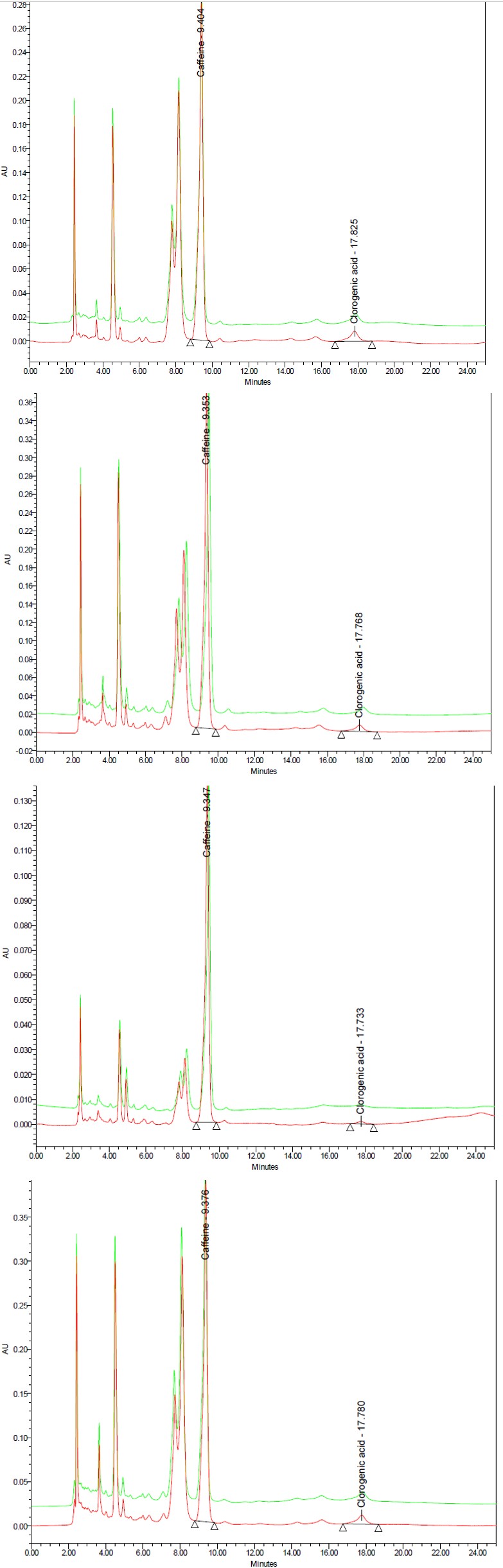
Figure 4(25): HBLC of caffeine and chlorogenic acid from the methanol sample extract Coffee (C. arabica. L) peels (roasted) Udaini ALMahweet.
Figure 4 (26): HBLC of caffeine and chlorogenic acid from the methanol sample extract Coffee (C. arabica. L) peels (roasted) Tufahi ALMahweet.
Figure 4 (27): HBLC of caffeine and chlorogenic acid from the methanol sample extract Coffee (C. arabica. L) peels (roasted) Dawairi ALMahweet.
Figure 4 (28): HBLC of caffeine and chlorogenic acid from the methanol sample extract Coffee (C. arabica. L) peels (roasted) Bura’ai ALMahweet.
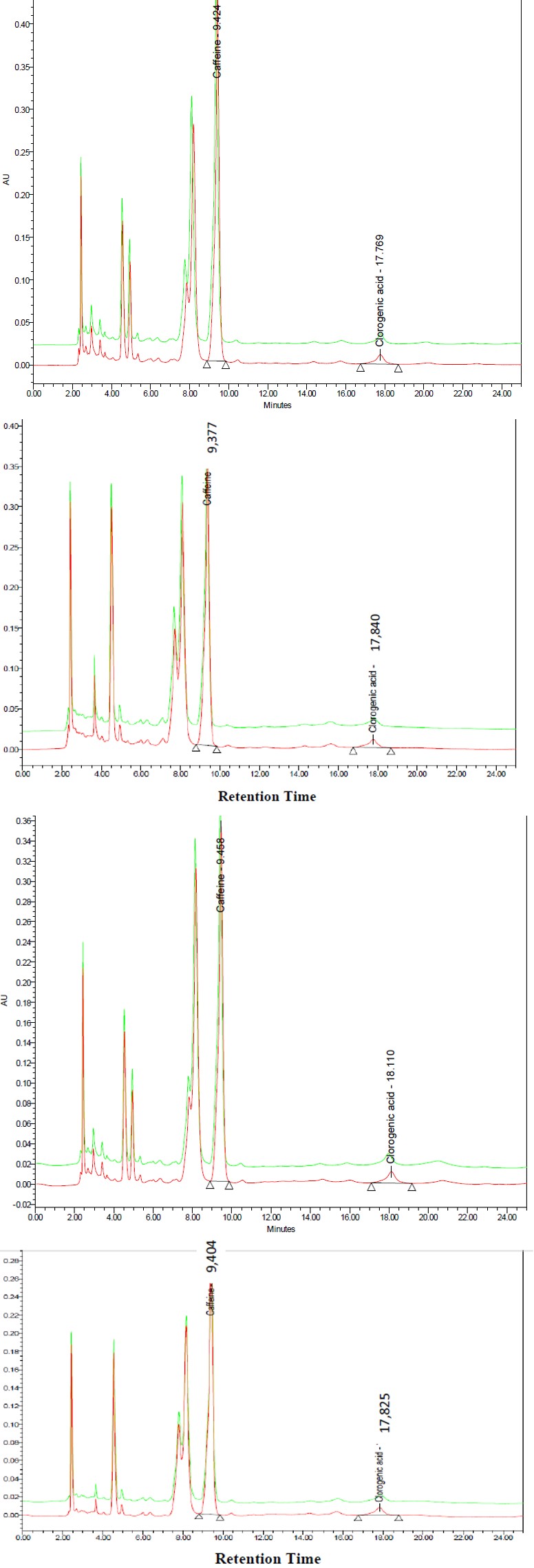
Figure 4 (29): HBLC of caffeine and chlorogenic acid from the methanol sample extract Coffee (C. arabica. L) peels (roasted) Udaini Ibb.
Figure 4 (30): HBLC of caffeine and chlorogenic acid from the methanol sample extract Coffee (C. arabica. L) peels (roasted) Tufahi Ibb.
Figure 4 (31): HBLC of caffeine and chlorogenic acid from the methanol sample extract Coffee (C. arabica. L) peels (roasted) Dawairi Ibb.
Figure 4 (32): HBLC of caffeine and chlorogenic acid from the methanol sample extract Coffee (C. arabica. L) peels (roasted) Bura’ai Ibb.
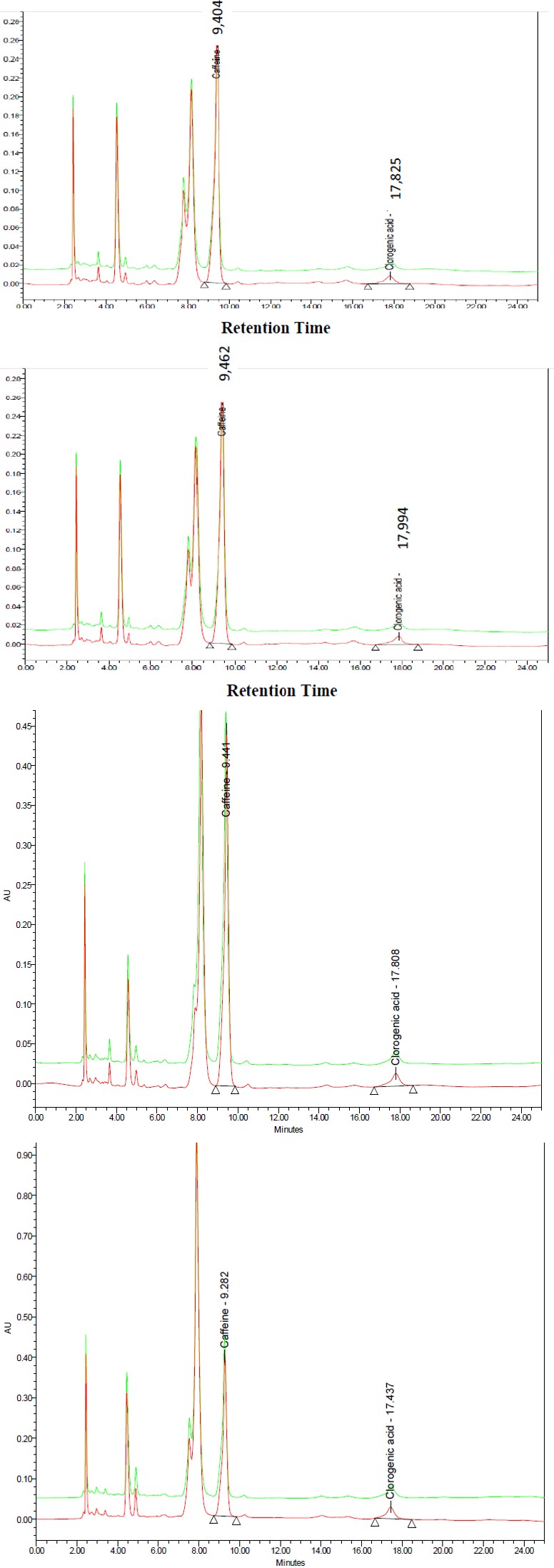
Figure 4 (33): HBLC of caffeine and chlorogenic acid from the methanol sample extract Coffee (C. arabica. L) peels (roasted) Udaini Sana’a.
Figure 4 (34): HBLC of caffeine and chlorogenic acid from the methanol sample extract Coffee (C. arabica. L) peels (roasted) Tufahi Sana’a.
Figure 4 (35): HBLC of caffeine and chlorogenic acid from the methanol sample extract Coffee (C. arabica. L) peels (roasted) Dawairi Sana’a.
Figure 4 (36): HBLC of caffeine and chlorogenic acid from the methanol sample extract Coffee (C. arabica .L) peels (roasted) Bura’ai Sana’a.
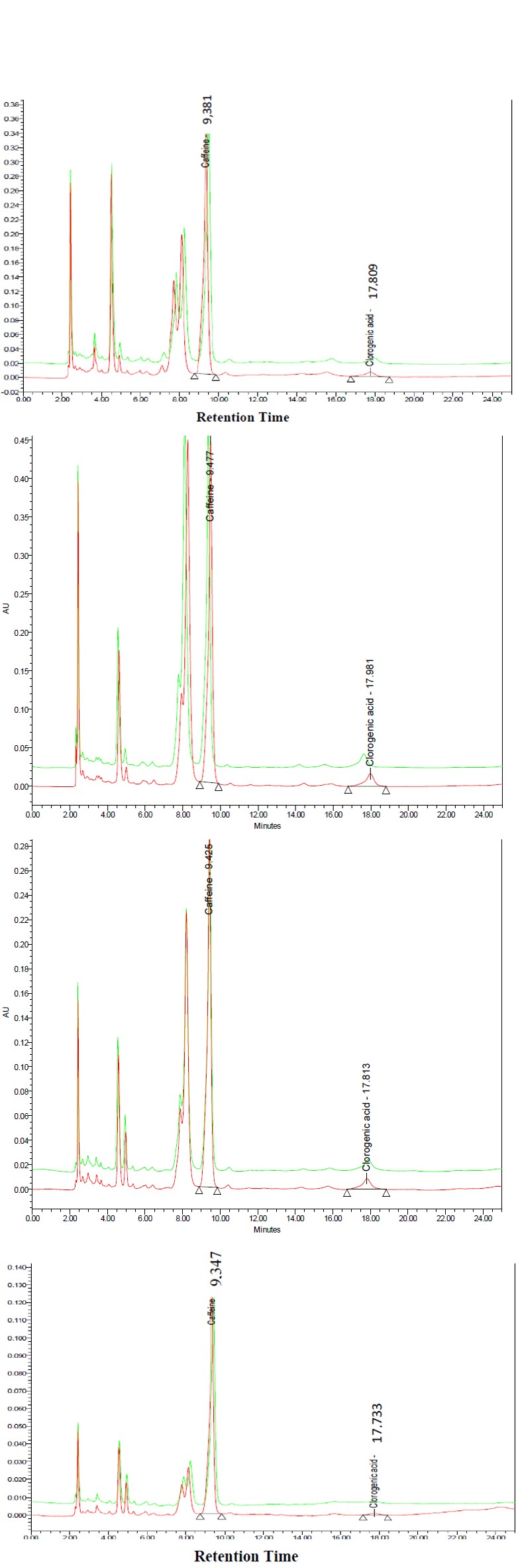
Figure 4 (37): HBLC of caffeine and chlorogenic acid from the methanol sample extract Coffee (C. arabica. L) seeds (roasted) Udaini ALMahweet.
Figure 4 (38): HBLC of caffeine and chlorogenic acid from the methanol sample extract Coffee (C. arabica. L) seeds (roasted) Tufahi ALMahweet.
Figure 4 (39): HBLC of caffeine and chlorogenic acid from the methanol sample extract Coffee (C. arabica. L) seeds (roasted) Dawairi ALMahweet.
Figure 4 (40): HBLC of caffeine and chlorogenic acid from the methanol sample extract Coffee (C. arabica. L) seeds (roasted) Bura’ai ALMahweet.
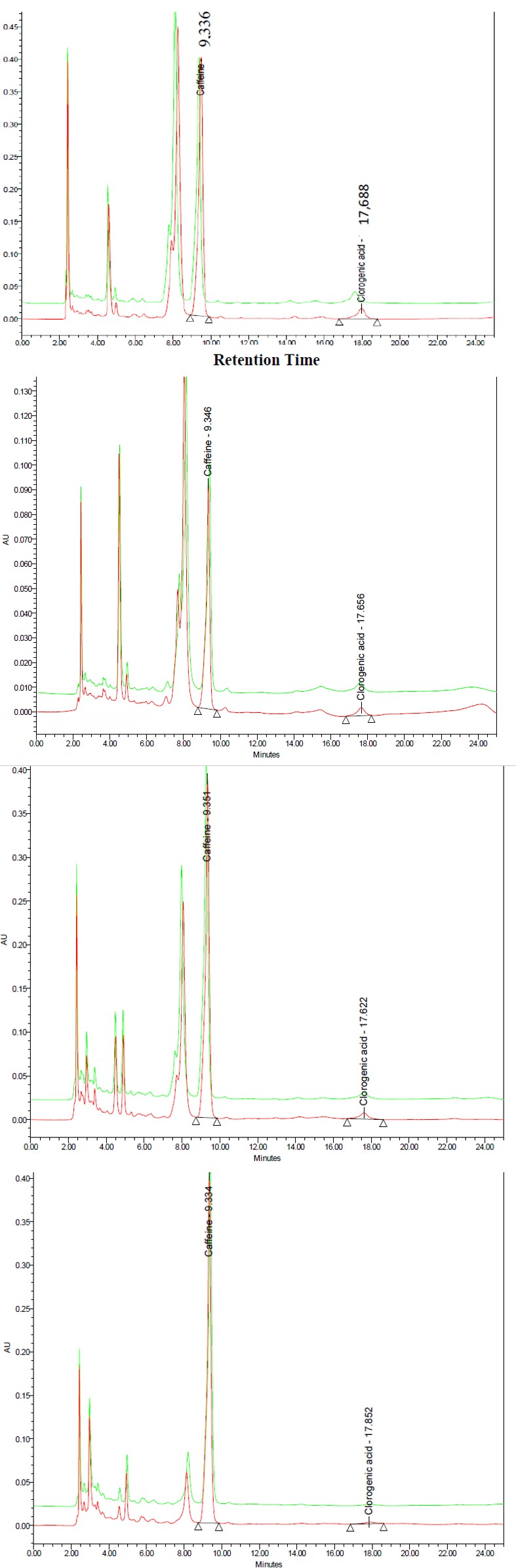
Figure 4 (41): HBLC of caffeine and chlorogenic acid from the methanol sample extract Coffee (C. arabica. L) seeds (roasted) Udaini Ibb.
Figure 4 (42): HBLC of caffeine and chlorogenic acid from the methanol sample extract Coffee (C. arabica. L) seeds (roasted) Tufahi Ibb.
Figure 4 (43): HBLC of caffeine and chlorogenic acid from the methanol sample extract Coffee (C. arabica. L) seeds (roasted) Dawairi Ibb.
Figure 4 (44): HBLC of caffeine and chlorogenic acid from the methanol sample extract Coffee (C. arabica. L) seeds (roasted) Bura’ai Ibb.
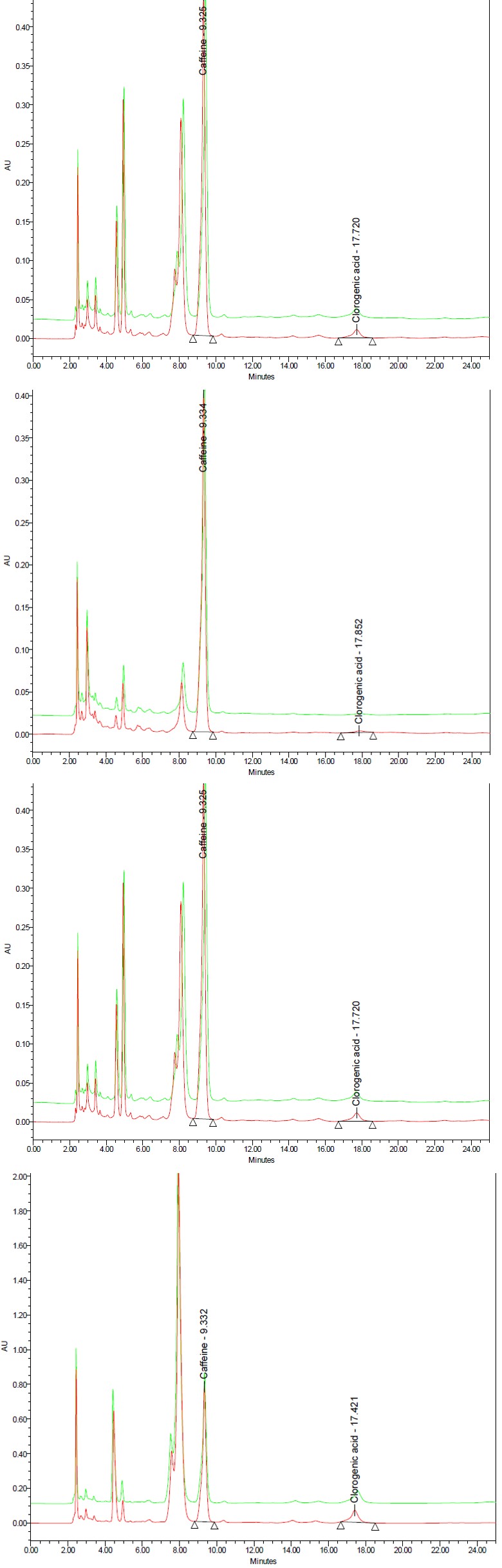
Figure 4 (45): HBLC of caffeine and chlorogenic acid from the methanol sample extract Coffee (C. arabica. L) seeds (roasted) Udaini Sana’a.
Figure 4 (46): HBLC of caffeine and chlorogenic acid from the methanol sample extract Coffee (C. arabica. L) seeds (roasted) Tufahi Sana’a.
Figure 4 (47): HBLC of caffeine and chlorogenic acid from the methanol sample extract Coffee (C. arabica. L) seeds (roasted) Dawairi Sana’a.
Figure 4 (48): HBLC of caffeine and chlorogenic acid from the methanol sample extract Coffee (C. arabica. L) seeds (roasted) Bura’ai Sana’a.
In a study done by Shady, et al. [6] the concentrations of caffeine and CGA in percentage (mg/L, C %) in medium roast coffee bean (175–185 oC) 203.63 mg/L, 2.03%, and 187.45 mg/L, 1.87%. A similar investigation done by Kebena and Tamene [7]. A similar investigation done by Aidilla [13] revealed that C. arabica is commonly medium roasted to the degree of medium roasting prior brewing for consumption. The caffeine and chlorogenic acid content was found significantly higher in medium-roasted C. arabica with the mean of 11and 1.2 mg/g, respectively. According to Nattapon, et al. [5], caffeine and Chlorogenic acid of roasted coffee bean had higher the phenolic acids Content including caffeine and Chlorogenic acid were highest in unroasted Arabica bean. It was 38.73and 194.78mg/g respectively. According to Shady [6], the results showed that the highest content of caffeine was found in the green coffee (Rousted) (203.63 mg/L), and the lowest content of chlorogenic acid content was found in the green coffee (187.45 mg/L. As well as [14], among the selected analyses, the compound present at major amount in all varieties was caffeine. The order of beans varieties in term of caffeine content was as follows: Odaini (2395.02 μg/g) and Harazi (1784.64 μg/g), Also 3-caffeoylquinic acid (CGA) content was as follows: Odaini (684.09μg/g) and Harazi (500.38μg/g).
Conclusion
High performance liquid chromatographic (HBLC) method was employed for determination of level of caffeine and chlorogenic acid (CGA) in the methanolic extracts Coffee (C. arabica. L) To seeds and peels (unroasted and roasted) and the effect of roasting on caffeine and chlorogenic acid (CGA) contents was studied. The results of this study showed that the caffeine and chlorogenic acid (CGA) contents of all unroasted coffee samples were higher than that of roasted coffee beans, and the degree of roasting also affects the concentration of caffeine and chlorogenic acid (CGA), where Raw coffee beans undergo a chemical transformation during roasting and various factors can influence the biochemical composition of the end product, but Roasting coffee transforms the chemical and physical properties of green coffee beans into roasted coffee products. The roasting process is what produces the characteristic flavor of coffee by causing the green coffee beans to change in taste. Unroasted beans contain similar if not higher levels chlorogenic acid (CGA), protein, sugars, and caffeine as those that have been roasted, but lack the taste of roasted coffee beans due to the chemical reactions that occur during roasting.
References
-
Melo Pereira GV, de Carvalho Neto D, Junior AIM, Vasquez ZS, Medeiros AB, et al. (2019) Exploring the impacts of postharvest processing on the aroma formation of coffee beans–A review. Food Chemistry 272: 441-452.
-
USAID (2005) Moving Yemen coffee forward. Assessment of the coffee industry in Yemen to sustainably improve incomes and expand Trade. Rural and Agricultural Incomes with a Sustainable Environment (RAISE) IQC. US Agency for International Development, pp: 1-90.
-
Robinson JBD (2021) Coffee in Yemen, Klaus.
-
Chevalier A, Dagron M (1928) Recherches historiques sur les débuts de la culture du cafea in Americus. Communications ET Actes de l’Académie des Sciences Coloniales, Paris.
-
Kaisangsri N, Selamassakul O, Sonklin C (2020) Phenolic Compounds and Biological Activitiroduct.
-
Awwad S, Issa R, Alnsour L, Albals D, Al-Momani I (2021) Quantification of Caffeine and Chlorogenic Acid in Green and Roasted Coffee Samples Using HPLC-DAD and Evaluation of the Effect of Degree of Roasting on Their Levels. Molecules 26(24): 7502.
-
Motora KG, Beyene TT (2017) Determination of Caffeine in raw and Roasted Coffee Beans of Ilu Abba Bora Zone, South West Ethiopia. Indo American Journal of Pharmaceutical Research 7: 463-470.
-
Acidri R, Sawai Y, Sugimoto Y, Handa T, Sasagawa D, et al. (2020) Phytochemical Profile and Antioxidant Capacity of coffee plant organs compared to Green and Roasted coffee Beans. Antioxidants (Basel) 9(2): 93.
-
Markovska LV, Jankulovska MS, Petanovska-Ilievska B, Hristovski K (2018) Development and Validation of RRLC–UV Method for Determination of Chlorogenic Acid in Green Coffee. Acta Chromatographica 32(1): 34-38.
-
Eticha S, Bedassa T (2020) Determination of Caffeine in Coffee Samples by High Performance Liquid Chromatography and Ultra Violet - Visible Spectrophotometry Methods from Wollega, Ethiopia. International Journal of Biochemistry, Biophysics & Molecular Biology 5(1): 8-17.
-
Ayelign A, Sabally K (2013) Determination of Chlorogenic Acids (CGA) in Coffee Beans using HPLC. American Journal of Research Communication 1(2): 78-91.
-
Patay EB (2017) Histological, Phytochemical and Antimicrobial Evaluation of Coffee Species. University of pecs, Hungary, Pecs, pp: 2-12.
-
Mubarak A, Croft K, Bondonno CP, Din NS (2019) Comparison of liberica and arabica coffee: chlorogenic acid, caffeine, total phenolic and DPPH radical scavenging activity. Asian Journal of Agriculture and Biology 7(1): 130-136.
-
Ahmed Ali AM, Yagi S, Qahtan AA, Alatar AA, Angeloni S, et al. (2022) Evaluation of the chemical constituents, antioxidant and enzyme inhibitory activities of six Yemeni green coffee beans varieties. Food Bioscience 46: 101552.
- Effects of 5-HTP and Melatonin on the Sleep Cycle of Medical Students
- Adsorption of Bisphenol A on NH4OH- Modified Rice Husk and Sugar Cane Bagasse Biochar
- Comparative Assessment of the Reinforcement Efficiency of Palm Fruit Fibre and Coconut Fibre in High Density Polyethylene (HDPE) Matrix Composite
- Importance of Bio Compounds Naturally Present in Food with Functionality in Animal Metabolism
- Sub-Acute Study on the Cardiotoxic Effects of Monosodium Glutamate Ingestion in Albino Rat
- Weight Management and Its Natural Solutions: A Review