
MicroRNA in Prognosis, Diagnosis and Therapy of Cancer
MicroRNAs have been demonstrated to regulate fundamental cellular processes and, their alteration has been correlated with a variety of human cancers. Due to this, great enthusiasm has been shown in the use of miRNAs as a target in cancer therapy. Although we have made major advances in the understanding of cancer biology and pathogenesis as well as in the development of new targeted therapies, the progress in developing tests for early diagnosis and screening has been in adequate. As a result, most cancers are diagnosed in advanced stages, leading to low survival rate. Intense research today is focused on seeking specific molecular changes that are able to identify patients with early cancer or precursor lesions, for better treatment of patients. Emerging evidence suggests that inhibition of overexpressed oncogenic miRNAs or substitution of tumor suppressive miRNAs could become a novel treatment strategy in cancer therapy.
Introduction
MicroRNAs (miRNAs), are small single-stranded RNA molecules, approximately 22 nucleotides (nt) long, which regulate gene expression. miRNAs function as a novel class of global gene regulators by binding to partially complementary sequences in 3′ untranslated regions (UTRs) of downstream target mRNAs [1]. Lee et.al., [2] identified the first microRNA in 1993 in Caenorhabditis elegans. miRNAs are naturally abundant and evolutionarily conserved non-coding RNA molecules found in both plants and animals [3]. MiRNA genes are found throughout the genome and it is estimated that they account for 2–5% of human genes [4].
Various cloning and bioinformatics studies predict that the human genome may contain up to 1000 miRNAs [5]. The miRBase database is a searchable database of published miRNA sequences and annotation. Each entry in the miRBase sequence database represents a predicted hairpin portion of a miRNA transcript (termed mir in the database), with information on the location and sequence of the mature miRNA sequence (termed miR). Both hairpin and mature sequences are available for searching and browsing, and entries can also be retrieved by name, keyword, references and annotation (http://www.mirbase.org/). miRNAs have critical functions in the development and establishment of cell identity, and aberrant metabolism or expression of miRNAs has been linked to human diseases, including cancer [6]. Worldwide, cancer is the third leading cause of mortality after cardiovascular and infectious diseases. Cancer is the second leading cause of death, exceeded only by heart diseases, and accounts for nearly one-quarter of deaths in the USA [7]. Biological samples such as blood, serum, pancreatic juice, stool or urine, as well as both DNA and RNA, have been analyzed for detection of cancers.
miRNA Dysregulation in Cancer
It is considered that just like mRNA expression, miRNA expression is determined by both intrinsic cellular factors and different environmental variables [8]. Due to the critical role of miRNAs in biological processes, deregulation in miRNAs expression contributes in cancer initiation and progression [9]. Generally miRNA genes are dysregulated in cancer and influence tumor formation/ progression because they are located in regions of the genome, which are commonly overexpressed or deleted [10]. Hanahan and Weinberg [11] elucidated six essential features of cancer progression: insensitivity to anti- growth signals, self-sufficiency in growth signals, limitless replicative potential, apoptosis evasion, sustained angiogenesis and tissue invasion and metastasis (Figure 1). Angiogenesis is essential for tumor growth and metastasis [12]. Earlier studies have demonstrated that miRNAs are capable of controlling angiogenesis and tumor cell existence [13, 14]. Furthermore, it has been demonstrated that dysregulated miRNAs contribute to oncogenesis by increased expression of oncomiRs or the loss of tumor-suppressing miRNAs. While tumor- suppressing miRNAs are lost or reduced during oncogenesis, oncomiRs are amplified or overexpressed. Either loss of tumor suppressors or increased expression of oncomiRs ultimately results in increased cell growth, proliferation, invasiveness, or metastasis [15].
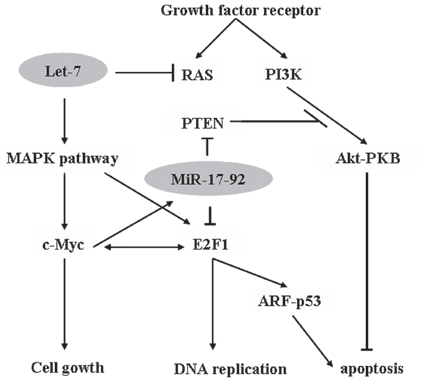
Epigenetic alterations have long been a hallmark of many types of cancer [17]. Silencing of miRNA genes by hypermethylation has been observed in breast cancer and colorectal cancer [18], while the expression of oncogenic miRNAs was increased by DNA hypomethylation in ovarian cancer [19]. Mapping studies have shown that miRNA silencing by methylation of miRNA promoter regions is associated with breast cancer development and metastasis [20]. Similarly, another study has demonstrated that methylation deregulation of miRNA promoters identifies miR124-2 as a survival biomarker in breast cancer in very young women [21]. Lung cancer is Indra Mani and Kavita Vasdev. MicroRNA in Prognosis, Diagnosis and Therapy of Cancer. Cell Cellular Lif Sci J 2018, 3(2): 000134.
the leading cause of cancer death in men and women worldwide, accounting for more than 1.5 million deaths per year [22]. Several studies have analyzed the effectiveness of microRNAs in body fluids for the lung cancer screening [23, 24]. Apart from DNA methylation, altered histone acetylation has been identified to play a role in reducing the expression of antioncogenic miRNAs in breast cancer cells [25]. Globally, urothelial carcinoma (UC) is the most common cancer affecting the urinary system. Lack of accurate early detection tools involves delayed diagnosis, preventing more efficient and timely treatment. A study has demonstrated that miR-129-2 and Copyright© Indra Mani and Kavita Vasdev.
miR-663a were differentially methylated in UC compared with other genitourinary tract malignancies [26]. Hepatocellular carcinoma (HCC) is a major malignancy of the liver worldwide and many studies have demonstrated that MiR-222, miR-92, miR-17–5p, and miR-20 are increased in hepatomas [27].
Abnormal expression of even a single miRNA has the capacity to influence a huge number of cellular processes, as it is predicted that each miRNA has the potential to affect several proteins. Components of the miRNA machinery and miRNAs themselves are involved in many cellular processes that are altered in cancer, such as differentiation, proliferation and apoptosis [28]. Thus, dysregulation of miRNA’s can destabilize homeostatic balance by affecting levels of a mass of target proteins.
miRNAs in Prognosis of Cancers
The development of biomarkers that help in detection of cancer at an early stage, is important since early detection has a direct impact on prognosis and clinical outcome, as evidenced by a higher (49%) 5-year survival in lung cancer patients diagnosed at an early stage compared with those diagnosed later (15%) [7]. Currently employed tests for tumor biomarkers are cumbersome, time consuming, labor intensive and offer a relatively limited number of targets. Considering the simplicity and minimal invasive nature, the development of miRNA based biomarkers, which can be detected in body fluids like blood, serum or plasma is of considerable value [7]. miRNAs are considered better molecular markers than mRNAs because of the small size, relative stability and resistance to RNase degradation [29].
RNA expression analysis by quantitative real-time PCR (qRT-PCR) has been a key contributing technology in current genomic and molecular biomarker research [30]. The recent advances in quantitative real-time PCR (qRT- PCR) methods have improved the sensitivity of miRNA detection to a few nanograms of total RNA, therefore making it possible to quantify miRNA by qRT-PCR in small samples [31]. qPCR-based technologies have quickly evolved from single–gene to large-scale screenings, greatly contributing to characterization and categorization of disease [32] and gene expression analysis [33]. Current prostate-specific antigen–based screening trials show a dynamic condition for novel and noninvasive biomarker identification approaches to improve the prediction of prostate cancer behavior. Microfluidic-based multiplex qRT-PCR has known prognostic and diagnostic microRNA signatures in the sera of prostate Indra Mani and Kavita Vasdev. MicroRNA in Prognosis, Diagnosis and Therapy of Cancer. Cell Cellular Lif Sci J 2018, 3(2): 000134.
cancer patients [34]. Colorectal cancer (CRC) is the third most frequently diagnosed cancer all over the world and the prognosis is associated with the stage at diagnosis. Due to insufficient sensitivity of tumor markers, there is a need for non-invasive, new biomarkers with high sensitivity and specificity and which will be helpful in early diagnosis. RT-PCR method has used to compare miRNA’s expression profiles between pathologically diagnosed CRC patients and healthy control groups. The study demonstrated that miR-150-5p, miR-30a-5p, miR- 34a-5p, and miR-195-5p could be helpful in early diagnosis of CRC [35]. The differential expression of microRNAs (miRNAs) in plasma of pancreatic cancer patients may act as a diagnostic biomarker. Therefore, miRNAs have become valuable tools in the diagnosis, prognosis, and prediction of diseases [36]. Recently [37] have analyzed a six-miRNA signature using qRT-PCR assays in prognosis and diagnosis of pancreatic cancer.
miRNAs in Diagnosis of Cancers
MiRNAs aberrantly expressed during different stages of oral diseases unveil their potential utility as biomarkers in understanding the pathogenesis of disease and in monitoring disease activity and effects of therapy. Given the abundance of miRNA alterations in oral cancer and their stability in a wide range of tissues, miRNA detection may prove to be a valuable diagnostic tool [38]. Plasma levels of miR-31 (under-expressed) [39] miR-184 (over-expressed) [40] and miR-10b (over-expressed) [41] were suggested to serve as tumor biomarkers for early detection of oral squamous cell carcinoma recurrence, which significantly dropped in patients following surgical removal of the tumor.
miRNAs in Treatment of Cancers
The exploitation of miRNAs has been shown to challenge cancer progression. Since the last decade, there has been a considerable increase in number of cancer researchers dedicated to exploring the therapeutic competency of miRNAs [42]. Currently, several technologies are available to manipulate specific miRNAs, resulting in either their activation or inhibition [43]. Transfection of small non-coding RNAs (sncRNAs) molecules has developed a routine method, which is widely used for silencing gene expression by triggering post-transcriptional and transcriptional RNA interference (RNAi) pathways. Furthermore, in the previous decade, small activating (saRNA) sequences targeting promoter regions were also described, thus a RNA-based gene Copyright© Indra Mani and Kavita Vasdev.
activation (RNAa) mechanism has been suggested [44]. In this respect, [45] recently determined an endogenous microRNA (miRNA) that binds its promoter in orders to upregulate its own expression (Turner et. al., 20014). The most common approaches used to abolish the miRNAs functionality consist of synthetic antisense oligonucleotides [46]. The reactivation of tumor suppressor miRNAs, such as miR-29b or miRNA-30-5p, in myeloma cells, has therapeutic effects [47]. In blood cancer, the therapeutic potential of miRNAs has also been addressed in different types of cancer including, but not limited to, leukemia [48], retinoblastoma [49] and glioblastoma [50].
MiRNA-based therapies pose challenges in tissue- specific delivery and toxicity of miRNA. The relatively poor stability in the biological fluid, as well as the negative charge of mRNA molecules, make the cellular uptake of mRNAs difficult and their specific distribution into tissue [51]. To overcome these obstacles many strategies, including viral vector transportation, nanoparticle and cationic lipids inclusion, as well as chemical modification, have been investigated [52]. Given miRNA-based therapies, an additional aspect to consider is that miRNAs regulate several diverse genes. Therefore, manipulation of these molecules could create side effects and increase the risk of toxic phenotypes [51]. However, approaches, such as anti-miRs and cationic lipids-linked miRNAs delivery, have elicited toxicity in vivo [42]. The optimization of the stability of miRNAs, the improvement in delivery systems and targeted drug delivery as well as the understanding and control of off-target effects of miRNA therapeutics are challenges for the future development.
Conclusions and Future Perspectives
As miRNAs are a developing research field, our understanding of miRNA biogenesis function is still at its initial stage. Overall, miRNAs have demonstrated to be potentially valued tools both in cancer diagnostic and therapy. Concerted efforts are needed in future to improve our methodology, both technically and rationally, toward miRNAs biology, to overcome current challenges linked to the use of miRNAs. The current diagnostic methods in cancer lack sufficient sensitivity and specificity to facilitate the detection of cancer in its early stages. In the case of colon cancer, the available diagnostic tests are invasive, uncomfortable for the patient, as well as expensive. Furthermore, to improve the accuracy and efficiency of miRNA in cancer diagnostics, a combined evaluation of miRNAs and selective mRNA as well as Indra Mani and Kavita Vasdev. MicroRNA in Prognosis, Diagnosis and Therapy of Cancer. Cell Cellular Lif Sci J 2018, 3(2): 000134.
protein markers will help in developing a more complete classifier. Although the field of miRNAs and their roles in diseases are in their beginning, more information becomes available about the function of miRNAs and their significance in various gene regulatory pathways with every passing week, leading to better insights into their role as diagnostic biomarkers. Additionally, with continuing technological advances facilitating easy and cost-effective methods for the detection of miRNAs, the idea of harnessing the tremendous potential of miRNAs as novel diagnostic biomarkers looks very promising. This approach would help find a suitable therapeutic solution against the progression and recurrence of cancer, as well as to minimize the risk of toxic effects elicited by the administration of miRNA-based drug.
Acknowledgment
The authors appreciate anonymous reviewers of the journal for their valuable comments and suggestions to improve the quality of the manuscript.
References
-
Saxena S, Jonsson ZO, Dutta A (2003) Small RNAs with imperfect match to endogenous mRNA repress translation. Implications for off-target activity of small inhibitory RNA in mammalian cells. J Biol Chem 278(45): 44312-44319.
-
Lee RC, Feinbaum RL, Ambros V (1993) The C. elegans heterochronic gene lin-4 encodes small RNAs with antisense complementarity to lin-14. Cell 75(5): 843-854.
-
Bartel DP (2004) MicroRNAs: genomics, biogenesis, mechanism, and function. Cell 116(2): 281-97.
-
Mirnezami AH, Pickard K, Zhang L, Primrose JN, Packham G (2009). MicroRNAs: key players in carcinogenesis and novel therapeutic targets. Eur J Surg Oncol 35(4): 339-347.
-
Bentwich I, Avniel A, Karov Y, Aharonov R, Gilad S, et al. (2005) Identification of hundreds of conserved and nonconserved human microRNAs. Nat Genet 37(7): 766-770.
-
Medina PP, Slack FJ (2008) microRNAs and cancer: an overview. Cell Cycle 7(16): 2485-2492. Copyright© Indra Mani and Kavita Vasdev.
-
Paranjape T, Slack FJ, Weidhaas JB (2009) MicroRNAs: tools for cancer diagnostics. Gut 58(11): 1546-1554.
-
Lee YS, Dutta A (2009) MicroRNAs in cancer. Annu Rev Pathol 4: 199-227.
-
Xi JJ (2013) MicroRNAs in cancer. Cancer Treat Res 158: 119-137.
-
Calin GA, Sevignani C, Dumitru CD (2004) Proc Natl Acad Sci U.S.A. 101, 2999.
-
Hanahan D, Weinberg RA (2000) The hallmarks of cancer. Cell 100(1): 57-70.
-
Samples J, Willis M, Klauber-Demore N (2013) Targeting angiogenesis and the tumor microenvironment. Surg Oncol Clin N Am 22(4): 629- 639.
-
Melo SA, Kalluri R (2012) Angiogenesis is controlled by miR-27b associated with endothelial tip cells. Blood 119(11): 2439-2440.
-
Xue G, Yan HL, Zhang Y, Hao LQ, Zhu XT, et al. (2015) c-Myc-mediated repression of miR-15-16 in hypoxia is induced by increased HIF-2α and promotes tumor angiogenesis and metastasis by upregulating FGF2. Oncogene 34(11): 1393-1406.
-
Esquela-Kerscher A, Slack FJ (2006) Nat Rev Cancer 6: 259.
-
Tan W, Liu B, Qu S, Liang G, Luo W, et al. (2018) MicroRNAs and cancer: Key paradigms in molecular therapy (Review). Oncology letters 15(3): 2735-2742.
-
Iacobuzio-Donahue CA (2009) Epigenetic changes in cancer. Annu Rev Pathol 4: 229-49.
-
Toyota M. Suzuki H, Sasaki Y, Maruyama R, Imai K, et al. (2008) Epigenetic silencing of microRNA-34b/c and B-cell translocation gene 4 is associated with CpG island methylation in colorectal cancer. Cancer Res 68(11): 4123-4132.
-
Iorio MV, Visone R, Di Leva G, Donati V, Petrocca F, et al. (2007) MicroRNA signatures in human ovarian cancer. Cancer Res 67(18): 8699-8707.
-
Wee EJ, Peters K, Nair SS, Hulf T, Stein S, et al. (2012) Mapping the regulatory sequences controlling 93 Indra Mani and Kavita Vasdev. MicroRNA in Prognosis, Diagnosis and Therapy of Cancer. Cell Cellular Lif Sci J 2018, 3(2): 000134. breast cancer-associated miRNA genes leads to the identification of two functional promoters of the Hsa- mir-200b cluster, methylation of which is associated with metastasis or hormone receptor status in advanced breast cancer. Oncogene 31(38): 4182- 4195.
-
Oltra SS, Peña-Chilet M, Vidal-Tomas V, Flower K, Martinez MT, et.al. (2018) Methylation deregulation of miRNA promoters identifies miR124-2 as a survival biomarker in breast cancer in very young women. Scientific Reports 8: 14373.
-
Torre LA, Bray F, Siegel RL, Ferlay J, Lortet-Tieulent J, et al. (2015) Global cancer statistics, 2012. CA Cancer J Clin 65(2): 87-108.
-
Xie Y, Todd NW, Liu Z, Zhan M, Fang H, et al. (2010) Altered miRNA expression in sputum for diagnosis of non-small cell lung cancer. Lung Cancer 67(2): 170- 176.
-
Shen J, Todd NW, Zhang H, Yu L, Lingxiao X, Mei Y, et al. (2011) Plasma microRNAs as potential biomarkers for non-small-cell lung cancer. Lab Investig 91(4): 579-587.
-
Scott GK, Mattie MD, Berger CE, Benz SC, Benz CC (2006) Rapid alteration of microRNA levels by histone deacetylase inhibition. Cancer Res 66(3): 1277-1281.
-
Padrao NA, Monteiro-Reis S, Torres-Ferreira J, Antunes L, Leca L, et.al. (2017) MicroRNA promoter methylation: a new tool for accurate detection of urothelial carcinoma. British Journal of Cancer 116: 634-639.
-
Murakami Y, Yasuda T, Saigo K, Urashima T, Toyoda H, et al. (2006) Comprehensive analysis of microRNA expression patterns in hepatocellular carcinoma and non-tumorous tissues. Oncogene 25(17): 2537-2545.
-
Medina PP, Nolde M, Slack FJ (2010) OncomiR addiction in an _in vivo_ model of microRNA-21- induced pre-B-cell lymphoma. Nature 467(7311): 86-90.
-
Waldman SA, Terzic A (2007) Translating MicroRNA discovery into clinical biomarkers in cancer. JAMA 297(17): 1923-1925. Copyright© Indra Mani and Kavita Vasdev.
-
Wong ML, Medrano JF (2005) Real-time PCR for mRNA quantitation. Biotech 39(1): 75-85.
-
Pallante P, Visone R, Ferracin M, Ferraro A, Berlingieri MT, et al. (2006) MicroRNA deregulation in human thyroid papillary carcinomas. Endocr Relat Cancer 13(2): 497-508.
-
Preter DK, Mestdagh P, Vermeulen J, Zeka F, Naranjo A, et al. (2011) miRNA Expression profiling enables risk stratification in archived and fresh neuroblastoma tumor samples. Clinical Cancer Research 17(24):7684-7692.
-
Zeka F, Vanderheyden K, Smet ED, Cuvelier CA, Mestdagh P, et al. (2016) Straightforward and sensitive RT-qPCR based gene expression analysis of FFPE samples. Scientific Reports 6: 21418.
-
Moltzahn F, Olshen AB, Baehner L, Peek A, Fong L, et al. (2011) Microfluidic-based multiplex qRT-PCR identifies diagnostic and prognostic microRNA signatures in the sera of prostate cancer patients. Cancer Res 71(2): 550-560.
-
Akbayir S, Unal ND, Balci S, Gorur S, Yaroglu HY, et al. (2014) Evaluation of Plasma microRNA Expression Levels in Early Diagnosis of Colorectal Cancer. J Clin Exp Oncol 3(1).
-
Howe K (2017) Extraction of miRNAs from Formalin-Fixed Paraffin-Embedded (FFPE) Tissues. In: Rani S (Eds.), MicroRNA Profiling. Methods in Molecular Biology 1509: 17-24.
-
Zhou X, Lu Z, Wang T, Huang Z, Zhu W, et al. (2018) Plasma miRNAs in diagnosis and prognosis of pancreatic cancer: A miRNA expression analysis. Gene 673: 181-193.
-
Wiklund ED, Gao S, Hulf T, Sibbritt T, Nair S, et al. (2011) MicroRNA alterations and associated aberrant DNA methylation patterns across multiple sample types in oral squamous cell carcinoma. PLoS ONE 6(11): e27840.
-
Maclellan SA, Lawson J, Baik J, Guillaud M, Poh CF, et al. (2012) Differential expression of miRNAs in the serum of patients with high-risk oral lesions. Cancer Med 1(2): 268-274. Indra Mani and Kavita Vasdev. MicroRNA in Prognosis, Diagnosis and Therapy of Cancer. Cell Cellular Lif Sci J 2018, 3(2): 000134.
-
Wong TS, Ho WK, Chan JY, Ng RW, Wei WI (2009) Mature miR-184 and squamous cell carcinoma of the tongue. Scientific World Journal 9: 130-132.
-
Calin GA, Croce CM (2006) MicroRNA signatures in human cancers. Nat Rev Cancer 6(11): 857-866.
-
Garzon R, Marcucci G, Croce CM (2010) Targeting microRNAs in cancer: rationale, strategies and challenges. Nat Rev Drug Discov 9(10): 775-789.
-
Abba ML, Patil N, Leupold JH, Moniuszko M, Utikal J (2017) MicroRNAs as novel targets and tools in cancer therapy. Cancer Lett 387: 84-94.
-
Vaschetto LM (2018) miRNA activation is an endogenous gene expression pathway. RNA Biol 15(6): 826-828.
-
Michael Turner M, Jiao A, Slack FJ (2014). Autoregulation of lin-4 microRNA transcription by RNA activation (RNAa) in C. elegans. Cell Cycle 13(5): 772-781
-
Krützfeldt J, Kuwajima S, Braich R, Rajeev KG, Pena J, et al. (2007) Specificity, duplex degradation and subcellular localization of antagomirs. Nucleic Acids Res 35(9): 2885-2892.
-
Leotta M, Gullà AM, Pitari MR, Conforti F, Rossi M, et al. (2012) miR-29b sensitizes multiple myeloma cells to bortezomib-induced apoptosis through the activation of a feedback loop with the transcription factor Sp1. Cell Death Dis 3: e436.
-
Drusco A, Marchesini J, Mascellani N, Sana ME, Jarour RA, et.al. (2010) Reprogramming of miRNA networks in cancer and leukemia. Genome Res 20(5): 589- 599.
-
Subramanian N, Kanwar JR, Kanwar RK, Krishnakumar S (2015) Blocking the Maturation of OncomiRNAs Using pri-miRNA-17 similar to 92 Aptamer in Retinoblastoma. Nucleic Acid Ther 25(1): 47-52.
-
Silber J, Lim D, Petritsch C, Persson AI, Maunakea AK, et al. (2008) miR-124 and miR-137 inhibit proliferation of glioblastoma multiforme cells and induce differentiation of brain tumor stem cells. BMC Med 6: 1741-7015. Copyright© Indra Mani and Kavita Vasdev.
-
Aagaard L, Rossi JJ (2007) RNAi therapeutics: Principles, prospects and challenges. Adv Drug Deliv Rev 59: 75-86. Indra Mani and Kavita Vasdev. MicroRNA in Prognosis, Diagnosis and Therapy of Cancer. Cell Cellular Lif Sci J 2018, 3(2): 000134.
-
Chiarantini L, Cerasi A, Fraternale A, Millo E, Benatti U, et al. (2005) Comparison of novel delivery systems for antisense peptide nucleic acids. J Control Release 109: 24-36. Copyright© Indra Mani and Kavita Vasdev.
- The Muculent Bleb-Mucinous Cystic Neoplasm-Hepatobiliary Region
- Insulin Sensitizers as Anti-Aging Agents: Unveiling Synergies with Albumin, GLP-1RA, Klotho Protein, and Metformin in the Quest to Combat Aging
- Reprogramming of GLP-1 Response at Prediabetes for the Prevention of Type 2 Diabetes: The Role of Albumin and GLP-1 Receptor Agonists
- The Mingled Allies-Combined Hepatocellular Carcinoma and Cholangiocarcinoma
- Compilation and Embodiment-Leydig Cell Tumour Testis
- Glucolipotoxicity: A Novel Different Perspective on the Causes of Cancer