
Scientific Evidence for the Cosmetic Skin and Hair Benefits of Hemp-derived Cannabinoids: A Review
Cannabinoids derived from hemp, known as phytocannabinoids, are a group of approximately 120 bioactive compounds found in the Cannabis sativa plant. They have gained increasing attention in recent years, emerging as promising ingredients in the cosmetics industry due to their proven therapeutic and cosmetic benefits for skin and hair. It is worth noting that they do not produce psychoactive effects associated with tetrahydrocannabinol (THC). This paper summarizes the available published in vitro, in vivo and human studies on cosmetic benefits of cannabinoids for hair and skin. Several of the mechanisms of action of cannabinoids are novel and entirely different from all other cosmetic ingredients because they interact with specific receptors in the hair and skin cells to turn “on” or “off” cellular processes. In addition, there are issues related to the formulation, legal requirements and regulatory considerations associated with incorporating cannabinoids into cosmetics formulations as discussed
Introduction
Skin and hair make up 1/6th of the body’s weight and are two of the fastest-growing tissues in the human body. In addition to having several significant physiologic and protective mechanisms they have always had an essential role in our appearance and self-perception. The quantity and quality of our skin and hair help us to define gender, age, health, and status. Conventionally, the focus is either on hair health or the skin’s condition dermatologically. However, recent studies have shown that they are mutually inclusive. The structural health and stability of the skin and hair lead to an interdependent correlation between the two.
The cosmetics industry continually evolves to meet consumer demands for natural and innovative ingredients to improve the appearance and health of their skin and hair. The use of hemp-derived cannabinoids, including cannabidiol (CBD), cannabigerol (CBG), tetrahydrocannabivarin (THCV), cannabidivarin (CBDV) and topical hemp-derived THC analogues has expanded beyond traditional medicine into the cosmetics and trichology industries. Cannabinoids possess various pharmacological and cosmetic properties that make them appealing for skincare and haircare products, including regenerative, antiinflammatory, antioxidant, antimicrobial and moisturizing effects. In addition, cannabinoids interact with several receptors on various types of skin and hair cells to turn different cosmetically important cellular processes “on” or “off.” This paper examines the current state of research, formulation, legal and regulatory developments in this emerging field.
An increasing body of preclinical and clinical evidence suggests topical application of CBD may be efficacious for some skin disorders, such as acne, eczema, psoriasis, pruritis, wound healing and especially for inflammatory- based conditions. However, confirmed clinical efficacy and elucidation of underlying molecular mechanisms have yet to be fully identified [1, 2, 3, 4]. In addition, much of the in vivo research has been done in rodents with skin that is anatomically and functionally much different from humans [5]. Because cannabinoids are a new and rapidly evolving area with decades of legal barriers there is little if any training in medical school or residency on the use of cannabinoids, there is often confusion as to exactly what cannabinoids to use and how to use them effectively and safely in medical practice [6].
The Endocannabinoid System (ECS)
The Endocannabinoid System (ECS), discovered in the 1990s, is a system involved with maintaining cellular homeostasis by down-regulating the damaging inflammatory response and up-regulating regenerative processes. Certain cells in our brain and body make several chemicals that are called endocannabinoids and these either block or stimulate our natural endocannabinoid receptors. The ECS is comprised of at least two receptors, cannabinoid receptor 1 and 2 (CB1 and CB2), and has two messenger molecules known as the endocannabinoids, anandamide (AEA) and 2-arachidonoylglycerol (2-AG) [1]. There are also specific enzymes involved with synthesis and catabolism of the endocannabinoids. Endocannabinoids are synthesized in the body, phytocannabinoids are produced by plants, and synthetic cannabinoids are manufactured in laboratories and which may or may not exist in nature.
One of the many systems that the ECS is involved with is control of cellular regeneration, cellular differentiation, antioxidant effects and thermoregulation within the skin. There are a substantial number of CB1 and CB2 receptors on various types of skin cells and hair follicles (HF) cells. These include keratinocytes, fibroblasts, melanocytes and sebocytes. Each of the cannabinoids has a different profile of which receptors it interacts with and how well it binds to those receptors. A cannabinoid can be a ‘partial’ or ‘full’ agonist (stimulator) or antagonist (blocker) of a particular type of receptor type [7].
While cannabinoid receptors remain the primary targets for both endocannabinoids and phytocannabinoids, they have also been shown to bind to Transient Receptor Potential (TRP) receptors present in various types of skin cells and are involved in different functions like formation and maintenance of the skin barrier, cell growth, cell differentiation, immunological and inflammatory processes. The transient receptor potential vanilloid 1 (TRPV1) receptor is expressed in a subset of sensory nerve fibers in the epidermis and dermis. These nerve fibers are primarily responsible for sensing pain and temperature [1].
The endocannabinoids and phytocannabinoids also interact with peroxisome proliferator-activated receptors (PPAR) via direct or indirect signaling pathways. PPAR (α and γ) activation partially mediates major biological functions of cannabinoids like neuroprotection, anti-inflammation, and analgesic actions. The ECS and some other non-cannabinoid (indirect) targets influencing the ECS in different cellular compartments of the skin are shown in Figure 1 [1].
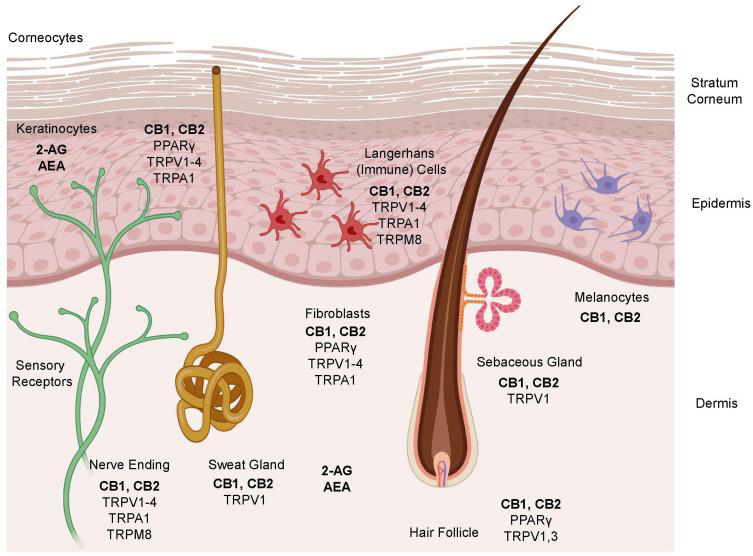
Hemp-derived Cannabinoids
The plant species cannabis sativa has extensive genetic and geographic variation, and no two ‘hemp extracts’ are the same. “Hemp” is a legal term, referring to cannabis sativa that contains less than 0.3% THC by dry weight. “Marijuana” is another legal term, referring to cannabis sativa that contains 0.3% or more THC by dry weight. Hemp extract used in cosmetic preparations comes from the essential oil in the flowering part of the female plant, and, to a lesser extent, from the stems and stalks of the plant. These hemp essential oils contain approximately 120 different phytocannabinoids, with CBD and THC being the major cannabinoids present in the highest quantities, and the others being known as the ‘minor cannabinoids’, usually present in tiny amounts. In addition to these phytocannabinoids which are essentially unique to the cannabis sativa plant, there are dozens of terpenes and flavonoids that can be present in hemp extract. These terpenes and flavonoids are not unique to cannabis sativa and vary considerably from strain to strain [6].
After the passage of the 2018 federal Farm Bill, hemp extracts are legal for the manufacture and distribution of commercial products, including cosmetics. Delta-9 Tetrahydrocannabinol (THC) is found in only minute quantities in hemp extract. THC is the most widely known phytocannabinoid, known for its euphoric effects. THC is still a federally controlled Schedule I drug, and is not used in any cosmetic that crosses state lines. This may change in the near future, however, with the Drug Enforcement Agency (DEA) looking into rescheduling THC to a Schedule III drug, which could be used in prescription medications anywhere in the US.
Hemp seed extracts are totally unrelated to hemp extract and contain minimal to no cannabinoids. The oil in hemp seeds is no different from any other plant seed oil and is primarily essential fatty acids, such as omega-3 and omega-6 fatty acids as well as certain fat soluble vitamins and protein. However, the term ‘hemp seed oil’ is often used to imply the presence of cannabinoids for commercial purposes [8]. Only a few of the cannabinoids from hemp have any measurable quality research regarding their use for cosmetic benefits. These cannabinoids, CBD, CBG, THCV, CBDV and THC analogues, have novel therapeutic effects on skin rejuvenation and hair growth through mechanisms using the ECS. The method of action is different from and synergistic with current skin rejuvenation and hair growth therapies. All of the available research for cosmetic effects on the skin and hair have used topical application of the cannabinoids. Much of the research involves the use of a cannabinoid in combination with other essential oils or phytonutraceuticals [5]. Like all cannabinoids, these cannabinoids used for cosmetics are fat-soluble and poorly absorbed past the epidermis. However, topical absorption has been proven to be enhanced with the use of various vehicles so that the cannabinoids have therapeutic effects via direct action of the epidermal layers and hair follicles, as well as local absorption deeper into the dermis [3].
Cannabinoids are essential oils, and as such, they are potent antioxidants with anti-inflammatory effects. Many essential oils, including several phytocannabinoids, have been shown to have non-specific cosmetic effects by counteracting free radical damage, caused by oxidative stress, aging, health, diet, medications, UV and everyday environmental pollutants [5]. CBD, CBG, THCV, CBDV and THC analogues are the cannabinoids derived from hemp extract that are most well researched and currently used in cosmetic preparations. In general, all of the polyphenolic phytocannabinoids have some anti-inflammatory, cytotoxic, antibacterial and/or antifungal properties [9, 10, 11]. In addition to the specific ECS receptor binding effects of the various cannabinoids, hemp extracts, but not cannabinoid isolates, contain significant concentrations of other polyphenols, several terpenes and flavonoids. These other components of hemp extract are partially responsible for the antioxidant activity, by neutralizing free radicals that may generate oxidative stress. Oxidative stress is one of the main factors inducing skin aging processes and inhibiting its regenerative abilities [12, 13].
THCV and CBDV, colloquially known as the ‘varins,’ are very close in molecular structure and both work via the ECS by neutrally blocking the CB1 receptor. This represents a novel effect that has not previously been demonstrated by any other known cannabinoids or other cosmetic ingredients. As will be discussed later, the neutral CB1 antagonism effect of these two compounds can have significant cosmetic effects on hair regrowth. The ‘varins’ have not been as extensively researched as other cannabinoids because of the dearth of hemp extract containing any significant amounts of these two cannabinoids; however, the ‘varins’ are now readily available in a few hemp extracts and as isolates at economically viable costs. Some research on orally ingested ‘varins’ has shown promising effects in the treatment of obesity and diabetes mellitus. The effect of neutral CB1 antagonism is postulated to be responsible for these metabolic effects [14].
Cosmetic Skin and Hair Effects
The epidermis is the outermost layer of the skin, and it provides the barrier function. It contains various cell types, including keratinocytes, which are the major cellular component of this layer. Cannabinoid type 1 and type 2 (CB1 and CB2) receptors are expressed in the keratinocytes of the epidermis. Activation of these receptors here can modulate cell proliferation, differentiation, and skin barrier formation.
The dermis is the layer beneath the epidermis and contains blood vessels, nerve endings, hair follicles, and other structures. Fibroblasts in the dermis also express CB1 and CB2 receptors. Activation of these receptors can affect fibroblast function, potentially influencing wound healing and scar formation. Endothelial cells and mast cells in the dermis also show expression of cannabinoid receptors, which can play a role in inflammation and vasodilation. The hair follicle is a complex structure that resides mostly in the dermis but opens up to the skin’s surface through the epidermis. CB1 receptors present in various components of the hair follicle, including keratinocytes and matrix cells. These receptors can influence hair growth and sebum production.
Hair Follicle Growth
Pre-clinical studies in rodents and humans have revealed that CB1 receptors are well expressed in HF cells. Stimulation of the CB1 receptor with endocannabinoids leads to decreased hair shaft elongation and decreased matrix production and apoptosis (cell death) [15]. The available research by this author and others suggests that THC and other CB1 agonists can be used to decrease or prevent unwanted hair growth, and likewise, CB1 antagonists, such as CBD, THCV and CBDV, can be used to promote hair growth [16, 17, 18]. THC is a CB1 receptor partial agonist, and it has been shown in HF cultured cells to dose-dependently inhibit hair shaft elongation, decrease proliferation of hair matrix keratinocytes, and induce intraepithelial apoptosis and cause premature hair follicle regression (catagen. These effects from THC were inhibited by a selective CB1 antagonist [15, 16].
A recent study of human HF cultured cells revealed that use of lower doses of CBD resulted in hair shaft elongation, probably via CB1 antagonism. CBD is a CB1 partial antagonist that probably produces its effects via negative allosteric modulation of the CB1 receptor [17, 19]. In the same study, a much higher dose resulted in premature entry into the catagen phase, probably via a different receptor, the ECS vanilloid receptor-4 (TRPV4) [20].
Therefore, the dosing of the topical CBD needs to be evaluated in order to obtain positive hair regrowth. CBD is fat-soluble and poorly absorbed past the epidermis, but topical application of CBD easily reaches hair follicles where it is a CB1 antagonist and TRPV1 and TRPV4 agonist [20]. The HF cycle (anagen, catagen, and telogen phases) is controlled by the ECS vanilloid receptor-1 (TRPV1) [21, 22].TRPV1 receptors are found on hair matrix keratinocytes. Mouse studies have shown that activation promotes HF regression (catagen) and hair matrix keratinocyte apoptosis (cell death) through retarding hair shaft elongation [22].
Endocannabinoids and cannabis-derived phytocannabinoids such as THC and CBD message TRPV1 receptors. It is postulated that CBD has therapeutic effects on hair growth via TRPV1 receptors by such excessive activation of the receptor that they become desensitized [23]. Unrelated to the ECS, CBD has also been shown to increase Wnt signaling, which causes dermal progenitor cells to differentiate into new hair follicles. Wnt signaling is crucial in transitioning hair follicles from the telogen to the anagen phase, essentially initiating a new cycle of hair growth.
This author conducted a study of the use of CBD rich topical extract for the treatment of androgenetic alopecia [17]. Thirty-five adult subjects, 28 males, 7 females, ages 28 to 72 with AGA (Norwood-Hamilton Classification score of 3V or 4) participated in the six-month long study. The predefined endpoints were hair counts obtained in a defined, representative area of worst scalp hair loss. The paste was made of ultrapulverized high CBD cannabis sativa flower containing 10.78% CBD and 0.21% THC. This powder was infused into a lanolin base paste and natural Emu oil carrier. Each 2oz jar lasted approximately one month, which is an average daily dose of 3-4mg of topically applied CBD.
In the temporal area, hair counts increased an average of 74.1% in men and 55.2% in women. In men, the number of hairs increased from baseline of 20.6 to 33.7 (paired t-test p< 0.01) in the temporal area; in women, it increased from 20.3 to 30.5 (paired t-test p<0.01). In the vertex area, hair counts increased an average of 120.1% for men and 64.9% for women. In men, the number of hairs increased from baseline of 16.8 to 32.9 (paired t-test p< 0.01) in the temporal area; in women, it increased from 18.7 to 30.7 (paired t-test p< 0.01). For all males, the baseline hair count was 18.28 (95% Confidence Interval ± 3.02), and at six months, it was 33.21 (95% Confidence Interval ± 4.86). For all females, the baseline hair count was 19.57 (95% Confidence Interval ± 4.83), and at six months, it was 30.57 (95% Confidence Interval ± 7.51). The pair t-value for men before and after difference was 7.38, p <0.00001). The pair t-value for women before and after difference was 5.56, p =0.0014. The hair count increased 93.5%, from 18.5 to 32.7 (p<0.001), when temporal and vertex areas were combined. In general, the best results were seen in males and the vertex area. All subjects showed some increase in hair count.
In general, the increased hair counts were associated with a cosmetically pleasing result. One-third of the patients reported some slightly increased hair shedding during the first month of treatment, which was no longer noted at the two-month visit. There were no reported significant adverse effects. The topical CBD had comparable results to topical minoxidil twice daily application which had 71% to 83% increase in hair counts after 4 months [24, 25].
A recently published study by the author is a case series of adults 31 subjects 15 males, 16 females, ages 31 to 65 treated with once daily hemp extract (CBD 60.00%, CBDV 12.63%, THCV 3.71%, delta 9 THC 0.18%, CBG 0.86% and CBN 0.05% with other active ingredients including menthol, peppermint oil and Emu oil [18]. The one-ounce foam spray or tincture lasted approximately one month on average. This is an average daily dose of 33 mg of topically applied hemp extract. A hair count of the greatest area of alopecia was carried out before treatment was started, and again after six months of treatment. To facilitate consistent hair count analysis, a permanent black tattoo dot was placed at the point of maximum hair loss on the scalp.
For all males, the baseline hair count was 6.13/cm2 and at six months, it was 21.20/cm2 (one-tailed paired t-test p<.00001). This represented an average increase of 246% or 15.50 additional hairs in the one square centimeter mold. For all females, the baseline hair count was 12.69/cm2 and at six months, it was 28.75/cm2 (one-tailed paired t-test p<.00001). This represented an average increase of 127% or 15.50 additional hairs in the one square centimeter mold.
For all adults, the baseline hair count was 9.50/cm2 and it increased after six months to 25.00 (one-tailed paired t-test p<.00001). This represented an average increase of 164% or 15.50 additional hairs in the one square centimeter mold. All subjects had some increase in hair count. The increase ranged from 31.25% in a female (16 to 21 hairs/cm2) to 2000% in a male (1 to 21 hairs/cm2).
In general, the increased hair counts were associated with a cosmetically pleasing result. All subjects rated their psychosocial perception of the effects of the hair loss, as ‘happy’ (17 out of 31, 55%), or ‘very happy’ (14 out of 31, 45%). This topical was superior to high-CBD hemp extract alone minoxidil and oral finasteride [17]. In general, men had better results than women. On average, there was a 164% (p<.00001) increase in nonvellus hair after six months of once-daily use. In addition to the effects from the cannabinoids, the menthol and peppermint (40% menthol) are probably acting by promoting the rapid onset of anagen phase [26]. The safety of topically-applied hemp extract has been previously well-documented. There were no reported significant adverse effects for six-month application of hemp extract topical. The superior results from the second study were believed to be due to the fact that CBD is only a partial CB1 receptor antagonist, whereas the ‘varins’, THCV and CBDV, are full antagonists of the CB1 receptor [14, 16].
Hair Follicle Suppression
Facial hirsutism is the excessive, increased bodily and facial hair growth in females, presenting in locations where hair is ordinarily minimal or absent. It refers to the hair growth pattern commonly occurring only in men, but can also be experienced in women with Polycystic Ovarian Syndrome (PCOS) or other conditions [27]. THC analogues occur naturally in trace amounts in the cannabis sativa plant. They are considered to be naturally occurring minor cannabinoids and are legally unrestricted under the 2018 federal Farm Bill. Unlike delta-9 tetrahydrocannabinol (THC), THC analogues are readily available for cosmetic nutraceutical uses. However, like THC, these THC analogues activate the CB1 receptors that are present in the HF. According to previous published research, cannabinoids that stimulate the CB1 receptor are associated with statistically significant decrease in hair growth through several mechanisms [27]. Studies by this author are currently underway to identify a potential hemp-based facial hair suppressor through full CB1 stimulation.
Solar Elastosis
Solar or actinic elastosis is an accumulation of abnormal elastin in the superficial dermis, which occurs due to the effects of photoaging. There is a wide constellation of readily identifiable skin changes from solar elastosis including deeply fissured, thickened skin on sun exposed areas. CBD and other minor cannabinoids such as cannabigerol (CBG) and cannabichromene (CBC) have been scientifically evaluated for several non-cosmetic dermatological conditions, including acne, eczema, atopic dermatitis, pruritus, psoriasis and inflammatory skin conditions [1, 2, 3, 16]. In addition, phytocannabinoids and hemp extracts have known non- specific cosmetic benefits such as being antioxidant, UV protectant, and moisturizing [28, 29, 30]. However, these non- specific effects are similar in many ways to other readily available essential oils or cosmetic ingredients [31].
Based on the novel regenerative effects expected from cannabinoid interaction with cannabinoid receptors on the dermal fibroblasts and endothelial cells, it is postulated that CBD and/or other cannabinoids used as active ingredient is skin care products may have cosmetic benefits that are novel and superior to currently available ingredients. Current popular ingredients such as retinoids [32], vitamin C [33], peptides [34] and alpha-hydroxy acid [35] work through various mechanisms of action to promote collagen synthesis, inhibit collagen breakdown and reduce UV-induced cellular changes. Specifically, most of the cosmetic benefits that are currently available relate to the epidermis, such as fine lines and fine wrinkles.
However, cannabinoids penetrating into the deep dermal layers and interacting with fibroblasts and endothelial cells are expected to have a regenerative impact on different aging effects such as excess pigmentation, vascular irregularities and the deep wrinkles associated with actinic (solar) elastosis. The current treatments for these deeper dermal conditions include laser skin resurfacing, skin peels, dermabrasion or a 3-4 week course of topical chemotherapy with 5-fluorouracil. Topical cosmetic products have not had significant effects with the treatment of these conditions, but are an important part of prevention.
Challenges in Utilizing Cannabinoids Safety and Regulatory Considerations
The legal status of cannabinoids varies globally, adding complexity to the production, marketing, and sale of cannabinoid-infused cosmetics and making it essential for companies to navigate a patchwork of regulations and ensure compliance when incorporating these compounds into cosmetics and trichology products. While cannabinoids are generally well-tolerated, individuals with sensitivities or allergies to cannabis should exercise caution when using these products. There is a need for better consumer education to dispel misconceptions about cannabinoids and address concerns related to psychoactive or euphoric effects. Clear labeling and information dissemination are critical for building consumer trust.
Future Direction and Conclusion
Integrating cannabinoids into the cosmetology and trichology industry shows excellent promise and presents exciting opportunities for the industry. Research into their effects on skin health, pain and anti-aging properties continues to evolve, and compounds offer a range of potential benefits, from anti-inflammatory and antioxidant properties to promoting scalp and hair health. However, more research is needed to understand their mechanisms and optimize formulations fully. Regulatory compliance and safety considerations are paramount in developing and marketing cannabinoid-infused products. As the scientific understanding of cannabinoids deepens and regulations become standardized, integrating cannabinoid-infused cosmetics may become a staple in trichology and skincare as it revolutionizes the industry. Consumer education and responsible marketing will play pivotal roles in this journey.
References
-
Baswan SM, Klosner AE, Glynn K, Rajgopal A, Malik K, et al. (2020) Therapeutic Potential of Cannabidiol (CBD) for Skin Health and Disorders. Clin Cosmet Investig Dermatol 13: 927-942.
-
Martins AM, Gomes AL, Boas IV, Marto J, Ribeiro HM (2022) Cannabis-Based Products for the Treatment of Skin Inflammatory Diseases: A Timely Review. Pharmaceuticals (Basel) 15(2): 210.
-
Filipiuc SI, Neagu AN, Uritu CM, Tamba BI, Filipiuc LE, et al. (2023) The Skin and Natural Cannabinoids-Topical and Transdermal Applications. Pharmaceuticals (Basel) 16(7): 1049.
-
Ramer R, Hinz B (2022) Cannabinoid Compounds as a Pharmacotherapeutic Option for the Treatment of Non- Cancer Skin Diseases. Cells, 11(24): 4102.
-
Martinelli G, Magnavacca A, Fumagalli M, DellʼAgli M, Piazza S, et al. (2022) Cannabis sativa and Skin Health: Dissecting the Role of Phytocannabinoids. Planta Med 88(7): 492-506.
-
Smith GL (2016) Medical Cannabis: Basic Science and Clinical Applications. Aylesbury Press.
-
Toth KF, Adam D, Biro T, Olah A (2019) Cannabinoid Signaling in the Skin: Therapeutic Potential of the “C(ut) annabinoid” System. Molecules 24(5): 918.
-
Cerino P, Buonerba C, Cannazza G, D’Auria J, Ottoni E, et al. (2021) A Review of Hemp as a Food and Nutritional Supplement. Cannabis Cannabinoid Res 6(1): 19-27.
-
Beg S, Swain S, Hasan H, Barkat MA, Hussain MS (2011) Systematic review of herbals as potential anti- inflammatory agents: Recent advances, current clinical status and future perspectives. Pharmacogn Rev 5(10): 120-137.
-
Mahlo SM, Chauke HR, McGaw L, Eloff J (2016) Antioxidant and antifungal activity of selected medicinal plant extracts against phytopathogenic fungi. Afr J Tradit Complement Altern Med 13(4): 216-222.
-
Borges R , Batista J, Viana R, Baetas A, Orestes E, et al. (2013) Understanding the molecular aspects of tetrahydrocannabinol and cannabidiol as antioxidants. Molecules 18(10): 12663-12674.
-
Fukumoto LR, Mazza G (2000) Assessing antioxidant and prooxidant activities of phenolic compounds. J Agric Food Chem 48(8): 3597-3604.
-
Pollastro F, Minassi A, Fresu LG (2018) Cannabis Phenolics and their Bioactivities. Curr Med Chem 25(10): 1160-1185.
-
Abioye A, Ayodele O, Marinkovic A, Patidar R, Akinwekomi A, et al. (2020) Δ9-Tetrahydrocannabivarin (THCV): a commentary on potential therapeutic benefit for the management of obesity and diabetes. J Cannabis Res 2(1): 6.
-
Telek A, Biro T, Bodo E, Toth B, Borbiro I, et al. (2007) Inhibition of human hair follicle growth by endo- and exocannabinoids. FASEB J 21(13): 3534-3541.
-
Biro T, Toth BI, Hasko G, Paus R, Pacher P (2009) The endocannabinoid system of the skin in health and disease: novel perspectives and therapeutic opportunities. Trends Pharmacol Sci 30(8): 411-420.
-
Smith GL, Satino J (2021) Hair Regrowth with Cannabidiol (CBD)-rich Hemp Extract. Cannabis 4(1): 53-59.
-
Smith GL (2023) Hair Regrowth with Novel Hemp Extract: A Case Series. Int J Trichology 15(1): 18-24.
-
Chung H, Fierro A, Pessoa-Mahana CD (2019) Cannabidiol binding and negative allosteric modulation at the cannabinoid type 1 receptor in the presence of delta-9-tetrahydrocannabinol: An In Silico study. PLoS One 14(7): e0220025.
-
Szabo IL, Herczeg-Lisztes E, Szollosi AZ, Szegedi A, Biro T, et al. (2017) 263 (-)-cannabidiol differentially influences hair growth. J Invest Dermatol 137(10): S238.
-
Laprairie RB, Bagher AM, Kelly ME, Wright EMD (2015) Cannabidiol is a negative allosteric modulator of the cannabinoid CB1 receptor. Br J Pharmacol 172(20): 4790-4805.
-
Biro T, Bodo E, Telek A, Geczy T, Tychsen B, et al. (2006) Hair cycle control by vanilloid receptor-1 (TRPV1):evidence from TRPV1 knockout mice. J Invest Dermatol 126(8): 1909-1912.
-
Muller C, Morales P, Reggio PH (2019) Cannabinoid Ligands Targeting TRP Channels. Front Mol Neurosci 11: 487.
-
Stout SM, Stumpf JL (2010) Finasteride treatment of hair loss in women. Ann Pharmacother 44(6): 1090-1097.
-
Adil A, Godwin M (2017) The effectiveness of treatments for androgenetic alopecia: A systematic review and meta-analysis. J Am Acad Dermatol 77(1): 136-141.e5.
-
Oh JY, Park MA, Kim YC (2014). Peppermint Oil Promotes Hair Growth without Toxic Signs. Toxicol Res 30(4): 297- 304.
-
Elghblawi E (2008) Idiopathic hirsutism: excessive bodily and facial hair in women. Br J Nurs 17(3): 192- 197.
-
Gęgotek A, Atalay S, Wrzesińska AR, Skrzydlewska E (2021) The Effect of Cannabidiol on UV-Induced Changes in Intracellular Signaling of 3D-Cultured Skin Keratinocytes. Int J Mol Sci 22(3): 1501.
-
Li Y, Hao D, Wei D, Xiao Y, Liu L, et al. (2022) Photoprotective Effects of Cannabidiol against Ultraviolet-B-Induced DNA Damage and Autophagy in Human Keratinocyte Cells and Mouse Skin Tissue. Molecules 27(19): 6740.
-
Dziok MZ, Bujak T, Ziemlewska A, Nizioł-Łukaszewska Z (2021) Positive Effect of Cannabis sativa L. Herb Extracts on Skin Cells and Assessment of Cannabinoid-Based Hydrogels Properties. Molecules 26(4): 802.
-
Sarkic A, Stappen I (2018) Essential Oils and Their Single Compounds in Cosmetics-A Critical Review. Cosmetics 5(1): 11.
-
Szymański Ł, Skopek R, Palusińska M, Schenk T, Stengel S, et al. (2020) Retinoic Acid and Its Derivatives in Skin. Cells 9(12): 2660.
-
Enescu CD, Bedford LM, Potts G, Fahs F (2022) A review of topical vitamin C derivatives and their efficacy. J Cosmet Dermatol 21(6): 2349-2359.
-
Bauza E, Oberto G, Berghi A, Dal CF, Domloge N (2004) Collagen-like peptide exhibits a remarkable antiwrinkle effect on the skin when topically applied: in vivo study. Int J Tissue React 26(3-4): 105-111.
-
Tang SC, Yang JH (2018) Dual Effects of Alpha-Hydroxy Acids on the Skin. Molecules 23(4): 863.
- Epithelioid Granuloma; 3cases with Different Clinical Features
- Advancing Representation in Dermatology Clinical Trials: Ethical, Scientific, and Regulatory Imperatives for Inclusion Across all Fitzpatrick Skin Types
- A Case of Atopic Dermatitis with Concurrent Psoriasis Vulgaris: Successful Treatment with Upadacitinib
- Innovation Lifting Eyeshadow: A Synthesis of Makeup and Optical Illusion
- Distinguishing Superficial Actinic Porokeratosis from Actinic Keratosis with UVF Dermoscopy: A Case Report
- High Mobility Group Box 1 (HMGB1) in Cutaneous Inflammation: An Immune Modulator Bridging Cellular Stress, Ferroptosis and Danger Signaling