
Clinical Importance of Agrya Ausadha Aragvadha in the Management of Vicharchika: A Pharmacological Review
In Ayurvedic clinical practice, agrya ausadha are the first drug of choice for treatment of various diseases. Aragvadha, as an agrya ausadha, is employed for its therapeutic benefits in both internal and external applications. It is notably used for mridu virechana (mild purgation) and as a topical remedy for various types of Kustha. In ayurvedic dermatology kustha has been taken as supreme word for all skin diseases. Vicharchika, classified as a Kshudra Kustha, is treated through the dual principles of Sodhana (purification) and Samana Chikitsa (pacification). The Majja (pulp) of Aragvadha is utilized for internal Sodhana therapy, while the leaves are applied externally as a paste for samana Chikitsa. Preliminary findings indicate that Aragvadha meets the criteria for an ideal drug as per classical Ayurveda, given its accessibility (Bahuta), versatility in formulations (anekvidhkalpana), and effectiveness (yogatyam). Aragvadha, through its varied formulations, plays a crucial role in the Ayurvedic management of Vicharchika. Its use aligns with the principles of Sodhana and Samana Chikitsa, offering a comprehensive approach to treating this skin disorder. The study highlights the clinical significance of different parts of Aragvadha and supports its continued use in Ayurvedic dermatological practice.
Introduction
In clinical practice, the choice of drug is a crucial aspect of treatment. The term “Agrya” means “Shrestha”, which signifies the best among all options [1]. Ekal ausadhi, or single drug therapy, often yields the best results in disease treatment. In Ayurveda, the term Kustha broadly encompasses various skin disorders, and Vicharchika, considered a low-intensity form of Kshudra Kushtha, is analogous to eczema in modern terms. Eczema affects 15-20% of children and 1-3% of adults, with prevalence increasing in industrialized nations [2]. In India, eczema has a point prevalence of 6.75%. Contemporary treatments are limited to symptomatic relief through antihistamines, corticosteroids, immunomodulators, and phototherapy, which can have long-term side effects. In contrast, Ayurveda offers a comprehensive approach to treating skin ailments through various methods, including internal and external therapies like: • Anthaparimarjan chikitsa (mainly include sodhana and other panchkarma procedures) • Bahiparimarjan chikitsa (lepa, abhyang, etc.) Among all dravyas, Aragvadha is considered the agrya aushadha for mridu virechana [3] (mild purgation). Although Khadir is the agrya dravya and the drug of choice for all types of kustha (skin disorders), [3] Acharya Chakrapani considers Aragvadha to be one of the best drugs for bahiparimarjana chikitsa (external purification) in various skin disorders [4].
In this statement, dates are the chief among the medicines for the cure of leprosy, yet he teaches the killing of the snakes instead of the dates, in order to explain that the killing of the snakes is the chief among the medicines for wiping the outside of the leprosy.
Acharya Charaka mentions topical applications (i,e, lepa) that are applied for treating skin diseases (Kushtha) yield immediate results when administered after the aggravated doshas have been eliminated and the body’s channels have been thoroughly purified [5].
As stated, “The ointments which are used for leprosy, for the removal of the evils of the weapons, and for the repair of the hearts, are immediately perfected” (Cha.Chi. A) While Aragvadha is often used as a single drug, it is also formulated in multiple ways and is equally effective in both anta and bahimarjana chikitsa. It is particularly beneficial in curing a variety of skin diseases, especially in kapha pradhana kustha [6] such as vicharchika (eczema).
Aim and Objectives
1. To study the clinical importance of Aragvadha in the management of Vicharchika.
2. To evaluate clinical importance of different formulations of Aragvadha in Vicharchika.
Aragvadha
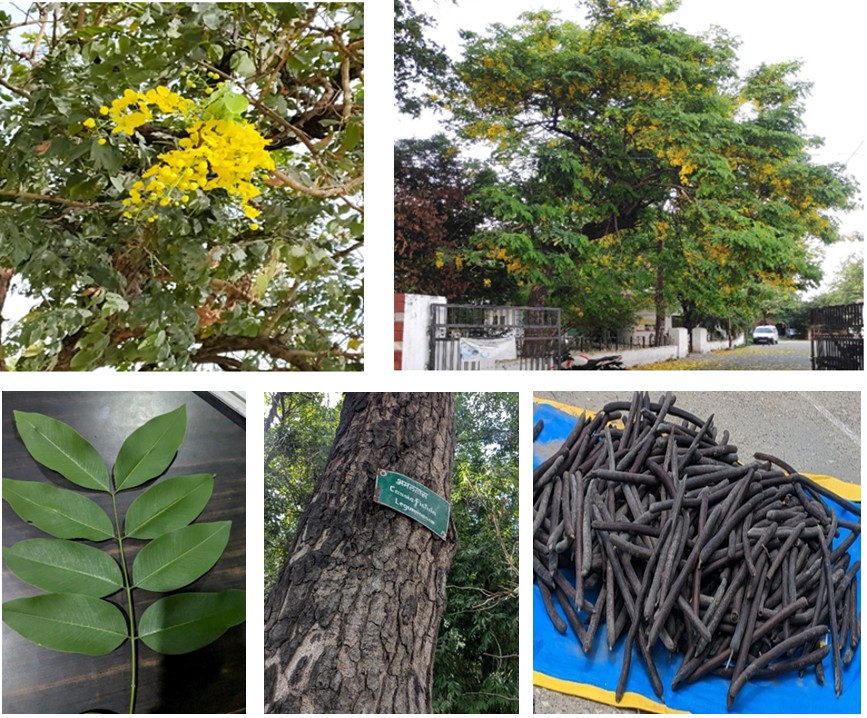
Cassia fistula, commonly referred to as Amaltas in Hindi or Golden Shower in English, is a well-known plant found in deciduous forests, thriving at elevations up to 1300 meters in the outer Himalayas. Belonging to the Fabaceae family, this plant is highly adaptable, capable of growing in poor, shallow soils, as well as on rocky and stony terrain. It is widely cultivated across Bangladesh and other Asian regions, including India, the Philippines, Hong Kong, China, Mexico, Africa, South Asia, Malaysia, Indonesia, and Thailand. Known for its medicinal properties, the entire plant has been used for centuries in various treatments for numerous ailments [7].
Ayurvedic Disease Review
According to Acharya Charaka, Vicharchika is a skin disease characterized by eruptions with itching, dark pigmentation, and profuse discharge from the lesions [8]. Acharya Vagbhata further elaborates, describing Vicharchika as blackish eruptions with intense itching and watery discharge, referred to as Lasikadhya [9]. Sushruta defines it as a condition with dry skin lesions, severe itching, and marked lines [10]. He adds that if similar lesions appear on the feet with pain, it is termed Vipadika (Tables 1 & 2).
Acharya Charaka categorises vicharchika under Kapha pradhana kustha [11] and Acharya Sushruta considered as pita Pradhan vyadhi (Figure 1) [12].
| S.no. | Nighantu | Rasa | Guna | Veerya | Vipaka | Therapeutic actions on doshas |
|---|---|---|---|---|---|---|
| 1 | Bhav Prakash N, et al. [13] | Madhura | Guru | Sheeta | - | Pittahara, Kaphahara |
| 2 | Raj N, et al. [14] | Madhura | - | Sheeta | - | Kaphahara |
| 3 | Shaligrama N, et al. [15] | Madhura | Guru,snigdha, mrudu | Sheeta | Madhura | Pittahara, Kaphahara |
| 4 | Dhanvantri N[16] | Madhura | Laghu,Sara | Sheeta | - | Vatahara, Pittahara |
| 5 | Kaiyadev N, et al. [17] | Madhura, Tikta | Guru,Mrudu | Sheeta | Madhura | Vatahara, Pittahara |
| 6 | Abhinav N [18] | Madhura | Guru | Sheeta | Vatahara, Pittahara | |
| 9 | Madanpal N [19] | Madhura | Guru, Mrudu | Sheeta | Madhura | Vatahara, Pittahara |
| 10 | Adarsha N [20] | Madhura | Guru, Mrudu | Sheeta | Madhura | Pittahara, Kaphahara |
| 11 | Priya N [21,22] | Madhura | - | - | - | - |
Table 1: Phytochemical Constituent and Pharmacological Action of different part of Aragvadha.
Table1: Pharmacological properties (rasa panchaka of Aragvadha).
| Part used | Phytochemical Constituent | Therapeutic Action |
|---|---|---|
| Leaves | Rhein and its glycoside sennosides A and B | Anti –ulcer ,anti –microbial ,anti- fungal activity 23,24 |
| Pod | Fistulicacid and rhein glycoside | Laxative activity 25 |
| Flowers | Ceryl alcohol, fistulin, rhein dianthroquinone glucoside | Laxative25 |
| Fruit pulp | Proteins, carbohydrates, arginine, leucine, methionine, phenylalanine | Purgative, laxative,25 |
| Seeds | Galactomannam composed of D-galactose and D – mannose Plant Seven bioflavonoid and two tri | laxative and carminative properties26 |
| Root bark | fistucacidin, | Strong purgative26 |
Table 2: Phytochemical Constituent and Pharmacological Action of different part of Aragvadha.
Pharmacological Actions and Therapeutic Use of Different Part of Aragvadha in Vicharchika
For Anthaparimarjan
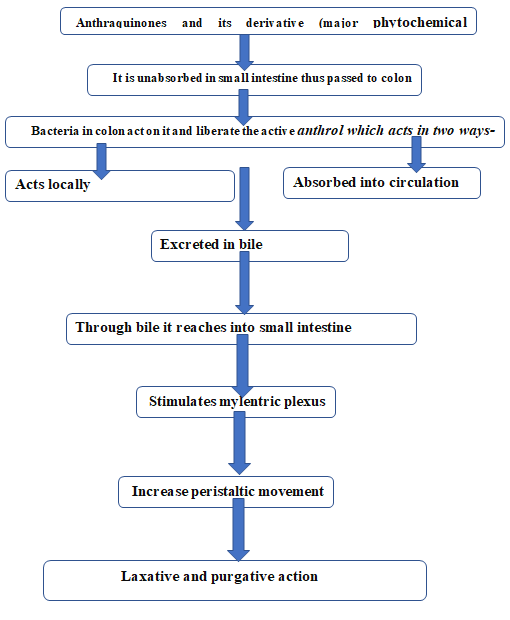
Aragavdha Phal Majja as Laxative or Purgative: It is clinically proven that the dose-dependent actions of Aragvadha make it effective as both a laxative and a purgative. Due to its purgative and laxative properties, it is used in shodhana chikitsa to expel morbid doshas from the body, which is the first line of treatment for vicharchika (eczema) and various types of kustha (skin disorders). As described by the Acharyas, Aragvadha is a safe drug for all age groups and is easily available in almost all parts of the country [25]. Aragvadha flower as Laxative: Gulkand is made from Aragvadha flowers and also acts as a laxative for kostha shuddhi (bowel cleansing). Aragvadha Root as Strong Purgative: Aragvadha root is a strong purgative. When combined with different anupāna (substances), Aragvadha root powder acts as a powerful purgative and is used as virechaka aushadha in Panchakarma procedures Thus it helps in sodhana chikitsa [26]. Aragvadha Patra (leaves) as bahiparimarjana Chikitsa & Aragvadha patra (leaves) as lepa kalpana: In Ayurvedic scriptures, wherever Kushtha treatment is mentioned, Lepa Kalpana treatment is also described, without exception [27]. Acharya Chakrapani considered Aragvadha as the pradhanatama dravya for Kushtha in bahirparimarjana chikitsa [4]. The term “Bahirparimarjana Chikitsa” refers to a combination of medical procedures and drugs that involve skin contact, such as Abhyanga, Sveda, Lepa, Pradeha, Parisheka, and Unmardana, to relieve skin-related ailments. Aragvadha leaves exhibit wound-healing properties and have antimicrobial action. Additionally, Acharya Charaka included Aragvadha under the Kusthaghana [28] and Kandughana [29] Mahakashayas. Due to which it pacify many symptoms of vicharchika (Figure 2).
Conclusion
In Ayurvedic clinical practice, Agrya Ausadha is considered a primary drug for treating various diseases. Ayurvedic dermatology, Kustha is useful for skin diseases. The Majja (pulp) of Aragvadha is utilized for internal Sodhana therapy, while the leaves are applied externally as a paste for Samana Chikitsa. Through its varied formulations, Aragvadha plays a crucial role in the Ayurvedic management of Vicharchika.
References
-
Kashinath S, Gorakha NC (2006) Deepika Commentary of Chakrapani Datta Caraka Samhita. Chaukambha Bharati Academy 1(25): 318.
-
Rajka G (1989) Essential Aspects of Atopic Dermatitis. Springer pp: 125-138.
-
Kashinath S, Gorakha N, Caraka S (2019) Chaukambha Bharati Academy reprint. Varanasi 1(40): 407.
-
Kashinath S, Gorakha NC (2006) Deepika commentary of Chakrapani Datta Caraka Samhita. Chaukambha Bharati Academy 1(3): 1-2.
-
Kashinath S, Gorakha NC, Caraka S (2019) Chaukambha Bharati Academy reprint. Varanasi 2(53): 231.
-
Kashinath S, Gorakha NC, Caraka S (2019) Chaukambha Bharati Academy reprint. Varanasi 2(80): 235.
-
Neelam C, Ranjan B, Komal S, Nootan C (2011) Review on Cassia fistula. Int J Res Ayurveda Pharm 2(2): 426-430.
-
Kashinath S, Gorakha NC, Caraka S (2019) Chaukambha Bharati Academy reprint, Varanasi 2(7/26): 227.
-
Brahmanand T, Chaukhambha SP (2017) Ashtang Hridayam edited by Nirmala Commentary. Reprint 14(18): 529.
-
(2010) Kaviraj Ambikadutta Shastri, edited with Ayurveda Tattva Sandipika, Sushrut Samhita, Chaukhambha Sanskrit Sansthan, Varanasi. Reprint 5(13): 322.
-
Kashinath S, Gorakha NC, Caraka S (2019) Chaukambha Bharati Academy reprint. C Chi 2(7/30): 227.
-
Chunekar KC, Bhavprakash N (2022) Chaukambha Bharati Academy reprint. Varanasi pp: 66.
-
Indradeva T (2006) Raja Nighantus of Pandit Narahari, Varanasi. Chowkhamba krishnadas academy pp: 273.
-
(2007) Shri Shaligraam vaisyavarga, Shaligraam Nighantu, Astavarga khemraj shrikrishandas. India.
-
Priyavrat S (2005) dhanvantari nighantu, guduchyadi varga. Varanasi chaukhamba orientalia pp: 55-56.
-
Priyavrat S (1979) kaiyadeva nighantu varansi, chaukhamba orientalia (pathya pathya vibodhaka), aushadhni varga pp: 174.
-
Datta R, Abhinav N (1984) Chaubey Publication Bhooshana Press, Mathura.
-
Ramprasad P, Madanpal N (1990) Khemraj Shrikrishnadas Prakashana. India.
-
Bapalalag V, Adarsa N (2009) Chaukambha Bharati Academy. Varanasi.
-
Priyavrat S, Priya N, Haritakyadi V (2004) Chaukhambha surbharati prakashna, Varanasi.
-
Nadkarni AK (1976) Indian Materia Medica. Internet Archive pp: 285-286.
-
Chopra RN, Nayar SL, Chpora IC (2006) Glossary of Indian Medicinal Plants. National Institute of Science Communication and Information Resources pp: 54.
-
Rajeshwari V, Ramkesh Y (2021) Phytochemicals Evaluation of Aragwadha Patra W.S.R. to Utility in Skin Disorders. Human Journals 21(3): 1-7.
-
Nadkarni AK (1976) Indian Materia Medica. Popular Prakashan 1: 285-286.
-
Kirtikar KR, Basu BD (1975) Indian Medicinal Plants. M/S Bishne Singh Mahendra Pal Singh 2: 856-859.
-
Kashinath S, Gorakha NC, Charaka S (2006) Chaukambha Bharati Academy. Varanasi 2(7/96): 237.
-
Kashinath S, Gorakha NC, Charaka S (2019) Chaukambha Bharati Academy, Varanasi 1(4/13): 72.
-
Kashinath S, Gorakha NC, Charaka S (2019) Chaukambha Bharati Academy, Varanasi 1(4/14): 73.
-
Tripathi KD (2021) Essentials of Medical Pharmacology. Jaypee Brothers Medical Publishers pp: 724.
- Epithelioid Granuloma; 3cases with Different Clinical Features
- Advancing Representation in Dermatology Clinical Trials: Ethical, Scientific, and Regulatory Imperatives for Inclusion Across all Fitzpatrick Skin Types
- A Case of Atopic Dermatitis with Concurrent Psoriasis Vulgaris: Successful Treatment with Upadacitinib
- Innovation Lifting Eyeshadow: A Synthesis of Makeup and Optical Illusion
- Distinguishing Superficial Actinic Porokeratosis from Actinic Keratosis with UVF Dermoscopy: A Case Report
- High Mobility Group Box 1 (HMGB1) in Cutaneous Inflammation: An Immune Modulator Bridging Cellular Stress, Ferroptosis and Danger Signaling